

Optimal dose of selective serotonin reuptake inhibitors, venlafaxine, and mirtazapine in major depression: a systematic review and dose-response meta-analysis
Open accessThe DOI matches its Crossref record; 30 of the 30 references it cites were found in a registry or an index.
Abstract
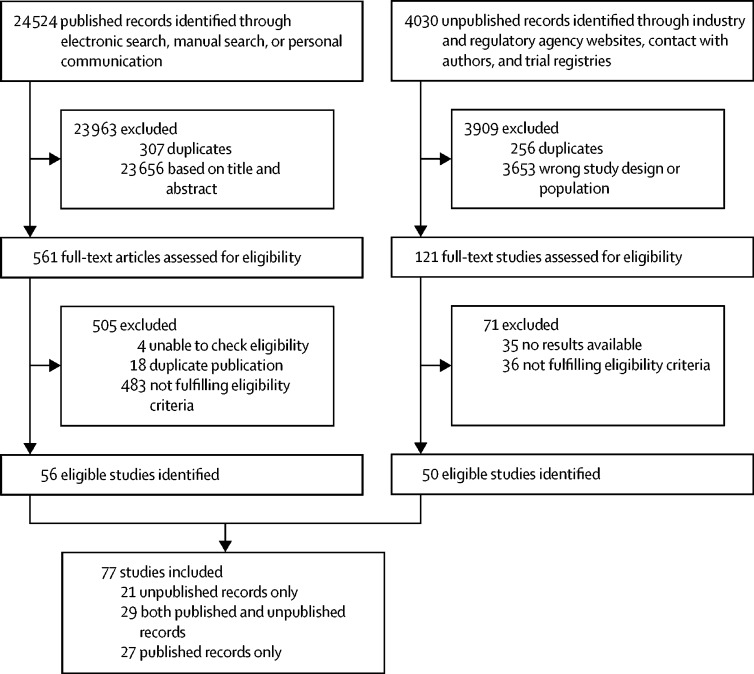
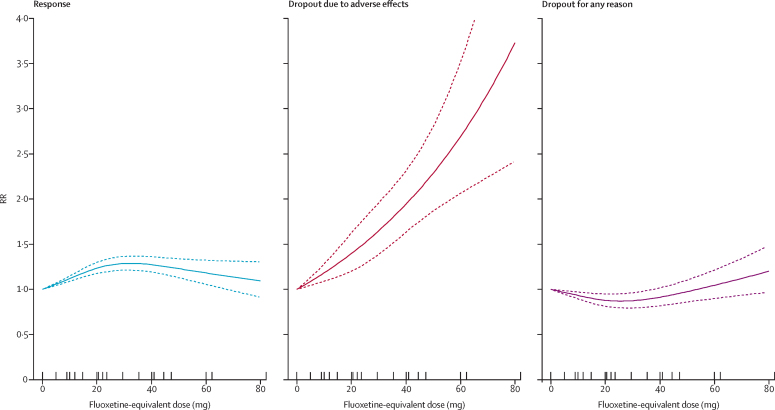
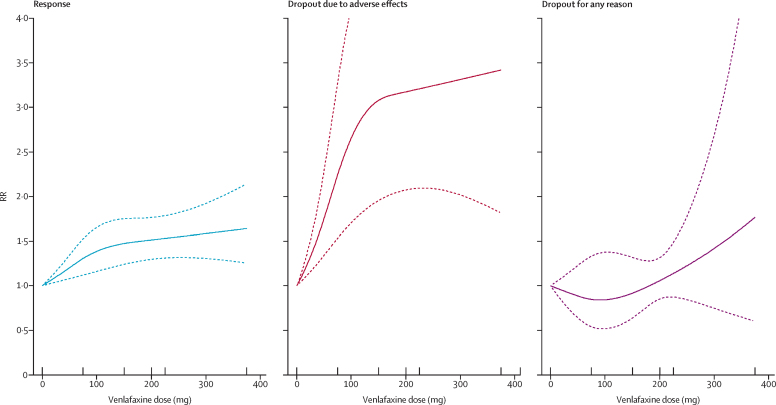
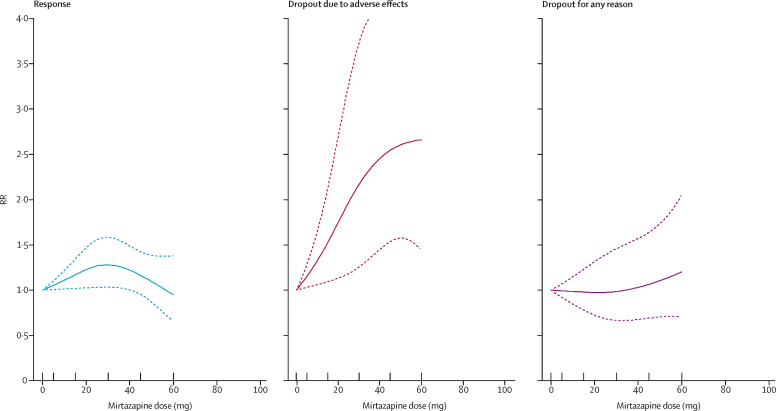
BACKGROUND: Depression is the single largest contributor to non-fatal health loss worldwide. Second-generation antidepressants are the first-line option for pharmacological management of depression. Optimising their use is crucial in reducing the burden of depression; however, debate about their dose dependency and their optimal target dose is ongoing. We have aimed to summarise the currently available best evidence to inform this clinical question. METHODS: We did a systematic review and dose-response meta-analysis of double-blind, randomised controlled trials that examined fixed doses of five selective serotonin reuptake inhibitors (SSRIs; citalopram, escitalopram, fluoxetine, paroxetine, and sertraline), venlafaxine, or mirtazapine in the acute treatment of adults (aged 18 years or older) with major depression, identified from the Cochrane Central Register of Controlled Trials, CINAHL, Embase, LILACS, MEDLINE, PsycINFO, AMED, PSYNDEX, websites of drug licensing agencies and pharmaceutical companies, and trial registries. We imposed no language restrictions, and the search was updated until Jan 8, 2016. Doses of SSRIs were converted to fluoxetine equivalents. Trials of antidepressants for patients with depression and a serious concomitant physical illness were excluded. The main outcomes were efficacy (treatment response defined as 50% or greater reduction in depression severity), tolerability (dropouts due to adverse effects), and acceptability (dropouts for any reasons), all after a median of 8 weeks of treatment (range 4-12 weeks). We used a random-effects, dose-response meta-analysis model with flexible splines for SSRIs, venlafaxine, and mirtazapine. FINDINGS: 28 554 records were identified through our search (24 524 published and 4030 unpublished records). 561 published and 121 unpublished full-text records were assessed for eligibility, and 77 studies were included (19 364 participants; mean age 42·5 years, SD 11·0; 7156 [60·9%] of 11 749 reported were women). For SSRIs (99 treatment groups), the dose-efficacy curve showed a gradual increase up to doses between 20 mg and 40 mg fluoxetine equivalents, and a flat to decreasing trend through the higher licensed doses up to 80 mg fluoxetine equivalents. Dropouts due to adverse effects increased steeply through the examined range. The relationship between the dose and dropouts for any reason indicated optimal acceptability for the SSRIs in the lower licensed range between 20 mg and 40 mg fluoxetine equivalents. Venlafaxine (16 treatment groups) had an initially increasing dose-efficacy relationship up to around 75-150 mg, followed by a more modest increase, whereas for mirtazapine (11 treatment groups) efficacy increased up to a dose of about 30 mg and then decreased. Both venlafaxine and mirtazapine showed optimal acceptability in the lower range of their licensed dose. These results were robust to several sensitivity analyses. INTERPRETATION: For the most commonly used second-generation antidepressants, the lower range of the licensed dose achieves the optimal balance between efficacy, tolerability, and acceptability in the acute treatment of major depression. FUNDING: Japan Society for the Promotion of Science, Swiss National Science Foundation, and National Institute for Health Research.
Overview
The claims and statistics of this paper haven’t been checked yet.
Free: it reads the open-access text and checks the first 5 claims that cite a source we can check. Create a free account to check every claim.
Integrity signals
Registry
Cites
Statistics
Figures
Verification
Claims the paper makes
The claims and statistics of this paper haven’t been checked yet.
Free: it reads the open-access text and checks the first 5 claims that cite a source we can check. Create a free account to check every claim.
Claims other papers make about this one
Each is checked against this paper’s own text: does it say what the citing paper says it does?
The source backs part of the claim, not all of it — or backs it for a different population, condition or comparison.
In the citing paper
“Common treatment strategies in patients with depression for whom antidepressant treatment has not been effective include increasing the antidepressant dose or switching to a different antidepressant”
From The relationship between dose and serotonin transporter occupancy of antidepressants—a systematic review (2022) · cites this paper as [4]
Experimental — accuracy not yet measuredThe source backs part of the claim, not all of it — or backs it for a different population, condition or comparison.
In the citing paper
“such strategies may, however, also largely be ineffective [4–7].”
From The relationship between dose and serotonin transporter occupancy of antidepressants—a systematic review (2022) · cites this paper as [4]
Experimental — accuracy not yet measuredThe cited source says what the claim attributes to it.
In the citing paper
“Other recent meta-analyses for acute depression reported a correlation between antidepressant dosage or the type of antidepressant and efficacy [3, 4].”
From Relapse and its modifiers in major depressive disorder after antidepressant discontinuation: meta-analysis and meta-regression (2023) · cites this paper as [3]
In the citing paper
“It is likely that inequality may impact on depression through several different mechanisms - one such pathway being lack of access to financial resources, making it difficult for women to leave relationships where there is intimate partner violence. 479-481”
From Time for united action on depression: a Lancet–World Psychiatric Association Commission (2022) · cites this paper as [481]
In the citing paper
“there is a limited benefit associated with increasing doses of SSRIs above the lower range of the licensed dose in general, whether using a fixed dosing regimen [4, 5], a flexible dosing regimen [46], or as a second-step strategy in patients not responding to standard dosing [6, 45].”
From The relationship between dose and serotonin transporter occupancy of antidepressants—a systematic review (2022) · cites this paper as [4]
2 more claims about this paper
Create a free account to see every claim other papers make about this one.
Self-check
Percentages, sums and reported differences re-computed from the paper’s own numbers.
The self-check needs the paper’s full text.
Citations
Cites
Preferred Reporting Items for Systematic Reviews and Meta-Analyses: the PRISMA statement
Moher, D., Liberati, A., Tetzlaff, J., Altman, D. G., & for the PRISMA Group (2009) · BMJ · doi:10.1136/bmj.b2535 · Cited by 83,823
Preferred Reporting Items for Systematic Reviews and Meta-Analyses: The PRISMA Statement
Moher, D., Liberati, A., Tetzlaff, J., Altman, D. G., & The PRISMA Group (2009) · PLoS Medicine · doi:10.1371/journal.pmed.1000097 · Cited by 64,042
Preferred reporting items for systematic reviews and meta-analyses: the PRISMA Statement.
(2009) · PubMed Central · Cited by 44,859
Hamilton, M. (1960) · Journal of Neurology, Neurosurgery & Psychiatry · doi:10.1136/jnnp.23.1.56 · Cited by 32,817
Wang, G., Ma, R., Qiao, G., Wada, K., Aizawa, Y., & Satoh, T. (2015) · Integrative Medicine International · doi:10.1159/000368408 · Cited by 18,657
A new depression scale designed to be sensitive to change
Montgomery, S. A., & Åsberg, M. (1979) · British Journal of Psychiatry · doi:10.1192/bjp.134.4.382 · Cited by 13,962
Cipriani, A., Furukawa, T. A., Salanti, G., Chaimani, A., Atkinson, L. Z., Ogawa, Y., Leucht, S., Ruhe, H. G., Turner, E. H., Higgins, J. P. T., et al. (2018) · The Lancet · doi:10.1016/s0140-6736(17)32802-7 · Cited by 3,541
Self-citationPRACTICE GUIDELINE FOR THE Treatment of Patients With Major Depressive Disorder
Gelenberg, A. J., Freeman, P. B., Markowitz, J. C., Rosenbaum, J. F., Thase, M. E., Trivedi, M. H., & Rhoads, R. S. (2010) · Cited by 1,521
Farde, L. (1992) · Archives of General Psychiatry · doi:10.1001/archpsyc.1992.01820070032005 · Cited by 1,419
Research works printed but not linked: 1
- NICE Depression: the treatment and management of depression in adults (partial update of NICE clinical guideline 23) 2009 National Institute for Health and Clinical Excellence London 31886986 NICE. Depression: the treatment and management of depression in adults (partial update of NICE clinical guideline 23). London: National Institute for Health and Clinical Excellence, 2009.
Cited by
Items 201–300 of 323
He, Y., Wang, J., Yao, F., Lu, P., Xie, Y., Li, X., Liu, Q., Liu, Y., Cao, D., Liang, J., et al. (2024) · Drugs in R&D · doi:10.1007/s40268-024-00470-w · Cited by 2
“…sustained-release capsule is widely used in the clinical treatment of various types of depression with the advantages of fast onset [17], less adverse reactions [18], a larger tolerated dose range [16, 19], and a higher clinical cure rate for patients with major depressive disorder [20].”
Therapeutic targets of adolescent depression with attenuated symptoms of schizophrenia
Omelchenko, M. A., Мигалина, В. В., & Каледа, В. Г. (2024) · S S Korsakov Journal of Neurology and Psychiatry · doi:10.17116/jnevro202412412169 · Cited by 2
Alcalá, J. Á., Dorado, V. O., Herrera, G. D. P. A., Chamón, S. L., & Molinera, V. G. (2025) · Frontiers in Psychiatry · doi:10.3389/fpsyt.2025.1568777 · Cited by 2
Deng, Y., Wen, B., Sun, J., Liu, L., Zhou, S., Liu, Q., Si, T., Wang, J., Tian, H., Zhang, K., et al. (2025) · Psychiatry Investigation · doi:10.30773/pi.2024.0364 · Cited by 2
“Antide-pressant doses were converted to fluoxetine equivalents based on the studies by Furukawa et al. 32 and Hayasaka et al. 33 : 40 mg/day fluoxetine=40 mg/day citalopram=18 mg/day escita-lopram=98.5 mg/day sertraline=34 mg/day paroxetine=143.3 mg/day fluvoxamine.”
InfluentialDeng, C.-J., Liu, Q.-M., Zhong, H.-Q., Zeng, R., Yang, X.-H., Mai, J.-X., Huang, X., Jackson, T., Xiang, Y., & Zheng, W. (2025) · Journal of Affective Disorders · doi:10.1016/j.jad.2025.120261 · Cited by 2
Vuković, P. G., Jeremić, A., Vezmar, M., Milosavljević, F., Pavlović, Z., Pešić, D., Đorđević, J. D., Pejušković, B., Marković, B. D., Ingelman‐Sundberg, M., et al. (2025) · Scientific Reports · doi:10.1038/s41598-025-18517-6 · Cited by 2
“To estimate the influence of the placebo effect on the main outcome of the study and to compare it with the results from previously published placebo -controlled, randomized clinical trials of fixed doses of escitalopram, the studies selected from the meta-analysis by Furukawa et al. 24 were reanalyzed.”
InfluentialHorackova, H., Musilova, I. K., Abad, C., Karahoda, R., Váchalová, V., Portillo, R., Viñas-Noguera, M., Anandam, K. Y., Heblik, D., Cífková, E., et al. (2025) · Biomedicine & Pharmacotherapy · doi:10.1016/j.biopha.2025.118680 · Cited by 3
Li, M., Li, J.-X., Han, J.-M., Liu, X., Gao, X.-Z., Chen, L.-M., Zhou, Z., & Zhou, H. (2025) · BMC Psychiatry · doi:10.1186/s12888-025-07684-5 · Cited by 3
“To control for the potential confounding effects of medication, we included the Fluoxetine-equivalent dose (mg/day; converted using published equivalence Table [37]) as a single covariate in the mixed analysis of covariance (ANCOVA) models for both P200 and LPP amplitude and latency.”
Li, J.-X., Lu, M., Wu, L., Li, W., Li, Y., Li, X., Liu, X., Gao, X.-Z., Zhou, Z., & Zhou, H. (2025) · World Journal of Psychiatry · doi:10.5498/wjp.v15.i12.111972 · Cited by 2
Kang, T., Zhao, X., Huo, X., Liu, X., Wang, Y., Wang, X., Ding, X., & Wu, H. (2026) · JAMA Network Open · doi:10.1001/jamanetworkopen.2026.17336 · Cited by 4
Understanding antidepressant change patterns in the UK Biobank
Li, D., Lo, C. W. H., Lewis, C. M., Vassos, E., & Breen, G. D. (2026) · The British Journal of Psychiatry · doi:10.1192/bjp.2026.10719 · Cited by 3
Sun, R.-H., Zhang, J.-Z., Jin, S.-Y., Jiang, C., Gao, X.-Z., Wang, J., & Zhou, Z. (2022) · Frontiers in Psychiatry · doi:10.3389/fpsyt.2022.989924 · Cited by 2
Vanicek, T., Reed, M. B., Seiger, R., Godbersen, G. M., Klöbl, M., Unterholzner, J., Spurny‐Dworak, B., Gryglewski, G., Handschuh, P. A., Schmidt, C., et al. (2022) · Therapeutic Advances in Psychopharmacology · doi:10.1177/20451253221132085 · Cited by 4
Research Report: A Link between Sertraline Treatment and Susceptibility to (Mis)information
Piksa, M., Noworyta, K., Piasecki, J., Gundersen, A. B., Kunst, J. R., Morzy, M., & Ryguła, R. (2024) · ACS Chemical Neuroscience · doi:10.1021/acschemneuro.3c00825 · Cited by 2
Sawyer, J., McPherson, M., Reuter, M., & Cacolice, P. A. (2025) · Journal of Clinical Medicine · doi:10.3390/jcm14030853 · Cited by 2
“For example, approximately one third of individuals that engage in these treatments report no significant change in depressive symptoms [6,7].”
Use of venlafaxine in the management of refractory intraspecific aggression in a multi-cat household
Ang, D. E. L., & Ballantyne, K. C. (2025) · Journal of Veterinary Behavior · doi:10.1016/j.jveb.2025.08.009 · Cited by 2
The importance of evidence synthesis in psychopharmacology: Insights from a scientometric approach
Sabé, M., & Solmi, M. (2022) · European Neuropsychopharmacology · doi:10.1016/j.euroneuro.2022.05.011 · Cited by 1
Bell-shaped dose-response curve of antipsychotic drugs and dopaminergic auto-receptors: a hypothesis
Kohno, K., Terao, T., Hirakawa, H., & Ishii, N. (2020) · Clinical Neuropsychopharmacology and Therapeutics · doi:10.5234/cnpt.11.47 · Cited by 2
“In fact, a meta-analysis [1] showed that SSRIs consisting of citalopram, escitalopram, fluoxetine, paroxetine and sertraline, and mirtazapine had a bell-shaped dose-response curve.”
BackgroundThe Efficacy of N-Acetyl-Cysteine (NAC) Supplementation in FST Model for Screening Antidepressants
Memudu, A. E. (2022) · Basic and Clinical Neuroscience Journal · doi:10.32598/bcn.2023.2356.2 · Cited by 3
“Its recommended oral dose in neurological studies about antidepressant and neuroprotective effects in rats is taken to be 20 mg/kg d according to some studies (Abdel-Salam et al., 2013; Klomp, et al., 2014; Torrisi et al., 2019; Furukawa et al., 2019; Costescu et al., 2019).”
BackgroundMethodZheng, J., Zhao, Q., Ma, Y., Tian, J., Sun, L., Zhang, Z., & Guo, L. (2023) · PubMed Central · Cited by 2
Psychopharmacology for Pediatric Depressive Disorders
Rengasamy, M. L., Shalev, A., & Birmaher, B. B. (2024) · Springer eBooks · doi:10.1007/978-3-031-57472-6_16 · Cited by 2
Depression and Anxiety in College Students
Chaudhary, A. K. (2020) · Springer eBooks · doi:10.1007/978-3-030-56309-7_4 · Cited by 3
Optimal dosing of antidepressant drugs
Østergaard, S. D. (2019) · The Lancet Psychiatry · doi:10.1016/s2215-0366(19)30282-2 · Cited by 2
Hengartner, M. P., Jakobsen, J. C., Sorensen, A., & Plöderl, M. (2019) · OSF Preprints (OSF Preprints) · doi:10.31219/osf.io/3tuzy · Cited by 2
A Framework for Inferring and Analyzing Pharmacotherapy Treatment PatternsPreprint
Rush, E. N., Özmen, Ö., Kim, M., Ortegon, E. R., Jones, M., Park, B. S., Pizer, S. D., Trafton, J. A., Brenner, L. A., Ward, M. C., et al. (2022) · medRxiv · doi:10.1101/2022.07.27.22277782 · Cited by 2
Regen, F., & Benkert, O. (2023) · Springer eBooks · doi:10.1007/978-3-662-67685-1_1 · Cited by 1
Гареева, А. Э., Borodina, L., Pozdnyakov, S. A., & Тимербулатов, И. Ф. (2024) · Neuroscience and Behavioral Physiology · doi:10.1007/s11055-024-01716-5 · Cited by 2
“For venlafaxine and mirtazapine, the lower range of active doses was suf fi cient for optimal ef fi - cacy and tolerability in patients with MDD [59].”
Minoc, E.-M., Villain, C., Chrétien, B., Benbrika, S., Heraudeau, M., Lafont, C., Bechade, C., Lobbedez, T., Lelong‐Boulouard, V., & Dolladille, C. (2025) · Therapies · doi:10.1016/j.therap.2025.01.004 · Cited by 4
A Bibliometric Analysis of hypertension and anxiety from 2004 to 2022
Liu, S.-Q., Ji, X.-Y., Liang, H.-Y., Zhao, S.-H., Yang, F., Tang, Y., & Shi, S. (2025) · Medicine · doi:10.1097/md.0000000000041859 · Cited by 2
Targeting 5-HT to Alleviate Dose-Limiting Neurotoxicity in Nab-Paclitaxel-Based Chemotherapy
Pan, S., Cai, Y., Liu, R., Jiang, S., Zhao, H., Jiang, J., Lin, Z., Liu, Q., Lu, H., Liang, S., et al. (2025) · Neuroscience Bulletin · doi:10.1007/s12264-025-01398-0 · Cited by 2
“Venlafaxine, an inhibitor of 5-HT reuptake, is commonly used to treat depression, and it is widely used in clinical settings [42].”
Burning mouth syndrome in younger populations: Gender disparities and bipolar tendencies
Suga, T., Tu, T. T. H., Watanabe, M., Inoue, T., & Toyofuku, A. (2025) · Psychiatry and Clinical Neurosciences Reports · doi:10.1002/pcn5.70110 · Cited by 1
Bastien, L., Cho, S., Petrovic, J., Khoury, B., Bloom, E. L., & Heath, N. L. (2025) · Internet Interventions · doi:10.1016/j.invent.2025.100868 · Cited by 2
“For instance, examining the dose-response relationship is essential to determine the optimal level of treatment needed to achieve a desired outcome (Furukawa et al., 2019; Liu et al., 2017).”
Neuronavigated rTMS combined with SSRIs for adolescent depression: Efficacy and neural mechanisms
Liu, X., Li, Y., Xia, Y., Sun, Y., Guo, P., Li, P., Xu, R., & Li, Y. (2025) · Journal of Affective Disorders · doi:10.1016/j.jad.2025.120436 · Cited by 1
Wu, Y., Wang, X.-Y., Sun, Y., Wu, L., Li, W., Li, Y., Gao, X.-Z., Liu, X., Zhou, Z., & Zhou, H. (2025) · World Journal of Psychiatry · doi:10.5498/wjp.v15.i12.111513 · Cited by 2
Ma, Y., Wang, X.-Y., Wang, W.-L., Zhang, J., Liu, X.-H., Du-xing, L., Zhou, Z.-H., Chen, L., & Zhou, H. (2026) · World Journal of Psychiatry · doi:10.5498/wjp.v16.i2.113513 · Cited by 1
Best-Practice Mental Health Interventions Following Acute Cardiovascular Events
Abreu, M. N., Albuquerque, R. P., & Fonseca, A. (2026) · Cardiology Clinics · doi:10.1016/j.ccl.2025.12.005 · Cited by 2
Regen, F. (2026) · Springer eBooks · doi:10.1007/978-3-662-72452-1_1 · Cited by 1
Regen, F., & Benkert, O. (2020) · Springer eBooks · doi:10.1007/978-3-662-61753-3_1 · Cited by 2
The Development and Mechanism of Treatment of Depression
Chang, F., Kuang, X., & Liu, Y. (2022) · Highlights in Science Engineering and Technology · doi:10.54097/hset.v8i.1120 · Cited by 1
Suicidality in an older patient with chronic kidney disease
Yang, P. G. (2023) · Current Psychiatry · doi:10.12788/cp.0322 · Cited by 1
Complexities of treatment‐resistant depression: cautionary notes and promising avenues
Furukawa, T. A. (2023) · World Psychiatry · doi:10.1002/wps.21139 · Cited by 2
Self-citationSchatzberg, A. F. (2024) · American Psychiatric Association Publishing eBooks · doi:10.1176/appi.books.9781615375523.as17 · Cited by 1
Júnior, S. A. D. S., Zancheta, S. B., Nogueira, G. N., & Souza, F. G. D. M. E. (2024) · Nutrition Reviews · doi:10.1093/nutrit/nuae117 · Cited by 1
Javed, F., Ahmed, Z. U., Rossouw, P. E., & Romanos, G. E. (2024) · International Orthodontics · doi:10.1016/j.ortho.2024.100960 · Cited by 1
Kennedy, K. P., Heldt, J. P., & Oslin, D. W. (2025) · Journal of Clinical Psychopharmacology · doi:10.1097/jcp.0000000000002025 · Cited by 3
Citalopram – what you need to know about this proven antidepressant
Praktyka Lekarska, Ł., & Wierzbiński, P. (2019) · Psychiatria i Psychologia Kliniczna · doi:10.15557/pipk.2019.0037 · Cited by 1
“36) (Furukawa et al. , 2019).”
Prescribed Psychotropic Drugs in the Elderly
Bourin, M. (2021) · Springer eBooks · doi:10.1007/978-3-030-61721-9_46 · Cited by 3
Muit, J. J., van Eijndhoven, P., Cipriani, A., Dalhuisen, I., van Bronswijk, S. C., Furukawa, T. A., & Ruhé, H. G. (2022) · BMJ Open · doi:10.1136/bmjopen-2021-056777 · Cited by 2
Self-citationOptimal dosing of antidepressant drugs – Authors' reply
Furukawa, T. A., Cowen, P. J., Salanti, G., Leucht, S., Egger, M., & Cipriani, A. (2019) · The Lancet Psychiatry · doi:10.1016/s2215-0366(19)30339-6 · Cited by 1
Self-citationEffects of Escitalopram and Relearning on Cortical and Subcortical Grey Matter in Healthy HumansPreprint
Vanicek, T., Reed, M. B., Seiger, R., Godbersen, G. M., Klöbl, M., Unterholzner, J., Spurny‐Dworak, B., Gryglewski, G., Handschuh, P. A., Kraus, C., et al. (2021) · bioRxiv (Cold Spring Harbor Laboratory) · doi:10.1101/2021.04.24.440965 · Cited by 1
Zheng, H., Huang, S., Chen, Y.-Y., Tang, T., Qin, D., & Chen, M. (2020) · Research Square · doi:10.21203/rs.3.rs-56656/v1 · Cited by 2
“RCTs would be classi ed as low risk of bias if none of these aspects was rated as high risk of bias and three or fewer were rated as unclear risk of bias; moderate if one was rated as high risk of bias, or none was rated as high risk but four or more were rated as unclear risk; high risk of bias if all other cases wer…”
BackgroundDepression and Anxiety Disorders
(2021) · Wiley eBooks · doi:10.1002/9781119870203.mpg003 · Cited by 1
Optimal dosing of antidepressant drugs
Hirakawa, H. (2019) · The Lancet Psychiatry · doi:10.1016/s2215-0366(19)30283-4
Milosavljević, F., Bukvić, N., Pavlović, Z., Miljević, Č., Pešić, V., Molden, E., Ingelman‐Sundberg, M., Leucht, S., & Jukić, M. M. (2020) · European Neuropsychopharmacology · doi:10.1016/j.euroneuro.2020.09.325
Self-citationCortese, S., Frazier, J. A., & Giovane, C. D. (2021) · Journal of the American Academy of Child & Adolescent Psychiatry · doi:10.1016/j.jaac.2021.07.004 · Cited by 1
Furukawa, Y., Luo, Y., Funada, S., Ōnishi, A., Ostinelli, E. G., Hamza, T., Furukawa, T. A., & Kataoka, Y. (2021) · medRxiv · doi:10.1101/2021.12.09.21267441
Self-citationTreatment-resistant depression: therapeutic options when first-line treatments fail
Wigg, C., & Costi, S. (2021) · BJ Psych Advances · doi:10.1192/bja.2021.65
Li, Z., Zhu, M., Liu, Z., Hu, Q., Yang, J., Jin, Y., Zhu, N., Huang, Y., Shi, D., Liu, M., et al. (2022) · Research Square · doi:10.21203/rs.3.rs-1213529/v1
Challenges of Mood Disorders Care
(2020) · FOCUS The Journal of Lifelong Learning in Psychiatry · doi:10.1176/appi.focus.18202
Comparative analysis of PIM criteria and drug labels in the elderly
Wang, Y., Li, X., Zhuo, S., Liu, X., & Liu, W. (2022) · European Journal of Clinical Pharmacology · doi:10.1007/s00228-021-03262-2
“[22], it was pointed out that the optimal dose of fluoxetine might be less than 20–40 mg/day for elderly patients (i.”
BackgroundTracy, D. K., Joyce, D. W., Albertson, D. N., & Shergill, S. S. (2019) · The British Journal of Psychiatry · doi:10.1192/bjp.2019.176
Group 1 Medications for Anxiety and Depression
(2021) · American Academy of PediatricsItasca, IL eBooks · doi:10.1542/9781610025478-6
Wenlafaksyna: złoty standard leków przeciwdepresyjnych
Łoza, B., & Herman, M. (2021) · Neuropsychiatria Przegląd Kliniczny · doi:10.24292/01.np.1334311221.4
Jeremić, A., Milosavljević, F., Opanković, A., & Jukić, M. M. (2022) · Arhiv za farmaciju · doi:10.5937/arhfarm72-37613 · Cited by 1
“Indeed, dose-response and dose-tolerability relationships were established for antipsychotics (8), and antidepressants (9).”
BackgroundPharmakotherapie: Therapieresistenz
Regen, F. (2022) · Elsevier eBooks · doi:10.1016/b978-3-437-23031-8.00017-0
Einsatz von Antidepressiva bei therapieresistenten Depressionen
Anghelescu, I. (2022) · Springer eBooks · doi:10.1007/978-3-662-65734-8_6 · Cited by 2
CPViz: Visualizing clinical pathways represented in higher-order networks
Chae, J., Park, B. H., Kim, M., Rush, E. N., Özmen, Ö., Jones, M., Ward, M. C., & Nebeker, J. R. (2023) · Electronic Imaging · doi:10.2352/ei.2023.35.1.vda-395
“Antidepressants are medications prescribed to treat MDD [4].”
BackgroundBecher, L., Nanni, F., & Koslowski, M. (2023) · Nervenheilkunde · doi:10.1055/a-2101-9358 · Cited by 1
“4 Wochen Post-Psilocybin eine Therapieresponse (≥ 50 % Reduktion im GRID-HAMD).”
BackgroundInfluentialGarg, R., Saxena, S. K., Singh, V., Bashir, S., Sharma, A., & Sharma, V. (2023) · PubMed Central · Cited by 1
Zhu, Y., Wang, F., Wang, F., Liu, H., Guo, X., Wang, Z., He, R., Wu, X., Cao, L., Wu, Z., et al. (2023) · Heliyon · doi:10.1016/j.heliyon.2023.e20951
“Meanwhile, mirtazapine showed optimal acceptability in the lower range of their licensed dose (about 30 mg), as well as selective serotonin reuptake inhibitors (SSRIs) with the lower licensed range between 20 mg and 40 mg fluoxetine equivalents [16].”
BackgroundWhat Treatments Are Effective for Depression in Palliative Care Settings?
Jordan, A. E., Webb, J. A., Bates, N. E., Samsel, C. B., Trachsel, M., Hirst, J. M., & Irwin, S. A. (2023) · Elsevier eBooks · doi:10.1016/b978-0-323-84702-5.00025-7
Influence of the use of psychotropic drugs on the increase of Escherichia coli resistance
Zambrano, D. T. Z., & Rosero, L. G. T. (2024) · Salud Ciencia y Tecnología · doi:10.56294/saludcyt2024701 · Cited by 2
Farhat, L. C. (2023) · Digital Library of Theses and Dissertations (Universidade de São Paulo) · doi:10.11606/t.5.2023.tde-29022024-120617 · Cited by 1
Distribution of neuropsychiatric profiles and comorbid diseases in dementia subtypes
Bülbül, N. G., Karşıdağ, S., Çınar, N., Ateş, M. F., Şahin, Ş., Karalı, F. S., Öner, Ö. G., Okluoglu, T., Eren, F., OKUYAN, D. Y., et al. (2024) · The European Research Journal · doi:10.18621/eurj.1386582
Diminished representational momentum for physical states in patients with depressive disorder
Zhou, X., Zhu, J., Yao, Y., Yang, X., Shen, Z., & Wang, Y. (2024) · Journal of Psychiatric Research · doi:10.1016/j.jpsychires.2024.05.009
Furukawa, T. A. (2024) · American Journal of Geriatric Psychiatry · doi:10.1016/j.jagp.2024.05.015
Self-citationChapter 19. Venlafaxine and Desvenlafaxine
Thase, M. E. (2024) · American Psychiatric Association Publishing eBooks · doi:10.1176/appi.books.9781615375523.as19 · Cited by 1
Association between life’s essential 8 with depression: a population-based study
Jin, H., Wu, P., Wang, Z., Su, W., Cai, L., & Chen, H.-Z. (2024) · Archives of Medical Science · doi:10.5114/aoms/191238 · Cited by 5
“It is a leading cause of disability worldwide and is associated with significant morbidity, mortality, and economic burden [2].”
Farina, G. S., Nirta, L., MediSpeak Communications, B., de Oliveira, L. M. L., Rospiglioni, J. L. C., Vespasiano, C. F. P., Adium SA, S. P., Woite, N. L., Zahran, I. A. R., Checo, M., et al. (2024) · Principles and Practice of Clinical Research Journal · doi:10.21801/ppcrj.2024.102.5
Introduction to Deprescribing Psychiatric Medications
(2024) · Wiley eBooks · doi:10.1002/9781394291052.mdg001
Furukawa, Y. (2024) · Psychiatry and Clinical Neurosciences · doi:10.1111/pcn.13732
Safe Deprescribing of Benzodiazepines and Z‐drugs
(2024) · Wiley eBooks · doi:10.1002/9781394291052.mdg003
Safe Deprescribing of Antidepressants
(2024) · Wiley eBooks · doi:10.1002/9781394291052.mdg002
Group 1 Medications for Anxiety and Depression
(2024) · American Academy of PediatricsItasca, IL eBooks · doi:10.1542/9781610027663-ch6
Liu, Z., Sun, L., Sun, F., Cui, S. F., Zhang, Y., Wang, J., Zhang, Z., Sun, L., Yang, R., Yao, G., et al. (2024) · Scientific Reports · doi:10.1038/s41598-024-76183-6 · Cited by 2
“The therapeutic dose of antidepressant medication was converted to fluoxetine equivalents for each subject 26 .”
MethodFurukawa, T. A. (2024) · JAMA · doi:10.1001/jama.2024.18396
Self-citationAnisman, H., Hayley, S. P., & Kusnecov, A. W. (2024) · Elsevier eBooks · doi:10.1016/b978-0-443-23565-8.00006-5
(2024) · Elsevier eBooks · doi:10.1016/b978-0-443-23565-8.09996-8
V. Indications for Antidepressants Prescribing in General Practice
Miyauchi, T. (2023) · Nihon Naika Gakkai Zasshi · doi:10.2169/naika.112.2226
Zweitschrittverfahren in der antidepressiven Pharmakotherapie: Ergebnisse aktueller Metaanalysen
Krabs, M., Bschor, T., Henssler, J. F., & Baethge, C. (2024) · Der Nervenarzt · doi:10.1007/s00115-024-01785-4
Effects of suggestion therapy on mood and sleep quality in middle-aged women with depression
Jiang, Y., Xia, K.-K., & Lin, Z.-Y. (2025) · World Journal of Psychiatry · doi:10.5498/wjp.v15.i3.100009
Sánchez-Ruiz, J. A., Solares‐Bravo, M., Jenkins, G. D., Núñez, N. A., Leibman, N. I., Ahmed, A. T., Bielinski, S. J., Weinshilboum, R. M., Wang, L., Frye, M. A., et al. (2025) · Journal of Clinical Psychopharmacology · doi:10.1097/jcp.0000000000002001
Neves, L. M., Rossi, F. E., de Paula, C. B. C. O., Arida, V. J. P., Pereira, I. C. G., Rossi, P. A. Q., Armond, J. D. E., Sasaki, J. E., Schuch, F. B., Stubbs, B., et al. (2025) · Psychiatry International · doi:10.3390/psychiatryint6020051 · Cited by 1
“There are approximately 280 million cases around the world [12], and the first-line treatment includes drug therapy in conjunction with cognitive–behavioral psychotherapy [9]; however, more than one-third of people with MDD do not present an adequate response [13,14].”
Are NMDA Antagonists or Venlafaxine More Effective in the Forced Swimming Test?
İnal, A., & Erenmemişoğlu, A. (2025) · Harran Üniversitesi Tıp Fakültesi Dergisi · doi:10.35440/hutfd.1617126
“As a result, ongoing research continues to explore new approaches and treatments for depression (16).”
Yanjing, Z., Zhou, C., Li, X., Liu, Y., Wang, J., & Yu, J. (2025) · Precision medication. · doi:10.1016/j.prmedi.2025.100027
Liu, Z., Sun, L., Li, F., Liu, T., Yin, X., Zhang, J., Sun, N., Zhang, Y., Yao, G., & Liu, Y. (2025) · Scientific Reports · doi:10.1038/s41598-025-07589-z
Dalton, J., Fried, T., McCurdy, M. A., Dalton, J., Narayanan, R., Lee, Y. J., Mahmood, H., Goldberg, M., Mehta, N. H., Fuleihan, A. A., et al. (2025) · European Spine Journal · doi:10.1007/s00586-025-09207-y
“Antidepressants are commonly used to treat these two conditions, although a linear relationship between antidepressant dosage prescribed and disease severity is not clearly evident [ 3, 4].”
Inoue, K., Nagaoka, K., Ando, N., Hakamata, Y., & Itoh, K. (2025) · Neuropsychobiology · doi:10.1159/000548094
“For future research, larger cohorts are needed to investigate antidepressant dose as a continuous variable, thus allowing for a more comprehensive understanding of dose-response relationships and factors influencing optimal dosing [29].”
Anwar, N., Ahmed, K. K., Ansari, A. P., Ahmed, N. Z., & Parveen, F. S. (2025) · Clinical Traditional Medicine and Pharmacology · doi:10.1016/j.ctmp.2025.200240
Hou, F., Wu, Y., Shi, C., Liu, Q., Wang, G., Wei, J., Zhu, G., Chen, Q., Tian, H., Zhang, K., et al. (2025) · Journal of Affective Disorders · doi:10.1016/j.jad.2025.120273
Metadata
- Authors
- Furukawa, T. A., Cipriani, A., Cowen, P. J., Leucht, S., Egger, M., & Salanti, G.
- Affiliations
- Kyoto University (JP)
- Oxford Health NHS Foundation Trust (GB)
- Warneford Hospital (GB)
- Technical University of Munich (DE)
- University of Bern (CH)
- Corresponding author
- Cipriani, Andrea
- Venue
- The Lancet Psychiatry
- Publisher
- Elsevier BV
- Published
- 2019-07
- Volume
- 6
- Issue
- 7
- Pages
- 601-609
- ISSN
- 2215-0366 (ISSN-L)
- PMC
- PMC6586944
- OpenAlex
- W2948548704
- Cited by
- 322
- References
- 30
- Citations by year
- 2026: 26 · 2025: 54 · 2024: 59 · 2023: 39 · 2022: 46 · 2021: 50 · 2020: 33 · 2019: 15
- FWCI
- 4.62
- Type
- journal article
- Language
- en
- Open access
- hybrid
- doi.org
- Licence
- cc-by
- www.elsevier.com/tdm/userlicense/1.0/ (tdm)
- www.elsevier.com/legal/tdmrep-license (tdm)
- creativecommons.org/licenses/by/4.0/ (vor)
- Locations
- The Lancet Psychiatry (publishedVersion, cc-by)
- PubMed Central (publishedVersion, cc-by)
- PubMed (publishedVersion)
- Institutional Repositories DataBase (IRDB) (submittedVersion, cc-by)
- BORIS (University Library Bern) (submittedVersion, cc-by)
- mediaTUM – the media and publications repository of the Technical University Munich (Technical University Munich) (submittedVersion, other-oa)
- mediaTUM – the media and publications repository of the Technical University Munich (Technical University Munich) (submittedVersion)
- Kyoto University Research Information Repository (Kyoto University) (submittedVersion, cc-by)
- Bristol Research (University of Bristol) (submittedVersion, cc-by)
- Funders
- NIHR Oxford Biomedical Research Centre (BRC-1215-20005)
- National Institute for Health Research (RP-2017-08-ST2-006)
- Schweizerischer Nationalfonds zur Förderung der Wissenschaftlichen Forschung (179158)
- Japan Society for the Promotion of Science (17K19808)
- Topics
- Health Sciences › Medicine › Pharmacology (medical) › Treatment of Major Depression
- Social Sciences › Psychology › Experimental and Cognitive Psychology › Anxiety, Depression, Psychometrics, Treatment, Cognitive Processes
- Health Sciences › Medicine › Psychiatry and Mental health › Mental Health Treatment and Access
- Keywords
- major depressive disorder, selective serotonin reuptake inhibitors, venlafaxine, mirtazapine, dose optimization, treatment response, tolerability, acceptability, citalopram, escitalopram, paroxetine, sertraline, fluoxetine, adverse effects
- MeSH terms
- Venlafaxine Hydrochloride, Mirtazapine, Major Depressive Disorder, Depressive Disorder, Major, Dose-Response Relationship, Drug, Double-Blind Method, Humans, Randomized Controlled Trials as Topic, Selective Serotonin Reuptake Inhibitors, Serotonin Agents
About these checks
Registry, retraction, Cites and statistics results are computed, not judged, with one exception: a printed reference that no index lists is read once by a model before it counts as a citation error. Claims are extracted by a model and kept only when their quote appears verbatim in the text; each cited source is then checked, with a model’s help, for whether it says what the claim relies on. Those verdicts can be wrong — read the claim’s quote and the cited source before relying on one.
Statistics and arithmetic are recomputed, not judged.
Confidence bands are shown only for fields calibrated on our annotated test set. None is calibrated yet, so no band is shown.
What counts as a claim ›How we measure confidence ›How we check this ›
Are you an author, or do you see a problem with this page? Request a review
Data sources
Bibliographic data: Semantic Scholar, OpenAlex, Crossref.
Contains information from the Semantic Scholar Academic Graph Datasets, made available under the ODC Attribution License (ODC-BY 1.0).
Semantic Scholar’s data is described in: Kinney, R., et al. (2023). The Semantic Scholar Open Data Platform. arXiv:2301.10140.
