

Optimal dose of selective serotonin reuptake inhibitors, venlafaxine, and mirtazapine in major depression: a systematic review and dose-response meta-analysis
Open accessThe DOI matches its Crossref record; 30 of the 30 references it cites were found in a registry or an index.
Abstract
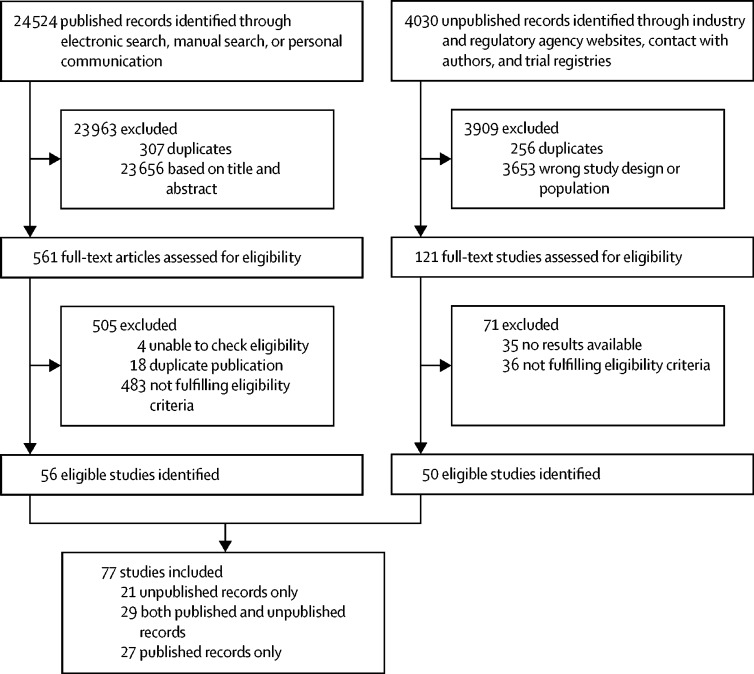
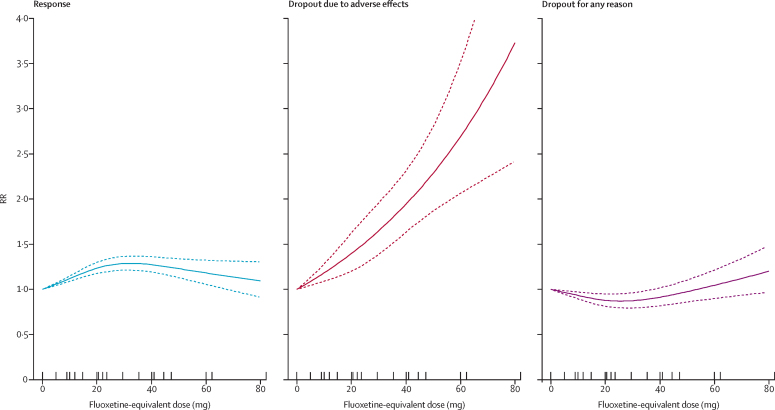
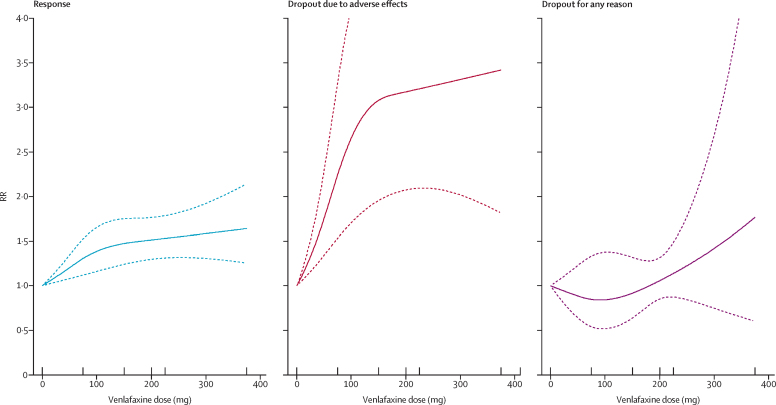
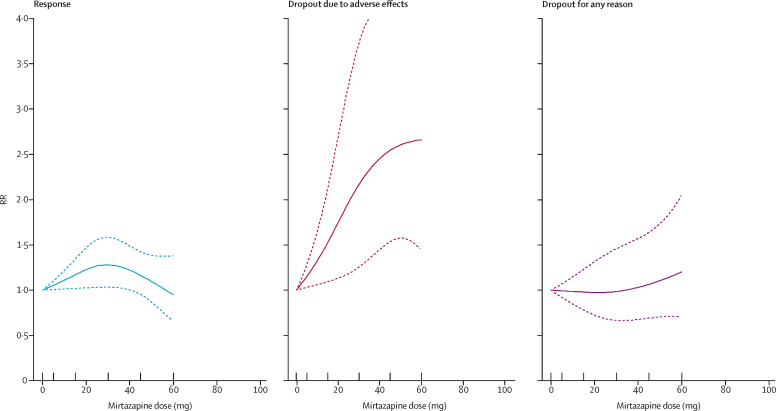
BACKGROUND: Depression is the single largest contributor to non-fatal health loss worldwide. Second-generation antidepressants are the first-line option for pharmacological management of depression. Optimising their use is crucial in reducing the burden of depression; however, debate about their dose dependency and their optimal target dose is ongoing. We have aimed to summarise the currently available best evidence to inform this clinical question. METHODS: We did a systematic review and dose-response meta-analysis of double-blind, randomised controlled trials that examined fixed doses of five selective serotonin reuptake inhibitors (SSRIs; citalopram, escitalopram, fluoxetine, paroxetine, and sertraline), venlafaxine, or mirtazapine in the acute treatment of adults (aged 18 years or older) with major depression, identified from the Cochrane Central Register of Controlled Trials, CINAHL, Embase, LILACS, MEDLINE, PsycINFO, AMED, PSYNDEX, websites of drug licensing agencies and pharmaceutical companies, and trial registries. We imposed no language restrictions, and the search was updated until Jan 8, 2016. Doses of SSRIs were converted to fluoxetine equivalents. Trials of antidepressants for patients with depression and a serious concomitant physical illness were excluded. The main outcomes were efficacy (treatment response defined as 50% or greater reduction in depression severity), tolerability (dropouts due to adverse effects), and acceptability (dropouts for any reasons), all after a median of 8 weeks of treatment (range 4-12 weeks). We used a random-effects, dose-response meta-analysis model with flexible splines for SSRIs, venlafaxine, and mirtazapine. FINDINGS: 28 554 records were identified through our search (24 524 published and 4030 unpublished records). 561 published and 121 unpublished full-text records were assessed for eligibility, and 77 studies were included (19 364 participants; mean age 42·5 years, SD 11·0; 7156 [60·9%] of 11 749 reported were women). For SSRIs (99 treatment groups), the dose-efficacy curve showed a gradual increase up to doses between 20 mg and 40 mg fluoxetine equivalents, and a flat to decreasing trend through the higher licensed doses up to 80 mg fluoxetine equivalents. Dropouts due to adverse effects increased steeply through the examined range. The relationship between the dose and dropouts for any reason indicated optimal acceptability for the SSRIs in the lower licensed range between 20 mg and 40 mg fluoxetine equivalents. Venlafaxine (16 treatment groups) had an initially increasing dose-efficacy relationship up to around 75-150 mg, followed by a more modest increase, whereas for mirtazapine (11 treatment groups) efficacy increased up to a dose of about 30 mg and then decreased. Both venlafaxine and mirtazapine showed optimal acceptability in the lower range of their licensed dose. These results were robust to several sensitivity analyses. INTERPRETATION: For the most commonly used second-generation antidepressants, the lower range of the licensed dose achieves the optimal balance between efficacy, tolerability, and acceptability in the acute treatment of major depression. FUNDING: Japan Society for the Promotion of Science, Swiss National Science Foundation, and National Institute for Health Research.
Overview
The claims and statistics of this paper haven’t been checked yet.
Free: it reads the open-access text and checks the first 5 claims that cite a source we can check. Create a free account to check every claim.
Integrity signals
Registry
Cites
Statistics
Figures
Verification
Claims the paper makes
The claims and statistics of this paper haven’t been checked yet.
Free: it reads the open-access text and checks the first 5 claims that cite a source we can check. Create a free account to check every claim.
Claims other papers make about this one
Each is checked against this paper’s own text: does it say what the citing paper says it does?
The source backs part of the claim, not all of it — or backs it for a different population, condition or comparison.
In the citing paper
“Common treatment strategies in patients with depression for whom antidepressant treatment has not been effective include increasing the antidepressant dose or switching to a different antidepressant”
From The relationship between dose and serotonin transporter occupancy of antidepressants—a systematic review (2022) · cites this paper as [4]
Experimental — accuracy not yet measuredThe source backs part of the claim, not all of it — or backs it for a different population, condition or comparison.
In the citing paper
“such strategies may, however, also largely be ineffective [4–7].”
From The relationship between dose and serotonin transporter occupancy of antidepressants—a systematic review (2022) · cites this paper as [4]
Experimental — accuracy not yet measuredThe cited source says what the claim attributes to it.
In the citing paper
“Other recent meta-analyses for acute depression reported a correlation between antidepressant dosage or the type of antidepressant and efficacy [3, 4].”
From Relapse and its modifiers in major depressive disorder after antidepressant discontinuation: meta-analysis and meta-regression (2023) · cites this paper as [3]
In the citing paper
“It is likely that inequality may impact on depression through several different mechanisms - one such pathway being lack of access to financial resources, making it difficult for women to leave relationships where there is intimate partner violence. 479-481”
From Time for united action on depression: a Lancet–World Psychiatric Association Commission (2022) · cites this paper as [481]
In the citing paper
“there is a limited benefit associated with increasing doses of SSRIs above the lower range of the licensed dose in general, whether using a fixed dosing regimen [4, 5], a flexible dosing regimen [46], or as a second-step strategy in patients not responding to standard dosing [6, 45].”
From The relationship between dose and serotonin transporter occupancy of antidepressants—a systematic review (2022) · cites this paper as [4]
2 more claims about this paper
Create a free account to see every claim other papers make about this one.
Self-check
Percentages, sums and reported differences re-computed from the paper’s own numbers.
The self-check needs the paper’s full text.
Citations
Cites
Preferred Reporting Items for Systematic Reviews and Meta-Analyses: the PRISMA statement
Moher, D., Liberati, A., Tetzlaff, J., Altman, D. G., & for the PRISMA Group (2009) · BMJ · doi:10.1136/bmj.b2535 · Cited by 83,823
Preferred Reporting Items for Systematic Reviews and Meta-Analyses: The PRISMA Statement
Moher, D., Liberati, A., Tetzlaff, J., Altman, D. G., & The PRISMA Group (2009) · PLoS Medicine · doi:10.1371/journal.pmed.1000097 · Cited by 64,042
Preferred reporting items for systematic reviews and meta-analyses: the PRISMA Statement.
(2009) · PubMed Central · Cited by 44,859
Hamilton, M. (1960) · Journal of Neurology, Neurosurgery & Psychiatry · doi:10.1136/jnnp.23.1.56 · Cited by 32,817
Wang, G., Ma, R., Qiao, G., Wada, K., Aizawa, Y., & Satoh, T. (2015) · Integrative Medicine International · doi:10.1159/000368408 · Cited by 18,657
A new depression scale designed to be sensitive to change
Montgomery, S. A., & Åsberg, M. (1979) · British Journal of Psychiatry · doi:10.1192/bjp.134.4.382 · Cited by 13,962
Cipriani, A., Furukawa, T. A., Salanti, G., Chaimani, A., Atkinson, L. Z., Ogawa, Y., Leucht, S., Ruhe, H. G., Turner, E. H., Higgins, J. P. T., et al. (2018) · The Lancet · doi:10.1016/s0140-6736(17)32802-7 · Cited by 3,541
Self-citationPRACTICE GUIDELINE FOR THE Treatment of Patients With Major Depressive Disorder
Gelenberg, A. J., Freeman, P. B., Markowitz, J. C., Rosenbaum, J. F., Thase, M. E., Trivedi, M. H., & Rhoads, R. S. (2010) · Cited by 1,521
Farde, L. (1992) · Archives of General Psychiatry · doi:10.1001/archpsyc.1992.01820070032005 · Cited by 1,419
Research works printed but not linked: 1
- NICE Depression: the treatment and management of depression in adults (partial update of NICE clinical guideline 23) 2009 National Institute for Health and Clinical Excellence London 31886986 NICE. Depression: the treatment and management of depression in adults (partial update of NICE clinical guideline 23). London: National Institute for Health and Clinical Excellence, 2009.
Cited by
Time for united action on depression: a Lancet–World Psychiatric Association Commission
Herrman, H., Patel, V., Kieling, C., Berk, M., Buchweitz, C., Cuijpers, P., Furukawa, T. A., Kessler, R. C., Kohrt, B. A., Maj, M., et al. (2022) · The Lancet · doi:10.1016/s0140-6736(21)02141-3 · Cited by 1,104
Self-citationMalhi, G. S., Bell, E., Bassett, D., Boyce, P., Bryant, R., Hazell, P., Hopwood, M., Lyndon, B., Mulder, R., Porter, R., et al. (2021) · Australian & New Zealand Journal of Psychiatry · doi:10.1177/0004867420979353 · Cited by 614
“5-HT: serotonin; R: receptor; T: transporter; NA: noradrenaline; HI: histamine; DA: dopamine; MAO: monoamine oxidase; mBDNF: mature brain-derived neurotrophic factor; TCAs: tricyclic antidepressants; NDRIs: noradrenaline dopamine reuptake inhibitors; SSRIs: selective serotonin reuptake inhibitors; SNRIs: serotonin-nor…”
BackgroundInfluentialManagement of Depression in Adults: A Review
Simon, G. E., Moise, N., & Mohr, D. C. (2024) · JAMA · doi:10.1001/jama.2024.5756 · Cited by 234
Milosavljevic, F., Bukvic, N., Pavlovic, Z., Miljevic, C., Pešic, V., Molden, E., Ingelman-Sundberg, M., Leucht, S., & Jukic, M. M. (2021) · JAMA Psychiatry · doi:10.1001/jamapsychiatry.2020.3643 · Cited by 218
Self-citationLuo, Y., Kataoka, Y., Ostinelli, E. G., Cipriani, A., & Furukawa, T. A. (2020) · Frontiers in Psychiatry · doi:10.3389/fpsyt.2020.00035 · Cited by 206
Self-citationOskotsky, T., Marić, I., Tang, A., Oskotsky, B., Wong, R. J., Aghaeepour, N., Sirota, M., & Stevenson, D. K. (2021) · JAMA Network Open · doi:10.1001/jamanetworkopen.2021.33090 · Cited by 136
Yan, A. F., Nicholson, L. L., Ward, R. E., Hiller, C. E., Dovey, K., Parker, H. M., Low, L., Moyle, G., & Chan, C. L. (2024) · Sports Medicine · doi:10.1007/s40279-023-01990-2 · Cited by 224
Lewis, G., Duffy, L., Ades, A., Amos, R., Araya, R., Brabyn, S., Button, K. S., Churchill, R., Derrick, C., Dowrick, C., et al. (2019) · The Lancet Psychiatry · doi:10.1016/s2215-0366(19)30366-9 · Cited by 120
Liu, X., Hao, J., Yao, E., Cao, J., Zheng, X., Yao, D., Zhang, C., Li, J., Pan, D., Luo, X., et al. (2020) · Brain Behavior and Immunity · doi:10.1016/j.bbi.2020.07.022 · Cited by 130
Leucht, S., Priller, J., & Davis, J. M. (2024) · American Journal of Psychiatry · doi:10.1176/appi.ajp.20240738 · Cited by 117
Self-citationSabé, M., Hyde, J., Cramer, C., Eberhard, A., Crippa, A., Brunoni, A. R., Aleman, A., Kaiser, S., Baldwin, D. S., Garner, M. J., et al. (2024) · JAMA Network Open · doi:10.1001/jamanetworkopen.2024.12616 · Cited by 127
Greenway, K. T., Garel, N., Jerome, L., & Feduccia, A. A. (2020) · Expert Review of Clinical Pharmacology · doi:10.1080/17512433.2020.1772054 · Cited by 94
“pressants found in many studies [106], which may partly result from positive and negative environments being amplified at”
BackgroundEstimating Risk of Antidepressant Withdrawal from a Review of Published Data
Horowitz, M. A., Framer, A., Hengartner, M. P., Sørensen, A., & Taylor, D. (2023) · CNS Drugs · doi:10.1007/s40263-022-00960-y · Cited by 76
Hutton, T. M., Aaronson, S. T., Carpenter, L. L., Pages, K. P., Krantz, D., Lucas, L., Chen, B., & Sackeïm, H. A. (2023) · Brain stimulation · doi:10.1016/j.brs.2023.10.001 · Cited by 80
“In contrast, there is substantial evidence that the therapeutic effects of antidepressant medications generally plateau despite increasing oral dose [50 – 52] or extending the duration of treatment beyond 6 – 12 weeks [53 – 56].”
Higgins, G. A., Carroll, N. K., Brown, M., MacMillan, C., Silenieks, L. B., Thevarkunnel, S., Izhakova, J., Magomedova, L., DeLannoy, I., & Sellers, E. M. (2021) · Frontiers in Pharmacology · doi:10.3389/fphar.2021.640241 · Cited by 69
“For example, SSRI’s are associated with side effects such as sexual dysfunction, weight gain, and are increasingly recognized to poorly treat certain symptoms, such as anhedonia and amotivation (Fava and Kendler, 2000; Nutt et al., 2007; Furukawa et al., 2019).”
BackgroundHengartner, M. P., Jakobsen, J. C., Sørensen, A., & Plöderl, M. (2020) · PLOS ONE · doi:10.1371/journal.pone.0229381 · Cited by 66
De Diego-Adeliño, J., Crespo, J. M., Mora, F., Neyra, A., Iborra, P., Gutiérrez-Rojas, L., & Salonia, S. F. (2022) · Expert Opinion on Drug Safety · doi:10.1080/14740338.2022.2019705 · Cited by 67
“Contrary to other commonly used antidepressants with which dose–response relationship is under debate [47], increasing doses of vortioxetine were associated with increas-”
ResultSørensen, A., Ruhé, H. G., & Munkholm, K. (2022) · Molecular Psychiatry · doi:10.1038/s41380-021-01285-w · Cited by 65
Pharmacogenomics in treatment of depression and psychosis: an update
Jukić, M. M., Milosavljević, F., Molden, E., & Ingelman‐Sundberg, M. (2022) · Trends in Pharmacological Sciences · doi:10.1016/j.tips.2022.09.011 · Cited by 71
Impact of CYP2C19 genotype on sertraline exposure in 1200 Scandinavian patients
Bråten, L. S., Haslemo, T., Jukić, M. M., Ingelman‐Sundberg, M., Molden, E., & Kringen, M. K. (2019) · Neuropsychopharmacology · doi:10.1038/s41386-019-0554-x · Cited by 61
Antidepressant medications in dementia: evidence and potential mechanisms of treatment-resistance
Costello, H., Roiser, J. P., & Howard, R. (2023) · Psychological Medicine · doi:10.1017/s003329172200397x · Cited by 60
“…lack of therapeutic effect cannot be explained by age effects as depressed older adults without dementia respond as well to antidepressants as other age groups (Gerson, Belin, Kaufman, Mintz, & Jarvik, 1999; Gildengers et al., 2002), though the effective dose range differs (Furukawa et al., 2019).”
Simon, M. S., Arteaga-Henríquez, G., Algendy, A. F., Siepmann, T., & Illigens, B. M. W. (2023) · Neuropsychiatric Disease and Treatment · doi:10.2147/ndt.s385117 · Cited by 66
Farhat, L. C., Flores, J. M., Behling, E., Avila-Quintero, V. J., Lombroso, A., Cortese, S., Polanczyk, G. V., & Bloch, M. H. (2022) · Molecular Psychiatry · doi:10.1038/s41380-021-01391-9 · Cited by 61
“To confirm our findings obtained with the dose–response metaanalyses, we conducted additional pairwise meta-analyses to provide indirect comparative evidence of flexible-dose versus fixed-dose regimens for MPH and AMP as recently implemented in meta-analyses of RCTs of antidepressants [51, 52].”
ResultA Bayesian dose–response meta-analysis model: A simulations study and application
Hamza, T., Cipriani, A., Furukawa, T. A., Egger, M., Orsini, N., & Salanti, G. (2021) · Statistical Methods in Medical Research · doi:10.1177/0962280220982643 · Cited by 51
“Using a previously validated formula, we first transformed the dosages of the different antidepressants into fluoxetineequivalents [29].”
MethodSelf-citationBrowning, M., Bilderbeck, A. C., Dias, R., Dourish, C. T., Kingslake, J., Deckert, J., Goodwin, G. M., Gorwood, P., Guo, B., Harmer, C. J., et al. (2021) · Neuropsychopharmacology · doi:10.1038/s41386-021-00981-z · Cited by 53
“Given the doubt as to the efficacy of dose increases for common antidepressants [37, 38], this may have limited the impact of the intervention.”
BackgroundCampos, A. I., Byrne, E. M., Mitchell, B. L., Wray, N. R., Lind, P. A., Licinio, J., Medland, S. E., Martin, N. G., Hickie, I. B., & Rentería, M. E. (2022) · The Pharmacogenomics Journal · doi:10.1038/s41397-022-00267-7 · Cited by 66
“The current Clinical Pharmacogenetics Implementation Consortium (CPIC) guidelines report poor metabolisers to be at increased risk of adverse side-effects due to higher antidepressant serum concentrations [13, 17, 18].”
BackgroundZhou, S., Li, P., Lv, X., Lai, X., Liu, Z., Zhou, J., Liu, F., Tao, Y., Zhang, M., Yu, X., et al. (2023) · SLEEP · doi:10.1093/sleep/zsad177 · Cited by 48
“Mirtazapine might show optimal acceptability at 30 mg instead of 45 mg [29].”
BackgroundResultKurien, T., Kerslake, R. W., Graven‐Nielsen, T., Arendt‐Nielsen, L., Auer, D. P., Edwards, K., Scammell, B. E., & Petersen, K. K. (2022) · European Journal of Pain · doi:10.1002/ejp.2018 · Cited by 53
“The serotonergic and noradrenergic systems play a critical role in the pathophysiology of anxiety (Dell'Osso et al., 2010; Gosmann et al., 2021) and depression (Furukawa et al., 2019).”
BackgroundEap, C. B., Gründer, G., Baumann, P., Ansermot, N., Conca, A., Corruble, E., Crettol, S., Dahl, M., de León, J., Greiner, C., et al. (2021) · The World Journal of Biological Psychiatry · doi:10.1080/15622975.2021.1878427 · Cited by 57
Xu, G., Lei, H., Huang, L., Xiao, Q., Huang, B., Zhou, Z., Tian, H., Huang, F., Liu, Y., Zhao, L., et al. (2022) · Journal of Affective Disorders · doi:10.1016/j.jad.2022.04.155 · Cited by 45
Strawn, J. R., Mills, J. A., Suresh, V., Mayes, T. L., Gentry, M. T., Trivedi, M. H., & Croarkin, P. E. (2023) · Journal of Psychiatric Research · doi:10.1016/j.jpsychires.2023.01.043 · Cited by 50
Antidepressants in Alzheimer’s Disease: A Focus on the Role of Mirtazapine
Correia, A. S., & Vale, N. (2021) · Pharmaceuticals · doi:10.3390/ph14090930 · Cited by 46
“In this study, when specifically compared with venlafaxine, the efficacy of mirtazapine increased up to a dose of 30 mg, whereas with venlafaxine, the dose-efficacy relationship increased with doses up to 75–150 mg [94].”
Xu, Y., Liang, J., Sun, Y., Zhang, Y., Shan, F., Ge, J., & Xia, Q. (2023) · International Immunopharmacology · doi:10.1016/j.intimp.2023.110108 · Cited by 41
Mertens, L. J., Koslowski, M., Betzler, F., Evens, R., Gilles, M., Jungaberle, A., Jungaberle, H., Majić, T., Ströhle, A., Wolff, M., et al. (2022) · Neuroscience Applied · doi:10.1016/j.nsa.2022.100104 · Cited by 41
“2), de fi ned as no improvement despite two adequate courses (six weeks minimum each with at least the minimum effective dose – equivalent to the minimum licenced dose (Furukawa et al., 2019)) of antidepressant treatment of different pharmacological classes, are randomized into the study.”
Adamo, D., Pecoraro, G., Coppola, N., Calabria, E., Aria, M., & Mignogna, M. D. (2020) · Oral Diseases · doi:10.1111/odi.13602 · Cited by 50
Cheng, Q., Huang, J., Xu, L., Li, Y., Li, H., Shen, Y., Zheng, Q., & Li, L. (2020) · International Journal of Neuropsychopharmacology · doi:10.1093/ijnp/pyz062 · Cited by 38
Obsessive-Compulsive Disorders
Mathews, C. (2021) · CONTINUUM Lifelong Learning in Neurology · doi:10.1212/con.0000000000001011 · Cited by 43
Braun, C., Adams, A., Rink, L., Bschor, T., Kuhr, K., & Baethge, C. (2020) · Acta Psychiatrica Scandinavica · doi:10.1111/acps.13235 · Cited by 36
“• By a small margin (SMD of 0.2), fluoxetine 60 mg/day is statistically and clinically significantly inferior to 20 mg. • Higher doses of SSRI come with more dropouts, overall, and due to adverse events.”
BackgroundInfluentialWang, Z., Li, H., Kang, Y., Liu, Y., Shan, L., & Wang, F. (2022) · Therapeutics and Clinical Risk Management · doi:10.2147/tcrm.s363404 · Cited by 49
“Among SSRIs, fluoxetine, escitalopram, citalopram, paroxetine, and sertraline are the most prescribed drugs.(3) SSRIs act by inhibiting the 5-hydroxytryptamine (5-HT) transporter (5-HTT) on the axonal terminals of serotonergic neurons in the raphe nuclei, which terminates serotonin signaling through rapid presynaptic…”
BackgroundSuryanto, M. E., Audira, G., Uapipatanakul, B., Hussain, A., Saputra, F., Siregar, P., Chen, K. H. ‐., & Hsiao, C. (2021) · Cells · doi:10.3390/cells10040738 · Cited by 37
“These phenomena likely occurred due to the pharmacological differences among the antidepressants and overdoses of these antidepressants since each of them has its own dosage range [115] and thus, it could have additional nonspecific alterations due to the high concentration level.”
BackgroundLense, X. M., Hiemke, C., Funk, C. S. M., Havemann‐Reinecke, U., Hefner, G., Menke, A., Mößner, R., Riemer, T., Scherf‐Clavel, M., Schoretsanitis, G., et al. (2023) · Psychopharmacology · doi:10.1007/s00213-023-06484-7 · Cited by 42
“Earlier studies reported similar findings (Furukawa et al. 2019).”
Wang, X., Feng, S., Wang, Y., Zhang, N., Wang, Z., & Zhang, Y. (2021) · Journal of Ethnopharmacology · doi:10.1016/j.jep.2021.114960 · Cited by 39
Christensen, M. C., McIntyre, R. S., Florea, I., Loft, H., & Fagiolini, A. M. (2021) · CNS Spectrums · doi:10.1017/s1092852921000936 · Cited by 36
“Similarly, the SNRI venlafaxine has been reported to have an increasing dose–efficacy relationship only in the lower approved dose range (75– 150 mg), with patient withdrawals due to TEAEs increasing sharply with increasing doses at this range.(27) The above differences in dose–response and tolerability compared with…”
BackgroundRink, L., Adams, A., Braun, C., Bschor, T., Kuhr, K., & Baethge, C. (2021) · Psychotherapy and Psychosomatics · doi:10.1159/000520554 · Cited by 36
Horowitz, M., & Wilcock, M. (2022) · Drug and Therapeutics Bulletin · doi:10.1136/dtb.2020.000080 · Cited by 33
Rossi, F. E., dos Santos, G. G., Rossi, P. A. Q., Stubbs, B., Schuch, F. B., & Neves, L. M. (2024) · Psychiatry Research · doi:10.1016/j.psychres.2024.115805 · Cited by 46
Shaping therapeutic trajectories in mental health: Instructive vs. permissive causality
Branchi, I., & Giuliani, A. (2020) · European Neuropsychopharmacology · doi:10.1016/j.euroneuro.2020.12.001 · Cited by 37
Antidepressants for functional abdominal pain disorders in children and adolescents
de Bruijn, C. M. A., Rexwinkel, R., Gordon, M. A., Benninga, M. A., & Tabbers, M. M. (2021) · Cochrane Database of Systematic Reviews · doi:10.1002/14651858.cd008013.pub3 · Cited by 37
Liu, L., Lv, X., Zhou, S., Liu, Q., Wang, J., Tian, H., Zhang, K., Wei, J., Wang, C., Chen, Q., et al. (2021) · Journal of Psychiatric Research · doi:10.1016/j.jpsychires.2021.06.020 · Cited by 32
The Relationship Between 5-Hydroxytryptamine and Its Metabolite Changes With Post-stroke Depression
Gu, S., He, Z., Xu, Q., Dong, J., Xiao, T., Liang, F., Ma, X., Wang, F., & Huang, J. H. (2022) · Frontiers in Psychiatry · doi:10.3389/fpsyt.2022.871754 · Cited by 32
Anatomical and neurochemical bases of theory of mind in de novo Parkinson's Disease
Orso, B., Arnaldi, D., Famà, F., Girtler, N. G., Brugnolo, A., Doglione, E., Filippi, L., Massa, F., Peira, E., Bauckneht, M., et al. (2020) · Cortex · doi:10.1016/j.cortex.2020.06.012 · Cited by 30
Nanocarrier drug delivery system: promising platform for targeted depression therapy
Feng, X., Jia, P., & Zhang, D.-D. (2024) · Frontiers in Pharmacology · doi:10.3389/fphar.2024.1435133 · Cited by 38
Puścian, A., Winiarski, M., Łęski, S., Charzewski, Ł., Nikolaev, T., Borowska, J., Dzik, J. M., Bijata, M., Lipp, H., Dziembowska, M., et al. (2021) · British Journal of Pharmacology · doi:10.1111/bph.15319 · Cited by 31
Zhang, Y., Liao, J., Li, Q., Zhang, X., Liu, L., Yan, J., Zhang, D., Yan, H., & Yue, W. (2021) · Frontiers in Psychiatry · doi:10.3389/fpsyt.2021.681701 · Cited by 33
Furukawa, T. A., Salanti, G., Cowen, P. J., Leucht, S., & Cipriani, A. (2020) · Acta Psychiatrica Scandinavica · doi:10.1111/acps.13145 · Cited by 26
“25), which would translate into a risk difference of 1% ( 7% to 5%) for an assumed response rate of 35% (3).”
BackgroundMethodResultInfluentialSelf-citationKishi, T., Sakuma, K., Hatano, M., Okuya, M., Matsuda, Y., Kato, M., & Iwata, N. (2023) · Molecular Psychiatry · doi:10.1038/s41380-022-01920-0 · Cited by 26
“Other recent meta-analyses for acute depression reported a correlation between antidepressant dosage or the type of antidepressant and efficacy [3, 4].”
ResultAntidepressant efficacy is correlated with plasma levels: mega-analysis and further evidence
Cellini, L., De Donatis, D., Zernig, G., De Ronchi, D., Giupponi, G., Serretti, A., Xenia, H., Conca, A., & Florio, V. (2022) · International Clinical Psychopharmacology · doi:10.1097/yic.0000000000000386 · Cited by 24
“Recent findings suggest that the dose-efficacy curve increases up to a dose of 30 mg/die which then decreases showing optimal acceptability in the lower range of their licensed dose (Furukawa et al., 2019).”
BackgroundResultInfluentialA Bayesian dose-response meta-analysis model: A simulations study and application.
Hamza, T., Cipriani, A., Furukawa, T. A., Egger, M., Orsini, N., & Salanti, G. (2021) · doi:10.48350/151952 · Cited by 23
Self-citationZandifar, A., Panahi, M., Badrfam, R., & Qorbani, M. (2024) · BMC Psychiatry · doi:10.1186/s12888-024-05627-0 · Cited by 28
“It’s also worth noting that the effectiveness of SSRIs usually occurs in the lower range of their licensed dose, and increasing the dose does not significantly increase this effectiveness [10].”
BackgroundFurukawa, Y., Hamza, T., Cipriani, A., Furukawa, T. A., Salanti, G., & Ostinelli, E. G. (2021) · The British Journal of Psychiatry · doi:10.1192/bjp.2021.165 · Cited by 25
Self-citationAntidepressant medication to prevent depression relapse in primary care: the ANTLER RCT
Duffy, L., Clarke, C. S., Lewis, G., Marston, L., Freemantle, N., Gilbody, S. M., Hunter, R. M., Kendrick, T., Kessler, D. S., King, M., et al. (2021) · Health Technology Assessment · doi:10.3310/hta25690 · Cited by 27
“Feeling worse 46/210 (22) 42/193 (22) 0.”
Naß, J., & Efferth, T. (2020) · Phytomedicine · doi:10.1016/j.phymed.2020.153439 · Cited by 24
Johnson, C. F. A., Maxwell, M., Williams, B., Dougall, N. J., & MacGillivray, S. A. (2022) · BMJ Medicine · doi:10.1136/bmjmed-2021-000017 · Cited by 35
Calabrò, M., Fabbri, C., Kasper, S., Zohar, J., Souery, D., Montgomery, S., Albani, D., Forloni, G., Ferentinos, P. P., Rujescu, D., et al. (2022) · European Neuropsychopharmacology · doi:10.1016/j.euroneuro.2022.01.008 · Cited by 20
Hamza, T., Furukawa, T. A., Orsini, N., Cipriani, A., Iglesias, C. P., & Salanti, G. (2022) · Statistical Methods in Medical Research · doi:10.1177/09622802211070256 · Cited by 21
“We implemented various DE-NMA models in a network of antidepressants and placebo, and the resulting dose-effect shapes are in line with clinical expectations and previous findings [4, 11, 17].”
MethodResultSelf-citationYrondi, A., Javelot, H., Nobile, B., Boudieu, L., Aouizerate, B., Llorca, P., Charpeaud, T., Bennabi, D., Lefrere, A., & Samalin, L. (2024) · L Encéphale · doi:10.1016/j.encep.2023.11.029 · Cited by 26
Pelizza, L., Quattrone, E., Leuci, E., Paulillo, G., Azzali, S., Pupo, S., & Pellegrini, P. (2022) · Psychiatry Research · doi:10.1016/j.psychres.2022.114887 · Cited by 20
Terao, T., Ishii, N., Hirakawa, H., & Aoshima, E. (2020) · Medical Hypotheses · doi:10.1016/j.mehy.2020.109681 · Cited by 20
Holper, L. (2020) · EClinicalMedicine · doi:10.1016/j.eclinm.2019.11.012 · Cited by 22
“The results may inform researchers and guideline developers to reconsider the nonlinearity of dose-age dependencies before generalizing antidepressant treatment recommendations in adult MDD.”
BackgroundMethodInfluentialFarhat, L. C., Flores, J. M., Avila-Quintero, V. J., Polanczyk, G. V., Cipriani, A., Furukawa, T. A., Bloch, M. H., & Cortese, S. (2023) · JAMA Psychiatry · doi:10.1001/jamapsychiatry.2023.3985 · Cited by 25
Self-citationPelizza, L., Maestri, D., Leuci, E., Quattrone, E., Azzali, S., Paulillo, G., & Pellegrini, P. (2021) · Clinical Psychology & Psychotherapy · doi:10.1002/cpp.2678 · Cited by 24
Schiavo, G., Forgerini, M., Lucchetta, R. C., & Mastroianni, P. D. C. (2022) · Australian Journal on Ageing · doi:10.1111/ajag.13046 · Cited by 27
Li, M., Zhang, J., Jiang, C., Wang, J., Sun, R.-H., Jin, S.-Y., Zhang, N., & Zhou, Z. (2023) · Neuropsychiatric Disease and Treatment · doi:10.2147/ndt.s393264 · Cited by 22
“23 mg/day as calculated according to the previous report.(36)”
MethodLuo, X., Zhu, D., Li, J., Ren, M., Liu, Y., Si, T., & Chen, Y. (2023) · Psychiatry Research · doi:10.1016/j.psychres.2023.115391 · Cited by 22
“…(including sertraline) for the treatment of MDD. Ultimately, five associated systematic reviews and meta-analyses were examined, and we identified the primary studies from them (Cheng et al., 2020; Furukawa et al., 2019; Hieronymus et al., 2016; Jakubovski et al., 2016; Papakostas et al., 2010).”
InfluentialHu, J., Lian, Z., Weng, Z., Xu, Z., Gao, J. Y., Liu, Y., Luo, T., & Wang, X. (2024) · Advanced Materials · doi:10.1002/adma.202405547 · Cited by 22
Chen, Y. B., Chou, P., Tu, Y., Brunoni, A. R., Su, K., Tseng, P., Liang, C., Lin, P., Carvalho, A. F., Hung, K., et al. (2023) · Asian Journal of Psychiatry · doi:10.1016/j.ajp.2023.103717 · Cited by 17
Scherf‐Clavel, M., Hommers, L. G., Wurst, C., Stonawski, S., Deckert, J., Domschke, K., Unterecker, S., & Menke, A. (2020) · Journal of Psychopharmacology · doi:10.1177/0269881120936509 · Cited by 20
“In line with our findings, a meta-analysis showed an increasing dose-efficacy from 75 to 150 mg, followed by a moderate increase up to 375 mg; however, plasma concentrations were not considered (Furukawa et al., 2019).”
ResultChen, Y.-Y., Ye, X.-Q., Tang, T., She, T., Chen, M., & Zheng, H. (2021) · Frontiers in Pharmacology · doi:10.3389/fphar.2021.671845 · Cited by 17
Xu, J., Hao, Q., Qian, R., Mu, X., Dai, M., Wu, Y., Tang, Y., Xie, M., & Wang, Q. (2021) · Frontiers in Psychiatry · doi:10.3389/fpsyt.2021.717999 · Cited by 20
Liu, Z., Sun, L., Sun, F., Zhang, Y., Wang, J., Zhang, Z., Sun, G., Sun, L., Yang, R., Yao, G., et al. (2024) · Heliyon · doi:10.1016/j.heliyon.2024.e30344 · Cited by 17
“The therapeutic doses of antidepressants were expressed as coefficients of fluoxetine [23], while the therapeutic doses of antipsychotics were expressed as chlorpromazine equivalents [24].”
Zanardi, R., Manfredi, E., Montrasio, C., Colombo, C., Serretti, A., & Fabbri, C. (2021) · Clinical Pharmacology & Therapeutics · doi:10.1002/cpt.2315 · Cited by 17
Wang, Y., Yao, J., Koszycki, D., Jiang, W., Fang, F., Wang, M., Tao, J., Zhao, W., Liu, Y., Su, S., et al. (2023) · Psychological Medicine · doi:10.1017/s0033291723000788 · Cited by 22
“The average equivalent dose (i.e. dose that would be equivalent to 20 mg fluoxetine) (Furukawa et al., 2019; Perahia et al., 2008) of ADM among the three treatment groups during the 16-week treatment did not differ significantly (DIT + ADM group: 27.10 ± 8.50 mg; GST + ADM group: 29.61 ± 10.89 mg;…”
BackgroundInfluentialDose–effect meta-analysis for psychopharmacological interventions using randomised data
Hamza, T., Furukawa, T. A., Orsini, N., Cipriani, A., & Salanti, G. (2022) · Evidence-Based Mental Health · doi:10.1136/ebmental-2021-300278 · Cited by 18
Self-citationZhang, J., Song, Z., Gui, C., Jiang, G., Cheng, W., You, W., Wang, Z., & Chen, G. (2022) · Frontiers in Pharmacology · doi:10.3389/fphar.2022.1035895 · Cited by 19
SSRIs in the Treatment of Depression: A Pharmacological CUL-DE-SAC?
Cowen, P. J. (2023) · Current topics in behavioral neurosciences · doi:10.1007/7854_2023_447 · Cited by 25
Self-citationEnhancing Agency in Posttraumatic Stress Disorder Therapies Through Sensorimotor Technologies
Adrien, V., Bosc, N., Peccia-Galletto, C., Diot, T., Claverie, D., Reggente, N., Trousselard, M., Bui, É., Baubet, T., & Schoeller, F. (2024) · Journal of Medical Internet Research · doi:10.2196/58390 · Cited by 16
“Neuromodulatory treatments [7] such as transcranial magnetic stimulation [184-186], transcranial direct current stimulation [187,188], deep brain stimulation [189], and vagus nerve stimulation [190,191] could increase body awareness, SO, and SA.”
Lin, Y., Chen, Y. B., Hung, K., Liang, C., Tseng, P., Carvalho, A. F., Vieta, E., Solmi, M., Lai, E. C., Lin, P., et al. (2024) · BMJ Mental Health · doi:10.1136/bmjment-2024-301165 · Cited by 20
Furukawa, Y., Oguro, S., Obata, S., Hamza, T., Ostinelli, E. G., & Kasai, K. (2022) · Psychiatry and Clinical Neurosciences · doi:10.1111/pcn.13438 · Cited by 14
Topiramate, acupuncture, and BoNT‐A for chronic migraine: a network meta‐analysis
Zheng, H., Huang, S., Chen, Y., Tang, T., Qin, D., & Chen, M. (2021) · Acta Neurologica Scandinavica · doi:10.1111/ane.13391 · Cited by 15
Liu, Z., Sun, L., Zhang, Y., Wang, J., Sun, F., Zhang, Z., Sun, G., Sun, L., & Yang, R. (2023) · Frontiers in Psychiatry · doi:10.3389/fpsyt.2023.1130437 · Cited by 20
Zhou, C., Kong, D., Xue, R., Chen, M., Li, G., Xu, Y. J., Liu, S., Tian, H., & Zhuo, C. (2020) · Frontiers in Neuroscience · doi:10.3389/fnins.2020.00517 · Cited by 17
“In this study, we chose the combination of two potent serotonin reuptake inhibitors, mirtazapine and venlafaxine, due to their reported efficacy and tolerability (Anttila and Leinonen, 2001; Cipriani et al., 2018; Furukawa et al., 2019).”
BackgroundMethodChen, F., Jiang, H., Xu, J., Wang, S., Meng, D., Geng, P., Dai, D., Zhou, Q., & Zhou, Y. (2020) · Drug Design Development and Therapy · doi:10.2147/dddt.s276704 · Cited by 16
“and is one of the most popularly prescribed antidepressants in many countries.(10) It has high oral bioavailability and is used in the treatment of a number of psychiatric disorders, including major depressive and anxiety disorders.”
BackgroundKernot, C., Tomlinson, A., Chevance, A., & Cipriani, A. (2019) · Evidence Based Mental Health · doi:10.1136/ebmental-2019-300105 · Cited by 13
Self-citationZhang, Y., Gao, Y., Li, X., Zou, Y., Ye, Y., & Zou, Z. (2025) · European Child & Adolescent Psychiatry · doi:10.1007/s00787-025-02688-8 · Cited by 24
“Unlike previous DRMA studies on adults using antidepres - sants for MDD, this study showed a steady increase from 0 to 40 mg of fluoxetine equivalents, followed by a plateau or even a slight decrease with doses between 40 and 80 mg because of the saturation of ligand-receptor binding [17].”
Kessler, R. C., Furukawa, T. A., Kato, T., Luedtke, A. R., Petukhova, M. V., Sadikova, E., & Sampson, N. A. (2021) · Psychological Medicine · doi:10.1017/s0033291721000027 · Cited by 14
“Prior SUN(^_^)D analyses investigated predictors of remission at any time in the first 9 weeks (Furukawa et al., 2019b), acute phase deterioration (Akechi et al., 2020), switching to hypomania/mania (Akechi, Kato, Watanabe, Tanaka, & Furukawa, 2019a), and relapse after successful acute-phase…”
BackgroundMethodSelf-citationUnblinding and demand characteristics in the treatment of depression
Goodwin, G. M., Croal, M., Marwood, L., & Malievskaia, E. (2023) · Journal of Affective Disorders · doi:10.1016/j.jad.2023.02.030 · Cited by 15
Pelizza, L., Leuci, E., Quattrone, E., Azzali, S., Paulillo, G., Pupo, S., & Pellegrini, P. (2023) · PubMed Central · doi:10.36131/cnfioritieditore20230105 · Cited by 14
“In this method, antidepressants were described and standardized as an equivalent dose of fluoxetine [mg/day]) (Furukawa et al., 2019).”
MethodDai, L., Zhang, X., Yu, R., Wang, X., Deng, F., Li, X., & Kuang, L. (2023) · Frontiers in Psychiatry · doi:10.3389/fpsyt.2023.1177227 · Cited by 18
Kato, M., Asami, Y., Wajsbrot, D., Wang, X., Boucher, M., Prieto, R., & Pappadopulos, E. A. (2020) · Journal of Psychiatric Research · doi:10.1016/j.jpsychires.2020.06.011 · Cited by 15
Su, J., Dou, Z., Hong, H., Xu, F., Lu, X., Lu, Q., Ye, T., & Huang, C. (2022) · Frontiers in Pharmacology · doi:10.3389/fphar.2022.857081 · Cited by 15
“It is known that the 5-hydroxyteyptamine (5-HT) is a key molecule that mediates the antidepressant actions of many clinically available antidepressants, such as sertraline and paroxetine (Furukawa et al., 2019).”
Background
Metadata
- Authors
- Furukawa, T. A., Cipriani, A., Cowen, P. J., Leucht, S., Egger, M., & Salanti, G.
- Affiliations
- Kyoto University (JP)
- Oxford Health NHS Foundation Trust (GB)
- Warneford Hospital (GB)
- Technical University of Munich (DE)
- University of Bern (CH)
- Corresponding author
- Cipriani, Andrea
- Venue
- The Lancet Psychiatry
- Publisher
- Elsevier BV
- Published
- 2019-07
- Volume
- 6
- Issue
- 7
- Pages
- 601-609
- ISSN
- 2215-0366 (ISSN-L)
- PMC
- PMC6586944
- OpenAlex
- W2948548704
- Cited by
- 322
- References
- 30
- Citations by year
- 2026: 26 · 2025: 54 · 2024: 59 · 2023: 39 · 2022: 46 · 2021: 50 · 2020: 33 · 2019: 15
- FWCI
- 4.62
- Type
- journal article
- Language
- en
- Open access
- hybrid
- doi.org
- Licence
- cc-by
- www.elsevier.com/tdm/userlicense/1.0/ (tdm)
- www.elsevier.com/legal/tdmrep-license (tdm)
- creativecommons.org/licenses/by/4.0/ (vor)
- Locations
- The Lancet Psychiatry (publishedVersion, cc-by)
- PubMed Central (publishedVersion, cc-by)
- PubMed (publishedVersion)
- Institutional Repositories DataBase (IRDB) (submittedVersion, cc-by)
- BORIS (University Library Bern) (submittedVersion, cc-by)
- mediaTUM – the media and publications repository of the Technical University Munich (Technical University Munich) (submittedVersion, other-oa)
- mediaTUM – the media and publications repository of the Technical University Munich (Technical University Munich) (submittedVersion)
- Kyoto University Research Information Repository (Kyoto University) (submittedVersion, cc-by)
- Bristol Research (University of Bristol) (submittedVersion, cc-by)
- Funders
- NIHR Oxford Biomedical Research Centre (BRC-1215-20005)
- National Institute for Health Research (RP-2017-08-ST2-006)
- Schweizerischer Nationalfonds zur Förderung der Wissenschaftlichen Forschung (179158)
- Japan Society for the Promotion of Science (17K19808)
- Topics
- Health Sciences › Medicine › Pharmacology (medical) › Treatment of Major Depression
- Social Sciences › Psychology › Experimental and Cognitive Psychology › Anxiety, Depression, Psychometrics, Treatment, Cognitive Processes
- Health Sciences › Medicine › Psychiatry and Mental health › Mental Health Treatment and Access
- Keywords
- major depressive disorder, selective serotonin reuptake inhibitors, venlafaxine, mirtazapine, dose optimization, treatment response, tolerability, acceptability, citalopram, escitalopram, paroxetine, sertraline, fluoxetine, adverse effects
- MeSH terms
- Venlafaxine Hydrochloride, Mirtazapine, Major Depressive Disorder, Depressive Disorder, Major, Dose-Response Relationship, Drug, Double-Blind Method, Humans, Randomized Controlled Trials as Topic, Selective Serotonin Reuptake Inhibitors, Serotonin Agents
About these checks
Registry, retraction, Cites and statistics results are computed, not judged, with one exception: a printed reference that no index lists is read once by a model before it counts as a citation error. Claims are extracted by a model and kept only when their quote appears verbatim in the text; each cited source is then checked, with a model’s help, for whether it says what the claim relies on. Those verdicts can be wrong — read the claim’s quote and the cited source before relying on one.
Statistics and arithmetic are recomputed, not judged.
Confidence bands are shown only for fields calibrated on our annotated test set. None is calibrated yet, so no band is shown.
What counts as a claim ›How we measure confidence ›How we check this ›
Are you an author, or do you see a problem with this page? Request a review
Data sources
Bibliographic data: Semantic Scholar, OpenAlex, Crossref.
Contains information from the Semantic Scholar Academic Graph Datasets, made available under the ODC Attribution License (ODC-BY 1.0).
Semantic Scholar’s data is described in: Kinney, R., et al. (2023). The Semantic Scholar Open Data Platform. arXiv:2301.10140.
