

The DOI matches its Crossref record; 20 of the 21 references it cites were found in a registry or an index.
Cognitive behavioural therapy for irritable bowel syndrome: 24-month follow-up of participants in the ACTIB randomised trial
Open accessAbstract
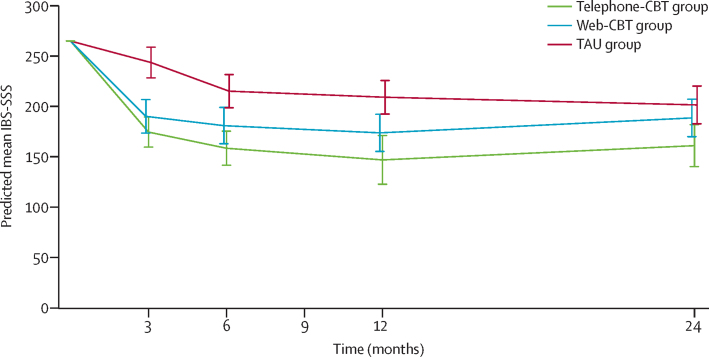
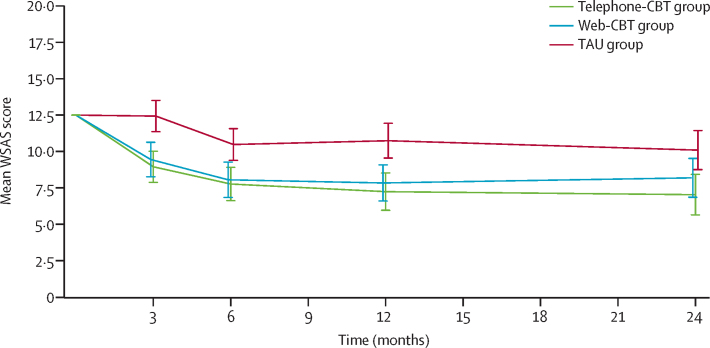
BACKGROUND: Irritable bowel syndrome (IBS) is common, affecting 10-20% of the adult population worldwide, with many people reporting ongoing symptoms despite first-line therapies. Cognitive behavioural therapy (CBT) is recommended in guidelines for refractory IBS but there is insufficient access to CBT for IBS and uncertainty about whether benefits last in the longer term. Assessing Cognitive behavioural Therapy for IBS (ACTIB) was a large, randomised, controlled trial of two forms of CBT for patients with refractory IBS. ACTIB results showed that, at 12 months, both forms of CBT for IBS were significantly more effective than treatment as usual at reducing IBS symptom severity in adults with refractory IBS. This follow-up study aimed to evaluate 24-month clinical outcomes of participants in the ACTIB trial. METHODS: In the ACTIB three-group, randomised, controlled trial, 558 adults with refractory IBS were randomly allocated to receive either therapist-delivered telephone CBT (telephone-CBT group), web-based CBT with minimal therapist support (web-CBT group), or treatment as usual (TAU group) and were followed up for 12 months. Participants were adults with refractory IBS (clinically significant symptoms for ≥12 months despite being offered first-line therapies), recruited by letter and opportunistically from 74 general practices and three gastroenterology centres in London and the south of England (UK) between May 1, 2014, and March 31, 2016. Primary outcome measures were IBS Symptom Severity Score (IBS-SSS) and Work and Social Adjustment Scale (WSAS), assessed in the intention-to-treat (ITT) population with multiple imputation. This study was a non-prespecified naturalistic follow-up and analysis of the participants of the ACTIB trial at 24 months assessing the same outcomes as the original trial. Outcome measures were completed online by participants or a paper questionnaire was posted, or telephone follow-up undertaken. The ACTIB trial is registered with the International Standard Randomised Controlled Trial Number registry, number ISRCTN44427879. FINDINGS: 24-month follow-up of outcomes was achieved for 323 (58%) of 558 participants: 119 (64%) of 186 in the telephone-CBT group, 99 (54%) of 185 in the web-CBT group, and 105 (56%) of 187 in the TAU group. At 24 months, mean IBS-SSS was 40·5 points (95% CI 15·0 to 66·0; p=0·002) lower in the telephone-CBT group and 12·9 points (-12·9 to 38·8; p=0·33) lower in the web-CBT group than in the TAU group. The mean WSAS score was 3·1 points (1·3 to 4·9; p<0·001) lower in the telephone-CBT group and 1·9 points (0·1 to 3·7; p=0·036) lower in the web-CBT group than in the TAU group. A clinically significant IBS-SSS change (≥50 points) from baseline to 24 months was found in 84 (71%) of 119 participants in the telephone-CBT group, in 62 (63%) of 99 in the web-CBT group, and in 48 (46%) of 105 in the TAU group. In total 41 adverse events were reported between 12 to 24 months: 11 in the telephone-CBT group, 15 in the web-CBT group, and 15 in the TAU group. Of these, eight were reported as gastrointestinal related, five as psychological, and six as musculoskeletal. There were no adverse events related to treatment. INTERPRETATION: At 24-month follow-up, sustained improvements in IBS were seen in both CBT groups compared with TAU, although some previous gains were reduced compared with the 12-month outcomes. IBS-specific CBT has the potential to provide long-term improvement in IBS, achievable within a usual clinical setting. Increasing access to CBT for IBS could achieve long-term patient benefit. FUNDING: UK National Institute for Health Research.
Overview
The claims and statistics of this paper haven’t been checked yet.
Run the check — free, no account needed. It reads the open-access text and checks the sources it cites.
Integrity signals
Registry
Cites
Statistics
Figures
Verification
Claims the paper makes
The claims and statistics of this paper haven’t been checked yet.
Run the check — free, no account needed. It reads the open-access text and checks the sources it cites.
Claims other papers make about this one
Each is checked against this paper’s own text: does it say what the citing paper says it does?
The cited source says what the claim attributes to it.
In the citing paper
“Similar improvements have been observed in the treatment of irritable bowel syndrome, with those receiving internet-based CBT showing sustained improvements compared to standard treatment over a 2-year period [33].”
Self-check
Percentages, sums and reported differences re-computed from the paper’s own numbers.
The self-check needs the paper’s full text.
Citations
Cites
The Hospital Anxiety and Depression Scale
Zigmond, A. S., & Snaith, R. P. (1983) · Acta Psychiatrica Scandinavica · doi:10.1111/j.1600-0447.1983.tb09716.x · Cited by 47,139
Depression and quality of life in older persons: A review
Sivertsen, H., Bjørkløf, G. H., Engedal, K., Selbæk, G., & Helvik, A.-S. (2015) · Dementia and Geriatric Cognitive Disorders · doi:10.1159/000437299 · Cited by 14,152
Multiple imputation using chained equations: Issues and guidance for practice
White, I. R., Royston, P., & Wood, A. M. (2011) · Statistics in Medicine · doi:10.1002/sim.4067 · Cited by 9,792
The functional gastrointestinal disorders and the Rome III process
Drossman, D. A. (2006) · Gastroenterology · doi:10.1053/j.gastro.2006.03.008 · Cited by 2,416
Global Prevalence of and Risk Factors for Irritable Bowel Syndrome: A Meta-analysis
Lovell, R. M., & Ford, A. C. (2012) · Clinical Gastroenterology and Hepatology · doi:10.1016/j.cgh.2012.02.029 · Cited by 2,155
FRANCIS, C. Y., MORRIS, J., & WHORWELL, P. J. (1997) · Alimentary Pharmacology & Therapeutics · doi:10.1046/j.1365-2036.1997.142318000.x · Cited by 1,708
Howie, J. G., Heaney, D., Maxwell, M., & Walker, J. J. (1998) · Family Practice · doi:10.1093/fampra/15.2.165 · Cited by 487
English Indices of Deprivation
Communities (2013) · Cited by 409
Moss-Morris, R., McCrone, P., Yardley, L., van Kessel, K., Wills, G., & Dennison, L. (2012) · Behaviour Research and Therapy · doi:10.1016/j.brat.2012.03.001 · Cited by 209
Self-citationEveritt, H. A., Landau, S., O’Reilly, G., Sibelli, A., Hughes, S., Windgassen, S., Holland, R., Little, P., McCrone, P., Bishop, F., et al. (2019) · Gut · doi:10.1136/gutjnl-2018-317805 · Cited by 198
Self-citation
Cited by
Sorted by citations
ACG Clinical Guideline: Management of Irritable Bowel Syndrome
Lacy, B. E., Pimentel, M., Brenner, D. M., Chey, W. D., Keefer, L. A., Long, M. D., & Moshiree, B. (2021) · American Journal of Gastroenterology · doi:10.14309/ajg.0000000000001036 · Cited by 893
Diagnosis and Treatment of Irritable Bowel Syndrome: A Review.
Camilleri, M. (2021) · Journal of the American Medical Association (JAMA) · doi:10.1001/jama.2020.22532 · Cited by 329
Irvine, A., Drew, P., Bower, P., Brooks, H., Gellatly, J., Armitage, C. J., Barkham, M., McMillan, D., & Bee, P. (2020) · Journal of Affective Disorders · doi:10.1016/j.jad.2020.01.057 · Cited by 196
Psychological comorbidity in gastrointestinal diseases: Update on the brain-gut-microbiome axis
Person, H., & Keefer, L. (2021) · Progress in Neuro-Psychopharmacology and Biological Psychiatry · doi:10.1016/j.pnpbp.2020.110209 · Cited by 158
Behavioral and Diet Therapies in Integrated Care for Patients With Irritable Bowel Syndrome
Chey, W. D., Keefer, L., Whelan, K., & Gibson, P. R. (2021) · Gastroenterology · doi:10.1053/j.gastro.2020.06.099 · Cited by 154
Savarino, E. V., Zingone, F., Barberio, B., Marasco, G., Akyüz, F., Akpınar, H., Bărboi, O., Bodini, G., Bor, S., Chiarioni, G., et al. (2022) · United European Gastroenterology Journal · doi:10.1002/ueg2.12259 · Cited by 161
Impact of Rome IV irritable bowel syndrome on work and activities of daily living
Goodoory, V. C., Ng, C. E., Black, C. J., & Ford, A. C. (2022) · Alimentary Pharmacology & Therapeutics · doi:10.1111/apt.17132 · Cited by 108
Black, C. J., Yiannakou, Y., Guthrie, E., West, R. M., Houghton, L. A., & Ford, A. C. (2020) · The American Journal of Gastroenterology · doi:10.14309/ajg.0000000000000975 · Cited by 96
Tait, C., & Sayuk, G. S. (2021) · European Journal of Internal Medicine · doi:10.1016/j.ejim.2020.12.023 · Cited by 78
Best management of irritable bowel syndrome
Black, C., & Ford, A. (2020) · Frontline Gastroenterology · doi:10.1136/flgastro-2019-101298 · Cited by 71
Italian guidelines for the management of irritable bowel syndrome
Barbara, G., Cremon, C., Bellini, M., Corsetti, M., di Nardo, G., Falangone, F., Fuccio, L., Galeazzi, F., Iovino, P., Sarnelli, G., et al. (2022) · Digestive and Liver Disease · doi:10.1016/j.dld.2022.11.015 · Cited by 69
Impact of Psychological Comorbidity on the Prognosis of Irritable Bowel Syndrome
Goodoory, V. C., Mikocka‐Walus, A. A., Yiannakou, Y., Houghton, L. A., Black, C. J., & Ford, A. C. (2021) · The American Journal of Gastroenterology · doi:10.14309/ajg.0000000000001247 · Cited by 68
Goodoory, V. C., Guthrie, E., Ng, C. E., Black, C. J., & Ford, A. C. (2022) · Alimentary Pharmacology & Therapeutics · doi:10.1111/apt.17356 · Cited by 68
Hypnosis and Cognitive Behavioral Therapies for the Management of Gastrointestinal Disorders
Palsson, O. S., & Ballou, S. (2020) · Current Gastroenterology Reports · doi:10.1007/s11894-020-00769-z · Cited by 49
The overlooked burden of persistent physical symptoms: a call for action in European healthcare
Toussaint, A., Weigel, A., Löwe, B., Blanch, J., Bogaerts, K., Boye, B., Burton, C., Cosci, F., Engelmann, P., Fink, P., et al. (2025) · The Lancet Regional Health - Europe · doi:10.1016/j.lanepe.2024.101140 · Cited by 44
Development and Current State of Digital Therapeutics for Irritable Bowel Syndrome
Brenner, D. M., Kassebaum-Ladewski, A., & Kinsinger, S. W. (2023) · Clinical Gastroenterology and Hepatology · doi:10.1016/j.cgh.2023.09.013 · Cited by 45
Norton, C. S., Syred, J., Kerry, S., Artom, M., Sweeney, L., Hart, A. L., Czuber‐Dochan, W., Taylor, S. J., Mihaylova, B., Roukas, C., et al. (2021) · Trials · doi:10.1186/s13063-021-05466-4 · Cited by 42
Self-citationShiha, M. G., Asghar, Z., Thoufeeq, M., Kurien, M., Ball, A. J., Rej, A., Tai, F. W. D., Afify, S., & Aziz, I. (2021) · Neurogastroenterology & Motility · doi:10.1111/nmo.14121 · Cited by 37
An evidence-based update on the diagnosis and management of irritable bowel syndrome
Black, C. J., & Ford, A. C. (2025) · Expert Review of Gastroenterology & Hepatology · doi:10.1080/17474124.2025.2455586 · Cited by 27
Kim, H., Oh, Y., & Chang, S. J. (2022) · Journal of Medical Internet Research · doi:10.2196/35260 · Cited by 32
2025 Seoul Consensus on Clinical Practice Guidelines for Irritable Bowel Syndrome
Choi, Y., Youn, Y. H., Kang, S. J., Shin, J. E., Cho, Y. S., Jung, Y. S., Shin, S. Y., Huh, C. W., Lee, Y. J., Koo, H. S., et al. (2025) · Journal of Neurogastroenterology and Motility · doi:10.5056/jnm25007 · Cited by 36
Maddox, T., Sparks, C. Y., Oldstone, L., Maddox, R., Ffrench, K., Garcia, H., Krishnamurthy, P., Okhotin, D., García, L. M., Birckhead, B. J., et al. (2023) · Pain Medicine · doi:10.1093/pm/pnad070 · Cited by 26
Mullish, B. H., Michael, D. R., Dabcheva, M., Webberley, T. S., Coates, N., John, D. A., Wang, D., Luo, Y., Plummer, S. F., & Marchesi, J. R. (2024) · Neurogastroenterology & Motility · doi:10.1111/nmo.14751 · Cited by 28
Personalisation of therapy in irritable bowel syndrome: a hypothesis.
Black, C., & Ford, A. C. (2024) · The Lancet Gastroenterology and Hepatology · doi:10.1016/s2468-1253(24)00245-0 · Cited by 23
Prevalence and impact of faecal incontinence among individuals with Rome IV irritable bowel syndrome
Goodoory, V. C., Ng, C. E., Black, C. J., & Ford, A. C. (2023) · Alimentary Pharmacology & Therapeutics · doi:10.1111/apt.17465 · Cited by 25
Sweeney, L., Moss-Morris, R. E., Czuber‐Dochan, W., & Norton, C. S. (2021) · Pilot and Feasibility Studies · doi:10.1186/s40814-021-00829-9 · Cited by 27
Self-citationGroeger, D., Murphy, E. F., Tan, H. T., Larsen, I., O’Neill, I. J., & Quigley, E. M. M. (2022) · Neurogastroenterology & Motility · doi:10.1111/nmo.14477 · Cited by 24
The role of mind body interventions in the treatment of irritable bowel syndrome and fibromyalgia
Islam, Z., D’Silva, A., Raman, M., & Nasser, Y. (2022) · Frontiers in Psychiatry · doi:10.3389/fpsyt.2022.1076763 · Cited by 26
Owusu, J. T., Sibelli, A., Moss-Morris, R. E., van Tilburg, M. A. L., Levy, R. L., & Oser, M. L. (2021) · Neurogastroenterology & Motility · doi:10.1111/nmo.14108 · Cited by 22
Self-citationKhasawneh, M., Shaikh, F. A., Ng, C. E., Black, C. J., Goodoory, V. C., & Ford, A. C. (2024) · Neurogastroenterology & Motility · doi:10.1111/nmo.14756 · Cited by 21
Burgell, R., Hoey, L., Norton, K., & Fitzpatrick, J. A. (2024) · JGH Open · doi:10.1002/jgh3.13072 · Cited by 23
Hughes, S. F., Sibelli, A., Everitt, H., Moss-Morris, R. E., Chalder, T., Harvey, J. M., Falcao, A. V., Landau, S., O’Reilly, G., Windgassen, S., et al. (2020) · Journal of Medical Internet Research · doi:10.2196/18691 · Cited by 19
Self-citationScope, A., Leaviss, J., Booth, A., Sutton, A., Parry, G., Buszewicz, M., & Moss‐Morris, R. (2021) · British Journal of Health Psychology · doi:10.1111/bjhp.12521 · Cited by 18
Self-citationZhao, J., Chen, M., Wang, X., Ye, K., Shi, S., Li, H., Wang, J., Chen, X., Ni, J., Wei, Q., et al. (2021) · BMJ Open · doi:10.1136/bmjopen-2020-045655 · Cited by 17
Belgian consensus on irritable bowel syndrome
Kindt, S., Louis, H., Schepper, H. U. D., Arts, J., Caenepeel, P., Looze, D. A. D., Gerkens, A., Holvoet, T., Latour, P., Mahler, T., et al. (2022) · Acta gastro-enterologica belgica · doi:10.51821/85.2.10100 · Cited by 21
Knowles, C. H., Booth, L., Brown, S. R., Cross, S., Eldridge, S. M., Emmett, C., Grossi, U., Jordan, M., Lacy‐Colson, J., Mason, J. M., et al. (2021) · Programme Grants for Applied Research · doi:10.3310/pgfar09140 · Cited by 15
Self-citationClinical outcome of disorders of gut‐brain interaction in secondary care: A longitudinal study
Chuah, K. H., Hian, W. X., Teoh, A. T., Ling, J. K. Y., & Mahadeva, S. (2023) · Neurogastroenterology & Motility · doi:10.1111/nmo.14602 · Cited by 16
Development and management of gastrointestinal symptoms in long-term COVID-19
He, K.-Y., Lei, X., Zhang, L., Wu, D., Li, J., Lu, L., Laila, U. E., Cui, C.-Y., Xu, Z.-X., & Jian, Y. (2023) · Frontiers in Microbiology · doi:10.3389/fmicb.2023.1278479 · Cited by 17
Anderson, E. J., Peters, S., Gibson, P. R., & Halmos, E. P. (2024) · The American Journal of Gastroenterology · doi:10.14309/ajg.0000000000002921 · Cited by 22
Current Applications of Telemedicine in Gastroenterology
Fung, B. M., Markarian, E., Serper, M., & Tabibian, J. H. (2022) · The American Journal of Gastroenterology · doi:10.14309/ajg.0000000000001761 · Cited by 15
Lackner, J. (2020) · Expert Review of Gastroenterology & Hepatology · doi:10.1080/17474124.2020.1780118 · Cited by 11
Pathipati, M. P., Scott, L. L., Griser, A. C., & Staller, K. D. (2024) · Neurogastroenterology & Motility · doi:10.1111/nmo.14811 · Cited by 17
Non-pharmaceutical treatments for irritable bowel syndrome
Wang, X., Thakur, E. R., & Shapiro, J. M. (2024) · BMJ · doi:10.1136/bmj-2023-075777 · Cited by 13
Fatahi, S., Hosseini, A., Sohouli, M. H., Sayyari, A., Khatami, K., Farsani, Z. F., Amiri, H., Dara, N., de Souza, I. G. O., & Santos, H. O. (2022) · World Journal of Pediatrics · doi:10.1007/s12519-022-00516-6 · Cited by 13
Maddox, T., Oldstone, L., Sackman, J., Maddox, R., Adair, T., Ffrench, K., Sparks, C. Y., & Darnall, B. D. (2024) · PAIN Reports · doi:10.1097/pr9.0000000000001182 · Cited by 11
Patient preferences of healthcare delivery in irritable bowel syndrome: a focus group study
Masclee, G. M. C., Snijkers, J. T. W., Boersma, M., Masclee, A., & Keszthelyi, D. (2021) · BMC Gastroenterology · doi:10.1186/s12876-021-02030-x · Cited by 11
Sturkenboom, R., Keszthelyi, D., Brandts, L., Weerts, Z. Z. R. M., Snijkers, J. T. W., Masclee, A., & Essers, B. A. B. (2021) · Quality of Life Research · doi:10.1007/s11136-021-02995-y · Cited by 11
Szigethy, E., Tansel, A., Pavlick, A. N., Marroquín, M. A. E., Serio, C. D., Silfee, V., Wallace, M. L., Kingsley, M. J., & Levinthal, D. J. (2021) · Clinical and Translational Gastroenterology · doi:10.14309/ctg.0000000000000436 · Cited by 11
Wadon, M. E., Winter, M., & Peall, K. J. (2020) · Pilot and Feasibility Studies · doi:10.1186/s40814-020-00641-x · Cited by 9
Irritable Bowel Syndrome: Current Landscape of Diagnostic Guidelines and Therapeutic Strategies
Chuy, D. S., Wi, R. S. K., & Tadros, M. S. (2024) · Gastroenterology Insights · doi:10.3390/gastroent15030056 · Cited by 9
Bedford, L. E., Yeung, M. H. Y., Au, I. C. H., Tse, E. T. Y., Yim, W. Y., Yu, E. Y. T., Wong, C. K. H., & Lam, C. L. K. (2020) · Family Practice · doi:10.1093/fampra/cmaa102 · Cited by 9
Marchese, S. H., Naftaly, J. P., & Pandolfino, J. (2024) · Translational Gastroenterology and Hepatology · doi:10.21037/tgh-24-10 · Cited by 8
“For GI conditions such as IBS, multiple randomized controlled trials (RCTs) and systematic reviews support the use of CBT for reducing GI symptoms and improving QOL (15,22,23).”
Căliman-Sturdza, O. A., Gheorghita, R. E., Lobiuc, A., Filip, R., Șoldănescu, I., Mangul, S., & Dimian, M. (2026) · Annals of Medicine · doi:10.1080/07853890.2026.2642510 · Cited by 11
Jafari, M., Sabahi, P., Jahan, F., & Asl, N. S. (2022) · Jundishapur Journal of Chronic Disease Care · doi:10.5812/jjcdc.122098 · Cited by 8
Delivery Methods of Cognitive Behavior Therapy for Patients With Irritable Bowel Syndrome
Chen, L. J., Kamp, K., Fang, A., & Heitkemper, M. M. (2022) · Gastroenterology Nursing · doi:10.1097/sga.0000000000000671 · Cited by 8
Nakagawa, Y., & Yamada, S. (2024) · Molecular and Cellular Biochemistry · doi:10.1007/s11010-024-05153-3 · Cited by 8
The role of stress in the comorbidity of migraine and other chronic primary pain
Zhao, S., Wang, T., Zhang, Q., Akerman, S., & Cao, D. (2025) · Headache The Journal of Head and Face Pain · doi:10.1111/head.70004 · Cited by 8
Grayek, E., Krishnamurti, T., Hu, L., Babich, O., Warren, K., & Fischhoff, B. (2023) · JMIR mhealth and uhealth · doi:10.2196/46237 · Cited by 7
Maddox, T., Oldstone, L., Sackman, J., Judge, E., Maddox, R., Adair, T., Ffrench, K., Sparks, C. Y., & Darnall, B. D. (2024) · Journal of Medical Extended Reality · doi:10.1089/jmxr.2023.0013 · Cited by 7
Epidemiology of Meal‐Related Abdominal Discomfort or Pain in Irritable Bowel Syndrome
Cuffe, M. S., Goodoory, V. C., Ng, C. E., Black, C. J., & Ford, A. C. (2025) · Neurogastroenterology & Motility · doi:10.1111/nmo.70174 · Cited by 7
Yoga in Patients With Inflammatory Bowel Disease: A Narrative Review
Kaur, S., D’Silva, A., Shaheen, A. A., & Raman, M. (2022) · Crohn s & Colitis 360 · doi:10.1093/crocol/otac014 · Cited by 6
Löser, C. R., Fröhlich, A., Poortinga, S., Dippel, E., Paul, C., Czech, C. M., Wiemann, L. L., Bergmann, L., Bieber, T. R. M., & Balakirski, G. (2021) · JDDG Journal der Deutschen Dermatologischen Gesellschaft · doi:10.1111/ddg.14648 · Cited by 6
Nakagawa, Y., & Yamada, S. (2025) · Journal of Pharmacology and Experimental Therapeutics · doi:10.1016/j.jpet.2025.103640 · Cited by 5
Improving access to gut–brain therapies for IBS
Taft, T. (2019) · The Lancet. Gastroenterology & hepatology · doi:10.1016/s2468-1253(19)30291-2 · Cited by 5
Norton, C. S., Bannister, S., Booth, L. R., Brown, S. R., Cross, S., Eldridge, S. M., Emmett, C., Grossi, U., Jordan, M., Lacy‐Colson, J., et al. (2023) · Colorectal Disease · doi:10.1111/codi.16738 · Cited by 5
Self-citationSchubach, A., Quigley, B. M., Lackner, J. M., & Gudleski, G. D. (2024) · Journal of Clinical Gastroenterology · doi:10.1097/mcg.0000000000001974 · Cited by 5
Melehin, A. I. (2020) · Clinical Psychology and Special Education · doi:10.17759/cpse.2020090201 · Cited by 3
Lackner, J. M. (2024) · Pain · doi:10.1097/j.pain.0000000000003186 · Cited by 3
Honzlova, Z., Stagg, I., Miller, L., Norton, C. S., Moss-Morris, R. E., Sweeney, L., & Wileman, V. (2024) · Gastrointestinal Nursing · doi:10.12968/gasn.2024.22.2.114 · Cited by 3
Self-citationButt, M. F., Goodoory, V. C., Ng, C. E., Black, C. J., Ford, A. C., Corsetti, M., & Paine, P. (2025) · Alimentary Pharmacology & Therapeutics · doi:10.1111/apt.70400 · Cited by 3
The Use of Psychotherapy for Refractory Irritable Bowel Syndrome: A Systematic Review
Slouha, E., Mohamed, A., Patel, B., Razeq, Z., Clunes, L. A., & Kollias, T. F. (2024) · Cureus · doi:10.7759/cureus.54138 · Cited by 3
Hinse, M., Thronicke, A., Berghöfer, A., & Matthes, H. (2022) · PLoS ONE · doi:10.1371/journal.pone.0277880 · Cited by 4
Hunt, M. G. (2022) · Academic Journal of Gastroenterology & Hepatology · doi:10.33552/ajgh.2022.03.000559 · Cited by 2
Psychological Resilience and Mental Wellbeing Mitigate the Risk of Irritable Bowel Syndrome
Zhang, M., Wellens, J., Zhao, J., Ji, H., Sun, J., Li, X., Kalla, R., Ding, Y. C., Τheodoratou, E., Satsangi, J. J., et al. (2025) · The American Journal of Gastroenterology · doi:10.14309/ajg.0000000000003833 · Cited by 3
Journal of Clinical Gastroenterology Lectureship Dubai 2022
Marasco, G., Cremon, C., Barbaro, M., Stanghellini, V., & Barbara, G. (2024) · Journal of Clinical Gastroenterology · doi:10.1097/mcg.0000000000001964 · Cited by 2
Löser, C. R., Fröhlich, A., Poortinga, S., Dippel, E., Paul, C., Czech, C. M., Wiemann, L. L., Bergmann, L., Bieber, T. R. M., & Balakirski, G. (2022) · JDDG Journal der Deutschen Dermatologischen Gesellschaft · doi:10.1111/ddg.14648_g · Cited by 2
A Practical Guide to Behavioral Treatment for Children with Disorders of Gut-Brain Interaction
Buzenski, J., Davenport, S., Glinky, A., & Edwards, P. T. (2025) · Gastroenterology Clinics of North America · doi:10.1016/j.gtc.2025.01.003 · Cited by 1
Multidisciplinary Assessment and Management of Functional Dysphagia
Anderson, J., Blonski, W. C., Gaziano, J. E., Thélin, C. S., Klam, R., Slone, S., Utianski, R. L., & Jacobs, J. (2025) · Gastro Hep Advances · doi:10.1016/j.gastha.2025.100762 · Cited by 1
Hashim, S., Wang, S., Burr, B., Tadwalkar, S., Mehta, R., & Gupta, A. (2025) · Journal of Neurogastroenterology and Motility · doi:10.5056/jnm25035 · Cited by 1
Similar Symptoms, Distinct Syndromes: Multi-modal Approach to the Patient with an IBD-IBS Overlap
Chang, A., Oh, J. E., Shin, A., Oser, M. L., Manitius, N., Ghaffari, A., & Limketkai, B. N. (2025) · Digestive Diseases and Sciences · doi:10.1007/s10620-025-09473-2 · Cited by 2
Izquierdo-Veraza, D., Waseem, M. R., Venezia, J., Montero, A. M., Jones, S., Kadariya, J., Gupta, A., Xu, H., & Shin, A. (2026) · Neurogastroenterology & Motility · doi:10.1111/nmo.70283 · Cited by 1
Pourkaveh, A., Pirāni, Z., Pourasghar, M., Sadeghı, A., & Poustchi, H. (2023) · Iranian Journal of Psychiatry and Behavioral Sciences · doi:10.5812/ijpbs-131811 · Cited by 1
Kuzminski, S., & Keefer, L. (2025) · The Lancet Digital Health · doi:10.1016/j.landig.2025.100929 · Cited by 1
Hinse, M., Thronicke, A., Berghöfer, A., & Matthes, H. (2022) · doi:10.31234/osf.io/3a82h · Cited by 1
Welyczko, N. (2019) · Gastrointestinal Nursing · doi:10.12968/gasn.2019.17.8.12
Sturkenboom, R. (2022) · Research Publications (Maastricht University) · doi:10.26481/dis.20221109rs
IsHak, W. W., Magakian, N., Ishak, W. W., Mikhail, A. A., & Lim, R. F. (2023) · Springer eBooks · doi:10.1007/978-3-031-15401-0_25
Long-term impacts of SARS-CoV-2 on gastrointestinal tractPreprint
He, K.-Y., Lu, L., Xu, Z., & Jian, Y. (2023) · doi:10.33774/coe-2023-s7pnp
Keefer, L., & Bedell, A. (2023) · Elsevier eBooks · doi:10.1016/b978-0-443-13911-6.00024-4
Evaluation of the effectiveness of telemedical technologies in patients with digestive diseases
Gazizova, Y. A., Bakirkhanov, D. S., Nefedova, T. S., Kostikova, N. V., Альфредовна, А. Д., Валерьевна, Т. О., Федоровна, Ш. Ю., & Mnatsakanyan, M. G. (2023) · Digital Diagnostics · doi:10.17816/dd430333
Funktionelle Magen-Darm-Erkrankungen
Keller, J., & Kandulski, A. (2023) · Die Gastroenterologie · doi:10.1007/s11377-023-00734-y
Sobin, W. H., & Sanvanson, P. P. (2023) · Springer eBooks · doi:10.1007/978-3-031-48949-5_52
THE ROLE OF LIFESTYLE-RELATED TREATMENTS FOR IRRITABLE BOWEL SYNDROME
Chamera-Cyrek, K., Sikora, O., Baran, J. M., Rowiński, D., Kuzminski, C., Podczerwińska, A., Prokop, D., Borek, M., Marzec, K., Jablonski, W., et al. (2024) · Archiv Euromedica · doi:10.35630/2024/14/4.410
Hiramoto, B. A., Lee, S., & Chan, W. W. (2025) · Digestive Diseases and Sciences · doi:10.1007/s10620-025-09114-8
Emerging innovation, artificial intelligence, and digital technology in esophagology
Shah, E. D., Chiang, A. L., Yip, H. C., Marescaux, J., Swanström, L. L., Reddy, R. M., Visaggi, P., & Lynch, K. L. (2025) · Annals of the New York Academy of Sciences · doi:10.1111/nyas.70031
Carcinoid syndrome mimicking irritable bowel syndrome: don’t fall into the trap
Massironi, S., Gallo, C., Franchina, M., Sbarigia, C., Corsetti, M., & Danese, S. (2025) · Expert Review of Gastroenterology & Hepatology · doi:10.1080/17474124.2025.2557245
Liu, Y., & Pan, X. (2025) · Gastroenterology Nursing · doi:10.1097/sga.0000000000000927
Telehealth and Online Cognitive Behavioral Therapy–Based Treatments for High-Impact Chronic Pain
Xu, D., Chen, R., & Shan, H. (2025) · JAMA · doi:10.1001/jama.2025.17420
Reizdarm: Ein Überblick für Assistenzpersonal in der Gastroenterologie
Kot, M., Welsch, L., Mollnow, T., & Eickhoff, A. (2025) · Endo-Praxis · doi:10.1055/a-2674-3142
Metadata
- Authors
- Everitt, H. A., Landau, S., O'Reilly, G., Sibelli, A., Hughes, S., Windgassen, S., Holland, R., Little, P., McCrone, P., Bishop, F. L., Goldsmith, K., Coleman, N., Logan, R., Chalder, T., & Moss-Morris, R.
- Affiliations
- University of Southampton (GB)
- King's College London (GB)
- University Hospital Southampton NHS Foundation Trust (GB)
- King's College Hospital (GB)
- Corresponding author
- Everitt, Hazel A
- ORCID
- Venue
- The Lancet Gastroenterology & Hepatology
- Publisher
- Elsevier BV
- Published
- 2019-11
- Volume
- 4
- Issue
- 11
- Pages
- 863-872
- ISSN
- 2468-1156 (ISSN-L)
- 2468-1253
- PMC
- PMC7026694
- OpenAlex
- W2971693121
- Cited by
- 116
- References
- 21
- Citations by year
- 2026: 16 · 2025: 18 · 2024: 19 · 2023: 14 · 2022: 18 · 2021: 15 · 2020: 13 · 2019: 3
- FWCI
- 11.16
- Type
- journal article
- Language
- en
- Open access
- hybrid
- doi.org
- Licence
- Locations
- The Lancet. Gastroenterology & hepatology (publishedVersion, cc-by)
- PubMed Central (publishedVersion, cc-by)
- PubMed (publishedVersion)
- ePrints Soton (University of Southampton) (acceptedVersion)
- Research Portal (King's College London) (submittedVersion, cc-by)
- Funders
- National Institute for Health and Care Research (11/69/02)
- Topics
- Health Sciences › Medicine › Gastroenterology › Gastrointestinal motility and disorders
- Health Sciences › Medicine › Pediatrics, Perinatology and Child Health › Infant Health and Development
- Social Sciences › Psychology › Experimental and Cognitive Psychology › Anxiety, Depression, Psychometrics, Treatment, Cognitive Processes
- Keywords
- irritable bowel syndrome, refractory irritable bowel syndrome, cognitive behavioral therapy, long-term outcomes, symptom severity, work and social functioning, medication adherence, relapse, general practitioner referral, gastroenterology referral, patient-reported outcomes, work and social adjustment
- MeSH terms
- Adolescent, Adult, Aged, England, Female, Follow-Up Studies, Humans, Male, Middle Aged, Surveys and Questionnaires, Cognitive Behavioral Therapy, Treatment Outcome, Telemedicine, Irritable Bowel Syndrome, Young Adult
About these checks
Registry, retraction, Cites and statistics results are computed, not judged, with one exception: a printed reference that no index lists is read once by a model before it counts as a citation error. Claims are extracted by a model and kept only when their quote appears verbatim in the text; each cited source is then checked, with a model’s help, for whether it says what the claim relies on. Those verdicts can be wrong — read the claim’s quote and the cited source before relying on one.
Statistics and arithmetic are recomputed, not judged.
Confidence bands are shown only for fields calibrated on our annotated test set. None is calibrated yet, so no band is shown.
What counts as a claim ›How we measure confidence ›How we check this ›
Are you an author, or do you see a problem with this page? Request a review
