

Changes in the incidence of invasive disease due to Streptococcus pneumoniae, Haemophilus influenzae, and Neisseria meningitidis during the COVID-19 pandemic in 26 countries and territories in the Invasive Respiratory Infection Surveillance Initiative: a prospective analysis of surveillance data
Open accessPublished version of a preprint
The DOI matches its Crossref record; 28 of the 29 references it cites were found in a registry or an index.
Abstract
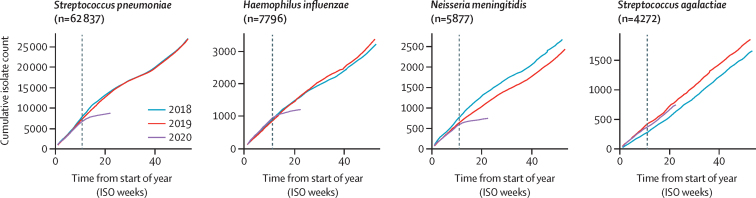
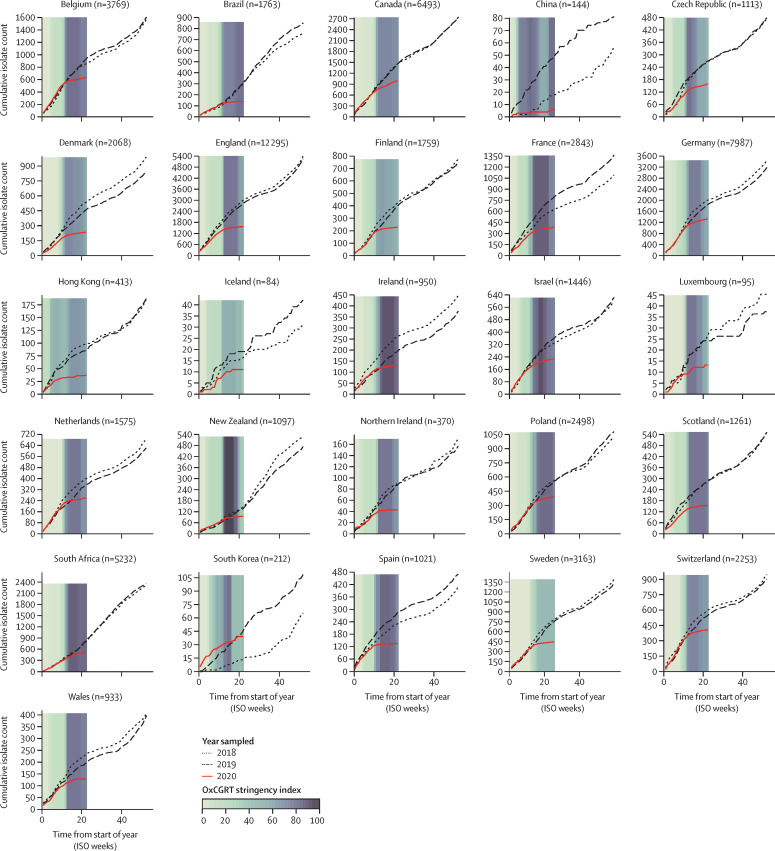
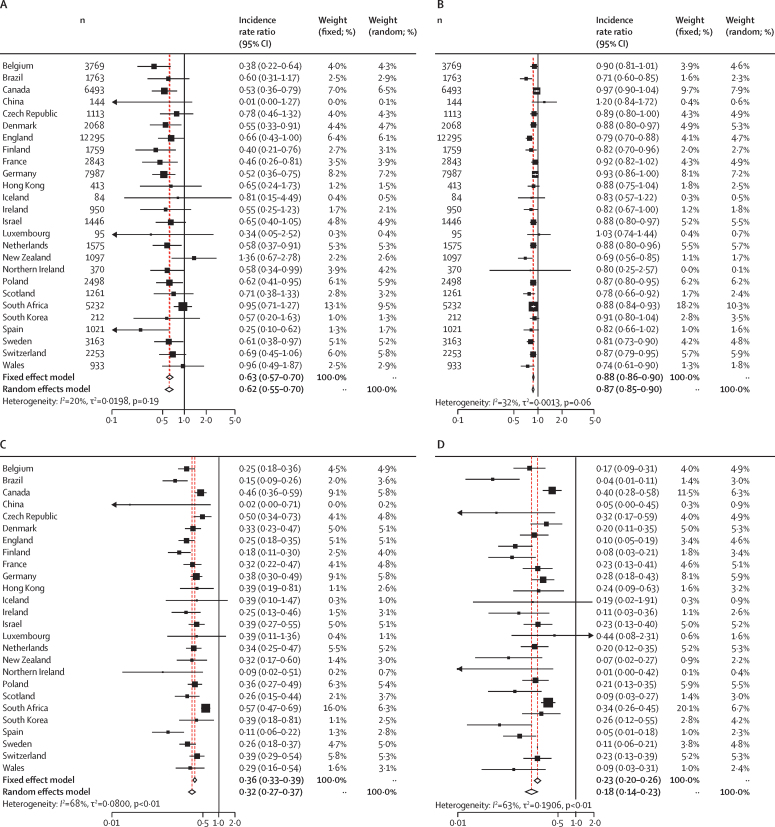
BACKGROUND: Streptococcus pneumoniae, Haemophilus influenzae, and Neisseria meningitidis, which are typically transmitted via respiratory droplets, are leading causes of invasive diseases, including bacteraemic pneumonia and meningitis, and of secondary infections subsequent to post-viral respiratory disease. The aim of this study was to investigate the incidence of invasive disease due to these pathogens during the early months of the COVID-19 pandemic. METHODS: In this prospective analysis of surveillance data, laboratories in 26 countries and territories across six continents submitted data on cases of invasive disease due to S pneumoniae, H influenzae, and N meningitidis from Jan 1, 2018, to May, 31, 2020, as part of the Invasive Respiratory Infection Surveillance (IRIS) Initiative. Numbers of weekly cases in 2020 were compared with corresponding data for 2018 and 2019. Data for invasive disease due to Streptococcus agalactiae, a non-respiratory pathogen, were collected from nine laboratories for comparison. The stringency of COVID-19 containment measures was quantified using the Oxford COVID-19 Government Response Tracker. Changes in population movements were assessed using Google COVID-19 Community Mobility Reports. Interrupted time-series modelling quantified changes in the incidence of invasive disease due to S pneumoniae, H influenzae, and N meningitidis in 2020 relative to when containment measures were imposed. FINDINGS: 27 laboratories from 26 countries and territories submitted data to the IRIS Initiative for S pneumoniae (62 837 total cases), 24 laboratories from 24 countries submitted data for H influenzae (7796 total cases), and 21 laboratories from 21 countries submitted data for N meningitidis (5877 total cases). All countries and territories had experienced a significant and sustained reduction in invasive diseases due to S pneumoniae, H influenzae, and N meningitidis in early 2020 (Jan 1 to May 31, 2020), coinciding with the introduction of COVID-19 containment measures in each country. By contrast, no significant changes in the incidence of invasive S agalactiae infections were observed. Similar trends were observed across most countries and territories despite differing stringency in COVID-19 control policies. The incidence of reported S pneumoniae infections decreased by 68% at 4 weeks (incidence rate ratio 0·32 [95% CI 0·27-0·37]) and 82% at 8 weeks (0·18 [0·14-0·23]) following the week in which significant changes in population movements were recorded. INTERPRETATION: The introduction of COVID-19 containment policies and public information campaigns likely reduced transmission of S pneumoniae, H influenzae, and N meningitidis, leading to a significant reduction in life-threatening invasive diseases in many countries worldwide. FUNDING: Wellcome Trust (UK), Robert Koch Institute (Germany), Federal Ministry of Health (Germany), Pfizer, Merck, Health Protection Surveillance Centre (Ireland), SpID-Net project (Ireland), European Centre for Disease Prevention and Control (European Union), Horizon 2020 (European Commission), Ministry of Health (Poland), National Programme of Antibiotic Protection (Poland), Ministry of Science and Higher Education (Poland), Agencia de Salut Pública de Catalunya (Spain), Sant Joan de Deu Foundation (Spain), Knut and Alice Wallenberg Foundation (Sweden), Swedish Research Council (Sweden), Region Stockholm (Sweden), Federal Office of Public Health of Switzerland (Switzerland), and French Public Health Agency (France).
Overview
The claims and statistics of this paper haven’t been checked yet.
Free: it reads the open-access text and checks the first 5 claims that cite a source we can check. Create a free account to check every claim.
Integrity signals
Registry
Cites
Statistics
Figures
Verification
Claims the paper makes
The claims and statistics of this paper haven’t been checked yet.
Free: it reads the open-access text and checks the first 5 claims that cite a source we can check. Create a free account to check every claim.
Claims other papers make about this one
Each is checked against this paper’s own text: does it say what the citing paper says it does?
The cited source says what the claim attributes to it.
In the citing paper
“making it unclear whether observed patterns reflected true reductions in infectious disease burden, as reported in other settings41–45, or changes in death attributions associated with lockdown-related disruptions to MCCD functions.”
From Attributed causes of excess mortality during the COVID-19 pandemic in a south Indian city (2023) · cites this paper as [45]
Self-check
Percentages, sums and reported differences re-computed from the paper’s own numbers.
The self-check needs the paper’s full text.
Citations
Cites
An interactive web-based dashboard to track COVID-19 in real time
Dong, E., Du, H., & Gardner, L. (2020) · The Lancet Infectious Diseases · doi:10.1016/s1473-3099(20)30120-1 · Cited by 10,048
A global panel database of pandemic policies (Oxford COVID-19 Government Response Tracker)
Hale, T., Angrist, N., Goldszmidt, R., Kira, B., Petherick, A., Phillips, T., Webster, S., Cameron-Blake, E., Hallas, L., Majumdar, S., et al. (2021) · Nature Human Behaviour · doi:10.1038/s41562-021-01079-8 · Cited by 4,578
Self-citationJolley, K. A., Bray, J. E., & Maiden, M. C. J. (2018) · Wellcome Open Research · doi:10.12688/wellcomeopenres.14826.1 · Cited by 3,551
Self-citationO'Brien, K. L., Wolfson, L. J., Watt, J. P., Henkle, E., Deloria-Knoll, M., McCall, N., Lee, E., Mulholland, K., Levine, O. S., & Cherian, T. (2009) · The Lancet · doi:10.1016/s0140-6736(09)61204-6 · Cited by 2,398
Troeger, C., Blacker, B., Khalil, I. A., Rao, P. C., Cao, J., Zimsen, S. R. M., Albertson, S. B., Deshpande, A., Farag, T., Abebe, Z., et al. (2018) · The Lancet Infectious Diseases · doi:10.1016/s1473-3099(18)30310-4 · Cited by 1,968
Morens, D. M., Taubenberger, J. K., & Fauci, A. S. (2008) · The Journal of Infectious Diseases · doi:10.1086/591708 · Cited by 1,625
Jayaweera, M., Perera, H., Gunawardana, B., & Manatunge, J. (2020) · Environmental Research · doi:10.1016/j.envres.2020.109819 · Cited by 1,238
Streptococcus pneumoniae: transmission, colonization and invasion
Weiser, J. N., Ferreira, D. M., & Paton, J. C. (2018) · Nature Reviews Microbiology · doi:10.1038/s41579-018-0001-8 · Cited by 1,098
Olsen, S. J., Azziz-Baumgartner, E., Budd, A. P., Brammer, L., Sullivan, S., Pineda, R. F., Cohen, C., & Fry, A. M. (2020) · MMWR. Morbidity and Mortality Weekly Report · doi:10.15585/mmwr.mm6937a6 · Cited by 579
The 1918 Influenza Pandemic: Insights for the 21st Century
Morens, D. M., & Fauci, A. S. (2007) · The Journal of Infectious Diseases · doi:10.1086/511989 · Cited by 536
Research works printed but not linked: 1
- WHO Pneumococcal conjugate vaccines in infants and children under 5 years of age: WHO position paper–February 2019 Wkly Epidemiol Rec 94 2019 85 104
Cited by
Items 101–200 of 555
Olwagen, C. P., Downs, S., Izu, A., Tharasimbi, L., der Merwe, L. V., Nunes, M. C., & Madhi, S. A. (2023) · The Lancet Microbe · doi:10.1016/s2666-5247(23)00260-4 · Cited by 25
Lara, P. B., Savedoff, W. D., Agudelo, M. F. G., Bernal, C., Goyeneche, L., Sório, R. E., Pérez‐Cuevas, R., Rocha, M., Shibata, L. G., Vucetich, C. S. R., et al. (2023) · Health Affairs · doi:10.1377/hlthaff.2023.00720 · Cited by 27
Recent increase in atypical presentations of invasive meningococcal disease in France
Taha, S., Deghmane, A., & Taha, M. (2024) · BMC Infectious Diseases · doi:10.1186/s12879-024-09547-y · Cited by 27
“NPI implementation and their impacts were previously reported [17].”
BackgroundSelf-citationAttributed causes of excess mortality during the COVID-19 pandemic in a south Indian city
Lewnard, J. A., B, C. M., Kang, G., & Laxminarayan, R. (2023) · Nature Communications · doi:10.1038/s41467-023-39322-7 · Cited by 23
Amarsy, R., Fournier, S., Trystram, D., Monteil, C., Raynaud, X., Jarlier, V., Robert, J., Arlet, G., Lefevre, L. A., Aubry, A., et al. (2022) · American Journal of Infection Control · doi:10.1016/j.ajic.2022.09.002 · Cited by 23
“systems [7,8], or on inpatients such as the pediatric population [9,10].”
Prevalence and persistence of Neisseria meningitidis carriage in Swedish university students
Säll, O., Eriksson, L., Idosa, B. A., Alexander, P., Magnuson, A., Hedberg, S. T., Sundqvist, M., Olcén, P., Fredlund, H., Stenmark, B., et al. (2023) · Epidemiology and Infection · doi:10.1017/s0950268823000018 · Cited by 23
Self-citationMeningococcal Disease in the Post–COVID-19 Era: A Time to Prepare
Bloom, D. E., Bonanni, P., Martinón‐Torres, F., Richmond, P., Sáfadi, M. A. P., SALISBURY, D. M., Charos, A., Schley, K., Findlow, J., & Balmer, P. (2023) · Infectious Diseases and Therapy · doi:10.1007/s40121-023-00888-w · Cited by 26
Bahadori, Z., Shafaghi, M., Madanchi, H., Ranjbar, M., Shabani, A., & Mousavi, S. F. (2022) · Journal of Translational Medicine · doi:10.1186/s12967-022-03590-6 · Cited by 19
“Moreover, pneumococcus is one of the leading causes of severe secondary infections following viral respiratory diseases such as coronavirus [3].”
BackgroundEffect of COVID-19 Pandemic on Invasive Pneumococcal Disease in Children, Catalonia, Spain
Ciruela, P., Soldevila, N., García‐García, J. J., González‐Peris, S., Díaz‐Conradi, A., Redin, A., Viñado, B., Izquierdo, C., Muñoz‐Almagro, C., Domı́nguez, Á., et al. (2022) · Emerging infectious diseases · doi:10.3201/eid2811.211741 · Cited by 22
“A prospective analysis from 26 countries found reductions of IPD of 68% at 4 weeks and of 82% at 8 weeks (7).”
Self-citationAnkert, J., Hagel, S., Schwarz, C., Pan, K., Wang, L., von Eiff, C., Gessner, B. D., Theilacker, C., & Pletz, M. W. (2023) · ERJ Open Research · doi:10.1183/23120541.00703-2022 · Cited by 22
“These containment measures were associated with a substantial reduction in the activity of other respiratory viruses as well as bacterial disease such as pneumococci [1, 2].”
BackgroundAmato, H. K., Loayza, F., Salinas, L., Paredes, D., Garcia, D., Sarzosa, S., Saraiva-Garcia, C., Johnson, T. J., Pickering, A. J., Riley, L. W., et al. (2023) · PLoS Medicine · doi:10.1371/journal.pmed.1004299 · Cited by 25
Ning, X., Li, L., Liu, J., Wang, F., Tan, K., Li, W., Zhou, K., Jing, S., Lin, A., Bi, J., et al. (2024) · Emerging Microbes & Infections · doi:10.1080/22221751.2024.2332670 · Cited by 22
“A previous study based on surveillance data from 26 countries confirmed the significant and sustained reductions of invasive bacterial infection, which also appeared to coincide with the stringency of COVID-19 restrictive measures and with changes in the movement of people [22].”
MethodPuro, V., Castilletti, C., Agrati, C., Goletti, D., Leone, S., Agresta, A., Cimini, E., Tartaglia, E., Casetti, R., Colavita, F., et al. (2021) · Vaccines · doi:10.3390/vaccines9060615 · Cited by 24
“Despite the fact that in the last season influenza transmission and other infections transmitted mainly by droplets, have been significantly altered by the range of nonpharmaceutical interventions activated against COVID-19 [18,19], and the fact that a clear association relating Streptococcus pneumoniae infection to a…”
BackgroundRybak, A., Yang, D. D., Schrimpf, C., Guedj, R., Lévy, C., Cohen, R., Gajdos, V., Tort, J., Skurnik, D., Ouldali, N., et al. (2021) · Pathogens · doi:10.3390/pathogens10111375 · Cited by 23
“The global decrease of IPD incidence, with an estimated decrease of 77% eight weeks after lockdown in France, suggests that CAP due to pneumococcus decreased [13].”
BackgroundEpidemiological trends in viral meningitis in England: prospective national surveillance, 2013-2023
Kadambari, S., Abdullahi, F., Celma, C., & Ladhani, S. (2024) · Journal of Infection · doi:10.1016/j.jinf.2024.106223 · Cited by 21
Self-citationProgression of antibiotic resistance in Neisseria meningitidis
Rodriguez, E. I., Tzeng, Y., Berry, I., Howie, R. L., McNamara, L. A., & Stephens, D. S. (2025) · Clinical Microbiology Reviews · doi:10.1128/cmr.00215-24 · Cited by 24
Esposito, S., Masetti, M., Calanca, C., Canducci, N., Rasmi, S., Fradusco, A., & Principi, N. (2025) · Microorganisms · doi:10.3390/microorganisms13081871 · Cited by 21
Lastrucci, V., Bonaccorsi, G., Forni, S., D’Arienzo, S., Bachini, L., Paoli, S., Lorini, C., & Gemmi, F. (2021) · International Journal of Infectious Diseases · doi:10.1016/j.ijid.2021.06.058 · Cited by 21
Kim, Y. K., Choi, Y. Y., Lee, H., Song, E. S., Ahn, J. G., Park, S. E., Lee, T.-J., Cho, H., Lee, J., Kim, Y., et al. (2021) · The Pediatric Infectious Disease Journal · doi:10.1097/inf.0000000000003414 · Cited by 23
“countries.(10,11) An interesting study in children has also shown a dramatic reduction of common infectious diseases in Massachusetts between 2019 and 2020.”
BackgroundSelf-citationClark, S. A., Campbell, H., Mensah, A. A., Lekshmi, A., Walker, A., Ribeiro, S., Walsh, L., Willerton, L., Bai, X., Lucidarme, J., et al. (2022) · SSRN Electronic Journal · doi:10.2139/ssrn.3998164 · Cited by 21
Self-citationInvasive pneumococcal disease surveillance in Canada, 2020
Golden, A., Griffith, A., Demczuk, W., Lefebvre, B., McGeer, A., Tyrrell, G. J., Zhanel, G. G., Kus, J. V., Hoang, L., Minion, J., et al. (2022) · Canada Communicable Disease Report · doi:10.14745/ccdr.v48i09a04 · Cited by 20
Self-citationGao, C., Zhang, R., Chen, X., Yao, T., Song, Q., Ye, W., Li, P., Wang, Z., Yi, D., & Wu, Y. (2022) · npj Digital Medicine · doi:10.1038/s41746-022-00704-8 · Cited by 20
Changes in Etiology and Clinical Outcomes of Pleural empyema during the COVID-19 Pandemic
Chan, K. F., Fung, T., Sridhar, S., Lam, D. C.-L., Ip, M., & Ho, P. (2023) · Microorganisms · doi:10.3390/microorganisms11020303 · Cited by 20
Self-citationTrends in Pneumococcal and Bacterial Meningitis in Brazil from 2007 to 2019
Parellada, C., de Abreu, A. D. J. L., Birck, M. G., Dias, C. Z., Moreira, T. D. N. F., Julian, G. S., Batista, P. D. M., Orengo, J. C., & Bierrenbach, A. L. (2023) · Vaccines · doi:10.3390/vaccines11081279 · Cited by 24
“A substantial reduction in invasive pneumococcal disease has been reported in some countries during the COVID-19 pandemic [43,44].”
BackgroundIkebe, T., Okuno, R., Uchitani, Y., Yamaguchi, T., Isobe, J., Maenishi, E., Date, Y., Otsuka, H., Kazawa, Y., Fujita, S., et al. (2024) · International Journal of Infectious Diseases · doi:10.1016/j.ijid.2024.01.021 · Cited by 21
Invasive Meningococcal Disease in the Post-COVID World: Patterns of Disease Rebound
Findlow, J., Htar, M. T. T., Villena, R., & Balmer, P. (2025) · Vaccines · doi:10.3390/vaccines13020165 · Cited by 20
Epidemiology and economic burden of meningococcal disease in Germany: A systematic review
Gruhn, S., Witte, J., Greiner, W., Damm, O., Dietzsch, M., Kramer, R., & Knuf, M. (2022) · Vaccine · doi:10.1016/j.vaccine.2022.02.043 · Cited by 19
Cinek, O., Slavenko, M. G., Pomahačová, R., Venháčová, P., Petruželková, L., Škvor, J., Neumann, D., Vosáhlo, J., Konečná, P., Kocourková, K., et al. (2022) · Pediatric Diabetes · doi:10.1111/pedi.13405 · Cited by 22
Burden of Hospitalizations Related to Pneumococcal Infection in Spain (2016–2020)
Gil-Prieto, R., Allouch, N., Jimeno, I., Hernández‐Barrera, V., Sanz, R. A., & de Miguel, Á. G. (2023) · Antibiotics · doi:10.3390/antibiotics12010172 · Cited by 19
“However, early reports during the pandemic demonstrated reduced IPD rates [18], and coinfections of these two pathogens were infrequent [19].”
BackgroundLee, T., Walley, K. R., Boyd, J. H., Cawcutt, K. A., Kalil, A. C., & Russell, J. A. (2023) · BMJ Open Respiratory Research · doi:10.1136/bmjresp-2023-001810 · Cited by 21
“…of changes in non- COVID-19 CAP frequency and mortality, for example, information on respiratory severity, effects of societal interventions (lockdowns and travel restrictions could have directly and indirectly altered non- COVID-19 CAP frequency and mortality), vaccine use (could have increased…”
BackgroundBahadori, Z., Shafaghi, M., sabzevari, J., Madanchi, H., Ranjbar, M. M., Mousavi, S. F., & Shabani, A. A. (2023) · International Journal of Biological Macromolecules · doi:10.1016/j.ijbiomac.2023.128924 · Cited by 19
Murray, H. C., Muleme, M., Cooper, D., McNamara, B. J., Hussain, M. A., Bartolo, C., O'Brien, D. P., & Athan, E. (2024) · International Journal of Infectious Diseases · doi:10.1016/j.ijid.2024.107078 · Cited by 21
Dirkx, K. K. T., Mulder, B., Post, A. S., Rutten, M., Swanink, C. M. A., Wertheim, H. F. L., & Cremers, A. J. H. (2021) · International Journal of Infectious Diseases · doi:10.1016/j.ijid.2021.08.060 · Cited by 19
Emerging issues related to COVID-19 vaccination in patients with cancer
Saini, K. S., Martins-Branco, D. A., Tagliamento, M., Vidal, L., Singh, N., Punie, K., Saini, M. L., Chico, I. M., Curigliano, G., de Azambuja, E., et al. (2021) · Oncology and Therapy · doi:10.1007/s40487-021-00157-1 · Cited by 19
de Miguel, S., Pérez-Abeledo, M., Ramos, B., García, L., Arce, A., Martínez-Arce, R., Yuste, J., & Sanz, J. C. (2023) · Antibiotics · doi:10.3390/antibiotics12020289 · Cited by 18
“In the last years, there has been a decrease in the incidence of many of the resistant strains but also in the incidence of IPD due to the COVID-19 pandemic [37].”
BackgroundHorn, M., Theilacker, C., Sprenger, R., von Eiff, C., Mahar, E. A., Schiffner-Rohe, J., Pletz, M. W., van der Linden, M., & Scholz, M. R. (2023) · PLoS ONE · doi:10.1371/journal.pone.0281261 · Cited by 18
“Due to the SARS-CoV2 pandemic and subsequent infection containment policies, marked reductions of IPD compared to pre-pandemic levels were observed globally and in Germany as well [52].”
Backgroundvan Soest, T. M., Chekrouni, N., van Sorge, N. M., Bijlsma, M. W., Brouwer, M. C., & van de Beek, D. (2023) · The Lancet Regional Health - Europe · doi:10.1016/j.lanepe.2023.100640 · Cited by 24
Antibiotic Use for Common Infections in Pediatric Emergency Departments: A Narrative Review
Karageorgos, S. A., Hibberd, O., Mullally, P. J. W., Segura-Retana, R., Soyer, S., & Hall, D. (2023) · Antibiotics · doi:10.3390/antibiotics12071092 · Cited by 20
Dynamics of respiratory viruses other than SARS‐CoV‐2 during the COVID‐19 pandemic in Madrid, Spain
Brañas, P., Gallego, I. M., Espartosa, E., Moral, N., Abellán, G., & Folgueira, L. (2023) · Influenza and Other Respiratory Viruses · doi:10.1111/irv.13199 · Cited by 18
Metz, C., Schmid, A., & Veldhoen, S. (2023) · Pediatric Radiology · doi:10.1007/s00247-023-05808-1 · Cited by 20
“Subsequently, declining numbers of infectious disease diagnoses during the coronavirus disease 2019 (COVID-19) pandemic attributable to the above measures were noted in many countries [8–17].”
BackgroundInvasive meningococcal disease in older adults: current perspectives and call for action
Weil-Olivier, C., Taha, M., Leng, S. X., Dinleyici, E. Ç., Bonanni, P., Moya, E., Leischker, A. H., & Yezli, S. (2024) · European Geriatric Medicine · doi:10.1007/s41999-024-00969-0 · Cited by 20
“…restrictions implemented to restrict viral transmission and mitigate the impact of the Covid-19 pandemic was accompanied by often substantial declines in a wide range of respiratory transmissible infections, most notably pneumococcal and H. influenzae infection, but also for IMD [57, 58].”
BackgroundSelf-citationPassaris, I., Depickère, S., Braeye, T., Mukovnikova, M., Vodolazkaia, A., Abels, C., Cuypers, L., Desmet, S., Ceyssens, P., & NIPD study group Belgium (2024) · Eurosurveillance · doi:10.2807/1560-7917.es.2024.29.45.2400108 · Cited by 19
“Finally, the recruitment period for our study overlapped with the COVID-19 pandemic, and mitigation measures taken to control the pandemic decreased the incidence of many respiratory pathogens, such as pneumococci [62].”
Self-citationShaw, D., Torreblanca, R. A., Amin‐Chowdhury, Z., Bautista, A., Bennett, D. E., Broughton, K., Casanova, C., Choi, E. H., Claus, H., Corcoran, M., et al. (2024) · The Lancet Digital Health · doi:10.1016/s2589-7500(24)00241-3 · Cited by 18
Self-citationPrasad, N., Kobayashi, M., Collins, J. P., Rubis, A. B., Derado, G., Delahoy, M. J., Payne, D. C., McGee, L., Chochua, S., Marjuki, H., et al. (2025) · The Lancet Regional Health - Americas · doi:10.1016/j.lana.2025.101120 · Cited by 30
Li, M., Liu, M., & Liu, J. (2025) · Viruses · doi:10.3390/v17070892 · Cited by 24
“Previous studies have shown that the COVID-19 pandemic and the associated control measures for respiratory infections have affected the epidemic patterns of many respiratory diseases [11,18,19].”
Changes in Critical Bronchiolitis After COVID-19 Lockdown
Cardenas, J., Pringle, C. P., Filipp, S. L., Gurka, M. J., Ryan, K. A., & Avery, K. L. (2022) · Cureus · doi:10.7759/cureus.25064 · Cited by 17
“Influenza viruses and human metapneumovirus (HMPV) infections remained low from March 2020 through May 2021, but increased infections by parainfluenza (types 1-4), adenovirus, and non-SARS-CoV-2 coronaviruses have been noted in the spring of 2021, followed by a decline in early 2020 [7], as well as an overall decrease…”
BackgroundPetrović, V., Milosavljević, B., Djilas, M. D., Marković, M., Vuković, V., Andrijević, I., & Ristić, M. (2022) · IJID Regions · doi:10.1016/j.ijregi.2022.07.001 · Cited by 18
Bögli, J., Güsewell, S., Strässle, R., Kahlert, C. R., & Albrich, W. C. (2022) · Infection · doi:10.1007/s15010-022-01911-x · Cited by 18
“These are transmitted by droplets or aerosols, while infections with other routes of transmission were largely unaffected [3].”
BackgroundImpact of COVID-19 on mortality in coastal Kenya: a longitudinal open cohort study
Otiende, M., Nyaguara, A., Bottomley, C., Walumbe, D., Mochamah, G., Amadi, D., Nyundo, C., Kagucia, E. W., Etyang, A. O., Adetifa, I., et al. (2023) · Nature Communications · doi:10.1038/s41467-023-42615-6 · Cited by 20
Song, S. H., Lee, H., Lee, H. J., Song, E. S., Ahn, J. G., Park, S. E., Lee, T.-J., Cho, H., Lee, J., Kim, Y., et al. (2023) · Journal of Korean Medical Science · doi:10.3346/jkms.2023.38.e127 · Cited by 16
Self-citationBertrand-Gerentes, I., Fanchon, L., Coste, F., Glover, R. E., Guiddir, T., & Taha, M. (2023) · Infectious Diseases and Therapy · doi:10.1007/s40121-023-00869-z · Cited by 16
“A further decrease also occurred upon the implementation of containment measures to control the coronavirus disease 2019 (COVID-19) pandemic [14].”
BackgroundSelf-citationPresa, J. V., Findlow, J., & Zimet, G. D. (2024) · Journal of Adolescent Health · doi:10.1016/j.jadohealth.2024.01.016 · Cited by 16
Rise in complications of acute otitis media during and after the COVID-19 pandemic
Hollborn, H., Lachmann, C., Strüder, D., van Bonn, S. M., Mlynski, R. A., & Schraven, S. P. (2024) · European Archives of Oto-Rhino-Laryngology · doi:10.1007/s00405-024-08647-4 · Cited by 16
van Rensburg, M. J. J., Berger, D., Yassine, I., Shaw, D., Fohrmann, A., Bray, J. E., Jolley, K. A., Maiden, M. C. J., & Brueggemann, A. B. (2024) · Microbial Genomics · doi:10.1099/mgen.0.001280 · Cited by 19
“Non-pharmaceutical interventions implemented during the pandemic to contain the spread of SARS- CoV-2 led to significant and sustained reductions in invasive pneumococcal disease (IPD), but IPD is returning to pre-pandemic levels in many countries [6, 7].”
BackgroundSelf-citationPediatric Invasive Meningococcal Disease, Auckland, New Zealand (Aotearoa), 2004–2020
Burton, C., Best, E., Broom, M. T., Heffernan, H., Briggs, S. E., & Webb, R. (2023) · Emerging infectious diseases · doi:10.3201/eid2904.221397 · Cited by 16
Community-Acquired Pneumonia Incidence in Adults Aged 18 Years and Older in Goto City, Japan
Miyazaki, T., Hirano, K., Ichihara, K., Gonzalez, E., Gessner, B. D., Istúriz, R., Zhang, P., Gray, S., Pride, M. W., van der Linden, M., et al. (2023) · CHEST Pulmonary · doi:10.1016/j.chpulm.2023.100007 · Cited by 16
Self-citationVillena, R., Sáfadi, M. A. P., de Gentile, A. S., Pujadas, M., de la Maza, V., George, S., & Torres, J. P. (2023) · Vaccines · doi:10.3390/vaccines11121841 · Cited by 18
Zhang, H., Ma, L., Peng, W., Wang, B., & Sun, Y. (2024) · Frontiers in Cellular and Infection Microbiology · doi:10.3389/fcimb.2024.1327032 · Cited by 18
Cortés, G., Ustyugova, I. V., Farrell, T., McDaniel, C. N., Britain, C. M., Romano, C., N’Diaye, S., Zheng, L., Ferdous, M., Iampietro, M. J., et al. (2024) · npj Vaccines · doi:10.1038/s41541-024-01011-x · Cited by 17
“Wide-spread introduction of COVID-19 containment measures such as mandated social distancing and shielding in most countries appeared to reduce the transmission of some communicable diseases 5 .”
Galmiche, S., Coustaury, C., Charniga, K., Grant, R., Cauchemez, S., Fontanet, A. L., The Western European Covid-19 Excess Mortality Working Group, Autran, B., Barnbrook, M., Barros, H., et al. (2024) · BMC Global and Public Health · doi:10.1186/s44263-024-00103-z · Cited by 18
“…accident-related deaths, or the decrease in deaths attributable to other respiratory infections (e.g., influenza and respiratory syncytial virus) as a result of decreases in transmission [17–19]; and (7) it is a well-established measure of the impact of pandemic and seasonal influenza [20].”
Schinkel, M., Holleman, F., Vleghels, R., Brugman, K., Ridderikhof, M. L., Dzelili, M., Nanayakkara, P. W. B., & Wiersinga, W. J. (2022) · Infection · doi:10.1007/s15010-022-01957-x · Cited by 18
Research advances and public health strategies in China on WHO priority fungal pathogens
Wang, Y., Han, L., Gong, J., Liu, L., Miao, B., & Xu, J. (2025) · Mycology: An International Journal on Fungal Biology · doi:10.1080/21501203.2025.2561612 · Cited by 15
“For instance, the national monitoring network for fungal diseases has observed, through long-term surveillance of antifungal resistance among pathogenic fungi, a sharp rise in azole resistance rates among C. tropicalis in recent years (Brueggemann et al. 2021; Bing et al. 2024a; Huang et al. 2024).”
Yang, Y., Knoll, M. D., Herbert, C., Bennett, J. C., Feikin, D. R., Quesada, M. G., Hetrich, M. K., Zeger, S. L., Kagucia, E. W., Xiao, M., et al. (2025) · Journal of Infection · doi:10.1016/j.jinf.2025.106426 · Cited by 15
“Among sites that used PCV7, increases in non-PCV7-types (excluding ST6A) prior to PCV10/ 13 introduction were greater for adults than children 5–17 years and more similar to children < 5 years.”
Self-citationLucidarme, J., Bai, X., Lekshmi, A., Clark, S. A., Willerton, L., Ribeiro, S., Campbell, H., Serino, L., Paola, R. D., Holland, A., et al. (2021) · Journal of Infection · doi:10.1016/j.jinf.2021.11.015 · Cited by 15
Self-citationReilly, A. S., McElligott, M., Casement, C. M. D., & Drew, R. J. (2022) · Journal of Medical Microbiology · doi:10.1099/jmm.0.001606 · Cited by 14
Self-citationInfectious diseases in the COVID-19 era: gaps between countries
Lévy, C., & Cohen, R. (2023) · The Lancet Infectious Diseases · doi:10.1016/s1473-3099(23)00198-6 · Cited by 14
Echinacea Reduces Antibiotics by Preventing Respiratory Infections: A Meta-Analysis (ERA-PRIMA)
Gancitano, G., Mucci, N., Stange, R., Ogal, M., Vimalanathan, S., Sreya, M., Booker, A., Hadj-Cherif, B., Albrich, W. C., Woelkart, K., et al. (2024) · Antibiotics · doi:10.3390/antibiotics13040364 · Cited by 16
Why easing COVID restrictions could prompt a fierce flu rebound
Jones, N. (2021) · Nature · doi:10.1038/d41586-021-02558-8 · Cited by 14
Oliveira, L. M. A., Simões, L. C., Costa, N. S., Zadoks, R. N., & Pinto, T. C. A. (2022) · Frontiers in Microbiology · doi:10.3389/fmicb.2022.943413 · Cited by 13
“Personal and behavioral measures implemented to mitigate the pandemic, like social distancing and hand hygiene, may reduce the transmission of healthcare-associated pathogens (Brueggemann et al., 2021).”
BackgroundEpidemiology and Etiology of Community-Acquired CNS Infections in Iran: A Narrative Review
Sheybani, F., Haddad, M., & Shirazinia, M. (2023) · Future Neurology · doi:10.2217/fnl-2023-0017 · Cited by 15
Decrease in Pediatric Invasive Pneumococcal Disease During the COVID-19 Pandemic
Clemente, A. S., Kaplan, S. L., Barson, W. J., Lin, P. L., Romero, J. R., Bradley, J. S., Tan, T. Q., Pannaraj, P. S., Givner, L. B., & Hultén, K. G. (2022) · Journal of the Pediatric Infectious Diseases Society · doi:10.1093/jpids/piac056 · Cited by 13
Hadley, L., Karachaliou, A., Christensen, H., Ramsay, M. E., & Trotter, C. L. (2023) · Epidemiology and Infection · doi:10.1017/s0950268823000870 · Cited by 16
Decreased Pneumococcal Carriage Among Older Adults in Denmark During the COVID-19 Lockdown
Tinggaard, M., Slotved, H., Petersen, R. F., Hovmand, N., & Benfield, T. (2023) · Open Forum Infectious Diseases · doi:10.1093/ofid/ofad365 · Cited by 13
Self-citationAssociated Bacterial Coinfections in COVID-19-Positive Patients
Boia, E. R., Hut, A.-R., Roi, A., Luca, R. E., Munteanu, I.-R., Roi, C. I., Riviș, M., Boia, S., Dușe, A. O., Vulcănescu, D. D., et al. (2023) · Medicina · doi:10.3390/medicina59101858 · Cited by 14
Rybak, A., Ouldali, N., Varon, E., Taha, M., Bonacorsi, S., Béchet, S., Angoulvant, F., Cohen, R., Lévy, C., & on behalf of the French Pediatric Meningitis Network (2023) · The Pediatric Infectious Disease Journal · doi:10.1097/inf.0000000000004134 · Cited by 15
Self-citationAi, L., Fang, L., Liu, B., Zhou, C., & Gong, F. (2024) · Scientific Reports · doi:10.1038/s41598-024-62728-2 · Cited by 14
“As compared to pre-pandemic figures, there’s a notable decline in invasive infections by S. pneumoniae , H. influenzae , and Neisseria meningitidis in 2020 and 2021 20,21,41–46 .”
ResultInvasive Meningococcal Disease Remains a Health Threat in Vietnam People’s Army
Van, C. P., Nguyen, T. T., Bui, S. T., Nguyen, T. V., Tran, H. T. T., Pham, D. T., Trieu, L. P., & Nguyen, M. D. (2021) · Infection and Drug Resistance · doi:10.2147/idr.s339110 · Cited by 13
“These control measures were believed to limit the spread of airborne pathogens including Neisseria meningitidis.(23) Our data suggest that, in low-income settings with limited access to vaccines, using facemasks and practicing hand hygiene regularly could be practical and efficient to prevent invasive meningococcal di…”
BackgroundOrbital complications of sinusitis in children - Retrospective analysis of an 8.5 year experience
Lohnherr, V., & Baumann, I. G. (2024) · International Journal of Pediatric Otorhinolaryngology · doi:10.1016/j.ijporl.2024.111865 · Cited by 12
Chiu, N., Huang, D. T., Weng, S., Chi, H., Tai, Y., Huang, Y.-N., Huang, H. Y., Lei, W., Chang, L., & Lin, C. (2024) · Journal of Infection and Public Health · doi:10.1016/j.jiph.2024.102560 · Cited by 12
Henares, D., Cubero, M., Martínez-de-Albéniz, I., Arranz, A., Rocafort, M., Brotons, P., Pérez-Argüello, A., Troyano, M. J., Gené, A., Lluansí, A., et al. (2025) · Antimicrobial Resistance and Infection Control · doi:10.1186/s13756-025-01582-x · Cited by 12
“This possibility was considered because the outbreak occurred after the COVID-19 pandemic lockdown in our country; important ecological changes in rates of transmission have been reported for other common microorganisms across different European countries in such period [22].”
Self-citationFeldman, C. H., Dlamini, S. K., Richards, G. A., Black, J., Butler, I. L. C., Cutland, C., Hefer, E., Hodkinson, B., Kok, A., Manga, P., et al. (2022) · Journal of Thoracic Disease · doi:10.21037/jtd-22-287 · Cited by 14
“More recently, many countries have reported a reduction in life-threatening invasive diseases including S. pneumoniae , likely attributable to coronavirus disease 2019 (COVID-19) containment policies, as well as public information campaigns (15).”
Self-citationDavids, M., Johnstone, S., Mendes, A., Brecht, G., Avenant, T., du Plessis, N., de Villiers, M., Page, N. A., & Venter, M. (2024) · Viruses · doi:10.3390/v16030404 · Cited by 14
Kovacevic, A., Smith, D. R., Rahbé, E., Novelli, S., Henriot, P., Varon, E., Cohen, R., Lévy, C., Temime, L., & Opatowski, L. (2024) · eLife · doi:10.7554/elife.85701 · Cited by 14
“Many studies have reported trends on the incidence of community-acquired bacterial infections since the onset of the pandemic ( Brueggemann et al., 2021 ; Shaw et al., 2023 ).”
BackgroundResultInfluentialSelf-citationCOVID-19 containment measures and incidence of invasive bacterial disease
Smith, D. R., & Opatowski, L. (2021) · The Lancet Digital Health · doi:10.1016/s2589-7500(21)00085-6 · Cited by 12
Ng, D. C.-E., Tan, K. K., Ting, G. S. S., Chin, L., Fadzilah, N. F. B., Tan, S. F., Subramaniam, T., Zailanalhuddin, N. E. B., Lim, H. Y., Baharuddin, S. B., et al. (2022) · Frontiers in Pediatrics · doi:10.3389/fped.2022.865099 · Cited by 12
“The low incidence of Streptococcus pneumoniae during the COVID-19 pandemic likely contributed to this (20).”
BackgroundThe global burden of respiratory infectious diseases before and beyond COVID
WATERER, G. W. (2022) · Respirology · doi:10.1111/resp.14423 · Cited by 12
Xu, Y., Zhou, X., Zheng, W. H., Cui, B., Xie, C., Liu, Y., Qin, X., & Liu, J. (2024) · Medical Microbiology and Immunology · doi:10.1007/s00430-024-00797-w · Cited by 13
Amin-Chowdhury, Z., Bertran, M., Sheppard, C. L., Eletu, S., Litt, D., Fry, N. K., & Ladhani, S. N. (2021) · The Lancet Respiratory Medicine · doi:10.1016/s2213-2600(21)00538-5 · Cited by 11
Self-citationInvasive group A streptococcal disease surveillance in Canada, 2020
Golden, A., Griffith, A., Demczuk, W., Tyrrell, G. J., Kus, J. V., McGeer, A., Domingo, M.-C., Hoang, L., Minion, J., Caeseele, P. G. V., et al. (2022) · Canada Communicable Disease Report · doi:10.14745/ccdr.v48i09a05 · Cited by 11
“The Invasive Respiratory Infection Surveillance Initiative noted worldwide decreases in invasive diseases caused by respiratory pathogens Streptococcus pneumoniae , Haemophilus influenzae and Neisseria meningitidis due to containment measures and social changes caused by the pandemic (18).”
Self-citationKakimoto, M., Miyamori, D., Omori, K., Kobayashi, T., Ikeda, K., Kashiyama, S., Ohge, H., & Ito, M. (2022) · Journal of Infection · doi:10.1016/j.jinf.2022.11.025 · Cited by 11
Calvo, C. (2023) · Anales de Pediatría · doi:10.1016/j.anpedi.2023.01.001 · Cited by 11
Miao, C., Yan, Z., Chen, C., Kuang, L., Ao, K., Li, Y., Li, J., Huang, X., Zhu, X., Zhao, Y., et al. (2024) · Frontiers in Microbiology · doi:10.3389/fmicb.2024.1342839 · Cited by 11
Effects of coronavirus disease 2019 on the spread of respiratory-transmitted human-to-human bacteria
Kajihara, T., Yahara, K., Kamigaki, T., Hirabayashi, A., Hosaka, Y., Kitamura, N., Shimbashi, R., Suzuki, M., Sugai, M., & Shibayama, K. (2024) · Journal of Infection · doi:10.1016/j.jinf.2024.106201 · Cited by 11
Pneumonia, influenza, and dengue cases decreased after the COVID-19 pandemic in Thailand
Prasertbun, R., Mori, H., Mahittikorn, A., Siri, S., & Naito, T. (2022) · Tropical Medicine and Health · doi:10.1186/s41182-022-00419-2 · Cited by 11
“Effective COVID-19 preventive measures, which are wearing a mask, washing hands, or alcohol hand hygiene, avoiding the “Three Cs” (closed spaces with poor ventilation, crowded spaces with many people nearby, and close-contact settings such as close-range conversations), and during a crisis, city lockdowns, could decre…”
BackgroundPark, J. J., Tiefenbach, J., Anwar, M. M., Narayanan, S., Ope, B. W., Han, S. S. B., Ale, B. M., Adeloye, D., & Rudan, I. (2024) · JMIR Research Protocols · doi:10.2196/50678 · Cited by 11
“Furthermore, the current literature concurs with these authors’ concern about the countries that are yet to implement a national pneumococcal immunization program [4,14].”
BackgroundJayasinghe, S. H., Williams, P. C. M., Macartney, K. K., Crawford, N. W., & Blyth, C. C. (2024) · Clinical Infectious Diseases · doi:10.1093/cid/ciae377 · Cited by 12
de Egea, G. L., González-Díaz, A., Olsen, R. J., Guédon, G., Berbel, D., Grau, I., Cámara, J., Saiz-Escobedo, L., Calvo-Silveria, S., Cadenas-Jiménez, I., et al. (2025) · International Journal of Infectious Diseases · doi:10.1016/j.ijid.2025.107778 · Cited by 10
Ma, E. S.-K., Hsu, E. K., Chow, V., Chow, T., Kung, K., Au, A. K.-W., & Chen, H. (2025) · Infection and Drug Resistance · doi:10.2147/idr.s502126 · Cited by 14
Li, Y., Li, H., & Adair, T. (2025) · European Journal of Epidemiology · doi:10.1007/s10654-025-01214-z · Cited by 11
“Sec-ondly, measures implemented to contain COVID-19, such as lockdowns, may have reduced the spread of other infectious diseases [9].”
Roca-Grande, J., Mir-Cros, A., Muñoz‐Almagro, C., Lung, M., Bellés, A. B., Cámara, J., Cercenado, E., Galán‐Ladero, M. A., Martín‐Nalda, A., MORENO, A. J., et al. (2025) · Emerging Microbes & Infections · doi:10.1080/22221751.2025.2482696 · Cited by 13
“As has been demonstrated in other infections caused by airborne-transmitted pathogens, including Streptococcus pneumoniae and Haemophilus influenzae [41], cases of IMD significantly decreased after the 2019/20 season, primarily due to the social restrictions imposed during the COVID-19 pandemic.”
Self-citation
Metadata
- Authors
- Brueggemann, A. B., Jansen van Rensburg, M. J., Shaw, D., McCarthy, N. D., Jolley, K. A., Maiden, M. C. J., van der Linden, M. P. G., Amin-Chowdhury, Z., Bennett, D. E., Borrow, R., Brandileone, M.-C. C., Broughton, K., Campbell, R., Cao, B., Casanova, C., Choi, E. H., Chu, Y. W., Clark, S. A., Claus, H., Coelho, J., Corcoran, M., Cottrell, S., Cunney, R. J., Dalby, T., Davies, H., de Gouveia, L., Deghmane, A.-E., Demczuk, W., Desmet, S., Drew, R. J., du Plessis, M., Erlendsdottir, H., Fry, N. K., Fuursted, K., Gray, S. J., Henriques-Normark, B., Hale, T., Hilty, M., Hoffmann, S., Humphreys, H., Ip, M., Jacobsson, S., Johnston, J., Kozakova, J., Kristinsson, K. G., Krizova, P., Kuch, A., Ladhani, S. N., Lâm, T.-T., Lebedova, V., Lindholm, L., Litt, D. J., Martin, I., Martiny, D., Mattheus, W., McElligott, M., Meehan, M., Meiring, S., Mölling, P., Morfeldt, E., Morgan, J., Mulhall, R. M., Muñoz-Almagro, C., Murdoch, D. R., Murphy, J., Musilek, M., Mzabi, A., Perez-Argüello, A., Perrin, M., Perry, M., Redin, A., Roberts, R., Roberts, M., Rokney, A., Ron, M., Scott, K. J., Sheppard, C. L., Siira, L., Skoczyńska, A., Sloan, M., Slotved, H.-C., Smith, A. J., Song, J. Y., Taha, M.-K., Toropainen, M., Tsang, D., Vainio, A., van Sorge, N. M., Varon, E., Vlach, J., Vogel, U., Vohrnova, S., von Gottberg, A., Zanella, R. C., & Zhou, F.
- Affiliations
- University of Oxford (GB)
- Trinity College Dublin (IE)
- Beaumont Hospital (IE)
- Manchester Royal Infirmary (GB)
- Public Health England (GB)
- Public Health Agency (GB)
- Chinese Academy of Medical Sciences & Peking Union Medical College (CN)
- University of Bern (CH)
- Seoul National University (KR)
- Department of Health (CN)
- University of Würzburg (DE)
- Royal College of Surgeons in Ireland (IE)
- Public Health Wales (GB)
- Statens Serum Institut (DK)
- New Zealand Institute for Public Health and Forensic Science (NZ)
- Institut Pasteur (FR)
- Public Health Agency of Canada (CA)
- Universitair Ziekenhuis Leuven (BE)
- Chinese University of Hong Kong (HK)
- Örebro University (SE)
- National University Hospital of Iceland (IS)
- Narodowy Instytut Leków (PL)
- National Institute of Public Health (CZ)
- Finnish Institute for Health and Welfare (FI)
- University of Mons (BE)
- Sciensano (Belgium) (BE)
- National Health Laboratory Service (ZA)
- Public Health Agency of Sweden (SE)
- University of Otago (NZ)
- Laboratoire National de Santé (LU)
- Hospital Sant Joan de Déu Barcelona (ES)
- Israel Ministry of Health (IL)
- Korea University (KR)
- Hôpital Intercommunal de Créteil (FR)
- Instituto Adolfo Lutz (BR)
- Corresponding author
- Brueggemann, Angela B
- ORCID
- Brueggemann, Angela B
- McCarthy, Noel D
- Jolley, Keith A
- Maiden, Martin C J
- Bennett, Désirée E
- Borrow, Ray
- Cao, Bin
- Casanova, Carlo
- Choi, Eun Hwa
- Clark, Stephen A
- Claus, Heike
- Coelho, Juliana
- Corcoran, Mary
- Cottrell, Simon
- Cunney, Robert J
- Dalby, Tine
- Davies, Heather
- Deghmane, Ala-Eddine
- Demczuk, Walter
- Desmet, Stefanie
- Drew, Richard J
- Fry, Norman K
- Fuursted, Kurt
- Gray, Steve J
- Hale, Thomas
- Hilty, Markus
- Hoffmann, Steen
- Humphreys, Hilary
- Ip, Margaret
- Kristinsson, Karl G
- Kuch, Alicja
- Ladhani, Shamez N
- Lâm, Thiên-Trí
- Lindholm, Laura
- Litt, David J
- Martiny, Delphine
- Mattheus, Wesley
- McElligott, Martha
- Meiring, Susan
- Mölling, Paula
- Morgan, Julie
- Mulhall, Robert M
- Murdoch, David R
- Perry, Malorie
- Roberts, Richard
- Rokney, Assaf
- Ron, Merav
- Scott, Kevin J
- Sheppard, Carmen L
- Siira, Lotta
- Skoczyńska, Anna
- Slotved, Hans-Christian
- Smith, Andrew J
- Song, Joon Young
- Taha, Muhamed-Kheir
- Toropainen, Maija
- Tsang, Dominic
- Vainio, Anni
- Varon, Emmanuelle
- Vogel, Ulrich
- Zanella, Rosemeire C
- Zhou, Fei
- Venue
- The Lancet Digital Health
- Publisher
- Elsevier BV
- Published
- 2021-06
- Volume
- 3
- Issue
- 6
- Pages
- e360-e370
- ISSN
- 2589-7500 (ISSN-L)
- PMC
- PMC8166576
- OpenAlex
- W3164937600
- Semantic Scholar
- 3a9ea7d141e189d1c6da66698d7dd2d957a01c46
- Cited by
- 546
- References
- 29
- Citations by year
- 2026: 56 · 2025: 120 · 2024: 103 · 2023: 130 · 2022: 94 · 2021: 42
- FWCI
- 66.45
- Type
- journal article
- Language
- en
- Update notices
- erratum (2021-07-01)
- Open access
- gold
- doi.org
- Licence
- cc-by
- www.elsevier.com/tdm/userlicense/1.0/ (tdm)
- www.elsevier.com/legal/tdmrep-license (tdm)
- creativecommons.org/licenses/by/4.0/ (vor)
- Locations
- The Lancet Digital Health (publishedVersion, cc-by)
- medRxiv (acceptedVersion, cc-by)
- PubMed Central (publishedVersion, cc-by)
- PubMed (publishedVersion)
- ENLIGHTEN (Jurnal Bimbingan dan Konseling Islam) (acceptedVersion, cc-by-sa)
- St George's Online Research Archive (St George's University of London) (acceptedVersion)
- HAL (submittedVersion, other-oa)
- Dépôt institutionnel de l'Université libre de Bruxelles (Université Libre de Bruxelles) (submittedVersion, other-oa)
- Lirias (KU Leuven) (submittedVersion, other-oa)
- Opin vísindi (Opin vísindi) (submittedVersion, cc-by-nc-sa)
- Online Publication Service of Würzburg University (Würzburg University) (submittedVersion, cc-by)
- Pure Amsterdam UMC (submittedVersion, other-oa)
- Data Archiving and Networked Services (DANS) (submittedVersion, other-oa)
- Otago University Research Archive (University of Otago) (submittedVersion, cc-by)
- DOAJ (DOAJ: Directory of Open Access Journals) (submittedVersion, cc-by-sa)
- Opin vísindi (Opin vísindi) (submittedVersion, cc-by)
- Spiral (Imperial College London) (submittedVersion, cc-by)
- Spiral (Imperial College London) (submittedVersion, other-oa)
- Hirsla (Landspítali University Hospital) (submittedVersion, cc-by)
- Lenus, The Irish Health Repository (Dr Steevens Hospital Library) (submittedVersion, cc-by)
- RWTH Publications (RWTH Aachen)
- Funders
- Royal College of Surgeons in Ireland
- Sanofi Pasteur
- Public Health England
- Pfizer
- Vetenskapsrådet
- Merck Sharp and Dohme
- Ministerstwo Edukacji i Nauki
- Wellcome Trust (206394/Z/17/Z, 218205/Z/19/Z)
- Statens Serum Institut
- Merck (1369-237)
- Knut och Alice Wallenbergs Stiftelse
- Roche (630133, WO 2013/020090 A3)
- St. George's, University of London
- Ministry of Health
- Bundesamt für Gesundheit
- Astellas Pharma US
- ABB
- GlaxoSmithKline
- Bundesministerium für Gesundheit (1369-235)
- Topics
- Health Sciences › Medicine › Epidemiology › Pneumonia and Respiratory Infections
- Life Sciences › Immunology and Microbiology › Microbiology › Bacterial Infections and Vaccines
- Physical Sciences › Mathematics › Modeling and Simulation › COVID-19 epidemiological studies
- Keywords
- Streptococcus pneumoniae, Haemophilus influenzae, Neisseria meningitidis, invasive bacterial infection, COVID-19 containment measures, incidence trends, meningitis, Streptococcus agalactiae, respiratory infection surveillance, community mobility, respiratory droplet transmission
- MeSH terms
- COVID-19, Bacterial Infections, Haemophilus influenzae, Humans, Neisseria meningitidis, Population Surveillance, Prospective Studies, Respiratory Tract Infections, Streptococcus agalactiae, Streptococcus pneumoniae, Public Health Practice, Incidence, Interrupted Time Series Analysis
About these checks
Registry, retraction, Cites and statistics results are computed, not judged, with one exception: a printed reference that no index lists is read once by a model before it counts as a citation error. Claims are extracted by a model and kept only when their quote appears verbatim in the text; each cited source is then checked, with a model’s help, for whether it says what the claim relies on. Those verdicts can be wrong — read the claim’s quote and the cited source before relying on one.
Statistics and arithmetic are recomputed, not judged.
Confidence bands are shown only for fields calibrated on our annotated test set. None is calibrated yet, so no band is shown.
What counts as a claim ›How we measure confidence ›How we check this ›
Are you an author, or do you see a problem with this page? Request a review
Data sources
Bibliographic data: Semantic Scholar, OpenAlex, Crossref.
Contains information from the Semantic Scholar Academic Graph Datasets, made available under the ODC Attribution License (ODC-BY 1.0).
Semantic Scholar’s data is described in: Kinney, R., et al. (2023). The Semantic Scholar Open Data Platform. arXiv:2301.10140.
