

The effect of China's Clean Air Act on cognitive function in older adults: a population-based, quasi-experimental study
Open accessThe DOI matches its Crossref record; 39 of the 39 references it cites were found in a registry or an index.
Abstract
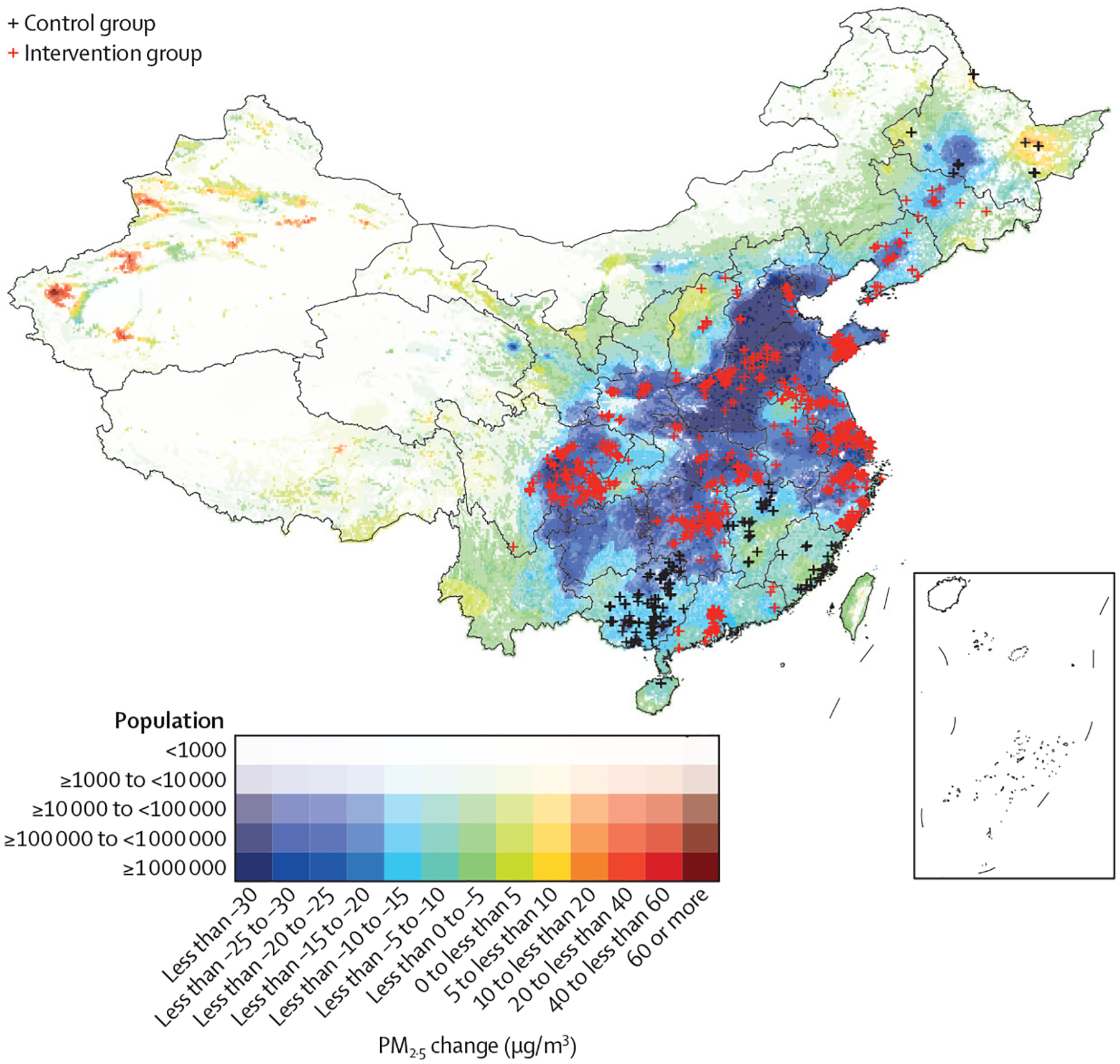
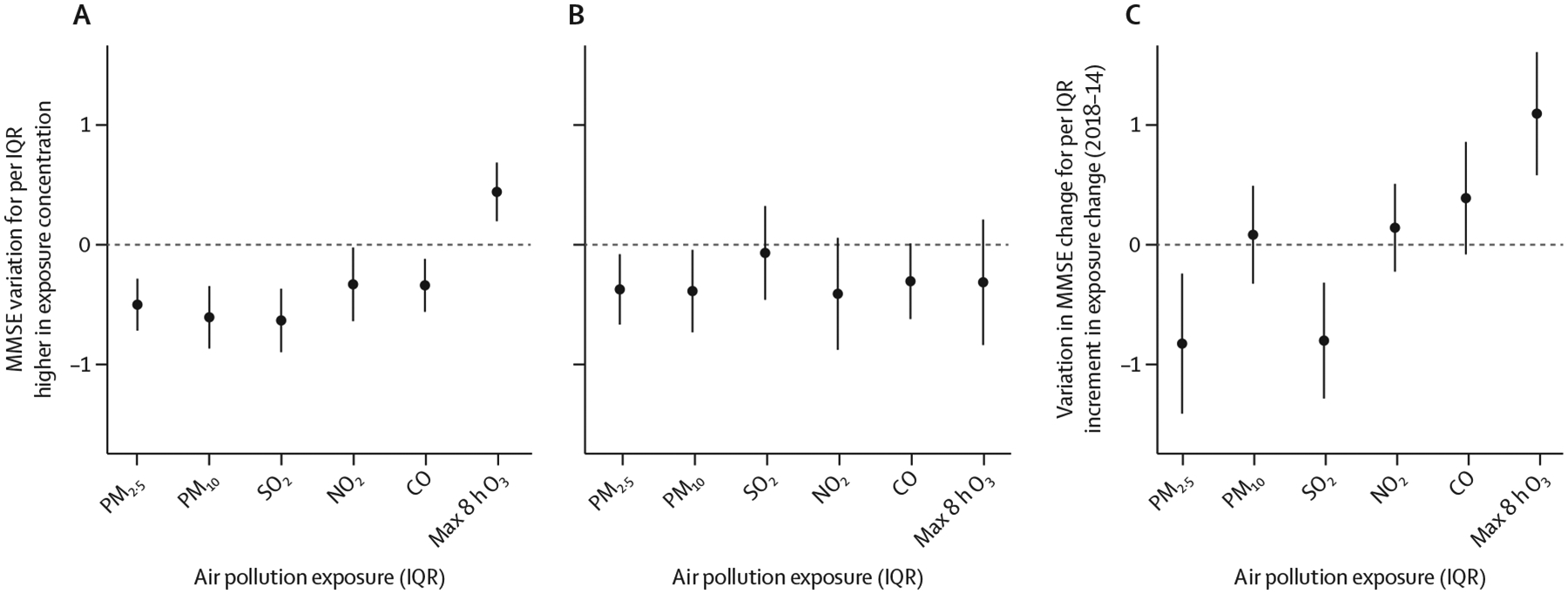
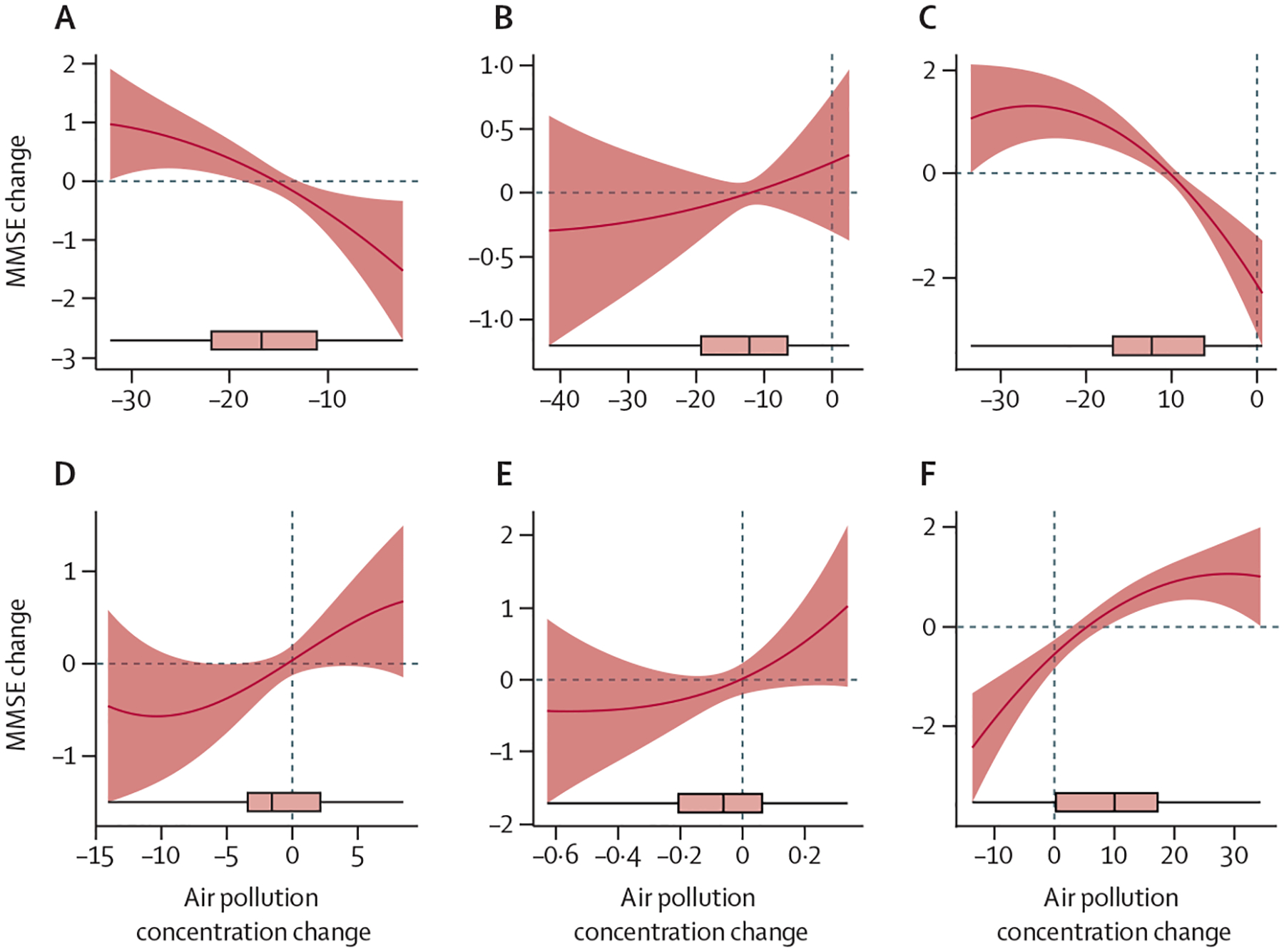
Background Air pollution might accelerate cognitive ageing; it is unclear whether large-scale interventions, such as China's Clean Air Act (CCAA), can mitigate cognitive deterioration. We aimed to evaluate the effect of CCAA on changes in cognitive function in older adults. Methods In this population-based, quasi-experimental study, we did a difference-in-differences analysis of the data collected during the 2014 and 2018 waves of the Chinese Longitudinal Healthy Longevity Survey (CLHLS). The study design used a counterfactual analysis feature by dividing CLHLS participants into two groups. The intervention group included participants who lived in areas where the provincial government set a target of reducing particulate matter (PM) by at least 5% annually from 2014 onward, whereas the control group consisted of individuals who lived in areas without a PM reduction target. Global cognitive function was measured using the Mini-Mental State Examination (MMSE). We used fixed-effects models to examine the between-group differences in MMSE score changes before and after CCAA implementation. We associated longitudinal changes in MMSE scores with changes in concentrations of PM with a diameter of less than 2·5 μm (PM 2·5 ) concentration and other regulated pollutants. We used alternative models and sensitivity analyses to evaluate the robustness of the results from the main models. Findings 2812 individuals participated in the 2014 and 2018 surveys (mean age 81·0 years [SD 9·3] in 2014; 1408 [50·1%] female and 1404 [49·9%] male). 2251 (80·0%) were included in the intervention group and 561 (20·0%) in the control group. After controlling for potential confounders, the intervention group had a significantly smaller decline in MMSE scores from 2014 to 2018 compared with the control group: the mean between-group difference was 2·45 points (95% CI 1·32–3·57). Interquartile increases in PM 2·5 were associated with a significant MMSE score decline of 0·83 points (95% CI 0·24–1·42); similarly, increases in SO 2 were also associated with a significant MMSE score decline of 0·80 points (0·32–1·29). Interpretation Implementing stringent clean air policies might mitigate the risk of air pollutant-associated cognitive ageing in older people. Funding National Natural Sciences Foundation of China, National Key R&D Program of China, China Postdoctoral Science Foundation funded project, the Duke/Duke-National University of Singapore Collaboration Pilot Project, the National Institute on Aging and Peking University-Baidu Fund, Energy Foundation, and the Fundamental Research Funds for the Central Universities.
Overview
The claims and statistics of this paper haven’t been checked yet.
Free: it reads the open-access text and checks the first 5 claims that cite a source we can check. Create a free account to check every claim.
Integrity signals
Registry
Cites
Statistics
Figures
Verification
Claims the paper makes
The claims and statistics of this paper haven’t been checked yet.
Free: it reads the open-access text and checks the first 5 claims that cite a source we can check. Create a free account to check every claim.
Claims other papers make about this one
Each is checked against this paper’s own text: does it say what the citing paper says it does?
The cited source says what the claim attributes to it.
In the citing paper
“In a quasi-experimental study, the China's Clean Air Act mitigated cognitive decline in older adults, indicating that strict clean air policies may reduce the risk of cognitive ageing measured by mini-mental state examination associated with air pollution.(243)”
From Dementia prevention, intervention, and care: 2024 report of the Lancet standing Commission (2024) · cites this paper as [243]
Self-check
Percentages, sums and reported differences re-computed from the paper’s own numbers.
The self-check needs the paper’s full text.
Citations
Cites
1 retracted
Dementia prevention, intervention, and care: 2020 report of the Lancet Commission
Livingston, G., Huntley, J., Sommerlad, A., Ames, D., Ballard, C., Banerjee, S., Brayne, C., Burns, A., Cohen-Mansfield, J., Cooper, C., et al. (2020) · The Lancet · doi:10.1016/s0140-6736(20)30367-6 · Cited by 10,430 · cited 2×
“3 Of these, air pollution is an emerging risk factor.”
Self-citationRetractedStanaway, J. D., Afshin, A., Gakidou, E., Lim, S. S., Abate, D., Abate, K. H., Abbafati, C., Abbasi, N., Abbastabar, H., Abd-Allah, F., et al. (2018) · The Lancet · doi:10.1016/s0140-6736(18)32225-6 · Cited by 4,943
Self-citationThe global prevalence of dementia: a systematic review and metaanalysis.
Prince, M., Bryce, R., Albanese, E., Wimo, A., Ribeiro, W., & Ferri, C. P. (2013) · Alzheimer's & Dementia · doi:10.1016/j.jalz.2012.11.007 · Cited by 4,941
The Lancet Commission on pollution and health
Landrigan, P. J., Fuller, R., Acosta, N. J. R., Adeyi, O., Arnold, R., Basu, N. (., Baldé, A. B., Bertollini, R., Bose-O'Reilly, S., Boufford, J. I., et al. (2018) · The Lancet · doi:10.1016/s0140-6736(17)32345-0 · Cited by 4,929
Translocation of inhaled ultrafine particles to the brain
Oberdörster, G., Sharp, Z., Atudorei, V., Elder, A., Gelein, R., Kreyling, W., & Cox, C. (2004) · Inhalation Toxicology · doi:10.1080/08958370490439597 · Cited by 2,606
Drivers of improved PM 2.5 air quality in China from 2013 to 2017
Zhang, Q., Zheng, Y., Tong, D., Shao, M., Wang, S., Zhang, Y., Xu, X., Wang, J., He, H., Liu, W., et al. (2019) · Proceedings of the National Academy of Sciences · doi:10.1073/pnas.1907956116 · Cited by 2,204 · cited 3×
“19 Therefore, PM 2·5 reduction could serve as a discriminative indicator for CCAA effectiveness in our DID models.”
MethodSelf-citationPanel Data Econometrics in R : The plm Package
Croissant, Y., & Millo, G. (2008) · Journal of Statistical Software · doi:10.18637/jss.v027.i02 · Cited by 1,243
The worldwide costs of dementia 2015 and comparisons with 2010
Wimo, A., Guerchet, M., Ali, G., Wu, Y., Prina, A. M., Winblad, B., Jönsson, L., Liu, Z., & Prince, M. (2017) · Alzheimer's & Dementia · doi:10.1016/j.jalz.2016.07.150 · Cited by 1,066
Zeng, Y., Feng, Q., Hesketh, T., Christensen, K., & Vaupel, J. W. (2017) · The Lancet · doi:10.1016/s0140-6736(17)30548-2 · Cited by 837 · cited 1×
“20 This quasi-experimental study was based on the effective ness in PM reduction through the implementation of CCAA (appendix p 3) by provincial governments.”
MethodSelf-citationThe impact of exposure to air pollution on cognitive performance
Zhang, X., Chen, X., & Zhang, X. (2018) · Proceedings of the National Academy of Sciences · doi:10.1073/pnas.1809474115 · Cited by 807 · cited 1×
“5–14 However, a causal inference is difficult to draw from observational studies due to residual confounding and reverse causation.”
BackgroundBrain Inflammation and Alzheimer's-Like Pathology in Individuals Exposed to Severe Air Pollution
Calderón-Garcidueñas, L., Reed, W., Maronpot, R. R., Henriquez-Roldán, C., Delgado-Chavez, R., Calderón-Garcidueñas, A., Dragustinovis, I., Franco-Lira, M., Aragón-Flores, M., Solt, A. C., et al. (2004) · Toxicologic Pathology · doi:10.1080/01926230490520232 · Cited by 583 · cited 1×
“34 A study published in 2020 showed an association between air pollution and local gyrification index, a marker of local brain atrophy in the ageing brain, suggesting that chronic exposure to PM 2·5 might influence the physiological ageing process of the brain.”
BackgroundChoosing a future for epidemiology: I. Eras and paradigms.
Susser, M., & Susser, E. (1996) · American Journal of Public Health · doi:10.2105/ajph.86.5.668 · Cited by 582
Exposure to Particulate Air Pollution and Cognitive Decline in Older Women
Weuve, J. (2012) · Archives of Internal Medicine · doi:10.1001/archinternmed.2011.683 · Cited by 537
Clifford, A., Lang, L., Chen, R., Anstey, K. J., & Seaton, A. (2016) · Environmental Research · doi:10.1016/j.envres.2016.01.018 · Cited by 494 · cited 1×
“23 Our study, through a design mimicking a randomised clinical trial, strengthens the confidence in the putative causality of similar results from existing observational studies.”
ResultSelf-citationMansournia, M. A., & Altman, D. G. (2016) · BMJ · doi:10.1136/bmj.i189 · Cited by 433 · cited 1×
“28 Weighting was used to allow the two groups to be compared in terms of the previously highlighted variables (appendix p 10).”
MethodShi, L., Wu, X., Danesh Yazdi, M., Braun, D., Abu Awad, Y., Wei, Y., Liu, P., Di, Q., Wang, Y., Schwartz, J., et al. (2020) · The Lancet Planetary Health · doi:10.1016/s2542-5196(20)30227-8 · Cited by 315
Self-citationUltrafine Particles in the Urban Air: To the Respiratory Tract--And Beyond?
Oberdörster, G., & Utell, M. J. (2002) · Environmental Health Perspectives · doi:10.1289/ehp.110-a440 · Cited by 304
Ultrafine particles in the urban air: to the respiratory tract--and beyond?
Oberdörster, G., & Utell, M. J. (2002) · Environmental Health Perspectives · doi:10.1289/ehp.110-1240959 · Cited by 286 · cited 1×
“33 In a post-mortem study of 19 people aged 34–83 years, who had died of non-neurological causes, expression of cyclooxygenase-2, an inflammatory mediator, and accumulation of the 42-amino acid form of β -amyloid, a cause of neuronal dysfunction, were higher in those who had lived in severely…”
BackgroundGrande, G., Ljungman, P. L. S., Eneroth, K., Bellander, T., & Rizzuto, D. (2020) · JAMA Neurology · doi:10.1001/jamaneurol.2019.4914 · Cited by 282
Declines in mental health associated with air pollution and temperature variability in China
Xue, T., Zhu, T., Zheng, Y., & Zhang, Q. (2019) · Nature Communications · doi:10.1038/s41467-019-10196-y · Cited by 255 · cited 1×
“22 Detailed descriptions of air pollution and weather assessment are reported in the appendix (p 3).”
BackgroundSelf-citationHensel, A., Angermeyer, M. C., & Riedel-Heller, S. G. (2007) · Journal of Neurology, Neurosurgery & Psychiatry · doi:10.1136/jnnp.2006.109074 · Cited by 251 · cited 1×
“31,32 13 A metaanalysis of 31 studies, including cross-sectional and longitudinal analyses, provided compelling evidence that air pollution exposure is associated with accelerated cognitive decline across the life course.”
BackgroundWu, X., Braun, D., Schwartz, J., Kioumourtzoglou, M. A., & Dominici, F. (2020) · Science Advances · doi:10.1126/sciadv.aba5692 · Cited by 226 · cited 3×
“Adjusting for ambient temperature did not change these associations (appendix p 15).”
BackgroundSelf-citationTzivian, L., Dlugaj, M., Winkler, A., Weinmayr, G., Hennig, F., Fuks, K. B., Vossoughi, M., Schikowski, T., Weimar, C., Erbel, R., et al. (2016) · Environmental Health Perspectives · doi:10.1289/ehp.1509824 · Cited by 207
Determining the minimum clinically important differences for outcomes in the DOMINO trial
Howard, R., Phillips, P., Johnson, T., O'Brien, J., Sheehan, B., Lindesay, J., Bentham, P., Burns, A., Ballard, C., Holmes, C., et al. (2011) · International Journal of Geriatric Psychiatry · doi:10.1002/gps.2607 · Cited by 185 · cited 1×
“31,32 13 A metaanalysis of 31 studies, including cross-sectional and longitudinal analyses, provided compelling evidence that air pollution exposure is associated with accelerated cognitive decline across the life course.”
BackgroundHUANG, Y.-L., & BATTERMAN, S. (2000) · Journal of Exposure Science & Environmental Epidemiology · doi:10.1038/sj.jea.7500074 · Cited by 173
Estimating Causal Effects of Long-Term PM 2.5 Exposure on Mortality in New Jersey
Wang, Y., Kloog, I., Coull, B. A., Kosheleva, A., Zanobetti, A., & Schwartz, J. D. (2016) · Environmental Health Perspectives · doi:10.1289/ehp.1409671 · Cited by 165 · cited 2×
“15,30 In addition, our previous studies found that clean air actions in China are associated with a decrease in household medical expenditures 26 and reduced prevalence of depressive symptoms.”
Backgroundthe "Progetto Alzheimer" Working Group, Pezzotti, P., Scalmana, S., Mastromattei, A., & Di Lallo, D. (2008) · BMC Family Practice · doi:10.1186/1471-2296-9-29 · Cited by 156
The role of air pollution in cognitive impairment and decline
Schikowski, T., & Altuğ, H. (2020) · Neurochemistry International · doi:10.1016/j.neuint.2020.104708 · Cited by 134
Long-term PM2.5 exposure and depressive symptoms in China: A quasi-experimental study
Xue, T., Guan, T., Zheng, Y., Geng, G., Zhang, Q., Yao, Y., & Zhu, T. (2020) · The Lancet Regional Health - Western Pacific · doi:10.1016/j.lanwpc.2020.100079 · Cited by 129
Self-citationWang, J., Li, T., Lv, Y., Kraus, V. B., Zhang, Y., Mao, C., Yin, Z., Shi, W., Zhou, J., Zheng, T., et al. (2020) · Environmental Health Perspectives · doi:10.1289/ehp5304 · Cited by 124 · cited 2×
“31,32 13 A metaanalysis of 31 studies, including cross-sectional and longitudinal analyses, provided compelling evidence that air pollution exposure is associated with accelerated cognitive decline across the life course.”
BackgroundLong-term exposure to air pollution and trajectories of cognitive decline among older adults
Kulick, E. R., Wellenius, G. A., Boehme, A. K., Joyce, N. R., Schupf, N., Kaufman, J. D., Mayeux, R., Sacco, R. L., Manly, J. J., & Elkind, M. S. V. (2020) · Neurology · doi:10.1212/wnl.0000000000009314 · Cited by 119 · cited 1×
“According to the non-linear two-pollutant model (appendix pp 7–19), PM 2·5 might be the confounder that had been ignored by the single pollutant models of O 3 .”
MethodYu, W., Guo, Y., Shi, L., & Li, S. (2020) · PLOS Medicine · doi:10.1371/journal.pmed.1003141 · Cited by 117 · cited 1×
“29,30 We also controlled for annual temperature, which might have varied with time.”
BackgroundTallon, L. A., Manjourides, J., Pun, V. C., Salhi, C., & Suh, H. (2017) · Environment International · doi:10.1016/j.envint.2017.03.019 · Cited by 106
Causal Modeling in Environmental Health
Bind, M.-A. (2019) · Annual Review of Public Health · doi:10.1146/annurev-publhealth-040218-044048 · Cited by 77 · cited 3×
“16 Previous studies have focused primarily on mortality associated with particulate matter.”
BackgroundResultAssociations of Air Pollution and Noise with Local Brain Structure in a Cohort of Older Adults
Nußbaum, R., Lucht, S. A., Jockwitz, C., Moebus, S., Engel, M., Jöckel, K., Caspers, S., & Hoffmann, B. H. (2020) · Environmental Health Perspectives · doi:10.1289/ehp5859 · Cited by 70 · cited 1×
“35 A strength of this study is the quasi-experimental design to examine the potential causal link between CCAA and cognitive decline, by taking advantage of the rapid reduction of air pollution over 4 years.”
BackgroundGao, X., Coull, B., Lin, X., Vokonas, P., Spiro, A., Hou, L., Schwartz, J., & Baccarelli, A. A. (2021) · Nature Aging · doi:10.1038/s43587-021-00060-4 · Cited by 65 · cited 1×
“5–14 However, a causal inference is difficult to draw from observational studies due to residual confounding and reverse causation.”
BackgroundDon't abandon evidence and process on air pollution policy
Goldman, G. T., & Dominici, F. (2019) · Science · doi:10.1126/science.aaw9460 · Cited by 61 · cited 3×
“17 These epidemiological findings are supported by the biological mechanisms through which fine particle matter impairs cognitive function.”
BackgroundXue, T., Zhu, T., Peng, W., Guan, T., Zhang, S., Zheng, Y., Geng, G., & Zhang, Q. (2021) · PLoS Medicine · doi:10.1371/journal.pmed.1003480 · Cited by 45 · cited 2×
“15,30 In addition, our previous studies found that clean air actions in China are associated with a decrease in household medical expenditures 26 and reduced prevalence of depressive symptoms.”
Self-citationA Six-year long High-resolution Air Quality Reanalysis Dataset over China from 2013 to 2018
Tang, X. T. X., Kong, L. K. L., Zhu, J. Z. J., et al. (2022) · Science Data Bank Datasets · doi:10.11922/sciencedb.00053 · Cited by 17
Research works printed but not linked: 1
- 25. Zeng Y, Poston DL, Vlosky DA, Gu D. Healthy longevity in China: demographic, socioeconomic, and psychological dimensions. Berlin: Springer Science & Business Media, 2008.
Cited by
Dementia prevention, intervention, and care: 2024 report of the Lancet standing Commission
Livingston, G., Huntley, J., Liu, K. Y., Costafreda, S. G., Selbæk, G., Alladi, S., Ames, D., Banerjee, S., Burns, A., Brayne, C., et al. (2024) · The Lancet · doi:10.1016/s0140-6736(24)01296-0 · Cited by 3,860
Self-citationThe path to healthy ageing in China: a Peking University–Lancet Commission
Chen, X., Giles, J., Yao, Y., Yip, W., Meng, Q., Berkman, L., Chen, H., Chen, X., Feng, J., Feng, Z., et al. (2022) · The Lancet · doi:10.1016/s0140-6736(22)01546-x · Cited by 968
Self-citationZhang, Q., Meng, X., Shi, S., Kan, L., Chen, R., & Kan, H. (2022) · The Innovation · doi:10.1016/j.xinn.2022.100312 · Cited by 205
Air pollution and human cognition: A systematic review and meta-analysis
Thompson, R., Smith, R. B., Karim, Y. B., Shen, C., Drummond, K., Teng, C., & Toledano, M. B. (2022) · The Science of The Total Environment · doi:10.1016/j.scitotenv.2022.160234 · Cited by 135
Synergetic roadmap of carbon neutrality and clean air for China
Zhang, Q., Yin, Z., Lu, X., Gong, J., Yu, L., Cai, B., Cai, C., Chai, Q., Chen, H., Dai, H., et al. (2023) · Environmental Science and Ecotechnology · doi:10.1016/j.ese.2023.100280 · Cited by 109
Self-citation
Metadata
- Authors
- Yao, Y., Lv, X., Qiu, C., Li, J., Wu, X., Zhang, H., Yue, D., Liu, K., Eshak, E. S., Lorenz, T., Anstey, K. J., Livingston, G., Xue, T., Zhang, J., Wang, H., & Zeng, Y.
- Affiliations
- Peking University (CN)
- Corresponding author
- Xue, Tao
- Venue
- The Lancet Healthy Longevity
- Publisher
- Elsevier BV
- Published
- 2022-02
- Volume
- 3
- Issue
- 2
- Pages
- e98-e108
- ISSN
- 2666-7568 (ISSN-L)
- PMC
- PMC8881012
- OpenAlex
- W4210887419
- Semantic Scholar
- f31f786db6f2d769a5107fffb161d989f412c707
- Cited by
- 96
- References
- 34
- Citations by year
- 2026: 18 · 2025: 27 · 2024: 20 · 2023: 16 · 2022: 15
- FWCI
- 7.65
- Type
- journal article
- Language
- en
- Open access
- gold
- doi.org
- Licence
- cc-by-nc-nd
- www.elsevier.com/tdm/userlicense/1.0/ (tdm)
- www.elsevier.com/legal/tdmrep-license (tdm)
- creativecommons.org/licenses/by-nc-nd/4.0/ (vor)
- Locations
- The Lancet Healthy Longevity (publishedVersion, cc-by-nc-nd)
- PubMed (publishedVersion)
- PubMed Central (acceptedVersion, cc-by-nc-nd)
- UNSWorks (University of New South Wales, Sydney, Australia) (submittedVersion, cc-by-nc-nd)
- UCL Discovery (University College London) (submittedVersion)
- Funders
- Energy Foundation (G-2107-33169, R-2109-33379)
- National Natural Science Foundation of China (4217050142, 81903392, 81941021)
- China Postdoctoral Science Foundation (2019M650359)
- National Basic Research Program of China (2017YFC1311100, 2018YFC2000400)
- National Institutes of Health
- Fundamental Research Funds for the Central Universities (BMU2021YJ042)
- National Institute on Aging (P01AG031719)
- Topics
- Physical Sciences › Environmental Science › Health, Toxicology and Mutagenesis › Air Quality and Health Impacts
- Health Sciences › Medicine › Psychiatry and Mental health › Dementia and Cognitive Impairment Research
- Physical Sciences › Environmental Science › Environmental Engineering › Environmental and Air Quality Management
- Keywords
- air pollution, cognitive function, cognitive aging, older adults, particulate matter, PM2.5, sulfur dioxide, air pollution regulation, cognitive decline, Mini-Mental State Examination, Chinese Longitudinal Healthy Longevity Survey, China
- MeSH terms
- Aged, Aged, 80 and over, Air Pollution, China, Cognition, Female, Humans, Male, Pilot Projects, Particulate Matter
About these checks
Registry, retraction, Cites and statistics results are computed, not judged, with one exception: a printed reference that no index lists is read once by a model before it counts as a citation error. Claims are extracted by a model and kept only when their quote appears verbatim in the text; each cited source is then checked, with a model’s help, for whether it says what the claim relies on. Those verdicts can be wrong — read the claim’s quote and the cited source before relying on one.
Statistics and arithmetic are recomputed, not judged.
Confidence bands are shown only for fields calibrated on our annotated test set. None is calibrated yet, so no band is shown.
What counts as a claim ›How we measure confidence ›How we check this ›
Are you an author, or do you see a problem with this page? Request a review
Data sources
Bibliographic data: Semantic Scholar, OpenAlex, Crossref.
Contains information from the Semantic Scholar Academic Graph Datasets, made available under the ODC Attribution License (ODC-BY 1.0).
Semantic Scholar’s data is described in: Kinney, R., et al. (2023). The Semantic Scholar Open Data Platform. arXiv:2301.10140.
