

Dietary modulation of the gut microbiota – a randomised controlled trial in obese postmenopausal women
Open accessThe DOI matches its Crossref record; 51 of the 51 references it cites were found in a registry or an index.
Abstract
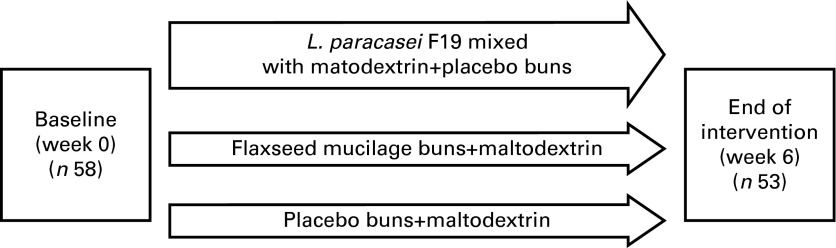
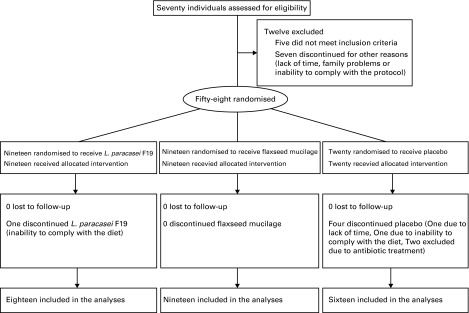
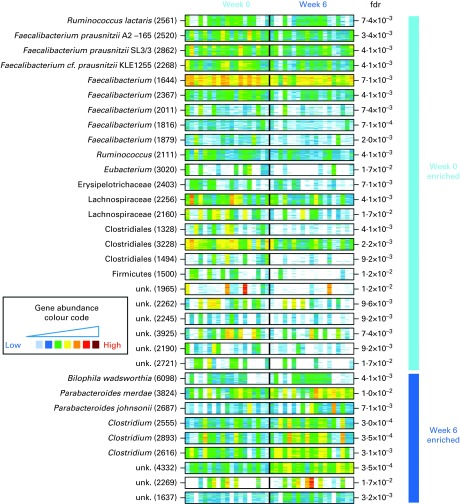
The gut microbiota has been implicated in obesity and its progression towards metabolic disease. Dietary interventions that target the gut microbiota have been suggested to improve metabolic health. The aim of the present study was to investigate the effect of interventions with Lactobacillus paracasei F19 or flaxseed mucilage on the gut microbiota and metabolic risk markers in obesity. A total of fifty-eight obese postmenopausal women were randomised to a single-blinded, parallel-group intervention of 6-week duration, with a daily intake of either L. paracasei F19 (9·4 × 10 10 colony-forming units), flaxseed mucilage (10 g) or placebo. Quantitative metagenomic analysis of faecal DNA was performed to identify the changes in the gut microbiota. Diet-induced changes in metabolic markers were explored using adjusted linear regression models. The intake of flaxseed mucilage over 6 weeks led to a reduction in serum C-peptide and insulin release during an oral glucose tolerance test ( P < 0·05) and improved insulin sensitivity measured by Matsuda index ( P < 0·05). Comparison of gut microbiota composition at baseline and after 6 weeks of intervention with flaxseed mucilage showed alterations in abundance of thirty-three metagenomic species ( P < 0·01), including decreased relative abundance of eight Faecalibacterium species. These changes in the microbiota could not explain the effect of flaxseed mucilage on insulin sensitivity. The intake of L. paracasei F19 did not modulate metabolic markers compared with placebo. In conclusion, flaxseed mucilage improves insulin sensitivity and alters the gut microbiota; however, the improvement in insulin sensitivity was not mediated by the observed changes in relative abundance of bacterial species.
Overview
The claims and statistics of this paper haven’t been checked yet.
Free: it reads the open-access text and checks the first 5 claims that cite a source we can check. Create a free account to check every claim.
Integrity signals
Registry
Cites
Statistics
Figures
Verification
Claims the paper makes
The claims and statistics of this paper haven’t been checked yet.
Free: it reads the open-access text and checks the first 5 claims that cite a source we can check. Create a free account to check every claim.
Claims other papers make about this one
Each is checked against this paper’s own text: does it say what the citing paper says it does?
The cited source says what the claim attributes to it.
In the citing paper
“A significant reduction in the αdiversity of fecal microbiota from baseline was detected in a trial involving flaxseed mucilage, measured by both the exponential of Shannon diversity index (-38,010; 95% CI: -64,473, -11,546; P = 0.007) as well as Simpson's inverse index (-17,515; 95% CI: -30,992, -4038; P = 0.014), although a between-group comparison was not reported (59).”
From Dietary fiber intervention on gut microbiota composition in healthy adults: a systematic review and meta-analysis (2018) · cites this paper as [59]
The check wasn’t confident either way, so it gives no verdict — never disputed.
In the citing paper
“Six RCTs indicated the method for random sequence generation was low risk [29, 34, 44, 47, 48, 52], three other studies indicated high risk [21, 41, 53], and the remaining studies have unclear risk of bias.”
From Comparisons of the effects of different flaxseed products consumption on lipid profiles, inflammatory cytokines and anthropometric indices in patients with dyslipidemia related diseases: systematic review and a dose-response meta-analysis of randomized controlled trials (2021) · cites this paper as [44]
Experimental — accuracy not yet measured
Self-check
Percentages, sums and reported differences re-computed from the paper’s own numbers.
The self-check needs the paper’s full text.
Citations
Cites
1 retracted
Million, M., Maraninchi, M., Henry, M., Armougom, F., Richet, H., Carrieri, P., Valero, R., Raccah, D., Vialettes, B., & Raoult, D. (2012) · International Journal of Obesity · doi:10.1038/ijo.2011.153 · Cited by 663
RetractedMatthews, D. R., Hosker, J. P., Rudenski, A. S., Naylor, B. A., Treacher, D. F., & Turner, R. C. (1985) · Diabetologia · doi:10.1007/bf00280883 · Cited by 31,502 · cited 3×
“With a sample size of eighteen participants per group, a statistical power of 80%, a two-sided significance level of 0·05 and with the assumption of equal variances, the study will identify the changes between independent groups in gut microbiota composition corresponding to 1 SD , e.g. a difference of 40000 gene count…”
InfluentialToprak, O., Kurt, H., Sarı, Y., Şarkış, C., Us, H., & Kırık, A. (2017) · Kidney and Blood Pressure Research · doi:10.1159/000468530 · Cited by 29,627
An obesity-associated gut microbiome with increased capacity for energy harvest
Turnbaugh, P. J., Ley, R. E., Mahowald, M. A., Magrini, V., Mardis, E. R., & Gordon, J. I. (2006) · Nature · doi:10.1038/nature05414 · Cited by 12,444 · cited 1×
“However, causality is suggested by studies in germ-free mice((8,9)), and one study in human subjects((10)).”
BackgroundA human gut microbial gene catalogue established by metagenomic sequencing
MetaHIT Consortium, Qin, J., Li, R., Raes, J., Arumugam, M., Burgdorf, K. S., Manichanh, C., Nielsen, T., Pons, N., Levenez, F., et al. (2010) · Nature · doi:10.1038/nature08821 · Cited by 11,624 · cited 2×
“paracasei F19 in the present study, although it cannot be excluded that the abundance of Lactobacillus species not included in the gene catalogue did change((29)).”
BackgroundMethodSelf-citationA core gut microbiome in obese and lean twins
Turnbaugh, P. J., Hamady, M., Yatsunenko, T., Cantarel, B. L., Duncan, A., Ley, R. E., Sogin, M. L., Jones, W. J., Roe, B. A., Affourtit, J. P., et al. (2009) · Nature · doi:10.1038/nature07540 · Cited by 7,823 · cited 1×
“Meta-genomic studies have suggested that obesity-related metabolic diseases are accompanied by alterations in gut bacteria gene composition and abundance (2–7) .”
BackgroundA metagenome-wide association study of gut microbiota in type 2 diabetes
Qin, J., Li, Y., Cai, Z., Li, S., Zhu, J., Zhang, F., Liang, S., Zhang, W., Guan, Y., Shen, D., et al. (2012) · Nature · doi:10.1038/nature11450 · Cited by 6,762 · cited 8×
“prausnitzii is more abundant in healthy individuals than in individuals with T2D((3,7)).”
BackgroundInfluentialSelf-citationThe gut microbiota as an environmental factor that regulates fat storage
Bäckhed, F., Ding, H., Wang, T., Hooper, L. V., Koh, G. Y., Nagy, A., Semenkovich, C. F., & Gordon, J. I. (2004) · Proceedings of the National Academy of Sciences · doi:10.1073/pnas.0407076101 · Cited by 6,245 · cited 1×
“However, causality is suggested by studies in germ-free mice((8,9)), and one study in human subjects((10)).”
BackgroundMatsuda, M., & DeFronzo, R. A. (1999) · Diabetes Care · doi:10.2337/diacare.22.9.1462 · Cited by 5,621 · cited 1×
“Data from the OGTT were evaluated by AUC analysis and by the Matsuda index((26)).”
MethodRichness of human gut microbiome correlates with metabolic markers
Le Chatelier, E., Nielsen, T., Qin, J., Prifti, E., Hildebrand, F., Falony, G., Almeida, M., Arumugam, M., Batto, J.-M., Kennedy, S., et al. (2013) · Nature · doi:10.1038/nature12506 · Cited by 4,662
Self-citationGut metagenome in European women with normal, impaired and diabetic glucose control
Karlsson, F. H., Tremaroli, V., Nookaew, I., Bergström, G., Behre, C. J., Fagerberg, B., Nielsen, J., & Bäckhed, F. (2013) · Nature · doi:10.1038/nature12198 · Cited by 3,115 · cited 9×
“prausnitzii is more abundant in healthy individuals than in individuals with T2D((3,7)).”
BackgroundInfluentialVrieze, A., Van Nood, E., Holleman, F., Salojärvi, J., Kootte, R. S., Bartelsman, J. F. W. M., Dallinga–Thie, G. M., Ackermans, M. T., Serlie, M. J., Oozeer, R., et al. (2012) · Gastroenterology · doi:10.1053/j.gastro.2012.06.031 · Cited by 2,913 · cited 1×
“However, causality is suggested by studies in germ-free mice((8,9)), and one study in human subjects((10)).”
BackgroundLouis, P., & Flint, H. J. (2009) · FEMS Microbiology Letters · doi:10.1111/j.1574-6968.2009.01514.x · Cited by 2,179 · cited 1×
“prausnitzii on insulin sensitivity has been hypothesised to be due to its role as a major producer of the SCFA butyrate((31)), as butyrate seems to have an anti-inflammatory potential that”
BackgroundStowman, K. (1949) · The Milbank Memorial Fund Quarterly · doi:10.2307/3348165 · Cited by 2,096
Dietary intervention impact on gut microbial gene richness
Cotillard, A., Kennedy, S. P., Kong, L. C., Prifti, E., Pons, N., Le Chatelier, E., Almeida, M., Quinquis, B., Levenez, F., Galleron, N., et al. (2013) · Nature · doi:10.1038/nature12480 · Cited by 1,832 · cited 9×
“Microbial gene richness was measured by counting the number of genes that are present for a given sample using a downsized count matrix as performed in the original studies((4,5)).”
BackgroundMethodResultInfluentialSelf-citationCani, P. D., Neyrinck, A. M., Fava, F., Knauf, C., Burcelin, R. G., Tuohy, K. M., Gibson, G. R., & Delzenne, N. M. (2007) · Diabetologia · doi:10.1007/s00125-007-0791-0 · Cited by 1,774
Suau, A., Bonnet, R., Sutren, M., Godon, J.-J., Gibson, G. R., Collins, M. D., & Doré, J. (1999) · Applied and Environmental Microbiology · doi:10.1128/aem.65.11.4799-4807.1999 · Cited by 1,490 · cited 1×
“To obtain homogenous representation of all bacterial species, DNA extraction involved use of quenching solutions that protect DNA potentially prematurely released by lysis of fragile cells from degradation by DNases present in the stools and a beadbeating step that assures lysis of particularly robust cells((27,28)).”
Symptomatic atherosclerosis is associated with an altered gut metagenome
Karlsson, F. H., Fåk, F., Nookaew, I., Tremaroli, V., Fagerberg, B., Petranovic, D., Bäckhed, F., & Nielsen, J. (2012) · Nature Communications · doi:10.1038/ncomms2266 · Cited by 1,371
Probiotics, Prebiotics, and Synbiotics
de Vrese, M., & Schrezenmeir, J. (2008) · Advances in Biochemical Engineering/Biotechnology · doi:10.1007/10_2008_097 · Cited by 1,028
Godon, J. J., Zumstein, E., Dabert, P., Habouzit, F., & Moletta, R. (1997) · Applied and Environmental Microbiology · doi:10.1128/aem.63.7.2802-2813.1997 · Cited by 924 · cited 1×
“To obtain homogenous representation of all bacterial species, DNA extraction involved use of quenching solutions that protect DNA potentially prematurely released by lysis of fragile cells from degradation by DNases present in the stools and a beadbeating step that assures lysis of particularly robust cells((27,28)).”
Armougom, F., Henry, M., Vialettes, B., Raccah, D., & Raoult, D. (2009) · PLoS ONE · doi:10.1371/journal.pone.0007125 · Cited by 905 · cited 1×
“paracasei is associated with normal weight((15)) and negatively correlated with fasting blood glucose((16)) despite that several other Lactobacillus species have been suggested to be associated with obesity((16,46,47)) and T2D((7)).”
BackgroundDewulf, E. M., Cani, P. D., Claus, S. P., Fuentes, S., Puylaert, P. G., Neyrinck, A. M., Bindels, L. B., de Vos, W. M., Gibson, G. R., Thissen, J.-P., et al. (2013) · Gut · doi:10.1136/gutjnl-2012-303304 · Cited by 825
Dietary prebiotics: current status and new definition
Gibson, G. R., Scott, K. P., Rastall, R. A., Tuohy, K. M., Hotchkiss, A., Dubert-Ferrandon, A., Gareau, M., Murphy, E. F., Saulnier, D., Loh, G., et al. (2010) · Food Science & Technology Bulletin: Functional Foods · doi:10.1616/1476-2137.15880 · Cited by 778 · cited 1×
“Prebiotics are dietary fibres that are selectively fermented by the gut bacteria and induce specific changes in the composition and/or activity of the gut microbiota that provide benefits to host health((17)).”
Erridge, C., Attina, T., Spickett, C. M., & Webb, D. J. (2007) · The American Journal of Clinical Nutrition · doi:10.1093/ajcn/86.5.1286 · Cited by 776 · cited 1×
“increased translocation of lipopolysaccharides can be induced by a high-fat diet((36,37)).”
Chylomicrons promote intestinal absorption of lipopolysaccharides
Ghoshal, S., Witta, J., Zhong, J., de Villiers, W., & Eckhardt, E. (2009) · Journal of Lipid Research · doi:10.1194/jlr.m800156-jlr200 · Cited by 662 · cited 1×
“increased translocation of lipopolysaccharides can be induced by a high-fat diet((36,37)).”
Validation of a New Self-Report Instrument for Measuring Physical Activity
AADAHL, M., & J??RGENSEN, T. (2003) · Medicine & Science in Sports & Exercise · doi:10.1249/01.mss.0000074446.02192.14 · Cited by 611
High α-linolenic acid flaxseed (Linum usitatissimum):some nutritional properties in humans
Cunnane, S. C., Ganguli, S., Menard, C., Liede, A. C., Hamadeh, M. J., Chen, Z.-Y., Wolever, T. M. S., & Jenkins, D. J. A. (1993) · British Journal of Nutrition · doi:10.1079/bjn19930046 · Cited by 452
Million, M., Angelakis, E., Paul, M., Armougom, F., Leibovici, L., & Raoult, D. (2012) · Microbial Pathogenesis · doi:10.1016/j.micpath.2012.05.007 · Cited by 434 · cited 1×
“paracasei is associated with normal weight((15)) and negatively correlated with fasting blood glucose((16)) despite that several other Lactobacillus species have been suggested to be associated with obesity((16,46,47)) and T2D((7)).”
Endotoxemia Is Associated With an Increased Risk of Incident Diabetes
Pussinen, P. J., Havulinna, A. S., Lehto, M., Sundvall, J., & Salomaa, V. (2011) · Diabetes Care · doi:10.2337/dc10-1676 · Cited by 406 · cited 1×
“The gut microbiota has been implicated in the low-grade inflammation that characterises the progression from obesity to metabolic disease, as translocation of bacterial toxins, such as lipopolysaccharides, into the circulation can activate inflammatory pathways((33,34)).”
Vulevic, J., Juric, A., Tzortzis, G., & Gibson, G. R. (2013) · The Journal of Nutrition · doi:10.3945/jn.112.166132 · Cited by 349 · cited 1×
“are accompanied by improvements in glucose homeostasis and lipid metabolism((11,12)).”
BackgroundProbiotics, Prebiotics and Synbiotics
Hawrelak, J. (2007) · eCite Digital Repository (University of Tasmania) · Cited by 320
Aronsson, L., Huang, Y., Parini, P., Korach-André, M., Håkansson, J., Gustafsson, J.-Å., Pettersson, S., Arulampalam, V., & Rafter, J. (2010) · PLoS ONE · doi:10.1371/journal.pone.0013087 · Cited by 300 · cited 1×
“paracasei F19 has been shown to affect the immune system and expression of genes involved in energy homeostasis and insulin sensitivity((44)), and to regulate body fat storage and lipoprotein metabolism((45)).”
BackgroundSelf-citationSun, L., Yu, Z., Ye, X., Zou, S., Li, H., Yu, D., Wu, H., Chen, Y., Dore, J., Clément, K., et al. (2010) · Diabetes Care · doi:10.2337/dc10-0340 · Cited by 278 · cited 1×
“The gut microbiota has been implicated in the low-grade inflammation that characterises the progression from obesity to metabolic disease, as translocation of bacterial toxins, such as lipopolysaccharides, into the circulation can activate inflammatory pathways((33,34)).”
BackgroundIs butyrate the link between diet, intestinal microbiota and obesity-related metabolic diseases?
Brahe, L. K., Astrup, A., & Larsen, L. H. (2013) · Obesity Reviews · doi:10.1111/obr.12068 · Cited by 264 · cited 1×
“might improve obesity-related metabolic complications such as insulin resistance((32)).”
BackgroundSelf-citationLeaky gut and diabetes mellitus: what is the link?: Leaky gut in diabetes
de Kort, S., Keszthelyi, D., & Masclee, A. A. M. (2011) · Obesity Reviews · doi:10.1111/j.1467-789x.2010.00845.x · Cited by 233
Food Formats for Effective Delivery of Probiotics
Sanders, M. E., & Marco, M. L. (2010) · Annual Review of Food Science and Technology · doi:10.1146/annurev.food.080708.100743 · Cited by 218 · cited 1×
“It is possible that we would have observed an effect of the probiotic intervention if it had been administered as part of a fermentable milk product, as a fermentable food matrix could potentially enhance probiotic efficacy((48)).”
Ecotoxicology inside the gut: impact of heavy metals on the mouse microbiome
Breton, J., Massart, S., Vandamme, P., De Brandt, E., Pot, B., & Foligné, B. (2013) · BMC Pharmacology and Toxicology · doi:10.1186/2050-6511-14-62 · Cited by 213
Hall, C., Tulbek, M. C., & Xu, Y. (2006) · Advances in food and nutrition research · doi:10.1016/s1043-4526(06)51001-0 · Cited by 213
Kristensen, M., Jensen, M. G., Aarestrup, J., Petersen, K. E., Søndergaard, L., Mikkelsen, M. S., & Astrup, A. (2012) · Nutrition & Metabolism · doi:10.1186/1743-7075-9-8 · Cited by 175 · cited 1×
“Previously, it has been shown that daily intake of 5 g flaxseed mucilage reduced fasting blood glucose, total cholesterol and LDL-cholesterol in patients with T2D after 12 weeks((20)), and reduced total- and LDL-cholesterol in healthy individuals after 1 week((21)).”
Self-citationExposing to Cadmium Stress Cause Profound Toxic Effect on Microbiota of the Mice Intestinal Tract
Liu, Y., Li, Y., Liu, K., & Shen, J. (2014) · PLoS ONE · doi:10.1371/journal.pone.0085323 · Cited by 174 · cited 1×
“This has been observed in previous studies in mice, where alterations were induced in the gut microbiome following administration of environmental relevant low doses of Cd in drinking-water over 3–8 weeks (41–43) .”
MethodGordon, J. I. (2012) · Science · doi:10.1126/science.1224686 · Cited by 172 · cited 1×
“Probiotics are living micro-organisms that, when ingested, provide health benefits, either directly through interactions with host cells or indirectly through effects on other bacterial species (13) .”
BackgroundEffect of flaxseed gum on reduction of blood glucose and cholesterol in type 2 diabetic patients
Thakur, G., Mitra, A., Pal, K., & Rousseau, D. (2009) · International Journal of Food Sciences and Nutrition · doi:10.1080/09637480903022735 · Cited by 170 · cited 1×
“Previously, it has been shown that daily intake of 5 g flaxseed mucilage reduced fasting blood glucose, total cholesterol and LDL-cholesterol in patients with T2D after 12 weeks((20)), and reduced total- and LDL-cholesterol in healthy individuals after 1 week((21)).”
BackgroundShort‐chain fatty acid content and pH in caecum of rats given various sources of carbohydrates
Berggren, A. M., Björck, I. M. E., Nyman, E. M. G. L., & Eggum, B. O. (1993) · Journal of the Science of Food and Agriculture · doi:10.1002/jsfa.2740630405 · Cited by 157 · cited 2×
“…intake of flaxseed mucilage is supported by the reduction observed in faecal butyrate content and by results from a previous study performed in rats, where fermentation of flaxseed fibres had been shown to yield a remarkably low proportion of butyrate, when compared with other dietary fibres (22) .”
BackgroundResultEstimating intraabdominal adipose tissue in women by dual-energy X-ray absorptiometry
Treuth, M., Hunter, G., & Kekes-Szabo, T. (1995) · American Journal of Clinical Nutrition · doi:10.1093/ajcn/62.3.527 · Cited by 120 · cited 1×
“Body composition was assessed by dual-energy X-ray absorptiometry (iDXA; Lunar Radiation Company), BMI (kg/m(2)), waist circumference and intra-abdominal adipose tissue (cm(2): 2208·2 þ 4·62 (sagittal diameter, cm) þ 0·75 (age, years) þ 1·73 (waist, cm) þ (0·78 (trunk fat, %)))((23)).”
MethodTarpila, A., Wennberg, T., & Tarpila, S. (2005) · Current Topics in Nutraceutical Research · Cited by 103
Fazeli, M., Hassanzadeh, P., & Alaei, S. (2011) · Human & Experimental Toxicology · doi:10.1177/0960327110369821 · Cited by 93
Flaxseed dietary fibers suppress postprandial lipemia and appetite sensation in young men
Kristensen, M., Savorani, F., Christensen, S., Engelsen, S. B., Bügel, S., Toubro, S., Tetens, I., & Astrup, A. V. (2011) · Nutrition Metabolism and Cardiovascular Diseases · doi:10.1016/j.numecd.2011.03.004 · Cited by 92 · cited 1×
“In addition, acute meal tests with flaxseed mucilage have been shown to suppress postprandial blood glucose, insulin and lipid responses((19,39)).”
Self-citationDiversity and metabolic impact of intestinal Lactobacillus species in healthy adults and the elderly
Štšepetova, J., Sepp, E., Kolk, H., Lõivukene, K., Songisepp, E., & Mikelsaar, M. (2011) · British Journal of Nutrition · doi:10.1017/s0007114510004770 · Cited by 83 · cited 2×
“Common probiotics include Lactobacillus species((14)), and Lactobacillus paracasei has previously been associated with a healthy metabolic profile((15,16)).”
BackgroundNerstedt, A., Nilsson, E. C., Ohlson, K., Håkansson, J., Thomas Svensson, L., Löwenadler, B., Svensson, U. K., & Mahlapuu, M. (2007) · British Journal of Nutrition · doi:10.1017/s0007114507682907 · Cited by 56 · cited 1×
“paracasei F19 has been shown to affect the immune system and expression of genes involved in energy homeostasis and insulin sensitivity((44)), and to regulate body fat storage and lipoprotein metabolism((45)).”
Self-citationAmer, B., Nebel, C., Bertram, H. C., Mortensen, G., Hermansen, K., & Dalsgaard, T. K. (2013) · International Dairy Journal · doi:10.1016/j.idairyj.2013.05.016 · Cited by 42 · cited 2×
“Sample preparation, analyses by the ethyl chloroformate NEFA method and GC, were performed by applying methods described in detail by Amer et al.((30)).”
MethodSelf-citationSullivan, Å., Palmgren, A., & Nord, C. E. (2001) · Anaerobe · doi:10.1006/anae.2001.0377 · Cited by 25
Cited by
The Human Intestinal Microbiome in Health and Disease
Lynch, S. V., & Pedersen, O. (2016) · New England Journal of Medicine · doi:10.1056/nejmra1600266 · Cited by 3,637
Self-citationEffects of probiotics, prebiotics, and synbiotics on human health
Markowiak, P., & Śliżewska, K. (2017) · Nutrients · doi:10.3390/nu9091021 · Cited by 2,401
Role of gut microbiota in type 2 diabetes pathophysiology
Gurung, M., Li, Z., You, H., Rodrigues, R., Jump, D. B., Morgun, A., & Shulzhenko, N. (2020) · EBioMedicine · doi:10.1016/j.ebiom.2019.11.051 · Cited by 1,708
The pros, cons, and many unknowns of probiotics
Suez, J., Zmora, N., Segal, E., & Elinav, E. (2019) · Nature Medicine · doi:10.1038/s41591-019-0439-x · Cited by 1,398
The gut microbiome: Relationships with disease and opportunities for therapy
Durack, J., & Lynch, S. V. (2019) · Journal of Experimental Medicine · doi:10.1084/jem.20180448 · Cited by 943
“Dietary interventions Although diet strongly shapes the composition and function of the gut microbiota, only a small number of controlled clinical dietary intervention studies targeting the human gut microbiota have been reported (Cotillard et al., 2013; Brahe et al., 2015; Thompson et al., 2017).”
Background
Metadata
- Authors
- Brahe, L. K., Le Chatelier, E., Prifti, E., Pons, N., Kennedy, S., Blædel, T., Håkansson, J., Dalsgaard, T. K., Hansen, T., Pedersen, O., Astrup, A., Ehrlich, S. D., & Larsen, L. H.
- Affiliations
- University of Copenhagen (DK)
- Institut National de Recherche pour l'Agriculture, l'Alimentation et l'Environnement (FR)
- Aarhus University (DK)
- Corresponding author
- Larsen, Lesli H.
- ORCID
- Venue
- British Journal of Nutrition
- Publisher
- Cambridge University Press (CUP)
- Published
- 2015-07-02
- Volume
- 114
- Issue
- 3
- Pages
- 406-417
- ISSN
- 0007-1145 (ISSN-L)
- 1475-2662
- PMC
- PMC4531470
- OpenAlex
- W1825195823
- Cited by
- 171
- References
- 51
- Citations by year
- 2026: 8 · 2025: 7 · 2024: 13 · 2023: 16 · 2022: 14 · 2021: 27 · 2020: 18 · 2019: 23 · 2018: 16 · 2017: 13 · 2016: 12 · 2015: 4
- FWCI
- 6.51
- Type
- journal article
- Language
- en
- Open access
- hybrid
- doi.org
- Locations
- British Journal Of Nutrition (publishedVersion, cc-by)
- Europe PMC (PubMed Central) (publishedVersion, cc-by)
- PubMed Central (publishedVersion, cc-by)
- PubMed (publishedVersion)
- Research at the University of Copenhagen (University of Copenhagen) (publishedVersion, cc-by)
- HAL (submittedVersion, cc-by)
- Funders
- Agence Nationale de la Recherche (ANR-11-DPBS-0001)
- Lundbeckfonden
- Institut National de la Recherche Agronomique
- H. Lundbeck A/S
- Wageningen University and Research
- Topics
- Life Sciences › Biochemistry, Genetics and Molecular Biology › Molecular Biology › Gut microbiota and health
- Life Sciences › Agricultural and Biological Sciences › Food Science › Probiotics and Fermented Foods
- Health Sciences › Nursing › Nutrition and Dietetics › Microbial Metabolites in Food Biotechnology
- Keywords
- gut microbiota, obesity, postmenopausal women, flaxseed mucilage, dietary intervention, insulin sensitivity, insulin resistance, C-peptide, oral glucose tolerance test, Faecalibacterium, metabolic risk markers
- MeSH terms
- Insulin Secretion, Aged, C-Peptide, Diet, Feces, Female, Glucose Tolerance Test, Humans, Insulin, Insulin Resistance, Intestines, Lactobacillus, Middle Aged, Obesity, Single-Blind Method, Postmenopause, Flax, Probiotics, Prebiotics, Plant Mucilage
About these checks
Registry, retraction, Cites and statistics results are computed, not judged, with one exception: a printed reference that no index lists is read once by a model before it counts as a citation error. Claims are extracted by a model and kept only when their quote appears verbatim in the text; each cited source is then checked, with a model’s help, for whether it says what the claim relies on. Those verdicts can be wrong — read the claim’s quote and the cited source before relying on one.
Statistics and arithmetic are recomputed, not judged.
Confidence bands are shown only for fields calibrated on our annotated test set. None is calibrated yet, so no band is shown.
What counts as a claim ›How we measure confidence ›How we check this ›
Are you an author, or do you see a problem with this page? Request a review
Data sources
Bibliographic data: Semantic Scholar, OpenAlex, Crossref.
Contains information from the Semantic Scholar Academic Graph Datasets, made available under the ODC Attribution License (ODC-BY 1.0).
Semantic Scholar’s data is described in: Kinney, R., et al. (2023). The Semantic Scholar Open Data Platform. arXiv:2301.10140.
