

Dietary modulation of the gut microbiota – a randomised controlled trial in obese postmenopausal women
Open accessThe DOI matches its Crossref record; 51 of the 51 references it cites were found in a registry or an index.
Abstract
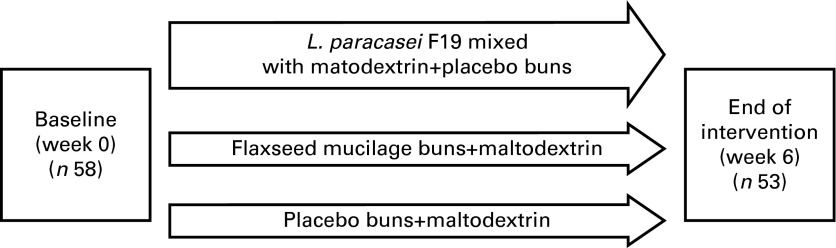
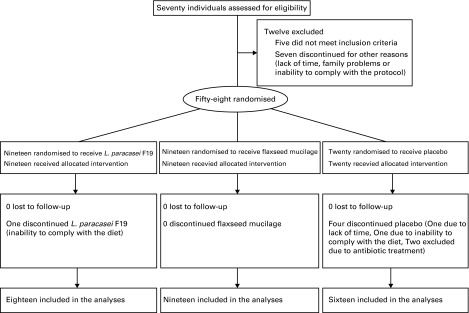
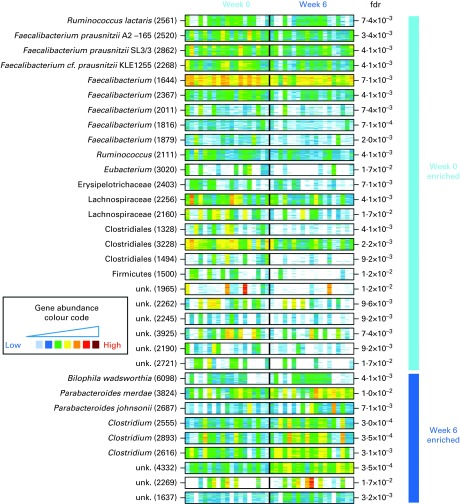
The gut microbiota has been implicated in obesity and its progression towards metabolic disease. Dietary interventions that target the gut microbiota have been suggested to improve metabolic health. The aim of the present study was to investigate the effect of interventions with Lactobacillus paracasei F19 or flaxseed mucilage on the gut microbiota and metabolic risk markers in obesity. A total of fifty-eight obese postmenopausal women were randomised to a single-blinded, parallel-group intervention of 6-week duration, with a daily intake of either L. paracasei F19 (9·4 × 10 10 colony-forming units), flaxseed mucilage (10 g) or placebo. Quantitative metagenomic analysis of faecal DNA was performed to identify the changes in the gut microbiota. Diet-induced changes in metabolic markers were explored using adjusted linear regression models. The intake of flaxseed mucilage over 6 weeks led to a reduction in serum C-peptide and insulin release during an oral glucose tolerance test ( P < 0·05) and improved insulin sensitivity measured by Matsuda index ( P < 0·05). Comparison of gut microbiota composition at baseline and after 6 weeks of intervention with flaxseed mucilage showed alterations in abundance of thirty-three metagenomic species ( P < 0·01), including decreased relative abundance of eight Faecalibacterium species. These changes in the microbiota could not explain the effect of flaxseed mucilage on insulin sensitivity. The intake of L. paracasei F19 did not modulate metabolic markers compared with placebo. In conclusion, flaxseed mucilage improves insulin sensitivity and alters the gut microbiota; however, the improvement in insulin sensitivity was not mediated by the observed changes in relative abundance of bacterial species.
Overview
The claims and statistics of this paper haven’t been checked yet.
Free: it reads the open-access text and checks the first 5 claims that cite a source we can check. Create a free account to check every claim.
Integrity signals
Registry
Cites
Statistics
Figures
Verification
Claims the paper makes
The claims and statistics of this paper haven’t been checked yet.
Free: it reads the open-access text and checks the first 5 claims that cite a source we can check. Create a free account to check every claim.
Claims other papers make about this one
Each is checked against this paper’s own text: does it say what the citing paper says it does?
The cited source says what the claim attributes to it.
In the citing paper
“A significant reduction in the αdiversity of fecal microbiota from baseline was detected in a trial involving flaxseed mucilage, measured by both the exponential of Shannon diversity index (-38,010; 95% CI: -64,473, -11,546; P = 0.007) as well as Simpson's inverse index (-17,515; 95% CI: -30,992, -4038; P = 0.014), although a between-group comparison was not reported (59).”
From Dietary fiber intervention on gut microbiota composition in healthy adults: a systematic review and meta-analysis (2018) · cites this paper as [59]
The check wasn’t confident either way, so it gives no verdict — never disputed.
In the citing paper
“Six RCTs indicated the method for random sequence generation was low risk [29, 34, 44, 47, 48, 52], three other studies indicated high risk [21, 41, 53], and the remaining studies have unclear risk of bias.”
From Comparisons of the effects of different flaxseed products consumption on lipid profiles, inflammatory cytokines and anthropometric indices in patients with dyslipidemia related diseases: systematic review and a dose-response meta-analysis of randomized controlled trials (2021) · cites this paper as [44]
Experimental — accuracy not yet measured
Self-check
Percentages, sums and reported differences re-computed from the paper’s own numbers.
The self-check needs the paper’s full text.
Citations
Cites
1 retracted
Million, M., Maraninchi, M., Henry, M., Armougom, F., Richet, H., Carrieri, P., Valero, R., Raccah, D., Vialettes, B., & Raoult, D. (2012) · International Journal of Obesity · doi:10.1038/ijo.2011.153 · Cited by 663
RetractedMatthews, D. R., Hosker, J. P., Rudenski, A. S., Naylor, B. A., Treacher, D. F., & Turner, R. C. (1985) · Diabetologia · doi:10.1007/bf00280883 · Cited by 31,502 · cited 3×
“With a sample size of eighteen participants per group, a statistical power of 80%, a two-sided significance level of 0·05 and with the assumption of equal variances, the study will identify the changes between independent groups in gut microbiota composition corresponding to 1 SD , e.g. a difference of 40000 gene count…”
InfluentialToprak, O., Kurt, H., Sarı, Y., Şarkış, C., Us, H., & Kırık, A. (2017) · Kidney and Blood Pressure Research · doi:10.1159/000468530 · Cited by 29,627
An obesity-associated gut microbiome with increased capacity for energy harvest
Turnbaugh, P. J., Ley, R. E., Mahowald, M. A., Magrini, V., Mardis, E. R., & Gordon, J. I. (2006) · Nature · doi:10.1038/nature05414 · Cited by 12,444 · cited 1×
“However, causality is suggested by studies in germ-free mice((8,9)), and one study in human subjects((10)).”
BackgroundA human gut microbial gene catalogue established by metagenomic sequencing
MetaHIT Consortium, Qin, J., Li, R., Raes, J., Arumugam, M., Burgdorf, K. S., Manichanh, C., Nielsen, T., Pons, N., Levenez, F., et al. (2010) · Nature · doi:10.1038/nature08821 · Cited by 11,624 · cited 2×
“paracasei F19 in the present study, although it cannot be excluded that the abundance of Lactobacillus species not included in the gene catalogue did change((29)).”
BackgroundMethodSelf-citationA core gut microbiome in obese and lean twins
Turnbaugh, P. J., Hamady, M., Yatsunenko, T., Cantarel, B. L., Duncan, A., Ley, R. E., Sogin, M. L., Jones, W. J., Roe, B. A., Affourtit, J. P., et al. (2009) · Nature · doi:10.1038/nature07540 · Cited by 7,823 · cited 1×
“Meta-genomic studies have suggested that obesity-related metabolic diseases are accompanied by alterations in gut bacteria gene composition and abundance (2–7) .”
BackgroundA metagenome-wide association study of gut microbiota in type 2 diabetes
Qin, J., Li, Y., Cai, Z., Li, S., Zhu, J., Zhang, F., Liang, S., Zhang, W., Guan, Y., Shen, D., et al. (2012) · Nature · doi:10.1038/nature11450 · Cited by 6,762 · cited 8×
“prausnitzii is more abundant in healthy individuals than in individuals with T2D((3,7)).”
BackgroundInfluentialSelf-citationThe gut microbiota as an environmental factor that regulates fat storage
Bäckhed, F., Ding, H., Wang, T., Hooper, L. V., Koh, G. Y., Nagy, A., Semenkovich, C. F., & Gordon, J. I. (2004) · Proceedings of the National Academy of Sciences · doi:10.1073/pnas.0407076101 · Cited by 6,245 · cited 1×
“However, causality is suggested by studies in germ-free mice((8,9)), and one study in human subjects((10)).”
BackgroundMatsuda, M., & DeFronzo, R. A. (1999) · Diabetes Care · doi:10.2337/diacare.22.9.1462 · Cited by 5,621 · cited 1×
“Data from the OGTT were evaluated by AUC analysis and by the Matsuda index((26)).”
MethodRichness of human gut microbiome correlates with metabolic markers
Le Chatelier, E., Nielsen, T., Qin, J., Prifti, E., Hildebrand, F., Falony, G., Almeida, M., Arumugam, M., Batto, J.-M., Kennedy, S., et al. (2013) · Nature · doi:10.1038/nature12506 · Cited by 4,662
Self-citation
Cited by
The Human Intestinal Microbiome in Health and Disease
Lynch, S. V., & Pedersen, O. (2016) · New England Journal of Medicine · doi:10.1056/nejmra1600266 · Cited by 3,637
Self-citationEffects of probiotics, prebiotics, and synbiotics on human health
Markowiak, P., & Śliżewska, K. (2017) · Nutrients · doi:10.3390/nu9091021 · Cited by 2,401
Role of gut microbiota in type 2 diabetes pathophysiology
Gurung, M., Li, Z., You, H., Rodrigues, R., Jump, D. B., Morgun, A., & Shulzhenko, N. (2020) · EBioMedicine · doi:10.1016/j.ebiom.2019.11.051 · Cited by 1,708
The pros, cons, and many unknowns of probiotics
Suez, J., Zmora, N., Segal, E., & Elinav, E. (2019) · Nature Medicine · doi:10.1038/s41591-019-0439-x · Cited by 1,398
The gut microbiome: Relationships with disease and opportunities for therapy
Durack, J., & Lynch, S. V. (2019) · Journal of Experimental Medicine · doi:10.1084/jem.20180448 · Cited by 943
“Dietary interventions Although diet strongly shapes the composition and function of the gut microbiota, only a small number of controlled clinical dietary intervention studies targeting the human gut microbiota have been reported (Cotillard et al., 2013; Brahe et al., 2015; Thompson et al., 2017).”
BackgroundSo, D., Whelan, K., Rossi, M., Morrison, M., Holtmann, G., Kelly, J. T., Shanahan, E. R., Staudacher, H. M., & Campbell, K. L. (2018) · The American Journal of Clinical Nutrition · doi:10.1093/ajcn/nqy041 · Cited by 683
How to select a probiotic? A review and update of methods and criteria
de Melo Pereira, G. V., de Oliveira Coelho, B., Magalhães Júnior, A. I., Thomaz-Soccol, V., & Soccol, C. R. (2018) · Biotechnology Advances · doi:10.1016/j.biotechadv.2018.09.003 · Cited by 523
Kristensen, N. B., Bryrup, T., Allin, K. H., Nielsen, T., Hansen, T. H., & Pedersen, O. (2016) · Genome Medicine · doi:10.1186/s13073-016-0300-5 · Cited by 561
“20–45 years Denmark L. casei W8® (1010 CFU) in capsules Double-blinded, parallel, two-armed, placebo (capsules) controlled (28 days) 16S rRNA (regions V3 and V4) sequencing on Roche 454 pyrosequencing platform No ↔ α- and β-diversity Brahe et al. 2015 [20] 34/58* (100”
BackgroundMethodInfluentialSelf-citationSáez-Lara, M., Robles-Sanchez, C., Ruiz-Ojeda, F., Plaza-Diaz, J., & Gil, A. (2016) · International Journal of Molecular Sciences · doi:10.3390/ijms17060928 · Cited by 328
“paracasei F19 did not modulate any metabolic markers (homeostasis model assessment of insulin resistance (HOMA-IR), Matsuda index, CRP, and lipid profile) compared with the placebo [41].”
BackgroundInfluentialRebuilding the Gut Microbiota Ecosystem
Gagliardi, A., Totino, V., Cacciotti, F., Iebba, V., Neroni, B., Bonfiglio, G., Trancassini, M., Passariello, C., Pantanella, F., & Schippa, S. (2018) · International Journal of Environmental Research and Public Health · doi:10.3390/ijerph15081679 · Cited by 340
“This could depend on several factors, such as the subject age and microbiota composition before diet treatment [144,145].”
BackgroundSpecific gut microbiota features and metabolic markers in postmenopausal women with obesity
Brahe, L. K., Le Chatelier, E., Prifti, E., Pons, N., Kennedy, S., Hansen, T., Pedersen, O., Astrup, A., Ehrlich, S. D., & Larsen, L. H. (2015) · Nutrition & Diabetes · doi:10.1038/nutd.2015.9 · Cited by 303
Self-citationKoutnikova, H., Genser, B., Monteiro-Sepulveda, M., Faurie, J.-M., Rizkalla, S., Schrezenmeir, J., & Clément, K. (2019) · BMJ Open · doi:10.1136/bmjopen-2017-017995 · Cited by 299
Dietary Flaxseed as a Strategy for Improving Human Health
Parikh, M., Maddaford, T. G., Austria, J. A., Aliani, M., Netticadan, T., & Pierce, G. N. (2019) · Nutrients · doi:10.3390/nu11051171 · Cited by 265
“This altered insulin sensitivity in these women [82].”
BackgroundPleotropic Effects of Polyphenols in Cardiovascular System
Behl, T., Bungau, S., Kumar, K., Zengin, G., Khan, F., Kumar, A., Kaur, R., Venkatachalam, T., Tit, D. M., Vesa, C. M., et al. (2020) · Biomedicine & Pharmacotherapy · doi:10.1016/j.biopha.2020.110714 · Cited by 227
Update of probiotics in human world: A nonstop source of benefactions till the end of time
Zommiti, M., Feuilloley, M. G. J., & Connil, N. (2020) · Microorganisms · doi:10.3390/microorganisms8121907 · Cited by 225
Probiotics: How Effective Are They in the Fight against Obesity?
Mazloom, K., Siddiqi, I., & Covasa, M. (2019) · Nutrients · doi:10.3390/nu11020258 · Cited by 192
Dietary plants, gut microbiota, and obesity: Effects and mechanisms
Cao, S.-Y., Zhao, C.-N., Xu, X.-Y., Tang, G.-Y., Corke, H., Gan, R.-Y., & Li, H.-B. (2019) · Trends in Food Science & Technology · doi:10.1016/j.tifs.2019.08.004 · Cited by 198
Thompson, S. V., Hannon, B. A., An, R., & Holscher, H. D. (2017) · The American Journal of Clinical Nutrition · doi:10.3945/ajcn.117.163246 · Cited by 201
The role of diet and intestinal microbiota in the development of metabolic syndrome
Santos-Marcos, J. A., Perez-Jimenez, F., & Camargo, A. (2019) · The Journal of Nutritional Biochemistry · doi:10.1016/j.jnutbio.2019.03.017 · Cited by 180
Wei, S., Bahl, M. I., Baunwall, S. M. D., Hvas, C. L., & Licht, T. R. (2021) · Applied and Environmental Microbiology · doi:10.1128/aem.00395-21 · Cited by 172
Gut Microbiota: From Microorganisms to Metabolic Organ Influencing Obesity
Stephens, R. W., Arhire, L., & Covasa, M. (2018) · Obesity · doi:10.1002/oby.22179 · Cited by 166
“Foods containing prebiotic oligosaccharides that nourish the beneficial commensal bacteria in the gut community, as well as probiotic supplements, are being investigated as possible interventions to manipulate the gut microbiome and ultimately improve the health status at any age (25,26).”
BackgroundCompanys, J., Pla-Pagà, L., Calderón-Pérez, L., Llauradó, E., Solà, R., Pedret, A., & Valls, R. M. (2020) · Advances in Nutrition · doi:10.1093/advances/nmaa030 · Cited by 149
Can We Prevent Obesity-Related Metabolic Diseases by Dietary Modulation of the Gut Microbiota?
Brahe, L. K., Astrup, A., & Larsen, L. H. (2016) · Advances in Nutrition · doi:10.3945/an.115.010587 · Cited by 145
“Interventions with different types of dietary fibers including prebiotics have been shown to modulate the gut microbiota and improve insulin sensitivity, low-grade chronic inflammation, and lipid metabolism (18, 19, 124, 128).”
BackgroundInfluentialSelf-citationBarengolts, E. I. (2016) · Endocrine Practice · doi:10.4158/ep151157.ra · Cited by 161
Kazemi, A., Soltani, S., Ghorabi, S., Keshtkar, A., Daneshzad, E., Nasri, F., & Mazloomi, S. M. (2020) · Clinical Nutrition · doi:10.1016/j.clnu.2019.04.004 · Cited by 131
Influence of Oral and Gut Microbiota in the Health of Menopausal Women
Vieira, A. T., Castelo, P. M., Ribeiro, D. A., & Ferreira, C. M. (2017) · Frontiers in Microbiology · doi:10.3389/fmicb.2017.01884 · Cited by 129
“The intake of flaxseed mucilage, a prebiotic, is known to improve insulin sensitivity and alter the gut microbiota in obese postmenopausal women (Brahe et al., 2015).”
BackgroundA Review on Role of Microbiome in Obesity and Antiobesity Properties of Probiotic Supplements
Sivamaruthi, B. S., Kesika, P., Suganthy, N., & Chaiyasut, C. (2019) · BioMed Research International · doi:10.1155/2019/3291367 · Cited by 124
“The improved insulin sensitivity is not associated with altered microbiome [32].”
BackgroundUnraveling the Gut Microbiota: Implications for Precision Nutrition and Personalized Medicine
Abeltino, A., Hatem, D., Serantoni, C., Riente, A., Giulio, M. M. D., Spirito, M. D., Maio, F. D., & Maulucci, G. (2024) · Nutrients · doi:10.3390/nu16223806 · Cited by 131
“Other studies have examined the role of diet in modulating the gut microbiota concerning health and disease [246–248].”
The Role of Flaxseed in Improving Human Health
Nowak, W., & Jeziorek, M. (2023) · Healthcare · doi:10.3390/healthcare11030395 · Cited by 145
“01), including decreased relative abundance of eight Faecalibacterium species in the flaxseed mucilage group [40]”
BackgroundPettigrew, M. M., Gent, J. F., Kong, Y., Halpin, A. L., Pineles, L. L., Harris, A. D., & Johnson, J. K. (2018) · Clinical Infectious Diseases · doi:10.1093/cid/ciy936 · Cited by 111
“Faecalibacterium species have been evaluated in probiotics [31, 32].”
BackgroundAn Updated Overview on Nanonutraceuticals: Focus on Nanoprebiotics and Nanoprobiotics
Durazzo, A., Nazhand, A., Lucarini, M., Atanasov, A. G., Souto, E. B., Novellino, E., Capasso, R., & Santini, A. (2020) · International Journal of Molecular Sciences · doi:10.3390/ijms21072285 · Cited by 112
Partula, V., Mondot, S., Torres, M. J., Kesse-Guyot, E., Deschasaux, M., Assmann, K., Latino-Martel, P., Buscail, C., Julia, C., Galan, P., et al. (2019) · The American Journal of Clinical Nutrition · doi:10.1093/ajcn/nqz029 · Cited by 100
Zhao, X., Zhong, X., Liu, X., Wang, X., & Gao, X. (2021) · Frontiers in Nutrition · doi:10.3389/fnut.2021.693412 · Cited by 99
“paracasei had been used in animal experiments to reduce body weight and fat accumulation but did not affect metabolism in clinical studies (210).”
BackgroundLópez‐Moreno, A., Suárez, A., Avanzi, C., Monteoliva‐Sánchez, M., & Aguilera, J. (2020) · Nutrients · doi:10.3390/nu12071921 · Cited by 100
“[51] studied the administration of one strain of L.”
BackgroundMethodResultAnto, L., & Blesso, C. N. (2022) · The Journal of Nutritional Biochemistry · doi:10.1016/j.jnutbio.2022.108991 · Cited by 98
Hameed, A. S. S., Rawat, P. S., Meng, X., & Liu, W. (2020) · Biotechnology Advances · doi:10.1016/j.biotechadv.2020.107576 · Cited by 97
Prebiotics – an added benefit of some fibre types
Lockyer, S., & Stanner, S. A. (2019) · Nutrition Bulletin · doi:10.1111/nbu.12366 · Cited by 96
Gut and vaginal microbiomes on steroids: implications for women’s health
Graham, M. E., Herbert, W. G., Song, S., Raman, H. N., Zhu, J. E., Gonzalez, P. E., Walther-Antonio, M. R. S., & Tetel, M. J. (2021) · Trends in Endocrinology and Metabolism · doi:10.1016/j.tem.2021.04.014 · Cited by 99
“In addition, obese postmenopausal women treated with flaxseedmucilage, which is rich in prebiotic fibers, altered GM composition and improved insulin sensitivity [104].”
BackgroundPontes, K. S. D. S., Guedes, M. R., Cunha, M. R. D., Mattos, S. D. S., Barreto Silva, M. I., Neves, M. F., Marques, B. C. A. A., & Klein, M. R. S. T. (2021) · Clinical Nutrition · doi:10.1016/j.clnu.2021.06.023 · Cited by 86
Single-Subject Studies in Translational Nutrition Research
Schork, N. J., & Goetz, L. H. (2017) · Annual Review of Nutrition · doi:10.1146/annurev-nutr-071816-064717 · Cited by 85
Prebiotics in the management of components of the metabolic syndrome
O'Connor, S. E., Chouinard-Castonguay, S., Gagnon, C., & Rudkowska, I. (2017) · Maturitas · doi:10.1016/j.maturitas.2017.07.005 · Cited by 86
Hadi, A., Askarpour, M., Salamat, S., Ghaedi, E., Symonds, M. E., & Miraghajani, M. (2020) · Pharmacological Research · doi:10.1016/j.phrs.2019.104622 · Cited by 71
Gowd, V., Xie, L., Zheng, X., & Chen, W. (2019) · Critical Reviews in Biotechnology · doi:10.1080/07388551.2019.1576025 · Cited by 73
Armet, A. M., Deehan, E. C., Thöne, J. V., Hewko, S. J., & Walter, J. (2020) · Advances in Nutrition · doi:10.1093/advances/nmz074 · Cited by 63
Microbiota and body weight control: Weight watchers within?
Boscaini, S., Leigh, S., Lavelle, A., García‐Cabrerizo, R., Lipuma, T., Clarke, G. A., Schellekens, H., & Cryan, J. F. (2021) · Molecular Metabolism · doi:10.1016/j.molmet.2021.101427 · Cited by 74
Pepe, R. B., Lottenberg, A. M., Fujiwara, C. T. H., Beyruti, M., Cintra, D. E., Machado, R. M., Rodrigues, A., Jensen, N. S. O., Caldas, A. P. S., Fernandes, A. E., et al. (2023) · Diabetology & Metabolic Syndrome · doi:10.1186/s13098-023-01037-6 · Cited by 72
“In humans, this strain did not demonstrate any metabolic effect in both postmenopausal women with obesity and school-age children [562, 563].”
BackgroundIncreasing Dietary Fiber Intake Is Associated with a Distinct Esophageal Microbiome
Nobel, Y. R., Snider, E. J., Compres, G., Freedberg, D. E., Khiabanian, H., Lightdale, C. J., Toussaint, N. C., & Abrams, J. A. (2018) · Clinical and Translational Gastroenterology · doi:10.1038/s41424-018-0067-7 · Cited by 71
Bustamante, M., Laurie-Martínez, L., Vergara, D., Campos-Vega, R., Rubilar, M., & Shene, C. (2020) · Applied Sciences · doi:10.3390/app10134623 · Cited by 63
“Furthermore, FM consumption can prevent intestinal inflammation, decrease glucose and cholesterol in the blood [45], alter the gut microbiota and improve insulin sensitivity in obese postmenopausal women [46], and suppress postprandial lipemia in young men [47].”
BackgroundTuning Expectations to Reality: Don’t Expect Increased Gut Microbiota Diversity with Dietary Fiber
Cantu-Jungles, T. M., & Hamaker, B. R. (2023) · Journal of Nutrition · doi:10.1016/j.tjnut.2023.09.001 · Cited by 64
Endam, L. M., Alromaih, S., González, E., Madrenas, J., Cousineau, B., Renteria, A. E., & Desrosiers, M. Y. (2020) · Frontiers in Cellular and Infection Microbiology · doi:10.3389/fcimb.2020.00440 · Cited by 62
Bakr, A. F., & Farag, M. A. (2023) · ACS Omega · doi:10.1021/acsomega.3c01121 · Cited by 59
Sartang, M. M., Sohrabi, Z., Barati‐Boldaji, R., Raeisi‐Dehkordi, H., & Mazloom, Z. (2017) · Nutrition Reviews · doi:10.1093/nutrit/nux052 · Cited by 62
Influencia de la microbiota y de los probióticos en la obesidad
Fontané, L., Benaiges, D., Goday, A., Llauradó, G., & Pedro‐Botet, J. (2018) · Clínica e Investigación en Arteriosclerosis · doi:10.1016/j.arteri.2018.03.004 · Cited by 70
Djuric, Z., Bassis, C. M., Plegue, M. A., Ren, J., Chan, R., Sidahmed, E., Turgeon, D. K., Ruffin, M. T., Kato, I., & Sen, A. (2018) · Journal of the Academy of Nutrition and Dietetics · doi:10.1016/j.jand.2017.09.013 · Cited by 43
Influence of the microbiota and probiotics in obesity
Fontané, L., Benaiges, D., Goday, A., Llauradó, G., & Pedro‐Botet, J. (2018) · Clínica e Investigación en Arteriosclerosis (English Edition) · doi:10.1016/j.artere.2018.10.002 · Cited by 54
Ghorbani, Z., Kazemi, A., Bartolomaeus, T. U. P., Martami, F., Noormohammadi, M., Salari, A., Löber, U., Balou, H. A., Forslund, S. K., & Mahdavi‐Roshan, M. (2022) · Cardiovascular Research · doi:10.1093/cvr/cvac128 · Cited by 50
Swann, J. R., Rajilić-Stojanović, M. D., Salonen, A., Sakwińska, O., Gill, C. M., Meynier, A., Fança‐Berthon, P., Schelkle, B., Segata, N., Shortt, C., et al. (2020) · European Journal of Nutrition · doi:10.1007/s00394-020-02232-1 · Cited by 59
Arora, T., Rudenko, O., Egerod, K. L., Husted, A. S., Kovatcheva‐Datchary, P., Akrami, R., Kristensen, M., Schwartz, T. W., & Bäckhed, F. (2018) · American Journal of Physiology-Endocrinology and Metabolism · doi:10.1152/ajpendo.00391.2018 · Cited by 46
“suggesting higher levels of fecal butyrate-producing Clostridia following flaxseed supplementation in women with obesity (8).”
BackgroundJeong, S.-Y., Kang, S., Hua, C. S., Zhang, T., & Park, S. (2017) · Genes & Nutrition · doi:10.1186/s12263-017-0585-z · Cited by 49
“Firmicutes among the gut microbiota is associated with obesity and its progression towards metabolic disease [2], and dietary interventions to modulate the gut microbiota can alleviate metabolic diseases [3].”
BackgroundEffects of Probiotics and Prebiotics on Frailty and Ageing: A Narrative Review
Jayanama, K., & Theou, O. (2019) · Current Clinical Pharmacology · doi:10.2174/1574884714666191120124548 · Cited by 51
Flaxseed for Health and Disease: Review of Clinical Trials
Shayan, M., Kamalian, S., Sahebkar, A., & Tayarani‐Najaran, Z. (2020) · Combinatorial Chemistry & High Throughput Screening · doi:10.2174/1386207323666200521121708 · Cited by 47
Chen, M., Chen, C., Huang, Y., Tseng, C., Hsu, J.-T., Yi-fen, L., Fang, Y., Wu, M., & Liou, J. (2021) · Helicobacter · doi:10.1111/hel.12857 · Cited by 44
Galena, A. E., Chai, J., Zhang, J., Bednarzyk, M. S., Perez, D., Ochrietor, J. D., Jahan-Mihan, A., & Arikawa, A. Y. (2022) · PLoS ONE · doi:10.1371/journal.pone.0275275 · Cited by 44
“Brahe and colleagues [57] reported positive correlations between Ruminococcus torques and insulin resistance and suggested the use of this bacterial species as a metabolic marker in postmenopausal women with obesity.”
BackgroundGhorbani, Y., Schwenger, K. J. P., & Allard, J. P. (2021) · European Journal of Nutrition · doi:10.1007/s00394-021-02520-4 · Cited by 43
Gut microbiota and obesity: an overview of microbiota to microbial-based therapies
Sheykhsaran, E., Abbasi, A., Leylabadlo, H. E., Sadeghi, J., Mehri, S., Mazraeh, F. N., Feizi, H., & Baghi, H. B. (2022) · Postgraduate Medical Journal · doi:10.1136/postgradmedj-2021-141311 · Cited by 45
Yang, C., Xia, H., Wan, M., Lu, Y., Xu, D., Yang, X., Yang, L., & Sun, G. (2021) · Nutrition & Metabolism · doi:10.1186/s12986-021-00619-3 · Cited by 40
Unveiling the potential of linseed mucilage, its health benefits, and applications in food packaging
Chand, M., Chopra, R., Talwar, B., Homroy, S., Singh, P. K., Dhiman, A., & Payyunni, A. W. (2024) · Frontiers in Nutrition · doi:10.3389/fnut.2024.1334247 · Cited by 42
A critical review on diet-induced microbiota changes and cardiovascular diseases
Jayachandran, M., Chung, S. S. M., & Xu, B. (2019) · Critical Reviews in Food Science and Nutrition · doi:10.1080/10408398.2019.1666792 · Cited by 39
Harahap, I. A., Moszak, M., Człapka-Matyasik, M., Skrypnik, K., Bogdański, P., & Suliburska, J. (2024) · Frontiers in Nutrition · doi:10.3389/fnut.2024.1401920 · Cited by 36
Dietary regulations for microbiota dysbiosis among post-menopausal women with type 2 diabetes
Singh, V., Park, Y.-J., Lee, G., Unno, T., & Shin, J. (2022) · Critical Reviews in Food Science and Nutrition · doi:10.1080/10408398.2022.2076651 · Cited by 39
“In addition to the low abundance of SCFA producers, post-menopausal women also have a low abundance of other beneficial bacteria such as A. muciniphila , Eubacterium eligens , E. rectale , and L. vaginalis (Brahe et al. 2015b; Schreurs et al. 2021; Zhu et al. 2018).”
BackgroundInfluentialWestfall, S., Lomis, N., & Prakash, S. (2018) · Journal of Functional Foods · doi:10.1016/j.jff.2018.07.012 · Cited by 36
Historical perspective: gut dysbiosis and hypertension
Honour, J. W. (2015) · Physiological Genomics · doi:10.1152/physiolgenomics.00063.2015 · Cited by 34
“The older and new data in rats and humans provide a rationale for further investigations since this concept may offer a new mechanism for treating hypertension with diet, probiotics, antibiotics, or fecal transplants as seen with other pathologies (5, 25, 32, 37).”
Therapeutic effect of flax-based diets on fatty liver in aged laying hens
Davis, J. E., Cain, J., Small, C., & Hales, D. B. (2016) · Poultry Science · doi:10.3382/ps/pew160 · Cited by 37
“Although we did not examine these tissues, recent work (Baranowski et al., 2012; Brahe et al., 2015) as demonstrated that flaxseed improved both adipose tissue metabolism and gut microbial populations.”
BackgroundThe gut microbiota in menopause: Is there a role for prebiotic and probiotic solutions?
Liaquat, M., Minihane, A. M., Vauzour, D., & Pontifex, M. G. (2025) · Post Reproductive Health · doi:10.1177/20533691251340491 · Cited by 34
Insights into the Anti-Adipogenic and Anti-Inflammatory Potentialities of Probiotics against Obesity
Kober, A. K. M. H., Saha, S., Ayyash, M. M., Namai, F., Nishiyama, K., Yoda, K., Villena, J., & Kitazawa, H. (2024) · Nutrients · doi:10.3390/nu16091373 · Cited by 34
“Compared to the placebo, feeding L. paracasei F19 did not alter any of the metabolic markers (HOMA-IR, Matsuda index, C-reactive protein (CRP), or lipid profile) [79].”
BackgroundSynergistic interaction of nanoparticles and probiotic delivery: A review
Vijayaram, S., Razafindralambo, H. L., Sun, Y. Z., Piccione, G. G., Multisanti, C. R., & Faggio, C. (2024) · Journal of Fish Diseases · doi:10.1111/jfd.13916 · Cited by 30
Ghanbari, F., Hasani, S., Aghili, Z. S., & Asgary, S. (2024) · Food Science & Nutrition · doi:10.1002/fsn3.4142 · Cited by 29
Ejtahed, H., Soroush, A., Siadat, S. D., Tavassol, Z. H., Larijani, B. A., & Hasani‐Ranjbar, S. (2018) · Complementary Therapies in Medicine · doi:10.1016/j.ctim.2018.11.019 · Cited by 28
Health Impact and Therapeutic Manipulation of the Gut Microbiome
Daliri, E. B., Ofosu, F. K., Chelliah, R., Lee, B. H., & Oh, D. (2020) · Microarrays · doi:10.3390/ht9030017 · Cited by 28
Gut microbiome response to short‐term dietary interventions in reactive hypoglycemia subjects
Quercia, S., Turroni, S., Fiori, J., Soverini, M., Rampelli, S., Biagi, E., Castagnetti, A., Consolandi, C., Severgnini, M., Pianesi, M., et al. (2017) · Diabetes/Metabolism Research and Reviews · doi:10.1002/dmrr.2927 · Cited by 27
Defined gut microbial communities: promising tools to understand and combat disease
Bayer, G., Ganobis, C. M., Allen‐Vercoe, E., & Philpott, D. J. (2021) · Microbes and Infection · doi:10.1016/j.micinf.2021.104816 · Cited by 29
Wei, S., Brejnrod, A., Trivedi, U., Mortensen, M. S., Johansen, M. Y., Karstoft, K., Vaag, A. A., Ried‐Larsen, M., & Sørensen, S. J. (2021) · Gut Microbes · doi:10.1080/19490976.2021.2005407 · Cited by 31
“The gut microbiota alpha diversity has been suggested as an indicator of health status.(29,30) To validate if this notion is reflected in our study, we assessed the correlations between the shift in gut microbiota alpha diversity and the change in clinical characteristics for each treatment (pooling all time windows t…”
MethodRecent trends in food and dietary applications of flaxseed mucilage: a mini review
Lorenc, F., Jarošová, M., Bedrníček, J., Smetana, P., & Bárta, J. (2024) · International Journal of Food Science & Technology · doi:10.1111/ijfs.16978 · Cited by 27
Smith‐Ryan, A. E., Mock, M. G., Trexler, E. T., Hirsch, K. R., & Blue, M. N. M. (2018) · Applied Physiology, Nutrition, and Metabolism · doi:10.1139/apnm-2018-0645 · Cited by 29
Bertuccioli, A., Cardinali, M., Biagi, M., Moricoli, S., Morganti, I., Zonzini, G. B., & Rigillo, G. (2021) · Microorganisms · doi:10.3390/microorganisms9122427 · Cited by 30
Schmitt, F. C. F., Schneider, M. A., Mathejczyk, W., Weigand, M. A., Figueiredo, J. C., Li, C. I., Shibata, D., Siegel, E. M., Toriola, A. T., Ulrich, C. M., et al. (2021) · Life · doi:10.3390/life11030246 · Cited by 29
“Faecalibacterium species have been evaluated in probiotics in order to prevent a microbial imbalance in the gut [20,21], whereas Blautia has been identified as protective in case of a significant decrease in bacterial diversity together with a flare-up of problematic bacteria such as Clostridium difficile [22].”
BackgroundGai, Z., Dong, Y., Xu, F., Zhang, J., Yang, Y., & Wang, Y. (2023) · Frontiers in Nutrition · doi:10.3389/fnut.2023.1105694 · Cited by 27
Hu, D., Yang, W., Mao, P., & Cheng, M. (2020) · Nutrition and Cancer · doi:10.1080/01635581.2020.1767166 · Cited by 26
Cao, N., Zhao, F., Kwok, L.-Y., Wang, H., & Sun, Z. (2024) · Current Research in Food Science · doi:10.1016/j.crfs.2024.100810 · Cited by 24
“…included were published between 2014 and 2023 and were conducted in six different countries, including South Korea (Lee et al., 2014), Denmark(Brahe et al., 2015), Brazil(Gomes et al., 2017), Turkey(Orak et al., 2023), Poland(Majewska et al., 2020; Skrypnik et al., 2019; Szuli ´ nska et al.,…”
InfluentialMakwana, S., Prajapati, J. B., Pipaliya, R., & Hati, S. (2023) · Food Production Processing and Nutrition · doi:10.1186/s43014-022-00112-1 · Cited by 28
Monteiro, N. E. S., de Queirós, L. D., Lopes, D. B., Pedro, A. O., & Macêdo, G. A. (2017) · Journal of Functional Foods · doi:10.1016/j.jff.2017.12.043 · Cited by 25
Mayta-Tovalino, F., Diaz-Arocutipa, C., Piscoya, A., & Hernandez, A. V. (2023) · Journal of Clinical Medicine · doi:10.3390/jcm12072554 · Cited by 23
“In nine RCTs (n = 607) [20,21,23,24,27,29,36,38,41] in overweight or obese patients, probiotics had no effect on mean glucose levels and controls (MD −0.”
BackgroundInfluentialCorrelation analysis between gut microbiota characteristics and melasma
Liu, C., He, D., Yu, A., Deng, Y., Wang, L., & Song, Z. (2022) · Frontiers in Microbiology · doi:10.3389/fmicb.2022.1051653 · Cited by 30
“Studies have shown that different dietary patterns can affect the growth and reproduction of Actinobacteria, Bacteroidetes and Firmicutes (Brahe et al., 2015; Guo et al., 2017).”
BackgroundThe Complex Puzzle of Interactions Among Functional Food, Gut Microbiota, and Colorectal Cancer
Mendonça, L. A. B. M., Ferreira, R. D. S., Guimarães, R. D. C. A., de Castro, A. P., Franco, O. L., Matias, R., & Carvalho, C. M. E. (2018) · Frontiers in Oncology · doi:10.3389/fonc.2018.00325 · Cited by 23
Ntzouvani, A., Antonopoulou, S., & Nomikos, T. (2019) · British Journal Of Nutrition · doi:10.1017/s0007114519001338 · Cited by 23
“Flaxseed mucilage, which constitutes about one-third of the dietary fibres in the flaxseed, was found to induce beneficial effects on glucose homeostasis in obese postmenopausal women(18).”
BackgroundMöller, C. M., Olsa, E. J. A., Ginty, A. T., Rapelje, A. L., Tindall, C. L., Holesh, L. A., Petersen, K. L., & Conklin, S. M. (2017) · Psychosomatic Medicine · doi:10.1097/psy.0000000000000489 · Cited by 25
Cabral, L. Q. T., Ximenez, J. A., Moreno, K. G. T., & Fernandes, R. (2020) · Clinical Nutrition · doi:10.1016/j.clnu.2020.10.028 · Cited by 26
The predicted mechanisms and evidence of probiotics on type 2 diabetes mellitus (T2DM)
Bajinka, O., Dovi, K. S., Simbilyabo, L., Conteh, I., & Tan, Y. (2023) · Archives of Physiology and Biochemistry · doi:10.1080/13813455.2022.2163260 · Cited by 24
“Diet is a major factor affecting the concentration and diversity of specific microorganisms in the gut microbiota (Brahe et al. 2015, Derrien et al. 2019).”
Khocht, A., Orlich, M. J., Paster, B. J., Bellinger, D. L., Lenoir, L., Irani, C., & Fraser, G. E. (2021) · Journal of Periodontal Research · doi:10.1111/jre.12922 · Cited by 22
Oomah, B. D. (2019) · Wiley eBooks · doi:10.1002/9781119534167.ch9 · Cited by 19
Metadata
- Authors
- Brahe, L. K., Le Chatelier, E., Prifti, E., Pons, N., Kennedy, S., Blædel, T., Håkansson, J., Dalsgaard, T. K., Hansen, T., Pedersen, O., Astrup, A., Ehrlich, S. D., & Larsen, L. H.
- Affiliations
- University of Copenhagen (DK)
- Institut National de Recherche pour l'Agriculture, l'Alimentation et l'Environnement (FR)
- Aarhus University (DK)
- Corresponding author
- Larsen, Lesli H.
- ORCID
- Venue
- British Journal of Nutrition
- Publisher
- Cambridge University Press (CUP)
- Published
- 2015-07-02
- Volume
- 114
- Issue
- 3
- Pages
- 406-417
- ISSN
- 0007-1145 (ISSN-L)
- 1475-2662
- PMC
- PMC4531470
- OpenAlex
- W1825195823
- Cited by
- 171
- References
- 51
- Citations by year
- 2026: 8 · 2025: 7 · 2024: 13 · 2023: 16 · 2022: 14 · 2021: 27 · 2020: 18 · 2019: 23 · 2018: 16 · 2017: 13 · 2016: 12 · 2015: 4
- FWCI
- 6.51
- Type
- journal article
- Language
- en
- Open access
- hybrid
- doi.org
- Locations
- British Journal Of Nutrition (publishedVersion, cc-by)
- Europe PMC (PubMed Central) (publishedVersion, cc-by)
- PubMed Central (publishedVersion, cc-by)
- PubMed (publishedVersion)
- Research at the University of Copenhagen (University of Copenhagen) (publishedVersion, cc-by)
- HAL (submittedVersion, cc-by)
- Funders
- Agence Nationale de la Recherche (ANR-11-DPBS-0001)
- Lundbeckfonden
- Institut National de la Recherche Agronomique
- H. Lundbeck A/S
- Wageningen University and Research
- Topics
- Life Sciences › Biochemistry, Genetics and Molecular Biology › Molecular Biology › Gut microbiota and health
- Life Sciences › Agricultural and Biological Sciences › Food Science › Probiotics and Fermented Foods
- Health Sciences › Nursing › Nutrition and Dietetics › Microbial Metabolites in Food Biotechnology
- Keywords
- gut microbiota, obesity, postmenopausal women, flaxseed mucilage, dietary intervention, insulin sensitivity, insulin resistance, C-peptide, oral glucose tolerance test, Faecalibacterium, metabolic risk markers
- MeSH terms
- Insulin Secretion, Aged, C-Peptide, Diet, Feces, Female, Glucose Tolerance Test, Humans, Insulin, Insulin Resistance, Intestines, Lactobacillus, Middle Aged, Obesity, Single-Blind Method, Postmenopause, Flax, Probiotics, Prebiotics, Plant Mucilage
About these checks
Registry, retraction, Cites and statistics results are computed, not judged, with one exception: a printed reference that no index lists is read once by a model before it counts as a citation error. Claims are extracted by a model and kept only when their quote appears verbatim in the text; each cited source is then checked, with a model’s help, for whether it says what the claim relies on. Those verdicts can be wrong — read the claim’s quote and the cited source before relying on one.
Statistics and arithmetic are recomputed, not judged.
Confidence bands are shown only for fields calibrated on our annotated test set. None is calibrated yet, so no band is shown.
What counts as a claim ›How we measure confidence ›How we check this ›
Are you an author, or do you see a problem with this page? Request a review
Data sources
Bibliographic data: Semantic Scholar, OpenAlex, Crossref.
Contains information from the Semantic Scholar Academic Graph Datasets, made available under the ODC Attribution License (ODC-BY 1.0).
Semantic Scholar’s data is described in: Kinney, R., et al. (2023). The Semantic Scholar Open Data Platform. arXiv:2301.10140.
