

The cross-sectional association between snacking behaviour and measures of adiposity: the Fenland Study, UK
Open accessThe DOI matches its Crossref record; 36 of the 37 references it cites were found in a registry or an index.
Abstract
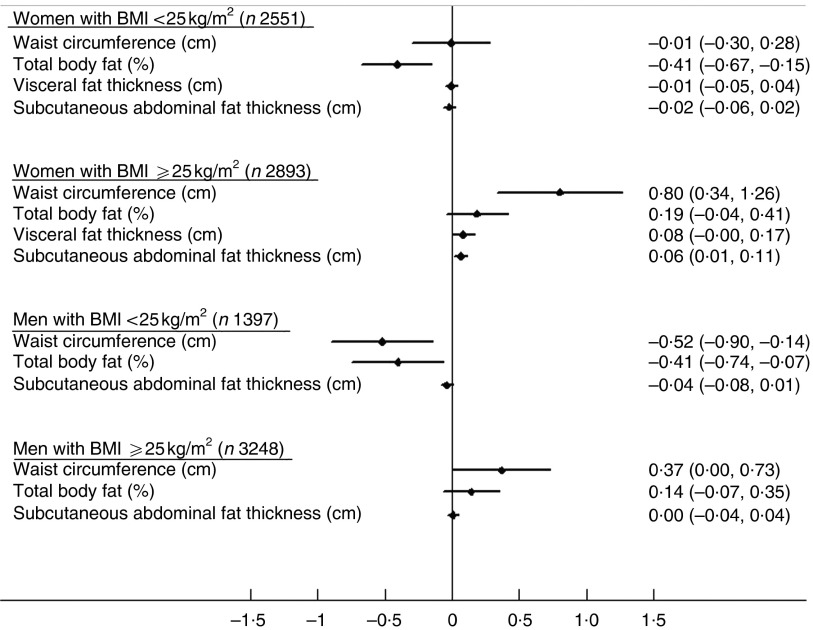
Unhealthy dietary behaviours may contribute to obesity along with energy imbalance. Both positive and null associations of snacking and BMI have been reported, but the association between snacking and total adiposity or pattern of fat deposition remains unevaluated. The objective of this study was to investigate the associations between snacking frequency and detailed adiposity measurements. A total of 10 092 adults residing in Cambridgeshire, England, self-completed eating pattern snacking frequency, FFQ and physical activity questionnaires. Measurements included anthropometry, body composition using dual-energy X-ray absorptiometry scan and ultrasound and assessment of physical activity energy expenditure using heart rate and movement sensing. Linear regression analyses were conducted adjusted for age, socio-demographics, dietary quality, energy intake, PAEE and screen time by sex and BMI status. Among normal-weight individuals (BMI<25 kg/m 2), each additional snack was inversely associated with obesity measures: lower total body fat in men and women (−0·41 (95 % CI −0·74, −0·07) %, −0·41 (−0·67, −0·15) %, respectively) and waist circumference (−0·52 (−0·90, −0·14) cm) in men. In contrast, among the overweight/obese (BMI≥25 kg/m 2), there were positive associations: higher waist circumference (0·80 (0·34, 0·28) cm) and subcutaneous fat (0·06 (0·01, 0·110) cm) in women and waist circumference (0·37 (0·00, 0·73) cm) in men. Comparing intakes of snack-type foods showed that participants with BMI≥25 kg/m 2 had higher intakes of crisps, sweets, chocolates and ice-creams and lower intakes of yoghurt and nuts compared with normal-weight participants. Adjusting for these foods in a model that included a BMI–snacking interaction term attenuated all the associations to null. Snacking frequency may be associated with higher or lower adiposity, with the direction of association being differential by BMI status and dependent on snack food choice. Improving snack choices could contribute to anti-obesity public health interventions.
Overview
The claims and statistics of this paper haven’t been checked yet.
Free: it reads the open-access text and checks the first 5 claims that cite a source we can check. Create a free account to check every claim.
Integrity signals
Registry
Cites
Statistics
Figures
Verification
Claims the paper makes
The claims and statistics of this paper haven’t been checked yet.
Free: it reads the open-access text and checks the first 5 claims that cite a source we can check. Create a free account to check every claim.
Claims other papers make about this one
Each is checked against this paper’s own text: does it say what the citing paper says it does?
The source backs part of the claim, not all of it — or backs it for a different population, condition or comparison.
In the citing paper
“Owing to the relative ease of data collection using wearables, there are now large repositories of datasets, e.g., UK Biobank [212], Capture-24 [21,198], and Fenland [145], but crucially, without annotations.”
From Past, Present, and Future of Sensor-based Human Activity Recognition Using Wearables: A Surveying Tutorial on a Still Challenging Task (2025) · cites this paper as [145]
Experimental — accuracy not yet measuredThe source backs part of the claim, not all of it — or backs it for a different population, condition or comparison.
In the citing paper
“Effective performance across differing sensor locations allows for leveraging large scale unlabeled datasetswhich are typically collected at the wrist (such as Capture-24 [4,18,81], Fenland [46,51], and Biobank [14]), to jumpstart recognition for rarer leg-based activities such as classifying freeze of gait.”
From Assessing the State of Self-Supervised Human Activity Recognition Using Wearables (2022) · cites this paper as [51]
Experimental — accuracy not yet measured
Self-check
Percentages, sums and reported differences re-computed from the paper’s own numbers.
The self-check needs the paper’s full text.
Citations
Cites
Diet, nutrition and the prevention of chronic diseases
Joint, W. (2002) · Medical Entomology and Zoology · Cited by 4,916
Goldberg, G. R., Black, A. E., Jebb, S. A., Cole, T. J., Murgatroyd, P. R., Coward, W. A., & Prentice, A. M. (1991) · PubMed · Cited by 2,372
Fao, J. (2004) · Medical Entomology and Zoology · Cited by 948
Gut hormones and the regulation of energy homeostasis
Murphy, K. G., & Bloom, S. R. (2006) · Nature · doi:10.1038/nature05484 · Cited by 778 · cited 1×
“Gut hormones are known to both curb and increase appetite – for example, ghrelin may increase appetite and oxyntomodulin and peptide YY3-36 may increase satiation ((32)).”
BackgroundReliability and validity of the combined heart rate and movement sensor Actiheart
Brage, S., Brage, N., Franks, P. W., Ekelund, U., & Wareham, N. J. (2005) · European Journal of Clinical Nutrition · doi:10.1038/sj.ejcn.1602118 · Cited by 667 · cited 1×
“PA was objectively assessed over 6 d using a combined heart rate and movement sensor((19)), with individual calibration of heart rate performed using a treadmill test((20)).”
MethodSelf-citationSedentary Behavior and Dietary Intake in Children, Adolescents, and Adults
Pearson, N., & Biddle, S. J. H. (2011) · American Journal of Preventive Medicine · doi:10.1016/j.amepre.2011.05.002 · Cited by 604
Brage, S., Brage, N., Franks, P. W., Ekelund, U., Wong, M.-Y., Andersen, L. B., Froberg, K., & Wareham, N. J. (2004) · Journal of Applied Physiology · doi:10.1152/japplphysiol.00703.2003 · Cited by 473 · cited 1×
“Data from free-living were pre-processed((21)) and modelled using a branched equation framework((22)) to estimate intensity timeseries, which were summarised over time as daily Physical physical activity energy expenditure (PAEE) (kJ/kg per d).”
MethodSelf-citationNutritional methods in the European Prospective Investigation of Cancer in Norfolk
Bingham, S. A., Welch, A. A., McTaggart, A., Mulligan, A. A., Runswick, S. A., Luben, R., Oakes, S., Khaw, K. T., Wareham, N., & Day, N. E. (2001) · Public Health Nutrition · doi:10.1079/phn2000102 · Cited by 419 · cited 7×
“Foods that could conceivably be consumed as snacks (snack-type foods) were identi fi ed from the FFQ and it included fruits, vegetables, yoghurts, nuts, crisps, cakes, biscuits, chocolate, ice-cream and sweets.”
MethodInfluentialSelf-citationExecutive Summary: FORESIGHT ‘Tackling Obesities: Future Choices’ project
Jebb, S. A., Kopelman, P., & Butland, B. (2007) · Obesity Reviews · doi:10.1111/j.1467-789x.2007.00344.x · Cited by 367
Poppitt, S., Swann, D., Black, A., & Prentice, A. (1998) · International Journal of Obesity · doi:10.1038/sj.ijo.0800584 · Cited by 363 · cited 1×
“As one of the major causes of dietary under-reporting is the failure to report foods eaten between meals((35)), reporting bias has the potential to create spurious results in any analysis of snacking.”
Background
Cited by
Mills, S., Brown, H., Wrieden, W., White, M., & Adams, J. (2017) · International Journal of Behavioral Nutrition and Physical Activity · doi:10.1186/s12966-017-0567-y · Cited by 310
“Fasting venous blood samples drawn into heparin-containing tubes and stabilised using metaphosphoric acid (10%) were measured for plasma vitamin C levels by fluorometric assay within two months, as undertaken previously [45].”
MethodYogurt, cultured fermented milk, and health: A systematic review
Savaiano, D. A., & Hutkins, R. W. (2021) · Nutrition Reviews · doi:10.1093/nutrit/nuaa013 · Cited by 339
Hess, J. M., Jonnalagadda, S. S., & Slavin, J. L. (2016) · Advances in Nutrition · doi:10.3945/an.115.009571 · Cited by 311
White, T., Westgate, K., Wareham, N. J., & Brage, S. (2016) · PLOS ONE · doi:10.1371/journal.pone.0167472 · Cited by 169
Self-citationWhite, T., Westgate, K., Hollidge, S., Venables, M., Olivier, P., Wareham, N., & Brage, S. (2019) · International Journal of Obesity · doi:10.1038/s41366-019-0352-x · Cited by 157
“Participants were recruited from the Fenland study, an ongoing cohort described in detail elsewhere [18].”
MethodSelf-citationFoster, E., Lee, C. M., Imamura, F., Hollidge, S. E., Westgate, K. L., Venables, M., Poliakov, I., Rowland, M. K., Osadchiy, T., Bradley, J., et al. (2019) · Journal of Nutritional Science · doi:10.1017/jns.2019.20 · Cited by 180
“We recruited fifty men and fifty women across three age categories (40–49 years; 50–59 years; 60–65 years) across a wide range of BMI from the Fenland Study, an ongoing population-based study in the Cambridgeshire area, UK((19)).”
BackgroundSelf-citationSelfHAR: Improving Human Activity Recognition through Self-training with Unlabeled Data
Tang, C. I., Perez-Pozuelo, I., Spathis, D., Brage, S., Wareham, N., & Mascolo, C. (2021) · Proceedings of the ACM on Interactive, Mobile, Wearable and Ubiquitous Technologies · doi:10.1145/3448112 · Cited by 140
“The Fenland study has been previously described in detail [22, 32].”
MethodSelf-citationWu, J., Zhang, H. E., Yang, L., Shao, J., Chen, D., Cui, N., Tang, L., Fu, Y., Xue, E., Lai, C., et al. (2022) · Obesity Reviews · doi:10.1111/obr.13510 · Cited by 124
Assessing the State of Self-Supervised Human Activity Recognition Using Wearables
Haresamudram, H., Essa, I., & Plötz, T. (2022) · Proceedings of the ACM on Interactive, Mobile, Wearable and Ubiquitous Technologies · doi:10.1145/3550299 · Cited by 107
“Effective performance across differing sensor locations allows for leveraging large scale unlabeled datasets– which are typically collected at the wrist (such as Capture-24 [4, 18, 81], Fenland [46, 51], and Biobank [14]), to jumpstart recognition for rarer leg-based activities such as classifying freeze of gait.”
BackgroundMethodInfluentialMills, S., Adams, J., Wrieden, W. L., White, M., & Brown, H. (2018) · Public Health Nutrition · doi:10.1017/s1368980018000812 · Cited by 108
Self-Supervised Contrastive Learning for Medical Time Series: A Systematic Review
Liu, Z., Alavi, A., Li, M., & Zhang, X. (2023) · Sensors · doi:10.3390/s23094221 · Cited by 90
Mattes, R. D. (2018) · Physiology & Behavior · doi:10.1016/j.physbeh.2018.02.010 · Cited by 104
Kim, Y., Wijndaele, K., Lee, D.-C., Sharp, S. J., Wareham, N., & Brage, S. (2017) · The American Journal of Clinical Nutrition · doi:10.3945/ajcn.117.156851 · Cited by 74
“walking, strenuous/other exercise, and do-it-yourself activities by calibrating them to heart rate and accelerometry data (19) from 12 435 UK adults participating in the Fenland project (20).”
BackgroundSelf-citationHigh-throughput proteomics of nanogram-scale samples with Zeno SWATH MS
Wang, Z., Mülleder, M., Batruch, I., Chelur, A., Textoris‐Taube, K., Schwecke, T., Hartl, J., Causon, J., Castro‐Perez, J. M., Demichev, V., et al. (2022) · eLife · doi:10.7554/elife.83947 · Cited by 77
Snacking Recommendations Worldwide: A Scoping Review
Potter, M., Vlassopoulos, A., & Lehmann, U. (2018) · Advances in Nutrition · doi:10.1093/advances/nmx003 · Cited by 79
“It has also been suggested that any relation between snack choices andweight statusmay be dependent on the preexisting health status of the individual (127).”
BackgroundGarcidueñas-Fimbres, T. E., Paz‐Graniel, I., Nishi, S. K., Salas‐Salvadó, J., & Babió, N. (2021) · Nutrients · doi:10.3390/nu13051687 · Cited by 78
“In this study, women with waist circumference >88 cm showed a significantly greater snack frequency during the evening [64].”
BackgroundResultInfluentialSkoczek-Rubińska, A., & Bajerska, J. (2021) · Nutrition Research · doi:10.1016/j.nutres.2021.11.001 · Cited by 78
Eating Habits and Sustainable Food Production in the Development of Innovative “Healthy” Snacks
Ciurzyńska, A., Cieśluk, P., Barwińska, M., Marczak, W., Ordyniak, A., Lenart, A., & Janowicz, M. (2019) · Sustainability · doi:10.3390/su11102800 · Cited by 89
The benefits of defining “snacks”
Hess, J., & Slavin, J. L. (2018) · Physiology & Behavior · doi:10.1016/j.physbeh.2018.04.019 · Cited by 71
Hess, J., Rao, G., & Slavin, J. L. (2017) · Global Pediatric Health · doi:10.1177/2333794x17698525 · Cited by 56
“snacks, is the most important determinant of whether snack consumption is associated with adiposity, diet quality, or body mass index.(7,8) However, the term “snacking” is still often associated with the consumption of foods high in saturated fat, sugar, and sodium,(9) commonly referred to as “snack foods.”
BackgroundReasons for non-participation in a primary care-based physical activity trial: a qualitative study
Attwood, S., Morton, K. L., Mitchell, J., Van Emmenis, M., & Sutton, S. (2016) · BMJ Open · doi:10.1136/bmjopen-2016-011577 · Cited by 42
Self-supervised transfer learning of physiological representations from free-living wearable data
Spathis, D., Perez-Pozuelo, I., Brage, S., Wareham, N. J., & Mascolo, C. (2021) · Proceedings of the Conference on Health, Inference, and Learning · doi:10.1145/3450439.3451863 · Cited by 40
“The Fenland study is a prospective cohort study that includes 12,435 men and women who are between the ages of 35-65 [42] .”
BackgroundSelf-citationMazidi, M., Leeming, E. R., Merino, J., Nguyen, L. H., Selvachandran, S., Pujal, J. C., Maher, T., Kade, K. L., Murray, B. A. K., Graham, M. S., et al. (2021) · Nature Food · doi:10.1038/s43016-021-00398-3 · Cited by 40
Pearce, M., Strain, T., Kim, Y., Sharp, S. J., Westgate, K., Wijndaele, K., Gonzales, T., Wareham, N. J., & Brage, S. (2020) · International Journal of Behavioral Nutrition and Physical Activity · doi:10.1186/s12966-020-00937-4 · Cited by 37
Self-citationPortion Size of Energy-Dense Foods among French and UK Adults by BMI Status
Rippin, H. L., Hutchinson, J., Jewell, J. M., Breda, J., & Cade, J. E. (2018) · Nutrients · doi:10.3390/nu11010012 · Cited by 39
Terada, T., Mistura, M., Tulloch, H. E., Pipe, A., & Reed, J. L. (2019) · Nutrients · doi:10.3390/nu11092054 · Cited by 37
“, chips, sweets and chocolates) are linked to high adiposity [41].”
BackgroundResultHaresamudram, H., Tang, C. I., Suh, S., Lukowicz, P., & Plötz, T. (2025) · Proceedings of the ACM on Interactive Mobile Wearable and Ubiquitous Technologies · doi:10.1145/3729467 · Cited by 33
“It was shown that such models–if trained properly–outperform conventional ML models, including neural networks, by substantial margins [101].”
Missbach, B., Pachschwöll, C., Kuchling, D., & König, J. S. (2017) · Preventive Medicine Reports · doi:10.1016/j.pmedr.2017.03.021 · Cited by 33
“Epidemiological studies have shown that snacking pattern and especially snack quality substantially contributes to overweight and obesity outcomes (O'Connor et al., 2015; Njike et al., 2016).”
BackgroundHigher BMI is associated with stronger effects of social cues on everyday snacking behaviour
Schüz, B., Revell, S., Hills, A. P., Schüz, N., & Ferguson, S. G. (2017) · Appetite · doi:10.1016/j.appet.2017.03.012 · Cited by 33
“Even though we could not replicate the finding that t e intake of higher- and lower-energy snacks differed by BMI (O’Connor et al., 2015), our study shows that the effects of social cues on the intake of different snack types might vary as a function of BMI.”
MethodResultInfluentialMytton, O. T., Ogilvie, D., Griffin, S. J., Brage, S., Wareham, N. J., & Panter, J. (2017) · Preventive Medicine · doi:10.1016/j.ypmed.2017.10.017 · Cited by 33
“The 130 item FFQ was originally developed for use in the EPIC-Norfolk study.(O’Connor et al., 2015) It has been shown to have good ability to rank individuals based on intake of nutrients or food groups (e.”
BackgroundMethodInfluentialSelf-citationMurakami, K., & Livingstone, M. B. E. (2016) · British Journal Of Nutrition · doi:10.1017/s0007114516003573 · Cited by 31
Human-centred artificial intelligence for mobile health sensing: challenges and opportunities
Dang, T., Spathis, D., Ghosh, A., & Mascolo, C. (2023) · Royal Society Open Science · doi:10.1098/rsos.230806 · Cited by 30
Detecting sleep outside the clinic using wearable heart rate devices
Perez-Pozuelo, I., Posa, M., Spathis, D., Westgate, K. L., Wareham, N. J., Mascolo, C., Brage, S., & Palotti, J. (2022) · Scientific Reports · doi:10.1038/s41598-022-11792-7 · Cited by 33
Self-citationHess, J., & Slavin, J. L. (2017) · Journal of Food Science · doi:10.1111/1750-3841.13819 · Cited by 33
Relationship of Fat Mass Ratio, a Biomarker for Lipodystrophy, With Cardiometabolic Traits
Agrawal, S., Luan, J., Cummings, B. B., Weiss, E. J., Wareham, N. J., & Khera, A. V. (2024) · Diabetes · doi:10.2337/db23-0575 · Cited by 30
Self-citationBermingham, K. M., May, A., Asnicar, F., Pujol, J. C., Leeming, E. R., Franks, P. W., Valdes, A. M., Wolf, J., Hadjigeorgiou, G. M., Delahanty, L. M., et al. (2023) · European Journal of Nutrition · doi:10.1007/s00394-023-03241-6 · Cited by 31
“Research suggests that pre-existing health status and snack quality may influence snacking’s impact on health [19, 20].”
BackgroundResultInfluentialMissbach, B., & König, J. S. (2016) · Food Quality and Preference · doi:10.1016/j.foodqual.2016.06.007 · Cited by 31
Hábitos alimentarios y actividad física en relación con el sobrepeso y la obesidad en España
de Salas, M. M., Martín-Ramiro, J. J., Gómez, L. R., Martínez, D. E., & Soto, J. J. J. (2016) · Revista Española de Nutrición Humana y Dietética · doi:10.14306/renhyd.20.3.237 · Cited by 35
Fernström, M., Fernberg, U., & Hurtig‐Wennlöf, A. (2019) · BMC Nutrition · doi:10.1186/s40795-019-0279-6 · Cited by 30
Snacking Patterns of Preschool-Aged Children: Opportunity for Improvement
Hutchinson, J. M., Watterworth, J. C., Haines, J., Duncan, A. M., Mirotta, J. A., David, W. L., Buchholz, A. C., & Study, G. F. H. (2017) · Canadian Journal of Dietetic Practice and Research · doi:10.3148/cjdpr-2017-022 · Cited by 28
“This increase in snacking prevalence suggests a shift in food consumption away from traditional meal timing and towards a “grazing” pattern of eating [4].”
BackgroundOlfactory and Gustatory Supra-Threshold Sensitivities Are Linked to Ad Libitum Snack Choice
Abeywickrema, S., Ginieis, R., Oey, I., & Peng, M. (2022) · Foods · doi:10.3390/foods11060799 · Cited by 22
Tree Nut Consumption and Adipose Tissue Mass: Mechanisms of Action
Tindall, A. M., Petersen, K. S., Lamendella, R., Shearer, G. C., Murray‐Kolb, L. E., Proctor, D. N., & Kris‐Etherton, P. M. (2018) · Current Developments in Nutrition · doi:10.1093/cdn/nzy069 · Cited by 22
Singh, A. K., Benjakul, S., & Huda, N. (2020) · International Journal of Food Science & Technology · doi:10.1111/ijfs.14688 · Cited by 20
Xu, F., Greene, G. W., Earp, J. E., Adami, A., Delmonico, M. J., Lofgren, I. E., & Greaney, M. L. (2020) · Obesity · doi:10.1002/oby.23018 · Cited by 25
“As shown in Table 4, for every 30-min/wk increase in PA, ALMI increased by 0.0013 kg/m2 (β = 0.0013, 95% CI: 0.0001 to 0.0026).”
BackgroundInfluentialCooke, C. B., Greatwood, H. C., McCullough, D., Kirwan, R., Duckworth, L. C., Sutton, L., & Gately, P. (2024) · Obesity Reviews · doi:10.1111/obr.13693 · Cited by 20
“Fourteen adult studies 15,18,40,42,46 – 50, 54, 56, 57, Similarly, in a large study of English adults, O'Connor et al 62 identified that individuals living with a BMI > 25 kg/m 2 reported consuming statistically significant greater amounts of crisps, chocolate, ice cream, and sweets (g/10 MJ/day)…”
BackgroundWithin-person compensation for snack energy by US adults, NHANES 2007–2014
Kant, A. K., & Graubard, B. I. (2018) · American Journal of Clinical Nutrition · doi:10.1093/ajcn/nqy349 · Cited by 19
Habit strength and between-meal snacking in daily life: the moderating role of level of education
Wouters, S., Thewissen, V., Duif, M., van Bree, R. J. H., Lechner, L., & Jacobs, N. (2018) · Public Health Nutrition · doi:10.1017/s1368980018001283 · Cited by 20
“Men((47)) and young adults((48)) report more mean daily energy intake from snacks than women and older adults((46)), and a higher BMI has been associated with more unhealthy snack choices((49)).”
BackgroundPrapkree, L., Uddin, R., Jaafar, J. A. A., Baghdadi, M., Coccia, C. C., Huffman, F. G., & Palacios, C. S. (2023) · Nutrition Research · doi:10.1016/j.nutres.2023.04.005 · Cited by 21
The Role of Eating Frequency and Snacking on Energy Intake and BMI
Hunter, S., & Mattes, R. D. (2020) · Springer eBooks · doi:10.1007/978-3-030-14504-0_115 · Cited by 18
Skoczek-Rubińska, A., Muzsik, A., Chmurzyńska, A., Walkowiak, P., & Bajerska, J. (2020) · Nutrition · doi:10.1016/j.nut.2020.111063 · Cited by 17
Walker, L., & Flannery, O. (2020) · International Journal of Workplace Health Management · doi:10.1108/ijwhm-03-2019-0039 · Cited by 17
Marciniak, S., Lange, E., & Laskowski, W. (2021) · Roczniki Państwowego Zakładu Higieny · doi:10.32394/rpzh.2021.0182 · Cited by 13
Barbour, J. A., Stojanovski, E., Moran, L., Howe, P. R. C., & Coates, A. M. (2017) · Nutrition Research · doi:10.1016/j.nutres.2017.04.005 · Cited by 14
Unit size influences ad libitum intake in a snacking context via eating rate
Harper, M. M., Cunningham, P. M., Forde, C. G., & Hayes, J. E. (2024) · Appetite · doi:10.1016/j.appet.2024.107300 · Cited by 11
de Gooijer, F. J., van Kraaij, A., Fabius, J. H., Hermsen, S., Feskens, E. J. M., & Camps, G. (2023) · Food Quality and Preference · doi:10.1016/j.foodqual.2023.105002 · Cited by 13
Role of Yogurt in the Nutrition and Health of Children and Adolescents
Fernandez, M. A., Fisberg, M., & Marette, A. (2017) · Elsevier eBooks · doi:10.1016/b978-0-12-805134-4.00028-6 · Cited by 13
Snacking and Energy Balance in Humans
Drapeau, V., Pomerleau, S., & Provencher, V. (2017) · Elsevier eBooks · doi:10.1016/b978-0-12-802928-2.00025-4 · Cited by 12
Some behavioral risk factors of obesity in Ardabil –Iran adults
Mohajeri, M., Houjeghani, S., Ghahremanzadeh, M., Borghei, M. H., Moradi, F., & Barzegar, A. (2019) · Obesity Medicine · doi:10.1016/j.obmed.2019.100167 · Cited by 12
Marr, C., Breeze, P. R., & Caton, S. J. (2021) · British Journal Of Nutrition · doi:10.1017/s0007114521004712 · Cited by 11
The growing popularity of low-carb cereal-based products: the lay of the land
Gasparre, N., Rosell, C. M., & Boukid, F. (2023) · European Food Research and Technology · doi:10.1007/s00217-023-04399-3 · Cited by 9
Abeywickrema, S., Ginieis, R., & Peng, M. (2024) · Obesity · doi:10.1002/oby.24032 · Cited by 10
“Similarly, O ’ Connor et al. [11] found that individuals with a BMI over 25 kg/m 2 had increased intake of snacks typically considered “ unhealthy ” (e.g., crisps/potato chips, sweets) and reduced intake of “ healthy ” snacks (e.g., yogurt, nuts) compared with healthy-weight individuals.”
Tebar, W. R., Gil, F. C. S., Delfino, L. D., de Souza, J. M., Mota, J. A. P. S., & Christófaro, D. G. D. (2022) · Obesities · doi:10.3390/obesities2010006 · Cited by 10
“In addition, the entertainment content on TV may be accompanied by broadcasted advertisements of unhealthy foods, which may trigger snacking habits [39] and lead to unhealthy snacking choices with high caloric density [40], elevating daily caloric intake and contributing to weigh gain.”
BackgroundKepatuhan Diet Berbasis Beras Coklat terhadap Glukosa Darah dan Lemak Tubuh Pasien Diabetes Mellitus
Kusumastuty, I., Handayani, D., Affandy, Y. I. K. D., Attamimi, N., Innayah, A. M., & Puspitasari, D. A. (2021) · Indonesian Journal of Human Nutrition · doi:10.21776/ub.ijhn.2021.008.02.9 · Cited by 11
“Persentase lemak tubuh untuk wanita usia 40-59 tahun dikatakan rendah (<23), normal (23-33,9), tinggi (34-39,9) dan sangat tinggi (≥40).”
BackgroundSantos, L. P., Ong, K. K., Santos, I. S., Matijasevich, A., & Barros, A. J. D. (2018) · European Journal of Nutrition · doi:10.1007/s00394-018-1720-3 · Cited by 11
“Obesity status may be affected by the type of food consumed in childhood as well as by the interaction among food components [6, 7].”
BackgroundHatta, M., Horikawa, C., Takeda, Y., Ikeda, I., Morikawa, S. Y., Kato, N., Kato, M., Yokoyama, H., Kurihara, Y., Maegawa, H., et al. (2022) · Nutrients · doi:10.3390/nu14153034 · Cited by 9
“and sugar-sweetened beverages, a significant positive correlation with obesity has been reported [51,52].”
BackgroundAlharbi, N. A. N., Alshowibi, R., Aljabri, N., Alamri, F., Alali, F., Alajmi, N., Almarshad, A., & Almasoudi, S. (2021) · Advances in Human Biology · doi:10.4103/aihb.aihb_77_21 · Cited by 11
Chan, V., Davies, A. J., Wellard‐Cole, L., & Allman-Farinelli, M. A. (2022) · Journal of Nutritional Science · doi:10.1017/jns.2022.76 · Cited by 9
“A study examining the snacking behaviours of 10 092 English adults (29–64 years) found that those classified as overweight and obese were more likely to snack on energy-dense foods such as sweets, chocolates and ice-creams than participants within the normal BMI range((66)).”
BackgroundKohri, T., SHIMIZU, A., Suzuki, T., Kimiko, R. Y. U., IGUCHI, N., Myojin, C., Kawanishi, M., & Tomotake, H. (2021) · Journal of Nutritional Science and Vitaminology · doi:10.3177/jnsv.67.163 · Cited by 7
Herrán, O. F., Villamor, E., & Quintero-Lesmes, D. C. (2019) · BMC Public Health · doi:10.1186/s12889-019-8057-6 · Cited by 7
Positive nutrition: shifting the focus from nutrients to diet for a healthy lifestyle
Martini, D., Ribeiro, H. D. C., Gately, P., Mattes, R. D., Re, R., & Bier, D. M. (2023) · Eating and Weight Disorders - Studies on Anorexia Bulimia and Obesity · doi:10.1007/s40519-023-01580-1 · Cited by 8
Lu, T., Manousaki, D., Sun, L., & Paterson, A. D. (2025) · Diabetes · doi:10.2337/db24-0380 · Cited by 9
Effects of a healthier snack on snacking habits and glycated Hb (HbA1c): a 6-week intervention study
Yan, M. R., Parsons, A. G., WHALLEY, G. A., & Rush, E. C. (2016) · British Journal Of Nutrition · doi:10.1017/s0007114516004372 · Cited by 8
“In contrast, other studies have shown that consumption of snack foods with high fat, sugar and salt reduces diet quality and promotes adiposity((28,29)).”
ResultFast consumption increases the risk of overweight and obesity
Glibowski, P., Ćwiklińska, M., Białasz, A., Koch, W., & Marzec, Z. (2020) · Roczniki Państwowego Zakładu Higieny · doi:10.32394/rpzh.2020.0099 · Cited by 7
Krzyżowska, S., Matejko, B., Kieć‐Wilk, B., Wilk, M., Malecki, M. T., & Klupa, T. (2019) · Roczniki Państwowego Zakładu Higieny · doi:10.32394/rpzh.2019.0076 · Cited by 6
“Eating snacks with high fat, sugar and salt may promote the deposition of fatty tissue in the body and worsen the metabolic control [4, 12].”
BackgroundDeterminants of overweight in the population of parents of school-age children
Resiak, M., Walentukiewicz, A., Łysak, A., Woźniak, K., & Skonieczny, P. (2019) · International Journal of Occupational Medicine and Environmental Health · doi:10.13075/ijomeh.1896.01455 · Cited by 6
Perez-Pozuelo, I., White, T., Westgate, K. L., Wijndaele, K., Wareham, N. J., & Brage, S. (2019) · Journal for the Measurement of Physical Behaviour · doi:10.1123/jmpb.2019-0024 · Cited by 8
Self-citationEffects of a health versus hedonic mindset on daily‐life snacking behaviour
Pimpini, L., Franssen, S., Reber, P., Jansen, A. T. M., & Roefs, A. (2023) · Journal of Human Nutrition and Dietetics · doi:10.1111/jhn.13221 · Cited by 6
Jiang, K., Zhang, Y., Xie, C., Wang, T., Zhao, L., Zhao, W. Q., Shi, Z., Sharma, M., & Zhao, Y. (2023) · BMC Public Health · doi:10.1186/s12889-023-17316-w · Cited by 6
“Therefore, interventions aimed at improving snack choices could prove effective in addressing the public health challenge of obesity [15].”
BackgroundAssessing diet in European populations using national dietary surveys
Rippin, H. L., Hutchinson, J., Jewell, J. M., Breda, J., & Cade, J. E. (2020) · Proceedings of The Nutrition Society · doi:10.1017/s0029665119001174 · Cited by 7
Behavioral Risk Factors for Overweight and Obesity
Seburg, E. M., Crane, M. M., & Sherwood, N. E. (2017) · Elsevier eBooks · doi:10.1016/b978-0-12-802928-2.00024-2 · Cited by 5
Hama-Ba, F., Boniface, B., Konaté, M., Dabo, R., Moustapha, M., & Diawara, B. (2017) · International Journal of Nutrition and Food Sciences · doi:10.11648/j.ijnfs.20170606.14 · Cited by 5
“A study conducted in England showed a correlation between snacking and subcutaneous skinfold thickness in obese people [11].”
BackgroundRahmawati, D. P., Indarto, D., & Hanim, D. (2021) · International Conference on Health and Medical Sciences (AHMS) · doi:10.2991/ahsr.k.210127.025 · Cited by 6
“The finding was similar to that of Sari and Mulyani, that there was no correlation between the contribution of snacks and the Hb levels in female adolescents in Tangerang [29].”
ResultGuan, V. X., Neale, E. P., Tapsell, L. C., & Probst, Y. (2020) · Frontiers in Nutrition · doi:10.3389/fnut.2020.00149 · Cited by 4
“Snack food choices play a vital role in the obesity epidemic along with the effects of energy imbalance (70).”
BackgroundKirchoff, C., Abadia, K., & Palacios, C. S. (2022) · Journal of American College Health · doi:10.1080/07448481.2021.2024207 · Cited by 5
“Because snack consumption among college students and young adults is associated with a lower diet quality 10–18 and weight gain, 12,13,18–21 it is vital to implement interventions to improve the snacks this population consumes.”
BackgroundThe Role of Eating Frequency and Snacking on Energy Intake and BMI
Hunter, S., & Mattes, R. D. (2019) · Springer eBooks · doi:10.1007/978-3-319-75388-1_115-1 · Cited by 5
Hernández, J., Goico, E., & Palacios, C. S. (2024) · Journal of American College Health · doi:10.1080/07448481.2024.2325938 · Cited by 3
“20 Although snacking could be part of a healthy diet, it is often associated with a lower diet quality 21–23 and higher body weight or being overweight 22–24 in children or in adults.”
Reolid, M., Sánchez‐Gómez, M., & Ros‐Montoya, S. (2021) · Estudios Geológicos · doi:10.3989/egeol.44105.577 · Cited by 3
Snack attack: What factors affect American snacking behavior?
Moore, K., Walker, D., & Girju, M. (2024) · Food Quality and Preference · doi:10.1016/j.foodqual.2024.105309 · Cited by 4
Chowdhury, S., Prapkree, L., & Palacios, C. S. (2025) · Journal of American College Health · doi:10.1080/07448481.2025.2516600 · Cited by 2
Zhang, W., Yoshiji, S., SLADEK, R. M., Dupuis, J., & Lu, T. (2026) · Genomics Proteomics & Bioinformatics · doi:10.1093/gpbjnl/qzag087 · Cited by 2
Alvarez, A. A., Sierra, M. V. L., Faedo, E. A., & Martínez, J. A. C. (2023) · Global Health Promotion · doi:10.1177/17579759231164103 · Cited by 2
“(30), en su estudio llevado a cabo en el Reino Unido, establecieron la asociación entre el consumo de bebidas azucaradas y la obesidad.”
BackgroundJavid, A. Z., Niknejad, N., Shahbazian, H. B., Latifi, S. M., Niknejad, B., & Hormoznejad, R. (2017) · Journal of Nutrition and Food Security · Cited by 2
Puspasari, D., & Farapti, F. (2020) · Media Gizi Indonesia · doi:10.20473/mgi.v15i1.45-51 · Cited by 2
Body Fat Composition Related to Fatty Snack Habit Consumption of Office Workers in Urban Area
Yunianto, A. E., Kushargina, R., & Permatasari, T. A. E. (2022) · Open Access Macedonian Journal of Medical Sciences · doi:10.3889/oamjms.2022.7280 · Cited by 2
“These results are in line with the previous studies that nutritional status is directly proportional to the percentage of body fat [17], [18], [19], [20].”
BackgroundResultPrapkree, L., Deringer, R., Coccia, C. C., Huffman, F. G., & Palacios, C. S. (2024) · Journal of American College Health · doi:10.1080/07448481.2024.2337008 · Cited by 2
Balint, I., Pál, S., Ferencz, L. I., & Ábrám, Z. (2018) · Revista de Chimie · doi:10.37358/rc.18.11.6691 · Cited by 1
Metadata
- Authors
- O’Connor, L., Brage, S., Griffin, S. J., Wareham, N. J., & Forouhi, N. G.
- Affiliations
- University of Cambridge (GB)
- Corresponding author
- Forouhi, Nita G.
- Venue
- British Journal of Nutrition
- Publisher
- Cambridge University Press (CUP)
- Published
- 2015-09-07
- Volume
- 114
- Issue
- 8
- Pages
- 1286-1293
- ISSN
- 0007-1145 (ISSN-L)
- 1475-2662
- PMC
- PMC4594050
- OpenAlex
- W2138331450
- Semantic Scholar
- 27cccd235af4c801ea564bd07787d374c0b56732
- Cited by
- 125
- References
- 37
- Citations by year
- 2026: 6 · 2025: 5 · 2024: 12 · 2023: 11 · 2022: 12 · 2021: 15 · 2020: 15 · 2019: 11 · 2018: 13 · 2017: 15 · 2016: 10
- FWCI
- 13.55
- Type
- journal article
- Language
- en
- Open access
- hybrid
- doi.org
- Locations
- British Journal Of Nutrition (publishedVersion, cc-by)
- Europe PMC (PubMed Central) (publishedVersion, cc-by)
- PubMed Central (publishedVersion, cc-by)
- PubMed (publishedVersion)
- Apollo (University of Cambridge) (submittedVersion, cc-by)
- Funders
- Wellcome Trust
- National Institute for Health and Care Research (MC_UU_12015/1, NF-SI-0512-10135)
- University of Cambridge
- Cambridge University Hospitals
- Medical Research Council (MC_UU_12015/1, MC_UU_12015/5, MC_UU_12015/4, MC_UU_12015, MC_UU_12015/3)
- NIHR Cambridge Biomedical Research Centre
- Topics
- Health Sciences › Medicine › Public Health, Environmental and Occupational Health › Obesity, Physical Activity, Diet
- Health Sciences › Nursing › Nutrition and Dietetics › Nutrition, Health and Food Behavior
- Health Sciences › Medicine › Public Health, Environmental and Occupational Health › Nutritional Studies and Diet
- Keywords
- snacking frequency, adiposity, obesity, body fat distribution, waist circumference, subcutaneous adipose tissue, snack food choice, overweight and obesity, energy intake, physical activity energy expenditure
- MeSH terms
- Adult, Body Composition, Energy Intake, Cross-Sectional Studies, Diet, Feeding Behavior, Female, Fruit, United Kingdom, Humans, Male, Middle Aged, Motor Activity, Obesity, Surveys and Questionnaires, Sensitivity and Specificity, Socioeconomic Factors, Vegetables, Absorptiometry, Photon, Body Mass Index, Linear Models, Adiposity, Overweight, Waist Circumference, Sedentary Behavior, Snacks, Food Quality
About these checks
Registry, retraction, Cites and statistics results are computed, not judged, with one exception: a printed reference that no index lists is read once by a model before it counts as a citation error. Claims are extracted by a model and kept only when their quote appears verbatim in the text; each cited source is then checked, with a model’s help, for whether it says what the claim relies on. Those verdicts can be wrong — read the claim’s quote and the cited source before relying on one.
Statistics and arithmetic are recomputed, not judged.
Confidence bands are shown only for fields calibrated on our annotated test set. None is calibrated yet, so no band is shown.
What counts as a claim ›How we measure confidence ›How we check this ›
Are you an author, or do you see a problem with this page? Request a review
Data sources
Bibliographic data: Semantic Scholar, OpenAlex, Crossref.
Contains information from the Semantic Scholar Academic Graph Datasets, made available under the ODC Attribution License (ODC-BY 1.0).
Semantic Scholar’s data is described in: Kinney, R., et al. (2023). The Semantic Scholar Open Data Platform. arXiv:2301.10140.
