

Oral supplementation of healthy adults with 2′- O -fucosyllactose and lacto- N -neotetraose is well tolerated and shifts the intestinal microbiota
Open accessThe DOI matches its Crossref record; 70 of the 71 references it cites were found in a registry or an index.
Abstract
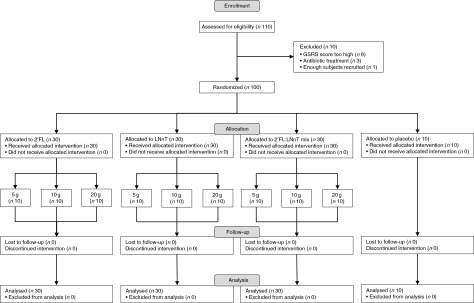
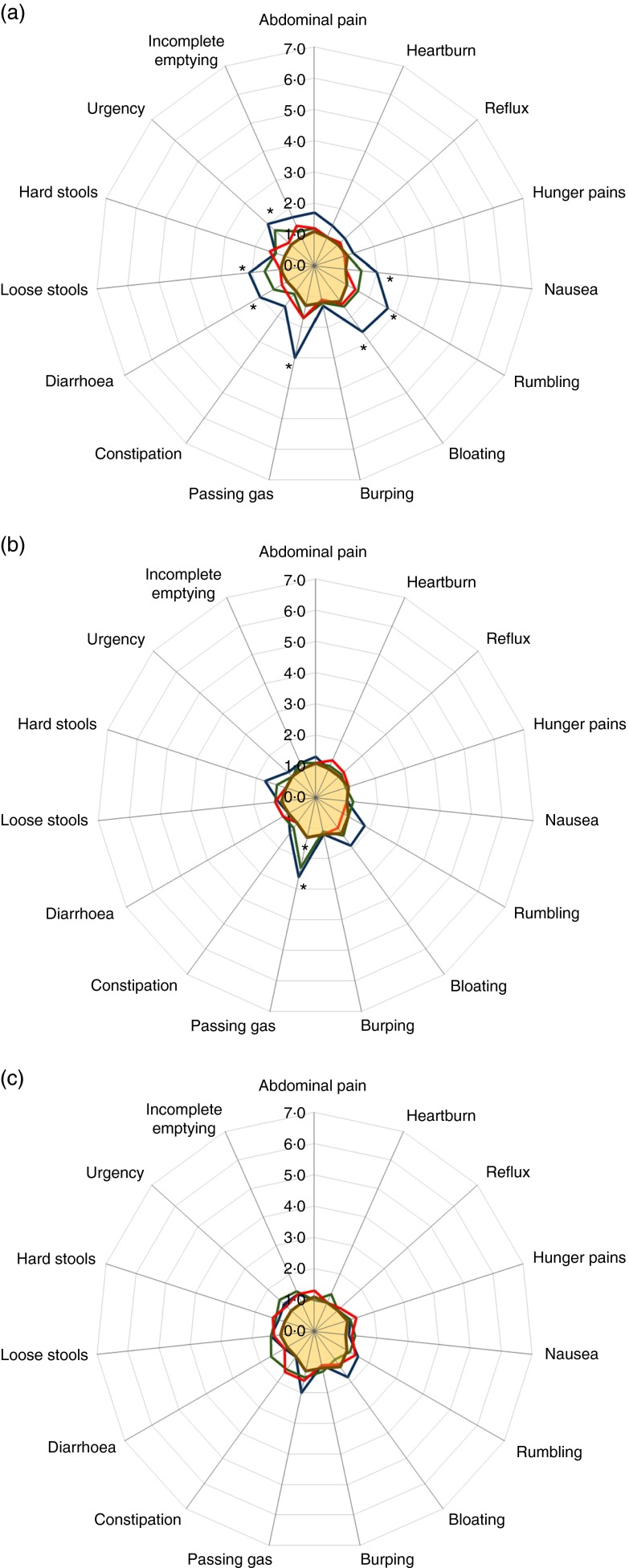
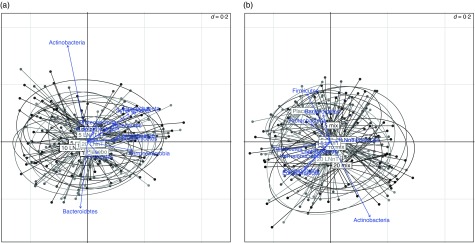
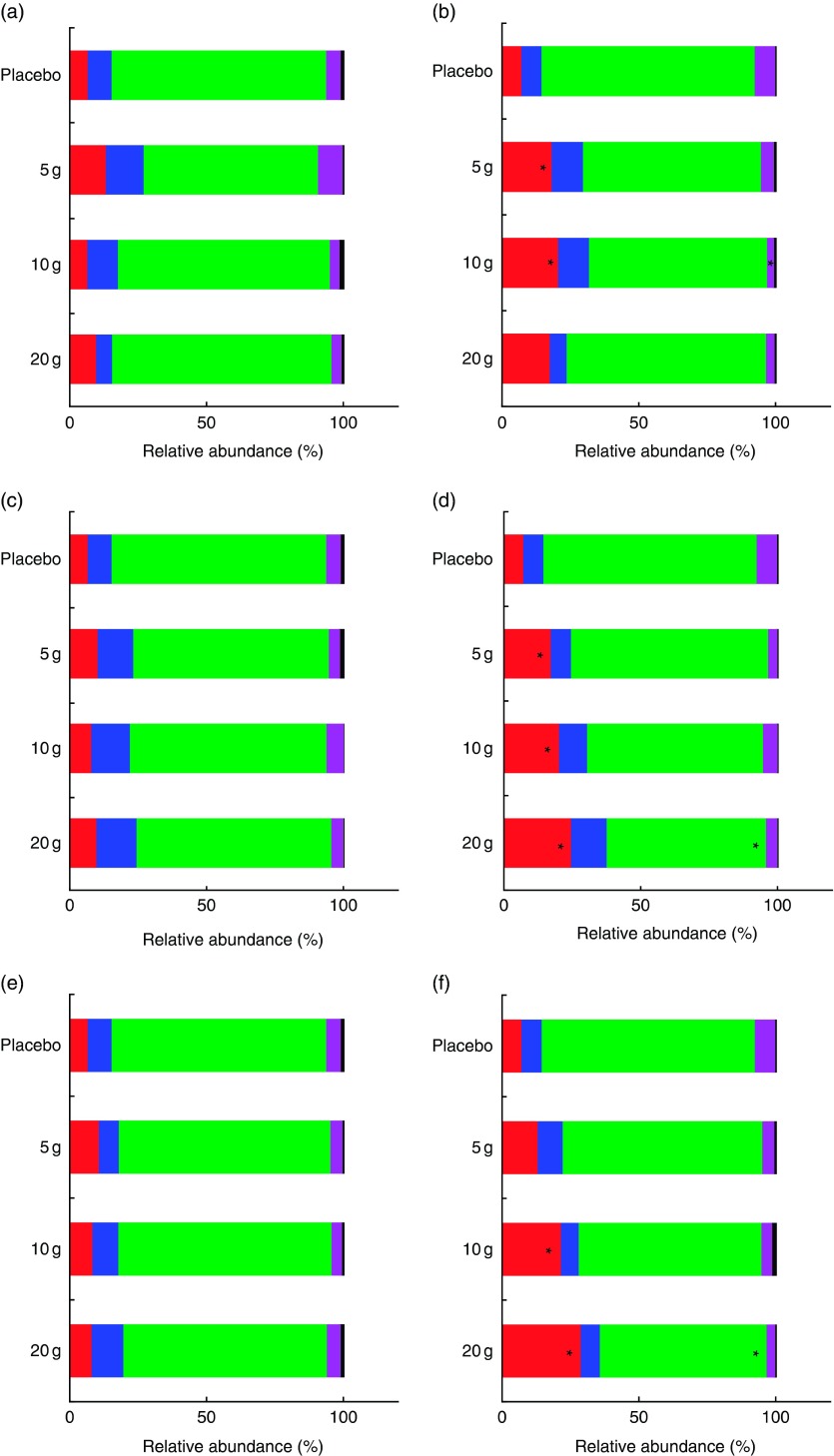
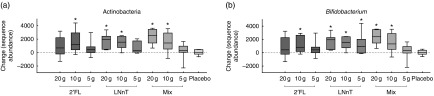
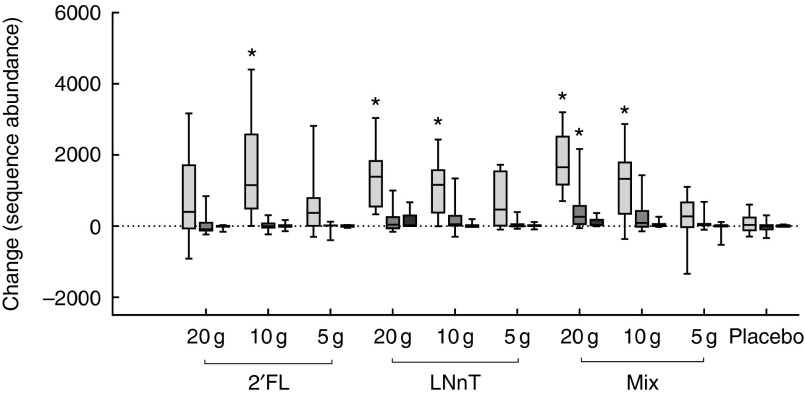
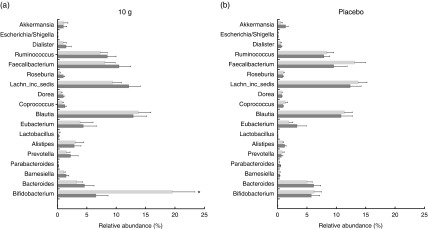
The gut microbiota has been established as an important player influencing many aspects of human physiology. Breast milk, the first diet for an infant, contains human milk oligosaccharides (HMO) that shape the infant’s gut microbiota by selectively stimulating the growth of specific bacteria, especially bifidobacteria. In addition to their bifidogenic activity, the ability of HMO to modulate immune function and the gut barrier makes them prime candidates to restore a beneficial microbiota in dysbiotic adults and provide health benefits. We conducted a parallel, double-blind, randomised, placebo-controlled, HMO-supplementation study in 100 healthy, adult volunteers, consuming chemically produced 2′- O -fucosyllactose (2′FL) and/or lacto- N -neotetraose (LNnT) at various daily doses and mixes or placebo for 2 weeks. All participants completed the study without premature discontinuation. Supplementation of 2′FL and LNnT at daily doses up to 20 g was shown to be safe and well tolerated, as assessed using the gastrointestinal symptoms rating scale. 16S rRNA sequencing analysis showed that HMO supplementation specifically modified the adult gut microbiota with the primary impact being substantial increases in relative abundance of Actinobacteria and Bifidobacterium in particular and a reduction in relative abundance of Firmicutes and Proteobacteria. This study provides the first set of data on safety, tolerance and impact of HMO on the adult gut microbiota. Collectively, the results from this study show that supplementing the diet with HMO is a valuable strategy to shape the human gut microbiota and specifically promote the growth of beneficial bifidobacteria.
Overview
The claims and statistics of this paper haven’t been checked yet.
Free: it reads the open-access text and checks the first 5 claims that cite a source we can check. Create a free account to check every claim.
Integrity signals
Registry
Cites
Statistics
Figures
Verification
Claims the paper makes
The claims and statistics of this paper haven’t been checked yet.
Free: it reads the open-access text and checks the first 5 claims that cite a source we can check. Create a free account to check every claim.
Claims other papers make about this one
Each is checked against this paper’s own text: does it say what the citing paper says it does?
The cited source says what the claim attributes to it.
In the citing paper
“In the supplement trials of accepted prebiotics, a significantly higher Bifidobacterium spp.abundance was reported after supplementation involving inulin (115) and human milk oligosaccharides (HMO) (62) compared with placebo at the end of intervention, whereas a significant within-group increase from baseline was detected after 10 g/d inulin supplementation (95).”
From Dietary fiber intervention on gut microbiota composition in healthy adults: a systematic review and meta-analysis (2018) · cites this paper as [62]
Self-check
Percentages, sums and reported differences re-computed from the paper’s own numbers.
The self-check needs the paper’s full text.
Citations
Cites
UPARSE: highly accurate OTU sequences from microbial amplicon reads
Edgar, R. C. (2013) · Nature Methods · doi:10.1038/nmeth.2604 · Cited by 16,707 · cited 1×
“Sequences were clustered into operational taxonomic units (OTU) at 97 % sequence similarity using USEARCH (51) , and suspected chimeric sequences were discarded on the basis of UCHIME (52) .”
UCHIME improves sensitivity and speed of chimera detection
Edgar, R. C., Haas, B. J., Clemente, J. C., Quince, C., & Knight, R. (2011) · Bioinformatics · doi:10.1093/bioinformatics/btr381 · Cited by 15,114
Klindworth, A., Pruesse, E., Schweer, T., Peplies, J., Quast, C., Horn, M., & Glöckner, F. O. (2013) · Nucleic Acids Research · doi:10.1093/nar/gks808 · Cited by 8,850 · cited 2×
“The V3 – V4 region of the 16S rDNA was ampli fi ed using the forward primer S-D-Bact-0341-b-S-17 (5 ′ -TCGTCGGCAGCG TCAGATGTGTATAAGAGACAG-3 ′ ) and the reverse primer S-D-Bact-0785-a-A-21 (5 ′ -GTCTCGTGGGCTCGGAGATGTG TATAAGAGACAG-3 ′ ) (50) , with Illumina adapters attached.”
A core gut microbiome in obese and lean twins
Turnbaugh, P. J., Hamady, M., Yatsunenko, T., Cantarel, B. L., Duncan, A., Ley, R. E., Sogin, M. L., Jones, W. J., Roe, B. A., Affourtit, J. P., et al. (2009) · Nature · doi:10.1038/nature07540 · Cited by 7,823 · cited 1×
“The participants rated severity using a seven-point Likert scale running from (1) no discomfort to (7) very severe discomfort.”
Changes of Intestinal Functions in Liver Cirrhosis
Fukui, H., & Wiest, R. (2016) · Inflammatory Intestinal Diseases · doi:10.1159/000444436 · Cited by 6,808
A metagenome-wide association study of gut microbiota in type 2 diabetes
Qin, J., Li, Y., Cai, Z., Li, S., Zhu, J., Zhang, F., Liang, S., Zhang, W., Guan, Y., Shen, D., et al. (2012) · Nature · doi:10.1038/nature11450 · Cited by 6,762
Role of the microbiota in immunity and inflammation.
Belkaid, Y., & Hand, T. W. (2014) · Cell · doi:10.1016/j.cell.2014.03.011 · Cited by 5,385 · cited 1×
“Intensive research over the past decade has revealed the gut microbiota to be an important player in host health by influencing many aspects of human physiology, including energy metabolism((1)), hormonal balance((2)) and immunity((3,4)).”
Host-gut microbiota metabolic interactions
Nicholson, J. K., Holmes, E., Kinross, J., Burcelin, R., Gibson, G., Jia, W., & Pettersson, S. (2012) · Science · doi:10.1126/science.1223813 · Cited by 4,760 · cited 1×
“Intensive research over the past decade has revealed the gut microbiota to be an important player in host health by in fl u-encing many aspects of human physiology, including energy metabolism (1) , hormonal balance (2) and immunity (3,4) .”
Richness of human gut microbiome correlates with metabolic markers
Le Chatelier, E., Nielsen, T., Qin, J., Prifti, E., Hildebrand, F., Falony, G., Almeida, M., Arumugam, M., Batto, J.-M., Kennedy, S., et al. (2013) · Nature · doi:10.1038/nature12506 · Cited by 4,662
Ribosomal Database Project: data and tools for high throughput rRNA analysis
Cole, J. R., Wang, Q., Fish, J. A., Chai, B., McGarrell, D. M., Sun, Y., Brown, C. T., Porras-Alfaro, A., Kuske, C. R., & Tiedje, J. M. (2014) · Nucleic Acids Research · doi:10.1093/nar/gkt1244 · Cited by 4,367 · cited 1×
“Taxonomic assignment of OTU was performed on the basis of comparison with a database of curated sequences derived from the Ribosomal Database Project (53) .”
Cited by
Items 101–200 of 220
Vigsnæs, L. K., Ghyselinck, J., den Abbeele, P. V., McConnell, B., Moens, F., Marzorati, M., & Bajic, D. (2021) · Pathogens · doi:10.3390/pathogens10080927 · Cited by 26
“Given the beneficial modulation of the human gut microbiome by HMOs in vivo [19,20] and given the potential of the human gut microbiome to resolve CDI [7], the aim of the current study was to evaluate the potential of HMOs to exert antimicrobial effects against CDI using two complementary in vitro models that allowed…”
BackgroundMethodResultSelf-citationRegulatory Aspects of Human Milk Oligosaccharides
Salminen, S. (2017) · Nestlé Nutrition Institute Workshop series · doi:10.1159/000455400 · Cited by 21
Ko, J., Yoo, C., Xing, D., Chun, J., Gonzalez, D. E., Dickerson, B. L., Leonard, M., Jenkins, V. M., van der Merwe, M., Slupsky, C. M., et al. (2024) · Nutrients · doi:10.3390/nu16193387 · Cited by 20
“Adults supplemented with 2 ′ -FL and lacto-N-neotetraose experienced an increase in Bifidobacterium , suggesting that HMOs may have prebiotic applications in nutrition that extend beyond infant formulae [19].”
BackgroundLiu, Y., Ma, J., Shi, R., Li, T., Yan, Q., Jiang, Z., & Yang, S. (2021) · Process Biochemistry · doi:10.1016/j.procbio.2021.01.013 · Cited by 20
The gut microbiome: an emerging epicenter of antimicrobial resistance?
Deshpande, S. V., Sujith, S., Jobby, R., Rajasekharan, S. K., Ravichandran, V., & Solomon, A. P. (2025) · Frontiers in Microbiology · doi:10.3389/fmicb.2025.1593065 · Cited by 22
EFSA Panel on Nutrition, N. F. A. F. A. (., Turck, D., Bohn, T., Castenmiller, J. J. M., Henauw, S. D., Hirsch‐Ernst, K. I., Maciuk, A., Mangelsdorf, I., McArdle, H. J., Naska, A., et al. (2022) · EFSA Journal · doi:10.2903/j.efsa.2022.7329 · Cited by 23
“…oligosaccharides’ since they do not undergo any significant digestion in the upper gastrointestinal tract (Brand-Miller et al., 1995, 1998; Engfer et al., 2000; Chaturvedi et al., 2001; Gnoth et al., 2001; Rudloff and Kunz, 2012) Brand-Miller et al. (1995, 1998) reported that HMOs,…”
BackgroundResult2′-Fucosyllactose inhibits human norovirus replication in human intestinal enteroids
Patil, K., Ayyar, B. V., Hayes, N. M., Neill, F. H., Bode, L., Estes, M. K., Atmar, R. L., & Ramani, S. (2025) · Journal of Virology · doi:10.1128/jvi.00938-24 · Cited by 21
“A randomized, double-blind, placebo-controlled, oral supplementation study of 2 ′ FL in 100 healthy adults showed that up to 20 g/day for about 12 days was safe and well tolerated (34).”
HMOs Impact the Gut Microbiome of Children and Adults Starting from Low Predicted Daily Doses
Bajic, D., Wiens, F., Wintergerst, E., Deyaert, S., Baudot, A., & den Abbeele, P. V. (2024) · Metabolites · doi:10.3390/metabo14040239 · Cited by 19
“The increase in Bifidobacteriaceae and A. hallii caused by 2 ′ FL and LNnT for adults in this study, for example, is in line with published clinical data [16,38].”
BackgroundMethodResultJepsen, S. D., Lund, A., Matwiejuk, M., Andresen, L. O., Christensen, K. R., & Skov, S. (2024) · Frontiers in Immunology · doi:10.3389/fimmu.2024.1379042 · Cited by 18
The Importance of Vaccinating Children and Pregnant Women against Influenza Virus Infection
Misra, R. S., & Nayak, J. L. (2019) · Pathogens · doi:10.3390/pathogens8040265 · Cited by 20
Architecture Insight of Bifidobacterial α-L-Fucosidases
Curiel, J. A., Peirotén, Á., Landete, J. M., de la Bastida, A. R., Langa, S., & Arqués, J. L. (2021) · International Journal of Molecular Sciences · doi:10.3390/ijms22168462 · Cited by 19
“This vision is oriented towards the supply those novel fucosylated conjugates to adults in combination with fucosidase producer bifidobacteria in order to maintain a healthy microbiota or to reestablish it from dysbiosis states as described previously [50,51].”
BackgroundSzigeti, M., Meszaros-Matwiejuk, A., Molnár-Gábor, D., & Guttman, A. (2021) · Analytical and Bioanalytical Chemistry · doi:10.1007/s00216-020-03119-0 · Cited by 17
Kleerebezem, M., & Führen, J. (2024) · Microbiome Research Reports · doi:10.20517/mrr.2024.48 · Cited by 19
The Role of Microbiota in Preventing Multidrug-Resistant Bacterial Infections
Khodamoradi, Y., Kessel, J. M., Vehreschild, J. J., & Vehreschild, M. J. G. T. (2019) · Deutsches Ärzteblatt international · doi:10.3238/arztebl.2019.0670 · Cited by 23
Westreich, S. T., Salcedo, J., Durbin-Johnson, B. P., Smilowitz, J. T., Korf, I. F., Mills, D. A., Barile, D., & Lemay, D. G. (2020) · The Journal of Nutritional Biochemistry · doi:10.1016/j.jnutbio.2020.108340 · Cited by 14
“It is possible that the Danish cohort shared a strain of HMO-consuming bifidobacteria, while the American cohort did not.”
BackgroundInfluentialComparison of prebiotic candidates in ulcerative colitis using an in vitro fermentation model
Kennedy, J. M., Silva, A. D., Walton, G., Poveda, C. G., & Gibson, G. R. (2024) · Journal of Applied Microbiology · doi:10.1093/jambio/lxae034 · Cited by 17
Safety assessment of biotechnologically produced 2′-Fucosyllactose, a novel food additive
van Berlo, D., Wallinga, A. E., van Acker, F., & Delsing, D. J. M. (2018) · Food and Chemical Toxicology · doi:10.1016/j.fct.2018.04.049 · Cited by 13
Holst, A. Q., Jois, H., Laursen, M. F., Sommer, M. O. A., Licht, T. R., & Bahl, M. I. (2022) · microLife · doi:10.1093/femsml/uqac006 · Cited by 16
“…for human consumption as a novel food supplementation (Turck et al. 2019, 2020, 2021) and several clinical trials have reported no adverse effects upon HMO-supplementation of adults and children 6–12 years of age (Elison et al. 2016, Palsson et al. 2020, Fonvig et al. 2021, Iribarren et al. 2021).”
BackgroundResultInfluentialSelf-citationAkkerman, R., Logtenberg, M. J., Beukema, M., de Haan, B. J., Faas, M. M., Zoetendal, E. G., Schols, H. A., & de Vos, P. (2021) · Food & Function · doi:10.1039/d1fo00893e · Cited by 14
Pak, M. E., Kim, Y., Kim, H.-H., Shin, C. S., Yoon, J.-W., Jeon, S.-M., Song, Y., & Kim, K. (2023) · Antioxidants · doi:10.3390/antiox12061281 · Cited by 14
“Adults supplemented with 2′-FL and LNnT displayed increased levels of Bifidobacterium with no side effects, indicating that HMOs have potential in providing nutrition beyond infant formula [16].”
BackgroundFirrman, J., Deyaert, S., Mahalak, K. K., Liu, L., Baudot, A., Joossens, M., Poppe, J., Cameron, S. J. S., & den Abbeele, P. V. (2024) · Nutrients · doi:10.3390/nu17010151 · Cited by 13
Nakajima, A., Arzamasov, A. A., Sakanaka, M., Murakami, R., Kozakai, T., Yoshida, K., Katoh, T., Ojima, M. N., Hirose, J., Nagao, S., et al. (2025) · Gut Microbes · doi:10.1080/19490976.2025.2478306 · Cited by 13
Yang, Y.-Y., Jing, S., Zhang, L., Shao, J., Chen, J., Xia, G., Yang, H., & Zhou, C. (2025) · Food Bioscience · doi:10.1016/j.fbio.2025.106584 · Cited by 12
Jia, M., Wang, X., Ning, F., Wang, W., Hu, X., Geng, K., Wen, J., Wu, S., Wang, B., & Liu, Z. (2025) · Food & Function · doi:10.1039/d4fo06272h · Cited by 12
UEG Week 2019 Oral Presentations
Tan, M., de Muckadell, O. B. S., & Jørgensen, M. T. (2019) · United European Gastroenterology Journal · doi:10.1177/2050640619854670 · Cited by 14
Wiese, M., van der Wurff, M., Ouwens, A. M. T., van Leijden, B., Verheij, E. R., Heerikhuisen, M., & van der Vossen, J. M. B. M. (2024) · Frontiers in Nutrition · doi:10.3389/fnut.2024.1403007 · Cited by 12
Walsh, C., Lane, J. A., van Sinderen, D., & Hickey, R. M. (2024) · Biomolecules · doi:10.3390/biom14121481 · Cited by 12
“…substantial clinical evidence has highlighted HMO benefits across various populations (as evaluated in a recent systemic review by Schönknecht et al. [22]) across varying study populations including healthy infants [23–26], infants with specific health needs [27–29], children [30], and adults [31].”
Kuo, S. (2017) · Current Developments in Nutrition · doi:10.3945/cdn.117.001180 · Cited by 10
“Randomized doseresponse doubleblind placebocontrolled 19-56 y old (10/group, total 100) 0, 5, 10, 20 g/d HMOs or placebo (glucose) as breakfast drink 14 d Bifidobacterium (10 and 20 g/d groups) NA NA ((180))S”
MethodMalih, N., Konieczna, J., Nafría, M., Fiol-deRoque, M. A., Zamanillo‐Campos, R., & Ricci‐Cabello, I. (2024) · EFSA Supporting Publications · doi:10.2903/sp.efsa.2024.en-8955 · Cited by 9
Ren, X., Xiao, M., Zhang, L., Zhang, H., Li, R., Zhu, C., Li, D., Fu, X., & Mou, H. (2025) · Journal of Food Science · doi:10.1111/1750-3841.70084 · Cited by 9
Häsler, R., Mikš‐Krajnik, M., Bajic, D., Soyyılmaz, B., Bendik, I., van Buul, V. J., Steinert, R. E., & Rehman, A. (2025) · Advances in Nutrition · doi:10.1016/j.advnut.2025.100433 · Cited by 10
Amin, T., Amin, M. M., Adikari, A. A. D. I., Zheng, X., Ning, Y., & Wang, B. (2025) · Frontiers in Nutrition · doi:10.3389/fnut.2025.1599678 · Cited by 10
Canfora, E. E., Vliex, L. M. M., Wang, T., Nauta, A., Bouwman, F. G., Holst, J. J., Venema, K., Zoetendal, E. G., & Blaak, E. E. (2023) · Frontiers in Nutrition · doi:10.3389/fnut.2023.1200645 · Cited by 10
The Potential Role of Human Milk Oligosaccharides in Irritable Bowel Syndrome
Morales, P. S., Wijeyesekera, A., Robertson, M. D., Jackson, P. P. J., & Gibson, G. R. (2022) · Microorganisms · doi:10.3390/microorganisms10122338 · Cited by 11
Systemic Availability of Human Milk Oligosaccharides in Infants and Adults: A Narrative Review
Schenk, S., Bode, L., Jensen, S. R., Schönknecht, Y. B., & Simon, M. (2025) · Advances in Nutrition · doi:10.1016/j.advnut.2025.100488 · Cited by 8
“Finally, clinical studies have examined the impact of HMO supplements on metabolic markers in adults, showing that HMOs are safe and do not adversely affect metabolic parameters [52,53].”
Vliex, L. M. M., Barnett, D. J. M., Monzel, E., Nauta, A., Oudhuis, G. J., Fassarella, M., Holst, J. J., Zoetendal, E. G., Penders, J., & Blaak, E. E. (2025) · Gut Microbes · doi:10.1080/19490976.2025.2580693 · Cited by 8
Moving on from Metchnikoff: thinking about microbiome therapeutics in cancer
Vareki, S. M., Chanyi, R. M., Abdur-Rashid, K., Brennan, L., & Burton, J. P. (2018) · ecancermedicalscience · doi:10.3332/ecancer.2018.867 · Cited by 8
“These products resemble the natural form giving scientists the opportunity to test their microbiome modifying potential, as well as other therapeutic effects [45].”
BackgroundPang, J., Sa, Z., Zhao, X., Li, J., Bai, G., & Xia, Y. (2025) · Journal of Agricultural and Food Chemistry · doi:10.1021/acs.jafc.5c01911 · Cited by 7
Advances and Challenges of 2′-Fucosyllactose: Physiological Function and Biotechnological Production
Zhu, Y., Xu, F., Yang, L., Zhang, W., Chen, Y.-L., & Mu, W. (2026) · Journal of Agricultural and Food Chemistry · doi:10.1021/acs.jafc.5c11962 · Cited by 7
Ramadhin, J., Silva‐Moraes, V., Nagy, T., Norberg, T., & Harn, D. A. (2021) · Frontiers in Immunology · doi:10.3389/fimmu.2021.668217 · Cited by 8
Efficient Purification of 2′-Fucosyllactose by Membrane Filtration and Activated Carbon Adsorption
Wang, Y., Hu, J., Sun, M., Peng, B., & Wang, S. (2022) · Fermentation · doi:10.3390/fermentation8110655 · Cited by 7
Holvöet, S., Foata, F., Nutten, S., Cléirigh, E. N., Shevlyakova, M., Chung, C. K. C. K., Lefevre, G., Sprenger, N., Bourdeau, T., Donnicola, D., et al. (2024) · Food and Agricultural Immunology · doi:10.1080/09540105.2023.2301703 · Cited by 7
“Elison et al. (2016) have demonstrated that supplementation with 2 ′ -FL and LNnT, alone or as a mix, leads to an increased relative abundance of Actinobacteria and Bi fi dobacterium and a decreased relative abundance of Firmicutes and Proteobacteria.”
Pakroo, S., Ghion, G., Tarrah, A., Giacomini, A., & Corich, V. (2021) · Applied Sciences · doi:10.3390/app11135761 · Cited by 7
O’Sullivan, A. M., Salcedo, J., & Rubert, J. (2018) · Analytical and Bioanalytical Chemistry · doi:10.1007/s00216-018-0913-1 · Cited by 8
“The first describes a randomized placebo-controlled HMO-supplementation trial using chemically produced 2 ́FL and/or LNnT at various daily doses and mixes or placebo for 2 wk [87].”
BackgroundMethodEmerging Field – Synthesis of Complex Carbohydrates. Case Study on HMOs
Molnár-Gábor, D., Hederos, M. J., Bartsch, S., & Vogel, A. (2019) · Wiley eBooks · doi:10.1002/9783527813780.ch2_5 · Cited by 7
From bench to crib: translating human milk bioactive peptides into infant health interventions
Amarasekara, Y., Sunna, A., & German, J. B. (2026) · Critical Reviews in Food Science and Nutrition · doi:10.1080/10408398.2026.2649384 · Cited by 4
“The achievements of lactoferrin and 2 ′ -fucosyllactose as commercial HM bioactives demonstrate the feasibility of such transitions when backed by strong scientific and regulatory frameworks (Elison et al. 2016; Schönknecht et al. 2023).”
Prebiotics Mechanism of Action: An Over View
Gowrishankar, S., Kamaladevi, A., & Pandian, S. K. (2021) · Elsevier eBooks · doi:10.1016/b978-0-12-822909-5.00009-5 · Cited by 7
2′-Fucosyllactose improved muscle health in middle-aged mice performing forced swimming exercise
Kim, J. K., Shin, C. S., Yoon, J.-W., Jeon, S.-M., Bang, J., Ku, S., & Jegal, K. H. (2024) · Journal of Functional Foods · doi:10.1016/j.jff.2024.106567 · Cited by 5
Sato, Y., Kanayama, M., Nakajima, S., Komatsu, Y., & Kokubo, T. (2025) · Preventive Nutrition and Food Science · doi:10.3746/pnf.2025.30.4.331 · Cited by 6
“This selectively promotes the growth of bacteria that can metabolize HMOs and inhibit the proliferation of pathogenic microbes (Yu et al., 2013a; Elison et al., 2016; Zabel et al., 2019).”
Komatsu, Y., Furuichi, M., & Kokubo, T. (2025) · Microorganisms · doi:10.3390/microorganisms14010029 · Cited by 5
“Elison et al. administered up to 20 g/day of 2 ′ -FL and LNnT for 2 weeks to 100 healthy adults, confirming safety and tolerability while observing increased Bifidobacterium abundance and a reduction in Firmicutes [77].”
Jackson, P. P. J., Wijeyesekera, A., & Rastall, R. A. (2023) · FEMS Microbiology Ecology · doi:10.1093/femsec/fiad100 · Cited by 6
Effect of dietary fibre on the gastrointestinal microbiota during critical illness: A scoping review
Ghosh, A., Walsh, C. J., Maiden, M. J., Stinear, T. P., & Deane, A. M. (2025) · World Journal of Critical Care Medicine · doi:10.5492/wjccm.v14.i1.98241 · Cited by 5
From the Laboratory to the Plate: How Gut Microbiome Science Is Reshaping Our Diet
Hiol, A. N., & Veiga, P. (2025) · Journal of Nutrition · doi:10.1016/j.tjnut.2025.08.032 · Cited by 5
Shan, Y., Wang, M., Bian, C., Liang, W., & Wang, S. (2025) · International Dairy Journal · doi:10.1016/j.idairyj.2025.106419 · Cited by 4
Rodríguez, R. L., Vermetten, J., Díaz, L. D., Fernández‐Ruiz, V., & Cámara, M. (2025) · Critical Reviews in Food Science and Nutrition · doi:10.1080/10408398.2024.2449246 · Cited by 6
“Oral supplementation of the same HMOs in healthy adults significantly improved the balance of bifidobacteria, actinobacteria, firmicutes, and proteobacteria through an increase of the first two and a reduction in the latter (Elison et al. 2016).”
Zhang, H., Yan, J., Wei, W., Guo, R., Xu, X., & Xu, X. (2025) · Journal of the American Oil Chemists Society · doi:10.1002/aocs.70024 · Cited by 4
“Traditional fermentation methods for HMOs are expensive and have limited scalability (Elison et al. 2016; Bode 2012), while safety concerns over synthetic alternatives further complicate their development.”
Breast milk oligosaccharides: what do we know today?
Zakharova, I. N., Orobinskaia, I. V., Sugian, N. G., Kovtun, T. A., & Tabulovich, E. V. (2022) · Pediatrics Consilium Medicum · doi:10.26442/26586630.2022.3.201851 · Cited by 4
Aldegheri, L., Kharrat, F., Conti, A., Monica, F., Busa, F., Campisciano, G., Zanotta, N., Cason, C., & Comar, M. (2024) · Microorganisms · doi:10.3390/microorganisms12081625 · Cited by 7
“In a study conducted by Elison et al. [52], it was reported that HMO supplementation resulted in changes in the gut microbiota composition, with an increase in the relative abundance of Bifidobacteria and a reduction in Firmicutes and Proteobacteria .”
BackgroundTinsley, G. M., Urbina, S. L., Santos, E. N., Villa, K., Foster, C. A., Wilborn, C., & Taylor, L. W. (2018) · Journal of Dietary Supplements · doi:10.1080/19390211.2018.1472713 · Cited by 4
“However, it has also been utilized to evaluate gastrointestinal symptoms and stool consistency in healthy adults consuming dietary supplements (Elison et al., 2016).”
BackgroundO’Sullivan, A. M., Salcedo, J., & Rubert, J. (2018) · Analytical and Bioanalytical Chemistry · doi:10.1007/s00216-018-1389-8 · Cited by 4
Emergence of antibiotic resistance in gut microbiota and its effect on human health
Kumar, M., Sharma, A., Verma, A., & Shrivastava, R. (2022) · Elsevier eBooks · doi:10.1016/b978-0-323-91313-3.00002-7 · Cited by 4
Brosseau, C., Rousseaux, A., Romancer, M. L., Ropers, M., Lollier, V., de Carvalho, M., Barbarot, S., & Bodinier, M. (2025) · Gut Microbes · doi:10.1080/19490976.2025.2523813 · Cited by 12
Al-Juhani, A. A., Desoky, M. S., Almuhaimid, A. A., Zaheer, M., Alhaqbani, H. F., Abalkhail, E. A., Alanazi, S. A., Alzahrani, R. S., Alrefaai, M. M., & Desoky, R. M. (2025) · Cureus · doi:10.7759/cureus.92881 · Cited by 10
Xie, Q., Xue, W., & Fu, L. (2025) · Critical Reviews in Food Science and Nutrition · doi:10.1080/10408398.2025.2578315 · Cited by 5
da Silva, J. T. S., & Nagata, C. L. P. (2021) · Nutrire · doi:10.1186/s41110-021-00150-8 · Cited by 3
“Such results show that supplementation with HMO promotes a significant bifidogenic effect on the intestinal microbiota [28], which is favorable, considering the various impacts of Bifidobacterium spp.”
BackgroundTazi, L. A., Benabdesslem, Y., Amara, S., & Hachem, K. (2024) · Libyan Journal of Medicine · doi:10.1080/19932820.2024.2317492 · Cited by 3
Gut Microbiota-Modulating Functions of Bovine Colostrum and Bovine Milk Oligosaccharides
Yalçıntaş, Y. M., Duman, H., Bechelany, M., BinMowyna, M. N., Raposo, A., Ahmad, M. F., Khairat, M. A., Alsharari, Z. D., Albaridi, N. A., Alshahrani, N. Z., et al. (2025) · Food Reviews International · doi:10.1080/87559129.2025.2530657 · Cited by 5
Microbial Production of Oligosaccharides and Polysaccharides
Tian, R., Liu, Y., & Liu, L. (2019) · Springer eBooks · doi:10.1007/978-981-15-0446-4_4 · Cited by 3
Emerging Topics in Gastroenterology
Irwin, G. M., Mayans, L., & Kellerman, R. D. (2017) · Primary Care Clinics in Office Practice · doi:10.1016/j.pop.2017.07.008 · Cited by 2
Huang, Y., Li, L., Chen, J., Zheng, Y., Hu, R., Huang, Q., Liu, F., & Zhang, B. (2025) · Food Research International · doi:10.1016/j.foodres.2025.116980 · Cited by 2
In vitro gut-models to elucidate how human milk oligosaccharides shape the gut microbiota
Peñaherrera, A., Rosero, G., Criollo, M., & Peñaherrera, J. P. (2025) · Journal of Functional Foods · doi:10.1016/j.jff.2025.107011 · Cited by 2
Human milk oligosaccharides (HMOs)—Manufacturing concepts, health benefits, and regulatory framework
Wichmann, A., Zeuner, B., Rojek, M. B., Molnár-Gábor, D., Mikš‐Krajnik, M., Matwiejuk, M., Johanson, T. H., Molla, G., Lengyel, M., & Becker, P. (2025) · Elsevier eBooks · doi:10.1016/b978-0-443-23730-0.00017-x · Cited by 3
Fiber intake and laxation in people with normal bowel function: a systematic review
Balk, E. M., Couch, E., Mai, H. J., Chen, Y., Adam, G. P., Kanaan, G., Caputo, E. L., Trikalinos, T. A., Williams, G. M., Duncanson, K., et al. (2026) · American Journal of Clinical Nutrition · doi:10.1016/j.ajcnut.2026.101212 · Cited by 4
Ramos, K. N., Langenberg, L., Lake, K. E., Hoerth, C., Luebbering, N., Haslam, D. B., Newburg, D. S., Morrow, A. L., Ollberding, N. J., Teusink‐Cross, A., et al. (2026) · Blood · doi:10.1182/blood.2026034172 · Cited by 2
Human Milk Oligosacharides: The First Prebiotics
Adams, C. A., & Gutiérrez, B. (2019) · Acta Scientifci Nutritional Health · doi:10.31080/asnh.2019.03.0553 · Cited by 2
“Also, administration to healthy adults of HMOs at daily doses up to 20 g was shown to be perfectly safe and well tolerated [14].”
BackgroundFuture Perspectives of Probiotics and Prebiotics in Foods and Food Supplements
Hassan, Z., Hugenholtz, F., Zoetendal, E. G., & Smidt, H. (2022) · Wiley eBooks · doi:10.1002/9781119762621.ch8 · Cited by 2
Phipps, K. R., Patel, S. V., Scaife, K., Holmes, T. M., Šoltésová, A., Thrane, S. W., Vigsnæs, L. K., Baldwin, N. J., & Jørgensen, C. T. (2025) · Journal of Applied Toxicology · doi:10.1002/jat.4787 · Cited by 2
Humane Milch-Oligosaccharide in aller (Babys) Munde
Petschacher, B. (2018) · Hebamme · doi:10.1055/a-0792-0676 · Cited by 3
“HMO könnten auch Erwachsenen helfen, ein ausgewogenes Mikrobiom etwa im Fall einer Antibiotikabehandlung oder im Fall einer Darmresektion wiederherzustellen [31][32].”
BackgroundHuman milk oligosaccharide, 2′-Fucosyllactose, attenuates platelet activation in arterial thrombosis
Pak, M. E., Kim, Y., Park, Y. J., Go, Y., Shin, C. S., Yoon, J.-W., Jeon, S.-M., Song, Y., & Kim, K. (2022) · Journal of Functional Foods · doi:10.1016/j.jff.2022.105138 · Cited by 2
Navarro‐Tapia, E., Chenoll, E., Rueda, J. M. W., & Ramón, D. (2021) · Elsevier eBooks · doi:10.1016/b978-0-12-819265-8.00105-4 · Cited by 1
Ureta, M. M., Irigoyen, R. M. T., Xavier, B. T. D. L., Faroux, J. M., Granato, D., & Gómez‐Zavaglia, A. (2025) · Journal of Food Science · doi:10.1111/1750-3841.70236 · Cited by 1
Microbiota-targeted strategies in IBD: therapeutic promise of 2′-fucosyllactose and beyond
Fanous, N., Talley, N. J., Chaemsupaphan, T., Lee, E., Rayamajhee, B., Ghavami, S. B., Kazemifard, N., Aghdaei, H. A., Chuang, E., & Leong, R. W. L. (2025) · Therapeutic Advances in Gastroenterology · doi:10.1177/17562848251386319 · Cited by 2
“6 In addition, a prospective pilot study of 25 children and young adults undergoing hematopoietic stem cell transplantation demonstrated that oral 2 ′ -FL supplementation increased SCFA production, preserved microbiome diversity, and reduced markers of dysbiosis, while showing improvements in…”
Wang, J., Sun, H., Li, X., Xie, S., Zhang, L., & Zhang, S. (2025) · Food Bioscience · doi:10.1016/j.fbio.2025.107978 · Cited by 1
Li, W., Gunn, A. J., Zheng, X., Ma, J., Sheng, N., & Wang, B. (2025) · Frontiers in Nutrition · doi:10.3389/fnut.2025.1700954 · Cited by 4
Hu, S., Wang, S., Zhao, Z., Wu, Y., Zheng, Z., Ma, X., Li, J., Cao, M., Liu, H., & Gao, W. (2025) · Biotechnology Advances · doi:10.1016/j.biotechadv.2025.108794 · Cited by 1
Alhaj, O. A., Elsahoryi, N. A., & Jahrami, H. A. (2026) · Foods · doi:10.3390/foods15112024 · Cited by 1
“…adults for two weeks had an effect to elevate the relative abundance of Bifidobacterium up to >25% in some individuals, with a concomitant decrease in Bacillota and Pseudomonadota , which showed that MO-based intervention could induce juvenile-like bifidogenic states in elderly adults [256].”
Gormley, A. R., Sung, J. Y., & Kim, S. W. (2026) · Journal of Animal Science · doi:10.1093/jas/skag200 · Cited by 1
“As a result of this research, synthetic MO are now commonly found in infant formulas (Euler et al. 2005; Knol et al. 2005) and have even been investigated as prebiotics in human adults (Elison et al. 2016).”
Zhou, B., Tan, Z., Zhang, X., Xie, Q., Wang, S., Ji, H., Ma, J., & Ren, Q. (2026) · Food Bioscience · doi:10.1016/j.fbio.2026.109792 · Cited by 1
SEZGİN, S. (2023) · Journal of Immunology and Clinical Microbiology · doi:10.58854/jicm.1271253 · Cited by 2
Lawson, M. A., Dalby, M. J., Caim, S., Richardson, L., Koulman, A., Kiu, R., Gall, G. L., & Hall, L. J. (2024) · bioRxiv (Cold Spring Harbor Laboratory) · doi:10.1101/2024.09.22.614312 · Cited by 1
Was wir für unser Mikrobiom tun können
Kilger, E., & Gutiérrez, B. (2019) · BIOspektrum · doi:10.1007/s12268-019-1058-2
Gut Microbiota Dysbiosis in Non-alcoholic Fatty Liver Disease
Lesmana, C. R. A., Paramitha, M. S., & Hasan, I. (2021) · Elsevier eBooks · doi:10.1016/b978-0-12-819265-8.00079-6
The role of diet and physical activity in influencing the microbiota/microbiome
Murphy, E. A., & Velázquez, K. T. (2022) · Elsevier eBooks · doi:10.1016/b978-0-12-822130-3.00017-x · Cited by 1
Грибакин, С. Г., Орлова, С. В., & Podoprigora, I. V. (2022) · Medical alphabet · doi:10.33667/2078-5631-2022-16-44-50
“Весомым результатом этих исследований послужило увеличение доли бифидобактерий у детей и связанное с этим улучшение иммунитета, а также изменения в составе микробиоты и снижение уровней Firmicutes и Proteobacteria [47].”
The clinical role of probiotic and prebiotic supplementations in preterm infants
Giulio, P. (2023) · Open Journal of Pediatrics and Child Health · doi:10.17352/ojpch.000046
“Elison E, et al. [17] Oral supplementation of healthy adults with 2’-O-fucosyllactose and lacto-N-neotetraose is well tolerated and shifts the intestinal microbiota.”
BackgroundPérez-Llano, B., Rodríguez, C. M., & Fraile, E. G. (2024) · Research Square · doi:10.21203/rs.3.rs-4026911/v1
Chaudhary, P., Kumari, D., Sharma, V., & Janmeda, P. (2024) · Wiley eBooks · doi:10.1002/9781394186631.ch17
Llano, B. P., Rodríguez, C. M., & Fraile, E. G. (2026) · BMC Nutrition · doi:10.1186/s40795-026-01366-5
“Supplementing with milk oligosaccharides has shown an induction of the growth of beneficial bifidobacteria ( n = 42 to 100) [18, 20].”
Zakharova, I. N., Orobinskaya, Y. V., Sugian, N. G., & Berezhnaya, I. V. (2024) · Pediatrics Consilium Medicum · doi:10.26442/26586630.2024.3.202958
Wang, K., Han, L., Cheng, S., Zhao, X., Zhao, J., Yang, S., Yu, W., & Li, A. (2025) · Food Science and Human Wellness · doi:10.26599/fshw.2025.9250510
Metadata
- Authors
- Elison, E., Vigsnaes, L. K., Rindom Krogsgaard, L., Rasmussen, J., Sørensen, N., McConnell, B., Hennet, T., Sommer, M. O. A., & Bytzer, P.
- Affiliations
- University of Copenhagen (DK)
- Clinical Microbiomics (Denmark) (DK)
- University of Zurich (CH)
- Novo Nordisk Foundation (DK)
- Corresponding author
- Elison, Emma
- Venue
- British Journal of Nutrition
- Publisher
- Cambridge University Press (CUP)
- Published
- 2016-10-10
- Volume
- 116
- Issue
- 8
- Pages
- 1356-1368
- ISSN
- 0007-1145 (ISSN-L)
- 1475-2662
- PMC
- PMC5082288
- OpenAlex
- W2530574460
- Semantic Scholar
- fae881e0e4abe376d88927372b9e5b4eb1fd21f7
- Cited by
- 218
- References
- 71
- Citations by year
- 2026: 23 · 2025: 35 · 2024: 25 · 2023: 23 · 2022: 22 · 2021: 28 · 2020: 24 · 2019: 19 · 2018: 11 · 2017: 8
- FWCI
- 13.26
- Type
- journal article
- Language
- en
- Open access
- hybrid
- doi.org
- Locations
- British Journal Of Nutrition (publishedVersion, cc-by)
- PubMed Central (publishedVersion, cc-by)
- PubMed (publishedVersion)
- Research at the University of Copenhagen (University of Copenhagen) (publishedVersion, other-oa)
- Zurich Open Repository and Archive (University of Zurich) (acceptedVersion, other-oa)
- Technical University of Denmark, DTU Orbit (Technical University of Denmark, DTU) (submittedVersion, cc-by)
- Zurich Open Repository and Archive (University of Zurich) (submittedVersion, other-oa)
- Zurich Open Repository and Archive (University of Zurich)
- Funders
- Lundbeckfonden (R77-2010-6772, R140-2013-13496)
- Universität Zürich
- Novo Nordisk Fonden (NNF13SA0009311, NNF13SA0006019, NNF14OC0011335, NNF10CC1016517)
- Topics
- Health Sciences › Nursing › Nutrition and Dietetics › Infant Nutrition and Health
- Life Sciences › Biochemistry, Genetics and Molecular Biology › Molecular Biology › Gut microbiota and health
- Health Sciences › Nursing › Nutrition and Dietetics › Microbial Metabolites in Food Biotechnology
- Keywords
- human milk oligosaccharides, lacto-N-neotetraose, gut microbiota, bifidogenic activity, Bifidobacterium, actinobacteria, dietary supplementation, tolerability, healthy adults, 16S rRNA gene sequencing
- MeSH terms
- Bacillota, Firmicutes, Gastrointestinal Microbiome, Adult, Bifidobacterium, Denmark, Double-Blind Method, Feces, Female, Humans, Male, Middle Aged, Oligosaccharides, Trisaccharides, Biomarkers, Proteobacteria, Principal Component Analysis, Actinobacteria, Young Adult, Prebiotics, Molecular Typing, Dysbiosis
About these checks
Registry, retraction, Cites and statistics results are computed, not judged, with one exception: a printed reference that no index lists is read once by a model before it counts as a citation error. Claims are extracted by a model and kept only when their quote appears verbatim in the text; each cited source is then checked, with a model’s help, for whether it says what the claim relies on. Those verdicts can be wrong — read the claim’s quote and the cited source before relying on one.
Statistics and arithmetic are recomputed, not judged.
Confidence bands are shown only for fields calibrated on our annotated test set. None is calibrated yet, so no band is shown.
What counts as a claim ›How we measure confidence ›How we check this ›
Are you an author, or do you see a problem with this page? Request a review
Data sources
Bibliographic data: Semantic Scholar, OpenAlex, Crossref.
Contains information from the Semantic Scholar Academic Graph Datasets, made available under the ODC Attribution License (ODC-BY 1.0).
Semantic Scholar’s data is described in: Kinney, R., et al. (2023). The Semantic Scholar Open Data Platform. arXiv:2301.10140.
