

Oral supplementation of healthy adults with 2′- O -fucosyllactose and lacto- N -neotetraose is well tolerated and shifts the intestinal microbiota
Open accessThe DOI matches its Crossref record; 70 of the 71 references it cites were found in a registry or an index.
Abstract
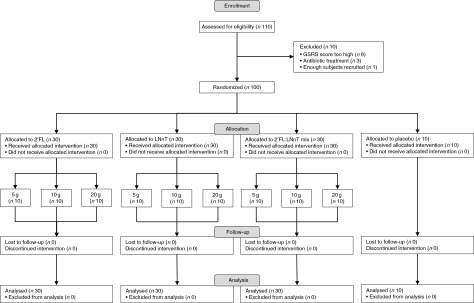
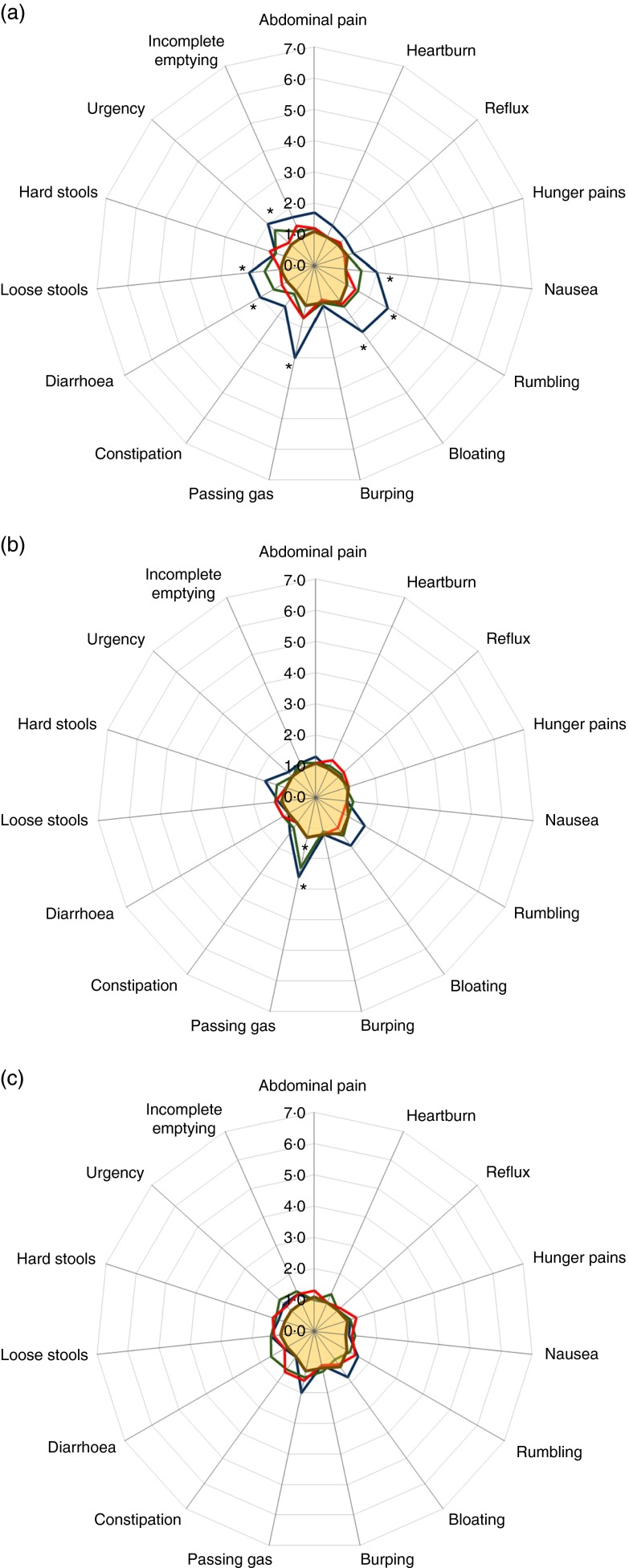
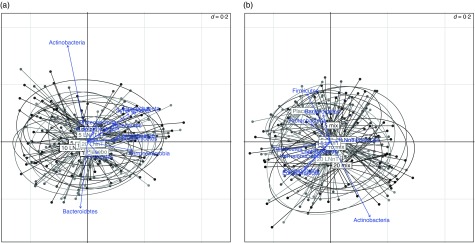
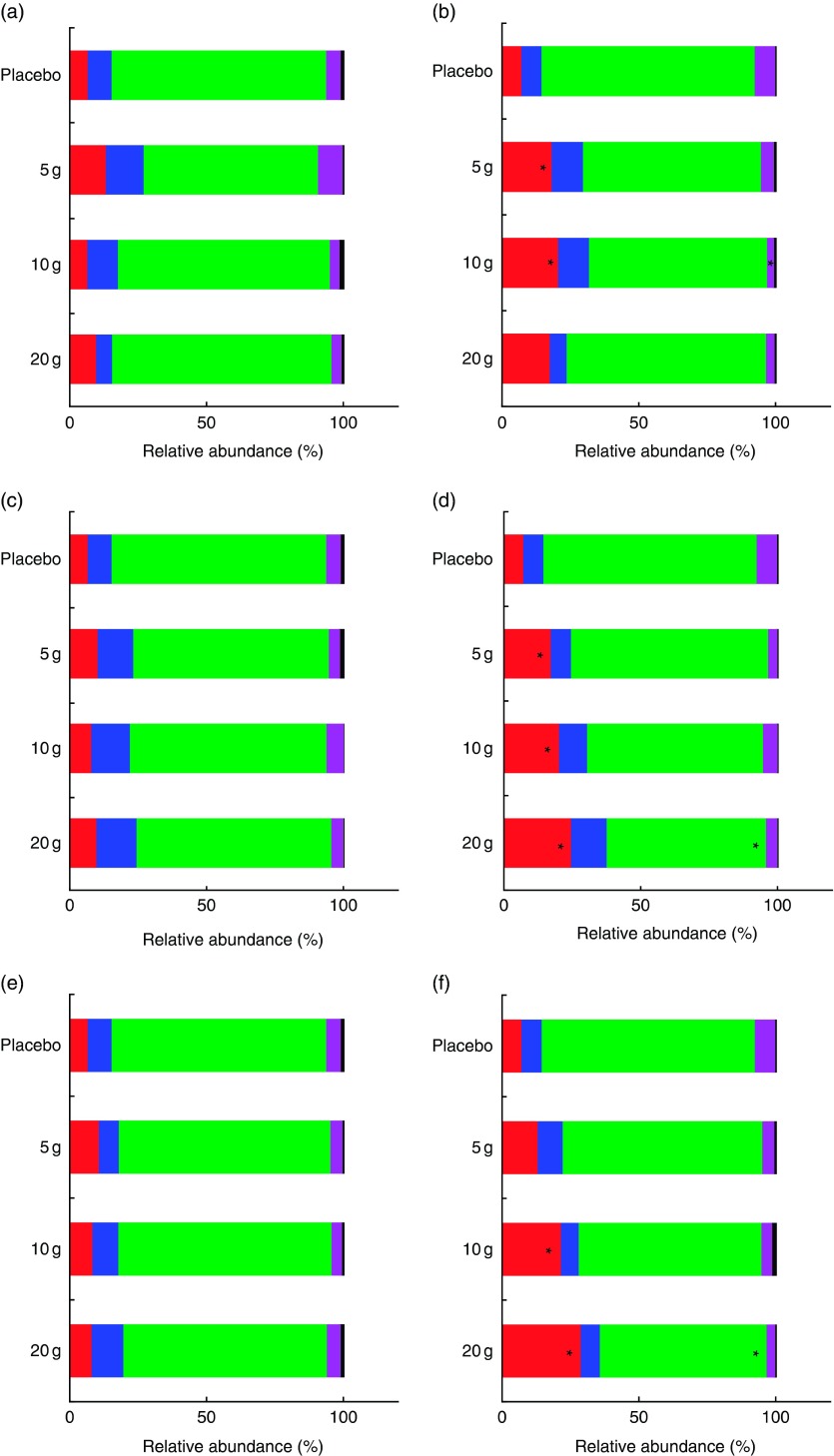
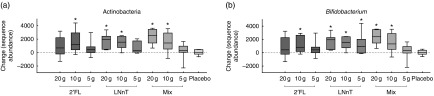
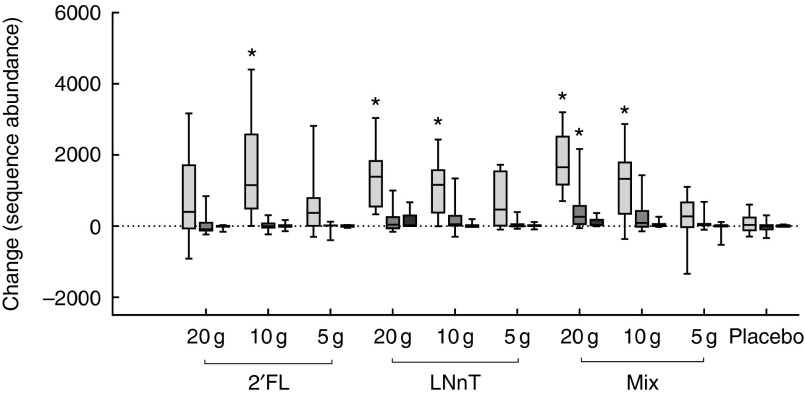
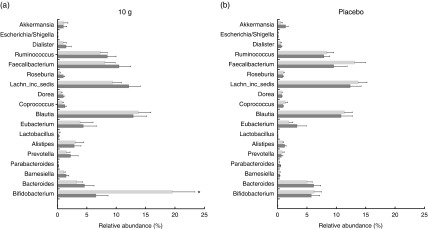
The gut microbiota has been established as an important player influencing many aspects of human physiology. Breast milk, the first diet for an infant, contains human milk oligosaccharides (HMO) that shape the infant’s gut microbiota by selectively stimulating the growth of specific bacteria, especially bifidobacteria. In addition to their bifidogenic activity, the ability of HMO to modulate immune function and the gut barrier makes them prime candidates to restore a beneficial microbiota in dysbiotic adults and provide health benefits. We conducted a parallel, double-blind, randomised, placebo-controlled, HMO-supplementation study in 100 healthy, adult volunteers, consuming chemically produced 2′- O -fucosyllactose (2′FL) and/or lacto- N -neotetraose (LNnT) at various daily doses and mixes or placebo for 2 weeks. All participants completed the study without premature discontinuation. Supplementation of 2′FL and LNnT at daily doses up to 20 g was shown to be safe and well tolerated, as assessed using the gastrointestinal symptoms rating scale. 16S rRNA sequencing analysis showed that HMO supplementation specifically modified the adult gut microbiota with the primary impact being substantial increases in relative abundance of Actinobacteria and Bifidobacterium in particular and a reduction in relative abundance of Firmicutes and Proteobacteria. This study provides the first set of data on safety, tolerance and impact of HMO on the adult gut microbiota. Collectively, the results from this study show that supplementing the diet with HMO is a valuable strategy to shape the human gut microbiota and specifically promote the growth of beneficial bifidobacteria.
Overview
The claims and statistics of this paper haven’t been checked yet.
Free: it reads the open-access text and checks the first 5 claims that cite a source we can check. Create a free account to check every claim.
Integrity signals
Registry
Cites
Statistics
Figures
Verification
Claims the paper makes
The claims and statistics of this paper haven’t been checked yet.
Free: it reads the open-access text and checks the first 5 claims that cite a source we can check. Create a free account to check every claim.
Claims other papers make about this one
Each is checked against this paper’s own text: does it say what the citing paper says it does?
The cited source says what the claim attributes to it.
In the citing paper
“In the supplement trials of accepted prebiotics, a significantly higher Bifidobacterium spp.abundance was reported after supplementation involving inulin (115) and human milk oligosaccharides (HMO) (62) compared with placebo at the end of intervention, whereas a significant within-group increase from baseline was detected after 10 g/d inulin supplementation (95).”
From Dietary fiber intervention on gut microbiota composition in healthy adults: a systematic review and meta-analysis (2018) · cites this paper as [62]
Self-check
Percentages, sums and reported differences re-computed from the paper’s own numbers.
The self-check needs the paper’s full text.
Citations
Cites
UPARSE: highly accurate OTU sequences from microbial amplicon reads
Edgar, R. C. (2013) · Nature Methods · doi:10.1038/nmeth.2604 · Cited by 16,707 · cited 1×
“Sequences were clustered into operational taxonomic units (OTU) at 97 % sequence similarity using USEARCH (51) , and suspected chimeric sequences were discarded on the basis of UCHIME (52) .”
UCHIME improves sensitivity and speed of chimera detection
Edgar, R. C., Haas, B. J., Clemente, J. C., Quince, C., & Knight, R. (2011) · Bioinformatics · doi:10.1093/bioinformatics/btr381 · Cited by 15,114
Klindworth, A., Pruesse, E., Schweer, T., Peplies, J., Quast, C., Horn, M., & Glöckner, F. O. (2013) · Nucleic Acids Research · doi:10.1093/nar/gks808 · Cited by 8,850 · cited 2×
“The V3 – V4 region of the 16S rDNA was ampli fi ed using the forward primer S-D-Bact-0341-b-S-17 (5 ′ -TCGTCGGCAGCG TCAGATGTGTATAAGAGACAG-3 ′ ) and the reverse primer S-D-Bact-0785-a-A-21 (5 ′ -GTCTCGTGGGCTCGGAGATGTG TATAAGAGACAG-3 ′ ) (50) , with Illumina adapters attached.”
A core gut microbiome in obese and lean twins
Turnbaugh, P. J., Hamady, M., Yatsunenko, T., Cantarel, B. L., Duncan, A., Ley, R. E., Sogin, M. L., Jones, W. J., Roe, B. A., Affourtit, J. P., et al. (2009) · Nature · doi:10.1038/nature07540 · Cited by 7,823 · cited 1×
“The participants rated severity using a seven-point Likert scale running from (1) no discomfort to (7) very severe discomfort.”
Changes of Intestinal Functions in Liver Cirrhosis
Fukui, H., & Wiest, R. (2016) · Inflammatory Intestinal Diseases · doi:10.1159/000444436 · Cited by 6,808
A metagenome-wide association study of gut microbiota in type 2 diabetes
Qin, J., Li, Y., Cai, Z., Li, S., Zhu, J., Zhang, F., Liang, S., Zhang, W., Guan, Y., Shen, D., et al. (2012) · Nature · doi:10.1038/nature11450 · Cited by 6,762
Role of the microbiota in immunity and inflammation.
Belkaid, Y., & Hand, T. W. (2014) · Cell · doi:10.1016/j.cell.2014.03.011 · Cited by 5,385 · cited 1×
“Intensive research over the past decade has revealed the gut microbiota to be an important player in host health by influencing many aspects of human physiology, including energy metabolism((1)), hormonal balance((2)) and immunity((3,4)).”
Host-gut microbiota metabolic interactions
Nicholson, J. K., Holmes, E., Kinross, J., Burcelin, R., Gibson, G., Jia, W., & Pettersson, S. (2012) · Science · doi:10.1126/science.1223813 · Cited by 4,760 · cited 1×
“Intensive research over the past decade has revealed the gut microbiota to be an important player in host health by in fl u-encing many aspects of human physiology, including energy metabolism (1) , hormonal balance (2) and immunity (3,4) .”
Richness of human gut microbiome correlates with metabolic markers
Le Chatelier, E., Nielsen, T., Qin, J., Prifti, E., Hildebrand, F., Falony, G., Almeida, M., Arumugam, M., Batto, J.-M., Kennedy, S., et al. (2013) · Nature · doi:10.1038/nature12506 · Cited by 4,662
Ribosomal Database Project: data and tools for high throughput rRNA analysis
Cole, J. R., Wang, Q., Fish, J. A., Chai, B., McGarrell, D. M., Sun, Y., Brown, C. T., Porras-Alfaro, A., Kuske, C. R., & Tiedje, J. M. (2014) · Nucleic Acids Research · doi:10.1093/nar/gkt1244 · Cited by 4,367 · cited 1×
“Taxonomic assignment of OTU was performed on the basis of comparison with a database of curated sequences derived from the Ribosomal Database Project (53) .”
Cited by
Items 201–220 of 220
Liu, D., Ying, C., Ping, Y., Liang, S., Yan, Q., & Jiang, Z. (2025) · Synthetic and Systems Biotechnology · doi:10.1016/j.synbio.2025.09.006
“…milk oligosaccharides (HMOs) and possesses many physiological activities, such as stimulating the growth of beneficial Bifidobacteria [1], establishing the intestinal microbiome in infants and adults [2,3], modulating intestinal inflammation [4], and healing gut epithelial barrier and wound [5].”
Zhang, M., Tao, W., Hou, M., Gao, S., Wei, Z., Chen, S., Liu, T., Zhu, X., Huang, Y. L., Su, L., et al. (2026) · Chemical Engineering Journal · doi:10.1016/j.cej.2026.175289 · Cited by 1
Young, K., Derraik, J. G. B., Albert, B. B., Vickers, M. H., & Cutfield, W. S. (2026) · World Journal of Pediatrics · doi:10.1007/s12519-026-01025-6
Naqvi, R. H., & Zameer, A. K. (2026) · South Asian Journal of Health Sciences · doi:10.25259/sajhs_46_2025
Mahapatra, S., Zeng, M., van Pijkeren, J., Paul, M., Thatoi, H., Oh, J., & Pan, X. (2026) · SSRN Electronic Journal · doi:10.2139/ssrn.6629799
Uso de oligosacáridos de leche humana en formulaciones infantiles y población adulta
Rodríguez, N. E. R. (2021) · TITULA
Kharait, S., Wilcox, M. D., Stockdale-Stanforth, K., & Thakare, V. (2026) · Frontiers in Nutrition · doi:10.3389/fnut.2026.1859479
“They play a crucial role as food for the commensal bacteria, particularly the bifidobacterial species (19, 20), leading to the development of a healthy gut microbiome during childhood (18, 21).”
Giron, L. B., Shaikh, M. W., Cantu-Jungles, T. M., Zhang, L., Engen, P. A., Bulut, N., Singh, S. S., Hasson, J. M., Zhang, E., Shankaran, S., et al. (2026) · bioRxiv (Cold Spring Harbor Laboratory) · doi:10.64898/2026.07.09.736798
Identification of a Novel Fungal α- l -Fucosidase with Transfucosylation Potential
Nekvasilová, P., Glozlová, M., Vopálenská, A., Petrásková, L., Kulik, N., & Bojarová, P. (2026) · ACS Omega · doi:10.1021/acsomega.6c00254
Rekombinant konak platformu olarak Lactobacillus plantarum’un mühendisliği
Akman, D. (2025) · Bilkent University Institutional Repository (Bilkent University)
Iguchi, S., Onodera, H., Komatsu, Y., & Kokubo, T. (2026) · Microorganisms · doi:10.3390/microorganisms14081812
“However, the clinical benefits of 2 ′ -FL intake in adults remain unclear, and current evidence mainly indicates changes in gut microbial composition [9].”
2′‐ FL 's Depiction of the Human Physiological Function Landscape
Xiao, Y., Li, J., Li, X., & Dai, Y. (2026) · Food Science & Nutrition · doi:10.1002/fsn3.72220
“…, while more recent infant and age-stratified work indicates that the bifidogenic effect is species-and age-dependent, suggesting that the response to 2′-FL is constrained by baseline microbiota composition rather than being universal across all hosts (Firrman et al. 2024; Elison et al. 2016).”
Xu, J., Li, B., Xu, H., Zhang, Q., Li, Z., Zhong, X., Qiao, D., Han, T.-L., & Zhang, B. (2026) · Comprehensive Reviews in Food Science and Food Safety · doi:10.1111/1541-4337.70636
Yu, M., Wang, J., Kou, R., Xu, B., Zhang, W., Zhang, Y., Liu, J., & Wang, S. (2026) · Foods · doi:10.3390/foods15173151
“It can selectively promote the growth of beneficial gut microbes, thereby optimizing intestinal microbial structure [8–10].”
Qiao, C., Guo, S., Yang, S., Yang, C., & Wang, Y. (2026) · Nutrients · doi:10.3390/nu18203417
“Trials indicate that 2 ′ -fucosyllactose (2 ′ -FL), lacto-N-neotetraose (LNnT), and 6 ′ -sialyllactose (6 ′ -SL) are generally tolerated and can modify microbiome features in some adults [11–13].”
InfluentialHuman Milk Oligosaccharides in Sports Nutrition: Biological Rationale and Current Evidence
Hu, K., Zhang, K., Huang, C., Wang, Z., Huang, X., Li, Y., Cheng, L., & Wu, Y. (2026) · Nutrients · doi:10.3390/nu18203367
“Exercise, microbiota, and muscle-related studies have all used interventions lasting several weeks, and no controlled study has determined whether a single dose taken before, during, or after exercise produces a meaningful response [31,37,118,138,149].”
InfluentialWang, X., Zheng, B., Sun, Y., Liu, L., & Li, C. (2026) · Microbiological Research · doi:10.1016/j.micres.2026.128781
Sage, S. A., Abbott, S. J., Korczak, R., & Williams, N. C. (2026) · Journal of the International Society of Sports Nutrition · doi:10.1080/15502783.2026.2748763 · Cited by 1
Gorini, F., Tonacci, A., Gabriele, M., & Borghini, A. (2026) · Nutrients · doi:10.3390/nu18213535
Host-Specific Metabolic Engineering for Microbial Production of Fucosyllactoses
Kim, B. M., Jang, Y. J., Song, H. Y., Jung, S., Shin, J., & Lee, J. W. (2026) · Journal of Microbiology and Biotechnology · doi:10.4014/jmb.2608.08032
Metadata
- Authors
- Elison, E., Vigsnaes, L. K., Rindom Krogsgaard, L., Rasmussen, J., Sørensen, N., McConnell, B., Hennet, T., Sommer, M. O. A., & Bytzer, P.
- Affiliations
- University of Copenhagen (DK)
- Clinical Microbiomics (Denmark) (DK)
- University of Zurich (CH)
- Novo Nordisk Foundation (DK)
- Corresponding author
- Elison, Emma
- Venue
- British Journal of Nutrition
- Publisher
- Cambridge University Press (CUP)
- Published
- 2016-10-10
- Volume
- 116
- Issue
- 8
- Pages
- 1356-1368
- ISSN
- 0007-1145 (ISSN-L)
- 1475-2662
- PMC
- PMC5082288
- OpenAlex
- W2530574460
- Semantic Scholar
- fae881e0e4abe376d88927372b9e5b4eb1fd21f7
- Cited by
- 218
- References
- 71
- Citations by year
- 2026: 23 · 2025: 35 · 2024: 25 · 2023: 23 · 2022: 22 · 2021: 28 · 2020: 24 · 2019: 19 · 2018: 11 · 2017: 8
- FWCI
- 13.26
- Type
- journal article
- Language
- en
- Open access
- hybrid
- doi.org
- Locations
- British Journal Of Nutrition (publishedVersion, cc-by)
- PubMed Central (publishedVersion, cc-by)
- PubMed (publishedVersion)
- Research at the University of Copenhagen (University of Copenhagen) (publishedVersion, other-oa)
- Zurich Open Repository and Archive (University of Zurich) (acceptedVersion, other-oa)
- Technical University of Denmark, DTU Orbit (Technical University of Denmark, DTU) (submittedVersion, cc-by)
- Zurich Open Repository and Archive (University of Zurich) (submittedVersion, other-oa)
- Zurich Open Repository and Archive (University of Zurich)
- Funders
- Lundbeckfonden (R77-2010-6772, R140-2013-13496)
- Universität Zürich
- Novo Nordisk Fonden (NNF13SA0009311, NNF13SA0006019, NNF14OC0011335, NNF10CC1016517)
- Topics
- Health Sciences › Nursing › Nutrition and Dietetics › Infant Nutrition and Health
- Life Sciences › Biochemistry, Genetics and Molecular Biology › Molecular Biology › Gut microbiota and health
- Health Sciences › Nursing › Nutrition and Dietetics › Microbial Metabolites in Food Biotechnology
- Keywords
- human milk oligosaccharides, lacto-N-neotetraose, gut microbiota, bifidogenic activity, Bifidobacterium, actinobacteria, dietary supplementation, tolerability, healthy adults, 16S rRNA gene sequencing
- MeSH terms
- Bacillota, Firmicutes, Gastrointestinal Microbiome, Adult, Bifidobacterium, Denmark, Double-Blind Method, Feces, Female, Humans, Male, Middle Aged, Oligosaccharides, Trisaccharides, Biomarkers, Proteobacteria, Principal Component Analysis, Actinobacteria, Young Adult, Prebiotics, Molecular Typing, Dysbiosis
About these checks
Registry, retraction, Cites and statistics results are computed, not judged, with one exception: a printed reference that no index lists is read once by a model before it counts as a citation error. Claims are extracted by a model and kept only when their quote appears verbatim in the text; each cited source is then checked, with a model’s help, for whether it says what the claim relies on. Those verdicts can be wrong — read the claim’s quote and the cited source before relying on one.
Statistics and arithmetic are recomputed, not judged.
Confidence bands are shown only for fields calibrated on our annotated test set. None is calibrated yet, so no band is shown.
What counts as a claim ›How we measure confidence ›How we check this ›
Are you an author, or do you see a problem with this page? Request a review
Data sources
Bibliographic data: Semantic Scholar, OpenAlex, Crossref.
Contains information from the Semantic Scholar Academic Graph Datasets, made available under the ODC Attribution License (ODC-BY 1.0).
Semantic Scholar’s data is described in: Kinney, R., et al. (2023). The Semantic Scholar Open Data Platform. arXiv:2301.10140.
