

Deficits in executive functions among youths with autism spectrum disorders: an age-stratified analysis
Open accessThe DOI matches its Crossref record; 82 of the 82 references it cites were found in a registry or an index.
Abstract
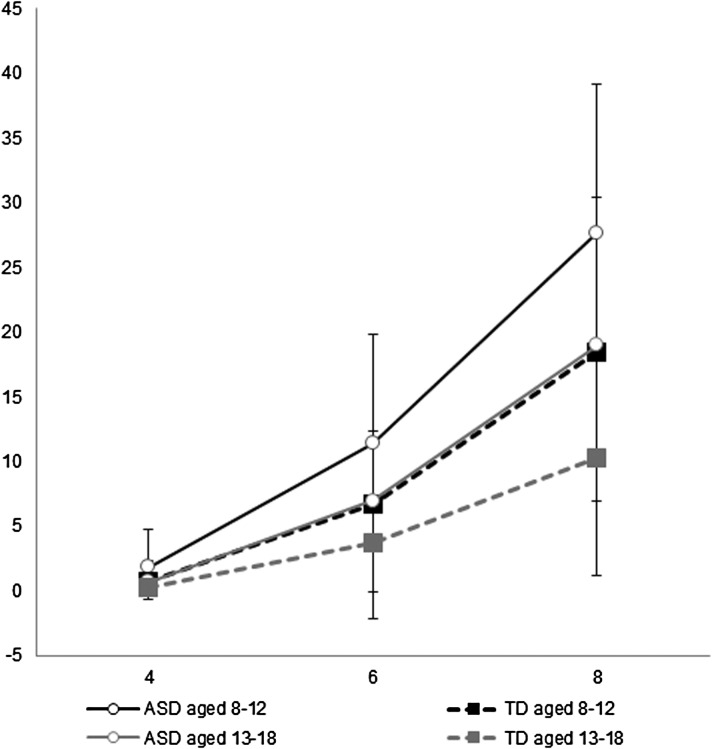
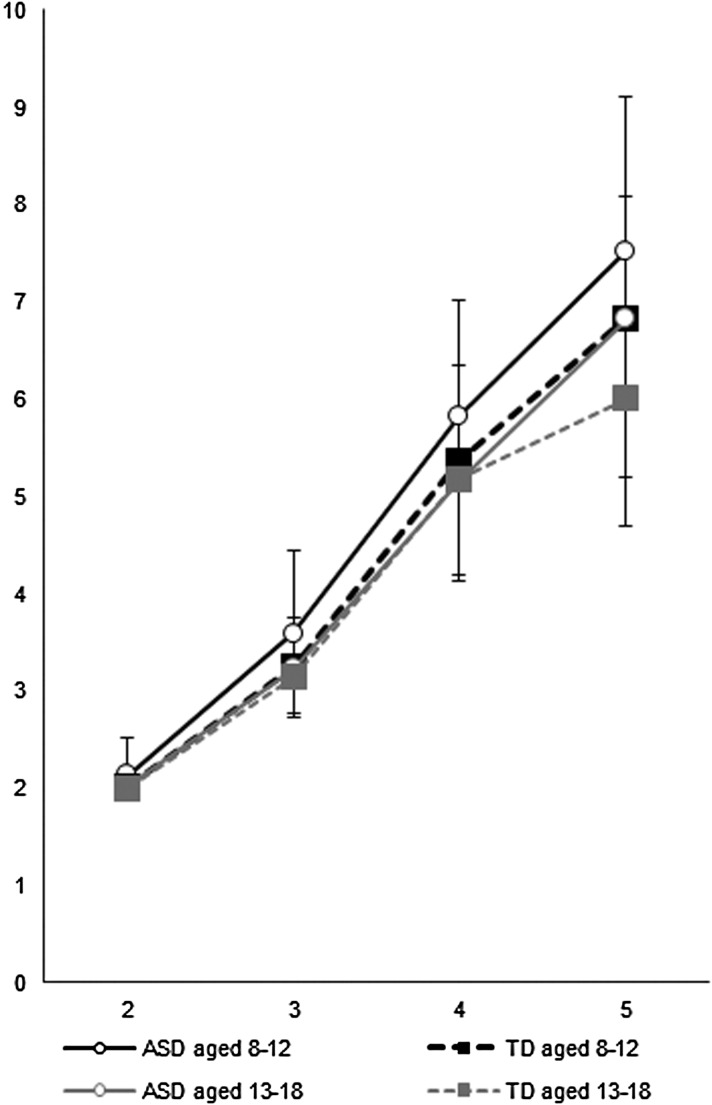
Background: Impaired executive function (EF) is suggested to be one of the core features in individuals with autism spectrum disorders (ASD); however, little is known about whether the extent of worse EF in ASD than typically developing (TD) controls is age-dependent. We used age-stratified analysis to reveal this issue. Method: We assessed 111 youths with ASD (aged 12.5 ± 2.8 years, male 94.6%) and 114 age-, and sex-matched TD controls with Digit Span and four EF tasks of the Cambridge Neuropsychological Test Automated Battery (CANTAB): Spatial Span (SSP), Spatial Working Memory (SWM), Stockings of Cambridge (SOC), and Intradimensional/Extradimensional Shift Test (I/ED). Results: Compared to TD controls, youths with ASD performed poorer on the Digit Span, SWM, SOC, and I/ED tasks. The performance of all the tasks improved with age for both groups. Age-stratified analyses were conducted due to significant age × group interactions in visuospatial planning (SOC) and set-shifting (I/ED) and showed that poorer performance on these two tasks in ASD than TD controls was found only in the child (aged 8–12 years) rather than the adolescent (aged 13–18 years) group. By contrast, youths with ASD had impaired working memory, regardless of age. The increased magnitude of group difference in visuospatial planning (SOC) with increased task demands differed between the two age groups but no age moderating effect on spatial working memory. Conclusions: Our findings support deficits in visuospatial working memory and planning in youths with ASD; however, worse performance in set-shifting may only be demonstrated in children with ASD.
Overview
The claims and statistics of this paper haven’t been checked yet.
Free: it reads the open-access text and checks the first 5 claims that cite a source we can check. Create a free account to check every claim.
Integrity signals
Registry
Cites
Statistics
Figures
Verification
Claims the paper makes
The claims and statistics of this paper haven’t been checked yet.
Free: it reads the open-access text and checks the first 5 claims that cite a source we can check. Create a free account to check every claim.
Claims other papers make about this one
Each is checked against this paper’s own text: does it say what the citing paper says it does?
The source backs part of the claim, not all of it — or backs it for a different population, condition or comparison.
In the citing paper
“the impairments on set shifting tests in youth with ADHD might not be due to the tests’ set shifting demands per se, but to the inhibitory control and/or working memory demands required to perform these tests.83–85”
From Executive function deficits in attention-deficit/hyperactivity disorder and autism spectrum disorder (2024) · cites this paper as [85]
Experimental — accuracy not yet measuredIn the citing paper
“Because we are confident in the ASD diagnosis, we suspect that the variation between these three subgroups reflects typical variation in cognitive mechanisms, which may be independent of autism symptom severity but influence ASD presentation14,91.”
From Subtyping cognitive profiles in Autism Spectrum Disorder using a Functional Random Forest algorithm (2018) · cites this paper as [14]
In the citing paper
“In ASD individuals, EF domains including aspects of planning (e.g., Chen et al. 2016;Hill 2004), set-shifting and working memory (e.g., Chen et al. 2016;Andersen et al. 2015) are usually impaired.”
From A meta-analytic review of the efficacy of physical exercise interventions on cognition in individuals with autism spectrum disorder and ADHD (2016) · cites this paper as Chen et al. 2016
Self-check
Percentages, sums and reported differences re-computed from the paper’s own numbers.
The self-check needs the paper’s full text.
Citations
Cites
The extreme male brain theory of autism
Baron-Cohen, S. (2002) · Trends in Cognitive Sciences · doi:10.1016/s1364-6613(02)01904-6 · Cited by 2,007 · cited 2×
“2000), weak central coherence (Baron-Cohen, 2002), and executive dysfunction (Hill, 2004)], Hill’s theory of executive dysfunction explains deficits in initiating new non-routine actions and links the behavioral repetition and perseveration to frontal lobe dysfunction in ASD.”
BackgroundExecutive function deficits in high-functioning autistic individuals: Relationship to theory of mind
Ozonoff, S., Pennington, B. F., & Rogers, S. J. (1991) · Journal of Child Psychology and Psychiatry · doi:10.1111/j.1469-7610.1991.tb00351.x · Cited by 1,766 · cited 3×
“Visuospatial planning is also impaired in children and adolescents (Hughes et al. 1994; Hughes, 1996; Ozonoff & Jensen, 1999; Geurts et al. 2004; Ozonoff et al. 2004, 2006; Landa & Goldberg, 2005) as well as adults (Barnard et al. 2008) with ASD.”
BackgroundThe Extreme Male-Brain Theory of Autism
Baron-Cohen, S. (1999) · Neurodevelopmental Disorders · doi:10.7551/mitpress/4945.003.0023 · Cited by 1,413
Understanding Other Minds Perspectives From Developmental Cognitive Neuroscience
Baron‐Cohen, S., Tager-Flusberg, H. B., & Cohen, D. J. (2000) · Cited by 1,392
Early recognition of children with autism: a study of first birthday home videotapes
Osterling, J., & Dawson, G. (1994) · Journal of Autism and Developmental Disorders · doi:10.1007/bf02172225 · Cited by 1,290 · cited 5×
“These convergent evidences (Nakahachi et al. 1994; Gabig, 2008; Robinson et al. 2009) strongly suggest that ASD as a common disorder warrants much more studies to investigate the inherent deficits of ASD beyond the core symptoms.”
BackgroundInfluentialThe epidemiology and global burden of autism spectrum disorders
Baxter, A. J., Brugha, T. S., Erskine, H. E., Scheurer, R. W., Vos, T., & Scott, J. G. (2015) · Psychological Medicine · doi:10.1017/s003329171400172x · Cited by 1,224 · cited 1×
“The prevalence of ASD has increased in recent decades causing much health burden (Matson & Kozlowski, 2011; Baxter et al. 2015).”
BackgroundWhat has fMRI told us about the Development of Cognitive Control through Adolescence?
Luna, B., Padmanabhan, A., & O’Hearn, K. (2010) · Brain and Cognition · doi:10.1016/j.bandc.2009.08.005 · Cited by 892
Evaluating the theory of executive dysfunction in autism
Hill, E. L. (2004) · Developmental Review · doi:10.1016/j.dr.2004.01.001 · Cited by 846 · cited 3×
“Hill’s review article supports our statement that the planning ability in ASD participants improved as they became older, and the planning deficit was evident only on tasks requiring heavier demands (Hill, 2004).”
BackgroundBlumberg, S. J., Bramlett, M. D., Kogan, M. D., Schieve, L. A., Jones, J. R., & Lu, M. C. (2013) · PubMed · Cited by 826
The teen brain: insights from neuroimaging
Giedd, J. N. (2008) · Journal of Adolescent Health · doi:10.1016/j.jadohealth.2008.01.007 · Cited by 775
Research works printed but not linked: 3
- Osterling J, Dawson G (1994). Early recognition of children with autism: a study of first birthday home videotapes. Journal of Autism and Developmental Disorders 24, 247– 257. 8050980 · DOI · Paper page
- APA (2013). Diagnostic and Statistical Manual of Mental Disorders, 5th edn. American Psychiatric Association: Arlington, VA.
- APA (1994). Diagnostic and Statistical Manual of Mental Disorder, 4th edn. American Psychiatric Press: Washington, DC.
Cited by
Subtyping cognitive profiles in Autism Spectrum Disorder using a Functional Random Forest algorithm
Feczko, E., Balba, N. M., Miranda-Dominguez, O., Cordova, M., Karalunas, S. L., Irwin, L., Demeter, D. V., Hill, A. P., Langhorst, B. H., Grieser Painter, J., et al. (2018) · NeuroImage · doi:10.1016/j.neuroimage.2017.12.044 · Cited by 173
“A large-scale study revealed that children with ASD exhibited lower performance than unaffected children on a spatial span task (Chen et al., 2016), requiring children to repeat a sequence of fixed spatial locations indicated by a series of changing colors.”
Language in autism: domains, profiles and co-occurring conditions
Schaeffer, J., Abd El-Raziq, M., Castroviejo, E., Durrleman, S., Ferré, S., Grama, I., Hendriks, P., Kissine, M., Manenti, M., Marinis, T., et al. (2023) · Journal of Neural Transmission · doi:10.1007/s00702-023-02592-y · Cited by 159
Tan, B. W. Z., Pooley, J. A., & Speelman, C. P. (2016) · Journal of Autism and Developmental Disorders · doi:10.1007/s10803-016-2854-x · Cited by 157
“In ASD individuals, EF domains including aspects of planning (e.g., Chen et al. 2016; Hill 2004), set-shifting and working memory (e.g., Chen et al. 2016; Andersen et al. 2015) are usually impaired.”
BackgroundHartman, C. A., Geurts, H. M., Franke, B., Buitelaar, J. K., & Rommelse, N. N. J. (2016) · Neuroscience & Biobehavioral Reviews · doi:10.1016/j.neubiorev.2016.09.003 · Cited by 111
Memory in autism spectrum disorder: A meta-analysis of experimental studies.
Desaunay, P., Briant, A. R., Bowler, D., Ring, M., Gérardin, P., Baleyte, J., Guenolé, F., Eustache, F., Parienti, J., & Guillery‐Girard, B. (2020) · Psychological Bulletin · doi:10.1037/bul0000225 · Cited by 127
A meta-analysis of cognitive flexibility in autism spectrum disorder
Lage, C., Smith, E. S., & Lawson, R. P. (2023) · Neuroscience & Biobehavioral Reviews · doi:10.1016/j.neubiorev.2023.105511 · Cited by 145
Written Expression in Individuals with Autism Spectrum Disorder: A Meta-Analysis
Finnegan, E. G., & Accardo, A. L. (2017) · Journal of Autism and Developmental Disorders · doi:10.1007/s10803-017-3385-9 · Cited by 107
“Impairments are most notable in working memory and planning tasks (Chen et al. 2016), and appear to be related to an individual’s IQ, age and the complexity of the tasks presented.”
BackgroundTheta and Alpha Oscillation Impairments in Autistic Spectrum Disorder Reflect Working Memory Deficit
Larraín-Valenzuela, J., Zamorano, F. J., Soto‐Icaza, P., Carrasco, X., Herrera, C., Daiber, F., Aboitiz, F., & Billeke, P. B. (2017) · Scientific Reports · doi:10.1038/s41598-017-14744-8 · Cited by 91
Vogan, V. M., Leung, R. C., Safar, K., Martinussen, R., Smith, M. L., & Taylor, M. J. (2018) · Frontiers in Psychology · doi:10.3389/fpsyg.2018.01774 · Cited by 87
“Cross-sectional and longitudinal studies of individuals with ASD generally support age-related maturation of EF through childhood and adolescence, but they are developmentally delayed (Happé et al., 2006; Chen et al., 2016) and often remain impaired compared to same-age typical peers (Luna et al.”
BackgroundDimitrova-Shumkovska, J., Krstanoski, L., & Veenman, L. (2020) · Cells · doi:10.3390/cells9040870 · Cited by 70
“Thus, subjects suffering from ASD present impaired cognitive functions, typically displayed by compromised executive functions, reduced perceptual abilities, and poor mental skills [107].”
BackgroundLawrence, K. E., Hernandez, L. M., Bookheimer, S. Y., & Dapretto, M. (2019) · Autism Research · doi:10.1002/aur.1971 · Cited by 61
“…Hou, Yang, Yang, & Zuo, 2015; Nomi & Uddin, 2015; Burrows, Laird, & Uddin, 2016; Dajani & Uddin, 2016; Farrant & Uddin, 2016; Long, Duan, Mantini, & Chen, 2016; Lee, Park, James, Kim, & Park, 2017; Woodward, Giraldo-Chica, Rogers, & Cascio, 2017; but see Shih et al., 2011], a pattern which has…”
Kouklari, E.-C., Tsermentseli, S. K., & Monks, C. P. (2018) · Development and Psychopathology · doi:10.1017/s0954579418000081 · Cited by 71
“…Banda, & Begeske, 2014), inhibition (Christ, Holt, White, & Green, 2007; Happé, Booth, Charlton, & Hughes, 2006; Xiao et al., 2012), planning (Chen et al., 2016; Kimhi, Kugelmas, Agam Ben Artzi, Ben Moshe, & Bauminger-Zviely, 2014; Verté, Geurts, Roeyers, Oosterlaanm & Sergeant, 2005)…”
Executive function deficits in attention-deficit/hyperactivity disorder and autism spectrum disorder
Kofler, M. J., Soto, E. F., Singh, L. J., Harmon, S. L., Jaisle, E. M., Smith, J. N., Feeney, K. E., & Musser, E. D. (2024) · Nature Reviews Psychology · doi:10.1038/s44159-024-00350-9 · Cited by 51
“Additionally, set shifting performance seemed to be more impaired among children than among adolescents with ASD 85 .”
Carlisi, C. O., Norman, L., Murphy, C. M., Christakou, A., Chantiluke, K., Giampietro, V., Simmons, A., Brammer, M., Murphy, D. G., MRC AIMS consortium, et al. (2017) · Psychological Medicine · doi:10.1017/s0033291717001088 · Cited by 49
“…with ASD would be more impaired on TD relative to adolescents with OCD and controls (Scott-Van Zeeland et al. 2010; Chantiluke et al. 2014 b ; Chen et al. 2016) and that both clinical groups compared with healthy controls would show underactivation in underlying ventromedial pre-frontal,…”
InfluentialExecutive functions in youths with autism spectrum disorder and their unaffected siblings
Seng, G., Tseng, W., Chiu, Y., Tsai, W., Wu, Y., & Gau, S. S. (2020) · Psychological Medicine · doi:10.1017/s0033291720001075 · Cited by 54
“Our finding of poorer executive functions in youths with ASD, relative to healthy controls, is in line with previous studies (Chen et al., 2016; Hill, 2004) suggesting impairments in multiple components of executive functions including working memory (both verbal and visuospatial), set-shifting, and planning.”
BackgroundResultInfluentialSelf-citationLieto, M., Pecini, C., Castro, E., Inguaggiato, E., Cecchi, F., Dario, P., Cioni, G., & Sgandurra, G. (2020) · Frontiers in Psychology · doi:10.3389/fpsyg.2019.03084 · Cited by 58
Albein‐Urios, N., Youssef, G. J., Kirkovski, M., & Enticott, P. G. (2018) · Journal of Autism and Developmental Disorders · doi:10.1007/s10803-018-3503-3 · Cited by 51
“Some studies have also suggested that age is a good predictor of better performance on the ID/ED, noting that ASD adults have a similar performance profile to typically developed adults (Chen et al. 2016).”
ResultTam, F. I., King, J. A., Geisler, D., Korb, F. M., Sareng, J., Ritschel, F., Steding, J., Albertowski, K. U., Roessner, V., & Ehrlich, S. (2017) · Scientific Reports · doi:10.1038/s41598-017-14097-2 · Cited by 38
“08) for the HC group with no significant group difference (t(41) = 1.”
Chiang, H., Kao, W., Chou, M., Chou, W.-J., Chiu, Y., Wu, Y., & Gau, S. S. (2018) · Autism Research · doi:10.1002/aur.1923 · Cited by 41
“Additionally, executive dysfunction is one of the essential features of impairment in ASD independent of intelligence and verbal ability [Chen et al., 2016; Robinson et al., 2009], which may also influence their scholastic skill and academic performance [Semrud-Clikeman, Fine, & Bledsoe, 2014].”
BackgroundSelf-citationAmeis, S. H., Daskalakis, Z. J., Blumberger, D. M., Desarkar, P., Drmic, I., Mabbott, D., Lai, M., Croarkin, P. E., & Szatmári, P. (2017) · Journal of Child and Adolescent Psychopharmacology · doi:10.1089/cap.2016.0146 · Cited by 33
“…in spatial working memory assessed using this measure appears to be stable across children and youth with ASD without intellectual disability (Chen et al. 2016), (2) spatial working memory is associated with bilateral DLPFC activation using rTMS (Owen et al. 2005), and (3) working memory has…”
MethodHoward, J., Herold, B., Major, S. T., Leahy, C. L., Ramseur, K., Franz, L., Deaver, M., Vermeer, S., Carpenter, K. L. H., Murias, M., et al. (2023) · Autism · doi:10.1177/13623613231154310 · Cited by 43
“Autism is frequently associated with delays in adaptive behavior skills and language abilities, as well as lower levels of executive function (EF) skills, relative to chronological age-matched peers (Chen et al., 2016).”
BackgroundZhang, H., Li, R., Wen, X., Li, Q., & Wu, X. (2020) · IEEE Journal of Biomedical and Health Informatics · doi:10.1109/jbhi.2020.2993109 · Cited by 31
“073 Hz [42], which could be suggestive of the fact that subtle changes of time-frequency components for resting-state fMRI signals represent activity and functions of the brain.”
BackgroundKouklari, E.-C., Tsermentseli, S. K., & Monks, C. P. (2017) · Child Neuropsychology · doi:10.1080/09297049.2017.1391190 · Cited by 36
School Functions in Unaffected Siblings of Youths with Autism Spectrum Disorders
Chien, Y., Tu, E., & Gau, S. S. (2017) · Journal of Autism and Developmental Disorders · doi:10.1007/s10803-017-3223-0 · Cited by 35
Self-citationHan, Y. M. Y., Chan, M. M. Y., Shea, C. K., Mo, F. Y. M., Yiu, K. W. K., Chung, R. C. K., Cheung, M., & Chan, A. S.-Y. (2023) · Autism · doi:10.1177/13623613231169547 · Cited by 34
“The mean number of choices needed to obtain the correct response (Chen et al., 2016) for the CANTAB One Touch Stocking component of the Cambridge test was used as the parameter to characterize the working memory performance of the individuals.”
Tsai, T.-H., Chen, Y., & Gau, S. S. (2019) · Psychological Medicine · doi:10.1017/s0033291719003271 · Cited by 32
“Convergent evidence supports impaired executive functions in individuals with ASD, regardless of performance-based or real-world rating measures of executive functions (Baron, 2000; Chen et al., 2016; Chien et al., 2015; Demetriou et al., 2018).”
BackgroundResultSelf-citationAlsaedi, R. H., Carrington, S. B., & Watters, J. J. (2020) · Brain Sciences · doi:10.3390/brainsci10020120 · Cited by 37
“Other studies that employed the same instrument described reduced planning abilities in those with ASD [16,63,67,75], which indicates that the absence of a difference in planning performance between the ASD and control groups in this study might not be due to the performance mode.”
ResultYeung, M. K.-C., Bai, J., & Mak, K. (2024) · Autism Research · doi:10.1002/aur.3196 · Cited by 33
“In contrast, others reported fewer EF impairments at older age or largely age-invariant EF impairments across age groups (Chen et al., 2016; Luna et al., 2007).”
Ross, V., Jongen, E. M. M., Brijs, K., Vanroelen, G., Beelen, C., Maltagliati, I., van Beers, M., Ruiter, R. A. C., Brijs, T., Alhajyaseen, W., et al. (2019) · Transportation Research Part F Traffic Psychology and Behaviour · doi:10.1016/j.trf.2019.03.003 · Cited by 28
O’Hearn, K. M., & Lynn, A. (2023) · Frontiers in Human Neuroscience · doi:10.3389/fnhum.2022.957375 · Cited by 29
“In contrast, a study examining digit span and standard EF tasks (CANTAB R , 2019) reported that the initial deficits in planning and task switching decreased from childhood (8–12) to adolescence (13–18) in individuals with ASD, compared to TD individuals, while deficits in memory remained stable across that age range…”
ResultLieto, M., Pecini, C., Brovedani, P., Sgandurra, G., Dell’Omo, M., Chilosi, A. M., Guzzetta, A., Perazza, S., Sicola, E., & Cioni, G. (2021) · Frontiers in Neurology · doi:10.3389/fneur.2020.601148 · Cited by 25
Gentil-Gutiérrez, A., Santamaría‐Peláez, M., Mínguez-Mínguez, L. A., Fernández-Solana, J., Gonzalez-Bernal, J. J., González‐Santos, J., & Obregón-Cuesta, A. I. (2022) · International Journal of Environmental Research and Public Health · doi:10.3390/ijerph19137834 · Cited by 39
“Whereas the results of professionals on the scale of planning and organization are inverse; this way it seems that difficulties in planning and organization decrease [18].”
Backgroundde Boer, A., Vermeulen, K., Egger, J. I. M., Janzing, J., de Leeuw, N., Veenstra‐Knol, H. E., den Hollander, N. S., van Bokhoven, H., Staal, W., & Kleefstra, T. (2018) · Molecular Autism · doi:10.1186/s13229-018-0193-9 · Cited by 24
“This might be related to the set-shifting problems often seen in subjects with ASD, although findings on executive function deficits in adults with ASD were inconsistent [22].”
Resultsocial Communication Predictors in Autism Spectrum Disorder. Theoretical Review
Costescu, C. A., Pitariu, D., David, C., & Roșan, A. (2022) · Journal of Experimental Psychopathology · doi:10.1177/20438087221106955 · Cited by 39
Chen, C.-P., Gau, S. S., & Lee, C.-C. (2018) · Computer Speech & Language · doi:10.1016/j.csl.2018.12.003 · Cited by 23
Self-citationGentil-Gutiérrez, A., Santamaría‐Peláez, M., Mínguez-Mínguez, L. A., González‐Santos, J., Fernández-Solana, J., & Gonzalez-Bernal, J. J. (2022) · International Journal of Environmental Research and Public Health · doi:10.3390/ijerph19137987 · Cited by 31
“and planning and organization (T 68) in people with ASD when compared to those with typical development [27,39].”
BackgroundResultCostescu, C. A., Roșan, A., David, C., Cozma, L., & Calota, A. (2023) · European Journal of Investigation in Health Psychology and Education · doi:10.3390/ejihpe13120194 · Cited by 24
Huang, C.-F., Lin, Y.-S., Chiu, Y.-N., Gau, S. S., Chen, V. C.-H., Lin, C.-F., Hsieh, Y.-H., Liu, W.-S., Chan, H.-L., & Wu, Y.-Y. (2022) · Neuropsychiatric Disease and Treatment · doi:10.2147/ndt.s345568 · Cited by 17
Self-citationHsieh, M.-Y., Tuan, L., Chang, H., Wang, Y., Chen, C., Shy, H.-T., Lee, L., & Gau, S. S. (2022) · Cerebral Cortex · doi:10.1093/cercor/bhac379 · Cited by 16
Self-citationSung, M., McClelland, M. M., Massey, W. V., Logan, S. W., & MacDonald, M. (2024) · Frontiers in Public Health · doi:10.3389/fpubh.2023.1292695 · Cited by 18
Soto‐Icaza, P., Soto-Fernández, P., Kausel, L., Márquez-Rodríguez, V., Carvajal-Paredes, P., Martínez-Molina, M. P., Figueroa-Vargas, A., & Billeke, P. B. (2024) · Frontiers in Human Neuroscience · doi:10.3389/fnhum.2024.1320761 · Cited by 17
Pan, C., Sung, M., Tsai, C., Chen, F., Chen, Y., & Chen, C. (2024) · Autism Research · doi:10.1002/aur.3136 · Cited by 22
“Previous evidence revealed that the lower level of cognitive flexibility was only found in autistic children (aged 8 – 12) but not in autistic adolescents (aged 13 – 18) (Chen et al., 2016).”
BackgroundBodner, K. E., Cowan, N., & Christ, S. E. (2019) · Journal of Abnormal Psychology · doi:10.1037/abn0000471 · Cited by 19
“A number of studies have reported intact or even superior performance in children and adults with ASD on complex WM tasks (Koshino et al., 2008; Ozonoff & Strayer, 2001), or on certain aspects of WM tasks such as strategy but not errors (Chen et al., 2016; Landa & Goldberg, 2005).”
BackgroundResultRoselló, R., Martínez-Raga, J., Tomás, J. M., Miranda, B. R., Berenguer, C., & Cortese, S. (2022) · Journal of Neural Transmission · doi:10.1007/s00702-022-02554-w · Cited by 16
“Studies using tasks that assessed a range of executive components showed a moderating effect of age and some improvement in adolescence (Chen et al. 2016).”
MethodBross, L. A., Huffman, J. M., Watson, E. K., Wills, H. P., & Mason, R. A. (2020) · Journal of Special Education Technology · doi:10.1177/0162643420924188 · Cited by 17
Heimola, M., Paulanto, K., Alakuijala, A., Tuisku, K., Simola, P. E., Ämmälä, A., Räisänen, P., Parkkola, K. I., & Paunio, T. (2021) · SLEEP Advances · doi:10.1093/sleepadvances/zpab016 · Cited by 18
Insulin and disorders of behavioural flexibility
Sullivan, M., Fernández‐Aranda, F., Camacho‐Barcia, L., Harkin, A., Macrì, S., Mora‐Maltas, B., Jiménez‐Múrcia, S., O’Leary, A., Ottomana, A. M., Presta, M., et al. (2023) · Neuroscience & Biobehavioral Reviews · doi:10.1016/j.neubiorev.2023.105169 · Cited by 17
“Learning and memory impairments utilising the CANTAB have been observed in patients with ASD (Spatial Span (visuospatial working memory), Spatial Working Memory, Stockings of Cambridge (spatial planning and working memory), and Intradimensional/Extradimensional Shift Test)(55), in addition to reduced sensitivity to ou…”
MethodMartínez, K., Merchán‐Naranjo, J., Pina‐Camacho, L., Alemán‐Gómez, Y., Boada, L., Fraguas, D., Moreno, C., Arango, C., Janssen, J., & Parellada, M. (2017) · European Child & Adolescent Psychiatry · doi:10.1007/s00787-017-0990-2 · Cited by 14
“In addition, developmental improvements might not be equally pronounced in ASD compared to TP [2, 7, 13, 14].”
BackgroundInfluentialRobot Programming to Empower Higher Cognitive Functions in Early Childhood
Lieto, M. C. D., Pecini, C., Castro, E., Inguaggiato, E., Cecchi, F., Dario, P., Sgandurra, G., & Cioni, G. (2019) · Springer eBooks · doi:10.1007/978-3-030-19913-5_9 · Cited by 17
Mani, A., Ghelijkhani, S., Haghighat, R., Ahmadzadeh, L., Chohedri, E., & Heydari, S. T. (2018) · Shiraz E-Medical Journal · doi:10.5812/semj.14295 · Cited by 19
“The executive function is impaired in several physical, neurologic, and neuro-psychopathologic diseases, such as hypoperfusion-related cerebral lesions (5), gait disorders (6), cardiovascular and atherosclerotic disease (7), Parkinson (8), Attention Deficit Hyperactivity Disorder (ADHD) (9), delirium (10), autism (11)…”
BackgroundCosta‐Cordella, S., Soto‐Icaza, P., Carmona, K. B., Grasso‐Cladera, A., & Malberg, N. T. (2023) · Frontiers in Psychiatry · doi:10.3389/fpsyt.2023.1259432 · Cited by 16
Lin, Y., Chiu, Y., Wu, Y., Tsai, W., & Gau, S. S. (2022) · Journal of Autism and Developmental Disorders · doi:10.1007/s10803-022-05445-x · Cited by 14
“Not surprisingly, ADHD symptoms in ASD declined over time, which was similar to developmental changes in ADHD alone and TD (Chen et al., 2016; Lin & Gau, 2019).”
BackgroundResultSelf-citationSeng, G., Lai, M., Goh, J. O. S., Tseng, W. I., & Gau, S. S. (2022) · Autism Research · doi:10.1002/aur.2732 · Cited by 13
“Previous studies showed that set-shifting difficulties in ASD were agedependent (Chen et al., 2016) and IQ-related (Miller et al.”
BackgroundResultInfluentialSelf-citationAge-related differences in inhibitory control and memory updating in boys with Asperger syndrome
Weiss, E. M., Gschaidbauer, B., Kaufmann, L., Fink, A., Schulter, G., Mittenecker, E., & Papousek, I. (2016) · European Archives of Psychiatry and Clinical Neuroscience · doi:10.1007/s00406-016-0756-8 · Cited by 15
“1 3 both typical and atypical developmental progressions of distinctive EFs in individuals with autism [52, 73, 74].”
BackgroundCano‐Villagrasa, A., Moya‐Faz, F. J., Ramos, A. C., & López‐Zamora, M. (2023) · Frontiers in Psychology · doi:10.3389/fpsyg.2023.1219177 · Cited by 10
Weiss, E. M., Walter, C., Fink, A., Schulter, G., Mittenecker, E., & Papousek, I. (2018) · European Archives of Psychiatry and Clinical Neuroscience · doi:10.1007/s00406-018-0915-1 · Cited by 9
“Previous research proposed typical and atypical developmental trajectories of distinct EFs in ASD with intact performance for prepotent response inhibition tasks, planning tasks and set-shifting tasks in older youths with ASD, but no age-moderating effect for spatial working memory or interference control tasks [12, 1…”
BackgroundWorking memory of school-aged children on the autism spectrum: Predictors for longitudinal growth
Kim, S. A., & Kasari, C. L. (2023) · Autism · doi:10.1177/13623613231165599 · Cited by 14
“It is well-established in the literature base that children on the autism spectrum are more likely to experience greater challenges with their working memory development (Andersen et al., 2015; Chen et al., 2016; Happé et al., 2006).”
BackgroundAoki, S., Nagatani, F., Kagitani‐Shimono, K., Ohno, Y., Taniike, M., & Mohri, I. (2023) · Frontiers in Psychology · doi:10.3389/fpsyg.2023.1141628 · Cited by 8
Walsh, Ó., Linehan, C., & Ryan, C. (2025) · Journal of Autism and Developmental Disorders · doi:10.1007/s10803-025-06869-x · Cited by 10
Association of sugar-sweetened beverages with executive function in autistic children
Pan, S., Wang, X., Lin, L., Chen, J., Zhan, X., Jin, C., Ou, X., Gu, T., Jing, J., & Cai, L. (2022) · Frontiers in Nutrition · doi:10.3389/fnut.2022.940841 · Cited by 12
Theodoratou, M., Kougioumtzis, G. Α., National and Kapodistrian Univeristy of Athens, G., Καλτσούδα, Ά., Katsarou, D. V., Siouti, Z., National and Kapodistrian Univeristy of Athens, G., Sofologi, M., Tsitsas, G. D., & Flora, K. (2023) · Neurology and Neuroscience · doi:10.33425/2692-7918.1052 · Cited by 8
“ASD is often associated with executive function deficits, linked to the frontal lobe's functioning [20,32].”
BackgroundLung, S. L. M., & Bertone, A. (2021) · Journal of Autism and Developmental Disorders · doi:10.1007/s10803-021-05134-1 · Cited by 7
Kamei, T., & Pavlović, M. (2020) · International Journal of Educational Research · doi:10.1016/j.ijer.2020.101726 · Cited by 6
Chien, Y., Tai, Y., Chiu, Y., Tsai, W., & Gau, S. S. (2023) · Autism · doi:10.1177/13623613231184733 · Cited by 11
“They have difficulties compensating for increasing demands on executive functions to behave age-appropriately (Chen et al., 2016; Happé et al., 2006).”
BackgroundMethodInfluentialSelf-citationSavickaite, S., McNaughton, K., Gaillard, E., Amaya, J., McDonnell, N., Millington, E., & Simmons, D. R. (2022) · Journal of Enabling Technologies · doi:10.1108/jet-06-2021-0028 · Cited by 9
Executive Functioning Profiles in Children with Neurodevelopmental Disorders
Herreras, E. B. (2025) · Behavioral Sciences · doi:10.3390/bs15091256 · Cited by 8
“…actual functional needs (Dalgleish et al., 2020; Dickson et al., 2023), with particular emphasis on processes such as metacognition and self-regulation (Cristofori et al., 2019; S.-F. F. Chen et al., 2016; Daunhauer et al., 2014; Hennecke & Bürgler, 2023; R. R. Lee et al., 2023; Roebers, 2017).”
Kim, S. A. (2024) · Autism · doi:10.1177/13623613241265996 · Cited by 8
Huang, W., Chiu, Y., Liao, S., & Wu, C. (2024) · Psychiatry Research · doi:10.1016/j.psychres.2024.116103 · Cited by 5
Self-citationRanjbar, F., Dadgar, H., Azizi, M., & Dalvand, H. (2024) · Advances in Autism · doi:10.1108/aia-06-2024-0040 · Cited by 5
Sipowicz, K., Podlecka, M., Mokros, Ł., Pietras, T., & Łuczyńska, K. (2022) · Frontiers in Psychology · doi:10.3389/fpsyg.2022.915915 · Cited by 9
“Some neuropsychological deficits in healthy siblings of subjects with autism may promote feelings of loneliness and depression (Chen et al., 2016; Chien et al., 2017; Seng et al., 2020).”
BackgroundKim, S. A., & Kasari, C. L. (2023) · Journal of Autism and Developmental Disorders · doi:10.1007/s10803-023-05960-5 · Cited by 7
“…autistic children make improvements in auditory WM over time (e.g., forward and backward digit span, recalling numbers and letters in ascending order when given different combinations), they show overall delays when compared to their neurotypical peers (Andersen et al., 2015; Chen et al., 2016).”
Lee, K. S., Gau, S. S., & Tseng, W. (2023) · Journal of Autism and Developmental Disorders · doi:10.1007/s10803-023-05981-0 · Cited by 7
“On the basis that executive functions facilitate emotion regulation and that executive dysfunctions are common in ASD (Chen et al., 2016; (Happé et al., 2006); Seng et al., 2021; see a meta-analysis by Demetriou et al., 2018), some have suggested that executive dysfunctions may partly explain the…”
InfluentialSelf-citationKouklari, E.-C., Tagkouli, E., Tsermentseli, S. K., Ntre, V., Pehlivanidis, A., & Papanikolaou, Κ. (2023) · Journal of Pediatric Neuropsychology · doi:10.1007/s40817-023-00148-2 · Cited by 12
Lalani, S. J., Duffield, T. C., Trontel, H. G., Bigler, E. D., Abildskov, T. J., Froehlich, A. L., Prigge, M. B. D., Travers, B. G., Anderson, J. S., Zielinski, B. A., et al. (2017) · Journal of Clinical and Experimental Neuropsychology · doi:10.1080/13803395.2017.1373746 · Cited by 7
“Finally, executive dysfunction has been extensively studied in ASD, with evidence of impaired set shifting (see Chen et al., 2016; Westwood, Stahl, Mandy, & Tchanturia, 2016; Yerys et al., 2009) as well as shifting attention (Richard & Lajiness-O’Neill, 2015) and poor inhibitory control in later…”
BackgroundWachspress, B., Maeir, A., & Mazor‐Karsenty, T. (2018) · Physical & Occupational Therapy In Pediatrics · doi:10.1080/01942638.2018.1500968 · Cited by 6
“, 2004), cognitive (Chen et al., 2016), social-communicative (Wu & Chiang, 2014) and emotional (Leno et al.”
BackgroundBRIEF-P: Trastornos por Déficit de Atención Hiperactividad versus Trastorno del Espectro Autista
Herreras, E. B. (2020) · Revista de Psiquiatría Infanto-Juvenil · doi:10.31766/revpsij.v37n1a3 · Cited by 5
“hacia un déficit en la dimensión de flexibilidad en personas con Trastornos del Espectro Austista (34) (35) (36) (37) (38) (39) (40) (41).”
BackgroundInfluentialAutism Spectrum Disorder and BRIEF-P: A Review and Meta-Analysis
Herreras, E. B. (2024) · Children · doi:10.3390/children11080978 · Cited by 7
“Table 1 reviews, non-systematically, various current studies that point to a deficit in the flexibility dimension [13,14,19–24] and working memory [22] in individuals with ASD.”
BackgroundYamashita, M., Kagitani‐Shimono, K., Hirano, Y., Hamatani, S., Nishitani, S., Yao, A., Kurata, S., Kosaka, H., Jung, M., Yoshida, T., et al. (2023) · BMJ Open · doi:10.1136/bmjopen-2022-070157 · Cited by 4
Using HMD Virtual Reality to investigate individual differences in visual processing stylesPreprint
Savickaite, S., McNaughton, K., Gaillard, E., Amaya, I. A., McDonnell, N., Millington, E., & Simmons, D. (2021) · PsyArXiv (OSF Preprints) · doi:10.31234/osf.io/g7d9c · Cited by 8
Cruz, S., Cruz, R., García-Alcón, A., Sampaio, A., Merchán‐Naranjo, J., Rodríguez, E., Parellada, M., Carracedo, Á., & Fernández‐Prieto, M. (2022) · Journal of Cognition and Development · doi:10.1080/15248372.2022.2104283 · Cited by 5
“This supports other studies showing that individuals with ASD without intellectual disabilities experience difficulties in EF domains compared to TD (Chen et al., 2016; Dajani et al., 2016; Demetriou et al., 2018; Lai et al., 2017).”
ResultWhat Can Performance in the IEDS Task Tell Us About Attention Shifting in Clinical Groups?
Yearsley, J. M., Gaigg, S., Bowler, D., Ring, M., & Haenschel, C. (2021) · Autism Research · doi:10.1002/aur.2484 · Cited by 5
“The age stratified analysis by Chen et al. [2016] found a difference in performance only in younger children, and again no difference in errors at the ED stage between ASD and controls. Instead Chen et al. [2016] found a difference in the number of stages completed and errors made up to the ED stage for the younger gr…”
BackgroundMethodResultInfluentialLin, C.-L., Shen, C.-P., & Lin, C.-K. (2022) · Neuropsychiatric Disease and Treatment · doi:10.2147/ndt.s372519 · Cited by 4
“This study’s findings were similar to those of two other studies that found flexibility impairment in children with ASD when card sorting.(17,23) Before administering the formal test of auditory cognitive flexibility, the examiner ensured that the subjects with ASD understood the meaning of opposite words (day and nig…”
ResultWachspress, B., Maeir, A., Tsafrir, S., & Mazor‐Karsenty, T. (2025) · American Journal of Occupational Therapy · doi:10.5014/ajot.2025.051047 · Cited by 2
An, W., Ding, Z., Zhu, Z., Zhang, M., Xiao, H., Guo, P., Yang, F., & Zhou, X. (2025) · Acta Psychologica · doi:10.1016/j.actpsy.2025.105253 · Cited by 3
Chien, Y., Chen, C., Hsieh, M. H., & Gau, S. S. (2025) · Progress in Neuro-Psychopharmacology and Biological Psychiatry · doi:10.1016/j.pnpbp.2025.111552 · Cited by 2
Self-citationMamo, W. G., Alhajyaseen, W., Dirix, H., Brijs, K., Vanroelen, G., Hussain, Q., Wets, G., & Ross, V. (2026) · Accident Analysis & Prevention · doi:10.1016/j.aap.2026.108420 · Cited by 1
Dedgaonkar, S. G., & Sachdeo, R. (2024) · Intelligent Decision Technologies · doi:10.3233/idt-220215 · Cited by 2
Othman, N., Abdullah, U. N. N., Abdullah, N. B., Ganesan, G. K., & Samad, R. B. (2024) · International Conference on Gender Research · doi:10.34190/icgr.7.1.2286 · Cited by 4
Hot Executive Function in Autism Spectrum Disorder: A Brief Narrative Review
Kouklari, E.-C., Christou, A. I., & Tsermentseli, S. K. (2024) · Journal of Educational and Developmental Psychology · doi:10.5539/jedp.v14n2p13 · Cited by 2
“…developmental trajectory of cool EF in children and adolescents with ASD have indicated either a delayed progression throughout development (e.g., Chen et al., 2016; Happé et al., 2006) or persistent impairments that do not reach the performance levels of controls, even though some age-related…”
BackgroundAutism spectrum disorders in high functioning adolescents: diagnostic considerations (AHA)
Barendse (2017) · Research Publications (Maastricht University) · doi:10.26481/dis.20170907eb · Cited by 1
Kouklari, E.-C. (2017) · Greenwich Academic Literature Archive (University of Greenwich) · Cited by 1
An empirical evaluation of executive function in Autism Spectrum Disorder
Demetriou, E. (2018) · The Sydney eScholarship Repository (The University of Sydney) · Cited by 1
Mohammed, H., Elsady, S. R., Hafez, N., & Khodeir, M. S. (2020) · Ain Shams Medical Journal · doi:10.21608/asmj.2020.141257
“Several studies have found that individuals with ASD had visuospatial working memory deficits [19, 20, 21].”
BackgroundHasinger, K. J. (2021) · Digital Commons (Liberty University)
Meta-análise: transtorno do espectro autista e memória operacional
Ferraresi, T. S. P. (2021) · doi:10.14393/ufu.di.2021.87
الاسدي, ش. م. ع., & قطب, ن. ع. ا. (2024) · المجلة التربوية لکلية التربية بسوهاج · doi:10.21608/edusohag.2024.342709
Kamei, T. (2025) · Curriculum perspectives · doi:10.1007/s41297-024-00298-z
“This can stem from a lack of prioritisation of thinking as a skill that should be taught for students with disability (Bae et al., 2015; Chen et al., 2016; Petrina et al., 2017), lack of targeted resources available to support the instruction of thinking skills for students with disability (Abrami…”
Lin, H.-T., Fan, L.-Y., Cheng, C.-Y., Chou, T., & Gau, S. S. (2025) · Journal of the Formosan Medical Association · doi:10.1016/j.jfma.2025.07.026 · Cited by 3
Self-citationChang, J.-C., Chen, Y., & Gau, S. S. (2025) · Research in Autism · doi:10.1016/j.reia.2025.202689
Self-citationGriffioen, G., Hildalgo, N., Sorjonen, K., Andersson, M., Tangen, Ä., Chin, L., Lundberg, J., Halldin, C., Bölte, S., & Borg, J. (2025) · Research Square · doi:10.21203/rs.3.rs-7525895/v1
Metadata
- Authors
- Chen, S.-F., Chien, Y.-L., Wu, C.-T., Shang, C.-Y., Wu, Y.-Y., & Gau, S. S.
- Affiliations
- National Taiwan University (TW)
- Chang Gung Memorial Hospital (TW)
- Corresponding author
- Gau, S. S.
- Venue
- Psychological Medicine
- Publisher
- Cambridge University Press (CUP)
- Published
- 2016-03-21
- Volume
- 46
- Issue
- 8
- Pages
- 1625-1638
- ISSN
- 0033-2917 (ISSN-L)
- 1469-8978
- PMC
- PMC4873936
- OpenAlex
- W2302814483
- Cited by
- 104
- References
- 82
- Citations by year
- 2026: 3 · 2025: 9 · 2024: 13 · 2023: 17 · 2022: 13 · 2021: 8 · 2020: 10 · 2019: 4 · 2018: 12 · 2017: 12 · 2016: 3
- FWCI
- 6.58
- Type
- journal article
- Language
- en
- Open access
- hybrid
- doi.org
- Locations
- Psychological Medicine (publishedVersion, cc-by)
- Europe PMC (PubMed Central) (publishedVersion, cc-by)
- PubMed Central (publishedVersion, cc-by)
- PubMed (publishedVersion)
- Funders
- National Science Council (NSC 100, NSC100‐2627‐B‐002‐014, NSC 99-2627-B-002-015, NSC101‐2314‐B‐002‐136‐MY3, 101-2314-B-002-136-MY3, NSC 101‐2627‐B‐002‐002, NSC98–3112-B-002–004)
- Topics
- Life Sciences › Neuroscience › Cognitive Neuroscience › Autism Spectrum Disorder Research
- Social Sciences › Psychology › Neuropsychology and Physiological Psychology › Developmental and Educational Neuropsychology
- Social Sciences › Psychology › Developmental and Educational Psychology › Child and Animal Learning Development
- Keywords
- autism spectrum disorder, executive function, age differences, visuospatial working memory, set-shifting, spatial working memory, digit span, CANTAB, children and adolescents
- MeSH terms
- Autism Spectrum Disorder, Adolescent, Age Factors, Child, Female, Humans, Male, Neuropsychological Tests, Case-Control Studies, Executive Function
About these checks
Registry, retraction, Cites and statistics results are computed, not judged, with one exception: a printed reference that no index lists is read once by a model before it counts as a citation error. Claims are extracted by a model and kept only when their quote appears verbatim in the text; each cited source is then checked, with a model’s help, for whether it says what the claim relies on. Those verdicts can be wrong — read the claim’s quote and the cited source before relying on one.
Statistics and arithmetic are recomputed, not judged.
Confidence bands are shown only for fields calibrated on our annotated test set. None is calibrated yet, so no band is shown.
What counts as a claim ›How we measure confidence ›How we check this ›
Are you an author, or do you see a problem with this page? Request a review
Data sources
Bibliographic data: Semantic Scholar, OpenAlex, Crossref.
Contains information from the Semantic Scholar Academic Graph Datasets, made available under the ODC Attribution License (ODC-BY 1.0).
Semantic Scholar’s data is described in: Kinney, R., et al. (2023). The Semantic Scholar Open Data Platform. arXiv:2301.10140.
