

Deficits in executive functions among youths with autism spectrum disorders: an age-stratified analysis
Open accessThe DOI matches its Crossref record; 82 of the 82 references it cites were found in a registry or an index.
Abstract
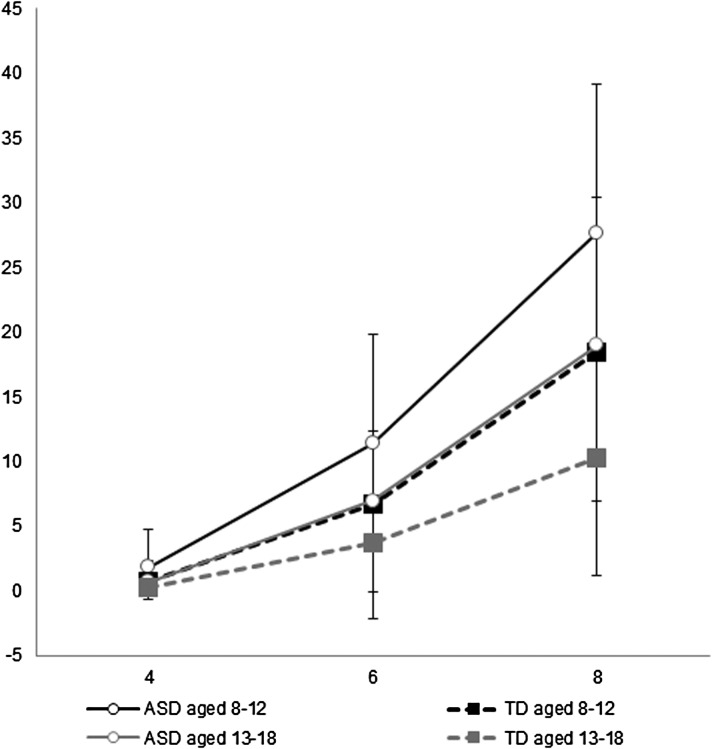
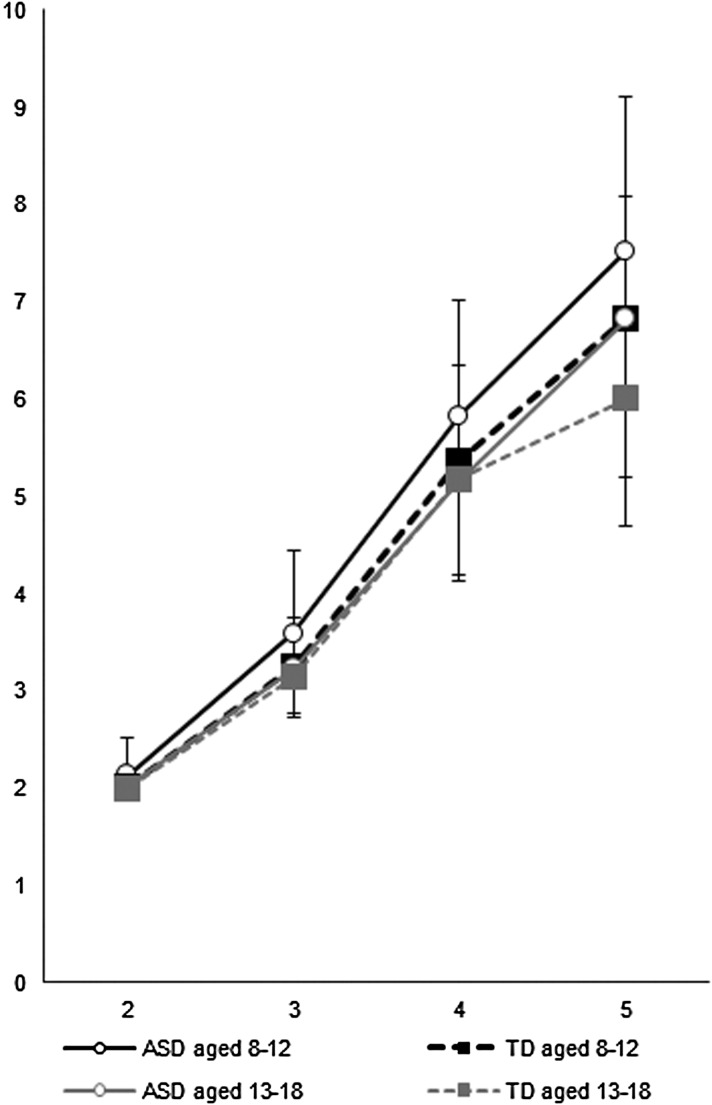
Background: Impaired executive function (EF) is suggested to be one of the core features in individuals with autism spectrum disorders (ASD); however, little is known about whether the extent of worse EF in ASD than typically developing (TD) controls is age-dependent. We used age-stratified analysis to reveal this issue. Method: We assessed 111 youths with ASD (aged 12.5 ± 2.8 years, male 94.6%) and 114 age-, and sex-matched TD controls with Digit Span and four EF tasks of the Cambridge Neuropsychological Test Automated Battery (CANTAB): Spatial Span (SSP), Spatial Working Memory (SWM), Stockings of Cambridge (SOC), and Intradimensional/Extradimensional Shift Test (I/ED). Results: Compared to TD controls, youths with ASD performed poorer on the Digit Span, SWM, SOC, and I/ED tasks. The performance of all the tasks improved with age for both groups. Age-stratified analyses were conducted due to significant age × group interactions in visuospatial planning (SOC) and set-shifting (I/ED) and showed that poorer performance on these two tasks in ASD than TD controls was found only in the child (aged 8–12 years) rather than the adolescent (aged 13–18 years) group. By contrast, youths with ASD had impaired working memory, regardless of age. The increased magnitude of group difference in visuospatial planning (SOC) with increased task demands differed between the two age groups but no age moderating effect on spatial working memory. Conclusions: Our findings support deficits in visuospatial working memory and planning in youths with ASD; however, worse performance in set-shifting may only be demonstrated in children with ASD.
Overview
The claims and statistics of this paper haven’t been checked yet.
Free: it reads the open-access text and checks the first 5 claims that cite a source we can check. Create a free account to check every claim.
Integrity signals
Registry
Cites
Statistics
Figures
Verification
Claims the paper makes
The claims and statistics of this paper haven’t been checked yet.
Free: it reads the open-access text and checks the first 5 claims that cite a source we can check. Create a free account to check every claim.
Claims other papers make about this one
Each is checked against this paper’s own text: does it say what the citing paper says it does?
The source backs part of the claim, not all of it — or backs it for a different population, condition or comparison.
In the citing paper
“the impairments on set shifting tests in youth with ADHD might not be due to the tests’ set shifting demands per se, but to the inhibitory control and/or working memory demands required to perform these tests.83–85”
From Executive function deficits in attention-deficit/hyperactivity disorder and autism spectrum disorder (2024) · cites this paper as [85]
Experimental — accuracy not yet measuredIn the citing paper
“Because we are confident in the ASD diagnosis, we suspect that the variation between these three subgroups reflects typical variation in cognitive mechanisms, which may be independent of autism symptom severity but influence ASD presentation14,91.”
From Subtyping cognitive profiles in Autism Spectrum Disorder using a Functional Random Forest algorithm (2018) · cites this paper as [14]
In the citing paper
“In ASD individuals, EF domains including aspects of planning (e.g., Chen et al. 2016;Hill 2004), set-shifting and working memory (e.g., Chen et al. 2016;Andersen et al. 2015) are usually impaired.”
From A meta-analytic review of the efficacy of physical exercise interventions on cognition in individuals with autism spectrum disorder and ADHD (2016) · cites this paper as Chen et al. 2016
Self-check
Percentages, sums and reported differences re-computed from the paper’s own numbers.
The self-check needs the paper’s full text.
Citations
Cites
The extreme male brain theory of autism
Baron-Cohen, S. (2002) · Trends in Cognitive Sciences · doi:10.1016/s1364-6613(02)01904-6 · Cited by 2,007 · cited 2×
“2000), weak central coherence (Baron-Cohen, 2002), and executive dysfunction (Hill, 2004)], Hill’s theory of executive dysfunction explains deficits in initiating new non-routine actions and links the behavioral repetition and perseveration to frontal lobe dysfunction in ASD.”
BackgroundExecutive function deficits in high-functioning autistic individuals: Relationship to theory of mind
Ozonoff, S., Pennington, B. F., & Rogers, S. J. (1991) · Journal of Child Psychology and Psychiatry · doi:10.1111/j.1469-7610.1991.tb00351.x · Cited by 1,766 · cited 3×
“Visuospatial planning is also impaired in children and adolescents (Hughes et al. 1994; Hughes, 1996; Ozonoff & Jensen, 1999; Geurts et al. 2004; Ozonoff et al. 2004, 2006; Landa & Goldberg, 2005) as well as adults (Barnard et al. 2008) with ASD.”
BackgroundThe Extreme Male-Brain Theory of Autism
Baron-Cohen, S. (1999) · Neurodevelopmental Disorders · doi:10.7551/mitpress/4945.003.0023 · Cited by 1,413
Understanding Other Minds Perspectives From Developmental Cognitive Neuroscience
Baron‐Cohen, S., Tager-Flusberg, H. B., & Cohen, D. J. (2000) · Cited by 1,392
Early recognition of children with autism: a study of first birthday home videotapes
Osterling, J., & Dawson, G. (1994) · Journal of Autism and Developmental Disorders · doi:10.1007/bf02172225 · Cited by 1,290 · cited 5×
“These convergent evidences (Nakahachi et al. 1994; Gabig, 2008; Robinson et al. 2009) strongly suggest that ASD as a common disorder warrants much more studies to investigate the inherent deficits of ASD beyond the core symptoms.”
BackgroundInfluentialThe epidemiology and global burden of autism spectrum disorders
Baxter, A. J., Brugha, T. S., Erskine, H. E., Scheurer, R. W., Vos, T., & Scott, J. G. (2015) · Psychological Medicine · doi:10.1017/s003329171400172x · Cited by 1,224 · cited 1×
“The prevalence of ASD has increased in recent decades causing much health burden (Matson & Kozlowski, 2011; Baxter et al. 2015).”
BackgroundWhat has fMRI told us about the Development of Cognitive Control through Adolescence?
Luna, B., Padmanabhan, A., & O’Hearn, K. (2010) · Brain and Cognition · doi:10.1016/j.bandc.2009.08.005 · Cited by 892
Evaluating the theory of executive dysfunction in autism
Hill, E. L. (2004) · Developmental Review · doi:10.1016/j.dr.2004.01.001 · Cited by 846 · cited 3×
“Hill’s review article supports our statement that the planning ability in ASD participants improved as they became older, and the planning deficit was evident only on tasks requiring heavier demands (Hill, 2004).”
BackgroundBlumberg, S. J., Bramlett, M. D., Kogan, M. D., Schieve, L. A., Jones, J. R., & Lu, M. C. (2013) · PubMed · Cited by 826
The teen brain: insights from neuroimaging
Giedd, J. N. (2008) · Journal of Adolescent Health · doi:10.1016/j.jadohealth.2008.01.007 · Cited by 775
Brief Report: Specific Executive Function Profiles in Three Neurodevelopmental Disorders
Ozonoff, S., & Jensen, J. (1999) · Journal of Autism and Developmental Disorders · doi:10.1023/a:1023052913110 · Cited by 724 · cited 16×
“In contrast to previous studies which reported significant impairments of set-shifting in ASD as assessed by the I/ED of the CANTAB (Hughes et al. 1994; Ozonoff et al. 2004; Corbett et al. 2009; Yerys et al. 2009), the dimension-change card sort task (Dichter et al. 2010), WCST (Ozonoff & Jensen, 1999; Tsuchiya et al.…”
BackgroundMethodResultInfluentialA Neurological Model for Childhood Autism
Damasio, A. R., & Maurer, R. G. (1978) · Archives of Neurology · doi:10.1001/archneur.1978.00500360001001 · Cited by 723
Evidence for executive dysfunction in autism
Hughes, C., Russell, J., & Robbins, T. W. (1994) · Neuropsychologia · doi:10.1016/0028-3932(94)90092-2 · Cited by 707
Geurts, H. M., Verté, S., Oosterlaan, J., Roeyers, H., & Sergeant, J. A. (2004) · Journal of Child Psychology and Psychiatry · doi:10.1111/j.1469-7610.2004.00276.x · Cited by 705
Happé, F., Booth, R., Charlton, R., & Hughes, C. (2006) · Brain and Cognition · doi:10.1016/j.bandc.2006.03.004 · Cited by 638 · cited 5×
“Our findings are in line with some evidence from previous studies of younger ASD individuals (Ozonoff et al. 1991; Hughes et al. 1994; Hughes, 1996; Ozonoff & Jensen, 1999; Geurts et al. 2004; Landa & Goldberg, 2005; Happé et al. 2006); whereas there is scarce evidence in older ASD individuals (Ozonoff et al.”
BackgroundResultInfluentialROBBINS, T. W., JAMES, M., OWEN, A. M., SAHAKIAN, B. J., LAWRENCE, A. D., MCINNES, L., & RABBITT, P. M. A. (1998) · Journal of the International Neuropsychological Society · doi:10.1017/s1355617798455073 · Cited by 611
Corbett, B. A., Constantine, L. J., Hendren, R., Rocke, D., & Ozonoff, S. (2009) · Psychiatry Research · doi:10.1016/j.psychres.2008.02.005 · Cited by 584 · cited 8×
“The impaired spatial working memory in ASD is consistently evident across child (Goldberg et al. 2005; Williams et al. 2005; Corbett et al. 2009; Cui et al. 2010), adolescent (Steele et al. 2007) and adult (Williams et al. 2005) populations.”
BackgroundMethodInfluentialIntact and Impaired Memory Functions in Autism
Bennetto, L., Pennington, B. F., & Rogers, S. J. (1996) · Child Development · doi:10.2307/1131734 · Cited by 550
Intact and Impaired Memory Functions in Autism
Bennetto, L., Pennington, B. F., & Rogers, S. J. (1996) · Child Development · doi:10.1111/j.1467-8624.1996.tb01830.x · Cited by 546
The increasing prevalence of autism spectrum disorders
Matson, J. L., & Kozlowski, A. M. (2011) · Research in Autism Spectrum Disorders · doi:10.1016/j.rasd.2010.06.004 · Cited by 536
Understanding Executive Control in Autism Spectrum Disorders in the Lab and in the Real World
Kenworthy, L., Yerys, B. E., Anthony, L. G., & Wallace, G. L. (2008) · Neuropsychology Review · doi:10.1007/s11065-008-9077-7 · Cited by 504 · cited 2×
“…the most previous studies showing impaired spatial working memory on various tasks in ASD (Williams et al. 2005, 2006; Joseph et al. 2005a; Gras-Vincendon et al. 2008; Kenworthy et al. 2008), our study demonstrated spatial working memory deficit in both age groups of ASD measured by the CANTAB.”
ResultA role for synaptic plasticity in the adolescent development of executive function
Selemon, L. D. (2013) · Translational Psychiatry · doi:10.1038/tp.2013.7 · Cited by 439 · cited 5×
“…importance of the period of adolescence that the synaptic pruning of excitatory contact happened in the late brain maturation during adolescence (Selemon, 2013), and the reduction of cortical thickness in the dorsal prefrontal region and maturity of gray-matter volume of temporal structure was…”
BackgroundInfluentialAsperger's Syndrome: Evidence of an Empirical Distinction from High‐Functioning Autism
Ozonoff, S., Rogers, S. J., & Pennington, B. F. (1991) · Journal of Child Psychology and Psychiatry · doi:10.1111/j.1469-7610.1991.tb00352.x · Cited by 415
Executive functions in children with Autism Spectrum Disorders
Robinson, S., Goddard, L., Dritschel, B., Wisley, M., & Howlin, P. (2009) · Brain and Cognition · doi:10.1016/j.bandc.2009.06.007 · Cited by 405
Ozonoff, S., Cook, I., Coon, H., Dawson, G., Joseph, R. M., Klin, A., McMahon, W. M., Minshew, N., Munson, J. A., Pennington, B. F., et al. (2004) · Journal of Autism and Developmental Disorders · doi:10.1023/b:jadd.0000022605.81989.cc · Cited by 391 · cited 22×
“…ability in youths aged 9–15 showed worse performance in ASD than normal controls (Hughes et al. 1994; Hughes, 1996; Ozonoff & Jensen, 1999; Geurts et al. 2004; Ozonoff et al. 2004, 2006; Landa & Goldberg, 2005); similar deficits were also noted in adult ASD population (Barnard et al. 2008).”
BackgroundMethodResultInfluentialSOWELL, E. R., DELIS, D., STILES, J., & JERNIGAN, T. L. (2001) · Journal of the International Neuropsychological Society · doi:10.1017/s135561770173305x · Cited by 388 · cited 3×
“Some of previous studies have proved the developmental importance of the period of adolescence that the synaptic pruning of excitatory contact happened in the late brain maturation during adolescence (Selemon, 2013), and the reduction of cortical thickness in the dorsal prefrontal region and maturity of gray-matter vo…”
BackgroundInfluentialA 3-Year Panel Study of Mental Disorders Among Adolescents in Taiwan
Gau, S. S. F., Chong, M. Y., Chen, T. H. H., & Cheng, A. T. A. (2005) · American Journal of Psychiatry · doi:10.1176/appi.ajp.162.7.1344 · Cited by 362
Self-citationSubtle executive impairment in children with autism and children with ADHD
Goldberg, M. C., Mostofsky, S. H., Cutting, L. E., Mahone, E. M., Astor, B. C., Denckla, M. B., & Landa, R. J. (2005) · Journal of Autism and Developmental Disorders · doi:10.1007/s10803-005-3291-4 · Cited by 349 · cited 9×
“%) and 114 age-, and sex-matched TD controls with Digit Span and four EF tasks of the Cambridge Neuropsychological Test Automated Battery (CANTAB): Spatial Span (SSP), Spatial Working Memory (SWM), Stockings of Cambridge (SOC), and Intradimensional/ Extradimensional Shift Test (I/ED).”
BackgroundMethodResultInfluentialMaturation of executive function in autism
Luna, B., Doll, S. K., Hegedus, S. J., Minshew, N. J., & Sweeney, J. A. (2007) · Biological Psychiatry · doi:10.1016/j.biopsych.2006.02.030 · Cited by 340
Rosenthal, M., Wallace, G. L., Lawson, R., Wills, M. C., Dixon, E., Yerys, B. E., & Kenworthy, L. (2013) · Neuropsychology · doi:10.1037/a0031299 · Cited by 312
The profile of memory function in children with autism.
Williams, D. L., Goldstein, G., & Minshew, N. J. (2006) · Neuropsychology · doi:10.1037/0894-4105.20.1.21 · Cited by 310 · cited 5×
“Consistent with previous studies using verbal working memory tasks (Rapin, 1996; Williams et al. 2006) or nonsense words (Gabig, 2008), we found a significant effect of task difficulty in both age stratifications that youths with ASD showed more errors on SWM relative to TD individuals when the tasks imposed greater d…”
BackgroundResultInfluentialLanguage, social, and executive functions in high functioning Autism: a continuum of performance
Landa, R. J., & Goldberg, M. C. (2005) · Journal of Autism and Developmental Disorders · doi:10.1007/s10803-005-0001-1 · Cited by 296 · cited 4×
“Our findings of planning deficits in youths with ASD were similar to the results of most previous studies using either the same measurement (Ozonoff et al. 2004; Landa & Goldberg, 2005) or not (Ozonoff et al. 1991; Hughes et al. 1994; Ozonoff & Jensen, 1999; Geurts et al. 2004).”
BackgroundResultInfluentialNeuropsychological Correlates of Early Symptoms of Autism
Dawson, G., Meltzoff, A. N., Osterling, J., & Rinaldi, J. (1998) · Child Development · doi:10.2307/1132265 · Cited by 289
Neuropsychological Correlates of Early Symptoms of Autism
Dawson, G., Meltzoff, A. N., Osterling, J., & Rinaldi, J. (1998) · Child Development · doi:10.1111/j.1467-8624.1998.tb06211.x · Cited by 288
Pugliese, C. E., Anthony, L., Strang, J. F., Dudley, K., Wallace, G. L., & Kenworthy, L. (2015) · Journal of Autism and Developmental Disorders · doi:10.1007/s10803-014-2309-1 · Cited by 287
Neurodevelopment and executive function in autism
O'Hearn, K., Asato, M., Ordaz, S., & Luna, B. (2008) · Development and Psychopathology · doi:10.1017/s0954579408000527 · Cited by 274 · cited 1×
“Received 11 March 2015; Revised 24 September 2015; Accepted 25 September 2015; First published online 21 March 2016 Key words: Age effect, autism spectrum disorders, executive functions.”
BackgroundVerbal and spatial working memory in autism
Williams, D. L., Goldstein, G., Carpenter, P. A., & Minshew, N. J. (2005) · Journal of Autism and Developmental Disorders · doi:10.1007/s10803-005-0021-x · Cited by 263
Brief report: Planning problems in autism at the level of motor control
Hughes, C. (1996) · Journal of Autism and Developmental Disorders · doi:10.1007/bf02276237 · Cited by 243 · cited 8×
“Our findings are in line with some evidence from previous studies of younger ASD individuals (Ozonoff et al. 1991; Hughes et al. 1994; Hughes, 1996; Ozonoff & Jensen, 1999; Geurts et al. 2004; Landa & Goldberg, 2005; Happé et al. 2006); whereas there is scarce evidence in older ASD individuals (Ozonoff et al.”
BackgroundResultInfluentialNeuropsychological functioning in nonmentally retarded autistic individuals
Minshew, N. J., Muenz, L. R., Goldstein, G., & Payton, J. B. (1992) · Journal of Clinical and Experimental Neuropsychology · doi:10.1080/01688639208402860 · Cited by 243
The Pattern of Intact and Impaired Memory Functions in Autism
Minshew, N. J., & Goldstein, G. (2001) · Journal of Child Psychology and Psychiatry · doi:10.1111/1469-7610.00808 · Cited by 240
Deconstructing executive deficits among persons with autism: Implications for cognitive neuroscience
Russo, N., Flanagan, T., Iarocci, G., Berringer, D., Zelazo, P. D., & Burack, J. A. (2007) · Brain and Cognition · doi:10.1016/j.bandc.2006.04.007 · Cited by 237
Spatial Working Memory Deficits in Autism
Steele, S. D., Minshew, N. J., Luna, B., & Sweeney, J. A. (2007) · Journal of Autism and Developmental Disorders · doi:10.1007/s10803-006-0202-2 · Cited by 232
Executive processes in Asperger syndrome: Patterns of performance in a multiple case series
Hill, E. L., & Bird, C. M. (2006) · Neuropsychologia · doi:10.1016/j.neuropsychologia.2006.06.007 · Cited by 228
Gau, S. S., & Shang, C. (2010) · Journal of Child Psychology and Psychiatry · doi:10.1111/j.1469-7610.2010.02215.x · Cited by 208
Self-citationYerys, B. E., Wallace, G. L., Harrison, B., Celano, M. J., Giedd, J. N., & Kenworthy, L. E. (2009) · Autism · doi:10.1177/1362361309335716 · Cited by 207
Executive Dysfunction and Its Relation to Language Ability in Verbal School-Age Children With Autism
Joseph, R., McGrath, L., & Tager-Flusberg, H. (2005) · Developmental Neuropsychology · doi:10.1207/s15326942dn2703_4 · Cited by 203
Asperger's syndrome and memory: Similarity to autism but not amnesia
Bowler, D. M., Matthews, N. J., & Gardiner, J. M. (1997) · Neuropsychologia · doi:10.1016/s0028-3932(96)00054-1 · Cited by 203
Attentional processes in autism
Goldstein, G., Johnson, C. R., & Minshew, N. J. (2001) · Journal of Autism and Developmental Disorders · doi:10.1023/a:1010620820786 · Cited by 179 · cited 1×
“Such early study has been supported by several subsequent studies (Minshew et al. 1992; Goldstein et al. 2001; Minshew & Goldstein, 2001; Ozonoff et al. 2004; Yerys et al. 2009).”
ResultPsychometric properties of the Chinese version of the Autism Spectrum Quotient (AQ)
Lau, W. Y.-P., Gau, S. S., Chiu, Y., Wu, Y., Chou, W., Liu, S.-K., & Chou, M. (2012) · Research in Developmental Disabilities · doi:10.1016/j.ridd.2012.08.005 · Cited by 176
Self-citationPsychometric properties of the Chinese version of the Social Responsiveness Scale
Gau, S. S.-F., Liu, L.-T., Wu, Y.-Y., Chiu, Y.-N., & Tsai, W.-C. (2013) · Research in Autism Spectrum Disorders · doi:10.1016/j.rasd.2012.10.004 · Cited by 175
Self-citationLewis's Child and Adolescent Psychiatry: A Comprehensive Textbook
Martín, A., Volkmar, F. R., & Lewis, M. (2017) · Cited by 174
Kaland, N., Smith, L., & Mortensen, E. L. (2007) · Journal of Autism and Developmental Disorders · doi:10.1007/s10803-007-0474-1 · Cited by 136
Behavioral problems and parenting style among Taiwanese children with autism and their siblings
Gau, S. S., Chou, M., Lee, J., Wong, C., Chou, W., Chen, M., Soong, W., & Wu, Y. (2010) · Psychiatry and Clinical Neurosciences · doi:10.1111/j.1440-1819.2009.02034.x · Cited by 127
Self-citationVerbal Working Memory and Story Retelling in School-Age Children With Autism
Gabig, C. S. (2008) · Language, Speech, and Hearing Services in Schools · doi:10.1044/0161-1461(2008/07-0023 · Cited by 122
Psychometric properties of the Chinese version of the Social Communication Questionnaire
Gau, S. S., Lee, C.-M., Lai, M., Chiu, Y., Huang, Y.-F., Kao, J.-D., & Wu, Y.-Y. (2010) · Research in Autism · doi:10.1016/j.rasd.2010.09.010 · Cited by 122
Self-citationLai, D.-C., Tseng, Y.-C., Hou, Y.-M., & Guo, H.-R. (2012) · Research in Developmental Disabilities · doi:10.1016/j.ridd.2011.12.015 · Cited by 115 · cited 2×
“…University, Taipei, Taiwan 5Department of Psychiatry, Chang Gung Memorial Hospital-Linkou, Taoyuan, Taiwan 6Department of Psychology, Graduate Institute of Brain and Mind Sciences, Graduate Institute of Epidemiology and Preventive Medicine, National Taiwan University, Taipei, Taiwan Background.”
BackgroundInvestigating individual differences in brain abnormalities in autism
Salmond, C. H., de Haan, M., Friston, K. J., Gadian, D. G., & Vargha-Khadem, F. (2003) · Philosophical Transactions of the Royal Society of London. Series B: Biological Sciences · doi:10.1098/rstb.2002.1210 · Cited by 115
van den Bergh, S. F. W. M., Scheeren, A. M., Begeer, S., Koot, H. M., & Geurts, H. M. (2014) · Journal of Autism and Developmental Disorders · doi:10.1007/s10803-014-2071-4 · Cited by 110 · cited 5×
“Received 11 March 2015; Revised 24 September 2015; Accepted 25 September 2015; First published online 21 March 2016 Key words: Age effect, autism spectrum disorders, executive functions.”
BackgroundResultInfluentialJOSEPH, R., STEELE, S., MEYER, E., & TAGERFLUSBERG, H. (2005) · Neuropsychologia · doi:10.1016/j.neuropsychologia.2005.01.010 · Cited by 106
Gau, S. S.-F., & Shang, C.-Y. (2010) · The International Journal of Neuropsychopharmacology · doi:10.1017/s1461145709990836 · Cited by 91 · cited 16×
“Four subtests (SSP, SWM, SOC, I/ED) of the CANTAB were used to assess EFs (Gau & Shang, 2010a, b).”
MethodSelf-citationTsuchiya, E., Oki, J., Yahara, N., & Fujieda, K. (2005) · Brain and Development · doi:10.1016/j.braindev.2004.06.008 · Cited by 80 · cited 3×
“In contrast, although youths with ASD aged 7–16 showed impaired set-shifting ability on the WCST (Ozonoff & Jensen, 1999; Tsuchiya et al. 2005; Kaland et al. 2008; Sumiyoshi et al. 2011) and CANTAB (Hughes et al. 1994; Ozonoff et al. 2004; Corbett et al. 2009; Yerys et al. 2009) compared to normal…”
BackgroundMethodResultProfiling executive dysfunction in adults with autism and comorbid learning disability
Barnard, L., Muldoon, K., Hasan, R., O'Brien, G., & Stewart, M. (2008) · Autism · doi:10.1177/1362361307088486 · Cited by 80 · cited 19×
“In contrast to previous studies which reported significant impairments of set-shifting in ASD as assessed by the I/ED of the CANTAB (Hughes et al. 1994; Ozonoff et al. 2004; Corbett et al. 2009; Yerys et al. 2009), the dimension-change card sort task (Dichter et al. 2010), WCST (Ozonoff & Jensen, 1999; Tsuchiya et al.…”
BackgroundMethodResultInfluentialPreschool Children With Inadequate Communication: Developmental Language Disorder, Autism, Low IQ
Gieron-Korthals, M. A. (1998) · Archives of Pediatrics and Adolescent Medicine · doi:10.1001/archpedi.152.12.1250 · Cited by 79
Short-term memory in autism spectrum disorder.
Poirier, M., Martin, J. S., Gaigg, S. B., & Bowler, D. M. (2011) · Journal of Abnormal Psychology · doi:10.1037/a0022298 · Cited by 74
Working Memory in Early-School-Age Children with Asperger’s Syndrome
Cui, J., Gao, D., Chen, Y., Zou, X., & Wang, Y. (2010) · Journal of Autism and Developmental Disorders · doi:10.1007/s10803-010-0943-9 · Cited by 67
Preschool Children With Inadequate Communication: Developmental Language Disorder, Autism, Low IQ
Robertson, J. M. (1997) · Journal of the American Academy of Child & Adolescent Psychiatry · doi:10.1097/00004583-199709000-00031 · Cited by 67
Increased gene expression of FOXP1 in patients with autism spectrum disorders
Chien, W., Gau, S. S., Chen, C., Tsai, W., Wu, Y.-Y., Chen, P., Shang, C., & Chen, C. (2013) · Molecular Autism · doi:10.1186/2040-2392-4-23 · Cited by 66
Self-citationGenetic analysis of GABRB3 as a candidate gene of autism spectrum disorders
Chen, C.-H., Huang, C.-C., Cheng, M.-C., Chiu, Y.-N., Tsai, W.-C., Wu, Y.-Y., Liu, S.-K., & Gau, S. S.-F. (2014) · Molecular Autism · doi:10.1186/2040-2392-5-36 · Cited by 63
Self-citationIntact inner speech use in autism spectrum disorder: evidence from a short‐term memory task
Williams, D., Happé, F., & Jarrold, C. (2008) · Journal of Child Psychology and Psychiatry · doi:10.1111/j.1469-7610.2007.01836.x · Cited by 63
Physical and Sexual Intimate Partner Violence Among Women in Methadone Maintenance Treatment.
El-Bassel, N., Gilbert, L., Frye, V., Wu, E., Go, H., Hill, J., & Richman, B. L. (2004) · Psychology of Addictive Behaviors · doi:10.1037/0893-164x.18.2.180 · Cited by 59
Sumiyoshi, C., Kawakubo, Y., Suga, M., Sumiyoshi, T., & Kasai, K. (2010) · Neuroscience Research · doi:10.1016/j.neures.2010.11.007 · Cited by 56
Performance of Children with Autism Spectrum Disorders on the Dimension-Change Card Sort Task
Dichter, G. S., Radonovich, K. J., Turner-Brown, L. M., Lam, K. S. L., Holtzclaw, T. N., & Bodfish, J. W. (2010) · Journal of Autism and Developmental Disorders · doi:10.1007/s10803-009-0886-1 · Cited by 56
Deep exon resequencing of DLGAP2 as a candidate gene of autism spectrum disorders
Chien, W.-H., Gau, S.-F., Liao, H.-M., Chiu, Y.-N., Wu, Y.-Y., Huang, Y.-S., Tsai, W.-C., Tsai, H.-M., & Chen, C.-H. (2013) · Molecular Autism · doi:10.1186/2040-2392-4-26 · Cited by 55
Self-citationVisual memory as a potential cognitive endophenotype of attention deficit hyperactivity disorder
Shang, C. Y., & Gau, S. S. (2011) · Psychological Medicine · doi:10.1017/s0033291711000857 · Cited by 44
Self-citationShort-term and serial memory in autistic, retarded, and normal children
Prior, M. R., & Chen, C. S. (1976) · Journal of Autism and Developmental Disorders · doi:10.1007/bf01538055 · Cited by 39
Lin, L. (2015) · Research in Autism · doi:10.1016/j.rasd.2015.04.002 · Cited by 39
Fonctionnement de la mémoire chez les sujets avec autisme
Gras-Vincendon, A., Bursztejn, C., & Danion, J. (2008) · L Encéphale · doi:10.1016/j.encep.2007.10.010 · Cited by 37
Lai, D.-C., Tseng, Y.-C., & Guo, H. (2013) · Research in Developmental Disabilities · doi:10.1016/j.ridd.2013.08.001 · Cited by 37
Lin, P., Kuo, P., Chen, C., Wu, J., Gau, S. S., Wu, Y., & Liu, S.-K. (2013) · PLoS ONE · doi:10.1371/journal.pone.0072056 · Cited by 27
Self-citationLo, Y., Chou, T., Fan, L., Gau, S. S., Chiu, Y., & Tseng, W. I. (2013) · Autism Research · doi:10.1002/aur.1315 · Cited by 25
Self-citationChromosomal Abnormalities in Patients With Autism Spectrum Disorders From Taiwan
Liao, H., Gau, S. S., Tsai, W., Fang, J., Su, Y., Chou, M., Liu, S., Chou, W., Wu, Y., & Chen, C. (2013) · American Journal of Medical Genetics Part B Neuropsychiatric Genetics · doi:10.1002/ajmg.b.32153 · Cited by 18
Self-citationBegley, S. (2000) · PubMed · Cited by 12
Research works printed but not linked: 3
- Osterling J, Dawson G (1994). Early recognition of children with autism: a study of first birthday home videotapes. Journal of Autism and Developmental Disorders 24, 247– 257. 8050980 · DOI · Paper page
- APA (2013). Diagnostic and Statistical Manual of Mental Disorders, 5th edn. American Psychiatric Association: Arlington, VA.
- APA (1994). Diagnostic and Statistical Manual of Mental Disorder, 4th edn. American Psychiatric Press: Washington, DC.
Cited by
Subtyping cognitive profiles in Autism Spectrum Disorder using a Functional Random Forest algorithm
Feczko, E., Balba, N. M., Miranda-Dominguez, O., Cordova, M., Karalunas, S. L., Irwin, L., Demeter, D. V., Hill, A. P., Langhorst, B. H., Grieser Painter, J., et al. (2018) · NeuroImage · doi:10.1016/j.neuroimage.2017.12.044 · Cited by 173
“A large-scale study revealed that children with ASD exhibited lower performance than unaffected children on a spatial span task (Chen et al., 2016), requiring children to repeat a sequence of fixed spatial locations indicated by a series of changing colors.”
Language in autism: domains, profiles and co-occurring conditions
Schaeffer, J., Abd El-Raziq, M., Castroviejo, E., Durrleman, S., Ferré, S., Grama, I., Hendriks, P., Kissine, M., Manenti, M., Marinis, T., et al. (2023) · Journal of Neural Transmission · doi:10.1007/s00702-023-02592-y · Cited by 159
Tan, B. W. Z., Pooley, J. A., & Speelman, C. P. (2016) · Journal of Autism and Developmental Disorders · doi:10.1007/s10803-016-2854-x · Cited by 157
“In ASD individuals, EF domains including aspects of planning (e.g., Chen et al. 2016; Hill 2004), set-shifting and working memory (e.g., Chen et al. 2016; Andersen et al. 2015) are usually impaired.”
BackgroundHartman, C. A., Geurts, H. M., Franke, B., Buitelaar, J. K., & Rommelse, N. N. J. (2016) · Neuroscience & Biobehavioral Reviews · doi:10.1016/j.neubiorev.2016.09.003 · Cited by 111
Memory in autism spectrum disorder: A meta-analysis of experimental studies.
Desaunay, P., Briant, A. R., Bowler, D., Ring, M., Gérardin, P., Baleyte, J., Guenolé, F., Eustache, F., Parienti, J., & Guillery‐Girard, B. (2020) · Psychological Bulletin · doi:10.1037/bul0000225 · Cited by 127
Metadata
- Authors
- Chen, S.-F., Chien, Y.-L., Wu, C.-T., Shang, C.-Y., Wu, Y.-Y., & Gau, S. S.
- Affiliations
- National Taiwan University (TW)
- Chang Gung Memorial Hospital (TW)
- Corresponding author
- Gau, S. S.
- Venue
- Psychological Medicine
- Publisher
- Cambridge University Press (CUP)
- Published
- 2016-03-21
- Volume
- 46
- Issue
- 8
- Pages
- 1625-1638
- ISSN
- 0033-2917 (ISSN-L)
- 1469-8978
- PMC
- PMC4873936
- OpenAlex
- W2302814483
- Cited by
- 104
- References
- 82
- Citations by year
- 2026: 3 · 2025: 9 · 2024: 13 · 2023: 17 · 2022: 13 · 2021: 8 · 2020: 10 · 2019: 4 · 2018: 12 · 2017: 12 · 2016: 3
- FWCI
- 6.58
- Type
- journal article
- Language
- en
- Open access
- hybrid
- doi.org
- Locations
- Psychological Medicine (publishedVersion, cc-by)
- Europe PMC (PubMed Central) (publishedVersion, cc-by)
- PubMed Central (publishedVersion, cc-by)
- PubMed (publishedVersion)
- Funders
- National Science Council (NSC 100, NSC100‐2627‐B‐002‐014, NSC 99-2627-B-002-015, NSC101‐2314‐B‐002‐136‐MY3, 101-2314-B-002-136-MY3, NSC 101‐2627‐B‐002‐002, NSC98–3112-B-002–004)
- Topics
- Life Sciences › Neuroscience › Cognitive Neuroscience › Autism Spectrum Disorder Research
- Social Sciences › Psychology › Neuropsychology and Physiological Psychology › Developmental and Educational Neuropsychology
- Social Sciences › Psychology › Developmental and Educational Psychology › Child and Animal Learning Development
- Keywords
- autism spectrum disorder, executive function, age differences, visuospatial working memory, set-shifting, spatial working memory, digit span, CANTAB, children and adolescents
- MeSH terms
- Autism Spectrum Disorder, Adolescent, Age Factors, Child, Female, Humans, Male, Neuropsychological Tests, Case-Control Studies, Executive Function
About these checks
Registry, retraction, Cites and statistics results are computed, not judged, with one exception: a printed reference that no index lists is read once by a model before it counts as a citation error. Claims are extracted by a model and kept only when their quote appears verbatim in the text; each cited source is then checked, with a model’s help, for whether it says what the claim relies on. Those verdicts can be wrong — read the claim’s quote and the cited source before relying on one.
Statistics and arithmetic are recomputed, not judged.
Confidence bands are shown only for fields calibrated on our annotated test set. None is calibrated yet, so no band is shown.
What counts as a claim ›How we measure confidence ›How we check this ›
Are you an author, or do you see a problem with this page? Request a review
Data sources
Bibliographic data: Semantic Scholar, OpenAlex, Crossref.
Contains information from the Semantic Scholar Academic Graph Datasets, made available under the ODC Attribution License (ODC-BY 1.0).
Semantic Scholar’s data is described in: Kinney, R., et al. (2023). The Semantic Scholar Open Data Platform. arXiv:2301.10140.
