

Interferon- α induces negative biases in emotional processing in patients with hepatitis C virus infection: a preliminary study
Open accessThe DOI matches its Crossref record; 51 of the 51 references it cites were found in a registry or an index.
Abstract
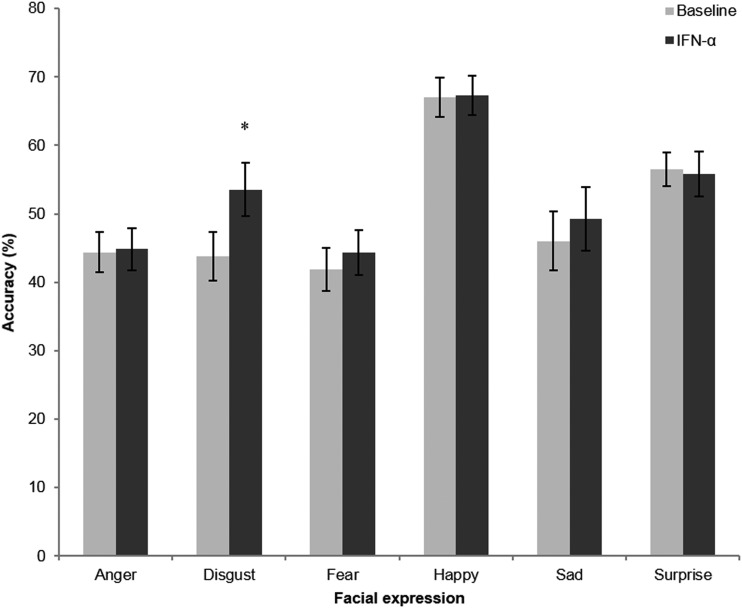
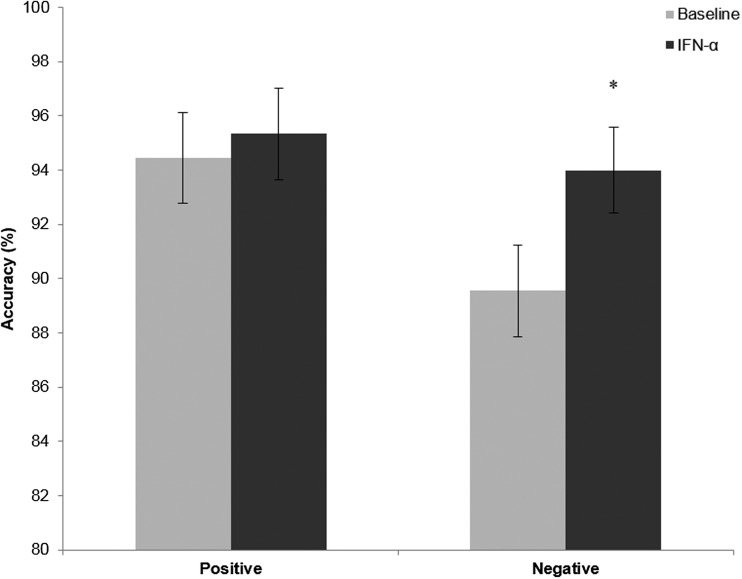
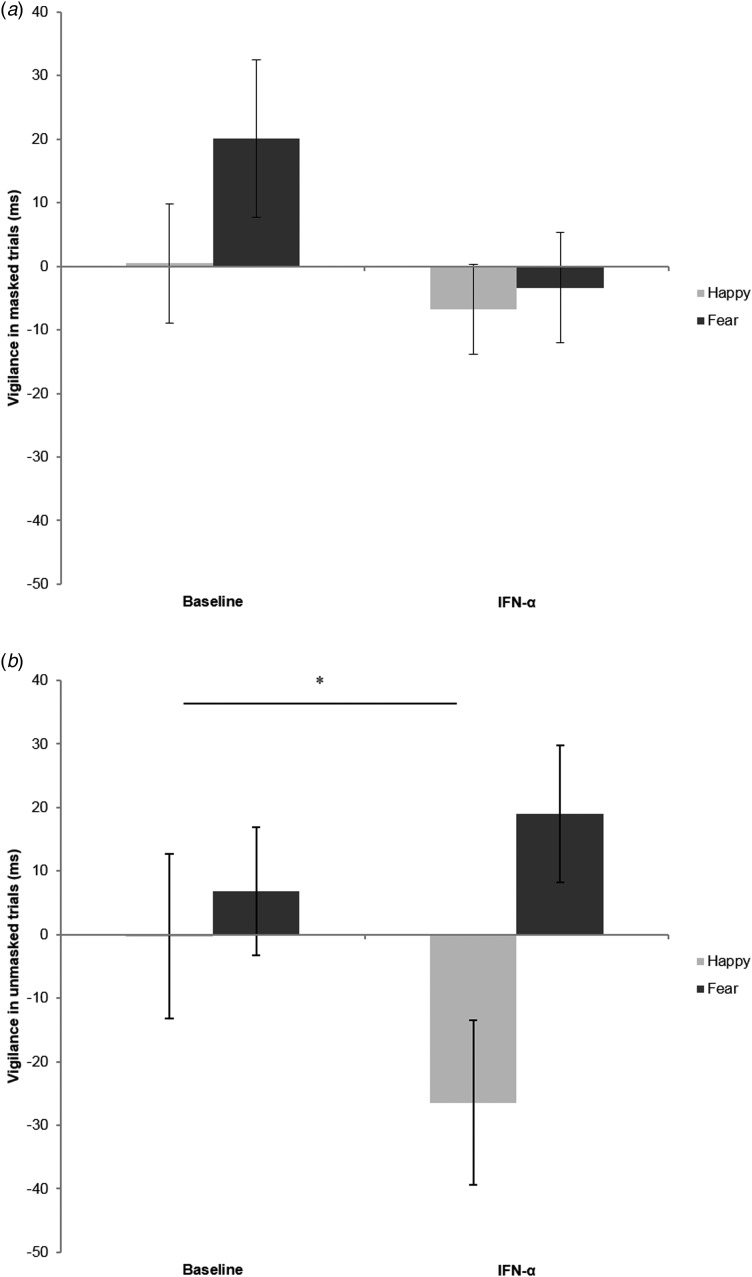
Background: Treatment of medical patients with the inflammatory cytokine, interferon- α (IFN- α ), is frequently associated with the development of clinical depressive symptomatology. Several important biological correlates of the effect of IFN- α on mood have been described, but the neuropsychological changes associated with IFN- α treatment are largely unexplored. The aim of the present preliminary study was to assess the effect of IFN- α on measures of emotional processing. Method: We measured changes in emotional processing over 6–8 weeks in 17 patients receiving IFN- α as part of their treatment for hepatitis C virus infection. Emotional processing tasks included those which have previously been shown to be sensitive to the effects of depression and antidepressant treatment, namely facial expression recognition, emotional categorisation and the dot probe attentional task. Results: Following IFN- α , patients were more accurate at detecting facial expressions of disgust; they also showed diminished attentional vigilance to happy faces. IFN- α produced the expected increases in scores on depression rating scales, but there was no correlation between these scores and the changes in emotional processing. Conclusions: Our preliminary findings suggest that IFN- α treatment produces negative biases in emotional processing, and this effect is not simply a consequence of depression. It is possible that increased recognition of disgust may represent a neuropsychological marker of depressive disorders related to inflammation.
Overview
The claims and statistics of this paper haven’t been checked yet.
Free: it reads the open-access text and checks the first 5 claims that cite a source we can check. Create a free account to check every claim.
Integrity signals
Registry
Cites
Statistics
Figures
Verification
Claims the paper makes
The claims and statistics of this paper haven’t been checked yet.
Free: it reads the open-access text and checks the first 5 claims that cite a source we can check. Create a free account to check every claim.
Claims other papers make about this one
Each is checked against this paper’s own text: does it say what the citing paper says it does?
In the citing paper
“hepatitis C patients showed an AB away from positive vs. neutral and fearful faces and an increase in symptoms of depression, anxiety, and fatigue 6–7 weeks after commencing IFN-α therapy (Cooper et al., 2018).”
From The interplay between stress, inflammation, and emotional attention: relevance for depression (2019) · cites this paper as Cooper et al., 2018
Self-check
Percentages, sums and reported differences re-computed from the paper’s own numbers.
The self-check needs the paper’s full text.
Citations
Cites
An inventory for measuring depression
BECK, A. T. (1961) · Archives of General Psychiatry · doi:10.1001/archpsyc.1961.01710120031004 · Cited by 38,032 · cited 3×
“…and 6–8 weeks after IFN-α administration using the Hamilton Depression Rating Scale (HAM-D; Hamilton, 1960), Beck Depression Inventory (BDI; Beck et al. 1961), state component of the State Trait Anxiety Inventory (Spielberger et al. 1970) and the Chalder Fatigue Scale (CFS; Chalder et…”
MethodHamilton, M. (1960) · Journal of Neurology, Neurosurgery & Psychiatry · doi:10.1136/jnnp.23.1.56 · Cited by 32,817 · cited 3×
“Mood state was assessed at baseline (pretreatment) and 6–8 weeks after IFN-α administration using the Hamilton Depression Rating Scale (HAM-D; Hamilton, 1960), Beck Depression Inventory (BDI; Beck et al.”
MethodScoville, W. B. (1949) · Journal of neurosurgery · doi:10.3171/jns.1949.6.1.0065 · Cited by 7,381
Ekman, P. (1976) · Medical Entomology and Zoology · Cited by 4,345
Development of a fatigue scale
Chalder, T., Berelowitz, G., Pawlikowska, T., Watts, L., Wessely, S., Wright, D., & Wallace, E. P. (1993) · Journal of Psychosomatic Research · doi:10.1016/0022-3999(93)90081-p · Cited by 3,032 · cited 3×
“…and 6–8 weeks after IFN-α administration using the Hamilton Depression Rating Scale (HAM-D; Hamilton, 1960), Beck Depression Inventory (BDI; Beck et al. 1961), state component of the State Trait Anxiety Inventory (Spielberger et al. 1970) and the Chalder Fatigue Scale (CFS; Chalder et al. 1993).”
MethodCytokines sing the blues: inflammation and the pathogenesis of depression
Raison, C. L., Capuron, L., & Miller, A. H. (2006) · Trends in Immunology · doi:10.1016/j.it.2005.11.006 · Cited by 3,009 · cited 2×
“The clinical observation that IFN-α is capable of inducing symptoms that are strikingly similar to major depression is important evidence for the proposed role of endogenous pro-inflammatory cytokines in the development of depressive states more generally (Raison et al. 2006; Zunsain et al. 2013).”
BackgroundNeural mechanisms of the cognitive model of depression.
Disner, S. G., Beevers, C. G., Haigh, E. A. P., & Beck, A. T. (2011) · Nature Reviews Neuroscience · doi:10.1038/nrn3027 · Cited by 1,718 · cited 1×
“Negative biases in emotional processing include both vigilance towards negative stimuli and away from positive stimuli (Disner et al. 2011).”
BackgroundLikableness ratings of 555 personality-trait words.
Anderson, N. H. (1968) · Journal of Personality and Social Psychology · doi:10.1037/h0025907 · Cited by 1,638 · cited 1×
“Sixty personality characteristic words selected to be disagreeable (e.g. domineering, hostile) or agreeable (e.g. optimistic, honest; taken from Anderson, 1968) were presented in a random order on screen for 500 ms. Words were matched in terms of length, ratings of frequency and meaningfulness, and…”
BackgroundParoxetine for the prevention of depression induced by high-dose interferon alfa.
Musselman, D. L., Lawson, D. H., Gumnick, J. F., Manatunga, A. K., Penna, S., Goodkin, R. S., Greiner, K., Nemeroff, C. B., & Miller, A. H. (2001) · New England Journal of Medicine · doi:10.1056/nejm200103293441303 · Cited by 1,120 · cited 5×
“IFN-α significantly increased depression severity ratings, as well as subjective ratings of state anxiety and fatigue by 6–8 weeks, which is in keeping with numerous previous reports of induction of depressive symptoms by this treatment (Musselman et al. 2001; Hauser et al. 2002; Schaefer et al. 2002; Capuron & Miller…”
BackgroundResultInfluentialAttentional biases for negative interpersonal stimuli in clinical depression
Gotlib, I. H., Krasnoperova, E., Yue, D. N., & Joormann, J. (2004) · Journal of Abnormal Psychology · doi:10.1037/0021-843x.113.1.121 · Cited by 911 · cited 2×
“Depressed patients have previously been shown to display an attentional bias away from positive (happy) faces and towards negative (sad) faces (Gotlib et al. 2004; Fritzsche et al. 2010) and negative words (Bradley et al. 1997).”
Background
Research works printed but not linked: 2
- Spielberger CD, Gorsuch RL, Lushene RD (1970). STAI Manual. Consulting Psychologists Press: Palo Alto, Calif.
- Matsumoto D, Ekman P (1988). Japanese and Caucasian Facial Expressions of Emotion (JACFEE). Intercultural and Emotion Research Laboratory, Department of Psychology, San Francisco State University: San Francisco, CA.
Cited by
The interplay between stress, inflammation, and emotional attention: relevance for depression
Maydych, V. (2019) · Frontiers in Neuroscience · doi:10.3389/fnins.2019.00384 · Cited by 193
A Novel System to Categorize the Symptoms of Systemic Lupus Erythematosus
Pisetsky, D. S., Clowse, M. E. B., Criscione‐Schreiber, L. G., & Rogers, J. L. (2019) · Arthritis Care & Research · doi:10.1002/acr.23794 · Cited by 94
Wang, R., Wang, W., Xu, J., Liu, D., Jiang, H., & Pan, F. (2018) · Frontiers in Psychiatry · doi:10.3389/fpsyt.2018.00471 · Cited by 42
“In addition, 50% of the hepatitis C patients receiving interferon-α (IFN-α, a pro-inflammatory cytokine) treatment had depressive symptoms (9, 10).”
BackgroundEffect of Physical State on Pain Mediated Through Emotional Health in Rheumatoid Arthritis
Nakagami, Y., Sugihara, G., Takei, N., Fujii, T., Hashimoto, M., Murakami, K., Furu, M., Ito, H., Uda, M., Torii, M., et al. (2019) · Arthritis Care & Research · doi:10.1002/acr.23779 · Cited by 21
Sass, D., Saligan, L. N., Fitzgerald, W., Berger, A. M., Torres, I., Barb, J. J., Kupzyk, K. A., & Margolis, L. B. (2021) · Translational Psychiatry · doi:10.1038/s41398-021-01554-w · Cited by 17
“IFNα treatment in hepatitis C correlated with fatigue, depressed mood, and anxiety ratings [38].”
BackgroundGillespie, A. L., Wigg, C., Assche, I. A. V., Murphy, S. E., & Harmer, C. J. (2022) · Biological Psychiatry · doi:10.1016/j.biopsych.2022.03.009 · Cited by 18
“In addition, experimentally induced stress, shown to elevate interleukin 1b and interleukin 6 (inflammatory cytokines) levels, has been associated with subsequent increases in negative attentional bias (39,40), with similar findings of increased sensitivity to loss in a PILT when vaccine challenge was used to manipula…”
BackgroundSelf-citationLewis, L. R., Benn, A., Dwyer, D. M., & Robinson, E. S. J. (2019) · Behavioural Brain Research · doi:10.1016/j.bbr.2019.112051 · Cited by 17
Giorgi, R. D., Quinton, A. M. G., Waters, S., Cowen, P. J., & Harmer, C. J. (2022) · Psychopharmacology · doi:10.1007/s00213-022-06156-y · Cited by 15
“Experimental manipulation of inflammatory processes has also been associated with shifts in emotional bias (Cooper et al. 2018), rewardseeking behaviour (Felger and Treadway 2016), and overall cognitive performance (Paine et al.”
BackgroundSelf-citationGiorgi, R. D., Martens, M., Pesci, N. R., Cowen, P. J., & Harmer, C. J. (2021) · Journal of Psychopharmacology · doi:10.1177/02698811211060307 · Cited by 14
“Similarly, induction of inflammation in healthy participants, a procedure known to cause depressive symptoms, produces negative emotional biases (Cooper et al., 2018), deficit in reward-seeking behaviour (Felger and Treadway, 2017), and overall cognitive impairment (Paine et al.”
BackgroundSelf-citationVai, B., Palladini, M., Lorenzi, C., Zanardi, R., Poletti, S., Aggio, V., & Benedetti, F. (2022) · Brain Behavior & Immunity - Health · doi:10.1016/j.bbih.2022.100522 · Cited by 17
Warren, M., Cowen, P. J., & Harmer, C. J. (2018) · Journal of Psychopharmacology · doi:10.1177/0269881118812101 · Cited by 13
Self-citationCatalán, A., Aymerich, C., Rodríguez-Sánchez, J. M., Pedruzo, B., de Pablo, G. S., Gil, P., Aguayo, F., Acasuso, G., Collado-Pérez, Á., Goena, J., et al. (2025) · European Psychiatry · doi:10.1192/j.eurpsy.2025.10063 · Cited by 12
“For instance, experimental studies show that mild immune activation, such as with typhoid vaccine or IF-α , can impair social cognition and induce negative emotion processing biases, even in the absence of mood changes [58, 59].”
Perceived Stress in Hepatitis C Virus Infected Patients under the DAA-Based Therapy
Danilescu, C. M., Ionescu, M., Săndulescu, L., Pîrlog, M. C., Streba, C. T., & Rogoveanu, I. (2022) · Diagnostics · doi:10.3390/diagnostics12051177 · Cited by 11
“As mentioned above, an important source of stress is represented by the side-effects of the medication, especially if previous generations of HCV pharmacological standard care (pegylated Interferon) [16,17] are considered.”
BackgroundExploring the emotions of patients undergoing therapy for hepatitis C
Montague, S., Agarwal, K., & Cannon, M. D. (2019) · British Journal of Nursing · doi:10.12968/bjon.2019.28.13.824 · Cited by 8
Neurocognitive Impairments and Depression and Their Relationship to Hepatitis C Virus Infection
Stănculete, M. F. (2018) · InTech eBooks · doi:10.5772/intechopen.74054 · Cited by 7
Formica, S., Rizzo, G., Martino, G., Lucifora, C., Craparo, G., & Vicario, C. M. (2022) · PubMed · doi:10.36131/cnfioritieditore20220405 · Cited by 4
“Finally, there is evidence of increased accuracy at detecting facial expressions of disgust following the assumption of inflammatory cytokine, interferon-α (Cooper et al., 2018).”
BackgroundSherpa, N. N., & Giorgi, R. D. (2025) · European Neuropsychopharmacology · doi:10.1016/j.euroneuro.2025.03.003 · Cited by 1
Waters, S., Giorgi, R. D., Quinton, A. M. G., Gillespie, A. L., Murphy, S. E., Cowen, P. J., & Harmer, C. J. (2023) · BJPsych Open · doi:10.1192/bjo.2023.44 · Cited by 1
“For example, treatment with the proinflammatory cytokine interferon-α has been reported to induce a negative emotional bias, reduce motivation and increase anhedonia, 21,22 and the induction of inflammation has been associated with working memory deficits in preclinical 23 and human 24,25 models.”
Self-citationExploring the emotions of patients undergoing therapy for hepatitis C
Montague, S., Agarwal, K., & Cannon, M. D. (2019) · British Journal of Healthcare Assistants · doi:10.12968/bjha.2019.13.11.544
Exploring the emotions of patients undergoing therapy for hepatitis C
Montague, S., Agarwal, K., & Cannon, M. D. (2019) · Gastrointestinal Nursing · doi:10.12968/gasn.2019.17.sup6.s18
Wskaźniki stanu zapalnego w depresji
Wiese, W., Cichocka, A., Krysztowiak-Wiese, J. M., Rozenek, E. B., & Waszkiewicz, N. (2023) · Psychiatria · doi:10.5603/psych.2022.0008
Neopterin and neurophysiological measurements as markers of anxiety and stress
(2023) · UpSpace Institutional Repository (University of Pretoria)
Boyle, C. C., Blandl, F., Eisenberger, N. I., Olmstead, R. G., Cho, J. H., Piber, D., & Irwin, M. R. (2026) · Psychoneuroendocrinology · doi:10.1016/j.psyneuen.2026.107987
Metadata
- Authors
- Cooper, C. M., Godlewska, B., Sharpley, A. L., Barnes, E., Cowen, P. J., & Harmer, C. J.
- Affiliations
- Warneford Hospital (GB)
- University of Oxford (GB)
- Corresponding author
- Cowen, P. J.
- Venue
- Psychological Medicine
- Publisher
- Cambridge University Press (CUP)
- Published
- 2017-09-11
- Volume
- 48
- Issue
- 6
- Pages
- 998-1007
- ISSN
- 0033-2917 (ISSN-L)
- 1469-8978
- PMC
- PMC5767463
- OpenAlex
- W2751498418
- Cited by
- 20
- References
- 51
- Citations by year
- 2026: 1 · 2025: 1 · 2023: 1 · 2022: 5 · 2021: 2 · 2019: 5 · 2018: 5
- FWCI
- 0.91
- Type
- journal article
- Language
- en
- Open access
- hybrid
- doi.org
- Locations
- Psychological Medicine (publishedVersion, cc-by)
- Europe PMC (PubMed Central) (publishedVersion, cc-by)
- PubMed Central (publishedVersion, cc-by)
- PubMed (publishedVersion)
- Funders
- National Institute for Health and Care Research (NF-SI-0617-10139)
- Medical Research Council (MR/K022202/1, MR/K010239/1, MR/K022202)
- Topics
- Life Sciences › Neuroscience › Biological Psychiatry › Tryptophan and brain disorders
- Life Sciences › Neuroscience › Cognitive Neuroscience › Neural and Behavioral Psychology Studies
- Health Sciences › Medicine › Pharmacology (medical) › Treatment of Major Depression
- Keywords
- interferon-alpha, hepatitis C, emotional processing, facial expression recognition, disgust, attentional bias, dot-probe task, depression, inflammatory cytokines, neuropsychological outcomes
- MeSH terms
- Facial Recognition, Adult, Affect, Antiviral Agents, Depression, Facial Expression, Female, Hepatitis C, Humans, Inflammation, Male, Middle Aged, Psychiatric Status Rating Scales, Interferon-alpha, Young Adult
About these checks
Registry, retraction, Cites and statistics results are computed, not judged, with one exception: a printed reference that no index lists is read once by a model before it counts as a citation error. Claims are extracted by a model and kept only when their quote appears verbatim in the text; each cited source is then checked, with a model’s help, for whether it says what the claim relies on. Those verdicts can be wrong — read the claim’s quote and the cited source before relying on one.
Statistics and arithmetic are recomputed, not judged.
Confidence bands are shown only for fields calibrated on our annotated test set. None is calibrated yet, so no band is shown.
What counts as a claim ›How we measure confidence ›How we check this ›
Are you an author, or do you see a problem with this page? Request a review
Data sources
Bibliographic data: Semantic Scholar, OpenAlex, Crossref.
Contains information from the Semantic Scholar Academic Graph Datasets, made available under the ODC Attribution License (ODC-BY 1.0).
Semantic Scholar’s data is described in: Kinney, R., et al. (2023). The Semantic Scholar Open Data Platform. arXiv:2301.10140.
