

Interferon- α induces negative biases in emotional processing in patients with hepatitis C virus infection: a preliminary study
Open accessThe DOI matches its Crossref record; 51 of the 51 references it cites were found in a registry or an index.
Abstract
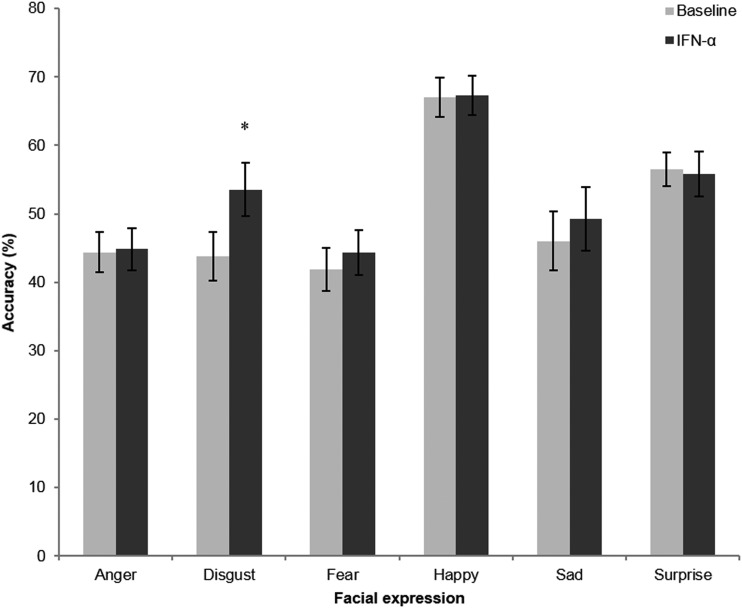
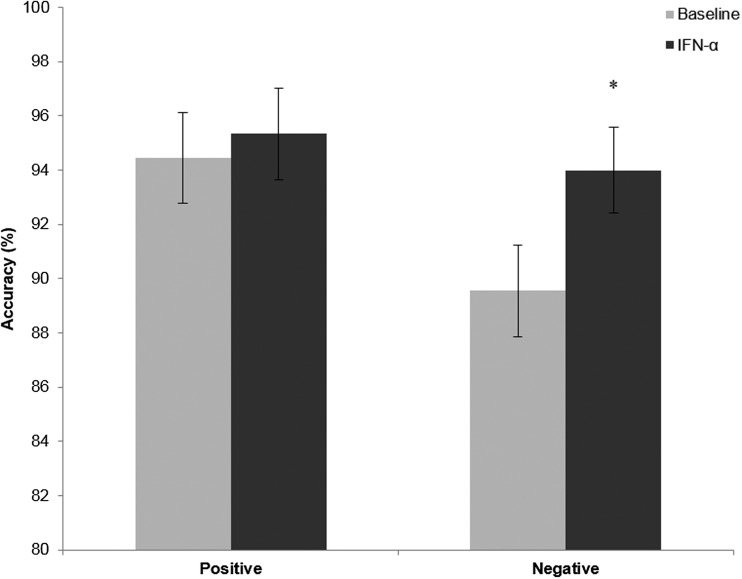
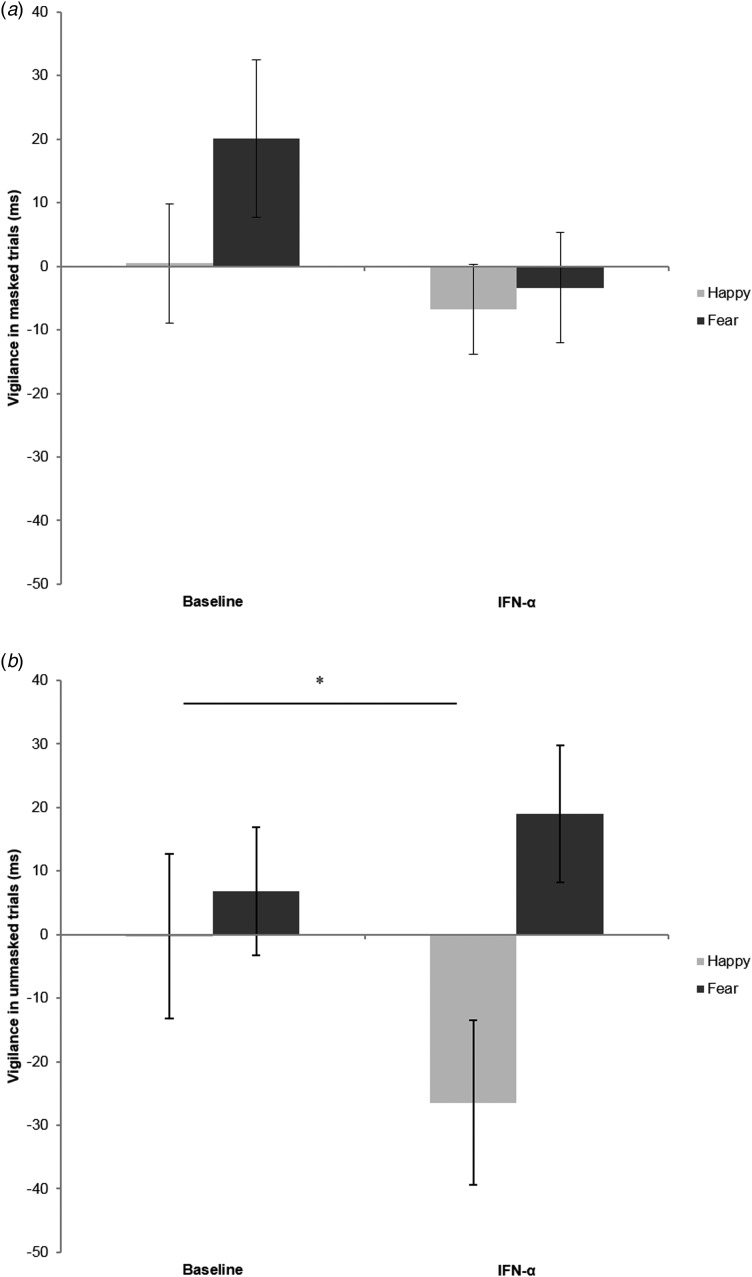
Background: Treatment of medical patients with the inflammatory cytokine, interferon- α (IFN- α ), is frequently associated with the development of clinical depressive symptomatology. Several important biological correlates of the effect of IFN- α on mood have been described, but the neuropsychological changes associated with IFN- α treatment are largely unexplored. The aim of the present preliminary study was to assess the effect of IFN- α on measures of emotional processing. Method: We measured changes in emotional processing over 6–8 weeks in 17 patients receiving IFN- α as part of their treatment for hepatitis C virus infection. Emotional processing tasks included those which have previously been shown to be sensitive to the effects of depression and antidepressant treatment, namely facial expression recognition, emotional categorisation and the dot probe attentional task. Results: Following IFN- α , patients were more accurate at detecting facial expressions of disgust; they also showed diminished attentional vigilance to happy faces. IFN- α produced the expected increases in scores on depression rating scales, but there was no correlation between these scores and the changes in emotional processing. Conclusions: Our preliminary findings suggest that IFN- α treatment produces negative biases in emotional processing, and this effect is not simply a consequence of depression. It is possible that increased recognition of disgust may represent a neuropsychological marker of depressive disorders related to inflammation.
Overview
The claims and statistics of this paper haven’t been checked yet.
Free: it reads the open-access text and checks the first 5 claims that cite a source we can check. Create a free account to check every claim.
Integrity signals
Registry
Cites
Statistics
Figures
Verification
Claims the paper makes
The claims and statistics of this paper haven’t been checked yet.
Free: it reads the open-access text and checks the first 5 claims that cite a source we can check. Create a free account to check every claim.
Claims other papers make about this one
Each is checked against this paper’s own text: does it say what the citing paper says it does?
In the citing paper
“hepatitis C patients showed an AB away from positive vs. neutral and fearful faces and an increase in symptoms of depression, anxiety, and fatigue 6–7 weeks after commencing IFN-α therapy (Cooper et al., 2018).”
From The interplay between stress, inflammation, and emotional attention: relevance for depression (2019) · cites this paper as Cooper et al., 2018
Self-check
Percentages, sums and reported differences re-computed from the paper’s own numbers.
The self-check needs the paper’s full text.
Citations
Cites
An inventory for measuring depression
BECK, A. T. (1961) · Archives of General Psychiatry · doi:10.1001/archpsyc.1961.01710120031004 · Cited by 38,032 · cited 3×
“…and 6–8 weeks after IFN-α administration using the Hamilton Depression Rating Scale (HAM-D; Hamilton, 1960), Beck Depression Inventory (BDI; Beck et al. 1961), state component of the State Trait Anxiety Inventory (Spielberger et al. 1970) and the Chalder Fatigue Scale (CFS; Chalder et…”
MethodHamilton, M. (1960) · Journal of Neurology, Neurosurgery & Psychiatry · doi:10.1136/jnnp.23.1.56 · Cited by 32,817 · cited 3×
“Mood state was assessed at baseline (pretreatment) and 6–8 weeks after IFN-α administration using the Hamilton Depression Rating Scale (HAM-D; Hamilton, 1960), Beck Depression Inventory (BDI; Beck et al.”
MethodScoville, W. B. (1949) · Journal of neurosurgery · doi:10.3171/jns.1949.6.1.0065 · Cited by 7,381
Ekman, P. (1976) · Medical Entomology and Zoology · Cited by 4,345
Development of a fatigue scale
Chalder, T., Berelowitz, G., Pawlikowska, T., Watts, L., Wessely, S., Wright, D., & Wallace, E. P. (1993) · Journal of Psychosomatic Research · doi:10.1016/0022-3999(93)90081-p · Cited by 3,032 · cited 3×
“…and 6–8 weeks after IFN-α administration using the Hamilton Depression Rating Scale (HAM-D; Hamilton, 1960), Beck Depression Inventory (BDI; Beck et al. 1961), state component of the State Trait Anxiety Inventory (Spielberger et al. 1970) and the Chalder Fatigue Scale (CFS; Chalder et al. 1993).”
MethodCytokines sing the blues: inflammation and the pathogenesis of depression
Raison, C. L., Capuron, L., & Miller, A. H. (2006) · Trends in Immunology · doi:10.1016/j.it.2005.11.006 · Cited by 3,009 · cited 2×
“The clinical observation that IFN-α is capable of inducing symptoms that are strikingly similar to major depression is important evidence for the proposed role of endogenous pro-inflammatory cytokines in the development of depressive states more generally (Raison et al. 2006; Zunsain et al. 2013).”
BackgroundNeural mechanisms of the cognitive model of depression.
Disner, S. G., Beevers, C. G., Haigh, E. A. P., & Beck, A. T. (2011) · Nature Reviews Neuroscience · doi:10.1038/nrn3027 · Cited by 1,718 · cited 1×
“Negative biases in emotional processing include both vigilance towards negative stimuli and away from positive stimuli (Disner et al. 2011).”
BackgroundLikableness ratings of 555 personality-trait words.
Anderson, N. H. (1968) · Journal of Personality and Social Psychology · doi:10.1037/h0025907 · Cited by 1,638 · cited 1×
“Sixty personality characteristic words selected to be disagreeable (e.g. domineering, hostile) or agreeable (e.g. optimistic, honest; taken from Anderson, 1968) were presented in a random order on screen for 500 ms. Words were matched in terms of length, ratings of frequency and meaningfulness, and…”
BackgroundParoxetine for the prevention of depression induced by high-dose interferon alfa.
Musselman, D. L., Lawson, D. H., Gumnick, J. F., Manatunga, A. K., Penna, S., Goodkin, R. S., Greiner, K., Nemeroff, C. B., & Miller, A. H. (2001) · New England Journal of Medicine · doi:10.1056/nejm200103293441303 · Cited by 1,120 · cited 5×
“IFN-α significantly increased depression severity ratings, as well as subjective ratings of state anxiety and fatigue by 6–8 weeks, which is in keeping with numerous previous reports of induction of depressive symptoms by this treatment (Musselman et al. 2001; Hauser et al. 2002; Schaefer et al. 2002; Capuron & Miller…”
BackgroundResultInfluentialAttentional biases for negative interpersonal stimuli in clinical depression
Gotlib, I. H., Krasnoperova, E., Yue, D. N., & Joormann, J. (2004) · Journal of Abnormal Psychology · doi:10.1037/0021-843x.113.1.121 · Cited by 911 · cited 2×
“Depressed patients have previously been shown to display an attentional bias away from positive (happy) faces and towards negative (sad) faces (Gotlib et al. 2004; Fritzsche et al. 2010) and negative words (Bradley et al. 1997).”
BackgroundEvidence that disgust evolved to protect from risk of disease
Curtis, V., Aunger, R., & Rabie, T. (2004) · Proceedings of the Royal Society of London. Series B: Biological Sciences · doi:10.1098/rsbl.2003.0144 · Cited by 842 · cited 2×
“Emotional processing biases in disgust processing have been suggested to serve an evolutionary purpose of behavioural modification to avoid threats of infectious disease (Curtis et al. 2004), which could be related to the evidence that suggests that environmental and social disgusted stimuli are attended to and apprai…”
BackgroundCytokines and psychopathology: Lessons from interferon-α
Capuron, L., & Miller, A. H. (2004) · Biological Psychiatry · doi:10.1016/j.biopsych.2004.02.009 · Cited by 562 · cited 2×
“Interferon-α (IFN-α) is an endogenous cytokine that, when given as an exogenous therapy, potently activates the pro-inflammatory cytokine network to produce antiviral and antiproliferative effects (Capuron & Miller, 2004).”
Harmer, C. J., Shelley, N. C., Cowen, P. J., & Goodwin, G. M. (2004) · American Journal of Psychiatry · doi:10.1176/appi.ajp.161.7.1256 · Cited by 554
Self-citationHarmer, C. J., Goodwin, G. M., & Cowen, P. J. (2009) · British Journal of Psychiatry · doi:10.1192/bjp.bp.108.051193 · Cited by 542 · cited 2×
“For example, slower reaction times to positive trait words were found in depressed patients compared with healthy controls; however, after a single dose of reboxetine, reaction times to positive adjectives were faster (Harmer et al. 2009b).”
BackgroundResultSelf-citationEffect of Acute Antidepressant Administration on Negative Affective Bias in Depressed Patients
Harmer, C. J., O’Sullivan, U., Favaron, E., Massey-Chase, R., Ayres, R., Reinecke, A., Goodwin, G. M., & Cowen, P. J. (2009) · American Journal of Psychiatry · doi:10.1176/appi.ajp.2009.09020149 · Cited by 485 · cited 2×
“For example, slower reaction times to positive trait words were found in depressed patients compared with healthy controls; however, after a single dose of reboxetine, reaction times to positive adjectives were faster (Harmer et al. 2009b).”
BackgroundResultSelf-citationCapuron, L., Ravaud, A., Neveu, P. J., Miller, A. H., Maes, M., & Dantzer, R. (2002) · Molecular Psychiatry · doi:10.1038/sj.mp.4000995 · Cited by 473 · cited 1×
“For example, it has been proposed that IFN-α-induced changes in tryptophan metabolism may lead to lowered brain serotonin levels and increased production of neurotoxic metabolites, such as quinolinic acid (Capuron et al. 2002; Miller, 2009).”
BackgroundVarieties of disgust faces and the structure of disgust.
Rozin, P. N., Lowery, L., & Ebert, R. (1994) · Journal of Personality and Social Psychology · doi:10.1037//0022-3514.66.5.870 · Cited by 443 · cited 2×
“There are suggestions, however, that disgust processing can extend into the social domain, and that heightened disgust sensitivity might reflect an emotional processing bias that constitutes social and self-related disgust, feelings of social rejection (Rozin et al. 1994), as well as feelings of shame and guilt (Surgu…”
BackgroundHauser, P., Khosla, J., Aurora, H., Laurin, J., Kling, M. A., Hill, J., Gulati, M., Thornton, A. J., Schultz, R. L., Valentine, A. D., et al. (2002) · Molecular Psychiatry · doi:10.1038/sj.mp.4001119 · Cited by 313 · cited 3×
“IFN-α significantly increased depression severity ratings, as well as subjective ratings of state anxiety and fatigue by 6–8 weeks, which is in keeping with numerous previous reports of induction of depressive symptoms by this treatment (Musselman et al. 2001; Hauser et al. 2002; Schaefer et al. 2002; Capuron & Miller…”
BackgroundResultZunszain, P. A., Hepgul, N., & Pariante, C. M. (2012) · Current Topics in Behavioral Neurosciences · doi:10.1007/7854_2012_211 · Cited by 303 · cited 2×
“The clinical observation that IFN-α is capable of inducing symptoms that are strikingly similar to major depression is important evidence for the proposed role of endogenous pro-inflammatory cytokines in the development of depressive states more generally (Raison et al. 2006; Zunsain et al. 2013).”
BackgroundAttentional Biases for Emotional Faces
Bradley, B. P., Mogg, K., Millar, N., Bonham-Carter, C., Fergusson, E., Jenkins, J., & Parr, M. (1997) · Cognition & Emotion · doi:10.1080/026999397380014 · Cited by 286 · cited 1×
“Depressed patients have previously been shown to display an attentional bias away from positive (happy) faces and towards negative (sad) faces (Gotlib et al. 2004; Fritzsche et al. 2010) and negative words (Bradley et al. 1997).”
BackgroundMiller, A. H. (2009) · Brain, Behavior, and Immunity · doi:10.1016/j.bbi.2008.08.006 · Cited by 261 · cited 1×
“For example, it has been proposed that IFN-α-induced changes in tryptophan metabolism may lead to lowered brain serotonin levels and increased production of neurotoxic metabolites, such as quinolinic acid (Capuron et al. 2002; Miller, 2009).”
BackgroundAttentional bias to angry faces using the dot-probe task? It depends when you look for it
Cooper, R. M., & Langton, S. R. H. (2006) · Behaviour Research and Therapy · doi:10.1016/j.brat.2005.10.004 · Cited by 228 · cited 1×
“Therefore, avoidance of the happy face in the current study indicates attention towards the neutral face, which may be relevant to threat-related processing biases (Cooper & Langton, 2006).”
BackgroundInterferon alpha (IFNα) and psychiatric syndromes
Schaefer, M., Engelbrechta, M. A., Gut, O., Fiebich, B. L., Bauer, J., Schmidt, F., Grunze, H., & Lieb, K. (2002) · Progress in Neuro-Psychopharmacology and Biological Psychiatry · doi:10.1016/s0278-5846(01)00324-4 · Cited by 202 · cited 2×
“…subjective ratings of state anxiety and fatigue by 6–8 weeks, which is in keeping with numerous previous reports of induction of depressive symptoms by this treatment (Musselman et al. 2001; Hauser et al. 2002; Schaefer et al. 2002; Capuron & Miller, 2004; Maddock et al. 2005; Fontana et al. 2008).”
BackgroundResultA neurocomputational account of how inflammation enhances sensitivity to punishments versus rewards
Harrison, N. A., Voon, V., Cercignani, M., Cooper, E. A., Pessiglione, M., & Critchley, H. D. (2016) · Biological Psychiatry · doi:10.1016/j.biopsych.2015.07.018 · Cited by 185 · cited 3×
“A previous study also reported increased activity within subgenual anterior cingulate cortex and reduced connectivity to amygdala, medial prefrontal cortex and the nucleus accumbens during emotional face processing following an inflammatory challenge (Harrison et al. 2016).”
BackgroundHarmer, C. J., & Cowen, P. J. (2013) · Philosophical Transactions of the Royal Society B: Biological Sciences · doi:10.1098/rstb.2012.0407 · Cited by 183 · cited 1×
“There is also robust evidence demonstrating that pharmacological modulation can modify emotional processing biases, as measured in psychological tasks, for example, following serotonergic antidepressant treatments (Harmer & Cowen, 2013).”
BackgroundSelf-citationEnhanced recognition of disgust in bipolar illness
Harmer, C. J., Grayson, L., & Goodwin, G. M. (2002) · Biological Psychiatry · doi:10.1016/s0006-3223(01)01249-5 · Cited by 177 · cited 2×
“Several previous studies have reported that increased disgust recognition might indicate a negative perceptual bias that is relevant to mood disorders, for example, elevated discrimination of disgusted facial expressions has been observed in euthymic medicated patients with bipolar disorder (Harmer et al. 2002).”
BackgroundSelf-citationCapuron, L., & Ravaud, A. (1999) · New England Journal of Medicine · doi:10.1056/nejm199904293401716 · Cited by 169 · cited 1×
“…depressed mood scores were positively correlated with depressed mood following IFN-α, which also supports previous observations suggesting that severity of depressive symptoms during IFN-α treatment is predicted by baseline depression scores (Capuron & Ravaud, 1999; Musselman et al. 2001).”
ResultHayward, G., Goodwin, G. M., Cowen, P. J., & Harmer, C. J. (2005) · Biological Psychiatry · doi:10.1016/j.biopsych.2004.11.016 · Cited by 162 · cited 1×
“Hayward et al. (2005) also observed enhanced recognition of disgusted faces in a recovered depressed sample following tryptophan depletion.”
BackgroundSelf-citationHaroon, E., Woolwine, B. J., Chen, X., Pace, T. W., Parekh, S., Spivey, J. R., Hu, X. P., & Miller, A. H. (2014) · Neuropsychopharmacology · doi:10.1038/npp.2014.25 · Cited by 154 · cited 1×
“There is also preliminary evidence from magnetic resonance spectroscopy that IFN-α-induced alterations in glutamine and glutamate levels in the anterior cingulate cortex may correlate with depressive symptomatology (Haroon et al. 2014; Taylor et al. 2014).”
ResultStructured Clinical Interview for DSM-IV (SCID)
Glasofer, D. R., Brown, A. J., & Riegel, M. (2017) · Springer eBooks · doi:10.1007/978-981-287-104-6_80 · Cited by 154
Fritzsche, A., Dahme, B., Gotlib, I. H., Joormann, J., Magnussen, H., Watz, H., Nutzinger, D. O., & von Leupoldt, A. (2010) · Psychological Medicine · doi:10.1017/s0033291709990948 · Cited by 140 · cited 2×
“Depressed patients have previously been shown to display an attentional bias away from positive (happy) faces and towards negative (sad) faces (Gotlib et al. 2004; Fritzsche et al. 2010) and negative words (Bradley et al. 1997).”
BackgroundCitalopram modulation of neuronal responses to aversive face emotions: a functional MRI study
Anderson, I. M., Del-Ben, C. M., Mckie, S., Richardson, P., Williams, S. R., Elliott, R., & William Deakin, J. F. (2007) · NeuroReport · doi:10.1097/wnr.0b013e3282742115 · Cited by 129 · cited 5×
“Enhanced disgust recognition may also be associated with visceral symptoms, such as nausea (Anderson et al. 2007).”
BackgroundInfluentialSurguladze, S. A., El-Hage, W., Dalgleish, T., Radua, J., Gohier, B., & Phillips, M. L. (2010) · Journal of Psychiatric Research · doi:10.1016/j.jpsychires.2010.02.010 · Cited by 113 · cited 5×
“…sensitivity might reflect an emotional processing bias that constitutes social and self-related disgust, feelings of social rejection (Rozin et al. 1994), as well as feelings of shame and guilt (Surguladze et al. 2010; Giner-Sorolla & Espinosa, 2011), all of which are highly relevant to depression.”
BackgroundInfluentialSocial Cuing of Guilt by Anger and of Shame by Disgust
Giner-Sorolla, R., & Espinosa, P. (2011) · Psychological Science · doi:10.1177/0956797610392925 · Cited by 106 · cited 1×
“…sensitivity might reflect an emotional processing bias that constitutes social and self-related disgust, feelings of social rejection (Rozin et al. 1994), as well as feelings of shame and guilt (Surguladze et al. 2010; Giner-Sorolla & Espinosa, 2011), all of which are highly relevant to depression.”
BackgroundDirect effects of diazepam on emotional processing in healthy volunteers
Murphy, S. E., Downham, C., Cowen, P. J., & Harmer, C. J. (2008) · Psychopharmacology · doi:10.1007/s00213-008-1082-2 · Cited by 98 · cited 1×
“Stimuli were pairs of facial expressions (Matsumoto & Ekman, 1988), each comprising one emotional and one neutral expression of the same individual or two neutral expressions of the same individual (described previously by Murphy et al. 2008).”
BackgroundSelf-citationFacial Expression and Sex Recognition in Schizophrenia and Depression
Bediou, B., Krolak-Salmon, P., Saoud, M., Henaff, M.-A., Burt, M., Dalery, J., & D'Amato, T. (2005) · The Canadian Journal of Psychiatry · doi:10.1177/070674370505000905 · Cited by 94 · cited 1×
“It should be noted that although discussion here has focussed on enhanced disgust sensitivity, some studies report no difference in disgust processing in depression (Bediou et al. 2005), while others have reported impaired disgust recognition (Douglas & Porter, 2010).”
BackgroundDepression as an evolutionary strategy for defense against infection
Anders, S. L., Tanaka, M., & Kinney, D. K. (2012) · Brain Behavior and Immunity · doi:10.1016/j.bbi.2012.12.002 · Cited by 92 · cited 2×
“Emotional responses to inflammation are also relevant to evolutionary biological theories linking inflammation and depression in which depressive behaviours, regulated by the immune system, play a role in dealing with infection both at the individual level and that of the social group (Anders et al. 2013).”
BackgroundRecognition of disgusted facial expressions in severe depression
Douglas, K. M., & Porter, R. J. (2010) · British Journal of Psychiatry · doi:10.1192/bjp.bp.110.078113 · Cited by 86 · cited 1×
“It should be noted that although discussion here has focussed on enhanced disgust sensitivity, some studies report no difference in disgust processing in depression (Bediou et al. 2005), while others have reported impaired disgust recognition (Douglas & Porter, 2010).”
BackgroundMurphy, S. E., Longhitano, C., Ayres, R. E., Cowen, P. J., & Harmer, C. J. (2006) · Psychopharmacology · doi:10.1007/s00213-006-0401-8 · Cited by 81 · cited 2×
“In contrast, tryptophan supplementation, as opposed to depletion, reduced recognition of disgusted faces in healthy female volunteers (Murphy et al. 2006).”
BackgroundSelf-citationEarly effects of mirtazapine on emotional processing
Arnone, D., Horder, J., Cowen, P. J., & Harmer, C. J. (2009) · Psychopharmacology · doi:10.1007/s00213-008-1410-6 · Cited by 74 · cited 1×
“Further studies have reported similar antidepressant effects on emotional categorisation with reboxetine (Harmer et al. 2004), citalopram (Harmer et al. 2004) and mirtazapine (Arnone et al. 2009).”
ResultSelf-citationHarmer, C. J., Heinzen, J., O’Sullivan, U., Ayres, R. A., & Cowen, P. J. (2008) · Psychopharmacology · doi:10.1007/s00213-007-1058-7 · Cited by 69 · cited 1×
“For example, increased recognition of disgusted faces was seen following duloxetine treatment, which induced nausea (Harmer et al. 2008).”
BackgroundSelf-citationMaddock, C., Landau, S., Barry, K., Maulayah, P., Hotopf, M., Cleare, A. J., Norris, S., & Pariante, C. M. (2005) · Molecular Psychiatry · doi:10.1038/sj.mp.4001634 · Cited by 54 · cited 2×
“IFN-α significantly increased depression severity ratings, as well as subjective ratings of state anxiety and fatigue by 6–8 weeks, which is in keeping with numerous previous reports of induction of depressive symptoms by this treatment (Musselman et al. 2001; Hauser et al. 2002; Schaefer et al. 2002; Capuron & Miller…”
ResultSymptomatic Treatment of Interferon-α–Induced Depression in Hepatitis C: A Systematic Review
Baraldi, S., Hepgul, N., Mondelli, V., & Pariante, C. M. (2012) · Journal of Clinical Psychopharmacology · doi:10.1097/jcp.0b013e31825d9982 · Cited by 54 · cited 1×
“Until recently, IFN-α was the most widely used treatment for hepatitis C virus (HCV) and was usually administered together with the oral polymerase inhibitor, ribavirin, for up to 48 weeks (Baraldi et al. 2012).”
MethodByrne, M. L., Whittle, S., & Allen, N. B. (2016) · Psychosomatic Medicine · doi:10.1097/psy.0000000000000311 · Cited by 52 · cited 1×
“Thus, the current pattern may represent a cognitive correlate of the underlying neurocircuits emerging as important for the effects of inflammation in depression (Byrne et al. 2016).”
BackgroundMerens, W., Booij, L., Haffmans, P. J., & van der Does, A. (2008) · Journal of Psychopharmacology · doi:10.1177/0269881107081531 · Cited by 49 · cited 1×
“Similarly, tryptophan depletion in remitted depressed individuals speeded the recognition of disgust faces (Merens et al. 2008).”
BackgroundFontana, R. J., Kronfol, Z., Lindsay, K. L., Bieliauskas, L. A., Padmanabhan, L., Back-Madruga, C., Lok, A. S. F., Stoddard, A. M., & the HALT-C Trial Group (2008) · The American Journal of Gastroenterology · doi:10.1111/j.1572-0241.2008.02106.x · Cited by 43 · cited 2×
“IFN-α significantly increased depression severity ratings, as well as subjective ratings of state anxiety and fatigue by 6–8 weeks, which is in keeping with numerous previous reports of induction of depressive symptoms by this treatment (Musselman et al. 2001; Hauser et al. 2002; Schaefer et al. 2002; Capuron & Miller…”
ResultLewis, G., Kounali, D. ‐., Button, K. S., Duffy, L., Wiles, N. J., Munafò, M. R., Harmer, C. J., & Lewis, G. (2017) · Acta Psychiatrica Scandinavica · doi:10.1111/acps.12729 · Cited by 40 · cited 3×
“Previous studies suggest that there is a time lag between cognitive bias and changes in symptoms of depression (Lewis et al. 2017), and therefore measuring mood and bias at the same time points may have obscured a mediating relationship, that is, that cognitive biases may affect mood over time via…”
BackgroundSelf-citationThomas, J. M., Higgs, S., & Dourish, C. T. (2015) · Journal of Clinical and Experimental Neuropsychology · doi:10.1080/13803395.2015.1121969 · Cited by 39 · cited 1×
“However, previous work examining the test– retest effects in this same battery have shown limited learning effects of repeat testing in the absence of any intervention (Thomas et al. 2016).”
ResultTaylor, M. J., Godlewska, B., Near, J., Christmas, D., Potokar, J., Collier, J., Klenerman, P., Barnes, E., & Cowen, P. J. (2014) · Psychological Medicine · doi:10.1017/s0033291713001062 · Cited by 26 · cited 1×
“There is also preliminary evidence from magnetic resonance spectroscopy that IFN-α-induced alterations in glutamine and glutamate levels in the anterior cingulate cortex may correlate with depressive symptomatology (Haroon et al. 2014; Taylor et al. 2014).”
ResultSelf-citationZhang, D., Liu, Y., Wang, X., Chen, Y., & Luo, Y. (2014) · Frontiers in Behavioral Neuroscience · doi:10.3389/fnbeh.2014.00293 · Cited by 21 · cited 2×
“2004), which could be related to the evidence that suggests that environmental and social disgusted stimuli are attended to and appraised for more time than fearful faces (Zhang et al. 2014).”
BackgroundTianeptine in an experimental medicine model of antidepressant action
Cooper, C. M., Whiting, D., Cowen, P. J., & Harmer, C. J. (2015) · Journal of Psychopharmacology · doi:10.1177/0269881115573810 · Cited by 10 · cited 1×
“Tianeptine, an antidepressant drug with suggested properties of reducing serotonin function early in treatment was also shown to significantly enhance avoidance to happy faces (Cooper et al. 2015) in a very similar manner to effects seen here with IFN-α.”
ResultSelf-citation
Research works printed but not linked: 2
- Spielberger CD, Gorsuch RL, Lushene RD (1970). STAI Manual. Consulting Psychologists Press: Palo Alto, Calif.
- Matsumoto D, Ekman P (1988). Japanese and Caucasian Facial Expressions of Emotion (JACFEE). Intercultural and Emotion Research Laboratory, Department of Psychology, San Francisco State University: San Francisco, CA.
Cited by
The interplay between stress, inflammation, and emotional attention: relevance for depression
Maydych, V. (2019) · Frontiers in Neuroscience · doi:10.3389/fnins.2019.00384 · Cited by 193
A Novel System to Categorize the Symptoms of Systemic Lupus Erythematosus
Pisetsky, D. S., Clowse, M. E. B., Criscione‐Schreiber, L. G., & Rogers, J. L. (2019) · Arthritis Care & Research · doi:10.1002/acr.23794 · Cited by 94
Wang, R., Wang, W., Xu, J., Liu, D., Jiang, H., & Pan, F. (2018) · Frontiers in Psychiatry · doi:10.3389/fpsyt.2018.00471 · Cited by 42
“In addition, 50% of the hepatitis C patients receiving interferon-α (IFN-α, a pro-inflammatory cytokine) treatment had depressive symptoms (9, 10).”
BackgroundEffect of Physical State on Pain Mediated Through Emotional Health in Rheumatoid Arthritis
Nakagami, Y., Sugihara, G., Takei, N., Fujii, T., Hashimoto, M., Murakami, K., Furu, M., Ito, H., Uda, M., Torii, M., et al. (2018) · Arthritis Care & Research · doi:10.1002/acr.23779 · Cited by 21
Sass, D., Saligan, L. N., Fitzgerald, W., Berger, A. M., Torres, I., Barb, J. J., Kupzyk, K. A., & Margolis, L. B. (2021) · Translational Psychiatry · doi:10.1038/s41398-021-01554-w · Cited by 17
“IFNα treatment in hepatitis C correlated with fatigue, depressed mood, and anxiety ratings [38].”
Background
Metadata
- Authors
- Cooper, C. M., Godlewska, B., Sharpley, A. L., Barnes, E., Cowen, P. J., & Harmer, C. J.
- Affiliations
- Warneford Hospital (GB)
- University of Oxford (GB)
- Corresponding author
- Cowen, P. J.
- Venue
- Psychological Medicine
- Publisher
- Cambridge University Press (CUP)
- Published
- 2017-09-11
- Volume
- 48
- Issue
- 6
- Pages
- 998-1007
- ISSN
- 0033-2917 (ISSN-L)
- 1469-8978
- PMC
- PMC5767463
- OpenAlex
- W2751498418
- Cited by
- 20
- References
- 51
- Citations by year
- 2026: 1 · 2025: 1 · 2023: 1 · 2022: 5 · 2021: 2 · 2019: 5 · 2018: 5
- FWCI
- 0.91
- Type
- journal article
- Language
- en
- Open access
- hybrid
- doi.org
- Locations
- Psychological Medicine (publishedVersion, cc-by)
- Europe PMC (PubMed Central) (publishedVersion, cc-by)
- PubMed Central (publishedVersion, cc-by)
- PubMed (publishedVersion)
- Funders
- National Institute for Health and Care Research (NF-SI-0617-10139)
- Medical Research Council (MR/K022202/1, MR/K010239/1, MR/K022202)
- Topics
- Life Sciences › Neuroscience › Biological Psychiatry › Tryptophan and brain disorders
- Life Sciences › Neuroscience › Cognitive Neuroscience › Neural and Behavioral Psychology Studies
- Health Sciences › Medicine › Pharmacology (medical) › Treatment of Major Depression
- Keywords
- interferon-alpha, hepatitis C, emotional processing, facial expression recognition, disgust, attentional bias, dot-probe task, depression, inflammatory cytokines, neuropsychological outcomes
- MeSH terms
- Facial Recognition, Adult, Affect, Antiviral Agents, Depression, Facial Expression, Female, Hepatitis C, Humans, Inflammation, Male, Middle Aged, Psychiatric Status Rating Scales, Interferon-alpha, Young Adult
About these checks
Registry, retraction, Cites and statistics results are computed, not judged, with one exception: a printed reference that no index lists is read once by a model before it counts as a citation error. Claims are extracted by a model and kept only when their quote appears verbatim in the text; each cited source is then checked, with a model’s help, for whether it says what the claim relies on. Those verdicts can be wrong — read the claim’s quote and the cited source before relying on one.
Statistics and arithmetic are recomputed, not judged.
Confidence bands are shown only for fields calibrated on our annotated test set. None is calibrated yet, so no band is shown.
What counts as a claim ›How we measure confidence ›How we check this ›
Are you an author, or do you see a problem with this page? Request a review
Data sources
Bibliographic data: Semantic Scholar, OpenAlex, Crossref.
Contains information from the Semantic Scholar Academic Graph Datasets, made available under the ODC Attribution License (ODC-BY 1.0).
Semantic Scholar’s data is described in: Kinney, R., et al. (2023). The Semantic Scholar Open Data Platform. arXiv:2301.10140.
