

Managing depressive symptoms in people with mild cognitive impairment and mild dementia with a multicomponent psychotherapy intervention: a randomized controlled trial
Open accessThe DOI matches its Crossref record; 63 of the 63 references it cites were found in a registry or an index.
Abstract
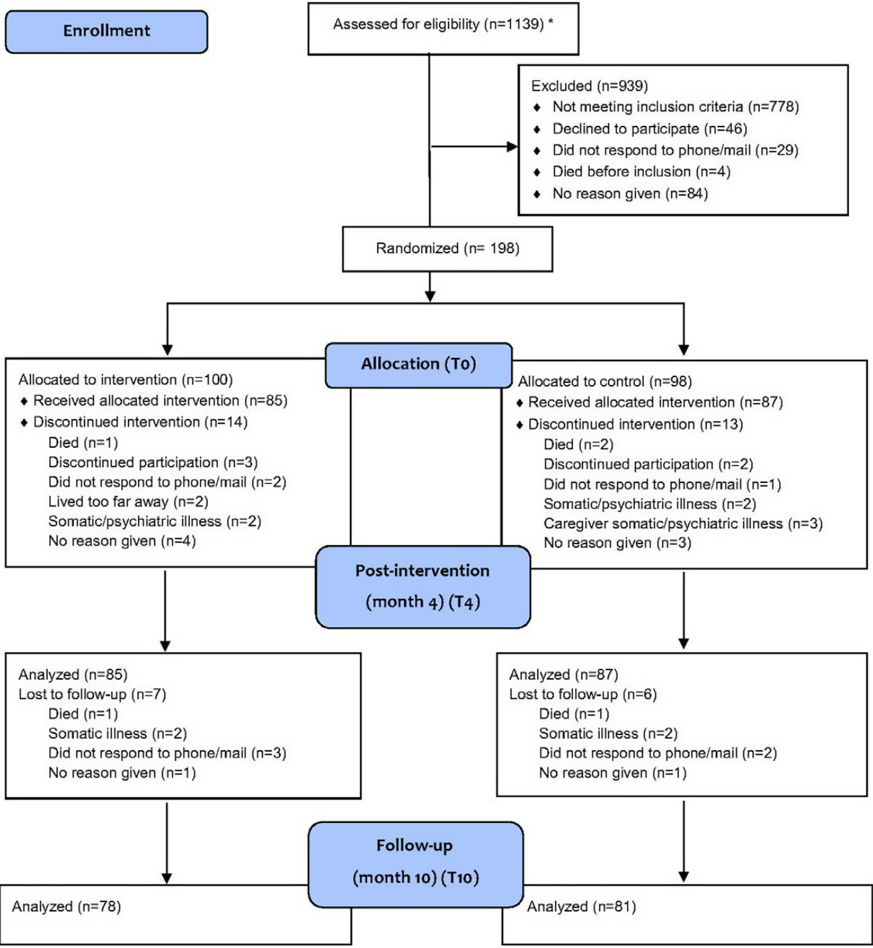
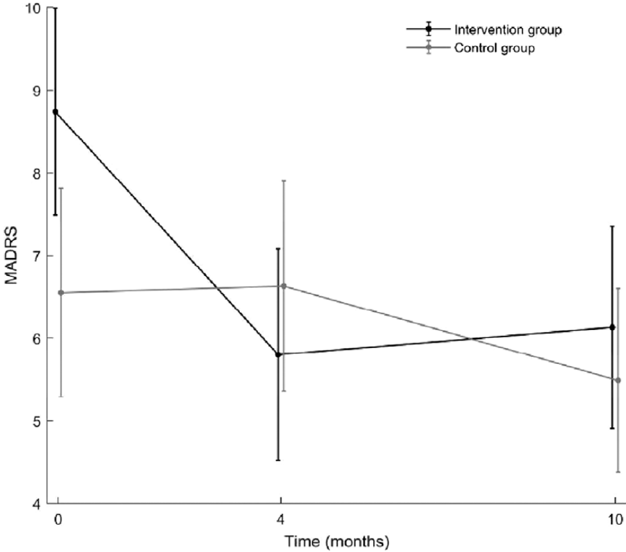
OBJECTIVE: To evaluate the feasibility and effectiveness of the CORDIAL program, a psychosocial intervention consisting of cognitive behavioral therapy (CBT), cognitive rehabilitation, and reminiscence to manage depressive symptoms for people with mild cognitive impairment (MCI) or dementia. DESIGN: We conducted a randomized controlled trial, based on a two-group (intervention and control), pre-/post-intervention design. SETTING: Participants were recruited from five different old age psychiatry and memory clinics at outpatients' hospitals. PARTICIPANTS: Hundred and ninety-eight people with MCI or early-stage dementia were included. INTERVENTION: The intervention group (n = 100) received 11 individual weekly sessions of the CORDIAL program. This intervention includes elements from CBT, cognitive rehabilitation, and reminiscence therapy. The control group (n = 98) received treatment-as-usual. MEASUREMENTS: We assessed Montgomery-Åsberg Depression Rating Scale (MADRS) (main outcome), Neuropsychiatric Inventory Questionnaire, and Quality of Life in Alzheimer's disease (secondary outcomes) over the course of 4 months and at a 10-month follow-up visit. RESULTS: A linear mixed model demonstrated that the depressive symptoms assessed by MADRS were significantly more reduced in the intervention groups as compared to the control group (p < 0.001). The effect persisted for 6 months after the intervention. No significant differences between groups were found in neuropsychiatric symptoms or quality of life. CONCLUSION: Our multicomponent intervention, which comprised 11 individual sessions of CBT, cognitive rehabilitation, and reminiscence therapy, reduced depressive symptoms in people with MCI and dementia.
Overview
The claims and statistics of this paper haven’t been checked yet.
Free: it reads the open-access text and checks the first 5 claims that cite a source we can check. Create a free account to check every claim.
Integrity signals
Registry
Cites
Statistics
Figures
Verification
Claims the paper makes
The claims and statistics of this paper haven’t been checked yet.
Free: it reads the open-access text and checks the first 5 claims that cite a source we can check. Create a free account to check every claim.
Claims other papers make about this one
Each is checked against this paper’s own text: does it say what the citing paper says it does?
The source backs part of the claim, not all of it — or backs it for a different population, condition or comparison.
In the citing paper
“whereas one recently published paper with a larger sample (n = 198) of a randomized-controlled study showed a significant reduction of depressive symptoms in the intervention group (cognitive rehabilitation and cognitive behavioral therapy) as compared to the treatment as usual control group by 6 months post-intervention (p < 0.001) [39].”
From Psychotherapeutic interventions in individuals at risk for Alzheimer’s dementia: a systematic review (2022) · cites this paper as [39]
Experimental — accuracy not yet measuredThe source backs part of the claim, not all of it — or backs it for a different population, condition or comparison.
In the citing paper
“This review depicts that psychotherapeutic and psychoeducational interventions for older adults in pre-dementia stages are feasible and may suggest that the degree of cognitive impairment in the pre-dementia stages may not necessarily influence the ability to learn skills such as psychotherapeutic or mindfulness interventions [39, 42, 46, 47, 62, 63].”
From Psychotherapeutic interventions in individuals at risk for Alzheimer’s dementia: a systematic review (2022) · cites this paper as [39]
Experimental — accuracy not yet measuredThe source backs part of the claim, not all of it — or backs it for a different population, condition or comparison.
In the citing paper
“While a RCT with a large sample (n = 198) of MCI patients showed a significant reduction of depressive symptoms in the intervention group (cognitive rehabilitation and cognitive behavioral therapy) as compared to the treatment as usual control group 6 months post-intervention [39], non-randomized CBT-based trials with smaller sample sizes but longer follow-up assessments of 6–12 months did not”
From Psychotherapeutic interventions in individuals at risk for Alzheimer’s dementia: a systematic review (2022) · cites this paper as [39]
Experimental — accuracy not yet measuredThe cited source says what the claim attributes to it.
In the citing paper
“Long-term follow-up assessments (6 or more months post-intervention) were described in 14 publications [37, 39, 43, 48, 49, 51–53, 59, 60, 62, 63, 68, 69].”
From Psychotherapeutic interventions in individuals at risk for Alzheimer’s dementia: a systematic review (2022) · cites this paper as [39]
The cited source says what the claim attributes to it.
In the citing paper
“Amongst them, 8 papers described manualized psychotherapeutic interventions [36, 37, 39, 42, 43, 62–64] and 18 papers described psychoeducational interventions in addition to cognitive rehabilitation, cognitive training, mindfulness-based stress reduction, behavioral activation, or a recovery model approach [38, 44–54, 57–60, 65, 67].”
From Psychotherapeutic interventions in individuals at risk for Alzheimer’s dementia: a systematic review (2022) · cites this paper as [39]
2 more claims about this paper
Create a free account to see every claim other papers make about this one.
Self-check
Percentages, sums and reported differences re-computed from the paper’s own numbers.
The self-check needs the paper’s full text.
Citations
Cites
Folstein, M. F., Folstein, S. E., & McHugh, P. R. (1975) · Journal of Psychiatric Research · doi:10.1016/0022-3956(75)90026-6 · Cited by 88,282
The Hospital Anxiety and Depression Scale
Zigmond, A. S., & Snaith, R. P. (1983) · Acta Psychiatrica Scandinavica · doi:10.1111/j.1600-0447.1983.tb09716.x · Cited by 47,139 · cited 5×
“High mean scores on the QOL-AD and GSE and low mean scores on the HADS and RSS suggested that caregivers had few symptoms and a high quality of life.”
MethodInfluentialAssessment of Older People: Self-Maintaining and Instrumental Activities of Daily Living
Lawton, M. P., & Brody, E. M. (1969) · The Gerontologist · doi:10.1093/geront/9.3_part_1.179 · Cited by 18,540
(2017) · Cited by 16,319
A new depression scale designed to be sensitive to change
Montgomery, S. A., & Åsberg, M. (1979) · British Journal of Psychiatry · doi:10.1192/bjp.134.4.382 · Cited by 13,962 · cited 1×
“PATIENT VARIABLES Depressive symptoms were measured with the MADRS (Montgomery and Åsberg, 1979), administered by professional health staff, and was the primary outcome of the study.”
MethodAssessing coping strategies: A theoretically based approach.
Carver, C. S., Scheier, M. F., & Weintraub, J. K. (1989) · Journal of Personality and Social Psychology · doi:10.1037/0022-3514.56.2.267 · Cited by 11,507 · cited 2×
“…experience of psychosocial interventions in combinationwithmeasurement scales that grasp the positive aspects of psychosocial interventions, for example, the Coping Orientation to Problems Experienced Inventory (Carver et al., 1989) or the Client Satisfaction Instrument (Attkisson and Zwick, 1982).”
BackgroundThe validity of the Hospital Anxiety and Depression Scale
Bjelland, I., Dahl, A. A., Haug, T. T., & Neckelmann, D. (2002) · Journal of Psychosomatic Research · doi:10.1016/s0022-3999(01)00296-3 · Cited by 9,779 · cited 3×
“A cutoff score >8 indicated substantial anxiety and depressive symptoms (Bjelland et al., 2002).”
BackgroundMethodInfluentialWinblad, B., Palmer, K., Kivipelto, M., Jelic, V., Fratiglioni, L., Wahlund, L. ‐., Nordberg, A., Bäckman, L., Albert, M., Almkvist, O., et al. (2004) · Journal of Internal Medicine · doi:10.1111/j.1365-2796.2004.01380.x · Cited by 4,946 · cited 1×
“Eligible participants had to: • meet the Winblad criteria for MCI due to Alzheimer’s disease (Winblad et al., 2004); or criteria for dementia in Alzheimer’s disease according to the ICD-10 or the National Institute of Neurological and Communicative Disorders and Stroke and the Alzheimer’s Disease…”
MethodResearch criteria for the diagnosis of Alzheimer's disease: revising the NINCDS–ADRDA criteria
Dubois, B., Feldman, H. H., Jacova, C., DeKosky, S. T., Barberger-Gateau, P., Cummings, J., Delacourte, A., Galasko, D., Gauthier, S., Jicha, G., et al. (2007) · The Lancet Neurology · doi:10.1016/s1474-4422(07)70178-3 · Cited by 4,411 · cited 3×
“, 2004); or criteria for dementia in Alzheimer’s disease according to the ICD-10 or the National Institute of Neurological and Communicative Disorders and Stroke and the Alzheimer’s Disease and Related Disorders Association (Dubois et al., 2007); • be in the early stages of MCI or dementia, as indicated by a Mini Ment…”
BackgroundMethodInfluential2013 Alzheimer's disease facts and figures
Alzheimer's Association, Thies, W., & Bleiler, L. (2013) · Alzheimer's & Dementia · doi:10.1016/j.jalz.2013.02.003 · Cited by 3,328
(2011) · Cited by 2,032
Validation of the NPI-Q, a Brief Clinical Form of the Neuropsychiatric Inventory
Kaufer, D., Cummings, J. L., Ketchel, P., Smith, V. M., MacMillan, A., Shelley, T., López, O. L., & DeKosky, S. T. (2000) · Journal of Neuropsychiatry · doi:10.1176/appi.neuropsych.12.2.233 · Cited by 1,973 · cited 3×
“The NPI-Q has been translated intoNorwegian (Årsland & Dramsdahl) and it was reliability-tested and validated in patients living in a nursing home (Selbaek et al., 2008).”
MethodScheltens, P., Leys, D., Barkhof, F., Huglo, D., Weinstein, H. C., Vermersch, P., Kuiper, M., Steinling, M., Wolters, E. C., & Valk, J. (1992) · Journal of Neurology, Neurosurgery & Psychiatry · doi:10.1136/jnnp.55.10.967 · Cited by 1,784
The client satisfaction questionnaire
Attkisson, C. C., & Zwick, R. (1982) · Evaluation and Program Planning · doi:10.1016/0149-7189(82)90074-x · Cited by 1,743 · cited 3×
“, 1989) or the Client Satisfaction Instrument (Attkisson and Zwick, 1982).”
BackgroundMeta‐Analysis of Psychosocial Interventions for Caregivers of People with Dementia
Brodaty, H., Green, A., & Koschera, A. (2003) · Journal of the American Geriatrics Society · doi:10.1034/j.1600-0579.2003.00210.x · Cited by 952 · cited 1×
“Studies have also suggested that transferring intervention results to everyday life could be facilitated by involving caregivers, due to more frequent practicing between therapy sessions (Brodaty et al., 2003; Clare et al., 2010).”
BackgroundNonpharmacological therapies in Alzheimer’s disease: a systematic review of efficacy
Olazarán, J., Reisberg, B., Clare, L., Cruz, I., Peña-Casanova, J., del Ser, T., Woods, B., Beck, C., Auer, S., Lai, C., et al. (2010) · Dementia and Geriatric Cognitive Disorders · doi:10.1159/000316119 · Cited by 937 · cited 3×
“A systematic review by Olazarán et al. (2010) found that multicomponent interventions were effective in improving mood and quality of life among people with dementia.”
BackgroundResultInfluentialSchwarzer, R., Bassler, J., Kwiatek, P., Schroder, K., & Zhang, J. X. (1997) · Applied Psychology · doi:10.1080/026999497378557 · Cited by 936 · cited 2×
“Self-efficacy was self-reported with the General Self-Efficacy (GSE) scale, which included 10 items (Schwarzer et al., 1997).”
BackgroundMethodInfluentialQuality of life in Alzheimer's disease: Patient and caregiver reports.
Logsdon, R. G., Gibbons, L. E., McCurry, S. M., & Teri, L. L. (1999) · Journal of Mental Health and Aging · Cited by 843
Reminiscence therapy for dementia
Woods, B., O'Philbin, L., Farrell, E. M., Spector, A. E., & Orrell, M. (2018) · Cochrane Database of Systematic Reviews · doi:10.1002/14651858.cd001120.pub3 · Cited by 782
Behavioral Treatment of Depression in Dementia Patients: A Controlled Clinical Trial
Teri, L., Logsdon, R. G., Uomoto, J., & McCurry, S. M. (1997) · The Journals of Gerontology Series B: Psychological Sciences and Social Sciences · doi:10.1093/geronb/52b.4.p159 · Cited by 648 · cited 8×
“This positive finding was consistent with previous findings with other psychosocial interventions that significantly reduced depressive symptoms in people with dementia (Cotelli et al., 2012; Hyer et al., 2009; Kurz et al., 2009; Kurz et al., 2012; Teri et al., 1997; Woods et al., 2018).”
BackgroundMethodResultInfluentialGREENE, J. G., SMITH, R., GARDINER, M., & TIMBURY, G. C. (1982) · Age and Ageing · doi:10.1093/ageing/11.2.121 · Cited by 585 · cited 4×
“Models were adjusted for patient GSE, caregiver GSE, and caregiver RSS scores.”
MethodInfluentialPathways linking late-life depression to persistent cognitive impairment and dementia
Butters, M. A., Young, J. B., Lopez, O., Aizenstein, H. J., Mulsant, B. H., Reynolds III, C. F., DeKosky, S. T., & Becker, J. T. (2008) · Dialogues in Clinical Neuroscience · doi:10.31887/dcns.2008.10.3/mabutters · Cited by 534
Chatfield, M. D., Brayne, C. E., & Matthews, F. E. (2005) · Journal of Clinical Epidemiology · doi:10.1016/j.jclinepi.2004.05.006 · Cited by 458 · cited 1×
“However, a high dropout rate is realistic in studies with elderly people because of illness, death, or cognitive impairment (Chatfield et al., 2005).”
BackgroundThorgrimsen, L., Selwood, A., Spector, A., Royan, L., de Madariaga Lopez, M., Woods, R. T., & Orrell, M. (2003) · Alzheimer Disease & Associated Disorders · doi:10.1097/00002093-200310000-00002 · Cited by 454
Depression in dementia: epidemiology, mechanisms, and treatment
Enache, D., Winblad, B., & Aarsland, D. (2011) · Current Opinion in Psychiatry · doi:10.1097/yco.0b013e32834bb9d4 · Cited by 315 · cited 1×
“Depression occurs in up to two-thirds of all patients (Enache et al., 2011).”
BackgroundClare, L., Linden, D. E. J., Woods, R. T., Whitaker, R., Evans, S. J., Parkinson, C. H., van Paasschen, J., Nelis, S. M., Hoare, Z., Yuen, K. S. L., et al. (2010) · The American Journal of Geriatric Psychiatry · doi:10.1097/jgp.0b013e3181d5792a · Cited by 293 · cited 2×
“Modules 3 and 4 were inspired by Clare et al. (2010); they provided cognitive rehabilitation by building on existing memory skills, learning compensatory memory aids, and using behavioral routines to reduce the demand on memory.”
BackgroundSikkes, S. A. M., de Lange-de Klerk, E. S. M., Pijnenburg, Y. A. L., Scheltens, P., & Uitdehaag, B. M. J. (2009) · Journal of Neurology, Neurosurgery & Psychiatry · doi:10.1136/jnnp.2008.155838 · Cited by 267 · cited 1×
“Previous studies reported Cronbach’s alphas for the I-ADL that ranged from 0.78 to 0.91 (Sikkes et al. 2009).”
MethodInfluentialGroup reminiscence therapy for cognitive and affective function of demented elderly in Taiwan
Wang, J. (2007) · International Journal of Geriatric Psychiatry · doi:10.1002/gps.1821 · Cited by 240 · cited 2×
“However, in contrast to the present study, other studies did not find significant changes in depressive symptoms among people with MCI and dementia (Banningh et al., 2011; Clare et al., 2019; Stockwell‐Smith et al., 2018; Wang, 2007; Woods et al., 2012).”
ResultReminiscence therapy in dementia: A review
Cotelli, M., Manenti, R., & Zanetti, O. (2012) · Maturitas · doi:10.1016/j.maturitas.2012.04.008 · Cited by 230 · cited 2×
“Reminiscence therapy that involves reflecting on past activities, events, and experiences, typically elicited with prompts, like photographs or music, effectively improved cognitive function and mood in people with dementia (Cotelli et al., 2012).”
BackgroundResultOrgeta, V., Qazi, A., Spector, A., & Orrell, M. (2015) · British Journal of Psychiatry · doi:10.1192/bjp.bp.114.148130 · Cited by 207
Fantino, B., & Moore, N. (2009) · BMC Psychiatry · doi:10.1186/1471-244x-9-26 · Cited by 200 · cited 1×
“Fantino and Moore (2009) reported a Cronbach’s alpha of 0.84 for the MADRS.”
InfluentialIllness representations and lived experience in early-stage dementia
Harman, G., & Clare, L. (2006) · Qualitative Health Research · doi:10.1177/1049732306286851 · Cited by 196 · cited 1×
“Harman and Clare, 2006).”
Cognitive rehabilitation in patients with mild cognitive impairment
Kurz, A., Pohl, C., Ramsenthaler, M., & Sorg, C. (2009) · International Journal of Geriatric Psychiatry · doi:10.1002/gps.2086 · Cited by 196 · cited 2×
“In addition, cognitive rehabilitation, which focuses on intact memory skills and learning compensatory strategies for managing memory problems, had a positive effect on mood and memory performance in people with MCI (Kurz et al., 2009).”
BackgroundResultHuang, H., Chen, Y., Chen, P., Sophia Huey-Lan, H. U., Liu, F., Kuo, Y., & Chiu, H.-Y. (2015) · Journal of the American Medical Directors Association · doi:10.1016/j.jamda.2015.07.010 · Cited by 177 · cited 1×
“These findings were supported by a meta-analysis of randomized controlled trials, which demonstrated that reminiscence therapy had a small effect size on cognitive functions and a moderate effect size on depressive symptoms (Huang et al., 2015).”
ResultBrewer, J. B., Magda, S., Airriess, C., & Smith, M. E. (2009) · American Journal of Neuroradiology · doi:10.3174/ajnr.a1402 · Cited by 173 · cited 2×
“On MRI scans, the hippocampus was measured either by visual inspection (Scheltens et al., 1992) or with volumetric calculations performed with Neuroquant software (Brewer et al., 2009; Engedal et al., 2012).”
MethodPsychosocial interventions in dementia care research: The INTERDEM manifesto
Moniz-Cook, E., Vernooij-Dassen, M., Woods, B., Orrell, M., & Interdem Network (2011) · Aging & Mental Health · doi:10.1080/13607863.2010.543665 · Cited by 173 · cited 1×
“A combination of qualitative and quantitative evaluations of an interventionmight provide more insight into how people with dementia experience psychosocial interventions,whichmight generate ideas about how interventions work (Moniz-Cook et al., 2011).”
BackgroundDetecting depression in Alzheimer?s disease: evaluation of four different scales
MULLERTHOMSEN, T., ARLT, S., MANN, U., MAS, R., & GANZER, S. (2005) · Archives of Clinical Neuropsychology · doi:10.1016/j.acn.2004.03.010 · Cited by 170 · cited 1×
“The questionnaire has been validated in people with dementia and is considered a consistent tool for detecting depression in dementia independently of the severity of the dementia disease (MüllerThomsen et al. 2005).”
MethodWoods, R., Bruce, E., Edwards, R., Elvish, R., Hoare, Z., Hounsome, B., Keady, J., Moniz-Cook, E., Orgeta, V, Orrell, M., et al. (2012) · Health Technology Assessment · doi:10.3310/hta16480 · Cited by 153 · cited 4×
“However, in contrast to the present study, other studies did not find significant changes in depressive symptoms among people with MCI and dementia (Banningh et al., 2011; Clare et al., 2019; Stockwell‐Smith et al., 2018; Wang, 2007; Woods et al., 2012).”
ResultInfluentialClare, L., Kudlicka, A., Oyebode, J. R., Jones, R. W., Bayer, A., Leroi, I., Kopelman, M., James, I. A., Culverwell, A., Pool, J., et al. (2019) · International Journal of Geriatric Psychiatry · doi:10.1002/gps.5076 · Cited by 152
Kurz, A., Thöne-Otto, A., Cramer, B., Egert, S., Frölich, L., Gertz, H.-J., Kehl, V., Wagenpfeil, S., & Werheid, K. (2012) · Alzheimer Disease & Associated Disorders · doi:10.1097/wad.0b013e318231e46e · Cited by 126 · cited 5×
“This positive finding was consistent with previous findings with other psychosocial interventions that significantly reduced depressive symptoms in people with dementia (Cotelli et al., 2012; Hyer et al., 2009; Kurz et al., 2009; Kurz et al., 2012; Teri et al., 1997; Woods et al., 2018).”
BackgroundMethodResultInfluentialSelf-citationSelbæk, G., Kirkevold, Ø., Sommer, O. H., & Engedal, K. (2007) · International Psychogeriatrics · doi:10.1017/s1041610207005601 · Cited by 120 · cited 1×
“The NPI-Q has been translated intoNorwegian (Årsland & Dramsdahl) and it was reliability-tested and validated in patients living in a nursing home (Selbaek et al., 2008).”
MethodLongitudinal Association of Dementia and Depression
Snowden, M. B., Atkins, D. C., Steinman, L. E., Bell, J. F., Bryant, L. L., Copeland, C., & Fitzpatrick, A. L. (2015) · The American Journal of Geriatric Psychiatry · doi:10.1016/j.jagp.2014.09.002 · Cited by 117 · cited 1×
“…cognitive impairment (MCI) and dementia exhibit an increased risk for developing depression compared to people with normal cognitive function; at 4-year follow-up, 38% people with MCI and 43% with dementia reported depression, compared to 20% people with normal cognition (Snowden et al., 2015).”
BackgroundModerate and severe depression
Müller, M. J., Szegedi, A., Wetzel, H., & Benkert, O. (2000) · Journal of Affective Disorders · doi:10.1016/s0165-0327(99)00162-7 · Cited by 116 · cited 1×
“Also, participants were categorized into severity groups, based on the MADRS, where: 0–8 = no depression; 9–17 = mild depression; 18–34 = moderate depression; and ≥ 35= severe depression (Mittmann et al., 1997; Müller et al., 2000).”
BackgroundSelectivity of Attrition in Longitudinal Studies of Cognitive Functioning
Salthouse, T. A. (2014) · The Journals of Gerontology Series B: Psychological Sciences and Social Sciences · doi:10.1093/geronb/gbt046 · Cited by 104 · cited 1×
“A common concern in longitudinal studies is postassignment attrition, which results in losing to follow-up the people with the worst illness and fragility (Salthouse, 2013).”
BackgroundUlstein, I., Bruun Wyller, T., & Engedal, K. (2007) · International Journal of Geriatric Psychiatry · doi:10.1002/gps.1654 · Cited by 92
Self-citationCognitive Rehabilitation in Alzheimer’s Disease: A Controlled Intervention Trial
Brueggen, K., Kasper, E., Ochmann, S. L., Pfaff, H., Webel, S., Schneider, W., & Teipel, S. J. (2017) · Journal of Alzheimer s Disease · doi:10.3233/jad-160771 · Cited by 71
Specific psychological and behavioral symptoms of depression in patients with dementia
Prado‐Jean, A., Couratier, P., Druet‐Cabanac, M., Nubukpo, P., Bernard‐Bourzeix, L., Thomas, P., Dechamps, N., Videaud, H., Dantoine, T., & Clément, J. P. (2010) · International Journal of Geriatric Psychiatry · doi:10.1002/gps.2468 · Cited by 65
Hukommelsesklinikk - poliklinisk utredning ved mistanke om demenssykdom
Brækhus, A., Ulstein, I., Wyller, T., & Engedal, K. (2011) · Tidsskrift for Den norske legeforening · doi:10.4045/tidsskr.11.0786 · Cited by 62 · cited 1×
“All participants underwent a comprehensive assessment, including advanced cognitive testing, which followed a standard protocol (Brækhus et al., 2011); brain MRI scans, for measuring the hippocampus; and spinal fluid tests, for determining tau and amyloid-ß protein levels.”
BackgroundSelf-citationKnapskog, A., Barca, M. L., Engedal, K., & The Cornell Study Group (2011) · Dementia and Geriatric Cognitive Disorders · doi:10.1159/000334983 · Cited by 60 · cited 2×
“7) (Knapskog et al., 2011), 79 persons were needed in each group (N= 158) with an expected decrease of 3 points in the intervention group and no change in the control group.”
BackgroundInfluentialPsychosocial Treatment of Depression in Older Adults with Dementia.
Teri, L., McKenzie, G., & LaFazia, D. (2005) · Clinical Psychology: Science and Practice · doi:10.1093/clipsy.bpi032 · Cited by 58 · cited 1×
“Specifically, cognitive behavioral therapy (CBT), which focuses on behavioral activity scheduling, significantly reduced depressive symptoms in people with dementia that lived at home (Teri et al., 1997; Teri et al., 2005) or in a nursing home (Hyer et al.”
BackgroundJoosten-Weyn Banningh, L. W. A., Prins, J. B., Vernooij-Dassen, M. J. F. J., Wijnen, H. H., Olde Rikkert, M. G. M., & Kessels, R. P. C. (2011) · Gerontology · doi:10.1159/000315933 · Cited by 47 · cited 3×
“However, in contrast to the present study, other studies did not find significant changes in depressive symptoms among people with MCI and dementia (Banningh et al., 2011; Clare et al., 2019; Stockwell‐Smith et al., 2018; Wang, 2007; Woods et al., 2012).”
BackgroundResultThe effects of psychotherapy on reducing depression in residential aged care: a meta-analytic review
Cody, R. A., & Drysdale, K. (2013) · Clinical Gerontologist · doi:10.1080/07317115.2012.731474 · Cited by 43 · cited 1×
“Consistent with that finding, a meta-analysis of psychosocial interventions also found significant reductions of depressive symptoms with a medium effect size in residents of long-term care (Cody and Drysdale, 2013).”
ResultPsychosocial intervention research: Challenges, strategies and measurement issues
Mittelman, M. S. (2008) · Aging & Mental Health · doi:10.1080/13607860801896470 · Cited by 42 · cited 1×
“Moreover, the intervention might prevent symptoms, rather than cure them, which would be difficult to detect with available outcome measures (Mittelman, 2008).”
BackgroundHyer, L., Yeager, C. A., Hilton, N., & Sacks, A. (2009) · American Journal of Alzheimer's Disease & Other Dementias® · doi:10.1177/1533317508323571 · Cited by 41 · cited 1×
“This positive finding was consistent with previous findings with other psychosocial interventions that significantly reduced depressive symptoms in people with dementia (Cotelli et al., 2012; Hyer et al., 2009; Kurz et al., 2009; Kurz et al., 2012; Teri et al., 1997; Woods et al., 2018).”
ResultMontgomery-Åsberg severity gradations
(1997) · American Journal of Psychiatry · doi:10.1176/ajp.154.9.1320b · Cited by 39
The psychological impact of a diagnosis of Alzheimer’s disease
Lee, S. M., Roen, K., & Thornton, A. (2014) · Dementia · doi:10.1177/1471301213497080 · Cited by 38 · cited 1×
“Therefore, psychosocial interventions designed to reduce depressive symptoms should support the patient in understanding the diagnosis and making positive adjustments (Lee et al., 2014).”
BackgroundStockwell‐Smith, G., Moyle, W., & Kellett, U. (2018) · Journal of Advanced Nursing · doi:10.1111/jan.13710 · Cited by 36 · cited 1×
“However, in contrast to the present study, other studies did not find significant changes in depressive symptoms among people with MCI and dementia (Banningh et al., 2011; Clare et al., 2019; Stockwell‐Smith et al., 2018; Wang, 2007; Woods et al., 2012).”
ResultThe coping experiences of spouses of persons with dementia
Myhre, J., Tonga, J. B., Ulstein, I. D., Høye, S., & Kvaal, K. S. (2017) · Journal of Clinical Nursing · doi:10.1111/jocn.14047 · Cited by 34 · cited 1×
“Indeed, a qualitative analysis of the caregivers included in the present study, completed 6–12months after the interventions, showed that they had gained knowledge of dementia and insight into the importance of focusing on pleasant activities (Myhre et al., 2018).”
BackgroundSelf-citationWerheid, K., Köhncke, Y., Ziegler, M. D., & Kurz, A. (2015) · Psychotherapy and Psychosomatics · doi:10.1159/000376583 · Cited by 26 · cited 3×
“In the present randomized controlled trial, we examined the effects of amulticomponent treatment (the CORDIAL program) on depressive symptoms in people with MCIs and mild dementia, since previous research on the CORDIAL program had shown promising effects on depressive symptoms (Werheid et al., 2015).”
MethodInfluentialSelf-citationDiagnosis of dementia – automatic quantification of brain structures
Engedal, K., Brækhus, A., Andreassen, O. A., & Nakstad, P. (2012) · Tidsskrift for Den norske legeforening · doi:10.4045/tidsskr.12.0148 · Cited by 21 · cited 1×
“On MRI scans, the hippocampus was measured either by visual inspection (Scheltens et al., 1992) or with volumetric calculations performed with Neuroquant software (Brewer et al., 2009; Engedal et al., 2012).”
MethodOk, Y., & Shim, M.-S. (2015) · Journal of Korean Public Health Nursing · doi:10.5932/jkphn.2015.29.2.219 · Cited by 14 · cited 2×
“Other studies have demonstrated a strong relationship between depression and quality of life (Kim and Shim, 2015) and a strong relationship between neuropsychiatric symptoms and depression (Prado‐Jean et al.”
BackgroundTonga, J. B., Karlsoeen, B. B., Arnevik, E. A., Werheid, K., Korsnes, M. S., & Ulstein, I. D. (2016) · American Journal of Alzheimer's Disease & Other Dementias® · doi:10.1177/1533317515603958 · Cited by 11 · cited 1×
“We based the intervention on that described in the German CORDIAL study (Kurz et al., 2012), but we adapted it to Norwegian culture, after conducting a pilot study (Tonga et al., 2015; 2016).”
MethodSelf-citation
Research works printed but not linked: 5
- 2. Appelhof, B. et al. (2019). Effects of a multidisciplinary intervention on the presence of neuropsychiatric symptoms and psychotropic drug use in nursing home residents with young-onset dementia: Behavior and Evolution of Young ONset Dementia part 2 (BEYOND-II) study. The American Journal of Geriatric Psychiatry, 27, 581-589.
- 9. Brueggen, K. et al. (2017). Cognitive rehabilitation in Alzheimer's disease: a controlled intervention trial. Journal of Alzheimer's Disease, 57, 1315-1324. · DOI
- 10. Brækhus, A., Ulstein, I., Wyller, T. and Engedal, K. (2011). The memory clinic -outpatient assessment when dementia is suspected. Tidsskrift for Norsk Legeforening, 22.
- 59. Thorgrimson, L. et al. (2003). Whose quality of life is it anyway? The validity and reliability of the Quality of Life- Alzheimer's Disease (QoL-AD) scale. Alzheimer Disease & Associated Disorders, 17, 201-208. · DOI · Paper page
- 62. Wimo, A. W. and Winblad, B. (2003). Resource utlization in dementia: RUD Lite. Brain Aging, 3, 48-59.
Cited by
Depression in Alzheimer’s Disease: Epidemiology, Mechanisms, and Treatment
Huang, Y.-Y., Gan, Y.-H., Yang, L., Cheng, W., & Yu, J.-T. (2024) · Biological Psychiatry · doi:10.1016/j.biopsych.2023.10.008 · Cited by 164
Yang, Q., Lyu, X., Lin, Q., Wang, Z., Tang, L., Zhao, Y., & Lyu, Q.-Y. (2021) · International Journal of Nursing Studies · doi:10.1016/j.ijnurstu.2021.104110 · Cited by 59
Psychotherapeutic interventions in individuals at risk for Alzheimer’s dementia: a systematic review
Rostamzadeh, A., Kahlert, A., Kalthegener, F., & Jessen, F. (2022) · Alzheimer's Research & Therapy · doi:10.1186/s13195-021-00956-8 · Cited by 26
“Of the included papers, 13 originated from the USA [42–54], followed by 6 from Canada [55–60], 4 from the Netherlands [61–64], 2 from Germany [37, 38], 2 from Norway [36, 39], and one from each of the following countries: Australia [65], Israel [66], and UK [67].”
BackgroundResultZhang, J., Hu, S., Liu, Y., Lyu, H., Huang, X., Li, X., Chen, J., Hu, Q., Xu, J., & Yu, H. (2022) · Journal of Alzheimer s Disease · doi:10.3233/jad-220592 · Cited by 27
Lin, R. S. Y., Yu, D. S. F., Chau, P. H., & Li, P. W. C. (2022) · International Journal of Nursing Studies · doi:10.1016/j.ijnurstu.2022.104381 · Cited by 23
Metadata
- Authors
- Tonga, J. B., Šaltytė Benth, J., Arnevik, E. A., Werheid, K., Korsnes, M. S., & Ulstein, I. D.
- Affiliations
- Oslo University Hospital (NO)
- Humboldt-Universität zu Berlin (DE)
- Corresponding author
- Tonga, Johanne B.
- Venue
- International Psychogeriatrics
- Publisher
- Elsevier BV
- Published
- 2021-03
- Volume
- 33
- Issue
- 3
- Pages
- 217-231
- ISSN
- 1041-6102 (ISSN-L)
- OpenAlex
- W3009084572
- Cited by
- 42
- References
- 63
- Citations by year
- 2026: 3 · 2025: 10 · 2024: 7 · 2023: 6 · 2022: 10 · 2021: 5
- FWCI
- 4.01
- Type
- journal article
- Language
- en
- Open access
- gold
- doi.org
- Licence
- cc-by-nc-nd
- www.elsevier.com/tdm/userlicense/1.0/ (tdm)
- www.elsevier.com/legal/tdmrep-license (tdm)
- creativecommons.org/licenses/by-nc-nd/4.0 (vor)
- Locations
- International Psychogeriatrics (publishedVersion, cc-by-nc-nd)
- PubMed (publishedVersion)
- edoc Publication server (Humboldt University of Berlin) (submittedVersion, cc-by-nc-nd)
- Publikationen an der Universität Bielefeld (Universität Bielefeld) (submittedVersion, cc-by-nc-nd)
- NORA - Norwegian Open Research Archives (submittedVersion, cc-by-nc-nd)
- edoc Publication server (Humboldt University of Berlin)
- Funders
- Sykehuset Telemark
- Oslo universitetssykehus HF
- Nasjonalforeningen for Folkehelsen
- Topics
- Health Sciences › Medicine › Psychiatry and Mental health › Dementia and Cognitive Impairment Research
- Social Sciences › Psychology › Experimental and Cognitive Psychology › Anxiety, Depression, Psychometrics, Treatment, Cognitive Processes
- Social Sciences › Psychology › Clinical Psychology › Psychotherapy Techniques and Applications
- Keywords
- depressive symptoms, mild cognitive impairment, dementia, cognitive behavioral therapy, cognitive rehabilitation, reminiscence therapy, psychosocial interventions, neuropsychiatric symptoms, quality of life, early-stage dementia, older adults
- MeSH terms
- Aged, Dementia, Depression, Female, Humans, Male, Psychotherapy, Quality of Life, Cognitive Dysfunction
About these checks
Registry, retraction, Cites and statistics results are computed, not judged, with one exception: a printed reference that no index lists is read once by a model before it counts as a citation error. Claims are extracted by a model and kept only when their quote appears verbatim in the text; each cited source is then checked, with a model’s help, for whether it says what the claim relies on. Those verdicts can be wrong — read the claim’s quote and the cited source before relying on one.
Statistics and arithmetic are recomputed, not judged.
Confidence bands are shown only for fields calibrated on our annotated test set. None is calibrated yet, so no band is shown.
What counts as a claim ›How we measure confidence ›How we check this ›
Are you an author, or do you see a problem with this page? Request a review
Data sources
Bibliographic data: Semantic Scholar, OpenAlex, Crossref.
Contains information from the Semantic Scholar Academic Graph Datasets, made available under the ODC Attribution License (ODC-BY 1.0).
Semantic Scholar’s data is described in: Kinney, R., et al. (2023). The Semantic Scholar Open Data Platform. arXiv:2301.10140.
