

The medial forebrain bundle as a target for deep brain stimulation for obsessive-compulsive disorder
Open accessThe DOI matches its Crossref record; 30 of the 30 references it cites were found in a registry or an index.
Abstract
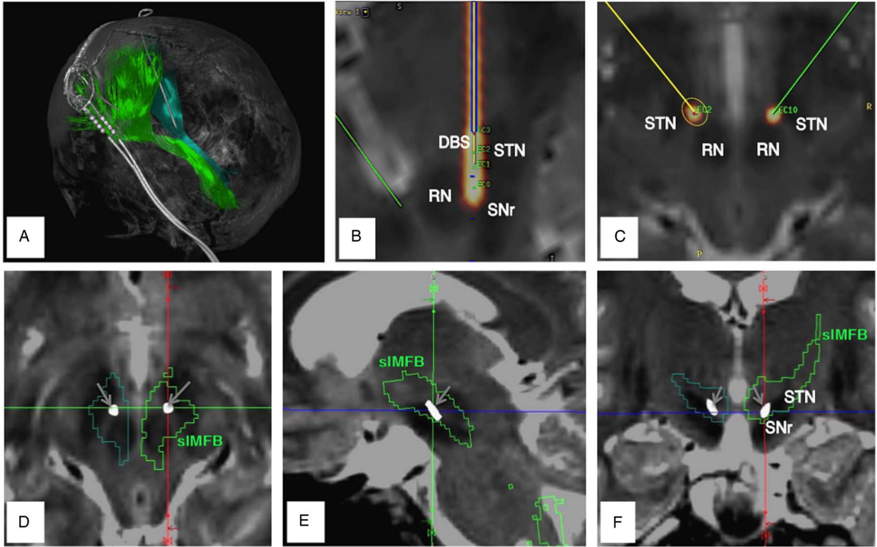
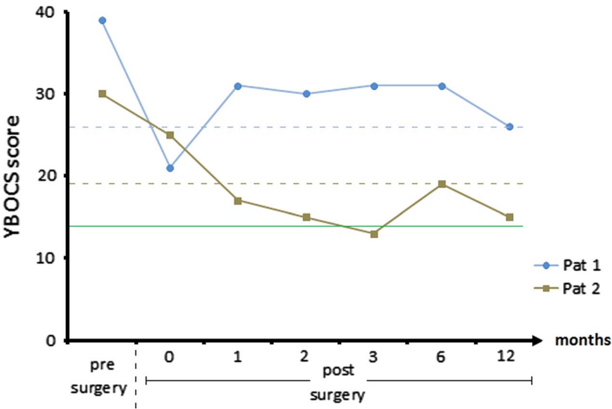
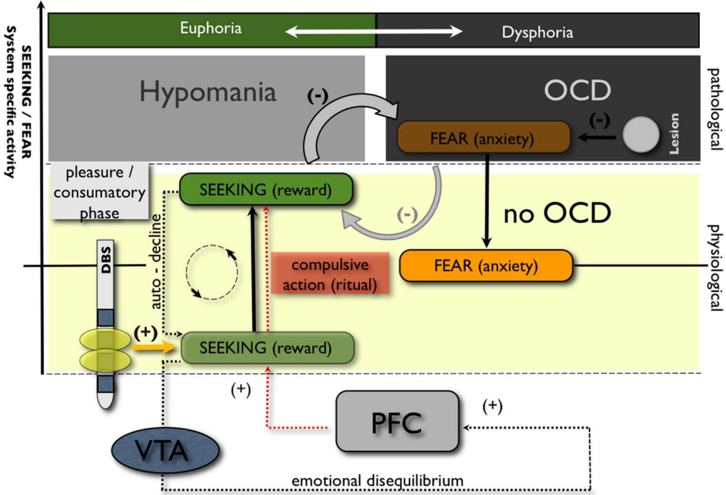
Deep brain stimulation (DBS) is a promising putative modality for the treatment of refractory psychiatric disorders such as major depression and obsessive-compulsive disorder (OCD). Several targets have been posited; however, a clear consensus on differential efficacy and possible modes of action remain unclear. DBS to the supero-lateral branch of the medial forebrain bundle (slMFB) has recently been introduced for major depression (MD). Due to our experience with slMFB stimulation for MD, and because OCD might be related to similar dysfunctions of the reward system, treatment with slMFB DBS seams meaningful. Here we describe our first 2 cases together with a hypothetical mode of action. We describe diffusion tensor imaging (DTI) fiber tractographically (FT)-assisted implantation of the bilateral DBS systems in 2 male patients. In a selected literature overview, we discuss the possible mode of action. Both patients were successfully implanted and stimulated. The follow-up time was 12 months. One patient showed a significant response (Yale–Brown Obsessive-Compulsive Scale [YBOCS] reduction by 35%); the other patient reached remission criteria 3 months after surgery (YBOCS<14) and showed mild OCD just above the remission criterion at 12 months follow-up. While the hypermetabolism theory for OCD involves the cortico–striato–thalamo–cortical (CSTC) network, we think that there is clinical evidence that the reward system plays a crucial role. Our findings suggest an important role of this network in mechanisms of disease development and recovery. In this uncontrolled case series, continuous bilateral DBS to the slMFB led to clinically significant improvements of ratings of OCD severity. Ongoing research focuses on the role of the reward system in OCD, and its yet-underestimated role in this underlying neurobiology of the disease.
Overview
The claims and statistics of this paper haven’t been checked yet.
Free: it reads the open-access text and checks the first 5 claims that cite a source we can check. Create a free account to check every claim.
Integrity signals
Registry
Cites
Statistics
Figures
Verification
Claims the paper makes
The claims and statistics of this paper haven’t been checked yet.
Free: it reads the open-access text and checks the first 5 claims that cite a source we can check. Create a free account to check every claim.
Claims other papers make about this one
Each is checked against this paper’s own text: does it say what the citing paper says it does?
The cited source says what the claim attributes to it.
In the citing paper
“DBS targeting the medial forebrain bundle (white matter tracts connecting regions of the reward system including the NAcc) also improves symptoms in treatment-resistant OCD [160].”
From Toward a neurocircuit-based taxonomy to guide treatment of obsessive-compulsive disorder (2021) · cites this paper as [160]
Self-check
Percentages, sums and reported differences re-computed from the paper’s own numbers.
The self-check needs the paper’s full text.
Citations
Cites
Rapid regulation of depression-related behaviours by control of midbrain dopamine neurons
Chaudhury, D., Walsh, J. J., Friedman, A. K., Juarez, B., Ku, S. M., Koo, J. W., Ferguson, D., Tsai, H.-C., Pomeranz, L., Christoffel, D. J., et al. (2013) · Nature · doi:10.1038/nature11713 · Cited by 1,156 · cited 1×
“16 Clinically, lesions of the anterior limb of internal capsule will simultaneously disconnect both the bilateral anterior thalamic radiation (ATR) and the MFB sys-tem, 10,11,17,18 which are in close proximity to ALIC and converge onto the PFC (Figure 3).”
Practice Guideline for the Treatment of Patients With Obsessive-Compulsive Disorder
(2008) · APA Practice Guidelines for the Treatment of Psychiatric Disorders: Comprehensive Guidelines and Guideline Watches · doi:10.1176/appi.books.9780890423363.149114 · Cited by 1,028
Subthalamic nucleus stimulation in severe obsessive-compulsive disorder
Mallet, L., Polosan, M., Jaafari, N., Baup, N., Welter, M.-L., Fontaine, D., Montcel, S. T. D., Yelnik, J., Chéreau, I., Arbus, C., et al. (2008) · New England Journal of Medicine · doi:10.1056/nejmoa0708514 · Cited by 965
Nuttin, B., Cosyns, P., Demeulemeester, H., Gybels, J., & Meyerson, B. (1999) · The Lancet · doi:10.1016/s0140-6736(99)02376-4 · Cited by 854
Prolonged dopamine signalling in striatum signals proximity and value of distant rewards
Howe, M. W., Tierney, P. L., Sandberg, S. G., Phillips, P. E. M., & Graybiel, A. M. (2013) · Nature · doi:10.1038/nature12475 · Cited by 565 · cited 1×
“Reward prediction behavior was shown in rodents to be linked to the level of free synaptic dopamine in the ventral striatum.(20) In slMFB DBS, a stimulation of fibers that descend into the VTA might (as suggested for rituals) transfer the function of dopaminergic neurons from phasic high-frequency oscillation into a t…”
Rapid effects of deep brain stimulation for treatment-resistant major depression
Schlaepfer, T. E., Bewernick, B. H., Kayser, S., Mädler, B., & Coenen, V. A. (2013) · Biological Psychiatry · doi:10.1016/j.biopsych.2013.01.034 · Cited by 563 · cited 10×
“Patients with MD react to slMFB DBS with an acute increase of appetitive motivation (goal directed behavior) owing to an improved prediction of distant reward.(7,8) Reward prediction behavior was shown in rodents to be linked to the level of free synaptic dopamine in the ventral striatum.”
InfluentialSelf-citationRepeated cortico-striatal stimulation generates persistent OCD-like behavior
Ahmari, S. E., Spellman, T., Douglass, N. L., Kheirbek, M. A., Simpson, H. B., Deisseroth, K., Gordon, J. A., & Hen, R. (2013) · Science · doi:10.1126/science.1234733 · Cited by 502 · cited 1×
“13 Thus it is the long-term and not the short-term activation that presumably leads to typical OCD symptoms.”
Invasive circuitry-based neurotherapeutics: stereotactic ablation and deep brain stimulation for OCD
Greenberg, B. D., Rauch, S. L., & Haber, S. N. (2010) · Neuropsychopharmacology · doi:10.1038/npp.2009.128 · Cited by 359
Zaitsev, M., Hennig, J., & Speck, O. (2004) · Magnetic Resonance in Medicine · doi:10.1002/mrm.20261 · Cited by 349 · cited 1×
“Deformation correction of the EPI sequence was performed according to Zaitsev et al.(12)”
Coenen, V. A., Panksepp, J., Hurwitz, T. A., Urbach, H., & Mädler, B. (2012) · The Journal of Neuropsychiatry and Clinical Neurosciences · doi:10.1176/appi.neuropsych.11080180 · Cited by 342 · cited 2×
“(Capitalization refers to affective neuroscience context in this interpretation.(10,11)) 288 V.”
Self-citationCoenen, V. A., Schlaepfer, T. E., Maedler, B., & Panksepp, J. (2011) · Neuroscience & Biobehavioral Reviews · doi:10.1016/j.neubiorev.2010.12.009 · Cited by 249 · cited 4×
“(Capitalization refers to affective neuroscience context in this interpretation.(10,11)) 288 V.”
InfluentialSelf-citationTreatment Response, Symptom Remission, and Wellness in Obsessive-Compulsive Disorder
Farris, S. G., McLean, C. P., Van Meter, P. E., Simpson, H. B., & Foa, E. B. (2013) · The Journal of Clinical Psychiatry · doi:10.4088/jcp.12m07789 · Cited by 216
Coenen, V. A., Honey, C. R., Hurwitz, T., Rahman, A. A., McMaster, J., Bürgel, U., & Mädler, B. (2009) · Neurosurgery · doi:10.1227/01.neu.0000345631.54446.06 · Cited by 186 · cited 2×
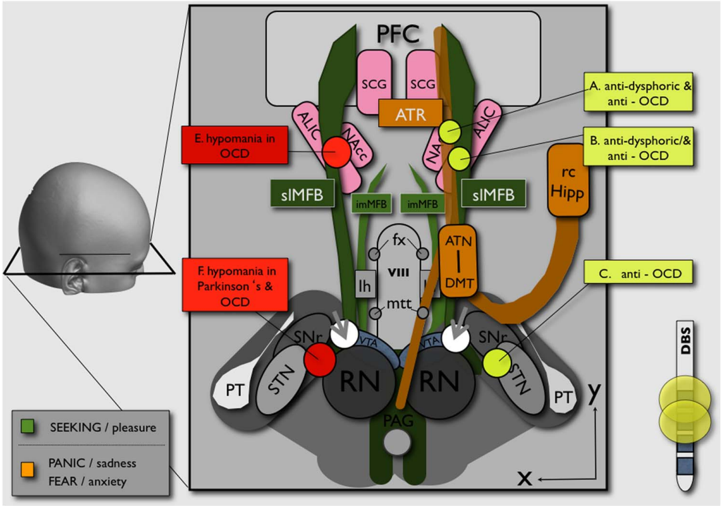
“The authors believe that medial STNDBS inOCD(21)works over the samemode of action bymodulating the nearby slMFB.(22) Clinically, hypomania—which might be conceptualized as a pathological activation of the reward system—can be seen during DBS for OCD in a variety of targets (Figure 3).”
Self-citationSchlaepfer, T. E., Bewernick, B. H., Kayser, S., Hurlemann, R., & Coenen, V. A. (2014) · Neuropsychopharmacology · doi:10.1038/npp.2014.28 · Cited by 160 · cited 4×
“Although the mode of action of slMFB DBS remains speculative at this time, this permits us to extrapolate to a plausible mechanism: As a careful translation from rodent research, 9 we have previously suggested (for depression) a modulating effect that does not directly exert its effects over the ascending slMFB fibers…”
InfluentialSelf-citation(2006) · PubMed · Cited by 159
Lipsman, N., Neimat, J. S., & Lozano, A. M. (2007) · Neurosurgery · doi:10.1227/01.neu.0000279719.75403.f7 · Cited by 151 · cited 1×
“14 Stimulation studies looking at the depression circuitry (which includes most of the key regions for the OCD symptomatology) found that a better target region could be the slMFB, just where it exits the VTA.”
Bourne, S. K., Eckhardt, C. A., Sheth, S. A., & Eskandar, E. N. (2012) · Frontiers in Integrative Neuroscience · doi:10.3389/fnint.2012.00029 · Cited by 146 · cited 1×
“Several meta-analyses and reviews summarize the potential of DBS in OCD; however, the mechanisms underlying its therapeutic effects remain unclear.(3,4) Targets under investigation are the anterior limb of the internal capsule (ALIC; often also ventral capsule = vc), the ventral stiatum (vs), the medial subthalamic nu…”
Ahmari, S. E., & Dougherty, D. D. (2015) · Depression and Anxiety · doi:10.1002/da.22367 · Cited by 128
Deep brain stimulation induces striatal dopamine release in obsessive-compulsive disorder
Figee, M., de Koning, P., Klaassen, S., Vulink, N., Mantione, M., van den Munckhof, P., Schuurman, R., van Wingen, G., van Amelsvoort, T., Booij, J., et al. (2014) · Biological Psychiatry · doi:10.1016/j.biopsych.2013.06.021 · Cited by 112 · cited 1×
“In OCD it has been shown that DBS to the reward system (nucleus accumbens) increases striatal dopamine release, 26 which under certain circum-stances might be a likely correlate of hypomania.”
Deep brain stimulation for obsessive–compulsive disorder: a systematic review and meta-analysis
Kisely, S., Hall, K., Siskind, D., Frater, J., Olson, S., & Crompton, D. (2014) · Psychological Medicine · doi:10.1017/s0033291714000981 · Cited by 95 · cited 2×
“Targets under investigation are the anterior limb of the internal capsule (ALIC; often also ventral capsule = vc), the ventral stiatum (vs), the medial subthalamic nucleus (mSTN), the inferior thalamic peduncle, and the nucleus accumbens (NAC).(5) These structures have been selected because they have been considered a…”
Tractographic Analysis of Historical Lesion Surgery for Depression
Schoene-Bake, J.-C., Parpaley, Y., Weber, B., Panksepp, J., Hurwitz, T. A., & Coenen, V. A. (2010) · Neuropsychopharmacology · doi:10.1038/npp.2010.132 · Cited by 85 · cited 2×
“The fact that a significant number of patients show fatigue after anterior capsule lesions supports this notion, because it is likely related to the disconnection of the ascending fibers of the reward system (MFB) on their way to the PFC. 17,18 In our 2 patients, we have seen a “ stun ” effect, with significantly decr…”
Self-citationPredictors of hypomania during ventral capsule/ventral striatum deep brain stimulation
Widge, A. S., Licon, E., Zorowitz, S., Corse, A., Arulpragasam, A. R., Camprodon, J. A., Cusin, C., Eskandar, E. N., Deckersbach, T., & Dougherty, D. D. (2016) · The Journal of Neuropsychiatry and Clinical Neurosciences · doi:10.1176/appi.neuropsych.15040089 · Cited by 58 · cited 1×
“The authors believe that medial STN DBS inOCD 21 worksover thesamemodeofactionbymodulating the nearby slMFB. 22 Clinically, hypomania — which might be conceptualized as a pathological activation of the reward system — can be seen during DBS for OCD in a variety of targets 21,23 – 25 (Figure 3).”
Furlanetti, L. L., Coenen, V. A., & Döbrössy, M. D. (2015) · Behavioural Brain Research · doi:10.1016/j.bbr.2015.11.036 · Cited by 48
Self-citationDöbrössy, M. D., Furlanetti, L. L., & Coenen, V. A. (2015) · Neuroscience & Biobehavioral Reviews · doi:10.1016/j.neubiorev.2014.11.018 · Cited by 47 · cited 1×
“…slMFB DBS remains speculative at this time, this permits us to extrapolate to a plausible mechanism: As a careful translation from rodent research, 9 we have previously suggested (for depression) a modulating effect that does not directly exert its effects over the ascending slMFB fibers but…”
Self-citationBregman, T., Reznikov, R., Diwan, M., Raymond, R., Butson, C. R., Nóbrega, J. N., & Hamani, C. (2015) · Brain stimulation · doi:10.1016/j.brs.2015.02.007 · Cited by 45 · cited 1×
“According to some authors, DBS of the MFB does not lead to an increase in dopamine release in the striatum (in models of depression), 27 whereas our own rodent research shows a crucial role of this very dopamine transmission for the mode of action of chronic MFB DBS. 19,28,29 It is worth noting…”
Chang, C.-H., Chen, S.-Y., Hsiao, Y.-L., Tsai, S.-T., & Tsai, H.-C. (2010) · Journal of Neurosurgery · doi:10.3171/2009.10.jns09918 · Cited by 38
Tract Identification by Novel MRI Signal Changes following Stereotactic Anterior Capsulotomy
Hurwitz, T. A., Mandat, T., Forster, B., & Honey, C. (2006) · Stereotactic and Functional Neurosurgery · doi:10.1159/000096496 · Cited by 37 · cited 3×
“The fact that a significant number of patients show fatigue after anterior capsule lesions supports this notion, because it is likely related to the disconnection of the ascending fibers of the reward system (MFB) on their way to the PFC. 17,18 In our 2 patients, we have seen a “ stun ” effect, with significantly decr…”
Furlanetti, L. L., Coenen, V. A., Aranda, I. A., & Döbrössy, M. D. (2015) · Experimental Brain Research · doi:10.1007/s00221-015-4375-9 · Cited by 35
Self-citationFurlanetti, L. L., Döbrössy, M. D., Aranda, I. A. A., & Coenen, V. A. (2015) · Behavioural Neurology · doi:10.1155/2015/256196 · Cited by 25 · cited 5×
“The authors have likewise seen this stun effect in patients with major depression and slMFB DBS. ALIC DBS leads to a reduced activity in the dorsomedial thalamus (DMT; Figure 3) and significantly in the OFC as part of the ATR system.”
InfluentialSelf-citationTsai, H., Chen, S.-Y., Tsai, S., Hung, H., & Chang, C.-H. (2010) · Biological Psychiatry · doi:10.1016/j.biopsych.2010.04.001 · Cited by 22 · cited 1×
“Gray spheres (only shown on left side) represent sites at which DBS elicited hypomania.(21,23,24) (RN = red nucleus; STN = subthalamic nucleus; SNr = substantia nigra; VTA = ventral tegmental area; PAG = periaquaeductal gray;”
Cited by
Deep brain stimulation: current challenges and future directions
Lozano, A. M., Lipsman, N., Bergman, H., Brown, P., Chabardes, S., Chang, J. W., Matthews, K., McIntyre, C. C., Schlaepfer, T. E., Schulder, M., et al. (2019) · Nature Reviews Neurology · doi:10.1038/s41582-018-0128-2 · Cited by 1,450
Self-citationStein, D. J., Costa, D. L. C., Lochner, C., Miguel, E. C., Reddy, Y. C. J., Shavitt, R. G., van den Heuvel, O. A., & Simpson, H. B. (2019) · Nature Reviews Disease Primers · doi:10.1038/s41572-019-0102-3 · Cited by 895
A unified connectomic target for deep brain stimulation in obsessive-compulsive disorder
Li, N., Baldermann, J. C., Kibleur, A., Treu, S., Akram, H., Elias, G. J. B., Boutet, A., Lozano, A. M., Al-Fatly, B., Strange, B., et al. (2020) · Nature Communications · doi:10.1038/s41467-020-16734-3 · Cited by 316
Toward a neurocircuit-based taxonomy to guide treatment of obsessive-compulsive disorder
Shephard, E., Stern, E. R., van den Heuvel, O. A., Costa, D. L. C., Batistuzzo, M. C., Godoy, P. B. G., Lopes, A. C., Brunoni, A. R., Hoexter, M. Q., Shavitt, R. G., et al. (2021) · Molecular Psychiatry · doi:10.1038/s41380-020-01007-8 · Cited by 250
Biomarkers for closed-loop deep brain stimulation in Parkinson disease and beyond
Bouthour, W., Mégevand, P., Donoghue, J., Lüscher, C., Birbaumer, N., & Krack, P. (2019) · Nature Reviews Neurology · doi:10.1038/s41582-019-0166-4 · Cited by 230
Metadata
- Authors
- Coenen, V. A., Schlaepfer, T. E., Goll, P., Reinacher, P. C., Voderholzer, U., Tebartz van Elst, L., Urbach, H., & Freyer, T.
- Affiliations
- University Medical Center Freiburg (DE)
- University Hospital Bonn (DE)
- Schön Klinik Roseneck (DE)
- Corresponding author
- Coenen, Volker A.
- Venue
- CNS Spectrums
- Publisher
- Cambridge University Press (CUP)
- Published
- 2016-06-08
- Volume
- 22
- Issue
- 3
- Pages
- 282-289
- ISSN
- 1092-8529 (ISSN-L)
- 2165-6509
- OpenAlex
- W2416957563
- Cited by
- 128
- References
- 30
- Citations by year
- 2026: 14 · 2025: 14 · 2024: 6 · 2023: 10 · 2022: 12 · 2021: 26 · 2020: 14 · 2019: 11 · 2018: 14 · 2017: 3 · 2016: 4
- FWCI
- 14.27
- Type
- journal article
- Language
- en
- Open access
- hybrid
- doi.org
- Licence
- Locations
- CNS Spectrums (publishedVersion, cc-by-nc-sa)
- PubMed (publishedVersion)
- Topics
- Social Sciences › Psychology › Clinical Psychology › Obsessive-Compulsive Spectrum Disorders
- Health Sciences › Medicine › Clinical Neurology › Deep Brain Stimulation and Movement Disorders
- Life Sciences › Neuroscience › Neurology › Transcranial Magnetic Stimulation Studies
- Keywords
- deep brain stimulation, medial forebrain bundle, obsessive-compulsive disorder, reward systems, mechanism of action, refractory psychiatric disorders
- MeSH terms
- Adult, Humans, Male, Medial Forebrain Bundle, Middle Aged, Obsessive-Compulsive Disorder, Deep Brain Stimulation
About these checks
Registry, retraction, Cites and statistics results are computed, not judged, with one exception: a printed reference that no index lists is read once by a model before it counts as a citation error. Claims are extracted by a model and kept only when their quote appears verbatim in the text; each cited source is then checked, with a model’s help, for whether it says what the claim relies on. Those verdicts can be wrong — read the claim’s quote and the cited source before relying on one.
Statistics and arithmetic are recomputed, not judged.
Confidence bands are shown only for fields calibrated on our annotated test set. None is calibrated yet, so no band is shown.
What counts as a claim ›How we measure confidence ›How we check this ›
Are you an author, or do you see a problem with this page? Request a review
Data sources
Bibliographic data: Semantic Scholar, OpenAlex, Crossref.
Contains information from the Semantic Scholar Academic Graph Datasets, made available under the ODC Attribution License (ODC-BY 1.0).
Semantic Scholar’s data is described in: Kinney, R., et al. (2023). The Semantic Scholar Open Data Platform. arXiv:2301.10140.
