

The medial forebrain bundle as a target for deep brain stimulation for obsessive-compulsive disorder
Open accessThe DOI matches its Crossref record; 30 of the 30 references it cites were found in a registry or an index.
Abstract
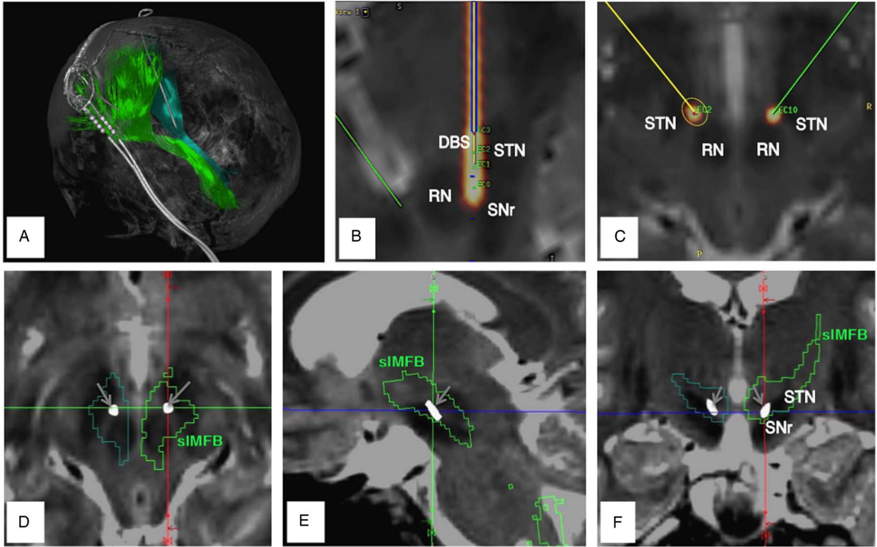
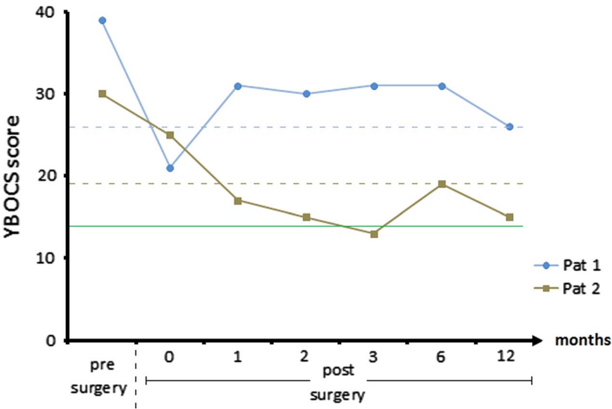
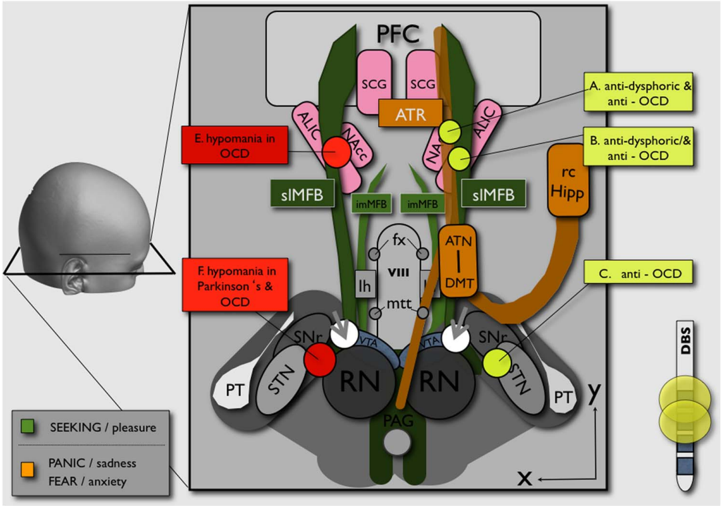
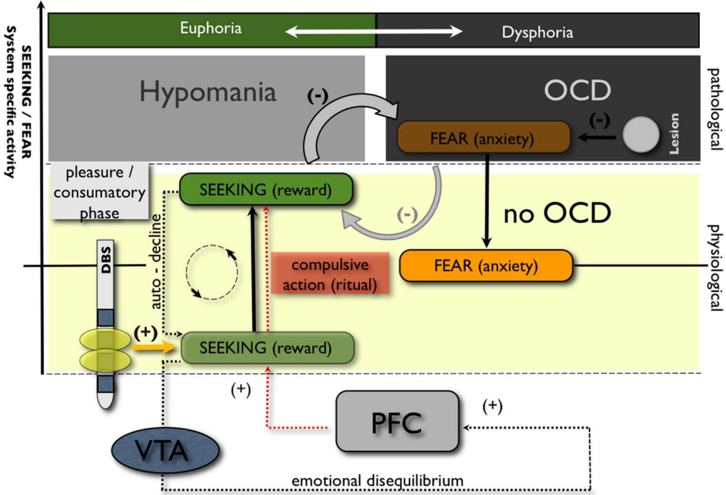
Deep brain stimulation (DBS) is a promising putative modality for the treatment of refractory psychiatric disorders such as major depression and obsessive-compulsive disorder (OCD). Several targets have been posited; however, a clear consensus on differential efficacy and possible modes of action remain unclear. DBS to the supero-lateral branch of the medial forebrain bundle (slMFB) has recently been introduced for major depression (MD). Due to our experience with slMFB stimulation for MD, and because OCD might be related to similar dysfunctions of the reward system, treatment with slMFB DBS seams meaningful. Here we describe our first 2 cases together with a hypothetical mode of action. We describe diffusion tensor imaging (DTI) fiber tractographically (FT)-assisted implantation of the bilateral DBS systems in 2 male patients. In a selected literature overview, we discuss the possible mode of action. Both patients were successfully implanted and stimulated. The follow-up time was 12 months. One patient showed a significant response (Yale–Brown Obsessive-Compulsive Scale [YBOCS] reduction by 35%); the other patient reached remission criteria 3 months after surgery (YBOCS<14) and showed mild OCD just above the remission criterion at 12 months follow-up. While the hypermetabolism theory for OCD involves the cortico–striato–thalamo–cortical (CSTC) network, we think that there is clinical evidence that the reward system plays a crucial role. Our findings suggest an important role of this network in mechanisms of disease development and recovery. In this uncontrolled case series, continuous bilateral DBS to the slMFB led to clinically significant improvements of ratings of OCD severity. Ongoing research focuses on the role of the reward system in OCD, and its yet-underestimated role in this underlying neurobiology of the disease.
Overview
The claims and statistics of this paper haven’t been checked yet.
Free: it reads the open-access text and checks the first 5 claims that cite a source we can check. Create a free account to check every claim.
Integrity signals
Registry
Cites
Statistics
Figures
Verification
Claims the paper makes
The claims and statistics of this paper haven’t been checked yet.
Free: it reads the open-access text and checks the first 5 claims that cite a source we can check. Create a free account to check every claim.
Claims other papers make about this one
Each is checked against this paper’s own text: does it say what the citing paper says it does?
The cited source says what the claim attributes to it.
In the citing paper
“DBS targeting the medial forebrain bundle (white matter tracts connecting regions of the reward system including the NAcc) also improves symptoms in treatment-resistant OCD [160].”
From Toward a neurocircuit-based taxonomy to guide treatment of obsessive-compulsive disorder (2021) · cites this paper as [160]
Self-check
Percentages, sums and reported differences re-computed from the paper’s own numbers.
The self-check needs the paper’s full text.
Citations
Cites
Rapid regulation of depression-related behaviours by control of midbrain dopamine neurons
Chaudhury, D., Walsh, J. J., Friedman, A. K., Juarez, B., Ku, S. M., Koo, J. W., Ferguson, D., Tsai, H.-C., Pomeranz, L., Christoffel, D. J., et al. (2013) · Nature · doi:10.1038/nature11713 · Cited by 1,156 · cited 1×
“16 Clinically, lesions of the anterior limb of internal capsule will simultaneously disconnect both the bilateral anterior thalamic radiation (ATR) and the MFB sys-tem, 10,11,17,18 which are in close proximity to ALIC and converge onto the PFC (Figure 3).”
Practice Guideline for the Treatment of Patients With Obsessive-Compulsive Disorder
(2008) · APA Practice Guidelines for the Treatment of Psychiatric Disorders: Comprehensive Guidelines and Guideline Watches · doi:10.1176/appi.books.9780890423363.149114 · Cited by 1,028
Subthalamic nucleus stimulation in severe obsessive-compulsive disorder
Mallet, L., Polosan, M., Jaafari, N., Baup, N., Welter, M.-L., Fontaine, D., Montcel, S. T. D., Yelnik, J., Chéreau, I., Arbus, C., et al. (2008) · New England Journal of Medicine · doi:10.1056/nejmoa0708514 · Cited by 965
Nuttin, B., Cosyns, P., Demeulemeester, H., Gybels, J., & Meyerson, B. (1999) · The Lancet · doi:10.1016/s0140-6736(99)02376-4 · Cited by 854
Prolonged dopamine signalling in striatum signals proximity and value of distant rewards
Howe, M. W., Tierney, P. L., Sandberg, S. G., Phillips, P. E. M., & Graybiel, A. M. (2013) · Nature · doi:10.1038/nature12475 · Cited by 565 · cited 1×
“Reward prediction behavior was shown in rodents to be linked to the level of free synaptic dopamine in the ventral striatum.(20) In slMFB DBS, a stimulation of fibers that descend into the VTA might (as suggested for rituals) transfer the function of dopaminergic neurons from phasic high-frequency oscillation into a t…”
Rapid effects of deep brain stimulation for treatment-resistant major depression
Schlaepfer, T. E., Bewernick, B. H., Kayser, S., Mädler, B., & Coenen, V. A. (2013) · Biological Psychiatry · doi:10.1016/j.biopsych.2013.01.034 · Cited by 563 · cited 10×
“Patients with MD react to slMFB DBS with an acute increase of appetitive motivation (goal directed behavior) owing to an improved prediction of distant reward.(7,8) Reward prediction behavior was shown in rodents to be linked to the level of free synaptic dopamine in the ventral striatum.”
InfluentialSelf-citationRepeated cortico-striatal stimulation generates persistent OCD-like behavior
Ahmari, S. E., Spellman, T., Douglass, N. L., Kheirbek, M. A., Simpson, H. B., Deisseroth, K., Gordon, J. A., & Hen, R. (2013) · Science · doi:10.1126/science.1234733 · Cited by 502 · cited 1×
“13 Thus it is the long-term and not the short-term activation that presumably leads to typical OCD symptoms.”
Invasive circuitry-based neurotherapeutics: stereotactic ablation and deep brain stimulation for OCD
Greenberg, B. D., Rauch, S. L., & Haber, S. N. (2010) · Neuropsychopharmacology · doi:10.1038/npp.2009.128 · Cited by 359
Zaitsev, M., Hennig, J., & Speck, O. (2004) · Magnetic Resonance in Medicine · doi:10.1002/mrm.20261 · Cited by 349 · cited 1×
“Deformation correction of the EPI sequence was performed according to Zaitsev et al.(12)”
Coenen, V. A., Panksepp, J., Hurwitz, T. A., Urbach, H., & Mädler, B. (2012) · The Journal of Neuropsychiatry and Clinical Neurosciences · doi:10.1176/appi.neuropsych.11080180 · Cited by 342 · cited 2×
“(Capitalization refers to affective neuroscience context in this interpretation.(10,11)) 288 V.”
Self-citation
Cited by
Deep brain stimulation: current challenges and future directions
Lozano, A. M., Lipsman, N., Bergman, H., Brown, P., Chabardes, S., Chang, J. W., Matthews, K., McIntyre, C. C., Schlaepfer, T. E., Schulder, M., et al. (2019) · Nature Reviews Neurology · doi:10.1038/s41582-018-0128-2 · Cited by 1,450
Self-citationStein, D. J., Costa, D. L. C., Lochner, C., Miguel, E. C., Reddy, Y. C. J., Shavitt, R. G., van den Heuvel, O. A., & Simpson, H. B. (2019) · Nature Reviews Disease Primers · doi:10.1038/s41572-019-0102-3 · Cited by 895
A unified connectomic target for deep brain stimulation in obsessive-compulsive disorder
Li, N., Baldermann, J. C., Kibleur, A., Treu, S., Akram, H., Elias, G. J. B., Boutet, A., Lozano, A. M., Al-Fatly, B., Strange, B., et al. (2020) · Nature Communications · doi:10.1038/s41467-020-16734-3 · Cited by 316
Toward a neurocircuit-based taxonomy to guide treatment of obsessive-compulsive disorder
Shephard, E., Stern, E. R., van den Heuvel, O. A., Costa, D. L. C., Batistuzzo, M. C., Godoy, P. B. G., Lopes, A. C., Brunoni, A. R., Hoexter, M. Q., Shavitt, R. G., et al. (2021) · Molecular Psychiatry · doi:10.1038/s41380-020-01007-8 · Cited by 250
Biomarkers for closed-loop deep brain stimulation in Parkinson disease and beyond
Bouthour, W., Mégevand, P., Donoghue, J., Lüscher, C., Birbaumer, N., & Krack, P. (2019) · Nature Reviews Neurology · doi:10.1038/s41582-019-0166-4 · Cited by 230
Opportunities of connectomic neuromodulation
Horn, A., & Fox, M. D. (2020) · NeuroImage · doi:10.1016/j.neuroimage.2020.117180 · Cited by 187
Superolateral medial forebrain bundle deep brain stimulation in major depression: a gateway trial
Coenen, V. A., Bewernick, B. H., Kayser, S., Kilian, H., Boström, J., Greschus, S., Hurlemann, R., Klein, M. E., Spanier, S., Sajonz, B., et al. (2019) · Neuropsychopharmacology · doi:10.1038/s41386-019-0369-9 · Cited by 176
Self-citationGadot, R., Najera, R., Hirani, S., Anand, A., Storch, E., Goodman, W. K., Shofty, B., & Sheth, S. A. (2022) · Journal of Neurology, Neurosurgery & Psychiatry · doi:10.1136/jnnp-2021-328738 · Cited by 148
Middlebrooks, E. H., Domingo, R. A., Vivas-Buitrago, T. G. M., Okromelidze, L., Tsuboi, T., Wong, J. K., Eisinger, R. S., Almeida, L., Burns, M. R., Horn, A., et al. (2020) · American Journal of Neuroradiology · doi:10.3174/ajnr.a6693 · Cited by 148
Probabilistic Mapping of Deep Brain Stimulation: Insights from 15 Years of Therapy
Elias, G. J. B., Boutet, A., Joel, S. E., Germann, J., Gwun, D., Neudorfer, C., Gramer, R., Algarni, M., Paramanandam, V., Prasad, S., et al. (2020) · Annals of Neurology · doi:10.1002/ana.25975 · Cited by 135
Coenen, V. A., Schumacher, L. V., Kaller, C., Schlaepfer, T. E., Reinacher, P. C., Egger, K., Urbach, H., & Reisert, M. (2018) · NeuroImage Clinical · doi:10.1016/j.nicl.2018.03.019 · Cited by 127
“However, choosing the slMFB as a possible target site for chronic DBS in depression (Fenoy et al., 2016; Schlaepfer et al., 2013) and OCD (Coenen et al., 2016) demands a more detailed knowledge about MFB anatomy per se and specifically about its projections to the PFC.”
Self-citationConnectomic deep brain stimulation for obsessive-compulsive disorder
Baldermann, J. C., Schüller, T., Kohl, S., Voon, V., Li, N., Hollunder, B., Figee, M., Haber, S. N., Sheth, S. A., Mosley, P. E., et al. (2021) · Biological Psychiatry · doi:10.1016/j.biopsych.2021.07.010 · Cited by 118
“These insights harmonize aforementioned findings with reports of the superolateral MFB/ midbrain target/VTA projection pathway as an effective target for OCD (23), which, by its shape, again represents the same bundle (47).”
BackgroundResultInfluentialMar‐Barrutia, L., Real, E., Segalàs, C., Bertolín, S., Menchón, J. M., & Alonso, P. (2021) · World Journal of Psychiatry · doi:10.5498/wjp.v11.i9.659 · Cited by 115
Liebrand, L. C., Caan, M. W. A., Schuurman, P. R., van den Munckhof, P., Figee, M., Denys, D., & van Wingen, G. A. (2019) · Brain Stimulation · doi:10.1016/j.brs.2018.11.014 · Cited by 98
“DBS specifically targeted at the MFB has already gained some interest as therapy for TRD [22], whereas specific targeting of the MFB for OCD is in its infancy [11].”
Deep transcranial magnetic stimulation (dTMS)—Beyond depression
Tendler, A., Barnea Ygael, N., Roth, Y., & Zangen, A. (2016) · Expert Review of Medical Devices · doi:10.1080/17434440.2016.1233812 · Cited by 93
Coenen, V. A., Sajonz, B., Reisert, M., Bostroem, J., Bewernick, B., Urbach, H., Jenkner, C., Reinacher, P. C., Schlaepfer, T. E., & Mädler, B. (2018) · NeuroImage: Clinical · doi:10.1016/j.nicl.2018.08.020 · Cited by 87
“further evaluation of potentially co-stimulated regions on distinct trajectories (contacts 1,2,3 ) with respect to MER we estimated the probability of such a co-stimulation of the STN as the most likely other candidate structure for an antidepressant effect (21,22).”
BackgroundMethodSelf-citationToward personalized medicine in connectomic deep brain stimulation
Hollunder, B., Rajamani, N., Siddiqi, S., Finke, C., Kühn, A. A., Mayberg, H. S., Fox, M., Neudorfer, C., & Horn, A. (2021) · Progress in Neurobiology · doi:10.1016/j.pneurobio.2021.102211 · Cited by 97
A Unified Functional Network Target for Deep Brain Stimulation in Obsessive-Compulsive Disorder
Li, N., Hollunder, B., Baldermann, J. C., Kibleur, A., Treu, S., Akram, H., Al-Fatly, B., Strange, B. A., Barcia, J. A., Zrinzo, L., et al. (2021) · Biological Psychiatry · doi:10.1016/j.biopsych.2021.04.006 · Cited by 83
Coenen, V. A., Schlaepfer, T. E., Sajonz, B., Döbrössy, M., Kaller, C. P., Urbach, H., & Reisert, M. (2020) · NeuroImage: Clinical · doi:10.1016/j.nicl.2020.102165 · Cited by 75
Self-citationRecent advances in psychoradiology
Luo, L., You, W., DelBello, M. P., Gong, Q., & Li, F. Y. (2022) · Physics in Medicine and Biology · doi:10.1088/1361-6560/ac9d1e · Cited by 78
“Recently, stimulation in the superior lateral branch of themedial forebrain tract has been reported to be related to rapid and sustained efficacy inOCD (Coenen et al 2017).”
BackgroundLee, D. J., Dallapiazza, R. F., De Vloo, P., Elias, G. J. B., Fomenko, A., Boutet, A., Giacobbe, P., & Lozano, A. M. (2019) · Brain Stimulation · doi:10.1016/j.brs.2018.11.012 · Cited by 64
Optimizing Deep Brain Stimulation Parameters in Obsessive–Compulsive Disorder
van Westen, M., Rietveld, E., Bergfeld, I. O., de Koning, P. P., Vullink, N., Ooms, P., Graat, I., Liebrand, L. C., van den Munckhof, P., Schuurman, R., et al. (2020) · Neuromodulation Technology at the Neural Interface · doi:10.1111/ner.13243 · Cited by 68
“Reasons for implementing tractography are high inter-individual variability in vALIC anatomy (10,11) and promising results for tractography-based targeting of the superolateral branch of the medial forebrain bundle (slMFB) in DBS for depression (8,12).”
BackgroundDeep Brain Stimulation for Obsessive-Compulsive Disorder: Optimal Stimulation Sites
Meyer, G. M., Hollunder, B., Li, N., Butenko, K., Dembek, T. A., Hart, L., Nombela, C., Mosley, P., Akram, H., Acevedo, N., et al. (2024) · Biological Psychiatry · doi:10.1016/j.biopsych.2023.12.010 · Cited by 57
Fenoy, A. J., Quevedo, J., & Soares, J. C. (2021) · Molecular Psychiatry · doi:10.1038/s41380-021-01100-6 · Cited by 63
A Systematic Review of Deep Brain Stimulation Targets for Obsessive Compulsive Disorder
Raviv, N., Staudt, M. D., Rock, A. K., MacDonell, J., Slyer, J., & Pilitsis, J. G. (2020) · Neurosurgery · doi:10.1093/neuros/nyaa249 · Cited by 50
Deep brain stimulation modulates directional limbic connectivity in obsessive-compulsive disorder
Fridgeirsson, E. A., Figee, M., Luigjes, J., van den Munckhof, P., Schuurman, P. R., van Wingen, G., & Denys, D. (2020) · Brain · doi:10.1093/brain/awaa100 · Cited by 51
van der Vlis, T. A. M. B., Ackermans, L., Mulders, A. E. P., Vrij, C. A., Schruers, K., Temel, Y., Duits, A., & Leentjens, A. F. G. (2021) · Neuromodulation: Technology at the Neural Interface · doi:10.1111/ner.13339 · Cited by 47
Merola, A., Singh, J., Reeves, K. C., Changizi, B. K., Goetz, S., Rossi, L., Pallavaram, S., Carcieri, S., Harel, N., Shaikhouni, A., et al. (2021) · Frontiers in Neurology · doi:10.3389/fneur.2021.694747 · Cited by 48
“Smaller trials have reported remarkably rapid and efficacious effects of stimulation of the medial forebrain bundle (mFB) in depressive disorders (49, 57, 58).”
BackgroundMulders, A. E. P., Plantinga, B. R., Schruers, K. R. J., Duits, A., Janssen, M. L. F., Ackermans, L. P. C. M., Leentjens, A. F. G., Jahanshahi, A., & Temel, Y. (2016) · European Neuropsychopharmacology · doi:10.1016/j.euroneuro.2016.10.011 · Cited by 49
Brocka, M., Helbing, C., Vincenz, D., Scherf, T., Montag, D., Goldschmidt, J., Angenstein, F., & Lippert, M. (2018) · NeuroImage · doi:10.1016/j.neuroimage.2018.04.059 · Cited by 45
“, 2017), obsessive-compulsive disorder (Coenen et al., 2017), and depression (Fenoy et al.”
Pinckard-Dover, H. N., Ward, H. E., & Foote, K. D. (2021) · Frontiers in Surgery · doi:10.3389/fsurg.2021.642503 · Cited by 42
“Over the years, other targets such as the nucleus accumbens (NA) (9–13), subthalamic nucleus (STN) (12, 14, 15), bed nucleus of stria terminalis (BNST) (9, 10, 16), inferior thalamic peduncle (ITP) (17, 18), thalamus (19), medial forebrain bundle (MFB) (20), caudate (12), and anteromedial globus pallidus internus (amG…”
BackgroundDeep brain stimulation in the treatment of obsessive-compulsive disorder: current perspectives
Tastevin, M., Spatola, G., Régis, J. M., Lançon, C., & Richieri, R. M. (2019) · Neuropsychiatric Disease and Treatment · doi:10.2147/ndt.s178207 · Cited by 39
Graat, I., Mocking, R. J. T., Liebrand, L. C., van den Munckhof, P., Bot, M., Schuurman, P. R., Bergfeld, I. O., van Wingen, G. A., & Denys, D. A. J. P. (2022) · Molecular Psychiatry · doi:10.1038/s41380-022-01760-y · Cited by 39
“A previous case-study including two OCD patients with tractography-based DBS of the slMFB [3] reported no adverse effects.”
ResultCoenen, V. A., Schlaepfer, T. E., Várkuti, B., Schuurman, P. R., Reinacher, P. C., Voges, J., Zrinzo, L. U., Blomstedt, P. C., Fenoy, A. J., & Hariz, M. I. (2019) · Brain stimulation · doi:10.1016/j.brs.2019.07.014 · Cited by 35
“These results are certainly relevant - albeit not new [9,19].”
InfluentialSelf-citationTundo, A., & Necci, R. (2016) · World Journal of Psychiatry · doi:10.5498/wjp.v6.i4.449 · Cited by 33
Deep brain stimulation for obsessive compulsive disorder: A review of results by anatomical target
Borders, C. B., Hsu, F. P. K., Sweidan, A. J., Matei, E. S., & Bota, R. G. (2018) · Mental Illness · doi:10.4081/mi.2018.7900 · Cited by 36
Coenen, V. A., Schlaepfer, T. E., Reinacher, P. C., Mast, H., Urbach, H., & Reisert, M. (2019) · Acta Neurochirurgica · doi:10.1007/s00701-019-03947-9 · Cited by 30
“There is a growing interest in deep brain stimulation (DBS) of the superolateral medial forebrain bundle (slMFB) for the alleviation of otherwise treatment-resistant psychiatric disorders like major depression (MD) [2, 3, 14, 15, 25] and obsessive-compulsive disorder (OCD) [11, 17].”
BackgroundSelf-citationRivas-Grajales, A. M., Sawyer, K. S., Karmacharya, S., Papadimitriou, G., Camprodon, J. A., Harris, G. J., Kubicki, M. R., Oscar‐Berman, M., & Makris, N. (2018) · NeuroImage Clinical · doi:10.1016/j.nicl.2018.03.025 · Cited by 28
“The MFB has been visualized in a small number of diffusion tensor imaging (DTI) studies (Coenen et al., 2012, 2016; Hana et al., 2015).”
BackgroundCoenen, V., Döbrössy, M., Teo, S.-J., Wessolleck, J., Sajonz, B., Reinacher, P., Thierauf-Emberger, A., Spittau, B., Leupold, J., von Elverfeldt, D., et al. (2021) · Brain Structure and Function · doi:10.1007/s00429-021-02373-x · Cited by 25
Self-citationGraat, I., Balke, S., Prinssen, J., de Koning, P. P., Vulink, N. C. C., Mocking, R. J. T., van Rooijen, G., van den Munckhof, P., Schuurman, R., & Denys, D. A. J. P. (2021) · Journal of Affective Disorders · doi:10.1016/j.jad.2021.12.089 · Cited by 26
Chang, K. W., Jung, H. H., & Chang, J. W. (2021) · Frontiers in Psychiatry · doi:10.3389/fpsyt.2021.640832 · Cited by 27
“Preliminary studies have also described the potential benefit of non-striatal targets, such as the superolateral branch of the medial forebrain bundle (64).”
BackgroundKlanker, M., Feenstra, M., Willuhn, I., & Denys, D. (2017) · Neuroscience · doi:10.1016/j.neuroscience.2017.09.012 · Cited by 25
“In addition, a recent study describes successful MFB DBS in two OCD patients, suggesting the MFB as a potential new target region for this disorder (Coenen et al., 2016) Our study has methodological value: The combination of techniques we described here can be used to directly study the effects of…”
Deep Brain Stimulation Response Circuits in Obsessive-Compulsive Disorder
Horn, A., Li, N., Meyer, G. M., Gadot, R., Provenza, N. R., & Sheth, S. A. (2025) · Biological Psychiatry · doi:10.1016/j.biopsych.2025.03.008 · Cited by 30
Improving Surgical Outcome Using Diffusion Tensor Imaging Techniques in Deep Brain Stimulation
See, A. A. Q., & King, N. K. K. (2017) · Frontiers in Surgery · doi:10.3389/fsurg.2017.00054 · Cited by 25
“Deep brain stimulation of the anterior limb of the internal capsule (ventral capsule) and ventral striatum (VC/VS) was performed in two patients with simultaneous targeting of the superolateral branch of the medial forebrain bundle (slMFB) with the aid of DTI (33).”
MethodProgress and challenges in deep brain stimulation for obsessive-compulsive disorder
Kohl, S., & Baldermann, J. C. (2018) · Pharmacology & Therapeutics · doi:10.1016/j.pharmthera.2018.01.011 · Cited by 28
Deep brain stimulation: new possibilities for the treatment of mental disorders
Beszłej, J. A., Wieczorek, T., Kobyłko, A., Piotrowski, P., Siwicki, D., Weiser, A., Fila-Witecka, K., Rymaszewska, J., & Tabakow, P. (2019) · Psychiatria Polska · doi:10.12740/pp/onlinefirst/103090 · Cited by 28
“Regarding the BNST, ITP and MFB, recent studies suggest that they are very promising targets for DBS in OCD, although the relatively small size of the included groups and a lack of larger controlled studies mean that we must still regard these brain regions as experimental targets [16–19].”
Recent advances in deep brain stimulation in psychiatric disorders
Clair, A.-H., Haynes, W. I. A., & Mallet, L. (2018) · F1000Research · doi:10.12688/f1000research.14187.1 · Cited by 22
Reinacher, P. C., Várkuti, B., Krüger, M. T., Piroth, T., Egger, K. E., Roelz, R., & Coenen, V. A. (2019) · Operative Neurosurgery · doi:10.1093/ons/opz015 · Cited by 20
Self-citationMeyer, D. M., Spanier, S., Kilian, H. M., Reisert, M., Urbach, H., Sajonz, B., Reinacher, P. C., Normann, C., Domschke, K., Coenen, V. A., et al. (2022) · Brain stimulation · doi:10.1016/j.brs.2022.03.004 · Cited by 21
“Recently, it has been proposed as a stimulation target itself [2] (see supplement S1 for presumed mode of action).”
BackgroundResultSelf-citationCoenen, V. A., Polosan, M., Schlaepfer, T. E., Chabardès, S., Meyer, D. M., Czornik, M., Sürücü, O., Baldermann, J. C., Endres, D., Urbach, H., et al. (2025) · Molecular Psychiatry · doi:10.1038/s41380-025-03008-x · Cited by 20
“The tract was initially found to be at least con fl uent if not identical with the slMFB [29] which had previously been utilized as a target structure for DBS in TR-OCD in its own right [8, 18].”
InfluentialSelf-citationLiebrand, L. C., Zhutovsky, P., Tolmeijer, E., Graat, I., Vulink, N. C. C., de Koning, P. P., Figee, M., Schuurman, P. R., van den Munckhof, P., Caan, M. W. A., et al. (2021) · NeuroImage Clinical · doi:10.1016/j.nicl.2021.102640 · Cited by 20
Coenen, V. A., Schlaepfer, T. E., Sajonz, B., Reinacher, P. C., Döbrössy, M. D., & Reisert, M. (2022) · Brain Sciences · doi:10.3390/brainsci12040438 · Cited by 18
“Chronic stimulation of such DA systems might have an anti-OCD effect [4] because DBS feeds a distinct frequency spectrum into this system.”
BackgroundSelf-citationTohyama, S., Walker, M. R., Sammartino, F., Krishna, V., & Hodaie, M. (2020) · Neuromodulation Technology at the Neural Interface · doi:10.1111/ner.13107 · Cited by 18
“The MFB, which forms part of the reward system, has also been tried as a target for DBS in patients with OCD (72).”
BackgroundOptimization of Medial Forebrain Bundle Stimulation Parameters for Operant Conditioning of Rats
Kong, C., Shin, J., Koh, C. S., Lee, J., Yoon, M.-S., Cho, Y. K., Kim, S., Jun, S. B., Jung, H. H., & Chang, J. W. (2019) · Stereotactic and Functional Neurosurgery · doi:10.1159/000497151 · Cited by 16
Naesström, M., Johansson, J., Hariz, M. I., Bodlund, O., Wårdell, K., & Blomstedt, P. C. (2021) · Acta Neurochirurgica · doi:10.1007/s00701-021-04991-0 · Cited by 22
Middlebrooks, E. H., & Grewal, S. S. (2022) · Neuroimaging Clinics of North America · doi:10.1016/j.nic.2022.04.002 · Cited by 15
Remore, L. G., Tolossa, M., Wei, W., Karnib, M., Tsolaki, E. C., Rifi, Z., & Bari, A. (2023) · Neuromodulation Technology at the Neural Interface · doi:10.1016/j.neurom.2023.03.011 · Cited by 15
Georgiev, D., Akram, H., & Jahanshahi, M. (2021) · Psychoradiology · doi:10.1093/psyrad/kkab012 · Cited by 14
Dold, M., Pereira, J., Sajonz, B., Coenen, V. A., Thielen, J., Janssen, M. L. F., & Tangermann, M. (2025) · Journal of Neural Engineering · doi:10.1088/1741-2552/adbb20 · Cited by 17
“More recently, DBS has also been proposed as a treatment for psychiatric disorders [5, 6] such as obsessive-compulsive disorder [7, 8], major depressive disorder [9–12], and Tourette syndrome [13].”
Self-citationFridgeirsson, E. A., Bais, M. N., Eijsker, N., Thomas, R. M., Smit, D. J. A., Bergfeld, I. O., Schuurman, P. R., van den Munckhof, P., de Koning, P. P., Vulink, N. C. C., et al. (2023) · Journal of Neural Engineering · doi:10.1088/1741-2552/acbee1 · Cited by 14
“For OCD, electrodes are most often implanted in striatal regions such as nucleus accumbens (NAc), ventral capsules/ventral striatum and ventral anterior limb of the internal capsules (vALIC) [6, 7].”
BackgroundCoenen, V., Watakabe, A., Skibbe, H., Yamamori, T., Döbrössy, M., Sajonz, B., Reinacher, P., & Reisert, M. (2023) · Brain Stimulation · doi:10.1016/j.brs.2023.03.012 · Cited by 12
“Of note, studies of slMFB DBS in MD [8,29,62] and OCD [9,10,63] have directly targeted such pathways with electrodes typically located in the VMT as a stimulation region with one exception (see below).”
BackgroundSelf-citationModulation of CNS Functions by Deep Brain Stimulation: Insights Provided by Molecular Imaging
Boutet, A., Jain, M., Gwun, D., Rusjan, P., Neudorfer, C., Elias, G. J. B., Germann, J., Bilbily, A., Kucharczyk, W., Fasano, A. A., et al. (2020) · Springer eBooks · doi:10.1007/978-3-030-53168-3_46 · Cited by 13
Dhiman, A., Mehan, S., Khan, Z., Tiwari, A., Gupta, G. D., & Narula, A. S. (2024) · Current Gene Therapy · doi:10.2174/0115665232316708240828063527 · Cited by 15
Santin, M. D. N., Tempier, N., Belaïd, H., Zenoni, M., Dumas, S., Wallén‐Mackenzie, Å., Bardinet, É., Destrieux, C., François, C., & Karachi, C. (2023) · Brain Structure and Function · doi:10.1007/s00429-023-02691-2 · Cited by 12
Coenen, V., & Reisert, M. (2021) · International review of neurobiology · doi:10.1016/bs.irn.2021.07.001 · Cited by 11
Self-citationMárquez-Franco, R., Carrillo-Ruiz, J. D., Velasco, A. L., & Velasco, F. (2022) · Frontiers in Psychiatry · doi:10.3389/fpsyt.2021.764776 · Cited by 11
“Other targets for treating OCD include the basal nucleus of the stria terminalis (BNST) (46), the NAcc, and the superior lateral branch of the middle forebrain bundle (slMFB) (6, 22).”
BackgroundIntracranial electrophysiological biomarkers of compulsivity in obsessive–compulsive disorder
Arbab, T., Bais, M. N., Figee, M., Bergfeld, I. O., Schuurman, P. R., van den Munckhof, P., Willuhn, I., & Denys, D. A. J. P. (2025) · Nature Mental Health · doi:10.1038/s44220-025-00457-9 · Cited by 11
“In therapy-resistant OCD, common DBS targets are the internal capsule, the nucleus accumbens (NAc) and the subthalamic nucleus 4,5 .”
Vieira, E. V., Arantes, P. R., Hamani, C., Iglésio, R., Duarte, K. P., Teixeira, M. J., Miguel, E. C., Lopes, A. C., & Godinho, F. L. F. (2021) · Frontiers in Psychiatry · doi:10.3389/fpsyt.2021.680484 · Cited by 11
“In OCD, a few studies have argued that the MFB (21, 23), the fronto-thalamic pathway (20, 22) and the hyperdirect PFC-STN tract (22) constitute potential WMPs involved in therapeutic effects of DBS.”
BackgroundMethodResultInfluentialCoenen, V. A., Schlaepfer, T. E., Meyer, D. M., Kilian, H. M., Spanier, S., Sajonz, B., Reinacher, P. C., & Reisert, M. (2022) · Acta Neurochirurgica · doi:10.1007/s00701-022-05206-w · Cited by 10
“[11], a whole plethora of DBS targets have been studied in OCD [7–10, 12], among them the anteromedial STN [8] and the superolateral branch of the medial forebrain bundle (slMFB) [4].”
BackgroundSelf-citationAbdulbaki, A., Masri, J. E., Ghazi, M., Kahl, K. G., Mocking, R. J. T., Salameh, P., Schuurman, R., Nuttin, B., & Krauss, J. K. (2025) · Psychiatry Research · doi:10.1016/j.psychres.2025.116651 · Cited by 9
“Six studies were excluded for reporting only one or two cases (Aouizerate et al. 2009; Barcia et al. 2014; Besz ł ej et al., 2019; Coenen et al., 2017; Gupta et al., 2019; Haq et al., 2010).”
Baldi, S., Schuhmann, T., Goossens, L., & Schruers, K. R. J. (2024) · NeuroImage · doi:10.1016/j.neuroimage.2024.120527 · Cited by 7
“In each individual, using high resolution 7 Tesla magnetic resonance imaging (MRI) data and advanced methods for probabilistic tractography, we identified two accessible cortical stimulation sites structurally connected to the STN and the NAc.”
MethodAdvanced Imaging in Psychiatric Neurosurgery: Toward Personalized Treatment
Paulo, D. L., & Bick, S. K. B. (2021) · Neuromodulation Technology at the Neural Interface · doi:10.1111/ner.13392 · Cited by 7
A precise atlas of the human subcortexPreprint
Friedrich, H., Sahin, I. A., Alho, E. J. L., Rajamani, N., Holanda, V. M., Oxenford, S., Brammerloh, M., Mustin, M., Zvarova, P., Krüger, L., et al. (2026) · bioRxiv (Cold Spring Harbor Laboratory) · doi:10.64898/2026.02.13.705755 · Cited by 8
Khosravi, M. (2025) · Brain Sciences · doi:10.3390/brainsci15111244 · Cited by 6
“…psychiatric comorbidities were frequent, with major depressive disorder present in more than half of cases, and additional anxiety and personality disorders re-ported with lower but substantial prevalence, further underscoring the complexity of this clinical population [39,41,42,45,47,48].”
Fanty, L., Yu, J., Chen, N., Fletcher, D. B., Hey, G. E., Okun, M. S., & Wong, J. K. (2023) · Expert Review of Medical Devices · doi:10.1080/17434440.2023.2252732 · Cited by 9
“The first OCD case reports by Coenen et al. showed one full responder and one partial responder to slMFB/vtaPP DBS after 12 months of stimulation [33].”
BackgroundMethodInfluentialOldani, L., Benatti, B., Macellaro, M., Porta, M., Servello, D., Zekaj, E., & Dell’Osso, B. M. (2021) · Journal of Clinical Neuroscience · doi:10.1016/j.jocn.2021.04.033 · Cited by 8
Deep Brain Stimulation in Obsessive-Compulsive Disorder
Polosan, M., & Leentjens, A. F. G. (2020) · Springer eBooks · doi:10.1007/978-3-030-36346-8_17 · Cited by 5
Bogdan, I. D., Oterdoom, D. L. M., van Laar, T., Huitema, R. B., Odekerken, V. J. J., Boel, J. A., de Bie, R. M. A., van Dijk, J. M. C., & on behalf of the NSTAPS Study Group (2022) · Journal of Clinical Medicine · doi:10.3390/jcm11020337 · Cited by 5
“On the other hand, diffusion-weighted imaging-based tractography (DTI) has helped refine DBS targeting and modulating whitematter tracts is increasingly favored over brain nuclei [24,25].”
BackgroundLeserri, S., Amil, A. S., Nowacki, A., Debove, I., Petermann, K., Schäppi, L., Preti, M. G., Ville, D. V. D., Pollo, C., Walther, S., et al. (2023) · European Archives of Psychiatry and Clinical Neuroscience · doi:10.1007/s00406-023-01683-x · Cited by 6
Meszaros, C., Kurucz, P., Baksa, G., Alpár, A., Ganslandt, O., Brandner, S., & Bárány, L. (2024) · Journal of neurosurgery · doi:10.3171/2024.1.jns232066 · Cited by 5
Jiang, F., Elahi, B., Saxena, M., Telkes, I., DiMarzio, M., Pilitsis, J. G., & Golestanirad, L. (2021) · Annual International Conference of the IEEE Engineering in Medicine and Biology Society (EMBC) · doi:10.1109/embc46164.2021.9630273 · Cited by 5
Jammal, R. E., Suzuki, H., Mattar, L. S., Hamre, T. A., Soubra, S. S., Ryan, M. A., Mathura, R. K., Mathew, S. J., Allawala, A. B., Storch, E. A., et al. (2026) · Deep Brain Stimulation · doi:10.1016/j.jdbs.2026.08.002 · Cited by 4
Biomarkers: The Key to Enhancing Deep Brain Stimulation Treatment for Psychiatric Conditions
Castro, G. J. B., Casitas, V., Macho, C. M., Pohlen, A. M., Álvarez-Salas, A., Pablos, E. B., Alén, J. F., & Torres, C. V. (2024) · Brain Sciences · doi:10.3390/brainsci14111065 · Cited by 5
“…a relationship between connectivity in this area and a reduction in the Y-BOCS scale when stimulating subcortical pathways connected to the amygdala, hippocampus, and stria terminalis, as well as cortical areas such as the prefrontal cortex, parahippocampus, and extrastriate visual cortex [34].”
Maatoug, R., Valero‐Cabré, A., Duriez, P., Saudreau, B., Fernández-Vidal, S., Karachi, C., & Millet, B. (2020) · Frontiers in Psychiatry · doi:10.3389/fpsyt.2020.572059 · Cited by 4
From lobotomy to connectomics: a critical review of contemporary psychosurgery
González, V., Rumià, J., Brell, M., Roset, C., de Miguel, J., Arboleya, S., Aguirre, I., Alegre, D., Goliney, V. G., & Ibáñez, J. (2026) · Frontiers in Psychiatry · doi:10.3389/fpsyt.2026.1785333 · Cited by 3
“Results are promising, but still based on very small samples (197).”
Oldani, L., Porta, M., Servello, D., Zekaj, E., DellAcAAOsso, B., & Altamura, A. C. (2017) · Neuropsychiatry · doi:10.4172/neuropsychiatry.1000283 · Cited by 4
“On the other hand, the use of DBS in treatment-resistant depression (TRD) has shown mixed results.”
BackgroundResultInfluentialLetter to the Editor. Pallidothalamic pathway stimulation in DBS for dystonia
Avecillas-Chasin, J. M. (2019) · Journal of neurosurgery · doi:10.3171/2019.3.jns19715 · Cited by 3
Herrera, M. L., Rubio, N. G., Quintanilla, J. P., Huerta, V. M., Osorio-Forero, A., Molano, M. A. C., Corredor, K., Valderrama, M., & Cárdenas, F. P. (2018) · Acta Colombiana de Psicología · doi:10.14718/acp.2017.21.2.10 · Cited by 2
“, 2017; Toda, Saiki, Nishida, & Iwasaki, 2016; Kim, Chang, Jung, & Chang, 2015), epilepsy (Cukiert & Lehtimaki, 2017; Dalkilic, 2017; Klinger & Mittal, 2016; Krishna, Sammartino, King, So, & Wennberg, 2016), obsessive compulsive disorders (Choudhury, Davidson, Viswanathan, & Strutt, 2017; Dell'Osso, Cremaschi, Oldani,…”
A Review on Obsessive Compulsive Disorder: Neurotransmitters, Biomarkers and Pharmacotherapy
Singh, M., Majhi, S., & Kataria, R. (2023) · Current Indian Science · doi:10.2174/012210299x256025231010053232 · Cited by 2
Deep brain stimulation for obsessive-compulsive disorder
Karaszewska, D., Bergfeld, I. O., van Eijck, R., Graat, I., Vulink, N. C. C., de Koning, P. P., Denys, D. A. J. P., & Mocking, R. J. T. (2024) · Elsevier eBooks · doi:10.1016/b978-0-443-18496-3.00018-5 · Cited by 2
Runia, N., van de Mortel, L. A., Smith, C. L. C., Bergfeld, I. O., de Kwaasteniet, B. P., Luigjes, J., van Laarhoven, J., Notten, P., Beute, G. N., van den Munckhof, P., et al. (2025) · Molecular Psychiatry · doi:10.1038/s41380-025-03284-7 · Cited by 3
“Common DBS targets for the treatment of TRD include the subcallosal cingulate cortex, ventral anterior limb of the internal capsule (vALIC), and medial forebrain bundle (MFB), of which the latter two are involved in the reward circuit [3 – 5].”
Neuromodulation techniques in obsessive-compulsive disorder: Current state of the art
Swierkosz-Lenart, K., Viegas, C. C. B., Santos, J., Elowe, J., Bally, J. F., Bloch, J., Vassiliadis, P., Moraud, E. M., Moyano, B. P., Vandel, P., et al. (2025) · Brain medicine : · doi:10.61373/bm025y.0125 · Cited by 2
Electrical deep neuromodulation in psychiatry
Polosan, M., & Figee, M. (2021) · International review of neurobiology · doi:10.1016/bs.irn.2021.06.007 · Cited by 2
Predicting treatment response based on DBS connectivity
Horn, A. (2021) · Elsevier eBooks · doi:10.1016/b978-0-12-821861-7.00015-4 · Cited by 2
Coenen, V. A., Zielinski, J. M., Sajonz, B., Reinacher, P. C., Thierauf‐Emberger, A., Wessolleck, J., Frosch, M., Spittau, B., Schläpfer, T. E., Baldermann, J. C., et al. (2024) · Stereotactic and Functional Neurosurgery · doi:10.1159/000541834 · Cited by 4
Self-citationNovel Neurostimulation Therapeutic Approaches for Treatment-Resistant Psychiatric Disorders
Koek, R. J., Roach, J., Athanasiou, N., & Korotinsky, A. (2018) · Springer eBooks · doi:10.1007/978-981-10-4358-1_22 · Cited by 3
Connectomic deep brain stimulation in obsessive compulsive disorder
Baldermann, J. C. (2021) · Elsevier eBooks · doi:10.1016/b978-0-12-821861-7.00025-7 · Cited by 2
Deep Brain Stimulation for Childhood Dystonia: Is “where” as important as in “whom”?
Katisko, J., & Lahtinen, M. (2016) · European Journal of Paediatric Neurology · doi:10.1016/j.ejpn.2016.11.013 · Cited by 2
Fiber tractography-assisted deep brain stimulation surgery: Connectomics in the operating room
Coenen, V. A., & Reisert, M. (2021) · Elsevier eBooks · doi:10.1016/b978-0-12-821861-7.00001-4 · Cited by 3
Self-citationWolf, N. D., Jakobs, M., & Wolf, R. C. (2025) · General Hospital Psychiatry · doi:10.1016/j.genhosppsych.2025.10.014 · Cited by 1
Metadata
- Authors
- Coenen, V. A., Schlaepfer, T. E., Goll, P., Reinacher, P. C., Voderholzer, U., Tebartz van Elst, L., Urbach, H., & Freyer, T.
- Affiliations
- University Medical Center Freiburg (DE)
- University Hospital Bonn (DE)
- Schön Klinik Roseneck (DE)
- Corresponding author
- Coenen, Volker A.
- Venue
- CNS Spectrums
- Publisher
- Cambridge University Press (CUP)
- Published
- 2016-06-08
- Volume
- 22
- Issue
- 3
- Pages
- 282-289
- ISSN
- 1092-8529 (ISSN-L)
- 2165-6509
- OpenAlex
- W2416957563
- Cited by
- 128
- References
- 30
- Citations by year
- 2026: 14 · 2025: 14 · 2024: 6 · 2023: 10 · 2022: 12 · 2021: 26 · 2020: 14 · 2019: 11 · 2018: 14 · 2017: 3 · 2016: 4
- FWCI
- 14.27
- Type
- journal article
- Language
- en
- Open access
- hybrid
- doi.org
- Licence
- Locations
- CNS Spectrums (publishedVersion, cc-by-nc-sa)
- PubMed (publishedVersion)
- Topics
- Social Sciences › Psychology › Clinical Psychology › Obsessive-Compulsive Spectrum Disorders
- Health Sciences › Medicine › Clinical Neurology › Deep Brain Stimulation and Movement Disorders
- Life Sciences › Neuroscience › Neurology › Transcranial Magnetic Stimulation Studies
- Keywords
- deep brain stimulation, medial forebrain bundle, obsessive-compulsive disorder, reward systems, mechanism of action, refractory psychiatric disorders
- MeSH terms
- Adult, Humans, Male, Medial Forebrain Bundle, Middle Aged, Obsessive-Compulsive Disorder, Deep Brain Stimulation
About these checks
Registry, retraction, Cites and statistics results are computed, not judged, with one exception: a printed reference that no index lists is read once by a model before it counts as a citation error. Claims are extracted by a model and kept only when their quote appears verbatim in the text; each cited source is then checked, with a model’s help, for whether it says what the claim relies on. Those verdicts can be wrong — read the claim’s quote and the cited source before relying on one.
Statistics and arithmetic are recomputed, not judged.
Confidence bands are shown only for fields calibrated on our annotated test set. None is calibrated yet, so no band is shown.
What counts as a claim ›How we measure confidence ›How we check this ›
Are you an author, or do you see a problem with this page? Request a review
Data sources
Bibliographic data: Semantic Scholar, OpenAlex, Crossref.
Contains information from the Semantic Scholar Academic Graph Datasets, made available under the ODC Attribution License (ODC-BY 1.0).
Semantic Scholar’s data is described in: Kinney, R., et al. (2023). The Semantic Scholar Open Data Platform. arXiv:2301.10140.
