

ACT-i, an insomnia intervention for autistic adults: a pilot study
Open accessThe DOI matches its Crossref record; 79 of the 79 references it cites were found in a registry or an index; 20 of the 85 sources its claims cite were checked for support.
Abstract
Background: Insomnia and disturbed sleep are more common in autistic adults compared with non-autistic adults, contributing to significant social, psychological and health burdens. However, sleep intervention research for autistic adults is lacking. Aims: The aim of the study was to implement an acceptance and commitment therapy group insomnia intervention (ACT-i) tailored for autistic adults to examine its impact on insomnia and co-occurring mental health symptoms. Method: Eight individuals (6 male, 2 female) aged between 18 and 70 years, with a clinical diagnosis of autism spectrum disorder, and scores ranging from 9 to 26 on the Insomnia Severity Index (ISI) participated in the trial. Participants were assigned to one of two intervention groups (4 per group) within a multiple baseline over time design for group. Participants completed questionnaires pre-intervention, post-intervention, and at 2-month follow-up, actigraphy 1 week prior to intervention and 1 week post-intervention, and a daily sleep diary from baseline to 1 week post-intervention, and 1 week at follow-up. Results: At a group level there were significant improvements in ISI (λ2=10.17, p=.006) and HADS-A (anxiety) (λ2=8.40, p=.015) scores across the three time points. Clinically reliable improvement occurred for ISI scores (n=5) and HADS-A scores (n=4) following intervention. Client satisfaction indicated that ACT-i was an acceptable intervention to the participants (median 4 out of 5). Conclusions: This pilot study with eight autistic adults indicates that ACT-i is both an efficacious and acceptable intervention for reducing self-reported insomnia and anxiety symptoms in autistic adults. © The Author(s), 2022. Published by Cambridge University Press on behalf of the British Association for Behavioural and Cognitive Psychotherapies.
Overview
CoChat Summary
## TL;DR
This pilot study tested ACT-i, a tailored group acceptance-and-commitment/behaviour therapy insomnia intervention for autistic adults, in 8 participants. The intervention was associated with significant improvements in self-reported insomnia and anxiety, but not in actigraphy-based sleep outcomes.
## Key findings
- Among 8 autistic adults (6 male, 2 female; ages 18–70), mean ISI scores fell from 17.88 at baseline to 12.63 post-intervention and 10.8 at 2-month follow-up.
- At the group level, ISI improved significantly across the three time points (λ² = 10.17, p = .006), with a significant baseline-to-post reduction (Z = -2.53, p = .011, r = -.632).
- HADS anxiety also changed significantly across time (λ² = 8.40, p = .015); baseline mean HADS-A was 13.00 and post-intervention mean was 9.63.
- Clinically reliable improvement occurred for ISI in 5 participants and for HADS-A in 4 participants; client satisfaction had a median of 4/5.
- No significant changes were found in actigraphy from pre- to post-intervention, and the paper reports few significant changes in sleep diary outcomes overall.
## Methods
- Pilot intervention study using a concurrent group multiple baseline design with four phases: baseline, intervention, post-intervention, and 2-month follow-up.
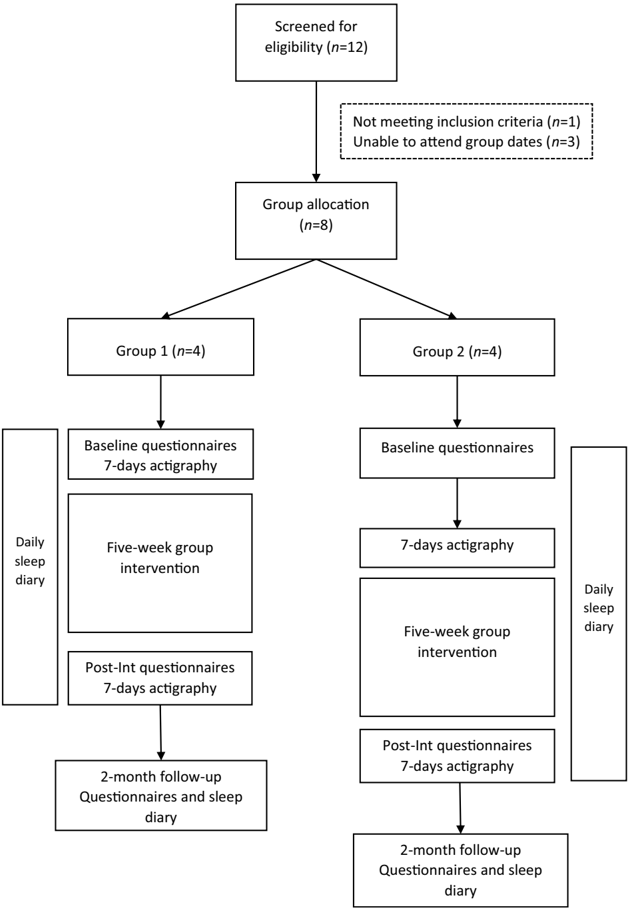
- Participants: 8 adults with a clinical autism diagnosis and ISI scores ≥ 8; 12 expressed interest, 11 met screening criteria, and 1 participant disengaged before the end.
- Intervention: 4 × 1.5-hour facilitator-led sessions over 5 weeks (3–4 participants/group), combining behaviour therapy for sleep and ACT/mindfulness/values work; developed with consultation from 3 autistic adults.
- Analysis: repeated-measures Friedman tests with Wilcoxon signed-rank follow-ups, reliable change indices, Tau-U for sleep diary single-case data, and pre/post actigraphy comparisons.
## Limitations
- The paper explicitly states that the sample size was small (8 participants), and that findings require replication with much larger samples.
- The authors note that the pilot nature of the study limited their ability to collect continuous actigraphy data and prevented actigraphy collection at 2-month follow-up.
- The text indicates substantial variability in sleep patterns and that sleep diaries can overestimate total sleep and sleep efficiency; this makes the sleep-diary findings less certain.
Model-written summary. Check it against the paper before relying on it.
Integrity signals
Registry
Cites
Statistics
Figures
Verification
Claims the paper makes
15 Valid · 2 Not valid · 46 Not checked · 86 Own results and interpretations
The cited sources support only part of this claim — read each source’s verdict below.
In the paper
“ACT presents a promising alternative to CBT for autistic individuals, as it addresses some of the difficulties associated with core symptoms of autism, including lack of cognitive flexibility (Geurts et al ., 2009) and perseveration or rumination (Gotham et al ., 2014; Patel et al ., 2017).”
What the sources say
- Partly supportedcites Geurts et al., 2009 matched to “The paradox of cognitive flexibility in autism” (2009) sourceExperimental — accuracy not yet measured
The citation is attached to the claim about lack of cognitive flexibility, not the claims about ACT or rumination. In “Why is this important?”, the review describes difficulties adapting behavior in everyday life, but its “Conclusions and future directions” say that findings on cognitive flexibility deficits are inconsistent. It therefore supports observed inflexibility in autism, but not an unqualified claim that a cognitive flexibility deficit is established. (LLM, conf=0.84)
- Supportedcites Gotham et al., 2014 matched to “Rumination and Perceived Impairment Associated With Depressive Symptoms in a Verbal Adolescent–Adult ASD Sample” (2014) source
The citation to Gotham et al. is attached to the sentence’s point about perseveration or rumination, not specifically to its comparison of ACT with CBT. The Introduction section, “Rumination in depression and ASD,” describes autistic repetitive behaviors as perseverative, and the Discussion section, “Rumination,” reports an association between rumination and Insistence on Sameness. (LLM, conf=0.90)
- Supportedcites Patel et al., 2017 matched to “Association between anger rumination and autism symptom severity, depression symptoms, aggression, and general dysregulation in adolescents with autism spectrum disorder” (2017) source
The Rumination in autism spectrum disorder section describes perseveration as a tendency in ASD. The Abstract reports greater anger-focused rumination among adolescents with ASD than controls, while the Discussion says rumination is associated with ASD characteristics. Patel et al. supports the cited point about perseveration or rumination; the citation is not offered specifically for the comparison between ACT and CBT. (LLM, conf=0.90)
hedgedstates a cause- Asserted: passes — The authors put it forward as true.
- Checkable: passes — It can be checked against evidence.
- Load-bearing: passes — The paper’s conclusions depend on it.
- Based: passes — The paper gives a reason why it holds.
- Partly supported
Every source the paper cites for this claim was checked and supports it.
In the paper
“Overall, our intervention data and previous literature provide further support for insomnia as a transdiagnostic process associated with the onset and maintenance of mental health difficulties (Dolsen et al ., 2014).”
What the sources say
- Supportedcites Dolsen et al., 2014 matched to “Insomnia as a Transdiagnostic Process in Psychiatric Disorders” (2014) source
The Conclusions state that insomnia is a descriptive and mechanistic transdiagnostic process related to the onset and maintenance of several psychiatric disorders. This supports the claim attributed to Dolsen et al.; the citing authors’ own intervention data are not attributed to that source. (LLM, conf=0.94)
hedgedstates an association- Asserted: passes — The authors put it forward as true.
- Checkable: passes — It can be checked against evidence.
- Load-bearing: passes — The paper’s conclusions depend on it.
- Based: passes — The paper gives a reason why it holds.
- Rests on an assumption not shown here.
- Supported
The sources with a verdict support this claim; the rest weren’t checked yet, have no full text we could read, or their verdicts aren’t rated yet.
In the paper
“Change in selfreported insomnia symptoms following the intervention are also consistent with studies in non-autistic adults which showed improvements in sleep in response to ACT interventions (Zakiei and Khazaie, 2019; Zetterqvist et al ., 2018).”
What the sources say
- Supportedcites Zakiei and Khazaie, 2019 matched to “The Effectiveness of Acceptance and Commitment Therapy on Insomnia Patients (A Single-arm Trial Plan)” (2019) source
Split into 2 atoms — 2 confirmed, 0 partially supported, 0 disputed, 0 misattributed, 0 unverifiable. Expand the claim to see per-atom verdicts.
- Not checked — no full text of the sourcecites Zetterqvist et al., 2018 matched to “Acceptance-Based Behavioural Treatment for Insomnia in Chronic Pain: A Clinical Pilot Study” (2018) source
plainstates an association- Asserted: passes — The authors put it forward as true.
- Checkable: passes — It can be checked against evidence.
- Load-bearing: passes — The paper’s conclusions depend on it.
- Based: passes — The paper gives a reason why it holds.
- Supported
The cited sources support only part of this claim — read each source’s verdict below.
In the paper
“However, insomnia is frequently associated with cognitive (Kalmbach et al ., 2020; Vargas et al ., 2020) and somatic hyperarousal (Vargas et al ., 2020), including in autism (Baker et al ., 2019b; Richdale et al ., 2014).”
What the sources say
- Supportedcites Kalmbach et al ., 2020 matched to “Nocturnal cognitive arousal is associated with objective sleep disturbance and indicators of physiologic hyperarousal in good sleepers and individuals with insomnia disorder” (2020) source
Kalmbach et al. is cited for the cognitive-hyperarousal part of the sentence, not for somatic hyperarousal or autism. The Introduction calls cognitive arousal a central feature of insomnia, and the Discussion’s Conclusions report an association between nocturnal cognitive hyperarousal and objective sleep disturbance in participants with and without insomnia. (LLM, conf=0.92)
- Supportedcites Vargas et al ., 2020 matched to “Acute and Chronic Insomnia: What Has Time and/or Hyperarousal Got to Do with It?” (2020) source
Section 5 describes insomnia as commonly understood in terms of cognitive and/or somatic hyperarousal, while noting that the evidence is not unequivocal. In the citing sentence, the autism-specific point is attributed to Baker and Richdale, not Vargas. (LLM, conf=0.92)
- Not matchedcites Baker et al ., 2019b
More than one paper fits this citation.
plainstates an association- Asserted: passes — The authors put it forward as true.
- Checkable: passes — It can be checked against evidence.
- Load-bearing: unclear — It is unclear whether the paper’s conclusions depend on it.
- Based: passes — The paper gives a reason why it holds.
- Supported
A result the paper reports from its own data — it cites no other source for it, so there is none to check. The quote shows it is in the paper.
In the paper
“Clinically reliable improvement occurred for ISI scores ( n = 5) and HADS-A scores ( n = 4) following intervention.”
plainstates a causen = 4- Asserted: passes — The authors put it forward as true.
- Checkable: passes — It can be checked against evidence.
- Load-bearing: passes — The paper’s conclusions depend on it.
- Based: passes — The paper gives a reason why it holds.
73 more claims
Create a free account to see all 149 claims and to verify the 6 references still open.
- Probably not a substantial claim. 52
- It may state two separate claims as one. 41
- The quote only partly states this claim. 1
Claims other papers make about this one
Each is checked against this paper’s own text: does it say what the citing paper says it does?
The cited source says what the claim attributes to it.
In the citing paper
“which is efficacious in treating insomnia (Daly‐Eichenhardt et al., 2016; Hertenstein et al., 2014; Lawson et al., 2023; Rafihi‐Ferreira et al., 2024; Riemann et al., 2023; Shin et al., 2023; Zakiei & Khazaie, 2019).”
From Associations between psychological inflexibility processes, pre‐sleep arousal and sleep quality. (2025) · cites this paper as Lawson et al., 2023
The cited source says what the claim attributes to it.
In the citing paper
“a reduction in anxiety co‐occurs with ACT‐based insomnia treatment (Lawson et al., 2023; Shin et al., 2023).”
From Associations between psychological inflexibility processes, pre‐sleep arousal and sleep quality. (2025) · cites this paper as Lawson et al., 2023
Statistics that don’t add up
Each reported p-value recomputed from its test statistic and degrees of freedom, each partial η² from its F, and each ratio, mean difference or B printed with a p checked against its own confidence interval.
Rated minor: it would not touch a result — a value no result rests on, a p-value that stays on the same side of the significance level, or a conflict that is clerical, resolved elsewhere in the paper, or outside its own findings.
In the paper
“Z = -.21, p = .883”
Reported p = .883 · recomputed p = .834
Statistics recomputed
Every reported test result, recomputed from its test statistic and degrees of freedom. A result shows as not adding up only once an independent check has confirmed it.
- Doesn’t add upz = -0.21reported p = .883 · recomputed p = .834
“Z = -.21, p = .883”
- Not confirmedz = -0.13reported p = .892 · recomputed p = .897
“Z = -.13, p = .892”
- Consistentz = -2.53reported p = .011 · recomputed p = .011
“Z = -2.53, p = .011”
- Consistentz = -2.21reported p = .027 · recomputed p = .027
“Z = -2.21, p = .027”
- Consistentz = -1.52reported p = .129 · recomputed p = .129
“Z = -1.52, p = .129”
9 more recomputed tests
Create a free account to see every test the Stats check recomputed.
Self-check
Percentages, sums and reported differences re-computed from the paper’s own numbers.
Self-check results appear here once an independent check has confirmed them.
Citations
Cites
Diagnostic and Statistical Manual of Mental Disorders
American Psychiatric Association (2013) · doi:10.1176/appi.books.9780890425596 · Cited by 116,369
The Hospital Anxiety and Depression Scale
Zigmond, A. S., & Snaith, R. P. (1983) · Acta Psychiatrica Scandinavica · doi:10.1111/j.1600-0447.1983.tb09716.x · Cited by 47,139 · cited 2×
“Based on limited existing literature for autism, we hypothesised that the intervention would lead to clinical improvement on insomnia symptoms as measured by the Insomnia Severity Index (ISI), and anxiety as measured by the Hospital Anxiety and Depression Scale-Anxiety (HADS-A), and both would be maintained at 2-month…”
The Pittsburgh Sleep Quality Index: a new instrument for psychiatric practice and research
Buysse, D. J., Reynolds, C. F., Monk, T. H., Berman, S. R., & Kupfer, D. J. (1989) · Psychiatry Research · doi:10.1016/0165-1781(89)90047-4 · Cited by 35,234 · cited 2×
“Pittsburgh Sleep Quality Index (PSQI; Buysse et al., 1989) The PSQI is an 18-item self-report questionnaire assessing overall sleep quality and problems related to poor sleep in the past month (total score α = .83).”
Validation of the Insomnia Severity Index as an outcome measure for insomnia research
Bastien, C. (2001) · Sleep Medicine · doi:10.1016/s1389-9457(00)00065-4 · Cited by 8,067 · cited 3×
“Based on limited existing literature for autism, we hypothesised that the intervention would lead to clinical improvement on insomnia symptoms as measured by the Insomnia Severity Index (ISI), and anxiety as measured by the Hospital Anxiety and Depression Scale-Anxiety (HADS-A), and both would be maintained at 2-month…”
Jacobson, N. S., & Truax, P. (1991) · Journal of Consulting and Clinical Psychology · doi:10.1037/0022-006x.59.1.12 · Cited by 7,770
Acceptance and commitment therapy: model, processes and outcomes
Hayes, S. C., Luoma, J. B., Bond, F. W., Masuda, A., & Lillis, J. (2006) · Behaviour Research and Therapy · doi:10.1016/j.brat.2005.06.006 · Cited by 6,587 · cited 1×
“The ACT component was designed to promote flexibility in behaviour around sleep (Hayes et al., 2006; Hayes et al., 2012; Lundh, 2005; Ong et al., 2012).”
Morin, C. M., Belleville, G., Bélanger, L., & Ivers, H. (2011) · Sleep · doi:10.1093/sleep/34.5.601 · Cited by 4,620 · cited 2×
“Primary outcome measure Insomnia Severity Index (Bastien et al., 2001; Morin et al., 2011) The ISI has seven self-report items related to insomnia over the past 2 weeks and is answered on a 5-point Likert scale.”
Qaseem, A., Kansagara, D., Forciea, M. A., Cooke, M., Denberg, T. D., & for the Clinical Guidelines Committee of the American College of Physicians* (2016) · Annals of Internal Medicine · doi:10.7326/m15-2175 · Cited by 1,965
The hyperarousal model of insomnia: A review of the concept and its evidence
Riemann, D., Spiegelhalder, K., Feige, B., Voderholzer, U., Berger, M., Perlis, M., & Nissen, C. (2010) · Sleep Medicine Reviews · doi:10.1016/j.smrv.2009.04.002 · Cited by 1,789 · cited 1×
“This hypothesis suggests that both cognitive (stress, worry and rumination about sleep) and somatic (hormone/neurotransmitter changes) arousal contribute to sleep behaviour changes resulting in a perpetuating cycle of sleep difficulties which leads to subsequent poor mental health (Riemann et al., 2010).”
Acceptance and commitment therapy.
Hayes, S. C., & Lillis, J. (2012) · American Psychological Association eBooks · doi:10.1037/17335-000 · Cited by 1,543
Combining nonoverlap and trend for single-case research: Tau-U
Parker, R. I., Vannest, K. J., Davis, J. L., & Sauber, S. B. (2011) · Behavior Therapy · doi:10.1016/j.beth.2010.08.006 · Cited by 1,468 · cited 3×
“The Tau-U phase comparisons for each participant on SE, TST, WASO and SoL measured from the sleep diaries are presented in Table 4.”
InfluentialThe health status of adults on the autism spectrum
Croen, L. A., Zerbo, O., Qian, Y., Massolo, M. L., Rich, S., Sidney, S., & Kripke, C. (2015) · Autism · doi:10.1177/1362361315577517 · Cited by 1,110 · cited 2×
“This has high salience and impact for adults with an autism spectrum disorder (autism) diagnosis who have increased mental and physical health problems compared with the general population (Croen et al., 2015).”
The Global Problem of Insufficient Sleep and Its Serious Public Health Implications
Chattu, V. K., Manzar, M. D., Kumary, S., Burman, D., Spence, D. W., & Pandi-Perumal, S. R. (2018) · Healthcare · doi:10.3390/healthcare7010001 · Cited by 1,028 · cited 1×
“Disturbed sleep is associated with poor mental and physical health outcomes (Chattu et al ., 2019).”
Hollocks, M. J., Lerh, J. W., Magiati, I., Meiser-Stedman, R., & Brugha, T. S. (2019) · Psychological Medicine · doi:10.1017/s0033291718002283 · Cited by 988 · cited 2×
“…29.1% of autistic adult members (18 (cid:1) years) had an anxiety disorder (Croen et al ., 2015), while clinically significant anxiety and depression symptoms were found in a 25 – 40% of autistic individuals aged from late adolescence to old age (Hollocks et al ., 2019; Uljarevi´c et al ., 2019).”
InfluentialHayes, S. C. (2016) · Behavior Therapy · doi:10.1016/j.beth.2016.11.006 · Cited by 785 · cited 1×
“In contrast to CT, ACT takes a behavioural approach to cognition where the function of thoughts, worries and urges is explored with reference to personal goals (Hayes, 2016).”
Cognitive and behavioral therapies in the treatment of insomnia: A meta-analysis
van Straten, A., van der Zweerde, T., Kleiboer, A., Cuijpers, P., Morin, C. M., & Lancee, J. (2018) · Sleep Medicine Reviews · doi:10.1016/j.smrv.2017.02.001 · Cited by 676 · cited 2×
“Cognitive and behavioural therapy for insomnia (CBT-I) is the empirically supported intervention for non-autistic individuals with insomnia, including those with insomnia and co-occurring mental health conditions (Taylor and Pruiksma, 2014; van Straten et al ., 2018).”
The paradox of cognitive flexibility in autism
Geurts, H. M., Corbett, B., & Solomon, M. (2009) · Trends in Cognitive Sciences · doi:10.1016/j.tics.2008.11.006 · Cited by 538 · cited 2×
“ACTpresents a promising alternative to CBT for autistic individuals, as it addresses some of the difficulties associated with core symptoms of autism, including lack of cognitive flexibility (Geurts et al ., 2009) and perseveration or rumination (Gotham et al ., 2014; Patel et al ., 2017).”
Characterizing Sleep in Children with Autism Spectrum Disorders: A Multidimensional Approach
Malow, B. A., Marzec, M. L., McGrew, S. G., Wang, L., Henderson, L. M., & Stone, W. L. (2006) · Sleep · doi:10.1093/sleep/29.12.1563 · Cited by 485 · cited 1×
“, 2014) occurring in children (Malow et al., 2006; Richdale and Prior 1995), adolescents (Baker et al.”
The brief experiential avoidance questionnaire: Development and initial validation
Gámez, W., Chmielewski, M., Kotov, R., Ruggero, C., Suzuki, N., & Watson, D. (2014) · Psychological Assessment · doi:10.1037/a0034473 · Cited by 450 · cited 2×
“Items are rated on a 6-point Likert scale, and it is validated in psychiatric and community samples with good internal consistency (Gámez et al., 2014; Kirk et al., 2019).”
Barkham, M., Bewick, B., Mullin, T., Gilbody, S., Connell, J., Cahill, J., Mellor-Clark, J., Richards, D., Unsworth, G., & Evans, C. (2013) · Counselling and Psychotherapy Research · doi:10.1080/14733145.2012.729069 · Cited by 413 · cited 2×
“The Friedman test was non-significant for both the CORE-10, λ 2 = 3.00, p = .223, and FFS, λ 2 = 2.70, p = .260.”
InfluentialJacobson, N. S., & Truax, P. (1992) · Methodological issues & strategies in clinical research. · doi:10.1037/10109-042 · Cited by 384
Improving sleep with mindfulness and acceptance: a metacognitive model of insomnia
Ong, J. C., Ulmer, C. S., & Manber, R. (2012) · Behaviour Research and Therapy · doi:10.1016/j.brat.2012.08.001 · Cited by 376 · cited 4×
“It was based on current models of incorporating mindfulness/acceptance within BT for insomnia (Ong et al ., 2012), drawing on the psychological flexibility model (Hayes et al ., 2012), and using material from the Sleep School self-help materials (Meadows, 2014).”
InfluentialTaylor, D. J., & Pruiksma, K. E. (2014) · International Review of Psychiatry · doi:10.3109/09540261.2014.902808 · Cited by 359 · cited 2×
“Cognitive and behavioural therapy for insomnia (CBT-I) is the empirically supported intervention for non-autistic individuals with insomnia, including those with insomnia and co-occurring mental health conditions (Taylor and Pruiksma, 2014; van Straten et al., 2018).”
Cognitive Behavioral Therapy in Persons with Comorbid Insomnia: A Meta-Analysis
Geiger-Brown, J. M., Rogers, V. E., Liu, W., Ludeman, E. M., Downton, K. D., & Diaz-Abad, M. (2015) · Sleep Medicine Reviews · doi:10.1016/j.smrv.2014.11.007 · Cited by 331 · cited 1×
“The improvements in ISI insomnia symptoms are consistent with those reported in a metaanalysis of CBT-I in non-autistic populations (Geiger-Brown et al., 2015).”
Gringras, P., Nir, T., Breddy, J., Frydman-Marom, A., & Findling, R. L. (2017) · Journal of the American Academy of Child & Adolescent Psychiatry · doi:10.1016/j.jaac.2017.09.414 · Cited by 306 · cited 1×
“Current research primarily focuses on behavioural interventions (Carnett et al ., 2020) or melatonin (Gringras et al ., 2017; Guénolé et al ., 2011) for autistic children and adolescents.”
Epidemiology of autism in adults across age groups and ability levels
Brugha, T. S., Spiers, N., Bankart, J., Cooper, S.-A., McManus, S., Scott, F. J., Smith, J., & Tyrer, F. (2016) · British Journal of Psychiatry · doi:10.1192/bjp.bp.115.174649 · Cited by 299
The sleep/wake rhythm in children with autism
Richdale, A. L., & Prior, M. R. (1995) · European Child & Adolescent Psychiatry · doi:10.1007/bf01980456 · Cited by 283 · cited 1×
“Sleep differences in autism emerge early in life (Humphreys et al ., 2014) occurring in children (Malow et al ., 2006; Richdale and Prior 1995), adolescents (Baker et al ., 2013; Goldman et al ., 2017) and adults (Baker and Richdale, 2015; Baker and Richdale, 2017; Croen et al ., 2015; Hohn et al…”
Self-citationAn Improved Rank Correlation Effect Size Statistic for Single-Case Designs: Baseline Corrected Tau
Tarlow, K. R. (2017) · Behavior Modification · doi:10.1177/0145445516676750 · Cited by 283 · cited 1×
“This involved comparisons of between-pairs of consecutive phases for each participant, for the degree of nonoverlap of data, and determining whether there is baseline trend to control for (Tarlow, 2017).”
Mindfulness-based therapy in adults with an autism spectrum disorder: a randomized controlled trial
Spek, A. A., van Ham, N. C., & Nyklíček, I. (2013) · Research in Developmental Disabilities · doi:10.1016/j.ridd.2012.08.009 · Cited by 274 · cited 2×
“Mindfulness-based cognitive therapy adapted for autistic adults (n=20) effectively reduced a range of psychological symptoms compared with a treatment as usual group (n=21) following a 9-week program (Spek et al., 2013).”
InfluentialBenevides, T. W., Shore, S. M., Palmer, K., Duncan, P., Plank, A., Andresen, M.-L., Caplan, R., Cook, B., Gassner, D., Hector, B. L., et al. (2020) · Autism · doi:10.1177/1362361320908410 · Cited by 258
Gee, B., Orchard, F., Clarke, E., Joy, A., Clarke, T., & Reynolds, S. (2019) · Sleep Medicine Reviews · doi:10.1016/j.smrv.2018.09.004 · Cited by 212 · cited 1×
“Recent reviews suggest that treating insomnia in those with both depression and insomnia may lead to better long-term clinical outcomes (Bei et al., 2018; Gee et al., 2019).”
Sleep patterns in children with autistic spectrum disorders: a prospective cohort study
Humphreys, J. S., Gringras, P., Blair, P. S., Scott, N., Henderson, J., Fleming, P. J., & Emond, A. M. (2014) · Archives of Disease in Childhood · doi:10.1136/archdischild-2013-304083 · Cited by 197 · cited 1×
“Sleep differences in autism emerge early in life (Humphreys et al., 2014) occurring in children (Malow et al.”
Insomnia as a Transdiagnostic Process in Psychiatric Disorders
Dolsen, E. A., Asarnow, L. D., & Harvey, A. G. (2014) · Current Psychiatry Reports · doi:10.1007/s11920-014-0471-y · Cited by 163 · cited 2×
“Overall, our intervention data and previous literature provide further support for insomnia as a transdiagnostic process associated with the onset and maintenance of mental health difficulties (Dolsen et al ., 2014).”
Gradisar, M., Lack, L. C., Richards, H., Harris, J. K., Gallasch, J., Boundy, M., & Johnston, A. (2007) · Journal of Clinical Sleep Medicine · doi:10.5664/jcsm.27030 · Cited by 161 · cited 1×
“Flinders Fatigue Scale (FFS; Gradisar et al., 2007) The FFS measures daytime fatigue associated with insomnia.”
Anxiety and Depression from Adolescence to Old Age in Autism Spectrum Disorder
Uljarević, M., Hedley, D., Rose-Foley, K., Magiati, I., Cai, R. Y., Dissanayake, C., Richdale, A., & Trollor, J. (2020) · Journal of Autism and Developmental Disorders · doi:10.1007/s10803-019-04084-z · Cited by 160 · cited 1×
“, 2015), while clinically significant anxiety and depression symptoms were found in a 25–40% of autistic individuals aged from late adolescence to old age (Hollocks et al., 2019; Uljarević et al., 2019).”
Self-citationGotham, K., Bishop, S. L., Brunwasser, S., & Lord, C. (2014) · Autism Research · doi:10.1002/aur.1377 · Cited by 149 · cited 1×
“, 2009) and perseveration or rumination (Gotham et al., 2014; Patel et al., 2017).”
Sizoo, B. B., & Kuiper, E. (2017) · Research in Developmental Disabilities · doi:10.1016/j.ridd.2017.03.004 · Cited by 140 · cited 1×
“Two studies have compared the effectivness of mindfulness-based therapies and CBT and found that they were both equally effective in reducing anxiety (Gaigg et al ., 2020; Sizoo et al ., 2017) and depression (Sizoo et al ., 2017) among autistic adults.”
Lawson, L. P., Richdale, A. L., Haschek, A., Flower, R. L., Vartuli, J., Arnold, S. R., & Trollor, J. N. (2020) · Autism · doi:10.1177/1362361320908107 · Cited by 138 · cited 1×
“, 2013), reduced quality of life (Deserno et al., 2019; Lawson et al., 2020), unemployment (Baker et al.”
Self-citationSleep Patterns in Adults with a Diagnosis of High-Functioning Autism Spectrum Disorder
Baker, E. K., & Richdale, A. L. (2015) · Sleep · doi:10.5665/sleep.5160 · Cited by 121 · cited 11×
“This may be due to the inherent variability in sleep parameters previously noted in autism (Baker and Richdale, 2015) combined with a small sample size.”
InfluentialSelf-citationCharacterizing Sleep in Adolescents and Adults with Autism Spectrum Disorders
Goldman, S. E., Alder, M. L., Burgess, H. J., Corbett, B. A., Hundley, R., Wofford, D., Fawkes, D. B., Wang, L., Laudenslager, M. L., & Malow, B. A. (2017) · Journal of Autism and Developmental Disorders · doi:10.1007/s10803-017-3089-1 · Cited by 116 · cited 1×
“, 2006; Richdale and Prior 1995), adolescents (Baker et al., 2013; Goldman et al., 2017) and adults (Baker and Richdale, 2015; Baker and Richdale, 2017; Croen et al.”
Mindfulness-Based Therapy in Adults with an Autism Spectrum Disorder: Do Treatment Effects Last?
Kiep, M., Spek, A. A., & Hoeben, L. (2015) · Mindfulness · doi:10.1007/s12671-014-0299-x · Cited by 113 · cited 15×
“In conjunction with reports from the non-autistic literature that ACT is effective in improving sleep quality in CBT-I non-responders (Dalrymple et al ., 2010; Hertenstein et al ., 2014), our intervention results provide some support the use of ACT-based intervention for insomnia in autistic adults.”
InfluentialThe Role of Acceptance and Mindfulness in the Treatment of Insomnia
Lundh, L.-G. (2005) · Journal of Cognitive Psychotherapy · doi:10.1891/jcop.19.1.29.66331 · Cited by 112 · cited 1×
“The ACT component was designed to promote flexibility in behaviour around sleep (Hayes et al ., 2006; Hayes et al ., 2012; Lundh, 2005; Ong et al ., 2012).”
Guenolé, F., Godbout, R., Nicolas, A., Franco, P., Claustrat, B., & Baleyte, J. (2011) · Sleep Medicine Reviews · doi:10.1016/j.smrv.2011.02.001 · Cited by 106 · cited 1×
“, 2020) or melatonin (Gringras et al., 2017; Guénolé et al., 2011) for autistic children and adolescents.”
Sleep problems, behavior, and psychopathology in autism: inter-relationships across the lifespan
Schreck, K. A., & Richdale, A. L. (2020) · Current Opinion in Psychology · doi:10.1016/j.copsyc.2019.12.003 · Cited by 106 · cited 2×
“Regardless of age, cognitive ability or core autistic traits, most autistic individuals have significant sleep disturbance, primarily insomnia symptoms including increased sleep onset latency (SoL) and wake after sleep onset (WASO), reduced sleep efficiency (SE; proportion of time spent in bed where one is asleep) and…”
Self-citationKalmbach, D. A., Buysse, D. J., Cheng, P., Roth, T., Yang, A., & Drake, C. L. (2020) · Sleep Medicine · doi:10.1016/j.sleep.2019.11.1184 · Cited by 100 · cited 1×
“However, insomnia is frequently associated with cognitive (Kalmbach et al., 2020; Vargas et al., 2020) and somatic hyperarousal (Vargas et al.”
Baker, E., Richdale, A., Short, M., & Gradisar, M. (2013) · Developmental Neurorehabilitation · doi:10.3109/17518423.2013.765518 · Cited by 95 · cited 2×
“The Friedman test was non-significant for both the CORE-10, λ 2 = 3.00, p = .223, and FFS, λ 2 = 2.70, p = .260.”
InfluentialSelf-citationMorgan, B., Nageye, F., Masi, G., & Cortese, S. (2020) · Sleep Medicine · doi:10.1016/j.sleep.2019.07.019 · Cited by 92 · cited 1×
“Disturbed sleep is more common in autistic adults compared with nonautistic adults (Morgan et al., 2020) and adds significantly to their social, psychological and health burdens.”
Insomnia is a frequent finding in adults with Asperger syndrome
Tani, P., Lindberg, N., Nieminen-von Wendt, T., von Wendt, L., Alanko, L., Appelberg, B., & Porkka-Heiskanen, T. (2003) · BMC Psychiatry · doi:10.1186/1471-244x-3-12 · Cited by 89 · cited 2×
“In young autistic adults, insomnia symptomatology has been related to both anxiety and depression (Tani et al ., 2003).”
Pahnke, J., Lundgren, T., Hursti, T., & Hirvikoski, T. (2014) · Autism · doi:10.1177/1362361313501091 · Cited by 88 · cited 2×
“Due to their high vulnerability to stressors, autistic individuals tend to engage in experiential avoidance (Pahnke et al., 2014; Pahnke et al., 2019), where an individual is unwilling to remain in contact with distressing emotions, thoughts and sensations in ways that cause harm in the long run.”
Richdale, A. L., Baker, E., Short, M., & Gradisar, M. (2014) · Sleep Medicine · doi:10.1016/j.sleep.2014.05.005 · Cited by 87 · cited 1×
“The significant reduction in anxiety symptoms and pre-sleep arousal in response to ACT-i supports the identified relationship between insomnia, anxiety or poor mental health, and presleep arousal in autistic populations (Baker et al., 2019b; Gilbert Gustemp et al., 2021; Richdale et al., 2014; Tani et al., 2003) and a…”
Self-citationMindfulness in Individuals with Autism Spectrum Disorder: a Systematic Review and Narrative Analysis
Cachia, R. L., Anderson, A., & Moore, D. W. (2016) · Review Journal of Autism and Developmental Disorders · doi:10.1007/s40489-016-0074-0 · Cited by 85 · cited 2×
“Mindfulness-based interventions have been used to successfully treat mental health conditions in autistic individuals, including adults (Cachia et al ., 2016).”
Uljarević, M., Richdale, A. L., McConachie, H., Hedley, D., Cai, R. Y., Merrick, H., Parr, J. R., & Le Couteur, A. (2018) · Autism Research · doi:10.1002/aur.1872 · Cited by 85
Self-citationPatel, S., Day, T. N., Jones, N., & Mazefsky, C. A. (2017) · Autism · doi:10.1177/1362361316633566 · Cited by 82 · cited 1×
“, 2009) and perseveration or rumination (Gotham et al., 2014; Patel et al., 2017).”
Gaigg, S. B., Flaxman, P. E., McLaven, G., Shah, R., Bowler, D. M., Meyer, B., Roestorf, A., Haenschel, C., Rodgers, J., & South, M. (2020) · Autism · doi:10.1177/1362361320909184 · Cited by 80 · cited 1×
“Two studies have compared the effectivness of mindfulness-based therapies and CBT and found that they were both equally effective in reducing anxiety (Gaigg et al., 2020; Sizoo et al., 2017) and depression (Sizoo et al.”
The effect of acceptance and commitment therapy on insomnia and sleep quality: A systematic review
Salari, N., Khazaie, H., Hosseinian-Far, A., Khaledi-Paveh, B., Ghasemi, H., Mohammadi, M., & Shohaimi, S. (2020) · BMC Neurology · doi:10.1186/s12883-020-01883-1 · Cited by 78 · cited 1×
“In a recent review it was concluded that ACT was an effective treatment for insomnia (Salari et al., 2020).”
McCrae, C. S., Chan, W. S., Curtis, A. F., Nair, N., Deroche, C. B., Munoz, M., Takamatsu, S., McLean, D., Davenport, M., Muckerman, J. E., et al. (2021) · Autism · doi:10.1177/1362361320949078 · Cited by 72 · cited 1×
“There is some evidence that adapted or augmented CBT-I may be effective for improving sleep among autistic children (McCrae et al., 2020; McCrae et al., 2021).”
Treating insomnia in depression: insomnia related factors predict long-term depression trajectories
Bei, B., Asarnow, L. D., Krystal, A., Edinger, J. D., Buysse, D. J., & Manber, R. (2018) · Journal of Consulting and Clinical Psychology · doi:10.1037/ccp0000282 · Cited by 71 · cited 1×
“Recent reviews suggest that treating insomnia in those with both depression and insomnia may lead to better long-term clinical outcomes (Bei et al., 2018; Gee et al., 2019).”
Baker, E. K., & Richdale, A. L. (2017) · Journal of Autism and Developmental Disorders · doi:10.1007/s10803-017-3042-3 · Cited by 68 · cited 3×
“, 2019) and 44% had a circadian sleep-wake disorder (Baker and Richdale, 2017).”
Self-citationMcCrae, C. S., Chan, W. S., Curtis, A. F., Deroche, C. B., Munoz, M., Takamatsu, S., Muckerman, J. E., Takahashi, N., McCann, D., McGovney, K., et al. (2020) · Autism Research · doi:10.1002/aur.2204 · Cited by 64 · cited 1×
“There is some evidence that adapted or augmented CBT-I may be effective for improving sleep among autistic children (McCrae et al., 2020; McCrae et al., 2021).”
Hertenstein, E., Thiel, N., Lüking, M., Külz, A. K., Schramm, E., Baglioni, C., Spiegelhalder, K., Riemann, D., & Nissen, C. (2014) · Psychotherapy and Psychosomatics · doi:10.1159/000365173 · Cited by 63 · cited 2×
“non-autistic literature that ACT is effective in improving sleep quality in CBT-I non-responders (Dalrymple et al., 2010; Hertenstein et al., 2014), our intervention results provide some support the use of ACT-based intervention for insomnia in autistic adults.”
Sleep Quality in Autism from Adolescence to Old Age
Jovevska, S., Richdale, A. L., Lawson, L. P., Uljarević, M., Arnold, S. R. C., & Trollor, J. N. (2020) · Autism in Adulthood · doi:10.1089/aut.2019.0034 · Cited by 63 · cited 2×
“, 2019; Phung and Goldberg, 2017) and a mental health diagnosis (Jovevska et al., 2020) or increased psychiatric symptoms (Gisbert Gustemps et al.”
Self-citationSafety behaviors, experiential avoidance, and anxiety: A path analysis approach
Kirk, A., Meyer, J. M., Whisman, M. A., Deacon, B. J., & Arch, J. J. (2019) · Journal of Anxiety Disorders · doi:10.1016/j.janxdis.2019.03.002 · Cited by 59 · cited 1×
“Items are rated on a 6-point Likert scale, and it is validated in psychiatric and community samples with good internal consistency (Gámez et al., 2014; Kirk et al., 2019).”
Dalrymple, K. L., Fiorentino, L., Politi, M. C., & Posner, D. (2010) · Journal of Contemporary Psychotherapy · doi:10.1007/s10879-010-9145-1 · Cited by 58 · cited 2×
“non-autistic literature that ACT is effective in improving sleep quality in CBT-I non-responders (Dalrymple et al., 2010; Hertenstein et al., 2014), our intervention results provide some support the use of ACT-based intervention for insomnia in autistic adults.”
Sleep determines quality of life in autistic adults: A longitudinal study
Deserno, M. K., Borsboom, D., Begeer, S., Agelink van Rentergem, J. A., Mataw, K., & Geurts, H. M. (2019) · Autism Research · doi:10.1002/aur.2103 · Cited by 58 · cited 1×
“, 2013), reduced quality of life (Deserno et al., 2019; Lawson et al., 2020), unemployment (Baker et al.”
Acute and Chronic Insomnia: What Has Time and/or Hyperarousal Got to Do with It?
Vargas, I., Nguyen, A. M., Muench, A., Bastien, C. H., Ellis, J. G., & Perlis, M. L. (2020) · Brain Sciences · doi:10.3390/brainsci10020071 · Cited by 58 · cited 2×
“However, insomnia is frequently associated with cognitive (Kalmbach et al., 2020; Vargas et al., 2020) and somatic hyperarousal (Vargas et al.”
Lappalainen, P., Langrial, S., Oinas-Kukkonen, H., Muotka, J., & Lappalainen, R. (2019) · Journal of Contextual Behavioral Science · doi:10.1016/j.jcbs.2019.04.001 · Cited by 57 · cited 2×
“More recently ACT has demonstrated promise as a primary insomnia treatment for people with chronic pain (Zetterqvist et al ., 2018), chronic insomnia (Zakiei and Khazaie, 2019), and as a self-help, internet intervention for insomnia (Lappalainen et al ., 2019; Zakiei and Khazaie, 2019).”
Dietch, J. R., & Taylor, D. J. (2021) · Journal of Clinical Sleep Medicine · doi:10.5664/jcsm.9200 · Cited by 53
SWIFT, N., STEWART, R., ANDIAPPAN, M., SMITH, A., ESPIE, C. A., & BROWN, J. S. L. (2012) · Journal of Sleep Research · doi:10.1111/j.1365-2869.2011.00940.x · Cited by 52 · cited 1×
“Based on CBT-I community education programs (Swift et al ., 2012), the BT component included psychoeducation about sleep, functional analysis of efforts to control sleep, sleep hygiene education, stimulus control of bedroom, worry reduction, and developing a plan for sleep routine changes.”
Hohn, V. D., de Veld, D. M. J., Mataw, K. J. S., van Someren, E. J. W., & Begeer, S. (2019) · Journal of Autism and Developmental Disorders · doi:10.1007/s10803-019-03891-8 · Cited by 52 · cited 2×
“, 2021) while 28% of Australian and 55% of Dutch adults met insomnia criteria (Baker and Richdale, 2015; Hohn et al., 2019) and 44% had a circadian sleep-wake disorder (Baker and Richdale, 2017).”
Quantitative-Analysis of Behavioral Interventions to Treat Sleep Problems in Children with Autism
Carnett, A., Hansen, S. G., McLay, L., Neely, L. C., & Lang, R. B. (2019) · Developmental Neurorehabilitation · doi:10.1080/17518423.2019.1646340 · Cited by 52 · cited 1×
“Current research primarily focuses on behavioural interventions (Carnett et al., 2020) or melatonin (Gringras et al.”
Pahnke, J., Hirvikoski, T., Bjureberg, J., Bölte, S., Jokinen, J., Bohman, B., & Lundgren, T. (2019) · Journal of Contextual Behavioral Science · doi:10.1016/j.jcbs.2019.04.002 · Cited by 48 · cited 2×
“Due to their high vulnerability to stressors, autistic individuals tend to engage in experiential avoidance (Pahnke et al., 2014; Pahnke et al., 2019), where an individual is unwilling to remain in contact with distressing emotions, thoughts and sensations in ways that cause harm in the long run.”
Leader, G., Barrett, A., Ferrari, C., Casburn, M., Maher, L., Naughton, K., Arndt, S., & Mannion, A. (2021) · Research in Developmental Disabilities · doi:10.1016/j.ridd.2021.103915 · Cited by 45 · cited 1×
“In Australian and Irish samples, 64% and 89% of autistic adults, respectively, reported poor sleep quality as opposed to 46% of non-autistic Australian adults aged 15 to 80 years (Jovevska et al., 2020; Leader et al., 2021) while 28% of Australian and 55% of Dutch adults met insomnia criteria (Baker and Richdale, 2015…”
Fingerhut, J., Xu, X., & Moeyaert, M. (2021) · Evidence-Based Communication Assessment and Intervention · doi:10.1080/17489539.2021.1937851 · Cited by 43 · cited 1×
“Consistent with the recommendations of Fingerhut et al .”
Baker, E. K., Richdale, A. L., & Hazi, A. (2019) · Autism · doi:10.1177/1362361317745857 · Cited by 42 · cited 1×
“…fatigue (Baker and Richdale, 2015; Baker et al ., 2013), reduced quality of life (Deserno et al ., 2019; Lawson et al ., 2020), unemployment (Baker et al ., 2019a), increased core autistic traits (Hohn et al ., 2019; Phung and Goldberg, 2017) and a mental health diagnosis (Jovevska et al .,…”
Self-citationAssessing a hyperarousal hypothesis of insomnia in adults with autism spectrum disorder
Baker, E. K., Richdale, A. L., Hazi, A., & Prendergast, L. A. (2019) · Autism Research · doi:10.1002/aur.2094 · Cited by 42 · cited 4×
“Additionally, pre-sleep somatic arousal is reported as significantly associated with insomnia symptoms, which together with reduced pre-sleep cortisol suggested that autistic adults may be chronically hyper-aroused (Baker et al ., 2019b).”
InfluentialSelf-citationGisbert, L., Lugo‐Marín, J., Setién-Ramos, I., Ibañez-Jiménez, P., Romero, O., Jurado, M. J., Ballester, P., Cruella, A. E., Villoria, E. D., Canal‐Bedia, R., et al. (2021) · Sleep Medicine · doi:10.1016/j.sleep.2021.04.022 · Cited by 30
Phung, J. N., & Goldberg, W. A. (2016) · Research in Autism · doi:10.1016/j.rasd.2016.11.008 · Cited by 27 · cited 2×
“, 2019a), increased core autistic traits (Hohn et al., 2019; Phung and Goldberg, 2017) and a mental health diagnosis (Jovevska et al.”
Acceptance-Based Behavioural Treatment for Insomnia in Chronic Pain: A Clinical Pilot Study
Zetterqvist, V., Grudin, R., Rickardsson, J., Wicksell, R. K., & Holmström, L. (2018) · Journal of Contextual Behavioral Science · doi:10.1016/j.jcbs.2018.07.003 · Cited by 17 · cited 4×
“Study outcomes have reported changes via sleep questionnaires (Lappalainen et al., 2019; Zakiei and Khazaie, 2019; Zetterqvist et al., 2018) and sleep diaries (Zakiei and Khazaie, 2019; Zetterqvist et al.”
InfluentialZakiei, A., & Khazaie, H. (2019) · Journal of Turkish Sleep Medicine · doi:10.4274/jtsm.galenos.2019.74745 · Cited by 15 · cited 3×
“More recently ACT has demonstrated promise as a primary insomnia treatment for people with chronic pain (Zetterqvist et al ., 2018), chronic insomnia (Zakiei and Khazaie, 2019), and as a self-help, internet intervention for insomnia (Lappalainen et al ., 2019; Zakiei and Khazaie, 2019).”
Research works printed but not linked: 2
- Meadows, G. (2014). The Sleep Book . USA: Orion Publishing Co.
- Bootzin, R., Shoham, V., & Kuo, T. (1994). Sleep anticipatory anxiety questionnaire: a measure of anxiety about sleep. Sleep Research , 23 , 188.
Cited by
Pathways to Anxiety and Depression in Autistic Adolescents and Adults
Richdale, A. L., Lawson, L. P., Chalmers, A., Uljarević, M., Morris, E. M. J., Arnold, S. R. C., & Trollor, J. N. (2023) · Depression and Anxiety · doi:10.1155/2023/5575932 · Cited by 22
“Autistic adults ( N = 8 ) receiving acceptance and commitment therapy for insomnia showed improvements in both insomnia and anxiety [27], while by parent report, autistic adolescents ( N = 18 ) receiving behavioural treatment for insomnia also showed improvements in behavioural symptoms including…”
Self-citationAssociations between psychological inflexibility processes, pre‐sleep arousal and sleep quality.
Mastin‐Purcell, L., Richdale, A. L., Lawson, L. P., & Morris, E. M. J. (2025) · Psychology and Psychotherapy Theory Research and Practice · doi:10.1111/papt.12584 · Cited by 12
“…central targets in Acceptance and Commitment Therapy (ACT; Hayes et al., 2006), which is efficacious in treating insomnia (Daly-Eichenhardt et al., 2016; Hertenstein et al., 2014; Lawson et al., 2023; Rafihi-Ferreira et al., 2024; Riemann et al., 2023; Shin et al., 2023; Zakiei & Khazaie, 2019).”
Self-citationRichdale, A. L., Shui, A. M., Lampinen, L. A., & Katz, T. (2024) · Autism Research · doi:10.1002/aur.3233 · Cited by 11
“This is consistent with previous evidence in autism (Lawson et al., 2023; Loring et al., 2018) and other populations (Blake et al., 2017; Dolsen et al., 2014; Harvey et al., 2021) showing that interventions targeting sleep show concomitant improvements in other symptom domains (Blake et al., 2017;…”
InfluentialSelf-citationCullen, M., McCrory, S., Hooman, G., Coyle, M. M., & Fleming, L. (2025) · Journal of Sleep Research · doi:10.1111/jsr.70058 · Cited by 8
Nijhof, D., Melville, C. A., Rydzewska, E., Pavlopoulou, G., Meehan, L., & Gardani, M. (2024) · Sleep Medicine · doi:10.1016/j.sleep.2024.08.011 · Cited by 8
Metadata
- Authors
- Lawson, L. P., Richdale, A. L., Denney, K., & Morris, E. M. J.
- Affiliations
- La Trobe University (AU)
- Corresponding author
- Morris, Eric M.J.
- Venue
- Behavioural and Cognitive Psychotherapy
- Publisher
- Cambridge University Press (CUP)
- Published
- 2022-12-20
- Volume
- 51
- Issue
- 2
- Pages
- 146-163
- ISSN
- 1352-4658 (ISSN-L)
- 1469-1833
- OpenAlex
- W4311958232
- Cited by
- 13
- References
- 78
- Citations by year
- 2026: 2 · 2025: 5 · 2024: 5 · 2023: 1
- FWCI
- 2.53
- Type
- journal article
- Language
- en
- Open access
- hybrid
- doi.org
- Locations
- Behavioural and Cognitive Psychotherapy (publishedVersion, cc-by)
- PubMed (publishedVersion)
- Funders
- Cooperative Research Centre for Living with Autism
- Topics
- Social Sciences › Psychology › Experimental and Cognitive Psychology › Sleep and related disorders
- Social Sciences › Psychology › Clinical Psychology › Mindfulness and Compassion Interventions
- Life Sciences › Neuroscience › Cognitive Neuroscience › Autism Spectrum Disorder Research
- Keywords
- insomnia, autism spectrum disorder, autistic adults, acceptance and commitment therapy, sleep interventions, anxiety symptoms, mental health, treatment acceptability, actigraphy, sleep diary
- MeSH terms
- Autism Spectrum Disorder, Adolescent, Adult, Aged, Female, Humans, Sleep Initiation and Maintenance Disorders, Male, Middle Aged, Pilot Projects, Treatment Outcome, Young Adult, Acceptance and Commitment Therapy
About these checks
Registry, retraction, Cites and statistics results are computed, not judged, with one exception: a printed reference that no index lists is read once by a model before it counts as a citation error. Claims are extracted by a model and kept only when their quote appears verbatim in the text; each cited source is then checked, with a model’s help, for whether it says what the claim relies on. Those verdicts can be wrong — read the claim’s quote and the cited source before relying on one.
The claim verdicts this report counts are experimental: their accuracy is not yet measured.
A language model drew the claims from the paper on 2026-10-11, under version 3 of the claim definition (model deepseek-v4.1-flash, prompt extract-v3).
A second model labelled each claim on 2026-10-11 (model jev-1.13-20260917, definition revision gold-guideline-v0.2).
Cited sources are checked with a language model’s help (gpt-6-sol).
Statistics and arithmetic are recomputed, not judged.
Confidence bands are shown only for fields calibrated on our annotated test set. None is calibrated yet, so no band is shown.
What counts as a claim ›How we measure confidence ›How we check this ›
Are you an author, or do you see a problem with this page? Request a review
Data sources
Bibliographic data: Semantic Scholar, OpenAlex, Crossref.
Contains information from the Semantic Scholar Academic Graph Datasets, made available under the ODC Attribution License (ODC-BY 1.0).
Semantic Scholar’s data is described in: Kinney, R., et al. (2023). The Semantic Scholar Open Data Platform. arXiv:2301.10140.
