

The case for the development and use of ecologically valid measures of executive function in experimental and clinical neuropsychology
Open accessThe DOI matches its Crossref record; 172 of the 173 references it cites were found in a registry or an index, and 1 are not checked yet; 10 of the 103 sources its claims cite were checked for support.
Abstract
This article considers the scientific process whereby new and better clinical tests of executive function might be developed, and what form they might take. We argue that many of the traditional tests of executive function most commonly in use (e.g., the Wisconsin Card Sorting Test; Stroop) are adaptations of procedures that emerged almost coincidentally from conceptual and experimental frameworks far removed from those currently in favour, and that the prolongation of their use has been encouraged by a sustained period of concentration on "construct-driven" experimentation in neuropsychology. This resulted from the special theoretical demands made by the field of executive function, but was not a necessary consequence, and may not even have been a useful one. Whilst useful, these tests may not therefore be optimal for their purpose. We consider as an alternative approach a function-led development programme which in principle could yield tasks better suited to the concerns of the clinician because of the transparency afforded by increased "representativeness" and "generalisability." We further argue that the requirement of such a programme to represent the interaction between the individual and situational context might also provide useful constraints for purely experimental investigations. We provide an example of such a programme with reference to the Multiple Errands and Six Element tests.
Verified 2026-11-25 · 1 reference not checked yet
Overview
CoChat Summary
## TL;DR
The paper argues that many widely used executive-function tests were not designed for their current clinical purposes and may be poor matches to real-world behavior. It advocates a “function-led” approach to building ecologically valid tasks, using examples such as the Multiple Errands Test and Six Element Test.
## Key findings
- Traditional executive-function tests such as the Wisconsin Card Sorting Test (WCST), Stroop, and Tower of London were developed from earlier experimental or conceptual frameworks, not for clinical assessment of everyday functioning.
- The authors argue that “ecological validity” should include both representativeness (similarity to real-world situations) and generalisability (predicting behavior outside the lab).
- The paper cites evidence that more naturalistic tasks can relate more closely to everyday problems than traditional tests: for example, Dawson et al. (2005a) found Multiple Errands performance correlated with everyday-function measures in 11 CVA patients and 11 healthy controls, with MET-AMPS-M correlations of 2.63 and 2.51 as reported in the text; Dawson et al. (2005b) reported correlations of between .5 and .8 in 30 people with acquired brain injury and 30 matched controls.
- Knight et al. (2002) reported inter-rater reliabilities for Multiple Errands measures of .81 to 1.00 and internal consistency (Cronbach’s alpha) of .77; Dawson et al. (2005b) reported hospital-version inter-class correlations of ≥ 0.90 in 30 controls and 30 people with acquired brain injury.
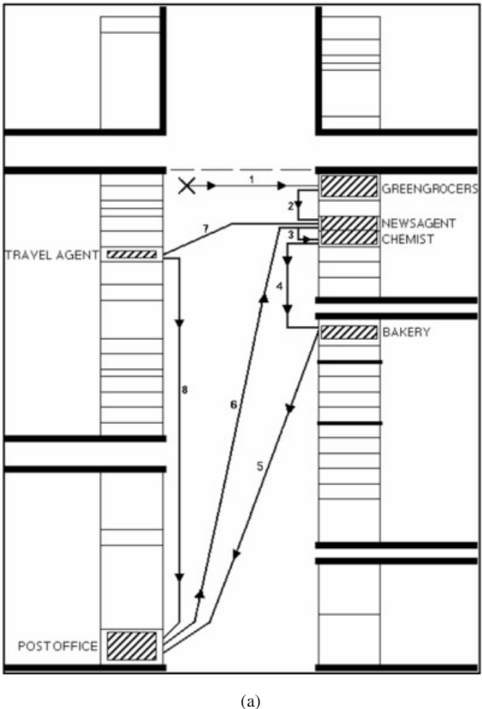
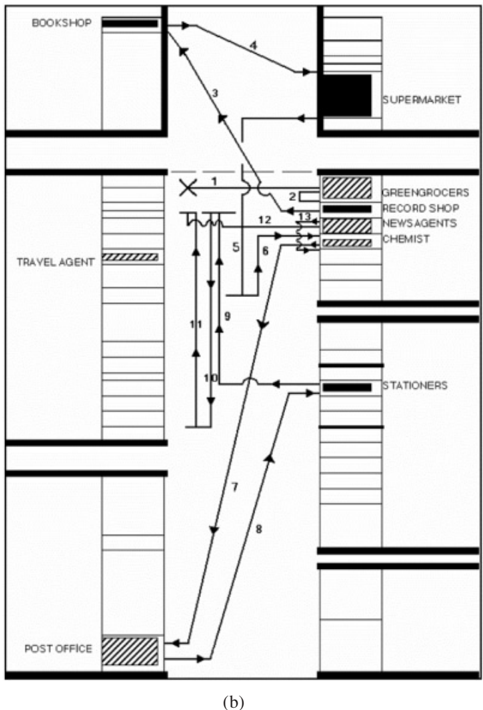
- In Alderman et al. (2003), the paper reports a group-level dissociation on the MET-SV in 50 patients total, with 19 rule breakers and 26 task failers; the contingency table shows 224 vs 65 rule breaks/task failures for rule breakers and 78 vs 171 for task failers.
## Methods
- Conceptual/review article: the paper synthesizes historical, theoretical, and psychometric arguments about executive-function testing rather than reporting a new empirical study.
- It uses examples from prior work, especially the Multiple Errands Test, Six Element Test, Wisconsin Card Sorting Test, and related lesion, imaging, and psychometric studies.
- The main analysis is a level-of-explanation argument distinguishing constructs, operations, and functions, and proposing a function-led route for developing and validating clinical tests.
## Limitations
- The paper explicitly notes that it is too early to tell whether the further theoretical investigations into constructs underpinning these functions will yield lab-type tasks of clinical utility.
- It also states that some of the supporting studies have small group sizes; for example, the Dawson et al. (2005a) correlation results are described as coming from 11 CVA patients and 11 healthy controls.
- Evident from the text: much of the evidence is indirect, drawn from prior studies and examples rather than from a single unified empirical dataset in this paper.
Model-written summary. Check it against the paper before relying on it.
Integrity signals
Registry
Cites
Statistics
Figures
Verification
Claims the paper makes
8 Valid · 14 Not valid · 57 Not checked · 56 Own results and interpretations
The cited sources that could be checked couldn’t confirm or dispute this claim.
In the paper
“But a further contributing problem has probably been the widely held assumption that tasks very close to real world situations will be psychometrically unsound. Recently, this has been shown not to be the case (e.g., Burgess et al., 1998; Knight et al., 2002; Wilson et al., 1998).”
What the sources say
- Could not verifycites Burgess et al., 1998 matched to “The ecological validity of tests of executive function” (1998) sourceExperimental — accuracy not yet measured
The Introduction identifies tests that formalize real-world activities, but does not assess whether those tests are psychometrically sound. The Executive Task Sensitivity section examines the sensitivity of the tests studied, not whether closely real-world tasks overcome the claimed psychometric concern. Searches for reliability and psychometric properties found no passage establishing that point. (LLM, conf=0.72)
- Not checked — no full text of the sourcecites Knight et al., 2002 matched to “Development of a simplified version of the multiple errands test for use in hospital settings” (2002) source
- Not checked — no full text of the sourcecites Wilson et al., 1998 matched to “The Development of an Ecologically Valid Test for Assessing Patients with a Dysexecutive Syndrome” (1998) source
plain- Asserted: passes — The authors put it forward as true.
- Checkable: passes — It can be checked against evidence.
- Load-bearing: passes — The paper’s conclusions depend on it.
- Based: passes — The paper gives a reason why it holds.
- Could not verify
Every source the paper cites for this claim was checked and supports it.
In the paper
“By contrast, people who fail to complete the set tasks tend to show negative symptoms, such as apathy and shallow affect.”
What the sources say
- Supportedcites Alderman et al. (2003) matched to “Ecological validity of a simplified version of the multiple errands shopping test” (2003) source
The Ecological Validity of the MET-SV section (p. 8) reports that Task Failers showed more symptoms of negative affect, specifically shallow affect and apathy. The Discussion (p. 11) likewise links task failures with carers’ observations of apathy and lack of emotion. (LLM, conf=0.95)
plainstates an association- Asserted: passes — The authors put it forward as true.
- Checkable: passes — It can be checked against evidence.
- Load-bearing: passes — The paper’s conclusions depend on it.
- Based: passes — The paper gives a reason why it holds.
- Supported
The cited sources support only part of this claim — read each source’s verdict below.
In the paper
“Finally, performance on tests with high 'representativeness' can be more predictive of performance on traditional tasks than are the traditional tasks themselves (Alderman et al., 2003; Burgess et al., 1998; Knight et al., 2002; Wilson et al., 1998).”
What the sources say
- Partly supportedcites Alderman et al., 2003 matched to “Ecological validity of a simplified version of the multiple errands shopping test” (2003) sourceExperimental — accuracy not yet measured
The Discussion (p. 9) says the MET-SV was more sensitive than many traditional executive tests, and the results on p. 9 link MET-SV errors to observed everyday executive symptoms in patients who passed traditional tests. That supports the broader point that a more ecologically valid test can reveal difficulties traditional tests miss. It does not support the specific claim that such tests better predict performance on traditional tasks than the traditional tasks themselves. (LLM, conf=0.85)
- Could not verifycites Burgess et al., 1998 matched to “The ecological validity of tests of executive function” (1998) sourceExperimental — accuracy not yet measured
The Introduction discusses ecologically valid tests, and the Results examine relationships between executive-test scores and behavioral symptoms. Neither reports that highly representative tests predict performance on traditional tasks better than traditional tasks do. Searches for “representativeness” and comparisons of predictive performance found no such result in our copy; page numbers were unavailable. (LLM, conf=0.72)
- Not checked — no full text of the sourcecites Knight et al., 2002 matched to “Development of a simplified version of the multiple errands test for use in hospital settings” (2002) source
plainstates an association- Asserted: passes — The authors put it forward as true.
- Checkable: passes — It can be checked against evidence.
- Load-bearing: passes — The paper’s conclusions depend on it.
- Based: passes — The paper gives a reason why it holds.
- Partly supported
The cited sources support only part of this claim — read each source’s verdict below.
In the paper
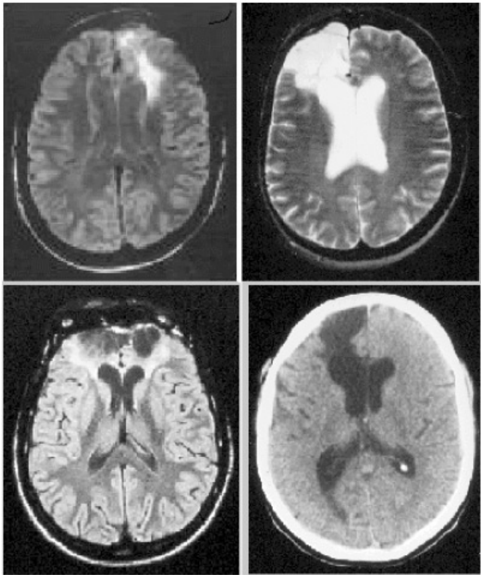
“These findings concurred with those from studies of patients with similar problems (e.g., Bird et al., 2004; Burgess, 2000b; Goldstein et al., 1993; Levine et al., 1998; 1999; see also Figure 3).”
What the sources say
- Not matchedcites Bird et al., 2004
An author–year citation the paper’s reference list doesn’t settle. We don’t search these by name.
- Not matchedcites Burgess, 2000b
More than one paper fits this citation.
- Supportedcites Goldstein et al., 1993 matched to “Unilateral frontal lobectomy can produce strategy application disorder.” (1993) source
The Abstract (pp. 274–276) reports a patient with impaired strategy application and everyday behaviour despite intact performance on standard neuropsychological tests. Goldstein et al. is therefore a study of a patient with the kind of problems the citing sentence identifies, although the sentence does not specify which findings are being compared. (LLM, conf=0.88)
plainstates an association- Asserted: passes — The authors put it forward as true.
- Checkable: passes — It can be checked against evidence.
- Load-bearing: unclear — It is unclear whether the paper’s conclusions depend on it.
- Based: passes — The paper gives a reason why it holds.
- Not matched
Every source the paper cites for this claim was checked and supports it.
In the paper
“'Rule-breakers' tend to show problems with control aspects of memory (e.g., show confabulation, temporal sequencing problems, and repetitive behaviour).”
What the sources say
- Supportedcites Alderman et al. (2003) matched to “Ecological validity of a simplified version of the multiple errands shopping test” (2003) source
The Discussion (p. 11) says patients who tend to break task rules are those whose carers notice memory-control disturbances, including confabulation, temporal-sequencing problems, and perseveration. Perseveration corresponds to the claim’s repetitive behaviour. (LLM, conf=0.93)
plainstates an association- Asserted: passes — The authors put it forward as true.
- Checkable: passes — It can be checked against evidence.
- Load-bearing: passes — The paper’s conclusions depend on it.
- Based: passes — The paper gives a reason why it holds.
- Supported
67 more claims
Create a free account to see all 135 claims and to verify the 6 references still open.
- It may state two separate claims as one. 28
- Probably not a substantial claim. 40
- The quote only partly states this claim. 1
Claims other papers make about this one
Each is checked against this paper’s own text: does it say what the citing paper says it does?
The source backs part of the claim, not all of it — or backs it for a different population, condition or comparison.
In the citing paper
“First, it is in this literature where the term EV is applied most frequently and where calls to action have been made for the development of new, more ' ecological ' tests of EF (e.g., Burgess et al., 2006; Spooner & Pachana, 2006).”
From Conceptualization of the term 'ecological validity' in neuropsychological research on executive function assessment: a systematic review and call to action (2024) · cites this paper as Burgess et al., 2006
Experimental — accuracy not yet measuredThe source backs part of the claim, not all of it — or backs it for a different population, condition or comparison.
In the citing paper
“However, their accuracy in assessing functional deficits in ADHD may be limited.”
From Enhancing Ecological Validity: Virtual Reality Assessment of Executive Functioning in Children and Adolescents with ADHD (2024) · cites this paper as [4]
Experimental — accuracy not yet measuredThe source backs part of the claim, not all of it — or backs it for a different population, condition or comparison.
In the citing paper
“Typically conducted in clinical or laboratory settings, these tests often evaluate specific skills in isolation, potentially overlooking interactions between different EFs and their relevance to daily activities [4,5].”
From Enhancing Ecological Validity: Virtual Reality Assessment of Executive Functioning in Children and Adolescents with ADHD (2024) · cites this paper as [4]
Experimental — accuracy not yet measured
2 more claims about this paper
Create a free account to see every claim other papers make about this one.
Citations
Cites
Studies of interference in serial verbal reactions
Stroop, J. R. (1935) · Journal of Experimental Psychology · doi:10.1037/h0054651 · Cited by 18,622
Miyake, A., Friedman, N. P., Emerson, M. J., Witzki, A. H., Howerter, A., & Wager, T. D. (2000) · Cognitive Psychology · doi:10.1006/cogp.1999.0734 · Cited by 15,798
Hutchins, E. (1995) · doi:10.7551/mitpress/1881.001.0001 · Cited by 10,801
The Sickness Impact Profile: Development and Final Revision of a Health Status Measure
Bergner, M., Bobbitt, R. A., Carter, W. B., & Gilson, B. S. (1981) · Medical Care · doi:10.1097/00005650-198108000-00001 · Cited by 4,619
Attention to Action: Willed and Automatic Control of Behavior
Norman, D. A., & Shallice, T. (1986) · Consciousness and Self-Regulation · doi:10.1007/978-1-4757-0629-1_1 · Cited by 4,455
From Neuropsychology to Mental Structure
Shallice, T. (1988) · doi:10.1017/cbo9780511526817 · Cited by 4,072
Understanding face recognition
Bruce, V., & Young, A. (1986) · British Journal of Psychology · doi:10.1111/j.2044-8295.1986.tb02199.x · Cited by 3,912
Specific impairments of planning
Shallice, T. (1982) · Philosophical Transactions of the Royal Society of London. B, Biological Sciences · doi:10.1098/rstb.1982.0082 · Cited by 3,741
Frith, C., & Frith, U. (2005) · Current Biology · doi:10.1016/j.cub.2005.08.041 · Cited by 3,481
Being There: Putting Brain, Body and World Together Again.
van Gelder, T., & Clark, A. (1998) · The Philosophical Review · doi:10.2307/2998391 · Cited by 3,128
Research works printed but not linked: 6
- Alderman, N., Evans, J.J., Emslie, H., Wilson, B.W., & Burgess, P.W. (1996). Zoo Map Test. In B.A. Wilson, N. Alderman, P.W. Burgess, H. Emslie, & J.J. Evans (Eds.), Behavioural assessment of the dysexecutive syndrome . Bury St. Edmunds: Thames Valley Test Company.
- Burgess, P.W., Alderman, N., Emslie, H., Evans, J.J., Wilson, B.A., &Shallice, T. (1996b). The simplified six element test. In B.A. Wilson, N. Alderman, P.W. Burgess, H. Emslie, & J.J. Evans (Eds.), Behavioural assessment of the dysexecutive syndrome . Bury St. Edmunds, U.K.: Thames Valley Test Company.
- Grady, C.L. (1999). Neuroimaging and activation of the frontal lobes. In B.L. Miller & J.L. Cummings (Eds.), The human frontal lobes: Function and disorders (pp. 196-230). New York: Guilford Press.
- Petrides, M. (1994). Frontal lobes and working memory: Evidence from investigations of the effects of cortical excisions in nonhuman primates. In F. Boller & J. Grafman (Eds.), Handbook of Neuropsychology , Vol. 9 (pp. 59-82). Amsterdam: Elsevier.
- Burgess, P.W., Alderman, N., Emslie, H., Evans, J.J., & Wilson, B.A. (1996a). The dysexecutive questionnaire. In B.A. Wilson, N. Alderman, P.W. Burgess, H. Emslie, & J.J. Evans (Eds.), Behavioural assessment of the dysexecutive syndrome . Bury St. Edmunds, U.K.: Thames Valley Test Company.
- Weigl, E. (1927). Zur Psychologie sogenannter Abstraktionsprozesse. Zeitschrift fur Psychologie, 103 , 2- 45. [Translated by M. Rioch and reprinted as: On the psychology of so-called processes of abstraction. Journal of Abnormal and Social Psychology , 36 , 3-33, 1948].
Cited by
Items 401–500 of 671
Paglia, F. L., Cascia, C. L., Cipresso, P., Rizzo, R., Francomano, A., Riva, G., & Barbera, D. L. (2014) · Lecture notes of the Institute for Computer Sciences, Social Informatics and Telecommunications Engineering · doi:10.1007/978-3-319-11564-1_3 · Cited by 10
Maja, R. A., Kilshaw, R. E., García-Barrera, M. A., & Karr, J. E. (2021) · Psychological Reports · doi:10.1177/0033294120979690 · Cited by 11
Virtual Reality and the Rehabilitation of Executive Functions: An Annotated Bibliography
Kizony, R., Josman, N., Katz, N., Rand, D., & Leroy, P. (2016) · Cited by 8
Asp, E. W., Gullickson, J. T., Warner, K., Koscik, T. R., Denburg, N. L., & Tranel, D. (2019) · Cortex · doi:10.1016/j.cortex.2019.03.024 · Cited by 8
Gomez, I. N., Palomo, S. A. M., Vicuña, A. M. U., Bustamante, J. A. D., Eborde, J. M. E., Regala, K. A., Ruiz, G. M. M., & Sanchez, A. L. G. (2021) · Occupational Therapy International · doi:10.1155/2021/6008442 · Cited by 13
Zur, B. M., Rudman, D. L., Johnson, A. M., Roy, É., & Wells, J. (2013) · Canadian Journal of Occupational Therapy · doi:10.1177/0008417413481574 · Cited by 10
(2019) · doi:10.7554/elife.48336 · Cited by 8
Pedroli, E., Serino, S., Giglioli, A. C., Pallavicini, F., Cipresso, P., & Riva, G. (2016) · Advances in medical technologies and clinical practice book series · doi:10.4018/978-1-4666-9740-9.ch007 · Cited by 12
Bhargava, Y., Kottapalli, A., & Baths, V. (2024) · Scientific Reports · doi:10.1038/s41598-024-75065-1 · Cited by 15
Steverson, T., Adlam, A., & Langdon, P. E. (2016) · Journal of Applied Research in Intellectual Disabilities · doi:10.1111/jar.12236 · Cited by 9
Kognitive Hirnleistungen des präfrontalen Kortex: Neurowissenschaft und Klinik
Kopp, B., Tabeling, S., Moschner, C., & Wessel, K. (2007) · Der Nervenarzt · doi:10.1007/s00115-007-2319-8 · Cited by 11
Seehusen, D. A., Kleinheksel, A. J., Huang, H., Harrison, Z., & Ledford, C. J. W. (2023) · Academic Medicine · doi:10.1097/acm.0000000000005161 · Cited by 10
Moral Reasoning in Children with Focal Brain Insults to Frontotemporal Regions
Chiasson, V., Elkaim, L. M., Weil, A. G., Crevier, L., & Beauchamp, M. H. (2017) · Brain Impairment · doi:10.1017/brimp.2016.33 · Cited by 8
Sekely, A. W., & Zakzanis, K. K. (2018) · Psychological Injury and Law · doi:10.1007/s12207-018-9329-7 · Cited by 8
Bhargava, Y., & Baths, V. (2024) · JMIR XR and spatial computing. · doi:10.2196/59197 · Cited by 8
Barker, L. A., & Morton, N. (2018) · Frontiers in Behavioral Neuroscience · doi:10.3389/fnbeh.2018.00085 · Cited by 7
Lewis, M. M., Waltz, C., Scelina, K., Scelina, L., Owen, K., Hastilow, K., Koop, M. M., Rosenfeldt, A. B., & Alberts, J. L. (2023) · Frontiers in Virtual Reality · doi:10.3389/frvir.2023.1261096 · Cited by 8
Rinne, K., Memmert, D., & Bock, O. L. (2022) · Journal of Navigation · doi:10.1017/s0373463321000965 · Cited by 10
Sources of error and meaning in the pediatric neuropsychological evaluation
Weiler, M. D., Willis, W. G., & Kennedy, M. L. (2019) · Elsevier eBooks · doi:10.1016/b978-0-12-802203-0.00007-9 · Cited by 7
Suchy, Y. (2020) · The Clinical Neuropsychologist · doi:10.1080/13854046.2020.1748827 · Cited by 9
Saa, J. P., Doherty, M., Young, A. C., Spiers, M., Leary, E. V., & Wolf, T. (2017) · American Journal of Occupational Therapy · doi:10.5014/ajot.2017.024356 · Cited by 7
Don’t forget your lunch: Age and individual differences in how children perform everyday tasks
Perone, S., Anderson, A. J., & Youatt, E. A. (2020) · Cognitive Development · doi:10.1016/j.cogdev.2020.100879 · Cited by 8
Lee, Y., Randolph, S. B., Kim, M. Y., Foster, E. R., Kersey, J., Baum, C. M., & Connor, L. T. (2025) · American Journal of Occupational Therapy · doi:10.5014/ajot.2025.050948 · Cited by 11
Problem solving is embedded in context… so how do we measure it?
Rhodes, K. T., Richland, L. E., & Alcalá, L. (2024) · Frontiers in Psychology · doi:10.3389/fpsyg.2024.1380178 · Cited by 10
Non-invasive optical imaging of brain function with fNIRS: Current status and way forward
Pinti, P., Tachtsidis, I., Burgess, P. W., & Hamilton, A. F. D. C. (2023) · Elsevier eBooks · doi:10.1016/b978-0-12-820480-1.00028-0 · Cited by 16
Self-citationValls-Serrano, C., Verdejo‐García, A., Noël, X., & Caracuel, A. (2017) · Journal of the International Neuropsychological Society · doi:10.1017/s1355617717001023 · Cited by 8
Can the stroke impact scale 3.0 detect cognitive impairments in patients with a recent stroke?
Almalki, O., Alshehri, M. A., Fiky, A. A. R. E., Abdelaal, A. A. M., Alzaidi, J., Attar, W. S. A. A., & Hegazy, F. A. (2019) · Journal of Physical Therapy Science · doi:10.1589/jpts.31.563 · Cited by 8
French adult normative data for a Standard Executive Neuropsychological Test Battery
Bayard, S., Madiouni, C., Carlos, C. N., Cornu, C., Moulin, A., & Raffard, S. (2023) · Archives of Clinical Neuropsychology · doi:10.1093/arclin/acad062 · Cited by 9
Effects of Omega-3 Fatty Acids on Cognition and Behaviour in Childhood
Thornberg, U. B. (2011) · Cited by 6
Burgess, P. W., Gilbert, S. J., & Dumontheil, I. (2007) · UCL Discovery (University College London) · Cited by 7
Self-citationDecision–making and mental capacity:Resolving the frontal paradox
Worthington, A. D. (2019) · The Neuropsychologist · doi:10.53841/bpsneur.2019.1.7.31 · Cited by 8
Six elements test vs D-KEFS: what does “Ecological Validity” tell us?
Suchy, Y., Mora, M. G., Brothers, S. L., & DesRuisseaux, L. A. (2024) · Journal of the International Neuropsychological Society · doi:10.1017/s1355617723000723 · Cited by 7
Validity of the Functional Loewenstein Occupational Therapy Cognitive Assessment (FLOTCA)
Schwartz, Y., Averbuch, S., Katz, N., & Sagiv, A. (2015) · American Journal of Occupational Therapy · doi:10.5014/ajot.2016.016451 · Cited by 7
Technological developments in assessment
Kane, R. L., & Parsons, T. D. (2019) · Elsevier eBooks · doi:10.1016/b978-0-12-802203-0.00020-1 · Cited by 8
Interdisciplinary Assessment Strategies for Capturing the Elusive Executive
Schutz, L. E., & Wanlass, R. L. (2009) · American Journal of Physical Medicine & Rehabilitation · doi:10.1097/phm.0b013e3181a0e2d3 · Cited by 7
Can Video Games Be Used as a Stealth Assessment of Aggression? A Criterion-Related Validity Study
McCreery, M. P., Krach, S. K., Bacos, C. A., Laferriere, J. R., & Head, D. L. (2019) · International Journal of Gaming and Computer-Mediated Simulations · doi:10.4018/ijgcms.2019040103 · Cited by 9
Semantic inhibition and dementia severity in Alzheimer's disease.
Cervera-Crespo, T., González-Álvarez, J., & Rosell-Clari, V. (2019) · Psicothema · doi:10.7334/psicothema2019.40 · Cited by 4
Álvaro Cavieres, F., Vanessa Acuña, P., Arancibia, M., & Escobar, C. (2024) · Schizophrenia Research Cognition · doi:10.1016/j.scog.2024.100333 · Cited by 15
Using Cognitive-Functional Assessment to Predict Self-Care Performance of Memory Care Tenants
Schaber, P. L., Klein, T., Hanrahan, E., Vencil, P., Afatika, K., & Burns, T. (2013) · American Journal of Alzheimer s Disease & Other Dementias® · doi:10.1177/1533317512470206 · Cited by 6
Jespersen, A. E., Obel, Z. K., Lumbye, A., Kessing, L. V., & Miskowiak, K. W. (2024) · Nordic Journal of Psychiatry · doi:10.1080/08039488.2024.2309496 · Cited by 7
Questionnaire of Executive Function for Dancers
Wong, A., Rodriguez, M. M., Quevedo, L., de Cossío, L. F., Borges, A., Reyes, A., Corral, R., Blanco, F., & Álvarez, M. (2012) · Assessment (Odessa, Fla.) · doi:10.1177/1073191110397483 · Cited by 8
Bertens, D., Fasotti, L., Egger, J. I. M., Boelen, D. H. E., & Kessels, R. P. C. (2015) · Applied Neuropsychology Adult · doi:10.1080/23279095.2015.1012258 · Cited by 11
Adriasola, A., Torres, S. C., Cañada, Y., Giglioli, I. A. C., García-Blanco, A., Sierra, P., López-Cerveró, M., Chloe, B. R., Navalón, P., & Raya, M. A. (2024) · Cyberpsychology Behavior and Social Networking · doi:10.1089/cyber.2023.0443 · Cited by 6
Handbook of Frontal Lobe Assessment
(2015) · doi:10.1080/09602011.2015.1103004 · Cited by 5
A Virtual-Reality Approach for the Assessment and Rehabilitation of Multitasking Deficits
Bock, O. L., Drescher, U., van Winsum, W., Kesnerus, T. F., & Voelcker‐Rehage, C. (2018) · International Journal of Virtual and Augmented Reality · doi:10.4018/ijvar.2018010104 · Cited by 5
Russo, C., & Senese, V. P. (2023) · European Journal of Neuroscience · doi:10.1111/ejn.15890 · Cited by 6
Kenny, L., Remington, A., & Pellicano, E. (2021) · Journal of Autism and Developmental Disorders · doi:10.1007/s10803-021-05034-4 · Cited by 5
Szepietowska, E. M., & Kuzaka, A. (2019) · Psychiatria Polska · doi:10.12740/pp/onlinefirst/85936 · Cited by 6
Test–re-test reliability of the virtual planning test in individuals with traumatic brain injury
O’Neil-Pirozzi, T. M., Goldstein, R. D., Strangman, G. E., Katz, D. I., & Glenn, M. B. (2010) · Brain Injury · doi:10.3109/02699051003601697 · Cited by 5
An Exploratory Analysis of the Ecological Validity of a Performance-Based Assessment of Attention
Lee, E. Y. (2009) · Digital Commons - University of South Florida (University of South Florida) · Cited by 6
Taylor, C. L., & Zaghi, A. E. (2022) · Frontiers in Psychology · doi:10.3389/fpsyg.2022.937153 · Cited by 11
Hocking, D. R., Byer, E., & Lee, N. (2024) · Scientific Reports · doi:10.1038/s41598-024-80395-1 · Cited by 5
León-Domínguez, U. (2025) · Ergonomics · doi:10.1080/00140139.2025.2560581 · Cited by 6
Schröder, R., Baumert, P. M., & Ettinger, U. (2021) · Acta Psychologica · doi:10.1016/j.actpsy.2021.103364 · Cited by 7
Measures of executive function may not be indicators of latent constructs
Holmén, J., Chaplin, W. F., & Vecchio, T. D. (2024) · Journal of Neuropsychology · doi:10.1111/jnp.12363 · Cited by 7
Virtual School Environments for Neuropsychological Assessment and Training
Parsons, T. D., Duffield, T. C., McMahan, T., & Díaz-Orueta, U. (2018) · Educational communications and technology: issues and innovations · doi:10.1007/978-3-030-02631-8_8 · Cited by 4
Borgnis, F., Baglio, F., Pedroli, E., Rossetto, F., Meloni, M., Riva, G., & Cipresso, P. (2021) · Applied Sciences · doi:10.3390/app11156791 · Cited by 6
The Role of Mindfulness in Neurorehabilitation: From the Monastery to the Clinic
Smart, C. M. (2019) · Springer eBooks · doi:10.1007/978-3-030-14895-9_34 · Cited by 8
A Clinic-Based Measure of Everyday Planning Ability: The Overnight Trip Task
Brown, K. D., & Schmitter‐Edgecombe, M. (2023) · Archives of Clinical Neuropsychology · doi:10.1093/arclin/acad052 · Cited by 5
Kassel, M. T., Lositsky, O., Vaidya, A. R., Badre, D., Malloy, P. F., Greenberg, B. D., Marsland, R., Noren, G. C., Sherman, A. L., Rasmussen, S. A., et al. (2022) · Neuropsychologia · doi:10.1016/j.neuropsychologia.2022.108211 · Cited by 5
Duggan, E. C., García-Barrera, M. A., & Müller, U. (2016) · Assessment · doi:10.1177/1073191116670511 · Cited by 7
(2022) · doi:10.31234/osf.io/aqbwt · Cited by 19
Mărcuș, O., Rusu, R., Mueller, S. C., & Visu‐Petra, L. (2024) · Acta Psychologica · doi:10.1016/j.actpsy.2024.104275 · Cited by 9
Innovative tools for the direct assessment of social and emotional skills
Linzarini, A., & Silva, D. C. D. (2024) · OECD education working papers · doi:10.1787/eed9bb04-en · Cited by 17
Managing Executive Function Impairments to Optimize Function
Gillen, G. (2009) · Elsevier eBooks · doi:10.1016/b978-0-323-04621-3.10010-5 · Cited by 7
Ríos, L. J. C., Hernández-Mendo, A., Walle, J. M. L., Reigal, R. E., de Mier, R. J. R., & Martínez, I. M. (2016) · Retos · doi:10.47197/retos.v0i30.50223 · Cited by 10
Everyday Living Assessment in Cognitive Evaluations
Lynch, W. J. (2008) · Journal of Head Trauma Rehabilitation · doi:10.1097/01.htr.0000319937.97158.09 · Cited by 4
VR for Vocational and Ecological Rehabilitation of Patients With Cognitive Impairment: A Survey
Hummel, E., Cogné, M., Lange, M., Lécuyer, A., Joly, F., & Gouranton, V. (2023) · IEEE Transactions on Neural Systems and Rehabilitation Engineering · doi:10.1109/tnsre.2023.3324131 · Cited by 6
Ichikowitz, K., Bruce, C., Meitanis, V., Cheung, K., Kim, Y., Talbourdet, E., & Newton, C. (2023) · International Journal of Language & Communication Disorders · doi:10.1111/1460-6984.12867 · Cited by 9
Brain imaging of executive function with the computerised multiple elements test
Fuentes‐Claramonte, P., Santo-Angles, A., Argila‐Plaza, I., Lechón, M., Guardiola-Ripoll, M., Almodóvar-Payá, C., Cullen, B., Evans, J. J., Manly, T., Gee, A. L., et al. (2021) · Brain Imaging and Behavior · doi:10.1007/s11682-020-00425-0 · Cited by 7
Barnett, M. D., Chek, C. J. W., Shorter, S. S., & Parsons, T. D. (2022) · Brain Sciences · doi:10.3390/brainsci12081019 · Cited by 4
Houvenaghel, J., Duprez, J., Naudet, F., Argaud, S., Dondaine, T., Drapier, S., Robert, G. H., Drapier, D., Vérin, M., & Sauleau, P. (2016) · Journal of the Neurological Sciences · doi:10.1016/j.jns.2016.05.045 · Cited by 5
Randolph, J. J., & Chaytor, N. S. (2022) · Springer eBooks · doi:10.1007/978-3-031-11389-5_7 · Cited by 6
Le Profil des AVQ adapté au rôle de parent : Une étude exploratoire
Major, S., Gilbert, V., Dutil, É., Pituch, E., & Bottari, C. L. (2018) · Canadian Journal of Occupational Therapy · doi:10.1177/0008417418762515 · Cited by 6
Conesa, P. J. (2023) · Revista de Psicología Clínica con Niños y Adolescentes · doi:10.21134/rpcna.2023.10.3.6 · Cited by 6
Distinct performance profiles on the Brixton test in frontotemporal dementia
Rao, S. P., Nandi, R., Dutt, A., Kapur, N., Harris, J., Thompson, J. C., & Snowden, J. S. (2020) · Journal of Neuropsychology · doi:10.1111/jnp.12228 · Cited by 5
Climent, G., Rebón-Ortiz, F., Saura-Carrasco, M., & Díaz-Orueta, U. (2024) · Applied Neuropsychology Adult · doi:10.1080/23279095.2024.2306128 · Cited by 4
Goal-based interventions for executive dysfunction in addiction treatment
Verdejo‐García, A. (2019) · Elsevier eBooks · doi:10.1016/b978-0-12-815298-0.00020-4 · Cited by 4
Borgnis, F., Borghesi, F., Rossetto, F., Pedroli, E., Lavorgna, L., Riva, G., Baglio, F., & Cipresso, P. (2023) · Journal of Clinical Medicine · doi:10.3390/jcm12041645 · Cited by 4
Применение компьютерных игровых технологий для развития регуляторных функций дошкольников
Veraksa, A. N., & Bukhalenkova, D. А. (2017) · Российский психологический журнал · doi:10.21702/rpj.2017.3.6 · Cited by 11
Development of a Modified Naturalistic Action Test for Korean Patients With Impaired Cognition
Jung, M. A., Kim, H. J., Kang, Y. J., & Kim, Y. J. (2013) · Annals of Rehabilitation Medicine · doi:10.5535/arm.2013.37.1.57 · Cited by 4
Konstantinopoulou, E., Ioannidis, P., Kiosseoglou, G., & Aretouli, E. (2021) · Applied Neuropsychology Adult · doi:10.1080/23279095.2021.1890594 · Cited by 4
The Multiple Errands Test: A Guide for Site-Specific Version Development
Scarff, S., Nalder, E. J., Gullo, H., & Fleming, J. (2022) · Canadian Journal of Occupational Therapy · doi:10.1177/00084174221142184 · Cited by 3
Ecological aspects of cognitive assessment
Bouwens, S. (2009) · Research Publications (Maastricht University) · doi:10.26481/dis.20090429sb · Cited by 7
Talbot, S., Gerdjikov, T. V., & Lillo, C. D. (2021) · Quarterly Journal of Experimental Psychology · doi:10.1177/17470218211010576 · Cited by 5
Ferraris, C., Pettiti, G., Amprimo, G., Desideri, D., Pratola, R., Sacco, K., Ronga, I., Coppo, G., Soprani, D., Barbagallo, J., et al. (2022) · IEEE Symposium on Computers and Communications (ISCC) · doi:10.1109/iscc55528.2022.9912775 · Cited by 5
Factor analysis of the virtual reality Stroop task
Asbee, J., Kelly, K. S., McMahan, T., & Parsons, T. D. (2022) · Journal of Clinical and Experimental Neuropsychology · doi:10.1080/13803395.2022.2150749 · Cited by 5
Galbo, L. K., & Czoty, P. W. (2023) · Current Pharmacology Reports · doi:10.1007/s40495-023-00337-9 · Cited by 3
Slachevsky, A., Carolina Pérez, J., Silva, J. R., Ruiz‐Tagle, A., Mayol-Troncoso, R., Muñoz‐Neira, C., & Núñez-Huasaf, J. (2012) · Revista médica de Chile · doi:10.4067/s0034-98872012000300016 · Cited by 6
Lamash, L. (2025) · Hong Kong Journal of Occupational Therapy · doi:10.1177/15691861251334783 · Cited by 4
Cross-modal Semantic Relationships Guide Spontaneous Orienting in Real-life ScenesPreprint
Kvasova, D., Stewart, T., & Soto‐Faraco, S. (2021) · bioRxiv (Cold Spring Harbor Laboratory) · doi:10.1101/2021.11.29.470351 · Cited by 2
Pedroli, E., Bruni, F., Mancuso, V., Cavedoni, S., Bigotto, F., Panigada, J., Rossi, M., Boilini, L., Goulene, K., Stramba‐Badiale, M., et al. (2025) · Technologies · doi:10.3390/technologies13030096 · Cited by 4
Noreña, D. D., & Lago, M. R. (2007) · Acción Psicológica · doi:10.5944/ap.4.3.469 · Cited by 7
Kizony, R., Segal, B., Weiss, P. L., Sangani, S. G., & Fung, J. (2017) · International Conference on Virtual Rehabilitation · doi:10.1109/icvr.2017.8007507 · Cited by 3
Genetic variance in conscientiousness relates to youth psychopathology beyond executive functions.
Shields, A. N., Malanchini, M., Vinnik, L., Tucker–Drob, E. M., Harden, K. P., & Tackett, J. L. (2022) · Journal of Psychopathology and Clinical Science · doi:10.1037/abn0000781 · Cited by 6
Metadata
- Authors
- BURGESS, P. W., ALDERMAN, N., FORBES, C., COSTELLO, A., M-A.COATES, L., DAWSON, D. R., ANDERSON, N. D., GILBERT, S. J., DUMONTHEIL, I., & CHANNON, S.
- Affiliations
- University College London (GB)
- St Andrew's Healthcare (GB)
- King's College Hospital (GB)
- University of London (GB)
- University of Toronto (CA)
- ORCID
- Venue
- Journal of the International Neuropsychological Society
- Publisher
- Cambridge University Press (CUP)
- Published
- 2006-03
- Volume
- 12
- Issue
- 2
- Pages
- 194-209
- ISSN
- 1355-6177 (ISSN-L)
- 1469-7661
- OpenAlex
- W2161907647
- Semantic Scholar
- bf6f8d180fc2d91abf7650cc2125a620443f0f88
- Cited by
- 663
- References
- 173
- Citations by year
- 2026: 21 · 2025: 24 · 2024: 37 · 2023: 39 · 2022: 38 · 2021: 41 · 2020: 31 · 2019: 47 · 2018: 41 · 2017: 48 · 2016: 35 · 2015: 35 · 2014: 32 · 2013: 44 · 2012: 29
- FWCI
- 28.96
- Type
- journal article
- Language
- en
- Open access
- green
- discovery.ucl.ac.uk
- Locations
- Journal of the International Neuropsychological Society (publishedVersion)
- PubMed (publishedVersion)
- UCL Discovery (University College London) (submittedVersion)
- Funders
- Wellcome Trust (061171)
- Topics
- Social Sciences › Psychology › Experimental and Cognitive Psychology › Cognitive Functions and Memory
- Social Sciences › Psychology › Clinical Psychology › Historical and Modern Theater Studies
- Life Sciences › Neuroscience › Cognitive Neuroscience › Neural and Behavioral Psychology Studies
- Keywords
- executive function, test development, clinical neuropsychological assessment, Wisconsin Card Sorting Test, Stroop task, Multiple Errands Test, generalizability
- MeSH terms
- Cognition Disorders, Frontal Lobe, Humans, Neuropsychological Tests, Neuropsychology
About these checks
Registry, retraction, Cites and statistics results are computed, not judged, with one exception: a printed reference that no index lists is read once by a model before it counts as a citation error. Claims are extracted by a model and kept only when their quote appears verbatim in the text; each cited source is then checked, with a model’s help, for whether it says what the claim relies on. Those verdicts can be wrong — read the claim’s quote and the cited source before relying on one.
The claim verdicts this report counts are experimental: their accuracy is not yet measured.
A language model drew the claims from the paper on 2026-09-29, under version 3 of the claim definition (model deepseek-v4.1-flash, prompt extract-v3).
A second model labelled each claim on 2026-09-29 (model jev-1.13-20260917, definition revision gold-guideline-v0.2).
Cited sources are checked with a language model’s help (gpt-6-sol).
Statistics and arithmetic are recomputed, not judged.
Confidence bands are shown only for fields calibrated on our annotated test set. None is calibrated yet, so no band is shown.
What counts as a claim ›How we measure confidence ›How we check this ›
Are you an author, or do you see a problem with this page? Request a review
Data sources
Bibliographic data: Semantic Scholar, OpenAlex, Crossref.
Contains information from the Semantic Scholar Academic Graph Datasets, made available under the ODC Attribution License (ODC-BY 1.0).
Semantic Scholar’s data is described in: Kinney, R., et al. (2023). The Semantic Scholar Open Data Platform. arXiv:2301.10140.
