

The case for the development and use of ecologically valid measures of executive function in experimental and clinical neuropsychology
Open accessThe DOI matches its Crossref record; 172 of the 173 references it cites were found in a registry or an index, and 1 are not checked yet; 10 of the 103 sources its claims cite were checked for support.
Abstract
This article considers the scientific process whereby new and better clinical tests of executive function might be developed, and what form they might take. We argue that many of the traditional tests of executive function most commonly in use (e.g., the Wisconsin Card Sorting Test; Stroop) are adaptations of procedures that emerged almost coincidentally from conceptual and experimental frameworks far removed from those currently in favour, and that the prolongation of their use has been encouraged by a sustained period of concentration on "construct-driven" experimentation in neuropsychology. This resulted from the special theoretical demands made by the field of executive function, but was not a necessary consequence, and may not even have been a useful one. Whilst useful, these tests may not therefore be optimal for their purpose. We consider as an alternative approach a function-led development programme which in principle could yield tasks better suited to the concerns of the clinician because of the transparency afforded by increased "representativeness" and "generalisability." We further argue that the requirement of such a programme to represent the interaction between the individual and situational context might also provide useful constraints for purely experimental investigations. We provide an example of such a programme with reference to the Multiple Errands and Six Element tests.
Verified 2026-11-25 · 1 reference not checked yet
Overview
CoChat Summary
## TL;DR
The paper argues that many widely used executive-function tests were not designed for their current clinical purposes and may be poor matches to real-world behavior. It advocates a “function-led” approach to building ecologically valid tasks, using examples such as the Multiple Errands Test and Six Element Test.
## Key findings
- Traditional executive-function tests such as the Wisconsin Card Sorting Test (WCST), Stroop, and Tower of London were developed from earlier experimental or conceptual frameworks, not for clinical assessment of everyday functioning.
- The authors argue that “ecological validity” should include both representativeness (similarity to real-world situations) and generalisability (predicting behavior outside the lab).
- The paper cites evidence that more naturalistic tasks can relate more closely to everyday problems than traditional tests: for example, Dawson et al. (2005a) found Multiple Errands performance correlated with everyday-function measures in 11 CVA patients and 11 healthy controls, with MET-AMPS-M correlations of 2.63 and 2.51 as reported in the text; Dawson et al. (2005b) reported correlations of between .5 and .8 in 30 people with acquired brain injury and 30 matched controls.
- Knight et al. (2002) reported inter-rater reliabilities for Multiple Errands measures of .81 to 1.00 and internal consistency (Cronbach’s alpha) of .77; Dawson et al. (2005b) reported hospital-version inter-class correlations of ≥ 0.90 in 30 controls and 30 people with acquired brain injury.
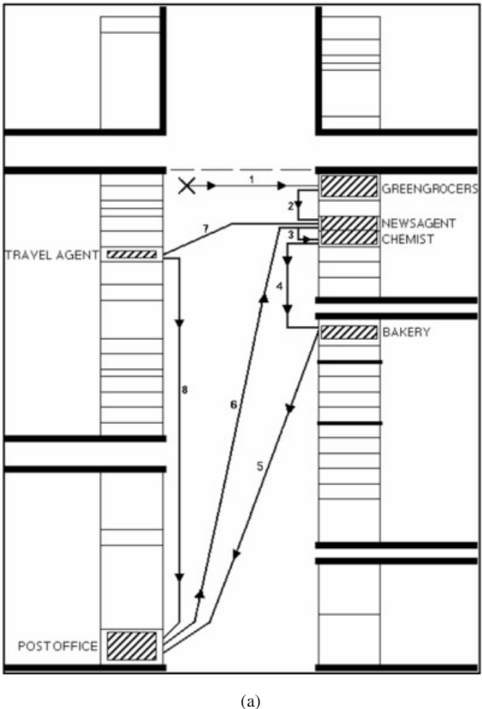
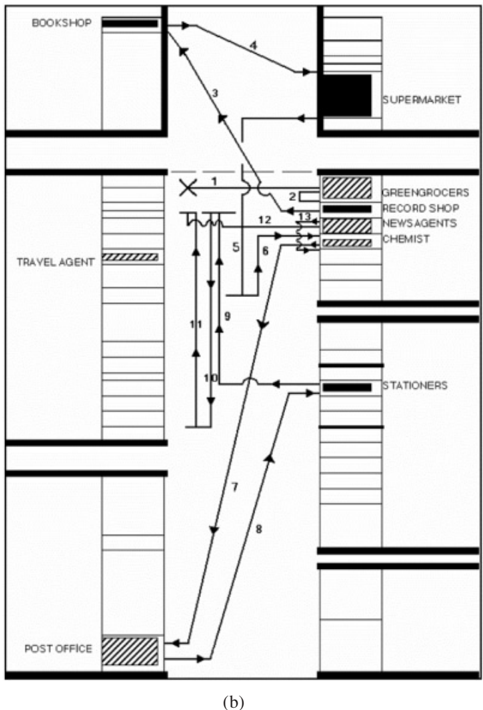
- In Alderman et al. (2003), the paper reports a group-level dissociation on the MET-SV in 50 patients total, with 19 rule breakers and 26 task failers; the contingency table shows 224 vs 65 rule breaks/task failures for rule breakers and 78 vs 171 for task failers.
## Methods
- Conceptual/review article: the paper synthesizes historical, theoretical, and psychometric arguments about executive-function testing rather than reporting a new empirical study.
- It uses examples from prior work, especially the Multiple Errands Test, Six Element Test, Wisconsin Card Sorting Test, and related lesion, imaging, and psychometric studies.
- The main analysis is a level-of-explanation argument distinguishing constructs, operations, and functions, and proposing a function-led route for developing and validating clinical tests.
## Limitations
- The paper explicitly notes that it is too early to tell whether the further theoretical investigations into constructs underpinning these functions will yield lab-type tasks of clinical utility.
- It also states that some of the supporting studies have small group sizes; for example, the Dawson et al. (2005a) correlation results are described as coming from 11 CVA patients and 11 healthy controls.
- Evident from the text: much of the evidence is indirect, drawn from prior studies and examples rather than from a single unified empirical dataset in this paper.
Model-written summary. Check it against the paper before relying on it.
Integrity signals
Registry
Cites
Statistics
Figures
Verification
Claims the paper makes
8 Valid · 14 Not valid · 57 Not checked · 56 Own results and interpretations
The cited sources that could be checked couldn’t confirm or dispute this claim.
In the paper
“But a further contributing problem has probably been the widely held assumption that tasks very close to real world situations will be psychometrically unsound. Recently, this has been shown not to be the case (e.g., Burgess et al., 1998; Knight et al., 2002; Wilson et al., 1998).”
What the sources say
- Could not verifycites Burgess et al., 1998 matched to “The ecological validity of tests of executive function” (1998) sourceExperimental — accuracy not yet measured
The Introduction identifies tests that formalize real-world activities, but does not assess whether those tests are psychometrically sound. The Executive Task Sensitivity section examines the sensitivity of the tests studied, not whether closely real-world tasks overcome the claimed psychometric concern. Searches for reliability and psychometric properties found no passage establishing that point. (LLM, conf=0.72)
- Not checked — no full text of the sourcecites Knight et al., 2002 matched to “Development of a simplified version of the multiple errands test for use in hospital settings” (2002) source
- Not checked — no full text of the sourcecites Wilson et al., 1998 matched to “The Development of an Ecologically Valid Test for Assessing Patients with a Dysexecutive Syndrome” (1998) source
plain- Asserted: passes — The authors put it forward as true.
- Checkable: passes — It can be checked against evidence.
- Load-bearing: passes — The paper’s conclusions depend on it.
- Based: passes — The paper gives a reason why it holds.
- Could not verify
Every source the paper cites for this claim was checked and supports it.
In the paper
“By contrast, people who fail to complete the set tasks tend to show negative symptoms, such as apathy and shallow affect.”
What the sources say
- Supportedcites Alderman et al. (2003) matched to “Ecological validity of a simplified version of the multiple errands shopping test” (2003) source
The Ecological Validity of the MET-SV section (p. 8) reports that Task Failers showed more symptoms of negative affect, specifically shallow affect and apathy. The Discussion (p. 11) likewise links task failures with carers’ observations of apathy and lack of emotion. (LLM, conf=0.95)
plainstates an association- Asserted: passes — The authors put it forward as true.
- Checkable: passes — It can be checked against evidence.
- Load-bearing: passes — The paper’s conclusions depend on it.
- Based: passes — The paper gives a reason why it holds.
- Supported
The cited sources support only part of this claim — read each source’s verdict below.
In the paper
“Finally, performance on tests with high 'representativeness' can be more predictive of performance on traditional tasks than are the traditional tasks themselves (Alderman et al., 2003; Burgess et al., 1998; Knight et al., 2002; Wilson et al., 1998).”
What the sources say
- Partly supportedcites Alderman et al., 2003 matched to “Ecological validity of a simplified version of the multiple errands shopping test” (2003) sourceExperimental — accuracy not yet measured
The Discussion (p. 9) says the MET-SV was more sensitive than many traditional executive tests, and the results on p. 9 link MET-SV errors to observed everyday executive symptoms in patients who passed traditional tests. That supports the broader point that a more ecologically valid test can reveal difficulties traditional tests miss. It does not support the specific claim that such tests better predict performance on traditional tasks than the traditional tasks themselves. (LLM, conf=0.85)
- Could not verifycites Burgess et al., 1998 matched to “The ecological validity of tests of executive function” (1998) sourceExperimental — accuracy not yet measured
The Introduction discusses ecologically valid tests, and the Results examine relationships between executive-test scores and behavioral symptoms. Neither reports that highly representative tests predict performance on traditional tasks better than traditional tasks do. Searches for “representativeness” and comparisons of predictive performance found no such result in our copy; page numbers were unavailable. (LLM, conf=0.72)
- Not checked — no full text of the sourcecites Knight et al., 2002 matched to “Development of a simplified version of the multiple errands test for use in hospital settings” (2002) source
plainstates an association- Asserted: passes — The authors put it forward as true.
- Checkable: passes — It can be checked against evidence.
- Load-bearing: passes — The paper’s conclusions depend on it.
- Based: passes — The paper gives a reason why it holds.
- Partly supported
The cited sources support only part of this claim — read each source’s verdict below.
In the paper
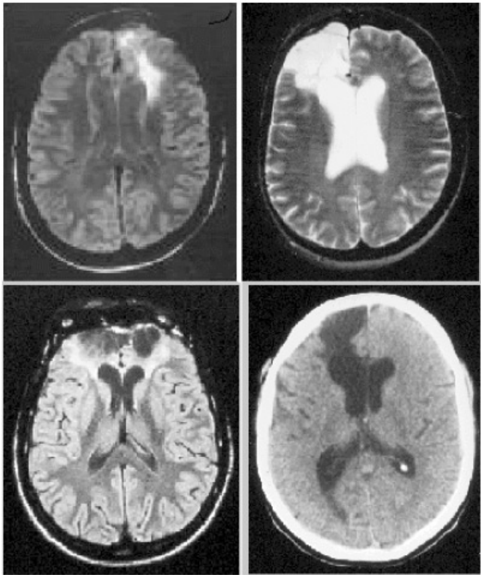
“These findings concurred with those from studies of patients with similar problems (e.g., Bird et al., 2004; Burgess, 2000b; Goldstein et al., 1993; Levine et al., 1998; 1999; see also Figure 3).”
What the sources say
- Not matchedcites Bird et al., 2004
An author–year citation the paper’s reference list doesn’t settle. We don’t search these by name.
- Not matchedcites Burgess, 2000b
More than one paper fits this citation.
- Supportedcites Goldstein et al., 1993 matched to “Unilateral frontal lobectomy can produce strategy application disorder.” (1993) source
The Abstract (pp. 274–276) reports a patient with impaired strategy application and everyday behaviour despite intact performance on standard neuropsychological tests. Goldstein et al. is therefore a study of a patient with the kind of problems the citing sentence identifies, although the sentence does not specify which findings are being compared. (LLM, conf=0.88)
plainstates an association- Asserted: passes — The authors put it forward as true.
- Checkable: passes — It can be checked against evidence.
- Load-bearing: unclear — It is unclear whether the paper’s conclusions depend on it.
- Based: passes — The paper gives a reason why it holds.
- Not matched
Every source the paper cites for this claim was checked and supports it.
In the paper
“'Rule-breakers' tend to show problems with control aspects of memory (e.g., show confabulation, temporal sequencing problems, and repetitive behaviour).”
What the sources say
- Supportedcites Alderman et al. (2003) matched to “Ecological validity of a simplified version of the multiple errands shopping test” (2003) source
The Discussion (p. 11) says patients who tend to break task rules are those whose carers notice memory-control disturbances, including confabulation, temporal-sequencing problems, and perseveration. Perseveration corresponds to the claim’s repetitive behaviour. (LLM, conf=0.93)
plainstates an association- Asserted: passes — The authors put it forward as true.
- Checkable: passes — It can be checked against evidence.
- Load-bearing: passes — The paper’s conclusions depend on it.
- Based: passes — The paper gives a reason why it holds.
- Supported
67 more claims
Create a free account to see all 135 claims and to verify the 6 references still open.
- It may state two separate claims as one. 28
- Probably not a substantial claim. 40
- The quote only partly states this claim. 1
Claims other papers make about this one
Each is checked against this paper’s own text: does it say what the citing paper says it does?
The source backs part of the claim, not all of it — or backs it for a different population, condition or comparison.
In the citing paper
“First, it is in this literature where the term EV is applied most frequently and where calls to action have been made for the development of new, more ' ecological ' tests of EF (e.g., Burgess et al., 2006; Spooner & Pachana, 2006).”
From Conceptualization of the term 'ecological validity' in neuropsychological research on executive function assessment: a systematic review and call to action (2024) · cites this paper as Burgess et al., 2006
Experimental — accuracy not yet measuredThe source backs part of the claim, not all of it — or backs it for a different population, condition or comparison.
In the citing paper
“However, their accuracy in assessing functional deficits in ADHD may be limited.”
From Enhancing Ecological Validity: Virtual Reality Assessment of Executive Functioning in Children and Adolescents with ADHD (2024) · cites this paper as [4]
Experimental — accuracy not yet measuredThe source backs part of the claim, not all of it — or backs it for a different population, condition or comparison.
In the citing paper
“Typically conducted in clinical or laboratory settings, these tests often evaluate specific skills in isolation, potentially overlooking interactions between different EFs and their relevance to daily activities [4,5].”
From Enhancing Ecological Validity: Virtual Reality Assessment of Executive Functioning in Children and Adolescents with ADHD (2024) · cites this paper as [4]
Experimental — accuracy not yet measured
2 more claims about this paper
Create a free account to see every claim other papers make about this one.
Citations
Cites
Studies of interference in serial verbal reactions
Stroop, J. R. (1935) · Journal of Experimental Psychology · doi:10.1037/h0054651 · Cited by 18,622
Miyake, A., Friedman, N. P., Emerson, M. J., Witzki, A. H., Howerter, A., & Wager, T. D. (2000) · Cognitive Psychology · doi:10.1006/cogp.1999.0734 · Cited by 15,798
Hutchins, E. (1995) · doi:10.7551/mitpress/1881.001.0001 · Cited by 10,801
The Sickness Impact Profile: Development and Final Revision of a Health Status Measure
Bergner, M., Bobbitt, R. A., Carter, W. B., & Gilson, B. S. (1981) · Medical Care · doi:10.1097/00005650-198108000-00001 · Cited by 4,619
Attention to Action: Willed and Automatic Control of Behavior
Norman, D. A., & Shallice, T. (1986) · Consciousness and Self-Regulation · doi:10.1007/978-1-4757-0629-1_1 · Cited by 4,455
From Neuropsychology to Mental Structure
Shallice, T. (1988) · doi:10.1017/cbo9780511526817 · Cited by 4,072
Understanding face recognition
Bruce, V., & Young, A. (1986) · British Journal of Psychology · doi:10.1111/j.2044-8295.1986.tb02199.x · Cited by 3,912
Specific impairments of planning
Shallice, T. (1982) · Philosophical Transactions of the Royal Society of London. B, Biological Sciences · doi:10.1098/rstb.1982.0082 · Cited by 3,741
Frith, C., & Frith, U. (2005) · Current Biology · doi:10.1016/j.cub.2005.08.041 · Cited by 3,481
Being There: Putting Brain, Body and World Together Again.
van Gelder, T., & Clark, A. (1998) · The Philosophical Review · doi:10.2307/2998391 · Cited by 3,128
Research works printed but not linked: 6
- Alderman, N., Evans, J.J., Emslie, H., Wilson, B.W., & Burgess, P.W. (1996). Zoo Map Test. In B.A. Wilson, N. Alderman, P.W. Burgess, H. Emslie, & J.J. Evans (Eds.), Behavioural assessment of the dysexecutive syndrome . Bury St. Edmunds: Thames Valley Test Company.
- Burgess, P.W., Alderman, N., Emslie, H., Evans, J.J., Wilson, B.A., &Shallice, T. (1996b). The simplified six element test. In B.A. Wilson, N. Alderman, P.W. Burgess, H. Emslie, & J.J. Evans (Eds.), Behavioural assessment of the dysexecutive syndrome . Bury St. Edmunds, U.K.: Thames Valley Test Company.
- Grady, C.L. (1999). Neuroimaging and activation of the frontal lobes. In B.L. Miller & J.L. Cummings (Eds.), The human frontal lobes: Function and disorders (pp. 196-230). New York: Guilford Press.
- Petrides, M. (1994). Frontal lobes and working memory: Evidence from investigations of the effects of cortical excisions in nonhuman primates. In F. Boller & J. Grafman (Eds.), Handbook of Neuropsychology , Vol. 9 (pp. 59-82). Amsterdam: Elsevier.
- Burgess, P.W., Alderman, N., Emslie, H., Evans, J.J., & Wilson, B.A. (1996a). The dysexecutive questionnaire. In B.A. Wilson, N. Alderman, P.W. Burgess, H. Emslie, & J.J. Evans (Eds.), Behavioural assessment of the dysexecutive syndrome . Bury St. Edmunds, U.K.: Thames Valley Test Company.
- Weigl, E. (1927). Zur Psychologie sogenannter Abstraktionsprozesse. Zeitschrift fur Psychologie, 103 , 2- 45. [Translated by M. Rioch and reprinted as: On the psychology of so-called processes of abstraction. Journal of Abnormal and Social Psychology , 36 , 3-33, 1948].
Cited by
Damage to the prefrontal cortex increases utilitarian moral judgements
Koenigs, M., Young, L., Adolphs, R., Tranel, D., Cushman, F., Hauser, M., & Damasio, A. (2007) · Nature · doi:10.1038/nature05631 · Cited by 1,545
Pinti, P., Tachtsidis, I., Hamilton, A., Hirsch, J., Aichelburg, C., Gilbert, S., & Burgess, P. W. (2020) · Annals of the New York Academy of Sciences · doi:10.1111/nyas.13948 · Cited by 1,336
Self-citationClassification of traumatic brain injury for targeted therapies
Saatman, K. E., Duhaime, A.-C., Bullock, R., Maas, A. I. R., Valadka, A., & Manley, G. T. (2008) · Journal of Neurotrauma · doi:10.1089/neu.2008.0586 · Cited by 1,141
“However, neuropsychological tests have been criticized for their lack of “ecological validity” (Burgess et al., 2006); that is, performance on a test often bears little relationship to the person’s day-to-day function.”
Parsons, T. D. (2015) · Frontiers in Human Neuroscience · doi:10.3389/fnhum.2015.00660 · Cited by 837
Neural Substrates of Spontaneous Musical Performance: An fMRI Study of Jazz Improvisation
Limb, C. J., & Braun, A. R. (2008) · PLoS ONE · doi:10.1371/journal.pone.0001679 · Cited by 773
Lumsden, J., Edwards, E. A., Lawrence, N. S., Coyle, D., & Munafò, M. R. (2016) · JMIR Serious Games · doi:10.2196/games.5888 · Cited by 555
“In a similar vein, cognitive assessment has been accused of being ecologically invalid [60].”
BackgroundUnderstanding Executive Control in Autism Spectrum Disorders in the Lab and in the Real World
Kenworthy, L., Yerys, B. E., Anthony, L. G., & Wallace, G. L. (2008) · Neuropsychology Review · doi:10.1007/s11065-008-9077-7 · Cited by 504
“visuospatial) of traditional laboratory tasks can complicate interpretation of domain-general executive-control deficits (Burgess et al. 2006; Denckla 2002).”
InfluentialNeuropsychological measures of executive function and antisocial behavior: a meta-analysis.
OGILVIE, J. M., STEWART, A. L., CHAN, R. C. K., & SHUM, D. H. K. (2011) · Criminology · doi:10.1111/j.1745-9125.2011.00252.x · Cited by 459
Cristofori, I., Cohen-Zimerman, S., & Grafman, J. (2019) · Handbook of Clinical Neurology · doi:10.1016/b978-0-12-804281-6.00011-2 · Cited by 378
A Review on the Use of Wearable Functional Near‐Infrared Spectroscopy in Naturalistic Environments
Pinti, P., Aichelburg, C., Gilbert, S., Hamilton, A., Hirsch, J., Burgess, P., & Tachtsidis, I. (2018) · Japanese Psychological Research · doi:10.1111/jpr.12206 · Cited by 325
Self-citationDemetriou, E. A., DeMayo, M. M., & Guastella, A. J. (2019) · Frontiers in Psychiatry · doi:10.3389/fpsyt.2019.00753 · Cited by 274
“More recently, development of behavioral rating scales (37, 116) aimed to provide more ecologically valid assessments of EF (37, 117, 118) focusing on executive regulation of everyday behaviors.”
BackgroundCerebellar involvement in executive control
Bellebaum, C., & Daum, I. (2007) · The Cerebellum · doi:10.1080/14734220601169707 · Cited by 267
Function and localization within rostral prefrontal cortex (area 10)
Burgess, P. W., Gilbert, S. J., & Dumontheil, I. (2007) · Philosophical Transactions of the Royal Society B: Biological Sciences · doi:10.1098/rstb.2007.2095 · Cited by 262
Self-citationExecutive processes in Asperger syndrome: Patterns of performance in a multiple case series
Hill, E. L., & Bird, C. M. (2006) · Neuropsychologia · doi:10.1016/j.neuropsychologia.2006.06.007 · Cited by 228
Lesion Studies in Contemporary Neuroscience
Vaidya, A. R., Pujara, M. S., Petrides, M., Murray, E. A., & Fellows, L. K. (2019) · Trends in Cognitive Sciences · doi:10.1016/j.tics.2019.05.009 · Cited by 226
Early intervention for mild cognitive impairment: a randomised controlled trial
Kinsella, G. J., Mullaly, E., Rand, E., Ong, B., Burton, C., Price, S., Phillips, M., & Storey, E. (2009) · Journal of Neurology, Neurosurgery & Psychiatry · doi:10.1136/jnnp.2008.148346 · Cited by 225
Damage to Ventromedial Prefrontal Cortex Impairs Judgment of Harmful Intent
Young, L., Bechara, A., Tranel, D., Damasio, H., Hauser, M., & Damasio, A. (2010) · Neuron · doi:10.1016/j.neuron.2010.03.003 · Cited by 222
Zhang, M., Ding, H., & Zhang, Y. (2022) · doi:10.20944/preprints202202.0056.v1 · Cited by 211
(2022) · doi:10.3390/bs12050138 · Cited by 211
Parle, J., Roberts, L., Wilson, S., Pattison, H., Roalfe, A., Haque, M. S., Heath, C., Sheppard, M., Franklyn, J., & Hobbs, F. D. R. (2010) · The Journal of Clinical Endocrinology & Metabolism · doi:10.1210/jc.2009-2571 · Cited by 203
Applications of Technology in Neuropsychological Assessment
Parsey, C. M., & Schmitter-Edgecombe, M. (2013) · The Clinical Neuropsychologist · doi:10.1080/13854046.2013.834971 · Cited by 194
Fish, J., Evans, J. J., Nimmo, M., Martin, E., Kersel, D., Bateman, A., Wilson, B. A., & Manly, T. (2007) · Neuropsychologia · doi:10.1016/j.neuropsychologia.2006.09.015 · Cited by 182
SPIKMAN, J. M., BOELEN, D. H. E., LAMBERTS, K. F., BROUWER, W. H., & FASOTTI, L. (2010) · Journal of the International Neuropsychological Society · doi:10.1017/s1355617709991020 · Cited by 179
Simpson, G., & Tate, R. (2007) · Brain Injury · doi:10.1080/02699050701785542 · Cited by 175
Booth, J. N., Boyle, J. M. E., & Kelly, S. W. (2010) · British Journal of Developmental Psychology · doi:10.1348/026151009x485432 · Cited by 173
Benoit, R. G., Hulbert, J. C., Huddleston, E., & Anderson, M. C. (2015) · Journal of Cognitive Neuroscience · doi:10.1162/jocn_a_00696 · Cited by 163
Validation of the Virtual MET as an assessment tool for executive functions
Rand, D., Rukan, S. B.-A., (Tamar) Weiss, P. L., & Katz, N. (2009) · Neuropsychological Rehabilitation · doi:10.1080/09602010802469074 · Cited by 147
Parsons, T. D., Carlew, A. R., Magtoto, J., & Stonecipher, K. (2017) · Neuropsychological Rehabilitation · doi:10.1080/09602011.2015.1109524 · Cited by 137
Dawson, D. R., Gaya, A., Hunt, A., Levine, B., Lemsky, C., & Polatajko, H. J. (2009) · Canadian Journal of Occupational Therapy · doi:10.1177/000841740907600209 · Cited by 140
Self-citationSchmitter-Edgecombe, M., McAlister, C., & Weakley, A. (2012) · Neuropsychology · doi:10.1037/a0029352 · Cited by 132
Cognitive flexibility in young children: General or task-specific capacity?
Deák, G. O., & Wiseheart, M. (2015) · Journal of Experimental Child Psychology · doi:10.1016/j.jecp.2015.04.003 · Cited by 196
The Neurobiology of Moral Behavior: Review and Neuropsychiatric Implications
Mendez, M. F. (2009) · CNS Spectrums · doi:10.1017/s1092852900023853 · Cited by 158
Novakovic-Agopian, T., Chen, A. J.-W., Rome, S., Abrams, G., Castelli, H., Rossi, A., McKim, R., Hills, N., & D'Esposito, M. (2011) · Journal of Head Trauma Rehabilitation · doi:10.1097/htr.0b013e3181f1ead2 · Cited by 124
The Structure of Executive Dysfunction in Depression and Anxiety
Warren, S. L., Heller, W., & Miller, G. A. (2021) · Journal of Affective Disorders · doi:10.1016/j.jad.2020.09.132 · Cited by 117
Kourtesis, P., Collina, S., Doumas, L. A. A., & MacPherson, S. E. (2021) · Journal of the International Neuropsychological Society · doi:10.1017/s1355617720000764 · Cited by 107
Krasny-Pacini, A., Chevignard, M., & Evans, J. (2014) · Disability and Rehabilitation · doi:10.3109/09638288.2013.777807 · Cited by 119
Gardiner, E., & Iarocci, G. (2018) · Autism Research · doi:10.1002/aur.1877 · Cited by 118
DAWSON, D. R., Anderson, N. D., Burgess, P. W., Cooper, E., Krpan, K. M., & Stuss, D. T. (2009) · Archives of Physical Medicine and Rehabilitation · doi:10.1016/j.apmr.2009.07.012 · Cited by 136
Self-citation[Neuropsychology of executive functions].
Verdejo‐García, A., & Bechara, A. (2010) · PubMed · Cited by 349
Doniger, G. M., Beeri, M. S., Bahar‐Fuchs, A., Gottlieb, A., Tkachov, A., Kenan, H., Livny, A., Bahat, Y., Sharon, H., Ben‐Gal, O., et al. (2018) · Alzheimer's & Dementia: Translational Research & Clinical Interventions · doi:10.1016/j.trci.2018.02.005 · Cited by 112
Parkinson's disease compromises the appraisal of action meanings evoked by naturalistic texts
García, A. M., Bocanegra, Y., Herrera, E., Moreno, L., Carmona, J., Baena, A., Lopera, F., Pineda, D., Melloni, M., Legaz, A., et al. (2018) · Cortex · doi:10.1016/j.cortex.2017.07.003 · Cited by 111
Tsuchida, A., & Fellows, L. K. (2012) · Cortex · doi:10.1016/j.cortex.2012.10.014 · Cited by 140
Dysexecutive Syndromes in Neurologic Disease
Hanna-Pladdy, B. (2007) · Journal of Neurologic Physical Therapy · doi:10.1097/npt.0b013e31814a63c2 · Cited by 114
Brain-age is associated with progression to dementia in memory clinic patients
Biondo, F., Jewell, A., Pritchard, M., Aarsland, D., Steves, C. J., Mueller, C., & Cole, J. H. (2022) · NeuroImage Clinical · doi:10.1016/j.nicl.2022.103175 · Cited by 140
Galla, B. M., Plummer, B. D., White, R. E., Meketon, D., D'Mello, S. K., & Duckworth, A. L. (2014) · Contemporary Educational Psychology · doi:10.1016/j.cedpsych.2014.08.001 · Cited by 106
Multitasking: multiple, domain-specific cognitive functions in a virtual environment
Logie, R. H., Trawley, S. L., & Law, A. S. (2011) · Memory & Cognition · doi:10.3758/s13421-011-0120-1 · Cited by 129
Mesulam's frontal lobe mystery re-examined
Burgess, P. W., Alderman, N., Volle, E., Benoit, R. G., & Gilbert, S. J. (2009) · Restorative Neurology and Neuroscience · doi:10.3233/rnn-2009-0511 · Cited by 110
Self-citationImpairments on “open‐ended” executive function tests in autism
White, S. J., Burgess, P. W., & Hill, E. L. (2009) · Autism Research · doi:10.1002/aur.78 · Cited by 105
Self-citationFollowing instructions in a virtual school: Does working memory play a role?
Jaroslawska, A. J., Gathercole, S. E., Logie, M. R., & Holmes, J. (2016) · Memory & Cognition · doi:10.3758/s13421-015-0579-2 · Cited by 102
Fish, J., Manly, T., Emslie, H., Evans, J. J., & Wilson, B. A. (2008) · Journal of Neurology, Neurosurgery & Psychiatry · doi:10.1136/jnnp.2007.125203 · Cited by 100
Cognitive screening in the acute stroke setting
Blackburn, D. J., Bafadhel, L., Randall, M., & Harkness, K. A. (2012) · Age and Ageing · doi:10.1093/ageing/afs116 · Cited by 118
Esports: The Chess of the 21st Century
Pluss, M. A., Bennett, K. J. M., Novak, A. R., Panchuk, D., Coutts, A. J., & Fransen, J. (2019) · Frontiers in Psychology · doi:10.3389/fpsyg.2019.00156 · Cited by 132
Cipresso, P., Albani, G., Serino, S., Pedroli, E., Pallavicini, F., Mauro, A., & Riva, G. (2014) · Frontiers in Behavioral Neuroscience · doi:10.3389/fnbeh.2014.00405 · Cited by 95
Pinti, P., Merla, A., Aichelburg, C., Lind, F., Power, S., Swingler, E., Hamilton, A. F. D. C., Gilbert, S. J., Burgess, P. W., & Tachtsidis, I. (2017) · NeuroImage · doi:10.1016/j.neuroimage.2017.05.001 · Cited by 109
Self-citationAssessment of cognitive instrumental activities of daily living: A systematic review
Romero-Ayuso, D., Castillero-Perea, Á., González, P., Navarro, E., Molina-Massó, J. P., Funes, M. J., Ariza-Vega, P., Toledano-González, A., & Triviño-Juárez, J. M. (2021) · Disability and Rehabilitation · doi:10.1080/09638288.2019.1665720 · Cited by 95
Vallat‐Azouvi, C., Pradat-Diehl, P., & Azouvi, P. (2012) · Neuropsychological Rehabilitation · doi:10.1080/09602011.2012.681110 · Cited by 119
Renison, B., Ponsford, J., Testa, R., Richardson, B., & Brownfield, K. (2012) · Journal of the International Neuropsychological Society · doi:10.1017/s1355617711001883 · Cited by 93
Løvstad, M., Sigurðardóttir, S., Andersson, S., Grane, V. A., Moberget, T., Stubberud, J., & Solbakk, A. (2016) · Journal of the International Neuropsychological Society · doi:10.1017/s135561771600031x · Cited by 109
de Frias, C. M., Dixon, R. A., & Strauss, E. (2009) · Neuropsychology · doi:10.1037/a0016743 · Cited by 90
Josman, N., Schenirderman, A. E., Klinger, É., & Shevil, E. (2009) · Schizophrenia Research · doi:10.1016/j.schres.2009.09.015 · Cited by 102
Intelligence quotient in paediatric sickle cell disease: a systematic review and meta‐analysis
Kawadler, J. M., Clayden, J. D., Clark, C. A., & Kirkham, F. J. (2016) · Developmental Medicine & Child Neurology · doi:10.1111/dmcn.13113 · Cited by 100
Available Virtual Reality-Based Tools for Executive Functions: A Systematic Review
Borgnis, F., Baglio, F., Pedroli, E., Rossetto, F., Uccellatore, L., Oliveira, J., Riva, G., & Cipresso, P. (2022) · Frontiers in Psychology · doi:10.3389/fpsyg.2022.833136 · Cited by 114
Valls-Serrano, C., Caracuel, A., & Verdejo-Garcia, A. (2016) · Drug and Alcohol Dependence · doi:10.1016/j.drugalcdep.2016.04.040 · Cited by 89
Use of Virtual Reality Tasks to Assess Prospective Memory: Applicability and Evidence
Knight, R. G., & Titov, N. (2009) · Brain Impairment · doi:10.1375/brim.10.1.3 · Cited by 102
Urbanski, M., Bréchemier, M.-L., Garcin, B., Bendetowicz, D., de Schotten, M. T., Foulon, C., Rosso, C., Clarençon, F., Dupont, S., Pradat-Diehl, P., et al. (2016) · Brain · doi:10.1093/brain/aww072 · Cited by 90
The Foundations of Autistic Flourishing
Pellicano, E., & Heyworth, M. (2023) · Current Psychiatry Reports · doi:10.1007/s11920-023-01441-9 · Cited by 115
Kenny, L., Cribb, S. J., & Pellicano, E. (2019) · Journal of Abnormal Child Psychology · doi:10.1007/s10802-018-0493-8 · Cited by 88
Caletti, E., Paoli, R. A., Fiorentini, A., Cigliobianco, M., Zugno, E., Serati, M., Orsenigo, G., Grillo, P., Zago, S., Caldiroli, A., et al. (2013) · Frontiers in Human Neuroscience · doi:10.3389/fnhum.2013.00661 · Cited by 107
Higher-Order Reasoning Training Years After Traumatic Brain Injury in Adults
Vas, A. K., Chapman, S. B., Cook, L. G., Elliott, A. C., & Keebler, M. (2011) · Journal of Head Trauma Rehabilitation · doi:10.1097/htr.0b013e318218dd3d · Cited by 87
Ecological assessment of executive functions in substance dependent individuals
Verdejo‐García, A., & Pérez-García, M. (2007) · Drug and Alcohol Dependence · doi:10.1016/j.drugalcdep.2007.02.010 · Cited by 105
Badre, D. (2024) · Annual Review of Psychology · doi:10.1146/annurev-psych-022024-103901 · Cited by 126
Tornås, S., Løvstad, M., Solbakk, A., Evans, J. J., Endestad, T., Hol, P. K., Schanke, A., & Stubberud, J. (2016) · Journal of the International Neuropsychological Society · doi:10.1017/s1355617715001344 · Cited by 101
Fifty Years of Prefrontal Cortex Research: Impact on Assessment
Burgess, P. W., & Stuss, D. T. (2017) · Journal of the International Neuropsychological Society · doi:10.1017/s1355617717000704 · Cited by 126
Self-citationWhiting, D. L., Deane, F. P., Simpson, G. K., McLeod, H. J., & Ciarrochi, J. (2017) · Neuropsychological Rehabilitation · doi:10.1080/09602011.2015.1062115 · Cited by 85
“In terms of assessment, investigations into cognitive flexibility have rested on objective measures, although questions about the ecological validity of such measures in their prediction of functioning outside the testing environment have been raised (Burgess et al., 2006).”
BackgroundRosenblum, S., Aloni, T., & Josman, N. (2009) · Research in Developmental Disabilities · doi:10.1016/j.ridd.2009.10.016 · Cited by 118
Lalonde, G., Henry, M., Drouin-Germain, A., Nolin, P., & Beauchamp, M. H. (2013) · Journal of Neuroscience Methods · doi:10.1016/j.jneumeth.2013.07.005 · Cited by 94
Special issue on ecological validity and cognitive assessment
Dawson, D. R., & Marcotte, T. D. (2017) · Neuropsychological Rehabilitation · doi:10.1080/09602011.2017.1313379 · Cited by 83
“While not the original meaning of the term (see Burgess et al., 2006 for discussion and Baum et al., 2017), it is the meaning that is now in general use.”
BackgroundSelf-citationWolf, M. C., Muijselaar, M. M. L., Boonstra, A. M., & de Bree, E. H. (2018) · Reading and Writing · doi:10.1007/s11145-018-9924-8 · Cited by 120
Prospective memory in Parkinson disease across laboratory and self-reported everyday performance.
Foster, E. R., McDaniel, M. A., Repovš, G., & Hershey, T. (2009) · Neuropsychology · doi:10.1037/a0014692 · Cited by 77
Josman, N., Kizony, R., Hof, E., Goldenberg, K., Weiss, P. L., & Klinger, É. (2013) · Journal of Stroke and Cerebrovascular Diseases · doi:10.1016/j.jstrokecerebrovasdis.2013.07.013 · Cited by 93
Impaired task switching performance in children with dyslexia but not in children with autism
Poljac, E., Simon, S., Ringlever, L., Kalcik, D., Groen, W. B., Buitelaar, J. K., & Bekkering, H. (2010) · Quarterly Journal of Experimental Psychology · doi:10.1080/17470210902990803 · Cited by 76
Kamradt, J. M., Ullsperger, J. M., & Nikolas, M. A. (2014) · Psychological Assessment · doi:10.1037/pas0000006 · Cited by 76
Gilbert, S. J., Zamenopoulos, T., Alexiou, K., & Johnson, J. H. (2009) · Brain Research · doi:10.1016/j.brainres.2009.11.045 · Cited by 82
Self-citationThe IADL Profile: Development, Content Validity, Intra- and Interrater Agreement
Bottari, C. L., Dassa, C., Rainville, C. M., & Dutil, É. (2010) · Canadian Journal of Occupational Therapy · doi:10.2182/cjot.2010.77.2.5 · Cited by 90
Gilbert, S. J., Meuwese, J. D. I., Towgood, K. J., Frith, C. D., & Burgess, P. W. (2009) · Brain · doi:10.1093/brain/awn365 · Cited by 73
Self-citationScott, J. C., The San Diego HIV Neurobehavioral Research Center (HNRC) Group, Woods, S. P., Vigil, O., Heaton, R. K., Schweinsburg, B. C., Ellis, R. J., Grant, I., & Marcotte, T. D. (2011) · Neuropsychology · doi:10.1037/a0022491 · Cited by 71
Espinosa, A., Alegret, M., Boada, M., Vinyes‐Junque, G., Valero, S., Martínez‐Lage, P., Peña‐Casanova, J., Becker, J. T., Wilson, B. A., & Tárraga, L. (2009) · Journal of the International Neuropsychological Society · doi:10.1017/s135561770999035x · Cited by 95
Inhibitory Control Deficits in Individuals with Amnestic Mild Cognitive Impairment: a Meta-Analysis
Rabi, R., Vasquez, B. P., Alain, C., Hasher, L., Belleville, S., & Anderson, N. D. (2020) · Neuropsychology Review · doi:10.1007/s11065-020-09428-6 · Cited by 79
Self-citationScherer, M. R., Weightman, M. M., Radomski, M. V., Davidson, L., & McCulloch, K. L. (2013) · Physical Therapy · doi:10.2522/ptj.20120143 · Cited by 83
Everyday functioning-related cognitive correlates of media multitasking: a mini meta-analysis
Wiradhany, W., & Koerts, J. (2019) · Media Psychology · doi:10.1080/15213269.2019.1685393 · Cited by 95
Performance in complex motor tasks deteriorates in hyperthermic humans
Piil, J. F., Lundbye-Jensen, J., Trangmar, S. J., & Nybo, L. (2017) · Temperature · doi:10.1080/23328940.2017.1368877 · Cited by 68
Validating the Neuro VR-Based Virtual Version of the Multiple Errands Test: Preliminary Results
Raspelli, S., Pallavicini, F., Carelli, L., Morganti, F., Pedroli, E., Cipresso, P., Poletti, B., Corra, B., Sangalli, D., Silani, V., et al. (2012) · Presence: Teleoperators and Virtual Environments · doi:10.1162/pres_a_00077 · Cited by 69
Bottari, C. L., Dassa, C., Rainville, C. M., & Dutil, É. (2009) · Neuropsychological Rehabilitation · doi:10.1080/09602010802188435 · Cited by 86
Virtual reality for psychological assessment in clinical practice.
Parsons, T. D., & Phillips, A. S. (2016) · Practice Innovations · doi:10.1037/pri0000028 · Cited by 77
A real-life, ecologically valid test of executive functioning: The executive secretarial task
Lamberts, K. F., Evans, J. J., & Spikman, J. M. (2010) · Journal of Clinical and Experimental Neuropsychology · doi:10.1080/13803390902806550 · Cited by 68
Dissociation between Verbal Response Initiation and Suppression after Prefrontal Lesions
Volle, E., de Lacy Costello, A., Coates, L. M., McGuire, C., Towgood, K., Gilbert, S., Kinkingnehun, S., McNeil, J. E., Greenwood, R., Papps, B., et al. (2012) · Cerebral Cortex · doi:10.1093/cercor/bhr322 · Cited by 67
Self-citationA Fork in the Road: An Occupational Hazard?
Gillen, G. (2013) · American Journal of Occupational Therapy · doi:10.5014/ajot.2013.676002 · Cited by 76
Wearable, high-density fNIRS and diffuse optical tomography technologies: a perspective
Vidal-Rosas, E. E., von Lühmann, A., Pinti, P., & Cooper, R. J. (2023) · Neurophotonics · doi:10.1117/1.nph.10.2.023513 · Cited by 73
A virtual shopping task for the assessment of executive functions: Validity for people with stroke
Nir-Hadad, S. Y., Weiss, P. L., Waizman, A., Schwartz, N., & Kizony, R. (2017) · Neuropsychological Rehabilitation · doi:10.1080/09602011.2015.1109523 · Cited by 66
“The importance of assessing EF using ecologically valid assessments has been discussed extensively (e.g., Burgess et al., 2006; Katz & Maeir, 2011).”
BackgroundParsons, T., & Duffield, T. (2020) · Journal of Medical Internet Research · doi:10.2196/23777 · Cited by 62
Metadata
- Authors
- BURGESS, P. W., ALDERMAN, N., FORBES, C., COSTELLO, A., M-A.COATES, L., DAWSON, D. R., ANDERSON, N. D., GILBERT, S. J., DUMONTHEIL, I., & CHANNON, S.
- Affiliations
- University College London (GB)
- St Andrew's Healthcare (GB)
- King's College Hospital (GB)
- University of London (GB)
- University of Toronto (CA)
- ORCID
- Venue
- Journal of the International Neuropsychological Society
- Publisher
- Cambridge University Press (CUP)
- Published
- 2006-03
- Volume
- 12
- Issue
- 2
- Pages
- 194-209
- ISSN
- 1355-6177 (ISSN-L)
- 1469-7661
- OpenAlex
- W2161907647
- Semantic Scholar
- bf6f8d180fc2d91abf7650cc2125a620443f0f88
- Cited by
- 663
- References
- 173
- Citations by year
- 2026: 21 · 2025: 24 · 2024: 37 · 2023: 39 · 2022: 38 · 2021: 41 · 2020: 31 · 2019: 47 · 2018: 41 · 2017: 48 · 2016: 35 · 2015: 35 · 2014: 32 · 2013: 44 · 2012: 29
- FWCI
- 28.96
- Type
- journal article
- Language
- en
- Open access
- green
- discovery.ucl.ac.uk
- Locations
- Journal of the International Neuropsychological Society (publishedVersion)
- PubMed (publishedVersion)
- UCL Discovery (University College London) (submittedVersion)
- Funders
- Wellcome Trust (061171)
- Topics
- Social Sciences › Psychology › Experimental and Cognitive Psychology › Cognitive Functions and Memory
- Social Sciences › Psychology › Clinical Psychology › Historical and Modern Theater Studies
- Life Sciences › Neuroscience › Cognitive Neuroscience › Neural and Behavioral Psychology Studies
- Keywords
- executive function, test development, clinical neuropsychological assessment, Wisconsin Card Sorting Test, Stroop task, Multiple Errands Test, generalizability
- MeSH terms
- Cognition Disorders, Frontal Lobe, Humans, Neuropsychological Tests, Neuropsychology
About these checks
Registry, retraction, Cites and statistics results are computed, not judged, with one exception: a printed reference that no index lists is read once by a model before it counts as a citation error. Claims are extracted by a model and kept only when their quote appears verbatim in the text; each cited source is then checked, with a model’s help, for whether it says what the claim relies on. Those verdicts can be wrong — read the claim’s quote and the cited source before relying on one.
The claim verdicts this report counts are experimental: their accuracy is not yet measured.
A language model drew the claims from the paper on 2026-09-29, under version 3 of the claim definition (model deepseek-v4.1-flash, prompt extract-v3).
A second model labelled each claim on 2026-09-29 (model jev-1.13-20260917, definition revision gold-guideline-v0.2).
Cited sources are checked with a language model’s help (gpt-6-sol).
Statistics and arithmetic are recomputed, not judged.
Confidence bands are shown only for fields calibrated on our annotated test set. None is calibrated yet, so no band is shown.
What counts as a claim ›How we measure confidence ›How we check this ›
Are you an author, or do you see a problem with this page? Request a review
Data sources
Bibliographic data: Semantic Scholar, OpenAlex, Crossref.
Contains information from the Semantic Scholar Academic Graph Datasets, made available under the ODC Attribution License (ODC-BY 1.0).
Semantic Scholar’s data is described in: Kinney, R., et al. (2023). The Semantic Scholar Open Data Platform. arXiv:2301.10140.
