

The ecological validity of tests of executive function
Open accessThe DOI matches its Crossref record; 52 of the 52 references it cites were found in a registry or an index; 3 of the 27 sources its claims cite were checked for support.
Abstract
Ninety-two mixed etiology neurological patients and 216 control participants were assessed on a range of neuropsychological tests, including 10 neuropsychological measures of executive function derived from 6 different tests. People who knew the patients well (relatives or carers) completed a questionnaire about the patient's dysexecutive problems in everyday life, and this paper reports the extent to which the tests predicted the patients' everyday life problems. All of the tests were significantly predictive of at least some of the behavioral and cognitive deficits reported by patients' carers. However, factor analysis of the patients' dysexecutive symptoms suggested a fractionation of the dysexecutive syndrome, with neuropsychological tests loading differentially on 3 underlying cognitive factors (Inhibition, Intentionality, and Executive Memory), supporting the conclusions that different tests measure different cognitive processes, and that there may be limits to the fractionation of the executive system.
Overview
CoChat Summary
TL;DR
In 92 mixed-etiology neurological patients and 216 controls, executive-function tests were generally correlated with carer-reported everyday dysexecutive problems, but different tests predicted different symptom factors. The dysexecutive syndrome fractionated at the behavioral level into five factors, with the first three (Inhibition, Intentionality, Executive Memory) showing differential relations to executive tests.
Key findings
- All executive tests were significantly predictive of at least some carer-reported behavioral/cognitive deficits; patients performed worse than controls on all executive measures except Cognitive Estimates (t(127) = −.98, p = .33). Under Bonferroni correction, significant patient-control differences remained for MWCST Categories and Perseverative Errors, all three Trail Making measures, and SET.
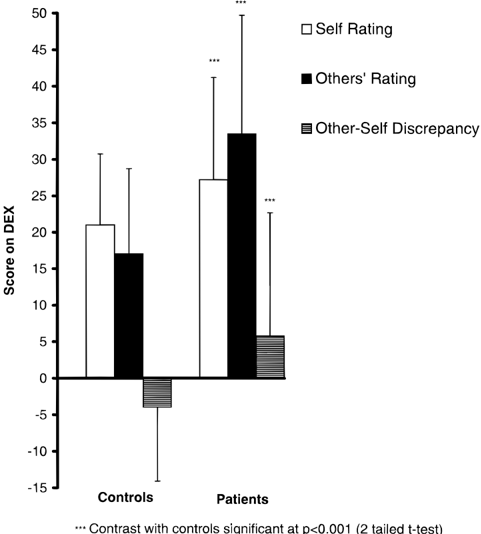
- On the Dysexecutive Questionnaire (DEX), patients rated themselves as showing fewer/less severe dysexecutive signs than observers (t(160) = −2.72, p < .01), whereas controls rated themselves higher than informants (t(331) = 3.65, p < .001), suggesting lack of insight in patients.
- Factor analysis of carer ratings yielded five factors explaining 67.2% of variance (21.3, 15.5, 11.6, 10.6, 8.2%); the first three were Inhibition, Intentionality, and Executive Memory. Executive tests loaded differentially: Factor 1 related to all executive tasks except MWCST; Factor 2 related most strongly to SET (r = .46); Factor 3 related to MWCST and verbal fluency.
- Sensitivity did not explain the factor-test pattern: SET was the second most sensitive measure (33.7% of patients at/below the 5th percentile of controls), Trails B 38.9%, Trails A 32.1%, B-A 25.9%, MWCST Perseverative Errors 28.6%, FAS 10.8%, Animals 8.2%, and Cognitive Estimates 3.6%.
Methods
- 92 neurological patients of varying etiologies (59% head injury, 13% dementia, 8.5% cerebrovascular accidents, 6.5% encephalitis, 13% other; mean age 38.5 years, SD = 15.1; mean NART IQ 103.2; mean WAIS-R FSIQ 92.1) and 216 controls (mean age 46.1 years, SD = 19.8; mean NART IQ 102.7).
- The DEX questionnaire covered 20 dysexecutive symptoms rated 0–4 by a relative/carer and by the participant; the neuropsychological battery included six executive tests (MWCST, Cognitive Estimates, Verbal Fluency FAS, Verbal Fluency Animals, Trail Making, SET) plus background tests of intellect, memory, language, and visual perception.
- Analyses included correlations between DEX total/self/other-self scores and tests, varimax rotated factor analysis of independent raters’ scores, factor score–test correlations, and sensitivity analysis using the proportion of patients at or below the 5th percentile of controls.
Limitations
- Stated: interpretation of Factor 1 was “perhaps premature”; the emotional/personality factors (4 and 5) “would benefit from further research”; and the possible one-way relation between confabulation and perseveration remained unresolved.
- Evident: the control group was significantly older than the patient group (t = 3.46, df = 306, p = .001), though the paper calls this conservative; sample sizes varied widely across tests (e.g., N = 42 to 84), and the design is correlational, so causality cannot be inferred.
- Evident: the DEX relies on subjective self- and carer ratings, and the mixed-etiology sample may limit generalizability to specific neurological groups.
Model-written summary. Check it against the paper before relying on it.
Integrity signals
Registry
Cites
Statistics
Figures
Verification
Claims the paper makes
3 Valid · 1 Not valid · 12 Not checked · 74 Own results and interpretations
The cited sources support only part of this claim — read each source’s verdict below.
In the paper
“By far the strongest relation, however, was with the SET, which supports previous interpretations of the test as tapping processes involved in the creation, maintenance and activation of intentions (Burgess, 1997; Burgess & Shallice, 1997; Goldstein et al., 1993; Shallice & Burgess, 1991a, 1991b).”
What the sources say
- Not checked — no full text of the sourcecites Burgess, 1997
- Not checked — no full text of the sourcecites Burgess & Shallice, 1997
- Partly supportedcites Goldstein et al., 1993 matched to “Unilateral frontal lobectomy can produce strategy application disorder.” (1993) sourceExperimental — accuracy not yet measured
In Additional Tests, the paper uses the Six Element Test (SET) to examine planning ability, which supports the broad interpretation of the test. The Discussion links prospective internal markers for behaviour change to the patient's errors on the Multiple Errands task, not specifically to the SET. The paper does not report a relation between SET performance and Intentionality; the citing sentence appears to present that relation as its own finding. (LLM, conf=0.82)
boostedstates an association- Asserted: passes — The authors put it forward as true.
- Checkable: passes — It can be checked against evidence.
- Load-bearing: passes — The paper’s conclusions depend on it.
- Based: passes — The paper gives a reason why it holds.
The cited sources support only part of this claim — read each source’s verdict below.
In the paper
“By far the strongest relation, however, was with the SET, which supports previous interpretations of the test as tapping processes involved in the creation, maintenance and activation of intentions (Burgess, 1997; Burgess & Shallice, 1997; Goldstein et al., 1993; Shallice & Burgess, 1991a, 1991b).”
What the sources say
- Not checked — no full text of the sourcecites Burgess, 1997
- Not checked — no full text of the sourcecites Burgess & Shallice, 1997
- Partly supportedcites Goldstein et al., 1993 matched to “Unilateral frontal lobectomy can produce strategy application disorder.” (1993) sourceExperimental — accuracy not yet measured
The Additional Tests section describes the Six Element Test as examining planning ability through six tasks completed within a fixed time. The Discussion links prospective triggers for changing behaviour to the patient's difficulties on the Multiple Errands task, not specifically to the Six Element Test. The paper therefore supports a planning-related interpretation of the SET but does not establish the full claim about creating, maintaining and activating intentions. (LLM, conf=0.82)
boostedstates an association- Asserted: passes — The authors put it forward as true.
- Checkable: passes — It can be checked against evidence.
- Load-bearing: passes — The paper’s conclusions depend on it.
- Based: passes — The paper gives a reason why it holds.
A result the paper reports from its own data — it cites no other source for it, so there is none to check. The quote shows it is in the paper.
In the paper
“factor analysis of the patients' dysexecutive symptoms suggested a fractionation of the dysexecutive syndrome”
hedgedstates an association- Asserted: passes — The authors put it forward as true.
- Checkable: passes — It can be checked against evidence.
- Load-bearing: passes — The paper’s conclusions depend on it.
- Based: passes — The paper gives a reason why it holds.
A result the paper reports from its own data — it cites no other source for it, so there is none to check. The quote shows it is in the paper.
In the paper
“with neuropsychological tests loading differentially on 3 underlying cognitive factors (Inhibition, Intentionality, and Executive Memory)”
plainstates an association- Asserted: passes — The authors put it forward as true.
- Checkable: passes — It can be checked against evidence.
- Load-bearing: passes — The paper’s conclusions depend on it.
- Based: passes — The paper gives a reason why it holds.
A result the paper reports from its own data — it cites no other source for it, so there is none to check. The quote shows it is in the paper.
In the paper
“All of the tests were significantly predictive of at least some of the behavioral and cognitive deficits reported by patients' carers.”
plainstates an association- Asserted: passes — The authors put it forward as true.
- Checkable: passes — It can be checked against evidence.
- Load-bearing: passes — The paper’s conclusions depend on it.
- Based: passes — The paper gives a reason why it holds.
56 more claims
Create a free account to see all 90 claims and every source verdict.
- Probably not a substantial claim. 13
- It may state two separate claims as one. 19
- The quote only partly states this claim. 1
Claims other papers make about this one
Each is checked against this paper’s own text: does it say what the citing paper says it does?
The cited source doesn’t support the claim as written.
In the citing paper
“Most troubling from a clinical perspective is that EF tests have low or no ecological validity when judged against ratings of EF in daily life or direct observations of EF performance in natural settings.”
From Impairment in Occupational Functioning and Adult ADHD: The Predictive Utility of Executive Function (EF) Ratings Versus EF Tests (2010) · cites this paper as Burgess et al., 1998
Checked by a reasoning model — may be wrong.
Experimental — accuracy not yet measuredThe cited source doesn’t support the claim as written.
In the citing paper
“These studies typically find that the variance shared between any single EF test and EF ratings ranges from just 0% to 10%.”
From Impairment in Occupational Functioning and Adult ADHD: The Predictive Utility of Executive Function (EF) Ratings Versus EF Tests (2010) · cites this paper as Burgess et al., 1998
Checked by a reasoning model — may be wrong.
Experimental — accuracy not yet measuredThe source backs part of the claim, not all of it — or backs it for a different population, condition or comparison.
In the citing paper
“Thus these results add to the evidence that performance on more 'ecologically valid' tasks can show closer concordance with observed symptoms in everyday life than performance on traditional experimentally derived tasks (Burgess et al., 1998), and can be adapted to a clinical setting.”
From The case for the development and use of ecologically valid measures of executive function in experimental and clinical neuropsychology (2006) · cites this paper as Burgess et al., 1998
Experimental — accuracy not yet measuredThe source backs part of the claim, not all of it — or backs it for a different population, condition or comparison.
In the citing paper
“Past studies found EF tests to have low-order correlations that are often nonsignificant with patient self-ratings and those of significant others of the dysexecutive symptoms they observe in patients with frontal lobe injuries”
From Impairment in Occupational Functioning and Adult ADHD: The Predictive Utility of Executive Function (EF) Ratings Versus EF Tests (2010) · cites this paper as Burgess et al., 1998
Experimental — accuracy not yet measuredThe source backs part of the claim, not all of it — or backs it for a different population, condition or comparison.
In the citing paper
“Combinations of EF tests do not fair much better, sharing just 12% -20% of the variance with EF ratings.”
From Impairment in Occupational Functioning and Adult ADHD: The Predictive Utility of Executive Function (EF) Ratings Versus EF Tests (2010) · cites this paper as Burgess et al., 1998
Experimental — accuracy not yet measured
6 more claims about this paper
Create a free account to see every claim other papers make about this one.
Self-check
Percentages, sums and reported differences re-computed from the paper’s own numbers.
Each contradiction between two passages listed here was confirmed by an independent check.
Rated minor: it would not touch a result — a value no result rests on, a p-value that stays on the same side of the significance level, or a conflict that is clerical, resolved elsewhere in the paper, or outside its own findings.
In the paper
§ Abstract
“including 10 neuropsychological measures of executive function derived from 6 different tests.”
§ INTRODUCTION
“compares the ecological validity of eleven measures of executive function taken from six different tests”
Rated minor: it would not touch a result — a value no result rests on, a p-value that stays on the same side of the significance level, or a conflict that is clerical, resolved elsewhere in the paper, or outside its own findings.
In the paper
§ Correlations Between Overall Severity of Dysexecutive Disorder and the Neuropsychological Test Measures
“all of the tests measuring executive and general intellectual functions, visual perception, and language abilities showed correlations significantly different from zero.”
§ Correlations Between Overall Severity of Dysexecutive Disorder and the Neuropsychological Test Measures
“| Cognitive Estimates ( N 5 52) | .29 n.s. | .18 n.s. | .10 n.s. |”
Citations
Cites
From Neuropsychology to Mental Structure
Shallice, T. (1988) · doi:10.1017/cbo9780511526817 · Cited by 4,072
Amick, D. J., Cooley, W. W., & Lohnes, P. R. (1972) · Contemporary Sociology · doi:10.2307/2062821 · Cited by 2,915
The somatic marker hypothesis and the possible functions of the prefrontal cortex
Damasio, A. R. (1996) · Philosophical Transactions of the Royal Society of London. Series B: Biological Sciences · doi:10.1098/rstb.1996.0125 · Cited by 2,847 · cited 2×
“cal groups: Recent evidence suggests that the dysexecutive syndrome may be fractionable, at least as regards the features of cognitive dysfunction (e.g., Burgess, 1997; Burgess & Shallice, 1994, 1996c; Damasio, 1996; Duncan et al., 1995; Owen et al., 1995; Robbins, 1996; Robbins et al., 1995; Shallice & Burgess, 1991a…”
Background(1995) · Cited by 2,809
A Modified Card Sorting Test Sensitive to Frontal Lobe Defects
Nelson, H. E. (1976) · Cortex · doi:10.1016/s0010-9452(76)80035-4 · Cited by 2,454
Negative Symptoms in Schizophrenia: Definition and Reliability
Andreasen, N. C. (1982) · Archives of General Psychiatry · doi:10.1001/archpsyc.1982.04290070020005 · Cited by 2,247
Effects of Different Brain Lesions on Card Sorting: The Role of the Frontal Lobes
MILNER, B. (1963) · Archives of Neurology · doi:10.1001/archneur.1963.00460070100010 · Cited by 2,217 · cited 2×
“…of some brain process(es) that are presumed to be utilized in situations outside the strict test situation; after all, an isolated impairment in performing the Wisconsin Card Sorting Test (WCST; Milner, 1963), with no other problems in any other situation, would be of little clinical significance.”
BackgroundDEFICITS IN STRATEGY APPLICATION FOLLOWING FRONTAL LOBE DAMAGE IN MAN
SHALLICE, T., & BURGESS, P. W. (1991) · Brain · doi:10.1093/brain/114.2.727 · Cited by 2,017 · cited 5×
“cal groups: Recent evidence suggests that the dysexecutive syndrome may be fractionable, at least as regards the features of cognitive dysfunction (e.g., Burgess, 1997; Burgess & Shallice, 1994, 1996c; Damasio, 1996; Duncan et al., 1995; Owen et al., 1995; Robbins, 1996; Robbins et al., 1995; Shallice & Burgess, 1991a…”
BackgroundMethodResultInfluentialSelf-citationThe neuropsychology of schizophrenia
Gray, J. A., Feldon, J., Rawlins, J. N. P., Hemsley, D. R., & Smith, A. D. (1991) · Behavioral and Brain Sciences · doi:10.1017/s0140525x00065055 · Cited by 1,350
Frontal Lobe Function and Dysfunction
(1991) · doi:10.1093/oso/9780195062847.001.0001 · Cited by 1,233
Research works printed but not linked: 4
- Burgess, P.W., Alderman, N., Wilson, B.A., Evans, J.J., & Emslie, H. (1996b). The Dysexecutive Questionnaire. In B.A. Wilson, N. Alderman, P.W. Burgess, H. Emslie, & J.J. Evans (Eds.), Behavioural assessment of the dysexecutive syndrome . Bury St. Edmunds, U.K.: Thames Valley Test Company.
- Burgess, P.W. & Wood, R.Ll. (1990). Neuropsychology of behaviour disorders following brain injury. In R.Ll. Wood (Ed.), Neurobehavioural sequelae of traumatic brain injury (pp. 110133). London: Taylor & Francis.
- Cicerone, K.D. & DeLuca, J. (1990). Neuropsychological predictors of head injury rehabilitation outcome. Journal of Clinical and Experimental Neuropsychology , 12 , 92 [Abstract].
- Stuss, D.T., Shallice, T., Alexander, M.P., & Picton, T.W. (1995). Amultidisciplinary approach to executive functions. Annals of the New York Academy of Sciences , 769 , 191-211.
Cited by
Items 201–300 of 942
Neurobehavioral Effects of Amantadine After Pediatric Traumatic Brain Injury: A Preliminary Report
Beers, S. R., Skold, A., Dixon, C. E., & Adelson, P. D. (2005) · Journal of Head Trauma Rehabilitation · doi:10.1097/00001199-200509000-00006 · Cited by 70
Actual Reality: A New Approach to Functional Assessment in Persons With Multiple Sclerosis
Goverover, Y., O’Brien, A. R., Moore, N. B., & DeLuca, J. (2010) · Archives of Physical Medicine and Rehabilitation · doi:10.1016/j.apmr.2009.09.022 · Cited by 76
Iversen, R. K., & Lewis, C. N. (2021) · Autism Research · doi:10.1002/aur.2468 · Cited by 73
CHAYTOR, N., TEMKIN, N., MACHAMER, J., & DIKMEN, S. (2007) · Journal of the International Neuropsychological Society · doi:10.1017/s1355617707070592 · Cited by 65
Executive Function in Education
Karner‐Huțuleac, A. (2011) · Cited by 64
Parent and self‐ratings of executive function in adolescents with specific language impairment
Hughes, D. M., Turkstra, L. S., & Wulfeck, B. B. (2009) · International Journal of Language & Communication Disorders · doi:10.1080/13682820802425693 · Cited by 76
Executive function measures for children: A scoping review of ecological validity.
Wallisch, A., Little, L. M., Dean, E., & Dunn, W. (2018) · OTJR: Occupational Therapy Journal of Research · doi:10.1177/1539449217727118 · Cited by 65
Neuropsychology and the prediction of everyday functioning.
Marcotte, T. D., Scott, J. C., Kamat, R., & Heaton, R. K. (2010) · Cited by 84
Bodenburg, S., & Dopslaff, N. (2008) · Journal of Nervous & Mental Disease · doi:10.1097/nmd.0b013e31815faa2b · Cited by 64
Emotion perception and quality of life in bipolar I disorder
Fulford, D., Peckham, A. D., Johnson, K., & Johnson, S. L. (2014) · Journal of Affective Disorders · doi:10.1016/j.jad.2013.08.034 · Cited by 62
The Dysexecutive Syndrome of Alzheimer's Disease: The GREFEX Study
Godefroy, O., Martinaud, O., Verny, M., Mosca, C., Lenoir, H., Bretault, E., Roussel, M., & GREFEX Study Group (2014) · Journal of Alzheimer s Disease · doi:10.3233/jad-140585 · Cited by 72
Weiner, N. W., Toglia, J. P., & Berg, C. (2012) · American Journal of Occupational Therapy · doi:10.5014/ajot.2012.004754 · Cited by 73
Jovanovski, D., Zakzanis, K., Ruttan, L., Campbell, Z., Erb, S., & Nussbaum, D. (2012) · Applied Neuropsychology: Adult · doi:10.1080/09084282.2011.643956 · Cited by 62
Changes in artistic style after minor posterior stroke
Annoni, J., Devuyst, G., Carota, A., Bruggimann, L., & Bogousslavsky, J. (2005) · Journal of Neurology Neurosurgery & Psychiatry · doi:10.1136/jnnp.2004.045492 · Cited by 65
Cognitive impairment in dual diagnosis inpatients with schizophrenia and alcohol use disorder
Manning, V., Betteridge, S., Wanigaratne, S., Best, D. W., Strang, J., & Gossop, M. (2009) · Schizophrenia Research · doi:10.1016/j.schres.2009.05.020 · Cited by 73
Wilken, J. A., Kane, R. L., Ellis, A. K., Rafeiro, E., Briscoe, M. P., Sullivan, C. L., & Day, J. H. (2003) · Annals of Allergy Asthma & Immunology · doi:10.1016/s1081-1206(10)61685-7 · Cited by 64
Cognitive rehabilitation in the elderly: An evaluation of psychosocial factors
Winocur, G., Palmer, H., DAWSON, D. R., Binns, M. A., BRIDGES, K., & Stuss, D. T. (2006) · Journal of the International Neuropsychological Society · doi:10.1017/s135561770707018x · Cited by 77
Ihnen, J., Antivilo-Bruna, A., Muñoz‐Neira, C., & Slachevsky, A. (2013) · Dementia & Neuropsychologia · doi:10.1590/s1980-57642013dn70100007 · Cited by 61
Foster, E. R., & Hershey, T. G. (2011) · OTJR Occupational Therapy Journal of Research · doi:10.3928/15394492-20101108-04 · Cited by 76
Dysexecutive disorders and their diagnosis: A position paper
Godefroy, O., Martinaud, O., Narme, P., Joseph, P., Mosca, C., Lhommée, E., Meulemans, T., Czernecki, V., Bertola, C., Labauge, P. M., et al. (2018) · Cortex · doi:10.1016/j.cortex.2018.09.026 · Cited by 77
Stucke, N. J., & Doebel, S. (2024) · Psychological Bulletin · doi:10.1037/bul0000445 · Cited by 69
Executive disorders and perceived socio‐emotional changes after traumatic brain injury
Rochat, L., Ammann, J., Mayer, E., Annoni, J., & der Linden, M. V. (2009) · Journal of Neuropsychology · doi:10.1348/174866408x397656 · Cited by 72
Thai, M. L., Andreassen, A. K., & Bliksted, V. (2018) · Psychiatry Research · doi:10.1016/j.psychres.2018.12.088 · Cited by 77
Markowitsch, H. J., & CALABRESE, P. (1999) · Oxford University Press eBooks · doi:10.1093/acprof:oso/9780198526544.003.0010 · Cited by 68
Apathy and Executive Dysfunction in Alzheimer Disease
Esposito, F., Rochat, L., der Linden, A. J. V., Lekeu, F., Quittre, A., Charnallet, A., & der Linden, M. V. (2010) · Alzheimer Disease & Associated Disorders · doi:10.1097/wad.0b013e3181c9c168 · Cited by 64
Hart, T., Millis, S. R., Novack, T. A., Englander, J., Fidler-Sheppard, R., & Bell, K. R. (2003) · Archives of Physical Medicine and Rehabilitation · doi:10.1053/apmr.2003.50023 · Cited by 67
Syndromes frontaux et dysexécutifs
Godefroy, O., Brigitte, A., Philippe, A., Mira, D.-H. C., Olivier, G., Didier, L. G., Rose-Marie, M., Thierry, M., Mosca, C., Peres, B., et al. (2004) · Revue Neurologique · doi:10.1016/s0035-3787(04)71071-1 · Cited by 94
van den Berg, E., Nys, G. M. S., Brands, A. M. A., Ruis, C., van Zandvoort, M. J. E., & Kessels, R. P. C. (2009) · Journal of the International Neuropsychological Society · doi:10.1017/s1355617709990269 · Cited by 71
Turnbull, O. H., Evans, C. E. Y., Kemish, K., Park, S., & Bowman, C. H. (2006) · Neuropsychology · doi:10.1037/0894-4105.20.3.290 · Cited by 57
Gerstorf, D., Siedlecki, K. L., Tucker–Drob, E. M., & Salthouse, T. A. (2008) · Aging Neuropsychology and Cognition · doi:10.1080/13825580701640374 · Cited by 64
Stubberud, J., Langenbahn, D. M., Levine, B., Stanghelle, J. K., & Schanke, A. (2013) · Journal of the International Neuropsychological Society · doi:10.1017/s1355617713000209 · Cited by 66
Engelhardt, P. E., Nigg, J. T., & Ferreira, F. (2017) · Quarterly Journal of Experimental Psychology · doi:10.1080/17470218.2016.1178785 · Cited by 60
Wisconsin Card Sorting Test: normative data and experience
Kohli, A., & Kaur, M. (2006) · Indian Journal of Psychiatry · doi:10.4103/0019-5545.31582 · Cited by 57
Mazursky-Horowitz, H., Thomas, S. R., Woods, K., Chrabaszcz, J. S., Deater-Deckard, K. D., & Chronis-Tuscano, A. M. (2017) · Research on Child and Adolescent Psychopathology · doi:10.1007/s10802-017-0289-2 · Cited by 78
The construct of problem solving in higher level neuropsychological assessment and rehabilitation*1
Rath, J. F., Langenbahn, D. M., Simon, D., Sherr, R. L., Fletcher, J., & Diller, L. (2003) · Archives of Clinical Neuropsychology · doi:10.1016/j.acn.2003.08.006 · Cited by 64
Toward an Integrated Model of Executive Functioning in Children
Wasserman, T. H., & Wasserman, L. D. (2013) · Applied Neuropsychology Child · doi:10.1080/21622965.2013.748394 · Cited by 75
Naturalistic assessment of executive function and everyday multitasking in healthy older adults
McAlister, C. B., & Schmitter‐Edgecombe, M. (2013) · Aging Neuropsychology and Cognition · doi:10.1080/13825585.2013.781990 · Cited by 65
Objective and Subjective Cognitive Problems among Caregivers and Matched Non-caregivers
Vitaliano, P. P., Ustundag, O., & Borson, S. (2017) · The Gerontologist · doi:10.1093/geront/gnv690 · Cited by 55
Ball, S. L., Holland, A. J., Watson, P., & Huppert, F. A. (2010) · Journal of Intellectual Disability Research · doi:10.1111/j.1365-2788.2010.01261.x · Cited by 65
Williams, W. H., Evans, J. J., Needham, P., & Wilson, B. A. (2002) · Journal of Traumatic Stress · doi:10.1023/a:1020185325026 · Cited by 55
Self-citationGregório, G. W., Ponds, R., Smeets, S. M. J., Jonker, F. A., Pouwels, C. G. J. G., Verhey, F. R. J., & Heugten, C. M. V. (2015) · British Journal of Clinical Psychology · doi:10.1111/bjc.12074 · Cited by 70
Waid-Ebbs, J. K., Wen, P.-S., Heaton, S. C., Donovan, N. J., & Velozo, C. A. (2012) · Brain Injury · doi:10.3109/02699052.2012.700087 · Cited by 64
Executive functioning in men and women with an autism spectrum disorder
Kiep, M., & Spek, A. A. (2017) · Autism Research · doi:10.1002/aur.1721 · Cited by 53
Amyloid- and FDG-PET imaging in amyotrophic lateral sclerosis
Matías‐Guiu, J. A., Pytel, V., Cabrera‐Martín, M. N., Galán, L., Valles‐Salgado, M., Guerrero, A., Moreno‐Ramos, T., Matías‐Guiu, J., & Carreras, J. L. (2016) · European Journal of Nuclear Medicine and Molecular Imaging · doi:10.1007/s00259-016-3434-1 · Cited by 57
Dissociative tendencies and facilitated emotional processing.
Oathes, D. J., & Ray, W. J. (2008) · Emotion · doi:10.1037/a0013442 · Cited by 51
Applying the WHO ICF framework to the rehabilitation of patients with cognitive deficits
Wade, D. T. (2005) · Oxford University Press eBooks · doi:10.1093/acprof:oso/9780198526544.003.0004 · Cited by 56
Kamradt, J. M., Nikolas, M. A., Burns, G. L., Garner, A. A., Jarrett, M. A., Luebbe, A. M., & Becker, S. P. (2021) · Assessment · doi:10.1177/1073191119869823 · Cited by 42
Chan, R. C. K., & Manly, T. (2002) · Journal of the International Neuropsychological Society · doi:10.1017/s1355617702860052 · Cited by 58
Subjective and objective assessment of executive functions in Parkinson's disease
Koerts, J., Tucha, L., Leenders, K. L., van Beilen, M., Brouwer, W., & Tucha, O. M. (2011) · Journal of the Neurological Sciences · doi:10.1016/j.jns.2011.07.009 · Cited by 58
Psychometric validation of the Dysexecutive Questionnaire (DEX)
Shaw, S., Oei, T. P. S., & Sawang, S. (2015) · Psychological Assessment · doi:10.1037/a0038195 · Cited by 50
“This solution also contained two ambiguous items (i.e., item 5: euphoria, and item 16: inability to inhibit responses); however, item ambiguity was present in all three factor solutions described above (Burgess et al., 1998; Chan, 2001; Mooney et al., 2006).”
BackgroundMethodResultInfluentialDromer, E., Kheloufi, L., & Azouvi, P. (2021) · Annals of Physical and Rehabilitation Medicine · doi:10.1016/j.rehab.2020.101468 · Cited by 65
Neurological sequelae after cerebral anoxia
Peskine, A., Rosso, C., Picq, C., Caron, E., & Pradat-Diehl, P. (2010) · Brain Injury · doi:10.3109/02699051003709581 · Cited by 49
Stubberud, J., Langenbahn, D. M., Levine, B., Stanghelle, J. K., & Schanke, A. (2015) · Rehabilitation Psychology · doi:10.1037/rep0000018 · Cited by 44
An Evaluation of Reading Comprehension of Expository Text in Adults With Traumatic Brain Injury
Sohlberg, M. M., Griffiths, G. G., & Fickas, S. F. (2014) · American Journal of Speech-Language Pathology · doi:10.1044/2013_ajslp-12-0005 · Cited by 56
Knouse, L. E., Barkley, R. A., & Murphy, K. R. (2013) · Journal of Affective Disorders · doi:10.1016/j.jad.2012.05.064 · Cited by 49
A review of social disinhibition after traumatic brain injury
Osborne‐Crowley, K., & McDonald, S. (2016) · Journal of Neuropsychology · doi:10.1111/jnp.12113 · Cited by 57
Does Executive Dysfunction Affect Treatment Outcome in Late-Life Mood and Anxiety Disorders?
Mohlman, J. (2005) · Journal of Geriatric Psychiatry and Neurology · doi:10.1177/0891988705276061 · Cited by 48
Goal Management Training in Adults With ADHD: An Intervention Study
In de Braek, D. M. J. M., Dijkstra, J. B., Ponds, R. W., & Jolles, J. (2017) · Journal of Attention Disorders · doi:10.1177/1087054712468052 · Cited by 42
Executive Functioning and Intelligence
Duggan, E. C., & Garcia-Barrera, M. A. (2015) · Handbook of Intelligence · doi:10.1007/978-1-4939-1562-0_27 · Cited by 48
Tornås, S., Løvstad, M., Solbakk, A., Schanke, A., & Stubberud, J. (2016) · Archives of Physical Medicine and Rehabilitation · doi:10.1016/j.apmr.2016.06.014 · Cited by 58
Assessing executive performance during cognitive rehabilitation
Lewis, M. W., Babbage, D. R., & LEATHEM, J. M. (2011) · Neuropsychological Rehabilitation · doi:10.1080/09602011.2010.543867 · Cited by 57
Awareness of Executive Deficits in People with Parkinson's Disease
Kudlicka, A., Clare, L., & Hindle, J. V. (2013) · Journal of the International Neuropsychological Society · doi:10.1017/s1355617713000064 · Cited by 53
Schmidt, E. L., Burge, W. K., Visscher, K., & Ross, L. A. (2016) · Neuropsychology · doi:10.1037/neu0000242 · Cited by 58
Latimer, S. F., Wilson, F. C., McCusker, C. G., Caldwell, S. B., & Rennie, I. M. (2012) · Disability and Rehabilitation · doi:10.3109/09638288.2012.709909 · Cited by 47
The Cognitive Orientation to Daily Occupational Performance Approach and Transfer: A Scoping Review
Houldin, A., McEwen, S. E., Howell, M. W., & Polatajko, H. J. (2017) · OTJR Occupational Therapy Journal of Research · doi:10.1177/1539449217736059 · Cited by 58
Game of gifts purchase: Computer-based training of executive functions for the elderly
Lopez-Martinez, A., Santiago‐Ramajo, S., Caracuel, A., Valls-Serrano, C., Hornos, M. J., & Rodríguez‐Fórtiz, M. J. (2011) · SeGAH ... IEEE ... International Conference on Serious Games and Applications for Health/IEEE International Conference on Serious Games and Applications for Health · doi:10.1109/segah.2011.6165448 · Cited by 56
Executive dysfunction in chronic brain-injured patients: Assessment in outpatient rehabilitation
Boelen, D. H. E., Spikman, J. M., Rietveld, A. C. M., & Fasotti, L. (2009) · Neuropsychological Rehabilitation · doi:10.1080/09602010802613853 · Cited by 61
Pérez, E. J. P., de León, J. M. R. S., Delgado, P. L., Luque, M. L., Mota, G. R., & García, C. P. (2011) · Revista de Neurología · doi:10.33588/rn.5207.2010731 · Cited by 72
Urbano, G. C., Caracuel, A., Vilar‐López, R., Valls-Serrano, C., Bateman, A., & Verdejo‐García, A. (2013) · Journal of Clinical and Experimental Neuropsychology · doi:10.1080/13803395.2013.776011 · Cited by 49
Cognitive task demands and discourse performance after traumatic brain injury
Byom, L. J., & Turkstra, L. S. (2016) · International Journal of Language & Communication Disorders · doi:10.1111/1460-6984.12289 · Cited by 50
Delay discounting, cognitive ability, and personality: What matters?
Yeh, Y., Myerson, J., & Green, L. (2020) · Psychonomic Bulletin & Review · doi:10.3758/s13423-020-01777-w · Cited by 57
Impaired behavior on real-world tasks following damage to the ventromedial prefrontal cortex
Tranel, D., Hathaway-Nepple, J., & Anderson, S. W. (2007) · Journal of Clinical and Experimental Neuropsychology · doi:10.1080/13803390600701376 · Cited by 54
Alteration profile of executive functions in multiple sclerosis
García, M. C., Plasencia, P. M., & Aladro, Y. (2015) · Acta Neurologica Scandinavica · doi:10.1111/ane.12345 · Cited by 62
Berg, C., Edwards, D. F., & King, A. A. (2011) · Child Neuropsychology · doi:10.1080/09297049.2011.613813 · Cited by 51
Wochos, G. C., Semerjian, C., & Walsh, K. S. (2014) · The Clinical Neuropsychologist · doi:10.1080/13854046.2014.971875 · Cited by 52
Event-based prospective memory performance in autism spectrum disorder
Altgassen, M., Schmitz-Hübsch, M., & Kliegel, M. (2009) · Journal of Neurodevelopmental Disorders · doi:10.1007/s11689-009-9030-y · Cited by 50
Executive Functions Deficits After Severe Traumatic Brain Injury: The GREFEX Study
Azouvi, P., Vallat‐Azouvi, C., Joseph, P., Meulemans, T., Bertola, C., Gall, D. L., Bellmann, A., Roussel, M., Coyette, F., Krier, M., et al. (2015) · Journal of Head Trauma Rehabilitation · doi:10.1097/htr.0000000000000169 · Cited by 56
The Assessment of Executive Functioning Using the Barkley Deficits in Executive Functioning Scales
Barkley, R. A. (2013) · Springer eBooks · doi:10.1007/978-1-4614-8106-5_15 · Cited by 65
Sweeney, S., Kersel, D., Morris, R. G., Manly, T., & Evans, J. J. (2010) · Neuropsychological Rehabilitation · doi:10.1080/09602010903080531 · Cited by 42
Self-citationAllan, J., Johnston, M., & Campbell, N. C. (2015) · Health Psychology · doi:10.1037/hea0000173 · Cited by 45
García‐Villamisar, D., & Rojahn, J. (2015) · Journal of Intellectual Disability Research · doi:10.1111/jir.12083 · Cited by 34
Giesbrecht, C. J., Thornton, A. E., Hall-Patch, C., Maan, E. J., Côté, H. C. F., Money, D., Murray, M. C. M., & Pick, N. (2014) · PLoS ONE · doi:10.1371/journal.pone.0089556 · Cited by 51
Baum, C. M., Wolf, T., Wong, A., Chen, C. H., Walker, K., Young, A. C., Carlozzi, N. E., Tulsky, D. S., Heaton, R. K., & Heinemann, A. W. (2016) · Neuropsychological Rehabilitation · doi:10.1080/09602011.2016.1176934 · Cited by 50
Ecological validity of the Dysexecutive Questionnaire: Results from the PariS-TBI study
Azouvi, P., Vallat‐Azouvi, C., Millox, V., Darnoux, E., Ghout, I., Azerad, S., Ruet, A., Bayen, É., Pradat-Diehl, P., Aegerter, P., et al. (2014) · Neuropsychological Rehabilitation · doi:10.1080/09602011.2014.990907 · Cited by 49
Azouvi, P., Ghout, I., Bayen, É., Darnoux, E., Azerad, S., Ruet, A., Vallat‐Azouvi, C., Pradat-Diehl, P., Aegerter, P., Charanton, J., et al. (2016) · Brain Injury · doi:10.1080/02699052.2016.1201593 · Cited by 44
González-Gadea, M. L., Herrera, E., Parra, M. A., Méndez, P. G., Báez, S., Manes, F. F., & Ibáñez, A. M. (2014) · Frontiers in Human Neuroscience · doi:10.3389/fnhum.2014.00850 · Cited by 56
Functional Ability in Executive Variant Alzheimer's Disease and Typical Alzheimer's Disease
Back‐Madruga, C., Boone, K. B., Briere, J., Cummings, J. L., McPherson, S. E., Fairbanks, L. A., & Thompson, E. (2002) · The Clinical Neuropsychologist · doi:10.1076/clin.16.3.331.13846 · Cited by 47
Liu, K. C. M., Chan, R. C. K., Chan, K. K. S., Tang, J. Y. ‐., Chiu, C. P. Y., Lam, M. M. L., Chan, S. K. W., Wong, G. H. Y., Hui, C. L. M., & Chen, E. Y. H. (2010) · Schizophrenia Research · doi:10.1016/j.schres.2010.11.023 · Cited by 55
Social and clinical effects of a leisure program on adults with autism spectrum disorder
García-Villamisar, D. A., & Dattilo, J. (2010) · Research in Autism · doi:10.1016/j.rasd.2010.04.006 · Cited by 48
Kalron, A., & Zeilig, G. (2015) · NeuroRehabilitation: An International, Interdisciplinary Journal · doi:10.3233/nre-151260 · Cited by 41
Immersive Virtual Reality-Based Methods for Assessing Executive Functioning: Systematic Review
Kirkham, R., Kooijman, L., Albertella, L., Myles, D., Yücel, M., & Rotaru, K. (2024) · JMIR Serious Games · doi:10.2196/50282 · Cited by 40
“Although traditional methods used to assess EF are popular [11,12] and well validated [13], they have been criticized for their lack of ecological validity [14,15].”
MethodChaytor, N. S., & Schmitter‐Edgecombe, M. (2007) · Brain Injury · doi:10.1080/02699050701426949 · Cited by 45
The relationship between executive functioning and dissociation
Schurle Bruce, A., Ray, W. J., Bruce, J. M., Arnett, P. A., & Carlson, R. A. (2007) · Journal of Clinical and Experimental Neuropsychology · doi:10.1080/13803390600878901 · Cited by 40
“Among individuals with moderate traumatic brain injury or dementia, the DEX has been shown to correlate with neuropsychological tests of executive functioning such as the WCST and Trail Making tests ( Burgess, Alderman, Evans, Emslie, & Wilson, 1998 ).”
BackgroundLong-Term Disabilities of Survivors of Out-of-Hospital Cardiac Arrest
Peskine, A., Cariou, A., Hajage, D., Deye, N., Guérot, E., Dres, M., Sonneville, R., Lafourcade, A., Navarro, V., Robert, H., et al. (2020) · CHEST Journal · doi:10.1016/j.chest.2020.07.022 · Cited by 46
Assessment and identification of executive dysfunction
Sparrow, E. P. (2012) · Cambridge University Press eBooks · doi:10.1017/cbo9780511977954.006 · Cited by 46
García-Molina, A., Tormos, J. M., Bernabeu, M., Junqué, C., & Roig-Rovira, T. (2012) · Brain Injury · doi:10.3109/02699052.2012.655362 · Cited by 39
(2023) · doi:10.2196/preprints.50282 · Cited by 40
Sølsnes, A. E., Skranes, J. S., Brubakk, A., & Løhaugen, G. C. C. (2014) · Journal of the International Neuropsychological Society · doi:10.1017/s1355617714000332 · Cited by 48
Macmillan, M., & Lena, M. L. (2010) · Neuropsychological Rehabilitation · doi:10.1080/09602011003760527 · Cited by 64
Assessment of executive dysfunction
Crawford, J. R., & Henry, J. D. (2005) · The Effectiveness of Rehabilitation for Cognitive Deficits · doi:10.1093/acprof:oso/9780198526544.003.0019 · Cited by 39
Metadata
- Authors
- BURGESS, P. W., ALDERMAN, N., EVANS, J., EMSLIE, H., & WILSON, B. A.
- Affiliations
- University College London (GB)
- St Andrew's Healthcare (GB)
- Medical Research Council (GB)
- Venue
- Journal of the International Neuropsychological Society
- Publisher
- Cambridge University Press (CUP)
- Published
- 1998-11
- Volume
- 4
- Issue
- 6
- Pages
- 547-558
- ISSN
- 1355-6177 (ISSN-L)
- 1469-7661
- OpenAlex
- W2168551754
- Semantic Scholar
- 2b9e16b2fef686e2c5c62d5c3d88d54418ec6472
- Cited by
- 932
- References
- 47
- Citations by year
- 2026: 16 · 2025: 21 · 2024: 23 · 2023: 21 · 2022: 30 · 2021: 45 · 2020: 37 · 2019: 35 · 2018: 31 · 2017: 50 · 2016: 55 · 2015: 40 · 2014: 55 · 2013: 46 · 2012: 55
- FWCI
- 9.00
- Type
- journal article
- Language
- en
- Open access
- green
- discovery.ucl.ac.uk
- Locations
- Journal of the International Neuropsychological Society (publishedVersion)
- PubMed (publishedVersion)
- UCL Discovery (University College London) (submittedVersion)
- Funders
- Wellcome Trust
- Topics
- Social Sciences › Psychology › Clinical Psychology › Historical and Modern Theater Studies
- Social Sciences › Psychology › Experimental and Cognitive Psychology › Cognitive Functions and Memory
- Life Sciences › Neuroscience › Cognitive Neuroscience › Neural and Behavioral Psychology Studies
- Keywords
- executive function, dysexecutive syndrome, ecological validity, neuropsychological assessment, everyday problems, inhibition, intentionality, neurological patients
- MeSH terms
- Adult, Mental Disorders, Brain Diseases, Cognition Disorders, Frontal Lobe, Humans, Neuropsychological Tests, Surveys and Questionnaires, Severity of Illness Index, Syndrome, Reproducibility of Results
About these checks
Registry, retraction, Cites and statistics results are computed, not judged, with one exception: a printed reference that no index lists is read once by a model before it counts as a citation error. Claims are extracted by a model and kept only when their quote appears verbatim in the text; each cited source is then checked, with a model’s help, for whether it says what the claim relies on. Those verdicts can be wrong — read the claim’s quote and the cited source before relying on one.
The claim verdicts this report counts are experimental: their accuracy is not yet measured.
A language model drew the claims from the paper on 2026-09-29, under version 3 of the claim definition (model deepseek-v4.1-flash, prompt extract-v3).
A second model labelled each claim on 2026-09-29 (model jev-1.13-20260917, definition revision gold-guideline-v0.2).
Cited sources are checked with a language model’s help (gpt-6-sol).
Statistics and arithmetic are recomputed, not judged.
Confidence bands are shown only for fields calibrated on our annotated test set. None is calibrated yet, so no band is shown.
What counts as a claim ›How we measure confidence ›How we check this ›
Are you an author, or do you see a problem with this page? Request a review
Data sources
Bibliographic data: Semantic Scholar, OpenAlex, Crossref.
Contains information from the Semantic Scholar Academic Graph Datasets, made available under the ODC Attribution License (ODC-BY 1.0).
Semantic Scholar’s data is described in: Kinney, R., et al. (2023). The Semantic Scholar Open Data Platform. arXiv:2301.10140.
