

Core components of mental health stigma reduction interventions in low- and middle-income countries: a systematic review
Open accessThe DOI matches its Crossref record; 93 of the 95 references it cites were found in a registry or an index; none of the 29 sources its claims cite is checked for support yet.
Abstract
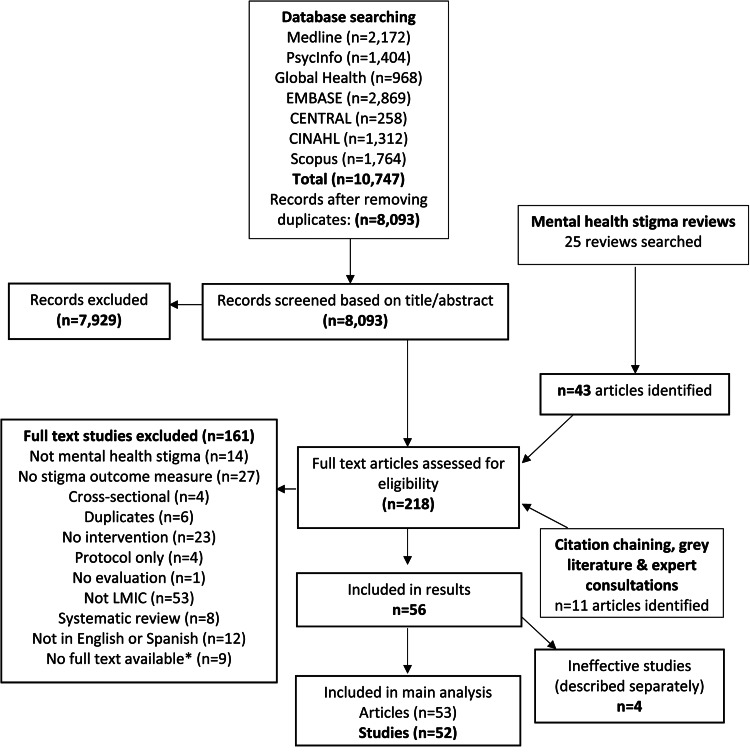
Aims: To identify and categorise core components of effective stigma reduction interventions in the field of mental health in low- and middle-income countries (LMICs) and compare these components across cultural contexts and between intervention characteristics. Methods: Seven databases were searched with a strategy including four categories of terms ('stigma’, ‘mental health’, ‘intervention’ and ‘low- and middle-income countries’). Additional methods included citation chaining of all papers identified for inclusion, consultation with experts and hand searching reference lists from other related reviews. Studies on interventions in LMICs aiming to reduce stigma related to mental health with a stigma-related outcome measure were included. All relevant intervention characteristics and components were extracted and a quality assessment was undertaken. A ‘best fit’ framework synthesis was used to organise data, followed by a narrative synthesis. Results: Fifty-six studies were included in this review, of which four were ineffective and analysed separately. A framework was developed which presents a new categorisation of stigma intervention components based on the included studies. Most interventions utilised multiple methods and of the 52 effective studies educational methods were used most frequently ( n = 83), and both social contact ( n = 8) and therapeutic methods ( n = 3) were used infrequently. Most interventions ( n = 42) based their intervention on medical knowledge, but a variety of other themes were addressed. All regions with LMICs were represented, but every region was dominated by studies from one country. Components varied between regions for most categories indicating variation between cultures, but only a minority of studies were developed in the local setting or culturally adapted. Conclusions: Our study suggests effective mental health stigma reduction interventions in LMICs have increased in quantity and quality over the past five years, and a wide variety of components have been utilised successfully – from creative methods to emphasis on recovery and strength of people with mental illness. Yet there is minimal mention of social contact, despite existing strong evidence for it. There is also a lack of robust research designs, a high number of short-term interventions and follow-up, nominal use of local expertise and the research is limited to a small number of LMICs. More research is needed to address these issues. Some congruity exists in components between cultures, but generally they vary widely. The review gives an in-depth overview of mental health stigma reduction core components, providing researchers in varied resource-poor settings additional knowledge to help with planning mental health stigma reduction interventions.
Overview
CoChat Summary
TL;DR
This systematic review identified 56 studies (57 articles) of mental health stigma reduction interventions in low- and middle-income countries and developed a framework of six core component categories. Most effective interventions used educational methods, while social contact and therapeutic methods were infrequent, and local/cultural adaptation was limited.
Key findings
- Of 56 included studies, 4 were ineffective and analysed separately; among the 52 effective studies, 39 articles (74%) found a significant positive result for all main stigma outcomes, and 13 (25%) found at least a small positive result for some but not all outcomes.
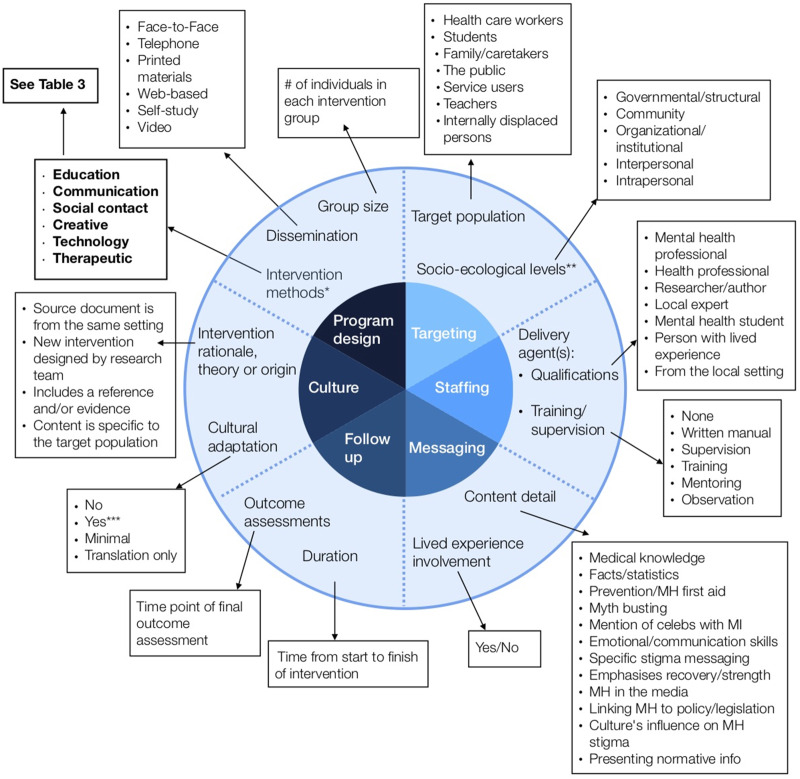
- Educational methods were documented most frequently (n = 83), followed by communication (n = 58), technology (n = 21), creative methods (n = 19), social contact (n = 8) and therapeutic methods (n = 3); most interventions (n = 42, 81%) were based on medical knowledge, and no interventions reported using protest.
- Quality varied: 38 studies (73%) met at least three of five MMAT criteria, 11 (21%) were poor quality, and 3 (6%) were very poor quality; 15 studies (29%) were RCTs, while 27 (52%) were pre/post studies.
- Only 11 studies (21%) originated from inside the setting and were referenced, 25 (48%) were culturally adapted, and only 4 of 52 studies (8%) took place in low-income countries; each World Bank region was dominated by studies from one country.
Methods
- Systematic review registered on PROSPERO (ID 136008); seven databases were searched on 13 May 2019 (CENTRAL, MEDLINE, CINAHL, Global Health, PsycINFO, EMBASE, Scopus), with citation chaining, expert consultation and hand searching; searches were restricted to English and Spanish and to humans.
- Studies were included if they evaluated interventions in LMICs aiming to reduce mental health-related stigma and included at least one stigma-related outcome measure linked to knowledge, attitudes or behaviour; all experimental designs were eligible, with no publishing date restrictions.
- A ‘best fit’ framework synthesis was used, starting from Corrigan’s five categories (programme design, targeting, staffing, messaging, follow-up/evaluation) plus a sixth Culture category; data were coded inductively and summarised narratively, with quality assessed using the Mixed Methods Appraisal Tool (MMAT).
Limitations
- Stated by the authors: only full texts in English or Spanish were included; components were extracted only if explicitly reported; many authors did not reply to requests for further detail; more than half the studies were pre/post without a control group; a quarter were poor or very poor quality; region-specific analysis was limited because each region was dominated by one country; and the small number of ineffective studies suggests possible publication bias.
- Evident from the text: most studies used self-report measures and had limited follow-up, and social contact may have been underreported because it was only counted when explicitly mentioned.
Model-written summary. Check it against the paper before relying on it.
Integrity signals
Registry
Cites
Statistics
Figures
Verification
Claims the paper makes
0 Valid · 1 Not valid · 22 Not checked · 108 Own results and interpretations
A result the paper reports from its own data — it cites no other source for it, so there is none to check. The quote shows it is in the paper.
In the paper
“A framework was developed which presents a new categorisation of stigma intervention components based on the included studies.”
§ Core components of mental health stigma reduction interventions in low- and middle-income countries: a systematic review > Abstract > Results
plain- Asserted: passes — The authors put it forward as true.
- Checkable: passes — It can be checked against evidence.
- Load-bearing: passes — The paper’s conclusions depend on it.
- Based: passes — The paper gives a reason why it holds.
- Rests on an assumption not shown here.
A result the paper reports from its own data — it cites no other source for it, so there is none to check. The quote shows it is in the paper.
In the paper
“a wide variety of components have been utilised successfully – from creative methods to emphasis on recovery and strength of people with mental illness.”
§ Core components of mental health stigma reduction interventions in low- and middle-income countries: a systematic review > Abstract > Conclusions
plain- Asserted: passes — The authors put it forward as true.
- Checkable: passes — It can be checked against evidence.
- Load-bearing: passes — The paper’s conclusions depend on it.
- Based: passes — The paper gives a reason why it holds.
- Rests on an assumption not shown here.
A result the paper reports from its own data — it cites no other source for it, so there is none to check. The quote shows it is in the paper.
In the paper
“Most interventions (n = 42) based their intervention on medical knowledge”
§ Core components of mental health stigma reduction interventions in low- and middle-income countries: a systematic review > Abstract > Results
plainn = 42- Asserted: passes — The authors put it forward as true.
- Checkable: passes — It can be checked against evidence.
- Load-bearing: unclear — It is unclear whether the paper’s conclusions depend on it.
- Based: passes — The paper gives a reason why it holds.
A result the paper reports from its own data — it cites no other source for it, so there is none to check. The quote shows it is in the paper.
In the paper
“The most frequent target populations were health care workers and students (both n = 16, 31%), although some studies focused on more than one group.”
§ Core components of mental health stigma reduction interventions in low- and middle-income countries: a systematic review > Results > Intervention components and categorisation
plainn = 16- Asserted: passes — The authors put it forward as true.
- Checkable: passes — It can be checked against evidence.
- Load-bearing: unclear — It is unclear whether the paper’s conclusions depend on it.
- Based: passes — The paper gives a reason why it holds.
A result the paper reports from its own data — it cites no other source for it, so there is none to check. The quote shows it is in the paper.
In the paper
“The quality of studies varied, with 38 studies (73%) fulfilling at least three of five MMAT quality criteria (considered moderate and high-quality studies).”
§ Core components of mental health stigma reduction interventions in low- and middle-income countries: a systematic review > Results > Study characteristics
plain- Asserted: passes — The authors put it forward as true.
- Checkable: passes — It can be checked against evidence.
- Load-bearing: unclear — It is unclear whether the paper’s conclusions depend on it.
- Based: passes — The paper gives a reason why it holds.
64 more claims
Create a free account to see all 131 claims and to verify the 29 references still open.
- It may state two separate claims as one. 44
- Probably not a substantial claim. 28
Claims other papers make about this one
Each is checked against this paper’s own text: does it say what the citing paper says it does?
The cited source says what the claim attributes to it.
In the citing paper
“few stigma reduction trainings have been developed and evaluated for CHWs in LMICs (Clay et al., 2020; Javed et al., 2021; Kemp et al., 2019; Livingston et al., 2012; Makhmud et al., 2022).”
From Siyakhana: A Hybrid Type 2 Effectiveness-Implementation Stepped-Wedge Trial to Reduce Stigma Towards Substance Use and Depression Among Community Health Workers in HIV/TB Care in South Africa (2025) · cites this paper as Clay et al., 2020
Self-check
Percentages, sums and reported differences re-computed from the paper’s own numbers.
Each contradiction between two passages listed here was confirmed by an independent check.
Rated major: it would touch a result — a value a result rests on, reported and recomputed p-values on opposite sides of the significance level, two passages that conflict with no sign which is right, or a cited work retracted before this paper was published.
In the paper
§ Core components of mental health stigma reduction interventions in low- and middle-income countries: a systematic review > Results > Intervention components and categorisation
“Of the 21 studies which involved someone with lived experience in intervention development or delivery, 86% were effective for all stigma-related outcomes compared to only 74% of studies which did not involve someone with lived experience.”
§ Core components of mental health stigma reduction interventions in low- and middle-income countries: a systematic review > Results > Study characteristics
“Thirty-nine articles (74%) found a significant positive result for all main stigma outcomes and 13 (25%) found at least a small positive result for some but not all stigma outcomes.”
Rated minor: it would not touch a result — a value no result rests on, a p-value that stays on the same side of the significance level, or a conflict that is clerical, resolved elsewhere in the paper, or outside its own findings.
In the paper
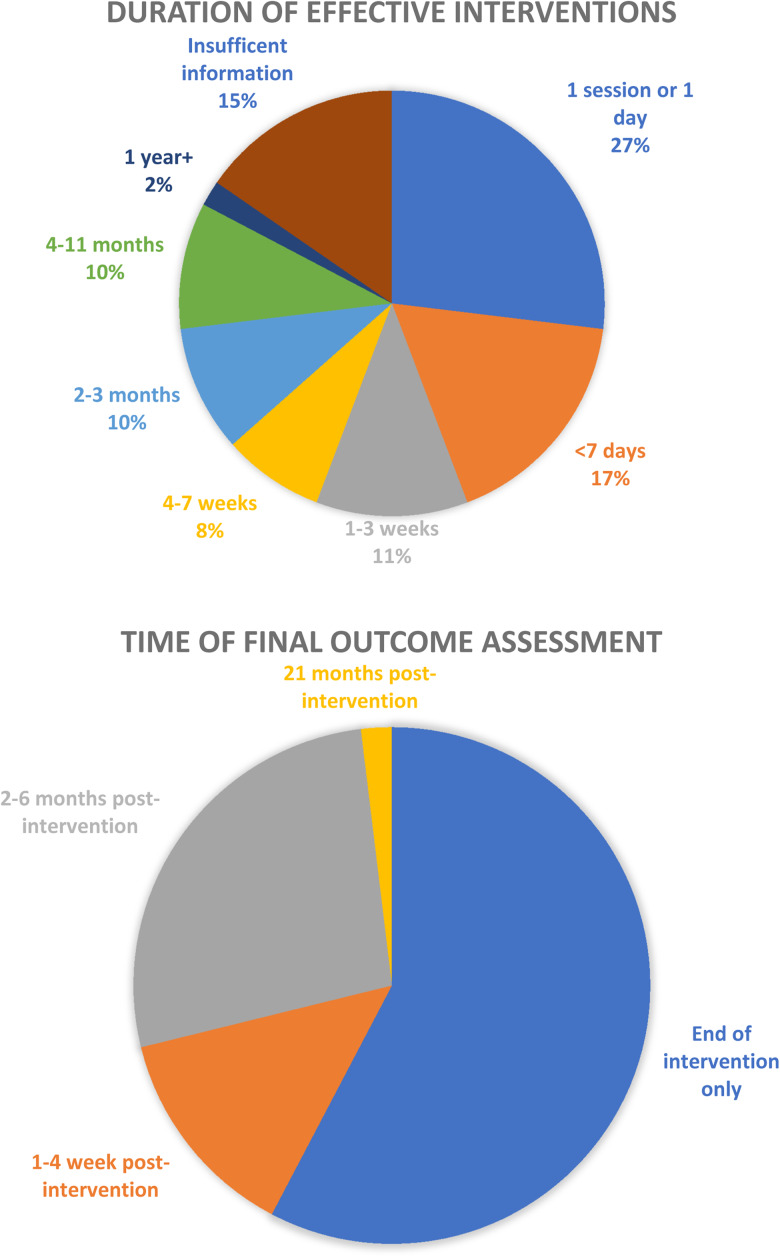
“six (10%) lasted between 1 and 3 weeks”
§ Core components of mental health stigma reduction interventions in low- and middle-income countries: a systematic review > Results > Intervention components and categorisation
Reported 10 · recomputed 11.538462
Rated minor: it would not touch a result — a value no result rests on, a p-value that stays on the same side of the significance level, or a conflict that is clerical, resolved elsewhere in the paper, or outside its own findings.
In the paper
§ Core components of mental health stigma reduction interventions in low- and middle-income countries: a systematic review > Results > Study characteristics
“Eleven studies (21%) were of poor quality with one to three of criteria fulfilled”
§ Core components of mental health stigma reduction interventions in low- and middle-income countries: a systematic review > Methods > Quality assessment
“studies of poor or very poor quality – two or less of five criteria met – were included in the main analysis but later separated out.”
Citations
Cites
The Lancet Commission on global mental health and sustainable development
Patel, V., Saxena, S., Lund, C., Thornicroft, G., Baingana, F., Bolton, P., Chisholm, D., Collins, P. Y., Cooper, J. L., Eaton, J., et al. (2018) · The Lancet · doi:10.1016/s0140-6736(18)31612-x · Cited by 3,692 · cited 1×
“Mental health stigma has been shown to be widespread globally, regardless of region (Pescosolido et al., 2013).”
BackgroundSelf-citationHow stigma interferes with mental health care.
Corrigan, P. (2004) · American Psychologist · doi:10.1037/0003-066x.59.7.614 · Cited by 3,648 · cited 2×
“reduced employment opportunities and corresponding poverty, relationship difficulties, reduced help-seeking behaviour and poorer quality health care (Corrigan, 2004; Jones et al., 2008; Thornicroft et al., 2009; Knaak et al., 2017).”
BackgroundGrand challenges in global mental health
Collins, P. Y., Patel, V., Joestl, S. S., March, D., Insel, T. R., Daar, A. S., Bordin, I. A., Costello, E. J., Durkin, M., Fairburn, C., et al. (2011) · Nature · doi:10.1038/475027a · Cited by 2,043
Challenging the public stigma of mental illness: a meta-analysis of outcome studies
Corrigan, P. W., Morris, S. B., Michaels, P. J., Rafacz, J. D., & Rüsch, N. (2012) · Psychiatric Services · doi:10.1176/appi.ps.201100529 · Cited by 1,680 · cited 3×
“Despite evidence of the effectiveness of social contact (Corrigan and Scott, 2012), no region overtly described using social contact in more than half of studies and almost no studies defined any of their delivery agents as someone with lived experience.”
BackgroundMethodStangl, A. L., Earnshaw, V. A., Logie, C. H., van Brakel, W., C. Simbayi, L., Barré, I., & Dovidio, J. F. (2019) · BMC Medicine · doi:10.1186/s12916-019-1271-3 · Cited by 1,603
Evidence for effective interventions to reduce mental-health-related stigma and discrimination
Thornicroft, G., Mehta, N., Clement, S., Evans-Lacko, S., Doherty, M., Rose, D., Koschorke, M., Shidhaye, R., O'Reilly, C., & Henderson, C. (2016) · The Lancet · doi:10.1016/s0140-6736(15)00298-6 · Cited by 1,338 · cited 4×
“Yet there are minimal descriptions of social contact, despite the fact that it has been shown to be the most impactful single component of stigma reduction work (Thornicroft et al., 2016).”
BackgroundMethodResultInfluentialThornicroft, G., Brohan, E., Rose, D., Sartorius, N., & Leese, M. (2009) · The Lancet · doi:10.1016/s0140-6736(08)61817-6 · Cited by 1,189 · cited 3×
“For example, a 2009 study found rates of experienced discrimination by people with schizophrenia were high and consistent across 27 countries (Thornicroft et al., 2009).”
BackgroundResultUndertreatment of people with major depressive disorder in 21 countries
Thornicroft, G., Chatterji, S., Evans-Lacko, S., Gruber, M., Sampson, N., Aguilar-Gaxiola, S., Al-Hamzawi, A., Alonso, J., Andrade, L., Borges, G., et al. (2017) · British Journal of Psychiatry · doi:10.1192/bjp.bp.116.188078 · Cited by 1,121
Barriers to improvement of mental health services in low-income and middle-income countries
Saraceno, B., van Ommeren, M., Batniji, R., Cohen, A., Gureje, O., Mahoney, J., Sridhar, D., & Underhill, C. (2007) · The Lancet · doi:10.1016/s0140-6736(07)61263-x · Cited by 1,088
Knaak, S., Mantler, E., & Szeto, A. (2017) · Healthcare Management Forum · doi:10.1177/0840470416679413 · Cited by 1,031 · cited 2×
“reduced employment opportunities and corresponding poverty, relationship difficulties, reduced help-seeking behaviour and poorer quality health care (Corrigan, 2004; Jones et al., 2008; Thornicroft et al., 2009; Knaak et al., 2017).”
Background
Research works printed but not linked: 2
- Rahayuni IG, Wichaikull S and Charoensuk S (2013, November) The Effect of a Family Psycho-Education Program on Family Caregivers’ Attitude to Care for Patients with Schizophrenia. In ASEAN/Asian Academic Society International Conference Proceeding Series.
- Shah ND, Mehta RY and Dave KR (2015) The Impact Of Mental Health Education On The Knowledge And Attitude Of The Peripheral Health Workers Of Dang. National Journal of Integrated Research in Medicine 6.
Cited by
The Economic Burden of Adults with Major Depressive Disorder in the United States (2010 and 2018)
Greenberg, P. E., Fournier, A.-A., Sisitsky, T., Simes, M., Berman, R., Koenigsberg, S. H., & Kessler, R. C. (2021) · PharmacoEconomics · doi:10.1007/s40273-021-01019-4 · Cited by 838
The Lancet Commission on ending stigma and discrimination in mental health
Thornicroft, G., Sunkel, C., Alikhon Aliev, A., Baker, S., Brohan, E., el Chammay, R., Davies, K., Demissie, M., Duncan, J., Fekadu, W., et al. (2022) · The Lancet · doi:10.1016/s0140-6736(22)01470-2 · Cited by 748
Self-citationA Call to Action. A Critical Review of Mental Health Related Anti-stigma Campaigns
Walsh, D., & Foster, J. (2021) · Frontiers in Public Health · doi:10.3389/fpubh.2020.569539 · Cited by 160
“Namely, around only 1 in 10 interventions have been developed “within” the country of intervention, and almost all interventions included some form of educational component (75).”
BackgroundInfluentialNaslund, J. A., & Deng, D. (2021) · Ethics Medicine and Public Health · doi:10.1016/j.jemep.2021.100719 · Cited by 129
A network meta-analysis of psychosocial interventions for refugees and asylum seekers with PTSD
Turrini, G., Tedeschi, F., Cuijpers, P. J., Giovane, C. D., Kip, A., Morina, N., Nosè, M., Ostuzzi, G., Purgato, M., Ricciardi, C., et al. (2021) · BMJ Global Health · doi:10.1136/bmjgh-2021-005029 · Cited by 76
“83 Engagement of refugees with services may additionally be facilitated by improving interpreter”
Gronholm, P. C., Bakolis, I., Cherian, A. V., Davies, K., Evans-Lacko, S. E., Girma, E., Gurung, D., Hanlon, C., Hanna, F., Henderson, C., et al. (2023) · International Journal of Mental Health Systems · doi:10.1186/s13033-022-00564-5 · Cited by 66
Self-citationAnti‐stigma initiatives for mental health professionals—A systematic literature review
Sreeram, A., Cross, W. M., & Townsin, L. (2022) · Journal of Psychiatric and Mental Health Nursing · doi:10.1111/jpm.12840 · Cited by 92
Fond, G. B., Vidal, M., joseph, M., Etchecopar‐Etchart, D., Solmi, M., Yon, D. K., Correll, C. U., & Boyer, L. (2023) · Molecular Psychiatry · doi:10.1038/s41380-023-02003-4 · Cited by 70
“A recent systematic review of interventions carried out in low-to-middle-income countries has highlighted that most of interventions aimed at decreasing stigma were disseminated during the last 5 years [71].”
BackgroundImpact of a Virtual Reality-Based Simulation on Empathy and Attitudes Toward Schizophrenia
Marques, A. J., Veloso, P. G., Araújo, M., de Almeida, R. S., Correia, A., Pereira, J., Queirós, C. M. L., Pimenta, R. E., Pereira, A., & da Silva, C. F. (2022) · Frontiers in Psychology · doi:10.3389/fpsyg.2022.814984 · Cited by 68
Makhmud, A., Thornicroft, G., & Gronholm, P. C. (2022) · Epidemiology and Psychiatric Sciences · doi:10.1017/s2045796022000622 · Cited by 70
“The search strategy development was guided by other systematic reviews on stigma (Mehta et al., 2015; Morgan et al., 2018; Clay et al., 2020; Heim et al., 2020).”
BackgroundMethodInfluentialSelf-citationInforme mundial sobre la salud mental: Transformar la salud mental para todos
de la Salud, O. P. (2023) · Pan American Health Organization eBooks · doi:10.37774/9789275327715 · Cited by 104
Mental well-being through HR analytics: investigating an employee supportive framework
Lathabhavan, R. (2023) · Personnel Review · doi:10.1108/pr-11-2022-0836 · Cited by 46
Climate change, mental health and wellbeing: privileging Pacific peoples’ perspectives – phase one
Tiatia‐Seath, J., Langridge, F. C., Newport, C., Underhill‐Sem, Y., & Woodward, A. J. (2022) · Climate and Development · doi:10.1080/17565529.2022.2145171 · Cited by 36
“The description of mental health being linked to stigma, discrimination and prejudice, is not uncommon for most global populations, irrespective of context (Clay et al., 2020).”
BackgroundLee, Y. J., Kazungu, R., Liu, C., Kim, R., van der Velde, N., Taylor, C., Walsh, A., Asasira, M., Katongole, I., Hatfield-King, J., et al. (2022) · BMC Psychiatry · doi:10.1186/s12888-022-04441-w · Cited by 32
Seekles, M. L., Twagira, F., Alam, A. M., & Obasi, A. I. N. (2023) · BMJ Public Health · doi:10.1136/bmjph-2023-000037 · Cited by 27
“117 In terms of further research gaps, there were no studies that explored opportunities for national or regional scale-up and sustainability of promising interventions.”
Understanding mental health stigma and discrimination in Ethiopia: A qualitative study
Girma, E., Ayele, B., Gronholm, P. C., Wahid, S. S., Hailemariam, A., Thornicroft, G., Hanlon, C., & Kohrt, B. A. (2024) · Cambridge Prisms Global Mental Health · doi:10.1017/gmh.2024.55 · Cited by 27
“Furthermore, the authors found that studies were restricted to a limited number of LMICs (Clay et al., 2020).”
BackgroundSelf-citationSemrau, M., Gronholm, P. C., Eaton, J., Maulik, P. K., Ayele, B., Bakolis, I., Mendon, G. B., Bhattarai, K., Brohan, E., Cherian, A. V., et al. (2024) · International Journal of Mental Health Systems · doi:10.1186/s13033-024-00649-3 · Cited by 42
Self-citationA Narrative Review of Compassion Focused Therapy on Positive Mental Health Outcomes
Kotera, Y., Beaumont, J., Edwards, A., Cotterill, M., Kirkman, A., Tofani, A. C., McPhilbin, M., Takhi, S. K., Barnes, K., Todowede, O. O., et al. (2024) · Behavioral Sciences · doi:10.3390/bs14080643 · Cited by 19
“Our findings will help researchers and practitioners to understand the current status of CFT on PMH, and to plan future research and applications.”
BackgroundHartog, K., Peters, R. M. H., Tukahiirwa, R. K., & Jordans, M. J. D. (2023) · PLoS ONE · doi:10.1371/journal.pone.0292064 · Cited by 15
Damsté, C., Gronholm, P. C., de Groot, T., Gurung, D., Makhmud, A., Peters, R. M. H., & Hartog, K. (2024) · PLOS Global Public Health · doi:10.1371/journal.pgph.0003053 · Cited by 18
Self-citationMyers, B., Regenauer, K. S., Rose, A., Johnson, K., Ndamase, S., Ciya, N., Brown, I., Joska, J., Bassett, I. V., Belus, J. M., et al. (2024) · Implementation Science Communications · doi:10.1186/s43058-023-00537-w · Cited by 11
“…towards patients with mental health and SU concerns is a major barrier to TB/HIV engagement in low and middle-income countries like South Africa [22, 28], relatively few CHW-level mental health and SU stigma reduction interventions have been tested and implemented in these settings [39–41, 55, 56].”
BackgroundWalsh, D., & Foster, J. (2024) · BMC Psychology · doi:10.1186/s40359-024-01887-3 · Cited by 29
“Education and contact are the dominant strategies used to address public stigma [2–5].”
BackgroundDoukani, A., Pashoja, A. C., Fanaj, N., Qirjako, G., Meksi, A., Mustafa, S., Vis, C., & Hug, J. (2021) · JMIR Formative Research · doi:10.2196/29280 · Cited by 20
“While evidences regarding the effectiveness of public-facing antistigma interventions in lowand middle-income countries are limited [29], there is some evidence to suggest that they can be effective.”
BackgroundSemrau, M., Gronholm, P. C., Eaton, J., Maulik, P. K., Ayele, B., Bakolis, I., Mendon, G. B., Bhattarai, K., Brohan, E., Cherian, A. V., et al. (2023) · Research Square · doi:10.21203/rs.3.rs-3237562/v1 · Cited by 11
Self-citationSaha, I., Sundström, C., Kandasamy, A., Kraepelien, M., Dayia, N., Saha, A., Jayaram‐Lindström, N., Chakrabarti, A., & Benegal, V. (2025) · BMJ Global Health · doi:10.1136/bmjgh-2024-017836 · Cited by 12
“32 Fourth, digital interventions are more anonymous than face- to-face treatment, which may circumvent the self-stigma related to mental health 44 suggested to be more prevalent among older adults.”
AlFattani, A. A. G., Bilal, L., Saad, S. Y. A., Naseem, M. T., Hyder, S., Alhabib, A., Al‐Subaie, A., & Altwaijri, Y. A. (2023) · Annals of General Psychiatry · doi:10.1186/s12991-023-00482-x · Cited by 11
“Although stigma towards mental health has about six subtypes [15], it is generally divided into three main types: structural stigma, public (or so-called social stigma) and self-stigma.”
BackgroundDaniel, M., Kallakuri, S., Gronholm, P. C., Wahid, S. S., Kohrt, B. A., Thornicroft, G., & Maulik, P. K. (2024) · Frontiers in Psychiatry · doi:10.3389/fpsyt.2024.1337662 · Cited by 11
Self-citationShadowen, C. R., Wheeler, R., & Terplan, M. (2021) · Addiction Science & Clinical Practice · doi:10.1186/s13722-021-00228-8 · Cited by 10
“It could also be related to the fact that lack of knowledge alone is insufficient to explain biases; despite having knowledge of a disease, people may still hold discriminatory beliefs about that disease and those who live with it [20].”
BackgroundTwelve-month outcomes of a destigmatizing theatrical intervention in rural Uganda
Lee, Y. J., Christ, R., Blackwell, S., Kazungu, R., Krause, A., Monnig, E., Ssekalo, I., Iheanacho, T., & Rosenheck, R. (2023) · Current Psychology · doi:10.1007/s12144-023-05427-x · Cited by 13
“Further, a systematic review of mental health stigma reduction interventions in low-and middle-income countries found that only a small minority were developed by local residents or culturally adapted (Clay et al., 2020).”
Donetto, S., Ortiz, S. B., Durán, M. C. G., Hessel, P., Zimmerman, A., Araya, R., & Idrobo, F. (2024) · Global Public Health · doi:10.1080/17441692.2024.2346947 · Cited by 10
“There is a significant volume of scholarly literature exploring mental health stigma in Latin America and Colombia in particular (e.g. Acosta et al., 2021; Clay et al., 2020; Sapag et al., 2018; Vielma-Aguilera et al., 2021).”
Spence, J. S., Turner, M. P., Rypma, B., D’Esposito, M., & Chapman, S. B. (2023) · Cerebral Cortex · doi:10.1093/cercor/bhad435 · Cited by 9
Time to change course in stigma research?
Hermaszewska, S., Sweeney, A., & Sin, J. (2022) · Journal of Mental Health · doi:10.1080/09638237.2021.2022636 · Cited by 12
Agudelo‐Hernández, F., Vélez-Botero, H., & Guapacha-Montoya, M. (2024) · Advances in Health Sciences Education · doi:10.1007/s10459-024-10377-5 · Cited by 8
“However, it is recognized that more concepts about inequities, understanding of contexts, and social determinants are increasingly being included in public health subjects (Agudelo-Hernández et al., 2024; Clay et al., 2020; Suárez Conejero et al., 2023).”
InfluentialEngdawork, K., D’Ambruoso, L., Hailu, T., Yared, M., Geletu, G. M., Baraki, S. G., Sebsibe, E., & Abbott, P. (2025) · Frontiers in Sociology · doi:10.3389/fsoc.2024.1488619 · Cited by 16
Acceptability and Feasibility of a Community Dementia Stigma Reduction Program in Kenya
Musyimi, C. W., Muyela, L. A., Ndetei, D. M., Evans-Lacko, S. E., & Farina, N. (2024) · Journal of Alzheimer s Disease · doi:10.3233/jad-240192 · Cited by 7
Christophersen, L., & Brotto, G. (2024) · Trauma Violence & Abuse · doi:10.1177/15248380241262286 · Cited by 10
“This is noteworthy, as research suggests that varying durations of interventions have different effects on reducing stigmatizing attitudes toward individuals with mental disorders (Clay et al., 2020”
BackgroundOliveira, D., Godoy, C., da Mata, F. A. F., Mateus, E. F., Franzon, A. C. A., Farina, N., Evans-Lacko, S. E., & Ferri, C. P. (2022) · BMJ Open · doi:10.1136/bmjopen-2021-060033 · Cited by 9
Votruba, N., Praveen, D., Mellers, L., Rajan, E., Thout, S. R., Arora, V., Malik, Y. K., Kashyap, A., Majumdar, S., Hirst, J. E., et al. (2023) · Frontiers in Global Women s Health · doi:10.3389/fgwh.2023.1143880 · Cited by 10
“Building on concurrent research and collaborations with colleagues, such as the Indigo Programme (80, 85), or the SMART Mental Health study (50, 87), the components of the PRAMH study will be cocreated with people with lived experience, health workers, policymakers, and other stakeholders.”
BackgroundSelf-citationNuckchady, D. C. (2021) · International Neuropsychiatric Disease Journal · doi:10.9734/indj/2021/v15i130144 · Cited by 8
“better coping mechanisms, making policy changes and in some cases, pushing for public protest [88,89].”
BackgroundLee, Y. J., Jurinsky, J., Baguma, C., Ashaba, S., Kakuhikire, B., Namara, E. B., Ahereza, P., Kyokunda, V., Satinsky, E. N., Tsai, A. C., et al. (2025) · Drug and Alcohol Dependence · doi:10.1016/j.drugalcdep.2025.112718 · Cited by 4
The psychological consequences of mental health awareness efforts
Foulkes, L., Winterburn, I., Sandra, D. A., Inzlicht, M., Andrews, J. L., & Holst, C. G. (2026) · Nature Reviews Psychology · doi:10.1038/s44159-026-00532-7 · Cited by 6
Hassan, E., Prakash, B. K., Magar, J., Luitel, N. P., Kohrt, B. A., Jordans, M. J. D., & Rose‐Clarke, K. (2022) · Frontiers in Psychiatry · doi:10.3389/fpsyt.2022.949251 · Cited by 4
Bitta, M. A., Baariu, J. K., Grassi, S., Kariuki, S. M., Lennox, B., & Newton, C. R. J. C. (2023) · BJPsych Open · doi:10.1192/bjo.2023.587 · Cited by 11
TAN, A. S., & Mankiewicz, P. D. (2023) · The Journal of Mental Health Training Education and Practice · doi:10.1108/jmhtep-05-2023-0053 · Cited by 5
Lee, Y. J., Fickling, B., Goode, M. A., Gallaher, A., Kazungu, R., Coffin, P., Abdel-Megid, M., Isabirye, F., Ssekalo, I., Ashaba, S., et al. (2024) · Journal of Global Health Reports · doi:10.29392/001c.120280 · Cited by 7
Abdi, Y. A., Said, N. I., Hared, Y. A., Ayeh, I., & Walhad, S. A. (2021) · Somali Health Action Journal · doi:10.36368/shaj.v1i1.246 · Cited by 3
“There is strong evidence that stigma is one of the major impediments to improve the health situation and quality of life of people with mental disorders [31, 32].”
BackgroundMagidson, J. F., Regenauer, K. S., Johnson, K., Ma, T., Belus, J. M., Rose, A. L., Brown, I., Ciya, N., Ndamase, S., Sacko, C., et al. (2025) · Journal of substance use and addiction treatment · doi:10.1016/j.josat.2025.209634 · Cited by 2
Manjari, A. S., & Sudhesh, N. T. (2024) · Journal of Child and Adolescent Psychiatric Nursing · doi:10.1111/jcap.70003 · Cited by 5
Speaking of Stigma: Piloting Language Training in Addiction Counseling Coursework
Grybush, A. L., Stoupas, G., & Clarke, P. B. (2025) · Counselor Education and Supervision · doi:10.1002/ceas.12344 · Cited by 2
Wang, F., Gao, J., Yao, Z.-Y., Fung, K. P.-L., Jia, C.-X., Cheng, S., & Wong, J. P. (2025) · International Journal of Mental Health Promotion · doi:10.32604/ijmhp.2025.069458 · Cited by 3
“Although existing literature shows growing evidence for stigma reduction in low-and middle-income countries, substantial gaps in both implementation and sustainability remain [43,44].”
Kookal, S., George, L. S., Chakrabarty, J., Vinish, V., Praharaj, S. K., Vani Lakshmi, S., Nayak, B. S., John, S., & Noronha, J. A. (2026) · Mental Health & Prevention · doi:10.1016/j.mhp.2026.200501 · Cited by 3
Patient-provider relationships: Opioid use disorder and HIV treatment in Vietnam
Ardman, E., Brown, P. C. M., Thuy, D. T. T., Hằng, N. T., Phương, P., Bart, G. B., Hoffman, K. A., Korthuis, P. T., & Giang, L. M. (2023) · Drug and Alcohol Dependence Reports · doi:10.1016/j.dadr.2023.100151 · Cited by 2
Matakas, M., Papamichail, A., Harris, D., Duncan, J., Bah, A. J., & Ademosu, T. (2025) · Transcultural Psychiatry · doi:10.1177/13634615251359373 · Cited by 2
“…1998; Peltzer, 1998, 1999; Sorsdahl et al., 2010), this study aims to contribute to context-sensitive research by assessing how people ’ s concepts of mental illness shape their help-seeking behaviour and what it means for a scale-up of mental health services in Sierra Leone (Clay et al., 2020) .”
Representaciones de la salud mental en dos diarios de circulación nacional en Perú
Hidalgo-Padilla, L., Rozas, L., Busse, P., & Diez‐Canseco, F. (2021) · Global Health Promotion · doi:10.1177/17579759211052200 · Cited by 5
“de salud mental es un componente satisfactorio (39).”
BackgroundTatar, B. H., Ozkok, H., Atalay, A. A., & Turan, B. (2023) · Current Psychology · doi:10.1007/s12144-023-05285-7 · Cited by 2
“Certain interventions developed to reduce addiction stigma involve educating members of society about the biological nature of substance addiction based on the idea that people may be less likely to stigmatize uncontrollable situations and behaviors (Clay et al., 2020; Stuart, 2021).”
Zhang, Q., Wang, Y., Wang, J., Wang, X., & Tian, M. (2026) · BMC Psychology · doi:10.1186/s40359-026-04107-2 · Cited by 1
“Among these, education and contact-based strategies have consistently been identified as effective interventions [7, 39, 57, 67–69].”
Sadzaglishvili, S., Gotsiridze, T., Lekishvili, K., Flores, R. A., Hereth, J. E., & Bouris, A. M. (2023) · PLoS ONE · doi:10.1371/journal.pone.0286710 · Cited by 2
Global Perspectives on Psychiatric Education
Alfonso, C. A., Della, C. D., Raharjanti, N. W., Ng, R., da Costa, M. P., Handuleh, J. I. M., Melapi, T., Nadoushan, A. H. J., Fuenmayor, A. E., & Tasman, A. (2023) · Springer eBooks · doi:10.1007/978-3-030-42825-9_41-2 · Cited by 1
Lee, Y. J., Kazungu, R., Liu, C., Kim, R., van der Velde, N., Taylor, C., Walsh, A., Asasira, M., Katongole, I., Hatfield-King, J., et al. (2022) · Research Square · doi:10.21203/rs.3.rs-1758673/v1 · Cited by 1
Twelve-month Outcomes of a Mental Illness Destigmatizing Theatrical Intervention in Rural UgandaPreprint
Lee, Y. J., Christ, R., Blackwell, S., Kazungu, R., Krause, A., Monnig, E., Ssekalo, I., Iheanacho, T., & Rosenheck, R. (2023) · Research Square · doi:10.21203/rs.3.rs-2743636/v1 · Cited by 1
Amirkafi, A., Shariat, S. V., Rasoulian, M., Ghalichi, L., Mohammadi, F., & Shalbafan, M. (2023) · Research Square · doi:10.21203/rs.3.rs-3322326/v1 · Cited by 1
Fujita, J., Sasaki, T., Miyazaki, H., Saigusa, Y., 持田, 訓., Aoyama, K., Takahashi, Y., Hironai, C., Yamamoto, K., Toyohara, N., et al. (2024) · Research Square · doi:10.21203/rs.3.rs-4321255/v1 · Cited by 1
Hartini, N., Wardana, N. D., Ambarini, T. K., Suminar, D. R., Sosialita, T. D., Nisa, V. K., Schultze‐Lutter, F., & Sumari, M. B. (2024) · Research Square · doi:10.21203/rs.3.rs-5301696/v1 · Cited by 5
Lubahn, J. D. (2022) · Clinical Orthopaedics and Related Research · doi:10.1097/corr.0000000000002130
Global Perspectives on Psychiatric Education
Alfonso, C. A., Della, C. D., Raharjanti, N. W., Ng, R., da Costa, M. P., Handuleh, J. I. M., Melapi, T., Nadoushan, A. H. J., Fuenmayor, A. E., & Tasman, A. (2023) · Springer eBooks · doi:10.1007/978-3-030-42825-9_41-1
Sabola, N., Hussien, S. A., Kamel, A., Elsalamony, M. A., Shahin, M. A., Ahmed, L. A. E. H. A., & Loulah, S. (2023) · International Journal of Pharmaceutical Quality Assurance · doi:10.25258/ijpqa.14.2.22
Cultural Adaptations of Mental Health Care
Emmelkamp, P. M. G. (2023) · Springer eBooks · doi:10.1007/978-3-031-34078-9_4
Grant, M. (2022) · ResearchSpace (University of KwaZulu-Natal) · doi:10.29086/10413/22824
(2024) · Cambridge Prisms Global Mental Health · doi:10.1017/gmh.2024.55.pr9
(2024) · Cambridge Prisms Global Mental Health · doi:10.1017/gmh.2024.55.pr8
Girma, E. (2024) · Cambridge Prisms Global Mental Health · doi:10.1017/gmh.2024.55.pr7
(2024) · Cambridge Prisms Global Mental Health · doi:10.1017/gmh.2024.55.pr6
(2024) · Cambridge Prisms Global Mental Health · doi:10.1017/gmh.2024.55.pr5
Girma, E. (2024) · Cambridge Prisms Global Mental Health · doi:10.1017/gmh.2024.55.pr4
(2024) · Cambridge Prisms Global Mental Health · doi:10.1017/gmh.2024.55.pr3
(2024) · Cambridge Prisms Global Mental Health · doi:10.1017/gmh.2024.55.pr2
Girma, E. (2023) · Cambridge Prisms Global Mental Health · doi:10.1017/gmh.2024.55.pr1
Hanlon, C., Lempp, H. K., Alem, A., Alemu, A. A., Alvarado, R., Ayinde, O. O., Adesola, A., Brohan, E., Davies, T., Fekadu, W., et al. (2024) · medRxiv · doi:10.1101/2024.06.18.24309132
Self-citationde Castro, R. A. M. (2024) · Digital Library of Theses and Dissertations (Universidade de São Paulo) · doi:10.11606/d.17.2024.tde-29072024-104828
Zulkiply, S. H., Manaf, R. A., Dahlan, R., & Dapari, R. (2024) · doi:10.2196/preprints.65193
Baharum, A., Ismail, R., Rahim, E. A., Halamy, S., Noor, N. A. M., & Ramli, N. A. (2024) · Lecture notes in electrical engineering · doi:10.1007/978-981-97-2977-7_22
Global Perspectives on Psychiatric Education
Alfonso, C. A., Della, C. D., Raharjanti, N. W., Ng, R., da Costa, M. P., Handuleh, J. I. M., Melapi, T., Nadoushan, A. H. J., Fuenmayor, A. E., & Tasman, A. (2024) · Springer eBooks · doi:10.1007/978-3-030-51366-5_41 · Cited by 1
The Wise Ones Are All Mad: Cultural Dimensions of Mental Illness in India
Tameez, H. (2025) · Open Access Victoria University of Wellington | Te Herenga Waka (Figshare) · doi:10.26686/wgtn.28243844
Lovero, K. L., Yusuf, Y., Falcão, J., Zerbe, A., Gusmão, E. P. D., Ferreira, T., Mellins, C. A., & Abrams, E. J. (2025) · SSM - Mental Health · doi:10.1016/j.ssmmh.2025.100447 · Cited by 2
“As it served as a barrier to care at all levels, improving mental health awareness and reducing stigma will be required to promote engagement in care (Clay et al., 2020; Heim et al., 2020; Javed et al., 2021), regardless of where it is delivered or by whom.”
Bourey, C., Bass, J., Kaysen, D. L., Lakin, D. P., Matabaro, A., & Murray, S. M. (2025) · Violence Against Women · doi:10.1177/10778012251338488 · Cited by 1
“…a three-part program can be developed to address promising mechanisms (e.g., social contact, myth-busting, popular opinion leaders, and empowerment through coping) and to target the six core components for effective stigma reduction interventions identi fi ed in a 2020 review (Clay et al., 2020).”
Agudelo‐Hernández, F., Guapacha-Montoya, M., & Reyes, A. C. D. (2025) · Epilepsy & Behavior · doi:10.1016/j.yebeh.2025.110573
Suso‐Ribera, C. (2025) · International Journal of Mental Health Promotion · doi:10.32604/ijmhp.2025.065646 · Cited by 1
Hartini, N., Wardana, N. D., Ambarini, T. K., Suminar, D. R., Sosialita, T. D., Nisa, V. K., Schultze‐Lutter, F., & Sumari, M. B. (2025) · Research Square · doi:10.21203/rs.3.rs-7621449/v1
Lee, Y. J., Kazungu, R., Liu, C., Kim, R., van der Velde, N., Taylor, C., Walsh, A., Asasira, M., Katongole, I., Hatfield-King, J., et al. (2024) · Figshare · doi:10.6084/m9.figshare.26555144
Lee, Y. J., Kazungu, R., Liu, C., Kim, R., van der Velde, N., Taylor, C., Walsh, A., Asasira, M., Katongole, I., Hatfield-King, J., et al. (2024) · Figshare · doi:10.6084/m9.figshare.26555141
Lee, Y. J., Kazungu, R., Liu, C., Kim, R., van der Velde, N., Taylor, C., Walsh, A., Asasira, M., Katongole, I., Hatfield-King, J., et al. (2024) · Figshare · doi:10.6084/m9.figshare.26555138
Shadowen, C. R., Wheeler, R., & Terplan, M. (2021) · Figshare · doi:10.6084/m9.figshare.14337730
MYERS, B. J., Regenauer, K. S., Rose, A., Johnson, K., Ndamase, S., Ciya, N., Brown, I., Joska, J., Bassett, I. V., Belus, J. M., et al. (2024) · Figshare · doi:10.6084/m9.figshare.24934596
MYERS, B. J., Regenauer, K. S., Rose, A., Johnson, K., Ndamase, S., Ciya, N., Brown, I., Joska, J., Bassett, I. V., Belus, J. M., et al. (2024) · Figshare · doi:10.6084/m9.figshare.24934291
Reducing stigma towards incarcerated populations: a systematic review of intervention studies
Majeed, T., Taylor, J. A. T., Stückler, D., Breuer, E., Paula, C. S., Bagade, T., Nepal, S., Jarrett, M., Haysom, L., Sullivan, E. A., et al. (2025) · BMJ Public Health · doi:10.1136/bmjph-2025-002803 · Cited by 1
Sevov, B., Huettemann, R., Zinner, M., Meister, S., & Fehring, L. (2025) · Interactive Journal of Medical Research · doi:10.2196/67752
Mondal, P. P., Haque, T., Johnson, J., Rahman, A., Afsana, K., Mistry, R., Chan, N., & Lainidi, O. (2026) · International Journal of Qualitative Studies on Health and Well-Being · doi:10.1080/17482631.2026.2616350
“This is crucial for LMICs especially, with a systematic review of stigma reduction interventions in LMICs showing that stigma related to mental health is reinforcing the normalisation of burnout and stress in these settings (Clay et al., 2020).”
Jemli, H., Ayele, B., Bakolis, I., Bhattarai, K., Brohan, E., Cherian, A. V., Daniel, M., Girma, E., Gronholm, P. C., Gurung, D., et al. (2026) · SSM - Mental Health · doi:10.1016/j.ssmmh.2026.100609
Self-citationLi, K., Xu, S., Ren, L., Xie, X., Yang, C., Wang, J., Liu, C., & Ji, M. (2026) · Journal of Transport & Health · doi:10.1016/j.jth.2026.102324
Kunutu, R., & Ntshangase, S. D. (2026) · African Journal of Disability · doi:10.4102/ajod.v15i0.1773
Metadata
- Authors
- Clay, J., Eaton, J., Gronholm, P. C., Semrau, M., & Votruba, N.
- Affiliations
- King's College London (GB)
- London School of Hygiene & Tropical Medicine (GB)
- Brighton and Sussex Medical School (GB)
- Corresponding author
- Clay, J.
- Venue
- Epidemiology and Psychiatric Sciences
- Publisher
- Cambridge University Press (CUP)
- Published
- 2020
- Volume
- 29
- Pages
- e164-e164
- ISSN
- 2045-7960 (ISSN-L)
- 2045-7979
- PMC
- PMC7503169
- OpenAlex
- W3083564696
- Cited by
- 103
- References
- 95
- Citations by year
- 2026: 12 · 2025: 15 · 2024: 31 · 2023: 23 · 2022: 12 · 2021: 10
- FWCI
- 1.81
- Type
- journal article
- Language
- en
- Open access
- gold
- doi.org
- Locations
- Epidemiology and Psychiatric Sciences (publishedVersion, cc-by)
- PubMed Central (publishedVersion, cc-by)
- PubMed (publishedVersion)
- LSHTM Research Online (London School of Hygiene and Tropical Medicine) (acceptedVersion)
- Sussex Research Online (University of Sussex) (submittedVersion, cc-by)
- Figshare (submittedVersion, cc-by)
- Funders
- King's College Hospital NHS Foundation Trust
- National Institute for Health and Care Research
- King's College London
- Medical Research Council (MR/R023697/1)
- Economic and Social Research Council (ES/J500057/1)
- Topics
- Health Sciences › Medicine › Psychiatry and Mental health › Mental Health Treatment and Access
- Social Sciences › Psychology › Clinical Psychology › Psychology and Mental Health
- Social Sciences › Gender Studies › Gender Roles and Identity Studies
- Keywords
- mental health stigma, stigma reduction interventions, low- and middle-income countries, intervention components, educational intervention, social contact, culturally tailored interventions, mental illness
- MeSH terms
- Mental Disorders, Humans, Health Knowledge, Attitudes, Practice, Primary Health Care, Stereotyping, Social Stigma, Social Discrimination
About these checks
Registry, retraction, Cites and statistics results are computed, not judged, with one exception: a printed reference that no index lists is read once by a model before it counts as a citation error. Claims are extracted by a model and kept only when their quote appears verbatim in the text; each cited source is then checked, with a model’s help, for whether it says what the claim relies on. Those verdicts can be wrong — read the claim’s quote and the cited source before relying on one.
A language model drew the claims from the paper on 2026-10-07, under version 3 of the claim definition (model deepseek-v4.1-flash, prompt extract-v3).
A second model labelled each claim on 2026-10-07 (model jev-1.13-20260917, definition revision gold-guideline-v0.2).
Statistics and arithmetic are recomputed, not judged.
Confidence bands are shown only for fields calibrated on our annotated test set. None is calibrated yet, so no band is shown.
What counts as a claim ›How we measure confidence ›How we check this ›
Are you an author, or do you see a problem with this page? Request a review
Data sources
Bibliographic data: Semantic Scholar, OpenAlex, Crossref.
Contains information from the Semantic Scholar Academic Graph Datasets, made available under the ODC Attribution License (ODC-BY 1.0).
Semantic Scholar’s data is described in: Kinney, R., et al. (2023). The Semantic Scholar Open Data Platform. arXiv:2301.10140.
