

Core components of mental health stigma reduction interventions in low- and middle-income countries: a systematic review
Open accessThe DOI matches its Crossref record; 93 of the 95 references it cites were found in a registry or an index; none of the 29 sources its claims cite is checked for support yet.
Abstract
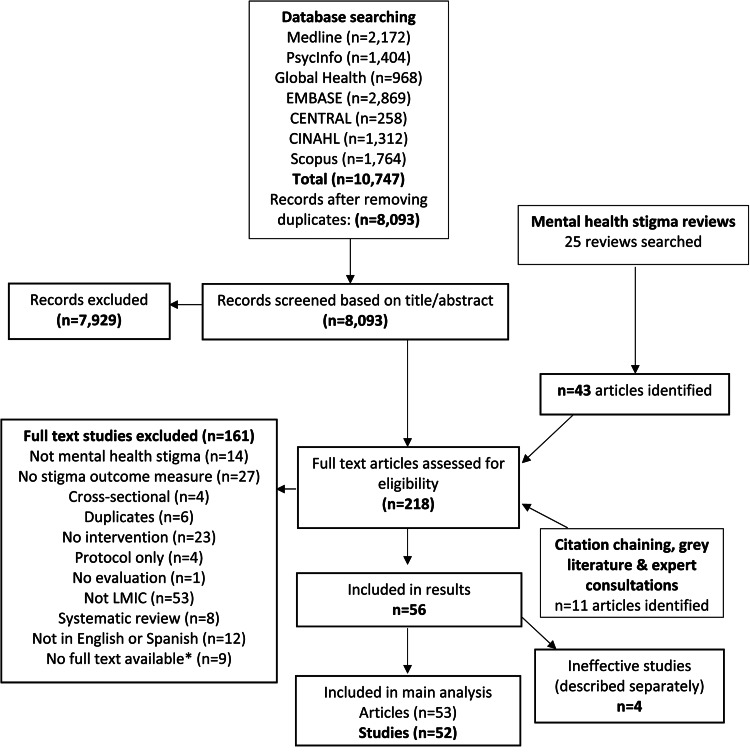
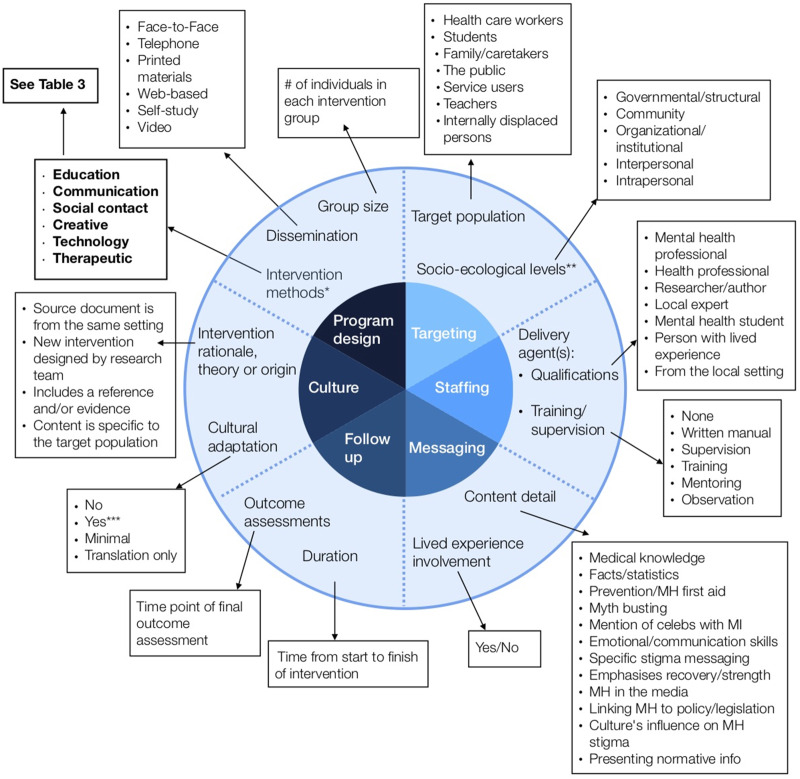
Aims: To identify and categorise core components of effective stigma reduction interventions in the field of mental health in low- and middle-income countries (LMICs) and compare these components across cultural contexts and between intervention characteristics. Methods: Seven databases were searched with a strategy including four categories of terms ('stigma’, ‘mental health’, ‘intervention’ and ‘low- and middle-income countries’). Additional methods included citation chaining of all papers identified for inclusion, consultation with experts and hand searching reference lists from other related reviews. Studies on interventions in LMICs aiming to reduce stigma related to mental health with a stigma-related outcome measure were included. All relevant intervention characteristics and components were extracted and a quality assessment was undertaken. A ‘best fit’ framework synthesis was used to organise data, followed by a narrative synthesis. Results: Fifty-six studies were included in this review, of which four were ineffective and analysed separately. A framework was developed which presents a new categorisation of stigma intervention components based on the included studies. Most interventions utilised multiple methods and of the 52 effective studies educational methods were used most frequently ( n = 83), and both social contact ( n = 8) and therapeutic methods ( n = 3) were used infrequently. Most interventions ( n = 42) based their intervention on medical knowledge, but a variety of other themes were addressed. All regions with LMICs were represented, but every region was dominated by studies from one country. Components varied between regions for most categories indicating variation between cultures, but only a minority of studies were developed in the local setting or culturally adapted. Conclusions: Our study suggests effective mental health stigma reduction interventions in LMICs have increased in quantity and quality over the past five years, and a wide variety of components have been utilised successfully – from creative methods to emphasis on recovery and strength of people with mental illness. Yet there is minimal mention of social contact, despite existing strong evidence for it. There is also a lack of robust research designs, a high number of short-term interventions and follow-up, nominal use of local expertise and the research is limited to a small number of LMICs. More research is needed to address these issues. Some congruity exists in components between cultures, but generally they vary widely. The review gives an in-depth overview of mental health stigma reduction core components, providing researchers in varied resource-poor settings additional knowledge to help with planning mental health stigma reduction interventions.
Overview
CoChat Summary
TL;DR
This systematic review identified 56 studies (57 articles) of mental health stigma reduction interventions in low- and middle-income countries and developed a framework of six core component categories. Most effective interventions used educational methods, while social contact and therapeutic methods were infrequent, and local/cultural adaptation was limited.
Key findings
- Of 56 included studies, 4 were ineffective and analysed separately; among the 52 effective studies, 39 articles (74%) found a significant positive result for all main stigma outcomes, and 13 (25%) found at least a small positive result for some but not all outcomes.
- Educational methods were documented most frequently (n = 83), followed by communication (n = 58), technology (n = 21), creative methods (n = 19), social contact (n = 8) and therapeutic methods (n = 3); most interventions (n = 42, 81%) were based on medical knowledge, and no interventions reported using protest.
- Quality varied: 38 studies (73%) met at least three of five MMAT criteria, 11 (21%) were poor quality, and 3 (6%) were very poor quality; 15 studies (29%) were RCTs, while 27 (52%) were pre/post studies.
- Only 11 studies (21%) originated from inside the setting and were referenced, 25 (48%) were culturally adapted, and only 4 of 52 studies (8%) took place in low-income countries; each World Bank region was dominated by studies from one country.
Methods
- Systematic review registered on PROSPERO (ID 136008); seven databases were searched on 13 May 2019 (CENTRAL, MEDLINE, CINAHL, Global Health, PsycINFO, EMBASE, Scopus), with citation chaining, expert consultation and hand searching; searches were restricted to English and Spanish and to humans.
- Studies were included if they evaluated interventions in LMICs aiming to reduce mental health-related stigma and included at least one stigma-related outcome measure linked to knowledge, attitudes or behaviour; all experimental designs were eligible, with no publishing date restrictions.
- A ‘best fit’ framework synthesis was used, starting from Corrigan’s five categories (programme design, targeting, staffing, messaging, follow-up/evaluation) plus a sixth Culture category; data were coded inductively and summarised narratively, with quality assessed using the Mixed Methods Appraisal Tool (MMAT).
Limitations
- Stated by the authors: only full texts in English or Spanish were included; components were extracted only if explicitly reported; many authors did not reply to requests for further detail; more than half the studies were pre/post without a control group; a quarter were poor or very poor quality; region-specific analysis was limited because each region was dominated by one country; and the small number of ineffective studies suggests possible publication bias.
- Evident from the text: most studies used self-report measures and had limited follow-up, and social contact may have been underreported because it was only counted when explicitly mentioned.
Model-written summary. Check it against the paper before relying on it.
Integrity signals
Registry
Cites
Statistics
Figures
Verification
Claims the paper makes
0 Valid · 1 Not valid · 22 Not checked · 108 Own results and interpretations
A result the paper reports from its own data — it cites no other source for it, so there is none to check. The quote shows it is in the paper.
In the paper
“A framework was developed which presents a new categorisation of stigma intervention components based on the included studies.”
§ Core components of mental health stigma reduction interventions in low- and middle-income countries: a systematic review > Abstract > Results
plain- Asserted: passes — The authors put it forward as true.
- Checkable: passes — It can be checked against evidence.
- Load-bearing: passes — The paper’s conclusions depend on it.
- Based: passes — The paper gives a reason why it holds.
- Rests on an assumption not shown here.
A result the paper reports from its own data — it cites no other source for it, so there is none to check. The quote shows it is in the paper.
In the paper
“a wide variety of components have been utilised successfully – from creative methods to emphasis on recovery and strength of people with mental illness.”
§ Core components of mental health stigma reduction interventions in low- and middle-income countries: a systematic review > Abstract > Conclusions
plain- Asserted: passes — The authors put it forward as true.
- Checkable: passes — It can be checked against evidence.
- Load-bearing: passes — The paper’s conclusions depend on it.
- Based: passes — The paper gives a reason why it holds.
- Rests on an assumption not shown here.
A result the paper reports from its own data — it cites no other source for it, so there is none to check. The quote shows it is in the paper.
In the paper
“Most interventions (n = 42) based their intervention on medical knowledge”
§ Core components of mental health stigma reduction interventions in low- and middle-income countries: a systematic review > Abstract > Results
plainn = 42- Asserted: passes — The authors put it forward as true.
- Checkable: passes — It can be checked against evidence.
- Load-bearing: unclear — It is unclear whether the paper’s conclusions depend on it.
- Based: passes — The paper gives a reason why it holds.
A result the paper reports from its own data — it cites no other source for it, so there is none to check. The quote shows it is in the paper.
In the paper
“The most frequent target populations were health care workers and students (both n = 16, 31%), although some studies focused on more than one group.”
§ Core components of mental health stigma reduction interventions in low- and middle-income countries: a systematic review > Results > Intervention components and categorisation
plainn = 16- Asserted: passes — The authors put it forward as true.
- Checkable: passes — It can be checked against evidence.
- Load-bearing: unclear — It is unclear whether the paper’s conclusions depend on it.
- Based: passes — The paper gives a reason why it holds.
A result the paper reports from its own data — it cites no other source for it, so there is none to check. The quote shows it is in the paper.
In the paper
“The quality of studies varied, with 38 studies (73%) fulfilling at least three of five MMAT quality criteria (considered moderate and high-quality studies).”
§ Core components of mental health stigma reduction interventions in low- and middle-income countries: a systematic review > Results > Study characteristics
plain- Asserted: passes — The authors put it forward as true.
- Checkable: passes — It can be checked against evidence.
- Load-bearing: unclear — It is unclear whether the paper’s conclusions depend on it.
- Based: passes — The paper gives a reason why it holds.
64 more claims
Create a free account to see all 131 claims and to verify the 29 references still open.
- It may state two separate claims as one. 44
- Probably not a substantial claim. 28
Claims other papers make about this one
Each is checked against this paper’s own text: does it say what the citing paper says it does?
The cited source says what the claim attributes to it.
In the citing paper
“few stigma reduction trainings have been developed and evaluated for CHWs in LMICs (Clay et al., 2020; Javed et al., 2021; Kemp et al., 2019; Livingston et al., 2012; Makhmud et al., 2022).”
From Siyakhana: A Hybrid Type 2 Effectiveness-Implementation Stepped-Wedge Trial to Reduce Stigma Towards Substance Use and Depression Among Community Health Workers in HIV/TB Care in South Africa (2025) · cites this paper as Clay et al., 2020
Self-check
Percentages, sums and reported differences re-computed from the paper’s own numbers.
Each contradiction between two passages listed here was confirmed by an independent check.
Rated major: it would touch a result — a value a result rests on, reported and recomputed p-values on opposite sides of the significance level, two passages that conflict with no sign which is right, or a cited work retracted before this paper was published.
In the paper
§ Core components of mental health stigma reduction interventions in low- and middle-income countries: a systematic review > Results > Intervention components and categorisation
“Of the 21 studies which involved someone with lived experience in intervention development or delivery, 86% were effective for all stigma-related outcomes compared to only 74% of studies which did not involve someone with lived experience.”
§ Core components of mental health stigma reduction interventions in low- and middle-income countries: a systematic review > Results > Study characteristics
“Thirty-nine articles (74%) found a significant positive result for all main stigma outcomes and 13 (25%) found at least a small positive result for some but not all stigma outcomes.”
Rated minor: it would not touch a result — a value no result rests on, a p-value that stays on the same side of the significance level, or a conflict that is clerical, resolved elsewhere in the paper, or outside its own findings.
In the paper
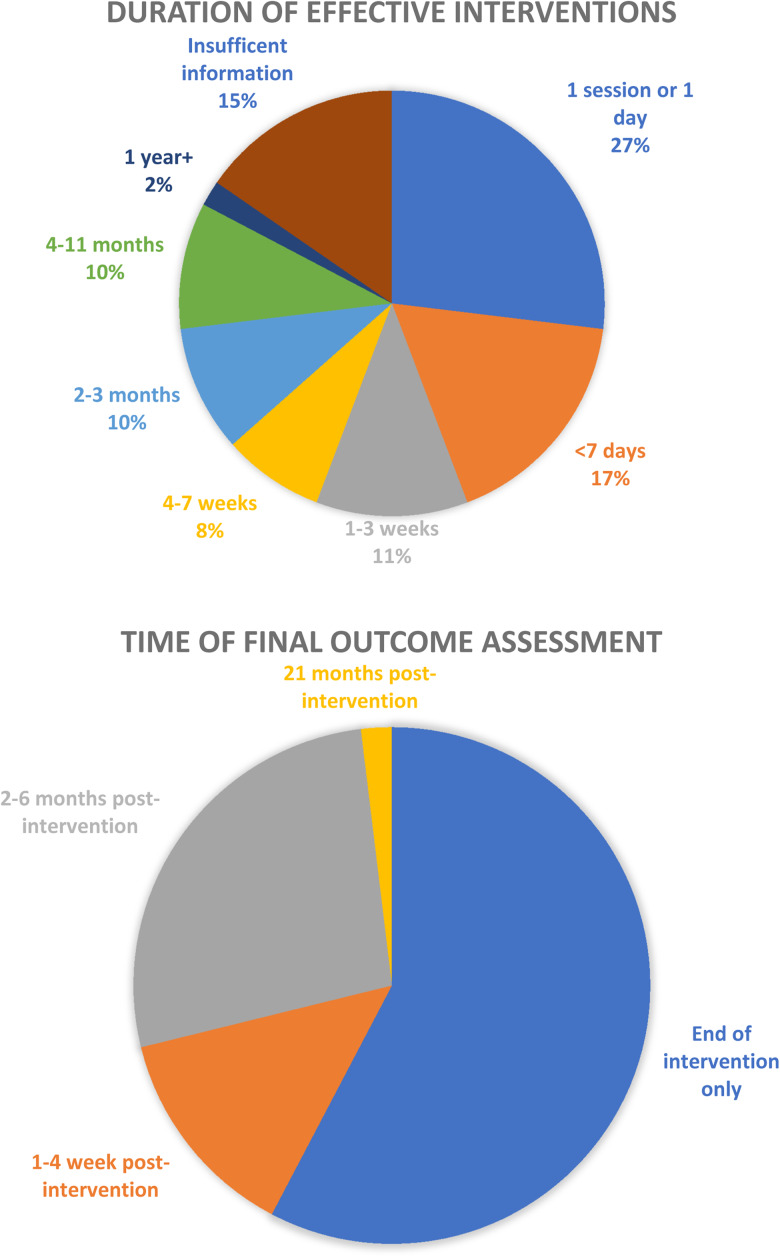
“six (10%) lasted between 1 and 3 weeks”
§ Core components of mental health stigma reduction interventions in low- and middle-income countries: a systematic review > Results > Intervention components and categorisation
Reported 10 · recomputed 11.538462
Rated minor: it would not touch a result — a value no result rests on, a p-value that stays on the same side of the significance level, or a conflict that is clerical, resolved elsewhere in the paper, or outside its own findings.
In the paper
§ Core components of mental health stigma reduction interventions in low- and middle-income countries: a systematic review > Results > Study characteristics
“Eleven studies (21%) were of poor quality with one to three of criteria fulfilled”
§ Core components of mental health stigma reduction interventions in low- and middle-income countries: a systematic review > Methods > Quality assessment
“studies of poor or very poor quality – two or less of five criteria met – were included in the main analysis but later separated out.”
Citations
Cites
The Lancet Commission on global mental health and sustainable development
Patel, V., Saxena, S., Lund, C., Thornicroft, G., Baingana, F., Bolton, P., Chisholm, D., Collins, P. Y., Cooper, J. L., Eaton, J., et al. (2018) · The Lancet · doi:10.1016/s0140-6736(18)31612-x · Cited by 3,692 · cited 1×
“Mental health stigma has been shown to be widespread globally, regardless of region (Pescosolido et al., 2013).”
BackgroundSelf-citationHow stigma interferes with mental health care.
Corrigan, P. (2004) · American Psychologist · doi:10.1037/0003-066x.59.7.614 · Cited by 3,648 · cited 2×
“reduced employment opportunities and corresponding poverty, relationship difficulties, reduced help-seeking behaviour and poorer quality health care (Corrigan, 2004; Jones et al., 2008; Thornicroft et al., 2009; Knaak et al., 2017).”
BackgroundGrand challenges in global mental health
Collins, P. Y., Patel, V., Joestl, S. S., March, D., Insel, T. R., Daar, A. S., Bordin, I. A., Costello, E. J., Durkin, M., Fairburn, C., et al. (2011) · Nature · doi:10.1038/475027a · Cited by 2,043
Challenging the public stigma of mental illness: a meta-analysis of outcome studies
Corrigan, P. W., Morris, S. B., Michaels, P. J., Rafacz, J. D., & Rüsch, N. (2012) · Psychiatric Services · doi:10.1176/appi.ps.201100529 · Cited by 1,680 · cited 3×
“Despite evidence of the effectiveness of social contact (Corrigan and Scott, 2012), no region overtly described using social contact in more than half of studies and almost no studies defined any of their delivery agents as someone with lived experience.”
BackgroundMethodStangl, A. L., Earnshaw, V. A., Logie, C. H., van Brakel, W., C. Simbayi, L., Barré, I., & Dovidio, J. F. (2019) · BMC Medicine · doi:10.1186/s12916-019-1271-3 · Cited by 1,603
Evidence for effective interventions to reduce mental-health-related stigma and discrimination
Thornicroft, G., Mehta, N., Clement, S., Evans-Lacko, S., Doherty, M., Rose, D., Koschorke, M., Shidhaye, R., O'Reilly, C., & Henderson, C. (2016) · The Lancet · doi:10.1016/s0140-6736(15)00298-6 · Cited by 1,338 · cited 4×
“Yet there are minimal descriptions of social contact, despite the fact that it has been shown to be the most impactful single component of stigma reduction work (Thornicroft et al., 2016).”
BackgroundMethodResultInfluentialThornicroft, G., Brohan, E., Rose, D., Sartorius, N., & Leese, M. (2009) · The Lancet · doi:10.1016/s0140-6736(08)61817-6 · Cited by 1,189 · cited 3×
“For example, a 2009 study found rates of experienced discrimination by people with schizophrenia were high and consistent across 27 countries (Thornicroft et al., 2009).”
BackgroundResultUndertreatment of people with major depressive disorder in 21 countries
Thornicroft, G., Chatterji, S., Evans-Lacko, S., Gruber, M., Sampson, N., Aguilar-Gaxiola, S., Al-Hamzawi, A., Alonso, J., Andrade, L., Borges, G., et al. (2017) · British Journal of Psychiatry · doi:10.1192/bjp.bp.116.188078 · Cited by 1,121
Barriers to improvement of mental health services in low-income and middle-income countries
Saraceno, B., van Ommeren, M., Batniji, R., Cohen, A., Gureje, O., Mahoney, J., Sridhar, D., & Underhill, C. (2007) · The Lancet · doi:10.1016/s0140-6736(07)61263-x · Cited by 1,088
Knaak, S., Mantler, E., & Szeto, A. (2017) · Healthcare Management Forum · doi:10.1177/0840470416679413 · Cited by 1,031 · cited 2×
“reduced employment opportunities and corresponding poverty, relationship difficulties, reduced help-seeking behaviour and poorer quality health care (Corrigan, 2004; Jones et al., 2008; Thornicroft et al., 2009; Knaak et al., 2017).”
BackgroundThree Strategies for Changing Attributions about Severe Mental Illness
Corrigan, P. W., River, L. P., Lundin, R. K., Penn, D. L., Uphoff-Wasowski, K., Campion, J., Mathisen, J., Gagnon, C., Bergman, M., Goldstein, H., et al. (2001) · Schizophrenia Bulletin · doi:10.1093/oxfordjournals.schbul.a006865 · Cited by 783 · cited 3×
“The protest method has not shown evidence of effectiveness (Corrigan et al., 2001).”
BackgroundMethodInfluentialThe fight against stigma: An overview of stigma-reduction strategies and interventions
Heijnders, M., & Van Der Meij, S. (2006) · Psychology, Health & Medicine · doi:10.1080/13548500600595327 · Cited by 726
Alonso, J., Liu, Z., Evans-Lacko, S., Sadikova, E., Sampson, N., Chatterji, S., Abdulmalik, J., Aguilar-Gaxiola, S., Al-Hamzawi, A., Andrade, L. H., et al. (2018) · Depression and Anxiety · doi:10.1002/da.22711 · Cited by 716
“Best fit” framework synthesis: refining the method
Carroll, C., Booth, A., Leaviss, J., & Rick, J. (2013) · BMC Medical Research Methodology · doi:10.1186/1471-2288-13-37 · Cited by 649 · cited 1×
“With previously conducted research and frameworks as a guide, a ‘best fit’ framework synthesis was chosen as the main method of analysis for this review (Carroll et al., 2013).”
Method‘Diagnostic overshadowing’: worse physical health care for people with mental illness
Jones, S., Howard, L., & Thornicroft, G. (2008) · Acta Psychiatrica Scandinavica · doi:10.1111/j.1600-0447.2008.01211.x · Cited by 475 · cited 2×
“reduced employment opportunities and corresponding poverty, relationship difficulties, reduced help-seeking behaviour and poorer quality health care (Corrigan, 2004; Jones et al., 2008; Thornicroft et al., 2009; Knaak et al., 2017).”
BackgroundCarroll, C., Booth, A., & Cooper, K. (2011) · BMC Medical Research Methodology · doi:10.1186/1471-2288-11-29 · Cited by 461 · cited 1×
“The framework synthesis then allowed for the expansion of Corrigan’s categories (Carroll et al., 2011) and the creation of a new framework (see Fig.”
MethodEmpirical studies of self-stigma reduction strategies: a critical review of the literature
Mittal, D., Sullivan, G., Chekuri, L., Allee, E., & Corrigan, P. W. (2012) · Psychiatric Services · doi:10.1176/appi.ps.201100459 · Cited by 424 · cited 1×
“A few studies have been conducted to identify key ingredients for very specific contexts or stigma types (Pinfold et al., 2005; Mittal et al., 2012; Corrigan et al., 2013, 2014; Knaak et al., 2014).”
BackgroundInterventions to reduce discrimination and stigma: the state of the art
Gronholm, P. C., Henderson, C., Deb, T., & Thornicroft, G. (2017) · Social Psychiatry and Psychiatric Epidemiology · doi:10.1007/s00127-017-1341-9 · Cited by 401 · cited 4×
“…indicates that there are a number of education and contact-based interventions which produce small to moderate effect sizes on stigma reduction, yet there is minimal evidence long-term and study quality is not always sufficient (Thornicroft et al., 2016; Gronholm et al., 2017; Morgan et al., 2018).”
BackgroundResultInfluentialSelf-citationMorgan, A. J., Reavley, N. J., Ross, A., Too, L. S., & Jorm, A. F. (2018) · Journal of Psychiatric Research · doi:10.1016/j.jpsychires.2018.05.017 · Cited by 372
Mehta, N., Clement, S., Marcus, E., Stona, A.-C., Bezborodovs, N., Evans-Lacko, S., Palacios, J., Docherty, M., Barley, E., Rose, D., et al. (2015) · British Journal of Psychiatry · doi:10.1192/bjp.bp.114.151944 · Cited by 366 · cited 6×
“The database search strategy was developed using earlier stigma-related systematic reviews as a guide (Heim et al., 2018; Mehta et al., 2018; Morgan et al., 2018; Kemp et al., 2019) and used both subject headings and keywords.”
BackgroundMethodResultInfluentialPescosolido, B. A., Medina, T. R., Martin, J. K., & Long, J. S. (2013) · American Journal of Public Health · doi:10.2105/ajph.2012.301147 · Cited by 349 · cited 1×
“Mental health stigma has been shown to be widespread globally, regardless of region (Pescosolido et al., 2013).”
BackgroundStigma and disease: changing paradigms
Scambler, G. (1998) · The Lancet · doi:10.1016/s0140-6736(98)08068-4 · Cited by 341
Reducing the stigma of mental illness
Stuart, H. (2016) · Global Mental Health · doi:10.1017/gmh.2016.11 · Cited by 300
Mass media interventions for reducing mental health-related stigma
Clement, S., Lassman, F., Barley, E., Evans-Lacko, S., Williams, P., Yamaguchi, S., Slade, M., Rüsch, N., & Thornicroft, G. (2013) · Cochrane Database of Systematic Reviews · doi:10.1002/14651858.cd009453.pub2 · Cited by 284
Reducing stigma and discrimination: candidate interventions
Thornicroft, G., Brohan, E., Kassam, A., & Lewis-Holmes, E. (2008) · International Journal of Mental Health Systems · doi:10.1186/1752-4458-2-3 · Cited by 257 · cited 1×
“This paradigm links knowledge, attitude and behaviour, and has also been defined as problems in three domains: ignorance, prejudice and discrimination (Thornicroft et al., 2008).”
BackgroundKnaak, S., Modgill, G., & Patten, S. B. (2014) · The Canadian Journal of Psychiatry · doi:10.1177/070674371405901s06 · Cited by 247
Stigma and discrimination in mental illness: Time to Change
Henderson, C., & Thornicroft, G. (2009) · The Lancet · doi:10.1016/s0140-6736(09)61046-1 · Cited by 238 · cited 2×
“The far-reaching negative impact of mental health-related stigma and discrimination has been extensively documented and has even been described by those with mental illness as ‘worse than the illness itself’ (Henderson and Thornicroft, 2009).”
BackgroundActive ingredients in anti-stigma programmes in mental health
Pinfold, V., Thornicroft, G., Huxley, P., & Farmer, P. (2005) · International Review of Psychiatry · doi:10.1080/09540260500073638 · Cited by 215 · cited 1×
“A few studies have been conducted to identify key ingredients for very specific contexts or stigma types (Pinfold et al., 2005; Mittal et al., 2012; Corrigan et al., 2013, 2014; Knaak et al., 2014).”
BackgroundRan, M.-S., Xiang, M.-Z., Chan, C. L.-W., Leff, J., Simpson, P., Huang, M.-S., Shan, Y.-H., & Li, S.-G. (2003) · Social Psychiatry and Psychiatric Epidemiology · doi:10.1007/s00127-003-0601-z · Cited by 195 · cited 1×
“…Mental health (SP) 100 100% 6 months High L/P, Disc, T/ D Facts No Yes 4 months after baseline only Knowledge & Attitudes(*) Yes, significant effect Ran et al. (2003) Cluster RCT China F/C Schizophrenia (SP) 357 91% 9 months High L/P, Disc, WS, Share, Train Facts, Emotional Yes Yes End only…”
BackgroundOn the stigma of mental illness
Cumming, J., & Cumming, E. (1965) · Community Mental Health Journal · doi:10.1007/bf01435202 · Cited by 171
Armstrong, G., Kermode, M., Raja, S., Suja, S., Chandra, P., & Jorm, A. F. (2011) · International Journal of Mental Health Systems · doi:10.1186/1752-4458-5-17 · Cited by 168
Kutcher, S., Wei, Y., Gilberds, H., Ubuguyu, O., Njau, T., Brown, A., Sabuni, N., Magimba, A., & Perkins, K. (2016) · International Journal of Mental Health Systems · doi:10.1186/s13033-016-0082-6 · Cited by 147 · cited 1×
“…Mental health (SP) 218 88% 3 days Moderate Train, Disc Facts, Medical, Stigma No Yes End only Knowledge(*); Attitudes(*) Yes, significant effect Kutcher et al. (2016) Pre/post Tanzania Teachers Mental health (SP) 61 62% 3 days Very poor L/P, SS, Disc Stigma, Medical, Facts, Recovery No Yes…”
BackgroundRandomised trial of impact of school mental-health programme in rural Rawalpindi, Pakistan
Rahman, A., Mubbashar, M. H., Gater, R. A., & Goldberg, D. (1998) · The Lancet · doi:10.1016/s0140-6736(98)02381-2 · Cited by 138
Kemp, C. G., Jarrett, B. A., Kwon, C.-S., Song, L., Jetté, N., Sapag, J. C., Bass, J., Murray, L., Rao, D., & Baral, S. (2019) · BMC Medicine · doi:10.1186/s12916-018-1237-x · Cited by 138 · cited 1×
“The database search strategy was developed using earlier stigma-related systematic reviews as a guide (Heim et al., 2018; Mehta et al., 2018; Morgan et al., 2018; Kemp et al., 2019) and used both subject headings and keywords.”
MethodPsychiatric stigma across cultures: Local validation in Bangalore and London
Weiss, M. G., Jadhav, S., Raguram, R., Vounatsou, P., & Littlewood, R. (2001) · Anthropology & Medicine · doi:10.1080/13648470120063906 · Cited by 132 · cited 2×
“This assumption of transferability between settings by some studies disregards the importance of cultural relevance (Drake et al., 2014; Rathod and Kingdon, 2014) and evidence that local concepts of stigma are complex (Weiss et al., 2001).”
BackgroundEffects of an antistigma program on medical students’ attitudes towards people with schizophrenia
ALTINDAG, A., YANIK, M., UCOK, A., ALPTEKIN, K., & OZKAN, M. (2006) · Psychiatry and Clinical Neurosciences · doi:10.1111/j.1440-1819.2006.01503.x · Cited by 119
Randomized study of different anti-stigma media
Finkelstein, J., Lapshin, O., & Wasserman, E. L. (2008) · Patient Education and Counseling · doi:10.1016/j.pec.2008.01.002 · Cited by 118 · cited 1×
“…102 100% 1 day High L/P, DSC, VSC Medical, Facts, Stigma, Myths, Recovery Yes No End; 1 month after Attitudes & Behaviour(*) Yes, significant effect Finkelstein et al. (2008) Individual RCT Russia Students Mental health (SP) 193 79% 1 session Moderate L/P, Quiz, SSC Myths, Medical, Facts,…”
Berlim, M. T., Perizzolo, J., Lejderman, F., Fleck, M. P., & Joiner, T. E. (2006) · Journal of Affective Disorders · doi:10.1016/j.jad.2006.09.035 · Cited by 106
Heim, E., Henderson, C., Kohrt, B. A., Koschorke, M., Milenova, M., & Thornicroft, G. (2020) · Epidemiology and Psychiatric Sciences · doi:10.1017/s2045796019000167 · Cited by 104 · cited 1×
“The results of this systematic review reiterate some main findings from other recent stigma-related reviews (Thornicroft et al., 2016; Heim et al., 2018; Mehta et al., 2018; Morgan et al., 2018; Heim et al., 2019).”
ResultMaulik, P. K., Devarapalli, S., Kallakuri, S., Tewari, A., Chilappagari, S., Koschorke, M., & Thornicroft, G. (2017) · Psychological Medicine · doi:10.1017/s0033291716002804 · Cited by 103
Heim, E., Kohrt, B. A., Koschorke, M., Milenova, M., & Thornicroft, G. (2020) · Epidemiology and Psychiatric Sciences · doi:10.1017/s2045796018000458 · Cited by 99 · cited 3×
“The database search strategy was developed using earlier stigma-related systematic reviews as a guide (Heim et al., 2018; Mehta et al., 2018; Morgan et al., 2018; Kemp et al., 2019) and used both subject headings and keywords.”
BackgroundMethodResultLi, J., Fan, Y., Zhong, H.-Q., Duan, X.-L., Chen, W., Evans-Lacko, S., & Thornicroft, G. (2019) · International Journal of Mental Health Systems · doi:10.1186/s13033-018-0259-2 · Cited by 98 · cited 1×
“…exp Cultural adaptation Follow-up time pointsg Outcome measure(s) focal point(s) (validation)h Overall effectiveness for stigma-related outcomes Li et al. (2019) Cluster RCT China HCW Mental health (SP) 384 76% 1 session Poor L/P, Train Stigma, Recovery No No End only Perceived discrimination…”
BackgroundKutcher, S., Gilberds, H., Morgan, C., Greene, R., Hamwaka, K., & Perkins, K. (2015) · Global Mental Health · doi:10.1017/gmh.2014.8 · Cited by 94 · cited 1×
“…UK) 39% 20 weeks High Web, Forum, L/P, IM Medical, Culture, Facts No Yes End only Attitudes(*); Attitudes(*) Yes, for SL students (not UK students) Kutcher et al. (2015) Pre/post Malawi Teachers Mental health (SP) 218 88% 3 days Moderate Train, Disc Facts, Medical, Stigma No Yes End only…”
BackgroundMaintained Attitudinal Changes in Nursing Personnel After a Brief Training on Suicide Prevention
Botega, N. J., Silva, S. V., Reginato, D. G., Rapeli, C. B., Cais, C. F. S., Mauro, M. L. F., Stefanello, S., & Cecconi, J. P. (2007) · Suicide and Life-Threatening Behavior · doi:10.1521/suli.2007.37.2.145 · Cited by 92
Key ingredients to contact-based stigma change: A cross-validation.
Corrigan, P. W., Michaels, P. J., Vega, E., Gause, M., Larson, J., Krzyzanowski, R., & Botcheva, L. (2014) · Psychiatric Rehabilitation Journal · doi:10.1037/prj0000038 · Cited by 82 · cited 1×
“A few studies have been conducted to identify key ingredients for very specific contexts or stigma types (Pinfold et al., 2005; Mittal et al., 2012; Corrigan et al., 2013, 2014; Knaak et al., 2014).”
BackgroundÇuhadar, D., & Çam, O. (2013) · Archives of Psychiatric Nursing · doi:10.1016/j.apnu.2013.10.008 · Cited by 81
Sibeko, G., Milligan, P. D., Roelofse, M., Molefe, L., Jonker, D., Ipser, J., Lund, C., & Stein, D. J. (2018) · BMC Psychiatry · doi:10.1186/s12888-018-1772-1 · Cited by 72
The California schedule of key ingredients for contact-based antistigma programs.
Corrigan, P. W., Vega, E., Larson, J., Michaels, P. J., McClintock, G., Krzyzanowski, R., Gause, M., & Buchholz, B. (2013) · Psychiatric Rehabilitation Journal · doi:10.1037/prj0000006 · Cited by 71 · cited 3×
“A few studies have been conducted to identify key ingredients for very specific contexts or stigma types (Pinfold et al., 2005; Mittal et al., 2012; Corrigan et al., 2013, 2014; Knaak et al., 2014).”
BackgroundMethodSchool-based interventions targeting stigma of mental illness: systematic review
Mellor, C. (2014) · The Psychiatric Bulletin · doi:10.1192/pb.bp.112.041723 · Cited by 71 · cited 1×
“A substantial number of small-scale and short-term interventions have emerged in the past few decades focusing on reducing mental health stigma and several recent systematic reviews examine their effectiveness (Corrigan and Scott, 2012; Clement et al., 2013; Heim et al., 2018; Mehta et al., 2018; Mellor, 2018; Morgan…”
BackgroundAyano, G., Assefa, D., Haile, K., Chaka, A., Haile, K., Solomon, M., Yohannis, K., Adane, A. A., & Jemal, K. (2017) · International Journal of Mental Health Systems · doi:10.1186/s13033-017-0169-8 · Cited by 67
Longitudinal assessment of an anti-stigma campaign related to common mental disorders in rural India
Maulik, P. K., Devarapalli, S., Kallakuri, S., Tripathi, A. P., Koschorke, M., & Thornicroft, G. (2019) · The British Journal of Psychiatry · doi:10.1192/bjp.2018.190 · Cited by 67
Fernandez, A., Tan, K., Knaak, S. J., Chew, B., & Ghazali, S. S. (2016) · Academic Psychiatry · doi:10.1007/s40596-016-0592-1 · Cited by 64 · cited 1×
“…F/C Schizophrenia (SP) 60 83% 6 months High L/P, Disc, Train Medical, Emotional No Yes End only Attitudes(*); Knowledge(*) Yes, significant effect Fernandez et al. (2016) Individual RCT Malaysia Students Mental health (SP) 102 100% 1 day High L/P, DSC, VSC Medical, Facts, Stigma, Myths,…”
Li, J., Huang, Y.-G., Ran, M.-S., Fan, Y., Chen, W., Evans-Lacko, S., & Thornicroft, G. (2018) · Asian Journal of Psychiatry · doi:10.1016/j.ajp.2018.04.017 · Cited by 63 · cited 1×
“…Share Medical, Stigma No No End only Knowledge; Behaviour(*); Attitudes(*) Significant effect for discrimination and attitudes, but not for knowledge Li et al. (2018) Cluster RCT China SU Schizophrenia (SE) 384 84% 9 months Moderate L/P, Train, Disc, CBT Medical, Facts, Emotional, Stigma Yes Yes 6…”
BackgroundIheanacho, T., Marienfeld, C. B., Stefanovics, E. A., & Rosenheck, R. A. (2014) · Academic Psychiatry · doi:10.1007/s40596-014-0073-3 · Cited by 60 · cited 1×
“…4 days High L/P, Disc, DSC Facts, Medical, Recovery Yes No End only Knowledge(*); Attitudes(*) Significant effect for psychosis, but not depression Iheanacho et al. (2014) Pre/post Nigeria Students Mental health (SP) 83 69% 4 days Poor L/P, Disc, Role Medical, Facts No No End only Attitudes(*)…”
BackgroundNgoc, T. N., Weiss, B., & Trung, L. T. (2016) · Asian Journal of Psychiatry · doi:10.1016/j.ajp.2016.06.001 · Cited by 56
Li, J., Li, J., Huang, Y., & Thornicroft, G. (2014) · International Journal of Mental Health Systems · doi:10.1186/1752-4458-8-49 · Cited by 53 · cited 1×
“…Facts, Recovery No Yes End only Knowledge(*); Attitudes(*); Knowledge(*) Significant effect for knowledge and attitudes, but not comfort levels Li et al. (2014) Pre/post China HCW Mental health (SP) 99 90% 1 day Moderate L/P, Train, Share Medical, Stigma No No End only Knowledge;…”
BackgroundIntegrating mental health into primary health care in Iraq.
Sadik, S., Abdulrahman, S. A., Bradley, M., & Jenkins, R. (2011) · PubMed Central · Cited by 52
Ng, Y. P., Rashid, A., & O'Brien, F. M. (2017) · PLoS ONE · doi:10.1371/journal.pone.0187861 · Cited by 52
ÜÇOK, A., SOYGÜR, H., ATAKLİ, C., KUŞCU, K., SARTORIUS, N., DUMAN, Z. Ç., POLAT, A., & ERKOÇ, Ş. (2006) · Psychiatry and Clinical Neurosciences · doi:10.1111/j.1440-1819.2006.01529.x · Cited by 50 · cited 1×
“…RCT China SU Depression (SE) 90 97% 8 weeks High GCBT Facts, Emotional, Stigma Yes No End only Stigma- no further detail (*) Yes, significant effect Ucok et al. (2006) Pre/post Turkey HCW Schizophrenia (SP) 106 50% 1 session Very poor L/P, Disc, Print Medical, Stigma No No 3 months after…”
BackgroundRavindran, A. V., Herrera, A., da Silva, T. L., Henderson, J., Castrillo, M. E., & Kutcher, S. (2018) · Global Mental Health · doi:10.1017/gmh.2017.27 · Cited by 48
Pereira, C. A., Wen, C. L., Miguel, E. C., & Polanczyk, G. V. (2015) · European Child & Adolescent Psychiatry · doi:10.1007/s00787-014-0642-8 · Cited by 46 · cited 1×
“A few studies have been conducted to identify key ingredients for very specific contexts or stigma types (Pinfold et al., 2005; Mittal et al., 2012; Corrigan et al., 2013, 2014; Knaak et al., 2014).”
BackgroundAhuja, K. K., Dhillon, M., Juneja, A., & Sharma, B. (2017) · Psychosocial Intervention · doi:10.1016/j.psi.2016.11.003 · Cited by 45
Changing attitudes of high school students towards peers with mental health problems.
Pejovic-Milovancevic, M. M., Lečić‐Toševski, D., Tenjović, L., Popović-Deušić, S., & Draganić-Gajić, S. (2009) · PubMed · Cited by 44
Bella-Awusah, T., Adedokun, B., Dogra, N., & Omigbodun, O. (2014) · Journal of Child & Adolescent Mental Health · doi:10.2989/17280583.2014.922090 · Cited by 42
Oduguwa, A. O., Adedokun, B., & Omigbodun, O. O. (2017) · Child and Adolescent Psychiatry and Mental Health · doi:10.1186/s13034-017-0157-4 · Cited by 40
Worakul, P., Thavichachart, N., & Lueboonthavatchai, P. (2007) · PubMed · Cited by 37
Traditional mental health practitioners in Kwara State, Nigeria
Adelekan, M. L., Makanjuola, A. B., & Ndom, R. J. E. (2001) · East African Medical Journal · doi:10.4314/eamj.v78i4.9061 · Cited by 35
Suicide Prevention Training for Professionals in the Public Health Network in a Large Brazilian City
Cais, C. F. D. S., da Silveira, I. U., Stefanello, S., & Botega, N. J. (2011) · Archives of Suicide Research · doi:10.1080/13811118.2011.616152 · Cited by 35
Improved Attitudes to Psychiatry: A Global Mental Health Peer-to-Peer E-Learning Partnership
Keynejad, R. C., Garratt, E. A., Adem, G., Finlayson, A. E. T., Whitwell, S., & Sheriff, R. S. (2014) · Academic Psychiatry · doi:10.1007/s40596-014-0206-8 · Cited by 34
Rong, Y., Glozier, N., Luscombe, G. M., Davenport, T. A., Huang, Y., & Hickie, I. B. (2011) · BMC Psychiatry · doi:10.1186/1471-244x-11-36 · Cited by 32
Hofmann-Broussard, C., Armstrong, G., Boschen, M. J., & Somasundaram, K. V. (2017) · International Journal of Culture and Mental Health · doi:10.1080/17542863.2016.1259340 · Cited by 31
Duman, Z. Ç., Günüşen, N. P., İnan, F. Ş., İnce, S. Ç., & Sarı, A. (2017) · Journal of Professional Nursing · doi:10.1016/j.profnurs.2017.06.005 · Cited by 31 · cited 1×
“…health (SP) 291 79% 12 weeks Moderate L/P, Disc Recovery, Medical, Emotional, Strength Yes Minimal End only Knowledge(*) Yes, significant effect Duman et al. (2017) Nonrandomised trial Turkey Students Mental health (SP) 256 78% 2-3 months Poor L/P, Disc, Film, Obs, DSC Stigma Yes Yes End only…”
BackgroundYılmaz, E., & Kavak, F. (2020) · Clinical Nursing Research · doi:10.1177/1054773818797871 · Cited by 31
Mutiso, V. N., Pike, K., Musyimi, C. W., Rebello, T. J., Tele, A., Gitonga, I., Thornicroft, G., & Ndetei, D. M. (2019) · Epidemiology and Psychiatric Sciences · doi:10.1017/s2045796018000264 · Cited by 30
Tong, P., Bu, P., Yang, Y., Dong, L., Sun, T., & Shi, Y. (2019) · Early Intervention in Psychiatry · doi:10.1111/eip.12841 · Cited by 30
Premalatha Chinnayya, H., Chandrashekar, C. R., Moily, S., Puttamma, Raghuram, A., Subramanya, K. R., Shanmugham, V., & Udaykumar, G. S. (1990) · International Journal of Social Psychiatry · doi:10.1177/002076409003600408 · Cited by 28
Amaresha, A. C., Kalmady, S. V., Joseph, B., Agarwal, S. M., Narayanaswamy, J. C., Venkatasubramanian, G., Muralidhar, D., & Subbakrishna, D. K. (2017) · Asian Journal of Psychiatry · doi:10.1016/j.ajp.2017.11.030 · Cited by 24
(2012) · Europe PMC (PubMed Central) · Cited by 22
Shamsaei, F., Nazari, F., & Sadeghian, E. (2018) · Annals of General Psychiatry · doi:10.1186/s12991-018-0218-y · Cited by 22 · cited 1×
“…Iran F/C Mental health (SP) 43 100% 1 day Poor L/P, Print, Share, Disc Stigma, Medical No No 1 week after Attitudes(*) Yes, significant effect Sibeko et al. (2018) Mixed methods pre/post South Africa HCW Mental health (SP) 58 69% 8 sessions (unclear) High L/P, Disc, Reflect Culture, Medical…”
BackgroundRathod, S., & Kingdon, D. (2014) · BMJ · doi:10.1136/bmj.g7636 · Cited by 21 · cited 2×
“This assumption of transferability between settings by some studies disregards the importance of cultural relevance (Drake et al., 2014; Rathod and Kingdon, 2014) and evidence that local concepts of stigma are complex (Weiss et al., 2001).”
BackgroundMental healthcare in low and middle income countries
Drake, R. E., Binagwaho, A., Martell, H. C., & Mulley, A. G. (2014) · BMJ · doi:10.1136/bmj.g7086 · Cited by 20 · cited 2×
“This assumption of transferability between settings by some studies disregards the importance of cultural relevance (Drake et al., 2014; Rathod and Kingdon, 2014) and evidence that local concepts of stigma are complex (Weiss et al., 2001).”
BackgroundAbayomi, O., Adelufosi, A., & Olajide, A. (2013) · International Journal of Social Psychiatry · doi:10.1177/0020764012448781 · Cited by 19
Stigma of mental illness: An interventional study to reduce its impact in the community
Kalyanasundaram, S., Ramaprasad, D., & Rao, S. (2015) · Indian Journal of Psychiatry · doi:10.4103/0019-5545.158175 · Cited by 17
Yan, Y., Rieger, E., & Shou, Y. (2017) · International Journal of Eating Disorders · doi:10.1002/eat.22808 · Cited by 15
Domínguez‐Martínez, T., Rascón-Gasca, M. L., Alcántara-Chabelas, H., García-Sílberman, S., Rodas, L. C., & Jiménez, J. L. L. (2016) · Psychiatric Services · doi:10.1176/appi.ps.201500457 · Cited by 12
The impact of reflective practices on medical students' attitudes towards mental illness
Demirören, M., Saka, M. C., Senol, Y. Y., Şentürk, V., Baysal, Ö. D., & Öztuna, D. (2016) · Anatolian Journal of Psychiatry · doi:10.5455/apd.214188 · Cited by 12 · cited 6×
“10 J. Clay et al. Epidem iology and Psychiatric Sciences 11”
BackgroundInfluentialGoyal, M., Kohli, C., Kishore, J., & Jiloha, R. C. (2013) · International Journal of Medical Students · doi:10.5195/ijms.2013.17 · Cited by 7 · cited 1×
“…L/P, Quiz, SSC Myths, Medical, Facts, Recovery, Strength No No End; 6 months after Attitudes(*); Attitudes(*); Knowledge(*) Yes, significant effect Goyal et al. (2013) Pre/post India Students Depression (SP) 100 95% 1 session Moderate Print Facts, Medical, Myths No Yes 1 week after baseline…”
BackgroundSanhori, Z., Eide, A. H., Ayazi, T., Mdala, I., & Lien, L. (2019) · Community Mental Health Journal · doi:10.1007/s10597-019-00375-y · Cited by 7 · cited 1×
“…High L/P, Disc, Train, Role, Vid, Visits, CD, Print Medical, Policy Yes Yes End only Knowledge & Attitudes & Behaviour(*) Yes, significant effect Sanhori et al. (2019) (-) Pre/post Sudan IDP Mental health (SP) 1549 82% 1 session High L/P, Q&A, Disc, T/D Facts, Medical, Recovery, Stigma No No 1…”
BackgroundVaghee, S., Salarhaji, A., & Vaghei, N. (2016) · DOAJ (DOAJ: Directory of Open Access Journals) · Cited by 6
ElNahas, G. M., Ramy, H. A., Hussein, H. H., El‐Gabry, D. A., Sultan, M. A.-R., Bassim, R. E., & El-Ghamry, R. H. (2018) · Middle East Current Psychiatry · doi:10.1097/01.xme.0000544294.17003.c0 · Cited by 4 · cited 1×
“…Turkey Students Mental health (SP) 256 78% 2-3 months Poor L/P, Disc, Film, Obs, DSC Stigma Yes Yes End only Attitudes(*) Yes, significant effect El-Nahas et al. (2018) Individual RCT Egypt F/C Schizophrenia (SP) 60 83% 6 months High L/P, Disc, Train Medical, Emotional No Yes End only…”
The impact of a TV report in schizophrenia stigma reduction: A quasi-experimental study
Bosoni, N. D. O., Busatto, G. F., & de Barros, D. M. (2017) · International Journal of Social Psychiatry · doi:10.1177/0020764016688713 · Cited by 3
Mental health education and attitudes to psychiatric disorder at a rural health centre in Nigeria.
Ayonrinde, A., & Erinosho, O. A. (1976) · Psychopathologie africaine · Cited by 2
THE EFFECTS OF PSYCHOEDUCATIONAL METHODS ON COLLEGE STUDENTS’ ATTITUDES TOWARD PTSD
Amna, Z., & Lin, H. C. (2016) · Jurnal Ilmiah Peuradeun · doi:10.26811/peuradeun.v4i2.96 · Cited by 2
Research works printed but not linked: 2
- Rahayuni IG, Wichaikull S and Charoensuk S (2013, November) The Effect of a Family Psycho-Education Program on Family Caregivers’ Attitude to Care for Patients with Schizophrenia. In ASEAN/Asian Academic Society International Conference Proceeding Series.
- Shah ND, Mehta RY and Dave KR (2015) The Impact Of Mental Health Education On The Knowledge And Attitude Of The Peripheral Health Workers Of Dang. National Journal of Integrated Research in Medicine 6.
Cited by
The Economic Burden of Adults with Major Depressive Disorder in the United States (2010 and 2018)
Greenberg, P. E., Fournier, A.-A., Sisitsky, T., Simes, M., Berman, R., Koenigsberg, S. H., & Kessler, R. C. (2021) · PharmacoEconomics · doi:10.1007/s40273-021-01019-4 · Cited by 838
The Lancet Commission on ending stigma and discrimination in mental health
Thornicroft, G., Sunkel, C., Alikhon Aliev, A., Baker, S., Brohan, E., el Chammay, R., Davies, K., Demissie, M., Duncan, J., Fekadu, W., et al. (2022) · The Lancet · doi:10.1016/s0140-6736(22)01470-2 · Cited by 748
Self-citationA Call to Action. A Critical Review of Mental Health Related Anti-stigma Campaigns
Walsh, D., & Foster, J. (2021) · Frontiers in Public Health · doi:10.3389/fpubh.2020.569539 · Cited by 160
“Namely, around only 1 in 10 interventions have been developed “within” the country of intervention, and almost all interventions included some form of educational component (75).”
BackgroundInfluentialNaslund, J. A., & Deng, D. (2021) · Ethics Medicine and Public Health · doi:10.1016/j.jemep.2021.100719 · Cited by 129
A network meta-analysis of psychosocial interventions for refugees and asylum seekers with PTSD
Turrini, G., Tedeschi, F., Cuijpers, P. J., Giovane, C. D., Kip, A., Morina, N., Nosè, M., Ostuzzi, G., Purgato, M., Ricciardi, C., et al. (2021) · BMJ Global Health · doi:10.1136/bmjgh-2021-005029 · Cited by 76
“83 Engagement of refugees with services may additionally be facilitated by improving interpreter”
Metadata
- Authors
- Clay, J., Eaton, J., Gronholm, P. C., Semrau, M., & Votruba, N.
- Affiliations
- King's College London (GB)
- London School of Hygiene & Tropical Medicine (GB)
- Brighton and Sussex Medical School (GB)
- Corresponding author
- Clay, J.
- Venue
- Epidemiology and Psychiatric Sciences
- Publisher
- Cambridge University Press (CUP)
- Published
- 2020
- Volume
- 29
- Pages
- e164-e164
- ISSN
- 2045-7960 (ISSN-L)
- 2045-7979
- PMC
- PMC7503169
- OpenAlex
- W3083564696
- Cited by
- 103
- References
- 95
- Citations by year
- 2026: 12 · 2025: 15 · 2024: 31 · 2023: 23 · 2022: 12 · 2021: 10
- FWCI
- 1.81
- Type
- journal article
- Language
- en
- Open access
- gold
- doi.org
- Locations
- Epidemiology and Psychiatric Sciences (publishedVersion, cc-by)
- PubMed Central (publishedVersion, cc-by)
- PubMed (publishedVersion)
- LSHTM Research Online (London School of Hygiene and Tropical Medicine) (acceptedVersion)
- Sussex Research Online (University of Sussex) (submittedVersion, cc-by)
- Figshare (submittedVersion, cc-by)
- Funders
- King's College Hospital NHS Foundation Trust
- National Institute for Health and Care Research
- King's College London
- Medical Research Council (MR/R023697/1)
- Economic and Social Research Council (ES/J500057/1)
- Topics
- Health Sciences › Medicine › Psychiatry and Mental health › Mental Health Treatment and Access
- Social Sciences › Psychology › Clinical Psychology › Psychology and Mental Health
- Social Sciences › Gender Studies › Gender Roles and Identity Studies
- Keywords
- mental health stigma, stigma reduction interventions, low- and middle-income countries, intervention components, educational intervention, social contact, culturally tailored interventions, mental illness
- MeSH terms
- Mental Disorders, Humans, Health Knowledge, Attitudes, Practice, Primary Health Care, Stereotyping, Social Stigma, Social Discrimination
About these checks
Registry, retraction, Cites and statistics results are computed, not judged, with one exception: a printed reference that no index lists is read once by a model before it counts as a citation error. Claims are extracted by a model and kept only when their quote appears verbatim in the text; each cited source is then checked, with a model’s help, for whether it says what the claim relies on. Those verdicts can be wrong — read the claim’s quote and the cited source before relying on one.
A language model drew the claims from the paper on 2026-10-07, under version 3 of the claim definition (model deepseek-v4.1-flash, prompt extract-v3).
A second model labelled each claim on 2026-10-07 (model jev-1.13-20260917, definition revision gold-guideline-v0.2).
Statistics and arithmetic are recomputed, not judged.
Confidence bands are shown only for fields calibrated on our annotated test set. None is calibrated yet, so no band is shown.
What counts as a claim ›How we measure confidence ›How we check this ›
Are you an author, or do you see a problem with this page? Request a review
Data sources
Bibliographic data: Semantic Scholar, OpenAlex, Crossref.
Contains information from the Semantic Scholar Academic Graph Datasets, made available under the ODC Attribution License (ODC-BY 1.0).
Semantic Scholar’s data is described in: Kinney, R., et al. (2023). The Semantic Scholar Open Data Platform. arXiv:2301.10140.
