

The DOI matches its Crossref record; 10 of the 10 references it cites were found in a registry or an index.
DiffInt: A Diffusion Model for Structure-Based Drug Design with Explicit Hydrogen Bond Interaction Guidance
Open accessPublished version of a preprint
Abstract
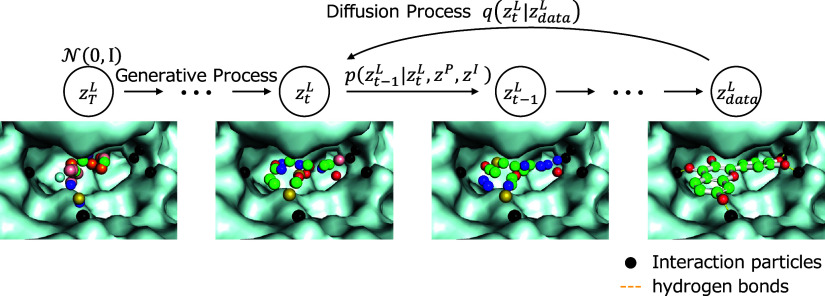
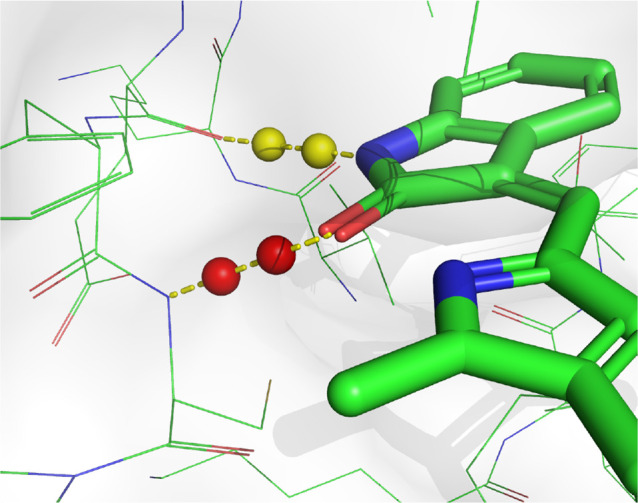
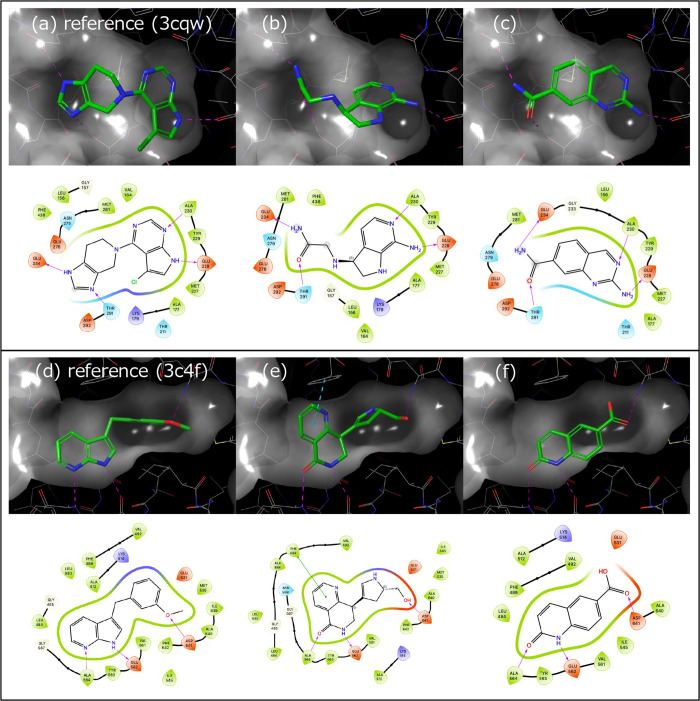
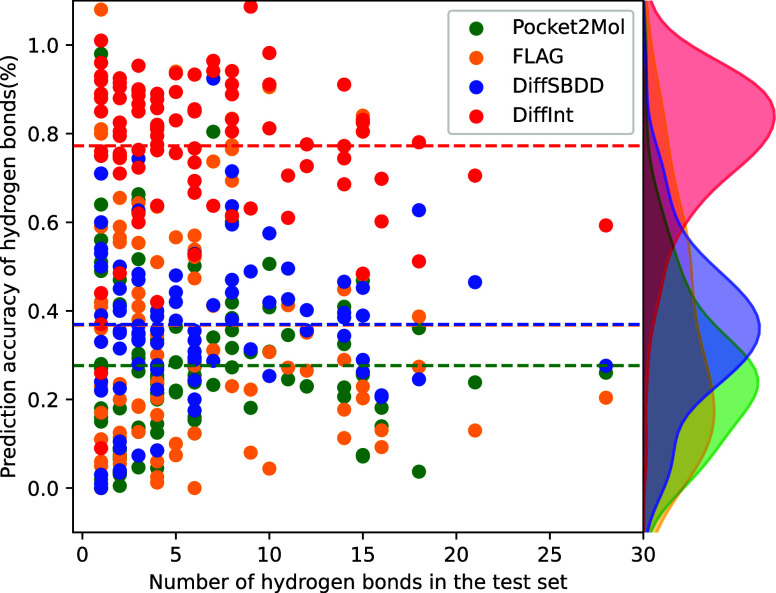
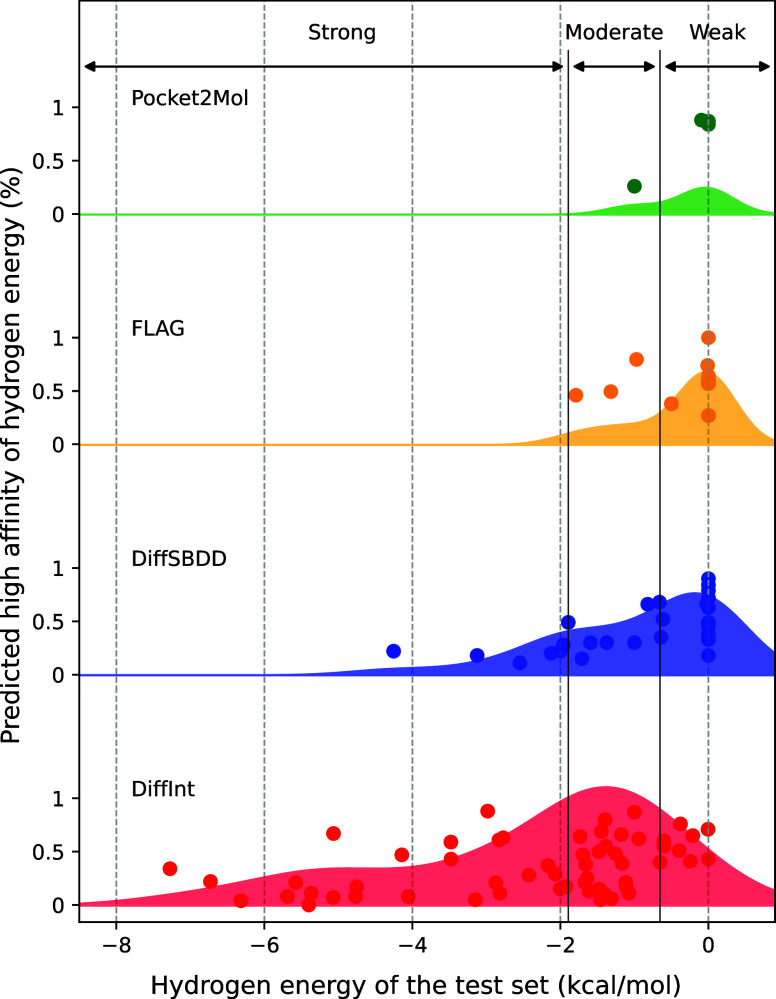
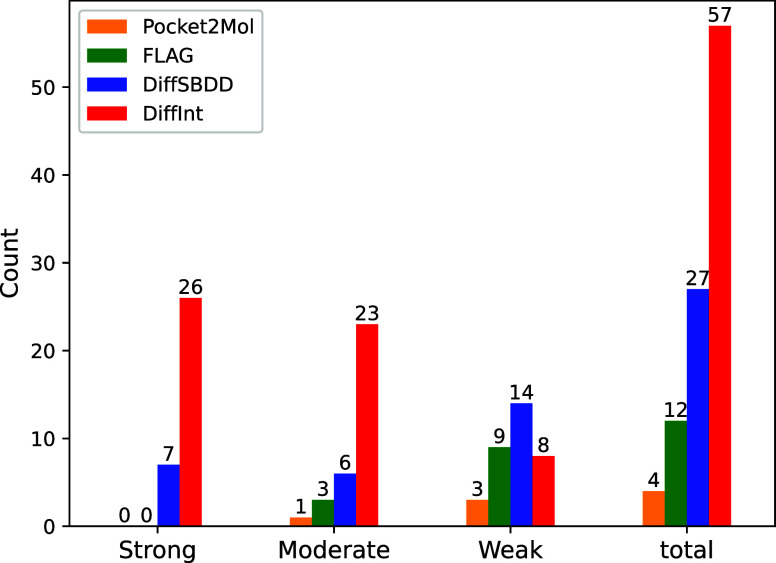
The design of drug molecules is a critical stage in the drug discovery process. The structure-based drug design has long played an important role in efficient development. Significant progress has been made in recent years in the generation of 3D molecules via deep generation models. However, while many existing models have succeeded in incorporating structural information on target proteins, they have not been able to address important interactions between protein and drug molecules, especially hydrogen bonds. In this study, we propose DiffInt as a novel structure-based approach that explicitly addresses interactions. The model naturally incorporates hydrogen bonds between protein and ligand molecules by treating them as pseudoparticles. The experimental results show that DiffInt reproduces hydrogen bonds, and the hydrogen binding energies significantly outperform those of existing models. To facilitate the use of our tool for generating new drug molecules based on any protein's three-dimensional structure, we have made the source code and trained model available on GitHub (https://github.com/sekijima-lab/DiffInt) under the MIT license, with the execution environment provided on Google Colab.
Overview
The claims and statistics of this paper haven’t been checked yet.
Run the check — free, no account needed. It reads the open-access text and checks the sources it cites.
Integrity signals
Registry
Cites
Statistics
Figures
Verification
Claims the paper makes
The claims and statistics of this paper haven’t been checked yet.
Run the check — free, no account needed. It reads the open-access text and checks the sources it cites.
Self-check
Percentages, sums and reported differences re-computed from the paper’s own numbers.
The self-check needs the paper’s full text.
Citations
Cites
Highly accurate protein structure prediction with AlphaFold
Jumper, J., Evans, R., Pritzel, A., Green, T., Figurnov, M., Ronneberger, O., Tunyasuvunakool, K., Bates, R., Žídek, A., Potapenko, A., et al. (2021) · Nature · doi:10.1038/s41586-021-03819-2 · Cited by 43,764
Denoising Diffusion Probabilistic Models
Ho, J., Jain, A., & Abbeel, P. (2020) · arXiv · doi:10.48550/arxiv.2006.11239 · Cited by 8,712
Accurate prediction of protein structures and interactions using a 3-track network
Baek, M., DiMaio, F., Anishchenko, I., Dauparas, J., Ovchinnikov, S., Lee, G. R., Wang, J., Cong, Q., Kinch, L. N., Schaeffer, R. D., et al. (2021) · doi:10.1101/2021.06.14.448402 · Cited by 5,549
Deep Unsupervised Learning using Nonequilibrium Thermodynamics
Sohl-Dickstein, J., Weiss, E. A., Maheswaranathan, N., & Ganguli, S. (2015) · arXiv · doi:10.48550/arxiv.1503.03585 · Cited by 2,637
Impact of high-throughput screening in biomedical research
Macarron, R., Banks, M. N., Bojanic, D., Burns, D. J., Cirovic, D. A., Garyantes, T., Green, D. V. S., Hertzberg, R. P., Janzen, W. P., Paslay, J. W., et al. (2011) · Nature Reviews Drug Discovery · doi:10.1038/nrd3368 · Cited by 1,364
Kühlbrandt, W. (2014) · Science · doi:10.1126/science.1251652 · Cited by 1,325
Bissantz, C., Folkers, G., & Rognan, D. (2000) · Journal of Medicinal Chemistry · doi:10.1021/jm001044l · Cited by 740
Deep learning for molecular design—a review of the state of the art
Elton, D. C., Boukouvalas, Z., Fuge, M. D., & Chung, P. W. (2019) · Molecular Systems Design & Engineering · doi:10.1039/c9me00039a · Cited by 683
Forging the basis for developing protein-ligand interaction scoring functions.
Liu, Z., Su, M., Han, L., Liu, J., Yang, Q., Li, Y., & Wang, R. (2017) · Accounts of Chemical Research · doi:10.1021/acs.accounts.6b00491 · Cited by 493
RELATION: A Deep Generative Model for Structure-Based De Novo Drug Design
Wang, M., Hsieh, C.-Y., Wang, J., Wang, D., Weng, G., Shen, C., Yao, X., Bing, Z., Li, H., Cao, D., et al. (2022) · Journal of Medicinal Chemistry · doi:10.1021/acs.jmedchem.2c00732 · Cited by 99
Research works printed but not linked: 75
- 10.1002/anie.198607673 · DOI
- 10.1038/326347a0 · DOI
- 10.1126/science.257.5073.1078 · DOI
- 10.1016/S0969-2126(00)00060-5 · DOI
- 10.1021/jm00090a001 · DOI
- 10.1007/BF00141577 · DOI
- 10.1021/ci950273r · DOI
- 10.1021/ci800064z · DOI
- 10.1021/ci800105p · DOI
- 10.1073/pnas.0604348103 · DOI
- 10.1016/S1359-6446(02)02483-2 · DOI
- 10.1038/nature03197 · DOI · Paper page
- 10.1093/nar/28.1.235 · DOI · Paper page
- 10.1021/jm030580l · DOI
- 10.1021/ci049714+ · DOI · Paper page
- 10.1093/nar/gkj067 · DOI · Paper page
- 10.1093/nar/gkp456 · DOI
- 10.1093/nar/gkr777 · DOI · Paper page
- 10.1038/181662a0 · DOI
- 10.1038/185416a0 · DOI
- 10.1017/S0033583500004297 · DOI
- 10.1126/science.abj8754 · DOI · Paper page
- 10.1038/s41592-022-01488-1 · DOI · Paper page
- 10.1007/s10822-013-9672-4 · DOI · Paper page
- 10.1021/ci00057a005 · DOI · Paper page
- 10.1088/2632-2153/aba947 · DOI
- 10.1021/acscentsci.7b00572 · DOI · Paper page
- Kusner M. J., 2017, International conference on machine learning, 1945
- Jin W., 2018, International conference on machine learning, 2323
- Guimaraes G. L., 2017, arXiv preprint arXiv:1705.10843 · arXiv
- De Cao N., 2018, arXiv preprint arXiv:1805.11973 · arXiv
- Madhawa K., 2019, arXiv preprint arXiv:1905.11600 · arXiv
- Shi C., 2020, arXiv preprint arXiv:2001.09382 · arXiv
- 10.1186/s13321-017-0235-x · DOI
- 10.1080/14686996.2017.1401424 · DOI
- 10.1186/s13321-021-00572-6 · DOI
- Honda S., 2019, arXiv preprint arXiv:1911.04738 · arXiv
- Dai H., 2018, arXiv preprint arXiv:1802.08786 · arXiv
- You J., 2018, Advances in neural information processing systems, 31
- Gebauer N., 2019, Advances in neural information processing systems, 32
- Simm G. N., 2019, arXiv preprint arXiv:1909.11459 · arXiv
- 10.1021/acs.jcim.1c00679 · DOI
- 10.1021/acsomega.3c05430 · DOI
- 10.1021/acs.jcim.0c01494 · DOI · Paper page
- 10.1021/acs.molpharmaceut.9b00634 · DOI
- 10.1039/D1SC05976A · DOI
- Peng X., 2022, International Conference on Machine Learning, 17644
- Zhang Z., 2023, Eleventh International Conference on Learning Representations
- 10.1039/D1SC04444C · DOI
- Hoogeboom E., 2022, International conference on machine learning, 8867
- Sohl-Dickstein J., 2015, International conference on machine learning, 2256
- Ho J., 2020, Advances in neural information processing systems, 33, 6840
- Schneuing A., 2022, arXiv preprint arXiv:2210.13695 · arXiv
- 10.1038/s41467-024-46569-1 · DOI
- 10.1021/acs.jcim.3c01466 · DOI · Paper page
- Guan J., 2023, Eleventh International Conference on Learning Representations
- 10.1038/s42256-024-00815-9 · DOI
- 10.1021/jm00145a002 · DOI
- 10.1002/(SICI)1096-987X(19981115)19:14<1639::AID-JCC10>3.0.CO;2-B · DOI
- 10.1006/jmbi.1999.3371 · DOI
- Kingma D., 2021, Advances in neural information processing systems, 34, 21696
- 10.1021/acs.jcim.0c00411 · DOI
- Luo S., 2021, Advances in Neural Information Processing Systems, 34, 6229
- 10.1038/nbt.3988 · DOI · Paper page
- 10.1186/s13321-015-0078-2 · DOI
- 10.1021/jm0306430 · DOI · Paper page
- 10.1021/jm051256o · DOI
- 10.1021/acs.jcim.8b00673 · DOI
- 10.1038/nchem.1243 · DOI
- 10.1186/1758-2946-1-8 · DOI · Paper page
- 10.1021/ci990307l · DOI
- 10.1021/cc9800071 · DOI
- 10.1016/S0169-409X(96)00423-1 · DOI
- 10.1186/s13321-015-0069-3 · DOI
- 10.1016/j.bspc.2021.102704 · DOI
Metadata
- Authors
- Sako, M., Yasuo, N., & Sekijima, M.
- Affiliations
- Institute of Science Tokyo (JP)
- Corresponding author
- Sekijima, Masakazu
- Venue
- Journal of Chemical Information and Modeling
- Publisher
- American Chemical Society (ACS)
- Published
- 2024-12-19
- Volume
- 65
- Issue
- 1
- Pages
- 71-82
- ISSN
- 1549-9596 (ISSN-L)
- 1549-960X
- PMC
- PMC11733934
- OpenAlex
- W4405592636
- Cited by
- 21
- References
- 10
- Citations by year
- 2026: 15 · 2025: 5 · 2024: 1
- FWCI
- 4.45
- Type
- journal article
- Language
- en
- Open access
- hybrid
- doi.org
- Licence
- Locations
- Journal of Chemical Information and Modeling (publishedVersion, cc-by)
- ChemRxiv (acceptedVersion, cc-by-nc-nd)
- PubMed Central (publishedVersion, cc-by)
- PubMed (publishedVersion)
- Funders
- Japan Agency for Medical Research and Development (JP24ama121026)
- Japan Society for the Promotion of Science (JP20H00620, JP24H01760)
- Topics
- Life Sciences › Pharmacology, Toxicology and Pharmaceutics › Drug Discovery › Computational Drug Discovery Methods
- Life Sciences › Biochemistry, Genetics and Molecular Biology › Molecular Biology › Protein Degradation and Inhibitors
- Physical Sciences › Materials Science › Materials Chemistry › Machine Learning in Materials Science
- Keywords
- structure-based drug design, diffusion models, 3D molecule generation, hydrogen bonding, protein-ligand interactions, hydrogen binding energy, pseudoparticles
- MeSH terms
- Diffusion, Hydrogen Bonding, Ligands, Models, Molecular, Protein Conformation, Proteins, Software, Drug Design
About these checks
Registry, retraction, Cites and statistics results are computed, not judged, with one exception: a printed reference that no index lists is read once by a model before it counts as a citation error. Claims are extracted by a model and kept only when their quote appears verbatim in the text; each cited source is then checked, with a model’s help, for whether it says what the claim relies on. Those verdicts can be wrong — read the claim’s quote and the cited source before relying on one.
Statistics and arithmetic are recomputed, not judged.
Confidence bands are shown only for fields calibrated on our annotated test set. None is calibrated yet, so no band is shown.
What counts as a claim ›How we measure confidence ›How we check this ›
Are you an author, or do you see a problem with this page? Request a review
How to cite
Cite CoChat for the checks on this page, and the paper for its own findings.
- This page
- CoChat. (2026). Citation check: DiffInt: A Diffusion Model for Structure-Based Drug Design with Explicit Hydrogen Bond Interaction Guidance. https://app.cochat.ai/papers/10.1021/acs.jcim.4c01385
- The paper
- Sako, M., Yasuo, N., & Sekijima, M. (2025). DiffInt: A Diffusion Model for Structure-Based Drug Design with Explicit Hydrogen Bond Interaction Guidance. Journal of Chemical Information and Modeling. https://doi.org/10.1021/acs.jcim.4c01385
