

The DOI matches its Crossref record; 43 of the 43 references it cites were found in a registry or an index.
Mcl-1-dependent activation of Beclin 1 mediates autophagic cell death induced by sorafenib and SC-59 in hepatocellular carcinoma cells
Open accessAbstract
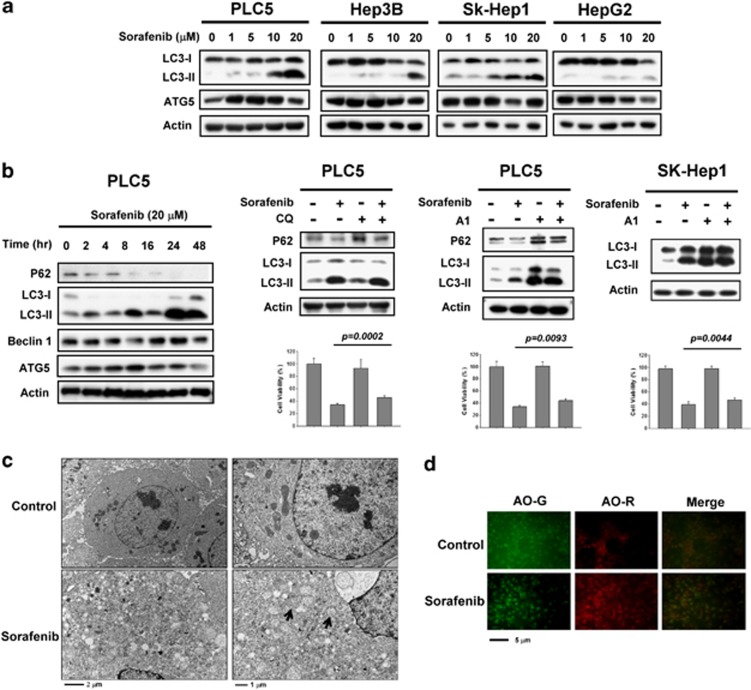
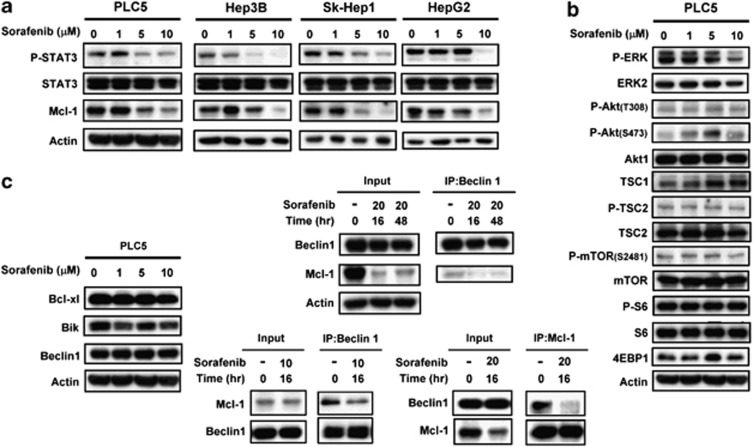
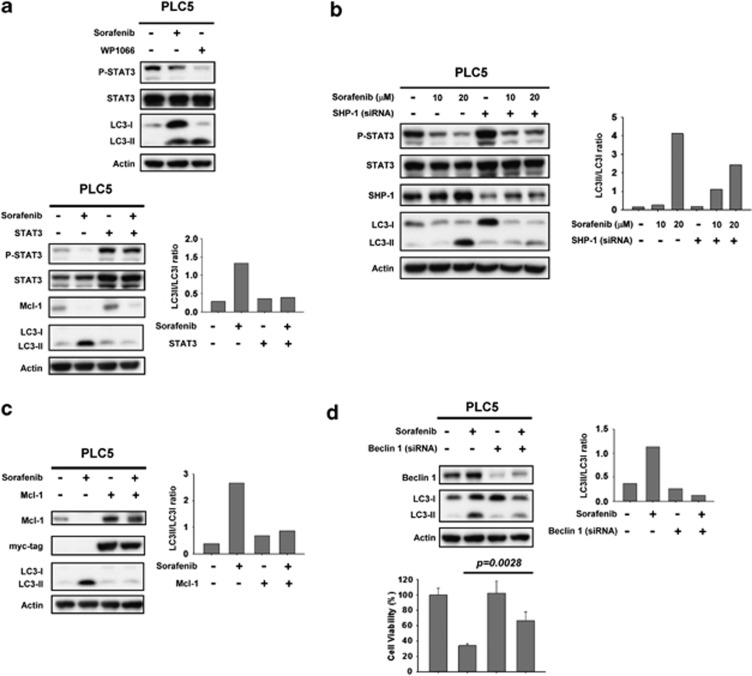
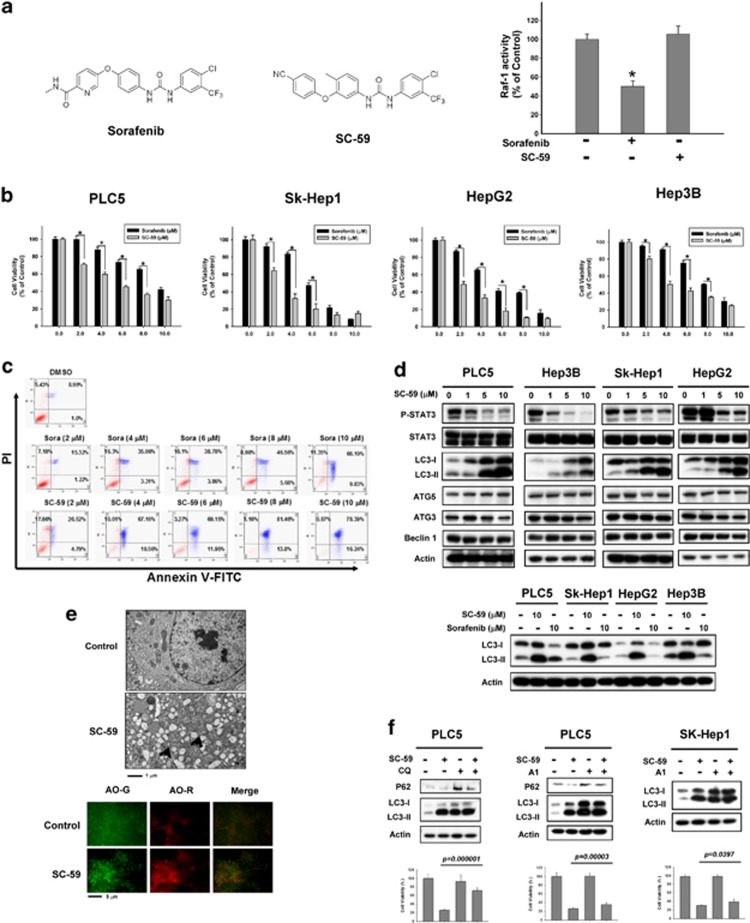
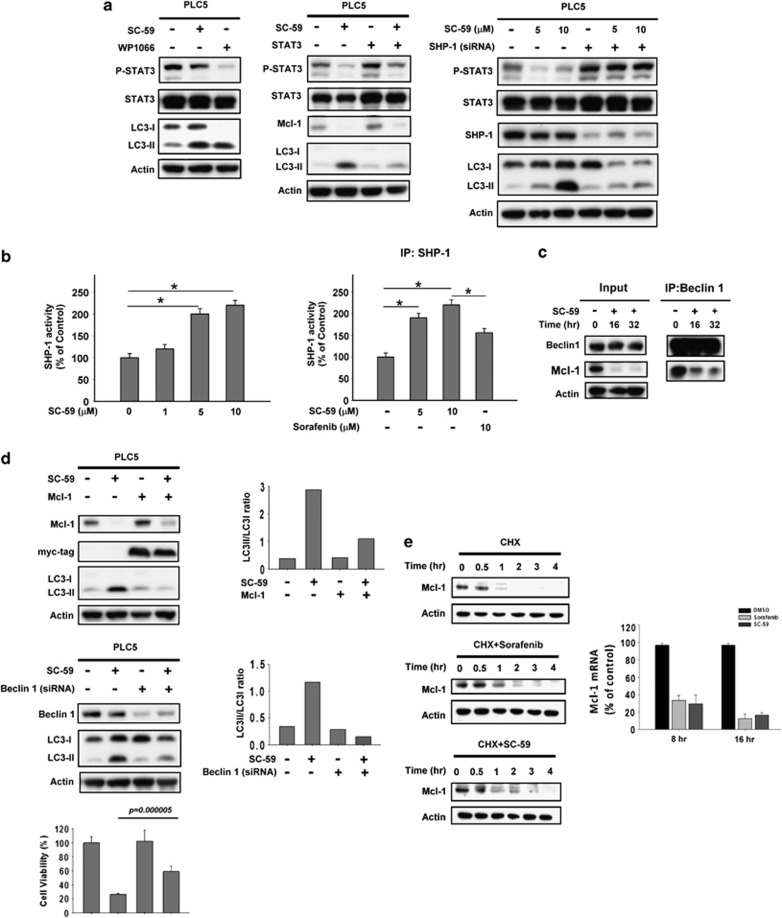
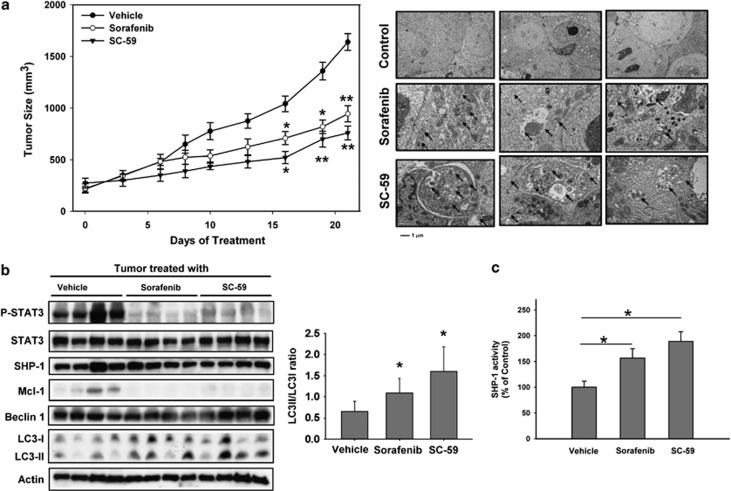
We investigated the molecular mechanisms underlying the effect of sorafenib and SC-59, a novel sorafenib derivative, on hepatocellular carcinoma (HCC). Sorafenib activated autophagy in a dose- and time-dependent manner in the HCC cell lines PLC5, Sk-Hep1, HepG2 and Hep3B. Sorafenib downregulated phospho-STAT3 (P-STAT3) and subsequently reduced the expression of myeloid cell leukemia-1 (Mcl-1). Inhibition of Mcl-1 by sorafenib resulted in disruption of the Beclin 1-Mcl-1 complex; however, sorafenib did not affect the amount of Beclin 1, suggesting that sorafenib treatment released Beclin 1 from binding with Mcl-1. Silencing of SHP-1 by small interference RNA (siRNA) reduced the effect of sorafenib on P-STAT3 and autophagy. Ectopic expression of Mcl-1 abolished the effect of sorafenib on autophagy. Knockdown of Beclin 1 by siRNA protected the cells from sorafenib-induced autophagy. Moreover, SC-59, a sorafenib derivative, had a more potent effect on cancer cell viability than sorafenib. SC-59 downregulated P-STAT3 and induced autophagy in all tested HCC cell lines. Furthermore, our in vivo data showed that both sorafenib and SC-59 inhibited tumor growth, downregulated P-STAT3, enhanced the activity of SHP-1 and induced autophagy in PLC5 tumors, suggesting that sorafenib and SC-59 activate autophagy in HCC. In conclusion, sorafenib and SC-59 induce autophagy in HCC through a SHP-1-STAT3-Mcl-1-Beclin 1 pathway.
Overview
The claims and statistics of this paper haven’t been checked yet.
Run the check — free, no account needed. It reads the open-access text and checks the sources it cites.
Integrity signals
Registry
Cites
Statistics
Figures
Verification
Claims the paper makes
The claims and statistics of this paper haven’t been checked yet.
Run the check — free, no account needed. It reads the open-access text and checks the sources it cites.
Claims other papers make about this one
Each is checked against this paper’s own text: does it say what the citing paper says it does?
The cited source says what the claim attributes to it.
In the citing paper
“Sorafenib, a small-molecule kinase insert domain receptor inhibitor, activates autophagy in multiple liver cancer cell lines through targeting STAT3 and reducing MCL1 expression (Tai et al., 2013).”
From Targeting Janus Kinases and Signal Transducer and Activator of Transcription 3 To Treat Inflammation, Fibrosis, and Cancer: Rationale, Progress, and Caution (2020) · cites this paper as Tai et al., 2013
Self-check
Percentages, sums and reported differences re-computed from the paper’s own numbers.
The self-check needs the paper’s full text.
Citations
Cites
Sorafenib in advanced hepatocellular carcinoma
Llovet, J. M., Ricci, S., Mazzaferro, V., Hilgard, P., Gane, E., Blanc, J.-F., de Oliveira, A. C., Santoro, A., Raoul, J.-L., Forner, A., et al. (2008) · New England Journal of Medicine · doi:10.1056/nejmoa0708857 · Cited by 13,097
Cheng, A.-L., Kang, Y.-K., Chen, Z., Tsao, C.-J., Qin, S., Kim, J. S., Luo, R., Feng, J., Ye, S., Yang, T.-S., et al. (2009) · The Lancet Oncology · doi:10.1016/s1470-2045(08)70285-7 · Cited by 5,832
Self-citationSorafenib in Advanced Hepatocellular Carcinoma
정, 재. (2008) · Cited by 5,586
Autophagy: process and functionPreprint
Mizushima, N. (2007) · Genes & Development · doi:10.1101/gad.1599207 · Cited by 4,104
Self-eating and self-killing: crosstalk between autophagy and apoptosis
Maiuri, M. C., Zalckvar, E., Kimchi, A., & Kroemer, G. (2007) · Nature Reviews Molecular Cell Biology · doi:10.1038/nrm2239 · Cited by 3,638
Bcl-2 Antiapoptotic Proteins Inhibit Beclin 1-Dependent Autophagy
Pattingre, S., Tassa, A., Qu, X., Garuti, R., Liang, X. H., Mizushima, N., Packer, M., Schneider, M. D., & Levine, B. (2005) · Cell · doi:10.1016/j.cell.2005.07.002 · Cited by 3,536
The Beclin 1 network regulates autophagy and apoptosis
Kang, R., Zeh, H. J., Lotze, M. T., & Tang, D. (2011) · Cell Death & Differentiation · doi:10.1038/cdd.2010.191 · Cited by 2,485
Liu, L., Cao, Y., Chen, C., Zhang, X., McNabola, A., Wilkie, D. P., Wilhelm, S. M., Lynch, M. J., & Carter, C. (2006) · Cancer Research · doi:10.1158/0008-5472.can-06-1377 · Cited by 1,539
Functional and physical interaction between Bcl‐XL and a BH3‐like domain in Beclin‐1
Maiuri, M. C., Toumelin-Braizat, G. L., Criollo, A., Rain, J., Gautier, F., Juin, P. P., Tasdemir, E., Pierron, G., Troulinaki, K., Tavernarakis, N., et al. (2007) · The EMBO Journal · doi:10.1038/sj.emboj.7601689 · Cited by 1,154
Another way to die: autophagic programmed cell death
Tsujimoto, Y., & Shimizu, S. (2005) · Cell Death and Differentiation · doi:10.1038/sj.cdd.4401777 · Cited by 765
Canonical and non-canonical autophagy: variations on a common theme of self-eating?
Codogno, P., Mehrpour, M., & Proikas‐Cezanne, T. (2011) · Nature Reviews Molecular Cell Biology · doi:10.1038/nrm3249 · Cited by 565
Maiuri, M. C., Criollo, A., Tasdemir, E., Vicencio, J. M., Tajeddine, N., Hickman, J. A., Geneste, O., & Kroemer, G. (2007) · Autophagy · doi:10.4161/auto.4237 · Cited by 450
p62 targeting to the autophagosome formation site requires self-oligomerization but not LC3 binding
Itakura, E., & Mizushima, N. (2011) · The Journal of Cell Biology · doi:10.1083/jcb.201009067 · Cited by 430
Bcl-2:Beclin 1 complex: multiple, mechanisms regulating autophagy/apoptosis toggle switch.
Marquez, R. T., & Xu, L. (2012) · PubMed · Cited by 364
Shi, Y., Ding, Z.-B., Zhou, J., Hui, B., Shi, G.-M., Ke, A., Wang, X.-Y., Dai, Z., Peng, Y.-F., Gu, C.-Y., et al. (2011) · Autophagy · doi:10.4161/auto.7.10.16818 · Cited by 343
Zhang, Q., Wang, H. Y., Marzec, M., Raghunath, P. N., Nagasawa, T., & Wasik, M. A. (2005) · Proceedings of the National Academy of Sciences · doi:10.1073/pnas.0501959102 · Cited by 270
Shimizu, S., Takehara, T., Hikita, H., Kodama, T., Tsunematsu, H., Miyagi, T., Hosui, A., Ishida, H., Tatsumi, T., Kanto, T., et al. (2011) · International Journal of Cancer · doi:10.1002/ijc.26374 · Cited by 269
Gender Disparity of Hepatocellular Carcinoma: The Roles of Sex Hormones
Yeh, S., & Chen, P. (2010) · Oncology · doi:10.1159/000315247 · Cited by 261
Self-citationZalckvar, E., Berissi, H., Eisenstein, M., & Kimchi, A. (2009) · Autophagy · doi:10.4161/auto.5.5.8625 · Cited by 254
Crosstalk between apoptosis and autophagy within the Beclin 1 interactome
Maiuri, M. C., Criollo, A., & Kroemer, G. (2010) · The EMBO Journal · doi:10.1038/emboj.2009.377 · Cited by 247
Wang, S., Yeh, S., Lin, W., Wang, H., Chen, D., & Chen, P. (2009) · Hepatology · doi:10.1002/hep.23163 · Cited by 188
Self-citationChen, K., Tai, W., Liu, T., Huang, H., Lin, Y.-C., Shiau, C., Li, P., Chen, P., & Cheng, A. (2010) · Clinical Cancer Research · doi:10.1158/1078-0432.ccr-09-3389 · Cited by 176
Self-citationYoon, S., Woo, S. U., Kang, J. H., Kim, K., Kwon, M.-H., Park, S., Shin, H.-J., Gwak, H.-S., & Chwae, Y.-J. (2010) · Autophagy · doi:10.4161/auto.6.8.13547 · Cited by 163 · cited 1×
“activated STAT3 was also observed in cells treated with rapamycin or under starvation to promote the autophagic process.(37) We found that WP1066, a specific JAK/STAT3”
BackgroundMCL‐1 is a stress sensor that regulates autophagy in a developmentally regulated manner
Germain, M., Nguyen, A. P., Le Grand, J. N., Arbour, N., Vanderluit, J. L., Park, D. S., Opferman, J. T., & Slack, R. S. (2011) · The EMBO Journal · doi:10.1038/emboj.2010.327 · Cited by 159
Tai, W., Cheng, A., Shiau, C., Huang, H., Huang, J., Chen, P., & Chen, K. (2011) · Journal of Hepatology · doi:10.1016/j.jhep.2011.01.047 · Cited by 158
Self-citationTai, W., Cheng, A., Shiau, C., Liu, C., Ko, C.-H., Lin, M.-W., Chen, P., & Chen, K. (2011) · Molecular Cancer Therapeutics · doi:10.1158/1535-7163.mct-11-0412 · Cited by 121
Self-citationChanging disease burden of hepatocellular carcinoma in the Far East and Southeast Asia
Kao, J., & Chen, D. (2005) · Liver International · doi:10.1111/j.1478-3231.2005.01139.x · Cited by 120
Blechacz, B. R. A., Smoot, R. L., Bronk, S. F., Werneburg, N. W., Sirica, A. E., & Gores, G. J. (2009) · Hepatology · doi:10.1002/hep.23214 · Cited by 116
Chen, K., Yeh, P.-Y., Yeh, K., Lu, Y., Huang, S., & Cheng, A. (2008) · Cancer Research · doi:10.1158/0008-5472.can-08-0257 · Cited by 114
Self-citationChemoembolization for intermediate HCC: Is there proof of survival benefit?
Forner, A., Llovet, J. M., & Bruix, J. (2011) · Journal of Hepatology · doi:10.1016/j.jhep.2011.08.017 · Cited by 108
Chen, P., Yeh, S., Liu, W.-H., Lin, C.-C., Huang, H., Chen, C., Chen, D., & Chen, P. (2012) · Hepatology · doi:10.1002/hep.25695 · Cited by 107
Self-citationRecent Advances in the Research of Hepatitis B Virus-Related Hepatocellular Carcinoma
Kao, J., Chen, P., & Chen, D. (2010) · Advances in cancer research · doi:10.1016/b978-0-12-380888-2.00002-9 · Cited by 93
Self-citationBlockade of STAT3 activation by sorafenib derivatives through enhancing SHP-1 phosphatase activity
Chen, K., Tai, W., Hsu, C.-Y., Huang, J., Liu, C., Chen, P., Kim, I., & Shiau, C. (2012) · European Journal of Medicinal Chemistry · doi:10.1016/j.ejmech.2012.07.023 · Cited by 89
Self-citationAutophagy and Cell Death: No Longer at Odds
Bergmann, A. (2007) · Cell · doi:10.1016/j.cell.2007.11.027 · Cited by 84
Chen, K., Yeh, P.-Y., Hsu, C., Hsu, C., Lu, Y., Hsieh, H., Chen, P., & Cheng, A. (2009) · Journal of Biological Chemistry · doi:10.1074/jbc.m806268200 · Cited by 82
Self-citationShen, Y., Hsu, C., & Cheng, A. (2010) · Journal of Gastroenterology · doi:10.1007/s00535-010-0270-0 · Cited by 71
Self-citationObatoclax and Lapatinib Interact to Induce Toxic Autophagy through NOXA
Tang, Y., Hamed, H. A., Cruickshanks, N. A., Fisher, P. B., Grant, S., & Dent, P. (2012) · Molecular Pharmacology · doi:10.1124/mol.111.076851 · Cited by 59
Hcc Surveillance: Who Is the Target Population?
Bruix, J., & Llovet, J. M. (2003) · Hepatology · doi:10.1053/jhep.2003.50142 · Cited by 52
Roles of mTOR and STAT3 in Autophagy Induced by Telomere 3' Overhang-Specific DNA Oligonucleotides
Yokoyama, T., Kondo, Y., & Kondo, S. (2007) · Autophagy · doi:10.4161/auto.4602 · Cited by 48
Ku, B., Woo, J., Liang, C., Lee, K.-H., Jung, J. U., & Oh, B. (2008) · Autophagy · doi:10.4161/auto.5846 · Cited by 45
Targeting STAT3 in hepatocellular carcinoma: Sorafenib again…
Rosmorduc, O., & Desbois‐Mouthon, C. (2011) · Journal of Hepatology · doi:10.1016/j.jhep.2011.06.005 · Cited by 36
Sorafenib derivatives induce apoptosis through inhibition of STAT3 independent of Raf
Chen, K., Tai, W., Huang, J., Hsu, C.-Y., Chen, W., Cheng, A., Chen, P., & Shiau, C. (2011) · European Journal of Medicinal Chemistry · doi:10.1016/j.ejmech.2011.04.007 · Cited by 34
Self-citationDavid, R. (2012) · Nature Reviews Molecular Cell Biology · doi:10.1038/nrm3287 · Cited by 11
Cited by
Sorted by citations
Autophagy and chemotherapy resistance: a promising therapeutic target for cancer treatment
Sui, X., Chen, R. B., Wang, Z., Huang, Z., Kong, N., Zhang, M., Han, W., Lou, F., Yang, J., Zhang, Q., et al. (2013) · Cell Death and Disease · doi:10.1038/cddis.2013.350 · Cited by 1,255
Tang, W., Chen, Z., Zhang, W., Cheng, Y., Zhang, B., Wu, F., Wang, Q., Wang, S., Rong, D., Reiter, F. P., et al. (2020) · Signal Transduction and Targeted Therapy · doi:10.1038/s41392-020-0187-x · Cited by 997
Broad targeting of resistance to apoptosis in cancer
Mohammad, R. M., Muqbil, I., Lowe, L. J., Yedjou, C. G., Hsu, H.-Y., Lin, L., Siegelin, M. D., Fimognari, C., Kumar, N. B., Dou, Q. P., et al. (2015) · Seminars in Cancer Biology · doi:10.1016/j.semcancer.2015.03.001 · Cited by 897
The role of STAT3 in autophagy
You, L., Wang, Z., Li, H., Shou, J., Jing, Z., Xie, J., Sui, X., Pan, H., & Han, W. (2015) · Autophagy · doi:10.1080/15548627.2015.1017192 · Cited by 515
Qu, Y., Zhang, Q., Cai, X., Li, F., Ma, Z., Xu, M., & Lu, L. (2017) · Journal of Cellular and Molecular Medicine · doi:10.1111/jcmm.13170 · Cited by 391
Metadata
- Authors
- Tai, W.-T., Shiau, C.-W., Chen, H.-L., Liu, C.-Y., Lin, C.-S., Cheng, A.-L., Chen, P.-J., & Chen, K.-F.
- Affiliations
- National Taiwan University Hospital (TW)
- National Yang Ming University (TW)
- Taipei Veterans General Hospital (TW)
- National Taiwan University (TW)
- Corresponding author
- Chen, K-F
- Venue
- Cell Death & Disease
- Published
- 2013-02-07
- Volume
- 4
- Issue
- 2
- Pages
- e485-e485
- ISSN
- 2041-4889 (ISSN-L)
- PMC
- PMC3734819
- OpenAlex
- W2076745136
- Cited by
- 202
- References
- 43
- Citations by year
- 2026: 3 · 2025: 8 · 2024: 15 · 2023: 13 · 2022: 10 · 2021: 20 · 2020: 21 · 2019: 16 · 2018: 24 · 2017: 19 · 2016: 12 · 2015: 17 · 2014: 16 · 2013: 7
- FWCI
- 12.65
- Type
- journal article
- Language
- en
- Open access
- gold
- doi.org
- Licence
- cc-by-nc-nd
- www.springer.com/tdm (unspecified)
- Locations
- Cell Death and Disease (publishedVersion, cc-by-nc-nd)
- Europe PMC (PubMed Central) (publishedVersion, cc-by-nc-nd)
- PubMed Central (publishedVersion, cc-by-nc-nd)
- PubMed (publishedVersion)
- Funders
- National Science Council (100-2325-B-002 -032)
- National Taiwan University Hospital (NTUH 101P01)
- National Taiwan University
- Topics
- Life Sciences › Biochemistry, Genetics and Molecular Biology › Cell Biology › Autophagy in Disease and Therapy
- Health Sciences › Medicine › Hepatology › Hepatocellular Carcinoma Treatment and Prognosis
- Life Sciences › Biochemistry, Genetics and Molecular Biology › Molecular Biology › Cell death mechanisms and regulation
- Keywords
- sorafenib, hepatocellular carcinoma, autophagy, autophagic cell death, Beclin-1, Mcl-1, STAT3, SHP-1, anticancer agents
- MeSH terms
- Beclin-1, Sorafenib, Animals, Antineoplastic Agents, Carcinoma, Hepatocellular, Humans, Liver Neoplasms, Membrane Proteins, Mice, Nude, Niacinamide, Phenylurea Compounds, Phosphorylation, Transplantation, Heterologous, Down-Regulation, Apoptosis, Proto-Oncogene Proteins c-bcl-2, RNA Interference, RNA, Small Interfering, Cell Line, Tumor, STAT3 Transcription Factor, Apoptosis Regulatory Proteins, Mice, Protein Tyrosine Phosphatase, Non-Receptor Type 6, Hep G2 Cells, Myeloid Cell Leukemia Sequence 1 Protein
About these checks
Registry, retraction, Cites and statistics results are computed, not judged, with one exception: a printed reference that no index lists is read once by a model before it counts as a citation error. Claims are extracted by a model and kept only when their quote appears verbatim in the text; each cited source is then checked, with a model’s help, for whether it says what the claim relies on. Those verdicts can be wrong — read the claim’s quote and the cited source before relying on one.
Statistics and arithmetic are recomputed, not judged.
Confidence bands are shown only for fields calibrated on our annotated test set. None is calibrated yet, so no band is shown.
What counts as a claim ›How we measure confidence ›How we check this ›
Are you an author, or do you see a problem with this page? Request a review
