

The DOI matches its Crossref record; 43 of the 43 references it cites were found in a registry or an index.
Mcl-1-dependent activation of Beclin 1 mediates autophagic cell death induced by sorafenib and SC-59 in hepatocellular carcinoma cells
Open accessAbstract
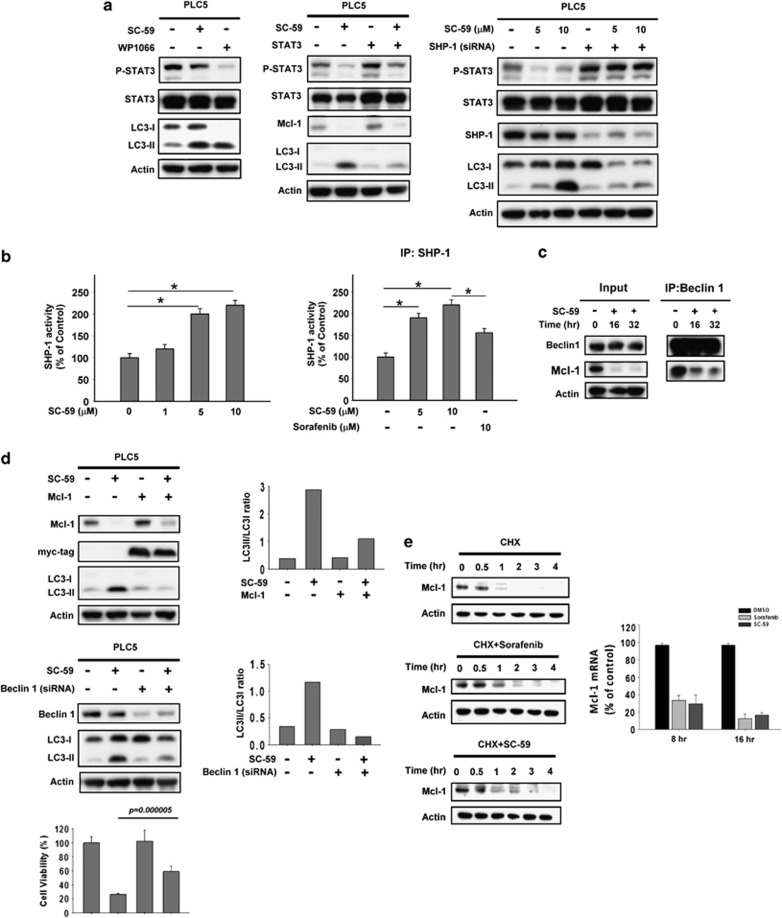
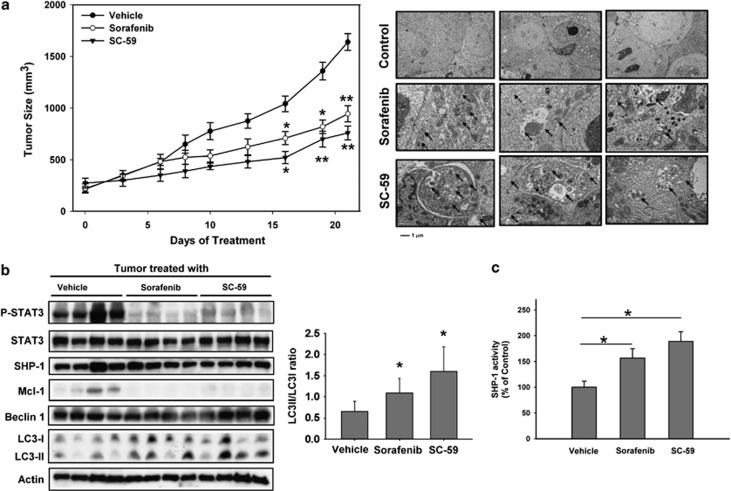
We investigated the molecular mechanisms underlying the effect of sorafenib and SC-59, a novel sorafenib derivative, on hepatocellular carcinoma (HCC). Sorafenib activated autophagy in a dose- and time-dependent manner in the HCC cell lines PLC5, Sk-Hep1, HepG2 and Hep3B. Sorafenib downregulated phospho-STAT3 (P-STAT3) and subsequently reduced the expression of myeloid cell leukemia-1 (Mcl-1). Inhibition of Mcl-1 by sorafenib resulted in disruption of the Beclin 1-Mcl-1 complex; however, sorafenib did not affect the amount of Beclin 1, suggesting that sorafenib treatment released Beclin 1 from binding with Mcl-1. Silencing of SHP-1 by small interference RNA (siRNA) reduced the effect of sorafenib on P-STAT3 and autophagy. Ectopic expression of Mcl-1 abolished the effect of sorafenib on autophagy. Knockdown of Beclin 1 by siRNA protected the cells from sorafenib-induced autophagy. Moreover, SC-59, a sorafenib derivative, had a more potent effect on cancer cell viability than sorafenib. SC-59 downregulated P-STAT3 and induced autophagy in all tested HCC cell lines. Furthermore, our in vivo data showed that both sorafenib and SC-59 inhibited tumor growth, downregulated P-STAT3, enhanced the activity of SHP-1 and induced autophagy in PLC5 tumors, suggesting that sorafenib and SC-59 activate autophagy in HCC. In conclusion, sorafenib and SC-59 induce autophagy in HCC through a SHP-1-STAT3-Mcl-1-Beclin 1 pathway.
Overview
The claims and statistics of this paper haven’t been checked yet.
Run the check — free, no account needed. It reads the open-access text and checks the sources it cites.
Integrity signals
Registry
Cites
Statistics
Figures
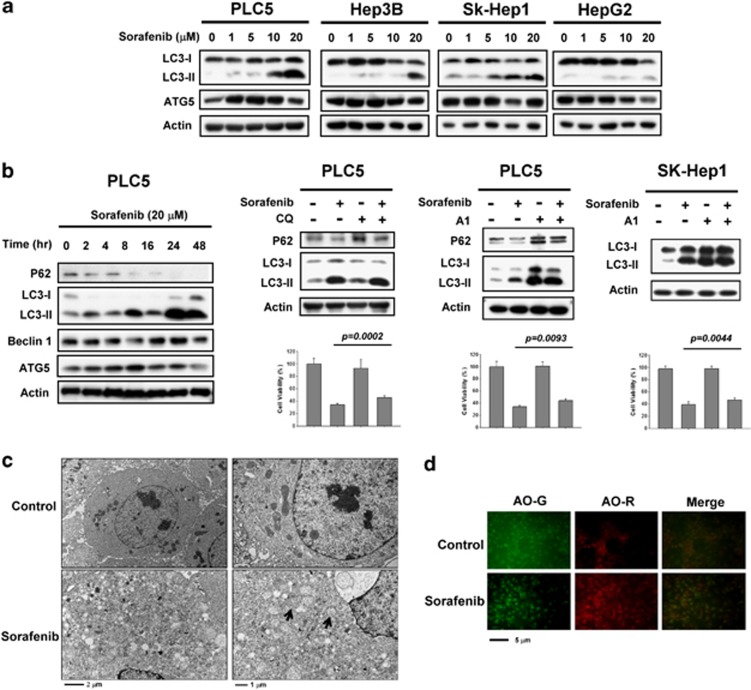
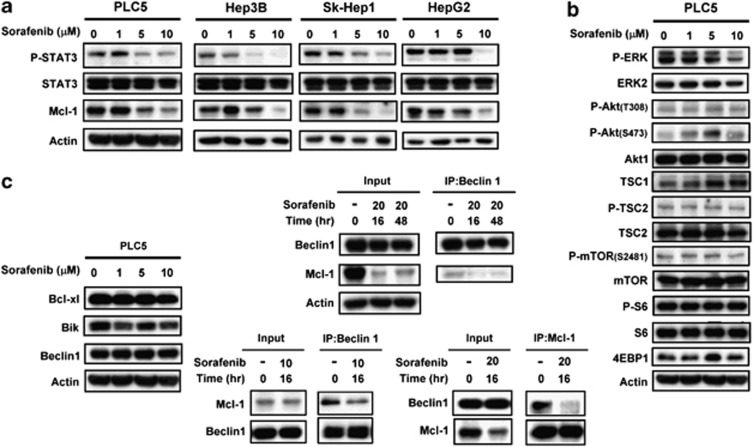
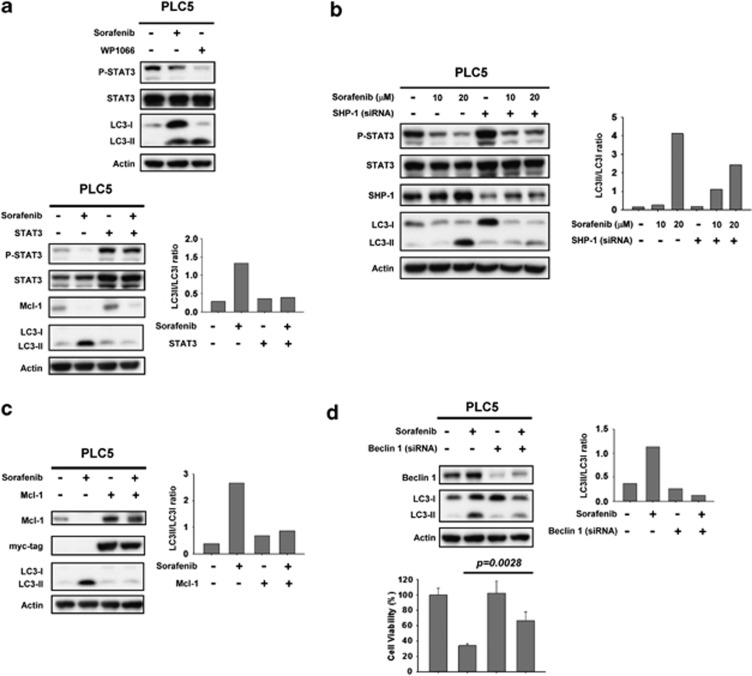
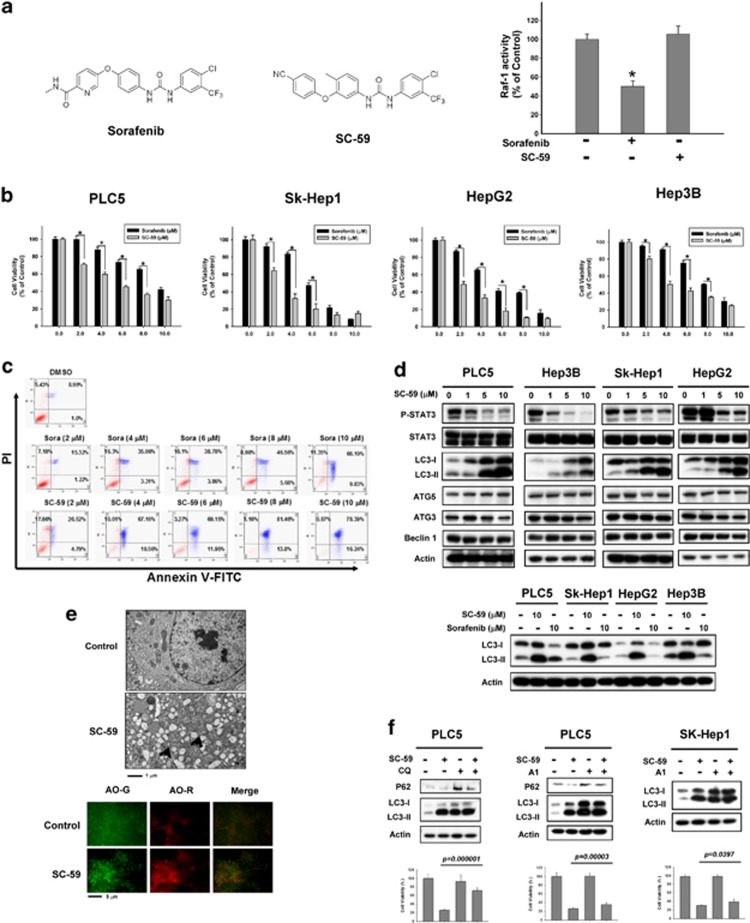
Verification
Claims the paper makes
The claims and statistics of this paper haven’t been checked yet.
Run the check — free, no account needed. It reads the open-access text and checks the sources it cites.
Claims other papers make about this one
Each is checked against this paper’s own text: does it say what the citing paper says it does?
The cited source says what the claim attributes to it.
In the citing paper
“Sorafenib, a small-molecule kinase insert domain receptor inhibitor, activates autophagy in multiple liver cancer cell lines through targeting STAT3 and reducing MCL1 expression (Tai et al., 2013).”
From Targeting Janus Kinases and Signal Transducer and Activator of Transcription 3 To Treat Inflammation, Fibrosis, and Cancer: Rationale, Progress, and Caution (2020) · cites this paper as Tai et al., 2013
Self-check
Percentages, sums and reported differences re-computed from the paper’s own numbers.
The self-check needs the paper’s full text.
Citations
Cites
Sorafenib in advanced hepatocellular carcinoma
Llovet, J. M., Ricci, S., Mazzaferro, V., Hilgard, P., Gane, E., Blanc, J.-F., de Oliveira, A. C., Santoro, A., Raoul, J.-L., Forner, A., et al. (2008) · New England Journal of Medicine · doi:10.1056/nejmoa0708857 · Cited by 13,097
Cheng, A.-L., Kang, Y.-K., Chen, Z., Tsao, C.-J., Qin, S., Kim, J. S., Luo, R., Feng, J., Ye, S., Yang, T.-S., et al. (2009) · The Lancet Oncology · doi:10.1016/s1470-2045(08)70285-7 · Cited by 5,832
Self-citationSorafenib in Advanced Hepatocellular Carcinoma
정, 재. (2008) · Cited by 5,586
Autophagy: process and functionPreprint
Mizushima, N. (2007) · Genes & Development · doi:10.1101/gad.1599207 · Cited by 4,104
Self-eating and self-killing: crosstalk between autophagy and apoptosis
Maiuri, M. C., Zalckvar, E., Kimchi, A., & Kroemer, G. (2007) · Nature Reviews Molecular Cell Biology · doi:10.1038/nrm2239 · Cited by 3,638
Bcl-2 Antiapoptotic Proteins Inhibit Beclin 1-Dependent Autophagy
Pattingre, S., Tassa, A., Qu, X., Garuti, R., Liang, X. H., Mizushima, N., Packer, M., Schneider, M. D., & Levine, B. (2005) · Cell · doi:10.1016/j.cell.2005.07.002 · Cited by 3,536
The Beclin 1 network regulates autophagy and apoptosis
Kang, R., Zeh, H. J., Lotze, M. T., & Tang, D. (2011) · Cell Death & Differentiation · doi:10.1038/cdd.2010.191 · Cited by 2,485
Liu, L., Cao, Y., Chen, C., Zhang, X., McNabola, A., Wilkie, D. P., Wilhelm, S. M., Lynch, M. J., & Carter, C. (2006) · Cancer Research · doi:10.1158/0008-5472.can-06-1377 · Cited by 1,539
Functional and physical interaction between Bcl‐XL and a BH3‐like domain in Beclin‐1
Maiuri, M. C., Toumelin-Braizat, G. L., Criollo, A., Rain, J., Gautier, F., Juin, P. P., Tasdemir, E., Pierron, G., Troulinaki, K., Tavernarakis, N., et al. (2007) · The EMBO Journal · doi:10.1038/sj.emboj.7601689 · Cited by 1,154
Another way to die: autophagic programmed cell death
Tsujimoto, Y., & Shimizu, S. (2005) · Cell Death and Differentiation · doi:10.1038/sj.cdd.4401777 · Cited by 765
Cited by
Sorted by citations
Autophagy and chemotherapy resistance: a promising therapeutic target for cancer treatment
Sui, X., Chen, R. B., Wang, Z., Huang, Z., Kong, N., Zhang, M., Han, W., Lou, F., Yang, J., Zhang, Q., et al. (2013) · Cell Death and Disease · doi:10.1038/cddis.2013.350 · Cited by 1,255
Tang, W., Chen, Z., Zhang, W., Cheng, Y., Zhang, B., Wu, F., Wang, Q., Wang, S., Rong, D., Reiter, F. P., et al. (2020) · Signal Transduction and Targeted Therapy · doi:10.1038/s41392-020-0187-x · Cited by 997
Broad targeting of resistance to apoptosis in cancer
Mohammad, R. M., Muqbil, I., Lowe, L. J., Yedjou, C. G., Hsu, H.-Y., Lin, L., Siegelin, M. D., Fimognari, C., Kumar, N. B., Dou, Q. P., et al. (2015) · Seminars in Cancer Biology · doi:10.1016/j.semcancer.2015.03.001 · Cited by 897
The role of STAT3 in autophagy
You, L., Wang, Z., Li, H., Shou, J., Jing, Z., Xie, J., Sui, X., Pan, H., & Han, W. (2015) · Autophagy · doi:10.1080/15548627.2015.1017192 · Cited by 515
Qu, Y., Zhang, Q., Cai, X., Li, F., Ma, Z., Xu, M., & Lu, L. (2017) · Journal of Cellular and Molecular Medicine · doi:10.1111/jcmm.13170 · Cited by 391
Autophagy and apoptosis in liver injury
Wang, K. (2015) · Cell Cycle · doi:10.1080/15384101.2015.1038685 · Cited by 366
The role of cell signalling in the crosstalk between autophagy and apoptosis
Booth, L. A., Tavallai, S., Hamed, H. A., Cruickshanks, N. A., & Dent, P. (2013) · Cellular Signalling · doi:10.1016/j.cellsig.2013.11.028 · Cited by 340
Bharadwaj, U., Kasembeli, M. M., Robinson, P., & Tweardy, D. J. (2020) · Pharmacological Reviews · doi:10.1124/pr.119.018440 · Cited by 314
“Sorafenib, a small-molecule kinase insert domain receptor inhibitor, activates autophagy in multiple liver cancer cell lines through targeting STAT3 and reducing MCL1 expression (Tai et al., 2013).”
BackgroundTargeting autophagy to sensitive glioma to temozolomide treatment
Yan, Y., Xu, Z., Dai, S., Qian, L., Sun, L., & Gong, Z. (2016) · Journal of Experimental & Clinical Cancer Research · doi:10.1186/s13046-016-0303-5 · Cited by 306
Zhai, B., Hu, F., Jiang, X. L., Xu, J., Zhao, D., Liu, B., Pan, S., Dong, X., Tan, G., Wei, Z., et al. (2014) · Molecular Cancer Therapeutics · doi:10.1158/1535-7163.mct-13-1043 · Cited by 286
Regulation of autophagy by stress-responsive transcription factors
Pietrocola, F., Izzo, V., Niso‐Santano, M., Vacchelli, E., Galluzzi, L., Maiuri, M. C., & Kroemer, G. (2013) · Seminars in Cancer Biology · doi:10.1016/j.semcancer.2013.05.008 · Cited by 277
Mutant p53 in cancer therapy—the barrier or the path
Zhou, X. Y., Hao, Q., & Lu, H. (2018) · Journal of Molecular Cell Biology · doi:10.1093/jmcb/mjy072 · Cited by 249
Wu, F., Fang, T., Yu, L., Lv, G., Lv, H., Dong, L., Li, T., Wang, C., Tan, Y., Ding, J., et al. (2016) · Journal of Hepatology · doi:10.1016/j.jhep.2016.04.019 · Cited by 248
He, C., Dong, X., Zhai, B., Jiang, X. L., Dong, D., Li, B., Jiang, H., Xu, S., & Sun, X. (2015) · Oncotarget · doi:10.18632/oncotarget.4814 · Cited by 216
Autophagy Modulation in Cancer: Current Knowledge on Action and Therapy
Marinković, M., Šprung, M., Buljubašić, M., & Novak, I. (2018) · Oxidative Medicine and Cellular Longevity · doi:10.1155/2018/8023821 · Cited by 221
The multifaceted role of autophagy in cancer and the microenvironment
Folkerts, H., Hilgendorf, S., Vellenga, E., Bremer, E., & Wiersma, V. R. (2018) · Medicinal Research Reviews · doi:10.1002/med.21531 · Cited by 203
Niu, L., Liu, L., Yang, S., Ren, J., Lai, P. B. S., & Chen, G. G. (2017) · Biochimica et Biophysica Acta (BBA) - Reviews on Cancer · doi:10.1016/j.bbcan.2017.10.002 · Cited by 198
Autophagy: A novel mechanism of chemoresistance in cancers
Li, X., Zhou, Y., Li, Y., Yang, L., Ma, Y., Peng, X., Yang, S., Liu, J., & Li, H. (2019) · Biomedicine & Pharmacotherapy · doi:10.1016/j.biopha.2019.109415 · Cited by 200
Huang, F., Wang, B.-R., & Wang, Y. (2018) · World Journal of Gastroenterology · doi:10.3748/wjg.v24.i41.4643 · Cited by 195
Autophagy as a pro‐death pathway
Denton, D., Xu, T., & Kumar, S. (2014) · Immunology and Cell Biology · doi:10.1038/icb.2014.85 · Cited by 168
The role of autophagy in hepatocellular carcinoma: friend or foe
Liu, L., Liao, J., He, X., & Li, P. (2017) · Oncotarget · doi:10.18632/oncotarget.17202 · Cited by 158
STAT3 in cancer: A double edged sword
Avalle, L., Camporeale, A., Camperi, A., & Poli, V. (2017) · Cytokine · doi:10.1016/j.cyto.2017.03.018 · Cited by 160
Long non-coding RNAs involved in autophagy regulation
Yang, L., Wang, H., Shen, Q., Feng, L., & Jin, H. (2017) · Cell Death and Disease · doi:10.1038/cddis.2017.464 · Cited by 142
Synergies in exosomes and autophagy pathways for cellular homeostasis and metastasis of tumor cells
Salimi, L., Akbari, A., Jabbari, N., Mojarad, B., Vahhabi, A., Szafert, S., Kalashani, S. A., Soraya, H., Nawaz, M., & Rezaie, J. (2020) · Cell & Bioscience · doi:10.1186/s13578-020-00426-y · Cited by 130
Efficacy of annexin A3 blockade in sensitizing hepatocellular carcinoma to sorafenib and regorafenib
Tong, M., Che, N., Zhou, L., Luk, S. T.-C., Kau, P. W., Chai, S., Ngan, E., Lo, C. M., Man, K., Ding, J., et al. (2018) · Journal of Hepatology · doi:10.1016/j.jhep.2018.05.034 · Cited by 126
Autophagy in tumour cell death
Macintosh, R. L., & Ryan, K. M. (2013) · Seminars in Cancer Biology · doi:10.1016/j.semcancer.2013.05.006 · Cited by 122
EGFR signaling and autophagy dependence for growth, survival, and therapy resistance
Jutten, B., & Rouschop, K. M. A. (2013) · Cell Cycle · doi:10.4161/cc.27518 · Cited by 121
Multiple Roles of Autophagy in the Sorafenib Resistance of Hepatocellular Carcinoma
Sun, T., Liu, H., & Ming, L. (2017) · Cellular Physiology and Biochemistry · doi:10.1159/000485285 · Cited by 121
Lee, S. W., Kim, H.-K., Lee, N. H., Yi, H.-Y., Kim, H.-S., Hong, S. H., Hong, Y.-K., & Joe, Y. A. (2015) · Cancer Letters · doi:10.1016/j.canlet.2015.02.012 · Cited by 119
Autophagy and Hallmarks of Cancer
Huang, T., Song, X., Yang, Y., Wan, X., Alvarez, A. A., Sastry, N. G., Feng, H., Hu, B., & Cheng, S. (2018) · Critical Reviews™ in Oncogenesis · doi:10.1615/critrevoncog.2018027913 · Cited by 120
Modulation of Autophagy by Sorafenib: Effects on Treatment Response
Prieto‐Domínguez, N., Ordóñez, R., Fernández, A., Palomo, A. G., Muntané, J., González‐Gallego, J., & Mauriz, J. L. (2016) · Frontiers in Pharmacology · doi:10.3389/fphar.2016.00151 · Cited by 115
Lam, W., Jiang, Z., Guan, F., Huang, X., Hu, R., Wang, J., Bussom, S., Liu, S.-H., Zhao, H., Yen, Y., et al. (2015) · Scientific Reports · doi:10.1038/srep09384 · Cited by 112
Autophagy: Dual Response in the Development of Hepatocellular Carcinoma
Yazdani, H. O., Huang, H., & Tsung, A. (2019) · Cells · doi:10.3390/cells8020091 · Cited by 94
Relevance of Autophagy in Parenchymal and Non-Parenchymal Liver Cells for Health and Disease
Weiskirchen, R., & Tacke, F. (2019) · Cells · doi:10.3390/cells8010016 · Cited by 91
Autophagy orchestrates adaptive responses to targeted therapy in endometrial cancer
Eritja, N., Chen, B., Barrueco, R. R., Santacana, M., Gatius, S., Vidal, A., Martí, M. D., Ponce, J., Bergadà, L., Yeramian, A., et al. (2017) · Autophagy · doi:10.1080/15548627.2016.1271512 · Cited by 90
Emerging role of the Hippo pathway in autophagy
Wang, D., He, J., Huang, B., Liu, S., Zhu, H., & Xu, T. (2020) · Cell Death and Disease · doi:10.1038/s41419-020-03069-6 · Cited by 89
Beclin-1: a therapeutic target at the intersection of autophagy, immunotherapy, and cancer treatment
Cao, Z., Tian, K., Ran, Y., Zhou, H., Zhou, L., Ding, Y., & Tang, X. (2024) · Frontiers in Immunology · doi:10.3389/fimmu.2024.1506426 · Cited by 101
Autophagy: A challengeable paradox in cancer treatment
Ahmadi‐Dehlaghi, F., Mohammadi, P., Valipour, E., Pournaghi, P., Kiani, S., & Mansouri, K. (2023) · Cancer Medicine · doi:10.1002/cam4.5577 · Cited by 93
Is the era of sorafenib over? A review of the literature
Fan, G., Wei, X., & Xu, X. (2020) · Therapeutic Advances in Medical Oncology · doi:10.1177/1758835920927602 · Cited by 91
Booth, L. A., Roberts, J. L., & Dent, P. (2019) · Seminars in Cancer Biology · doi:10.1016/j.semcancer.2019.10.013 · Cited by 86
Autophagy in breast cancer and its implications for therapy.
Jain, K., Paranandi, K. S., Sridharan, S., & Basu, A. (2013) · PubMed Central · Cited by 84
RIPK1 regulates survival of human melanoma cells upon endoplasmic reticulum stress through autophagy
Luan, Q., Jin, L., Jiang, C. C., Tay, K. H., Lai, F., Liu, X., Liu, Y. L., Guo, S., Li, C. Y., Yan, X. G., et al. (2015) · Autophagy · doi:10.1080/15548627.2015.1049800 · Cited by 81
Autophagy modulators for the treatment of oral and esophageal squamous cell carcinomas
Khan, T., Relitti, N., Brindisi, M., Magnano, S., Zisterer, D. M., Gemma, S., Butini, S., & Campiani, G. (2019) · Medicinal Research Reviews · doi:10.1002/med.21646 · Cited by 79
Kumar, S. R., Nanduri, R., Bhagyaraj, E., Kalra, R., Ahuja, N., Chacko, A. P., Tiwari, D., Sethi, K., Saini, A., Chandra, V., et al. (2020) · Autophagy · doi:10.1080/15548627.2020.1822088 · Cited by 78
Ovothiol Isolated from Sea Urchin Oocytes Induces Autophagy in the Hep-G2 Cell Line
Russo, G. L., Russo, M., Castellano, I., Napolitano, A., & Palumbo, A. (2014) · Marine Drugs · doi:10.3390/md12074069 · Cited by 76
Santarelli, R., Gonnella, R., Giovenale, G. D., Cuomo, L., Capobianchi, A., Granato, M., Gentile, G., Faggioni, A., & Cirone, M. (2014) · Scientific Reports · doi:10.1038/srep04241 · Cited by 76
Hepatocellular Carcinoma: Molecular Pathogenesis and Therapeutic Advances
Cucarull, B., Tutusaus, A., Rider, P., Hernáez-Alsina, T., Cuño-Gómiz, C., de Frutos, P. G., Colell, A., Marí, M., & Morales, A. (2022) · Cancers · doi:10.3390/cancers14030621 · Cited by 77
Parker, B. A., Schwaederle, M. C., Scur, M. D., Boles, S. G., Helsten, T. L., Subramanian, R., Schwab, R. B., & Kurzrock, R. (2015) · Journal of Oncology Practice · doi:10.1200/jop.2015.004127 · Cited by 72
Liang, C., Dong, Z., Cai, X., Shen, J., Xu, Y., Zhang, M., Li, H., Yu, W., & Chen, W. (2020) · Cell Death and Disease · doi:10.1038/s41419-020-03233-y · Cited by 71
Autophagy, an accomplice or antagonist of drug resistance in HCC?
Wu, Y., Zhang, J., & Li, Q. (2021) · Cell Death and Disease · doi:10.1038/s41419-021-03553-7 · Cited by 70
Autophagy, a double-edged sword in anti-angiogenesis therapy
Liu, J., Fan, L., Wang, H., & Sun, G. (2015) · Medical Oncology · doi:10.1007/s12032-015-0721-9 · Cited by 72
Rodríguez-Hernández, M. A., de la Cruz‐Ojeda, P., López-Grueso, M. J., Navarro‐Villarán, E., Requejo-Aguilar, R., Castejón‐Vega, B., Negrete, M., Gallego, P., Vega-Ochoa, Á., Víctor, V. M., et al. (2020) · Redox Biology · doi:10.1016/j.redox.2020.101510 · Cited by 73
Fornari, F., Giovannini, C., Piscaglia, F., & Gramantieri, L. (2021) · Journal of Hepatocellular Carcinoma · doi:10.2147/jhc.s285726 · Cited by 71
Zhong, Y., Le, F., Cheng, J., Luo, C. H., Zhang, X., Wu, X., Xu, F., Zuo, Q., & Tan, B. (2021) · Oncology Reports · doi:10.3892/or.2021.8020 · Cited by 68
Cao, B., Li, J., Zhou, X., Juan, J., Han, K., Zhang, Z., Kong, Y., Wang, J., & Mao, X. (2014) · Scientific Reports · doi:10.1038/srep05749 · Cited by 68
Rage induces hepatocellular carcinoma proliferation and sorafenib resistance by modulating autophagy
Li, J., Wu, P., Zhou, Y., Dai, B., Zhang, P., Zhang, Y., Liu, Y., & Shi, X. (2018) · Cell Death and Disease · doi:10.1038/s41419-018-0329-z · Cited by 66
GSK3B-mediated phosphorylation of MCL1 regulates axonal autophagy to promote Wallerian degeneration
Wakatsuki, S., Tokunaga, S., Shibata, M., & Araki, T. (2017) · The Journal of Cell Biology · doi:10.1083/jcb.201606020 · Cited by 65
Wnt modulates MCL1 to control cell survival in triple negative breast cancer
Yang, L., Perez, A. A., Fujie, S., Warden, C., Li, J., Wang, Y., Yung, B. S., Chen, Y.-R., Liu, X., Zhang, H., et al. (2014) · BMC Cancer · doi:10.1186/1471-2407-14-124 · Cited by 66
Oxidative Stress-Driven Autophagy acROSs Onset and Therapeutic Outcome in Hepatocellular Carcinoma
Ciccarone, F., Castelli, S., & Ciriolo, M. R. (2019) · Oxidative Medicine and Cellular Longevity · doi:10.1155/2019/6050123 · Cited by 63
Cell Death in Hepatocellular Carcinoma: Pathogenesis and Therapeutic Opportunities
García‐Pras, E., Fernández‐Iglesias, A., Gracia‐Sancho, J., & Pérez‐del‐Pulgar, S. (2021) · Cancers · doi:10.3390/cancers14010048 · Cited by 62
The Interaction Between Autophagy and JAK/STAT3 Signaling Pathway in Tumors
Xu, J., Zhang, J., Mao, Q., Wu, J., & Wang, Y. (2022) · Frontiers in Genetics · doi:10.3389/fgene.2022.880359 · Cited by 62
MIR506induces autophagy-related cell death in pancreatic cancer cells by targeting the STAT3 pathway
Sun, L., Hu, L., Cogdell, D. E., Lü, L., Gao, C., Tian, W., Zhang, Z., Kang, Y., Fleming, J. B., & Zhang, W. (2017) · Autophagy · doi:10.1080/15548627.2017.1280217 · Cited by 58
LATS1 but not LATS2 represses autophagy by a kinase-independent scaffold function
Tang, F., Gao, R., Jeevan-Raj, B. P., Wyss, C. B., Kalathur, R. K. R., Piscuoglio, S., Ng, C. K. Y., Hindupur, S. K., Nuciforo, S., Dazert, E., et al. (2019) · Nature Communications · doi:10.1038/s41467-019-13591-7 · Cited by 58
Huang, Y., Zhen, Y., Chen, Y., Sui, S., & Zhang, L. (2023) · Biochemical Pharmacology · doi:10.1016/j.bcp.2023.115842 · Cited by 59
Mi, F., & Gong, L. (2017) · Bioscience Reports · doi:10.1042/bsr20170181 · Cited by 61
Mechanisms of autophagy and relevant small-molecule compounds for targeted cancer therapy
Zhang, J. C., Wang, G., Zhou, Y., Chen, Y., Ouyang, L., & Liu, B. (2018) · Cellular and Molecular Life Sciences · doi:10.1007/s00018-018-2759-2 · Cited by 59
Wang, C., WANG, X., Su, Z., Fei, H.-J., Liu, X., & Pan, Q. (2015) · Oncology Reports · doi:10.3892/or.2015.4146 · Cited by 57
Lin, S., Yang, L., Shi, H., Du, W., Qi, Y., Qiu, C., Liang, X., Shi, W., & Liu, J. (2017) · The International Journal of Biochemistry & Cell Biology · doi:10.1016/j.biocel.2017.04.001 · Cited by 59
Huang, Z., Zhang, Y., Zhou, J., & Zhang, Y. (2017) · BioMed Research International · doi:10.1155/2017/7298160 · Cited by 56
Li, W., Wang, J., Hu, H., Li, Q., Liu, Y. M., & Wang, K. (2018) · Journal of Functional Foods · doi:10.1016/j.jff.2018.03.024 · Cited by 56
The Role of Autophagy in Usnic Acid-Induced Toxicity in Hepatic Cells
Chen, S., Dobrovolsky, V. N., Liu, F., Wu, Y., Zhang, Z., Mei, N., & Guo, L. (2014) · Toxicological Sciences · doi:10.1093/toxsci/kfu154 · Cited by 56
Stefanović, M., Tutusaus, A., Martínez-Nieto, G., Bárcena, C., de Gregorio, E., Moutinho, C., Barbero‐Camps, E., Villanueva, A., Colell, A., Marı́, M., et al. (2016) · Oncotarget · doi:10.18632/oncotarget.6982 · Cited by 55
STAT3 transcription factor as target for anti-cancer therapy
Mohassab, A. M., Hassan, H. A., Abdelhamid, D. S., & Abdel‐Aziz, M. (2020) · Pharmacological Reports · doi:10.1007/s43440-020-00156-5 · Cited by 57
Targeting autophagy in chemotherapy-resistant of hepatocellular carcinoma.
Sheng, J., Qin, H., Zhang, K., Li, B., & Zhang, X. (2018) · PubMed Central · Cited by 54
Programmed cell death in hepatocellular carcinoma: mechanisms and therapeutic prospects
Wu, X., Cao, J., Wan, X., & Du, S. (2024) · Cell Death Discovery · doi:10.1038/s41420-024-02116-x · Cited by 56
miR-107 Activates ATR/Chk1 Pathway and Suppress Cervical Cancer Invasion by Targeting MCL1
Zhou, C., Li, G., Zhou, J., Han, N., Liu, Z., & Yin, J. (2014) · PLoS ONE · doi:10.1371/journal.pone.0111860 · Cited by 53
Zou, M., Chen, H., You, Q., Zhang, A., Wang, X., & Guo, Q. (2014) · Molecular Carcinogenesis · doi:10.1002/mc.22212 · Cited by 52
Self-citationAkkoç, Y., & Gözüaçık, D. (2018) · The Turkish Journal of Gastroenterology · doi:10.5152/tjg.2018.150318 · Cited by 52
Mcl‐1 targeting could be an intriguing perspective to cure cancer
Blasio, A. D., Vento, R., & Fiore, R. D. (2018) · Journal of Cellular Physiology · doi:10.1002/jcp.26786 · Cited by 55
Pathogenesis of Hepatocellular Carcinoma: The Interplay of Apoptosis and Autophagy
Kouroumalis, E., Tsomidis, I., & Voumvouraki, A. (2023) · Biomedicines · doi:10.3390/biomedicines11041166 · Cited by 52
Pimozide Suppresses the Growth of Brain Tumors by Targeting STAT3-Mediated Autophagy
Ranjan, A., Kaushik, I., & Srivastava, S. (2020) · Cells · doi:10.3390/cells9092141 · Cited by 47
Exploiting the potential of autophagy in cisplatin therapy: A new strategy to overcome resistance
García‐Cano, J., Ambroise, G., Pascual‐Serra, R., Carrión, M. C., Serrano‐Oviedo, L., Ortega‐Muelas, M., Cimas, F. J., Sabater, S., Ruiz‐Hidalgo, M. J., Sánchez‐Pérez, I., et al. (2015) · Oncotarget · doi:10.18632/oncotarget.3902 · Cited by 46
Zhai, B., Jiang, X., He, C., Zhao, D., Ma, L., Xu, L., Jiang, H., & Sun, X. (2014) · Tumor Biology · doi:10.1007/s13277-014-2839-3 · Cited by 46
Hao, H., Zhang, D., Shi, J., Wang, Y., Chen, L., Guo, Y., Ma, J., Jiang, X., & Jiang, H. (2015) · Anti-Cancer Drugs · doi:10.1097/cad.0000000000000316 · Cited by 46
The Roles of Protein Tyrosine Phosphatases in Hepatocellular Carcinoma
Huang, Y., Zhang, Y., Ge, L., Lin, Y., & Kwok, H. F. (2018) · Cancers · doi:10.3390/cancers10030082 · Cited by 47
Zhu, J., Cai, Y., Xu, K., Ren, X., Sun, J., Lu, S., Chen, J., & Xu, P. (2018) · Oncology Reports · doi:10.3892/or.2018.6599 · Cited by 45
Song, Y., He, S., Ma, X., Zhang, M., Zhuang, J., Wang, G., Ye, Y., & Xia, W. (2020) · PubMed Central · Cited by 42
Chen, L., Sun, L., Dai, X., Li, T., Yan, X., Zhang, Y., Xiao, H., Shen, X., Huang, G., Xiang, W., et al. (2021) · Frontiers in Cell and Developmental Biology · doi:10.3389/fcell.2021.687524 · Cited by 44
Zhang, W., Li, Q., Song, C., & Lao, L. (2014) · Tumor Biology · doi:10.1007/s13277-014-2868-y · Cited by 44
Autophagy in hepatocellular carcinomas: from pathophysiology to therapeutic response
Dash, S., Chava, S. P., Chandra, P. K., Balart, L. A., Wu, T., & Aydın, Y. (2016) · Hepatic Medicine Evidence and Research · doi:10.2147/hmer.s63700 · Cited by 46
Ambra1 in autophagy and apoptosis: Implications for cell survival and chemotherapy resistance
Sun, W. (2016) · Oncology Letters · doi:10.3892/ol.2016.4644 · Cited by 45
Chen, M., Yadav, V. K., Chu, Y. C., Ong, J. R., Huang, T.-Y., Lee, K.-F., Lee, K., Yeh, C., & Lee, K. (2021) · Cancers · doi:10.3390/cancers13133227 · Cited by 45
Bieg-Bourne, C. C., Millis, S. Z., Piccioni, D. E., Fanta, P. T., Goldberg, M. E., Chmielecki, J., Parker, B. A., & Kurzrock, R. (2017) · Cancer Research · doi:10.1158/0008-5472.can-17-1569 · Cited by 43
Rong, L., Wang, R., Zheng, X., Feng, X., Zhang, L., Zhang, L., Lin, Y., Li, Z., & Wang, X. (2017) · Oncology Letters · doi:10.3892/ol.2017.6059 · Cited by 43
Larrue, C., Heydt, Q., Saland, E., Boutzen, H., Kaoma, T., Sarry, J., Joffre, C., & Récher, C. (2019) · Oncogenesis · doi:10.1038/s41389-019-0148-9 · Cited by 46
TRIM17 contributes to autophagy of midbodies while actively sparing other targets from degradation
Mandell, M. A., Jain, A., Kumar, S. G., Castleman, M. J., Anwar, T., Eskelinen, E., Johansen, T., Prekeris, R., & Deretic, V. P. (2016) · Journal of Cell Science · doi:10.1242/jcs.190017 · Cited by 45
Xie, L., Zeng, Y., Dai, Z., He, W., Ke, H.-Z., Lin, Q., Chen, Y., Bu, J., Lin, D., & Zheng, M. (2018) · International Journal of Biological Sciences · doi:10.7150/ijbs.22220 · Cited by 41
Chen, Y., & Gibson, S. B. (2021) · Biochimica et Biophysica Acta (BBA) - Molecular Basis of Disease · doi:10.1016/j.bbadis.2021.166265 · Cited by 40
Effect of the Hypoxia Inducible Factor on Sorafenib Resistance of Hepatocellular Carcinoma
Zeng, Z. R., Lu, Q., Liu, Y., Zhao, J., Zhang, Q., Hu, L., Shi, Z., Tu, Y., Xiao, Z., Xu, Q., et al. (2021) · Frontiers in Oncology · doi:10.3389/fonc.2021.641522 · Cited by 40
Ubiquitin pathways regulate the pathogenesis of chronic liver disease
Park, J.-S., Ma, H., & Roh, Y. (2021) · Biochemical Pharmacology · doi:10.1016/j.bcp.2021.114764 · Cited by 40
Metadata
- Authors
- Tai, W.-T., Shiau, C.-W., Chen, H.-L., Liu, C.-Y., Lin, C.-S., Cheng, A.-L., Chen, P.-J., & Chen, K.-F.
- Affiliations
- National Taiwan University Hospital (TW)
- National Yang Ming University (TW)
- Taipei Veterans General Hospital (TW)
- National Taiwan University (TW)
- Corresponding author
- Chen, K-F
- Venue
- Cell Death & Disease
- Published
- 2013-02-07
- Volume
- 4
- Issue
- 2
- Pages
- e485-e485
- ISSN
- 2041-4889 (ISSN-L)
- PMC
- PMC3734819
- OpenAlex
- W2076745136
- Cited by
- 202
- References
- 43
- Citations by year
- 2026: 3 · 2025: 8 · 2024: 15 · 2023: 13 · 2022: 10 · 2021: 20 · 2020: 21 · 2019: 16 · 2018: 24 · 2017: 19 · 2016: 12 · 2015: 17 · 2014: 16 · 2013: 7
- FWCI
- 12.65
- Type
- journal article
- Language
- en
- Open access
- gold
- doi.org
- Licence
- cc-by-nc-nd
- www.springer.com/tdm (unspecified)
- Locations
- Cell Death and Disease (publishedVersion, cc-by-nc-nd)
- Europe PMC (PubMed Central) (publishedVersion, cc-by-nc-nd)
- PubMed Central (publishedVersion, cc-by-nc-nd)
- PubMed (publishedVersion)
- Funders
- National Science Council (100-2325-B-002 -032)
- National Taiwan University Hospital (NTUH 101P01)
- National Taiwan University
- Topics
- Life Sciences › Biochemistry, Genetics and Molecular Biology › Cell Biology › Autophagy in Disease and Therapy
- Health Sciences › Medicine › Hepatology › Hepatocellular Carcinoma Treatment and Prognosis
- Life Sciences › Biochemistry, Genetics and Molecular Biology › Molecular Biology › Cell death mechanisms and regulation
- Keywords
- sorafenib, hepatocellular carcinoma, autophagy, autophagic cell death, Beclin-1, Mcl-1, STAT3, SHP-1, anticancer agents
- MeSH terms
- Beclin-1, Sorafenib, Animals, Antineoplastic Agents, Carcinoma, Hepatocellular, Humans, Liver Neoplasms, Membrane Proteins, Mice, Nude, Niacinamide, Phenylurea Compounds, Phosphorylation, Transplantation, Heterologous, Down-Regulation, Apoptosis, Proto-Oncogene Proteins c-bcl-2, RNA Interference, RNA, Small Interfering, Cell Line, Tumor, STAT3 Transcription Factor, Apoptosis Regulatory Proteins, Mice, Protein Tyrosine Phosphatase, Non-Receptor Type 6, Hep G2 Cells, Myeloid Cell Leukemia Sequence 1 Protein
About these checks
Registry, retraction, Cites and statistics results are computed, not judged, with one exception: a printed reference that no index lists is read once by a model before it counts as a citation error. Claims are extracted by a model and kept only when their quote appears verbatim in the text; each cited source is then checked, with a model’s help, for whether it says what the claim relies on. Those verdicts can be wrong — read the claim’s quote and the cited source before relying on one.
Statistics and arithmetic are recomputed, not judged.
Confidence bands are shown only for fields calibrated on our annotated test set. None is calibrated yet, so no band is shown.
What counts as a claim ›How we measure confidence ›How we check this ›
Are you an author, or do you see a problem with this page? Request a review
