

The DOI matches its Crossref record; 42 of the 42 references it cites were found in a registry or an index.
Protein quality control during aging involves recruitment of the macroautophagy pathway by BAG3
Open accessAbstract
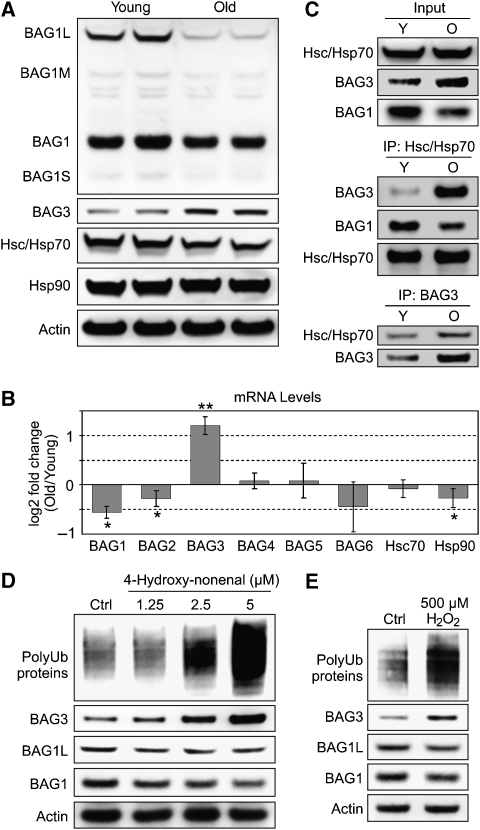
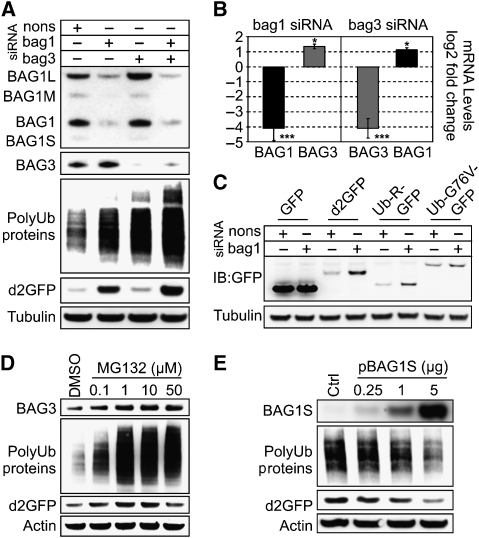
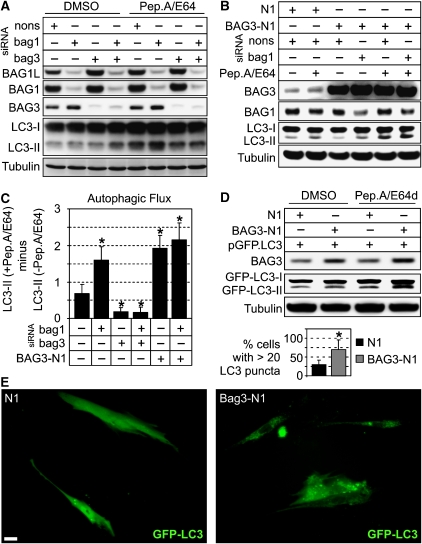
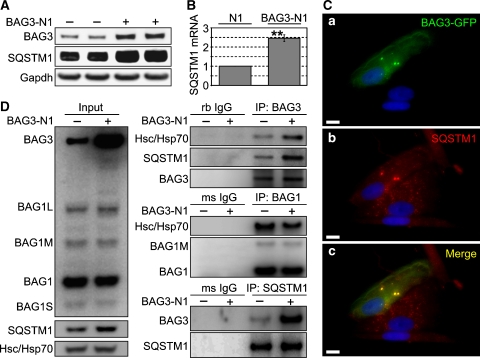
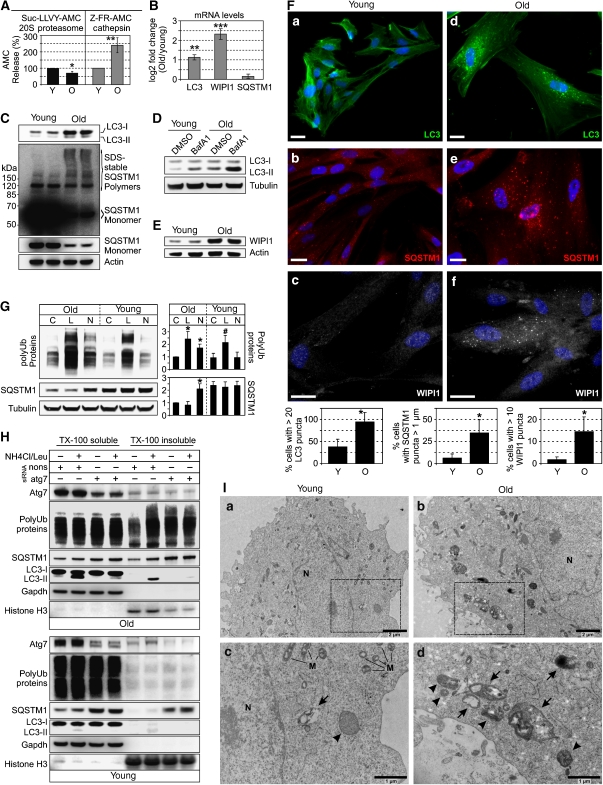
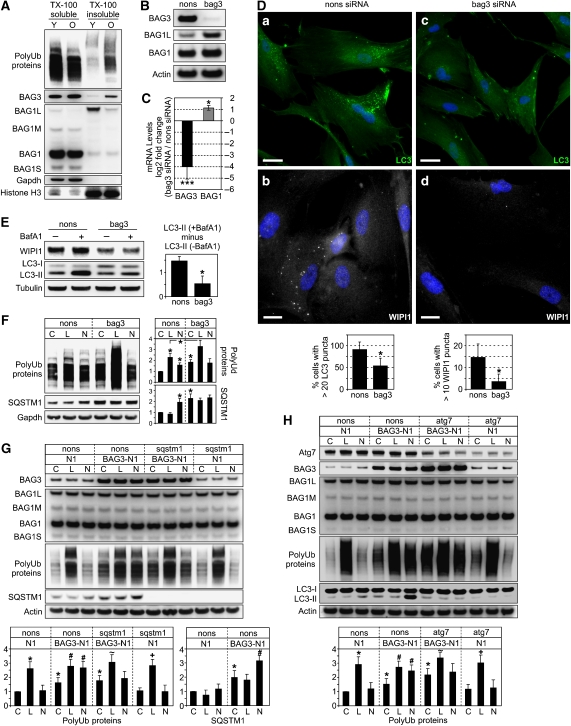
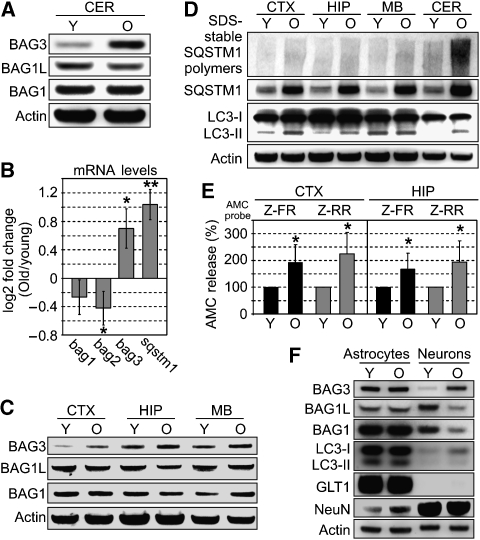
The Hsc/Hsp70 co-chaperones of the BAG (Bcl-2-associated athanogene) protein family are modulators of protein quality control. We examined the specific roles of BAG1 and BAG3 in protein degradation during the aging process. We show that BAG1 and BAG3 regulate proteasomal and macroautophagic pathways, respectively, for the degradation of polyubiquitinated proteins. Moreover, using models of cellular aging, we find that a switch from BAG1 to BAG3 determines that aged cells use more intensively the macroautophagic system for turnover of polyubiquitinated proteins. This increased macroautophagic flux is regulated by BAG3 in concert with the ubiquitin-binding protein p62/SQSTM1. The BAG3/BAG1 ratio is also elevated in neurons during aging of the rodent brain, where, consistent with a higher macroautophagy activity, we find increased levels of the autophagosomal marker LC3-II as well as a higher cathepsin activity. We conclude that the BAG3-mediated recruitment of the macroautophagy pathway is an important adaptation of the protein quality control system to maintain protein homeostasis in the presence of an enhanced pro-oxidant and aggregation-prone milieu characteristic of aging.
Overview
The claims and statistics of this paper haven’t been checked yet.
Run the check — free, no account needed. It reads the open-access text and checks the sources it cites.
Integrity signals
Registry
Cites
Statistics
Figures
Verification
Claims the paper makes
The claims and statistics of this paper haven’t been checked yet.
Run the check — free, no account needed. It reads the open-access text and checks the sources it cites.
Claims other papers make about this one
Each is checked against this paper’s own text: does it say what the citing paper says it does?
The source backs part of the claim, not all of it — or backs it for a different population, condition or comparison.
In the citing paper
“Increasing data indicate a significant association between senescence and autophagy in various cell systems (Gerland et al. 2003; Gamerdinger et al. 2009; Sasaki et al. 2010; Capparelli et al. 2012; Dörr et al. 2013).”
From Cellular senescence and its effector programs (2014) · cites this paper as Gamerdinger et al. 2009
Experimental — accuracy not yet measuredThe cited source says what the claim attributes to it.
In the citing paper
“Gamerdinger et al. (2009) showed a gradual shift in the degradation pathway for polyubiquitinated proteins from the proteasome pathway to autophagy during replicative senescence in HDFs.”
From Cellular senescence and its effector programs (2014) · cites this paper as Gamerdinger et al. 2009
Self-check
Percentages, sums and reported differences re-computed from the paper’s own numbers.
The self-check needs the paper’s full text.
Citations
Cites
Pfaffl, M. W. (2002) · Nucleic Acids Research · doi:10.1093/nar/30.9.e36 · Cited by 7,377
Pankiv, S., Clausen, T. H., Lamark, T., Brech, A., Bruun, J.-A., Outzen, H., Øvervatn, A., Bjørkøy, G., & Johansen, T. (2007) · Journal of Biological Chemistry · doi:10.1074/jbc.m702824200 · Cited by 4,578
Mitochondria, Oxidants, and Aging
Balaban, R. S., Nemoto, S., & Finkel, T. (2005) · Cell · doi:10.1016/j.cell.2005.02.001 · Cited by 4,388
How to Interpret LC3 Immunoblotting
Mizushima, N., & Yoshimori, T. (2007) · Autophagy · doi:10.4161/auto.4600 · Cited by 2,595 · cited 1×
“A well-established marker for autophagy is LC3-II, and the autophagic flux can be measured by monitoring LC3-II accumulation in the presence of lysosomal inhibitors (Mizushima and Yoshimori, 2007).”
BackgroundAdapting Proteostasis for Disease Intervention
Balch, W. E., Morimoto, R. I., Dillin, A., & Kelly, J. W. (2008) · Science · doi:10.1126/science.1141448 · Cited by 2,495
Impairment of the Ubiquitin-Proteasome System by Protein Aggregation
Bence, N., Sampat, R. M., & Kopito, R. R. (2001) · Science · doi:10.1126/science.292.5521.1552 · Cited by 2,209
The roles of intracellular protein-degradation pathways in neurodegeneration
Rubinsztein, D. C. (2006) · Nature · doi:10.1038/nature05291 · Cited by 1,625
Autophagy Genes Are Essential for Dauer Development and Life-Span Extension in C. elegans
Meléndez, A., Tallóczy, Z., Seaman, M., Eskelinen, E.-L., Hall, D. H., & Levine, B. (2003) · Science · doi:10.1126/science.1087782 · Cited by 1,270
Folding of Newly Translated Proteins In Vivo: The Role of Molecular Chaperones
Frydman, J. (2001) · Annual Review of Biochemistry · doi:10.1146/annurev.biochem.70.1.603 · Cited by 1,184
Pathways of chaperone-mediated protein folding in the cytosol
Young, J. C., Agashe, V. R., Siegers, K., & Hartl, F. U. (2004) · Nature Reviews Molecular Cell Biology · doi:10.1038/nrm1492 · Cited by 1,121
Self-citation
Cited by
Sorted by citations
Items 201–300 of 522
Kevei, É., Pokrzywa, W., & Hoppe, T. (2017) · FEBS Letters · doi:10.1002/1873-3468.12750 · Cited by 53
WW Domain of BAG3 Is Required for the Induction of Autophagy in Glioma Cells
Merabova, N., Sariyer, I. K., Sarıbaş, A. S., Knezevic, T., Gordon, J., Turco, M. C., Rosati, A., Weaver, M. W., Landry, J., & Khalili, K. (2014) · Journal of Cellular Physiology · doi:10.1002/jcp.24811 · Cited by 55
“Interestingly, BAG3 levels were shown to be increased during aging and BAG3 was required for the enhancement of age-dependent autophagic activity in I90 cells, a model culture system for aging (Gamerdinger et al., 2009).”
The small heat shock protein B8 (HSPB8) modulates proliferation and migration of breast cancer cells
Piccolella, M., Crippa, V., Cristofani, R., Rusmini, P., Galbiati, M., Cicardi, M. E., Meroni, M., Ferri, N., Morelli, F. F., Carra, S., et al. (2017) · Oncotarget · doi:10.18632/oncotarget.14422 · Cited by 53
The aging proteostasis decline: From nematode to human
Meller, A., & Shalgi, R. (2021) · Experimental Cell Research · doi:10.1016/j.yexcr.2021.112474 · Cited by 51
Caught in the middle: the role of Bag3 in disease
McCollum, A. K., Casagrande, G. M. S., & Kohn, E. C. (2009) · Biochemical Journal · doi:10.1042/bj20091739 · Cited by 51
Cell senescence as both a dynamic and a static phenotype
Young, A. R. J., Narita, M., & Narita, M. (2013) · Methods in Molecular Biology · doi:10.1007/978-1-62703-239-1_1 · Cited by 50
How do protein aggregates escape quality control in neurodegeneration?
Koopman, M. B., Ferrari, L., & Rüdiger, S. (2022) · Trends in Neurosciences · doi:10.1016/j.tins.2022.01.006 · Cited by 54
Create and preserve: Proteostasis in development and aging is governed by Cdc48/p97/VCP
Franz, A., Ackermann, L., & Hoppe, T. (2013) · Biochimica et Biophysica Acta (BBA) - Molecular Cell Research · doi:10.1016/j.bbamcr.2013.03.031 · Cited by 54
“[158], which would be in line with the described late onset of IBMPFD symptoms.”
ResultJs, L., Lee, J.-S., Cui, M. N., Yun, H. H., Kim, H. Y., Lee, S. H., & Lee, J. (2014) · Cell Death and Disease · doi:10.1038/cddis.2014.501 · Cited by 54
BAG3-dependent noncanonical autophagy induced by proteasome inhibition in HepG2 cells
Liu, B.-Q., Du, Z., Zong, Z., Li, C. R., Li, N., Zhang, Q., Kong, D., & Wang, H. (2013) · Autophagy · doi:10.4161/auto.24292 · Cited by 51
The RAB GTPase RAB18 modulates macroautophagy and proteostasis
Feldmann, A., Bekbulat, F., Huesmann, H., Ulbrich, S., Tatzelt, J., Behl, C., & Kern, A. (2017) · Biochemical and Biophysical Research Communications · doi:10.1016/j.bbrc.2017.03.112 · Cited by 55
“2) and employed as described before [13,26].”
Self-citationNutrient sensing, growth and senescence
Carroll, B., & Korolchuk, V. I. (2018) · FEBS Journal · doi:10.1111/febs.14400 · Cited by 52
Proteasome‐mediated proteostasis: Novel medicinal and pharmacological strategies for diseases
Mishra, R., Upadhyay, A., Prajapati, V. K., & Mishra, A. (2018) · Medicinal Research Reviews · doi:10.1002/med.21502 · Cited by 51
Mcl‐1 targeting could be an intriguing perspective to cure cancer
Blasio, A. D., Vento, R., & Fiore, R. D. (2018) · Journal of Cellular Physiology · doi:10.1002/jcp.26786 · Cited by 55
“An intriguing mechanism of Mcl‐1 regulation is shown by BAG3, a protein encoded by the BAG3 gene and involved in chaperone‐assisted selective autophagy (Gamerdinger et al., 2009).”
BackgroundKhawaja, R. R., Martín‐Segura, A., Santiago‐Fernández, O., Sereda, R., Lindenau, K. L., McCabe, M., Macho‐González, A., Jafari, M., Scrivo, A., Gómez‐Sintes, R., et al. (2025) · Nature Aging · doi:10.1038/s43587-024-00799-6 · Cited by 56
The co-chaperone BAG3 interacts with the cytosolic chaperonin CCT: New hints for actin folding
Fontanella, B., Birolo, L., Infusini, G., Cirulli, C., Marzullo, L., Pucci, P., Turco, M. C., & Tosco, A. (2009) · The International Journal of Biochemistry & Cell Biology · doi:10.1016/j.biocel.2009.12.008 · Cited by 49
BAG1: The Guardian of Anti-Apoptotic Proteins in Acute Myeloid Leukemia
Aveic, S., Pigazzi, M., & Basso, G. (2011) · PLoS ONE · doi:10.1371/journal.pone.0026097 · Cited by 49
“functional compensation was previously reported for these two BAG members in other systems [29].”
BackgroundResultInfluentialZientara‐Rytter, K., & Sirko, A. (2016) · FEBS Journal · doi:10.1111/febs.13712 · Cited by 52
Autophagy and the ubiquitin-proteasome system in cardiac dysfunction.
Zheng, Q., & Wang, X. (2010) · PubMed · Cited by 49
Molecular Chaperones and Proteolytic Machineries Regulate Protein Homeostasis in Aging Cells
Margulis, B. A., Цимоха, А. С., Zubova, S. G., & Guzhova, I. V. (2020) · Cells · doi:10.3390/cells9051308 · Cited by 49
The role of BAG3 in health and disease: A “Magic BAG of Tricks”
Lin, H., Koren, S. A., Cvetojevic, G., Girardi, P., & Johnson, G. V. W. (2021) · Journal of Cellular Biochemistry · doi:10.1002/jcb.29952 · Cited by 48
“In the spinal cords of SOD and SOD transgenic mouse models, BAG3 showed a higher expression level compared to control mice, and BAG3 colocalized with the mutant SOD1 in the perinuclear inclusions.(145) Further studies showed that BAG3, which associates with cytoplasmic dynein, collaborates with Hsp70 to direct SOD1 (a…”
BackgroundInfluentialRole of Hsc70 binding cycle in CFTR folding and endoplasmic reticulum–associated degradation
Matsumura, Y., David, L. L., & Skach, W. R. (2011) · Molecular Biology of the Cell · doi:10.1091/mbc.e11-02-0137 · Cited by 50
“, 1993), which recognizes both Hsp70 and Hsc70, 1:5000; 3) rabbit anti-CBag antisera (gift of F. Ulrich Hartl; Gamerdinger et al., 2009), 1:5000; 4) rabbit anti-Hsp90β antibody (gift of Ineke Braakman, Utrecht University, Netherlands), 1:5000; 5) rabbit anti-BiP antibody (SPA-826; Stressgen, Ann Arbor, MI), 1:5000; 6)…”
Seidel, K., Siswanto, S., Fredrich, M., Bouzrou, M., Brunt, E. R. P., van Leeuwen, F. W., Kampinga, H. H., Korf, H., Rüb, U., & den Dunnen, W. F. A. (2015) · Neuropathology and Applied Neurobiology · doi:10.1111/nan.12253 · Cited by 49
Autophagy in cancer: Having your cake and eating it
Hoare, M., Young, A. R. J., & Narita, M. (2011) · Seminars in Cancer Biology · doi:10.1016/j.semcancer.2011.09.004 · Cited by 47
Hsp40/70/110 chaperones adapt nuclear protein quality control to serve cytosolic clients
Prasad, R., Xu, C., & Ng, D. (2018) · The Journal of Cell Biology · doi:10.1083/jcb.201706091 · Cited by 47
“Molecules beyond repair are targeted for degradation via the ubiquitin–proteasome system (UPS) or in lysosomes (Amm et al., 2014; Brandman and Hegde, 2016; Casson et al., 2016; Voos et al., 2016; Preston and Brodsky, 2017).”
BackgroundInfluentialA BAG's life: Every connection matters in cancer
Mariotto, E., Viola, G., Zanon, C., & Aveic, S. (2020) · Pharmacology & Therapeutics · doi:10.1016/j.pharmthera.2020.107498 · Cited by 48
Modification by Ubiquitin-Like Proteins: Significance in Apoptosis and Autophagy Pathways
Cajee, U.-F., Hull, R., & Ntwasa, M. M. (2012) · International Journal of Molecular Sciences · doi:10.3390/ijms130911804 · Cited by 49
Compromised autophagy and mitophagy in brain ageing and Alzheimer’s diseases.
Caponio, D., Veverová, K., Zhang, S.-Q., Shi, L., Wong, G., Vyhnalek, M., & Fang, E. F. (2022) · Aging Brain · doi:10.1016/j.nbas.2022.100056 · Cited by 45
“Because of its ubiquitin-like domain, BAG1 drives the degradation of polyubiquitinated proteins via the proteosome, while BAG3 mediates lysosomal degradation, possibly also via the ubiquitin-binding protein p62/ SQSTM1 [145].”
BackgroundInfluentialPrion degradation pathways: Potential for therapeutic intervention
Goold, R., McKinnon, C., & Tabrizi, S. J. (2015) · Molecular and Cellular Neuroscience · doi:10.1016/j.mcn.2014.12.009 · Cited by 51
“Ageing has also been linked with a reduction in UPS activity, a factor that may contribute to the late onset of many neurodegenerative diseases (Gamerdinger et al., 2009; Tydlacka et al., 2008; Zhou et al., 2003).”
HSF1-Controlled and Age-Associated Chaperone Capacity in Neurons and Muscle Cells of C. elegans
Kern, A., Ackermann, B., Clement, A. M., Dürk, H., & Behl, C. (2010) · PLoS ONE · doi:10.1371/journal.pone.0008568 · Cited by 46
“It is known that the expression of chaperones varies within different cell-types and during aging [6,7], but their total capacity and regulation in different tissues is not well-established.”
BackgroundSelf-citationGe, F., Li, W.-L., Bi, L., Tao, S., Zhang, Z., & Zhang, X. (2010) · Journal of Proteome Research · doi:10.1021/pr100616g · Cited by 45
Nivon, M., Fort, L., Müller, P. R., Richet, E., Simon, S., Guey, B., Fournier, M., Arrigo, A., Hetz, C. A., Atkin, J. D., et al. (2016) · Molecular Biology of the Cell · doi:10.1091/mbc.e15-12-0835 · Cited by 48
“, 2013) and selective autophagy through its interaction with p62 (Gamerdinger et al., 2009).”
BackgroundInfluentialRauch, J. N., Zuiderweg, E. R. P., & Gestwicki, J. E. (2016) · Journal of Biological Chemistry · doi:10.1074/jbc.m116.742502 · Cited by 46
“These systems were chosen because the Hsc70-Bag1 complex has been implicated in directing clients to the ubiquitin-proteasome system (UPS) (40), while the Hsc70-Bag3 pair links some clients to the macroautophagy pathway (41).”
Molecular switching from ubiquitin-proteasome to autophagy pathways in mice stroke model
Liu, X., Yamashita, T., Shang, J., Shi, X., Morihara, R., Huang, Y. C., Sato, K., Takemoto, M., Hishikawa, N., Ohta, Y., et al. (2018) · Journal of Cerebral Blood Flow & Metabolism · doi:10.1177/0271678x18810617 · Cited by 47
“Two members of the BAG (Bcl2-associated athanogene) protein family, BAG1 and BAG3, as well as histone deacetylase 6 (HDAC6), also participate in protein quality control mechanisms.(5,9,10) Although UPS and autophagy are now recognized as complementary protection systems against neurodegenerative processes,(11) the swi…”
BackgroundCannabinoid receptor 1 modulates the autophagic flux independent of mTOR‐ and BECLIN1‐complex
Hiebel, C., Kromm, T., Stark, M., & Behl, C. (2014) · Journal of Neurochemistry · doi:10.1111/jnc.12839 · Cited by 48
“This is remarkable as the two cellular degradation systems are connected via molecular mediators (Gamerdinger et al. 2009) and seem to be regulated simultaneously under conditions of cellular stress (Korolchuk et al. 2009; Gamerdinger et al. 2011a).”
BackgroundMethodSelf-citationYang, C., Swallows, C. L., Zhang, C., Lu, J., Xiao, H., Brady, R. O., & Zhuang, Z. (2013) · Proceedings of the National Academy of Sciences · doi:10.1073/pnas.1321341111 · Cited by 43
Gentilella, A., & Khalili, K. (2011) · Journal of Biological Chemistry · doi:10.1074/jbc.m110.175836 · Cited by 45
Calcium homeostasis in cancer: A focus on senescence
Farfariello, V., Iamshanova, O., Germain, E., Fliniaux, I., & Prevarskaya, N. B. (2015) · Biochimica et Biophysica Acta (BBA) - Molecular Cell Research · doi:10.1016/j.bbamcr.2015.03.005 · Cited by 52
“Actually, the significant switch of protein degradation from proteosomal into autophagosomal pathway has been reported to take place during senescence [66].”
Rapino, F. A., Jung, M., & Fulda, S. (2013) · Oncogene · doi:10.1038/onc.2013.110 · Cited by 47
“Moreover, BAG3 can interact with the selective autophagic receptor p62 linking, in this way, protein aggregates and aggresomes to the autophagic machinery via the p62-LC3 interaction on the autophagosomal membranes [77].”
BackgroundInfluentialLi, N., Du, Z., Zong, Z.-H., Liu, B.-Q., Li, C., Zhang, Q. H., & Wang, H. (2012) · Oncogene · doi:10.1038/onc.2012.466 · Cited by 44
Gavilán, E., Sánchez‐Aguayo, I., Daza, P., & Ruano, D. (2013) · Cell Death and Disease · doi:10.1038/cddis.2013.95 · Cited by 43
“Although molecular links between both proteolytic systems are not completely understood, BAG1 and BAG3 have an important role in regulating both processes.(28,8,9,11) BAG3 was overexpressed in MCF7 cells in basal condition, whereas its expression was residual in MCF10A cells.”
14-3-3 and aggresome formation: Implications in neurodegenerative diseases
Jia, B., Wu, Y., & Zhou, Y. (2014) · Prion · doi:10.4161/pri.28123 · Cited by 46
“Specifically, BAG3 was shown to promote substrate degradation by macroautophagy in a p62/SQSTM1-dependent manner.(35) In light of our identified protein-protein interaction between 14-3-3 and BAG3, future studies should be directed to investigate a potential role of 14-3-3 in the macroautophagy process.”
BackgroundMcDermott‐Roe, C., Lv, W., Maximova, T., Wada, S., Bukowy, J. D., Marquez, M., Lai, S., Shehu, A., Benjamin, I. J., Geurts, A. M., et al. (2019) · JCI Insight · doi:10.1172/jci.insight.128799 · Cited by 43
“Expression of BAG3 increased with age in mouse heart, as did the autophagy adapter protein P62 (Supplemental Figure 3), in line with increased autophagy in older cells (14).”
BackgroundThe multiple activities of BAG3 protein: Mechanisms
Marzullo, L., Turco, M. C., & Marco, M. D. (2020) · Biochimica et Biophysica Acta (BBA) - General Subjects · doi:10.1016/j.bbagen.2020.129628 · Cited by 43
Pasillas, M. P., Shields, S., Reilly, R., Strnádel, J., Behl, C., Park, S. K. R., Yates, J. R., Klemke, R. L., Gonias, S. L., & Coppinger, J. A. (2014) · Molecular & Cellular Proteomics · doi:10.1074/mcp.m114.037697 · Cited by 43
“Plasmid Constructs and Co-transfection—The construct for FlagBag3 was previously reported (6, 10).”
BackgroundSelf-citationGrasso, G., Santoro, A. M., Lanza, V., Sbardella, D., Tundo, G. R., Ciaccio, C., Marini, S., Coletta, M., & Milardi, D. (2017) · Coordination Chemistry Reviews · doi:10.1016/j.ccr.2017.06.004 · Cited by 42
The eIF2α kinase HRI triggers the autophagic clearance of cytosolic protein aggregates
Mukherjee, T., Ramaglia, V., Abdel‐Nour, M., Bianchi, A. A., Tsalikis, J., Chau, H. N., Kalia, S. K., Kalia, L. V., Chen, J.-J., Arnoult, D., et al. (2020) · Journal of Biological Chemistry · doi:10.1074/jbc.ra120.014415 · Cited by 42
“Interestingly, the CASA-dependent pathway autophagy is specifically crucial for the removal of p62-positive and ubiquitin-negative protein cargos (36), which could contribute to explain why p62-positive and ubiquitin-negative aggresomes accumulated in HRI-silenced cells in proteasomeinhibited cells (see Fig.”
BackgroundGilad, Y., Shiloh, R., Ber, Y., Bialik, S., & Kimchi, A. (2014) · Cell Reports · doi:10.1016/j.celrep.2014.06.049 · Cited by 41
Autophagy: an adaptable modifier of tumourigenesis
Wilkinson, S., & Ryan, K. M. (2010) · Current Opinion in Genetics & Development · doi:10.1016/j.gde.2009.12.004 · Cited by 42
Lipid and protein content profiling of isolated native autophagic vesicles
Schmitt, D., Bozkurt, S., Henning‐Domres, P., Huesmann, H., Eimer, S., Bîndilă, L., Behrends, C., Boyle, E., Wilfling, F., Tascher, G., et al. (2022) · EMBO Reports · doi:10.15252/embr.202153065 · Cited by 44
“Autophagy is highly dynamic and the rate of autophagosome formation rapidly adapts to satisfy cellular requirements (Gamerdinger et al , 2009; He & Klionsky, 2009).”
Self-citationALS-related misfolded protein management in motor neurons and muscle cells
Galbiati, M., Crippa, V., Rusmini, P., Cristofani, R., Cicardi, M. E., Giorgetti, E., Onesto, E., Messi, E., & Poletti, A. (2014) · Neurochemistry International · doi:10.1016/j.neuint.2014.10.007 · Cited by 42
“Co-chaperone proteins support cells for choosing between the two degradative pathways (Arndt et al., 2010; Carra et al., 2008b; Gamerdinger et al., 2009).”
Álvarez‐Arellano, L., Pedraza‐Escalona, M., Ayala, T. B., Camacho‐Concha, N., Cortés‐Mendoza, J., Pérez‐Martínez, L., & Pedraza‐Alva, G. (2017) · Journal of Neuroscience Research · doi:10.1002/jnr.24130 · Cited by 39
“These observations correlate with those showing the accumulation of p62 oligomers in oxidative environments like smokers lung macrophages (Monick et al., 2010), mouse aging hippocampus (Gamerdinger et al., 2009), or mouse UVA radiated keratinocytes (Zhao et al., 2013).”
BackgroundResultPathak, P., Blech-Hermoni, Y. N., Subedi, K., Mpamugo, J., Obeng-Nyarko, C. N., Ohman, R., Molloy, I., Kates, M. M., Hale, J. J., Stauffer, S., et al. (2021) · Communications Biology · doi:10.1038/s42003-021-01864-1 · Cited by 42
Joshi, A., Ito, T., Picard, D., & Neckers, L. (2022) · Biomolecules · doi:10.3390/biom12070880 · Cited by 40
Mechanisms and regulation of the Hsp70 chaperone network
Wentink, A. S., Rosenzweig, R., Kampinga, H. H., & Bukau, B. (2025) · Nature Reviews Molecular Cell Biology · doi:10.1038/s41580-025-00890-9 · Cited by 39
“Upon conditions of impaired proteasomal activity 180,220,221 or proteasomal overload 222 , BAG3 levels increase whereas BAG1 remains”
The Effect of Polyphenols on Protein Degradation Pathways: Implications for Neuroprotection
Hajieva, P. (2017) · Molecules · doi:10.3390/molecules22010159 · Cited by 41
“Accumulating evidence suggests a significant decline in proteasomal function with aging and in age-related diseases [50,51].”
BackgroundSelf-citationVarlet, A., Fuchs, M., Luthold, C., Lambert, H., Landry, J., & Lavoie, J. N. (2017) · Cell Stress and Chaperones · doi:10.1007/s12192-017-0780-2 · Cited by 38
Nibe, Y., Oshima, S., Kobayashi, M., Maeyashiki, C., Matsuzawa, Y., Otsubo, K., Matsuda, H., Aonuma, E., Nemoto, Y., Nagaishi, T., et al. (2017) · Autophagy · doi:10.1080/15548627.2017.1407889 · Cited by 38
“SQSTM1/ p62 is required for the concentration of ubiquitinated proteins forming aggregates and is crucial for their clearance.(39) Previous studies have shown that the UBA domain of SQSTM1/p62 preferentially binds K63 and K48 polyubiquitin.”
BackgroundZhang, N., Zhang, Y., Miao, W., Shi, C., Chen, Z., Wu, B., Zou, Y., Ma, Q., You, S., Lu, S., et al. (2022) · Redox Biology · doi:10.1016/j.redox.2022.102238 · Cited by 38
Sakai, K., Fukuda, T., & Iwadate, K. (2013) · American Journal of Forensic Medicine & Pathology · doi:10.1097/paf.0000000000000067 · Cited by 37
A Genome-Wide Longitudinal Transcriptome Analysis of the Aging Model Podospora anserine
Philipp, O., Hamann, A., Servos, J., Werner, A., Koch, I., & Osiewacz, H. D. (2013) · PLoS ONE · doi:10.1371/journal.pone.0083109 · Cited by 36
“[85] found two members of the BAG family, BAG1 and BAG3, to be key modulators of the proteasomal and autophagic pathways, respectively.”
BackgroundCasado, P., Bilanges, B., Rajeeve, V., Vanhaesebroeck, B., & Cutillas, P. R. (2014) · Molecular & Cellular Proteomics · doi:10.1074/mcp.m113.034751 · Cited by 37
“and aggregated proteins by autophagy (52, 68).”
Chakraborty, D., Felzen, V., Hiebel, C., Stürner, E., Perumal, N., Manicam, C., Sehn, E., Grus, F. H., Wolfrum, U., & Behl, C. (2019) · Redox Biology · doi:10.1016/j.redox.2019.101181 · Cited by 37
“Sample preparation and transmission electron microscopy (TEM) analysis were carried out as previously described [21] and images were processed with Adobe Photoshop CS5.”
BackgroundMethodInfluentialSelf-citationAge‐related neurodegenerative diseases
Duggan, M. R., Torkzaban, B., Ahooyi, T. M., Khalili, K., & Gordon, J. (2019) · Journal of Cellular Physiology · doi:10.1002/jcp.29248 · Cited by 40
“In conjunction with HDAC6, substrates are then subject to retrograde transport along cytoskeletal elements to perinuclear sites called aggresomes (Gamerdinger et al., 2009, 2011; Kawaguchi et al., 2003; Mateju et al., 2017).”
BackgroundProteostasis Dysfunction in Aged Mammalian Cells. The Stressful Role of Inflammation
Ruano, D. (2021) · Frontiers in Molecular Biosciences · doi:10.3389/fmolb.2021.658742 · Cited by 41
The chaperone HSPB1 prepares protein aggregates for resolubilization by HSP70
Gonçalves, C. C., Sharon, I., Schmeing, T. M., Ramos, C. H. I., & Young, J. C. (2021) · Scientific Reports · doi:10.1038/s41598-021-96518-x · Cited by 39
Gavilán, E., Pintado, C., Gavilán, M. P., Daza, P., Sánchez‐Aguayo, I., Castaño, A., & Ruano, D. (2015) · Neurobiology of Aging · doi:10.1016/j.neurobiolaging.2015.02.025 · Cited by 36
“The BAG1 and BAG3 proteins regulate protein trafficking toward the UPS or the ALP, respectively (Gamerdinger et al., 2009).”
BackgroundInfluentialModulation of Molecular Chaperones in Huntington’s Disease and Other Polyglutamine Disorders
Reis, S., Pinho, B. R., & Oliveira, J. M. A. (2016) · Molecular Neurobiology · doi:10.1007/s12035-016-0120-z · Cited by 38
Mitochondrial Dysfunction, Proteotoxicity, and Aging
Hipkiss, A. R. (2010) · Advances in clinical chemistry · doi:10.1016/s0065-2423(10)50007-6 · Cited by 35
“Indeed, the claim that basal autophagy decreases with age has been challenged [140, 141].”
BackgroundAge-related changes in tau and autophagy in human brain in the absence of neurodegeneration
Chatterjee, S., Sealey, M. A., Ruiz, E., Pegasiou, C. M., Brookes, K. J., Green, S., Crisford, A., Duque-Vasquez, M., Luckett, E. S., Robertson, R., et al. (2023) · PLoS ONE · doi:10.1371/journal.pone.0262792 · Cited by 37
Lee, J., Hong, E.-J., Nam, H., Kim, J.-W., Han, B. G., & Jeon, J. P. (2010) · Cell Proliferation · doi:10.1111/j.1365-2184.2010.00717.x · Cited by 35
At the stem of youth and health
Beltrami, A. P., Cesselli, D., & Beltrami, C. A. (2010) · Pharmacology & Therapeutics · doi:10.1016/j.pharmthera.2010.10.005 · Cited by 36
“This process, that is involved both in the quality control of proteins/organelles and in the maintenance of energy homeostasis, can be upregulated to deal with metabolic or cytotoxic stress conditions (Patschan et al., 2008; Gamerdinger et al., 2009; Young et al., 2009).”
BackgroundTemsirolimus Partially Rescues the Hutchinson-Gilford Progeria Cellular Phenotype
Gabriel, D., Gordon, L. B., & Djabali, K. (2016) · PLoS ONE · doi:10.1371/journal.pone.0168988 · Cited by 35
“S is the starting CPD as described [31].”
MethodHipkiss, A. R. (2010) · PubMed · Cited by 34
HSPA8 regulates anti-bacterial autophagy through liquid-liquid phase separation
Miao, C., Zhang, Y., Yu, M., Wei, Y., Dong, C., Pei, G., Xiao, Y., Yang, J., Yao, Z., & Wang, Q. (2023) · Autophagy · doi:10.1080/15548627.2023.2223468 · Cited by 34
“Interestingly, in the absence of RHOB, HSPA8 still mildly upregulated the BECN1 level and clearance of intracellular bacteria, suggesting HSPA8 could independently target BECN1 or RHOB as a client protein for stabilization.”
BackgroundProteostasis in neurodegenerative diseases
Kinger, S., Jagtap, Y. A., Kumar, P., Choudhary, A., Prasad, A., Prajapati, V. K., Kumar, A., Mehta, G., & Mishra, A. (2024) · Advances in clinical chemistry · doi:10.1016/bs.acc.2024.04.002 · Cited by 34
Rodriguez, A. E., López‐Crisosto, C., Peña‐Oyarzún, D., Salas, D., Parra, V., Quiroga, C., Morawe, T., Chiong, M., Behl, C., & Lavandero, S. (2015) · Autophagy · doi:10.1080/15548627.2015.1124225 · Cited by 34
“This finding is consistent with previous results.(13)”
BackgroundInfluentialSelf-citationChaperonin containing TCP-1 subunit 3 is critical for gastric cancer growth
Li, L.-J., Zhang, L., Han, Z., He, Z., Chen, H., & Li, Y. (2017) · Oncotarget · doi:10.18632/oncotarget.22838 · Cited by 34
Che, N., Ng, K. Y., Wong, T. L., Tong, M., Kau, P. W., Chan, L.-H., Lee, T. K., Huen, M. S. Y., Yun, J., & Ma, S. (2020) · Cancer Letters · doi:10.1016/j.canlet.2020.11.002 · Cited by 34
Alzheimer Cells on Their Way to Derailment Show Selective Changes in Protein Quality Control Network
Koopman, M. B., & Rüdiger, S. G. D. (2020) · Frontiers in Molecular Biosciences · doi:10.3389/fmolb.2020.00214 · Cited by 33
“One of the autophagy pathways macro-autophagy – is upregulated under normal aging conditions (Gamerdinger et al., 2009).”
BackgroundBaeken, M. W., Schwarz, M., Kern, A., Moosmann, B., Hajieva, P., & Behl, C. (2021) · Cell Death Discovery · doi:10.1038/s41420-021-00683-x · Cited by 32
Self-citationWang, C., Arrington, J., Ratliff, A. C., Chen, J., Horton, H. E., Nie, Y., Yue, F., Hrycyna, C. A., Tao, W. A., & Kuang, S. (2019) · Journal of Biological Chemistry · doi:10.1074/jbc.ra119.008430 · Cited by 33
“For example, Hspa8 cooperates with BAG3, which mediates macro-autophagy and maintains mitochondria homeostasis (31, 32).”
BackgroundProgressing neurobiological strategies against proteostasis failure: Challenges in neurodegeneration
Amanullah, A., Upadhyay, A., Joshi, V., Mishra, R., Jana, N. R., & Mishra, A. (2017) · Progress in Neurobiology · doi:10.1016/j.pneurobio.2017.08.005 · Cited by 34
Jung, S. E., Kim, Y. K., Youn, D., Lim, M.-H., Ko, J. H., Ahn, Y. S., & Lee, J. H. (2010) · Brain Research · doi:10.1016/j.brainres.2010.06.043 · Cited by 32
Quantitative Phosphoproteomics of Proteasome Inhibition in Multiple Myeloma Cells
Ge, F., Xiao, C., Bi, L., Tao, S., Xiong, S., Yin, X., Li, L., Lu, C., Jia, H.-T., & He, Q. (2010) · PLoS ONE · doi:10.1371/journal.pone.0013095 · Cited by 32
“These findings indicate that autophagosome formation and turnover may depend on BAG3 and that BAG3 can stimulate autophagy processes [39,40].”
Upadhyay, A. (2021) · Acta Pharmaceutica Sinica B · doi:10.1016/j.apsb.2021.01.006 · Cited by 31
Autophagy and lysosomal pathways in nervous system disorders
Bingol, B. (2018) · Molecular and Cellular Neuroscience · doi:10.1016/j.mcn.2018.04.009 · Cited by 32
BAG3 Proteomic Signature under Proteostasis Stress
Hiebel, C., Stürner, E., Hoffmeister, M., Tascher, G., Schwarz, M., Nagel, H., Behrends, C., Münch, C., & Behl, C. (2020) · Cells · doi:10.3390/cells9112416 · Cited by 30
“Blocking the proteasomal degradation pathway by MG132 leads to the accumulation and aggregation of (poly-) ubiquitinated proteins, thereby inducing the BAG3-mediated aggresome formation and promoting selective macroautophagy (BAG1-BAG3-switch/proteasome-to-autophagy-switch) [19,25,105].”
BackgroundMethodInfluentialSelf-citationRole of BAG3 protein in leukemia cell survival and response to therapy
Rosati, A., Basile, A. M., Falco, A., d’Avenia, M., Festa, M., Graziano, V., Laurenzi, V. D., Arra, C., Pascale, M. C., & Turco, M. C. (2012) · Biochimica et Biophysica Acta (BBA) - Reviews on Cancer · doi:10.1016/j.bbcan.2012.06.001 · Cited by 31
Co‐chaperone BAG3 and adenovirus penton base protein partnership
Gout, E., Gutkowska, M., Takayama, S.-I. J., Reed, J. C., & Chroboczek, J. (2010) · Journal of Cellular Biochemistry · doi:10.1002/jcb.22756 · Cited by 31
“Some data show that BAG3 may facilitate the disposal of aggregationprone proteins [Carra et al., 2008; Fuchs et al., 2010] and is involved in maintaining protein homeostasis during aging [Gamerdinger et al., 2009].”
BackgroundAutophagy is altered in skeletal and cardiac muscle of spontaneously hypertensive rats
Bloemberg, D., McDonald, E. J., Dulay, D., & Quadrilatero, J. (2013) · Acta Physiologica · doi:10.1111/apha.12178 · Cited by 30
“However, Atg7 knockdown in I90 cells actually resulted in upregulation of BAG3, a finding which was attributed to possible compensatory feedback between pathways (Gamerdinger et al. 2009).”
BackgroundBach2 regulates autophagy to modulate UVA-induced photoaging in skin fibroblasts
Wang, M., Lei, M., Chang, L., Yang, X., Guo, Y., Pourzand, C., Bartsch, J. W., Chen, J., Luo, J., Karisma, V. W., et al. (2021) · Free Radical Biology and Medicine · doi:10.1016/j.freeradbiomed.2021.04.003 · Cited by 32
Rogon, C., Ulbricht, A., Hesse, M., Alberti, S., Vijayaraj, P., Best, D., Adams, I. R., Magin, T. M., Fleischmann, B. K., & Höhfeld, J. (2014) · Molecular Biology of the Cell · doi:10.1091/mbc.e14-02-0742 · Cited by 30
“BAG1 facilitates docking of the CHIP/HSP70 complex at the proteasome (Lüders et al. , 2000; Demand et al. , 2001), whereas BAG3 triggers lysosomal client degradation (Carra et al. , 2008; Gamerdinger et al. , 2009, 2011; Arndt et al. , 2010).”
Respiratory chain cysteine and methionine usage indicate a causal role for thiyl radicals in aging
Moosmann, B. (2010) · Experimental Gerontology · doi:10.1016/j.exger.2010.08.034 · Cited by 30
“Given that macroautophagy is also consulted by the ubiquitin–proteasome pathway if it is overstrained by cross-linking agents, oxidative stress, or during aging (Gamerdinger et al., 2009), it appears plausible to assume that it is indeed the loss of peptide linearizability that finally calls for autophagy in these sit…”
Prithika, U., Deepa, V., & Balamurugan, K. (2016) · Innate Immunity · doi:10.1177/1753425916654557 · Cited by 31
“It has already been proven that the expression of chaperones varies within different cell types during aging.(15,16) However, their total capacity and regulation upon external heat shock and consecutive infection has not been well studied.”
BackgroundTransglutaminase type 2 in the regulation of proteostasis
D’Eletto, M., Rossin, F., Fedorova, O., Farrace, M. G., & Piacentini, M. (2018) · Biological Chemistry · doi:10.1515/hsz-2018-0217 · Cited by 32
“…mainly controlled by BAG1-dependent and HSPs-mediated proteasomal degradation of ubiquitinated proteins, while, under pathological/stressful conditions the BAG3-mediated selective macroautophagy, is turned on due an increased accumulation of mutated/ misfolded proteins (Gamerdinger et al., 2009).”
BackgroundBAG3 Promoted Starvation-Induced Apoptosis of Thyroid Cancer Cells via Attenuation of Autophagy
Li, S., Zhang, H., Wang, T., Meng, X., Zong, Z., Kong, D., Wang, H., & Du, Z. (2014) · The Journal of Clinical Endocrinology & Metabolism · doi:10.1210/jc.2014-1779 · Cited by 29
HSPB8 frameshift mutant aggregates weaken chaperone-assisted selective autophagy in neuromyopathies
Tedesco, B., Vendredy, L., Adriaenssens, E., Cozzi, M., Asselbergh, B., Crippa, V., Cristofani, R., Rusmini, P., Ferrari, V., Casarotto, E., et al. (2023) · Autophagy · doi:10.1080/15548627.2023.2179780 · Cited by 29
Hantouche, C., Williamson, B., Valinsky, W. C., Solomon, J., Shrier, A., & Young, J. C. (2016) · Journal of Biological Chemistry · doi:10.1074/jbc.m116.752618 · Cited by 29
“Interestingly, Bag1 knockdown was found to cause a global decrease in proteasomal degradation that counteracts the role of homologous Bag3 in autophagy (24).”
BackgroundThe Intricate Interplay between Mechanisms Underlying Aging and Cancer
Piano, A. (2014) · Aging and Disease · doi:10.14336/ad.2014.0209 · Cited by 28
Metadata
- Authors
- Gamerdinger, M., Hajieva, P., Kaya, A. M., Wolfrum, U., Hartl, F. U., & Behl, C.
- Affiliations
- Johannes Gutenberg University Mainz (DE)
- Max Planck Institute of Biochemistry (DE)
- Corresponding author
- Behl, Christian
- Venue
- The EMBO Journal
- Published
- 2009-02-19
- Volume
- 28
- Issue
- 7
- Pages
- 889-901
- ISSN
- 0261-4189 (ISSN-L)
- 1460-2075
- PMC
- PMC2647772
- OpenAlex
- W2094186182
- Cited by
- 522
- References
- 42
- Citations by year
- 2026: 20 · 2025: 20 · 2024: 20 · 2023: 24 · 2022: 33 · 2021: 32 · 2020: 25 · 2019: 23 · 2018: 37 · 2017: 47 · 2016: 38 · 2015: 33 · 2014: 32 · 2013: 35 · 2012: 25
- FWCI
- 23.16
- Type
- journal article
- Language
- en
- Open access
- hybrid
- doi.org
- Licence
- Locations
- The EMBO Journal (publishedVersion, cc-by-nc-sa)
- PubMed Central (publishedVersion, cc-by-nc-sa)
- PubMed (publishedVersion)
- Max Planck Institute for Plasma Physics (submittedVersion)
- Topics
- Life Sciences › Biochemistry, Genetics and Molecular Biology › Cell Biology › Autophagy in Disease and Therapy
- Life Sciences › Biochemistry, Genetics and Molecular Biology › Molecular Biology › Heat shock proteins research
- Life Sciences › Biochemistry, Genetics and Molecular Biology › Molecular Biology › Ubiquitin and proteasome pathways
- Keywords
- protein quality control, aging, BAG3, BAG-1, macroautophagy, autophagy, polyubiquitinated proteins, proteasome, p62, LC3-II, cathepsin activity, neuronal aging, brain aging, proteostasis, protein aggregation, oxidative stress
- MeSH terms
- Animals, Autophagy, DNA-Binding Proteins, Humans, Immunohistochemistry, Transcription Factors, Cellular Senescence, Rats, Sprague-Dawley, Microscopy, Electron, Transmission, Proteasome Endopeptidase Complex, Adaptor Proteins, Signal Transducing, Apoptosis Regulatory Proteins, Mice, Rats
About these checks
Registry, retraction, Cites and statistics results are computed, not judged, with one exception: a printed reference that no index lists is read once by a model before it counts as a citation error. Claims are extracted by a model and kept only when their quote appears verbatim in the text; each cited source is then checked, with a model’s help, for whether it says what the claim relies on. Those verdicts can be wrong — read the claim’s quote and the cited source before relying on one.
Statistics and arithmetic are recomputed, not judged.
Confidence bands are shown only for fields calibrated on our annotated test set. None is calibrated yet, so no band is shown.
What counts as a claim ›How we measure confidence ›How we check this ›
Are you an author, or do you see a problem with this page? Request a review
