

The DOI matches its Crossref record; 42 of the 42 references it cites were found in a registry or an index.
Protein quality control during aging involves recruitment of the macroautophagy pathway by BAG3
Open accessAbstract
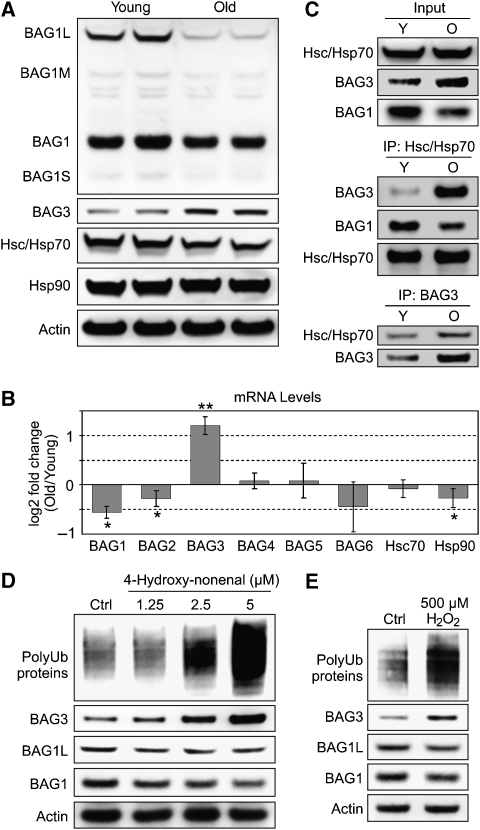
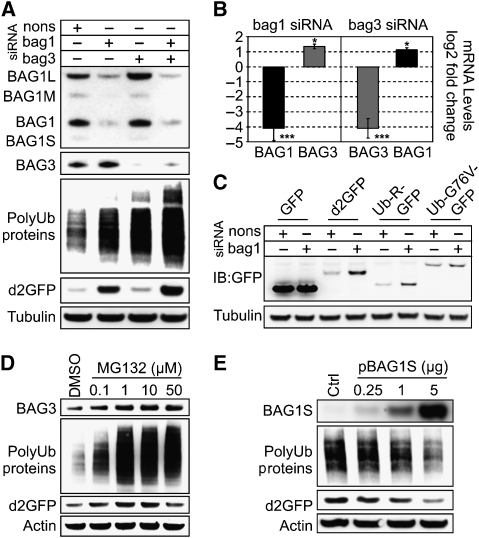
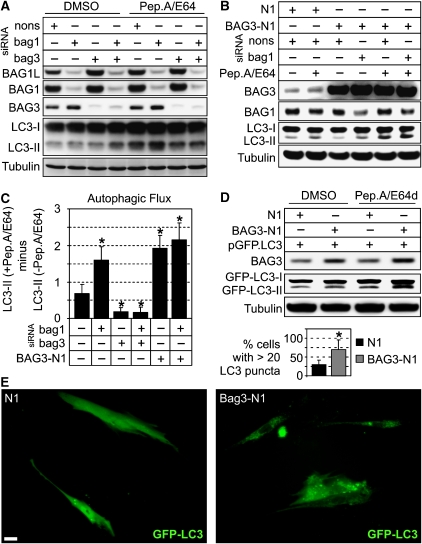
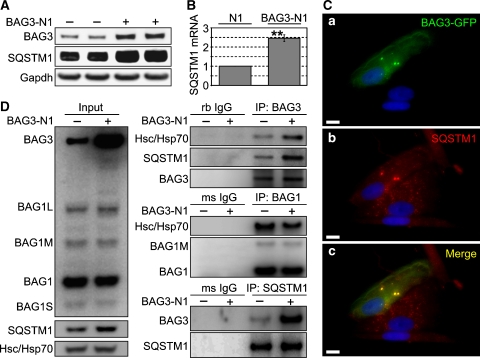
The Hsc/Hsp70 co-chaperones of the BAG (Bcl-2-associated athanogene) protein family are modulators of protein quality control. We examined the specific roles of BAG1 and BAG3 in protein degradation during the aging process. We show that BAG1 and BAG3 regulate proteasomal and macroautophagic pathways, respectively, for the degradation of polyubiquitinated proteins. Moreover, using models of cellular aging, we find that a switch from BAG1 to BAG3 determines that aged cells use more intensively the macroautophagic system for turnover of polyubiquitinated proteins. This increased macroautophagic flux is regulated by BAG3 in concert with the ubiquitin-binding protein p62/SQSTM1. The BAG3/BAG1 ratio is also elevated in neurons during aging of the rodent brain, where, consistent with a higher macroautophagy activity, we find increased levels of the autophagosomal marker LC3-II as well as a higher cathepsin activity. We conclude that the BAG3-mediated recruitment of the macroautophagy pathway is an important adaptation of the protein quality control system to maintain protein homeostasis in the presence of an enhanced pro-oxidant and aggregation-prone milieu characteristic of aging.
Overview
The claims and statistics of this paper haven’t been checked yet.
Run the check — free, no account needed. It reads the open-access text and checks the sources it cites.
Integrity signals
Registry
Cites
Statistics
Figures
Verification
Claims the paper makes
The claims and statistics of this paper haven’t been checked yet.
Run the check — free, no account needed. It reads the open-access text and checks the sources it cites.
Claims other papers make about this one
Each is checked against this paper’s own text: does it say what the citing paper says it does?
The source backs part of the claim, not all of it — or backs it for a different population, condition or comparison.
In the citing paper
“Increasing data indicate a significant association between senescence and autophagy in various cell systems (Gerland et al. 2003; Gamerdinger et al. 2009; Sasaki et al. 2010; Capparelli et al. 2012; Dörr et al. 2013).”
From Cellular senescence and its effector programs (2014) · cites this paper as Gamerdinger et al. 2009
Experimental — accuracy not yet measuredThe cited source says what the claim attributes to it.
In the citing paper
“Gamerdinger et al. (2009) showed a gradual shift in the degradation pathway for polyubiquitinated proteins from the proteasome pathway to autophagy during replicative senescence in HDFs.”
From Cellular senescence and its effector programs (2014) · cites this paper as Gamerdinger et al. 2009
Self-check
Percentages, sums and reported differences re-computed from the paper’s own numbers.
The self-check needs the paper’s full text.
Citations
Cites
Pfaffl, M. W. (2002) · Nucleic Acids Research · doi:10.1093/nar/30.9.e36 · Cited by 7,377
Pankiv, S., Clausen, T. H., Lamark, T., Brech, A., Bruun, J.-A., Outzen, H., Øvervatn, A., Bjørkøy, G., & Johansen, T. (2007) · Journal of Biological Chemistry · doi:10.1074/jbc.m702824200 · Cited by 4,578
Mitochondria, Oxidants, and Aging
Balaban, R. S., Nemoto, S., & Finkel, T. (2005) · Cell · doi:10.1016/j.cell.2005.02.001 · Cited by 4,388
How to Interpret LC3 Immunoblotting
Mizushima, N., & Yoshimori, T. (2007) · Autophagy · doi:10.4161/auto.4600 · Cited by 2,595 · cited 1×
“A well-established marker for autophagy is LC3-II, and the autophagic flux can be measured by monitoring LC3-II accumulation in the presence of lysosomal inhibitors (Mizushima and Yoshimori, 2007).”
BackgroundAdapting Proteostasis for Disease Intervention
Balch, W. E., Morimoto, R. I., Dillin, A., & Kelly, J. W. (2008) · Science · doi:10.1126/science.1141448 · Cited by 2,495
Impairment of the Ubiquitin-Proteasome System by Protein Aggregation
Bence, N., Sampat, R. M., & Kopito, R. R. (2001) · Science · doi:10.1126/science.292.5521.1552 · Cited by 2,209
The roles of intracellular protein-degradation pathways in neurodegeneration
Rubinsztein, D. C. (2006) · Nature · doi:10.1038/nature05291 · Cited by 1,625
Autophagy Genes Are Essential for Dauer Development and Life-Span Extension in C. elegans
Meléndez, A., Tallóczy, Z., Seaman, M., Eskelinen, E.-L., Hall, D. H., & Levine, B. (2003) · Science · doi:10.1126/science.1087782 · Cited by 1,270
Folding of Newly Translated Proteins In Vivo: The Role of Molecular Chaperones
Frydman, J. (2001) · Annual Review of Biochemistry · doi:10.1146/annurev.biochem.70.1.603 · Cited by 1,184
Pathways of chaperone-mediated protein folding in the cytosol
Young, J. C., Agashe, V. R., Siegers, K., & Hartl, F. U. (2004) · Nature Reviews Molecular Cell Biology · doi:10.1038/nrm1492 · Cited by 1,121
Self-citation
Cited by
Sorted by citations
Items 301–400 of 522
Potential application of heat shock proteins as therapeutic targets in Parkinson's disease
Guo, H., Yi, J., Wang, F., Lei, T., & Du, H. (2022) · Neurochemistry International · doi:10.1016/j.neuint.2022.105453 · Cited by 26
Autoregulation of co‐chaperone BAG3 gene transcription
Gentilella, A., & Khalili, K. (2009) · Journal of Cellular Biochemistry · doi:10.1002/jcb.22343 · Cited by 28
“RNA was purified as described above. cDNA synthesis and quantitative real-time PCR was performed as described previously [Gamerdinger et al., 2009].”
MethodBAG1 is Neuroprotective in In Vivo and In Vitro Models of Parkinson’s Disease
Kermer, P., Köhn, A., Schnieder, M., Lingor, P., Bähr, M., Liman, J., & Dohm, C. P. (2014) · Journal of Molecular Neuroscience · doi:10.1007/s12031-014-0396-2 · Cited by 28
Klimek, C., Jahnke, R., Wördehoff, J., Kathage, B., Stadel, D., Behrends, C., Hergovich, A., & Höhfeld, J. (2019) · Biochimica et Biophysica Acta (BBA) - Molecular Cell Research · doi:10.1016/j.bbamcr.2019.07.007 · Cited by 28
“The generated ubiquitin signal is recognized by the autophagy adaptor SQSTM1/p62, which links the ubiquitylated cargo to phagophore membranes [9].”
BackgroundPerson‐specific differences in ubiquitin‐proteasome mediated proteostasis in human neurons
Hsieh, Y., Augur, Z. M., Arbery, M. R., Ashour, N., Barrett, K., Pearse, R. V., Tio, E. S., Duong, D. M., Felsky, D., Jager, P. L. D., et al. (2024) · Alzheimer s & Dementia · doi:10.1002/alz.13680 · Cited by 26
“63,64 HSPA6, a not well-studied member of the heat shock 70-kDa proteins, is robustly induced and colocalized with cytoplasmic protein aggregates in human neurons under thermal stress or treated with MG132, a proteasome inhibitor.”
BackgroundBAG3 is upregulated by c-Jun and stabilizes JunD
Li, C., Li, S., Kong, D., Meng, X., Zong, Z., Liu, B.-Q., Guan, Y., Du, Z., & Wang, H. (2013) · Biochimica et Biophysica Acta (BBA) - Molecular Cell Research · doi:10.1016/j.bbamcr.2013.10.007 · Cited by 27
Hutt, D. M., Mishra, S., Roth, D., Larsen, M. B., Anglès, F., Frizzell, R. A., & Balch, W. E. (2018) · Journal of Biological Chemistry · doi:10.1074/jbc.ra118.002607 · Cited by 26
Cicardi, M. E., Cristofani, R., Crippa, V., Ferrari, V., Tedesco, B., Casarotto, E., Chierichetti, M., Galbiati, M., Piccolella, M., Messi, E., et al. (2019) · Frontiers in Endocrinology · doi:10.3389/fendo.2019.00569 · Cited by 27
Amyloid in Alzheimer’s Disease: Guilty Beyond Reasonable Doubt?
Behl, C. (2017) · Trends in Pharmacological Sciences · doi:10.1016/j.tips.2017.07.002 · Cited by 27
“occurs in the protein degradation pathways, from proteasome to autophagy [7].”
BackgroundSelf-citationLocalized molecular chaperone synthesis maintains neuronal dendrite proteostasis
Alecki, C., Rizwan, J., Le, P., Jacob‐Tomas, S., Comaduran, M. F., Verbrugghe, M., Xu, J. M. S., Minotti, S., Lynch, J., Biswas, J., et al. (2024) · Nature Communications · doi:10.1038/s41467-024-55055-7 · Cited by 26
“The HSP60, HSP70, and HSP90 families actively promote protein folding in all cell types 50 – 52 , and their functions are modulated by diverse co-chaperones 53 – 56 .”
Brendel, A., Felzen, V., Morawe, T., Manthey, D., & Behl, C. (2013) · Restorative Neurology and Neuroscience · doi:10.3233/rnn-120272 · Cited by 26
“In addition of the role of BAG1 as enhancer of Bcl2 activity, BAG1 has been recently shown to be involved in protein degradation via the ubiquitin-proteasome system, whereas BAG3 was linked to protein clearance via macroautophagy in aged and acutely stressed cells (Gamerdinger et al., 2009).”
BackgroundMethodSelf-citationBIS-mediated STAT3 stabilization regulates glioblastoma stem cell-like phenotypes
Im, C., Yun, H. H., Song, B., Youn, D., Cui, M. N., Kim, H. S., Park, G. S., & Lee, J. H. (2016) · Oncotarget · doi:10.18632/oncotarget.9039 · Cited by 26
“Thus depletion of BIS, which disrupts the balance between BIS/BAG1 expression ratio, might shift the direction of major protein degradation pathway toward ubiquitin-proteasome machinery as previously suggested [57, 58].”
Prelysosomal Compartments in the Unconventional Secretion of Amyloidogenic Seeds
Madsen, H. B., & Vilhardt, F. (2017) · International Journal of Molecular Sciences · doi:10.3390/ijms18010227 · Cited by 26
“The proteasome also accepts ubiquitinylated cargo, and adaptor proteins like histone deacetylase 6 (HDAC6) [149] and Bcl-2 associated athanogene (BAG) proteins [150] are required for shuttling cargo to the autophagosome”
BackgroundRoles of Stress Response in Autophagy Processes and Aging-Related Diseases
Watanabe, Y., Taguchi, K., & Tanaka, M. (2023) · International Journal of Molecular Sciences · doi:10.3390/ijms241813804 · Cited by 29
“Similarly, the interaction of p62 with BAG3 also regulates macroautophagy flux [54].”
BackgroundTranscriptional profiling of the bovine hepatic response to experimentally induced E. coli mastitis
Jørgensen, H., Buitenhuis, B., Røntved, C. M., Jiang, L., Ingvartsen, K. L., & Sørensen, P. (2012) · Physiological Genomics · doi:10.1152/physiolgenomics.00084.2011 · Cited by 26
Qiu, S., Sun, L., Ye, J., An, Q., Weng, C., & Zheng, J. (2017) · Oncology Reports · doi:10.3892/or.2017.5706 · Cited by 28
Liu, B.-Q., Zhang, S., Li, S., An, M., Li, C., Yan, J. Y., Wang, J., & Wang, H. (2017) · Cell Death and Disease · doi:10.1038/cddis.2017.324 · Cited by 26
BAG3 plays a central role in proteostasis in the heart
Mizushima, W., & Sadoshima, J. (2017) · Journal of Clinical Investigation · doi:10.1172/jci95839 · Cited by 26
Comprehensive review on gene mutations contributing to dilated cardiomyopathy
Wang, S., Zhang, Z., He, J., Liu, J., Guo, X., Chu, H., Xu, H., & Wang, Y. (2023) · Frontiers in Cardiovascular Medicine · doi:10.3389/fcvm.2023.1296389 · Cited by 29
“BAG3-mediated macrophage recruitment can maintain protein homeostasis, autophagic fl ux was suppressed in BAG3-de fi cient hearts, which might result in misfolded protein aggregates (113).”
BackgroundBAG Family Members as Mitophagy Regulators in Mammals
Pattingre, S., & Turtoï, A. (2022) · Cells · doi:10.3390/cells11040681 · Cited by 25
“In aging, a switch in the expression of these proteolytic systems occurs in favor of BAG3, thus explaining why autophagy is the privileged catabolic process in aged cells [33].”
BackgroundRenziehausen, J., Hiebel, C., Nagel, H., Kundu, A., Kins, S., Kögel, D., Behl, C., & Hajieva, P. (2015) · Journal of Alzheimer s Disease · doi:10.3233/jad-140600 · Cited by 25
“as oxidative stress and proteasome inhibition [17].”
BackgroundMethodResultInfluentialSelf-citationWeckmann, K., Diefenthäler, P., Baeken, M. W., Yusifli, K., Turck, C. W., Asara, J. M., Behl, C., & Hajieva, P. (2018) · Scientific Reports · doi:10.1038/s41598-018-19421-y · Cited by 33
Self-citationBAG3: Nature’s Quintessential Multi-Functional Protein Functions as a Ubiquitous Intra-Cellular Glue
Brenner, C., Choudhary, M., McCormick, M. G., Cheung, D., Landesberg, G. P., Wang, J., Song, J., Martin, T. G., Cheung, J. Y., Qu, H., et al. (2023) · Cells · doi:10.3390/cells12060937 · Cited by 24
“A mutation of serine at position 136 or 173 in the phosphoserine-containing 14-3-3 binding motif of BAG3 abolishes this interaction [18,36].”
BackgroundArgüello, R. J., Reverendo, M., Gatti, E., & Pierre, P. (2016) · Immunological Reviews · doi:10.1111/imr.12427 · Cited by 24
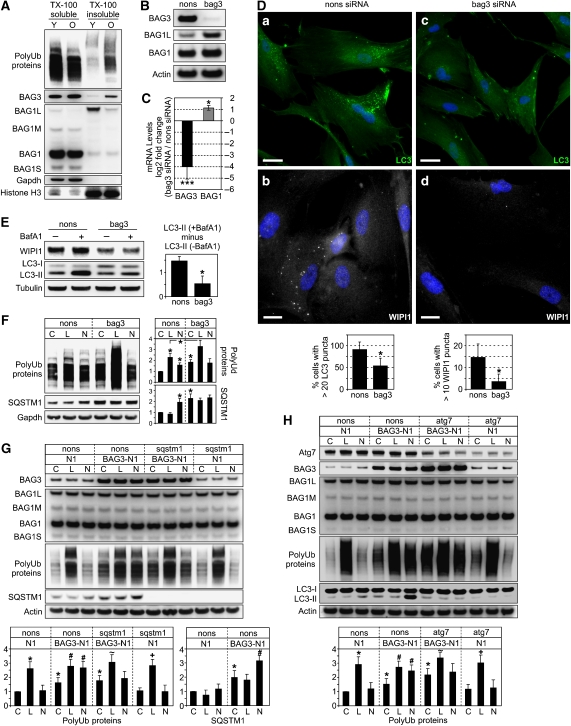
“In agreement with this hypothesis, BAG3/BAG1 ratio augments, proportionally to autophagy flux in aging i90 cells and in rodent neurons (55, 62).”
BackgroundMultiple functions of the E3 ubiquitin ligase CHIP in immunity
Zhan, S., Wang, T., & Ge, W. (2017) · International Reviews of Immunology · doi:10.1080/08830185.2017.1309528 · Cited by 23
“This interaction results in a switch in substrate degradation from the ubiquitin-proteasome system (UPS) to the chaperone-assisted selected autophagy (CASA) [31, 32].”
BackgroundLin, Y., Horng, L., Sung, H., & Wu, R.-T. (2018) · Journal of Ocular Pharmacology and Therapeutics · doi:10.1089/jop.2017.0073 · Cited by 24
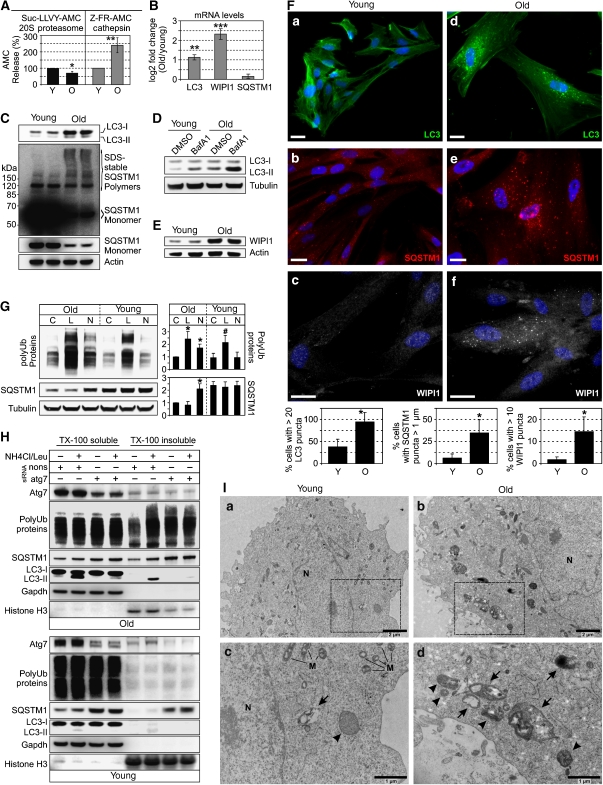
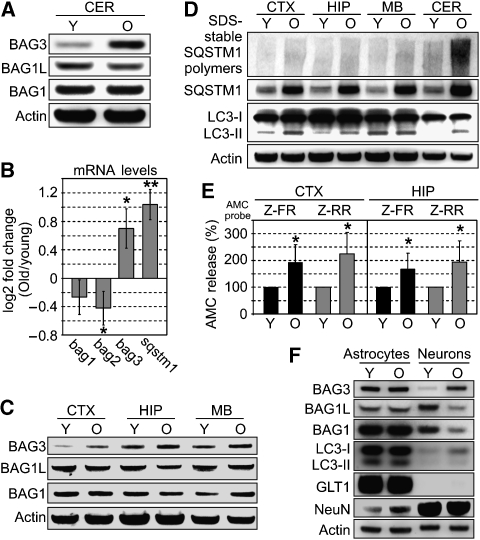
“43 In a study conducted by Gamerdinger et al., 45 there were increases in the protein expression of LC3-II and SQSTM1/ p62, as well as cathepsin activities in brain tissues from old mice.”
P209L mutation in Bag3 does not cause cardiomyopathy in mice
Fang, X., Bogomolovas, J., Zhou, P. S., Mu, Y., Ma, X., Chen, Z., Zhang, L., Zhu, M., Veevers, J., Ouyang, K., et al. (2018) · American Journal of Physiology-Heart and Circulatory Physiology · doi:10.1152/ajpheart.00714.2018 · Cited by 23
“These multifaceted structural characteristics underlie the ability of BAG3 to assemble large chaperonecochaperone complexes to mediate cellular adaptive responses to stressful stimuli (4, 8, 14, 29, 31, 33).”
Chillappagari, S., Schwarz, J., Kesireddy, V., Knöll, J., Korfei, M., Höetzenecker, K., Schmitz, M. L., Behl, C., Bellusci, S., Günther, A., et al. (2022) · Clinical and Translational Medicine · doi:10.1002/ctm2.935 · Cited by 21
Self-citationBientinesi, E., Ristori, S., Lulli, M., & Monti, D. (2024) · Mechanisms of Ageing and Development · doi:10.1016/j.mad.2024.111957 · Cited by 25
“…fibroblasts showed an increase in autophagy markers and autophagosome formation, as described in other senescence models (D ¨ orr et al., 2013; Gamerdinger et al., 2009; Guo et al., 2012; L ’ H ˆ ote et al., 2021; Narita et al., 2011; Rovira et al., 2022; Young et al., 2009), likely a…”
BackgroundWattin, M., Gaweda, L., Müller, P. R., Baritaud, M., Scholtes, C., Lozano, C., Gieseler, K., & Kretz‐Remy, C. (2018) · International Journal of Molecular Sciences · doi:10.3390/ijms19010178 · Cited by 22
“In an aggregation-prone environment a reciprocal change in the expression of BAG1 and BAG3 co-chaperone was described, which enhances the autophagy-lysosome degradation pathways [40,41].”
BackgroundCurrent understanding on the role of CCT3 in cancer research
Liu, W., Lu, Y., Yan, X., Lu, Q., Sun, Y., Wan, X., Li, Y., Zhao, J., Li, Y., & Jiang, G. (2022) · Frontiers in Oncology · doi:10.3389/fonc.2022.961733 · Cited by 22
“For aggregated proteins that cannot be unfolded, chaperonemediated autophagy or a helper selective autophagy pathway is necessary to remove the damaged proteins (13, 14).”
BackgroundStark, M., & Behl, C. (2014) · Evidence-based Complementary and Alternative Medicine · doi:10.1155/2014/940186 · Cited by 22
“Final qRT-PCRwas performedwithABsolute qRT-PCR SYBR Green Fluorescein Kit (Thermo Scientific, USA) on the iCycler (BioRad, Germany), using the following sense and antisense primer pairs (100 pmol) as previously described [23]: actin (rev: 5 CAGGTCCAGACGCAGGAT GGC 3; for: 5CTA CAA TGA GCT GCG TGT GGC 3); psmb5 (rev: 5…”
MethodInfluentialSelf-citationBracher, A., & Verghese, J. (2023) · Sub-cellular biochemistry · doi:10.1007/978-3-031-14740-1_1 · Cited by 21
Huang, Y., Meng, S., Wu, B., Shi, H., Wang, Y., Xiang, J., Li, J., Shi, Z., Wu, G., Lyu, Y., et al. (2023) · JCI Insight · doi:10.1172/jci.insight.168919 · Cited by 20
Pathogenic or protective? Neuropeptide Y in amyotrophic lateral sclerosis
Clark, C. M., Clark, R. M., Hoyle, J. A., & Dickson, T. C. (2020) · Journal of Neurochemistry · doi:10.1111/jnc.15125 · Cited by 20
“With normal ageing, the efficiency of the UPS and autophagy declines (Gamerdinger et al., 2009; Tydlacka, Wang, Wang, Li, & Li, 2008).”
Plant Mitophagy in Comparison to Mammals: What Is Still Missing?
Ren, K., Feng, L., Sun, S., & Zhuang, X. (2021) · International Journal of Molecular Sciences · doi:10.3390/ijms22031236 · Cited by 22
Proteostasis impairment and ALS
Lambert-Smith, I. A., Saunders, D. N., & Yerbury, J. J. (2022) · Progress in Biophysics and Molecular Biology · doi:10.1016/j.pbiomolbio.2022.06.001 · Cited by 19
Ríos‐Marco, P., Ríos, A., Jiménez‐López, J. M., Carrasco-Jimenez, M. P., & Marco, C. (2015) · Biochemical Pharmacology · doi:10.1016/j.bcp.2015.04.015 · Cited by 20
“If a compound raises LC3-II levels in the absence of inhibitor, but there is no further rise in its presence, then it can be inferred that there is a blockage in LC3-II degradation [18–20].”
BackgroundThe fine-tuning of proteolytic pathways in Alzheimer’s disease
Cecarini, V., Bonfili, L., Cuccioloni, M., Mozzicafreddo, M., Angeletti, M., Keller, J. N., & Eleuteri, A. M. (2016) · Cellular and Molecular Life Sciences · doi:10.1007/s00018-016-2238-6 · Cited by 21
“BAG1 and BAG3 regulate the trafficking of polyubiquitinated substrates: BAG1 directs them to the proteasomal system, whereas BAG3, facilitates the degradation of substrates via the autophagic process interaction with p62 [198].”
BackgroundInfluentialBAG2 Interferes with CHIP-Mediated Ubiquitination of HSP72
Schönbühler, B., Schmitt, V., Huesmann, H., Kern, A., Gamerdinger, M., & Behl, C. (2016) · International Journal of Molecular Sciences · doi:10.3390/ijms18010069 · Cited by 20
Self-citationSeranova, E., Palhegyi, A. M., Verma, S., Dimova, S., Lasry, R., Naama, M., Sun, C., Barrett, T. G., Rosenstock, T. R., Kumar, D., et al. (2020) · Journal of Molecular Biology · doi:10.1016/j.jmb.2020.01.024 · Cited by 20
Knockdown of BAG3 sensitizes bladder cancer cells to treatment with the BH3 mimetic ABT-737
Mani, J., Antonietti, P., Rakel, S., Blaheta, R. A., Bartsch, G. C., Haferkamp, A., & Kögel, D. (2015) · World Journal of Urology · doi:10.1007/s00345-015-1616-2 · Cited by 20
“Under conditions of cellular stress as induced by ABT-737 and (−)-gossypol, damaged proteins are known to accumulate, a condition known to trigger BAG3-dependent autophagy of client proteins [11].”
BackgroundYan, J. Y., Liu, C., Jiang, J., Liu, H. B., Li, C., Li, X., Yuan, Y., Zong, Z., & Wang, H. (2017) · Biochimica et Biophysica Acta (BBA) - Molecular Cell Research · doi:10.1016/j.bbamcr.2017.06.004 · Cited by 20
Understanding the Potential of Genome Editing in Parkinson’s Disease
Arango, D., Bittar, A., Esmeral, N. P., Ocasión, C., Muñoz-Camargo, C., Cruz, J. C., Reyes, L. H., & Bloch, N. I. (2021) · International Journal of Molecular Sciences · doi:10.3390/ijms22179241 · Cited by 24
Kötter, S., & Krüger, M. (2022) · Frontiers in Physiology · doi:10.3389/fphys.2022.914296 · Cited by 22
Li, W., You, G., Haiyilati, A., Wang, H., Jiao, H., Wang, Y., Gao, L., Cao, H., Li, X., & Zheng, S. J. (2023) · Journal of Virology · doi:10.1128/jvi.00284-23 · Cited by 19
“agy, and polyubiquitinylated cargo proteins, resulting in the degradation of cargo proteins by autophagy (41).”
BackgroundThe Role of Small Heat Shock Proteins in Protein Misfolding Associated Motoneuron Diseases
Tedesco, B., Ferrari, V., Cozzi, M., Chierichetti, M., Casarotto, E., Pramaggiore, P., Mina, F., Galbiati, M., Rusmini, P., Crippa, V., et al. (2022) · International Journal of Molecular Sciences · doi:10.3390/ijms231911759 · Cited by 21
Myosin heavy chain is stabilized by BCL-2 interacting cell death suppressor (BIS) in skeletal muscle
Hong, J. H., Park, J.-S., Lee, H., Jeong, J., Yun, H. H., Kim, H. Y., Ko, Y., & Lee, J. H. (2016) · Experimental & Molecular Medicine · doi:10.1038/emm.2016.2 · Cited by 18
SQSTM1/ p62 oligomerization contributes to Aβ-induced inhibition of Nrf2 signaling
Guo, C., Zhang, Y. L., Nie, Q., Cao, D., Wang, X., Wan, X., Liu, M., Cui, J., Sun, J., Bai, Y., et al. (2020) · Neurobiology of Aging · doi:10.1016/j.neurobiolaging.2020.05.018 · Cited by 19
Digest it all: the lysosomal turnover of cytoplasmic aggregates
Mauthe, M., Kampinga, H. H., Hipp, M. S., & Reggiori, F. (2022) · Trends in Biochemical Sciences · doi:10.1016/j.tibs.2022.09.012 · Cited by 18
Antigen processing by macroautophagy for MHC presentation
Münz, C. (2011) · Frontiers in Immunology · doi:10.3389/fimmu.2011.00042 · Cited by 19
Operationally defining cognitive reserve genes
Yegla, B., & Foster, T. C. (2021) · Neurobiology of Aging · doi:10.1016/j.neurobiolaging.2021.08.015 · Cited by 19
Models to study basic and applied aspects of lysosomal storage disorders
Gaudioso, Á., Silva, T. P., & Ledesma, M. D. (2022) · Advanced Drug Delivery Reviews · doi:10.1016/j.addr.2022.114532 · Cited by 18
Adaptive responses of neuronal cells to chronic endoplasmic reticulum (ER) stress
Pham, T. N. M., Perumal, N., Manicam, C., Başoğlu, M., Eimer, S., Fuhrmann, D. C., Pietrzik, C. U., Clement, A. M., Körschgen, H., Schepers, J., et al. (2023) · Redox Biology · doi:10.1016/j.redox.2023.102943 · Cited by 16
“Immunoblot analyses were accomplished as described previously [37].”
MethodSelf-citationInomata, Y., Nagasaka, S., Miyate, K., Goto, Y., Hino, C., Toukairin, C., Higashio, R., Ishida, K., Saino, T., Hirose, M., et al. (2018) · Biochemical and Biophysical Research Communications · doi:10.1016/j.bbrc.2018.01.158 · Cited by 17
BAG3 is involved in neuronal differentiation and migration
Santoro, A., Nicolin, V., Florenzano, F., Rosati, A., Capunzo, M., & Nori, S. (2017) · Cell and Tissue Research · doi:10.1007/s00441-017-2570-7 · Cited by 15
“Of interest, BAG3 has been observed to increase in neurons of rodent brain during aging, together with an enhanced expression of autophagosomal marker LC3-II (Gamerdinger et al. 2009).”
BackgroundResultLi, C., Chang, Y., Li, Y., Chen, S., Chen, Y., Ye, N., Dai, D., & Sun, Y. (2017) · International Journal of Molecular Medicine · doi:10.3892/ijmm.2017.2938 · Cited by 17
“At the same time, BAG3, as a molecular chaperones, plays a major role in protein quality control and could sense misfolded proteins and direct them to protein degradation systems (50).”
Cerebrospinal Fluid Concentration of Key Autophagy Protein Lamp2 Changes Little During Normal Aging
Loeffler, D. A., Klaver, A. C., Coffey, M. P., & Aasly, J. O. (2018) · Frontiers in Aging Neuroscience · doi:10.3389/fnagi.2018.00130 · Cited by 17
“An age-related increase in macroautophagy in the rat brain has also been reported (Gamerdinger et al., 2009).”
BackgroundAvinery, L., Gahramanov, V., Hesin, A., & Sherman, M. Y. (2022) · Cancers · doi:10.3390/cancers14174168 · Cited by 16
“However, if Bag3 erves a functi n in the macroautophagic degradation of LITAF, ne expects to see stabilization and accumulation of the latter upon silencing of Bag3 (as was seen with other autophagic substrates) [65,66].”
BackgroundReversible protein assemblies in the proteostasis network in health and disease
Kohler, V., & Andréasson, C. (2023) · Frontiers in Molecular Biosciences · doi:10.3389/fmolb.2023.1155521 · Cited by 17
“, chaperone-assisted selective autophagy) (Carra et al., 2008; Gamerdinger et al., 2011; Gamerdinger et al., 2009; Minoia et al., 2014; Rapino et al., 2014).”
Impairment of autophagy by TTR V30M aggregates: in vivo reversal by TUDCA and curcumin
Teixeira, C. A., Almeida, M. R., & Saraiva, M. J. (2016) · Clinical Science · doi:10.1042/cs20160075 · Cited by 19
Quality and quantity control of proteins in senescence
Narita, M. (2010) · Aging · doi:10.18632/aging.100145 · Cited by 17
“Gamerdinger et al. (2009) found a similar age-related correlation between autophagy and the BAG3/BAG1 ratio in rodent brains.”
BackgroundResultInfluentialAhooyi, T. M., Torkzaban, B., Shekarabi, M., Tahrir, F. G., Decoppet, E. A., Cotto, B., Langford, D., Amini, S., & Khalili, K. (2019) · Cell Death and Disease · doi:10.1038/s41419-019-1702-2 · Cited by 15
Different roles of BAG3 in cardiac physiological hypertrophy and pathological remodeling
Jia, P., Wu, N., Yang, H., Guo, Y., Guo, X., & Sun, Y. (2021) · Translational research · doi:10.1016/j.trsl.2021.02.004 · Cited by 15
The Role of Proteostasis in the Regulation of Cardiac Intercellular Communication
Batista-Almeida, D., Martins‐Marques, T., Ribeiro‐Rodrigues, T., & Girão, H. (2020) · Advances in experimental medicine and biology · doi:10.1007/978-3-030-38266-7_12 · Cited by 15
Heat Shock Proteins: Potential Modulators and Candidate Biomarkers of Peripartum Cardiomyopathy
Chakafana, G., Spracklen, T. F., Kamuli, S., Zininga, T., Shonhai, A., Ntusi, N., & Sliwa, K. S. (2021) · Frontiers in Cardiovascular Medicine · doi:10.3389/fcvm.2021.633013 · Cited by 14
“Hsp90 also plays an active role in protein quality control by directing misfolded proteins toward the UPS for degradation (83).”
BackgroundInhibition of the Human Hsc70 System by Small Ligands as a Potential Anticancer Approach
Dublang, L., Underhaug, J., Flydal, M. I., Velasco‐Carneros, L., Maréchal, J., Moro, F., Boyano, M. D., Martı́nez, A., & Muga, A. (2021) · Cancers · doi:10.3390/cancers13122936 · Cited by 14
Lahiri, S. K., Lu, J., Aguilar-Sánchez, Y., Li, H., Moreira, L. M., Hulsurkar, M. M., Mendoza, A., Paredes, M. R. T., Navarro‐García, J. A., Munivez, E. M., et al. (2024) · Journal of Molecular and Cellular Cardiology · doi:10.1016/j.yjmcc.2024.06.011 · Cited by 14
Identification of Autophagy-Related Biomarkers and Diagnostic Model in Alzheimer’s Disease
Xu, W., Su, X., Qin, J., Jin, Y., Zhang, N., & Huang, S. (2024) · Genes · doi:10.3390/genes15081027 · Cited by 14
“The selective macroautophagy pathway facilitated by BAG3 plays a crucial role in maintaining cellular protein quality by breaking down potentially harmful aggregating proteins [55,56].”
BackgroundOn the origin of BAG(3) and its consequences for an expansion of BAG3's role in protein homeostasis
Baeken, M. W., & Behl, C. (2021) · Journal of Cellular Biochemistry · doi:10.1002/jcb.29925 · Cited by 14
“BAG3 and BAG1 share a balancing relationship, in which BAG1 conveys protein degradation through the proteasome in younger cells, while BAG3‐dependent macroautophagy (hereafter referred to as “autophagy”) was more active in senescent cells.(5,9) This special relationship was recently also confirmed in a stroke model sy…”
BackgroundSelf-citationLim, J. H., Youn, D., Yoo, H. J., Yoon, H. H., Kim, M. Y., Chung, S., Kim, Y., Chang, Y. S., Park, C. W., & Lee, J. H. (2013) · Diabetologia · doi:10.1007/s00125-013-3064-0 · Cited by 14
“Recent studies have shown that BIS is involved in the regulation of cell survival in various cellular environments [11–14], as well as in protein quality during ageing [15, 16].”
BackgroundCordyceps sinensis attenuates renal fibrosis and suppresses BAG3 induction in obstructed rat kidney.
Du, F., Li, S., Wang, T., Zhang, H., Zong, Z., Du, Z., Li, D., Wang, H., Liu, B., Miao, J., et al. (2015) · Europe PMC (PubMed Central) · Cited by 14
Macroautophagy and the Oncogene-Induced Senescence
Grasso, D., & Vaccaro, M. I. (2014) · Frontiers in Endocrinology · doi:10.3389/fendo.2014.00157 · Cited by 13
“During senescence, there is a gradual increase in Bag3/Bag1 ratio inducing a cellular switch from proteasome to macroautophagy for polyubiquitinated proteins degradation (38).”
Bis is Induced by Oxidative StressviaActivation of HSF1
Yoo, H. J., Im, C., Youn, D., Yun, H. H., & Lee, J. H. (2014) · Korean Journal of Physiology and Pharmacology · doi:10.4196/kjpp.2014.18.5.403 · Cited by 13
“Furthermore, Bis was shown to play an important role in protein quality control as a co-chaperone and as an activator for macroautophagy by aggresomal targeting of mis-folded proteins [2,9-11,36].”
Wen, X., An, P., Li, H., Zhou, Z., Sun, Y., Wang, J., Ma, L., & Lu, B. (2020) · Neuroscience Bulletin · doi:10.1007/s12264-020-00518-2 · Cited by 13
Ruggiero, D., Terracciano, S., Lauro, G., Pecoraro, M., Franceschelli, S., Bifulco, G., & Bruno, I. (2022) · Molecules · doi:10.3390/molecules27030665 · Cited by 13
“Under physiological conditions, normal cells express only low basal levels of BAG3, while its expression is highly induced under several stressful stimuli, where it is essential for maintaining cellular proteostasis by regulating the two key cellular protein degradation pathways such as proteasomal delivering and auto…”
BackgroundAutophagy of pathogens alarms the immune system and participates in its effector functions
Romão, S., & Münz, C. (2011) · Swiss Medical Weekly · doi:10.4414/smw.2011.13198 · Cited by 14
Autophagy-associated proteins BAG3 and p62 in testicular cancer
Bartsch, G. C., Jennewein, L., Harter, P. N., Antonietti, P., Blaheta, R. A., Kvasnicka, H. M., Kögel, D., Haferkamp, A., Mittelbronn, M. G. A., & Mani, J. (2015) · Oncology Reports · doi:10.3892/or.2015.4505 · Cited by 13
Age-related dysfunction of the autophago-lysosomal pathway in human endothelial cells
Mai, S., Brehm, N., Auburger, G. W. J., Bereiter‐Hahn, J., & Jendrach, M. (2019) · Pflügers Archiv - European Journal of Physiology · doi:10.1007/s00424-019-02288-x · Cited by 13
Hypertrophic cardiomyopathy in MYBPC3 carriers in aging
Ananthamohan, K., Stelzer, J. E., & Sadayappan, S. (2024) · The Journal of Cardiovascular Aging · doi:10.20517/jca.2023.29 · Cited by 13
Roperto, S., Russo, V., Rosati, A., Ceccarelli, D. M., Munday, J. S., Turco, M. C., & Roperto, F. P. (2018) · Veterinary Microbiology · doi:10.1016/j.vetmic.2018.06.013 · Cited by 12
Lei, T., Xiao, Z., Bi, W., Cai, S., Yang, Y., & Du, H. (2022) · Ageing Research Reviews · doi:10.1016/j.arr.2022.101769 · Cited by 11
Marsh, N., Wareham, A., White, B. G., Miskiewicz, E. I., Landry, J., & MacPhee, D. J. (2015) · Biology of Reproduction · doi:10.1095/biolreprod.114.125401 · Cited by 11
Stengel, S. T., Messner, B., Falk‐Paulsen, M., Sommer, N., & Rosenstiel, P. C. (2017) · Biochimica et Biophysica Acta (BBA) - Molecular Cell Research · doi:10.1016/j.bbamcr.2017.07.008 · Cited by 11
Friesen, E. L., Zhang, Y. T., Earnshaw, R., de Snoo, M. L., O’Hara, D. M., Agapova, V., Chau, H., Ngana, S. G., Chen, K. S., Kalia, L. V., et al. (2020) · Frontiers in Cell and Developmental Biology · doi:10.3389/fcell.2020.00716 · Cited by 11
Protein aggregation and biomolecular condensation in hypoxic environments (Review)
Li, C., Hao, B., Yang, H., Wang, K., Fan, L., & Xiao, W. (2024) · International Journal of Molecular Medicine · doi:10.3892/ijmm.2024.5357 · Cited by 10
“The clearance pathways involving proteasomes and lysosomes are intricately linked to the Hsp70 and Hsp90 chaperone systems through specialized ubiquitin ligases such as the co‑chaperone c‑terminus of the Hsc70‑interacting protein and the BAg domain (34,35).”
BackgroundSenescence and Senescence-Related Disorders
Wang, Z. P., & Inuzuka, H. (2013) · InTech eBooks · doi:10.5772/56158 · Cited by 12
Sebastiani, A., Gölz, C., Sebastiani, P. G., Bobkiewicz, W., Behl, C., Mittmann, T., Thal, S. C., & Engelhard, K. (2017) · Frontiers in Neuroscience · doi:10.3389/fnins.2017.00678 · Cited by 10
“Real-time PCR reveals minor changes in inflammatory marker gene expression and reduced Bag3 mRNA levels 5 days after trauma.”
BackgroundMethodInfluentialSelf-citationAutophagy: ‘Self-Eating’ Your Way to Longevity
Pattison, C. J., & Korolchuk, V. I. (2018) · Sub-cellular biochemistry/Subcellular biochemistry · doi:10.1007/978-981-13-2835-0_2 · Cited by 10
Jain, S., Wiemann, P., Thill, E., Williams, B., Keller, N. P., & Kabbage, M. (2018) · Frontiers in Microbiology · doi:10.3389/fmicb.2018.01316 · Cited by 10
The NDR family of kinases: essential regulators of aging
Jonischkies, K., del Ángel, M., Demiray, Y. E., Zambrano, A. L., & Stork, O. (2024) · Frontiers in Molecular Neuroscience · doi:10.3389/fnmol.2024.1371086 · Cited by 9
Zhang, C., Saurat, N. G., Cornacchia, D., Chung, S. Y., Sikder, T., Nemchik, A., Minotti, A. P., Studer, L., & Betel, D. (2025) · Aging Cell · doi:10.1111/acel.70075 · Cited by 14
TDP-43 in Alzheimer's disease: Pathophysiology and therapeutic strategies
Zhou, X., Lin, X., He, Y., Huang, N., & Luo, Y. (2025) · Pharmacological Research · doi:10.1016/j.phrs.2025.107977 · Cited by 11
Aberrant CHCHD2-associated mitochondriopathy in Kii ALS/PDC astrocytes
Leventoux, N., Morimoto, S., Ishikawa, M., Nakamura, S., Ozawa, F., Kobayashi, R., Watanabe, H., Supakul, S., Okamoto, S., Zhou, Z., et al. (2024) · Acta Neuropathologica · doi:10.1007/s00401-024-02734-w · Cited by 10
“Under stress conditions, BAG3 promotes macroautophagy [20] to degrade aggresomes [39], including α-synuclein [19], the main component of PD-related Lewy bodies [136] and a major feature in Kii ALS/PDC [70].”
Kern, A., Spang, N., Huesmann, H., & Behl, C. (2018) · Cells · doi:10.3390/cells7060049 · Cited by 10
Self-citationMacroautophagy and normal aging of the nervous system: Lessons from animal models
Kallergi, E., & Nikoletopoulou, V. (2021) · Cell Stress · doi:10.15698/cst2021.10.257 · Cited by 10
Sciandrone, B., Ami, D., D’Urzo, A., Angeli, E., Relini, A., Vanoni, M., Natalello, A., & Regonesi, M. E. (2023) · Protein Science · doi:10.1002/pro.4687 · Cited by 9
Heat Shock Proteins and Protein Quality Control in Alzheimer’s Disease
van Leeuwen, F. W., & Kampinga, H. H. (2018) · Elsevier eBooks · doi:10.1016/b978-0-12-811304-2.00010-9 · Cited by 9
Wang, J., Liu, B.-Q., Du, Z., Li, C., Sun, J. T., Yan, J. Y., Jiang, J., & Wang, H. (2019) · Journal of Cellular and Molecular Medicine · doi:10.1111/jcmm.14764 · Cited by 9
Bottillo, I., Giordano, C., Ciccone, M. P., Pignataro, M. G., Albi, F., Parisi, G., Formicola, D., Grotta, S., Ranocchi, F., Giuli, M. V., et al. (2024) · Cardiovascular Pathology · doi:10.1016/j.carpath.2024.107675 · Cited by 8
Metadata
- Authors
- Gamerdinger, M., Hajieva, P., Kaya, A. M., Wolfrum, U., Hartl, F. U., & Behl, C.
- Affiliations
- Johannes Gutenberg University Mainz (DE)
- Max Planck Institute of Biochemistry (DE)
- Corresponding author
- Behl, Christian
- Venue
- The EMBO Journal
- Published
- 2009-02-19
- Volume
- 28
- Issue
- 7
- Pages
- 889-901
- ISSN
- 0261-4189 (ISSN-L)
- 1460-2075
- PMC
- PMC2647772
- OpenAlex
- W2094186182
- Cited by
- 522
- References
- 42
- Citations by year
- 2026: 20 · 2025: 20 · 2024: 20 · 2023: 24 · 2022: 33 · 2021: 32 · 2020: 25 · 2019: 23 · 2018: 37 · 2017: 47 · 2016: 38 · 2015: 33 · 2014: 32 · 2013: 35 · 2012: 25
- FWCI
- 23.16
- Type
- journal article
- Language
- en
- Open access
- hybrid
- doi.org
- Licence
- Locations
- The EMBO Journal (publishedVersion, cc-by-nc-sa)
- PubMed Central (publishedVersion, cc-by-nc-sa)
- PubMed (publishedVersion)
- Max Planck Institute for Plasma Physics (submittedVersion)
- Topics
- Life Sciences › Biochemistry, Genetics and Molecular Biology › Cell Biology › Autophagy in Disease and Therapy
- Life Sciences › Biochemistry, Genetics and Molecular Biology › Molecular Biology › Heat shock proteins research
- Life Sciences › Biochemistry, Genetics and Molecular Biology › Molecular Biology › Ubiquitin and proteasome pathways
- Keywords
- protein quality control, aging, BAG3, BAG-1, macroautophagy, autophagy, polyubiquitinated proteins, proteasome, p62, LC3-II, cathepsin activity, neuronal aging, brain aging, proteostasis, protein aggregation, oxidative stress
- MeSH terms
- Animals, Autophagy, DNA-Binding Proteins, Humans, Immunohistochemistry, Transcription Factors, Cellular Senescence, Rats, Sprague-Dawley, Microscopy, Electron, Transmission, Proteasome Endopeptidase Complex, Adaptor Proteins, Signal Transducing, Apoptosis Regulatory Proteins, Mice, Rats
About these checks
Registry, retraction, Cites and statistics results are computed, not judged, with one exception: a printed reference that no index lists is read once by a model before it counts as a citation error. Claims are extracted by a model and kept only when their quote appears verbatim in the text; each cited source is then checked, with a model’s help, for whether it says what the claim relies on. Those verdicts can be wrong — read the claim’s quote and the cited source before relying on one.
Statistics and arithmetic are recomputed, not judged.
Confidence bands are shown only for fields calibrated on our annotated test set. None is calibrated yet, so no band is shown.
What counts as a claim ›How we measure confidence ›How we check this ›
Are you an author, or do you see a problem with this page? Request a review
