

The DOI matches its Crossref record; 42 of the 42 references it cites were found in a registry or an index.
Protein quality control during aging involves recruitment of the macroautophagy pathway by BAG3
Open accessAbstract
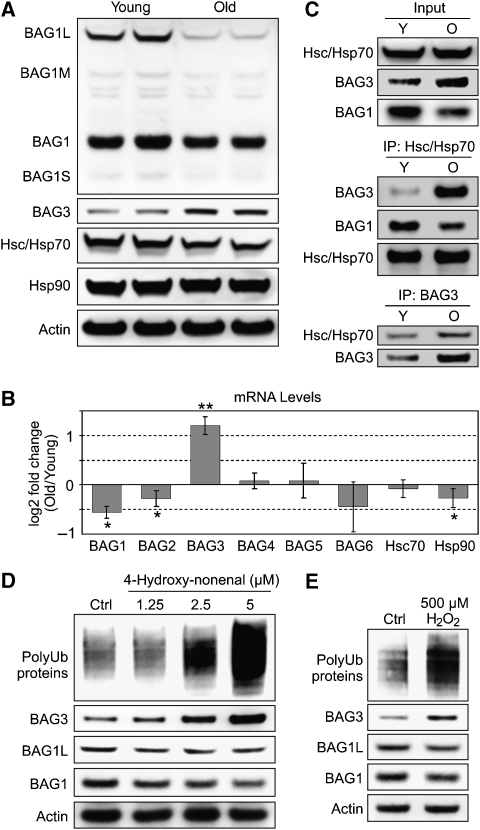
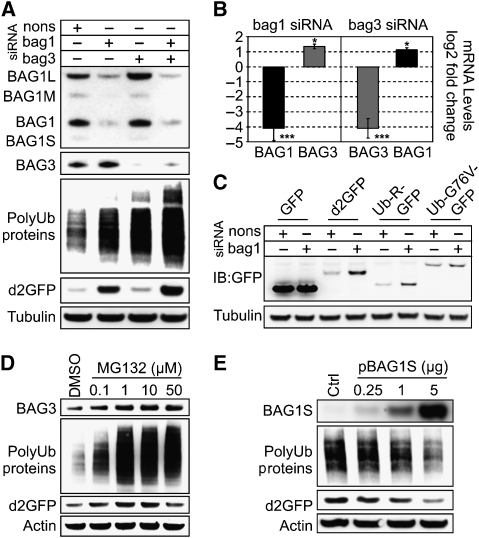
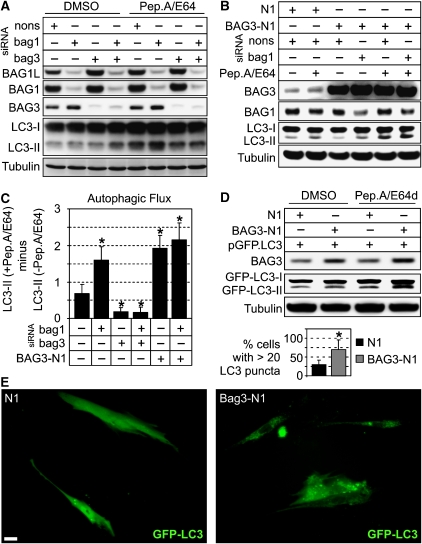
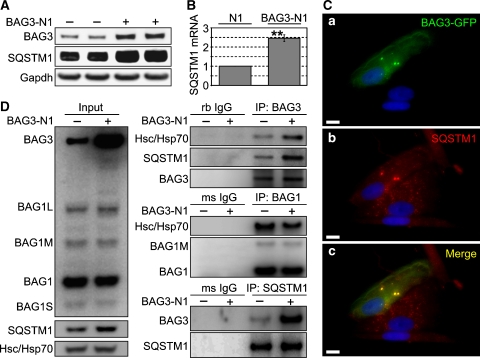
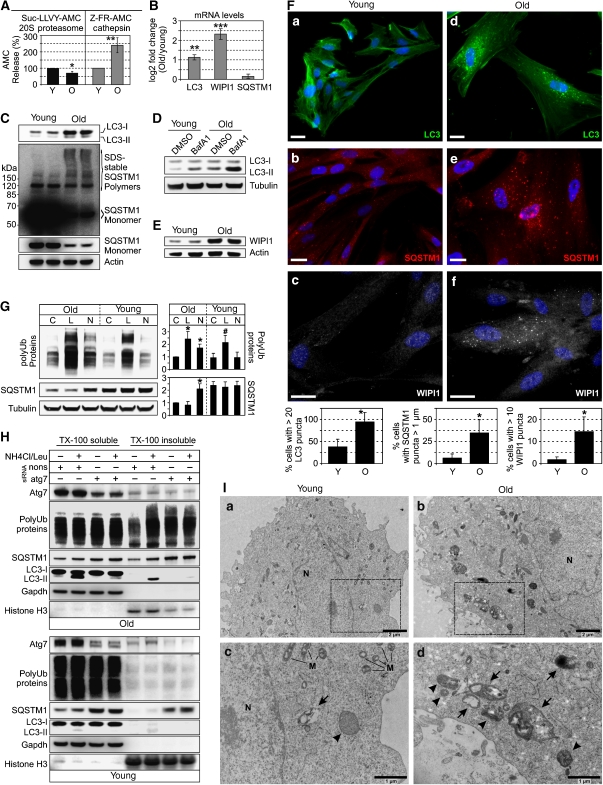
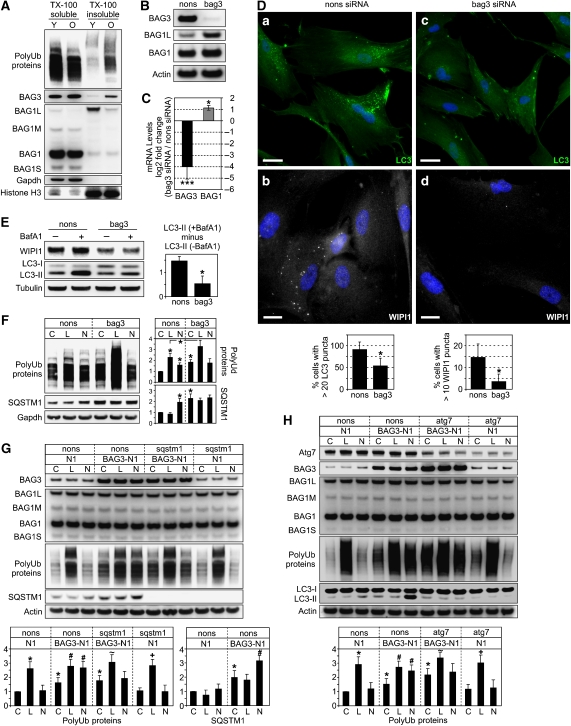
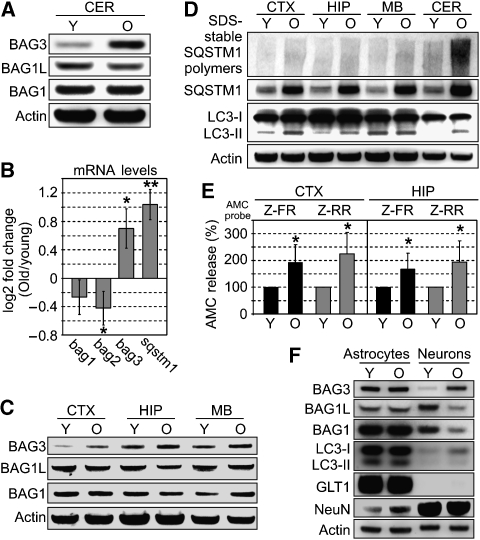
The Hsc/Hsp70 co-chaperones of the BAG (Bcl-2-associated athanogene) protein family are modulators of protein quality control. We examined the specific roles of BAG1 and BAG3 in protein degradation during the aging process. We show that BAG1 and BAG3 regulate proteasomal and macroautophagic pathways, respectively, for the degradation of polyubiquitinated proteins. Moreover, using models of cellular aging, we find that a switch from BAG1 to BAG3 determines that aged cells use more intensively the macroautophagic system for turnover of polyubiquitinated proteins. This increased macroautophagic flux is regulated by BAG3 in concert with the ubiquitin-binding protein p62/SQSTM1. The BAG3/BAG1 ratio is also elevated in neurons during aging of the rodent brain, where, consistent with a higher macroautophagy activity, we find increased levels of the autophagosomal marker LC3-II as well as a higher cathepsin activity. We conclude that the BAG3-mediated recruitment of the macroautophagy pathway is an important adaptation of the protein quality control system to maintain protein homeostasis in the presence of an enhanced pro-oxidant and aggregation-prone milieu characteristic of aging.
Overview
The claims and statistics of this paper haven’t been checked yet.
Run the check — free, no account needed. It reads the open-access text and checks the sources it cites.
Integrity signals
Registry
Cites
Statistics
Figures
Verification
Claims the paper makes
The claims and statistics of this paper haven’t been checked yet.
Run the check — free, no account needed. It reads the open-access text and checks the sources it cites.
Claims other papers make about this one
Each is checked against this paper’s own text: does it say what the citing paper says it does?
The source backs part of the claim, not all of it — or backs it for a different population, condition or comparison.
In the citing paper
“Increasing data indicate a significant association between senescence and autophagy in various cell systems (Gerland et al. 2003; Gamerdinger et al. 2009; Sasaki et al. 2010; Capparelli et al. 2012; Dörr et al. 2013).”
From Cellular senescence and its effector programs (2014) · cites this paper as Gamerdinger et al. 2009
Experimental — accuracy not yet measuredThe cited source says what the claim attributes to it.
In the citing paper
“Gamerdinger et al. (2009) showed a gradual shift in the degradation pathway for polyubiquitinated proteins from the proteasome pathway to autophagy during replicative senescence in HDFs.”
From Cellular senescence and its effector programs (2014) · cites this paper as Gamerdinger et al. 2009
Self-check
Percentages, sums and reported differences re-computed from the paper’s own numbers.
The self-check needs the paper’s full text.
Citations
Cites
Pfaffl, M. W. (2002) · Nucleic Acids Research · doi:10.1093/nar/30.9.e36 · Cited by 7,377
Pankiv, S., Clausen, T. H., Lamark, T., Brech, A., Bruun, J.-A., Outzen, H., Øvervatn, A., Bjørkøy, G., & Johansen, T. (2007) · Journal of Biological Chemistry · doi:10.1074/jbc.m702824200 · Cited by 4,578
Mitochondria, Oxidants, and Aging
Balaban, R. S., Nemoto, S., & Finkel, T. (2005) · Cell · doi:10.1016/j.cell.2005.02.001 · Cited by 4,388
How to Interpret LC3 Immunoblotting
Mizushima, N., & Yoshimori, T. (2007) · Autophagy · doi:10.4161/auto.4600 · Cited by 2,595 · cited 1×
“A well-established marker for autophagy is LC3-II, and the autophagic flux can be measured by monitoring LC3-II accumulation in the presence of lysosomal inhibitors (Mizushima and Yoshimori, 2007).”
BackgroundAdapting Proteostasis for Disease Intervention
Balch, W. E., Morimoto, R. I., Dillin, A., & Kelly, J. W. (2008) · Science · doi:10.1126/science.1141448 · Cited by 2,495
Impairment of the Ubiquitin-Proteasome System by Protein Aggregation
Bence, N., Sampat, R. M., & Kopito, R. R. (2001) · Science · doi:10.1126/science.292.5521.1552 · Cited by 2,209
The roles of intracellular protein-degradation pathways in neurodegeneration
Rubinsztein, D. C. (2006) · Nature · doi:10.1038/nature05291 · Cited by 1,625
Autophagy Genes Are Essential for Dauer Development and Life-Span Extension in C. elegans
Meléndez, A., Tallóczy, Z., Seaman, M., Eskelinen, E.-L., Hall, D. H., & Levine, B. (2003) · Science · doi:10.1126/science.1087782 · Cited by 1,270
Folding of Newly Translated Proteins In Vivo: The Role of Molecular Chaperones
Frydman, J. (2001) · Annual Review of Biochemistry · doi:10.1146/annurev.biochem.70.1.603 · Cited by 1,184
Pathways of chaperone-mediated protein folding in the cytosol
Young, J. C., Agashe, V. R., Siegers, K., & Hartl, F. U. (2004) · Nature Reviews Molecular Cell Biology · doi:10.1038/nrm1492 · Cited by 1,121
Self-citation
Cited by
Sorted by citations
Items 401–500 of 522
Vanoli, A., Necchi, V., Barozzi, S., Manca, R., Pecci, A., & Solcia, E. (2015) · Histochemistry and Cell Biology · doi:10.1007/s00418-015-1327-1 · Cited by 8
Mani, A. M., Dhanabalan, K., Lamin, V., Wong, T., Singh, M. V., & Dokun, A. O. (2022) · International Journal of Molecular Sciences · doi:10.3390/ijms231810715 · Cited by 8
Regulation of Actin-Based Structure Dynamics by HspB Proteins and Partners
Guilbert, S. M., Varlet, A., Fuchs, M., Lambert, H., Landry, J., & Lavoie, J. N. (2015) · Heat shock proteins · doi:10.1007/978-3-319-16077-1_18 · Cited by 8
Correction: A Genome-Wide Longitudinal Transcriptome Analysis of the Aging Model Podospora anserine
Philipp, O., Hamann, A., Servos, J., Werner, A., Koch, I., & Osiewacz, H. D. (2013) · PLoS ONE · doi:10.1371/annotation/03280dea-66ce-4ba6-8ac5-f985f51dea37 · Cited by 8
Neuropathological links between T2DM and LOAD: systematic review and meta-analysis
Lemche, E., Hortobágyi, T., Kiecker, C. M., & Turkheimer, F. (2025) · Physiological Reviews · doi:10.1152/physrev.00040.2024 · Cited by 9
The Spectrum of Small Heat Shock Protein B8 (HSPB8)-Associated Neuromuscular Disorders
Rashed, H. R., Nath, S. R., & Milone, M. (2025) · International Journal of Molecular Sciences · doi:10.3390/ijms26072905 · Cited by 8
Lu, S., Zhang, S., Oung, S., Diedrich, J. K., Han, P., Arnold-García, O., Ohkubo, T., Arogundade, O. A., Vazquez‐Sanchez, S., Zhang, K., et al. (2025) · Nature Cell Biology · doi:10.1038/s41556-025-01789-5 · Cited by 8
Liu, X.-Y., Lu, R., Chen, J., Wang, J., Qian, H.-M., Chen, G., Wu, R., & Chi, Z. (2021) · Frontiers in Neuroscience · doi:10.3389/fnins.2021.738022 · Cited by 7
Desmin mutations impact the autophagy flux in C2C12 cell in mutation-specific manner
Сухарева, К. С., Smolina, N., Churkina, A. I., Kalugina, K. K., Zhuk, S., Khudiakov, A. A., Khodot, A. A., Faggian, G. G., Luciani, G. B., Sejersen, T., et al. (2023) · Cell and Tissue Research · doi:10.1007/s00441-023-03790-6 · Cited by 7
BIS overexpression does not affect the sensitivity of HEK 293T cells against apoptosis
Baek, J.-Y., Yun, H. H., Im, C., Ko, J., Jeong, S. M., & Lee, J. H. (2017) · Molecular & Cellular Toxicology · doi:10.1007/s13273-017-0010-0 · Cited by 7
Role of BAG3 in bovine Deltapapillomavirus‐mediated autophagy
Roperto, S. (2021) · Journal of Cellular Biochemistry · doi:10.1002/jcb.30193 · Cited by 7
Kunicka, Z., Mierzejewski, K., Kurzyńska, A., Stryiński, R., Mateos, J., Carrera, M., Golubska, M., & Bogacka, I. (2022) · Reproduction Fertility and Development · doi:10.1071/rd21248 · Cited by 7
Youn, D., Yoon, J., Kim, Y. K., Yeum, C. E., Lee, S., Youn, H., Tsujimoto, Y., & Lee, J. (2011) · American Journal of Physiology-Endocrinology and Metabolism · doi:10.1152/ajpendo.00604.2010 · Cited by 7
The PXXP domain is critical for the protective effect of BAG 3 in cardiomyocytes
Ni, E., Zhao, L., Yao, N., Zhu, X., Cao, H. W., Sun, S., & Zhu, W. (2018) · Clinical and Experimental Pharmacology and Physiology · doi:10.1111/1440-1681.13031 · Cited by 7
Drosophila p38 MAPK interacts with BAG‐3/starvin to regulate age‐dependent protein homeostasis
Ryan, S. M., Almassey, M., Burch, A. M., Ngo, G., Martin, J. M., Myers, D., Compton, D., Archie, S., Cross, M., Naeger, L., et al. (2021) · Aging Cell · doi:10.1111/acel.13481 · Cited by 6
“…a handover between BAG- 3/stv and the autophagy adaptor protein p62 (ref(2)p in flies), and subsequently degraded through the autophagosome- lysosome system (Behl, 2011; Carra et al., 2008; Gamerdinger et al., 2009; Kettern et al., 2010; Min et al., 2008; Selcen et al., 2009; Terman et al., 2007).”
BackgroundParkinson’s Disease Genetic Risk Evaluation in Microglia Highlights Autophagy and Lysosomal GenesPreprint
Booms, A., Pierce, S. E., & Coetzee, G. A. (2020) · bioRxiv (Cold Spring Harbor Laboratory) · doi:10.1101/2020.08.17.254276 · Cited by 7
“BAG3, CYLD, VAMP4, and others, have known roles in autophagy and lysosomal protein degradation [45-49].”
BackgroundXia, L., Li, J., Pang, Y., Dai, C., Xu, M., Du, Y., Tian, Q., Yi, L., Wu, B., Chen, M., et al. (2025) · Science Advances · doi:10.1126/sciadv.adt7981 · Cited by 6
“This complex inhibits the ubiquitin-proteasome degradation but promotes autophagy-lysosomal degradation ( 16 – 18 ).”
Hu, Z.-C., & Dong, Y.-W. (2025) · Marine Pollution Bulletin · doi:10.1016/j.marpolbul.2025.118439 · Cited by 6
Huang, Z., Liu, X., Zhou, X., Chen, K., Diao, H., Wang, M., Wei, J., Li, Z., Yang, Y., Mao, Z., et al. (2025) · Aging Cell · doi:10.1111/acel.70203 · Cited by 8
“During oxidative stress-induced fibroblast senescence, autophagic flux decreases (Tai et al. 2017), whereas in replicative and oncogene-induced fibroblast senescence, it increases (Gamerdinger et al. 2009; Young et al. 2009).”
Kundu, A., Milosch, N., Antonietti, P., Baumkötter, F., Zymny, A., Müller, U., Kins, S., Hajieva, P., Behl, C., & Kögel, D. (2015) · Molecular Neurobiology · doi:10.1007/s12035-015-9501-y · Cited by 6
“Importantly, during cell and organismal aging, there is a molecular switch in the expression and function from the cochaperone BAG1 to BAG3 and, consequently, an increase in macroautophagy for turnover of polyubiquitinated proteins [22].”
BackgroundSelf-citationBAG3 mRNA is present in synaptosomal polysomes of rat brain
Bruno, A. P., Cefaliello, C., D’Auria, R., Crispino, M., Rosati, A., Giuditta, A., & Nori, S. L. (2014) · Cell Cycle · doi:10.4161/cc.28655 · Cited by 6
Autophagy in motor neuron diseases
Rodríguez‐Muela, N. (2020) · Progress in molecular biology and translational science · doi:10.1016/bs.pmbts.2020.03.009 · Cited by 7
Arnăutu, D.-A., Cretu, O.-M., Lighezan, D. F., Andor, M., Citu, I., Cozma, D. C., Bernad, B.-C., Trifa, A.-P., Lighezan, D., Bernad, E.-S., et al. (2024) · Biomedicines · doi:10.3390/biomedicines12081643 · Cited by 7
“Once BAG3 is eliminated, the levels of impacted sHSPs decrease as a result of protein instability [102,103].”
BackgroundCommon Variants for Heart Failure
Shen, S., Tao, L., Wang, X., Kong, X., & Li, X. (2015) · Current Genomics · doi:10.2174/1389202916999150120153141 · Cited by 6
“BAG3 is involved in numerous activities including macroautophagic protein degradation in aging cells [23].”
BackgroundSaraiva, J., Zubiría-Barrera, C., Klassert, T. E., Lautenbach, M. J., Blaess, M. F., Claus, R. A., Slevogt, H., & König, R. (2017) · Frontiers in Microbiology · doi:10.3389/fmicb.2017.02366 · Cited by 5
“For instance, BAG3 encodes the BAG family molecular chaperone regulator 3 (BAG3) protein which regulates macroautophagy for degradation of polyubiquitinated proteins (Gamerdinger et al., 2009).”
BackgroundProtein content and lipid profiling of isolated native autophagosomesPreprint
Schmitt, D., Bozkurt, S., Henning‐Domres, P., Huesmann, H., Eimer, S., Bîndilă, L., Tascher, G., Münch, C., Behl, C., & Kern, A. (2021) · bioRxiv (Cold Spring Harbor Laboratory) · doi:10.1101/2021.04.16.440117 · Cited by 6
“Upon proteasome inhibition, BAG3 upregulates autophagy and mediates the enhanced transfer of ubiquitinated cargoes into autophagosomes (Arndt et al, 2010; Gamerdinger et al., 2009).”
BackgroundInfluentialSelf-citationLin, H., Ramanan, S., Kaplan, S., King, D. H., Bunn, D., & Johnson, G. V. W. (2025) · Biological Psychiatry · doi:10.1016/j.biopsych.2024.12.019 · Cited by 5
Augur, Z. M., Fogo, G. M., Arbery, M. R., Hsieh, Y., Rao, N. R., Goyal, K., Dexter, E., Bennett, D. A., Savas, J. N., Stern, A. M., et al. (2025) · Acta Neuropathologica · doi:10.1007/s00401-025-02947-7 · Cited by 6
“It is hypothesized that with age, protein degradation efficiency broadly declines [26, 73, 88].”
BAG3: An enticing therapeutic target for idiopathic pulmonary fibrosis
Chillappagari, S., Günther, A., & Mahavadi, P. (2023) · Journal of Cellular Biochemistry · doi:10.1002/jcb.30446 · Cited by 5
Hamann, A., & Osiewacz, H. D. (2018) · Elsevier eBooks · doi:10.1016/b978-0-12-811353-0.00031-2 · Cited by 6
Damiani, V., Lamolinara, A., Cicalini, I., Cufaro, M. C., Pizzo, F., Marco, F. D., Boccio, P. D., Dufrusine, B., Hahne, M., Lattanzio, R., et al. (2023) · Molecular Metabolism · doi:10.1016/j.molmet.2023.101752 · Cited by 5
“Autophagy is necessary to maintain structure, mass, and function of pancreatic beta cells [37,38] and is known to be regulated by BAG3 in concert with the ubiquitin-binding protein p62/SQSTM1 [39].”
BackgroundKörschgen, H., Baeken, M. W., Schmitt, D., Nagel, H., & Behl, C. (2023) · Traffic · doi:10.1111/tra.12916 · Cited by 5
Self-citationDuggan, M. R., Ahooyi, T. M., Parikh, V., & Khalili, K. (2021) · Cell Death Discovery · doi:10.1038/s41420-021-00424-0 · Cited by 6
Augert, A., & Bernar, D. (2013) · InTech eBooks · doi:10.5772/55519 · Cited by 6
“Senescent cells display an increase in autophagic vacuoles, a gradual shift from the proteasome pathway to autophagy for polyubiquitinated protein degradation [100] and an upregulation of autophagy regulators such as the ATG related genes (ULK1 and ULK3) [101].”
BackgroundMechanistic insights of molecular chaperone Hsp70: Pathogenesis of neurodegenerative diseases
Choudhary, A., Kumar, P., Jagtap, Y. A., Kinger, S., Jha, H. C., Gutti, R. K., Sharma, V., Prajapati, V. K., & Mishra, A. (2025) · Brain Network Disorders · doi:10.1016/j.bnd.2025.05.001 · Cited by 5
Montalesi, E., Caissutti, D., Moliterni, C., Ferrante, A., Pepponi, R., Garofalo, T., Sorice, M., Misasi, R., & Candelise, N. (2025) · Cellular and Molecular Life Sciences · doi:10.1007/s00018-025-05884-6 · Cited by 4
“For instance, in Alzheimer’s Disease (AD) and during ageing, a switch between BAG1 and BAG3 has been reported, leading to increased autophagic flux and reduced BAG1-mediated proteasomal degradation [10, 11].”
Yadav, V., Awasthi, P., Behl, R., & Kumar, A. (2022) · Journal of Proteomics · doi:10.1016/j.jprot.2022.104614 · Cited by 4
Pascale, M. C., Rosati, A., Festa, M., Basile, A., d’Avenia, M., Falco, A., Torino, G., & Turco, M. C. (2009) · Springer eBooks · doi:10.1007/978-90-481-3415-1_7 · Cited by 4
“This chapter summarizes and comments recent findings (Carra et al. 2008; Gamerdinger et al. 2009; Iwasaki et al. 2007; Kassis et al. 2006).”
BackgroundAn mTOR ‐Tfeb‐Fabp7a Axis Ameliorates bag3 Cardiomyopathy via Decelerating Cardiac Aging
Ding, Y., Yan, F., Yoon, B., Wei, W., Ruff, D. M., Zhang, Y., Lin, X., & Xu, X. (2025) · Aging Cell · doi:10.1111/acel.70216 · Cited by 5
Кукушкин, А. Н., Svetlikova, S. B., Aksenov, N., & Поспелов, В. А. (2023) · Cell and Tissue Biology · doi:10.1134/s1990519x23020098 · Cited by 3
“Earlier data demonstrated that aggregates of p62 protein can accumulate in senescent fibroblasts (Gamerdinger et al., 2009).”
BackgroundMa, Y., Xu, D., Gan, Y., Chen, Z., Chen, Y., & Han, X. (2024) · Environmental Pollution · doi:10.1016/j.envpol.2024.125322 · Cited by 3
Postnatal development of BAG3 expression in mouse cerebral cortex and hippocampus
Li, X., Lin, G., Liu, T., Zhao, N., Xu, H. J., Wang, H., & Zheng, W. (2021) · Brain Structure and Function · doi:10.1007/s00429-021-02356-y · Cited by 4
Zhang, X., Liu, M., Yang, K., Chi, J., Chen, W., Shi, Z., Liu, W., Ma, X., & Yin, X. (2022) · Journal of Cardiovascular Pharmacology · doi:10.1097/fjc.0000000000001211 · Cited by 3
Cristofani, R., Tedesco, B., Ferrari, V., Chierichetti, M., Cozzi, M., Pramaggiore, P., Cornaggia, L., Mohamed, A. A., Casarotto, E., Brodňanová, M., et al. (2025) · Cell Communication and Signaling · doi:10.1186/s12964-025-02351-4 · Cited by 3
“During ageing, a switch from BAG1 to BAG3 may occur, suggesting autophagy as the preferential proteolytic pathway in senescent cells [90].”
Rogov, V. V., & Kirkin, V. (2013) · Elsevier eBooks · doi:10.1016/b978-0-12-405877-4.00004-4 · Cited by 4
Theories and Mechanisms of Aging
Behl, C., & Ziegler, C. (2013) · SpringerBriefs in molecular medicine · doi:10.1007/978-3-642-45179-9_3 · Cited by 3
Self-citationZhang, C., Saurat, N. G., Cornacchia, D., Chung, S. Y., Sikder, T., Minotti, A. P., Studer, L., & Betel, D. (2023) · bioRxiv (Cold Spring Harbor Laboratory) · doi:10.1101/2023.07.03.547539 · Cited by 3
Vinogradov, E., Edri, B., Ravkaie, L., Lazarescu, O., Gharra, F., Jubran, J., Ben‐Zvi, A., & Yeger‐Lotem, E. (2025) · Autophagy · doi:10.1080/15548627.2025.2580035 · Cited by 2
“Likewise, in aging neurons, a switch between the relative expression levels of BAG1 and BAG3 shifts the degradation of protein aggregates from the UPS to the ALP [47].”
Autophagy activation via BAG3 gene therapy improves phenotype in a mouse model of LGMD1A
Özeş, B., Tong, L., Moss, K., Myers, M., Morrison, L., Son, E., Vetter, T. A., & Sahenk, Z. (2026) · Molecular Therapy Advances · doi:10.1016/j.omta.2026.201687 · Cited by 2
Dual targeting of the UPS and autophagy as a novel therapy for neurodegenerative proteinopathies
Lines, G., Helley, M., Gillotin, S., Brownlees, J., Duce, J., & Smethurst, P. (2026) · Frontiers in Cellular Neuroscience · doi:10.3389/fncel.2026.1738415 · Cited by 2
The ubiquitin‐proteasome system and autophagy as guardians of the cellular proteome
Đikić, I. (2026) · FEBS Letters · doi:10.1002/1873-3468.70371 · Cited by 4
“…promotes K48-linked ubiquitination and proteasomal degradation via HSP70 – CHIP complexes, BAG3 redirects mis-folded clients to autophagy by engaging HSPB8 and activating the HSPB8 – HSP70 – HSPBP1 disaggregation machinery required for autophagic removal of aggregates (aggrephagy) [32,36,38 – 40].”
Bag1 protein loss sensitizes mouse embryonic fibroblasts to glutathione depletion
Inose-Maruyama, A., Irokawa, H., Takeda, K., Taguchi, K., Morita, M., Yamamoto, M., Sasaki, M., & Kuge, S. (2024) · Cell Stress and Chaperones · doi:10.1016/j.cstres.2024.05.003 · Cited by 2
Nayak, R. C., Emberesh, S., Trump, L. R., Wellendorf, A. M., Singh, A., Korkmaz, B., Horwitz, M. S., Myers, K. C., Kalfa, T. A., Lutzko, C., et al. (2024) · Journal of Clinical Investigation · doi:10.1172/jci177342 · Cited by 2
“Therefore, the BAG1 to BAG3 protein ratio dictates a proteasome to autophagy switch in neurodegenerative diseases (22–24) and has been shown to be critical for HSC homeostasis and aging (25).”
Hu, J., Hu, Z., Xia, J., Chen, Y., Cordato, D. J., Cheng, Q., & Wang, J. (2025) · Animal Models and Experimental Medicine · doi:10.1002/ame2.12528 · Cited by 3
Expression of Bis in the mouse gastrointestinal system
Lee, Y. D., Yoon, J., Yoon, H. H., Youn, H., Kim, J., & Lee, J. H. (2012) · Anatomy & Cell Biology · doi:10.5115/acb.2012.45.3.160 · Cited by 2
“The target proteins are aggregation-prone proteins, as evidenced by poly Q, or proteins found in aging brains, where oxidative stress is increased [17, 18].”
BackgroundYerabandi, N., Kouznetsova, V. L., Kesari, S., & Tsigelny, I. F. (2022) · Acta myologica : myopathies and cardiomyopathies : official journal of the Mediterranean Society of Myology / edited by the Gaetano Conte Academy for the study of striated muscle diseases · doi:10.36185/2532-1900-071 · Cited by 2
To eat or not to eat – Anti‐ageing effects of energy restriction
Neves, D., Martins, M. J., Passos, E., & Tomada, I. (2015) · Wiley eBooks · doi:10.1002/9781118823408.ch2 · Cited by 2
Selective Disposal of Insoluble Protein Aggregates
Seneci, P. (2015) · Elsevier eBooks · doi:10.1016/b978-0-12-800186-8.00005-5 · Cited by 1
Al-Mufti, Y., Cranwell, S., & Samant, R. S. (2022) · Elsevier eBooks · doi:10.1016/b978-0-323-91617-2.00004-3 · Cited by 1
Anderson, G. (2026) · Exploration of neuroscience · doi:10.37349/en.2026.1006132 · Cited by 1
Guo, K., Li, X., Liang, Q., Chen, C., Lin, J., Zhan, T., Sun, C., Kang, N., Qiu, F. X., & Zhang, Q. (2026) · Antioxidants and Redox Signaling · doi:10.1177/15230864261443823 · Cited by 1
“Besides, p62 forms a complex with Bcl-2-Associated Athanogene 3 (BAG-3), a HSPA8 – HSP70 co-chaperone, promoting the macroautophagy degradation of unfolded proteins (Gamerdinger et al., 2009).”
Ambiguity of HSP70 Functions in Proteostasis: Health and Disease
Belousova, K. O., Payushina, O. V., Gartzeva, V. A., Boronikhina, T. V., Piavchenko, G. A., & Pustovaya, K. N. (2026) · Cell and Tissue Biology · doi:10.1134/s1990519x26600092 · Cited by 1
Chen, L., Wang, C., Lin, Y. Y., Zhang, J., & Gao, H. (2026) · Frontiers in Neuroscience · doi:10.3389/fnins.2026.1756936 · Cited by 1
“Bcl-2-associated athanogene 3 (Bag3) is a stress-responsive co-chaperone that maintains proteostasis by selective autophagy and apoptosis (Gamerdinger et al., 2009; Behl, 2011).”
Mechanisms of Cross-Talk between Intracellular Protein Degradation Pathways
Hewitt, G., Carroll, B., & Korolchuk, V. I. (2015) · Elsevier eBooks · doi:10.1016/b978-0-12-801032-7.00005-8 · Cited by 1
Role of HSPB8 in the Proteostasis Network: From Protein Synthesis to Protein Degradation and Beyond
Poletti, A., & Carra, S. (2015) · Heat shock proteins · doi:10.1007/978-3-319-16077-1_21 · Cited by 1
“Concerning client binding and targeting, the HSPB8-BAG3-HSPA8 complex interacts with the E3 ligase CHIP (Arndt et al. 2010; Crippa et al. 2010) and with the autophagy receptor protein p62/SQSTM1 (sequestosome1) (Gamerdinger et al. 2009).”
BackgroundMitochondrial Damage and Mitophagy in Ischemia/Reperfusion-Induced Liver Injury
Go, K. L., Lee, S., Behrns, K. E., & Js, K. (2017) · Springer eBooks · doi:10.1007/978-3-319-58106-4_9 · Cited by 1
Cellular Strategies to Combat Protein Misfolding: Intricate Role of Hsp70 in Stress Management
Roy, J., & Mandal, A. K. (2015) · Current Chemical Biology · doi:10.2174/221279680803150420094608 · Cited by 1
BAG3’s dual roles in Parkinson’s disease and cardiomyopathy: benefit or liability?
Qu, H., & Hakonarson, H. H. (2024) · Acta Neuropathologica · doi:10.1007/s00401-024-02837-4 · Cited by 1
“In addition, upregulated expression of BAG3 has been observed in brain during aging [10].”
Ji, C., Lin, H., & Johnson, G. V. W. (2022) · Elsevier eBooks · doi:10.1016/b978-0-323-89906-2.00011-3 · Cited by 1
Eisele, F. (2011) · OPUS Publication Server of the University of Stuttgart (University of Stuttgart) · doi:10.18419/opus-1338 · Cited by 1
“This results in a more intensive usage of autophagy in older cells (Gamerdinger et al., 2009).”
BackgroundExamining Autophagy and Mitophagy as Inducible Mechanisms of Cellular Remodelling
Bloemberg, D. (2017) · UWSpace (University of Waterloo) · Cited by 1
Ding, Y., Yan, F., Yoon, B., Wei, W., Ruff, D. M., Zhang, Y., Lin, X., & Xu, X. (2024) · bioRxiv (Cold Spring Harbor Laboratory) · doi:10.1101/2024.10.24.620101 · Cited by 1
Watts, T., Johnston, H. E., Al-Mufti, Y., Odle, R., Hodgson, R. E., Okkenhaug, H., Carr, H. L., Cranwell, S., Wu, E., Walker, S. A., et al. (2025) · bioRxiv (Cold Spring Harbor Laboratory) · doi:10.1101/2025.09.07.674107 · Cited by 1
The role of the co-chaperone BAG3 in selective macroautophagy: implications for aging and disease
Behl, C. (2012) · Research and perspectives in Alzheimer's disease · doi:10.1007/978-3-642-27928-7_7
“This reciprocal expression of these two co-chaperones is called the “BAG1/BAG3-switch” (Gamerdinger et al. 2009; Behl 2011).”
BackgroundInfluentialSelf-citationClearance of intracellular aggregation-prone protein fragments
Gillis, J. (2009) · UvA-DARE (University of Amsterdam)
Autophagy and antigen processing : strategies to enhance T cell recognition of cancer cells
Williams, L. (2014) · University of Birmingham Institutional Research Archive (University of Birmingham)
Abbreviated Title: 14-3-3's role in aggresome targeting
Xu, Z., Graham, K. C., Foote, M. M., Liang, F., Rizkallah, R., Hurt, M. M., Wang, Y., Wu, Y., & Zhou, Y. (2013)
Theorien und Mechanismen des Alterns
Behl, C., & Ziegler, C. (2015) · Springer eBooks · doi:10.1007/978-3-662-48250-6_3
Self-citationCROSS-TALK BETWEEN THE UBIQUITIN-PROTEASOME SYSTEM AND MACROAUTOPHAGY
Pankiv, S., & Johansen, T. (2012) · WORLD SCIENTIFIC eBooks · doi:10.1142/9789814350457_0003
her2 hyper-activation through the production of carboxy-terminal fragments
Angelini, P. D. (2014) · TDX (Tesis Doctorals en Xarxa)
Adenovirus Evasion of Cell-Intrinsic Immunity
Burrage, A. M. (2016) · Loyola eCommons (Loyola University of Chicago)
BAG3-vermittelte selektive Makroautophagie bei Proteinstress und Alterung
Behl, C. (2016) · BIOspektrum · doi:10.1007/s12268-016-0745-5
“2, [5]).”
Self-citationNanoblade array for spatial dissection of single cells and tissues
Kagawa, D., Kusumoto, M., Takemura, Y., Takao, H., Shimokawa, F., & Terao, K. (2017) · IEEE International Conference on Micro Electro Mechanical Systems (MEMS) · doi:10.1109/memsys.2017.7863472
“The protein encoded by this gene binds to BCL2 and is referred to as BCL2-associated athanogene [4].”
BackgroundGlobal MEF2 Target Gene Analysis in Skeletal and Cardiac Muscle
Wales, S. (2016) · YorkSpace (York University)
The Role of p38 MAPK in Protein Homeostasis and Aging
Ryan, S. M. (2016) · Digital Commons - DU (University of Denver)
Targeting Selective Autophagy of Insoluble Protein Aggregates
Seneci, P. (2015) · Elsevier eBooks · doi:10.1016/b978-0-12-801944-3.00005-9
Matějů, D., Mediani, L., Morelli, F. F., Alberti, S., & Carra, S. (2018) · Heat shock proteins · doi:10.1007/978-3-319-89551-2_10
Expression analysis of apoptosis-related genes in bladder cancer patients
Yazarlou, F., Afsharpad, M., Oskooei, V. K., Nekoohesh, L., Moharrami, T., Samadaian, N., Ghafouri‐Fard, S., & Modarressi, M. H. (2018) · Meta Gene · doi:10.1016/j.mgene.2018.08.014
Funktionelle Charakterisierung einer neuen Proteininteraktion zwischen Parkin und BAG1
Schünemann, J. (2012) · doi:10.53846/goediss-1578
“Erst kürzlich konnte auch gezeigt werden, dass das Verhältnis von BAG1 und BAG3 entscheidend für eine Inhibition der proteasomalen Degradation ist und zu einer Verschiebung hin zu anderen Abbauwegen führt (Gamerdinger et al. 2009).”
BackgroundAdaptor protein WDFY3 is neuroprotective by counteracting age-dependent decline in proteostasis
Fun, X. H. (2020) · DR-NTU (Nanyang Technological University) · doi:10.32657/10356/139649
Co-chaperone BAG3 directly target autophagic degradation via its LC3-interacting regionsPreprint
Körschgen, H., Baeken, M. W., Schmitt, D., Nagel, H., & Behl, C. (2023) · bioRxiv (Cold Spring Harbor Laboratory) · doi:10.1101/2023.02.01.526551
“Expression 172 constructs of wild-type human BAG3 and C-terminal eGFP-tagged BAG3 were used as previously 173 published (6).”
MethodSelf-citationThe Role of Heat Shock Protein A4 (HSPA4) in the Heart
Rodrigues, D. M. (2023) · eDiss (Georg-August-Universität Göttingen) · doi:10.53846/goediss-9959
Alternative Hypotheses and Observations that Were Somehow Lost on the Way
Behl, C. (2023) · Springer eBooks · doi:10.1007/978-3-031-31570-1_17
Self-citationSingh, B., Kaur, S., Nainani, C., Sandhu, K. K., Upadhyay, V., Hora, R., & Mishra, P. C. (2023) · bioRxiv (Cold Spring Harbor Laboratory) · doi:10.1101/2023.08.21.554099
“BAG3 is a critical player in destruction of polyubiquitinated client proteins by autophagy [9].”
BackgroundMolzahn, C. M., Kuechler, E. R., Nierves, L. A., Cole, G., Wang, J., Cashman, N. R., Karsan, A., Lange, P. F., Gsponer, J. A., & Mayor, T. (2024) · bioRxiv (Cold Spring Harbor Laboratory) · doi:10.1101/2024.02.28.582597
Corelating the molecular structure of BAG3 to its oncogenic role
Pattoo, T. S., & Khanday, F. A. (2024) · Cell Biology International · doi:10.1002/cbin.12199
“Inducers that mediate increase in expression of BAG3 include high temperature, oxidative stress, viral infection, pulsed ultrasound, ageing, haemodialysis treatment and serum deprivation (Bonelli et al., 2004; Gamerdinger et al., 2009; Gamerdinger, Kaya, et al., 2011; Lee et al., 2002).”
Mitophagy in hepatic ischemia/reperfusion
Kim, J.-S. (2024) · Elsevier eBooks · doi:10.1016/b978-0-443-15260-3.00020-x
Metadata
- Authors
- Gamerdinger, M., Hajieva, P., Kaya, A. M., Wolfrum, U., Hartl, F. U., & Behl, C.
- Affiliations
- Johannes Gutenberg University Mainz (DE)
- Max Planck Institute of Biochemistry (DE)
- Corresponding author
- Behl, Christian
- Venue
- The EMBO Journal
- Published
- 2009-02-19
- Volume
- 28
- Issue
- 7
- Pages
- 889-901
- ISSN
- 0261-4189 (ISSN-L)
- 1460-2075
- PMC
- PMC2647772
- OpenAlex
- W2094186182
- Cited by
- 522
- References
- 42
- Citations by year
- 2026: 20 · 2025: 20 · 2024: 20 · 2023: 24 · 2022: 33 · 2021: 32 · 2020: 25 · 2019: 23 · 2018: 37 · 2017: 47 · 2016: 38 · 2015: 33 · 2014: 32 · 2013: 35 · 2012: 25
- FWCI
- 23.16
- Type
- journal article
- Language
- en
- Open access
- hybrid
- doi.org
- Licence
- Locations
- The EMBO Journal (publishedVersion, cc-by-nc-sa)
- PubMed Central (publishedVersion, cc-by-nc-sa)
- PubMed (publishedVersion)
- Max Planck Institute for Plasma Physics (submittedVersion)
- Topics
- Life Sciences › Biochemistry, Genetics and Molecular Biology › Cell Biology › Autophagy in Disease and Therapy
- Life Sciences › Biochemistry, Genetics and Molecular Biology › Molecular Biology › Heat shock proteins research
- Life Sciences › Biochemistry, Genetics and Molecular Biology › Molecular Biology › Ubiquitin and proteasome pathways
- Keywords
- protein quality control, aging, BAG3, BAG-1, macroautophagy, autophagy, polyubiquitinated proteins, proteasome, p62, LC3-II, cathepsin activity, neuronal aging, brain aging, proteostasis, protein aggregation, oxidative stress
- MeSH terms
- Animals, Autophagy, DNA-Binding Proteins, Humans, Immunohistochemistry, Transcription Factors, Cellular Senescence, Rats, Sprague-Dawley, Microscopy, Electron, Transmission, Proteasome Endopeptidase Complex, Adaptor Proteins, Signal Transducing, Apoptosis Regulatory Proteins, Mice, Rats
About these checks
Registry, retraction, Cites and statistics results are computed, not judged, with one exception: a printed reference that no index lists is read once by a model before it counts as a citation error. Claims are extracted by a model and kept only when their quote appears verbatim in the text; each cited source is then checked, with a model’s help, for whether it says what the claim relies on. Those verdicts can be wrong — read the claim’s quote and the cited source before relying on one.
Statistics and arithmetic are recomputed, not judged.
Confidence bands are shown only for fields calibrated on our annotated test set. None is calibrated yet, so no band is shown.
What counts as a claim ›How we measure confidence ›How we check this ›
Are you an author, or do you see a problem with this page? Request a review
