

Human brain networks function in connectome-specific harmonic waves
Open accessThe DOI matches its Crossref record; 59 of the 59 references it cites were found in a registry or an index.
Abstract
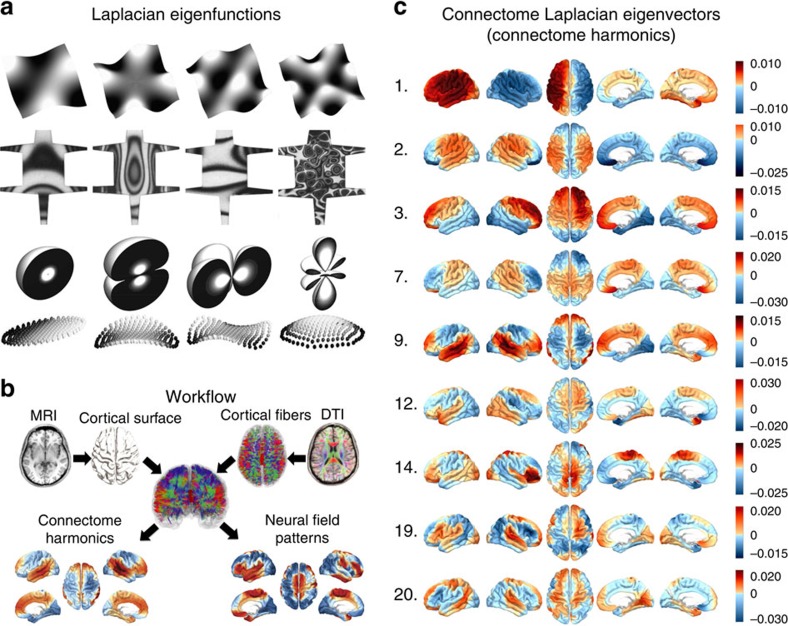
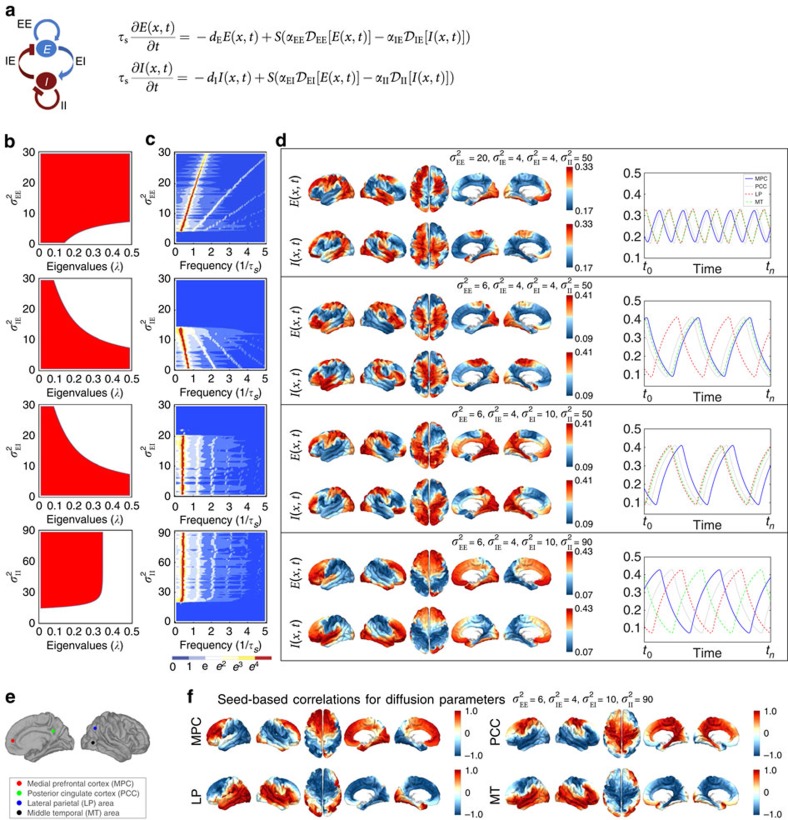
A key characteristic of human brain activity is coherent, spatially distributed oscillations forming behaviour-dependent brain networks. However, a fundamental principle underlying these networks remains unknown. Here we report that functional networks of the human brain are predicted by harmonic patterns, ubiquitous throughout nature, steered by the anatomy of the human cerebral cortex, the human connectome. We introduce a new technique extending the Fourier basis to the human connectome. In this new frequency-specific representation of cortical activity, that we call ‘connectome harmonics’, oscillatory networks of the human brain at rest match harmonic wave patterns of certain frequencies. We demonstrate a neural mechanism behind the self-organization of connectome harmonics with a continuous neural field model of excitatory–inhibitory interactions on the connectome. Remarkably, the critical relation between the neural field patterns and the delicate excitation–inhibition balance fits the neurophysiological changes observed during the loss and recovery of consciousness.
Overview
The claims and statistics of this paper haven’t been checked yet.
Free: it reads the open-access text and checks the first 5 claims that cite a source we can check. Create a free account to check every claim.
Integrity signals
Registry
Cites
Statistics
Figures



Verification
Claims the paper makes
The claims and statistics of this paper haven’t been checked yet.
Free: it reads the open-access text and checks the first 5 claims that cite a source we can check. Create a free account to check every claim.
Claims other papers make about this one
Each is checked against this paper’s own text: does it say what the citing paper says it does?
The source backs part of the claim, not all of it — or backs it for a different population, condition or comparison.
In the citing paper
“When this method was first introduced, Atasoy et al. (2016) compellingly demonstrated how reaction-diffusion simulations of spreading activation could generate resting state networks as stable modes—or standing waves—so recapitulating well-known patterns of neuronal organization with minimal assumptions.”
From An Integrated World Modeling Theory (IWMT) of Consciousness (2020) · cites this paper as Atasoy et al. (2016)
Experimental — accuracy not yet measured
Self-check
Percentages, sums and reported differences re-computed from the paper’s own numbers.
The self-check needs the paper’s full text.
Citations
Cites
Hodgkin, A. L., & Huxley, A. F. (1952) · The Journal of Physiology · doi:10.1113/jphysiol.1952.sp004764 · Cited by 23,191
The chemical basis of morphogenesis
Turing, A. M. (1952) · Philosophical Transactions of the Royal Society of London. Series B, Biological Sciences · doi:10.1098/rstb.1952.0012 · Cited by 11,733
The organization of the human cerebral cortex estimated by intrinsic functional connectivity
Thomas Yeo, B. T., Krienen, F. M., Sepulcre, J., Sabuncu, M. R., Lashkari, D., Hollinshead, M., Roffman, J. L., Smoller, J. W., Zöllei, L., Polimeni, J. R., et al. (2011) · Journal of Neurophysiology · doi:10.1152/jn.00338.2011 · Cited by 9,182
The human brain is intrinsically organized into dynamic, anticorrelated functional networks
Fox, M. D., Snyder, A. Z., Vincent, J. L., Corbetta, M., Van Essen, D. C., & Raichle, M. E. (2005) · Proceedings of the National Academy of Sciences · doi:10.1073/pnas.0504136102 · Cited by 8,553
The organization of the human cerebellum estimated by intrinsic functional connectivity
Buckner, R. L., Krienen, F. M., Castellanos, A., Diaz, J. C., & Yeo, B. T. T. (2011) · Journal of Neurophysiology · doi:10.1152/jn.00339.2011 · Cited by 7,304
Spontaneous fluctuations in brain activity observed with functional magnetic resonance imaging
Fox, M. D., & Raichle, M. E. (2007) · Nature Reviews Neuroscience · doi:10.1038/nrn2201 · Cited by 6,700
Neuronal Oscillations in Cortical Networks
Buzsáki, G., & Draguhn, A. (2004) · Science · doi:10.1126/science.1099745 · Cited by 6,576
Chung, F. (1996) · CBMS Regional Conference Series in Mathematics · doi:10.1090/cbms/092 · Cited by 5,524
Tracking whole-brain connectivity dynamics in the resting state
Allen, E. A., Damaraju, E., Plis, S. M., Erhardt, E. B., Eichele, T., & Calhoun, V. D. (2014) · Cerebral Cortex · doi:10.1093/cercor/bhs352 · Cited by 2,992
Dynamic functional connectivity: Promise, issues, and interpretations
Hutchison, R. M., Womelsdorf, T., Allen, E. A., Bandettini, P. A., Calhoun, V. D., Corbetta, M., Della Penna, S., Duyn, J. H., Glover, G. H., Gonzalez-Castillo, J., et al. (2013) · NeuroImage · doi:10.1016/j.neuroimage.2013.05.079 · Cited by 2,962
Research works printed but not linked: 1
- Lévy, B. Laplace-Beltrami eigenfunctions towards an algorithm that “understands” geometry. In Int. Conf. Shape Modeling and Applications, 2006.
Cited by
Situating the default-mode network along a principal gradient of macroscale cortical organization
Margulies, D. S., Ghosh, S. S., Goulas, A., Falkiewicz, M., Huntenburg, J. M., Langs, G., Bezgin, G., Eickhoff, S. B., Castellanos, F. X., Petrides, M., et al. (2016) · Proceedings of the National Academy of Sciences · doi:10.1073/pnas.1608282113 · Cited by 2,321
Graph Signal Processing: Overview, Challenges, and Applications
Ortega, A., Frossard, P., Kovačević, J., Moura, J. M. F., & Vandergheynst, P. (2018) · Proceedings of the IEEE · doi:10.1109/jproc.2018.2820126 · Cited by 1,787
“imaging (fMRI) data [174], [175], [176].”
Large-Scale Gradients in Human Cortical Organization
Huntenburg, J. M., Bazin, P.-L., & Margulies, D. S. (2018) · Trends in Cognitive Sciences · doi:10.1016/j.tics.2017.11.002 · Cited by 968
Linking Structure and Function in Macroscale Brain Networks
Suárez, L. E., Markello, R. D., Betzel, R. F., & Misic, B. (2020) · Trends in Cognitive Sciences · doi:10.1016/j.tics.2020.01.008 · Cited by 764
“More recently, attention has shifted to decentralized mechanisms where signals diffuse through the network [56,57], often broadcast on multiple fronts [37,51,58,59].”
Lener, M. S., Niciu, M. J., Ballard, E. D., Park, M., Park, L. T., Nugent, A. C., & Zarate, C. A. (2017) · Biological Psychiatry · doi:10.1016/j.biopsych.2016.05.005 · Cited by 468
“Third, functional connectivity patterns within larger interconnected neural circuits have emerged from novel statistical techniques (60,61).”
Geometric constraints on human brain function
Pang, J. C., Aquino, K. M., Oldehinkel, M., Robinson, P. A., Fulcher, B. D., Breakspear, M., & Fornito, A. (2023) · Nature · doi:10.1038/s41586-023-06098-1 · Cited by 440
Cabral, J., Kringelbach, M. L., & Deco, G. (2017) · NeuroImage · doi:10.1016/j.neuroimage.2017.03.045 · Cited by 368
“…can be interpreted from the perspective of meta-stable partial synchronization in complex networks. v. Connectome-specific harmonic waves Recently, Atasoy et al. (2016) demonstrated that the collective dynamics of human cortical activity at the macroscopic scale can be predicted by the…”
BackgroundMethodInfluentialDecoupling of brain function from structure reveals regional behavioral specialization in humans
Preti, M. G., & Van De Ville, D. (2019) · Nature Communications · doi:10.1038/s41467-019-12765-7 · Cited by 335
Dynamic coupling of whole-brain neuronal and neurotransmitter systems
Kringelbach, M. L., Cruzat, J., Cabral, J., Knudsen, G. M., Carhart-Harris, R., Whybrow, P. C., Logothetis, N. K., & Deco, G. (2020) · Proceedings of the National Academy of Sciences · doi:10.1073/pnas.1921475117 · Cited by 284
“I(E) n = WEI0 +w+JNMDAS(E) n + GJNMDA ∑ p Cnp S(E) p − JnS(I) n , [2]”
Wang, R., Liu, M., Cheng, X., Wu, Y., Hildebrandt, A., & Zhou, C. (2021) · Proceedings of the National Academy of Sciences · doi:10.1073/pnas.2022288118 · Cited by 280
“Eigenmode-based analysis has been successfully applied to complex networks (34, 62).”
Roberts, J. A., Gollo, L. L., Abeysuriya, R. G., Roberts, G., Mitchell, P. B., Woolrich, M. W., & Breakspear, M. (2019) · Nature Communications · doi:10.1038/s41467-019-08999-0 · Cited by 264
“The linear treatment of cortical waves under idealized assumptions regarding cortico-cortical connectivity has been well-studied [33, 34], particularly for standing waves [35, 36], as has neuronal wave pattern formation in abstract mathematical settings [26, 37-41].”
BackgroundNorthoff, G., Wainio-Theberge, S., & Evers, K. (2020) · Physics of Life Reviews · doi:10.1016/j.plrev.2019.05.002 · Cited by 261
Delineation of early brain development from fetuses to infants with diffusion MRI and beyond
Ouyang, M., Dubois, J., Yu, Q., Mukherjee, P., & Huang, H. (2019) · NeuroImage · doi:10.1016/j.neuroimage.2018.04.017 · Cited by 258
“, 2016) and can thereby reproduce the known resting state fMRI networks (Atasoy et al., 2017).”
BackgroundStructure–function coupling in macroscale human brain networks
Fotiadis, P., Parkes, L., Davis, K. A., Satterthwaite, T. D., Shinohara, R. T., & Bassett, D. S. (2024) · Nature Reviews Neuroscience · doi:10.1038/s41583-024-00846-6 · Cited by 240
Optimally controlling the human connectome: the role of network topology
Betzel, R. F., Gu, S., Medaglia, J. D., Pasqualetti, F., & Bassett, D. S. (2016) · Scientific Reports · doi:10.1038/srep30770 · Cited by 247
A Graph Signal Processing Perspective on Functional Brain Imaging
Huang, W., Bolton, T. A. W., Medaglia, J. D., Bassett, D. S., Ribeiro, A., & Van De Ville, D. (2018) · Proceedings of the IEEE · doi:10.1109/jproc.2018.2798928 · Cited by 245
“There is also a clear tendency to refine the granularity of the brain graphs, either by considering finer parcellation schemes [105], or by using voxel-wise approaches through explicit [106] or implicit [107] representations of the adjacency matrix.”
MethodAtasoy, S., Roseman, L., Kaelen, M., Kringelbach, M. L., Deco, G., & Carhart-Harris, R. L. (2017) · Scientific Reports · doi:10.1038/s41598-017-17546-0 · Cited by 214
“Secondly, they correspond to spatial cortical patterns formed by fully synchronized neural activity, each associated with a different temporal frequency as well as a different spatial wavelength, as exemplified in the general phenomenon of standing waves and in cymatic patterns (15).”
InfluentialSelf-citationChanges in EEG multiscale entropy and power‐law frequency scaling during the human sleep cycle
Miskovic, V., MacDonald, K. J., Rhodes, L. J., & Cote, K. A. (2019) · Human Brain Mapping · doi:10.1002/hbm.24393 · Cited by 186
Graph Frequency Analysis of Brain Signals
Huang, W., Goldsberry, L., Wymbs, N. F., Grafton, S. T., Bassett, D. S., & Ribeiro, A. (2016) · IEEE Journal of Selected Topics in Signal Processing · doi:10.1109/jstsp.2016.2600859 · Cited by 181
LSD alters dynamic integration and segregation in the human brain
Luppi, A. I., Carhart-Harris, R. L., Roseman, L., Pappas, I., Menon, D. K., & Stamatakis, E. A. (2021) · NeuroImage · doi:10.1016/j.neuroimage.2020.117653 · Cited by 171
Revisiting the global workspace orchestrating the hierarchical organization of the human brain
Deco, G., Vidaurre, D., & Kringelbach, M. L. (2021) · Nature Human Behaviour · doi:10.1038/s41562-020-01003-6 · Cited by 162
Prenatal stress and the developing brain: Risks for neurodevelopmental disorders
Van den Bergh, B. R. H., Dahnke, R., & Mennes, M. (2018) · Development and Psychopathology · doi:10.1017/s0954579418000342 · Cited by 158
Connectivity Fingerprints: From Areal Descriptions to Abstract Spaces
Mars, R. B., Passingham, R. E., & Jbabdi, S. (2018) · Trends in Cognitive Sciences · doi:10.1016/j.tics.2018.08.009 · Cited by 160
“In a further test of this principle, frequency characteristics of connectivity could be understood in terms of the underlying connectional anatomy [32].”
Safron, A. (2020) · Frontiers in Artificial Intelligence · doi:10.3389/frai.2020.00030 · Cited by 133
Mapping how local perturbations influence systems-level brain dynamics
Gollo, L. L., Roberts, J. A., & Cocchi, L. (2017) · NeuroImage · doi:10.1016/j.neuroimage.2017.01.057 · Cited by 146
“2008). Mean-field models at the whole-brain scale roughly fall into two categories: coupled neural masses (Gollo and Breakspear, 2014; Sanz-Leon et al., 2015; Schmidt et al., 2015) and neural fields (Atasoy et al., 2016; Jirsa and Haken, 1996; Robinson et al., 2001; Robinson et al., 2016). Neural mass models describe…”
BackgroundNoori, R., Park, D., Griffiths, J. D., Bells, S., Frankland, P. W., Mabbott, D., & Lefebvre, J. (2020) · Proceedings of the National Academy of Sciences · doi:10.1073/pnas.1916646117 · Cited by 137
Hierarchical Connectome Modes and Critical State Jointly Maximize Human Brain Functional Diversity
Wang, R., Lin, P., Liu, M., Wu, Y., Zhou, T., & Zhou, C. (2019) · Physical Review Letters · doi:10.1103/physrevlett.123.038301 · Cited by 142
Harmonic brain modes: a unifying framework for linking space and time in brain dynamics
Atasoy, S., Deco, G., Kringelbach, M. L., & Pearson, J. (2018) · The Neuroscientist · doi:10.1177/1073858417728032 · Cited by 124
“Initially introduced to describe neural activity at the mesoscopic scale, extension of neural field models to the full structural connectivity of the human connectome has been recently shown to account for the emergence of spontaneous oscillations and functional connectivity patterns in the macroscopic scale (Atasoy e…”
BackgroundMethodInfluentialSelf-citationKringelbach, M. L., Perl, Y. S., Tagliazucchi, E., & Deco, G. (2023) · Science Advances · doi:10.1126/sciadv.ade6049 · Cited by 105
“(69, 70) providing a more generalized perspective based on the ubiquitous idea of harmonic modes found everywhere in Nature.”
BackgroundHuman brain connectivity: Clinical applications for clinical neurophysiology
Hallett, M., de Haan, W., Deco, G., Dengler, R., Iorio, R. D., Galléa, C., Gerloff, C. P., Grefkes, C., Helmich, R. C. G., Kringelbach, M. L., et al. (2020) · Clinical Neurophysiology · doi:10.1016/j.clinph.2020.03.031 · Cited by 131
“…intrinsic ignition of brain regions, defined as their ability to propagate information to other brain regions (Deco and Kringelbach, 2017) and (2) directly using non-linear dimensionality reduction (manifold learning) methodology (Atasoy et al., 2018; Atasoy et al., 2016; Atasoy et al., 2017).”
BackgroundMethodDistributed harmonic patterns of structure-function dependence orchestrate human consciousness
Luppi, A. I., Vohryzek, J., Kringelbach, M. L., Mediano, P. A. M., Craig, M. M., Ram, A., Carhart-Harris, R. L., Roseman, L., Pappas, I., Peattie, A. R. D., et al. (2023) · Communications Biology · doi:10.1038/s42003-023-04474-1 · Cited by 126
Self-citationCompression of Cerebellar Functional Gradients in Schizophrenia
Dong, D., Luo, C., Guell, X., Wang, Y., He, H., Duan, M., Eickhoff, S. B., & Yao, D. (2020) · Schizophrenia Bulletin · doi:10.1093/schbul/sbaa016 · Cited by 113
McCulloch, D. E.-W., Knudsen, G. M., Barrett, F. S., Doss, M. K., Carhart-Harris, R. L., Rosas, F. E., Deco, G., Kringelbach, M. L., Preller, K. H., Ramaekers, J. G., et al. (2022) · Neuroscience & Biobehavioral Reviews · doi:10.1016/j.neubiorev.2022.104689 · Cited by 120
Liégeois, R., Santos, A., Matta, V., Ville, D. V. D., & Sayed, A. H. (2020) · Network Neuroscience · doi:10.1162/netn_a_00166 · Cited by 127
“Our results also find a deeper echo in recent work using graph signal processing tools to show that correlation-based FC can be expressed as a sum of anatomical ‘modes’ derived from SC eigenvectors (Abdelnour et al., 2018; Atasoy et al., 2016).”
BackgroundResultAntzoulatos, E. G., & Miller, E. K. (2016) · eLife · doi:10.7554/elife.17822 · Cited by 115
“A recent study in humans suggests functional networks across the cortex are formed by harmonic patterns constrained by known anatomy (Atasoy et al., 2016).”
BackgroundTokariev, A., Roberts, J. A., Zalesky, A., Zhao, X., Vanhatalo, S., Breakspear, M. J., & Cocchi, L. (2019) · Nature Communications · doi:10.1038/s41467-019-10467-8 · Cited by 106
Parcels and particles: Markov blankets in the brain
Friston, K. J., Fagerholm, E. D., Zarghami, T. S., Parr, T., Hipólito, I., Magrou, L., & Razi, A. (2021) · Network Neuroscience · doi:10.1162/netn_a_00175 · Cited by 91
Diffuse brain damage in normal tension glaucoma
Giorgio, A., Zhang, J., Costantino, F., Stefano, N. D., & Frezzotti, P. (2017) · Human Brain Mapping · doi:10.1002/hbm.23862 · Cited by 89
“Interestingly, these two networks, alongside somatosensory network, share significant similarity in terms of frequency-specific representation of cortical activity (“connectome harmonics”) [Atasoy et al., 2016].”
BackgroundMapping Multi-Modal Brain Connectome for Brain Disorder Diagnosis via Cross-Modal Mutual Learning
Yang, Y., Ye, C., Guo, X., Wu, T., Xiang, Y., & Ma, T. (2023) · IEEE Transactions on Medical Imaging · doi:10.1109/tmi.2023.3294967 · Cited by 113
“Although the functional and structural pathways are considered to be mediated by each other [12], [13], the complementary information from multi-modal features is not necessarily linearly related.”
BackgroundTMS-evoked responses are driven by recurrent large-scale network dynamics
Momi, D., Wang, Z., & Griffiths, J. D. (2023) · eLife · doi:10.7554/elife.83232 · Cited by 97
Systematic evaluation of fMRI data-processing pipelines for consistent functional connectomics
Luppi, A. I., Gellersen, H. M., Liu, Z.-Q., Peattie, A. R. D., Manktelow, A. E., Ram, A., Owen, A. M., Naçi, L., Menon, D. K., Dimitriadis, S. I., et al. (2024) · Nature Communications · doi:10.1038/s41467-024-48781-5 · Cited by 109
Александрович, М. В., Евгеньевна, Р. А., Zhuravlev, M. О., Makarov, V. V., Nedaivozov, V. O., Grubov, V., Pchelintceva, S. V., Hramov, A. E., & Pisarchik, A. N. (2017) · PLoS ONE · doi:10.1371/journal.pone.0188700 · Cited by 79
Tewarie, P. K. B., Abeysuriya, R., Byrne, Á., O’Neill, G. C., Sotiropoulos, S. N., Brookes, M. J., & Coombes, S. (2018) · NeuroImage · doi:10.1016/j.neuroimage.2018.10.079 · Cited by 75
“A promising recent approach to understand the spatial features of resting state networks is to analyse them in terms of the eigenmodes of the structural connectivity (Atasoy et al., 2016; Gabay and Robinson, 2017; Robinson et al., 2016; Wang et al., 2017; Visser et al., 2017).”
Xu, Y., Long, X., Feng, J., & Gong, P. (2023) · Nature Human Behaviour · doi:10.1038/s41562-023-01626-5 · Cited by 96
Space: A Missing Piece of the Dynamic Puzzle
Iraji, A., Miller, R. L., Adalı, T., & Calhoun, V. D. (2020) · Trends in Cognitive Sciences · doi:10.1016/j.tics.2019.12.004 · Cited by 88
“…a relatively straightforward example of the proposed framework because of its simplicity and common usage in functional connectivity analyses, rather than to capture all possible approaches, other models could and should be proposed to capture more complex spatially dynamic relationships [27– 29].”
BackgroundCabral, J., Fernandes, F. F., & Shemesh, N. (2023) · Nature Communications · doi:10.1038/s41467-023-36025-x · Cited by 85
Functional annotation of human cognitive states using deep graph convolution
Zhang, Y., Tetrel, L., Thirion, B., & Bellec, P. (2021) · NeuroImage · doi:10.1016/j.neuroimage.2021.117847 · Cited by 84
Александрович, М. В., Lüttjohann, A., Makarov, V. V., Goremyko, M. V., Koronovskii, A. A., Nedaivozov, V. O., Евгеньевна, Р. А., van Luijtelaar, G., Hramov, A. E., & Boccaletti, S. (2017) · Physical review. E · doi:10.1103/physreve.96.012316 · Cited by 106
The impact of ischemic stroke on connectivity gradients
Bayrak, Ş., Khalil, A. A., Villringer, K., Fiebach, J. B., Villringer, A., Margulies, D. S., & Ovadia‐Caro, S. (2019) · NeuroImage Clinical · doi:10.1016/j.nicl.2019.101947 · Cited by 79
“Contrary to these assumptions, recent studies report that connectivity may be better captured by dimensions representing the continuous space of the connectome (Atasoy et al., 2016; Cerliani et al., 2012; Haak et al., 2018).”
Panda, R., Thibaut, A., López‐González, A., Escrichs, A., Bahri, M. A., Hillebrand, A., Deco, G., Laureys, S., Gosseries, O., Annen, J., et al. (2022) · eLife · doi:10.7554/elife.77462 · Cited by 77
Luppi, A. I., Golkowski, D., Ranft, A., Ilg, R., Jordan, D., Menon, D. K., & Stamatakis, E. A. (2021) · Human Brain Mapping · doi:10.1002/hbm.25405 · Cited by 70
Luppi, A. I., Mediano, P. A. M., Rosas, F. E., Allanson, J., Pickard, J. D., Williams, G. B., Craig, M. M., Finoia, P., Peattie, A. R. D., Coppola, P., et al. (2022) · Communications Biology · doi:10.1038/s42003-022-03330-y · Cited by 85
Spectral graph theory of brain oscillations
Raj, A., Cai, C., Xie, X., Palacios, E. M., Owen, J. P., Mukherjee, P., & Nagarajan, S. S. (2020) · Human Brain Mapping · doi:10.1002/hbm.24991 · Cited by 71
Decoding brain states on the intrinsic manifold of human brain dynamics across wakefulness and sleep
Rué‐Queralt, J., Stevner, A. B. A., Tagliazucchi, E., Laufs, H., Kringelbach, M. L., Deco, G., & Atasoy, S. (2021) · Communications Biology · doi:10.1038/s42003-021-02369-7 · Cited by 68
Self-citationAtasoy, S., Vohryzek, J., Deco, G., Carhart-Harris, R. L., & Kringelbach, M. L. (2018) · Progress in brain research · doi:10.1016/bs.pbr.2018.08.009 · Cited by 63
Self-citationWang, M. B., Owen, J. P., Mukherjee, P., & Raj, A. (2017) · PLoS Computational Biology · doi:10.1371/journal.pcbi.1005550 · Cited by 66
Luppi, A. I., Cain, J. A., Spindler, L. R. B., Górska, U., Toker, D., Hudson, A. E., Brown, E. N., Diringer, M. N., Stevens, R. D., Massimini, M., et al. (2021) · Neurocritical Care · doi:10.1007/s12028-021-01281-6 · Cited by 70
“For instance, the framework of connectome harmonic decomposition [47, 74] allows for functional brain activity to be decomposed in terms of different contributions of the human structural connectome [47].”
BackgroundPhantom oscillations in principal component analysis
Shinn, M. (2023) · Proceedings of the National Academy of Sciences · doi:10.1073/pnas.2311420120 · Cited by 78
“Phantom oscillations also resemble the oscillation modes in whole brain imaging experiments [5, 7, 48, 56], which is connected to PCA through the same set of differential equations (see Methods).”
BackgroundMeng, Y., Yang, S., Chen, H., Li, J., Xu, Q., Zhang, Q., Lu, G., Zhang, Z., & Liao, W. (2021) · NeuroImage · doi:10.1016/j.neuroimage.2021.117831 · Cited by 63
Tadić, B., & Melnik, R. (2021) · Dynamics · doi:10.3390/dynamics1020011 · Cited by 63
“It was demonstrated [60] that the self-organising dynamics of the brain waves reside on balanced excitatory–inhibitory interactions on the connectome.”
BackgroundAqil, M., & Roseman, L. (2022) · Neuropharmacology · doi:10.1016/j.neuropharm.2022.109300 · Cited by 68
“, 2002; Cowan, 2014), or more recently, connectome graphs (Atasoy et al., 2016; Aqil et al., 2021).”
BackgroundLee, T. L., Lee, H., & Kang, N. (2023) · npj Science of Learning · doi:10.1038/s41539-022-00152-9 · Cited by 65
Siegel, D. J. (2019) · Psychology and Psychotherapy Theory Research and Practice · doi:10.1111/papt.12228 · Cited by 74
Can Computers Become Conscious and Overcome Humans?
Signorelli, C. M. (2018) · Frontiers in Robotics and AI · doi:10.3389/frobt.2018.00121 · Cited by 74
“…alpha, gamma or oscillations of brains in general (Buzsáki and Draguhn, 2004), synchrony (Varela et al., 2001; Uhlhaas et al., 2010), harmonic waves (Atasoy et al., 2016), among other processes which are not seriously considered in artificial intelligence, not even using artificial neural networks.”
BackgroundPapadopoulos, L., Lynn, C. W., Battaglia, D. A., & Bassett, D. S. (2020) · PLoS Computational Biology · doi:10.1371/journal.pcbi.1008144 · Cited by 58
“Rather, in the case of large-scale brain networks, the macroscopic dynamical regime of the system arises from an interplay between units’ local activity and long-range anatomical coupling [51], leading to the emergence of collective oscillatory modes [40, 52].”
BackgroundConnectome spectral analysis to track EEG task dynamics on a subsecond scale
Glomb, K., Rué‐Queralt, J., Pascucci, D., Defferrard, M., Tourbier, S., Carboni, M., Rubega, M., Vulliémoz, S., Plomp, G., & Hagmann, P. (2020) · NeuroImage · doi:10.1016/j.neuroimage.2020.117137 · Cited by 56
Understanding brain states across spacetime informed by whole-brain modelling
Vohryzek, J., Cabral, J., Vuust, P., Deco, G., & Kringelbach, M. L. (2022) · Philosophical Transactions of the Royal Society A Mathematical Physical and Engineering Sciences · doi:10.1098/rsta.2021.0247 · Cited by 67
“Furthermore, the delays arising from the transmission of signals between neuronal populations have also been shown to be relevant [55,56,65], although they seem to affect the temporal and spectral properties of RSNs rather than their integrity [7].”
BackgroundMethodInfluentialBridging Single Neuron Dynamics to Global Brain States
Goldman, J. S., Tort‐Colet, N., di Volo, M., Susin, E., Bouté, J., Dali, M., Carlu, M., Nghiem, T.-A. E., Górski, T., & Destexhe, A. (2019) · Frontiers in Systems Neuroscience · doi:10.3389/fnsys.2019.00075 · Cited by 62
“Patterns of neocortical regions activated in resting state networks have been successfully retrieved using eigenmodes of the structural connectivity matrix, i.e., the possible oscillatory patterns at frequencies allowed by white matter tract lengths (Atasoy et al., 2016).”
BackgroundMethodHuo, S., Tian, C., Zheng, M., Guan, S., Zhou, C., & Liu, Z. (2020) · National Science Review · doi:10.1093/nsr/nwaa125 · Cited by 53
Computational Models in Electroencephalography
Glomb, K., Cabral, J., Cattani, A., Mazzoni, A., Raj, A., & Franceschiello, B. (2021) · Brain Topography · doi:10.1007/s10548-021-00828-2 · Cited by 67
SD-CNN: A static-dynamic convolutional neural network for functional brain networks
Huang, J., Wang, M., Ju, H., Shi, Z., Ding, W., & Zhang, D. (2022) · Medical Image Analysis · doi:10.1016/j.media.2022.102679 · Cited by 48
Luppi, A. I., Uhrig, L., Tasserie, J., Signorelli, C. M., Stamatakis, E. A., Destexhe, A., Jarraya, B., & Cofré, R. (2024) · Nature Communications · doi:10.1038/s41467-024-46382-w · Cited by 60
Tewarie, P. K. B., Prasse, B., Meier, J. M., Santos, F. A. N., Douw, L., Schoonheim, M. M., Stam, C. J., Mieghem, P. V., & Hillebrand, A. (2020) · NeuroImage · doi:10.1016/j.neuroimage.2020.116805 · Cited by 48
“, 2016), or for the Laplacian of the cortical surface and structural connectivity combined (Atasoy et al., 2016).”
BackgroundResultInfluentialFunctional harmonics reveal multi-dimensional basis functions underlying cortical organization
Glomb, K., Kringelbach, M. L., Deco, G., Hagmann, P., Pearson, J., & Atasoy, S. (2021) · Cell Reports · doi:10.1016/j.celrep.2021.109554 · Cited by 55
Self-citationMixtures of large-scale dynamic functional brain network modes
Gohil, C., Roberts, E., Timms, R. C., Skates, A., Higgins, C., Quinn, A. J., Pervaiz, U., van Amersfoort, J., Notin, P., Gal, Y., et al. (2022) · NeuroImage · doi:10.1016/j.neuroimage.2022.119595 · Cited by 58
Cortical geometry as a determinant of brain activity eigenmodes: Neural field analysis
Gabay, N. C., & Robinson, P. A. (2017) · Physical review. E · doi:10.1103/physreve.96.032413 · Cited by 56
Does the brain behave like a (complex) network? I. Dynamics
Papo, D., & Buldú, J. M. (2023) · Physics of Life Reviews · doi:10.1016/j.plrev.2023.12.006 · Cited by 47
Multidimensional encoding of brain connectomes
Caiafa, C. F., & Pestilli, F. (2017) · Scientific Reports · doi:10.1038/s41598-017-09250-w · Cited by 48
“Using these methods we have learned much about the macrostructural organization of the human brain, such that network neuroscience has become one of the fastest-growing scientific fields 3, 27, 28, 30, 32–40 .”
MethodZhou, X. H., Liu, S., Xu, W., Xin, K., Wu, Y., & Meng, F. (2022) · Water Research · doi:10.1016/j.watres.2022.118416 · Cited by 41
Gradients of connectivity as graph Fourier bases of brain activity
Lioi, G., Gripon, V., Brahim, A., Rousseau, F., & Farrugia, N. (2021) · Network Neuroscience · doi:10.1162/netn_a_00183 · Cited by 39
“Atasoy and colleagues 10 obtained connectome harmonics through Laplacian decomposition of DWI connectivity and showed that they can predict resting state functional networks activity.”
BackgroundConnectome smoothing via low-rank approximations
Tang, R., Ketcha, M. D., Badea, A., Calabrese, E., Margulies, D. S., Vogelstein, J. T., Priebe, C. E., & Sussman, D. L. (2018) · IEEE Transactions on Medical Imaging · doi:10.1109/tmi.2018.2885968 · Cited by 49
“These “eigen-connectomes” demonstrate noteworthy similarity to the structural connectome harmonics of [11].”
BackgroundThe thermodynamic brain and the evolution of intellect: the role of mental energy
Déli, É., & Kisvárday, Z. F. (2020) · Cognitive Neurodynamics · doi:10.1007/s11571-020-09637-y · Cited by 37
“Like the musical notes representing a complex musical piece, harmonic brain modes, defined as connectome harmonics, yield the frequencyspecific building blocks of cortical activity (Fingelkurts and Fingelkurts 2014; Atasoy et al. 2016).”
BackgroundContribution of animal models toward understanding resting state functional connectivity
Pais‐Roldán, P., Matéo, C., Pan, W., Acland, B. T., Kleinfeld, D., Snyder, L. H., Yu, X., & Keilholz, S. D. (2021) · NeuroImage · doi:10.1016/j.neuroimage.2021.118630 · Cited by 39
Multifaceted atlases of the human brain in its infancy
Ahmad, S., Wu, Y., Wu, Z., Thung, K., Liu, S., Lin, W., Li, G., Wang, L., & Yap, P. (2022) · Nature Methods · doi:10.1038/s41592-022-01703-z · Cited by 40
Sensory dynamics of visual hallucinations in the normal population
Pearson, J., Chiou, R. Y.-C., Rogers, S., Wicken, M., Heitmann, S., & Ermentrout, B. (2016) · eLife · doi:10.7554/elife.17072 · Cited by 50
“…general, theories based on so-called symmetry-breaking standing waves have been proposed to explain the complex spatio-dynamics of the human brain (Atasoy et al., 2016), as well as in many other physical processes such as convection in fluids, animal coat markings, and cellular division (Stewart,…”
BackgroundSelf-citationIncreased sensitivity to strong perturbations in a whole-brain model of LSD
Jobst, B., Atasoy, S., Ponce‐Alvarez, A., Sanjuán, A., Roseman, L., Kaelen, M., Carhart-Harris, R. L., Kringelbach, M. L., & Deco, G. (2021) · NeuroImage · doi:10.1016/j.neuroimage.2021.117809 · Cited by 42
Self-citationSpectral graph theory of brain oscillations—-Revisited and improved
Verma, P., Nagarajan, S. S., & Raj, A. (2022) · NeuroImage · doi:10.1016/j.neuroimage.2022.118919 · Cited by 39
Yang, Y., Zheng, Z., Liu, L., Zheng, H., Zhen, Y., Zheng, Y., Wang, X., & Tang, S. (2023) · Nature Communications · doi:10.1038/s41467-023-42053-4 · Cited by 44
“For the present analysis, we focus on low-frequency and high-frequency eigenmodes that cover two fundamentally different types of signaling patterns, one sustaining persistent and widespread diffusion processes while the other capturing faster and more geometrically complex signal spreading [35,46].”
Yang, W. F. Z., Sparby, T., Wright, M., Kim, E., & Sacchet, M. D. (2024) · Heliyon · doi:10.1016/j.heliyon.2024.e31223 · Cited by 50
Lomas, D., & Xue, H. (2022) · She ji · doi:10.1016/j.sheji.2022.01.001 · Cited by 56
Integrated world modeling theory expanded: Implications for the future of consciousness
Safron, A. (2022) · Frontiers in Computational Neuroscience · doi:10.3389/fncom.2022.642397 · Cited by 54
“Harmonic functions are places where solutions to the Laplacian are 0, indicating no net flux, which could be defined intrinsically with respect to the temporal and spatial scales over which dynamics achieve functional closure in forming self-generating resonant modes (Atasoy et al., 2016).”
BackgroundStructural mediation of human brain activity revealed by white-matter interpolation of fMRI
Tarun, A., Behjat, H., Bolton, T. A. W., Abramian, D., & Ville, D. V. D. (2020) · NeuroImage · doi:10.1016/j.neuroimage.2020.116718 · Cited by 36
“data using a tractography-based structural connectome [29], as well as topology encoding GM graphs [64] have been proposed.”
Diffusion-informed spatial smoothing of fMRI data in white matter using spectral graph filters
Abramian, D., Larsson, M., Eklund, A., Aganj, I., Westin, C., & Behjat, H. (2021) · NeuroImage · doi:10.1016/j.neuroimage.2021.118095 · Cited by 34
Optimized connectome architecture for sensory-motor integration
Worrell, J. C., Rumschlag, J., Betzel, R. F., Sporns, O., & Mišić, B. (2017) · Network Neuroscience · doi:10.1162/netn_a_00022 · Cited by 32
Human brain dynamics are shaped by rare long-range connections over and above cortical geometry
Vohryzek, J., Perl, Y. S., Kringelbach, M. L., & Deco, G. (2025) · Proceedings of the National Academy of Sciences · doi:10.1073/pnas.2415102122 · Cited by 46
“Indeed, our previous work on connectome harmonics has defined the anatomical connectivity in terms of short - range, nearest - neighbor connections on the cortical surface, combined together with LR connections, derived from the diffusion MRI in terms of the connectome (4).”
The thermodynamics of cognition: A mathematical treatment
Déli, É., Peters, J. F., & Kisvárday, Z. F. (2021) · Computational and Structural Biotechnology Journal · doi:10.1016/j.csbj.2021.01.008 · Cited by 33
Connectome spatial smoothing (CSS): Concepts, methods, and evaluation
Sina Mansour, L., Seguin, C., Smith, R. E., & Zalesky, A. (2022) · NeuroImage · doi:10.1016/j.neuroimage.2022.118930 · Cited by 38
Brain states as wave-like motifs
Foster, M. L., & Scheinost, D. (2024) · Trends in Cognitive Sciences · doi:10.1016/j.tics.2024.03.004 · Cited by 37
Cakan, C., Dimulescu, C., Khakimova, L., Obst, D., Flöel, A., & Obermayer, K. (2022) · Frontiers in Computational Neuroscience · doi:10.3389/fncom.2021.800101 · Cited by 38
“, 2018), computational models have only recently been used to study them on a whole-brain scale in order to understand how the connectome shapes these oscillations (Atasoy et al., 2016; Robinson et al., 2016; Roberts et al., 2019).”
BackgroundMulti-modal and multi-model interrogation of large-scale functional brain networks
Castaldo, F., dos Santos, F. P., Timms, R. C., Cabral, J., Vohryzek, J., Deco, G., Woolrich, M. W., Friston, K. J., Verschure, P. F. M. J., & Litvak, V. (2023) · NeuroImage · doi:10.1016/j.neuroimage.2023.120236 · Cited by 42
Metadata
- Authors
- Atasoy, S., Donnelly, I., & Pearson, J.
- Affiliations
- UNSW Sydney (AU)
- Corresponding author
- Atasoy, Selen
- Venue
- Nature Communications
- Published
- 2016-01-21
- Volume
- 7
- Issue
- 1
- Pages
- 10340-10340
- ISSN
- 2041-1723 (ISSN-L)
- PMC
- PMC4735826
- OpenAlex
- W2267939148
- Cited by
- 381
- References
- 59
- Citations by year
- 2026: 38 · 2025: 50 · 2024: 40 · 2023: 55 · 2022: 39 · 2021: 50 · 2020: 39 · 2019: 25 · 2018: 18 · 2017: 19 · 2016: 8
- FWCI
- 14.85
- Type
- journal article
- Language
- en
- Open access
- gold
- doi.org
- Licence
- cc-by
- creativecommons.org/licenses/by/4.0 (tdm)
- creativecommons.org/licenses/by/4.0 (vor)
- Locations
- Nature Communications (publishedVersion, cc-by)
- PubMed Central (publishedVersion, cc-by)
- PubMed (publishedVersion)
- RePEc: Research Papers in Economics (submittedVersion)
- DOAJ (DOAJ: Directory of Open Access Journals) (submittedVersion, cc-by-sa)
- Funders
- National Institutes of Health (5u54mh091657-05)
- Australian Research Council (DP140101560)
- National Health and Medical Research Council (1049596, 1046198, 1024800, 1085404)
- National Institute of Mental Health (1U54 MH091657, U54-MH091657)
- Topics
- Life Sciences › Neuroscience › Cognitive Neuroscience › Neural dynamics and brain function
- Life Sciences › Neuroscience › Cognitive Neuroscience › Functional Brain Connectivity Studies
- Physical Sciences › Physics and Astronomy › Statistical and Nonlinear Physics › Nonlinear Dynamics and Pattern Formation
- Keywords
- human brain networks, functional connectivity, resting-state brain activity, neural field models, excitation-inhibition balance, self-organization, consciousness, cerebral cortex
- MeSH terms
- Adult, Brain, Brain Mapping, Female, Humans, Male, Nerve Net, Young Adult, Connectome
About these checks
Registry, retraction, Cites and statistics results are computed, not judged, with one exception: a printed reference that no index lists is read once by a model before it counts as a citation error. Claims are extracted by a model and kept only when their quote appears verbatim in the text; each cited source is then checked, with a model’s help, for whether it says what the claim relies on. Those verdicts can be wrong — read the claim’s quote and the cited source before relying on one.
Statistics and arithmetic are recomputed, not judged.
Confidence bands are shown only for fields calibrated on our annotated test set. None is calibrated yet, so no band is shown.
What counts as a claim ›How we measure confidence ›How we check this ›
Are you an author, or do you see a problem with this page? Request a review
Data sources
Bibliographic data: Semantic Scholar, OpenAlex, Crossref.
Contains information from the Semantic Scholar Academic Graph Datasets, made available under the ODC Attribution License (ODC-BY 1.0).
Semantic Scholar’s data is described in: Kinney, R., et al. (2023). The Semantic Scholar Open Data Platform. arXiv:2301.10140.
