

Human brain networks function in connectome-specific harmonic waves
Open accessThe DOI matches its Crossref record; 59 of the 59 references it cites were found in a registry or an index.
Abstract
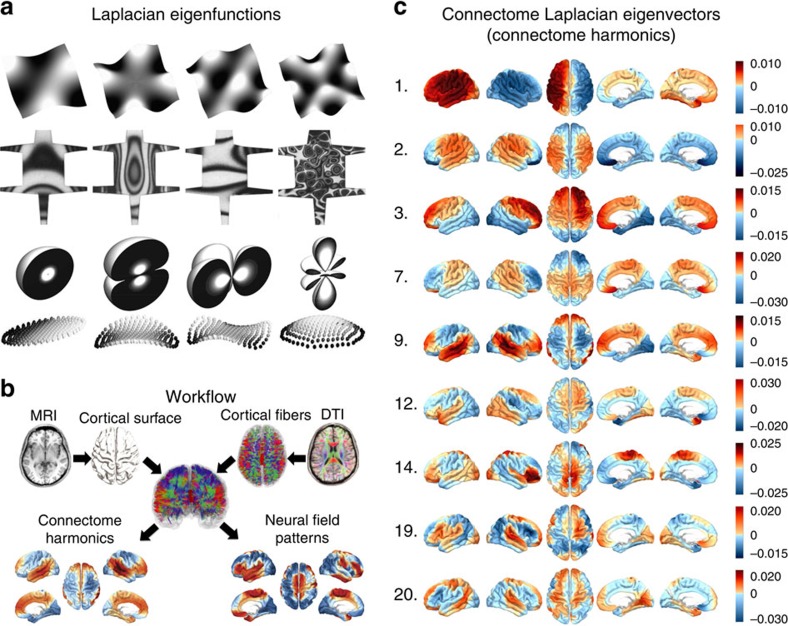
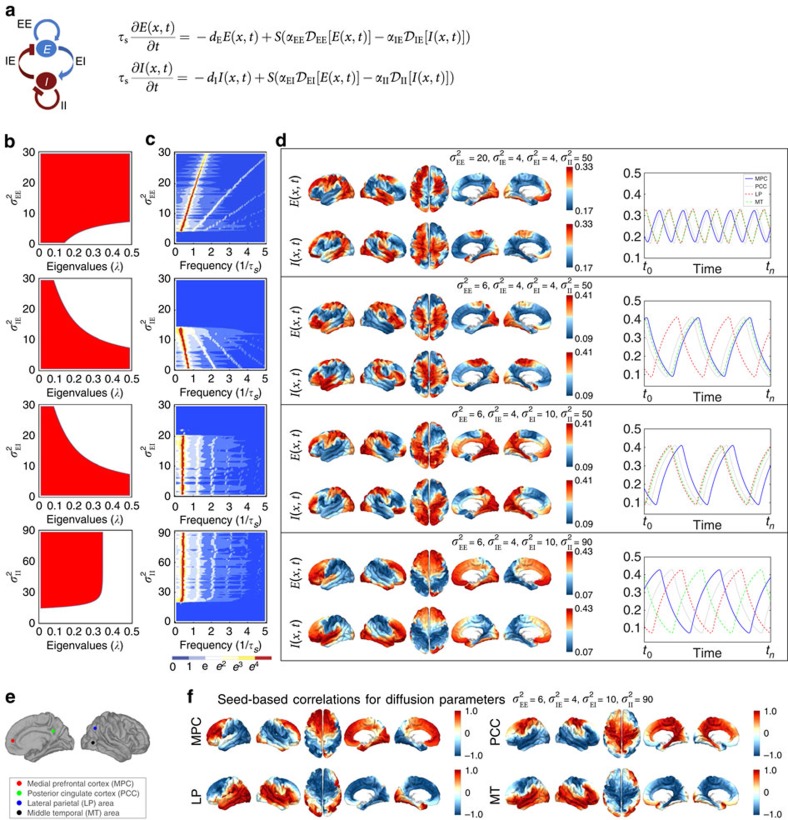
A key characteristic of human brain activity is coherent, spatially distributed oscillations forming behaviour-dependent brain networks. However, a fundamental principle underlying these networks remains unknown. Here we report that functional networks of the human brain are predicted by harmonic patterns, ubiquitous throughout nature, steered by the anatomy of the human cerebral cortex, the human connectome. We introduce a new technique extending the Fourier basis to the human connectome. In this new frequency-specific representation of cortical activity, that we call ‘connectome harmonics’, oscillatory networks of the human brain at rest match harmonic wave patterns of certain frequencies. We demonstrate a neural mechanism behind the self-organization of connectome harmonics with a continuous neural field model of excitatory–inhibitory interactions on the connectome. Remarkably, the critical relation between the neural field patterns and the delicate excitation–inhibition balance fits the neurophysiological changes observed during the loss and recovery of consciousness.
Overview
The claims and statistics of this paper haven’t been checked yet.
Free: it reads the open-access text and checks the first 5 claims that cite a source we can check. Create a free account to check every claim.
Integrity signals
Registry
Cites
Statistics
Figures



Verification
Claims the paper makes
The claims and statistics of this paper haven’t been checked yet.
Free: it reads the open-access text and checks the first 5 claims that cite a source we can check. Create a free account to check every claim.
Claims other papers make about this one
Each is checked against this paper’s own text: does it say what the citing paper says it does?
The source backs part of the claim, not all of it — or backs it for a different population, condition or comparison.
In the citing paper
“When this method was first introduced, Atasoy et al. (2016) compellingly demonstrated how reaction-diffusion simulations of spreading activation could generate resting state networks as stable modes—or standing waves—so recapitulating well-known patterns of neuronal organization with minimal assumptions.”
From An Integrated World Modeling Theory (IWMT) of Consciousness (2020) · cites this paper as Atasoy et al. (2016)
Experimental — accuracy not yet measured
Self-check
Percentages, sums and reported differences re-computed from the paper’s own numbers.
The self-check needs the paper’s full text.
Citations
Cites
Hodgkin, A. L., & Huxley, A. F. (1952) · The Journal of Physiology · doi:10.1113/jphysiol.1952.sp004764 · Cited by 23,191
The chemical basis of morphogenesis
Turing, A. M. (1952) · Philosophical Transactions of the Royal Society of London. Series B, Biological Sciences · doi:10.1098/rstb.1952.0012 · Cited by 11,733
The organization of the human cerebral cortex estimated by intrinsic functional connectivity
Thomas Yeo, B. T., Krienen, F. M., Sepulcre, J., Sabuncu, M. R., Lashkari, D., Hollinshead, M., Roffman, J. L., Smoller, J. W., Zöllei, L., Polimeni, J. R., et al. (2011) · Journal of Neurophysiology · doi:10.1152/jn.00338.2011 · Cited by 9,182
The human brain is intrinsically organized into dynamic, anticorrelated functional networks
Fox, M. D., Snyder, A. Z., Vincent, J. L., Corbetta, M., Van Essen, D. C., & Raichle, M. E. (2005) · Proceedings of the National Academy of Sciences · doi:10.1073/pnas.0504136102 · Cited by 8,553
The organization of the human cerebellum estimated by intrinsic functional connectivity
Buckner, R. L., Krienen, F. M., Castellanos, A., Diaz, J. C., & Yeo, B. T. T. (2011) · Journal of Neurophysiology · doi:10.1152/jn.00339.2011 · Cited by 7,304
Spontaneous fluctuations in brain activity observed with functional magnetic resonance imaging
Fox, M. D., & Raichle, M. E. (2007) · Nature Reviews Neuroscience · doi:10.1038/nrn2201 · Cited by 6,700
Neuronal Oscillations in Cortical Networks
Buzsáki, G., & Draguhn, A. (2004) · Science · doi:10.1126/science.1099745 · Cited by 6,576
Chung, F. (1996) · CBMS Regional Conference Series in Mathematics · doi:10.1090/cbms/092 · Cited by 5,524
Tracking whole-brain connectivity dynamics in the resting state
Allen, E. A., Damaraju, E., Plis, S. M., Erhardt, E. B., Eichele, T., & Calhoun, V. D. (2014) · Cerebral Cortex · doi:10.1093/cercor/bhs352 · Cited by 2,992
Dynamic functional connectivity: Promise, issues, and interpretations
Hutchison, R. M., Womelsdorf, T., Allen, E. A., Bandettini, P. A., Calhoun, V. D., Corbetta, M., Della Penna, S., Duyn, J. H., Glover, G. H., Gonzalez-Castillo, J., et al. (2013) · NeuroImage · doi:10.1016/j.neuroimage.2013.05.079 · Cited by 2,962
Research works printed but not linked: 1
- Lévy, B. Laplace-Beltrami eigenfunctions towards an algorithm that “understands” geometry. In Int. Conf. Shape Modeling and Applications, 2006.
Cited by
Items 201–300 of 378
Vohryzek, J., Luppi, A. I., Atasoy, S., Deco, G., Timmermann, C., Carhart-Harris, R. L., & Kringelbach, M. L. (2024) · bioRxiv (Cold Spring Harbor Laboratory) · doi:10.1101/2024.05.30.596410 · Cited by 8
“2,13 We refer to the human connectome constructed from these data as the HCP-985 connectome.”
BackgroundMethodSelf-citationPhysical mechanisms of human brain functions
Liu, Z. (2024) · Quantitative Biology · doi:10.1002/qub2.70 · Cited by 8
“These structural eigenmodes will be sorted according to the eigenvalues in ascending order [123].”
Hidden Music: The Composer's Guide to Sonification
Mermikides, M. (2025) · Cambridge University Press eBooks · doi:10.1017/9781009258555 · Cited by 7
Cluster synchronization via graph Laplacian eigenvectors
Timofeyev, T., & Patania, A. (2025) · Chaos An Interdisciplinary Journal of Nonlinear Science · doi:10.1063/5.0280142 · Cited by 7
Rué‐Queralt, J., Fluhr, H., Tourbier, S., Alemán‐Gómez, Y., Pascucci, D., Yerly, J., Glomb, K., Plomp, G., & Hagmann, P. (2024) · Human Brain Mapping · doi:10.1002/hbm.26638 · Cited by 6
Thomas, P. J., Leow, A., Klumpp, H., Phan, K. L., & Ajilore, O. (2023) · Biological Psychiatry Cognitive Neuroscience and Neuroimaging · doi:10.1016/j.bpsc.2023.06.008 · Cited by 15
Analyzing asymmetry in brain hierarchies with a linear state-space model of resting-state fMRI data
Benozzo, D., Baggio, G., Baron, G., Chiuso, A., Zampieri, S., & Bertoldo, A. (2024) · Network Neuroscience · doi:10.1162/netn_a_00381 · Cited by 9
“…and spatial patterns, are linked to or can be considered to be linear projections (in the case of nonlinearity) of phenomena such as harmonic waves (Atasoy, Donnelly, & Pearson, 2016), traveling waves (Bolt et al., 2022), oscillatory modes (Cabral et al., 2022), brain spirals (Xu, Long, Feng, &…”
BackgroundFunctional Organization of the Human Brain in the Resting State
Kurgansky, А. V. (2019) · Neuroscience and Behavioral Physiology · doi:10.1007/s11055-019-00850-9 · Cited by 7
“The main concept of the work [Atasoy, 2016] is that when the connectome is considered at the macroscopic level, the Laplace operator can play just as important a role as it plays in the quantitative description of other complex systems.”
BackgroundKashyap, A., & Keilholz, S. D. (2020) · Network Neuroscience · doi:10.1162/netn_a_00129 · Cited by 9
“The eigenvectors of A have also shown 354 similarities to rsfMRI networks [4].”
Estimating Common Harmonic Waves of Brain Networks on Stiefel Manifold
Chen, J., Han, G., Cai, H., Ma, J., Kim, M., Laurienti, P. J., & Guorong Wu, A. (2020) · Lecture notes in computer science · doi:10.1007/978-3-030-59728-3_36 · Cited by 8
Brain Morphogenesis and Developmental Neurotoxicology
Jensen, K. F., & Olin, J. K. (2018) · Elsevier eBooks · doi:10.1016/b978-0-12-809405-1.00001-8 · Cited by 7
Atasoy, S., Escrichs, A., Stark, E. A., Terry, K. G. M., Càmara, E., Sanjuán, A., Chandaria, S., Deco, G., & Kringelbach, M. L. (2023) · bioRxiv (Cold Spring Harbor Laboratory) · doi:10.1101/2023.11.16.567347 · Cited by 7
“To this end, we use the connectome harmonic decomposition framework 28–30 , which represents brain activity in terms of the frequency-specific harmonic brain states defined by connectome harmonics 30 .”
BackgroundMethodInfluentialSelf-citationFacca, M., Felice, A. D., & Bertoldo, A. (2024) · NeuroImage · doi:10.1016/j.neuroimage.2024.120902 · Cited by 10
“Here, we used a theoretically grounded eigenmode-mapping approach 65,66,67,68 and assumed structural eigenmodes to sum linearly to explain functional dynamics.”
Subramani, V., Lioi, G., Jerbi, K., & Farrugia, N. (2025) · Imaging Neuroscience · doi:10.1162/imag_a_00448 · Cited by 9
Liu, H., Cai, H., Yang, D., Zhu, W., Wu, G., & Chen, J. (2023) · Medical Image Analysis · doi:10.1016/j.media.2023.102812 · Cited by 8
“Recently, mounting evidence shows the whole brain network can be summarized as its own Eigensystem, which is a set of harmonic waves derived from the underlying Laplacian matrix of the brain network (Atasoy et al., 2016, 2017).”
InfluentialDysfunction of human brain network hierarchy in Parkinson's disease patients with freezing of gait
Ruan, X., Huang, X., Li, Y., Kuang, Z., Li, M., & Wei, X. (2023) · Parkinsonism & Related Disorders · doi:10.1016/j.parkreldis.2023.105446 · Cited by 6
Discrete spectral eigenmode-resonance network of brain dynamics and connectivity
Robinson, P. A. (2021) · Physical review. E · doi:10.1103/physreve.104.034411 · Cited by 6
Tensor-based Complex-valued Graph Neural Network for Dynamic Coupling Multimodal brain Networks
Yang, Y., Cai, G., Ye, C., Xiang, Y., & Ma, T. (2023) · IEEE International Conference on Acoustics Speech and Signal Processing · doi:10.1109/icassp49357.2023.10095707 · Cited by 6
Pathways to cultural adaptation: the coevolution of cumulative culture and social networks
Smolla, M., & Akçay, E. (2023) · Evolutionary Human Sciences · doi:10.1017/ehs.2023.21 · Cited by 8
Geffen, R., & Braun, C. (2024) · Evidence-based Complementary and Alternative Medicine · doi:10.1155/2024/9844809 · Cited by 9
“Similar ratio patterns as those in the harmonic ratios of an octave were found in diferent natural phenomena such as the periodic table [17], planetary relations [18], colors [19], and brain waves [20].”
ResultGraph Spectral Analysis of Voxel-Wise Brain Graphs from Diffusion-Weighted Mri
Tarun, A., Abramian, D., Behjat, H., & Ville, D. V. D. (2019) · IEEE International Symposium on Biomedical Imaging (ISBI) · doi:10.1109/isbi.2019.8759496 · Cited by 7
“More-over, brain eigenmodes have also been introduced as a building block for the human connectome [9] and cortical neural activity can be decomposed into frequency-specific modes.”
BackgroundMaldegem, M. V., Vohryzek, J., Atasoy, S., Alnagger, N., Cardone, P., Bonhomme, V. L., Vanhaudenhuyse, A., Demertzi, A., Jaquet, O., Bahri, M. A., et al. (2025) · British Journal of Anaesthesia · doi:10.1016/j.bja.2024.12.036 · Cited by 10
“80,86 Other authors have interpreted the same shift as a departure of functional activity from the SC beneath it.”
Self-citationCid‐Fernández, S., Nieto‐Vieites, A., Pereiro, A. X., & Díaz, F. (2025) · Psicothema · doi:10.70478/psicothema.2025.37.11 · Cited by 6
Carhart-Harris, R. L. (2026) · Brain · doi:10.1093/brain/awag206 · Cited by 11
Network Models of Neurodegeneration: Bridging Neuronal Dynamics and Disease Progression
Alexandersen, C. G., Brennan, G. S., Brynildsen, J. K., Henderson, M. X., Iturria‐Medina, Y., & Bassett, D. S. (2026) · IEEE Reviews in Biomedical Engineering · doi:10.1109/rbme.2025.3643310 · Cited by 12
“Subsequent stochastic or linear diffusion-based models using the structural or Laplacian eigenmodes [95], [96], [97], [98] demonstrated that noise propagation along these modes can reproduce empirical functional connectivity and resting-state networks.”
Biological substrates of structure-function coupling in brain networks
Fotiadis, P., Arnsten, A. F. T., Parkes, L., Satterthwaite, T. D., Shinohara, R. T., & Bassett, D. S. (2026) · Neuroscience & Biobehavioral Reviews · doi:10.1016/j.neubiorev.2026.106581 · Cited by 8
Topographic Axes of Wiring Space Converge to Genetic Topography in Shaping the Human Cortical Layout
Li, D., Wang, Y., Ma, L., Wang, Y., Cheng, L., Liu, Y., Shi, W., Lu, Y., Wang, H., Gao, C., et al. (2025) · Journal of Neuroscience · doi:10.1523/jneurosci.1510-24.2024 · Cited by 6
Using an ordinary differential equation model to separate rest and task signals in fMRI
Kashyap, A., Geenjaar, E., Bey, P., Dhindsa, K., Glomb, K., Plis, S., Keilholz, S. D., & Ritter, P. (2025) · Nature Communications · doi:10.1038/s41467-025-62491-6 · Cited by 9
Chen, J., Cai, H., Yang, D., Styner, M. A., Guorong Wu, A., & Alzheimer's-Disease-Neuroimaging-Initiative- (2022) · Medical Image Analysis · doi:10.1016/j.media.2022.102446 · Cited by 5
“As stated in Atasoy et al. (2016) , we calculate a set of individual harmonic waves by solving the following eigenvalue problem: where tr ( · ) is the trace operator and I P denotes the P × P identity matrix.”
A Riemannian Revisiting of Structure–Function Mapping Based on Eigenmodes
Deslauriers‐Gauthier, S., Zucchelli, M., Laghrissi, H., & Rachid Deriche, B. (2022) · Frontiers in Neuroimaging · doi:10.3389/fnimg.2022.850266 · Cited by 6
“This is consistent with the notion that the structure–function relationship is not one to one (Miši´c et al., 2016) and instead operates on a network level (Atasoy et al., 2016; Xie et al., 2021).”
Safron, A. (2023) · Communications in computer and information science · doi:10.1007/978-3-031-28719-0_18 · Cited by 6
Making and breaking symmetries in mind and life
Safron, A., Sakthivadivel, D. A. R., Sheikhbahaee, Z., Bein, M., Razi, A., & Levin, M. G. (2023) · Interface Focus · doi:10.1098/rsfs.2023.0015 · Cited by 7
“In this issue, questions such as ‘ along which dimensions are symmetries most important for nervous system functioning (e.g. connectomic resting-state networks as reflecting harmonic functions) [20]?”
Graph Signal Processing For Neurogimaging to Reveal Dynamics of Brain Structure-Function Coupling
Preti, M. G., Bolton, T. A. W., Griffa, A., & Ville, D. V. D. (2023) · IEEE International Conference on Acoustics Speech and Signal Processing · doi:10.1109/icassp49357.2023.10095285 · Cited by 9
“The graph Fourier transform (GFT) [3] is then applied to decompose functional patterns into a weighted sum of basis vectors (also called “structural harmonics” [8] as each is characteristic for a graph frequency).”
MethodInhibition delay increases neural network capacity through Stirling transform
Nogaret, A., & King, A. D. (2018) · Physical review. E · doi:10.1103/physreve.97.030301 · Cited by 5
Neuroimaging: Structural, Functional, Pharmacological, Bioelementology and Nutritionology
Pyatin, V. F., Maslova, O., Romanchuk, N., Volobuev, A. N., Bulgakova, S. V., Romanov, D. V., & Sirotko, I. I. (2021) · Bulletin of Science and Practice · doi:10.33619/2414-2948/71/18 · Cited by 5
Replay as a Basis for Backpropagation Through Time in the Brain
Cheng, H., & Brown, J. W. (2025) · Neural Computation · doi:10.1162/neco_a_01735 · Cited by 6
Criticality in a multisignal system using principal component analysis
Sánchez-Islas, M., Toledo-Roy, J. C., & Frank, A. (2021) · Physical review. E · doi:10.1103/physreve.103.042111 · Cited by 6
Robinson, P. A. (2025) · Physical review. E · doi:10.1103/physreve.111.014404 · Cited by 5
Geometric constraints on the architecture of mammalian cortical connectomes
Normand, F., Gajwani, M., Cao, T. N., Cruddas, J., Sangchooli, A., Oldham, S., Holmes, A., Robinson, P. A., Pang, J. C. S., & Fornito, A. (2026) · Cell · doi:10.1016/j.cell.2026.05.048 · Cited by 5
McGovern, H. T., Aqil, M., Atasoy, S., & Carhart-Harris, R. L. (2025) · Neuroscience of Consciousness · doi:10.1093/nc/niaf039 · Cited by 7
“Some recent d ata suggest that this manifests as higher spatiotemporal frequency patterns or harmonics on the cortical surface and across the whole brain (Atasoy et al. 2016, Atasoy et al. 2017).”
Self-citationSassenberg, T. A., Jung, R. E., & DeYoung, C. G. (2025) · Cerebral Cortex · doi:10.1093/cercor/bhaf046 · Cited by 5
Vohryzek, J., Luppi, A. I., Atasoy, S., Deco, G., Carhart-Harris, R. L., Timmermann, C., & Kringelbach, M. L. (2025) · Neuropsychopharmacology · doi:10.1038/s41386-025-02190-4 · Cited by 15
“A theoretically rigorous way to characterise how brain function depends on the underlying network organisation of the human connectome is provided by the framework of connectome harmonic decomposition (CHD) [5, 6].”
Self-citationMantoux, C., Couvy‐Duchesne, B., Cacciamani, F., Epelbaum, S., Durrleman, S., & Allassonnière, S. (2021) · Entropy · doi:10.3390/e23040490 · Cited by 4
“The analysis of the eigenvalues and eigenvectors of the graph Laplacian has proven of great theoretical [66] and practical [67] interest in network analysis.”
BackgroundChen, J., Yang, D., Cai, H., Styner, M. A., & Guorong Wu, A. (2021) · Lecture notes in computer science · doi:10.1007/978-3-030-78191-0_18 · Cited by 4
Cai, H., Liu, H., Yang, D., Guorong Wu, A., Hu, B., & Chen, J. (2023) · IEEE Journal of Biomedical and Health Informatics · doi:10.1109/jbhi.2023.3250711 · Cited by 4
“To evaluate the performance of our proposed harmonic analysis method, we compare the common harmonic waves optimized by our approach with the benchmark and the other groups of harmonic waves generated by the following methods: 1) Traditional method Ψo: directly using the empirical biomarkers for classification; 2) Ari…”
BackgroundMethodKashyap, A., Plis, S., Schirner, M., Ritter, P., & Keilholz, S. D. (2023) · Frontiers in Neuroscience · doi:10.3389/fnins.2023.1159914 · Cited by 5
Wang, Z., Servio, P. D., & Rey, A. D. (2023) · Soft Matter · doi:10.1039/d3sm01164j · Cited by 4
Simulation-based inference of developmental EEG maturation with the spectral graph model
Bernardo, D., Xie, X., Verma, P., Kim, J., Liu, V., Numis, A. L., Wu, Y., Glass, H. C., Yap, P., Nagarajan, S. S., et al. (2024) · Communications Physics · doi:10.1038/s42005-024-01748-w · Cited by 6
“In the latter, eigenmodes of the adjacency or Laplacian matrix are typically employed, and only a few eigenmodes are usually sufficient to reproduce empirical functional connectivity[84, 87–92].”
Anomalous Lifshitz dimension in hierarchical networks of brain connectivity
Esfandiary, S., Safari, A., Renner, J., Moretti, P., & Muñoz, M. A. (2020) · Physical Review Research · doi:10.1103/physrevresearch.2.043291 · Cited by 4
Apa Saya Khawatir Karena Fear of Negative Evaluation? Sebuah Studi Pada Remaja
Malang, F. P. U. M., Putera, K. D., Yuniardi, M. S., Malang, F. P. U. M., Masturah, A. N., & Malang, F. P. U. M. (2020) · Mediapsi · doi:10.21776/ub.mps.2020.006.01.3 · Cited by 11
Ramstead, M. J. D., Albarracin, M., Kiefer, A. B., Williford, K., Safron, A., Fields, C., Solms, M., & Friston, K. J. (2023) · PsyArXiv (OSF Preprints) · doi:10.31234/osf.io/6eqxh · Cited by 7
Beyond cortical geometry: brain dynamics shaped by rare long-range connectionsPreprint
Vohryzek, J., Perl, Y. S., Kringelbach, M. L., & Deco, G. (2024) · bioRxiv (Cold Spring Harbor Laboratory) · doi:10.1101/2024.04.09.588757 · Cited by 4
Pascual‐Diaz, S., Pineda, J., Serra, L., Varriano, F., & Prats‐Galino, A. (2019) · PLoS ONE · doi:10.1371/journal.pone.0224598 · Cited by 3
GSP Analysis of Brain Imaging Data from Athletes with History of Multiple Concussions
Sihag, S., Naze, S., Taghdiri, F., Tartaglia, M. C., & Kozloski, J. (2019) · IEEE Global Conference on Signal and Information Processing · doi:10.1109/globalsip45357.2019.8969487 · Cited by 3
“The study in [12] analyzed the interdependence of the resting state networks and spectral properties of the human connectome.”
BackgroundNonlinear analysis of periodic waves in a neural field model
Budzinskiy, S., Beuter, A. C., & Volpert, V. A. (2020) · Chaos An Interdisciplinary Journal of Nonlinear Science · doi:10.1063/5.0012010 · Cited by 3
Caprioglio, E., & Berthouze, L. (2024) · Frontiers in Network Physiology · doi:10.3389/fnetp.2024.1436046 · Cited by 6
Laurienti, P. J., Chen, J., Styner, M. A., Han, G., Cai, H., Guorong Wu, A., & Yang, D. (2021) · Carolina Digital Repository (University of North Carolina at Chapel Hill) · doi:10.17615/sn59-ms82 · Cited by 3
Thomas, P. J., Leow, A., Klumpp, H., Phan, K. L., & Ajilore, O. (2021) · Cerebral Cortex · doi:10.1093/cercor/bhab314 · Cited by 3
Harmonic waves as the fundamental principle underlying temporo-spatial dynamics of brain and mind
Atasoy, S., Deco, G., & Kringelbach, M. L. (2019) · Physics of Life Reviews · doi:10.1016/j.plrev.2019.10.001 · Cited by 5
Self-citationBrain network analyses in clinical neuroscience
Sokolov, A. A., Granziera, C., Fischi-Gómez, E., Preti, M. G., Ryvlin, P., Ville, D. V. D., & Friston, K. J. (2019) · Swiss Archives of Neurology Psychiatry and Psychotherapy · doi:10.4414/sanp.2019.03074 · Cited by 3
Wang, R., Su, X., Chang, Z., Wu, Y., & Lin, P. (2020) · doi:10.21203/rs.3.rs-94060/v1 · Cited by 3
Converging on consistent functional connectomicsPreprint
Luppi, A., Gellersen, H., Liu, Z.-Q., Peattie, A. R. D., Manktelow, A., Adapa, R., Owen, A., Naci, L., Menon, D. K., Dimitriadis, S., et al. (2023) · bioRxiv · doi:10.1101/2023.06.23.546329 · Cited by 2
Gong, Z.-Q., & Zuo, X. (2026) · Physics of Life Reviews · doi:10.1016/j.plrev.2026.01.007 · Cited by 5
Stochastic Graph Heat Modelling for Diffusion-based Connectivity Retrieval
Goerttler, S., He, F., & Wu, M. (2024) · Annual International Conference of the IEEE Engineering in Medicine and Biology Society (EMBC) · doi:10.1109/embc53108.2024.10782862 · Cited by 3
“On the one hand, this approach is motivated by the idea that multivariate neurophysiological signals reside on irregular graphs, which are a consequence of the complex connectivity structure in the brain [5].”
Structure-function dynamics in healthy cognitive aging: a graph signal processing approach
Guichet, C., Achard, S., Mermillod, M., & Baciu, M. (2026) · Brain Structure and Function · doi:10.1007/s00429-026-03130-8 · Cited by 5
“We only provide a brief introduction and refer to previous works for additional details (Atasoy et al. 2016; Leus et al. 2023; Lioi et al. 2021).”
Park, H. G. (2026) · Brain Topography · doi:10.1007/s10548-026-01193-8 · Cited by 2
Facca, M., Felice, A. D., & Bertoldo, A. (2026) · Communications Biology · doi:10.1038/s42003-025-09444-3 · Cited by 2
A geometry aware framework enhances noninvasive mapping of whole human brain dynamics
Wang, S., Lou, K., Wei, C., Sheng, Z., Tang, J., Peng, K., Shen, X., Mei, S., Chen, L., Gu, D., et al. (2026) · Nature Biomedical Engineering · doi:10.1038/s41551-026-01664-0 · Cited by 7
“For example, some approaches assume a fixed spherical manifold [28], employ hand-crafted patch priors that depend on substantial hyperparameter optimization [71], or define connectome eigenmodes at the regional level without capturing individual cortical geometry [72–75].”
Latheef, A. A. P., Yadav, A., Sharma, A. K., & Bapi, R. S. (2022) · International Joint Conference on Neural Networks (IJCNN) · doi:10.1109/ijcnn55064.2022.9892022 · Cited by 2
“Diffusion kernel H i can be defined over a graph [18] using the graph Laplacian: where γ i is the scale of diffusion.”
BackgroundMethodTransgenerational exposure to deoxygenation and warming disrupts mate detection in Gammarus locusta
Pereira, B. P., Neff, S., Borges, F. O., Otjacques, E., Barreto, G., Ranucci, M., Court, M., Rosa, R., Repolho, T., & Paula, J. R. (2023) · Behavioral Ecology · doi:10.1093/beheco/arad102 · Cited by 3
Dynamic brain network models: How interactions in the structural connectome shape brain dynamics
Cabral, J., & Griffiths, J. D. (2024) · Elsevier eBooks · doi:10.1016/b978-0-443-13480-7.00001-6 · Cited by 2
Wang, X., Chen, H., Wen, R., Ou, P., Huang, Y., Deng, L., Shi, L., Chen, W., Chen, H., Wang, J., et al. (2024) · CNS Neuroscience & Therapeutics · doi:10.1111/cns.14842 · Cited by 2
“26 Following the approach of prior studies, we set the manifold learning parameter (a) to 0.5.”
MethodInfluentialRaj, A., Sipes, B. S., Verma, P., Mathalon, D. H., Biswal, B. B., & Nagarajan, S. S. (2024) · Imaging Neuroscience · doi:10.1162/imag_a_00381 · Cited by 6
Interdependence patterns of multifrequency oscillations predict visuomotor behavior
Bahuguna, J., Schwey, A., Battaglia, D. A., & Malfait, N. (2025) · Network Neuroscience · doi:10.1162/netn_a_00440 · Cited by 3
“…with the idea that behavior is not controlled by a myriad of unrelated oscillatory processes but instead by collective dynamical modes that manifest themselves, exerting distributed co-modulations of oscillations at different locations (Atasoy et al., 2016; Kirst, Timme, & Battaglia, 2016).”
The Enigma of Mind: A Theory of Evolution and Conscious Experience
Lin, A., & Lomas, D. (2022) · Cambridge University Press eBooks · doi:10.1017/9781009232517.009 · Cited by 2
McCoss, A. M. (2017) · Journal of Quantum Information Science · doi:10.4236/jqis.2017.74010 · Cited by 2
Emergence of Canonical Functional Networks from the Structural ConnectomePreprint
Xie, X., Damasceno, P. F., Cai, C., Nagarajan, S. S., & Raj, A. (2020) · bioRxiv (Cold Spring Harbor Laboratory) · doi:10.1101/2020.09.16.300384 · Cited by 2
“Consistent with previous works, we see the Laplace eigenmodes of the human structural connectome display a wide range of cortical activity patterns [27, 24].”
BackgroundMethodResultInfluentialCabral, J., Fernandes, F. F., & Shemesh, N. (2022) · bioRxiv (Cold Spring Harbor Laboratory) · doi:10.1101/2022.01.06.475200 · Cited by 2
“including anatomical resistivity and fluid viscosity, these observations corroborate previous studies proposing (through approximate calculations) that resting-state networks are the expression of different harmonic modes of the brain (42, 43, 46, 47).”
Neural integration and segregation revealed by a joint time-vertex connectome spectral analysisPreprint
Rué‐Queralt, J., Mancini, V., Rochas, V., Latrèche, C., Uhlhaas, P. J., Michel, C. M., Plomp, G., D, S. E. M., & Hagmann, P. (2022) · bioRxiv (Cold Spring Harbor Laboratory) · doi:10.1101/2022.07.26.501543 · Cited by 2
Maldegem, M. V., Vohryzek, J., Atasoy, S., Alnagger, N., Cardone, P., Bonhomme, V. L., Vanhaudenhuyse, A., Athena Demertzi, A., Jaquet, O., Bahri, M. A., et al. (2024) · bioRxiv (Cold Spring Harbor Laboratory) · doi:10.1101/2024.06.20.599885 · Cited by 2
Self-citationCognitive function linked to temporal occupancy of Brain-Ventricle (BraVe) modesPreprint
Campo, F. F., Miguel, V., Brattico, E., Nigro, S. L., Tafuri, B., Logroscino, G., Cabral, J., & (ADNI), T. A. D. N. I. (2025) · bioRxiv (Cold Spring Harbor Laboratory) · doi:10.1101/2025.01.04.631289 · Cited by 3
Sound Healing, Theory, and Practice
Beaulieu, J., & Perez-Martinez, D. (2018) · CRC Press eBooks · doi:10.1201/9781315153155-19 · Cited by 1
Tulina, D., Chan, M. K., Wong, M. B., & Dupuis, G. E. (2020) · Journal of Stem Cell Research & Therapeutics · doi:10.15406/jsrt.2020.06.00139 · Cited by 1
Non-local Schrödinger diffusion model reveals mechanisms of critical brain dynamics
Deco, G., Perl, Y. S., & Kringelbach, M. L. (2025) · Cell Reports Physical Science · doi:10.1016/j.xcrp.2025.102663 · Cited by 3
Fan, L., Wang, D., Wen, X., Xu, B., Chen, X., Li, X., & Liang, Z. (2025) · Journal of Neural Engineering · doi:10.1088/1741-2552/ade9f2 · Cited by 1
“Atasoy et al studied the relationship between oscillation frequency and excitatory-inhibitory balance by modeling the monotonic properties of excitatory and inhibitory activity in a neural field model [60].”
Pang, J. C. S. (2025) · Physics of Life Reviews · doi:10.1016/j.plrev.2025.08.006 · Cited by 1
Brain modes of resonance estimated by a biophysical multi-compartment finite elements model
Gonçalves, I., Oliveira, D. A., Rocha, C., Cabral, J., & Parente, M. (2025) · Scientific Reports · doi:10.1038/s41598-025-00938-y · Cited by 1
“In 2016, Atasoy and colleagues introduced the Connectome-Specific Harmonic Waves (CSHW) framework, providing a frequency-specific representation of cortical activity based on the human brain’s functional networks 4 .”
Li, Y., Long, G., Zhang, X., Chen, K., Li, X., & Zhang, Z. (2025) · Advanced Science · doi:10.1002/advs.202511614 · Cited by 3
From Nodes to Edges: Edge-Based Laplacians for Brain Signal Processing
Santoro, A., Nurisso, M., & Petri, G. (2025) · European Signal Processing Conference (EUSIPCO) · doi:10.23919/eusipco63237.2025.11226642 · Cited by 5
“More specifically, in neuroscience, diffusion-weighted imaging is typically used to construct structural connectomes − the networks of white-matter pathways that connect distinct brain regions [2, 3].”
Corredor, D., Liu, W., Partanen, P., Knapič, S., Palva, J. M., & Palva, S. (2025) · European Signal Processing Conference (EUSIPCO) · doi:10.23919/eusipco63237.2025.11226799 · Cited by 1
“In recent years, the SFC in the human brain has been investigated using graph signal processing (GSP) methods, in particular, graph harmonic analysis [4], [5].”
Sairanen, V. (2026) · Network Neuroscience · doi:10.1162/netn.a.589 · Cited by 1
Ma, J., Luo, J., Liu, D., Wu, J., Wang, Y., & Li, X. (2026) · Engineering Applications of Artificial Intelligence · doi:10.1016/j.engappai.2026.115091 · Cited by 1
Scrutinizing critical dynamics of reaction–diffusion models on complex networks
Gou, W., Cui, J., Song, Y., Lin, W. J., & Jin, Z. (2026) · Chaos An Interdisciplinary Journal of Nonlinear Science · doi:10.1063/5.0332874 · Cited by 1
Changes in brain entropy are related to abstract temporal topology
Çankaya, M. N., & Déli, É. (2017) · Physics of Life Reviews · doi:10.1016/j.plrev.2017.04.003 · Cited by 1
D’Souza, N. S., Nebel, M. B., Crocetti, D., Wymbs, N. F., Robinson, J., Mostofsky, S. H., & Venkataraman, A. (2020) · PubMed · doi:10.48550/arxiv.2008.12410 · Cited by 1
“…(2008)], with several studies suggesting that this functional connectivity may be mediated by either direct or indirect anatomical connections [Atasoy, Donnelly and Pearson (2016); Bowman, Zhang, Derado and Chen (2012); Fukushima, Betzel, He, van den Heuvel, Zuo and Sporns (2018); Honey,…”
The Effect of Graph Frequencies on Dynamic Structures in Graph Signal Processing
Goerttler, S., Wu, M., & He, F. (2022) · IEEE Signal Processing in Medicine and Biology Symposium · doi:10.1109/spmb55497.2022.10014954 · Cited by 1
“On the other hand, the spatial characteristics can be analysed using spectral graph theory, where the connectivity structure between the signals is determined and subsequently analysed [1].”
BackgroundRapoport, D. L. (2023) · Journal of Physics Conference Series · doi:10.1088/1742-6596/2482/1/012026 · Cited by 2
“[8], Rapoport & Perez [234], Rapoport [236])”
BackgroundInfluentialHoloBrain: A Harmonic Holography for Self-organized Brain Function
Liu, H., Dan, T., Huang, Z., Yang, D., Kim, W. H., Kim, M., Laurienti, P. J., & Guorong Wu, A. (2023) · Lecture notes in computer science · doi:10.1007/978-3-031-34048-2_3 · Cited by 1
Li, J., Lyu, Z., Li, K., Li, Y., & Guo, X. (2023) · Biomedical Signal Processing and Control · doi:10.1016/j.bspc.2023.105798 · Cited by 1
The neuroreceptors and transporters underlying spontaneous brain activity
Nakuci, J., & Bansal, K. (2025) · Communications Biology · doi:10.1038/s42003-025-08492-z · Cited by 1
“…control group ( R BOLD = 0.55 ± 0.01; mean ± SEM) was not signi fi cantly different from the schizophrenia ( R BOLD = 0.55 ± 0.01; P Diff_SCZ_to_HC = 0.80), bipolar disorder ( R BOLD = 0.55 ± 0.02; P Diff_BD_to_HC = 0.08), and ADHD groups ( R BOLD = 0.55 ± 0.01; P Diff_ADHD_to_HC = 0.43; Fig.”
Influential
Metadata
- Authors
- Atasoy, S., Donnelly, I., & Pearson, J.
- Affiliations
- UNSW Sydney (AU)
- Corresponding author
- Atasoy, Selen
- Venue
- Nature Communications
- Published
- 2016-01-21
- Volume
- 7
- Issue
- 1
- Pages
- 10340-10340
- ISSN
- 2041-1723 (ISSN-L)
- PMC
- PMC4735826
- OpenAlex
- W2267939148
- Cited by
- 381
- References
- 59
- Citations by year
- 2026: 38 · 2025: 50 · 2024: 40 · 2023: 55 · 2022: 39 · 2021: 50 · 2020: 39 · 2019: 25 · 2018: 18 · 2017: 19 · 2016: 8
- FWCI
- 14.85
- Type
- journal article
- Language
- en
- Open access
- gold
- doi.org
- Licence
- cc-by
- creativecommons.org/licenses/by/4.0 (tdm)
- creativecommons.org/licenses/by/4.0 (vor)
- Locations
- Nature Communications (publishedVersion, cc-by)
- PubMed Central (publishedVersion, cc-by)
- PubMed (publishedVersion)
- RePEc: Research Papers in Economics (submittedVersion)
- DOAJ (DOAJ: Directory of Open Access Journals) (submittedVersion, cc-by-sa)
- Funders
- National Institutes of Health (5u54mh091657-05)
- Australian Research Council (DP140101560)
- National Health and Medical Research Council (1049596, 1046198, 1024800, 1085404)
- National Institute of Mental Health (1U54 MH091657, U54-MH091657)
- Topics
- Life Sciences › Neuroscience › Cognitive Neuroscience › Neural dynamics and brain function
- Life Sciences › Neuroscience › Cognitive Neuroscience › Functional Brain Connectivity Studies
- Physical Sciences › Physics and Astronomy › Statistical and Nonlinear Physics › Nonlinear Dynamics and Pattern Formation
- Keywords
- human brain networks, functional connectivity, resting-state brain activity, neural field models, excitation-inhibition balance, self-organization, consciousness, cerebral cortex
- MeSH terms
- Adult, Brain, Brain Mapping, Female, Humans, Male, Nerve Net, Young Adult, Connectome
About these checks
Registry, retraction, Cites and statistics results are computed, not judged, with one exception: a printed reference that no index lists is read once by a model before it counts as a citation error. Claims are extracted by a model and kept only when their quote appears verbatim in the text; each cited source is then checked, with a model’s help, for whether it says what the claim relies on. Those verdicts can be wrong — read the claim’s quote and the cited source before relying on one.
Statistics and arithmetic are recomputed, not judged.
Confidence bands are shown only for fields calibrated on our annotated test set. None is calibrated yet, so no band is shown.
What counts as a claim ›How we measure confidence ›How we check this ›
Are you an author, or do you see a problem with this page? Request a review
Data sources
Bibliographic data: Semantic Scholar, OpenAlex, Crossref.
Contains information from the Semantic Scholar Academic Graph Datasets, made available under the ODC Attribution License (ODC-BY 1.0).
Semantic Scholar’s data is described in: Kinney, R., et al. (2023). The Semantic Scholar Open Data Platform. arXiv:2301.10140.
