

Human brain networks function in connectome-specific harmonic waves
Open accessThe DOI matches its Crossref record; 59 of the 59 references it cites were found in a registry or an index.
Abstract
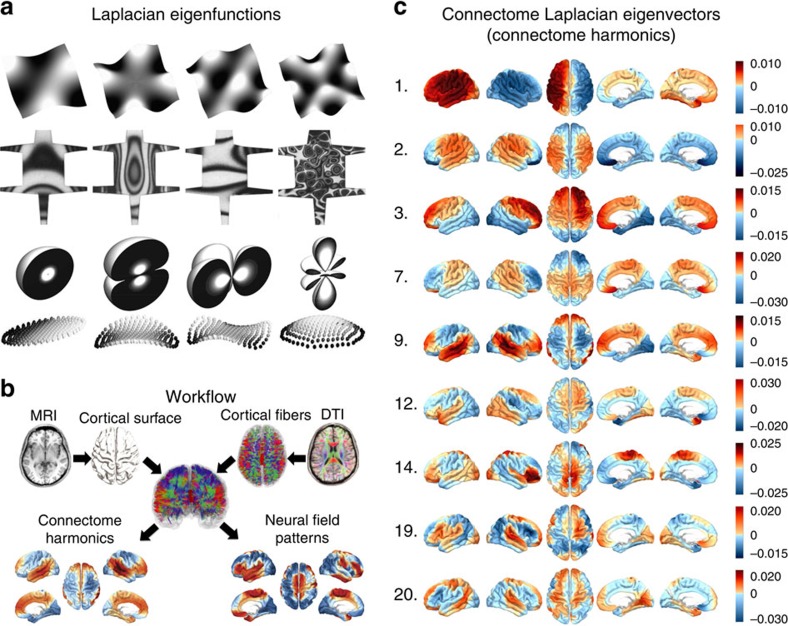
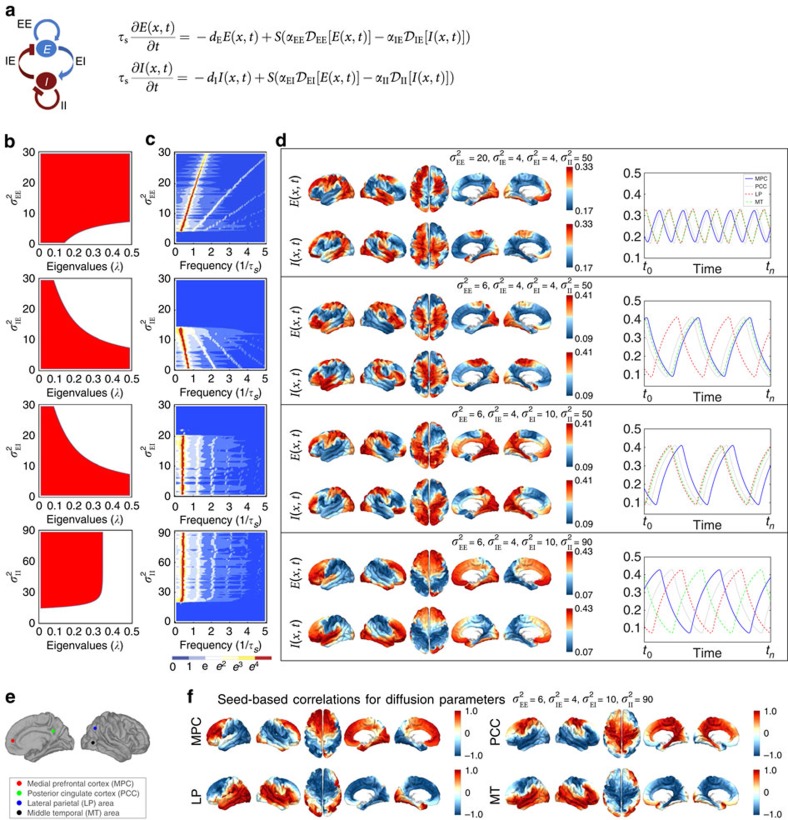
A key characteristic of human brain activity is coherent, spatially distributed oscillations forming behaviour-dependent brain networks. However, a fundamental principle underlying these networks remains unknown. Here we report that functional networks of the human brain are predicted by harmonic patterns, ubiquitous throughout nature, steered by the anatomy of the human cerebral cortex, the human connectome. We introduce a new technique extending the Fourier basis to the human connectome. In this new frequency-specific representation of cortical activity, that we call ‘connectome harmonics’, oscillatory networks of the human brain at rest match harmonic wave patterns of certain frequencies. We demonstrate a neural mechanism behind the self-organization of connectome harmonics with a continuous neural field model of excitatory–inhibitory interactions on the connectome. Remarkably, the critical relation between the neural field patterns and the delicate excitation–inhibition balance fits the neurophysiological changes observed during the loss and recovery of consciousness.
Overview
The claims and statistics of this paper haven’t been checked yet.
Free: it reads the open-access text and checks the first 5 claims that cite a source we can check. Create a free account to check every claim.
Integrity signals
Registry
Cites
Statistics
Figures



Verification
Claims the paper makes
The claims and statistics of this paper haven’t been checked yet.
Free: it reads the open-access text and checks the first 5 claims that cite a source we can check. Create a free account to check every claim.
Claims other papers make about this one
Each is checked against this paper’s own text: does it say what the citing paper says it does?
The source backs part of the claim, not all of it — or backs it for a different population, condition or comparison.
In the citing paper
“When this method was first introduced, Atasoy et al. (2016) compellingly demonstrated how reaction-diffusion simulations of spreading activation could generate resting state networks as stable modes—or standing waves—so recapitulating well-known patterns of neuronal organization with minimal assumptions.”
From An Integrated World Modeling Theory (IWMT) of Consciousness (2020) · cites this paper as Atasoy et al. (2016)
Experimental — accuracy not yet measured
Self-check
Percentages, sums and reported differences re-computed from the paper’s own numbers.
The self-check needs the paper’s full text.
Citations
Cites
Hodgkin, A. L., & Huxley, A. F. (1952) · The Journal of Physiology · doi:10.1113/jphysiol.1952.sp004764 · Cited by 23,191
The chemical basis of morphogenesis
Turing, A. M. (1952) · Philosophical Transactions of the Royal Society of London. Series B, Biological Sciences · doi:10.1098/rstb.1952.0012 · Cited by 11,733
The organization of the human cerebral cortex estimated by intrinsic functional connectivity
Thomas Yeo, B. T., Krienen, F. M., Sepulcre, J., Sabuncu, M. R., Lashkari, D., Hollinshead, M., Roffman, J. L., Smoller, J. W., Zöllei, L., Polimeni, J. R., et al. (2011) · Journal of Neurophysiology · doi:10.1152/jn.00338.2011 · Cited by 9,182
The human brain is intrinsically organized into dynamic, anticorrelated functional networks
Fox, M. D., Snyder, A. Z., Vincent, J. L., Corbetta, M., Van Essen, D. C., & Raichle, M. E. (2005) · Proceedings of the National Academy of Sciences · doi:10.1073/pnas.0504136102 · Cited by 8,553
The organization of the human cerebellum estimated by intrinsic functional connectivity
Buckner, R. L., Krienen, F. M., Castellanos, A., Diaz, J. C., & Yeo, B. T. T. (2011) · Journal of Neurophysiology · doi:10.1152/jn.00339.2011 · Cited by 7,304
Spontaneous fluctuations in brain activity observed with functional magnetic resonance imaging
Fox, M. D., & Raichle, M. E. (2007) · Nature Reviews Neuroscience · doi:10.1038/nrn2201 · Cited by 6,700
Neuronal Oscillations in Cortical Networks
Buzsáki, G., & Draguhn, A. (2004) · Science · doi:10.1126/science.1099745 · Cited by 6,576
Chung, F. (1996) · CBMS Regional Conference Series in Mathematics · doi:10.1090/cbms/092 · Cited by 5,524
Tracking whole-brain connectivity dynamics in the resting state
Allen, E. A., Damaraju, E., Plis, S. M., Erhardt, E. B., Eichele, T., & Calhoun, V. D. (2014) · Cerebral Cortex · doi:10.1093/cercor/bhs352 · Cited by 2,992
Dynamic functional connectivity: Promise, issues, and interpretations
Hutchison, R. M., Womelsdorf, T., Allen, E. A., Bandettini, P. A., Calhoun, V. D., Corbetta, M., Della Penna, S., Duyn, J. H., Glover, G. H., Gonzalez-Castillo, J., et al. (2013) · NeuroImage · doi:10.1016/j.neuroimage.2013.05.079 · Cited by 2,962
Research works printed but not linked: 1
- Lévy, B. Laplace-Beltrami eigenfunctions towards an algorithm that “understands” geometry. In Int. Conf. Shape Modeling and Applications, 2006.
Cited by
Items 101–200 of 378
Evertz, R., Hicks, D. G., & Liley, D. T. J. (2022) · PLoS Computational Biology · doi:10.1371/journal.pcbi.1010012 · Cited by 29
“Indeed, such a decomposition can be applied to more complex systems having a range of local and non-local interactions, by defining an eigen-decomposition involving a structural graph Laplacian defined on the basis of these local and non-local interactions [73–75].”
BackgroundEmergence of canonical functional networks from the structural connectome
Xie, X., Cai, C., Damasceno, P. F., Nagarajan, S. S., & Raj, A. (2021) · NeuroImage · doi:10.1016/j.neuroimage.2021.118190 · Cited by 28
How brain structure–function decoupling supports individual cognition and its molecular mechanism
Dong, X., Li, Q., Wang, X., He, Y., Zeng, D., Chu, L., Zhao, K., & Li, S. (2024) · Human Brain Mapping · doi:10.1002/hbm.26575 · Cited by 28
“Recently, graph signal processing has become increasingly popular for structure – function analysis (Atasoy et al., 2016; Griffa et al., 2022; Preti & Van De Ville, 2019).”
MethodComparing structure–function relationships in brain networks using EEG and fNIRS
Blanco, R., Preti, M. G., Koba, C., Ville, D. V. D., & Crimi, A. (2024) · Scientific Reports · doi:10.1038/s41598-024-79817-x · Cited by 30
The neural and cognitive architecture for learning from a small sample
Cortese, A., Martino, B. D., & Kawato, M. (2019) · Current Opinion in Neurobiology · doi:10.1016/j.conb.2019.02.011 · Cited by 30
“Recent work has elegantly linked the brain’s structural connectivity (particularly the thalamo-cortical system) with neural activity patterns and dynamics, providing a formal basis for harmonic patterns of certain frequencies [61].”
Graph neural fields: A framework for spatiotemporal dynamical models on the human connectome
Aqil, M., Atasoy, S., Kringelbach, M. L., & Hindriks, R. (2021) · PLoS Computational Biology · doi:10.1371/journal.pcbi.1008310 · Cited by 33
Self-citationA Riemannian approach to predicting brain function from the structural connectome
Benkarim, O. M., Paquola, C., Park, B., Royer, J., Rodríguez‐Cruces, R., de Wael, R. V., Mišić, B., Piella, G., & Bernhardt, B. C. (2022) · NeuroImage · doi:10.1016/j.neuroimage.2022.119299 · Cited by 32
Multiple Kernel Learning Model for Relating Structural and Functional Connectivity in the Brain
Surampudi, S. G., Naik, S., Bapi, R. S., Jirsa, V., Sharma, A. K., & Roy, D. (2018) · Scientific Reports · doi:10.1038/s41598-018-21456-0 · Cited by 26
“This diffusion acts as a spatial diffusion operator derived in the supplementary material of [[4]].”
BackgroundRelationships between short and fast brain timescales
Déli, É., Tozzi, A., & Peters, J. F. (2017) · Cognitive Neurodynamics · doi:10.1007/s11571-017-9450-4 · Cited by 28
“A constant flux of local electromagnetic potential differences in the complex neural landscape of the brain vary according to the principle of least action, but the resting brain’s recurring electromagnetic activities form a highly reproducible harmonic function (Atasoy et al. 2016) that takes the form of a four dimen…”
BackgroundInfluentialLuppi, A. I., Craig, M. M., Coppola, P., Peattie, A. R. D., Finoia, P., Williams, G. B., Allanson, J., Pickard, J. D., Menon, D. K., & Stamatakis, E. A. (2021) · NeuroImage Clinical · doi:10.1016/j.nicl.2021.102682 · Cited by 28
“…fractal organisation is crucial in balancing the brain’s opposing needs for integration and differentiation (Gallos et al., 2012b, 2012a; Ruiz de Miras et al., 2019) – two key requirements for consciousness, according to leading theoretical work (Balduzzi and Tononi, 2008; Tononi et al., 1994).”
BackgroundThe broad edge of synchronization: Griffiths effects and collective phenomena in brain networks
Buendía, V., Villegas, P., Burioni, R., & Muñoz, M. A. (2022) · Philosophical Transactions of the Royal Society A Mathematical Physical and Engineering Sciences · doi:10.1098/rsta.2020.0424 · Cited by 24
“a neural-field model such as the Wilson–Cowan one [53,54] or a simpler effective model of neural synchronization such as a Stuart–Landau oscillator [51,55]) assumed to capture key aspects of neural activity at a brain mesoscopic region, and the different units are linked together following the network architecture [55…”
MethodUsing structural connectivity to augment community structure in EEG functional connectivity
Glomb, K., Mullier, E., Carboni, M., Rubega, M., Iannotti, G., Tourbier, S., Seeber, M., Vulliémoz, S., & Hagmann, P. (2020) · Network Neuroscience · doi:10.1162/netn_a_00147 · Cited by 22
“Concurring findings show that FC between regions of interest (ROIs)/sources located in the gray matter is in part shaped by anatomical connections of the structural connectivity (SC; obtained from dMRI and fiber tracking), such that the strength of SC (fiber count, density) is predictive to some degree of the strength…”
BackgroundAtypical core-periphery brain dynamics in autism
Roy, D., & Uddin, L. Q. (2021) · Network Neuroscience · doi:10.1162/netn_a_00181 · Cited by 24
Determination of Dynamic Brain Connectivity via Spectral Analysis
Robinson, P. A., Henderson, J. A., Gabay, N. C., Aquino, K. M., Babaie-Janvier, T., & Gao, X. (2021) · Frontiers in Human Neuroscience · doi:10.3389/fnhum.2021.655576 · Cited by 26
“Hence, recent claims to have “explained” RSNs with eigenmodes (Atasoy et al., 2016, 2018) are incorrect per se , and trivial if all that is meant is that it is possible to expand RSNs in a series of eigenmodes of a structural connectivity matrix—this is mathematically guaranteed because these…”
BackgroundInfluentialWang, R., Su, X., Chang, Z., Lin, P., & Wu, Y. (2021) · IEEE Journal of Biomedical and Health Informatics · doi:10.1109/jbhi.2021.3119940 · Cited by 26
Omnipresence of the sensorimotor-association axis topography in the human connectome
Nenning, K., Xu, T., Franco, A. R., Swallow, K. M., Tambini, A., Margulies, D. S., Smallwood, J., Colcombe, S. J., & Milham, M. P. (2023) · NeuroImage · doi:10.1016/j.neuroimage.2023.120059 · Cited by 32
“While different mathematical approaches have been introduced to establish such a low-dimensional representation (Atasoy et al., 2016; Haak et al., 2018; Hong et al., 2020; Langs et al., 2015; Nenning et al., 2020; Vos de Wael et al., 2020), conceptual commonalities in modeling the connectome exist.”
Falcó-Roget, J., Cacciola, A., Sambataro, F., & Crimi, A. (2024) · Communications Biology · doi:10.1038/s42003-024-06119-3 · Cited by 30
Unravelling consciousness and brain function through the lens of time, space, and information
Luppi, A. I., Rosas, F. E., Mediano, P. A. M., Demertzi, A., Menon, D. K., & Stamatakis, E. A. (2024) · Trends in Neurosciences · doi:10.1016/j.tins.2024.05.007 · Cited by 30
Naze, S., Proix, T., Atasoy, S., & Kozloski, J. (2020) · NeuroImage · doi:10.1016/j.neuroimage.2020.117364 · Cited by 27
“Recently, another framework has been proposed for the application of graph Laplacian to the human connectome, wherein the local connectivity of the gray matter cortical structure estimated from the magnetic resonance imaging (MRI) data is combined with the long-range con45 nectivity of the white-matter thalamo-cortica…”
BackgroundMethodResultInfluentialSelf-citationPsychedelia: The interplay of music and psychedelics
Jerotic, K., Vuust, P., & Kringelbach, M. L. (2023) · Annals of the New York Academy of Sciences · doi:10.1111/nyas.15082 · Cited by 28
“34,58 61 Both psilocybin-and LSD-induced brain changes show a suppression of low-frequency harmonic energy, an increase in high-frequency harmonic energy, and an expansion of the connectome harmonic repertoire.”
BackgroundPeters, J. F., İnan, E., Tozzi, A., & Ramanna, S. (2017) · Frontiers in Human Neuroscience · doi:10.3389/fnhum.2017.00038 · Cited by 23
“, the unique ability to connect far-flung events in a single, coherent picture (Atasoy et al., 2016).”
BackgroundExplaining Homeopathy with Quantum Electrodynamics
Manzalini, A., & Galeazzi, B. (2019) · Homeopathy · doi:10.1055/s-0039-1681037 · Cited by 25
The connectome spectrum as a canonical basis for a sparse representation of fast brain activity
Rué‐Queralt, J., Glomb, K., Pascucci, D., Tourbier, S., Carboni, M., Vulliémoz, S., Plomp, G., & Hagmann, P. (2021) · NeuroImage · doi:10.1016/j.neuroimage.2021.118611 · Cited by 26
Beuter, A. C., Balossier, A., Vassal, F., Hemm, S., & Volpert, V. A. (2020) · Biological Cybernetics · doi:10.1007/s00422-020-00818-w · Cited by 23
Two classes of functional connectivity in dynamical processes in networks
Voutsa, V., Battaglia, D. A., Bracken, L. J., Brovelli, A., Costescu, J., Muñoz, M. D., Fath, B. D., Funk, A., Guirro, M., Hein, T. I. A., et al. (2021) · Journal of The Royal Society Interface · doi:10.1098/rsif.2021.0486 · Cited by 26
“For instance, waves [19,20] or ‘ connectome harmonics ’ [214] shape large-scale coordinated activity and, hence, FC.”
BackgroundSihag, S., Naze, S., Taghdiri, F., Tator, C. H., Wennberg, R. A., Mikulis, D. J., Green, R., Colella, B., Tartaglia, M. C., & Kozloski, J. (2020) · IEEE Transactions on Signal and Information Processing over Networks · doi:10.1109/tsipn.2020.2982765 · Cited by 25
“The study in [46] analyzed the relationships between the resting state networks and spectral properties of the human brain connectome.”
BackgroundChen, J., Han, G., Cai, H., Yang, D., Laurienti, P. J., Styner, M. A., & Wu, G. (2020) · IEEE Transactions on Medical Imaging · doi:10.1109/tmi.2020.3029063 · Cited by 25
“roscience was explored in [13], [16], where the well-studied Fig.”
InfluentialRaj, A. (2021) · Brain Connectivity · doi:10.1089/brain.2020.0905 · Cited by 24
“…is now a mounting body of work exploring these relationships using graph theoretic models similar to the NDM and its eigen-modes (Abdelnour et al., 2014, 2018; Atasoy et al., 2016; Becker et al., 2018; Deslauriers-Gauthier et al., 2020; Honey et al., 2009; Meier et al., 2016; Tewarie et al., 2020).”
Shifting attention to dynamics: Self-reconfiguration of neural networks
Kirst, C., Modes, C. D., & Magnasco, M. O. (2017) · Current Opinion in Systems Biology · doi:10.1016/j.coisb.2017.04.006 · Cited by 25
The Human Oscillome and Its Explanatory Potential
Murphy, E. (2016) · Biolinguistics · doi:10.5964/bioling.9061 · Cited by 22
“Using Laplacian Eingenmodes to analyze MRI and DTI data, Atasoy et al. (2016) demonstrate that resting brain function is related to brain shape.”
MethodDynamic properties of simulated brain network models and empirical resting-state data
Kashyap, A., & Keilholz, S. D. (2018) · Network Neuroscience · doi:10.1162/netn_a_00070 · Cited by 20
O’Hare, L., Asher, J. M., & Hibbard, P. B. (2021) · Vision · doi:10.3390/vision5020030 · Cited by 21
“The Laplacian has been suggested to relate to the connectivity of the brain, which has been able to predict the spatial patterns and the natural frequencies of the oscillatory behaviour [59].”
BackgroundMethodBénar, C., Grova, C., Jirsa, V., & Lina, J.-M. (2019) · Journal of Computational Neuroscience · doi:10.1007/s10827-019-00721-9 · Cited by 22
Predicting time‐resolved electrophysiological brain networks from structural eigenmodes
Tewarie, P. K. B., Prasse, B., Meier, J. M., Mandke, K. N., Warrington, S., Stam, C. J., Brookes, M. J., Mieghem, P. V., Sotiropoulos, S. N., & Hillebrand, A. (2022) · Human Brain Mapping · doi:10.1002/hbm.25967 · Cited by 17
“A recent and successful approach to disentangle the relationship between structural and functional brain networks is the so-called eigenmode approach (Abdelnour et al., 2018; Aqil et al., 2021; Atasoy et al., 2016, 2018; Robinson, 2021; Robinson et al., 2016).”
BackgroundMüller, E. J., Munn, B., Aquino, K. M., Shine, J. M., & Robinson, P. A. (2022) · Frontiers in Human Neuroscience · doi:10.3389/fnhum.2022.1062487 · Cited by 24
“We expect that eigenmode analysis will facilitate further such mechanistic insights into patterns of whole brain activity detected via various imaging methods (Atasoy et al., 2016).”
BackgroundControl of brain network dynamics across diverse scales of space and time
Tang, E., Ju, H., Baum, G. L., Roalf, D. R., Satterthwaite, T. D., Pasqualetti, F., & Bassett, D. S. (2020) · Physical review. E · doi:10.1103/physreve.101.062301 · Cited by 21
Condensation of eigenmodes in functional brain network and its correlation to chimera state
Huo, S., & Liu, Z. (2023) · Communications Physics · doi:10.1038/s42005-023-01405-8 · Cited by 18
Whole-Brain Modelling: Past, Present, and Future
Griffiths, J. D., Bastiaens, S. P., & Kaboodvand, N. (2021) · Advances in experimental medicine and biology · doi:10.1007/978-3-030-89439-9_13 · Cited by 27
D’Souza, N. S., Nebel, M. B., Crocetti, D., Robinson, J., Wymbs, N. F., Mostofsky, S. H., & Venkataraman, A. (2021) · NeuroImage · doi:10.1016/j.neuroimage.2021.118388 · Cited by 24
“…(2008)], with several studies suggesting that this functional connectivity may be mediated by either direct or indirect anatomical connections [Atasoy, Donnelly and Pearson (2016); Bowman, Zhang, Derado and Chen (2012); Fukushima, Betzel, He, van den Heuvel, Zuo and Sporns (2018); Honey,…”
Commentary on Pang et al. (2023) NaturePreprint
Faskowitz, J., Moyer, D., Handwerker, D. A., González-Castillo, J., Bandettini, P. A., Jbabdi, S., & Betzel, R. F. (2023) · bioRxiv (Cold Spring Harbor Laboratory) · doi:10.1101/2023.07.20.549785 · Cited by 18
“We do not doubt that this 97 approach, and similar frameworks (Atasoy et al. 2016; Cabral et al. 2023; Luppi et al. 98 2023), can provide insight into spatio-temporal brain dynamics, particularly as they relate 99 to the tradeoffs shaping brain evolution.”
BackgroundClusella, P., Deco, G., Kringelbach, M. L., Ruffini, G., & García‐Ojalvo, J. (2023) · PLoS Computational Biology · doi:10.1371/journal.pcbi.1010781 · Cited by 23
Mode‐based morphometry: A multiscale approach to mapping human neuroanatomy
Cao, T. N., Pang, J. C. S., Segal, A., Chen, Y., Aquino, K. M., Breakspear, M. J., & Fornito, A. (2024) · Human Brain Mapping · doi:10.1002/hbm.26640 · Cited by 20
“One approach involves deriving eigenmodes from a discrete, graph-based model of the connectome, under the assumption that inter-regional connectivity represents the primary anatomical constraint on dynamical processes in the brain (Atasoy et al., 2016).”
BackgroundMethodTowards new concepts for a biological neuroscience of consciousness
Signorelli, C. M., & Meling, D. (2021) · Cognitive Neurodynamics · doi:10.1007/s11571-020-09658-7 · Cited by 25
Playing at the Edge of Criticality: Expanded Whole-Brain Repertoire of Connectome-Harmonics
Atasoy, S., Deco, G., & Kringelbach, M. L. (2019) · Springer series on bio- and neurosystems · doi:10.1007/978-3-030-20965-0_2 · Cited by 20
Self-citationRaj, A., Verma, P., & Nagarajan, S. S. (2022) · Frontiers in Neuroscience · doi:10.3389/fnins.2022.959557 · Cited by 16
“The SC’s Laplacian eigenmodes may be thought of as the substrate on which functional patterns of the brain are established via a process of network transmission (Atasoy et al., 2016; Robinson et al., 2016; Abdelnour et al., 2018; Preti and Van De Ville, 2019; Glomb et al., 2020).”
BackgroundMethodDeco, G., Vidaurre, D., & Kringelbach, M. (2019) · bioRxiv · doi:10.1101/859579 · Cited by 10
“…and Sporns, 2012; Felleman and Van Essen, 1991; Hagmann et al., 2008; Markov et al., 2014; Mesulam, 1998; van den Heuvel and Sporns, 2011; Zamora-Lopez et al., 2010) and function (Atasoy et al., 2016; Atasoy et al., 2017; Buckner and DiNicola, 2019; Huntenburg et al., 2018; Margulies et al., 2016).”
BackgroundWan, Z., Cheng, W., Li, M., Zhu, R., & Duan, W. (2023) · Frontiers in Neuroscience · doi:10.3389/fnins.2023.1160040 · Cited by 17
“However, the brain signal generated from different regions presents different harmonics in the same period (Atasoy et al., 2016; Retter et al., 2021), the frequency-specific spatial characteristics might be insufficient to reflect the diversity of brain signals in different brain regions.”
BackgroundAlzheimer’s disease rewires gene coexpression networks coupling different brain regions
Mitra, S., Kailash, B. P., Srivatsan, C. R., Saikumar, N. V., Philip, P., & Narayanan, M. (2024) · npj Systems Biology and Applications · doi:10.1038/s41540-024-00376-y · Cited by 23
Damage to the structural connectome reflected in resting-state fMRI functional connectivity
Wodeyar, A., Cassidy, J. M., Cramer, S. C., & Srinivasan, R. (2020) · Network Neuroscience · doi:10.1162/netn_a_00160 · Cited by 17
Vohryzek, J., Cabral, J., Timmermann, C., Atasoy, S., Roseman, L., Nutt, D. J., Carhart-Harris, R. L., Deco, G., & Kringelbach, M. L. (2024) · National Science Review · doi:10.1093/nsr/nwae124 · Cited by 19
“The framework of multidimensional harmonic representation and decomposition [4 ,46 ,47 ] adds to this list by decomposing brain activity maps into frequency-specific communication channels that unveil contributions of connectivity gradients and cortical parcellations to brain function.”
BackgroundMethodSelf-citationFrom brain-body function to conscious interactions
Signorelli, C. M., Boïls, J. D., Tagliazucchi, E., Jarraya, B., & Deco, G. (2022) · Neuroscience & Biobehavioral Reviews · doi:10.1016/j.neubiorev.2022.104833 · Cited by 22
Differential involvement of rubral branches in chronic capsular and pontine stroke
Guo, J., Liu, J., Wang, C., Cao, C. Y., Fu, L., Han, T., Cheng, J., Yu, C., & Qin, W. (2019) · NeuroImage Clinical · doi:10.1016/j.nicl.2019.102090 · Cited by 14
“Moreover, braincomputer interface (BCI) training after stroke could enhance the FA of contralesional CST, and the increases in FA were correlated with improvements in finger dexterity (Atasoy et al., 2016).”
Dynamics of functional network organization through graph mixture learning
Ricchi, I., Tarun, A., Maretić, H. P., Frossard, P., & Ville, D. V. D. (2022) · NeuroImage · doi:10.1016/j.neuroimage.2022.119037 · Cited by 16
McCulloch, D., Knudsen, G., Barrett, F., Doss, M. K., Carhart-Harris, R. L., Rosas, F., Deco, G., Kringelbach, M., Preller, K., Ramaekers, J., et al. (2021) · Neuroscience and Biobehavioral Reviews · doi:10.31234/osf.io/64kyg · Cited by 106
A joint subspace mapping between structural and functional brain connectomes
Ghosh, S., Raj, A., & Nagarajan, S. S. (2023) · NeuroImage · doi:10.1016/j.neuroimage.2023.119975 · Cited by 17
Li, J., Wu, G., Shi, M., Xia, J., Meng, Y., Yang, S., Chen, H., & Liao, W. (2023) · Cerebral Cortex · doi:10.1093/cercor/bhad201 · Cited by 17
Rigoni, I., Queralt, J. R., Glomb, K., Preti, M. G., Roehri, N., Tourbier, S., Spinelli, L., Seeck, M., Ville, D. V. D., Hagmann, P., et al. (2023) · Clinical Neurophysiology · doi:10.1016/j.clinph.2023.05.012 · Cited by 15
“…(NHs) (Glomb et al., 2020; Rué-Queralt et al., 2021) are the eigenvectors of the SC Laplacian, ordered according to increasing eigenvalue, which plays the role of graph frequency that reflects the increasing amount of variations along the brain graph (Atasoy et al., 2016; Ortega et al., 2018).”
Potash, R. M., Yang, W. F. Z., Winston, B., Atasoy, S., Kringelbach, M. L., Sparby, T., & Sacchet, M. D. (2025) · Cerebral Cortex · doi:10.1093/cercor/bhaf039 · Cited by 20
Self-citationMeijer, D. K. F., Jerman, I., Melkikh, A. V., & Sbitnev, V. I. (2020) · Studies in Rhythm Engineering · doi:10.1007/978-981-15-7253-1_8 · Cited by 28
System identification methods for dynamic models of brain activity
Griffith, T. D., & Hubbard, J. E. (2021) · Biomedical Signal Processing and Control · doi:10.1016/j.bspc.2021.102765 · Cited by 16
Lu, Y., Wang, L.-Y., Murai, T., Wu, J., Liang, D., & Zhang, Z. (2025) · NeuroImage Clinical · doi:10.1016/j.nicl.2025.103764 · Cited by 23
“…similar to the classic Fourier transform (Atasoy et al., 2016), where square waves can be reconstructed using a combination of infinite sine waves, and any spatial pattern of neural activity can be reconstructed through a linear combination of SC orthogonal eigenvectors (Atasoy et al., 2016).”
Complex harmonics reveal low-dimensional manifolds of critical brain dynamics
Deco, G., Perl, Y. S., & Kringelbach, M. L. (2025) · Physical review. E · doi:10.1103/physreve.111.014410 · Cited by 21
Neural field theory of perceptual echo and implications for estimating brain connectivity
Robinson, P. A., Pagès, J., Gabay, N. C., Babaie, T., & Mukta, K. N. (2018) · Physical review. E · doi:10.1103/physreve.97.042418 · Cited by 13
Small variation in dynamic functional connectivity in cerebellar networks
Fernandez-Iriondo, I., Jiménez-Marín, A., Diez, I. P., Bonifazi, P., Swinnen, S. P., Muñoz, M. A., & Cortés, J. M. (2021) · Neurocomputing · doi:10.1016/j.neucom.2020.09.092 · Cited by 18
“This fact has become even clearer through the observation that functional networks in the resting state can be derived from the spectrum of eigenmodes –or harmonics– of the SC matrix (actually, from its associated Laplacian matrix [6]).”
BackgroundPaths to Oblivion: Common Neural Mechanisms of Anaesthesia and Disorders of ConsciousnessPreprint
Luppi, A. I., Mediano, P. A. M., Rosas, F. E., Allanson, J. E., Pickard, J. D., Williams, G. B., Craig, M. M., Finoia, P., Peattie, A. R. D., Coppola, P., et al. (2021) · bioRxiv (Cold Spring Harbor Laboratory) · doi:10.1101/2021.02.14.431140 · Cited by 12
Mapping the white-matter functional connectome: a personal perspective
Li, J., Chen, H., & Liao, W. (2025) · Psychoradiology · doi:10.1093/psyrad/kkaf028 · Cited by 14
“Recently, the concept of functional harmonics has emerged as a powerful framework for representing large-scale brain dynamics (Atasoy et al ., 2016 ; Glomb et al ., 2021 ).”
Cortical traveling waves in time and space: Physics, physiology, and psychology
Cruddas, J., Pang, J. C. S., & Fornito, A. (2026) · Neuron · doi:10.1016/j.neuron.2025.12.019 · Cited by 19
Yang, Y., Tang, S., Wang, X., Zhen, Y., Zheng, Y., Zheng, H., Liu, L., & Zheng, Z. (2023) · Communications Biology · doi:10.1038/s42003-023-05497-4 · Cited by 13
“These eigenmodes summarize structural connectivity into frequency-speci fi c spatial patterns, opening an avenue to explore structure – function relationship by decomposing functional signals into the eigenspectrum of the structural connectome 17 – 19 .”
BackgroundDecomposing cortical activity through neuronal tracing connectome-eigenmodes in marmosets
Xia, J., Liu, C., Li, J., Meng, Y., Yang, S., Chen, H., & Liao, W. (2024) · Nature Communications · doi:10.1038/s41467-024-46651-8 · Cited by 13
Evolutionary monkey oscillomics: Generating linking hypotheses from preserved brain rhythms
Murphy, E. (2016) · Theoretical Linguistics · doi:10.1515/tl-2016-0005 · Cited by 12
“…documented in natural language syntax (via the Minimalist Program; Chomsky 1995) may arise from brain networks functioning through selforganised ‘connectome harmonics’ (Atasoy et al. 2016), with such harmonic principles being ubiquitous in nature and a possible ‘third factor’ in language design.”
BackgroundDeep Manifold Harmonic Network With Dual Attention for Brain Disorder Classification
Sheng, X., Chen, J., Liu, Y., Hu, B., & Cai, H. (2022) · IEEE Journal of Biomedical and Health Informatics · doi:10.1109/jbhi.2022.3220545 · Cited by 11
“In [18], the concept of network harmonic waves is proposed for statistical inference in the spectral domain spanned by graph eigenvectors.”
BackgroundMethodInfluentialShaheen, H., Pal, S., & Melnik, R. (2022) · Brain Multiphysics · doi:10.1016/j.brain.2022.100058 · Cited by 15
Guo, S., Feng, L., Ding, R., Long, S., Yang, H., Gong, X., Lu, J., & Yao, D. (2023) · Cerebral Cortex · doi:10.1093/cercor/bhad056 · Cited by 14
Hyperharmonic analysis for the study of high-order information-theoretic signals
Medina-Mardones, A. M., Rosas, F. E., Rodríguez, S. E., & Cofré, R. (2021) · Journal of Physics Complexity · doi:10.1088/2632-072x/abf231 · Cited by 15
“…to transform the signals into a basis of eigenvectors of the graph Laplacian (Belkin and Niyogi, 2003), which has been used with great success in the context of graph signal processing (see e.g. Shuman et al. (2013); Sandryhaila and Moura (2014); Atasoy et al. (2016, 2017); Expert et al. (2017)).”
MethodAbdelnour, F., Dayan, M., Devinsky, O., Thesen, T., & Raj, A. (2020) · NeuroImage · doi:10.1016/j.neuroimage.2020.117705 · Cited by 13
Can Computers Overcome Humans? Consciousness Interaction and its Implications
Signorelli, C. M. (2018) · IEEE International Conference on Cognitive Informatics & Cognitive Computing (ICCI*CC) · doi:10.1109/icci-cc.2018.8482038 · Cited by 12
Eigenmodes of the brain: revisiting connectomics and geometryPreprint
Sina Mansour, L., Behjat, H., Ville, D. V. D., Smith, R. E., Yeo, B. T. T., & Zalesky, A. (2024) · bioRxiv (Cold Spring Harbor Laboratory) · doi:10.1101/2024.04.16.589843 · Cited by 15
Edwards, D. J. (2025) · Frontiers in Computational Neuroscience · doi:10.3389/fncom.2025.1551960 · Cited by 13
Miskovic, V., Lynn, S. J., Bagg, J. O., Pouliot, J. J., Ríos, M., & Wackermann, J. (2019) · Neuroscience & Biobehavioral Reviews · doi:10.1016/j.neubiorev.2019.01.014 · Cited by 12
“Briefly, this work reveals that the collective spatiotemporal patterns of cortical activity can be decomposed into an elementary set of building blocks or basis functions known as harmonic brain modes (Atasoy et al., 2016).”
Whole-brain propagating patterns in human resting-state brain activities
Takeda, Y., Hiroe, N., & Yamashita, O. (2021) · NeuroImage · doi:10.1016/j.neuroimage.2021.118711 · Cited by 13
“p = #{xg ≥ x, g = 1 : 1, 000} 1, 000 , (1) where x and xg are respectively the original and g-th surrogate values.”
BackgroundCummings, J., Sipes, B. S., Mathalon, D. H., & Raj, A. (2022) · Frontiers in Neuroscience · doi:10.3389/fnins.2022.810111 · Cited by 11
“The Laplacian eigenmodes are therefore emerging as the substrate on which functional patterns of the brain may be established via several manners of network transmission (Abdelnour et al., 2014, 2018; Atasoy et al., 2016; Robinson et al., 2016; Preti and Van De Ville, 2019).”
BackgroundMethodDifferent Faces of Medial Beta-Band Activity Reflect Distinct Visuomotor Feedback Signals
Schwey, A., Battaglia, D. A., Bahuguna, J., & Malfait, N. (2023) · Journal of Neuroscience · doi:10.1523/jneurosci.2238-22.2023 · Cited by 9
Macroscale coupling between structural and effective connectivity in the mouse brain
Benozzo, D., Baron, G., Coletta, L., Chiuso, A., Gozzi, A., & Bertoldo, A. (2024) · Scientific Reports · doi:10.1038/s41598-024-51613-7 · Cited by 10
“Further works also investigated the heterogeneity in the structural-functional coupling across neocortical areas, and found that the overlapping between FC and SC is maximal in primary sensory and motor regions, and it gradually decreases toward a global minimum in transmodal brain areas (Atasoy et al., 2016; Vázquez-…”
BackgroundLuppi, A. I., Uhrig, L., Tasserie, J., Signorelli, C. M., Stamatakis, E. A., Alain Destexhe, A., Jarraya, B., & Cofré, R. (2023) · bioRxiv (Cold Spring Harbor Laboratory) · doi:10.1101/2023.06.30.547281 · Cited by 10
Mapping the microstructure of human cerebral cortex in vivo with diffusion MRI
Sadikov, A., Choi, H. L., Xiao, J., Cai, L. T., & Mukherjee, P. (2025) · Communications Biology · doi:10.1038/s42003-025-08523-9 · Cited by 13
“Thereisalsorightlater-alizationofF1(kurtoticdiffusion)fromtheunderlyingDKI(AK,MK,RK, MKT)andNODDI(ICVF)metricsinmedialprefrontalcortexthat, althoughnotquiteaspronouncedasF2,correspondsevenmorecloselyin anatomicalextenttotheleftlateralizationofF4.”
Young, G. C. (2022) · Symmetry · doi:10.3390/sym14102051 · Cited by 9
Rué‐Queralt, J., Mancini, V., Rochas, V., Latrèche, C., Uhlhaas, P. J., Michel, C. M., Plomp, G., Eliez, S., & Hagmann, P. (2023) · NeuroImage · doi:10.1016/j.neuroimage.2023.120337 · Cited by 12
Neural dynamics of semantic control underlying generative storytelling
Rastelli, C., Greco, A., Finocchiaro, C., Penazzi, G., Braun, C., & Pisapia, N. D. (2025) · Communications Biology · doi:10.1038/s42003-025-07913-3 · Cited by 10
“Moreover, despite the extensive literature investigating the neural mechanisms of semantic control in generative language tasks, most of the studies have implemented experimental paradigms involving basic linguistic outputs such as single words or simple sentences 44 .”
Lloyd, D. E. (2020) · Frontiers in Computational Neuroscience · doi:10.3389/fncom.2019.00098 · Cited by 11
Bénar, C., Grova, C., Jirsa, V., & Lina, J. (2019) · Espace ÉTS (ETS) · Cited by 9
Weight prediction of pork cuts and tissue composition using spectral graph wavelet
Masoumi, M., Marcoux, M., Maignel, L., & Pomar, C. (2021) · Journal of Food Engineering · doi:10.1016/j.jfoodeng.2021.110501 · Cited by 11
Wang, Y., Ma, J., Chen, X., & Liu, B. (2022) · IEEE Transactions on Medical Imaging · doi:10.1109/tmi.2022.3196007 · Cited by 11
“To further understand the inherent complex neural dynamics between neuronal populations, some other studies investigated the modeling of FC using computational neural mass models (NMMs), in which a group of differential equations such as Hodgkin-Huxley equations [8], [17], [18], Wilson-Cowan equations [19] and dynamic…”
BackgroundMethodCai, H., Sheng, X., Wu, G., Hu, B., Cheung, Y., & Chen, J. (2023) · IEEE Transactions on Neural Networks and Learning Systems · doi:10.1109/tnnls.2023.3301456 · Cited by 12
“Each harmonic wave is defined as a self-organized propagation pattern of brain energy [19].”
Integrative, segregative, and degenerate harmonics of the structural connectome
Sipes, B. S., Nagarajan, S. S., & Raj, A. (2024) · Communications Biology · doi:10.1038/s42003-024-06669-6 · Cited by 12
“A limitation of the coupling/decoupling approach is that harmonic classi fi cation depends on their interaction with brain function rather than on an inherent feature of SC, meaning that their functional relevance is partially entangled with their classi fi cation.”
BackgroundMethodInfluentialA Virtual Clinical Trial of Psychedelics to Treat Patients With Disorders of Consciousness
Alnagger, N., Cardone, P., Martial, C., Perl, Y. S., Mindlin, I., Sitt, J. D., Roseman, L., Carhart-Harris, R. L., Nutt, D. J., Mallaroni, P., et al. (2025) · Advanced Science · doi:10.1002/advs.202511780 · Cited by 9
Goekoop, R., & de Kleijn, R. (2023) · Neuroscience & Biobehavioral Reviews · doi:10.1016/j.neubiorev.2023.105402 · Cited by 11
“By now, many studies have confirmed that timescale is encoded hierarchically as gradients across the brains of many different species, including nematodes rodents and primates, revealing it as a general organizing principle of brain function (92-98).”
BackgroundSimultaneity of consciousness with physical reality: the key that unlocks the mind-matter problem
Sanfey, J. (2023) · Frontiers in Psychology · doi:10.3389/fpsyg.2023.1173653 · Cited by 13
“doi: 10.1016/j.neuron.2011.03.018 Dehaene, S., Sergent, C., Changeux, J. P. (2003) A neuronal network model linking subjective reports and objective physiological data during conscious perception. Proc Natl Acad Sci U S A 100, 8520-5. https://doi.org/10.1073/pnas.1332574100 Del Rocío Cantero, M.; Etchegoyen, C.V.; Per…”
BackgroundInfluentialYe, C., Huang, J., Li, L., Yan, Z., Qi, Z., Kang, X., Liu, Z., Dong, H., Lv, H., Ma, T., et al. (2022) · Journal of Neuroscience Research · doi:10.1002/jnr.25028 · Cited by 10
Herzog, R. A., Mediano, P. A. M., Rosas, F. E., Luppi, A. I., Perl, Y. S., Tagliazucchi, E., Kringelbach, M. L., Cofré, R., & Deco, G. (2022) · bioRxiv (Cold Spring Harbor Laboratory) · doi:10.1101/2022.04.11.487903 · Cited by 8
“48–51 .”
Towards new concepts for a biological neuroscience of consciousnessPreprint
Signorelli, C. M., & Meling, D. (2020) · PsyArXiv (OSF Preprints) · doi:10.31234/osf.io/pcmj9 · Cited by 9
Metadata
- Authors
- Atasoy, S., Donnelly, I., & Pearson, J.
- Affiliations
- UNSW Sydney (AU)
- Corresponding author
- Atasoy, Selen
- Venue
- Nature Communications
- Published
- 2016-01-21
- Volume
- 7
- Issue
- 1
- Pages
- 10340-10340
- ISSN
- 2041-1723 (ISSN-L)
- PMC
- PMC4735826
- OpenAlex
- W2267939148
- Cited by
- 381
- References
- 59
- Citations by year
- 2026: 38 · 2025: 50 · 2024: 40 · 2023: 55 · 2022: 39 · 2021: 50 · 2020: 39 · 2019: 25 · 2018: 18 · 2017: 19 · 2016: 8
- FWCI
- 14.85
- Type
- journal article
- Language
- en
- Open access
- gold
- doi.org
- Licence
- cc-by
- creativecommons.org/licenses/by/4.0 (tdm)
- creativecommons.org/licenses/by/4.0 (vor)
- Locations
- Nature Communications (publishedVersion, cc-by)
- PubMed Central (publishedVersion, cc-by)
- PubMed (publishedVersion)
- RePEc: Research Papers in Economics (submittedVersion)
- DOAJ (DOAJ: Directory of Open Access Journals) (submittedVersion, cc-by-sa)
- Funders
- National Institutes of Health (5u54mh091657-05)
- Australian Research Council (DP140101560)
- National Health and Medical Research Council (1049596, 1046198, 1024800, 1085404)
- National Institute of Mental Health (1U54 MH091657, U54-MH091657)
- Topics
- Life Sciences › Neuroscience › Cognitive Neuroscience › Neural dynamics and brain function
- Life Sciences › Neuroscience › Cognitive Neuroscience › Functional Brain Connectivity Studies
- Physical Sciences › Physics and Astronomy › Statistical and Nonlinear Physics › Nonlinear Dynamics and Pattern Formation
- Keywords
- human brain networks, functional connectivity, resting-state brain activity, neural field models, excitation-inhibition balance, self-organization, consciousness, cerebral cortex
- MeSH terms
- Adult, Brain, Brain Mapping, Female, Humans, Male, Nerve Net, Young Adult, Connectome
About these checks
Registry, retraction, Cites and statistics results are computed, not judged, with one exception: a printed reference that no index lists is read once by a model before it counts as a citation error. Claims are extracted by a model and kept only when their quote appears verbatim in the text; each cited source is then checked, with a model’s help, for whether it says what the claim relies on. Those verdicts can be wrong — read the claim’s quote and the cited source before relying on one.
Statistics and arithmetic are recomputed, not judged.
Confidence bands are shown only for fields calibrated on our annotated test set. None is calibrated yet, so no band is shown.
What counts as a claim ›How we measure confidence ›How we check this ›
Are you an author, or do you see a problem with this page? Request a review
Data sources
Bibliographic data: Semantic Scholar, OpenAlex, Crossref.
Contains information from the Semantic Scholar Academic Graph Datasets, made available under the ODC Attribution License (ODC-BY 1.0).
Semantic Scholar’s data is described in: Kinney, R., et al. (2023). The Semantic Scholar Open Data Platform. arXiv:2301.10140.
