

Survival trade-offs in plant roots during colonization by closely related beneficial and pathogenic fungi
Open accessThe DOI matches its Crossref record; 72 of the 72 references it cites were found in a registry or an index.
Abstract
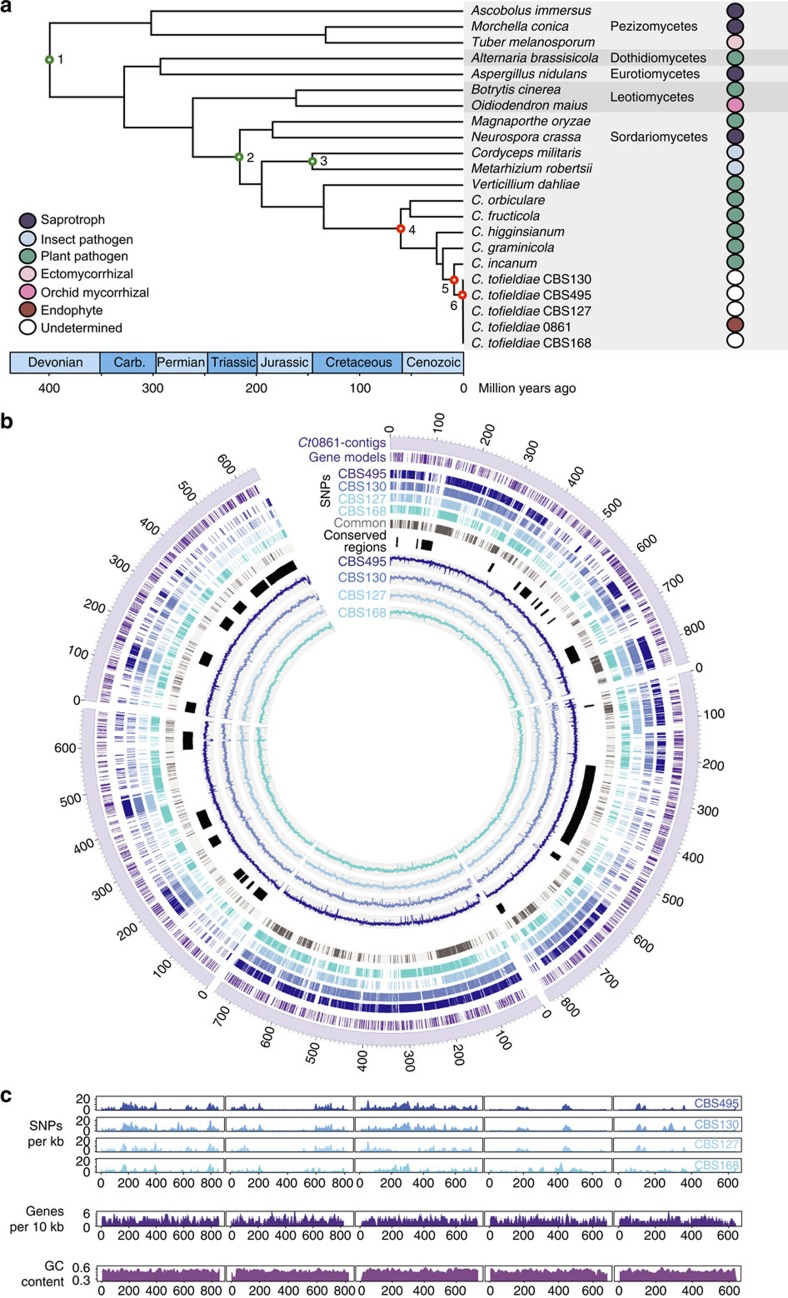
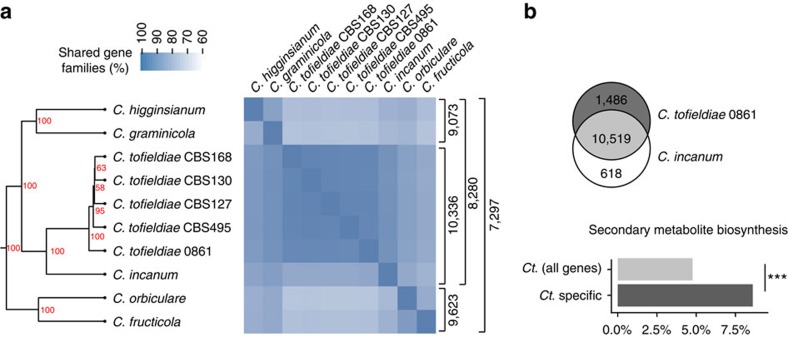
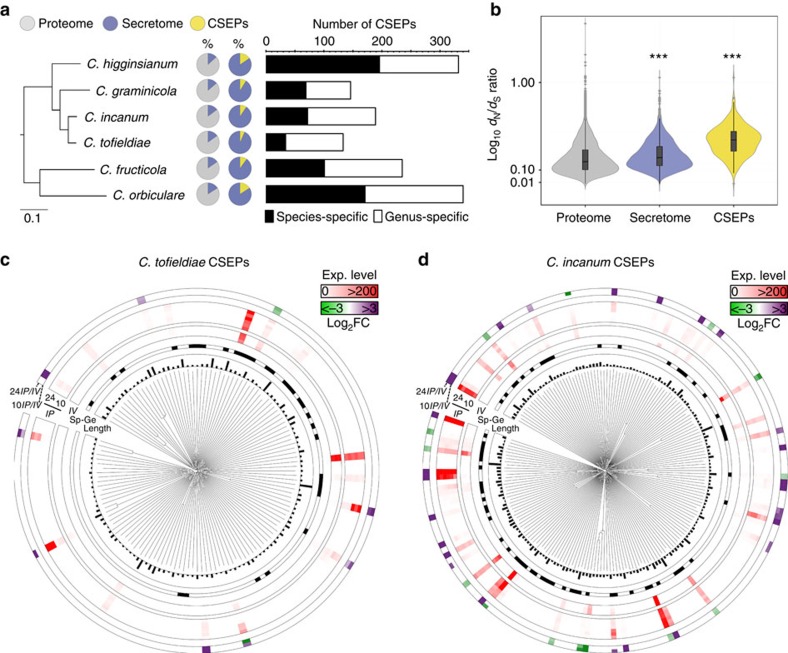
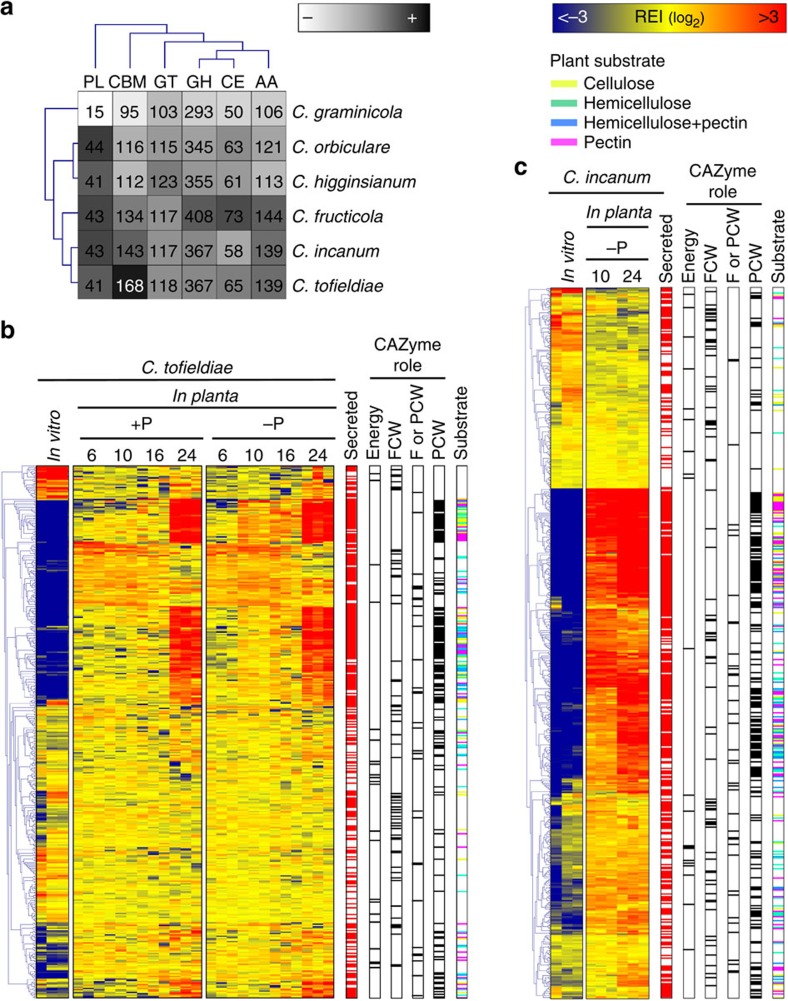
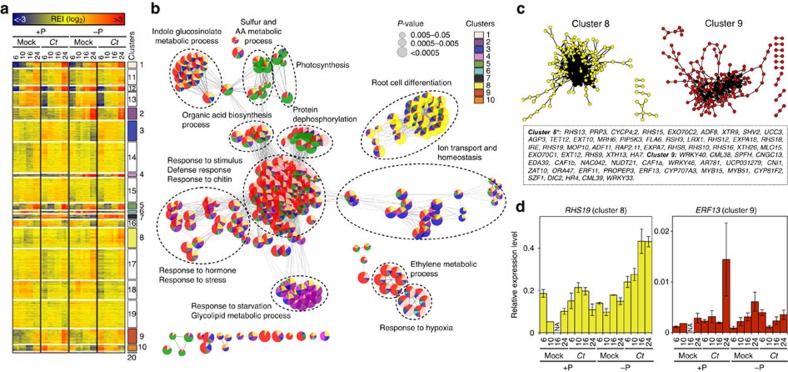
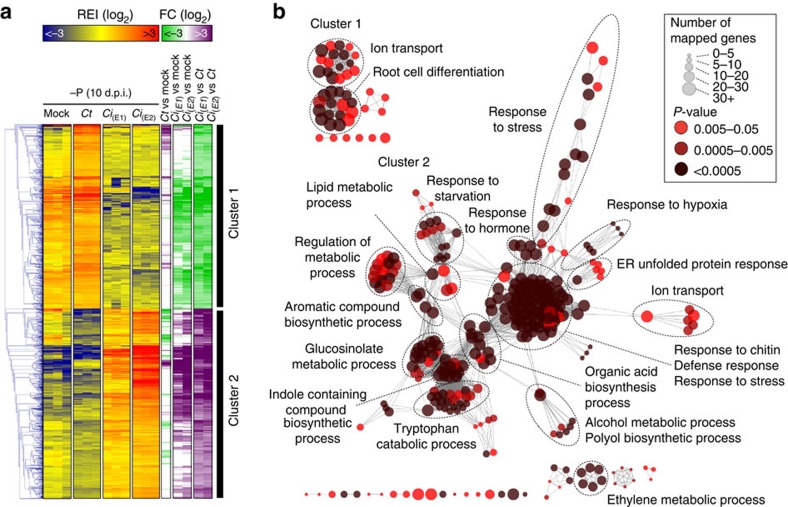
The sessile nature of plants forced them to evolve mechanisms to prioritize their responses to simultaneous stresses, including colonization by microbes or nutrient starvation. Here, we compare the genomes of a beneficial root endophyte, Colletotrichum tofieldiae and its pathogenic relative C. incanum , and examine the transcriptomes of both fungi and their plant host Arabidopsis during phosphate starvation. Although the two species diverged only 8.8 million years ago and have similar gene arsenals, we identify genomic signatures indicative of an evolutionary transition from pathogenic to beneficial lifestyles, including a narrowed repertoire of secreted effector proteins, expanded families of chitin-binding and secondary metabolism-related proteins, and limited activation of pathogenicity-related genes in planta . We show that beneficial responses are prioritized in C. tofieldiae -colonized roots under phosphate-deficient conditions, whereas defense responses are activated under phosphate-sufficient conditions. These immune responses are retained in phosphate-starved roots colonized by pathogenic C. incanum , illustrating the ability of plants to maximize survival in response to conflicting stresses.
Overview
The claims and statistics of this paper haven’t been checked yet.
Free: it reads the open-access text and checks the first 5 claims that cite a source we can check. Create a free account to check every claim.
Integrity signals
Registry
Cites
Statistics
Figures
Verification
Claims the paper makes
The claims and statistics of this paper haven’t been checked yet.
Free: it reads the open-access text and checks the first 5 claims that cite a source we can check. Create a free account to check every claim.
Claims other papers make about this one
Each is checked against this paper’s own text: does it say what the citing paper says it does?
The source backs part of the claim, not all of it — or backs it for a different population, condition or comparison.
In the citing paper
“Comparative analyses of these genomes have revealed that Colletotrichum species may tailor their plant cell wall degrading enzymes and proteinases according to their lifestyle (O'Connell et al. 2012, Baroncelli et al. 2016, Hacquard et al. 2016).”
From Colletotrichum: lifestyles, biology, morpho-species, species complexes and accepted species (2021) · cites this paper as Hacquard et al. 2016
Experimental — accuracy not yet measured
Self-check
Percentages, sums and reported differences re-computed from the paper’s own numbers.
The self-check needs the paper’s full text.
Citations
Cites
The Sequence Alignment/Map format and SAMtools
Li, H., Handsaker, B., Wysoker, A., Fennell, T., Ruan, J., Homer, N., Marth, G., Abecasis, G., Durbin, R., & 1000 Genome Project Data Processing Subgroup (2009) · Bioinformatics · doi:10.1093/bioinformatics/btp352 · Cited by 62,041
Fast gapped-read alignment with Bowtie 2
Langmead, B., & Salzberg, S. L. (2012) · Nature Methods · doi:10.1038/nmeth.1923 · Cited by 56,400
Cytoscape: A software Environment for integrated models of biomolecular interaction networks
Shannon, P., Markiel, A., Ozier, O., Baliga, N. S., Wang, J. T., Ramage, D., Amin, N., Schwikowski, B., & Ideker, T. (2003) · Genome Research · doi:10.1101/gr.1239303 · Cited by 51,888
Robinson, M. D., McCarthy, D. J., & Smyth, G. K. (2010) · Bioinformatics · doi:10.1093/bioinformatics/btp616 · Cited by 41,364
A new mathematical model for relative quantification in real-time RT-PCR
Pfaffl, M. W. (2001) · Nucleic Acids Research · doi:10.1093/nar/29.9.e45 · Cited by 34,610
SPAdes: A New Genome Assembly Algorithm and Its Applications to Single-Cell Sequencing
Bankevich, A., Nurk, S., Antipov, D., Gurevich, A. A., Dvorkin, M., Kulikov, A. S., Lesin, V. M., Nikolenko, S. I., Pham, S., Prjibelski, A. D., et al. (2012) · Journal of Computational Biology · doi:10.1089/cmb.2012.0021 · Cited by 25,987
HTSeq—a Python framework to work with high-throughput sequencing data
Anders, S., Pyl, P. T., & Huber, W. (2015) · Bioinformatics · doi:10.1093/bioinformatics/btu638 · Cited by 21,464
Full-length transcriptome assembly from RNA-Seq data without a reference genome
Grabherr, M. G., Haas, B. J., Yassour, M., Levin, J. Z., Thompson, D. A., Amit, I., Adiconis, X., Fan, L., Raychowdhury, R., Zeng, Q., et al. (2011) · Nature Biotechnology · doi:10.1038/nbt.1883 · Cited by 21,039
Fast, scalable generation of high‐quality protein multiple sequence alignments using Clustal Omega
Sievers, F., Wilm, A., Dineen, D., Gibson, T. J., Karplus, K., Li, W., Lopez, R., McWilliam, H., Remmert, M., Söding, J., et al. (2011) · Molecular Systems Biology · doi:10.1038/msb.2011.75 · Cited by 15,355
Kim, D., Pertea, G., Trapnell, C., Pimentel, H., Kelley, R., & Salzberg, S. L. (2013) · Genome Biology · doi:10.1186/gb-2013-14-4-r36 · Cited by 12,668
Cited by
Items 101–200 of 336
Nagel, J. H., Wingfield, M. J., & Slippers, B. (2021) · BMC Genomics · doi:10.1186/s12864-021-07902-w · Cited by 50
How Do Pathogens Evolve Novel Virulence Activities?
Sacristán, S., Goss, E. M., & den Akker, S. E. (2021) · Molecular Plant-Microbe Interactions · doi:10.1094/mpmi-09-20-0258-ia · Cited by 49
Self-citationWheat yellow mosaic enhances bacterial deterministic processes in a plant-soil system
Zhang, H., Wu, C., Wang, F., Wang, H., Chen, G., Cheng, Y., Chen, J., Yang, J., & Ge, T. (2021) · The Science of The Total Environment · doi:10.1016/j.scitotenv.2021.151430 · Cited by 49
Borpatragohain, P., Rose, T. J., & King, G. J. W. (2016) · Frontiers in Plant Science · doi:10.3389/fpls.2016.01735 · Cited by 48
Zampounis, A., Pigné, S., Dallery, J., Wittenberg, A. H. J., Zhou, S., Schwartz, D. C., Thon, M. R., & O’Connell, R. J. (2016) · Genome Announcements · doi:10.1128/genomea.00821-16 · Cited by 47
Self-citationRole of the Plant Root Microbiome in Abiotic Stress Tolerance
Caddell, D. F., Deng, S., & Coleman‐Derr, D. (2019) · Springer eBooks · doi:10.1007/978-3-030-10504-4_14 · Cited by 47
Constantin, M. E., Fokkens, L., de Sain, M., Takken, F. L. W., & Rep, M. (2021) · Frontiers in Plant Science · doi:10.3389/fpls.2021.761740 · Cited by 46
Wang, Y., Youssef, N. H., Couger, M. B., Hanafy, R. A., Elshahed, M. S., & Stajich, J. (2019) · mSystems · doi:10.1128/msystems.00247-19 · Cited by 44
Sucher, J., Mbengué, M., Axel, D., Barascud, M., Didelon, M., Barbacci, A., & Raffaele, S. (2020) · The Plant Cell · doi:10.1105/tpc.19.00806 · Cited by 43
Díaz-González, S., Marín, P., Sánchez, R. S., Arribas, C., Kruse, J. S., González‐Melendi, P., Brunner, F., & Sacristán, S. (2020) · Agronomy · doi:10.3390/agronomy10101493 · Cited by 43
Self-citationFu, W. D., Chen, B., Jansa, J., Wu, H., Ma, W., Luo, W., Xu, C., Hao, Z., Wu, H. J., Yu, Q., et al. (2022) · Soil Biology and Biochemistry · doi:10.1016/j.soilbio.2022.108670 · Cited by 47
Frerigmann, H., Piotrowski, M., Lemke, R., Bednarek, P., & Schulze‐Lefert, P. (2020) · Molecular Plant-Microbe Interactions · doi:10.1094/mpmi-08-20-0233-r · Cited by 41
Self-citationGonzález‐Teuber, M., Palma‐Onetto, V., Sammaritano, J. A., & Mithöfer, A. (2021) · Journal of Ecology · doi:10.1111/1365-2745.13678 · Cited by 40
Brassicaceous roots as an unexpected diversity hot-spot of helotialean endophytes
Maciá‐Vicente, J. G., Piepenbring, M., & Koukol, O. (2020) · IMA Fungus · doi:10.1186/s43008-020-00036-w · Cited by 39
Identification and analysis of the secretome of plant pathogenic fungi reveals lifestyle adaptation
Jia, M., Gong, X., Fan, M., Liu, H., Zhou, H., Gu, S., Liu, Y., & Dong, J. (2023) · Frontiers in Microbiology · doi:10.3389/fmicb.2023.1171618 · Cited by 38
Whole-Genome Sequence of the Orchid Anthracnose Pathogen Colletotrichum orchidophilum
Baroncelli, R., Sukno, S. A., Sarrocco, S., Cafà, G., Floch, G. L., & Thon, M. R. (2018) · Molecular Plant-Microbe Interactions · doi:10.1094/mpmi-03-18-0055-a · Cited by 37
Self-citationChamard, J., Faticov, M., Blanchet, F. G., Chagnon, P., & Laforest‐Lapointe, I. (2024) · Communications Biology · doi:10.1038/s42003-024-06042-7 · Cited by 40
Lelwala, R. V., Korhonen, P. K., Young, N. D., Scott, J. B., Ades, P. K., Gasser, R. B., & Taylor, P. W. J. (2019) · PLOS ONE · doi:10.1371/journal.pone.0212248 · Cited by 36
Xu, Z. Q., Valdes, C., & Clarke, J. (2018) · Agronomy · doi:10.3390/agronomy8050071 · Cited by 36
Mastan, A., Rane, D., Dastager, S. G., & Babu, C. S. V. (2019) · Probiotics and Antimicrobial Proteins · doi:10.1007/s12602-019-09582-1 · Cited by 36
Drivers of genetic diversity in secondary metabolic gene clusters within a fungal speciesPreprint
Lind, A. L., Wisecaver, J. H., Lameiras, C., Wiemann, P., Palmer, J. M., Keller, N. P., Rodrigues, F., Goldman, G. H., & Rokas, A. (2017) · bioRxiv (Cold Spring Harbor Laboratory) · doi:10.1101/149856 · Cited by 35
Tsushima, A., Narusaka, M., Gan, P., Kumakura, N., Hiroyama, R., Kato, N., Takahashi, S., Takano, Y., Narusaka, Y., & Shirasu, K. (2021) · Frontiers in Microbiology · doi:10.3389/fmicb.2021.682155 · Cited by 35
Haq, M. Z. U., Bai, Z., Gu, G., Liu, Y., Yang, D., Yang, H., Yu, J. H., & Wu, Y. (2025) · Plant Science · doi:10.1016/j.plantsci.2025.112686 · Cited by 35
López-González, R. C., Gómez‐Cornelio, S., la Rosa‐García, S. D., Garrido, E., Oropeza-Mariano, O., Heil, M., & Partida‐Martínez, L. P. (2016) · Fungal ecology · doi:10.1016/j.funeco.2016.11.004 · Cited by 35
Stam, R., Münsterkötter, M., Pophaly, S. D., Fokkens, L., Sghyer, H., Güldener, U., Hückelhoven, R., & Heß, M. (2018) · Genome Biology and Evolution · doi:10.1093/gbe/evy240 · Cited by 34
Liu, W., Cai, Y., He, P., Chen, L., & Bian, Y. (2019) · 3 Biotech · doi:10.1007/s13205-019-1614-y · Cited by 34
Nandhini, M., Rajini, S. B., Udayashankar, A. C., Niranjana, S. R., Lund, O., Shetty, H. S., & Prakash, H. S. (2018) · Biological Control · doi:10.1016/j.biocontrol.2018.08.019 · Cited by 34
Didelon, M., Khafif, M., Godiard, L., Barbacci, A., & Raffaele, S. (2020) · Frontiers in Genetics · doi:10.3389/fgene.2020.00491 · Cited by 33
Thalineau, E., Fournier, C., Gravot, A., Wendehenne, D., Jeandroz, S., & Truong, H. (2017) · Molecular Plant Pathology · doi:10.1111/mpp.12550 · Cited by 32
Liu, J., Manawasinghe, I. S., Liao, X.-N., Mao, J., Dong, Z., Jayawardena, R. S., Wanasinghe, D. N., Shu, Y., & Luo, M. (2023) · MycoKeys · doi:10.3897/mycokeys.95.87121 · Cited by 31
Santhanam, R., Oh, Y., Kumar, R., Weinhold, A., Schepler‐Luu, V., Groten, K., & Baldwin, I. T. (2017) · Molecular Ecology · doi:10.1111/mec.14049 · Cited by 30
Ting, W., Liu, Y., Zheng, T., Dai, Y., Li, Z., & Lin, D. (2023) · Environmental Science & Technology · doi:10.1021/acs.est.3c02495 · Cited by 30
Martínez‐Arias, C., Sobrino‐Plata, J., Medel, D., Gil, L., Martín, J. A. M., & Rodríguez‐Calcerrada, J. (2021) · Journal of Plant Physiology · doi:10.1016/j.jplph.2021.153420 · Cited by 30
Gan, P., Tsushima, A., Hiroyama, R., Narusaka, M., Takano, Y., Narusaka, Y., Kawaradani, M., Damm, U., & Shirasu, K. (2019) · Scientific Reports · doi:10.1038/s41598-019-50076-5 · Cited by 29
Self-citationVannier, N., Bittebière, A.-K., Mony, C., & Vandenkoornhuyse, P. (2020) · Fungal ecology · doi:10.1016/j.funeco.2019.100907 · Cited by 29
Virulence Traits and Population Genomics of the Black Yeast Aureobasidium melanogenum
Černoša, A., Sun, X., Gostinčar, C., Fang, C., Gunde‐Cimerman, N., & Song, Z. (2021) · Journal of Fungi · doi:10.3390/jof7080665 · Cited by 28
CLE peptide signaling in plant-microbe interactions
Nakagami, S., Kajiwara, T., Tsuda, K., & Sawa, S. (2024) · Frontiers in Plant Science · doi:10.3389/fpls.2024.1481650 · Cited by 28
Insights of Lr28 mediated wheat leaf rust resistance: Transcriptomic approach
Singh, D., Kumar, D., Satapathy, L., Pathak, J., Chandra, S., Riaz, A., Bhaganagre, G., Dhariwal, R., Kumar, M., Prabhu, K. V., et al. (2017) · Gene · doi:10.1016/j.gene.2017.09.028 · Cited by 27
Proteinaceous Effector Discovery and Characterization in Plant Pathogenic Colletotrichum Fungi
Lu, X., Miao, J., Shen, D., & Dou, D. (2022) · Frontiers in Microbiology · doi:10.3389/fmicb.2022.914035 · Cited by 27
Gudiño, M. E., Blanco-Touriñán, N., Arbona, V., Gomez-Cadenas, A., Blázquez, M., & Navarro-García, F. (2018) · Plant and Cell Physiology · doi:10.1093/pcp/pcy128 · Cited by 23
Muñoz‐Barrios, A., Sopeña‐Torres, S., Ramos, B., López, G., del Hierro, I., Díaz-González, S., González‐Melendi, P., Mélida, H., Fernández-Calleja, V., Mixão, V., et al. (2020) · Molecular Plant-Microbe Interactions · doi:10.1094/mpmi-03-20-0057-r · Cited by 26
Self-citationA fungal transcription factor converts a beneficial root endophyte into an anthracnose leaf pathogen
Ujimatsu, R., Takino, J., Aoki, S., Nakamura, M., Haba, H., Minami, A., & Hiruma, K. (2025) · Current Biology · doi:10.1016/j.cub.2025.03.026 · Cited by 25
Self-citationPHR1 Balances between Nutrition and Immunity in Plants
Motte, H., & Beeckman, T. (2017) · Developmental Cell · doi:10.1016/j.devcel.2017.03.019 · Cited by 25
Liu, X., Li, B., Yang, Y., Cai, J., Shi, T., Zheng, X., & Guixiu, H. (2020) · Frontiers in Microbiology · doi:10.3389/fmicb.2020.01484 · Cited by 24
Phylogenomics and adaptive evolution of the Colletotrichum gloeosporioides species complex
Ma, Z., Liu, F., Tsui, C. K. M., & Cai, L. (2025) · Communications Biology · doi:10.1038/s42003-025-08024-9 · Cited by 25
Deciphering key factors in pathogen-suppressive microbiome assembly in the rhizosphere
Ebabuye, Y., Lee, G., Jeong, M., Tagele, S. B., & Shin, J. (2023) · Frontiers in Plant Science · doi:10.3389/fpls.2023.1301698 · Cited by 23
Influence of Tall Fescue Epichloë Endophytes on Rhizosphere Soil Microbiome
Mahmud, K., Lee, K., Hill, N. S., Mergoum, A. M., & Missaoui, A. (2021) · Microorganisms · doi:10.3390/microorganisms9091843 · Cited by 23
Wang, J., Hou, W., Christensen, M. J., Xia, C., Chen, T., Zhang, Z., & Nan, Z. (2020) · Science China Life Sciences · doi:10.1007/s11427-020-1674-y · Cited by 23
de Queiroz, C. B., & Santana, M. F. (2020) · Mycologia · doi:10.1080/00275514.2020.1716566 · Cited by 24
Genomic resources of Colletotrichum fungi: development and application
Tsushima, A., & Shirasu, K. (2022) · Journal of General Plant Pathology · doi:10.1007/s10327-022-01097-y · Cited by 22
Hage, H., Rosso, M., & Tarrago, L. (2021) · Free Radical Biology and Medicine · doi:10.1016/j.freeradbiomed.2021.04.013 · Cited by 22
Rouina, H., Tseng, Y.-H., Nataraja, K. N., Shaanker, R. U., & Oelmüller, R. (2021) · Microorganisms · doi:10.3390/microorganisms9061246 · Cited by 22
Shelake, R. M., Waghunde, R. R., & Kim, J. (2026) · Molecular Plant · doi:10.1016/j.molp.2026.01.010 · Cited by 21
Molecular mechanisms modulating beneficial plant root–microbe interactions: What’s common?
Lopez-Raez, J. A., Banasiak, J., Becana, M., Goormachtig, S., Lanfranco, L., Larrainzar, E., Lefebvre, B., Veneault‐Fourrey, C., & Frugier, F. (2025) · Plant Communications · doi:10.1016/j.xplc.2025.101592 · Cited by 21
Tamburrini, K. C., Kodama, S., Grisel, S., Haon, M., Nishiuchi, T., Bissaro, B., Kubo, Y., Longhi, S., & Berrin, J. (2024) · Proceedings of the National Academy of Sciences · doi:10.1073/pnas.2319998121 · Cited by 20
Wang, M., Liu, B., Ruan, R., Zeng, Y., Luo, J., & Li, H. (2020) · Frontiers in Microbiology · doi:10.3389/fmicb.2019.02979 · Cited by 20
Modulation of plant immunity and biotic interactions under phosphate deficiency
Inoue, K., Tsuchida, N., & Saijo, Y. (2024) · Journal of Plant Research · doi:10.1007/s10265-024-01546-z · Cited by 19
Vignolle, G. A., Schaffer, D., Zehetner, L., Mach, R. L., Mach-Aigner, A. R., & Derntl, C. (2021) · PLoS Computational Biology · doi:10.1371/journal.pcbi.1009372 · Cited by 20
Newfeld, J., Ujimatsu, R., & Hiruma, K. (2025) · Microorganisms · doi:10.3390/microorganisms13020428 · Cited by 19
Self-citationPhosphorus acquisition and pathogen defense: synergies versus trade-offs
Ding, W., Dong, S., & Lambers, H. (2025) · Trends in Plant Science · doi:10.1016/j.tplants.2025.07.010 · Cited by 18
Frenken, T., Paseka, R. E., González, A. L., Asik, L., Seabloom, E. W., White, L. A., Borer, E. T., Strauss, A. T., Peace, A., & de Waal, D. B. V. (2021) · Oikos · doi:10.1111/oik.08253 · Cited by 18
Chen, W., Shu, H., Li, D., Liang, J., Sun, C., Zhao, J., Wijayawardene, N., Han, Y., & Tian, W. (2025) · Mycosphere · doi:10.5943/mycosphere/16/1/20 · Cited by 18
Tamayo, E., Figueira-Galán, D., Manck-Götzenberger, J., & Requena, N. (2022) · Frontiers in Plant Science · doi:10.3389/fpls.2022.837231 · Cited by 17
Genome Sequencing and Analysis of the Hypocrellin-Producing Fungus Shiraia bambusicola S4201
Zhao, N., Li, D., Guo, B.-J., Tao, X., Lin, X., Yan, S., & Chen, S. (2020) · Frontiers in Microbiology · doi:10.3389/fmicb.2020.00643 · Cited by 17
Hu, Y., GY, G. W., Wen, J., Chang, L., Chen, Y., Wang, Y., & Nizamani, M. M. (2024) · Current Research in Environmental & Applied Mycology · doi:10.5943/cream/14/1/1 · Cited by 17
Shi, M., Xue, S., Zhang, M., Li, S.-P., Huang, B., Huang, Q., Liu, Q.-B., Liao, X.-L., & Li, Y. (2022) · Pathogens · doi:10.3390/pathogens11121463 · Cited by 17
Eisermann, I., Weihmann, F., Krijger, J., Kröling, C., Hause, G., Menzel, M., Pienkny, S., Kiesow, A., Deising, H. B., & Wirsel, S. G. R. (2019) · Environmental Microbiology · doi:10.1111/1462-2920.14819 · Cited by 17
Emerging trends for Harnessing plant metabolome and microbiome for sustainable food Production
Karabulut, F., Parray, J. A., & Mir, M. (2021) · Micro Environer · doi:10.54458/mev.v1i01.6672 · Cited by 17
The soil microbiome affects patterns of local adaptation in an alpine plant under moisture stress
Brady, M. V., & Farrer, E. C. (2024) · American Journal of Botany · doi:10.1002/ajb2.16304 · Cited by 17
Xu, P., Fundneider, S., Lange, B., Maksym, R., Stuttmann, J., & Schäffner, A. R. (2025) · Nature Plants · doi:10.1038/s41477-025-02053-2 · Cited by 17
Jaskolowski, A., & Poirier, Y. (2024) · The Plant Journal · doi:10.1111/tpj.16800 · Cited by 17
Root acquisitive traits mirror the functional modules of root-associated fungi
Ding, G., Zeng, W., Sun, L., Chen, F., Lyu, Y., Xu, J., Yan, T., Wang, H., & Ma, Z. (2024) · Soil Biology and Biochemistry · doi:10.1016/j.soilbio.2024.109317 · Cited by 16
Plett, J. M., & Plett, K. L. (2022) · ISME Communications · doi:10.1038/s43705-022-00139-y · Cited by 15
Plant growth–promoting fungi in plants: Insights from stress tolerance mechanism
Naimuzzaman, M., Rahman, F., Alvi, A. T., Yeasmin, L., Mittra, P. K., & Roy, S. K. (2024) · Elsevier eBooks · doi:10.1016/b978-0-443-13193-6.00023-3 · Cited by 15
Maciá‐Vicente, J. G., Bai, B., Qi, R., Ploch, S., Breider, F., & Thines, M. (2022) · mSystems · doi:10.1128/msystems.00304-22 · Cited by 15
Yu, F., Peng, D., Yu, L., Tian, F., Chen, H., & Zhou, B. (2025) · International Journal of Biological Macromolecules · doi:10.1016/j.ijbiomac.2025.144539 · Cited by 13
Hill, R., Levicky, Q., Pitsillides, F., Junnonen, A., Arrigoni, E., Bonnin, J. M., Kermode, A., Mian, S., Leitch, I. J., Buddie, A. G., et al. (2023) · Genome Biology and Evolution · doi:10.1093/gbe/evad038 · Cited by 13
Zimmermann, S. E., Blau, S., Frerigmann, H., & Krueger, S. (2021) · Plant Molecular Biology · doi:10.1007/s11103-021-01181-5 · Cited by 12
Dotson, B. R., Verschut, V., Flärdh, K., Becher, P. G., & Rasmusson, A. G. (2020) · bioRxiv (Cold Spring Harbor Laboratory) · doi:10.1101/2020.02.15.949685 · Cited by 12
da Silva, M. V. N., Alexandre, A. D. S., & Núñez, C. V. (2025) · Microorganisms · doi:10.3390/microorganisms13081826 · Cited by 11
Dotson, B. R., Verschut, V., Flärdh, K., Becher, P. G., & Rasmusson, A. G. (2026) · Plants · doi:10.3390/plants15010124 · Cited by 11
Liu, M., Mooleki, S. P., Li, Y., Schneider, D., Kochian, L. V., & Helgason, B. L. (2025) · Plant and Soil · doi:10.1007/s11104-025-07286-w · Cited by 11
Boufleur, T. R., Júnior, N. S. M., Tikami, Í., Sukno, S. A., Thon, M. R., & Baroncelli, R. (2021) · Pathogens · doi:10.3390/pathogens10111520 · Cited by 11
Self-citationPeter, P., Divakaran, K., Kaniyala, H., & Nair, R. A. (2021) · Archives of Phytopathology and Plant Protection · doi:10.1080/03235408.2021.1968269 · Cited by 11
Zhang, Y., Lin, J., Chen, S., Lu, H., & Liao, C. (2023) · Microorganisms · doi:10.3390/microorganisms11102443 · Cited by 11
Sadhukhan, S., Jacques, M., & Potnis, N. (2023) · Plant Disease · doi:10.1094/pdis-05-23-0837-re · Cited by 11
Plant Pathogenic and Endophytic Colletotrichum fructicola
Zakaria, L. (2025) · Microorganisms · doi:10.3390/microorganisms13071465 · Cited by 10
Díaz-González, S., González‐Sanz, C., González-Bodí, S., Marín, P., Brunner, F., & Sacristán, S. (2025) · Plants · doi:10.3390/plants14213236 · Cited by 10
Self-citationEffector-Mediated Communication of Filamentous Plant Pathogens With Their Hosts
Gaulin, E. (2016) · Advances in botanical research · doi:10.1016/bs.abr.2016.09.003 · Cited by 10
Dynamic shifts in plant-microbe relationships
Osayande, I. S., Han, X., & Tsuda, K. (2025) · Plant Biotechnology · doi:10.5511/plantbiotechnology.25.0428a · Cited by 10
Ortiz-Álvarez, J., Becerra, S., Baroncelli, R., Hernández, G., Sukno, S. A., & Thon, M. R. (2024) · BMC Genomics · doi:10.1186/s12864-023-09858-5 · Cited by 9
Self-citationKumakura, N., Singkaravanit‐Ogawa, S., Gan, P., Tsushima, A., Ishihama, N., Watanabe, S., Seo, M., Iwasaki, S., Narusaka, M., Narusaka, Y., et al. (2024) · New Phytologist · doi:10.1111/nph.19582 · Cited by 9
Xia, Y., He, R., Xu, W., & Zhang, J. (2023) · PeerJ · doi:10.7717/peerj.15363 · Cited by 9
Hao, Z., Wang, Y., Ding, N., Saha, M. C., Scheible, W., Craven, K. D., Udvardi, M. K., Nico, P., Firestone, M. K., & Brodie, E. (2022) · Communications Biology · doi:10.1038/s42003-022-03157-7 · Cited by 8
Maulana, A. F., Turjaman, M., Sato, T., Hashimoto, Y., Cheng, W., & Tawaraya, K. (2017) · International Journal of Plant & Soil Science · doi:10.9734/ijpss/2017/37433 · Cited by 8
Recent approaches on the genomic analysis of the phytopathogenic fungus Colletotrichum spp.
Carbú, M., Moraga, J., Cantoral, J. M., Collado, I. G., & Garrido, C. (2020) · Phytochemistry Reviews · doi:10.1007/s11101-019-09608-0 · Cited by 7
Metabolomics for Plant Growth-Promoting Microbe Profiling and Designing Biofertilizer
Das, S., & Maity, S. (2025) · Springer eBooks · doi:10.1007/978-981-96-4824-5_12 · Cited by 7
Yan, S., Zhang, Q., Jia, S., Guo, M., Zhang, Q., & Gu, P. (2025) · Frontiers in Microbiology · doi:10.3389/fmicb.2024.1487022 · Cited by 7
Utami, Y. D., & Hiruma, K. (2022) · PhytoFrontiers™ · doi:10.1094/phytofr-12-21-0082-a · Cited by 7
Self-citationMicrobial synbiotics for sustainable nutrient stress management
Bisht, N., Singh, T. G., & Chauhan, P. S. (2024) · Elsevier eBooks · doi:10.1016/b978-0-443-13193-6.00007-5 · Cited by 7
Metadata
- Authors
- Hacquard, S., Kracher, B., Hiruma, K., Münch, P. C., Garrido-Oter, R., Thon, M. R., Weimann, A., Damm, U., Dallery, J.-F., Hainaut, M., Henrissat, B., Lespinet, O., Sacristán, S., Ver Loren van Themaat, E., Kemen, E., McHardy, A. C., Schulze-Lefert, P., & O’Connell, R. J.
- Affiliations
- Max Planck Institute for Plant Breeding Research (DE)
- German Center for Infection Research (DE)
- Universidad de Salamanca (ES)
- Helmholtz Centre for Infection Research (DE)
- Westerdijk Fungal Biodiversity Institute (NL)
- AgroParisTech (FR)
- Centre National de la Recherche Scientifique (FR)
- Université Paris-Sud (FR)
- Centre for Plant Biotechnology and Genomics (ES)
- Cluster of Excellence on Plant Sciences (DE)
- Corresponding author
- O’Connell, Richard J.
- ORCID
- Venue
- Nature Communications
- Published
- 2016-05-06
- Volume
- 7
- Issue
- 1
- Pages
- 11362-11362
- ISSN
- 2041-1723 (ISSN-L)
- PMC
- PMC4859067
- OpenAlex
- W2345756881
- Semantic Scholar
- 8564dfb4dfba2b4cb298cd2ff1e9c11171df1652
- Cited by
- 278
- References
- 72
- Citations by year
- 2026: 18 · 2025: 33 · 2024: 21 · 2023: 27 · 2022: 26 · 2021: 40 · 2020: 27 · 2019: 22 · 2018: 24 · 2017: 27 · 2016: 13
- FWCI
- 33.57
- Type
- journal article
- Language
- en
- Update notices
- erratum (2016-09-29)
- Open access
- gold
- doi.org
- Licence
- cc-by
- creativecommons.org/licenses/by/4.0 (tdm)
- creativecommons.org/licenses/by/4.0 (vor)
- Locations
- Nature Communications (publishedVersion, cc-by)
- Europe PMC (PubMed Central) (publishedVersion, cc-by)
- PubMed Central (publishedVersion, cc-by)
- KNAW Research Portal (The Royal Netherlands Academy of Arts and Sciences) (publishedVersion, other-oa)
- PubMed (publishedVersion)
- Kölner Universitäts PublikationsServer (Universität zu Köln) (publishedVersion)
- UPM Digital Archive (Technical University of Madrid) (acceptedVersion, cc-by-nc-nd)
- HAL (submittedVersion, cc-by)
- HAL (submittedVersion, other-oa)
- MPG.PuRe (Max Planck Society) (submittedVersion, other-oa)
- Data Archiving and Networked Services (DANS) (submittedVersion, other-oa)
- HAL (submittedVersion)
- RePEc: Research Papers in Economics (submittedVersion)
- DOAJ (DOAJ: Directory of Open Access Journals) (submittedVersion, cc-by-sa)
- Open access LMU (Ludwid Maxmilian's Universitat Munchen) (submittedVersion)
- Max Planck Digital Library (submittedVersion, other-oa)
- Hispana (submittedVersion, cc-by-nc-nd)
- HZI (Helmholtz Centre for Infection Research) (submittedVersion, cc-by-nc-sa)
- Funders
- Aix-Marseille Université
- Deutsches Zentrum für Infektionsforschung
- Deutsche Forschungsgemeinschaft
- Agence Nationale de la Recherche (ANR-12-CHEX-0008, ANR-12)
- Koninklijke Nederlandse Akademie van Wetenschappen
- Max-Planck-Gesellschaft
- Japan Society for the Promotion of Science
- Topics
- Life Sciences › Agricultural and Biological Sciences › Plant Science › Plant-Microbe Interactions and Immunity
- Life Sciences › Agricultural and Biological Sciences › Ecology, Evolution, Behavior and Systematics › Plant and fungal interactions
- Life Sciences › Agricultural and Biological Sciences › Plant Science › Mycorrhizal Fungi and Plant Interactions
- Keywords
- root endophytes, plant-fungal interactions, pathogenicity evolution, phosphate limitation, Arabidopsis thaliana, secreted effector proteins, chitin-binding protein, secondary metabolism, plant immunity, root transcriptome, fungal genome evolution
- MeSH terms
- Chitin, Phosphates, Starvation, Symbiosis, Genome, Fungal, Arabidopsis, Plant Roots, Colletotrichum, Endophytes
About these checks
Registry, retraction, Cites and statistics results are computed, not judged, with one exception: a printed reference that no index lists is read once by a model before it counts as a citation error. Claims are extracted by a model and kept only when their quote appears verbatim in the text; each cited source is then checked, with a model’s help, for whether it says what the claim relies on. Those verdicts can be wrong — read the claim’s quote and the cited source before relying on one.
Statistics and arithmetic are recomputed, not judged.
Confidence bands are shown only for fields calibrated on our annotated test set. None is calibrated yet, so no band is shown.
What counts as a claim ›How we measure confidence ›How we check this ›
Are you an author, or do you see a problem with this page? Request a review
Data sources
Bibliographic data: Semantic Scholar, OpenAlex, Crossref.
Contains information from the Semantic Scholar Academic Graph Datasets, made available under the ODC Attribution License (ODC-BY 1.0).
Semantic Scholar’s data is described in: Kinney, R., et al. (2023). The Semantic Scholar Open Data Platform. arXiv:2301.10140.
