

Survival trade-offs in plant roots during colonization by closely related beneficial and pathogenic fungi
Open accessThe DOI matches its Crossref record; 72 of the 72 references it cites were found in a registry or an index.
Abstract
The sessile nature of plants forced them to evolve mechanisms to prioritize their responses to simultaneous stresses, including colonization by microbes or nutrient starvation. Here, we compare the genomes of a beneficial root endophyte, Colletotrichum tofieldiae and its pathogenic relative C. incanum , and examine the transcriptomes of both fungi and their plant host Arabidopsis during phosphate starvation. Although the two species diverged only 8.8 million years ago and have similar gene arsenals, we identify genomic signatures indicative of an evolutionary transition from pathogenic to beneficial lifestyles, including a narrowed repertoire of secreted effector proteins, expanded families of chitin-binding and secondary metabolism-related proteins, and limited activation of pathogenicity-related genes in planta . We show that beneficial responses are prioritized in C. tofieldiae -colonized roots under phosphate-deficient conditions, whereas defense responses are activated under phosphate-sufficient conditions. These immune responses are retained in phosphate-starved roots colonized by pathogenic C. incanum , illustrating the ability of plants to maximize survival in response to conflicting stresses.
Overview
The claims and statistics of this paper haven’t been checked yet.
Free: it reads the open-access text and checks the first 5 claims that cite a source we can check. Create a free account to check every claim.
Integrity signals
Registry
Cites
Statistics
Figures
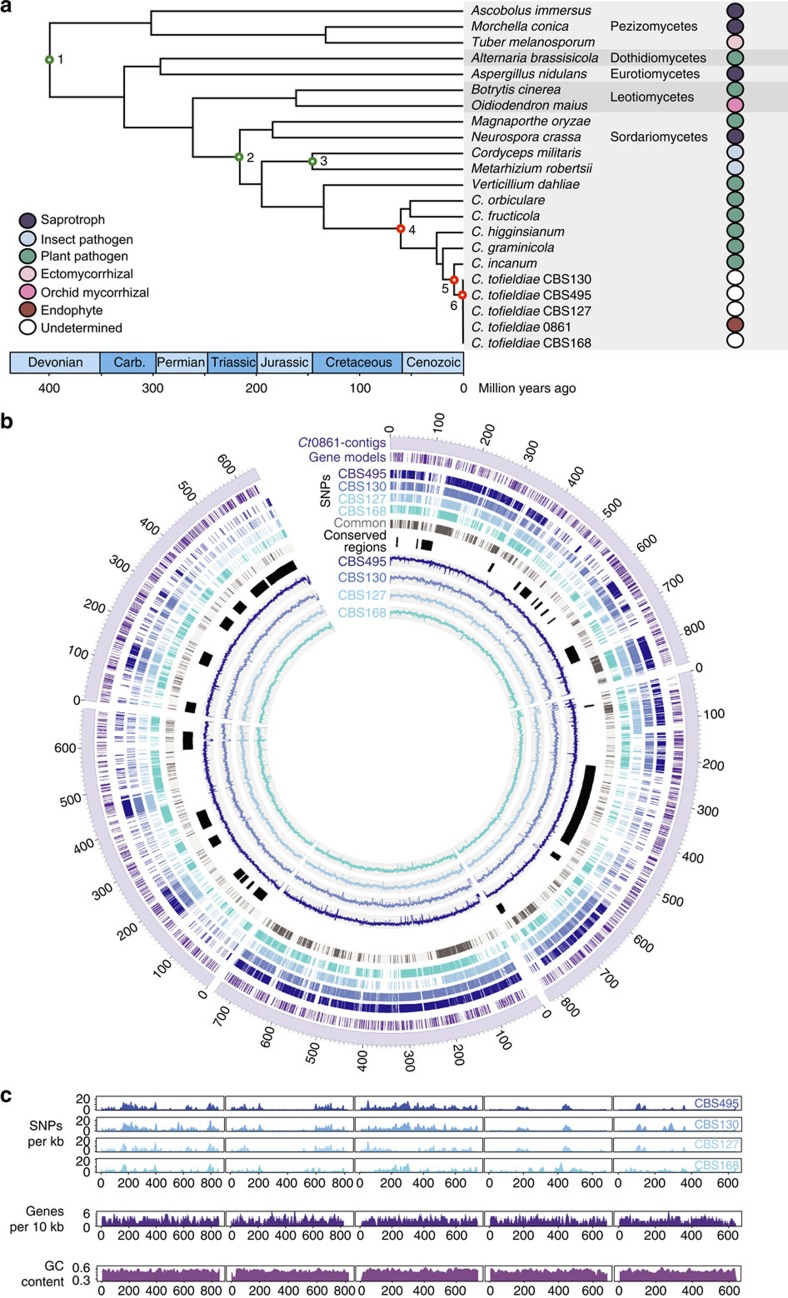
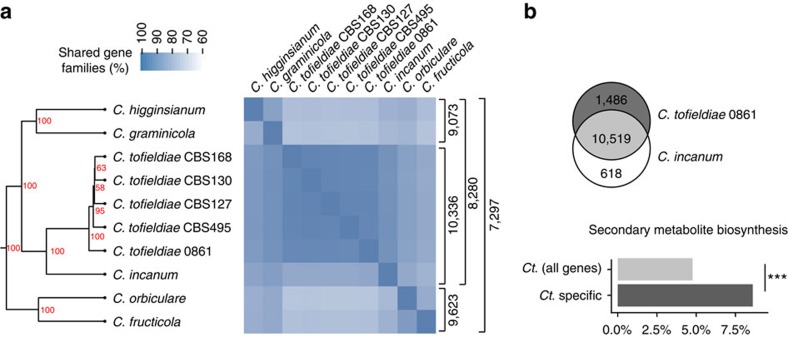
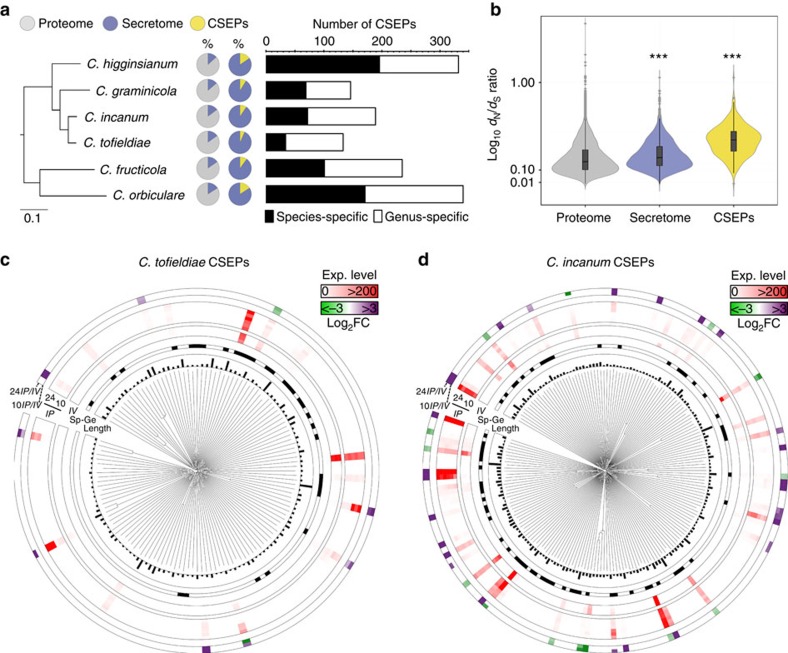
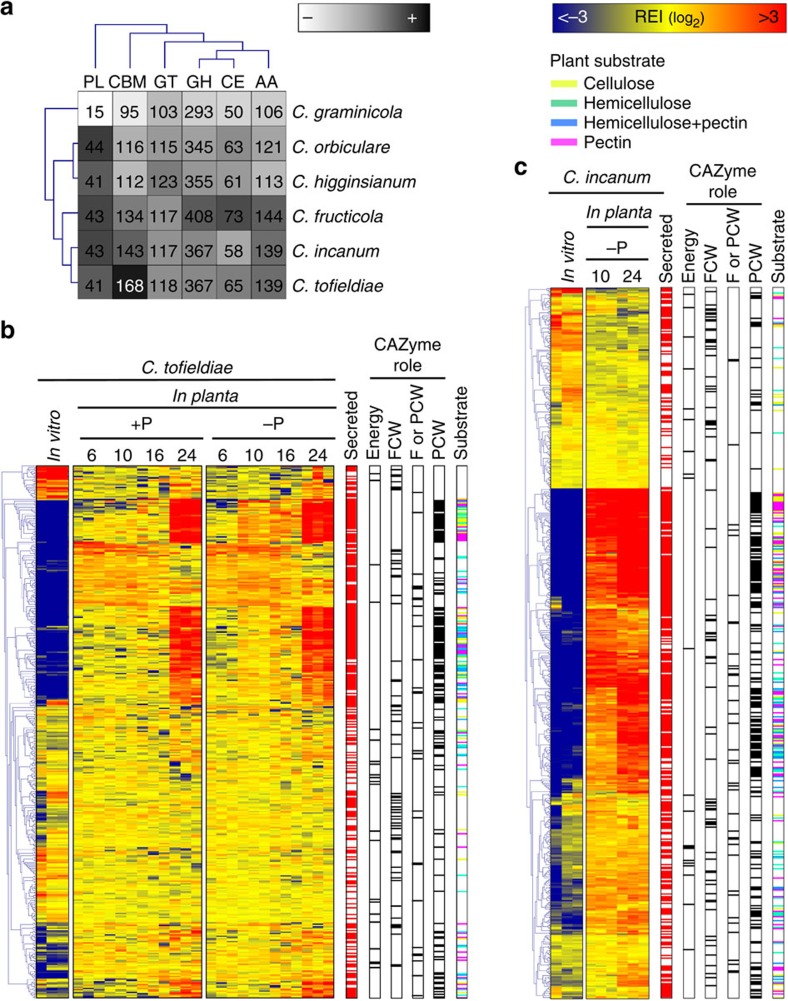
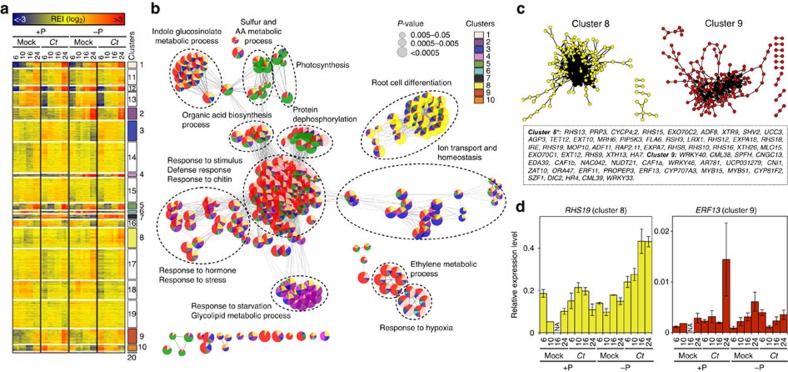
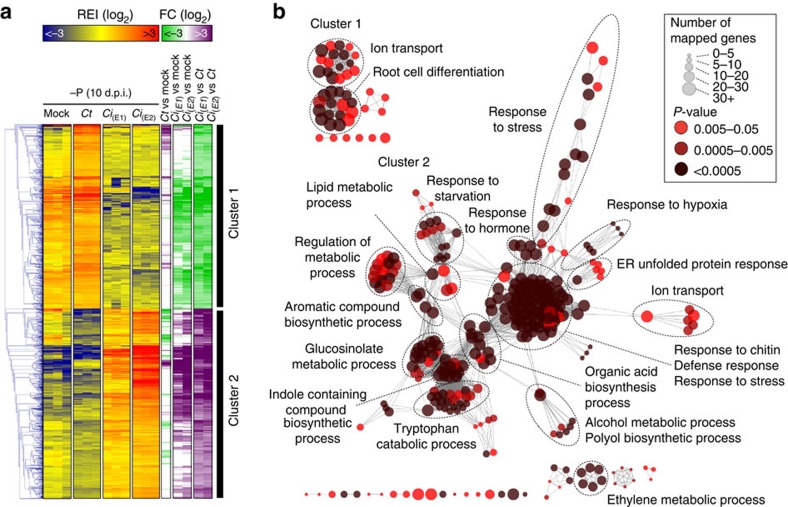
Verification
Claims the paper makes
The claims and statistics of this paper haven’t been checked yet.
Free: it reads the open-access text and checks the first 5 claims that cite a source we can check. Create a free account to check every claim.
Claims other papers make about this one
Each is checked against this paper’s own text: does it say what the citing paper says it does?
The source backs part of the claim, not all of it — or backs it for a different population, condition or comparison.
In the citing paper
“Comparative analyses of these genomes have revealed that Colletotrichum species may tailor their plant cell wall degrading enzymes and proteinases according to their lifestyle (O'Connell et al. 2012, Baroncelli et al. 2016, Hacquard et al. 2016).”
From Colletotrichum: lifestyles, biology, morpho-species, species complexes and accepted species (2021) · cites this paper as Hacquard et al. 2016
Experimental — accuracy not yet measured
Self-check
Percentages, sums and reported differences re-computed from the paper’s own numbers.
The self-check needs the paper’s full text.
Citations
Cites
The Sequence Alignment/Map format and SAMtools
Li, H., Handsaker, B., Wysoker, A., Fennell, T., Ruan, J., Homer, N., Marth, G., Abecasis, G., Durbin, R., & 1000 Genome Project Data Processing Subgroup (2009) · Bioinformatics · doi:10.1093/bioinformatics/btp352 · Cited by 62,041
Fast gapped-read alignment with Bowtie 2
Langmead, B., & Salzberg, S. L. (2012) · Nature Methods · doi:10.1038/nmeth.1923 · Cited by 56,400
Cytoscape: A software Environment for integrated models of biomolecular interaction networks
Shannon, P., Markiel, A., Ozier, O., Baliga, N. S., Wang, J. T., Ramage, D., Amin, N., Schwikowski, B., & Ideker, T. (2003) · Genome Research · doi:10.1101/gr.1239303 · Cited by 51,888
Robinson, M. D., McCarthy, D. J., & Smyth, G. K. (2010) · Bioinformatics · doi:10.1093/bioinformatics/btp616 · Cited by 41,364
A new mathematical model for relative quantification in real-time RT-PCR
Pfaffl, M. W. (2001) · Nucleic Acids Research · doi:10.1093/nar/29.9.e45 · Cited by 34,610
SPAdes: A New Genome Assembly Algorithm and Its Applications to Single-Cell Sequencing
Bankevich, A., Nurk, S., Antipov, D., Gurevich, A. A., Dvorkin, M., Kulikov, A. S., Lesin, V. M., Nikolenko, S. I., Pham, S., Prjibelski, A. D., et al. (2012) · Journal of Computational Biology · doi:10.1089/cmb.2012.0021 · Cited by 25,987
HTSeq—a Python framework to work with high-throughput sequencing data
Anders, S., Pyl, P. T., & Huber, W. (2015) · Bioinformatics · doi:10.1093/bioinformatics/btu638 · Cited by 21,464
Full-length transcriptome assembly from RNA-Seq data without a reference genome
Grabherr, M. G., Haas, B. J., Yassour, M., Levin, J. Z., Thompson, D. A., Amit, I., Adiconis, X., Fan, L., Raychowdhury, R., Zeng, Q., et al. (2011) · Nature Biotechnology · doi:10.1038/nbt.1883 · Cited by 21,039
Fast, scalable generation of high‐quality protein multiple sequence alignments using Clustal Omega
Sievers, F., Wilm, A., Dineen, D., Gibson, T. J., Karplus, K., Li, W., Lopez, R., McWilliam, H., Remmert, M., Söding, J., et al. (2011) · Molecular Systems Biology · doi:10.1038/msb.2011.75 · Cited by 15,355
Kim, D., Pertea, G., Trapnell, C., Pimentel, H., Kelley, R., & Salzberg, S. L. (2013) · Genome Biology · doi:10.1186/gb-2013-14-4-r36 · Cited by 12,668
Cited by
Items 301–336 of 336
Terlizzi, N. L. (2024) · Repositorio Digital Institucional de la Universidad de Buenos Aires (Universidad de Buenos Aires)
Actas del XVI Congreso de Estudiantes de Ciencia, Tecnología e Ingeniería Agronómica
Sesmero Huerta, M., Aylón-Rodríguez, M., Plaza Palomo, G., Orozco, M. A. P., Santa-Maria Iturralde, S., Villaescusa, P. V., Pola, A. G., Benlloch Monton, M., Cano Almarza, L., García Delgado, L., et al. (2024) · UPM Digital Archive (Technical University of Madrid)
Reduced benzoxazinoid defences favour maize beneficial colonisation by Colletotrichum tofieldiaePreprint
González‐Sanz, C., Wang, B., González-Bodí, S., Flors, V., Rodríguez‐Casillas, L., Díaz-González, S., & Sacristán, S. (2026) · bioRxiv (Cold Spring Harbor Laboratory) · doi:10.64898/2026.07.31.742045
Self-citationUncovering the role of RNA-binding proteins in plant immunity
Bach‐Pages, M. (2019) · Oxford University Research Archive (ORA) (University of Oxford) · doi:10.5287/ora-korp5zbwn
Immunity-dependency of plant-microbiota dialogues
Entila, F. D. (2024) · Kölner Universitäts PublikationsServer (Universität zu Köln)
Armbruster, L., Brands, M., Baumgart, L. A., Dreesmann, F., Leson, L., Peltz, N., Ramírez, V., Zhang, Y., Nassr, T., Langen, G., et al. (2026) · Plant Communications · doi:10.1016/j.xplc.2026.102181
Gutiérrez-Manso, L., Devesa-Aranguren, I., Conesa, C., Monteoliva-García, G., González-Sayer, S., Lozano-Enguita, A., Blasio, F., Cao-García, R., Ugena, L., Nolasco, J., et al. (2026) · Journal of Experimental Botany · doi:10.1093/jxb/erag396
Self-citationVikinyanski, T., Meilin, E., Makhon, A., Song, T., Alon, M., Cudkowicz, N. A., Saxena, S., Akerman-Arad, A., Karmi, O., Pollak, S., et al. (2026) · bioRxiv (Cold Spring Harbor Laboratory) · doi:10.64898/2026.09.14.751450
Bravo, J. R. (2019) · Institutional Repository of the University of Granada (University of Granada)
Abaya, A. (2020) · The Atrium (University of Guelph)
Studies on infection-promoting effectors in plant growth-promoting fungi
Ye, H. (2021) · Institutional Repositories DataBase (IRDB) · doi:10.34413/dr.01804
Thalineau, E., Fournier, C., Jeandroz, S., & Truong, H. (2019) · Wiley eBooks · doi:10.1002/9781119409144.ch41
Approaches and Challenges in Agricultural Microbiome Research
Mir, M. Y., & Hamid, S. (2023) · Wiley eBooks · doi:10.1002/9781119799351.ch3
インドネシアの森林土壌から分離されたアーバスキュラー菌根菌とエンドファイト菌類の特徴付けと植物生育への影響
Maulana, A. F. (2018) · Institutional Repositories DataBase (IRDB) · doi:10.15113/00014567
シロイヌナズナにおける共生微生物の同定と 宿主リン枯渇応答制御因子依存性の解析
千種, 亮. (2021) · Institutional Repositories DataBase (IRDB)
Pathogenesis versus symbiosis: a dual perspective on plant–microbe interactions
Dong, Y., Shamsy, R., & Ahammed, G. J. (2026) · Plant Cell Reports · doi:10.1007/s00299-026-04021-2
Poveda, J., Díaz-González, S., Díaz-Urbano, M., Velasco, P., & Sacristán, S. (2022) · doi:10.3389/fpls.2022.932288.s001
Self-citationTamayo, E., Figueira-Galán, D., Manck-Götzenberger, J., & Requena, N. (2022) · doi:10.3389/fpls.2022.837231.s005
植物病原糸状菌Colletotrichum属菌の比較ゲノム解析
Tsushima, A. (2019) · Institutional Repositories DataBase (IRDB) · doi:10.15083/0002004266
Tsushima, A., Narusaka, M., Gan, P., Kumakura, N., Hiroyama, R., Kato, N., Takahashi, S., Takano, Y., Narusaka, Y., & Shirasu, K. (2021) · doi:10.3389/fmicb.2021.682155.s004
Dynamic Assembly and Multifunctional Roles of Plant Endophytic Microbiomes
Song, J., Liu, W., Sun, Y., Shi, J., Liu, M., Dai, Y., Zuo, Y., & Yao, Q. (2026) · Microorganisms · doi:10.3390/microorganisms14092118
Isolierung und Charakterisierung neuartiger acidophiler Archaea
Krause, S. (2017) · Repository KITopen (Karlsruhe Institute of Technology) · doi:10.5445/ir/1000076271
Sham to deceive (STD), a fungal effector and its functional studies
Ahmed, B. (2017) · e-Theses (Université du Québec à Trois-Rivières)
Martinelli, E. (2016) · MPG.PuRe (Max Planck Society)
Evolutionary and population genomic analyses of the Zymoseptoria species complex
Eschenbrenner, C. J. (2019) · MACAU: Open Access Repository of Kiel University (University Library Kiel)
Endophyte-mediated control of fungal pathogenesis in Arabidopsis thaliana
Pathompitaknukul, K. (2019) · Institutional Repositories DataBase (IRDB) · doi:10.34413/dr.01633
Qualhato, T. F. (2018) · RIUnB Institutional Repository (University of Brasília) · doi:10.26512/2018.12.t.35975
Pathogen Interactions in Co-infected Wheat Determine Disease Ontogeny and Severity
Abdullah, A. S. (2019) · eSpace (Curtin University)
Plant-Multi-Pathogen Interactions: A Growing Trend
Nehra, C., Malik, A., Chaudhary, D., & Marwal, A. (2025) · Research Journal of Biotechnology · doi:10.25303/207rjbt2370245
Álvarez Pérez, A. (2021) · Archivo Digital UPM (Universidad Politécnica de Madrid)
da SILVA, J. S. A. (2024) · LA Referencia (Red Federada de Repositorios Institucionales de Publicaciones Científicas)
The parasitic plant Phtheirospermum japonicum suppresses host immunityPreprint
Bhukya, D. P. N., & Spallek, T. (2026) · bioRxiv (Cold Spring Harbor Laboratory) · doi:10.64898/2026.01.20.700512
Hongos endófitos de plantas medicinales: búsqueda de taxol fúngico y compuestos bioactivos
Galindo-Solís, J. M. (2023) · doi:10.24275/uami.7m01bm65w
Alaya, A. B., Lekired, A., Chaouachi, M., Khiari, B., Slimene, I. B., & Djébali, N. (2026) · Functional & Integrative Genomics · doi:10.1007/s10142-026-02005-9
Constantin, M. E., Fokkens, L., Mara de Sain, Takken, F. L. W., & Rep, M. (2021) · doi:10.3389/fpls.2021.761740.s008
Metadata
- Authors
- Hacquard, S., Kracher, B., Hiruma, K., Münch, P. C., Garrido-Oter, R., Thon, M. R., Weimann, A., Damm, U., Dallery, J.-F., Hainaut, M., Henrissat, B., Lespinet, O., Sacristán, S., Ver Loren van Themaat, E., Kemen, E., McHardy, A. C., Schulze-Lefert, P., & O’Connell, R. J.
- Affiliations
- Max Planck Institute for Plant Breeding Research (DE)
- German Center for Infection Research (DE)
- Universidad de Salamanca (ES)
- Helmholtz Centre for Infection Research (DE)
- Westerdijk Fungal Biodiversity Institute (NL)
- AgroParisTech (FR)
- Centre National de la Recherche Scientifique (FR)
- Université Paris-Sud (FR)
- Centre for Plant Biotechnology and Genomics (ES)
- Cluster of Excellence on Plant Sciences (DE)
- Corresponding author
- O’Connell, Richard J.
- ORCID
- Venue
- Nature Communications
- Published
- 2016-05-06
- Volume
- 7
- Issue
- 1
- Pages
- 11362-11362
- ISSN
- 2041-1723 (ISSN-L)
- PMC
- PMC4859067
- OpenAlex
- W2345756881
- Semantic Scholar
- 8564dfb4dfba2b4cb298cd2ff1e9c11171df1652
- Cited by
- 278
- References
- 72
- Citations by year
- 2026: 18 · 2025: 33 · 2024: 21 · 2023: 27 · 2022: 26 · 2021: 40 · 2020: 27 · 2019: 22 · 2018: 24 · 2017: 27 · 2016: 13
- FWCI
- 33.57
- Type
- journal article
- Language
- en
- Update notices
- erratum (2016-09-29)
- Open access
- gold
- doi.org
- Licence
- cc-by
- creativecommons.org/licenses/by/4.0 (tdm)
- creativecommons.org/licenses/by/4.0 (vor)
- Locations
- Nature Communications (publishedVersion, cc-by)
- Europe PMC (PubMed Central) (publishedVersion, cc-by)
- PubMed Central (publishedVersion, cc-by)
- KNAW Research Portal (The Royal Netherlands Academy of Arts and Sciences) (publishedVersion, other-oa)
- PubMed (publishedVersion)
- Kölner Universitäts PublikationsServer (Universität zu Köln) (publishedVersion)
- UPM Digital Archive (Technical University of Madrid) (acceptedVersion, cc-by-nc-nd)
- HAL (submittedVersion, cc-by)
- HAL (submittedVersion, other-oa)
- MPG.PuRe (Max Planck Society) (submittedVersion, other-oa)
- Data Archiving and Networked Services (DANS) (submittedVersion, other-oa)
- HAL (submittedVersion)
- RePEc: Research Papers in Economics (submittedVersion)
- DOAJ (DOAJ: Directory of Open Access Journals) (submittedVersion, cc-by-sa)
- Open access LMU (Ludwid Maxmilian's Universitat Munchen) (submittedVersion)
- Max Planck Digital Library (submittedVersion, other-oa)
- Hispana (submittedVersion, cc-by-nc-nd)
- HZI (Helmholtz Centre for Infection Research) (submittedVersion, cc-by-nc-sa)
- Funders
- Aix-Marseille Université
- Deutsches Zentrum für Infektionsforschung
- Deutsche Forschungsgemeinschaft
- Agence Nationale de la Recherche (ANR-12-CHEX-0008, ANR-12)
- Koninklijke Nederlandse Akademie van Wetenschappen
- Max-Planck-Gesellschaft
- Japan Society for the Promotion of Science
- Topics
- Life Sciences › Agricultural and Biological Sciences › Plant Science › Plant-Microbe Interactions and Immunity
- Life Sciences › Agricultural and Biological Sciences › Ecology, Evolution, Behavior and Systematics › Plant and fungal interactions
- Life Sciences › Agricultural and Biological Sciences › Plant Science › Mycorrhizal Fungi and Plant Interactions
- Keywords
- root endophytes, plant-fungal interactions, pathogenicity evolution, phosphate limitation, Arabidopsis thaliana, secreted effector proteins, chitin-binding protein, secondary metabolism, plant immunity, root transcriptome, fungal genome evolution
- MeSH terms
- Chitin, Phosphates, Starvation, Symbiosis, Genome, Fungal, Arabidopsis, Plant Roots, Colletotrichum, Endophytes
About these checks
Registry, retraction, Cites and statistics results are computed, not judged, with one exception: a printed reference that no index lists is read once by a model before it counts as a citation error. Claims are extracted by a model and kept only when their quote appears verbatim in the text; each cited source is then checked, with a model’s help, for whether it says what the claim relies on. Those verdicts can be wrong — read the claim’s quote and the cited source before relying on one.
Statistics and arithmetic are recomputed, not judged.
Confidence bands are shown only for fields calibrated on our annotated test set. None is calibrated yet, so no band is shown.
What counts as a claim ›How we measure confidence ›How we check this ›
Are you an author, or do you see a problem with this page? Request a review
Data sources
Bibliographic data: Semantic Scholar, OpenAlex, Crossref.
Contains information from the Semantic Scholar Academic Graph Datasets, made available under the ODC Attribution License (ODC-BY 1.0).
Semantic Scholar’s data is described in: Kinney, R., et al. (2023). The Semantic Scholar Open Data Platform. arXiv:2301.10140.
