

The DOI matches its Crossref record; 63 of the 63 references it cites were found in a registry or an index.
Lifestyle transitions in plant pathogenic Colletotrichum fungi deciphered by genome and transcriptome analyses
Open accessAbstract
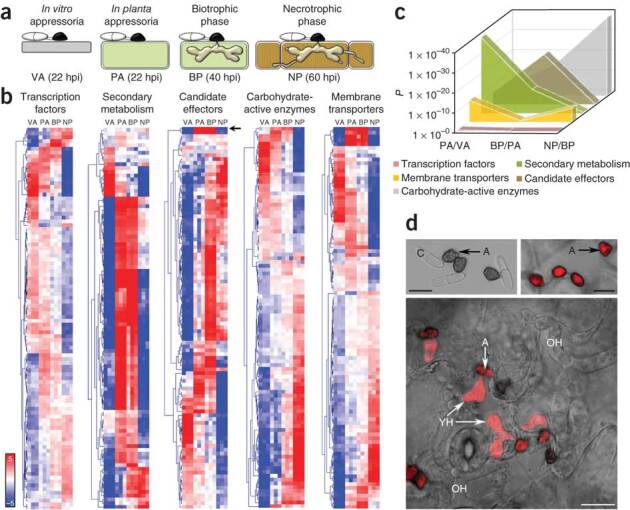
Richard O'Connell and colleagues report the genomes and transcriptomes of two Colletotrichum plant fungal pathogens. C. higginsianum infects Arabidopsis thaliana, and C. graminicola infects maize (Zea mays); comparative genomics in both species lead to molecular insights into the transition from biotrophic to necrotrophic life stages. Colletotrichum species are fungal pathogens that devastate crop plants worldwide. Host infection involves the differentiation of specialized cell types that are associated with penetration, growth inside living host cells (biotrophy) and tissue destruction (necrotrophy). We report here genome and transcriptome analyses of Colletotrichum higginsianum infecting Arabidopsis thaliana and Colletotrichum graminicola infecting maize. Comparative genomics showed that both fungi have large sets of pathogenicity-related genes, but families of genes encoding secreted effectors, pectin-degrading enzymes, secondary metabolism enzymes, transporters and peptidases are expanded in C. higginsianum. Genome-wide expression profiling revealed that these genes are transcribed in successive waves that are linked to pathogenic transitions: effectors and secondary metabolism enzymes are induced before penetration and during biotrophy, whereas most hydrolases and transporters are upregulated later, at the switch to necrotrophy. Our findings show that preinvasion perception of plant-derived signals substantially reprograms fungal gene expression and indicate previously unknown functions for particular fungal cell types.
Overview
The claims and statistics of this paper haven’t been checked yet.
Run the check — free, no account needed. It reads the open-access text and checks the sources it cites.
Integrity signals
Registry
Cites
Statistics
Figures
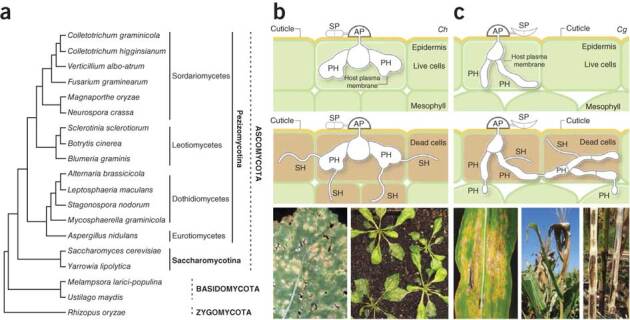
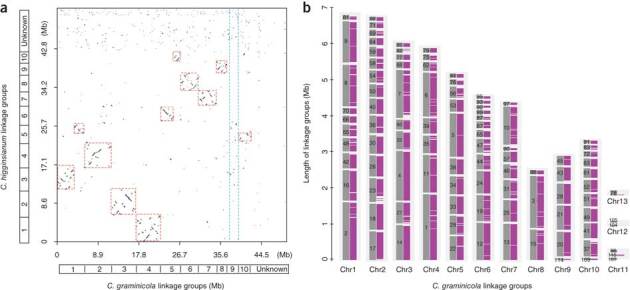
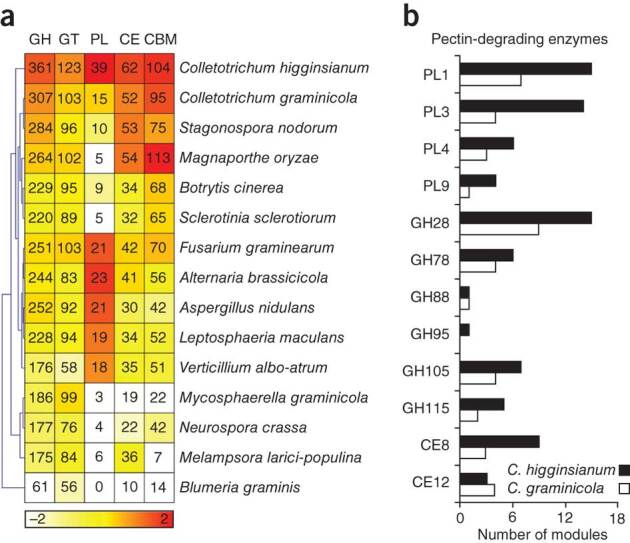
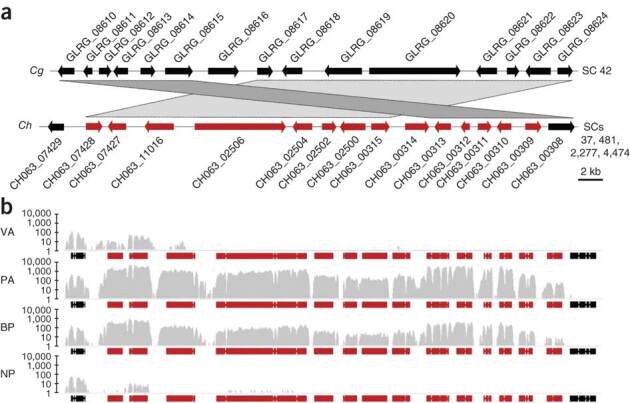
Verification
Claims the paper makes
The claims and statistics of this paper haven’t been checked yet.
Run the check — free, no account needed. It reads the open-access text and checks the sources it cites.
Claims other papers make about this one
Each is checked against this paper’s own text: does it say what the citing paper says it does?
The source backs part of the claim, not all of it — or backs it for a different population, condition or comparison.
In the citing paper
“Colletotrichum species adopt either intracellular hemibiotrophy or subcuticular, intramural necrotrophy (Wharton & Diéguez-Uribeondo 2004, Münch et al. 2008, O'Connell et al. 2012, de Silva et al. 2017).”
From Colletotrichum: lifestyles, biology, morpho-species, species complexes and accepted species (2021) · cites this paper as O'Connell et al. 2012
Experimental — accuracy not yet measuredThe cited source says what the claim attributes to it.
In the citing paper
“Comparative analyses of these genomes have revealed that Colletotrichum species may tailor their plant cell wall degrading enzymes and proteinases according to their lifestyle (O'Connell et al. 2012, Baroncelli et al. 2016, Hacquard et al. 2016).”
From Colletotrichum: lifestyles, biology, morpho-species, species complexes and accepted species (2021) · cites this paper as O'Connell et al. 2012
The cited source says what the claim attributes to it.
In the citing paper
“Species of Colletotrichum undergo major transformations in cell morphology and infection mode when switching lifestyles (O'Connell et al. 2012).”
From Colletotrichum: lifestyles, biology, morpho-species, species complexes and accepted species (2021) · cites this paper as O'Connell et al. 2012
The cited source says what the claim attributes to it.
In the citing paper
“Being a complex genus, Colletotrichum has different lifestyles that vary between groups of species, many of which can switch between lifestyles (Promputtha et al. 2007, O'Connell et al. 2012).”
From Colletotrichum: lifestyles, biology, morpho-species, species complexes and accepted species (2021) · cites this paper as O'Connell et al. 2012
The cited source says what the claim attributes to it.
In the citing paper
“Most of the species of Colletotrichum develop a necrotrophic stage in their life cycles (Cannon et al. 2012, O'Connell et al. 2012, de Silva et al. 2017).”
From Colletotrichum: lifestyles, biology, morpho-species, species complexes and accepted species (2021) · cites this paper as O'Connell et al. 2012
The check wasn’t confident either way, so it gives no verdict — never disputed.
In the citing paper
“O'Connell et al. (2012) showed that the destructivum species complex is monophyletic and distinct from other Colletotrichum species complexes.”
From Colletotrichum: lifestyles, biology, morpho-species, species complexes and accepted species (2021) · cites this paper as O'Connell et al. 2012
Experimental — accuracy not yet measured
Self-check
Percentages, sums and reported differences re-computed from the paper’s own numbers.
The self-check needs the paper’s full text.
Citations
Cites
Robinson, M. D., McCarthy, D. J., & Smyth, G. K. (2010) · Bioinformatics · doi:10.1093/bioinformatics/btp616 · Cited by 41,364
MrBayes 3: Bayesian phylogenetic inference under mixed models
Ronquist, F., & Huelsenbeck, J. P. (2003) · Bioinformatics · doi:10.1093/bioinformatics/btg180 · Cited by 29,194
BEDTools: a flexible suite of utilities for comparing genomic features
Quinlan, A. R., & Hall, I. M. (2010) · Bioinformatics · doi:10.1093/bioinformatics/btq033 · Cited by 27,437
Ultrafast and memory-efficient alignment of short DNA sequences to the human genome.
Langmead, B., Trapnell, C., Pop, M., & Salzberg, S. L. (2009) · Genome Biology · doi:10.1186/gb-2009-10-3-r25 · Cited by 21,849
MAFFT: a novel method for rapid multiple sequence alignment based on fast Fourier transform
Katoh, K. (2002) · Nucleic Acids Research · doi:10.1093/nar/gkf436 · Cited by 17,027
TopHat: discovering splice junctions with RNA-Seq
Trapnell, C., Pachter, L. S., & Salzberg, S. L. (2009) · Bioinformatics · doi:10.1093/bioinformatics/btp120 · Cited by 11,682
The Carbohydrate-Active EnZymes database (CAZy): an expert resource for Glycogenomics
Cantarel, B. L., Coutinho, P. M., Rancurel, C., Bernard, T., Lombard, V., & Henrissat, B. (2008) · Nucleic Acids Research · doi:10.1093/nar/gkn663 · Cited by 6,108
Self-citationVersatile and open software for comparing large genomes
Kurtz, S., Phillippy, A., Delcher, A. L., Smoot, M., Shumway, M., Antonescu, C., & Salzberg, S. L. (2004) · Genome Biology · doi:10.1186/gb-2004-5-2-r12 · Cited by 5,254
Shaner, N. C., Campbell, R. E., Steinbach, P. A., Giepmans, B. N. G., Palmer, A. E., & Tsien, R. Y. (2004) · Nature Biotechnology · doi:10.1038/nbt1037 · Cited by 4,619
WoLF PSORT: protein localization predictor
Horton, P., Park, K., Obayashi, T., Fujita, N., Harada, H., Adams-Collier, C. J., & Nakai, K. (2007) · Nucleic Acids Research · doi:10.1093/nar/gkm259 · Cited by 4,154
Research works printed but not linked: 1
- Frank, B. Ueber einige neue und weniger bekannte Pflanzenkrankheiten. Ber. Deutsch. Bot. Gesell. 1, 29–34 (1883).
Cited by
Sorted by citations
The Subread aligner: fast, accurate and scalable read mapping by seed-and-vote
Liao, Y., Smyth, G. K., & Shi, W. (2013) · Nucleic Acids Research · doi:10.1093/nar/gkt214 · Cited by 3,064
Fungal Effectors and Plant Susceptibility
Presti, L. L., Lanver, D., Schweizer, G., TANAKA, S., Liang, L., Tollot, M., Zuccaro, A., Reißmann, S., & Kahmann, R. (2015) · Annual Review of Plant Biology · doi:10.1146/annurev-arplant-043014-114623 · Cited by 1,301
Colletotrichum – current status and future directions
Cannon, P. F., Damm, U., Johnston, P. R., & Weir, B. S. (2012) · Studies in Mycology · doi:10.3114/sim0014 · Cited by 1,105
Self-citationLiang, P., Liu, S., Xu, F., Jiang, S., Yan, J., He, Q., Liu, W., Lin, C., Zheng, F., Wang, X., et al. (2019) · Frontiers in Microbiology · doi:10.3389/fmicb.2019.00001 · Cited by 670
Toruño, T. Y., Stergiopoulos, I., & Coaker, G. (2016) · Annual Review of Phytopathology · doi:10.1146/annurev-phyto-080615-100204 · Cited by 661
Filamentous plant pathogen effectors in action
Giraldo, M. C., & Valent, B. S. (2013) · Nature Reviews Microbiology · doi:10.1038/nrmicro3119 · Cited by 522
Phytopathogen Effectors Subverting Host Immunity: Different Foes, Similar Battleground
Dou, D., & Zhou, J. (2012) · Cell Host & Microbe · doi:10.1016/j.chom.2012.09.003 · Cited by 510
Wiemann, P., Sieber, C. M. K., von Bargen, K. W., Studt, L., Niehaus, E., Espino, J. J., Huß, K., Michielse, C. B., Albermann, S., Wagner, D., et al. (2013) · PLoS Pathogens · doi:10.1371/journal.ppat.1003475 · Cited by 457
Self-citationGenera of phytopathogenic fungi: GOPHY 1
Marín-Felix, Y., Groenewald, J. Z., Cai, L., Chen, Q., Marincowitz, S., Barnes, I., Bensch, K., Braun, U., Camporesi, E., Damm, U., et al. (2017) · Studies in Mycology · doi:10.1016/j.simyco.2017.04.002 · Cited by 440
Self-citationE ffector P: predicting fungal effector proteins from secretomes using machine learning
Sperschneider, J., Gardiner, D. M., Dodds, P. N., Tini, F., Covarelli, L., Singh, K. B., Manners, J. M., & Taylor, J. M. (2015) · New Phytologist · doi:10.1111/nph.13794 · Cited by 419
Doehlemann, G., Ökmen, B., Zhu, W., & Sharon, A. (2017) · Microbiology Spectrum · doi:10.1128/microbiolspec.funk-0023-2016 · Cited by 451
Improved prediction of fungal effector proteins from secretomes with EffectorP 2.0
Sperschneider, J., Dodds, P. N., Gardiner, D. M., Singh, K. B., & Taylor, J. M. (2018) · Molecular Plant Pathology · doi:10.1111/mpp.12682 · Cited by 397
Fungal evolution: major ecological adaptations and evolutionary transitions
Naranjo-Ortíz, M. A., & Gabaldón, T. (2019) · Biological reviews/Biological reviews of the Cambridge Philosophical Society · doi:10.1111/brv.12510 · Cited by 412
Effector Biology of Plant-Associated Organisms: Concepts and PerspectivesPreprint
Win, J., Chaparro-Garcia, A., Belhaj, K., Saunders, D. G. O., Yoshida, K., Dong, S., Schornack, S., Zipfel, C., Robatzek, S., Hogenhout, S. A., et al. (2012) · Cold Spring Harbor Symposia on Quantitative Biology · doi:10.1101/sqb.2012.77.015933 · Cited by 397
One stop shop: backbones trees for important phytopathogenic genera: I (2014)
Hyde, K. D., Nilsson, R. H., Alias, S. A., Ariyawansa, H. A., Blair, J. E., Cai, L., de Cock, A. W. A. M., Dissanayake, A. J., Glockling, S. L., Goonasekara, I. D., et al. (2014) · Fungal Diversity · doi:10.1007/s13225-014-0298-1 · Cited by 388
Gan, P., Ikeda, K., Irieda, H., Narusaka, M., O'Connell, R. J., Narusaka, Y., Takano, Y., Kubo, Y., & Shirasu, K. (2013) · New Phytologist · doi:10.1111/nph.12085 · Cited by 379
Self-citationNotes on currently accepted species of Colletotrichum
Jayawardena, R. (2016) · Mycosphere · doi:10.5943/mycosphere/si/2c/9 · Cited by 363
Life styles of Colletotrichum species and implications for plant biosecurity
de Silva, D. D., Crous, P. W., Ades, P. K., Hyde, K. D., & Taylor, P. W. J. (2017) · Fungal Biology Reviews · doi:10.1016/j.fbr.2017.05.001 · Cited by 356
Wijayawardene, N. N., Hyde, K. D., Rajeshkumar, K. C., Hawksworth, D. L., Hugo Madrid, L., Kirk, P. M., Braun, U., Singh, R. V., Crous, P. W., Kukwa, M., et al. (2017) · Fungal Diversity · doi:10.1007/s13225-017-0386-0 · Cited by 335
Oxidoreductases and Reactive Oxygen Species in Conversion of Lignocellulosic Biomass
Bissaro, B., Várnai, A., Røhr, Å. K., & Eijsink, V. G. H. (2018) · Microbiology and Molecular Biology Reviews · doi:10.1128/mmbr.00029-18 · Cited by 313
Modulation of Plant Defense System in Response to Microbial Interactions
Nishad, R., Ahmed, T. A.-F., Rahman, V. J., & Kareem, A. (2020) · Frontiers in Microbiology · doi:10.3389/fmicb.2020.01298 · Cited by 327
Rudd, J. J., Kanyuka, K., Hassani‐Pak, K., Derbyshire, M. C., Andongabo, A., Devonshire, J., Lysenko, A., Saqi, M. A. S., Desai, N., Powers, S. J., et al. (2015) · PLANT PHYSIOLOGY · doi:10.1104/pp.114.255927 · Cited by 318
Quiescent and Necrotrophic Lifestyle Choice During Postharvest Disease Development
Prusky, D., Alkan, N., Mengiste, T. D., & Fluhr, R. (2013) · Annual Review of Phytopathology · doi:10.1146/annurev-phyto-082712-102349 · Cited by 307
Self-citationKabbage, M., Williams, B., & Dickman, M. B. (2013) · PLoS Pathogens · doi:10.1371/journal.ppat.1003287 · Cited by 296
Self-citationColletotrichum species and complexes: geographic distribution, host range and conservation status
Talhinhas, P., & Baroncelli, R. (2021) · Fungal Diversity · doi:10.1007/s13225-021-00491-9 · Cited by 296
Hacquard, S., Kracher, B., Hiruma, K., Münch, P. C., Garrido-Oter, R., Thon, M. R., Weimann, A., Damm, U., Dallery, J.-F., Hainaut, M., et al. (2016) · Nature Communications · doi:10.1038/ncomms11362 · Cited by 278
Self-citationKabbage, M., Yarden, O., & Dickman, M. B. (2015) · Plant Science · doi:10.1016/j.plantsci.2014.12.018 · Cited by 276
Self-citationMetabolomics as an Emerging Tool for the Study of Plant–Pathogen Interactions
Castro-Moretti, F. R., Gentzel, I. N., Mackey, D. M., & Alonso, A. P. (2020) · Metabolites · doi:10.3390/metabo10020052 · Cited by 287
Updating species diversity of Colletotrichum , with a phylogenomic overview
Liu, F., Ma, Z. Y., Hou, L., Diao, Y., Wu, W. P., Damm, U., Song, S. H., & Cai, L. (2022) · Studies in Mycology · doi:10.3114/sim.2022.101.01 · Cited by 247
Self-citationBennati-Granier, C., Garajová, S., Champion, C., Grisel, S., Haon, M., Zhou, S., Fanuel, M., Ropartz, D., Rogniaux, H., Herpoël‐Gimbert, I., et al. (2015) · Biotechnology for Biofuels · doi:10.1186/s13068-015-0274-3 · Cited by 243
Self-citationThe Biotrophic Development of Ustilago maydis Studied by RNA-Seq Analysis
Lanver, D., Müller, A. N., Happel, P., Schweizer, G., Haas, F. B., Franitza, M., Pellegrin, C., Reißmann, S., Altmüller, J., Rensing, S. A., et al. (2018) · The Plant Cell · doi:10.1105/tpc.17.00764 · Cited by 249
Self-citationMicrobial genome-enabled insights into plant–microorganism interactions
Guttman, D. S., McHardy, A. C., & Schulze‐Lefert, P. (2014) · Nature Reviews Genetics · doi:10.1038/nrg3748 · Cited by 237
Self-citationThe Colletotrichum destructivum species complex - hemibiotrophic pathogens of forage and field crops
Damm, U., O’Connell, R. J., Groenewald, J. Z., & Crous, P. W. (2014) · Studies in Mycology · doi:10.1016/j.simyco.2014.09.003 · Cited by 234
Self-citationThe Genome Biology of Effector Gene Evolution in Filamentous Plant Pathogens
Sánchez‐Vallet, A., Fouché, S., Fudal, I., Hartmann, F. E., Soyer, J. L., Tellier, A., & Croll, D. (2018) · Annual Review of Phytopathology · doi:10.1146/annurev-phyto-080516-035303 · Cited by 225
Colletotrichum: lifestyles, biology, morpho-species, species complexes and accepted species
Jayawardena, R. (2021) · Mycosphere · doi:10.5943/mycosphere/12/1/7 · Cited by 208
Alkan, N., & Fortes, A. M. (2015) · Frontiers in Plant Science · doi:10.3389/fpls.2015.00889 · Cited by 209
Self-citationEffectors of Filamentous Plant Pathogens: Commonalities amid Diversity
Franceschetti, M., Maqbool, A., Jimenez-Dalmaroni, M. J., Pennington, H. G., Kamoun, S., & Banfield, M. J. (2017) · Microbiology and Molecular Biology Reviews · doi:10.1128/mmbr.00066-16 · Cited by 214
Knapp, D. G., Németh, J. B., Barry, K., Hainaut, M., Henrissat, B., Johnson, J., Kuo, A., Lim, J., Lipzen, A., Nolan, M., et al. (2018) · Scientific Reports · doi:10.1038/s41598-018-24686-4 · Cited by 199
Self-citationLi, B., Zong, Y., Du, Z., Chen, Y., Zhang, Z., Qin, G., Zhao, W., & Tian, S. (2015) · Molecular Plant-Microbe Interactions · doi:10.1094/mpmi-12-14-0398-fi · Cited by 196
Taxonomy and phylogeny of dematiaceous coelomycetes
Wijayawardene, N. N., Hyde, K. D., Wanasinghe, D. N., Papizadeh, M., Goonasekara, I. D., Camporesi, E., Bhat, D. J., McKenzie, E. H. C., Phillips, A. J. L., Diederich, P., et al. (2016) · Fungal Diversity · doi:10.1007/s13225-016-0360-2 · Cited by 197
Lytic Polysaccharide Monooxygenases: The Microbial Power Tool for Lignocellulose Degradation
Johansen, K. S. (2016) · Trends in Plant Science · doi:10.1016/j.tplants.2016.07.012 · Cited by 202
ApoplastP : prediction of effectors and plant proteins in the apoplast using machine learning
Sperschneider, J., Dodds, P. N., Singh, K. B., & Taylor, J. M. (2017) · New Phytologist · doi:10.1111/nph.14946 · Cited by 200
Strategies for mining fungal natural products
Wiemann, P., & Keller, N. P. (2013) · Journal of Industrial Microbiology & Biotechnology · doi:10.1007/s10295-013-1366-3 · Cited by 191
Alkan, N., Friedlander, G., Ment, D., Prusky, D., & Fluhr, R. (2014) · New Phytologist · doi:10.1111/nph.13087 · Cited by 187
Self-citationMorales‐Cruz, A., Amrine, K. C. H., Blanco‐Ulate, B., Lawrence, D. P., Travadon, R., Rolshausen, P. E., Baumgartner, K., & Cantù, D. (2015) · BMC Genomics · doi:10.1186/s12864-015-1624-z · Cited by 191
Baroncelli, R., Amby, D. B., Zapparata, A., Sarrocco, S., Vannacci, G., Le Floch, G., Harrison, R. J., Holub, E., Sukno, S. A., Sreenivasaprasad, S., et al. (2016) · BMC Genomics · doi:10.1186/s12864-016-2917-6 · Cited by 179
Self-citationAdaptive genomic structural variation in the grape powdery mildew pathogen, Erysiphe necator
Jones, L., Riaz, S., Morales‐Cruz, A., Amrine, K. C. H., McGuire, B., Gubler, W. D., Walker, M. A., & Cantù, D. (2014) · BMC Genomics · doi:10.1186/1471-2164-15-1081 · Cited by 187
Wang, Y.-C., Hao, X.-Y., Wang, L., Xiao, B., Wang, X.-C., & Yang, Y.-J. (2016) · Scientific Reports · doi:10.1038/srep35287 · Cited by 177
Immunity to plant pathogens and iron homeostasis
Aznar, A., Chen, N. W. G., Thomine, S., & Dellagi, A. (2015) · Plant Science · doi:10.1016/j.plantsci.2015.08.022 · Cited by 181
Induced resistance in maize is based on organ‐specific defence responses
Balmer, D., de Papajewski, D. V., Planchamp, C., Glauser, G., & Mauch‐Mani, B. (2013) · The Plant Journal · doi:10.1111/tpj.12114 · Cited by 169
Blanco‐Ulate, B., Morales‐Cruz, A., Amrine, K. C. H., Labavitch, J. M., Powell, A. L. T., & Cantù, D. (2014) · Frontiers in Plant Science · doi:10.3389/fpls.2014.00435 · Cited by 166
Susceptibility to plant disease: more than a failure of host immunity
Lapin, D., & den Ackerveken, G. F. J. M. V. (2013) · Trends in Plant Science · doi:10.1016/j.tplants.2013.05.005 · Cited by 166
Bertazzoni, S., Williams, A., Jones, D., Syme, R. A., Tan, K., & Hane, J. K. (2018) · Molecular Plant-Microbe Interactions · doi:10.1094/mpmi-06-17-0135-fi · Cited by 165
Hacquard, S., Kracher, B., Maekawa, T., Vernaldi, S., Schulze‐Lefert, P., & van Themaat, E. V. L. (2013) · Proceedings of the National Academy of Sciences · doi:10.1073/pnas.1306807110 · Cited by 163
Self-citationda Silva, L. L., Moreno, H. L. A., Correia, H. L. N., Santana, M. F., & de Queiroz, M. V. (2020) · Applied Microbiology and Biotechnology · doi:10.1007/s00253-020-10363-y · Cited by 162
Plant cells under siege: plant immune system versus pathogen effectors
Asai, S., & Shirasu, K. (2015) · Current Opinion in Plant Biology · doi:10.1016/j.pbi.2015.08.008 · Cited by 159
Self-citationOgita, N., Okushima, Y., Tokizawa, M., Yamamoto, Y. Y., Tanaka, M., Seki, M., Makita, Y., Matsui, M., Yoshiyama, K., Sakamoto, T., et al. (2018) · The Plant Journal · doi:10.1111/tpj.13866 · Cited by 164
Optimal markers for the identification of Colletotrichum species
Vieira, W. A. D. S., Bezerra, P. A., da Silva, A. C., Veloso, J. S., Câmara, M. P. S., & Doyle, V. P. (2019) · Molecular Phylogenetics and Evolution · doi:10.1016/j.ympev.2019.106694 · Cited by 162
Takahara, H., Hacquard, S., Kombrink, A., Hughes, H. B., Halder, V., Robin, G. P., Hiruma, K., Neumann, U., Shinya, T., Kombrink, E., et al. (2016) · New Phytologist · doi:10.1111/nph.13994 · Cited by 153
Self-citationThe Use of Lupin as a Source of Protein in Animal Feeding: Genomic Tools and Breeding Approaches
Abraham, Ε. M., Ganopoulos, I. V., Madesis, P. B., Mavromatis, A. G., Mylona, P. V., Nianiou‐Obeidat, I., Parissi, Z. M., Polidoros, A. N., Tani, E., & Vlachostergios, D. Ν. (2019) · International Journal of Molecular Sciences · doi:10.3390/ijms20040851 · Cited by 152
The Colletotrichum orbiculare species complex: Important pathogens of field crops and weeds
Damm, U., Cannon, P. F., Liu, F., Barreto, R. W., Guatimosim, E., & Crous, P. W. (2013) · Fungal Diversity · doi:10.1007/s13225-013-0255-4 · Cited by 154
Self-citationWhat are the common anthracnose pathogens of tropical fruits?
Udayanga, D., Manamgoda, D. S., Liu, X., Chukeatirote, E., & Hyde, K. D. (2013) · Fungal Diversity · doi:10.1007/s13225-013-0257-2 · Cited by 147
Endophytic species of Colletotrichum associated with mango in northeastern Brazil
Vieira, W. A. S., Michereff, S. J., de Morais, M. A., Hyde, K. D., & Câmara, M. P. S. (2014) · Fungal Diversity · doi:10.1007/s13225-014-0293-6 · Cited by 143
Lahrmann, U., Strehmel, N., Langen, G., Frerigmann, H., Leson, L., Ding, Y., Scheel, D., Herklotz, S., Hilbert, M., & Zuccaro, A. (2015) · New Phytologist · doi:10.1111/nph.13411 · Cited by 143
Cell-type-specific responses to fungal infection in plants revealed by single-cell transcriptomics
Tang, B., Li, F., Hulin, M. T., Ding, P., & Ma, W. (2023) · Cell Host & Microbe · doi:10.1016/j.chom.2023.08.019 · Cited by 150
Communication Between Filamentous Pathogens and Plants at the Biotrophic Interface
Yi, M., & Valent, B. S. (2013) · Annual Review of Phytopathology · doi:10.1146/annurev-phyto-081211-172916 · Cited by 142
Baroncelli, R., Zapparata, A., Sarrocco, S., Sukno, S. A., Lane, C. R., Thon, M. R., Vannacci, G., Holub, E. B., & Sreenivasaprasad, S. (2015) · PLoS ONE · doi:10.1371/journal.pone.0129140 · Cited by 134
Self-citationSimpleSynteny: a web-based tool for visualization of microsynteny across multiple species
Veltri, D., Malapi‐Wight, M., & Crouch, J. A. (2016) · Nucleic Acids Research · doi:10.1093/nar/gkw330 · Cited by 129
Self-citationLeaf Oil Body Functions as a Subcellular Factory for the Production of a Phytoalexin in Arabidopsis
Shimada, T., Takano, Y., Shimada, T., Fujiwara, M., Fukao, Y., Mori, M., Okazaki, Y., Saito, K., Sasaki, R., Aoki, K., et al. (2013) · PLANT PHYSIOLOGY · doi:10.1104/pp.113.230185 · Cited by 127
Self-citationTaniguti, L. M., Schaker, P. D. C., Benevenuto, J., Peters, L. P., Carvalho, G., Palhares, A., Quecine, M. C., Nunes, F. R. S., Kmit, M. C. P., Wai, A., et al. (2015) · PLoS ONE · doi:10.1371/journal.pone.0129318 · Cited by 125
Jayawardena, R. S., Hyde, K. D., Chen, Y. J., Papp, V., Palla, B., Papp, D., Bhunjun, C. S., Hurdeal, V. G., Senwanna, C., Manawasinghe, I. S., et al. (2020) · Fungal Diversity · doi:10.1007/s13225-020-00460-8 · Cited by 122
Marroquin‐Guzman, M., & Wilson, R. A. (2015) · PLoS Pathogens · doi:10.1371/journal.ppat.1004851 · Cited by 126
Lowe, R. G. T., Cassin, A. M., Grandaubert, J., Clark, B. L., de Wouw, A. P. V., Rouxel, T., & Howlett, B. J. (2014) · PLoS ONE · doi:10.1371/journal.pone.0103098 · Cited by 120
Hiruma, K., Fukunaga, S., Bednarek, P., Piślewska‐Bednarek, M., Watanabe, S., Narusaka, Y., Shirasu, K., & Takano, Y. (2013) · Proceedings of the National Academy of Sciences · doi:10.1073/pnas.1305745110 · Cited by 119
Self-citationJayawardena, R. S., Hyde, K. D., Jeewon, R., Ghobad‐Nejhad, M., Wanasinghe, D. N., Liu, N.-G., Phillips, A. J. L., Oliveira-Filho, J. R. C., da Silva, G. A., Gibertoni, T. B., et al. (2019) · Fungal Diversity · doi:10.1007/s13225-019-00418-5 · Cited by 119
Gebauer, P., Korn, M., Engelsdorf, T., Sonnewald, U., Koch, C., & Voll, L. M. (2017) · Frontiers in Plant Science · doi:10.3389/fpls.2017.01378 · Cited by 118
Self-citationHighly flexible infection programs in a specialized wheat pathogen
Haueisen, J., Möller, M., Eschenbrenner, C. J., Grandaubert, J., Seybold, H., Adamiak, H., & Stukenbrock, E. H. (2018) · Ecology and Evolution · doi:10.1002/ece3.4724 · Cited by 123
Secretome of Trichoderma Interacting With Maize Roots: Role in Induced Systemic Resistance*
Lamdan, N. L., Shalaby, S., Ziv, T., Kenerley, C. M., & Horwitz, B. A. (2015) · Molecular & Cellular Proteomics · doi:10.1074/mcp.m114.046607 · Cited by 113
How eukaryotic filamentous pathogens evade plant recognition
Garcia, E. O., & Valent, B. S. (2015) · Current Opinion in Microbiology · doi:10.1016/j.mib.2015.06.012 · Cited by 111
Soybean anthracnose caused by Colletotrichum species: Current status and future prospects
Boufleur, T. R., Ciampi‐Guillardi, M., Tikami, Í., Rogério, F., Thon, M. R., Sukno, S. A., Júnior, N. S. M., & Baroncelli, R. (2021) · Molecular Plant Pathology · doi:10.1111/mpp.13036 · Cited by 110
Self-citationVirulence Regulation of Phytopathogenic Fungi by pH
Alkan, N., Espeso, E. A., & Prusky, D. (2012) · Antioxidants and Redox Signaling · doi:10.1089/ars.2012.5062 · Cited by 113
Self-citationZuluaga, P., Vega‐Arreguín, J., Fei, Z., Ponnala, L., Lee, S. J., Matas, A. J., Patev, S., Fry, W. E., & Rose, J. K. C. (2015) · Molecular Plant Pathology · doi:10.1111/mpp.12263 · Cited by 109
Yin, T., Urresti, S., Lafond, M., Johnston, E. M., Derikvand, F., Ciano, L., Berrin, J., Henrissat, B., Walton, P. H., Davies, G. J., et al. (2015) · Nature Communications · doi:10.1038/ncomms10197 · Cited by 109
Self-citationDallery, J., Lapalu, N., Zampounis, A., Pigné, S., Luyten, I., Amselem, J., Wittenberg, A. H. J., Zhou, S., de Queiroz, M. V., Robin, G. P., et al. (2017) · BMC Genomics · doi:10.1186/s12864-017-4083-x · Cited by 109
Self-citationPlant Surface Cues Prime Ustilago maydis for Biotrophic Development
Lanver, D., Berndt, P., Tollot, M., Naik, V., Vraneš, M., Warmann, T., Münch, K., Rössel, N., & Kahmann, R. (2014) · PLoS Pathogens · doi:10.1371/journal.ppat.1004272 · Cited by 108
Yan, J. Y., Zhao, W. S., Chen, Z., Xing, Q. K., Zhang, W., Chethana, K. W. T., Xue, M. F., Xu, J. P., Phillips, A. J. L., Wang, Y., et al. (2017) · DNA Research · doi:10.1093/dnares/dsx040 · Cited by 109
Self-citationAlkan, N., Meng, X., Friedlander, G., Reuveni, E., Sukno, S., Sherman, A., Thon, M., Fluhr, R., & Prusky, D. (2013) · Molecular Plant-Microbe Interactions® · doi:10.1094/mpmi-03-13-0080-r · Cited by 107
Self-citationManagement of Post-Harvest Anthracnose: Current Approaches and Future Perspectives
Ciofini, A., Negrini, F., Baroncelli, R., & Baraldi, E. (2022) · Plants · doi:10.3390/plants11141856 · Cited by 114
Molecular tools for functional genomics in filamentous fungi: Recent advances and new strategies
Jiang, D., Zhu, W., Wang, Y., Sun, C., Zhang, K., & Yang, J. (2013) · Biotechnology Advances · doi:10.1016/j.biotechadv.2013.08.005 · Cited by 107
Gauthier, G. M., & Keller, N. P. (2013) · Fungal Genetics and Biology · doi:10.1016/j.fgb.2013.08.016 · Cited by 114
Amselem, J., Lebrun, M., & Quesneville, H. (2015) · BMC Genomics · doi:10.1186/s12864-015-1347-1 · Cited by 104
Self-citationChen, J., Liu, C., Gui, Y., Si, K.-W., Zhang, D., Wang, J., Short, D. P. G., Huang, J., Li, N., Liang, Y., et al. (2017) · New Phytologist · doi:10.1111/nph.14861 · Cited by 104
Effectors of plant-colonizing fungi and beyond
Uhse, S., & Armin Djamei, A. (2018) · PLoS Pathogens · doi:10.1371/journal.ppat.1006992 · Cited by 104
Interfamily Transfer of Dual NB-LRR Genes Confers Resistance to Multiple Pathogens
Narusaka, M., Kubo, Y., Hatakeyama, K., Imamura, J., Ezura, H., Nanasato, Y., Tabei, Y., Takano, Y., Shirasu, K., & Narusaka, Y. (2013) · PLoS ONE · doi:10.1371/journal.pone.0055954 · Cited by 102
Self-citationZhang, Y., He, J., Jia, L., Ting-Lu, Y., Zhang, D., Guo, Y. L., Wang, Y., & Tang, W.-H. (2016) · PLoS Pathogens · doi:10.1371/journal.ppat.1005485 · Cited by 101
Baroncelli, R., Talhinhas, P., Pensec, F., Sukno, S. A., Floch, G. L., & Thon, M. R. (2017) · Frontiers in Microbiology · doi:10.3389/fmicb.2017.02001 · Cited by 105
Self-citationThe infection cushion of Botrytis cinerea : a fungal ‘weapon’ of plant‐biomass destruction
Choquer, M., Rascle, C., Gonçalves, I., de Vallée, A., Ribot, C., Loisel, E., Smilevski, P., Ferria, J., Savadogo, M., Souibgui, E., et al. (2021) · Environmental Microbiology · doi:10.1111/1462-2920.15416 · Cited by 101
Self-citationSmall genome of the fungus Escovopsis weberi , a specialized disease agent of ant agriculture
de Man, T. J. B., Stajich, J., Kubicek, C. P., Teiling, C., Chenthamara, K., Atanasova, L., Druzhinina, I. S., Levenkova, N., Birnbaum, S. S. L., Barribeau, S. M., et al. (2016) · Proceedings of the National Academy of Sciences · doi:10.1073/pnas.1518501113 · Cited by 103
Talhinhas, P. (2023) · Mycosphere · doi:10.5943/mycosphere/14/si2/4 · Cited by 105
Chili anthracnose: Colletotrichum taxonomy and pathogenicity
Mongkolporn, O., & Taylor, P. W. J. (2018) · Plant Pathology · doi:10.1111/ppa.12850 · Cited by 99
Metadata
- Authors
- O'Connell, R. J., Thon, M. R., Hacquard, S., Amyotte, S. G., Kleemann, J., Torres, M. F., Damm, U., Buiate, E. A., Epstein, L., Alkan, N., Altmüller, J., Alvarado-Balderrama, L., Bauser, C. A., Becker, C., Birren, B. W., Chen, Z., Choi, J., Crouch, J. A., Duvick, J. P., Farman, M. A., Gan, P., Heiman, D., Henrissat, B., Howard, R. J., Kabbage, M., Koch, C., Kracher, B., Kubo, Y., Law, A. D., Lebrun, M.-H., Lee, Y.-H., Miyara, I., Moore, N., Neumann, U., Nordström, K., Panaccione, D. G., Panstruga, R., Place, M., Proctor, R. H., Prusky, D., Rech, G., Reinhardt, R., Rollins, J. A., Rounsley, S., Schardl, C. L., Schwartz, D. C., Shenoy, N., Shirasu, K., Sikhakolli, U. R., Stüber, K., Sukno, S. A., Sweigard, J. A., Takano, Y., Takahara, H., Trail, F., van der Does, H. C., Voll, L. M., Will, I., Young, S., Zeng, Q., Zhang, J., Zhou, S., Dickman, M. B., Schulze-Lefert, P., Ver Loren van Themaat, E., Ma, L.-J., & Vaillancourt, L. J.
- Affiliations
- Universidad de Salamanca (ES)
- Max Planck Institute for Plant Breeding Research (DE)
- University of Kentucky (US)
- Royal Netherlands Academy of Arts and Sciences (NL)
- University of California, Davis (US)
- Agricultural Research Organization (IL)
- University of Cologne (DE)
- Broad Institute (US)
- GATC Biotech (Germany) (DE)
- Seoul National University (KR)
- Agricultural Research Service (US)
- DuPont (United States) (US)
- RIKEN (JP)
- Centre National de la Recherche Scientifique (FR)
- Texas A&M University (US)
- Friedrich-Alexander-Universität Erlangen-Nürnberg (DE)
- Kyoto Prefectural University (JP)
- Institut National de Recherche pour l'Agriculture, l'Alimentation et l'Environnement (FR)
- West Virginia University (US)
- University of Wisconsin–Madison (US)
- Max Planck Society (DE)
- University of Florida (US)
- Michigan State University (US)
- Kyoto University (JP)
- Corresponding author
- Vaillancourt, Lisa J
- ORCID
- Thon, Michael R
- Hacquard, Stéphane
- Damm, Ulrike
- Epstein, Lynn
- Alkan, Noam
- Altmüller, Janine
- Bauser, Christopher A
- Becker, Christian
- Birren, Bruce W
- Chen, Zehua
- Choi, Jaeyoung
- Crouch, Jo Anne
- Gan, Pamela
- Heiman, David
- Henrissat, Bernard
- Howard, Richard J
- Kabbage, Mehdi
- Kracher, Barbara
- Kubo, Yasuyuki
- Lebrun, Marc-Henri
- Lee, Yong-Hwan
- Moore, Neil
- Neumann, Ulla
- Nordström, Karl
- Panaccione, Daniel G
- Panstruga, Ralph
- Place, Michael
- Proctor, Robert H
- Prusky, Dov
- Rech, Gabriel
- Reinhardt, Richard
- Rollins, Jeffrey A
- Rounsley, Steve
- Schardl, Christopher L
- Schwartz, David C
- Shirasu, Ken
- Sukno, Serenella A
- Takano, Yoshitaka
- Takahara, Hiroyuki
- Trail, Frances
- Voll, Lars M
- Young, Sarah
- Zeng, Qiandong
- Zhang, Jingze
- Zhou, Shiguo
- Dickman, Martin B
- Ma, Li-Jun
- Vaillancourt, Lisa J
- Venue
- Nature Genetics
- Published
- 2012-08-12
- Volume
- 44
- Issue
- 9
- Pages
- 1060-1065
- ISSN
- 1061-4036 (ISSN-L)
- 1546-1718
- PMC
- PMC9754331
- OpenAlex
- W2003266704
- Cited by
- 1,047
- References
- 63
- Citations by year
- 2026: 61 · 2025: 79 · 2024: 77 · 2023: 85 · 2022: 97 · 2021: 107 · 2020: 67 · 2019: 65 · 2018: 77 · 2017: 73 · 2016: 82 · 2015: 67 · 2014: 61 · 2013: 43 · 2012: 6
- FWCI
- 26.83
- Type
- journal article
- Language
- en
- Open access
- hybrid
- doi.org
- Licence
- Locations
- Nature Genetics (publishedVersion, cc-by-nc-sa)
- PubMed Central (publishedVersion, cc-by-nc-sa)
- PubMed (publishedVersion)
- MDC Repository (Max-Delbrueck-Center for Molecular Medicine) (acceptedVersion)
- HAL AMU (submittedVersion, other-oa)
- Data Archiving and Networked Services (DANS) (submittedVersion)
- RWTH Publications (RWTH Aachen) (submittedVersion)
- KNAW Research Portal (The Royal Netherlands Academy of Arts and Sciences) (submittedVersion)
- MPG.PuRe (Max Planck Society) (submittedVersion)
- Funders
- U.S. Department of Agriculture
- University of Kentucky
- Deutsche Forschungsgemeinschaft (SPP1212)
- Max-Planck-Gesellschaft
- Ministerio de Ciencia e Innovación
- Cooperative State Research, Education, and Extension Service (20093445720125, 2007-35600-17829)
- Topics
- Life Sciences › Agricultural and Biological Sciences › Plant Science › Plant Pathogens and Fungal Diseases
- Life Sciences › Agricultural and Biological Sciences › Plant Science › Plant Disease Resistance and Genetics
- Life Sciences › Agricultural and Biological Sciences › Plant Science › Plant-Microbe Interactions and Immunity
- Keywords
- Colletotrichum higginsianum, Colletotrichum graminicola, plant pathogenic fungi, secreted effectors, pectin-degrading enzymes, hydrolytic enzymes, gene expression profiling, host-pathogen interaction, Arabidopsis thaliana, maize, comparative genomics
- MeSH terms
- Mitosporic Fungi, Models, Biological, Phylogeny, Plant Diseases, Gene Expression Regulation, Fungal, Cluster Analysis, Genome, Fungal, Arabidopsis, Sequence Analysis, DNA, Gene Expression Regulation, Developmental, Colletotrichum, Gene Expression Profiling, Host-Pathogen Interactions, Transcriptome
About these checks
Registry, retraction, Cites and statistics results are computed, not judged, with one exception: a printed reference that no index lists is read once by a model before it counts as a citation error. Claims are extracted by a model and kept only when their quote appears verbatim in the text; each cited source is then checked, with a model’s help, for whether it says what the claim relies on. Those verdicts can be wrong — read the claim’s quote and the cited source before relying on one.
Statistics and arithmetic are recomputed, not judged.
Confidence bands are shown only for fields calibrated on our annotated test set. None is calibrated yet, so no band is shown.
What counts as a claim ›How we measure confidence ›How we check this ›
Are you an author, or do you see a problem with this page? Request a review
