

The DOI matches its Crossref record; 70 of the 70 references it cites were found in a registry or an index.
Genome-wide characteristics of de novo mutations in autism
Open accessAbstract
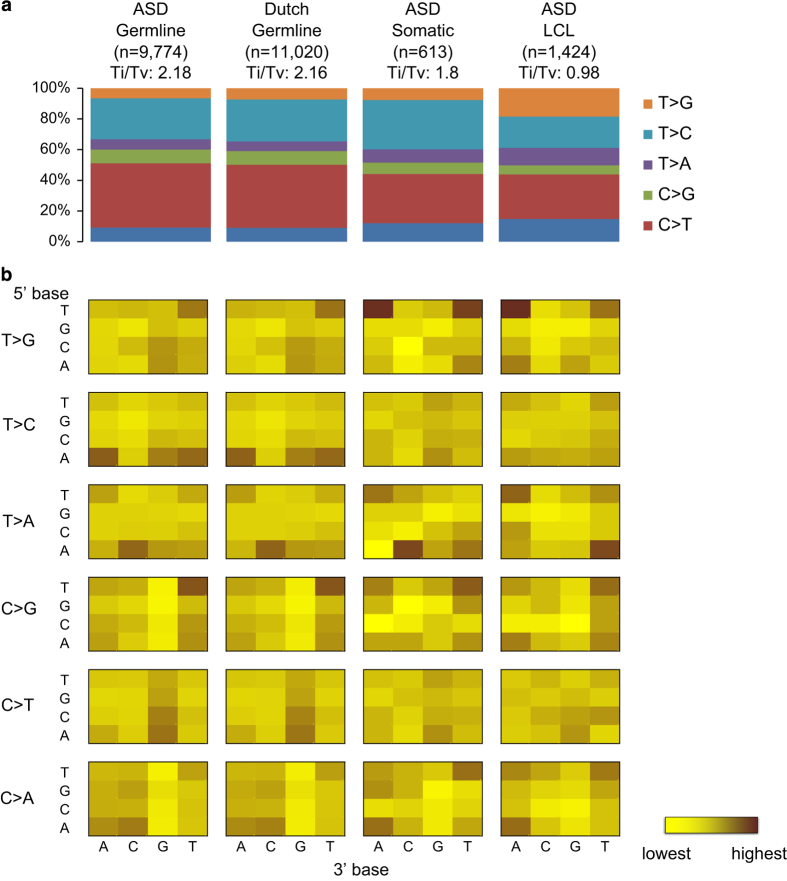
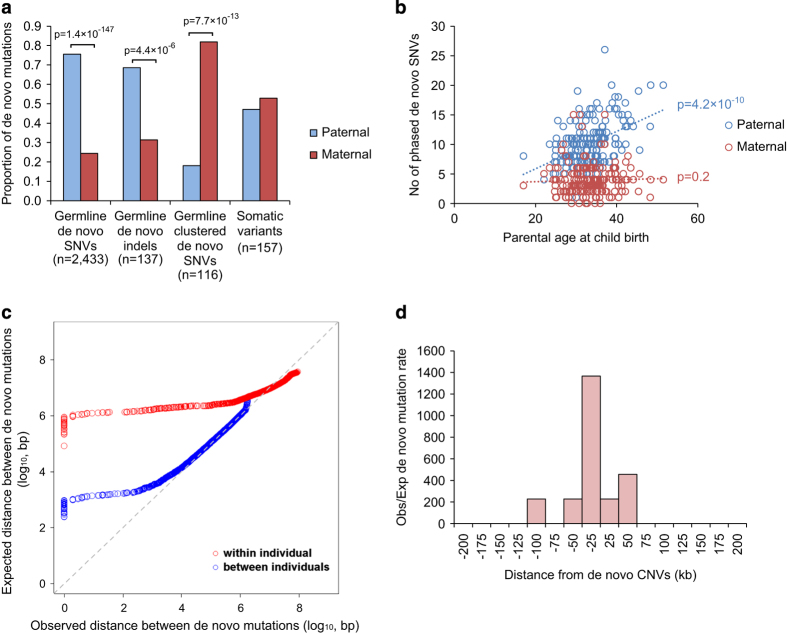
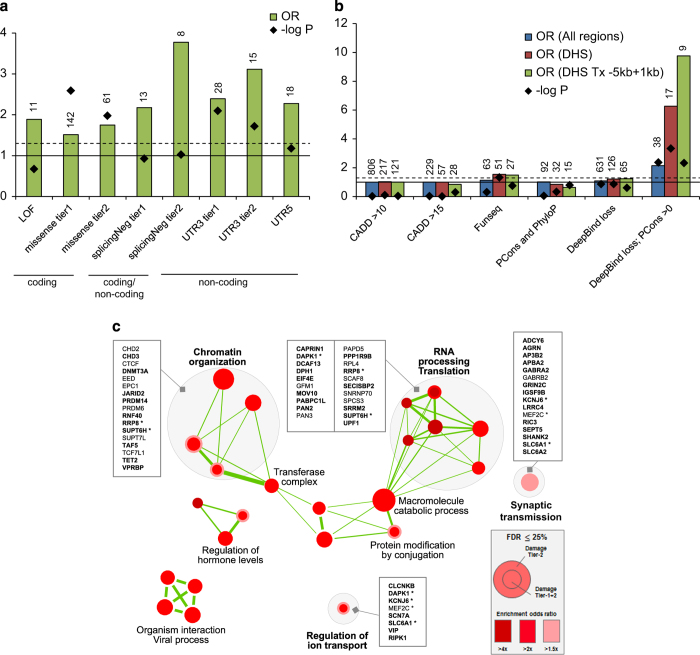
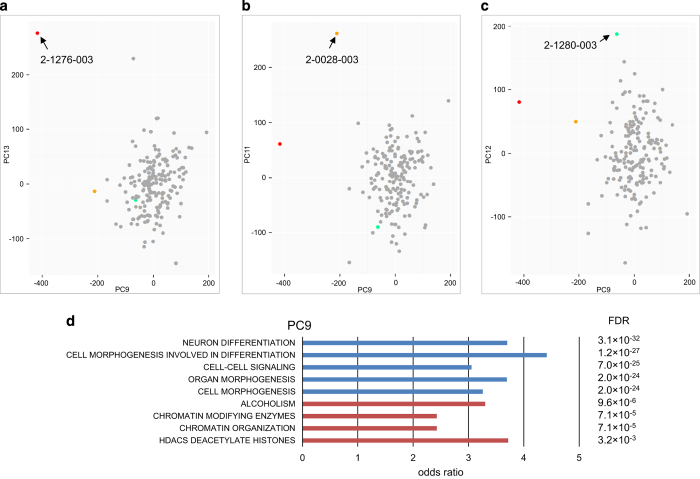
De novo mutations (DNMs) are important in autism spectrum disorder (ASD), but so far analyses have mainly been on the ~1.5% of the genome encoding genes. Here, we performed whole-genome sequencing (WGS) of 200 ASD parent–child trios and characterised germline and somatic DNMs. We confirmed that the majority of germline DNMs (75.6%) originated from the father, and these increased significantly with paternal age only (P=4.2×10⁻¹⁰). However, when clustered DNMs (those within 20 kb) were found in ASD, not only did they mostly originate from the mother (P=7.7×10⁻¹³), but they could also be found adjacent to de novo copy number variations where the mutation rate was significantly elevated (P=2.4×10⁻²⁴). By comparing with DNMs detected in controls, we found a significant enrichment of predicted damaging DNMs in ASD cases (P=8.0×10⁻⁹; odds ratio=1.84), of which 15.6% (P=4.3×10⁻³) and 22.5% (P=7.0×10⁻⁵) were non-coding or genic non-coding, respectively. The non-coding elements most enriched for DNM were untranslated regions of genes, regulatory sequences involved in exon-skipping and DNase I hypersensitive regions. Using microarrays and a novel outlier detection test, we also found aberrant methylation profiles in 2/185 (1.1%) of ASD cases. These same individuals carried independently identified DNMs in the ASD-risk and epigenetic genes DNMT3A and ADNP. Our data begins to characterize different genome-wide DNMs, and highlight the contribution of non-coding variants, to the aetiology of ASD.
Overview
The claims and statistics of this paper haven’t been checked yet.
Run the check — free, no account needed. It reads the open-access text and checks the sources it cites.
Integrity signals
Registry
Cites
Statistics
Figures
Verification
Claims the paper makes
The claims and statistics of this paper haven’t been checked yet.
Run the check — free, no account needed. It reads the open-access text and checks the sources it cites.
Claims other papers make about this one
Each is checked against this paper’s own text: does it say what the citing paper says it does?
In the citing paper
“individuals with ASD have a two- to three-fold increase in the number of rare copy number variations (CNVs) and de novo loss-of-function (nonsense, frameshift, and splice site) variants compared to their unaffected siblings11–14.”
From Genome-wide detection of tandem DNA repeats that are expanded in autism (2020) · cites this paper as [14]
Self-check
Percentages, sums and reported differences re-computed from the paper’s own numbers.
The self-check needs the paper’s full text.
Citations
Cites
An integrated encyclopedia of DNA elements in the human genome
The ENCODE Project Consortium (2012) · Nature · doi:10.1038/nature11247 · Cited by 18,072
ANNOVAR: functional annotation of genetic variants from high-throughput sequencing data
Wang, K., Li, M., & Hakonarson, H. H. (2010) · Nucleic Acids Research · doi:10.1093/nar/gkq603 · Cited by 14,724
A method and server for predicting damaging missense mutations.
Adzhubei, I. A., Schmidt, S., Peshkin, L., Ramensky, V. E., Gerasimova, A., Bork, P., Kondrashov, A. S., & Sunyaev, S. R. (2010) · Nature Methods · doi:10.1038/nmeth0410-248 · Cited by 13,194
Integrative analysis of 111 reference human epigenomes
Roadmap Epigenomics Consortium, Kundaje, A., Meuleman, W., Ernst, J., Bilenky, M., Yen, A., Heravi-Moussavi, A., Kheradpour, P., Zhang, Z., Wang, J., et al. (2015) · Nature · doi:10.1038/nature14248 · Cited by 6,368
Self-citationA general framework for estimating the relative pathogenicity of human genetic variants
Kircher, M., Witten, D. M., Jain, P., O'Roak, B. J., Cooper, G. M., & Shendure, J. (2014) · Nature Genetics · doi:10.1038/ng.2892 · Cited by 6,183
Okano, M., Bell, D. W., Haber, D. A., & Li, E. (1999) · Cell · doi:10.1016/s0092-8674(00)81656-6 · Cited by 6,143
DNA methylation arrays as surrogate measures of cell mixture distribution
Houseman, E. A., Accomando, W. P., Koestler, D. C., Christensen, B. C., Marsit, C. J., Nelson, H. H., Wiencke, J. K., & Kelsey, K. T. (2012) · BMC Bioinformatics · doi:10.1186/1471-2105-13-86 · Cited by 3,175
MutationTaster evaluates disease-causing potential of sequence alterations
Schwarz, J. M., Rödelsperger, C., Schuelke, M., & Seelow, D. (2010) · Nature Methods · doi:10.1038/nmeth0810-575 · Cited by 2,975
Predicting the sequence specificities of DNA- and RNA-binding proteins by deep learning
Alipanahi, B., Delong, A., Weirauch, M. T., & Frey, B. J. (2015) · Nature Biotechnology · doi:10.1038/nbt.3300 · Cited by 2,873
Self-citationStrong association of de novo copy number mutations with autism
Sebat, J., Lakshmi, B., Malhotra, D., Troge, J., Lese-Martin, C., Walsh, T., Yamrom, B., Yoon, S., Krasnitz, A., Kendall, J., et al. (2007) · Science · doi:10.1126/science.1138659 · Cited by 2,795
Synaptic, transcriptional and chromatin genes disrupted in autism
Study, T. D., De Rubeis, S., Autism, H. M. C. F., UK10K Consortium, The Autism Sequencing Consortium, He, X., Goldberg, A. P., Poultney, C. S., Samocha, K., Ercument Cicek, A., et al. (2014) · Nature · doi:10.1038/nature13772 · Cited by 2,746
Self-citationThe contribution of de novo coding mutations to autism spectrum disorder
Iossifov, I., O’Roak, B. J., Sanders, S. J., Ronemus, M., Krumm, N., Levy, D., Stessman, H. A., Witherspoon, K. T., Vives, L., Patterson, K. E., et al. (2014) · Nature · doi:10.1038/nature13908 · Cited by 2,585
Self-citationAn atlas of active enhancers across human cell types and tissues
The FANTOM Consortium, Andersson, R., Gebhard, C., Miguel-Escalada, I., Hoof, I., Bornholdt, J., Boyd, M., Chen, Y., Zhao, X., Schmidl, C., et al. (2014) · Nature · doi:10.1038/nature12787 · Cited by 2,550
Predicting Deleterious Amino Acid Substitutions
Ng, P. C., & Henikoff, S. (2001) · Genome Research · doi:10.1101/gr.176601 · Cited by 2,368
Detection of nonneutral substitution rates on mammalian phylogenies
Pollard, K. S., Hubisz, M. J., Rosenbloom, K. R., & Siepel, A. (2010) · Genome Research · doi:10.1101/gr.097857.109 · Cited by 2,353
Enrichment Map: A Network-Based Method for Gene-Set Enrichment Visualization and Interpretation
Merico, D., Isserlin, R., Stueker, O., Emili, A., & Bader, G. D. (2010) · PLoS ONE · doi:10.1371/journal.pone.0013984 · Cited by 2,235
Self-citationRate of de novo mutations and the importance of father’s age to disease risk
Kong, A., Frigge, M. L., Masson, G., Besenbacher, S., Sulem, P., Magnusson, G., Gudjonsson, S. A., Sigurdsson, A., Jonasdottir, A., Jonasdottir, A., et al. (2012) · Nature · doi:10.1038/nature11396 · Cited by 2,134
Predicting the functional impact of protein mutations: application to cancer genomics
Reva, B. A., Antipin, Y., & Sander, C. (2011) · Nucleic Acids Research · doi:10.1093/nar/gkr407 · Cited by 2,046
Epidemiology of Pervasive Developmental Disorders
Fombonne, E. (2009) · Pediatric Research · doi:10.1203/pdr.0b013e31819e7203 · Cited by 1,971
Structural Variation of Chromosomes in Autism Spectrum Disorder
Marshall, C. R., Noor, A., Vincent, J. B., Lionel, A. C., Feuk, L., Skaug, J., Shago, M., Moessner, R., Pinto, D., Ren, Y., et al. (2008) · The American Journal of Human Genetics · doi:10.1016/j.ajhg.2007.12.009 · Cited by 1,815
Self-citationInsights into autism spectrum disorder genomic architecture and biology from 71 risk loci
Sanders, S. J., He, X., Willsey, A. J., Ercan-Sencicek, A. G., Samocha, K. E., Cicek, A. E., Murtha, M. T., Bal, V. H., Bishop, S. L., Dong, S., et al. (2015) · Neuron · doi:10.1016/j.neuron.2015.09.016 · Cited by 1,430
Recurrence Risk for Autism Spectrum Disorders: A Baby Siblings Research Consortium Study
Ozonoff, S., Young, G. S., Carter, A., Messinger, D., Yirmiya, N., Zwaigenbaum, L., Bryson, S., Carver, L. J., Constantino, J. N., Dobkins, K., et al. (2011) · Pediatrics · doi:10.1542/peds.2010-2825 · Cited by 1,429
Self-citationMapping autism risk loci using genetic linkage and chromosomal rearrangements
The Autism Genome Project Consortium (2007) · Nature Genetics · doi:10.1038/ng1985 · Cited by 1,402
Self-citationThe human splicing code reveals new insights into the genetic determinants of disease
Xiong, H. Y., Alipanahi, B., Lee, L. J., Bretschneider, H., Merico, D., Yuen, R. K. C., Hua, Y., Gueroussov, S., Najafabadi, H. S., Hughes, T., et al. (2014) · Science · doi:10.1126/science.1254806 · Cited by 1,243
Self-citationA silencing pathway to induce H3-K9 and H4-K20 trimethylation at constitutive heterochromatin
Schotta, G., Lachner, M., Sarma, K., Ebert, A., Sengupta, R., Reuter, G., Reinberg, D., & Jenuwein, T. (2004) · Genes & Development · doi:10.1101/gad.300704 · Cited by 1,031
From the genetic architecture to synaptic plasticity in autism spectrum disorder
Bourgeron, T. (2015) · Nature Reviews Neuroscience · doi:10.1038/nrn3992 · Cited by 975
Convergence of genes and cellular pathways dysregulated in autism spectrum disorders
Pinto, D., Delaby, E., Merico, D., Barbosa, M., Merikangas, A., Klei, L., Thiruvahindrapuram, B., Xu, X., Ziman, R., Wang, Z., et al. (2014) · The American Journal of Human Genetics · doi:10.1016/j.ajhg.2014.03.018 · Cited by 969
Self-citationLow-level processing of Illumina Infinium DNA Methylation BeadArrays
Triche, T. J., Weisenberger, D. J., Berg, D. V. D., Laird, P. W., & Siegmund, K. D. (2013) · Nucleic Acids Research · doi:10.1093/nar/gkt090 · Cited by 909
SWAN: Subset-quantile Within Array Normalization for Illumina Infinium HumanMethylation450 BeadChips
Maksimovic, J., Gordon, L., & Oshlack, A. (2012) · Genome Biology · doi:10.1186/gb-2012-13-6-r44 · Cited by 826
Bailey, A. J., Phillips, W., & Rutter, M. L. (1996) · Journal of Child Psychology and Psychiatry · doi:10.1111/j.1469-7610.1996.tb01381.x · Cited by 765
Haplotyping germline and cancer genomes with high-throughput linked-read sequencing
Zheng, G. X. Y., Lau, B. T., Schnall-Levin, M., Jarosz, M. V., Bell, J., Hindson, C. M., Kyriazopoulou-Panagiotopoulou, S., Masquelier, D. A., Merrill, L., Terry, J. M., et al. (2016) · Nature Biotechnology · doi:10.1038/nbt.3432 · Cited by 674
Self-citationFrancioli, L. C., Menelaou, A., Pulit, S. L., Elbers, C. C., Kloosterman, W. P., van Setten, J., Nijman, I. J., Renkens, I., de Bakker, P. I. W., van Dijk, F., et al. (2014) · Nature Genetics · doi:10.1038/ng.3021 · Cited by 651
Self-citationDisruption of neurexin 1 associated with autism spectrum disorder
Kim, H.-G., Kishikawa, S., Higgins, A. W., Seong, I.-S., Donovan, D. J., Shen, Y., Lally, E., Weiss, L. A., Najm, J., Kutsche, K., et al. (2008) · The American Journal of Human Genetics · doi:10.1016/j.ajhg.2007.09.011 · Cited by 578
Talkowski, M. E., Rosenfeld, J. A., Blumenthal, I., Pillalamarri, V., Chiang, C., Heilbut, A., Ernst, C., Hanscom, C., Rossin, E., Lindgren, A. M., et al. (2012) · Cell · doi:10.1016/j.cell.2012.03.028 · Cited by 577
Heritability of Autism Spectrum Disorder in a UK Population-Based Twin Sample
Colvert, E., Tick, B., McEwen, F., Stewart, C., Curran, S. R., Woodhouse, E., Gillan, N., Hallett, V., Lietz, S., Garnett, T., et al. (2015) · JAMA Psychiatry · doi:10.1001/jamapsychiatry.2014.3028 · Cited by 560
Genetic architecture in autism spectrum disorder
Devlin, B., & Scherer, S. W. (2012) · Current Opinion in Genetics & Development · doi:10.1016/j.gde.2012.03.002 · Cited by 545
Self-citationHigh-resolution mapping of copy-number alterations with massively parallel sequencing
Chiang, D. Y., Getz, G. A., Jaffe, D. B., O'Kelly, M., Zhao, X., Carter, S. L., Russ, C., Nusbaum, C., Meyerson, M. M., & Lander, E. S. (2008) · Nature Methods · doi:10.1038/nmeth.1276 · Cited by 516
Whole-genome sequencing of quartet families with autism spectrum disorder
Yuen, R. K. C., Thiruvahindrapuram, B., Merico, D., Walker, S., Tammimies, K., Hoang, N., Chrysler, C., Nalpathamkalam, T., Pellecchia, G., Liu, Y., et al. (2015) · Nature Medicine · doi:10.1038/nm.3792 · Cited by 514
Self-citationJiang, Y.-H., Yuen, R. K. C., Jin, X., Wang, M., Chen, N., Wu, X., Ju, J., Mei, J., Shi, Y., He, M., et al. (2013) · The American Journal of Human Genetics · doi:10.1016/j.ajhg.2013.06.012 · Cited by 474
Self-citationTammimies, K., Marshall, C. R., Walker, S., Kaur, G., Thiruvahindrapuram, B., Lionel, A. C., Yuen, R. K. C., Uddin, M., Roberts, W., Weksberg, R., et al. (2015) · JAMA · doi:10.1001/jama.2015.10078 · Cited by 419
Self-citationThe role of de novo mutations in the genetics of autism spectrum disorders
Ronemus, M., Iossifov, I., Levy, D., & Wigler, M. (2014) · Nature Reviews Genetics · doi:10.1038/nrg3585 · Cited by 390
Genome-wide patterns and properties of de novo mutations in humans
Francioli, L. C., Polak, P. P., Koren, A., Menelaou, A., Chun, S., Renkens, I., van Duijn, C. M., Swertz, M. A., Wijmenga, C., van Ommen, G. B., et al. (2015) · Nature Genetics · doi:10.1038/ng.3292 · Cited by 383
Individual common variants exert weak effects on the risk for autism spectrum disorders
Anney, R., Klei, L., Pinto, D., Almeida, J., Bacchelli, E., Baird, G., Bolshakova, N., Bölte, S., Bolton, P. F., Bourgeron, T., et al. (2012) · Human Molecular Genetics · doi:10.1093/hmg/dds301 · Cited by 375
Self-citationIntegrative Annotation of Variants from 1092 Humans: Application to Cancer Genomics
Khurana, E., Fu, Y., Colonna, V., Mu, X. J., Kang, H. M., Lappalainen, T., Sboner, A., Lochovsky, L., Chen, J., Harmanci, A. O., et al. (2013) · Science · doi:10.1126/science.1235587 · Cited by 368
Tatton‐Brown, K., Seal, S., Ruark, E., Harmer, J. E., Ramsay, E., Duarte, S. D. V., Zachariou, A., Hanks, S., O’Brien, E. M., Aksglæde, L., et al. (2014) · Nature Genetics · doi:10.1038/ng.2917 · Cited by 367
Stavropoulos, D. J., Merico, D., Jobling, R. K., Bowdin, S. C., Monfared, N., Thiruvahindrapuram, B., Nalpathamkalam, T., Pellecchia, G., Yuen, R. K. C., Szego, M. J., et al. (2016) · npj Genomic Medicine · doi:10.1038/npjgenmed.2015.12 · Cited by 366
Self-citationA SWI/SNF-related autism syndrome caused by de novo mutations in ADNP
Helsmoortel, C., Vulto-van Silfhout, A. T., Coe, B. P., Vandeweyer, G., Rooms, L., van den Ende, J., Schuurs-Hoeijmakers, J. H. M., Marcelis, C. L., Willemsen, M. H., Vissers, L. E. L. M., et al. (2014) · Nature Genetics · doi:10.1038/ng.2899 · Cited by 354
Diverse Mechanisms of Somatic Structural Variations in Human Cancer Genomes
Yang, L., Luquette, L. J., Gehlenborg, N., Xi, R., Haseley, P. S., Hsieh, C.-H., Zhang, C., Ren, X., Protopopov, A. I., Chin, L., et al. (2013) · Cell · doi:10.1016/j.cell.2013.04.010 · Cited by 329
He, X., Sanders, S. J., Liu, L., De Rubeis, S., Lim, E. T., Sutcliffe, J. S., Schellenberg, G. D., Gibbs, R. A., Daly, M. J., Buxbaum, J. D., et al. (2013) · PLoS Genetics · doi:10.1371/journal.pgen.1003671 · Cited by 304
Parental Somatic Mosaicism Is Underrecognized and Influences Recurrence Risk of Genomic Disorders
Campbell, I. M., Yuan, B., Robberecht, C., Pfundt, R., Szafrański, P., McEntagart, M., Nagamani, S. C. S., Erez, A., Bartnik, M., Wiśniowiecka‐Kowalnik, B., et al. (2014) · The American Journal of Human Genetics · doi:10.1016/j.ajhg.2014.07.003 · Cited by 277
A High-Resolution Enhancer Atlas of the Developing Telencephalon
Visel, A., Taher, L., Girgis, H., May, D., Golonzhka, O., Hoch, R. V., McKinsey, G. L., Pattabiraman, K., Silberberg, S. N., Blow, M. J., et al. (2013) · Cell · doi:10.1016/j.cell.2012.12.041 · Cited by 257
Direct Measure of the De Novo Mutation Rate in Autism and Schizophrenia Cohorts
Awadalla, P., Gauthier, J., Myers, R. A., Casals, F., Hamdan, F. F., Griffing, A. R., Côté, M., Henrion, É., Spiegelman, D., Tarabeux, J., et al. (2010) · The American Journal of Human Genetics · doi:10.1016/j.ajhg.2010.07.019 · Cited by 243
Autism spectrum disorder: advances in evidence-based practice
Anagnostou, E. A., Zwaigenbaum, L., Szatmári, P., Fombonne, E. J., Fernandez, B. A., Woodbury‐Smith, M., Brian, J. A., Bryson, S. E., Smith, I. M., Drmic, I., et al. (2014) · Canadian Medical Association Journal · doi:10.1503/cmaj.121756 · Cited by 234
Self-citationDNA repair mechanisms and gametogenesis
Baarends, W. M., van der Laan, R., & Grootegoed, J. A. (2001) · Reproduction · doi:10.1530/rep.0.1210031 · Cited by 220
NSD1 mutations generate a genome-wide DNA methylation signature
Choufani, S., Cytrynbaum, C. S., Chung, B. H., Turinsky, A. L., Grafodatskaya, D., Chen, Y., Cohen, A. S. A., Dupuis, L., Butcher, D. T., Siu, M., et al. (2015) · Nature Communications · doi:10.1038/ncomms10207 · Cited by 214
Self-citationBuxbaum, J. D., Daly, M. J., Devlin, B., Lehner, T., Roeder, K., & State, M. W. (2012) · Neuron · doi:10.1016/j.neuron.2012.12.008 · Cited by 194
Disruption at the PTCHD1 Locus on Xp22.11 in Autism Spectrum Disorder and Intellectual Disability
Noor, A., Whibley, A., Marshall, C. R., Gianakopoulos, P. J., Piton, A., Carson, A. R., Orlic-Milacic, M., Lionel, A. C., Sato, D., Pinto, D., et al. (2010) · Science Translational Medicine · doi:10.1126/scitranslmed.3001267 · Cited by 193
Self-citationAutism spectrum disorder in the genetics clinic: a review
Carter, M., & Scherer, S. W. (2013) · Clinical Genetics · doi:10.1111/cge.12101 · Cited by 190
Self-citationDong, S., Walker, M. F., Carriero, N. J., DiCola, M. J., Willsey, A. J., Ye, A. Y., Waqar, Z., González, L. E., Overton, J. D., Frahm, S., et al. (2014) · Cell Reports · doi:10.1016/j.celrep.2014.08.068 · Cited by 175
Using ERDS to Infer Copy-Number Variants in High-Coverage Genomes
Zhu, M., Need, A. C., Han, Y., Ge, D., Maia, J. M., Zhu, Q., Heinzen, E. L., Cirulli, E. T., Pelak, K., He, M., et al. (2012) · The American Journal of Human Genetics · doi:10.1016/j.ajhg.2012.07.004 · Cited by 168
Uddin, M., Tammimies, K., Pellecchia, G., Alipanahi, B., Hu, P., Wang, Z., Pinto, D., Lau, L., Nalpathamkalam, T., Marshall, C. R., et al. (2014) · Nature Genetics · doi:10.1038/ng.2980 · Cited by 163
Self-citationTargeted DNA Sequencing from Autism Spectrum Disorder Brains Implicates Multiple Genetic Mechanisms
D’Gama, A. M., Pochareddy, S., Li, M., Jamuar, S. S., Rodin, R. E., Lam, A.-T. N., Šestan, N., & Walsh, C. A. (2015) · Neuron · doi:10.1016/j.neuron.2015.11.009 · Cited by 153
Assessing structural variation in a personal genome—towards a human reference diploid genome
English, A. C., Salerno, W. J., Hampton, O. A., Gonzaga-Jauregui, C. G., Ambreth, S., Ritter, D., Beck, C. R., Davis, C., Dahdouli, M., Ma, S., et al. (2015) · BMC Genomics · doi:10.1186/s12864-015-1479-3 · Cited by 152
Self-citationReplicative mechanisms for CNV formation are error prone
Carvalho, C. M. B., Pehli̇van, D., Ramocki, M. B., Fang, P., Alleva, B., Franco, L. M., Belmont, J. W., Hastings, P. J., & Lupski, J. R. (2013) · Nature Genetics · doi:10.1038/ng.2768 · Cited by 152
Mandel, S., & Gozes, I. (2007) · Journal of Biological Chemistry · doi:10.1074/jbc.m704756200 · Cited by 150
Harper, K. N., Peters, B. A., & Gamble, M. V. (2013) · Cancer Epidemiology Biomarkers & Prevention · doi:10.1158/1055-9965.epi-13-0114 · Cited by 77
Disruption of MBD5 contributes to a spectrum of psychopathology and neurodevelopmental abnormalities
Hodge, J. C., Mitchell, E. L. D., Pillalamarri, V., Toler, T. L., Bartel, F., Kearney, H. M., Zou, Y. S., Tan, W., Hanscom, C., Kirmani, S., et al. (2013) · Molecular Psychiatry · doi:10.1038/mp.2013.42 · Cited by 67
Pang, A. W. C., MacDonald, J. R., Yuen, R. K. C., Hayes, V. M., & Scherer, S. W. (2013) · G3 Genes Genomes Genetics · doi:10.1534/g3.113.008797 · Cited by 38
Self-citationClinical detection of deletion structural variants in whole-genome sequences
Noll, A. C., Miller, N., Smith, L. D., Yoo, B., Fiedler, S. D., Cooley, L. D., Willig, L. K., Petrikin, J. E., Cakici, J. A., Lesko, J. G., et al. (2016) · npj Genomic Medicine · doi:10.1038/npjgenmed.2016.26 · Cited by 34
Duong, L. T. T., Hoeffding, L. K., Petersen, K. B., Knudsen, C. D., Thygesen, J. H., Klitten, L. L., Tommerup, N., Ingason, A., & Werge, T. M. (2015) · European Journal of Medical Genetics · doi:10.1016/j.ejmg.2015.11.004 · Cited by 20
Cited by
Sorted by citations
Whole genome sequencing resource identifies 18 new candidate genes for autism spectrum disorder
C Yuen, R. K., Merico, D., Bookman, M., L Howe, J., Thiruvahindrapuram, B., Patel, R. V., Whitney, J., Deflaux, N., Bingham, J., Wang, Z., et al. (2017) · Nature Neuroscience · doi:10.1038/nn.4524 · Cited by 844
Self-citationInferring the molecular and phenotypic impact of amino acid variants with MutPred2
Pejaver, V., Urresti, J., Lugo-Martinez, J., Pagel, K. A., Lin, G. N., Nam, H.-J., Mort, M., Cooper, D. N., Sebat, J., Iakoucheva, L. M., et al. (2020) · Nature Communications · doi:10.1038/s41467-020-19669-x · Cited by 923
Structural variation in the sequencing era
Ho, S. S., Urban, A. E., & Mills, R. E. (2019) · Nature Reviews Genetics · doi:10.1038/s41576-019-0180-9 · Cited by 630
Parental influence on human germline de novo mutations in 1,548 trios from Iceland
Jónsson, H., Sulem, P., Kehr, B., Kristmundsdottir, S., Zink, F., Hjartarson, E., Hardarson, M. T., Hjorleifsson, K. E., Eggertsson, H. P., Gudjonsson, S. A., et al. (2017) · Nature · doi:10.1038/nature24018 · Cited by 561
Neurodevelopmental disease genes implicated by de novo mutation and copy number variation morbidity
Coe, B. P., Stessman, H. A. F., Sulovari, A., Geisheker, M. R., Bakken, T. E., Lake, A. M., Dougherty, J. D., Lein, E. S., Hormozdiari, F., Bernier, R. A., et al. (2019) · Nature Genetics · doi:10.1038/s41588-018-0288-4 · Cited by 330
Metadata
- Authors
- Yuen, R. K., Merico, D., Cao, H., Pellecchia, G., Alipanahi, B., Thiruvahindrapuram, B., Tong, X., Sun, Y., Cao, D., Zhang, T., Wu, X., Jin, X., Zhou, Z., Liu, X., Nalpathamkalam, T., Walker, S., Howe, J. L., Wang, Z., MacDonald, J. R., Chan, A. J., D’Abate, L., Deneault, E., Siu, M. T., Tammimies, K., Uddin, M., Zarrei, M., Wang, M., Li, Y., Wang, J., Wang, J., Yang, H., Bookman, M., Bingham, J., Gross, S. S., Loy, D., Pletcher, M., Marshall, C. R., Anagnostou, E., Zwaigenbaum, L., Weksberg, R., Fernandez, B. A., Roberts, W., Szatmari, P., Glazer, D., Frey, B. J., Ring, R. H., Xu, X., & Scherer, S. W.
- Affiliations
- Hospital for Sick Children (CA)
- BGI Group (China) (CN)
- University of Toronto (CA)
- Karolinska Institutet (SE)
- Google (United States) (US)
- Autism Speaks (US)
- University of Alberta (CA)
- Memorial University of Newfoundland (CA)
- Corresponding author
- Scherer, Stephen W
- ORCID
- Yuen, Ryan KC
- Merico, Daniele
- Cao, Hongzhi
- Pellecchia, Giovanna
- Alipanahi, Babak
- Thiruvahindrapuram, Bhooma
- Tong, Xin
- Sun, Yuhui
- Cao, Dandan
- Zhang, Tao
- Jin, Xin
- Liu, Xiaomin
- Nalpathamkalam, Thomas
- Walker, Susan
- Wang, Zhuozhi
- MacDonald, Jeffrey R
- D’Abate, Lia
- Tammimies, Kristiina
- Uddin, Mohammed
- Wang, Mingbang
- Li, Yingrui
- Wang, Jun
- Wang, Jian
- Yang, Huanming
- Marshall, Christian R
- Anagnostou, Evdokia
- Zwaigenbaum, Lonnie
- Weksberg, Rosanna
- Fernandez, Bridget A
- Glazer, David
- Ring, Robert H
- Xu, Xun
- Scherer, Stephen W
- Venue
- npj Genomic Medicine
- Published
- 2016-08-03
- Volume
- 1
- Issue
- 1
- Pages
- 160271-1602710
- ISSN
- 2056-7944 (ISSN-L)
- PMC
- PMC4980121
- OpenAlex
- W2484001856
- Cited by
- 216
- References
- 70
- Citations by year
- 2026: 9 · 2025: 6 · 2024: 7 · 2023: 13 · 2022: 28 · 2021: 23 · 2020: 30 · 2019: 33 · 2018: 32 · 2017: 33 · 2016: 2
- FWCI
- 21.21
- Type
- journal article
- Language
- en
- Open access
- gold
- doi.org
- Locations
- npj Genomic Medicine (publishedVersion, cc-by)
- Europe PMC (PubMed Central) (publishedVersion, cc-by)
- PubMed Central (publishedVersion, cc-by)
- PubMed (publishedVersion)
- Funders
- Autism Speaks
- GlaxoSmithKline
- Genome Canada
- Ontario Brain Institute
- National Alliance for Research on Schizophrenia and Depression
- Stollery Children’s Hospital Foundation
- Children's Hospital Foundation
- Ontario Genomics
- Government of Ontario
- Ontario Genomics Institute
- Sick Kids Foundation
- University of Toronto
- Vetenskapsrådet
- Hospital for Sick Children
- U.S. Public Health Service (140849-1)
- Canadian Institutes of Health Research (140849_1)
- Topics
- Life Sciences › Neuroscience › Cognitive Neuroscience › Autism Spectrum Disorder Research
- Life Sciences › Biochemistry, Genetics and Molecular Biology › Genetics › Genetics and Neurodevelopmental Disorders
- Life Sciences › Biochemistry, Genetics and Molecular Biology › Genetics › Genomic variations and chromosomal abnormalities
- Keywords
- de novo mutations, autism spectrum disorder, germline mutations, somatic mutations, paternal age, clustered mutations, copy number variation, non-coding variants, untranslated regions, exon skipping, DNA methylation, DNMT3A, ADNP, mutation rate
About these checks
Registry, retraction, Cites and statistics results are computed, not judged, with one exception: a printed reference that no index lists is read once by a model before it counts as a citation error. Claims are extracted by a model and kept only when their quote appears verbatim in the text; each cited source is then checked, with a model’s help, for whether it says what the claim relies on. Those verdicts can be wrong — read the claim’s quote and the cited source before relying on one.
Statistics and arithmetic are recomputed, not judged.
Confidence bands are shown only for fields calibrated on our annotated test set. None is calibrated yet, so no band is shown.
What counts as a claim ›How we measure confidence ›How we check this ›
Are you an author, or do you see a problem with this page? Request a review
