

Maternal overnutrition programs epigenetic changes in the regulatory regions of hypothalamic Pomc in the offspring of rats
Open accessThe DOI matches its Crossref record; 62 of the 62 references it cites were found in a registry or an index.
Abstract
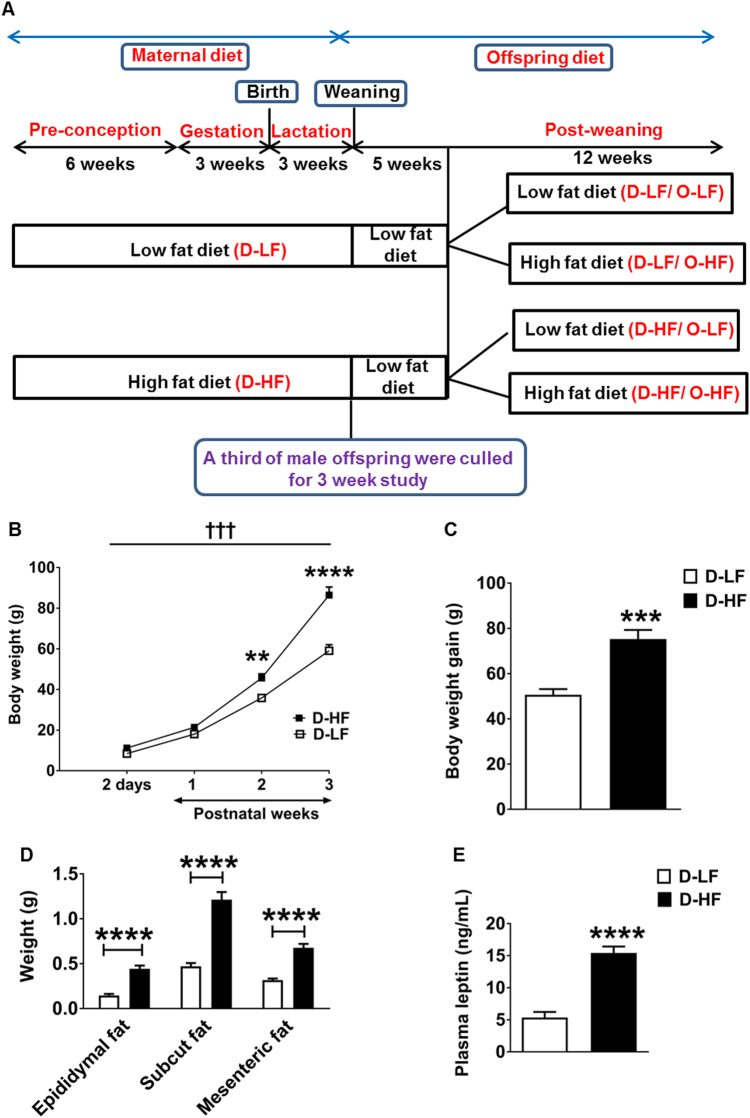
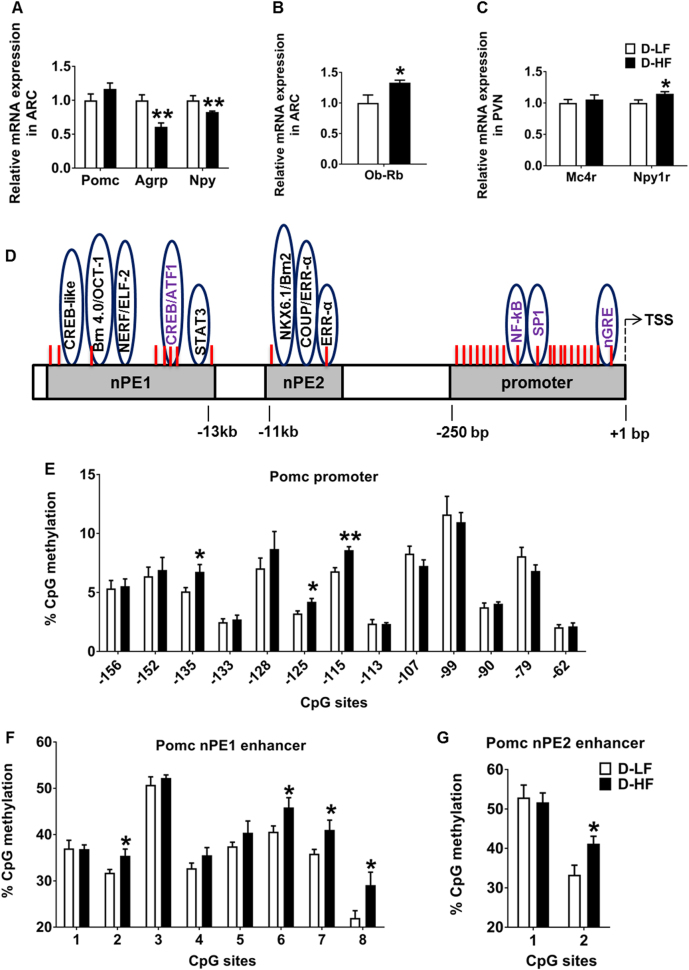
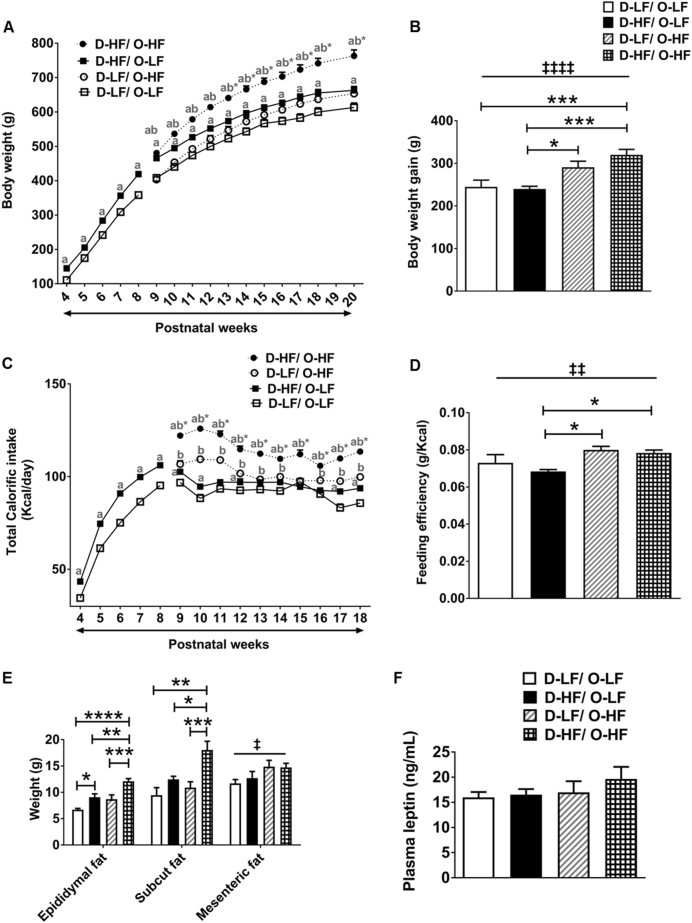
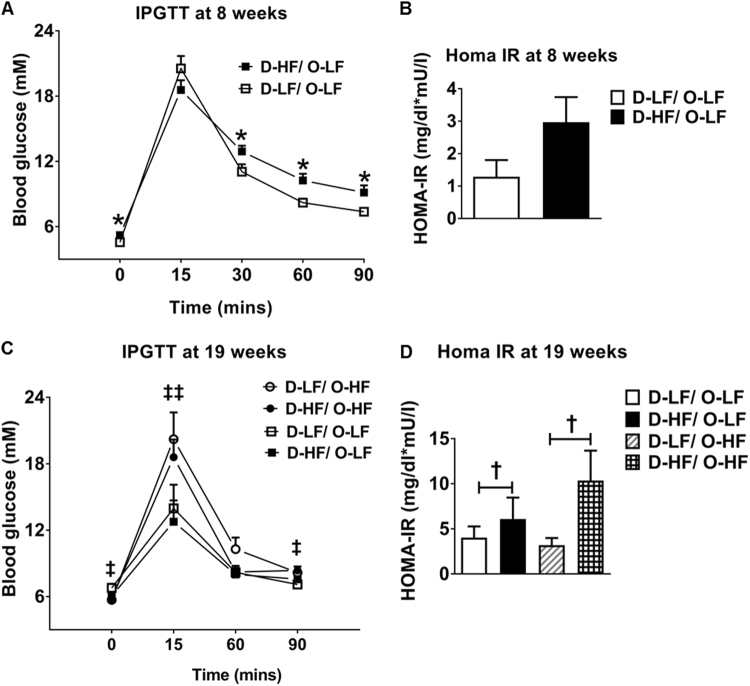
BACKGROUND AND OBJECTIVE: Maternal overnutrition has been implicated in affecting the offspring by programming metabolic disorders such as obesity and diabetes, by mechanisms that are not clearly understood. This study aimed to determine the long-term impact of maternal high-fat (HF) diet feeding on epigenetic changes in the offspring's hypothalamic Pomc gene, coding a key factor in the control of energy balance. Further, it aimed to study the additional effects of postnatal overnutrition on epigenetic programming by maternal nutrition. METHODS: Eight-week-old female Sprague-Dawley rats were fed HF diet or low-fat (LF) diet for 6 weeks before mating, and throughout gestation and lactation. At postnatal day 21, samples were collected from a third offspring and the remainder were weaned onto LF diet for 5 weeks, after which they were either fed LF or HF diet for 12 weeks, resulting in four groups of offspring differing by their maternal and postweaning diet. RESULTS: With maternal HF diet, offspring at weaning had rapid early weight gain, increased adiposity, and hyperleptinemia. The programmed adult offspring, subsequently fed LF diet, retained the increased body weight. Maternal HF diet combined with offspring HF diet caused more pronounced hyperphagia, fat mass, and insulin resistance. The ARC Pomc gene from programmed offspring at weaning showed hypermethylation in the enhancer (nPE1 and nPE2) regions and in the promoter sequence mediating leptin effects. Interestingly, hypermethylation at the Pomc promoter but not at the enhancer region persisted long term into adulthood in the programmed offspring. However, there were no additive effects on methylation levels in the regulatory regions of Pomc in programmed offspring fed a HF diet. CONCLUSION: Maternal overnutrition programs long-term epigenetic alterations in the offspring's hypothalamic Pomc promoter. This predisposes the offspring to metabolic disorders later in life.
Overview
The claims and statistics of this paper haven’t been checked yet.
Free: it reads the open-access text and checks the first 5 claims that cite a source we can check. Create a free account to check every claim.
Integrity signals
Registry
Cites
Statistics
Figures
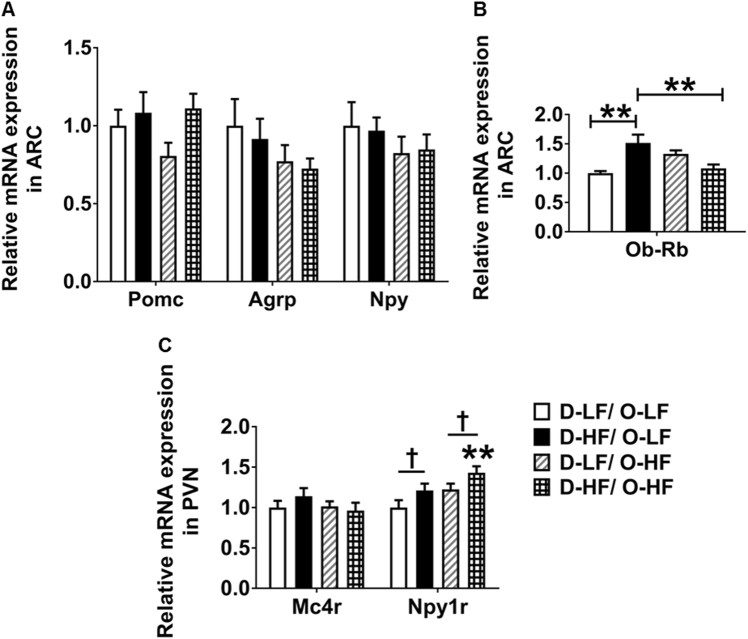
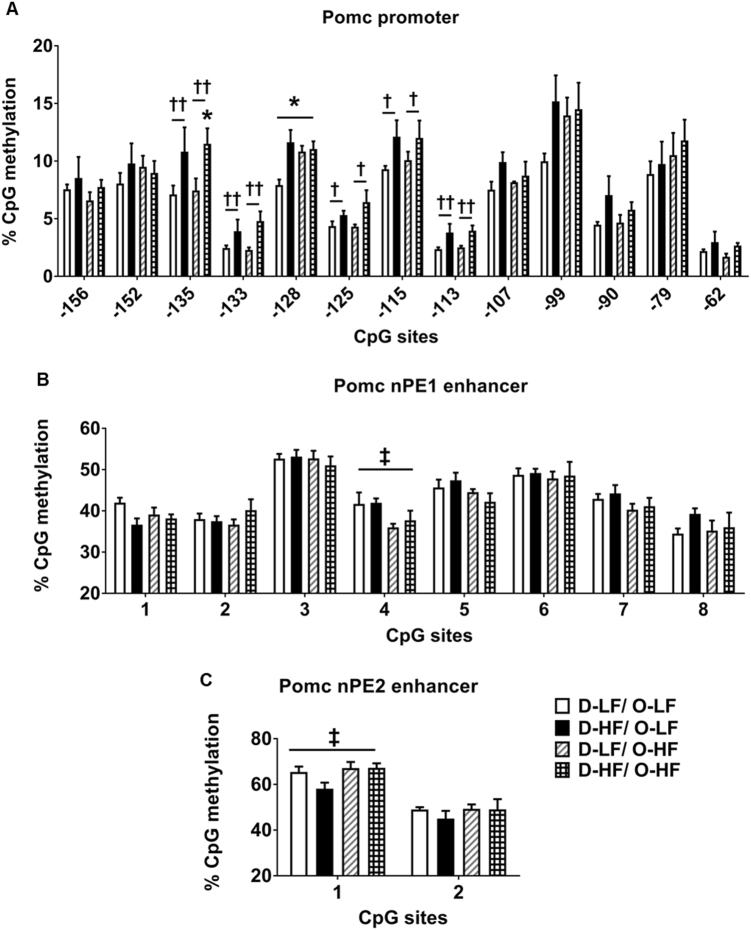
Verification
Claims the paper makes
The claims and statistics of this paper haven’t been checked yet.
Free: it reads the open-access text and checks the first 5 claims that cite a source we can check. Create a free account to check every claim.
Claims other papers make about this one
Each is checked against this paper’s own text: does it say what the citing paper says it does?
The source backs part of the claim, not all of it — or backs it for a different population, condition or comparison.
In the citing paper
“It is well established that maternal nutrition could influence poor birth outcomes, including low birth weight, LGA and SGA deliveries, and finally, the offspring’s metabolic health, through selective epigenetic changes, as supported by preclinical studies [20,77,78,79].”
From Impact of Mediterranean Diet Adherence During Pregnancy on Preeclampsia, Gestational Diabetes Mellitus, and Excessive Gestational Weight Gain: A Systematic Review of Observational Studies and Randomized Controlled Trials (2025) · cites this paper as [78]
Experimental — accuracy not yet measured
Self-check
Percentages, sums and reported differences re-computed from the paper’s own numbers.
The self-check needs the paper’s full text.
Citations
Cites
Matthews, D. R., Hosker, J. P., Rudenski, A. S., Naylor, B. A., Treacher, D. F., & Turner, R. C. (1985) · Diabetologia · doi:10.1007/bf00280883 · Cited by 31,502 · cited 1×
“serum insulin concentration (μU/ml) multiplied by fasting blood glucose levels (mg/dl) divided by 405 [32].”
Toprak, O., Kurt, H., Sarı, Y., Şarkış, C., Us, H., & Kırık, A. (2017) · Kidney and Blood Pressure Research · doi:10.1159/000468530 · Cited by 29,627
Central nervous system control of food intake
Schwartz, M. W., Woods, S. C., Porte, D., Seeley, R. J., & Baskin, D. G. (2000) · Nature · doi:10.1038/35007534 · Cited by 6,451
Leptin activates anorexigenic POMC neurons through a neural network in the arcuate nucleus
Cowley, M. A., Smart, J. L., Rubinstein, M., Cerdán, M. G., Diano, S., Horvath, T. L., Cone, R. D., & Low, M. J. (2001) · Nature · doi:10.1038/35078085 · Cited by 2,356 · cited 1×
“a key hormone acting on POMC and NPY neurons [10, 11].”
Anatomy and regulation of the central melanocortin system
Cone, R. D. (2005) · Nature Neuroscience · doi:10.1038/nn1455 · Cited by 1,583
Lee, J. H., Kim, S.-Y., Kwon, Y. K., Kim, B. J., & So, I. (2013) · Cellular Physiology and Biochemistry · doi:10.1159/000350075 · Cited by 1,380
Mechanisms of leptin action and leptin resistance.
Myers, M. G., Cowley, M. A., & Münzberg, H. (2008) · Annual Review of Physiology · doi:10.1146/annurev.physiol.70.113006.100707 · Cited by 1,074 · cited 1×
“thought to impair leptin signaling [14, 15].”
Leptin Differentially Regulates NPY and POMC Neurons Projecting to the Lateral Hypothalamic Area
Elias, C. F., Aschkenasi, C., Lee, C., Kelly, J., Ahima, R. S., Bjorbæk, C., Flier, J. S., Saper, C. B., & Elmquist, J. K. (1999) · Neuron · doi:10.1016/s0896-6273(01)80035-0 · Cited by 924 · cited 1×
“a key hormone acting on POMC and NPY neurons [10, 11].”
Obesity and leptin resistance: distinguishing cause from effect
Myers, M. G., Leibel, R. L., Seeley, R. J., & Schwartz, M. W. (2010) · Trends in Endocrinology & Metabolism · doi:10.1016/j.tem.2010.08.002 · Cited by 901 · cited 1×
“Although leptin resistance is documented in diet-induced obesity models as well as models of monogenic or polygenic obesity, the underlying mechanisms have not been fully determined [45].”
Agouti-related peptide–expressing neurons are mandatory for feeding
Gropp, E., Shanabrough, M., Borok, E., Xu, A. W., Janoschek, R., Buch, T., Plum, L., Balthasar, N., Hampel, B., Waisman, A., et al. (2005) · Nature Neuroscience · doi:10.1038/nn1548 · Cited by 798 · cited 1×
“and have an essential role in increasing food intake [8, 9].”
Maternal High-Fat Diet Alters Methylation and Gene Expression of Dopamine and Opioid-Related Genes
Vucetic, Z., Kimmel, J., Totoki, K., Hollenbeck, E., & Reyes, T. M. (2010) · Endocrinology · doi:10.1210/en.2010-0505 · Cited by 551
Epigenetic mechanisms mediating the long-term effects of maternal care on development
Champagne, F. A., & Curley, J. P. (2009) · Neuroscience & Biobehavioral Reviews · doi:10.1016/j.neubiorev.2007.10.009 · Cited by 509
Maternal nutritional history predicts obesity in adult offspring independent of postnatal diet
Howie, G. J., Sloboda, D. M., Kamal, T., & Vickers, M. H. (2009) · The Journal of Physiology · doi:10.1113/jphysiol.2008.163477 · Cited by 463
Role of neuropeptides in appetite regulation and obesity – A review
Arora, S., & Anubhuti (2006) · Neuropeptides · doi:10.1016/j.npep.2006.07.001 · Cited by 455
Plagemann, A., Harder, T., Brunn, M., Harder, A., Roepke, K., Wittrock‐Staar, M., Ziska, T., Schellong, K., Rodekamp, E., Melchior, K., et al. (2009) · The Journal of Physiology · doi:10.1113/jphysiol.2009.176156 · Cited by 439 · cited 2×
“Other developmental programming models have shown hypermethylation near Sp1-binding sites in the Pomc promoter [29, 36, 37], suggesting that this could be a common pathway for different programming paradigms.”
Childbearing and Obesity in Women: Weight Before, During, and After Pregnancy
Gunderson, E. P. (2009) · Obstetrics and Gynecology Clinics of North America · doi:10.1016/j.ogc.2009.04.001 · Cited by 407
Kirk, S. L., Samuelsson, A.-M., Argenton, M., Dhonye, H., Kalamatianos, T., Poston, L., Taylor, P. D., & Coen, C. W. (2009) · PLoS ONE · doi:10.1371/journal.pone.0005870 · Cited by 383
Krashes, M. J., Shah, B. P., Koda, S., & Lowell, B. B. (2013) · Cell Metabolism · doi:10.1016/j.cmet.2013.09.009 · Cited by 376 · cited 1×
“and have an essential role in increasing food intake [8, 9].”
Nutritional programming of the metabolic syndrome
Symonds, M. E., Sebert, S. P., Hyatt, M. A., & Budge, H. (2009) · Nature Reviews Endocrinology · doi:10.1038/nrendo.2009.195 · Cited by 368
Vogt, M. C., Paeger, L., Hess, S., Steculorum, S. M., Awazawa, M., Hampel, B., Neupert, S., Nicholls, H. T., Mauer, J., Hausen, A. C., et al. (2014) · Cell · doi:10.1016/j.cell.2014.01.008 · Cited by 360 · cited 1×
“At 8 weeks of age, the offspring from each group of dams were randomly fed either LF or HF diet resulting in a total of four groups of adult offspring [22] (Fig.”
Reasons for Increasing Trends in Large for Gestational Age Births
Surkan, P. J., Hsieh, C.-C., Johansson, A. L. V., Dickman, P. W., & Cnattingius, S. (2004) · Obstetrics & Gynecology · doi:10.1097/01.aog.0000141442.59573.cd · Cited by 346
Münzberg, H., Huo, L., Nillni, E. A., Hollenberg, A. N., & Bjørbæk, C. (2003) · Endocrinology · doi:10.1210/en.2002-221037 · Cited by 328
Why are babies getting bigger? Temporal trends in fetal growth and its determinants
Kramer, M. S., Morin, I., Yang, H., Platt, R. W., Usher, R., McNamara, H., Joseph, K. S., & Wen, S. W. (2002) · The Journal of Pediatrics · doi:10.1067/mpd.2002.128029 · Cited by 323
Developmental Programming in Response to Maternal Overnutrition
Alfaradhi, M. Z., & Ozanne, S. E. (2011) · Frontiers in Genetics · doi:10.3389/fgene.2011.00027 · Cited by 309 · cited 1×
“The fetal period is a critical time for metabolic programming, and therefore the maternal nutritional status during gestation and lactation can determine the onset of metabolic syndrome in offspring [2, 3].”
Höller, M., Westin, G., Jiricny, J., & Schaffner, W. (1988) · Genes & Development · doi:10.1101/gad.2.9.1127 · Cited by 305 · cited 1×
“Given that Sp1 occupying its binding site could prevent methylation of the site [39], we checked the mRNA expression of Sp1 as decreased levels might explain the increased methylation.”
The role of nutrition on epigenetic modifications and their implications on health
Jiménez-Chillarón, J. C., Díaz, R., Martínez, D., Pentinat, T., Ramón-Krauel, M., Ribó, S., & Plösch, T. (2012) · Biochimie · doi:10.1016/j.biochi.2012.06.012 · Cited by 266
Nutrition, Epigenetics, and Metabolic Syndrome
Wang, J., Wu, Z., Li, D., Li, N., Dindot, S. V., Satterfield, M. C., Bazer, F. W., & Wu, G. (2012) · Antioxidants & Redox Signaling · doi:10.1089/ars.2011.4381 · Cited by 261
The hardship of obesity: a soft-wired hypothalamus
Horvath, T. L. (2005) · Nature Neuroscience · doi:10.1038/nn1453 · Cited by 255
Advances in understanding the interrelations between leptin resistance and obesity
Pan, H., Guo, J., & Su, Z. (2014) · Physiology & Behavior · doi:10.1016/j.physbeh.2014.04.003 · Cited by 246 · cited 1×
“thought to impair leptin signaling [14, 15].”
Maternal obesity and high-fat diet program offspring metabolic syndrome
Desai, M., Jellyman, J. K., Han, G., Beall, M., Lane, R. H., & Ross, M. G. (2014) · American Journal of Obstetrics and Gynecology · doi:10.1016/j.ajog.2014.03.025 · Cited by 244
Vahratian, A. (2009) · Maternal and Child Health Journal · doi:10.1007/s10995-008-0340-6 · Cited by 228
Maternal obesity is necessary for programming effect of high-fat diet on offspring
White, C. L., Purpera, M. N., & Morrison, C. D. (2009) · American Journal of Physiology-Regulatory, Integrative and Comparative Physiology · doi:10.1152/ajpregu.91015.2008 · Cited by 199 · cited 1×
“Similar observations have been made in previous studies [50].”
Epigenetic mechanisms linking early nutrition to long term health
Lillycrop, K. A., & Burdge, G. C. (2012) · Best Practice & Research Clinical Endocrinology & Metabolism · doi:10.1016/j.beem.2012.03.009 · Cited by 197
Chen, H., Simar, D., & Morris, M. J. (2009) · PLoS ONE · doi:10.1371/journal.pone.0006259 · Cited by 195
Minireview: Epigenetic Programming of Diabetes and Obesity: Animal Models
Seki, Y., Williams, L., Vuguin, P. M., & Charron, M. J. (2012) · Endocrinology · doi:10.1210/en.2011-1805 · Cited by 176
Maternal nutrition and risk of obesity in offspring: The Trojan horse of developmental plasticity
Parlee, S. D., & MacDougald, O. A. (2014) · Biochimica et Biophysica Acta (BBA) - Molecular Basis of Disease · doi:10.1016/j.bbadis.2013.07.007 · Cited by 173
Hypothalamic regulation of energy homeostasis
Sainsbury, A., Cooney, G. J., & Herzog, H. (2002) · Best Practice & Research Clinical Endocrinology & Metabolism · doi:10.1053/beem.2002.0230 · Cited by 173 · cited 1×
“The hypothalamic neuropeptides produced by neurons located in the Arcuate nucleus (ARC) have a key role in energy balance regulation [5, 6].”
Epigenetic malprogramming of the insulin receptor promoter due to developmental overfeeding
Plagemann, A., Roepke, K., Harder, T., Brunn, M., Harder, A., Wittrock-Staar, M., Ziska, T., Schellong, K., Rodekamp, E., Melchior, K., et al. (2010) · Journal of Perinatal Medicine · doi:10.1515/jpm.2010.051 · Cited by 159
Leptin's Physiologic Role: Does the Emperor of Energy Balance Have No Clothes?
Flier, J. S., & Maratos-Flier, E. (2017) · Cell Metabolism · doi:10.1016/j.cmet.2017.05.013 · Cited by 158 · cited 1×
“Instead, it has been suggested that it is leptin levels that are important and this is in situations where they should be considered more as a starvation signal [46].”
Stevens, A., Begum, G., Cook, A., Connor, K., Rumball, C., Oliver, M., Challis, J., Bloomfield, F., & White, A. (2010) · Endocrinology · doi:10.1210/en.2010-0094 · Cited by 155
Self-citationSantangelo, A. M., de Souza, F. S. J., Franchini, L. F., Bumaschny, V. F., Low, M. J., & Rubinstein, M. (2007) · PLoS Genetics · doi:10.1371/journal.pgen.0030166 · Cited by 129
Breton, C. (2013) · Journal of Endocrinology · doi:10.1530/joe-12-0157 · Cited by 128
Rajia, S., Chen, H., & Morris, M. J. (2010) · Journal of Neuroendocrinology · doi:10.1111/j.1365-2826.2010.02005.x · Cited by 122
Begum, G., Stevens, A., Smith, E. B., Connor, K., Challis, J. R. G., Bloomfield, F., & White, A. (2012) · The FASEB Journal · doi:10.1096/fj.11-198762 · Cited by 119
Self-citationLam, D. D., de Souza, F. S. J., Nasif, S., Yamashita, M., López-Leal, R., Otero-Corchon, V., Meece, K., Sampath, H., Mercer, A. J., Wardlaw, S. L., et al. (2015) · PLOS Genetics · doi:10.1371/journal.pgen.1004935 · Cited by 115
Neuropeptide Processing and Its Impact on Melanocortin Pathways
Pritchard, L. E., & White, A. (2007) · Endocrinology · doi:10.1210/en.2006-1686 · Cited by 113
Self-citationIncreasing prepregnancy body mass index: Analysis of trends and contributing variables
Yeh, J., & Shelton, J. (2005) · American Journal of Obstetrics and Gynecology · doi:10.1016/j.ajog.2005.05.001 · Cited by 105
de Souza, F. S. J., Santangelo, A. M., Bumaschny, V., Avale, M. E., Smart, J. L., Low, M. J., & Rubinstein, M. (2005) · Molecular and Cellular Biology · doi:10.1128/mcb.25.8.3076-3086.2005 · Cited by 100 · cited 8×
“The sequence covers binding sites for transcription factors Stat3, Brn 4.0/OCT-1, NERF/ELF2, and CREB/ATF1 [40] (Fig.”
InfluentialEarly Life Nutrition and Energy Balance Disorders in Offspring in Later Life
Reynolds, C., Gray, C., Li, M., Segovia, S., & Vickers, M. (2015) · Nutrients · doi:10.3390/nu7095384 · Cited by 99
Marco, A., Kisliouk, T., Tabachnik, T., Meiri, N., & Weller, A. (2014) · The FASEB Journal · doi:10.1096/fj.14-255620 · Cited by 96 · cited 1×
“Other developmental programming models have shown hypermethylation near Sp1-binding sites in the Pomc promoter [29, 36, 37], suggesting that this could be a common pathway for different programming paradigms.”
Developmental programming of hypothalamic neuronal circuits: impact on energy balance control
Gali Ramamoorthy, T., Begum, G., Harno, E., & White, A. (2015) · Frontiers in Neuroscience · doi:10.3389/fnins.2015.00126 · Cited by 94
Self-citationYang, G., Lim, C.-Y., Li, C., Xiao, X., Radda, G. K., Li, C., Cao, X., & Han, W. (2009) · Journal of Biological Chemistry · doi:10.1074/jbc.m804965200 · Cited by 92 · cited 2×
“The Sp1binding site is essential for the leptin-mediated activation of Pomc by the Sp1-STAT3 binding to the promoter [13] and methylation of this site abrogates the binding of Sp1 [37, 38].”
Marco, A., Kisliouk, T., Weller, A., & Meiri, N. (2013) · Psychoneuroendocrinology · doi:10.1016/j.psyneuen.2013.07.011 · Cited by 86 · cited 2×
“The Sp1binding site is essential for the leptin-mediated activation of Pomc by the Sp1-STAT3 binding to the promoter [13] and methylation of this site abrogates the binding of Sp1 [37, 38].”
Franchini, L. F., López-Leal, R., Nasif, S., Beati, P., Gelman, D. M., Low, M. J., de Souza, F. J. S., & Rubinstein, M. (2011) · Proceedings of the National Academy of Sciences · doi:10.1073/pnas.1104997108 · Cited by 80
Dearden, L., & Balthasar, N. (2014) · Endocrinology · doi:10.1210/en.2014-1131 · Cited by 70
Zheng, J., Xiao, X., Zhang, Q., Yu, M., Xu, J., Wang, Z., Qi, C., & Wang, T. (2015) · Metabolic Brain Disease · doi:10.1007/s11011-015-9678-9 · Cited by 65
Lemes, S. F., de Souza, A. C. P., Payolla, T. B., Versutti, M. D., Ramalho, A. F. S., Mendes‐da‐Silva, C., de Souza, C. M., Milanski, M., Torsoni, A. S., & Torsoni, M. A. (2017) · Neuroscience · doi:10.1016/j.neuroscience.2017.11.043 · Cited by 64
Marco, A., Kisliouk, T., Tabachnik, T., Weller, A., & Meiri, N. (2016) · Diabetes · doi:10.2337/db15-1608 · Cited by 55
A Pituitary-Specific Enhancer of the POMC Gene with Preferential Activity in Corticotrope Cells
Langlais, D., Couture, C., Sylvain-Drolet, G., & Drouin, J. (2010) · Molecular Endocrinology · doi:10.1210/me.2010-0422 · Cited by 46
Mahmood, S., Smiraglia, D. J., Srinivasan, M., & Patel, M. S. (2013) · Journal of Developmental Origins of Health and Disease · doi:10.1017/s2040174413000238 · Cited by 45
Zhang, X., Yang, R., Jia, Y., Cai, D., Zhou, B., Qu, X., Han, H., Xu, L., Wang, L., Yao, Y., et al. (2014) · Diabetes · doi:10.2337/db13-1221 · Cited by 41 · cited 11×
“The Sp1binding site is essential for the leptin-mediated activation of Pomc by the Sp1-STAT3 binding to the promoter [13] and methylation of this site abrogates the binding of Sp1 [37, 38].”
InfluentialPerinatal Nutrition Programs the Hypothalamic Melanocortin System in Offspring
Wattez, J.-S., Delahaye, F., Lukaszewski, M., Risold, P., Eberlé, D., Vieau, D., & Breton, C. (2013) · Hormone and Metabolic Research · doi:10.1055/s-0033-1357182 · Cited by 36 · cited 1×
“The fetal period is a critical time for metabolic programming, and therefore the maternal nutritional status during gestation and lactation can determine the onset of metabolic syndrome in offspring [2, 3].”
Cited by
Parrettini, S., Caroli, A., & Torlone, E. (2020) · Frontiers in Endocrinology · doi:10.3389/fendo.2020.611929 · Cited by 292
DNA methylation at the crossroads of gene and environment interactions
Law, P.-P., & Holland, M. L. (2019) · Essays in Biochemistry · doi:10.1042/ebc20190031 · Cited by 152
Silva, L. B. A. R., Pinheiro-Castro, N., Novaes, G. M., Pascoal, G. D. F. L., & Ong, T. P. (2019) · Food Research International · doi:10.1016/j.foodres.2019.108646 · Cited by 115
Şanlı, E., & Kabaran, S. (2019) · Current Genomics · doi:10.2174/1389202920666191030092225 · Cited by 104
Maternal high fat diets: impacts on offspring obesity and epigenetic hypothalamic programming
Harmancıoğlu, B., & Kabaran, S. (2023) · Frontiers in Genetics · doi:10.3389/fgene.2023.1158089 · Cited by 109
“(Ramamoorthy et al., 2018) have found in their experimental study that maternal HFD programs long-term epigenetic alterations in the hypothalamic POMC gene of offspring by causing alterations in DNA methylation.”
Background
Metadata
- Authors
- Gali Ramamoorthy, T., Allen, T.-J., Davies, A., Harno, E., Sefton, C., Murgatroyd, C., & White, A.
- Affiliations
- Manchester Academic Health Science Centre (GB)
- Corresponding author
- White, Anne
- Venue
- International Journal of Obesity
- Published
- 2018-05-17
- Volume
- 42
- Issue
- 8
- Pages
- 1431-1444
- ISSN
- 0307-0565 (ISSN-L)
- 1476-5497
- PMC
- PMC6113193
- OpenAlex
- W2794491902
- Cited by
- 97
- References
- 62
- Citations by year
- 2026: 7 · 2025: 15 · 2024: 12 · 2023: 10 · 2022: 10 · 2021: 12 · 2020: 15 · 2019: 15 · 2018: 1
- FWCI
- 11.87
- Type
- journal article
- Language
- en
- Open access
- hybrid
- doi.org
- Licence
- cc-by
- creativecommons.org/licenses/by/4.0 (tdm)
- Locations
- International Journal of Obesity (publishedVersion, cc-by)
- Europe PMC (PubMed Central) (publishedVersion, other-oa)
- PubMed Central (publishedVersion, cc-by)
- PubMed (publishedVersion)
- e-space (Manchester Metropolitan University) (submittedVersion)
- Research Explorer (The University of Manchester) (submittedVersion, cc-by)
- Funders
- University of Manchester
- Topics
- Health Sciences › Medicine › Pediatrics, Perinatology and Child Health › Birth, Development, and Health
- Life Sciences › Neuroscience › Endocrine and Autonomic Systems › Regulation of Appetite and Obesity
- Life Sciences › Biochemistry, Genetics and Molecular Biology › Molecular Biology › Epigenetics and DNA Methylation
- Keywords
- maternal overnutrition, high-fat diet, POMC gene, hypothalamus, DNA methylation, epigenetic programming, leptin, energy balance, hyperphagia, adiposity, insulin resistance, obesity, diabetes mellitus, postnatal diet, offspring metabolic programming
- MeSH terms
- Animals, Disease Models, Animal, Female, Hypothalamus, Obesity, Pregnancy, Prenatal Exposure Delayed Effects, Pro-Opiomelanocortin, Regulatory Sequences, Nucleic Acid, Rats, Sprague-Dawley, DNA Methylation, Maternal Nutritional Physiological Phenomena, Epigenesis, Genetic, Overnutrition, Rats
About these checks
Registry, retraction, Cites and statistics results are computed, not judged, with one exception: a printed reference that no index lists is read once by a model before it counts as a citation error. Claims are extracted by a model and kept only when their quote appears verbatim in the text; each cited source is then checked, with a model’s help, for whether it says what the claim relies on. Those verdicts can be wrong — read the claim’s quote and the cited source before relying on one.
Statistics and arithmetic are recomputed, not judged.
Confidence bands are shown only for fields calibrated on our annotated test set. None is calibrated yet, so no band is shown.
What counts as a claim ›How we measure confidence ›How we check this ›
Are you an author, or do you see a problem with this page? Request a review
Data sources
Bibliographic data: Semantic Scholar, OpenAlex, Crossref.
Contains information from the Semantic Scholar Academic Graph Datasets, made available under the ODC Attribution License (ODC-BY 1.0).
Semantic Scholar’s data is described in: Kinney, R., et al. (2023). The Semantic Scholar Open Data Platform. arXiv:2301.10140.
