

The DOI matches its Crossref record; 171 of the 172 references it cites were found in a registry or an index.
Oral microbiome: possible harbinger for children’s health
Open accessAbstract
The human microbiome functions as an intricate and coordinated microbial network, residing throughout the mucosal surfaces of the skin, oral cavity, gastrointestinal tract, respiratory tract, and reproductive system. The oral microbiome encompasses a highly diverse microbiota, consisting of over 700 microorganisms, including bacteria, fungi, and viruses. As our understanding of the relationship between the oral microbiome and human health has evolved, we have identified a diverse array of oral and systemic diseases associated with this microbial community, including but not limited to caries, periodontal diseases, oral cancer, colorectal cancer, pancreatic cancer, and inflammatory bowel syndrome. The potential predictive relationship between the oral microbiota and these human diseases suggests that the oral cavity is an ideal site for disease diagnosis and development of rapid point-of-care tests. The oral cavity is easily accessible with a non-invasive collection of biological samples. We can envision a future where early life salivary diagnostic tools will be used to predict and prevent future disease via analyzing and shaping the infant’s oral microbiome. In this review, we present evidence for the establishment of the oral microbiome during early childhood, the capability of using childhood oral microbiome to predict future oral and systemic diseases, and the limitations of the current evidence.
Overview
The claims and statistics of this paper haven’t been checked yet.
Run the check — free, no account needed. It reads the open-access text and checks the sources it cites.
Integrity signals
Registry
Cites
Statistics
Figures
Verification
Claims the paper makes
The claims and statistics of this paper haven’t been checked yet.
Run the check — free, no account needed. It reads the open-access text and checks the sources it cites.
Claims other papers make about this one
Each is checked against this paper’s own text: does it say what the citing paper says it does?
In the citing paper
“The mucosal surfaces serve as the chief substrata available for microbial colonization in the infant oral cavity.141”
From The oral microbiome: Role of key organisms and complex networks in oral health and disease (2021) · cites this paper as [141]
In the citing paper
“Additional early colonizers, such as Gemella, Rothia, Granulicatella, and Haemophilus, present at 3‐6 months of age and increase in abundance with time.141, 142”
From The oral microbiome: Role of key organisms and complex networks in oral health and disease (2021) · cites this paper as [141]
Self-check
Percentages, sums and reported differences re-computed from the paper’s own numbers.
The self-check needs the paper’s full text.
Citations
Cites
Vos, T., Abajobir, A. A., Abate, K. H., Abbafati, C., Abbas, K. M., Abd-Allah, F., Abdulkader, R. S., Abdulle, A. M., Abebo, T. A., Abera, S. F., et al. (2017) · The Lancet · doi:10.1016/s0140-6736(17)32154-2 · Cited by 13,220
Structure, function and diversity of the healthy human microbiome
The Human Microbiome Project Consortium (2012) · Nature · doi:10.1038/nature11234 · Cited by 11,726
Human gut microbiome viewed across age and geography
Yatsunenko, T., Rey, F. E., Manary, M. J., Trehan, I., Dominguez-Bello, M. G., Contreras, M., Magris, M., Hidalgo, G., Baldassano, R. N., Anokhin, A. P., et al. (2012) · Nature · doi:10.1038/nature11053 · Cited by 7,815
Dominguez-Bello, M. G., Costello, E. K., Contreras, M., Magris, M., Hidalgo, G., Fierer, N., & Knight, R. (2010) · Proceedings of the National Academy of Sciences · doi:10.1073/pnas.1002601107 · Cited by 4,774
Sokol, H., Pigneur, B., Watterlot, L., Lakhdari, O., Bermúdez-Humarán, L. G., Gratadoux, J.-J., Blugeon, S., Bridonneau, C., Furet, J.-P., Corthier, G., et al. (2008) · Proceedings of the National Academy of Sciences · doi:10.1073/pnas.0804812105 · Cited by 4,413
Liu, L., Oza, S., Hogan, D., Chu, Y., Perin, J., Zhu, J., Lawn, J. E., Cousens, S., Mathers, C., & Black, R. E. (2016) · The Lancet · doi:10.1016/s0140-6736(16)31593-8 · Cited by 3,453
The human microbiome: at the interface of health and disease
Cho, I., & Blaser, M. J. (2012) · Nature Reviews Genetics · doi:10.1038/nrg3182 · Cited by 3,449
Dynamics and Stabilization of the Human Gut Microbiome during the First Year of Life
Bäckhed, F., Roswall, J., Peng, Y., Feng, Q., Jia, H., Kovatcheva-Datchary, P., Li, Y., Xia, Y., Xie, H., Zhong, H., et al. (2015) · Cell Host & Microbe · doi:10.1016/j.chom.2015.04.004 · Cited by 3,315
Bacterial Community Variation in Human Body Habitats Across Space and Time
Costello, E. K., Lauber, C. L., Hamady, M., Fierer, N., Gordon, J. I., & Knight, R. (2009) · Science · doi:10.1126/science.1177486 · Cited by 3,231
Development of the Human Infant Intestinal Microbiota
Palmer, C., Bik, E. M., DiGiulio, D. B., Relman, D. A., & Brown, P. O. (2007) · PLoS Biology · doi:10.1371/journal.pbio.0050177 · Cited by 2,877
Research works printed but not linked: 1
- Ierardo, G., Luzzi, V. & Polimeni, A. Obstructive Sleep Apnea Syndrome (OSAS): evaluation and treatment of odontostomatological problems. Med Lav. 108, 293–296 (2017).
Cited by
Sorted by citations
The oral microbiome: Role of key organisms and complex networks in oral health and disease
Sedghi, L., DiMassa, V., Harrington, A., Lynch, S. V., & Kapila, Y. L. (2021) · Periodontology 2000 · doi:10.1111/prd.12393 · Cited by 755
Oral microbiota in human systematic diseases
Peng, X., Cheng, L., You, Y., Tang, C., Ren, B., Li, Y., Xu, X., & Zhou, X. (2022) · International Journal of Oral Science · doi:10.1038/s41368-022-00163-7 · Cited by 707
Microbiota succession throughout life from the cradle to the grave
Martino, C., Dilmore, A. H., Burcham, Z. M., Metcalf, J. L., Jeste, D., & Knight, R. (2022) · Nature Reviews Microbiology · doi:10.1038/s41579-022-00768-z · Cited by 275
The Relationship Between Breast Milk Components and the Infant Gut Microbiota
Boudry, G., Charton, E., Huërou‐Luron, I. L., Ferret‐Bernard, S., Gall, S. L., Even, S., & Blat, S. (2021) · Frontiers in Nutrition · doi:10.3389/fnut.2021.629740 · Cited by 165
Oral microflora and pregnancy: a systematic review and meta-analysis
Jang, H., Patoine, A., Wu, T. T., Castillo, D. A., & Xiao, J. (2021) · Scientific Reports · doi:10.1038/s41598-021-96495-1 · Cited by 165
Self-citationByrd, K. M., & Gulati, A. (2021) · Frontiers in Immunology · doi:10.3389/fimmu.2021.620124 · Cited by 123
The Oral-Microbiome-Brain Axis and Neuropsychiatric Disorders: An Anthropological Perspective
Bowland, G. B., & Weyrich, L. S. (2022) · Frontiers in Psychiatry · doi:10.3389/fpsyt.2022.810008 · Cited by 104
Association between the gut and oral microbiome with obesity
Benahmed, A. G., Gasmi, A., Doşa, A., Chirumbolo, S., Mujawdiya, P. K., Aaseth, J., Dadar, M., & Bjørklund, G. (2020) · Anaerobe · doi:10.1016/j.anaerobe.2020.102248 · Cited by 102
The Oral-Gut Axis: Periodontal Diseases and Gastrointestinal Disorders
Lam, G., Albarrak, H. A., McColl, C., Pizarro, A., Sanaka, H., Gomez-Nguyen, A., Cominelli, F., & da Silva, A. P. B. (2022) · Inflammatory Bowel Diseases · doi:10.1093/ibd/izac241 · Cited by 103
Armed to the Teeth—The Oral Mucosa Immunity System and Microbiota
Ptasiewicz, M., Grywalska, E., Mertowska, P., Korona‐Głowniak, I., Poniewierska-Baran, A., Niedźwiedzka‐Rystwej, P., & Chałas, R. (2022) · International Journal of Molecular Sciences · doi:10.3390/ijms23020882 · Cited by 107
Low-Abundant Microorganisms: The Human Microbiome’s Dark Matter, a Scoping Review
de Cena, J. A., Zhang, J., Deng, D., Damé‐Teixeira, N., & Do, T. (2021) · Frontiers in Cellular and Infection Microbiology · doi:10.3389/fcimb.2021.689197 · Cited by 88
Ho, H.-E., Chun, Y., Jeong, S., Jumreornvong, O., Sicherer, S. H., & Bunyavanich, S. (2021) · Journal of Allergy and Clinical Immunology · doi:10.1016/j.jaci.2021.03.028 · Cited by 69
Kunath, B. J., Hickl, O., Queirós, P., Martin‐Gallausiaux, C., Lebrun, L., Halder, R., Laczny, C. C., Schmidt, T., Hayward, M. R., Becher, D., et al. (2022) · Microbiome · doi:10.1186/s40168-022-01435-4 · Cited by 70
“The mouth is considered a gateway to different organs of the body, and therefore acts as a potential reservoir for different pathogens [33].”
BackgroundA Revolutionizing Approach to Autism Spectrum Disorder Using the Microbiome
Johnson, D., Letchumanan, V., Thurairajasingam, S., & Lee, L. (2020) · Nutrients · doi:10.3390/nu12071983 · Cited by 64
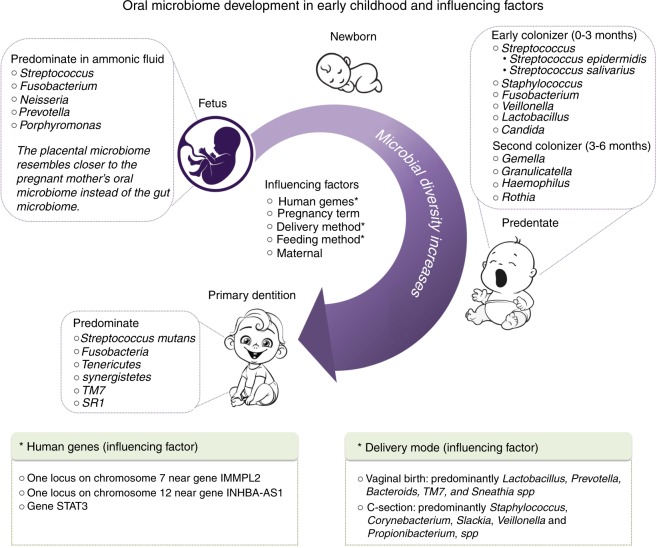
“The pregnancy term, mode of delivery and feeding method were other identified factors that influence the development of oral microbiota in early childhood [94].”
MethodOral Candida Predicts Streptococcus mutans Emergence in Underserved US Infants
Alkhars, N., Zeng, Y., Alomeir, N., Jallad, N. A., Wu, T. T., Aboelmagd, S., Youssef, M., Jang, H., Fogarty, C. T., & Xiao, J. (2021) · Journal of Dental Research · doi:10.1177/00220345211012385 · Cited by 46
“Second, C. albicans is an early oral cavity colonizer, and its oral colonization could start a few days after birth (Xiao et al. 2020).”
BackgroundSelf-citationThe vicK gene of Streptococcus mutans mediates its cariogenicity via exopolysaccharides metabolism
Deng, Y., Yang, Y., Zhang, B., Chen, H., Lu, Y., Ren, S., Lei, L., & Hu, T. (2021) · International Journal of Oral Science · doi:10.1038/s41368-021-00149-x · Cited by 50
Tagg, J. R., Harold, L. K., Jain, R., & Hale, J. D. F. (2023) · Frontiers in Microbiology · doi:10.3389/fmicb.2023.1161155 · Cited by 51
Effects of Antibiotic Use on Saliva Antibody Content and Oral Microbiota in Sprague Dawley Rats
Cheng, X., He, F., Si, M., Sun, P., & Chen, Q. (2022) · Frontiers in Cellular and Infection Microbiology · doi:10.3389/fcimb.2022.721691 · Cited by 42
The role of oral microbiota in cancer
Lan, Z., Liu, W.-J., Cui, H., Zou, K., Chen, H. H., Zhao, Y., & Yu, G. (2023) · Frontiers in Microbiology · doi:10.3389/fmicb.2023.1253025 · Cited by 40
“Over 3 × 10 3 species of microorganisms are found on the mucosal surface, with more than 90% residing in the colon (Xiao et al., 2020; Sepich-Poore et al., 2021).”
BackgroundTriarico, S., Agresti, P., Rinninella, E., Mele, M. C., Romano, A., Attinà, G., Maurizi, P., Mastrangelo, S., & Ruggiero, A. (2022) · Pathogens · doi:10.3390/pathogens11040448 · Cited by 43
“Furthermore, specific changes occur in oral microbiota diversity in several healthy pediatric conditions (early childhood caries, pediatric obesity, celiac disease, autism, Henoch-Shonlein purpura disease, pediatric appendicitis, pediatric inflammatory bowel diseases, pediatric hemato-oncological diseases), as describ…”
BackgroundCheema, A. S., Trevenen, M., Turlach, B. A., Fürst, A., Roman, A. S., Bode, L., Gridneva, Z., Lai, C. T., Stinson, L. F., Payne, M. S., et al. (2022) · International Journal of Molecular Sciences · doi:10.3390/ijms23052804 · Cited by 37
“Infant oral microbiota are important for oral health [79] and differences in the oral microbiota between breastfed and formula-fed infants have been reported [91,95,96], however, little is known about how HMOs impact the oral microbiota.”
BackgroundAcute appendicitis manifests as two microbiome state types with oral pathogens influencing severity
Blohs, M., Mahnert, A., Brunnader, K., Flucher, C., Castellani, C., Till, H., Singer, G., & Moissl‐Eichinger, C. (2023) · Gut Microbes · doi:10.1080/19490976.2022.2145845 · Cited by 38
“Recently, the impact of oral microbes in several inflammatory gastrointestinal diseases was highlighted and received an increased amount of attention.(25,34,46,47) The history of dental health and oral cavity integrity in AA patients should be investigated in further studies as well, since both factors may show a puta…”
BackgroundCharacterization of the oral and gut microbiome in children with obesity aged 3 to 5 years
Ma, T., Wu, Z., Lin, J., Shan, C., Abasijiang, A., & Zhao, J. F. (2023) · Frontiers in Cellular and Infection Microbiology · doi:10.3389/fcimb.2023.1102650 · Cited by 34
“Prior studies have confirmed that changes in the oral or gut flora can reflect the characteristics of specific health conditions (Xiao et al., 2020).”
BackgroundImpact of breastfeeding and other early-life factors on the development of the oral microbiome
Arishi, R. A., Lai, C. T., Geddes, D. T., & Stinson, L. F. (2023) · Frontiers in Microbiology · doi:10.3389/fmicb.2023.1236601 · Cited by 33
“Further work is required to clarify whether the development of the oral microbiome is primarily influenced by age or by the emergence of teeth, with a focus on various sites within the oral cavity which may be differentially impacted by the emergence of teeth (Xiao et al., 2020).”
BackgroundUllah, N., Hasnain, S. Z. U., Baloch, R., Amin, A., Nasibova, A. N., Selaković, D., Rosic, G. L., Islamov, S. Y., Naraliyeva, N., Jaradat, N. A., et al. (2024) · Frontiers in Chemistry · doi:10.3389/fchem.2024.1383620 · Cited by 31
“Poor glycemic control facilitates increased and diversi fi ed microbial growth in the oral cavity (Xiao et al., 2020), which results in an imbalance in oral microbiota (Al-Janabi, 2023).”
BackgroundThe oral microbiome of children in health and disease—a literature review
AlHarbi, S. G., Almushayt, A. S., Bamashmous, S., Abujamel, T. S., & Bamashmous, N. O. (2024) · Frontiers in Oral Health · doi:10.3389/froh.2024.1477004 · Cited by 30
“The interactions occurring between the microbiome and the human host during early life are accountable for shaping innate and acquired immune functions, as well as physiological development, which in turn have implications for future health outcomes (8).”
BackgroundFecal microbiota relationships with childhood obesity: A scoping comprehensive review
de Cuevillas, B., Milagro, F. I., Tur, J. A., Gil‐Campos, M., Miguel‐Etayo, P. D., Martínez, J. A., & Navas‐Carretero, S. (2021) · Obesity Reviews · doi:10.1111/obr.13394 · Cited by 31
“Toddler is the period from the first year of life until the child turns 4 years old.(118) At this stage, children's resident microbes may fundamentally contribute to infant and childhood immunocompetence, and inflammatory responses so it is important to study the factors modify-”
BackgroundImproved High-Throughput Sequencing of the Human Oral Microbiome: From Illumina to PacBio
Zhang, J., Su, L., Wang, Y., & Deng, S. (2020) · Canadian Journal of Infectious Diseases and Medical Microbiology · doi:10.1155/2020/6678872 · Cited by 27
“A number of research studies have presented evidence for using childhood oral microbiome to predict future oral and systemic diseases [30].”
BackgroundWu, X., Fu, S., Jiang, M., Wang, J., Tang, H., Fang, C., Li, W., & Fu, C. (2022) · Journal of Ethnopharmacology · doi:10.1016/j.jep.2022.115537 · Cited by 28
Stankevič, E., Kern, T., Borisevich, D., Poulsen, C. S., Madsen, A. L., Hansen, T. H., Jonsson, A. E., Schubert, M., Nygaard, N., Nielsen, T., et al. (2024) · Scientific Reports · doi:10.1038/s41598-024-65538-8 · Cited by 28
Microbiological Changes during Orthodontic Aligner Therapy: A Prospective Clinical Trial
Sfondrini, M. F., Butera, A., di Michele, P., Luccisano, C., Ottini, B., Sangalli, E., Gallo, S., Pascadopoli, M., Gandini, P., & Scribante, A. (2021) · Applied Sciences · doi:10.3390/app11156758 · Cited by 26
“Introduction Oral microbiota consists of more than 700 different kinds of microorganisms, including bacteria, viruses, mycoplasmas, fungi and protozoa, which inhabits the human mouth establishing an equilibrium with consequent benefits both for the microorganisms themselves and for the guest [1].”
BackgroundShameena Beegum, P. P., Pandiselvam, R., Ramesh, S. V., Thube, S. H., Pandian, T. P., Khanashyam, A. C., Manikantan, M. R., & Hebbar, K. B. (2022) · Quality Assurance and Safety of Crops & Foods · doi:10.15586/qas.v14i2.1040 · Cited by 26
“The human oral cavity harbors more than 700 diverse microorganisms or microbiota, including bacteria, fungi, and viruses (Shanbhag, 2017; Xiao et al., 2020).”
Background(R)Evolution in Allergic Rhinitis Add-On Therapy: From Probiotics to Postbiotics and Parabiotics
Capponi, M., Gori, A., Castro, G. D., Ciprandi, G., Anania, C., Brindisi, G., Tosca, M., Cinicola, B. L., Salvatori, A., Loffredo, L., et al. (2022) · Journal of Clinical Medicine · doi:10.3390/jcm11175154 · Cited by 24
Wu, T. T., Xiao, J., Manning, S., Saraithong, P., Pattanaporn, K., Paster, B. J., Chen, T., Vasani, S., Gilbert, C., Zeng, Y., et al. (2022) · Frontiers in Cellular and Infection Microbiology · doi:10.3389/fcimb.2022.881899 · Cited by 22
Self-citationThe Role of Early Life Microbiota Composition in the Development of Allergic Diseases
Tuniyazi, M., Li, S., Hu, X., Fu, Y., & Zhang, N. (2022) · Microorganisms · doi:10.3390/microorganisms10061190 · Cited by 23
Li, D., Wang, D., Yang, Y., Gao, P., Fan, W., Zhang, X., Tang, Y., Yang, W., & Cai, K. (2023) · Advanced Functional Materials · doi:10.1002/adfm.202212016 · Cited by 21
Gao, S., & Wang, J. (2023) · Protein & Cell · doi:10.1093/procel/pwad029 · Cited by 22
“Except for gut microbiome, oral microbiota is another possible harbinger for multiple children’s diseases including early childhood caries, celiac diseases, autism, Henoch-schönlein purpura disease, etc. (Xiao et al., 2020).”
BackgroundAlkhars, N., Jallad, N. A., Wu, T. T., & Xiao, J. (2024) · PLoS ONE · doi:10.1371/journal.pone.0290938 · Cited by 21
Self-citationThe Crosstalk Between Saliva Bacteria and Fungi in Early Childhood Caries
Tu, Y., Zhou, Z., Shu, C., Zhou, Y., & Zhou, X. (2022) · Frontiers in Cellular and Infection Microbiology · doi:10.3389/fcimb.2022.845738 · Cited by 19
A Positive or Negative Connection of Diabetes Mellitus to the Oral Microbiota
al-Janabi, A. (2023) · Eurasian Journal of Medicine · doi:10.5152/eurasianjmed.2023.21164 · Cited by 24
Lupu, V. V., Butnariu, L. I., Fotea, S., Morariu, I. D., Bădescu, M. C., Stârcea, I. M., Șalaru, D. L., Popp, A., Dragan, F., Lupu, A., et al. (2023) · Nutrients · doi:10.3390/nu15153359 · Cited by 24
“Also, vaginal dysbiosis can be incriminated in the production of neonatal infections, spontaneous abortions and premature birth, in the case of young mothers [54].”
BackgroundInfluentialCagna, D. R., Donovan, T. E., McKee, J. R., Eichmiller, F. C., Metz, J. E., Marzola, R., Murphy, K. G., & Troeltzsch, M. (2022) · Journal of Prosthetic Dentistry · doi:10.1016/j.prosdent.2022.07.003 · Cited by 18
Dumitrescu, R., Bolchis, V., Fratila, A. D., Jumanca, D. E., Buzatu, B. L. R., Sava-Roşianu, R., Alexa, V. T., Găluşcan, A., & Bălean, O. (2025) · Microorganisms · doi:10.3390/microorganisms13020373 · Cited by 18
“The findings showed a notable rise in publications and citations, reflecting the growing interest and acknowledgment of the oral microbiome’s importance in OSCC [17].”
InfluentialA Spectrum of Solutions: Unveiling Non-Pharmacological Approaches to Manage Autism Spectrum Disorder
Mondal, A., Sharma, R., Abiha, U., Ahmad, F., Karan, A., Jayaraj, R. L., & Sundar, V. (2023) · Medicina · doi:10.3390/medicina59091584 · Cited by 21
Ibarra, A. A. M., Hernández, L. F. B., Valbuena‐Gregorio, E., Aguirre, F. J. O., & Quintero, J. (2025) · Medicine in Microecology · doi:10.1016/j.medmic.2025.100141 · Cited by 16
Beyond antibiotics: advances in photothermal strategies for oral infections
Wang, P., Liang, J., & Liu, F. (2025) · Frontiers in Bioengineering and Biotechnology · doi:10.3389/fbioe.2025.1637941 · Cited by 16
“The oral microbiome, recognized as the second most complex microbial ecosystem in the human body, predominantly colonizes the surface of oral mucosa and dentition (Kilian et al., 2016; Xiao et al., 2020; Baker et al., 2024).”
Exploring the oral microbiome: an updated multidisciplinary oral healthcare perspective
Chowdhry, A., Kapoor, P., Bhargava, D., & Bagga, D. K. (2023) · Discoveries · doi:10.15190/d.2023.4 · Cited by 15
The forgotten link: how the oral microbiome shapes childhood growth and development
Tjandrawinata, R. R., Amalia, N., Tandi, Y. Y. P., Athallah, A. F., Wibowo, C. A., Aditya, M. R., Muhammad, A., Azizah, M. R., Humardani, F. M., Nojaid, A., et al. (2025) · Frontiers in Oral Health · doi:10.3389/froh.2025.1547099 · Cited by 15
“This microbial community is inhabited by a range of microorganisms, including bacteria, archaea, fungi, viruses, and protozoa, each with their unique roles and interactions within the oral cavity, as shown in Figure 1 (18 – 20).”
Thakur, D., & Kumar, L. (2025) · Critical Reviews in Microbiology · doi:10.1080/1040841x.2025.2548490 · Cited by 17
“…in the oral microbiome, and the oral microbiome begins to remodel as tooth eruption begins leading to a decrease and complete loss in later years (Xiao et al. 2020). in children and adults after tooth eruption and changes in oral microbiome has occurred, E. coli act as a sign of fecal…”
Exploration of correlation of oral hygiene and condition with influenza infection
Kawamoto, M., Tanaka, H., Sakurai, A., Otagiri, H., Karasawa, I., Yamada, S., & Kurita, H. (2021) · PLoS ONE · doi:10.1371/journal.pone.0254981 · Cited by 14
Reddel, S., Pascucci, G. R., Foligno, S., CHIERICO, F. D., Vernocchi, P., Marzullo, A., Pattumelli, M. G., Palma, P., Salvatori, G., & Putignani, L. (2022) · Microorganisms · doi:10.3390/microorganisms10020468 · Cited by 13
The oral microbiota and gestational diabetes mellitus
Corrêa, J. D., Faria, G. A., & Fernandes, L. L. (2023) · Frontiers in Clinical Diabetes and Healthcare · doi:10.3389/fcdhc.2023.1120920 · Cited by 15
CRAMdb: a comprehensive database for composition and roles of microbiome in animals
Lei, B., Xu, Y., Lei, Y., Li, C., Zhou, P., Wang, L., Yang, Q., Li, X., Li, F., Liu, C., et al. (2022) · Nucleic Acids Research · doi:10.1093/nar/gkac973 · Cited by 16
Oral Microbiota Development in the First 60 Months: A Longitudinal Study
Yama, K., Morishima, S., Tsutsumi, K., Jo, R., Aita, Y., Inokuchi, T., Okuda, T., Watai, D., Ohara, K., Maruyama, M., et al. (2024) · Journal of Dental Research · doi:10.1177/00220345241272011 · Cited by 14
“Tooth eruption and dietary changes are considered primary influencers of oral cavity alterations during this period (Mason et al. 2018; Sulyanto et al. 2019; Könönen 2000; Xiao et al. 2020).”
Salivary Microbiome Diversity in Kuwaiti Adolescents with Varied Body Mass Index—A Pilot Study
Alqaderi, H. E., Ramakodi, M. P., Nizam, R., Jacob, S. P., Devarajan, S., Eaaswarkhanth, M., & Al‐Mulla, F. (2021) · Microorganisms · doi:10.3390/microorganisms9061222 · Cited by 14
“The interest in exploring salivary microbiota has been escalating due to its potential role in human health and disease [9,25].”
BackgroundHolgerson, P. L., Esberg, A., West, C. E., & Johansson, I. (2022) · Pediatric Research · doi:10.1038/s41390-022-02328-w · Cited by 13
Dental Caries, Dental Erosion and Periodontal Disease in Children with Inflammatory Bowel Disease
Haznedaroğlu, E., & Polat, E. (2023) · International Journal of Medical Sciences · doi:10.7150/ijms.83075 · Cited by 13
“This finding is similar to those of previous studies [6,32,35,37-39].”
Zhou, S., He, T., Zhang, Y., & Zhang, H. (2023) · Pediatric Discovery · doi:10.1002/pdi3.35 · Cited by 13
Choi, W., & Hong, J. (2025) · Biomaterials · doi:10.1016/j.biomaterials.2025.123610 · Cited by 12
Ruan, J., Liao, Y.-C., Chen, P.-C., Chen, Y., Tsai, Y.-H., Tsai, P.-J., Yang, Y., Shieh, C., Lin, Y., & Chi, C. (2023) · Journal of Microbiology Immunology and Infection · doi:10.1016/j.jmii.2023.07.005 · Cited by 12
Parents with periodontitis drive the early acquisition of dysbiotic microbiomes in their offspring
Reis, A. A., Monteiro, M. F., Bonilha, G. M., Saraiva, L. M., Araújo, C. F., Santamaria, M. P., Casati, M. Z., Kumar, P., & Casarin, R. C. V. (2023) · Journal Of Clinical Periodontology · doi:10.1111/jcpe.13815 · Cited by 14
The metagenome and metabolome signatures of dental biofilms associated with severe dental fluorosis
Ajrithirong, P., Krasaesin, A., Sriarj, W., Gavila, P., Chetruengchai, W., Sriwattanapong, K., Manaspon, C., Samaranayake, L., & Porntaveetus, T. (2025) · Journal of Oral Microbiology · doi:10.1080/20002297.2025.2560591 · Cited by 12
Salivary microbiome in children with Down syndrome: a case-control study
Morishima, S., Takeda, K., Greenan, S., & Maki, Y. (2022) · BMC Oral Health · doi:10.1186/s12903-022-02480-z · Cited by 12
Huang, P., Li, W., Guan, J., Jia, Y., Wang, D., Chen, Y., Xiao, N., Ou, S., Wang, Y., & Yang, B. (2025) · Journal of Functional Biomaterials · doi:10.3390/jfb16010025 · Cited by 12
“The second challenge in oral treatment arises from exposure to the high diversity of the oral microbiome for the external environment, which encompasses over 700 microorganisms, including fungi and bacteria [37].”
Song, Q., Xiao, B., Huang, H., Ma, L., Zhang, J. V., & Zhu, Y. (2022) · BMC Pregnancy and Childbirth · doi:10.1186/s12884-022-04630-1 · Cited by 14
Multi-omics analysis reveals the host–microbe interactions in aged rhesus macaques
Xu, J., Lan, Y., Wang, X., Shang, K., Liu, X., Wang, J., Li, J., Yue, B., Shao, M., & Fan, Z. (2022) · Frontiers in Microbiology · doi:10.3389/fmicb.2022.993879 · Cited by 11
“In addition, oral bacteria are implicated in oral and dental health as well as many diseases that affect the elderly, such as non-oral cancers, cardiovascular disease, and Alzheimer’s disease (Hezel and Weitzberg, 2015; Olsen and Singhrao, 2015; Shoemark and Allen, 2015; Fan et al., 2018; Xiao et al., 2020).”
BackgroundWu, T. T., Sohn, M. B., Manning, S., Beblavy, R., Gill, S. R., Quataert, S. A., Vasani, S., Jang, H., Zeng, Y., Bruno, J. E., et al. (2023) · Journal of Translational Medicine · doi:10.1186/s12967-023-03997-9 · Cited by 11
“When assessing the longitudinal influence of the mothers on the establishment of children’s oral microbiome, the impact first occurs when the babies are still in the womb [10].”
BackgroundSelf-citationSchulz‐Weidner, N., Weigel, M., Turujlija, F., Komma, K., Mengel, J. P., Schlenz, M. A., Bulski, J. C., Krämer, N., & Hain, T. (2021) · Microorganisms · doi:10.3390/microorganisms9091904 · Cited by 11
KOMB: K-core based de novo characterization of copy number variation in microbiomes
Balaji, A., Sapoval, N., Seto, C., Elworth, R. A. L., Fu, Y., Nute, M., Savidge, T., Segarra, S., & Treangen, T. J. (2022) · Computational and Structural Biotechnology Journal · doi:10.1016/j.csbj.2022.06.019 · Cited by 11
Bacterioplankton Richness and Composition in a Seasonal Urban River
Xiao, Z., Li, G., Zhao, Y., Xiao, K., Chen, Q., Bao, P., Tang, J., Ruan, T., Zama, E. F., & Xu, Y. (2021) · Frontiers in Environmental Science · doi:10.3389/fenvs.2021.731227 · Cited by 10
“Since microbes play an essential role in the biogeochemical cycling of trace elements and are closely related to human health, there is a growing concern about the conservation of microbial biodiversity (Reese et al., 2016; Xiao et al., 2020).”
BackgroundThe microbiota of pregnant women with SARS-CoV-2 and their infants
Leftwich, H. K., Vargas-Robles, D., Rojas-Correa, M., Yap, Y. R., Bhattarai, S. K., Ward, D. V., Fujimori, G., Forconi, C. S., Yeboah, T., Carter, A., et al. (2023) · Microbiome · doi:10.1186/s40168-023-01577-z · Cited by 10
Dalix, E., & Marotte, H. (2024) · Joint Bone Spine · doi:10.1016/j.jbspin.2024.105822 · Cited by 12
Tongue coating microbiota-based machine learning for diagnosing digestive system tumours
Ma, Y., Jiang, Z., Wang, Y., Pan, L., Liu, K., Xia, R., Li, Y., & Cheng, X. (2025) · Journal of Oral Microbiology · doi:10.1080/20002297.2025.2487645 · Cited by 10
“…an increasing number of studies have confirmed that changes in the oral microbiome are not only direct precursors to oral diseases such as periodontitis and oral cancer [10,11], but oral microbial dysbiosis can also lead to systemic diseases, particularly digestive sys-tem diseases [12,13].”
NorthPop: a prospective population-based birth cohort study
West, C. E., Holgerson, P. L., Chmielewska, A., Lundberg, R., Lagerqvist, C., Sjöström, E. S., Wulff, K., Sandström, O., Mogren, I., Silfverdal, S., et al. (2025) · BMC Public Health · doi:10.1186/s12889-025-23561-y · Cited by 11
“The oral microbiota and children’s dietary patterns are primarily causing caries disease, but other external and internal factors contribute [52].”
Olate, P., Martínez, A., Sans-Serramitjana, E., Cortés, M., Díaz, R., Hernández, G., Paz, E. A., Sepúlveda, N., & Quiñones, J. (2025) · International Journal of Molecular Sciences · doi:10.3390/ijms26167983 · Cited by 11
“As children grow, the oral microbiome continues to transform in response to tooth eruption, dietary diversification, and progressive divergence from the maternal oral microbiota [25].”
Jang, H., Jallad, N. A., Wu, T. T., Zeng, Y., Fadaak, A., Malmström, H., Fiscella, K. A., & Xiao, J. (2021) · Heliyon · doi:10.1016/j.heliyon.2021.e07871 · Cited by 10
“Traditional microbial risk markers for caries include Streptococcus mutans and Lactobacillus species [24].”
BackgroundSelf-citationDuque, C., Chrisostomo, D. A., Souza, A. C. A., Braga, G. P. D. A., dos Santos, V. R., Caiaffa, K. S., Pereira, J. A., de Oliveira, W. C., Ribeiro, A. A., & Parisotto, T. M. (2022) · Current Pediatric Reviews · doi:10.2174/1573396318666220811124848 · Cited by 11
Fernandes, M., Azevedo, M. J., Campos, C., Ferreira, A. F., Azevedo, Á. F., Falcão‐Pires, I., Zaura, E., Ramalho, C. M. A., Campos, J., & Sampaio‐Maia, B. (2023) · Pathogens · doi:10.3390/pathogens12010080 · Cited by 10
“The host–microbiome dyad regulates paramount aspects of host physiology, metabolism, immunity, and neurologic function [2].”
BackgroundCould there be an interplay between periodontal changes and pancreatic malignancies?
Ungureanu, B. S., Gheorghe, D. N., Nicolae, F. M., Râmboiu, S., Radu, P. A., Şurlin, V., Strâmbu, V., Gheonea, D. I., Roman, A., & Șurlin, P. (2023) · World Journal of Clinical Cases · doi:10.12998/wjcc.v11.i3.545 · Cited by 11
Angelopoulou, A., Harris, H. M. B., Warda, A. K., O'Shea, C., Lavelle, A., Ryan, C. A., Dempsey, E. M., Stanton, C., Hill, C., & Ross, R. P. (2024) · Microbiology Spectrum · doi:10.1128/spectrum.04051-23 · Cited by 9
“Using LEfSe, we did observe an increase in the genus Streptococcus in samples with an SCC of ≥250,000, with increasing abundance from H to SM, to CM. Streptococcus is a core member of the human milk microbiota, and Streptococcus spp. are dominant commensals in the oral cavity of infants (41).”
Natal factors influencing newborn’s oral microbiome diversity
Kim, Y., Lee, T., Kim, H., Jeong, S. J., Han, J. H., Shin, J. E., Lee, J. H., & Kang, C. (2024) · Scientific Reports · doi:10.1038/s41598-024-78609-7 · Cited by 9
Park, J. W., Lee, K. E., Choi, D. H., Kim, Y.-K., Lee, W. H., Kim, M. S., Sung, H. W. J., Chang, J. W., & Park, Y. S. (2023) · Scientific Reports · doi:10.1038/s41598-023-49871-y · Cited by 8
“Oral bacteria are substantial risk factors for systemic disorders such as diabetes, preterm birth, and cardiovascular disease, as the oral cavity is a clinically relevant microbial habitat and a gateway to the gut 2,13 .”
Wu, S., Ye, X., Wang, J., Li, M., Fu, Y., & Wang, S. (2026) · Neoplasia · doi:10.1016/j.neo.2026.101290 · Cited by 11
You, Y., Yin, M., Zheng, X., Liang, Q., Zhang, H., Wu, B., & Xu, W. (2023) · PeerJ · doi:10.7717/peerj.15605 · Cited by 8
“Unlike the microbiome of other parts of the body, the oral microbiome is considered to be highly diverse ( Xiao, Fiscella & Gill, 2020 ).”
Ghadimi, D., Ebsen, M., Röcken, C., Fölster‐Holst, R., Groessner‐Schreiber, B., Dörfer, C. E., & Bockelmann, W. (2022) · Endocrine Metabolic & Immune Disorders - Drug Targets · doi:10.2174/1871530322666220408215101 · Cited by 8
Pivrncova, E., Burešová, L., Kotásková, I., Videnska, P., Andrýsková, L., Piler, P., Janků, P., Borek, I., Böhm, J., Klánová, J., et al. (2024) · Scientific Reports · doi:10.1038/s41598-024-68953-z · Cited by 8
“The genera Streptococcus, Staphylococcus, Veillonella , and Lactobacillus are recognized as the first oral colonizers 55,57,58 .”
BackgroundImpact of ovalbumin allergy on oral and gut microbiome dynamics in 6-week-old BALB/c mice
Qiao, C., Bian, S., Huang, H., Xiao, H., Ma, L., & Han, R. (2024) · Frontiers in Microbiology · doi:10.3389/fmicb.2024.1439452 · Cited by 7
“This evolution leads to a diverse and intricate microbiome that is closely linked to the gut microbiota in both early stages of life and disease (Escapa et al., 2018; Xiao et al., 2020).”
BackgroundSjödin, K. S., Sjödin, A., Rydén, P., Mogren, I., Domellöf, M., Holgerson, P. L., & West, C. E. (2025) · BMC Microbiology · doi:10.1186/s12866-025-04521-3 · Cited by 10
Ahearn-Ford, S., Kakaroukas, A., Young, G. R., Nelson, A., Berkeveld, M. A., van Elburg, R. M., Smith, D., Berrington, J. E., Embleton, N. D., & Stewart, C. J. (2025) · mSystems · doi:10.1128/msystems.00667-25 · Cited by 7
“The oral cavity contains the second most diverse microbial community of the human body after the gut and harbors a distinct community of microbes, which may colonize the gut and have been associated with various oral and systemic diseases (9).”
The pediatric oral mycobiome: a comprehensive review of its role in health and disease
Xiang, Z., & Liu, Y. (2026) · Frontiers in Cellular and Infection Microbiology · doi:10.3389/fcimb.2026.1711789 · Cited by 8
The tongue microbiome of young patients with chronic kidney disease and their healthy mothers
Höfer, K. C., Weber, L. T., Barbe, A. G., Graf, I., Thom, S., Nowag, A., Scholz, C. J., Wisplinghoff, H., Noack, M. J., & Jazmati, N. (2024) · Clinical Oral Investigations · doi:10.1007/s00784-024-05492-x · Cited by 7
“The primary diseases of the patients were as follows: congenital anomalies of the kidney and urinary tract (CAKUT), 11; glomerulopa-thy, 9; ciliopathy, 7; systemic disease, 1; and other diseases, 2.”
Ogaya, Y., Kadota, T., Hamada, M., Nomura, R., & Nakano, K. (2024) · Journal of Oral Microbiology · doi:10.1080/20002297.2024.2339158 · Cited by 7
“During and after birth, newborns are exposed to a variety of microorganisms, but only some of them colonize the oral cavity [34].”
BackgroundImportance of Interkingdom Interactions Among Oral Microbiome Towards Caries Development – A Review
Balakrishnan, K., Sivanesan, D., Mohan, G., Gunthe, S. S., & Verma, R. S. (2021) · Journal of Immunological Sciences · doi:10.29245/2578-3009/2021/2.1211 · Cited by 6
Oral Microbiome and Oral Cancer
Perera, M. L., Perera, I. R., & Tilakaratne, W. M. (2023) · Wiley eBooks · doi:10.1002/9781119893035.ch7 · Cited by 7
Neumann, C., Mohammadzadeh, R., Woh, P. Y., Kobal, T., Pausan, M.-R., Shinde, T., Haid, V., Mertelj, P., Weiss, E., Kolovetsiou-Kreiner, V., et al. (2024) · mSystems · doi:10.1128/msystems.01071-24 · Cited by 6
“However, little is known about the possible interaction and parallel development of the GIT and oral microbiomes (6, 12, 13).”
InfluentialImmonen, E., Paulamäki, L., Piippo, H., Nikkilä, A., Aine, L., Peltomäki, T., Lohi, O., & Parikka, M. (2025) · BMC Oral Health · doi:10.1186/s12903-025-06405-4 · Cited by 6
Haraguchi, M., Kim, Y., Watanabe, N., Yamazaki, K., Newman, K. L., Gillilland, M. G., Guo, Y., Watanabe, D., Bergin, I. L., Suzuki, T., et al. (2025) · Cell Reports · doi:10.1016/j.celrep.2025.115974 · Cited by 8
“35,36 While the mother-to-infant transmission of oral microbes is a natural step in establishing a healthy oral microbiota in offspring, it can also lead to a potential acquisition of “unwanted” oral pathobionts.”
Cultivable Oral Microbiota in Puppies
Kačírová, J., Horňáková, Ľ., Maďari, A., Mravcová, K., & Maďar, M. (2021) · Folia veterinaria · doi:10.2478/fv-2021-0029 · Cited by 6
“Escherichia coli along with Lactobacillus, Pseudomonas, Staphylococcus and Streptococcus are highly prevalent in the first several months of an infant’s life, before tooth eruption [21].”
BackgroundOral microbiome characteristics in patients with pediatric solid tumor
Cui, X., Du, X., Cui, X., Fan, R., Pan, J., & Wang, Z. (2024) · Frontiers in Microbiology · doi:10.3389/fmicb.2023.1286522 · Cited by 6
“The oral microbiome is closely associated with children’s health (Xiao et al., 2020).”
BackgroundAmin, M., Khan, F. R., Allana, A. R., Barolia, R., & Azam, I. (2024) · BMC Oral Health · doi:10.1186/s12903-024-04093-0 · Cited by 6
“A diverse range of bacteria thrive in the oral cavity and oral cavity acts as a harbor to them and there is a possibility of acquiring oral complications during cancer treatment [3].”
Background
Metadata
- Authors
- Xiao, J., Fiscella, K. A., & Gill, S. R.
- Affiliations
- University of Rochester Medicine (US)
- Corresponding author
- Xiao, Jin
- Gill, Steven R.
- Venue
- International Journal of Oral Science
- Published
- 2020-04-30
- Volume
- 12
- Issue
- 1
- Pages
- 12-12
- ISSN
- 1674-2818 (ISSN-L)
- 2049-3169
- PMC
- PMC7190716
- OpenAlex
- W3022810381
- Cited by
- 223
- References
- 172
- Citations by year
- 2026: 27 · 2025: 40 · 2024: 39 · 2023: 41 · 2022: 44 · 2021: 26 · 2020: 6
- FWCI
- 4.79
- Type
- journal article
- Language
- en
- Open access
- gold
- doi.org
- Locations
- International Journal of Oral Science (publishedVersion, cc-by)
- PubMed Central (publishedVersion, cc-by)
- PubMed (publishedVersion)
- Funders
- U.S. Department of Health & Human Services | NIH | National Institute of Dental and Craniofacial Research (K23 DE027412)
- Topics
- Health Sciences › Dentistry › Periodontics › Oral microbiology and periodontitis research
- Life Sciences › Biochemistry, Genetics and Molecular Biology › Molecular Biology › Gut microbiota and health
- Health Sciences › Dentistry › General Dentistry › Dental Health and Care Utilization
- Keywords
- oral microbiota, early childhood, salivary diagnostics, disease prediction, oral diseases, systemic disease, dental caries, periodontal disease, oral cancer, colorectal cancer, pancreatic cancer, inflammatory bowel disease, point-of-care testing, infant oral microbiota
- MeSH terms
- Child Health, Child, Humans, Infant, Mouth, Microbiota
About these checks
Registry, retraction, Cites and statistics results are computed, not judged, with one exception: a printed reference that no index lists is read once by a model before it counts as a citation error. Claims are extracted by a model and kept only when their quote appears verbatim in the text; each cited source is then checked, with a model’s help, for whether it says what the claim relies on. Those verdicts can be wrong — read the claim’s quote and the cited source before relying on one.
Statistics and arithmetic are recomputed, not judged.
Confidence bands are shown only for fields calibrated on our annotated test set. None is calibrated yet, so no band is shown.
What counts as a claim ›How we measure confidence ›How we check this ›
Are you an author, or do you see a problem with this page? Request a review
