

Renal denervation for atrial fibrillation: a comprehensive updated systematic review and meta-analysis
Open accessThe DOI matches its Crossref record; 51 of the 51 references it cites were found in a registry or an index.
Abstract
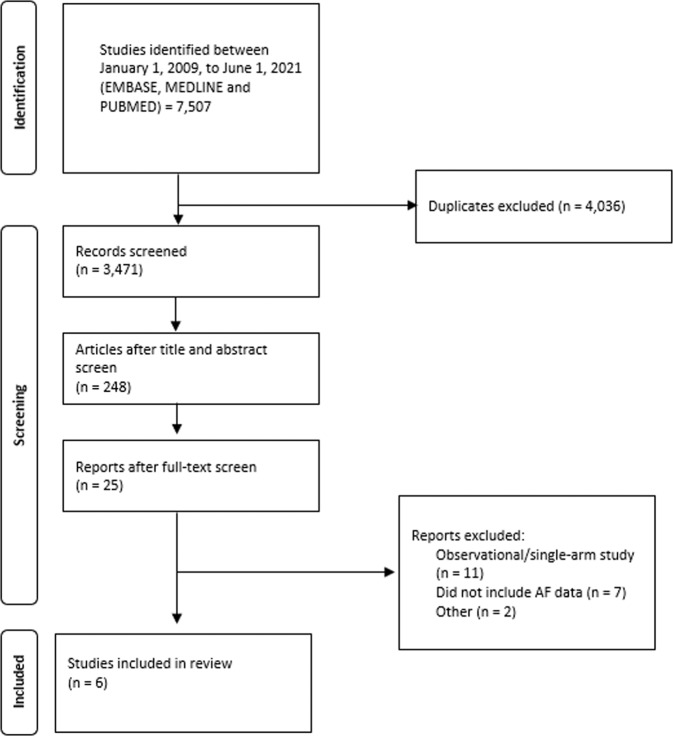
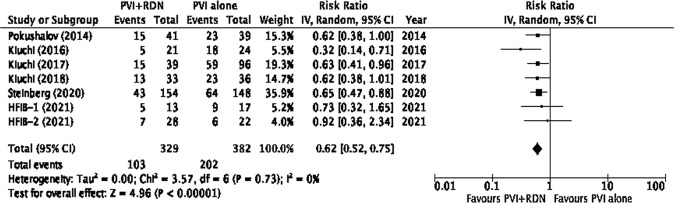
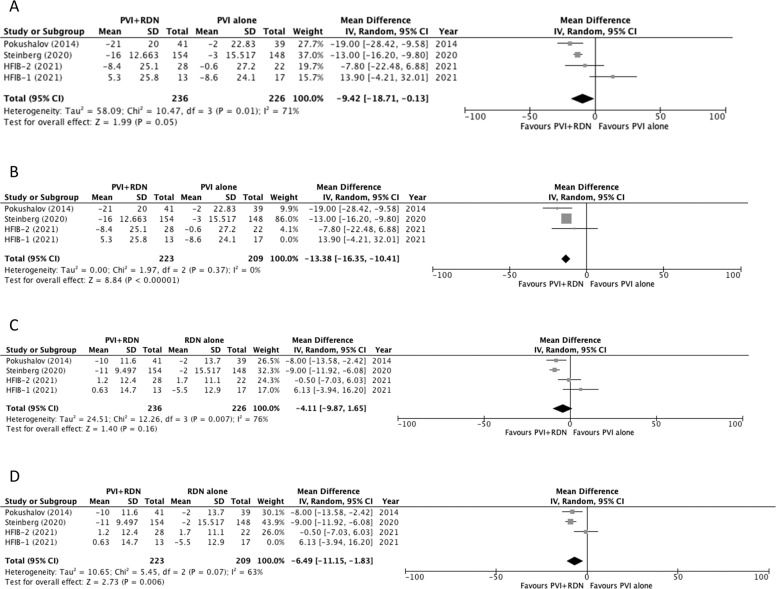
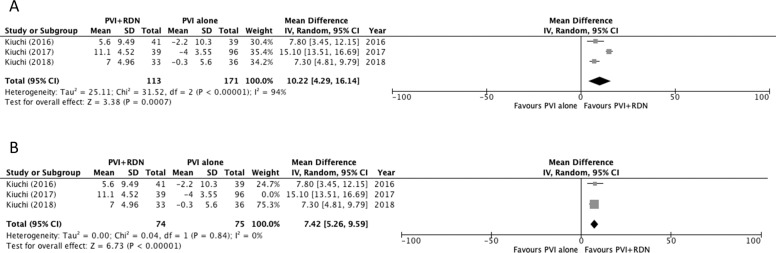
The study aims to compare clinical outcomes following renal denervation (RDN) in hypertensive patients with atrial fibrillation (AF). Three online databases were searched (MEDLINE, EMBASE and PubMed) for literature related to outcomes of RDN on hypertension and AF, between January 1, 2010, and June 1, 2021. Where possible, risk ratios (RR) and mean differences (MD) were combined using a random effects model. Significance was set at p ≤ 0.05. Seven trials were included that assessed the effect of adding RDN to pulmonary vein isolation (PVI) in patients with hypertension and AF. A total of 711 patients (329 undergoing PVI + RDN and 382 undergoing PVI alone), with an age range of 56 ± 6 to 68 ± 9 years, were included. Pooled analysis showed a significant lowering of AF recurrence in the PVI + RDN (31.3%) group compared to the PVI-only (52.9%) group (p < 0.00001). Pooled analysis of patients with resistant hypertension showed a significant mean reduction of systolic blood pressure (SBP) (−9.42 mm Hg, p = 0.05), but not diastolic blood pressure (DBP) (−4.11 mm Hg, p = 0.16) in favor of PVI + RDN. Additionally, the pooled analysis showed that PVI + RDN significantly improved estimated glomerular filtration rate (eGFR) (+10.2 mL/min per 1.73 m 2, p < 0.001) compared to PVI alone. RDN procedures in these trials have proven to be both safe and efficacious with an overall complication rate of 6.32%. Combined PVI and RDN is beneficial for patients with hypertension and AF. Combined therapy showed improvement in SBP and eGFR, reducing the risk of AF recurrence. RDN may serve as an innovative intervention in the treatment of AF.
Overview
The claims and statistics of this paper haven’t been checked yet.
Free: it reads the open-access text and checks the first 5 claims that cite a source we can check. Create a free account to check every claim.
Integrity signals
Registry
Cites
Statistics
Figures
Verification
Claims the paper makes
The claims and statistics of this paper haven’t been checked yet.
Free: it reads the open-access text and checks the first 5 claims that cite a source we can check. Create a free account to check every claim.
Claims other papers make about this one
Each is checked against this paper’s own text: does it say what the citing paper says it does?
The source backs part of the claim, not all of it — or backs it for a different population, condition or comparison.
In the citing paper
“A meta-analysis of data from the ERADICATE-AF trial and five smaller studies of RDN in patients with hypertension and atrial fibrillation who were undergoing PVI reported a risk ratio for recurrence of atrial fibrillation among those in the PVI plus RDN group versus the PVI alone group of 0.62 (95% CI 0.52–0.75)141. A pooled analysis of the blood pressure data collected in these trials showed”
From Renal nerves in physiology, pathophysiology and interoception (2025) · cites this paper as [141]
Experimental — accuracy not yet measured
Self-check
Percentages, sums and reported differences re-computed from the paper’s own numbers.
The self-check needs the paper’s full text.
Citations
Cites
Preferred Reporting Items for Systematic Reviews and Meta-Analyses: the PRISMA statement
Moher, D., Liberati, A., Tetzlaff, J., Altman, D. G., & for the PRISMA Group (2009) · BMJ · doi:10.1136/bmj.b2535 · Cited by 83,823
Measuring inconsistency in meta-analyses
Higgins, J. P. T., Thompson, S. G., Deeks, J. J., & Altman, D. G. (2003) · BMJ · doi:10.1136/bmj.327.7414.557 · Cited by 63,139 · cited 1×
“To assess for heterogeneity due to differences in study methods and populations, the I(2) values were used [15].”
MethodCochrane Handbook for Systematic Reviews of Interventions: Cochrane Book Series
(2008) · doi:10.1002/9780470712184 · Cited by 25,048
Interrater reliability: The kappa statistic
McHugh, M. L. (2012) · Biochemia Medica · doi:10.11613/bm.2012.031 · Cited by 19,877 · cited 2×
“6 threshold which indicates strong inter-rater reliability [14].”
BackgroundMethodWang, G., Ma, R., Qiao, G., Wada, K., Aizawa, Y., & Satoh, T. (2015) · Integrative Medicine International · doi:10.1159/000368408 · Cited by 18,657
Heart Disease and Stroke Statistics—2019 Update: A Report From the American Heart Association
Benjamin, E. J., Muntner, P., Alonso, A., Bittencourt, M. S., Callaway, C. W., Carson, A. P., Chamberlain, A. M., Chang, A. R., Cheng, S., Das, S. R., et al. (2019) · Circulation · doi:10.1161/cir.0000000000000659 · Cited by 9,036 · cited 1×
“However, a common underpinning in AF patients is that hypertension (HTN) is associated with one in five cases of AF [3].”
BackgroundSlim, K., Nini, E., Forestier, D., Kwiatkowski, F., Panis, Y., & Chipponi, J. (2003) · ANZ Journal of Surgery · doi:10.1046/j.1445-2197.2003.02748.x · Cited by 7,603
Whelton, P. K., Carey, R. M., Aronow, W. S., Casey, D. E., Collins, K. J., Dennison Himmelfarb, C., DePalma, S. M., Gidding, S., Jamerson, K. A., Jones, D. W., et al. (2018) · Hypertension · doi:10.1161/hyp.0000000000000065 · Cited by 7,391
Heart Disease and Stroke Statistics—2010 Update: A Report From the American Heart Association
WRITING GROUP MEMBERS, Lloyd-Jones, D., Adams, R. J., Brown, T. M., Carnethon, M., Dai, S., De Simone, G., Ferguson, T. B., Ford, E., Furie, K., et al. (2010) · Circulation · doi:10.1161/circulationaha.109.192667 · Cited by 5,700
The global epidemiology of hypertension
Mills, K. T., Stefanescu, A., & He, J. (2020) · Nature Reviews Nephrology · doi:10.1038/s41581-019-0244-2 · Cited by 4,133 · cited 1×
“While various drug combinations, doses, and additional agents can be used to reach blood pressure targets, HTN remains the main risk factor for cardiovascular disease including AF and premature death worldwide [24].”
Background(2010) · The Lancet · doi:10.1016/s0140-6736(10)62039-9 · Cited by 2,242 · cited 1×
“This highlights the existence of a more complex pathophysiological mechanism that defies current therapeutic regimens [5].”
BackgroundPacker, D. L., Mark, D. B., Robb, R. A., Monahan, K. H., Bahnson, T. D., Poole, J. E., Noseworthy, P. A., Rosenberg, Y. D., Jeffries, N., Mitchell, L. B., et al. (2019) · JAMA · doi:10.1001/jama.2019.0693 · Cited by 1,503 · cited 1×
“Despite PVI being superior to drug therapy, the intervention shows a failure rate of 20–50%, which warrants further investigation of alternative strategies for treating AF [8, 9].”
BackgroundGlobal epidemiology of atrial fibrillation: An increasing epidemic and public health challenge
Lippi, G., Sanchis-Gomar, F., & Cervellin, G. (2021) · International Journal of Stroke · doi:10.1177/1747493019897870 · Cited by 1,437 · cited 1×
“The prevalence of AF has increased by 33% over the last 20 years particularly due to the increase in the ageing population [1, 2].”
BackgroundSympathetic Overactivity in Patients with Chronic Renal Failure
Converse, R. L., Jacobsen, T. N., Toto, R. D., Jost, C. M. T., Cosentino, F., Fouad-Tarazi, F., & Victor, R. G. (1992) · New England Journal of Medicine · doi:10.1056/nejm199212313272704 · Cited by 1,132 · cited 9×
“Kidney damage such as due to chronic kidney disease (CKD) or drug-resistant/uncontrolled HTN has been shown to be a driver of increased SNS tone seen in neurogenic HTN [27].”
BackgroundInfluentialMoher, D. (2009) · Journal of Chinese Integrative Medicine · doi:10.3736/jcim20090918 · Cited by 909
Kandzari, D. E., Böhm, M., Mahfoud, F., Townsend, R. R., Weber, M. A., Pocock, S., Tsioufis, K., Tousoulis, D., Choi, J. W., East, C., et al. (2018) · The Lancet · doi:10.1016/s0140-6736(18)30951-6 · Cited by 793
Townsend, R. R., Mahfoud, F., Kandzari, D. E., Kario, K., Pocock, S., Weber, M. A., Ewen, S., Tsioufis, K., Tousoulis, D., Sharp, A. S. P., et al. (2017) · The Lancet · doi:10.1016/s0140-6736(17)32281-x · Cited by 752
Azizi, M., Schmieder, R. E., Mahfoud, F., Weber, M. A., Daemen, J., Davies, J., Basile, J., Kirtane, A. J., Wang, Y., Lobo, M. D., et al. (2018) · The Lancet · doi:10.1016/s0140-6736(18)31082-1 · Cited by 740
Calkins, H., Hindricks, G., Cappato, R., Kim, Y., Saad, E. B., Aguinaga, L., Akar, J. G., Badhwar, V., Brugada, J., Camm, J., et al. (2017) · Journal of Arrhythmia · doi:10.1016/j.joa.2017.08.001 · Cited by 707
Mark, D. B., Anstrom, K. J., Sheng, S., Piccini, J. P., Baloch, K. N., Monahan, K. H., Daniels, M. R., Bahnson, T. D., Poole, J. E., Rosenberg, Y., et al. (2019) · JAMA · doi:10.1001/jama.2019.0692 · Cited by 624 · cited 1×
“Catheter ablation through pulmonary vein isolation (PVI) in patients who fail to demonstrate a reduction in AF recurrence following pharmacological agents is currently a highly effective intervention [7].”
BackgroundInfluentialBaroreflex Control of Sympathetic Nerve Activity in Essential and Secondary Hypertension
Grassi, G., Cattaneo, B. M., Seravalle, G., Lanfranchi, A., & Mancia, G. (1998) · Hypertension · doi:10.1161/01.hyp.31.1.68 · Cited by 526 · cited 2×
“The study revealed that control subjects had the lowest muscle sympathetic nerve activity compared to those with severe HTN [37].”
BackgroundCalkins, H., Hindricks, G., Cappato, R., Kim, Y.-H., Saad, E. B., Aguinaga, L., Akar, J. G., Badhwar, V., Brugada, J., Camm, J., et al. (2018) · EP Europace · doi:10.1093/europace/eux275 · Cited by 509
The sympathetic system and hypertension*1
ESLER, M. (2000) · American Journal of Hypertension · doi:10.1016/s0895-7061(00)00225-9 · Cited by 479
Pokushalov, E., Romanov, A., Corbucci, G., Artyomenko, S., Baranova, V., Turov, A., Shirokova, N., Karaskov, A., Mittal, S., & Steinberg, J. S. (2012) · Journal of the American College of Cardiology · doi:10.1016/j.jacc.2012.05.036 · Cited by 432
Sympathetic Activation in Chronic Renal Failure
Schlaich, M. P., Socratous, F., Hennebry, S., Eikelis, N., Lambert, E. A., Straznicky, N., Esler, M. D., & Lambert, G. W. (2009) · Journal of the American Society of Nephrology · doi:10.1681/asn.2008040402 · Cited by 408 · cited 1×
“Kidney damage such as due to chronic kidney disease (CKD) or drug-resistant/uncontrolled HTN has been shown to be a driver of increased SNS tone seen in neurogenic HTN [27].”
BackgroundKung, J. (2010) · The Open Dentistry Journal · doi:10.2174/1874210601004020084 · Cited by 329 · cited 2×
“study design; exhaustive literature search; duplication of study screening, selection and data extraction; scientific quality and bias assessment of included studies; reporting of study characteristics and utilising appropriate statistical methods for assessment of study findings [11, 12].”
MethodAtrial fibrillation: the current epidemic.
Morillo, C. A., Banerjee, A., Perel, P., Wood, D. A., & Jouven, X. (2017) · PubMed · doi:10.11909/j.issn.1671-5411.2017.03.011 · Cited by 308 · cited 1×
“The prevalence of AF has increased by 33% over the last 20 years particularly due to the increase in the ageing population [1, 2].”
BackgroundSteinberg, J. S., Shabanov, V., Ponomarev, D., Losik, D., Ivanickiy, E., Kropotkin, E., Polyakov, K., Ptaszynski, P., Keweloh, B., Yao, C. J., et al. (2020) · JAMA · doi:10.1001/jama.2019.21187 · Cited by 243
Predictors of Estimated GFR Decline in Patients with Type 2 Diabetes and Preserved Kidney Function
Zoppini, G., Targher, G., Chonchol, M., Ortalda, V., Negri, C., Stoico, V., & Bonora, E. (2012) · Clinical Journal of the American Society of Nephrology · doi:10.2215/cjn.07650711 · Cited by 229
Blood Pressure Control and Risk of Incident Atrial Fibrillation
Thomas, M. C., Dublin, S., Kaplan, R. C., Glazer, N. L., Lumley, T., Longstreth, W. T., Smith, N. L., Psaty, B. M., Siscovick, D. S., & Heckbert, S. R. (2008) · American Journal of Hypertension · doi:10.1038/ajh.2008.248 · Cited by 143 · cited 1×
“The use of RDN to treat AF can be further supported by various epidemiological studies, one of which (n= 1332) significantly showed that a reduction in SBP into lower hypertensive categories reduced the odds of AF recurrence [35].”
ResultBakris, G. L., Townsend, R. R., Flack, J. M., Brar, S. K., Cohen, S. A., D’Agostino, R. B., Kandzari, D. E., Katzen, B. T., Leon, M. B., Mauri, L., et al. (2015) · Journal of the American College of Cardiology · doi:10.1016/j.jacc.2015.01.037 · Cited by 121 · cited 2×
“SYMPLICITY HTN-3, the first of its kind, was a prospective, blinded, sham-controlled trial that included 367 patients and aimed to investigate the effect of RDN on HTN [28].”
BackgroundPokushalov, E. A., Romanov, A. B., Katritsis, D. G., Николаевич, А. С., Афгановна, Б. С., Losik, D., Викторовна, Б. В., Karaskov, A. M., & Steinberg, J. S. (2014) · Heart Rhythm · doi:10.1016/j.hrthm.2014.03.055 · Cited by 118 · cited 6×
“8 mmHg following RDN and that the rate of AF recurrence was not significantly different between the groups [17].”
BackgroundResultInfluentialChanges in Plasma Renin Activity After Renal Artery Sympathetic Denervation
Mahfoud, F., Townsend, R. R., Kandzari, D. E., Kario, K., Schmieder, R. E., Tsioufis, K., Pocock, S., David, S., Patel, K., Rao, A., et al. (2021) · Journal of the American College of Cardiology · doi:10.1016/j.jacc.2021.04.044 · Cited by 115 · cited 2×
“For the first time in a human model, the findings of this study established the interaction between RDN, renal sympathetic tone, and HTN [34].”
BackgroundHypertension and atrial fibrillation: epidemiology, pathophysiology and therapeutic implications
Lau, Y.-F., Yiu, K., Siu, C.-W., & Tse, H.-F. (2011) · Journal of Human Hypertension · doi:10.1038/jhh.2011.105 · Cited by 107
Effect of Blood Pressure on Early Decline in Kidney Function Among Hypertensive Men
Vupputuri, S., Batuman, V., Muntner, P., Bazzano, L. A., Lefante, J. J., Whelton, P. K., & He, J. (2003) · Hypertension · doi:10.1161/01.hyp.0000101695.56635.31 · Cited by 85
Renal safety of catheter-based renal denervation: systematic review and meta-analysis
Sanders, M. F., Reitsma, J. B., Morpey, M., Gremmels, H., Bots, M. L., Pisano, A., Bolignano, D., Zoccali, C., & Blankestijn, P. J. (2017) · Nephrology Dialysis Transplantation · doi:10.1093/ndt/gfx088 · Cited by 73 · cited 1×
“Regarding the safety of RDN, a recent meta-analysis assessing renal function as a safety parameter included 52 quantitative and 14 qualitative studies and concluded that no adverse effects were present following treatment with RDN deeming it as a safe method for use in treatment of HTN [43].”
MethodKiuchi, M. G., Chen, S., Hoye, N. A., & Pürerfellner, H. (2017) · Journal of Interventional Cardiac Electrophysiology · doi:10.1007/s10840-017-0302-2 · Cited by 57
Romanov, A., Pokushalov, E. A., Ponomarev, D., Григорьевич, С. А., Шабанов, В. В., Losik, D., Karaskov, A. M., & Steinberg, J. S. (2017) · Cardiovascular Therapeutics · doi:10.1111/1755-5922.12264 · Cited by 46 · cited 1×
“Indeed, all previously published reviews contain either Pokushalov et al. 2012 and/or 2014 and/or Romanov et al. 2017 and thus incorporate duplicated patients and run the risk of misrepresentation of the data and lack robustness in the true assessment of the impact of RDN on AF and HTN.”
Xia, M., Liu, T., Chen, D., & Huang, Y. (2021) · International Journal of Hyperthermia · doi:10.1080/02656736.2021.1916100 · Cited by 41 · cited 8×
“Kidney damage such as due to chronic kidney disease (CKD) or drug-resistant/uncontrolled HTN has been shown to be a driver of increased SNS tone seen in neurogenic HTN [27].”
BackgroundInfluentialKiuchi, M. G., Chen, S., Silva, G. R. E., Paz, L. M. R., Kiuchi, T., Filho, A. G. D. P., & Souto, G. L. L. (2016) · Journal of Interventional Cardiac Electrophysiology · doi:10.1007/s10840-016-0186-6 · Cited by 38 · cited 11×
“Kidney damage such as due to chronic kidney disease (CKD) or drug-resistant/uncontrolled HTN has been shown to be a driver of increased SNS tone seen in neurogenic HTN [27].”
BackgroundInfluentialRenal Sympathetic Denervation as Upstream Therapy During Atrial Fibrillation Ablation
Turagam, M. K., Whang, W., Miller, M. A., Neužil, P., Aryana, A., Romanov, A. B., Cuoco, F. A., MANSOUR, M. C., Lakkireddy, D., Michaud, G. F., et al. (2020) · JACC. Clinical electrophysiology · doi:10.1016/j.jacep.2020.08.013 · Cited by 33 · cited 4×
“Finally, it is also worth noting that one of the included trials (HFIB-1) was terminated early due to an increase in renovascular complications, which may be owing to the use of a non-FDA approved catheter and hence caution should be exercised when assessing pooled outcomes that included the mentioned study [22].”
BackgroundInfluentialUkena, C., Becker, N., Pavlicek, V., Millenaar, D., Ewen, S., Linz, D., Steinberg, J. S., Böhm, M., & Mahfoud, F. (2020) · Journal of Hypertension · doi:10.1097/hjh.0000000000002335 · Cited by 29
Rate of Change in Renal Function and Mortality in Elderly Treated Hypertensive Patients
Chowdhury, E. K., Langham, R. G., Ademi, Z., Owen, A., Krum, H., Wing, L. M. H., Nelson, M. R., & Reid, C. M. (2015) · Clinical Journal of the American Society of Nephrology · doi:10.2215/cjn.07370714 · Cited by 27
Atti, V., Turagam, M. K., Garg, J., & Lakkireddy, D. (2019) · Journal of Cardiovascular Electrophysiology · doi:10.1111/jce.13868 · Cited by 25
Renal nerves in blood pressure regulation
Johns, E. J., & Abdulla, M. H. (2013) · Current Opinion in Nephrology & Hypertension · doi:10.1097/mnh.0b013e3283641a89 · Cited by 22 · cited 3×
“Stimulation of beta-adrenoreceptors of the juxtaglomerular apparatus increases renin secretion, which ultimately leads to increased systemic vascular resistance and thus arterial pressure [26].”
BackgroundInfluentialSelf-citationKiuchi, M. G., Chen, S., Silva, G. R. E., Paz, L. M. R., Kiuchi, T., Filho, A. G. D. P., & Souto, G. L. L. (2016) · Kidney Research and Clinical Practice · doi:10.1016/j.krcp.2016.08.005 · Cited by 21 · cited 2×
“Although all studies were prospective, two of those were non-randomized [18, 19].”
Cheng, X., Zhang, D., Luo, S., & Qin, S. (2019) · Mayo Clinic Proceedings · doi:10.1016/j.mayocp.2019.07.005 · Cited by 17 · cited 1×
“These benefits of RDN were reiterated in a recent meta-analysis of 12 trials (n= 1539) and showed that catheter-based RDN is not only effective in the reduction of office blood pressure compared to sham or antihypertensive therapy alone but is also safe for patients [33].”
ResultSilverwatch, J., Marti, K. E., Phan, M. T., Amin, H., Roman, Y. M., Pasupuleti, V., Banach, M., Barboza, J. J., & Hernández, A. V. (2021) · Journal of Clinical Medicine · doi:10.3390/jcm10040782 · Cited by 17 · cited 2×
“The benefits as such of renal denervation (RDN) were further reiterated in multiple trials and a recent network meta-analysis of 20 trials (n= 2152) showed that RDN of main renal artery branches in addition to antihypertensive therapy is most effective in reducing office blood pressure and that RDN using this approach…”
BackgroundResultPranata, R., Vania, R., & Raharjo, S. B. (2020) · Journal of Arrhythmia · doi:10.1002/joa3.12353 · Cited by 11
Mujer, M. T. P., Al-Abcha, A. K., Saleh, Y., Nerusu, L. A., Boumegouas, M., Herzallah, K., & Chen, K. (2020) · Pacing and Clinical Electrophysiology · doi:10.1111/pace.14009 · Cited by 7
Renal artery denervation: a lot done and more to do
Sharif, F. (2018) · EuroIntervention · doi:10.4244/eijv14i12a225 · Cited by 4 · cited 2×
“Indeed the improved catheter technology as well as the increase in the sites and frequency of ablation within the renal vasculature has facilitated the utility of RDN beyond just treating HTN [29].”
Background
Cited by
Targeting the Substrate for Atrial Fibrillation
McCauley, M. D., Iacobellis, G., Li, N., Nattel, S., & Goldberger, J. J. (2024) · Journal of the American College of Cardiology · doi:10.1016/j.jacc.2024.02.050 · Cited by 58
Swaminathan, R. V., East, C. A., Feldman, D. N., Fisher, N. D. L., Garasic, J. M., Giri, J. S., Kandzari, D. E., Kirtane, A. J., Klein, A. J., Kobayashi, T., et al. (2023) · Journal of the Society for Cardiovascular Angiography & Interventions · doi:10.1016/j.jscai.2023.101121 · Cited by 55
Nesapiragasan, V., Hayıroğlu, M. İ., Sciacca, V., Sommer, P., Sohns, C., & Fink, T. (2023) · Balkan Medical Journal · doi:10.4274/balkanmedj.galenos.2023.2023-9-48 · Cited by 48
“96 However, these findings need to be validated by large long-term trials, which should potentially include studies with a sham control group to further strengthen the findings.”
BackgroundRenal nerves in physiology, pathophysiology and interoception
Evans, L. C., Dayton, A., & Osborn, J. W. (2025) · Nature Reviews Nephrology · doi:10.1038/s41581-024-00893-3 · Cited by 46
“…from the ERADICATE-AF trial and five smaller studies of RDN in patients with hypertension and atrial fibrillation who were undergoing PVI reported a risk ratio for recurrence of atrial fibrillation among those in the PVI plus RDN group versus the PVI alone group of 0.62 (95% CI 0.52–0.75) 141 .”
InfluentialMohammad, A. A., Nawar, K., Binks, O., & Abdulla, M. H. (2023) · Journal of Human Hypertension · doi:10.1038/s41371-023-00857-3 · Cited by 29
Self-citation
Metadata
- Authors
- Nawar, K., Mohammad, A., Johns, E. J., & Abdulla, M. H.
- Affiliations
- University College Cork (IE)
- Corresponding author
- Abdulla, Mohammed H.
- Venue
- Journal of Human Hypertension
- Published
- 2022-01-29
- Volume
- 36
- Issue
- 10
- Pages
- 887-897
- ISSN
- 0950-9240 (ISSN-L)
- 1476-5527
- PMC
- PMC9553644
- OpenAlex
- W4210703310
- Cited by
- 32
- References
- 51
- Citations by year
- 2026: 2 · 2025: 8 · 2024: 11 · 2023: 9 · 2022: 2
- FWCI
- 1.53
- Type
- journal article
- Language
- en
- Open access
- hybrid
- doi.org
- Licence
- cc-by
- creativecommons.org/licenses/by/4.0 (tdm)
- creativecommons.org/licenses/by/4.0 (vor)
- Locations
- Journal of Human Hypertension (publishedVersion, cc-by)
- PubMed Central (publishedVersion, cc-by)
- PubMed (publishedVersion)
- Funders
- Irish Research eLibrary
- Topics
- Health Sciences › Medicine › Cardiology and Cardiovascular Medicine › Atrial Fibrillation Management and Outcomes
- Health Sciences › Medicine › Cardiology and Cardiovascular Medicine › Blood Pressure and Hypertension Studies
- Health Sciences › Medicine › Cardiology and Cardiovascular Medicine › Cardiac Arrhythmias and Treatments
- Keywords
- renal denervation, atrial fibrillation, hypertension, pulmonary vein isolation, resistant hypertension, atrial fibrillation recurrence, systolic blood pressure reduction, estimated glomerular filtration rate, procedural complications
- MeSH terms
- Atrial Fibrillation, Humans, Hypertension, Recurrence, Renal Artery, Sympathectomy, Treatment Outcome, Catheter Ablation
About these checks
Registry, retraction, Cites and statistics results are computed, not judged, with one exception: a printed reference that no index lists is read once by a model before it counts as a citation error. Claims are extracted by a model and kept only when their quote appears verbatim in the text; each cited source is then checked, with a model’s help, for whether it says what the claim relies on. Those verdicts can be wrong — read the claim’s quote and the cited source before relying on one.
Statistics and arithmetic are recomputed, not judged.
Confidence bands are shown only for fields calibrated on our annotated test set. None is calibrated yet, so no band is shown.
What counts as a claim ›How we measure confidence ›How we check this ›
Are you an author, or do you see a problem with this page? Request a review
Data sources
Bibliographic data: Semantic Scholar, OpenAlex, Crossref.
Contains information from the Semantic Scholar Academic Graph Datasets, made available under the ODC Attribution License (ODC-BY 1.0).
Semantic Scholar’s data is described in: Kinney, R., et al. (2023). The Semantic Scholar Open Data Platform. arXiv:2301.10140.
