

Determinants of treatment response in first-episode psychosis: an 18F-DOPA PET study
Open accessThe DOI matches its Crossref record; 64 of the 68 references it cites were found in a registry or an index.
Abstract
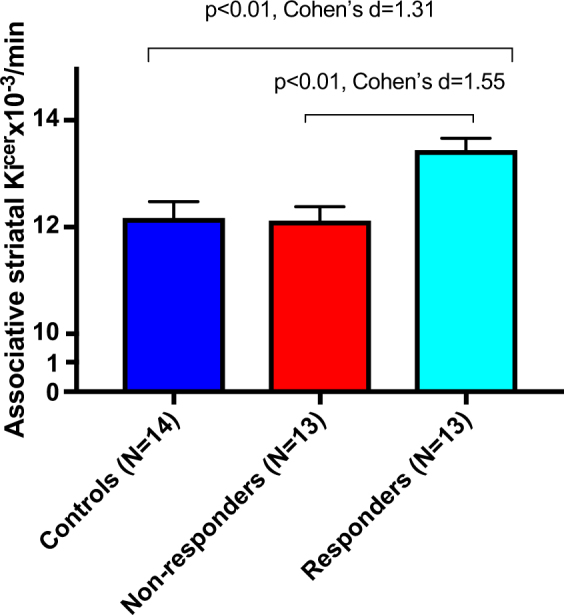
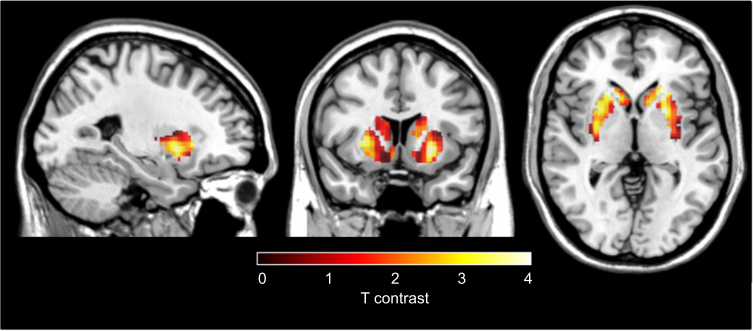
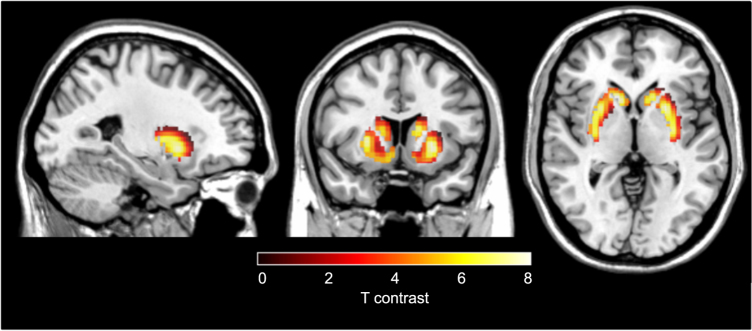
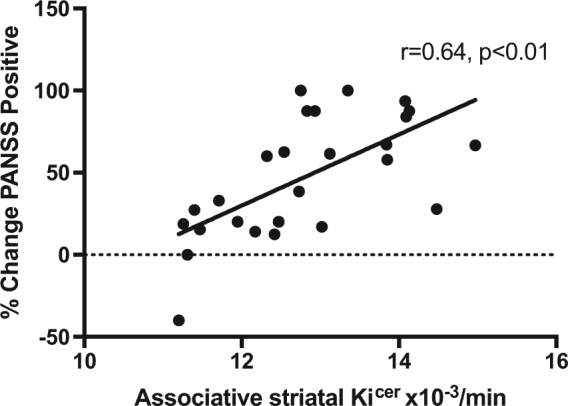
Psychotic illnesses show variable responses to treatment. Determining the neurobiology underlying this is important for precision medicine and the development of better treatments. It has been proposed that dopaminergic differences underlie variation in response, with striatal dopamine synthesis capacity (DSC) elevated in responders and unaltered in non-responders. We therefore aimed to test this in a prospective cohort, with a nested case-control comparison. 40 volunteers (26 patients with first-episode psychosis and 14 controls) received an 18 F-DOPA Positron Emission Tomography scan to measure DSC (Ki cer ) prior to antipsychotic treatment. Clinical assessments (Positive and Negative Syndrome Scale, PANSS, and Global Assessment of Functioning, GAF) occurred at baseline and following antipsychotic treatment for a minimum of 4 weeks. Response was defined using improvement in PANSS Total score of >50%. Patients were followed up for at least 6 months, and remission criteria applied. There was a significant effect of group on Ki cer in associative striatum (F (2, 37) = 7.9, p = 0.001). Ki cer was significantly higher in responders compared with non-responders (Cohen’s d = 1.55, p = 0.01) and controls (Cohen’s d = 1.31, p = 0.02). Ki cer showed significant positive correlations with improvements in PANSS-positive ( r = 0.64, p < 0.01), PANSS negative (rho = 0.51, p = 0.01), and PANSS total (rho = 0.63, p < 0.01) ratings and a negative relationship with change in GAF ( r = −0.55, p < 0.01). Clinical response is related to baseline striatal dopaminergic function. Differences in dopaminergic function between responders and non-responders are present at first episode of psychosis, consistent with dopaminergic and non-dopaminergic sub-types in psychosis, and potentially indicating a neurochemical basis to stratify psychosis.
Overview
The claims and statistics of this paper haven’t been checked yet.
Free: it reads the open-access text and checks the first 5 claims that cite a source we can check. Create a free account to check every claim.
Integrity signals
Registry
Cites
Statistics
Figures
Verification
Claims the paper makes
The claims and statistics of this paper haven’t been checked yet.
Free: it reads the open-access text and checks the first 5 claims that cite a source we can check. Create a free account to check every claim.
Claims other papers make about this one
Each is checked against this paper’s own text: does it say what the citing paper says it does?
The source backs part of the claim, not all of it — or backs it for a different population, condition or comparison.
In the citing paper
“When compared using equivalent scanners, patients with psychosis have higher striatal dopamine synthesis capacity than CHR subjects(67).”
From Aberrant Salience, Information Processing, and Dopaminergic Signaling in People at Clinical High Risk for Psychosis (2020) · cites this paper as [67]
Experimental — accuracy not yet measured
Self-check
Percentages, sums and reported differences re-computed from the paper’s own numbers.
The self-check needs the paper’s full text.
Citations
Cites
Diagnostic and Statistical Manual of Mental Disorders
Williams, J. B. W., & First, M. (2013) · Encyclopedia of Social Work · doi:10.1093/acrefore/9780199975839.013.104 · Cited by 109,519
The Positive and Negative Syndrome Scale (PANSS) for schizophrenia.
Kay, S. R., Fiszbein, A., & Opler, L. A. (1987) · Schizophrenia Bulletin · doi:10.1093/schbul/13.2.261 · Cited by 21,378 · cited 1×
“Clinical measures were rated at baseline and follow-up using the Positive and Negative Syndrome Scale (PANSS) [26], Global Assessment of Functioning (GAF) [27], and Clinical Global Impression Improvement scale (CGI-I) [28].”
MethodThe clinical global impressions scale: applying a research tool in clinical practice.
Busner, J., & Targum, S. D. (2007) · PubMed Central · Cited by 2,817
Remission in Schizophrenia: Proposed Criteria and Rationale for Consensus
Andreasen, N. C., Carpenter, W. T., Kane, J. M., Lasser, R. A., Marder, S. R., & Weinberger, D. R. (2005) · American Journal of Psychiatry · doi:10.1176/appi.ajp.162.3.441 · Cited by 2,343 · cited 1×
“[34] remission criteria at 6 months to ascertain remission/ non-remission status.”
BackgroundLaruelle, M., Abi-Dargham, A., van Dyck, C. H., Gil, R., D'Souza, C. D., Erdos, J., McCance, E., Rosenblatt, W., Fingado, C., Zoghbi, S. S., et al. (1996) · Proceedings of the National Academy of Sciences · doi:10.1073/pnas.93.17.9235 · Cited by 1,291
LEUCHT, S., KANE, J., KISSLING, W., HAMANN, J., ETSCHEL, E., & ENGEL, R. (2005) · Schizophrenia Research · doi:10.1016/j.schres.2005.04.008 · Cited by 1,226 · cited 1×
““much improved”, respectively) corresponds to clinically significant improvement [32, 33].”
BackgroundHowes, O. D., McCutcheon, R., Agid, O., de Bartolomeis, A., van Beveren, N. J. M., Birnbaum, M. L., Bloomfield, M. A. P., Bressan, R. A., Buchanan, R. W., Carpenter, W. T., et al. (2017) · American Journal of Psychiatry · doi:10.1176/appi.ajp.2016.16050503 · Cited by 1,132 · cited 1×
“were required to have taken at least 80% of prescribed doses, in line with recommendations [36].”
ResultSelf-citationKapur, S., Zipursky, R., Jones, C., Remington, G., & Houle, S. (2000) · American Journal of Psychiatry · doi:10.1176/appi.ajp.157.4.514 · Cited by 1,090 · cited 2×
“Taken with previous molecular imaging studies showing dopamine D2/3 receptor occupancy by antipsychotics is required for therapeutic response [33, 50], our findings indicate D2/3 receptor blockade is acting to oppose the consequences of presynaptic dopamine dysfunction [51].”
BackgroundResultSelf-citationKahn, R. S., Fleischhacker, W. W., Boter, H., Davidson, M., Vergouwe, Y., Keet, I. P., Gheorghe, M. D., Rybakowski, J. K., Galderisi, S., Libiger, J., et al. (2008) · The Lancet · doi:10.1016/s0140-6736(08)60486-9 · Cited by 1,088 · cited 2×
“[22, 23], including in first-episode psychosis [24].”
BackgroundIncreased baseline occupancy of D 2 receptors by dopamine in schizophrenia
Abi-Dargham, A., Rodenhiser, J., Printz, D., Zea-Ponce, Y., Gil, R., Kegeles, L. S., Weiss, R., Cooper, T. B., Mann, J. J., Van Heertum, R. L., et al. (2000) · Proceedings of the National Academy of Sciences · doi:10.1073/pnas.97.14.8104 · Cited by 1,020 · cited 2×
“and greater synaptic dopamine levels are linked to greater subsequent improvement in psychotic symptoms [15].”
BackgroundInfluential
Research works printed but not linked: 1
- Taylor D Paton C Kapur S The Maudsley Prescribing Guidelines in Psychiatry 2012 11th Edition West Sussex Wiley-Blackwell: Chichester
Cited by
Items 101–187 of 187
Identifying anti-LGI-1 encephalitis in psychotic disorders: A clinically focused review
Yi, Y., Zhao, Y., Zhou, H., & Wang, J. (2025) · General Hospital Psychiatry · doi:10.1016/j.genhosppsych.2025.02.016 · Cited by 8
Schiulaz, A., Nordio, G., Giacomel, A., Easmin, R., Bettinelli, A., Selvaggi, P., Williams, S., Turkheimer, F., Jauhar, S., Howes, O. D., et al. (2025) · Molecular Imaging and Biology · doi:10.1007/s11307-025-02014-3 · Cited by 7
“For this patient cohort, treatment response was defined as a total PANSS reduction of ≥ 50% at the initial follow-up, confirmed by remission criteria at six months [30].”
Self-citationCarr, R., Cannon, A., Finelli, V., Bukala, B. R., Cimen, Y., Filipova, P., Cummings, C., Pillinger, T., Howes, O. D., & McCutcheon, R. A. (2025) · Molecular Psychiatry · doi:10.1038/s41380-025-03255-y · Cited by 8
Self-citationCasserly, L., Garton, D. R., Montaño-Rodriguez, A., & Andressoo, J. (2023) · Biomolecules · doi:10.3390/biom13091428 · Cited by 7
“Importantly, GDNF is well known to enhance striatal DA [2,14,82], and striatal hyperdopaminergia is strongly linked to SCZ [1,2,8,9].”
Beck, K., Arumuham, A., Brugger, S. P., McCutcheon, R. A., Veronese, M., Santangelo, B., McGinnity, C. J., Dunn, J., Kaar, S. J., Singh, N., et al. (2022) · Journal of Psychopharmacology · doi:10.1177/02698811221099643 · Cited by 7
“Participants with psychosis were classified as antipsychoticfree if they had been free from antipsychotic treatment for at least 6 weeks (oral) or 6 months for depot formulations (Jauhar et al., 2019).”
MethodSelf-citationReynolds, G. P. (2024) · Journal of Psychopharmacology · doi:10.1177/02698811241249415 · Cited by 6
“These pharmacologies are, therefore, unlikely to help those who do not respond to drugs acting at the D2 receptor, in whom that treat-ment resistance can be considered a subtype of psychosis without dopaminergic hyperactivity (Jauhar et al., 2019).”
BackgroundWeidenauer, A., Sauerzopf, U., Bauer, M., Bum, C., Diendorfer, C., Dajic, I., Bartova, L., Kastner-Bosek, A., Bamminger, K., Nics, L., et al. (2024) · Schizophrenia Bulletin · doi:10.1093/schbul/sbae111 · Cited by 5
Tangmose, K., Rostrup, E., Bojesen, K. B., Sigvard, A. K., Glenthoj, B. Y., & Nielsen, M. Ø. (2023) · Psychiatry Research · doi:10.1016/j.psychres.2023.115308 · Cited by 5
Weinstein, A. M. (2023) · Frontiers in Psychiatry · doi:10.3389/fpsyt.2023.1230760 · Cited by 5
Arumuham, A., Nour, M. M., Veronese, M., Beck, K., Onwordi, E. C., Lythgoe, D. J., Jauhar, S., Rabiner, E. A., & Howes, O. D. (2024) · The International Journal of Neuropsychopharmacology · doi:10.1093/ijnp/pyae011 · Cited by 5
“Patients with schizophrenia were classified as antipsychotic free if they had been free from antipsychotic treatment for at least 6 weeks for oral or 6 months for depot formulations (Jauhar et al., 2019).”
BackgroundSelf-citationReinventing schizophrenia: The rules of the game
McCutcheon, R. A., & McGuire, P. K. (2022) · Schizophrenia Research · doi:10.1016/j.schres.2021.12.009 · Cited by 5
Self-citationSchizophrenia: advances in pathophysiology, management, and precision medicine
Sawa, A., Chiappelli, J., Hamrah, O., & Cascella, N. G. (2026) · BMJ · doi:10.1136/bmj-2026-635470 · Cited by 4
“58 Additionally, a composite MRI measure of striatal activity is strongly predictive of response to antipsychotic drugs, providing a potential biomarker to guide treatment.”
Montaño-Rodriguez, A., Schorling, T., & Andressoo, J. (2024) · Cells · doi:10.3390/cells13121059 · Cited by 4
“…drugs like L-DOPA increase the risk of psychosis psychosis and schizophrenia (SCZ) probably in at least about 50% of patients [14–17 during , 47 Plenty of evidence suggests that despite being expressed only in about 0.6% of striatal cells, endogenous GDNF and its levels affect brain…”
BackgroundInfluentialAn Overview of Machine Learning Applications in Mood Disorders
Topolski, N., Jeong, S. H., & Mwangi, B. (2021) · Cambridge University Press eBooks · doi:10.1017/9781108623018.017 · Cited by 4
Rogdaki, M., Devroye, C., Ciampoli, M., Veronese, M., Ashok, A. H., McCutcheon, R. A., Jauhar, S., Bonoldi, I., Gudbrandsen, M., Daly, E., et al. (2021) · Molecular Psychiatry · doi:10.1038/s41380-021-01192-0 · Cited by 4
Self-citationNeuromelanin-Sensitive MRI: A Biomarker for Treatment-Resistant Schizophrenia?
Vano, L. J., Veronese, M., McCutcheon, R. A., & Howes, O. D. (2024) · American Journal of Psychiatry · doi:10.1176/appi.ajp.20240278 · Cited by 4
Self-citationKogure, M., Kanahara, N., Miyazawa, A., Shiko, Y., Otsuka, I., Matsuyama, K., Takase, M., Kimura, M., Kimura, H., Ota, K., et al. (2024) · Frontiers in Psychiatry · doi:10.3389/fpsyt.2023.1334335 · Cited by 3
A systematic review and meta-analysis of clozapine response rates in schizophrenia
Samara, M. T., Glarou, E., Pinioti, E., Nikolakopoulou, A., Siafis, S., Christodoulou, N., Leucht, S., & Lappas, A. S. (2026) · Nature Mental Health · doi:10.1038/s44220-026-00604-w · Cited by 3
Should clozapine be offered as a second-line antipsychotic?
Butler, E., Stratford, M., & Jauhar, S. (2025) · The Lancet Psychiatry · doi:10.1016/s2215-0366(24)00440-1 · Cited by 3
Self-citationMood Disorders: Brain Imaging and Therapeutic Implications
Selvaraj, S., Brambilla, P., & Soares, J. C. (2021) · Cambridge University Press eBooks · doi:10.1017/9781108623018 · Cited by 4
Single‐Subject Network Analysis of FDOPA PET in Parkinson's Disease and Psychosis Spectrum
Severino, M., Schubert, J. J., Nordio, G., Giacomel, A., Easmin, R., Lao–Kaim, N. P., Selvaggi, P., Xu, Z., Pereira, J. B., Jauhar, S., et al. (2025) · Human Brain Mapping · doi:10.1002/hbm.70253 · Cited by 3
“Furthermore, FDOPA-based connectivity has demonstrated high test–retest reproducibility (Veronese et al. 2019).”
Self-citationCarter, C. S. (2021) · Neuropsychopharmacology · doi:10.1038/s41386-020-00944-w · Cited by 3
Treatment-resistant schizophrenia: pathophysiology and the role of neuroimaging and therapeutics
Petch, J., Martinez‐Gonzalez, B., & Shergill, S. S. (2026) · BJPsych Advances · doi:10.1192/bja.2025.10195 · Cited by 2
Neuroimaging Studies of Effects of Psychotherapy in Depression
Bauer, I. E., & Meyer, T. D. (2021) · Cambridge University Press eBooks · doi:10.1017/9781108623018.021 · Cited by 2
Rubio, J. M., Lencz, T., Barber, A. D., Moyett, A., Ali, S., Ventura, G., Germano, N., Bassaw, F., Malhotra, A. K., & Kane, J. M. (2021) · Biological Psychiatry · doi:10.1016/j.biopsych.2021.02.228 · Cited by 2
The utility of PET imaging in the diagnosis and management of psychosis: a brief review
Rigney, G. H., Ayubcha, C., Werner, T. J., Alavi, A. A., & Revheim, M.-E. R. (2021) · Clinical and Translational Imaging · doi:10.1007/s40336-021-00466-5 · Cited by 2
“” Figures reproduced with permission without changes from [54]”
BackgroundAn ace in the hole? Opportunities and limits of using mice to understand schizophrenia neurobiology
Villarin, J. M., & Kellendonk, C. (2025) · Molecular Psychiatry · doi:10.1038/s41380-025-03060-7 · Cited by 2
Dopamine and Response to Antipsychotic Medication
Ntephe, C., & Demjaha, A. (2020) · Springer eBooks · doi:10.1007/978-3-030-57231-0_14 · Cited by 2
Electrophysiological Biomarkers for Mood Disorders
Ramakrishnan, N., Murphy, N., Selvaraj, S., & Cho, R. Y. (2021) · Cambridge University Press eBooks · doi:10.1017/9781108623018.015 · Cited by 2
Logotheti, M., Γκέκας, Θ., Agioutantis, P. C., Hatzimanolis, A., Foteli, S., Mamma, D., Stefanis, N. C., Kolisis, F. N., & Loutrari, H. V. (2025) · Microorganisms · doi:10.3390/microorganisms13081935 · Cited by 1
“Effect size estimates were derived from previously published Positive and Negative Syndrome Scale (PANSS) score data in FEP patients, comparing baseline and four-week follow-up post antipsychotic treatment [38].”
Aslan, R., Yazıcı, H. G., & Gökçen, O. (2025) · Issues in Mental Health Nursing · doi:10.1080/01612840.2025.2538714 · Cited by 1
Associations of neuromelanin in the substantia nigra with antipsychotic response in schizophrenia
Tarumi, R., Honda, S., Cassidy, C., Etani, T., Homma, S., Sekihara, S., Kaneko, Y., Moriyama, S., Tobari, Y., Takahashi, K., et al. (2025) · Neuropsychopharmacology · doi:10.1038/s41386-025-02275-0 · Cited by 3
“…number of NM-MRI studies on antipsychotic treatment responsiveness in schizophrenia, especially those focusing on remission, further research with multimodal imaging is warranted to examine the relationship between antipsychotic treatment responsiveness and dopamine function in schizophrenia.”
InfluentialHui, C. L. M., Wong, C. C. L., Yang, N. C. L., Choi, E. G., Hui, P. W. M., Lui, E., Tao, J., Ho, E. C., Suen, Y. N., Chen, S., et al. (2026) · European Archives of Psychiatry and Clinical Neuroscience · doi:10.1007/s00406-025-02185-8 · Cited by 1
“…patients and healthy controls. between DSC and relapse appears to vary across illness stages: elevated DSC has been reported before psychosis onset [5], whereas lower DSC in relapsers aligns with findings in treatment-resistant patients [ 26] and those with limited symptomatic improvement [32 ].”
Krzystanek, M., Bieś, R., & Bąk‐Sosnowska, M. (2026) · International Journal of Molecular Sciences · doi:10.3390/ijms27093745 · Cited by 1
“This finding suggests that treatment resistance in some patients may stem from distinct and early neurobiological mechanisms [17].”
18F-fluorodeoxyglucose PET in Major Psychiatric Disorders
Ferrando, R., & Coutinho, A. M. (2026) · PET Clinics · doi:10.1016/j.cpet.2026.05.007 · Cited by 1
An etiological approach to psychosis: potential benefits for treatment, research and prevention
Murray, R. M., Oliver, D., Dima, A., & Alameda, L. (2026) · World Psychiatry · doi:10.1002/wps.70079 · Cited by 1
“This is in line with the evidence that pharmacological treatments for the positive symptoms of psychosis reduce activity at the dopamine D2 receptor, and that high dopamine synthesis capacity predicts good response of positive symptoms to D2 recep tor blockers 15,16 .”
Brain PET Poster Sessions PP01-M01 to PP02-N07
Lange, D., Tejada, I. M., xiong, M., Hillebrand, B., Noergaard, M., Baerentzen, S., Shalgunov, V., Herth, M. M., Svarer, C., & Palner, M. (2019) · Journal of Cerebral Blood Flow & Metabolism · doi:10.1177/0271678x19851018 · Cited by 1
Brain Imaging and the Mechanisms of Antidepressant Action
Godlewska, B. R., Selvaraj, S., & Cowen, P. J. (2021) · Cambridge University Press eBooks · doi:10.1017/9781108623018.020 · Cited by 1
Effects of Lithium on Brain Structure in Bipolar Disorder
Kaur, J., Kafantaris, V., & Szeszko, P. R. (2021) · Cambridge University Press eBooks · doi:10.1017/9781108623018.018 · Cited by 1
Functional Connectome in Bipolar Disorder
Cha, J., & Anand, A. (2021) · Cambridge University Press eBooks · doi:10.1017/9781108623018.008 · Cited by 1
Červenka, S., & Farde, L. (2020) · Springer eBooks · doi:10.1007/978-3-030-35206-6_8 · Cited by 1
Salgado, J. V., Cruz, B. F., Mantovani, L. M., & Massuda, R. (2023) · Springer eBooks · doi:10.1007/978-3-031-43356-6_13 · Cited by 1
Therapieresistente Schizophrenie
Wagner, E. M., & Hasan, A. (2024) · PSYCH up2date · doi:10.1055/a-2299-0927 · Cited by 1
Pei, J.-C., Chang, C.-Y., Liu, Y., Chen, C., Liu, C.-Y., Hsieh, M. H., Liu, C., & Lai, W. (2025) · Schizophrenia Bulletin · doi:10.1093/schbul/sbaf070 · Cited by 1
Simone, G. D., Prisco, M. D., Oliva, V., Vellucci, L., Ciccarelli, M., Mazza, B., Fico, G., Fornaro, M., Iasevoli, F., Vieta, E., et al. (2025) · Molecular Psychiatry · doi:10.1038/s41380-025-03351-z · Cited by 2
Commentary: More research needed on predictive biomarkers related to clozapine treatment
Meyer, J. M. (2019) · Biomarkers in Neuropsychiatry · doi:10.1016/j.bionps.2019.100003 · Cited by 1
Petty, A. E. (2019) · The University of Queensland · doi:10.14264/uql.2019.881 · Cited by 1
A Preliminary Study of the Nociceptin Receptor System in Individuals with Psychosis
Khan, M. S. (2019) · TSpace (University of Toronto) · Cited by 1
Pardis, P. (2019) · TSpace (University of Toronto)
Imaging Genetic and Epigenetic Markers in Mood Disorders
Poletti, S., Mazza, E. A., Vai, B., & Benedetti, F. (2021) · Cambridge University Press eBooks · doi:10.1017/9781108623018.012
Brain Imaging of Reward Dysfunction in Unipolar and Bipolar Disorders
Kumar, P., Jiang, Y., & Whitton, A. E. (2021) · Cambridge University Press eBooks · doi:10.1017/9781108623018.006
Resting-State Functional Connectivity in Unipolar Depression
Chen, Z., & Gong, Q. (2021) · Cambridge University Press eBooks · doi:10.1017/9781108623018.007
Brain Imaging Methods in Mood Disorders
Selvaraj, S., Brambilla, P., & Soares, J. C. (2021) · Cambridge University Press eBooks · doi:10.1017/9781108623018.002
Kious, B. M., & Renshaw, P. F. (2021) · Cambridge University Press eBooks · doi:10.1017/9781108623018.009
Neuroimaging Brain Inflammation in Mood Disorders
Meyer, J. H. (2021) · Cambridge University Press eBooks · doi:10.1017/9781108623018.011
Croy, E. (2020) · Otago University Research Archive (University of Otago) · Cited by 2
Functional Near-Infrared Spectroscopy Studies in Mood Disorders
Matsuo, K., & Matsubara, T. (2021) · Cambridge University Press eBooks · doi:10.1017/9781108623018.014
Neuroanatomical Findings in Unipolar Depression and the Role of the Hippocampus
Arnone, D. (2021) · Cambridge University Press eBooks · doi:10.1017/9781108623018.003
Neuroimaging Biomarkers in Pediatric Mood Disorders
West, M. P., Tang, W. J., & Singh, M. K. (2021) · Cambridge University Press eBooks · doi:10.1017/9781108623018.005
fMRI Neurofeedback as Treatment for Depression
Skottnik, L., & Linden, D. E. J. (2021) · Cambridge University Press eBooks · doi:10.1017/9781108623018.013
Neuroanatomical Findings in Bipolar Disorder
Tronchin, G., & McDonald, C. (2021) · Cambridge University Press eBooks · doi:10.1017/9781108623018.004
Imaging Glutamatergic and GABAergic Abnormalities in Mood Disorders
Scotti-Muzzi, E., Otaduy, M. C. G., Soeiro‐de‐Souza, M. G., & Machado‐Vieira, R. (2021) · Cambridge University Press eBooks · doi:10.1017/9781108623018.010
Molecular Imaging of Dopamine and Antipsychotics in Bipolar Disorder
Jauhar, S. (2021) · Cambridge University Press eBooks · doi:10.1017/9781108623018.019
Self-citationMagnetoencephalography Studies in Mood Disorders
Nugent, A. C. (2021) · Cambridge University Press eBooks · doi:10.1017/9781108623018.016
Selvaraj, S., Brambilla, P., & Soares, J. C. (2021) · Cambridge University Press eBooks · doi:10.1017/9781108623018.022
Selvaraj, S., Brambilla, P., & Soares, J. C. (2021) · Cambridge University Press eBooks · doi:10.1017/9781108623018.001
STRUCTURAL AND FUNCTIONAL PREDICTORS OF TREATMENT RESISTANT SCHIZOPHRENIA
Moura, D., & Bajouco, M. (2019) · doi:10.26226/morressier.5d1a037957558b317a140917
Neurological Applications of Positron Emission Tomography Imaging in Healthcare and Research
Brown, T., Morris, H., & Hossieni, A. (2021) · Elsevier eBooks · doi:10.1016/b978-0-12-819641-0.00170-5
Tracy, D. K., Joyce, D. W., & Shergill, S. S. (2018) · The British Journal of Psychiatry · doi:10.1192/bjp.2018.110
The Birth of Our Free Imagination
Tse, P. U. (2024) · Oxford University Press eBooks · doi:10.1093/oso/9780198901181.003.0002
Tse, P. U. (2024) · Oxford University Press eBooks · doi:10.1093/oso/9780198901181.003.0001
Tse, P. U. (2024) · Oxford University Press eBooks · doi:10.1093/oso/9780198901181.002.0003
Tse, P. U. (2024) · Oxford University Press eBooks · doi:10.1093/oso/9780198901181.002.0004
The Birth of Good and Evil in Our Free Imaginations
Tse, P. U. (2024) · Oxford University Press eBooks · doi:10.1093/oso/9780198901181.003.0003
Tse, P. U. (2024) · Oxford University Press eBooks · doi:10.1093/oso/9780198901181.002.0005
Ueno, F., Honda, S., Nakajima, S., Cassidy, C., Iwata, Y., Horga, G., Torres‐Carmona, E., Song, J., Etani, T., Homma, S., et al. (2026) · Psychological Medicine · doi:10.1017/s0033291726106576
Dopamine dysfunction in psychosis
McCutcheon, R. A., & Zauchenberger, C.-Z. (2025) · Handbook of behavioral neuroscience · doi:10.1016/b978-0-443-29867-7.00035-9
A Systematic Review of Neuroimaging Biomarkers to Predict Antipsychotic Treatment ResponsePreprint
de Rozario, M. R., Adams, J., Bridson, T. L., Stainton, A., Chopra, S., Haaf, M., Leicht, G., Thompson, A. D., Rowe, E., Dzafic, I., et al. (2025) · OSF Preprints (OSF Preprints) · doi:10.31219/osf.io/2bh4c_v1
Leighton, S. (2024) · Enlighten: Theses (The University of Glasgow) · doi:10.5525/gla.thesis.84360
Šagud, M., Filipčić, I. Š., & Klinar, I. (2023) · University of Zagreb University Computing Centre (SRCE)
Biological aspects of drug resistance in schizophrenia
Tikhonov, D. V., & Kaleda, V. G. (2026) · S S Korsakov Journal of Neurology and Psychiatry · doi:10.17116/jnevro202612601119
Therapieresistente Schizophrenie
Wagner, E. M., & Hasan, A. (2026) · Nervenheilkunde · doi:10.1055/a-2764-5774
Torres‐Carmona, E. (2025) · TSpace (University of Toronto)
Ora, M., Bentley, E., Nguyen, P. T. L., Cai, Y., Vibhute, P. G., Bathla, G., Agarwal, A. K., Gupta, V., Muhleman, M., & Soni, N. (2026) · Seminars in Roentgenology · doi:10.1016/j.ro.2026.150991
Exploring Combination Therapy for the Management of Psychotic Disorders: A Comprehensive Review
Sharma, S., Behl, D. S., Suri, P., Sharma, T., Rai, G., Gauba, P., & Dang, S. (2026) · Current Pharmaceutical Design · doi:10.2174/0113816128440388260522052532
Schizophrenia: Converging Neurobiological Mechanisms and Emerging Therapeutic Strategies
Gong, C.-M., Liu, K.-Z., Wang, P., Wen, M.-Y., Wang, J., Li, Z.-Y., Lu, W.-J., Wang, Z.-L., Lu, L.-F., & Feng, R. (2026) · Biomolecules · doi:10.3390/biom16091283
“Molecular imaging studies have suggested that some patients with TRS do not exhibit the elevated presynaptic striatal dopamine synthesis capacity typically associated with treatment-responsive schizophrenia, raising the possibility of a relatively “non-dopaminergic” subgroup [125,126].”
Metadata
- Authors
- Jauhar, S., Veronese, M., Nour, M. M., Rogdaki, M., Hathway, P., Turkheimer, F. E., Stone, J., Egerton, A., McGuire, P., Kapur, S., & Howes, O. D.
- Affiliations
- King's College London (GB)
- Corresponding author
- Howes, Oliver D
- ORCID
- Venue
- Molecular Psychiatry
- Published
- 2018-04-20
- Volume
- 24
- Issue
- 10
- Pages
- 1502-1512
- ISSN
- 1359-4184 (ISSN-L)
- 1476-5578
- PMC
- PMC6331038
- OpenAlex
- W2799407405
- Cited by
- 183
- References
- 68
- Citations by year
- 2026: 12 · 2025: 22 · 2024: 24 · 2023: 13 · 2022: 29 · 2021: 37 · 2020: 16 · 2019: 24 · 2018: 6
- FWCI
- 16.33
- Type
- journal article
- Language
- en
- Open access
- hybrid
- doi.org
- Licence
- cc-by
- creativecommons.org/licenses/by/4.0 (tdm)
- Locations
- Molecular Psychiatry (publishedVersion, cc-by)
- PubMed Central (publishedVersion, cc-by)
- PubMed (publishedVersion)
- Minerva Access (University of Melbourne) (submittedVersion, cc-by)
- Research Portal (King's College London) (submittedVersion, cc-by)
- UCL Discovery (University College London) (submittedVersion)
- Padua Research Archive (University of Padova) (submittedVersion, cc-by)
- Funders
- Eli Lilly and Company
- Pfizer
- AstraZeneca
- GlaxoSmithKline
- Wellcome Trust (094849, 094849/Z/10/Z)
- Maudsley Charity
- NIHR Biomedical Research Centre, Royal Marsden NHS Foundation Trust/Institute of Cancer Research
- National Institute for Health and Care Research (ACF-2016-17-005)
- King's College London
- Servier
- H. Lundbeck A/S
- Medical Research Council (MC- A656-5QD30, MR/N026063/1)
- Cilag
- Topics
- Health Sciences › Medicine › Psychiatry and Mental health › Schizophrenia research and treatment
- Life Sciences › Neuroscience › Cellular and Molecular Neuroscience › Neurotransmitter Receptor Influence on Behavior
- Health Sciences › Medicine › Clinical Neurology › Parkinson's Disease Mechanisms and Treatments
- Keywords
- first-episode psychosis, treatment response, antipsychotic treatment response, 18F-DOPA PET, dopaminergic activity, striatum, positive and negative symptoms, functional outcome, precision medicine
- MeSH terms
- Adult, Corpus Striatum, Dihydroxyphenylalanine, Dopamine, Female, Humans, Male, Prospective Studies, Psychiatric Status Rating Scales, Psychotic Disorders, Antipsychotic Agents, Cohort Studies, Case-Control Studies, Treatment Outcome, Positron-Emission Tomography
About these checks
Registry, retraction, Cites and statistics results are computed, not judged, with one exception: a printed reference that no index lists is read once by a model before it counts as a citation error. Claims are extracted by a model and kept only when their quote appears verbatim in the text; each cited source is then checked, with a model’s help, for whether it says what the claim relies on. Those verdicts can be wrong — read the claim’s quote and the cited source before relying on one.
Statistics and arithmetic are recomputed, not judged.
Confidence bands are shown only for fields calibrated on our annotated test set. None is calibrated yet, so no band is shown.
What counts as a claim ›How we measure confidence ›How we check this ›
Are you an author, or do you see a problem with this page? Request a review
Data sources
Bibliographic data: Semantic Scholar, OpenAlex, Crossref.
Contains information from the Semantic Scholar Academic Graph Datasets, made available under the ODC Attribution License (ODC-BY 1.0).
Semantic Scholar’s data is described in: Kinney, R., et al. (2023). The Semantic Scholar Open Data Platform. arXiv:2301.10140.
