

Determinants of treatment response in first-episode psychosis: an 18F-DOPA PET study
Open accessThe DOI matches its Crossref record; 64 of the 68 references it cites were found in a registry or an index.
Abstract
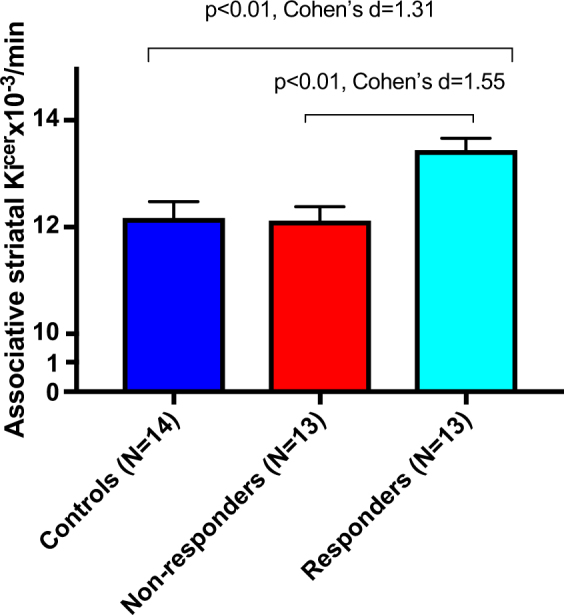
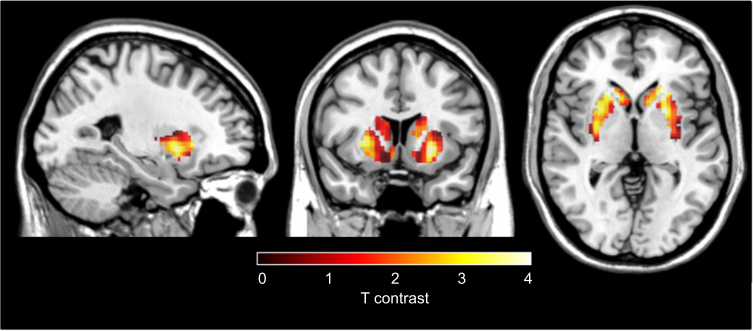
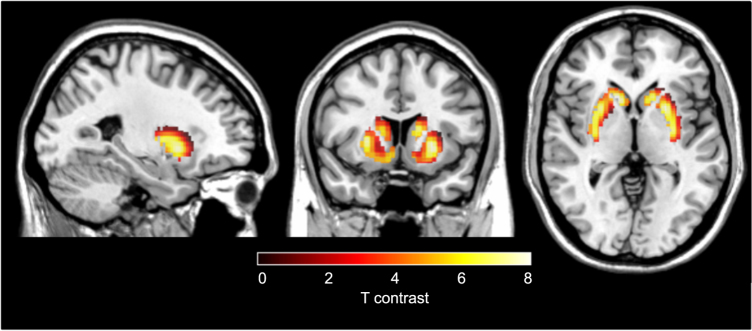
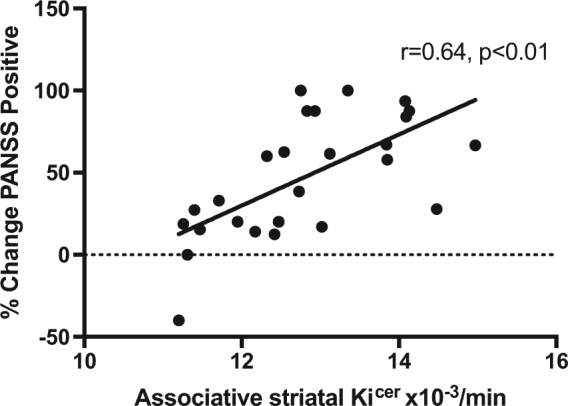
Psychotic illnesses show variable responses to treatment. Determining the neurobiology underlying this is important for precision medicine and the development of better treatments. It has been proposed that dopaminergic differences underlie variation in response, with striatal dopamine synthesis capacity (DSC) elevated in responders and unaltered in non-responders. We therefore aimed to test this in a prospective cohort, with a nested case-control comparison. 40 volunteers (26 patients with first-episode psychosis and 14 controls) received an 18 F-DOPA Positron Emission Tomography scan to measure DSC (Ki cer ) prior to antipsychotic treatment. Clinical assessments (Positive and Negative Syndrome Scale, PANSS, and Global Assessment of Functioning, GAF) occurred at baseline and following antipsychotic treatment for a minimum of 4 weeks. Response was defined using improvement in PANSS Total score of >50%. Patients were followed up for at least 6 months, and remission criteria applied. There was a significant effect of group on Ki cer in associative striatum (F (2, 37) = 7.9, p = 0.001). Ki cer was significantly higher in responders compared with non-responders (Cohen’s d = 1.55, p = 0.01) and controls (Cohen’s d = 1.31, p = 0.02). Ki cer showed significant positive correlations with improvements in PANSS-positive ( r = 0.64, p < 0.01), PANSS negative (rho = 0.51, p = 0.01), and PANSS total (rho = 0.63, p < 0.01) ratings and a negative relationship with change in GAF ( r = −0.55, p < 0.01). Clinical response is related to baseline striatal dopaminergic function. Differences in dopaminergic function between responders and non-responders are present at first episode of psychosis, consistent with dopaminergic and non-dopaminergic sub-types in psychosis, and potentially indicating a neurochemical basis to stratify psychosis.
Overview
The claims and statistics of this paper haven’t been checked yet.
Free: it reads the open-access text and checks the first 5 claims that cite a source we can check. Create a free account to check every claim.
Integrity signals
Registry
Cites
Statistics
Figures
Verification
Claims the paper makes
The claims and statistics of this paper haven’t been checked yet.
Free: it reads the open-access text and checks the first 5 claims that cite a source we can check. Create a free account to check every claim.
Claims other papers make about this one
Each is checked against this paper’s own text: does it say what the citing paper says it does?
The source backs part of the claim, not all of it — or backs it for a different population, condition or comparison.
In the citing paper
“When compared using equivalent scanners, patients with psychosis have higher striatal dopamine synthesis capacity than CHR subjects(67).”
From Aberrant Salience, Information Processing, and Dopaminergic Signaling in People at Clinical High Risk for Psychosis (2020) · cites this paper as [67]
Experimental — accuracy not yet measured
Self-check
Percentages, sums and reported differences re-computed from the paper’s own numbers.
The self-check needs the paper’s full text.
Citations
Cites
Diagnostic and Statistical Manual of Mental Disorders
Williams, J. B. W., & First, M. (2013) · Encyclopedia of Social Work · doi:10.1093/acrefore/9780199975839.013.104 · Cited by 109,519
The Positive and Negative Syndrome Scale (PANSS) for schizophrenia.
Kay, S. R., Fiszbein, A., & Opler, L. A. (1987) · Schizophrenia Bulletin · doi:10.1093/schbul/13.2.261 · Cited by 21,378 · cited 1×
“Clinical measures were rated at baseline and follow-up using the Positive and Negative Syndrome Scale (PANSS) [26], Global Assessment of Functioning (GAF) [27], and Clinical Global Impression Improvement scale (CGI-I) [28].”
MethodThe clinical global impressions scale: applying a research tool in clinical practice.
Busner, J., & Targum, S. D. (2007) · PubMed Central · Cited by 2,813
Remission in Schizophrenia: Proposed Criteria and Rationale for Consensus
Andreasen, N. C., Carpenter, W. T., Kane, J. M., Lasser, R. A., Marder, S. R., & Weinberger, D. R. (2005) · American Journal of Psychiatry · doi:10.1176/appi.ajp.162.3.441 · Cited by 2,343 · cited 1×
“[34] remission criteria at 6 months to ascertain remission/ non-remission status.”
BackgroundLaruelle, M., Abi-Dargham, A., van Dyck, C. H., Gil, R., D'Souza, C. D., Erdos, J., McCance, E., Rosenblatt, W., Fingado, C., Zoghbi, S. S., et al. (1996) · Proceedings of the National Academy of Sciences · doi:10.1073/pnas.93.17.9235 · Cited by 1,291
LEUCHT, S., KANE, J., KISSLING, W., HAMANN, J., ETSCHEL, E., & ENGEL, R. (2005) · Schizophrenia Research · doi:10.1016/j.schres.2005.04.008 · Cited by 1,226 · cited 1×
““much improved”, respectively) corresponds to clinically significant improvement [32, 33].”
BackgroundHowes, O. D., McCutcheon, R., Agid, O., de Bartolomeis, A., van Beveren, N. J. M., Birnbaum, M. L., Bloomfield, M. A. P., Bressan, R. A., Buchanan, R. W., Carpenter, W. T., et al. (2017) · American Journal of Psychiatry · doi:10.1176/appi.ajp.2016.16050503 · Cited by 1,132 · cited 1×
“were required to have taken at least 80% of prescribed doses, in line with recommendations [36].”
ResultSelf-citationKapur, S., Zipursky, R., Jones, C., Remington, G., & Houle, S. (2000) · American Journal of Psychiatry · doi:10.1176/appi.ajp.157.4.514 · Cited by 1,090 · cited 2×
“Taken with previous molecular imaging studies showing dopamine D2/3 receptor occupancy by antipsychotics is required for therapeutic response [33, 50], our findings indicate D2/3 receptor blockade is acting to oppose the consequences of presynaptic dopamine dysfunction [51].”
BackgroundResultSelf-citationKahn, R. S., Fleischhacker, W. W., Boter, H., Davidson, M., Vergouwe, Y., Keet, I. P., Gheorghe, M. D., Rybakowski, J. K., Galderisi, S., Libiger, J., et al. (2008) · The Lancet · doi:10.1016/s0140-6736(08)60486-9 · Cited by 1,088 · cited 2×
“[22, 23], including in first-episode psychosis [24].”
BackgroundIncreased baseline occupancy of D 2 receptors by dopamine in schizophrenia
Abi-Dargham, A., Rodenhiser, J., Printz, D., Zea-Ponce, Y., Gil, R., Kegeles, L. S., Weiss, R., Cooper, T. B., Mann, J. J., Van Heertum, R. L., et al. (2000) · Proceedings of the National Academy of Sciences · doi:10.1073/pnas.97.14.8104 · Cited by 1,020 · cited 2×
“and greater synaptic dopamine levels are linked to greater subsequent improvement in psychotic symptoms [15].”
BackgroundInfluentialHowes, O. D., Kambeitz, J., Kim, E., Stahl, D., Slifstein, M., Abi-Dargham, A., & Kapur, S. (2012) · Archives of General Psychiatry · doi:10.1001/archgenpsychiatry.2012.169 · Cited by 967 · cited 1×
“A meta-analysis of more than twenty molecular imaging studies showed both striatal dopamine synthesis capacity (DSC) and release are elevated in schizophrenia [4].”
BackgroundSelf-citationAndreasen, N. C., Pressler, M., Nopoulos, P., Miller, D., & Ho, B.-C. (2010) · Biological Psychiatry · doi:10.1016/j.biopsych.2009.08.040 · Cited by 943 · cited 1×
“Chlorpromazine-equivalent dose years were calculated for prior antipsychotic exposure (using the method described in [21]).”
MethodSchizophrenia: an integrated sociodevelopmental-cognitive model
Howes, O. D., & Murray, R. M. (2014) · The Lancet · doi:10.1016/s0140-6736(13)62036-x · Cited by 864 · cited 1×
“Taken with previous molecular imaging studies showing dopamine D2/3 receptor occupancy by antipsychotics is required for therapeutic response [33, 50], our findings indicate D2/3 receptor blockade is acting to oppose the consequences of presynaptic dopamine dysfunction [51].”
Self-citationElevated Striatal Dopamine Function Linked to Prodromal Signs of Schizophrenia
Howes, O. D., Montgomery, A. J., Asselin, M.-C., Murray, R. M., Valli, I., Tabraham, P., Bramon-Bosch, E., Valmaggia, L., Johns, L., Broome, M., et al. (2009) · Archives of General Psychiatry · doi:10.1001/archgenpsychiatry.2008.514 · Cited by 744 · cited 1×
“SPM8 [40] was used to automatically normalize a tracer-specific template [41, 42] together with functional striatal ROI [43] and the reference region (the cerebellum) to each individual PET summation realigned image.”
MethodSelf-citationPenttilä, M., Jääskeläinen, E., Hirvonen, N., Isohanni, M., & Miettunen, J. (2014) · British Journal of Psychiatry · doi:10.1192/bjp.bp.113.127753 · Cited by 716 · cited 1×
“The duration of illness was calculated from the onset of the first psychotic symptoms as previously described [29, 30].”
MethodMartinez, D., Slifstein, M., Broft, A., Mawlawi, O., Hwang, D.-R., Huang, Y., Cooper, T., Kegeles, L., Zarahn, E., Abi-Dargham, A., et al. (2003) · Journal of Cerebral Blood Flow & Metabolism · doi:10.1097/01.wcb.0000048520.34839.1a · Cited by 569 · cited 3×
“This method has been shown to have good reliability for measuring Kicer (intra-class correlation coefficients >0.85 for striatal ROIs) [41].”
MethodInfluentialIncreased Synaptic Dopamine Function in Associative Regions of the Striatum in Schizophrenia
Kegeles, L. S., Abi-Dargham, A., Frankle, W. G., Gil, R., Cooper, T. B., Slifstein, M., Hwang, D.-R., Huang, Y., Haber, S. N., & Laruelle, M. (2010) · Archives of General Psychiatry · doi:10.1001/archgenpsychiatry.2010.10 · Cited by 565 · cited 1×
“We focused on the associative striatum as the studies in chronic patients indicate that this is the main locus of dopaminergic alterations in psychosis [16], and for differentiating responders/non-responders [12].”
BackgroundAcute and chronic haloperidol treatment: Comparison of effects on nigral dopaminergic cell activity
Bunney, B. S., & Grace, A. A. (1978) · Life Sciences · doi:10.1016/0024-3205(78)90471-x · Cited by 549 · cited 1×
“synaptic dopamine synthesis [53, 54], but chronic use leads to reduced dopamine neuron firing, which could be expec-”
BackgroundStructured Clinical Interview for the DSM ( SCID )
First, M. B. (2015) · The Encyclopedia of Clinical Psychology · doi:10.1002/9781118625392.wbecp351 · Cited by 532
Delayed-Onset Hypothesis of Antipsychotic Action: A Hypothesis Tested and Rejected
Agid, O., Kapur, S., Arenovich, T., & Zipursky, R. B. (2003) · Archives of General Psychiatry · doi:10.1001/archpsyc.60.12.1228 · Cited by 408 · cited 1×
“[22, 23], including in first-episode psychosis [24].”
Self-citationThe social and economic burden of treatment-resistant schizophrenia: a systematic literature review
Kennedy, J. L., Altar, C. A., Taylor, D. L., Degtiar, I., & Hornberger, J. C. (2014) · International Clinical Psychopharmacology · doi:10.1097/yic.0b013e32836508e6 · Cited by 392 · cited 1×
“Poor therapeutic response is associated with worse functional outcomes, higher healthcare costs, and increased suicide risk [3].”
BackgroundDose Equivalents for Second-Generation Antipsychotics: The Minimum Effective Dose Method
Leucht, S., Samara, M., Heres, S., Patel, M. X., Woods, S. W., & Davis, J. M. (2014) · Schizophrenia Bulletin · doi:10.1093/schbul/sbu001 · Cited by 372 · cited 1×
“[37] and the Maudsley Prescribing Guidelines,”
Dopamine Synthesis Capacity Before Onset of Psychosis: A Prospective [ 18 F]-DOPA PET Imaging Study
Howes, O. D., Bose, S. K., Turkheimer, F., Valli, I., Egerton, A., Valmaggia, L. R., Murray, R. M., & McGuire, P. (2011) · American Journal of Psychiatry · doi:10.1176/appi.ajp.2011.11010160 · Cited by 343 · cited 1×
“people at clinical high risk for psychosis [8, 9], and is specific to the later development of psychosis [8, 10], progressively increasing over the prodromal period [10], suggesting it is”
BackgroundSelf-citationElevated dopa decarboxylase activity in living brain of patients with psychosis
Reith, J., Benkelfat, C., Sherwin, A., Yasuhara, Y., Kuwabara, H., Andermann, F., Bachneff, S., Cumming, P., Diksic, M., & Dyve, S. E. (1994) · Proceedings of the National Academy of Sciences · doi:10.1073/pnas.91.24.11651 · Cited by 342 · cited 1×
“and previous studies have not detected differences in psychotic disorders [59, 60].”
ResultLinking the PANSS, BPRS, and CGI: Clinical Implications
Leucht, S., Kane, J. M., Etschel, E., Kissling, W., Hamann, J., & Engel, R. R. (2006) · Neuropsychopharmacology · doi:10.1038/sj.npp.1301147 · Cited by 333 · cited 1×
“Our measure for defining response has good clinical validity [52], and was reinforced by finding similar results using other outcomes.”
ResultAntipsychotic Treatment and Functional Connectivity of the Striatum in First-Episode Schizophrenia
Sarpal, D. K., Robinson, D. G., Lencz, T., Argyelan, M., Ikuta, T., Karlsgodt, K., Gallego, J. A., Kane, J. M., Szeszko, P. R., & Malhotra, A. K. (2015) · JAMA Psychiatry · doi:10.1001/jamapsychiatry.2014.1734 · Cited by 327
Dopamine Synthesis Capacity in Patients With Treatment-Resistant Schizophrenia
Demjaha, A., Murray, R. M., McGuire, P. K., Kapur, S., & Howes, O. D. (2012) · American Journal of Psychiatry · doi:10.1176/appi.ajp.2012.12010144 · Cited by 325 · cited 2×
“dopamine synthesis capacity relative to controls [12, 13].”
BackgroundSelf-citationLally, J., Ajnakina, O., Di Forti, M., Trotta, A., Demjaha, A., Kolliakou, A., Mondelli, V., Reis Marques, T., Pariante, C., Dazzan, P., et al. (2016) · Psychological Medicine · doi:10.1017/s0033291716002014 · Cited by 298 · cited 1×
“A significant proportion of people with schizophrenia and other psychotic disorders show poor response to antipsychotic treatment from illness onset [1, 2].”
BackgroundSelf-citationHowes, O., Bose, S., Turkheimer, F., Valli, I., Egerton, A., Stahl, D., Valmaggia, L., Allen, P., Murray, R., & McGuire, P. (2011) · Molecular Psychiatry · doi:10.1038/mp.2011.20 · Cited by 292 · cited 1×
“people at clinical high risk for psychosis [8, 9], and is specific to the later development of psychosis [8, 10], progressively increasing over the prodromal period [10], suggesting it is”
BackgroundSelf-citationThe Maudsley Prescribing Guidelines in Psychiatry (Full-Text Access)
(2025) · The Maudsley Prescribing Guidelines in Psychiatry · doi:10.1002/9781119870203.mpg016 · Cited by 290
Increased stress-induced dopamine release in psychosis
Mizrahi, R., Addington, J., Rusjan, P. M., Suridjan, I., Ng, A., Boileau, I., Pruessner, J. C., Remington, G., Houle, S., & Wilson, A. A. (2012) · Biological Psychiatry · doi:10.1016/j.biopsych.2011.10.009 · Cited by 277
Fornito, A., Yoon, J., Zalesky, A., Bullmore, E. T., & Carter, C. S. (2011) · Biological Psychiatry · doi:10.1016/j.biopsych.2011.02.019 · Cited by 277
Dopamine blockade and clinical response: evidence for two biological subgroups of schizophrenia
(1989) · American Journal of Psychiatry · doi:10.1176/ajp.146.7.905 · Cited by 258
Kerr, I. B. (2005) · Psychiatry · doi:10.1383/psyt.4.5.28.65105 · Cited by 256
Egerton, A., Chaddock, C. A., Winton-Brown, T. T., Bloomfield, M. A. P., Bhattacharyya, S., Allen, P., McGuire, P. K., & Howes, O. D. (2013) · Biological Psychiatry · doi:10.1016/j.biopsych.2012.11.017 · Cited by 253 · cited 1×
“people at clinical high risk for psychosis [8, 9], and is specific to the later development of psychosis [8, 10], progressively increasing over the prodromal period [10], suggesting it is”
BackgroundSelf-citationDepressive symptoms and presynaptic dopamine function in neuroleptic-naive schizophrenia
Hietala, J., Syvälahti, E., Vilkman, H., Vuorio, K., Räkköläinen, V., Bergman, J., Haaparanta, M., Solin, O., Kuoppamäki, M., Eronen, E., et al. (1999) · Schizophrenia Research · doi:10.1016/s0920-9964(98)00113-3 · Cited by 243 · cited 1×
“This findings has also been seen in first-episode patients with affective, as well as schizophreniform psychoses [5-7].”
ResultHowes, O., Egerton, A., Allan, V., McGuire, P., Stokes, P., & Kapur, S. (2009) · Current Pharmaceutical Design · doi:10.2174/138161209788957528 · Cited by 239 · cited 1×
“Our findings that antipsychotic treatment response in psychosis is related to pre-existing presynaptic dopamine function provides an explanation for the effectiveness of antipsychotics, which antagonize dopamine receptors [64], and their ineffectiveness in the non-responders, who did not show marked dopaminergic dysfu…”
ResultSelf-citationLeucht, S., Davis, J. M., Engel, R. R., Kissling, W., & Kane, J. M. (2009) · Acta Psychiatrica Scandinavica · doi:10.1111/j.1600-0447.2008.01308.x · Cited by 235 · cited 2×
“Our primary definition of response was a total PANSS reduction of ≥50% at the initial follow-up [31].”
BackgroundMethodJauhar, S., Nour, M. M., Veronese, M., Rogdaki, M., Bonoldi, I., Azis, M., Turkheimer, F., McGuire, P., Young, A. H., & Howes, O. D. (2017) · JAMA Psychiatry · doi:10.1001/jamapsychiatry.2017.2943 · Cited by 233 · cited 2×
“This findings has also been seen in first-episode patients with affective, as well as schizophreniform psychoses [5-7].”
ResultSelf-citationBaseline Striatal Functional Connectivity as a Predictor of Response to Antipsychotic Drug Treatment
Sarpal, D. K., Argyelan, M., Robinson, D. G., Szeszko, P. R., Karlsgodt, K. H., John, M., Weissman, N., Gallego, J. A., Kane, J. M., Lencz, T., et al. (2016) · American Journal of Psychiatry · doi:10.1176/appi.ajp.2015.14121571 · Cited by 212 · cited 1×
“Our study was in patients presenting with their first psychotic episode, and included patients with diagnoses of schizophrenia and bipolar affective disorder, in line with other first-episode studies [46, 7].”
ResultHowes, O. D., & Kapur, S. (2014) · British Journal of Psychiatry · doi:10.1192/bjp.bp.113.138578 · Cited by 203
Self-citationKinon, B. J., Chen, L., Ascher-Svanum, H., Stauffer, V. L., Kollack-Walker, S., Zhou, W., Kapur, S., & Kane, J. M. (2010) · Neuropsychopharmacology · doi:10.1038/npp.2009.164 · Cited by 182 · cited 1×
“[22, 23], including in first-episode psychosis [24].”
Self-citationHietala, J. (1994) · Archives of General Psychiatry · doi:10.1001/archpsyc.1994.03950020040004 · Cited by 175 · cited 1×
“This findings has also been seen in first-episode patients with affective, as well as schizophreniform psychoses [5-7].”
ResultKINON, B., CHEN, L., ASCHERSVANUM, H., STAUFFER, V, KOLLACKWALKER, S., SNIADECKI, J., & KANE, J. (2008) · Schizophrenia Research · doi:10.1016/j.schres.2008.02.021 · Cited by 162 · cited 1×
“thermore, non-response before four weeks is a strong predictor of subsequent non-response [25].”
BackgroundKumakura, Y., Cumming, P., Vernaleken, I., Buchholz, H.-G., Siessmeier, T., Heinz, A., Kienast, T., Bartenstein, P., & Gründer, G. (2007) · The Journal of Neuroscience · doi:10.1523/jneurosci.0805-07.2007 · Cited by 159 · cited 1×
“62], dopamine turnover is elevated in schizophrenia [63]”
BackgroundMeasurement of psychiatric treatment adherence
Sajatovic, M., Velligan, D. I., Weiden, P. J., Valenstein, M. A., & Ogedegbe, G. (2010) · Journal of Psychosomatic Research · doi:10.1016/j.jpsychores.2009.05.007 · Cited by 155 · cited 1×
“To assess antipsychotic concordance, we used a multisource approach, requiring evidence of adequate adherence on at least two of: antipsychotic levels in blood plasma, pharmacy and electronic medical dispensing records, reports from patients, and independent sources (a family member/carer or health care professional)…”
MethodLeucht, S., & Engel, R. R. (2006) · Neuropsychopharmacology · doi:10.1038/sj.npp.1300873 · Cited by 154
Kim, E., Howes, O. D., Veronese, M., Beck, K., Seo, S., Park, J. W., Lee, J. S., Lee, Y., & Kwon, J. S. (2016) · Neuropsychopharmacology · doi:10.1038/npp.2016.258 · Cited by 146 · cited 2×
“dopamine synthesis capacity relative to controls [12, 13].”
BackgroundSelf-citationPET Studies of Cerebral Levodopa Metabolism: A Review of Clinical Findings and Modeling Approaches
Kumakura, Y., & Cumming, P. (2009) · The Neuroscientist · doi:10.1177/1073858409338217 · Cited by 134 · cited 2×
“However, the reference region approach we used accounts for global differences in (18)F-DOPA delivery [60], and co-varying for tracer uptake in the cerebellum (SUV) did not change the results.”
MethodResultEgerton, A., Demjaha, A., McGuire, P., Mehta, M. A., & Howes, O. D. (2010) · NeuroImage · doi:10.1016/j.neuroimage.2009.12.058 · Cited by 134 · cited 1×
“SPM8 [40] was used to automatically normalize a tracer-specific template [41, 42] together with functional striatal ROI [43] and the reference region (the cerebellum) to each individual PET summation realigned image.”
MethodSelf-citationGründer, G., Vernaleken, I., Müller, M. J., Davids, E., Heydari, N., Buchholz, H., Bartenstein, P., Munk, O. L., Stoeter, P., Wong, D. F., et al. (2002) · Neuropsychopharmacology · doi:10.1038/sj.npp.1300103 · Cited by 115 · cited 1×
“approximately 5 weeks of haloperidol treatment [57].”
Diagnostic change 10 years after a first episode of psychosis
Heslin, M., Lomas, B., Lappin, J. M., Donoghue, K., Reininghaus, U., Onyejiaka, A., Croudace, T., Jones, P. B., Murray, R. M., Fearon, P., et al. (2015) · Psychological Medicine · doi:10.1017/s0033291715000720 · Cited by 93 · cited 1×
“Nevertheless, it is important to recognize that diagnoses can change over the first few years of illness [58] and further follow-up of our sample is required to determine the final diagnoses and if findings are specific to particular psychotic disorders.”
BackgroundPharmacokinetics of Plasma 6-[18F]Fluoro-l-3,4-Dihydroxyphenylalanine ([18F]FDOPA) in Humans
Cumming, P., Léger, G. C., Kuwabara, H., & Gjedde, A. (1993) · Journal of Cerebral Blood Flow & Metabolism · doi:10.1038/jcbfm.1993.85 · Cited by 83 · cited 1×
“One hour before the scan participants received 400 mg entacapone, a peripheral catechol-omethyl-transferase inhibitor, and 150 mg carbidopa, a peripheral aromatic acid decarboxylase inhibitor, to prevent formation of radiolabeled metabolites that may cross the blood–brain barrier [38].”
BackgroundVernaleken, I., Kumakura, Y., Cumming, P. D., Buchholz, H., Siessmeier, T., Stoeter, P., Müller, M. J., Bartenstein, P., & Gründer, G. (2006) · NeuroImage · doi:10.1016/j.neuroimage.2005.11.014 · Cited by 76 · cited 1×
“antipsychotics on DSC in healthy volunteers are inconsistent [55, 56].”
BackgroundStauffer, V. L., Case, M. G., Kinon, B. J., Conley, R. R., Ascher‐Svanum, H., Kollack‐Walker, S., Kane, J. M., McEvoy, J. P., & Lieberman, J. A. (2010) · Psychiatry Research · doi:10.1016/j.psychres.2010.11.017 · Cited by 72 · cited 1×
“A significant proportion of people with schizophrenia and other psychotic disorders show poor response to antipsychotic treatment from illness onset [1, 2].”
BackgroundSarpal, D. K., Robinson, D. G., Fales, C. L., Lencz, T., Árgyelán, M., Karlsgodt, K. H., Gallego, J. A., John, M., Kane, J. M., Szeszko, P. R., et al. (2017) · Neuropsychopharmacology · doi:10.1038/npp.2017.55 · Cited by 67 · cited 1×
“The duration of illness was calculated from the onset of the first psychotic symptoms as previously described [29, 30].”
MethodRoberts, R. C., Roche, J. K., Conley, R. R., & Lahti, A. C. (2009) · Synapse · doi:10.1002/syn.20623 · Cited by 64 · cited 1×
“found elevated levels in responders and no elevation in treatment non-responders [14].”
BackgroundRegulation of dopaminergic function: an [18F]-DOPA PET apomorphine challenge study in humans.
Jauhar, S., Veronese, M., Rogdaki, M., Bloomfield, M., Natesan, S., Turkheimer, F., Kapur, S., & Howes, O. D. (2017) · Translational Psychiatry · doi:10.1038/tp.2016.270 · Cited by 61 · cited 1×
“Our primary endpoint was the striatal influx constant (Ki, written as Ki in previous publications [39]) in the associative striatum.”
BackgroundSelf-citationLeucht, S., Winter-van Rossum, I., Heres, S., Arango, C., Fleischhacker, W. W., Glenthoj, B., Leboyer, M., Leweke, F. M., Lewis, S., McGuire, P., et al. (2015) · Schizophrenia Bulletin · doi:10.1093/schbul/sbv019 · Cited by 60
Self-citationIto, H., Takano, H., Takahashi, H., Arakawa, R., Miyoshi, M., Kodaka, F., Okumura, M., Otsuka, T., & Suhara, T. (2009) · The Journal of Neuroscience · doi:10.1523/jneurosci.4172-09.2009 · Cited by 42 · cited 1×
“antipsychotics on DSC in healthy volunteers are inconsistent [55, 56].”
BackgroundWulff, S., Pinborg, L. H., Svarer, C., Jensen, L. T., Nielsen, M. Ø., Allerup, P., Bak, N. K., Rasmussen, H., Frandsen, E., Rostrup, E., et al. (2015) · Schizophrenia Bulletin · doi:10.1093/schbul/sbu220 · Cited by 40 · cited 2×
“These findings also extend other recent evidence that response to antipsychotic treatment in first-episode patients is related to alterations in striatal functional connectivity [45–47], and lower baseline striatal D2/3 receptor availability between responders and non-responders [48].”
ResultLawrie, S. M., Ingle, G. T., Santosh, C., Rogers, A. C., Rimmington, J. E., Naidu, K. P., Best, J. J. K., O’Carroll, R. E., Goodwin, G. M., Ebmeier, K. P., et al. (1995) · The British Journal of Psychiatry · doi:10.1192/bjp.167.2.202 · Cited by 39
Acute neuroleptic stimulates DOPA decarboxylase in porcine brain in vivo
Danielsen, E. H., Smith, D., Hermansen, F., Gjedde, A., & Cumming, P. (2001) · Synapse · doi:10.1002/syn.1071 · Cited by 33 · cited 2×
“synaptic dopamine nerve terminals [54].”
BackgroundDelayed onset hypothesis of antipsychotic action — a hypothesis tested and rejected
Agid, O., Kapur, S., Arenovich, T., & Zipursky, R. B. (2003) · Schizophrenia Research · doi:10.1016/s0920-9964(03)80242-6 · Cited by 25
Self-citation
Research works printed but not linked: 1
- Taylor D Paton C Kapur S The Maudsley Prescribing Guidelines in Psychiatry 2012 11th Edition West Sussex Wiley-Blackwell: Chichester
Cited by
Dopamine and glutamate in schizophrenia: biology, symptoms and treatment
McCutcheon, R. A., Krystal, J. H., & Howes, O. D. (2020) · World Psychiatry · doi:10.1002/wps.20693 · Cited by 612
Self-citationBarnes, T. R., Drake, R., Paton, C., Cooper, S. J., Deakin, B., Ferrier, I. N., Gregory, C. J., Haddad, P. M., Howes, O. D., Jones, I., et al. (2020) · Journal of Psychopharmacology · doi:10.1177/0269881119889296 · Cited by 606
Self-citationCandidate biomarkers in psychiatric disorders: state of the field
Abi‐Dargham, A., Moeller, S. J., Ali, F., DeLorenzo, C., Domschke, K., Horga, G., Jutla, A., Kotov, R., Paulus, M. P., Rubio, J. M., et al. (2023) · World Psychiatry · doi:10.1002/wps.21078 · Cited by 372
Potkin, S. G., Kane, J. M., Correll, C. U., Lindenmayer, J.-P., Agid, O., Marder, S. R., Olfson, M., & Howes, O. D. (2020) · npj Schizophrenia · doi:10.1038/s41537-019-0090-z · Cited by 359
“schizophrenia relative to patients with TRS, who, in turn, have a dopamine synthesis capacity similar to healthy controls.(24,53,55) Dopamine synthesis capacity in the striatum has been shown to be lower in patients with TRS who are clozapine-responsive compared with healthy controls or patients without TRS.”
BackgroundSelf-citationHowes, O. D., & Shatalina, E. (2022) · Biological Psychiatry · doi:10.1016/j.biopsych.2022.06.017 · Cited by 256
Self-citation
Metadata
- Authors
- Jauhar, S., Veronese, M., Nour, M. M., Rogdaki, M., Hathway, P., Turkheimer, F. E., Stone, J., Egerton, A., McGuire, P., Kapur, S., & Howes, O. D.
- Affiliations
- King's College London (GB)
- Corresponding author
- Howes, Oliver D
- ORCID
- Venue
- Molecular Psychiatry
- Published
- 2018-04-20
- Volume
- 24
- Issue
- 10
- Pages
- 1502-1512
- ISSN
- 1359-4184 (ISSN-L)
- 1476-5578
- PMC
- PMC6331038
- OpenAlex
- W2799407405
- Cited by
- 183
- References
- 68
- Citations by year
- 2026: 12 · 2025: 22 · 2024: 24 · 2023: 13 · 2022: 29 · 2021: 37 · 2020: 16 · 2019: 24 · 2018: 6
- FWCI
- 16.33
- Type
- journal article
- Language
- en
- Open access
- hybrid
- doi.org
- Licence
- cc-by
- creativecommons.org/licenses/by/4.0 (tdm)
- Locations
- Molecular Psychiatry (publishedVersion, cc-by)
- PubMed Central (publishedVersion, cc-by)
- PubMed (publishedVersion)
- Minerva Access (University of Melbourne) (submittedVersion, cc-by)
- Research Portal (King's College London) (submittedVersion, cc-by)
- UCL Discovery (University College London) (submittedVersion)
- Padua Research Archive (University of Padova) (submittedVersion, cc-by)
- Funders
- Eli Lilly and Company
- Pfizer
- AstraZeneca
- GlaxoSmithKline
- Wellcome Trust (094849, 094849/Z/10/Z)
- Maudsley Charity
- NIHR Biomedical Research Centre, Royal Marsden NHS Foundation Trust/Institute of Cancer Research
- National Institute for Health and Care Research (ACF-2016-17-005)
- King's College London
- Servier
- H. Lundbeck A/S
- Medical Research Council (MC- A656-5QD30, MR/N026063/1)
- Cilag
- Topics
- Health Sciences › Medicine › Psychiatry and Mental health › Schizophrenia research and treatment
- Life Sciences › Neuroscience › Cellular and Molecular Neuroscience › Neurotransmitter Receptor Influence on Behavior
- Health Sciences › Medicine › Clinical Neurology › Parkinson's Disease Mechanisms and Treatments
- Keywords
- first-episode psychosis, treatment response, antipsychotic treatment response, 18F-DOPA PET, dopaminergic activity, striatum, positive and negative symptoms, functional outcome, precision medicine
- MeSH terms
- Adult, Corpus Striatum, Dihydroxyphenylalanine, Dopamine, Female, Humans, Male, Prospective Studies, Psychiatric Status Rating Scales, Psychotic Disorders, Antipsychotic Agents, Cohort Studies, Case-Control Studies, Treatment Outcome, Positron-Emission Tomography
About these checks
Registry, retraction, Cites and statistics results are computed, not judged, with one exception: a printed reference that no index lists is read once by a model before it counts as a citation error. Claims are extracted by a model and kept only when their quote appears verbatim in the text; each cited source is then checked, with a model’s help, for whether it says what the claim relies on. Those verdicts can be wrong — read the claim’s quote and the cited source before relying on one.
Statistics and arithmetic are recomputed, not judged.
Confidence bands are shown only for fields calibrated on our annotated test set. None is calibrated yet, so no band is shown.
What counts as a claim ›How we measure confidence ›How we check this ›
Are you an author, or do you see a problem with this page? Request a review
Data sources
Bibliographic data: Semantic Scholar, OpenAlex, Crossref.
Contains information from the Semantic Scholar Academic Graph Datasets, made available under the ODC Attribution License (ODC-BY 1.0).
Semantic Scholar’s data is described in: Kinney, R., et al. (2023). The Semantic Scholar Open Data Platform. arXiv:2301.10140.
