

Determinants of treatment response in first-episode psychosis: an 18F-DOPA PET study
Open accessThe DOI matches its Crossref record; 64 of the 68 references it cites were found in a registry or an index.
Abstract
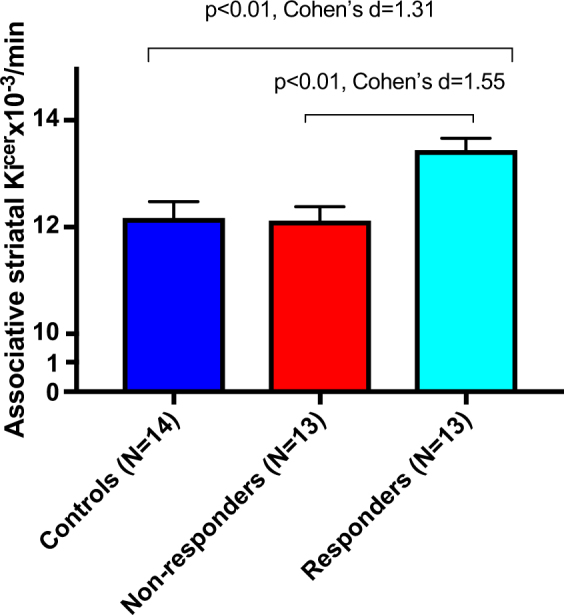
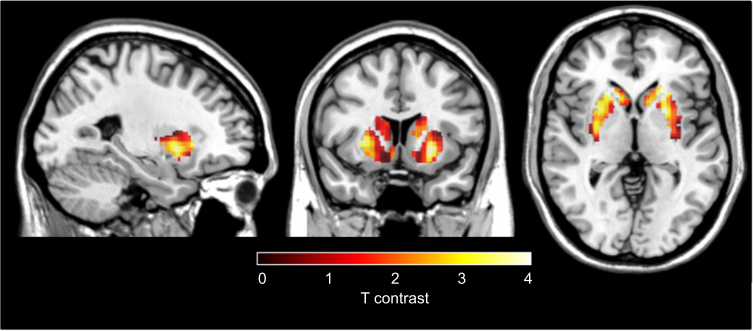
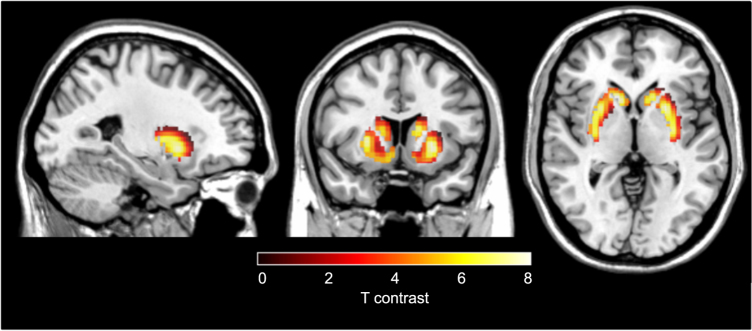
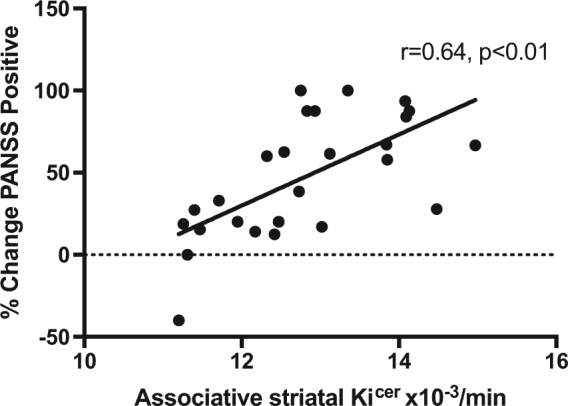
Psychotic illnesses show variable responses to treatment. Determining the neurobiology underlying this is important for precision medicine and the development of better treatments. It has been proposed that dopaminergic differences underlie variation in response, with striatal dopamine synthesis capacity (DSC) elevated in responders and unaltered in non-responders. We therefore aimed to test this in a prospective cohort, with a nested case-control comparison. 40 volunteers (26 patients with first-episode psychosis and 14 controls) received an 18 F-DOPA Positron Emission Tomography scan to measure DSC (Ki cer ) prior to antipsychotic treatment. Clinical assessments (Positive and Negative Syndrome Scale, PANSS, and Global Assessment of Functioning, GAF) occurred at baseline and following antipsychotic treatment for a minimum of 4 weeks. Response was defined using improvement in PANSS Total score of >50%. Patients were followed up for at least 6 months, and remission criteria applied. There was a significant effect of group on Ki cer in associative striatum (F (2, 37) = 7.9, p = 0.001). Ki cer was significantly higher in responders compared with non-responders (Cohen’s d = 1.55, p = 0.01) and controls (Cohen’s d = 1.31, p = 0.02). Ki cer showed significant positive correlations with improvements in PANSS-positive ( r = 0.64, p < 0.01), PANSS negative (rho = 0.51, p = 0.01), and PANSS total (rho = 0.63, p < 0.01) ratings and a negative relationship with change in GAF ( r = −0.55, p < 0.01). Clinical response is related to baseline striatal dopaminergic function. Differences in dopaminergic function between responders and non-responders are present at first episode of psychosis, consistent with dopaminergic and non-dopaminergic sub-types in psychosis, and potentially indicating a neurochemical basis to stratify psychosis.
Overview
The claims and statistics of this paper haven’t been checked yet.
Free: it reads the open-access text and checks the first 5 claims that cite a source we can check. Create a free account to check every claim.
Integrity signals
Registry
Cites
Statistics
Figures
Verification
Claims the paper makes
The claims and statistics of this paper haven’t been checked yet.
Free: it reads the open-access text and checks the first 5 claims that cite a source we can check. Create a free account to check every claim.
Claims other papers make about this one
Each is checked against this paper’s own text: does it say what the citing paper says it does?
The source backs part of the claim, not all of it — or backs it for a different population, condition or comparison.
In the citing paper
“When compared using equivalent scanners, patients with psychosis have higher striatal dopamine synthesis capacity than CHR subjects(67).”
From Aberrant Salience, Information Processing, and Dopaminergic Signaling in People at Clinical High Risk for Psychosis (2020) · cites this paper as [67]
Experimental — accuracy not yet measured
Self-check
Percentages, sums and reported differences re-computed from the paper’s own numbers.
The self-check needs the paper’s full text.
Citations
Cites
Diagnostic and Statistical Manual of Mental Disorders
Williams, J. B. W., & First, M. (2013) · Encyclopedia of Social Work · doi:10.1093/acrefore/9780199975839.013.104 · Cited by 109,519
The Positive and Negative Syndrome Scale (PANSS) for schizophrenia.
Kay, S. R., Fiszbein, A., & Opler, L. A. (1987) · Schizophrenia Bulletin · doi:10.1093/schbul/13.2.261 · Cited by 21,378 · cited 1×
“Clinical measures were rated at baseline and follow-up using the Positive and Negative Syndrome Scale (PANSS) [26], Global Assessment of Functioning (GAF) [27], and Clinical Global Impression Improvement scale (CGI-I) [28].”
MethodThe clinical global impressions scale: applying a research tool in clinical practice.
Busner, J., & Targum, S. D. (2007) · PubMed Central · Cited by 2,817
Remission in Schizophrenia: Proposed Criteria and Rationale for Consensus
Andreasen, N. C., Carpenter, W. T., Kane, J. M., Lasser, R. A., Marder, S. R., & Weinberger, D. R. (2005) · American Journal of Psychiatry · doi:10.1176/appi.ajp.162.3.441 · Cited by 2,343 · cited 1×
“[34] remission criteria at 6 months to ascertain remission/ non-remission status.”
BackgroundLaruelle, M., Abi-Dargham, A., van Dyck, C. H., Gil, R., D'Souza, C. D., Erdos, J., McCance, E., Rosenblatt, W., Fingado, C., Zoghbi, S. S., et al. (1996) · Proceedings of the National Academy of Sciences · doi:10.1073/pnas.93.17.9235 · Cited by 1,291
LEUCHT, S., KANE, J., KISSLING, W., HAMANN, J., ETSCHEL, E., & ENGEL, R. (2005) · Schizophrenia Research · doi:10.1016/j.schres.2005.04.008 · Cited by 1,226 · cited 1×
““much improved”, respectively) corresponds to clinically significant improvement [32, 33].”
BackgroundHowes, O. D., McCutcheon, R., Agid, O., de Bartolomeis, A., van Beveren, N. J. M., Birnbaum, M. L., Bloomfield, M. A. P., Bressan, R. A., Buchanan, R. W., Carpenter, W. T., et al. (2017) · American Journal of Psychiatry · doi:10.1176/appi.ajp.2016.16050503 · Cited by 1,132 · cited 1×
“were required to have taken at least 80% of prescribed doses, in line with recommendations [36].”
ResultSelf-citationKapur, S., Zipursky, R., Jones, C., Remington, G., & Houle, S. (2000) · American Journal of Psychiatry · doi:10.1176/appi.ajp.157.4.514 · Cited by 1,090 · cited 2×
“Taken with previous molecular imaging studies showing dopamine D2/3 receptor occupancy by antipsychotics is required for therapeutic response [33, 50], our findings indicate D2/3 receptor blockade is acting to oppose the consequences of presynaptic dopamine dysfunction [51].”
BackgroundResultSelf-citationKahn, R. S., Fleischhacker, W. W., Boter, H., Davidson, M., Vergouwe, Y., Keet, I. P., Gheorghe, M. D., Rybakowski, J. K., Galderisi, S., Libiger, J., et al. (2008) · The Lancet · doi:10.1016/s0140-6736(08)60486-9 · Cited by 1,088 · cited 2×
“[22, 23], including in first-episode psychosis [24].”
BackgroundIncreased baseline occupancy of D 2 receptors by dopamine in schizophrenia
Abi-Dargham, A., Rodenhiser, J., Printz, D., Zea-Ponce, Y., Gil, R., Kegeles, L. S., Weiss, R., Cooper, T. B., Mann, J. J., Van Heertum, R. L., et al. (2000) · Proceedings of the National Academy of Sciences · doi:10.1073/pnas.97.14.8104 · Cited by 1,020 · cited 2×
“and greater synaptic dopamine levels are linked to greater subsequent improvement in psychotic symptoms [15].”
BackgroundInfluential
Research works printed but not linked: 1
- Taylor D Paton C Kapur S The Maudsley Prescribing Guidelines in Psychiatry 2012 11th Edition West Sussex Wiley-Blackwell: Chichester
Cited by
Dopamine and glutamate in schizophrenia: biology, symptoms and treatment
McCutcheon, R. A., Krystal, J. H., & Howes, O. D. (2020) · World Psychiatry · doi:10.1002/wps.20693 · Cited by 612
Self-citationBarnes, T. R., Drake, R., Paton, C., Cooper, S. J., Deakin, B., Ferrier, I. N., Gregory, C. J., Haddad, P. M., Howes, O. D., Jones, I., et al. (2020) · Journal of Psychopharmacology · doi:10.1177/0269881119889296 · Cited by 606
Self-citationCandidate biomarkers in psychiatric disorders: state of the field
Abi‐Dargham, A., Moeller, S. J., Ali, F., DeLorenzo, C., Domschke, K., Horga, G., Jutla, A., Kotov, R., Paulus, M. P., Rubio, J. M., et al. (2023) · World Psychiatry · doi:10.1002/wps.21078 · Cited by 372
Potkin, S. G., Kane, J. M., Correll, C. U., Lindenmayer, J.-P., Agid, O., Marder, S. R., Olfson, M., & Howes, O. D. (2020) · npj Schizophrenia · doi:10.1038/s41537-019-0090-z · Cited by 359
“schizophrenia relative to patients with TRS, who, in turn, have a dopamine synthesis capacity similar to healthy controls.(24,53,55) Dopamine synthesis capacity in the striatum has been shown to be lower in patients with TRS who are clozapine-responsive compared with healthy controls or patients without TRS.”
BackgroundSelf-citationHowes, O. D., & Shatalina, E. (2022) · Biological Psychiatry · doi:10.1016/j.biopsych.2022.06.017 · Cited by 256
Self-citationThe synaptic hypothesis of schizophrenia version III: a master mechanism
Howes, O. D., & Onwordi, E. C. (2023) · Molecular Psychiatry · doi:10.1038/s41380-023-02043-w · Cited by 234
Self-citationMolecular targets of atypical antipsychotics: From mechanism of action to clinical differences
Aringhieri, S., Carli, M., Kolachalam, S., Verdesca, V., Cini, E., Rossi, M., McCormick, P. J., Corsini, G. U., Maggio, R., & Scarselli, M. (2018) · Pharmacology & Therapeutics · doi:10.1016/j.pharmthera.2018.06.012 · Cited by 199
Keshavan, M. S., Collin, G., Guimond, S., Kelly, S., Prasad, K. M. R., & Lizano, P. L. (2019) · Neuroimaging Clinics of North America · doi:10.1016/j.nic.2019.09.007 · Cited by 193
Correll, C. U., Agid, O., Crespo-Facorro, B., de Bartolomeis, A., Fagiolini, A., Seppälä, N., & Howes, O. D. (2022) · CNS Drugs · doi:10.1007/s40263-022-00932-2 · Cited by 162
“Some data point to a sub-type of schizophrenia associated with TRS characterized by unaltered dopamine function [15–17], and glutamate dysregulation [18–20], which would explain why these patients do not respond to dopamine D2 blockers [21].”
BackgroundSelf-citationRubio, J. M., Schoretsanitis, G., John, M., Tiihonen, J., Taipale, H. T., Guinart, D., Malhotra, A. K., Correll, C. U., & Kane, J. M. (2020) · The Lancet Psychiatry · doi:10.1016/s2215-0366(20)30264-9 · Cited by 125
Mizuno, Y., McCutcheon, R. A., Brugger, S. P., & Howes, O. D. (2019) · Neuropsychopharmacology · doi:10.1038/s41386-019-0577-3 · Cited by 126
Self-citationJauhar, S., McCutcheon, R., Borgan, F., Veronese, M., Nour, M., Pepper, F., Rogdaki, M., Stone, J., Egerton, A., Turkheimer, F., et al. (2018) · The Lancet Psychiatry · doi:10.1016/s2215-0366(18)30268-2 · Cited by 114
Self-citationHeterogeneity of Striatal Dopamine Function in Schizophrenia: Meta-analysis of Variance
Brugger, S. P., Angelescu, I., Abi-Dargham, A., Mizrahi, R., Shahrezaei, V., & Howes, O. D. (2020) · Biological Psychiatry · doi:10.1016/j.biopsych.2019.07.008 · Cited by 114
Self-citationWada, M., Noda, Y., Iwata, Y., Tsugawa, S., Yoshida, K., Tani, H., Hirano, Y., Koike, S., Sasabayashi, D., Katayama, H., et al. (2022) · Molecular Psychiatry · doi:10.1038/s41380-022-01572-0 · Cited by 118
“Some studies showed that patients with TRS had lower striatal dopamine synthesis compared with patients with non-TRS [36, 37] or HCs [38], while others demonstrated that there was no difference between patients with TRS and non-TRS [39] or between patients with TRS and HCs [36, 37].”
ResultHowes, O. D., Hird, E. J., Adams, R. A., Corlett, P. R., & McGuire, P. (2020) · Biological Psychiatry · doi:10.1016/j.biopsych.2020.03.012 · Cited by 110
“W hen compared using equivalent scanners, patients with psychosis have higher striatal dopamine synthe sis capacity than CHR subjects(67).”
MethodSelf-citationMcCutcheon, R. A., Nour, M. M., Dahoun, T., Jauhar, S., Pepper, F., Expert, P., Veronese, M., Adams, R. A., Turkheimer, F., Mehta, M. A., et al. (2019) · Biological Psychiatry · doi:10.1016/j.biopsych.2018.09.010 · Cited by 104
Self-citationEgerton, A., Murphy, A., Donocik, J. G., Anton, A., Barker, G. J., Collier, T., Deakin, J. F. W., Drake, R., Eliasson, E. T., Emsley, R., et al. (2020) · Schizophrenia Bulletin · doi:10.1093/schbul/sbaa128 · Cited by 98
“20,21 In longitudinal studies, higher levels of striatal D 2 occupancy by dopamine 22,23 and striatal dopamine synthesis capacity 24 are associated with a greater response to antipsychotic treatment.”
InfluentialSelf-citationSchizophrenia: A Narrative Review of Etiopathogenetic, Diagnostic and Treatment Aspects
Orsolini, L., Pompili, S., & Volpe, U. (2022) · Journal of Clinical Medicine · doi:10.3390/jcm11175040 · Cited by 111
Halff, E. F., Rutigliano, G., Garcia-Hidalgo, A., & Howes, O. D. (2022) · Trends in Neurosciences · doi:10.1016/j.tins.2022.10.010 · Cited by 97
Self-citationVoineskos, A. N., Hawco, C. S., Neufeld, N. H., Turner, J. A., Ameis, S. H., Anticevic, A., Buchanan, R. W., Cadenhead, K. S., Dazzan, P., Dickie, E. W., et al. (2024) · World Psychiatry · doi:10.1002/wps.21159 · Cited by 94
Guan, F., Ni, T., Zhu, W., Williams, L. K., Cui, L., Li, M., Tubbs, J. D., Sham, P. C., & Gui, H. (2021) · Molecular Psychiatry · doi:10.1038/s41380-021-01201-2 · Cited by 83
Striatal Dopamine and Reward Prediction Error Signaling in Unmedicated Schizophrenia Patients
Katthagen, T., Kaminski, J., Heinz, A., Buchert, R., & Schlagenhauf, F. (2020) · Schizophrenia Bulletin · doi:10.1093/schbul/sbaa055 · Cited by 79
Jauhar, S., Veronese, M., Nour, M. M., Rogdaki, M., Hathway, P., Natesan, S., Turkheimer, F., Stone, J., Egerton, A., McGuire, P., et al. (2019) · Biological Psychiatry · doi:10.1016/j.biopsych.2018.07.003 · Cited by 75
“Data on the baseline scans for 18 patients reported here have been published in (16), and (53).”
Self-citationSpark, D. L., Fornito, A., Langmead, C. J., & Stewart, G. D. (2022) · Translational Psychiatry · doi:10.1038/s41398-022-01904-2 · Cited by 75
Avram, M., Brandl, F., Cabello, J., Leucht, C., Scherr, M., Mustafa, M., Leucht, S., Ziegler, S., & Sorg, C. (2019) · Brain · doi:10.1093/brain/awz093 · Cited by 70
The case for improved care and provision of treatment for people with first-episode mania
Jauhar, S., Ratheesh, A., Davey, C. G., Yatham, L. N., McGorry, P. D., McGuire, P. K., Berk, M., & Young, A. H. (2019) · The Lancet Psychiatry · doi:10.1016/s2215-0366(19)30082-3 · Cited by 73
Self-citationVeronese, M., Santangelo, B., Jauhar, S., D’Ambrosio, E., Demjaha, A., Salimbeni, H., Jin, H., McCrone, P., Turkheimer, F., & Howes, O. D. (2020) · Neuropsychopharmacology · doi:10.1038/s41386-020-00866-7 · Cited by 58
“These findings extend previous molecular imaging studies reporting presynaptic striatal dopamine measures are associated with treatment response [20, 25, 27, 28, 32] by showing the clinical potential of these approaches if used in clinical practice.”
BackgroundMethodResultInfluentialSelf-citationMcCutcheon, R. A., Pillinger, T., Efthimiou, O., Maslej, M. M., Mulsant, B. H., Young, A. H., Cipriani, A., & Howes, O. D. (2022) · World Psychiatry · doi:10.1002/wps.20977 · Cited by 57
Self-citationPsychotic disorders as a framework for precision psychiatry
Coutts, F., Koutsouleris, N., & McGuire, P. K. (2023) · Nature Reviews Neurology · doi:10.1038/s41582-023-00779-1 · Cited by 57
Self-citationWang, M., Barker, P. B., Cascella, N. G., Coughlin, J. M., Nestadt, G., Nucifora, F. C., Sedlak, T. W., Kelly, A., Younes, L., Geman, D., et al. (2023) · Molecular Psychiatry · doi:10.1038/s41380-023-01969-5 · Cited by 49
Treatment-resistant schizophrenia: How far have we traveled?
Pandey, A., & Kalita, K. N. (2022) · Frontiers in Psychiatry · doi:10.3389/fpsyt.2022.994425 · Cited by 49
Leucht, S., Chaimani, A., Krause, M., Schneider‐Thoma, J., Wang, D., Dong, S., Samara, M. T., Peter, N. L., Huhn, M., Priller, J., et al. (2022) · The Lancet Psychiatry · doi:10.1016/s2215-0366(22)00304-2 · Cited by 51
Bauman, M. D., Lesh, T. A., Rowland, D. J., Schumann, C. M., Smucny, J., Kukis, D. L., Cherry, S. R., McAllister, A. K., & Carter, C. S. (2019) · Translational Psychiatry · doi:10.1038/s41398-019-0449-y · Cited by 43
Yang, K., Longo, L., Narita, Z. C., Cascella, N. G., Nucifora, F. C., Coughlin, J. M., Nestadt, G., Sedlak, T. W., Mihaljevic, M. M., Wang, M., et al. (2021) · Molecular Psychiatry · doi:10.1038/s41380-021-01331-7 · Cited by 46
Cheng, C. P.-W., Chang, W. C., Lo, G. G., Chan, K. W. S., Lee, E. H. M., Hui, L. M. C., Suen, Y. N., Leung, Y. L., Yeung, K. M. P. A., Chen, S., et al. (2020) · Neuropsychopharmacology · doi:10.1038/s41386-020-0740-x · Cited by 41
Self-citationAvram, M., Brandl, F., Knolle, F., Cabello, J., Leucht, C., Scherr, M., Mustafa, M., Koutsouleris, N., Leucht, S., Ziegler, S. I., et al. (2020) · Brain · doi:10.1093/brain/awaa296 · Cited by 42
Merritt, K., Pérez‐Iglesias, R., Sendt, K.-V., Arvanitis, A., Jauhar, S., Pepper, F., Barker, G. J., Glenthoj, B. Y., Arango, C., Lewis, S. W., et al. (2019) · Schizophrenia · doi:10.1038/s41537-019-0080-1 · Cited by 39
Self-citationEgerton, A., Griffiths, K., Casetta, C., Deakin, J. F. W., Drake, R., Howes, O. D., Kassoumeri, L., Khan, S., Lankshear, S., Lees, J., et al. (2022) · Neuropsychopharmacology · doi:10.1038/s41386-022-01508-w · Cited by 40
“Gains in accuracy could also potentially be achieved by combining glutamate measures with other predictors of response, such as resting state activity [60], brain volumes [9], perfusion [61], striatal dopamine synthesis capacity [62], cognitive performance [63] and clinical or demographic predictors [41, 42, 64].”
BackgroundSelf-citationLeucht, S., Arango, C., & López-Moríñigo, J.-D. (2022) · Pharmacopsychiatry · doi:10.1055/a-1854-0185 · Cited by 42
“nondopaminergic (treatment-resistant) psychoses’ classification [50] may also apply to EOS, which requires further investigation.”
BackgroundHowes, O. D., Bonoldi, I., McCutcheon, R. A., Azis, M., Antoniades, M., Bossong, M. G., Modinos, G., Pérez, J. M., Stone, J. M., Santangelo, B., et al. (2019) · Neuropsychopharmacology · doi:10.1038/s41386-019-0541-2 · Cited by 39
“This adds to evidence that dopamine synthesis and release capacity are positively correlated with psychotic symptom severity [54–56], and treatment response [57] in patients with a psychotic disorder.”
BackgroundSelf-citationRogdaki, M., Devroye, C., Ciampoli, M., Veronese, M., Ashok, A. H., McCutcheon, R. A., Jauhar, S., Bonoldi, I., Gudbrandsen, M., Daly, E., et al. (2021) · Molecular Psychiatry · doi:10.1038/s41380-021-01108-y · Cited by 39
Self-citationvan der Pluijm, M., Wengler, K., Reijers, P. N., Cassidy, C., Joe, K. T. T., de Peuter, O. R., Horga, G., Booij, J., de Haan, L., & van de Giessen, E. (2024) · American Journal of Psychiatry · doi:10.1176/appi.ajp.20220780 · Cited by 35
Sabaroedin, K., Tiego, J., & Fornito, A. (2022) · Biological Psychiatry · doi:10.1016/j.biopsych.2022.07.017 · Cited by 36
“However, elevated DA in the dorsal striatum has not been identified in patients who do not respond to antipsychotic treatment, suggesting that treatment-resistant patients may represent a pathophysiologically distinct subtype of psychotic illness (158,159).”
van den Bosch, R., Lambregts, B., Määttä, J. I., Hofmans, L., Papadopetraki, D., Westbrook, A., Verkes, R., Booij, J., & Cools, R. (2022) · Nature Communications · doi:10.1038/s41467-022-32679-1 · Cited by 35
Cervenka, S., Frick, A., Bodén, R., & Lubberink, M. (2022) · Translational Psychiatry · doi:10.1038/s41398-022-01990-2 · Cited by 32
“With regard to specific molecular targets, a six-month longitudinal study in first-episode psychosis patients found that elevated [(18)F]DOPA uptake predicted a positive treatment response to antipsychotics [100].”
BackgroundJauhar, S., & Howes, O. D. (2019) · Clinical Pharmacology & Therapeutics · doi:10.1002/cpt.1357 · Cited by 32
“Clinical Pharmacology and Therapeutics, 105(5), 1079-1081.”
BackgroundSelf-citationWhy Is Clozapine Uniquely Effective in Treatment-Resistant Schizophrenia? A Review and Proposal
Murray, R. M., Egerton, A., Gao, Y., Grace, A. A., Howes, O. D., Jauhar, S., Leucht, S., Chen, E. Y. H., MacCabe, J. H., McCutcheon, R. A., et al. (2025) · Biological Psychiatry · doi:10.1016/j.biopsych.2025.06.011 · Cited by 35
Self-citationMapping cortical surface features in treatment resistant schizophrenia with in vivo structural MRI
Barry, E. F., Vanes, L. D., Andrews, D. S., Patel, K., Horne, C. M., Mouchlianitis, E. D., Hellyer, P. J., & Shergill, S. S. (2019) · Psychiatry Research · doi:10.1016/j.psychres.2019.02.028 · Cited by 34
Ochi, R., Noda, Y., Tsuchimoto, S., Tarumi, R., Honda, S., Matsushita, K., Tsugawa, S., Plitman, E., Masuda, F., Ogyu, K., et al. (2020) · Progress in Neuro-Psychopharmacology and Biological Psychiatry · doi:10.1016/j.pnpbp.2020.109871 · Cited by 32
Vano, L. J., McCutcheon, R. A., Rutigliano, G., Kaar, S. J., Finelli, V., Nordio, G., Wellby, G., Sedlacik, J., Statton, B. K., Rabiner, E. A., et al. (2024) · Biological Psychiatry · doi:10.1016/j.biopsych.2024.06.013 · Cited by 29
Self-citationD’Ambrosio, E., Jauhar, S., Kim, S., Veronese, M., Rogdaki, M., Pepper, F., Bonoldi, I., Kotoula, V., Kempton, M. J., Turkheimer, F., et al. (2019) · Molecular Psychiatry · doi:10.1038/s41380-019-0570-6 · Cited by 29
“It has recently been suggested that there may be two different subtypes of schizophrenia (hyperdopaminergic and normodopaminergic) with differing neurobiological mechanisms [7, 8].”
InfluentialSelf-citationLeung, C. C.-Y., Gadelrab, R., Ntephe, C., McGuire, P. K., & Demjaha, A. (2019) · Frontiers in Psychiatry · doi:10.3389/fpsyt.2019.00601 · Cited by 28
Self-citationMcCutcheon, R. A., Jauhar, S., Pepper, F., Nour, M. M., Rogdaki, M., Veronese, M., Turkheimer, F., Egerton, A., McGuire, P. K., Mehta, M. A., et al. (2020) · Biological Psychiatry Cognitive Neuroscience and Neuroimaging · doi:10.1016/j.bpsc.2020.04.004 · Cited by 29
Self-citationNeuroanatomical profiles of treatment-resistance in patients with schizophrenia spectrum disorders
Kim, J., Plitman, E., Iwata, Y., Nakajima, S., Mar, W., Patel, R., Chavez, S., Chung, J. K., Caravaggio, F., Chakravarty, M. M., et al. (2019) · Progress in Neuro-Psychopharmacology and Biological Psychiatry · doi:10.1016/j.pnpbp.2019.109839 · Cited by 27
N-methyl-D-aspartate receptor availability in first-episode psychosis: a PET-MR brain imaging study
Beck, K., Arumuham, A., Veronese, M., Santangelo, B., McGinnity, C. J., Dunn, J., McCutcheon, R. A., Kaar, S. J., Singh, N., Pillinger, T., et al. (2021) · Translational Psychiatry · doi:10.1038/s41398-021-01540-2 · Cited by 26
Self-citationSigvard, A. K., Nielsen, M. Ø., GJEDDE, A. H., Bojesen, K. B., Fuglø, D., Tangmose, K., Kumakura, Y., Heltø, K. M. M., Ebdrup, B. H., Jensen, L. T., et al. (2021) · Biological Psychiatry · doi:10.1016/j.biopsych.2021.08.023 · Cited by 24
“In agreement with the present results, the largest of these studies (n = 28, of whom 12 were antipsychotic naïve) did not reveal different estimates of DSC in patients and HC subjects (64), whereas the aforementioned longitudinal study from the same group reported increased Ki cer in a mixed sample of patients with bi…”
InfluentialSelvaggi, P., Jauhar, S., Kotoula, V., Pepper, F., Veronese, M., Santangelo, B., Zelaya, F. O., Turkheimer, F., Mehta, M. A., & Howes, O. D. (2022) · Psychological Medicine · doi:10.1017/s0033291722002288 · Cited by 27
Self-citationPetty, A. E., Cui, X., Tesiram, Y. A., Kirik, D., Howes, O. D., & Eyles, D. W. (2019) · Schizophrenia · doi:10.1038/s41537-019-0074-z · Cited by 28
Self-citationKim, S., Shin, S. H., Santangelo, B., Veronese, M., Kang, S. K., Lee, J. S., Cheon, G. J., Lee, W., Kwon, J. S., Howes, O. D., et al. (2020) · Molecular Psychiatry · doi:10.1038/s41380-020-00879-0 · Cited by 25
Self-citationAjnakina, O., Das, T. K., Lally, J., Forti, M. D., Pariante, C. M., Marques, T. R., Mondelli, V., David, A. S., Murray, R. M., Palaniyappan, L. K., et al. (2021) · Schizophrenia Bulletin · doi:10.1093/schbul/sbab035 · Cited by 24
Ndel1 oligopeptidase activity as a potential biomarker of early stages of schizophrenia
Mas, C. D., Nani, J. V. S., Noto, C. D. S., Yonamine, C. M., da Cunha, G. R., Mansur, R. B., Ota, V., Belangero, S. I., Cordeiro, Q., Kapczinski, F. P., et al. (2019) · Schizophrenia Research · doi:10.1016/j.schres.2019.02.021 · Cited by 23
Hatzimanolis, A., Foteli, S., Xenaki, L., Selaković, M., Dimitrakopoulos, S., Vlachos, I. I., Kosteletos, I., Soldatos, R. F., Gazouli, M., Chatzipanagiotou, S., et al. (2024) · Schizophrenia · doi:10.1038/s41537-024-00483-z · Cited by 23
Reid, S. W., & Bhattacharyya, S. (2019) · Psychiatry Research · doi:10.1016/j.psychres.2019.112523 · Cited by 21
Potkin, S. G., Kane, J. M., Correll, C. U., Lindenmayer, J., Agid, O., Marder, S. R., Olfson, M., & Howes, O. D. (2020) · FOCUS The Journal of Lifelong Learning in Psychiatry · doi:10.1176/appi.focus.18309 · Cited by 23
Self-citationIvanova, E., Panayotova, T., Grechenliev, I., Peshev, B., Kolchakova, P. Y., & Milanova, V. K. (2022) · Frontiers in Psychiatry · doi:10.3389/fpsyt.2022.795344 · Cited by 26
An automatic analysis framework for FDOPA PET neuroimaging
Nordio, G., Easmin, R., Giacomel, A., Dipasquale, O., Martins, D., Williams, S., Turkheimer, F., Howes, O. D., Veronese, M., and the FDOPA PET imaging working group:, et al. (2023) · Journal of Cerebral Blood Flow & Metabolism · doi:10.1177/0271678x231168687 · Cited by 19
Self-citationKim, S., Jung, W. H., Howes, O. D., Veronese, M., Turkheimer, F., Lee, Y., Lee, J. S., Kim, E., & Kwon, J. S. (2018) · Psychological Medicine · doi:10.1017/s0033291718003471 · Cited by 24
“This result may extend previous findings suggesting different underlying neurobiology according to antipsychotic responsiveness (Demjaha et al., 2012; Kim et al., 2017; Jauhar et al., 2018), though the effects of the differential therapeutic mechanism of action among antipsychotic drugs need to be taken into considera…”
Self-citationKitajima, K., Tamura, S., Sasabayashi, D., Nakajima, S., Iwata, Y., Ueno, F., Takai, Y., Takahashi, J., Caravaggio, F., Mar, W., et al. (2022) · Psychiatry and Clinical Neurosciences · doi:10.1111/pcn.13482 · Cited by 21
Angelescu, I., Kaar, S. J., Marques, T. R., Borgan, F., Veronesse, M., Sharman, A., Sajjala, A., Deakin, J. F. W., Hutchison, J., Large, C. H., et al. (2022) · Journal of Psychopharmacology · doi:10.1177/02698811221122031 · Cited by 18
“Our prior studies have shown that DA synthesis capacity in the associative striatum is elevated in patients with schizophrenia with an effect size of 1.1 to 1.3 (Howes et al., 2013; Jauhar et al., 2019a).”
BackgroundInfluentialSelf-citationMikuš, N., Eisenegger, C., Mathys, C. D., Clark, L., Müller, U., Robbins, T. W., Lamm, C., & Naef, M. (2023) · Nature Communications · doi:10.1038/s41467-023-39823-5 · Cited by 21
Eisenberg, D. P., Kohn, P. D., Hegarty, C. E., Smith, N. R., Grogans, S. E., Czarapata, J. B., Gregory, M. D., Apud, J. A., & Berman, K. F. (2021) · Molecular Psychiatry · doi:10.1038/s41380-021-01337-1 · Cited by 18
Arumuham, A., Nour, M. M., Veronese, M., Onwordi, E. C., Rabiner, E. A., & Howes, O. D. (2023) · Journal of Psychopharmacology · doi:10.1177/02698811231177287 · Cited by 17
“Participants were classified as antipsychotic-free if they had been free from antipsychotic treatment for at least 6 weeks for oral or 6 months for depot formulations, consistent with previous approaches (Jauhar et al., 2019).”
ResultSelf-citationThe hypothesis of biologically based subtypes of schizophrenia: a 10‐year update
Howes, O. D., Bukala, B. R., Jauhar, S., & McCutcheon, R. A. (2025) · World Psychiatry · doi:10.1002/wps.21265 · Cited by 16
Self-citationGiacomel, A., Martins, D., Nordio, G., Easmin, R., Howes, O. D., Selvaggi, P., Williams, S., Turkheimer, F., de Groot, M., Dipasquale, O., et al. (2025) · Molecular Psychiatry · doi:10.1038/s41380-025-02938-w · Cited by 16
Self-citationZong, X., He, C., Huang, X., Xiao, J., Li, L., Li, M., Yao, T., Hu, M., Liu, Z., Duan, X., et al. (2022) · Frontiers in Neuroscience · doi:10.3389/fnins.2022.853186 · Cited by 18
Consenso argentino sobre diagnóstico y tratamiento de la esquizofrenia resistente al tratamiento
Corral, R. M. (2021) · Vertex Revista Argentina de Psiquiatría · doi:10.53680/vertex.v32i154.119 · Cited by 18
Vano, L. J., McCutcheon, R. A., Sedlacik, J., Kaar, S. J., Rutigliano, G., Nordio, G., Finelli, V., Townsend, L., Berry, A., Statton, B. K., et al. (2025) · American Journal of Psychiatry · doi:10.1176/appi.ajp.20240512 · Cited by 14
“Longitudinal evidence also shows that antipsychotic treatment does not significantly alter striatal K icer in first-episode psychosis (37).”
Self-citationZeng, J., Zhang, W., Xiao, Y., Fu, G. C., Liu, L., Tang, B., Hu, N., Sweeney, J. A., Lui, S., & Gong, Q. (2021) · Schizophrenia Research · doi:10.1016/j.schres.2020.12.011 · Cited by 14
D’Ambrosio, E., Pergola, G., Pardiñas, A. F., Dahoun, T., Veronese, M., Sportelli, L., Taurisano, P., Griffiths, K., Jauhar, S., Rogdaki, M., et al. (2022) · Scientific Reports · doi:10.1038/s41598-022-16442-6 · Cited by 14
Self-citationThe First Psychotic Episode: Clinical, Diagnostic Aspects, and Therapeutic Approaches
Chinarev, V. А., Chelyabinsk, R. F., & Malinina, E. V. (2024) · Doctor Ru · doi:10.31550/1727-2378-2024-23-7-102-112 · Cited by 13
Sigvard, A. K., Bojesen, K. B., Ambrosen, K. S., Nielsen, M. Ø., GJEDDE, A. H., Tangmose, K., Kumakura, Y., Edden, R. A. E., Fuglø, D., Jensen, L. T., et al. (2022) · Biological Psychiatry Global Open Science · doi:10.1016/j.bpsgos.2022.05.004 · Cited by 14
Shin, S. H., Jung, W. H., McCutcheon, R. A., Veronese, M., Beck, K., Lee, J., Lee, Y., Howes, O. D., Kim, E., & Kwon, J. S. (2022) · Psychiatry Investigation · doi:10.30773/pi.2022.0033 · Cited by 15
Self-citationBarnby, J. M., Bell, V., Deeley, Q., Mehta, M. A., & Moutoussis, M. (2024) · Nature Mental Health · doi:10.1038/s44220-024-00220-6 · Cited by 16
“5,6 ) increases pre-synaptic turnover of dopamine in striatal regions that may fuel the onset 7–9 and exacerbation 10,11 of psychosis symptoms.”
Torres‐Carmona, E., Nakajima, S., Iwata, Y., Ueno, F., Stefan, C., Song, J., Abdolizadeh, A., KOIZUMI, M., Kambari, Y., Amaev, A., et al. (2024) · Schizophrenia Research · doi:10.1016/j.schres.2024.06.020 · Cited by 13
Thomas, M., Szentgyorgyi, T., Vanes, L. D., Mouchlianitis, E. D., Barry, E. F., Patel, K., Wong, K., Joyce, D. W., & Shergill, S. S. (2020) · Psychiatry Research · doi:10.1016/j.psychres.2020.113607 · Cited by 13
Towards a framework to develop neuroimaging biomarkers of relapse in schizophrenia
Rubio, J. M., Malhotra, A. K., & Kane, J. M. (2021) · Behavioural Brain Research · doi:10.1016/j.bbr.2020.113099 · Cited by 14
Dopamine and Mood in Psychotic Disorders: An 18F-DOPA PET Study
Jauhar, S., McCutcheon, R. A., Nour, M. M., Veronese, M., Rogdaki, M., Bonoldi, I., Azis, M., Whitehurst, T., Arumuham, A., Onwordi, E. C., et al. (2025) · JAMA Psychiatry · doi:10.1001/jamapsychiatry.2025.1811 · Cited by 14
Self-citationPotassium channel modulators and schizophrenia: an overview of investigational drugs
Musselman, M. A., Huynh, E., Kelshikar, R., Lee, E., Malik, M., & Faden, J. (2023) · Expert Opinion on Investigational Drugs · doi:10.1080/13543784.2023.2219385 · Cited by 12
“Moreover, greater striatal dopamine synthesis capacity corresponds with greater symptom severity and yet also predicts a greater response to antipsychotic dopamine D2 receptor antagonists [18,21].”
BackgroundSchizophrenia: Genetics, neurological mechanisms, and therapeutic approaches
Lim, D. X. E., Yeo, S. Y., Chia, Z. Y. A., Fernandis, A. Z., Lee, J., & Chua, J. J. E. (2025) · Neural Regeneration Research · doi:10.4103/nrr.nrr-d-24-01375 · Cited by 15
“In contrast, positron emission tomography studies have reported unchanged or decreased dopamine levels in TRS (Demjaha et al., 2017; Jauhar et al., 2019; Takeuchi et al., 2019).”
Opportunities in precision psychiatry using PET neuroimaging in psychosis
Coughlin, J. M., Horti, A. G., & Pomper, M. G. (2019) · Neurobiology of Disease · doi:10.1016/j.nbd.2019.03.016 · Cited by 13
Liddle, P. F., & Sami, M. B. (2024) · Biological Psychiatry · doi:10.1016/j.biopsych.2024.08.007 · Cited by 10
“…responded to antipsychotic medication had evidence of greater presynaptic dopamine synthesis in the striatum than patients who did not respond to treatment, while patients with nonresponsive symptoms exhibited no elevation of 18 F-fl uorodopa uptake relative to healthy control participants (74,75).”
BackgroundBojesen, K. B., Ambrosen, K. S., Sigvard, A. K., Nielsen, M. Ø., GJEDDE, A. H., Kumakura, Y., Jensen, L. T., Fuglø, D., Ebdrup, B. H., Rostrup, E., et al. (2025) · Molecular Psychiatry · doi:10.1038/s41380-025-03229-0 · Cited by 10
“We have previously in two different AN-FEP cohorts found that treatment effect is related to the availability of frontal and striatal D 2 receptors [12, 14, 30], and Jauhar et al reported an association with presynaptic striatal dopamine activity in FEP as well [31].”
Biomarkers in Schizophrenia: Current Approaches and New Developments—A Literature Review
Sierakowska, A., Niewiadomska, E., Łabuda, S., Bieniasiewicz, A., Roszak, M. Ł., & Labuz-Roszak, B. M. (2025) · Behavioural Neurology · doi:10.1155/bn/2991323 · Cited by 10
“…Furthermore, the greatest increase in dopamine is observed in areas of the striatum connected to regions of the frontal cortex [5], while the increase in dopamine release remains positively correlated with the severity of psychotic symptoms [7] and the severity of prodromal symptoms of SZ [8].”
The cross-site reproducibility of MRI morphometric phenotypes in psychiatric disorders
Cao, T. N., Pang, J. C. S., Gajwani, M., Segal, A., Holmes, A., Wiley, J. F., Chopra, S., Zhou, J. H., Chen, C., Ji, F., et al. (2026) · Nature Neuroscience · doi:10.1038/s41593-026-02359-0 · Cited by 10
Rogeau, A., Boer, A. J., Guedj, É., Sala, A., Sommer, I. E., Veronese, M., van der Weijden-Germann, M., Weehaeghe, D. V., Cecchin, D., Verger, A., et al. (2024) · European Journal of Nuclear Medicine and Molecular Imaging · doi:10.1007/s00259-024-06987-1 · Cited by 11
Self-citationHalff, E. F., Natesan, S., Bonsall, D. R., Veronese, M., Garcia-Hidalgo, A., Kokkinou, M., Tang, S.-P., Riggall, L. J., Gunn, R. N., Irvine, E. E., et al. (2022) · Molecular Imaging · doi:10.1155/2022/4419221 · Cited by 11
Self-citationWong, S. M. Y., Suen, Y. N., Wong, C. W. C., Chan, S. K. W., Hui, C. L. M., Chang, W. C., Lee, E. H. M., Cheng, C. P.-W., Ho, G. C. L., Lo, G. G., et al. (2022) · Psychopharmacology · doi:10.1007/s00213-022-06088-7 · Cited by 10
Self-citationEisenberg, D. P., Blackman, R. K., Tietcheu, M. G., Kohn, P. D., Bettina, J. S., Kolachana, B. S., Gregory, M. D., & Berman, K. F. (2024) · Molecular Psychiatry · doi:10.1038/s41380-024-02873-2 · Cited by 10
Neuroimaging oxytocin modulation of social reward learning in schizophrenia
Mouchlianitis, E. D., Tracy, D. K., Wigton, R., Vanes, L. D., Fett, A.-K., & Shergill, S. S. (2022) · BJPsych Open · doi:10.1192/bjo.2022.577 · Cited by 8
Yang, Y., Jin, X., Xue, Y., Li, X., Chen, Y., Kang, N., Yan, W., Li, P., Guo, X., Luo, B., et al. (2024) · NeuroImage Clinical · doi:10.1016/j.nicl.2024.103603 · Cited by 8
“…into response and non-response groups according to the Positive and Negative Syndrome Scale (PANSS) reduction rate (RR) (Leucht et al., 2005), with patients showing a ≥ 50 % decrease in PANSS total score classified as response group (Jauhar et al., 2019), in contrast, was the non-response group.”
Metadata
- Authors
- Jauhar, S., Veronese, M., Nour, M. M., Rogdaki, M., Hathway, P., Turkheimer, F. E., Stone, J., Egerton, A., McGuire, P., Kapur, S., & Howes, O. D.
- Affiliations
- King's College London (GB)
- Corresponding author
- Howes, Oliver D
- ORCID
- Venue
- Molecular Psychiatry
- Published
- 2018-04-20
- Volume
- 24
- Issue
- 10
- Pages
- 1502-1512
- ISSN
- 1359-4184 (ISSN-L)
- 1476-5578
- PMC
- PMC6331038
- OpenAlex
- W2799407405
- Cited by
- 183
- References
- 68
- Citations by year
- 2026: 12 · 2025: 22 · 2024: 24 · 2023: 13 · 2022: 29 · 2021: 37 · 2020: 16 · 2019: 24 · 2018: 6
- FWCI
- 16.33
- Type
- journal article
- Language
- en
- Open access
- hybrid
- doi.org
- Licence
- cc-by
- creativecommons.org/licenses/by/4.0 (tdm)
- Locations
- Molecular Psychiatry (publishedVersion, cc-by)
- PubMed Central (publishedVersion, cc-by)
- PubMed (publishedVersion)
- Minerva Access (University of Melbourne) (submittedVersion, cc-by)
- Research Portal (King's College London) (submittedVersion, cc-by)
- UCL Discovery (University College London) (submittedVersion)
- Padua Research Archive (University of Padova) (submittedVersion, cc-by)
- Funders
- Eli Lilly and Company
- Pfizer
- AstraZeneca
- GlaxoSmithKline
- Wellcome Trust (094849, 094849/Z/10/Z)
- Maudsley Charity
- NIHR Biomedical Research Centre, Royal Marsden NHS Foundation Trust/Institute of Cancer Research
- National Institute for Health and Care Research (ACF-2016-17-005)
- King's College London
- Servier
- H. Lundbeck A/S
- Medical Research Council (MC- A656-5QD30, MR/N026063/1)
- Cilag
- Topics
- Health Sciences › Medicine › Psychiatry and Mental health › Schizophrenia research and treatment
- Life Sciences › Neuroscience › Cellular and Molecular Neuroscience › Neurotransmitter Receptor Influence on Behavior
- Health Sciences › Medicine › Clinical Neurology › Parkinson's Disease Mechanisms and Treatments
- Keywords
- first-episode psychosis, treatment response, antipsychotic treatment response, 18F-DOPA PET, dopaminergic activity, striatum, positive and negative symptoms, functional outcome, precision medicine
- MeSH terms
- Adult, Corpus Striatum, Dihydroxyphenylalanine, Dopamine, Female, Humans, Male, Prospective Studies, Psychiatric Status Rating Scales, Psychotic Disorders, Antipsychotic Agents, Cohort Studies, Case-Control Studies, Treatment Outcome, Positron-Emission Tomography
About these checks
Registry, retraction, Cites and statistics results are computed, not judged, with one exception: a printed reference that no index lists is read once by a model before it counts as a citation error. Claims are extracted by a model and kept only when their quote appears verbatim in the text; each cited source is then checked, with a model’s help, for whether it says what the claim relies on. Those verdicts can be wrong — read the claim’s quote and the cited source before relying on one.
Statistics and arithmetic are recomputed, not judged.
Confidence bands are shown only for fields calibrated on our annotated test set. None is calibrated yet, so no band is shown.
What counts as a claim ›How we measure confidence ›How we check this ›
Are you an author, or do you see a problem with this page? Request a review
Data sources
Bibliographic data: Semantic Scholar, OpenAlex, Crossref.
Contains information from the Semantic Scholar Academic Graph Datasets, made available under the ODC Attribution License (ODC-BY 1.0).
Semantic Scholar’s data is described in: Kinney, R., et al. (2023). The Semantic Scholar Open Data Platform. arXiv:2301.10140.
