

Glutamatergic neurometabolite levels in major depressive disorder: a systematic review and meta-analysis of proton magnetic resonance spectroscopy studies
Open accessThe DOI matches its Crossref record; 93 of the 96 references it cites were found in a registry or an index.
Abstract
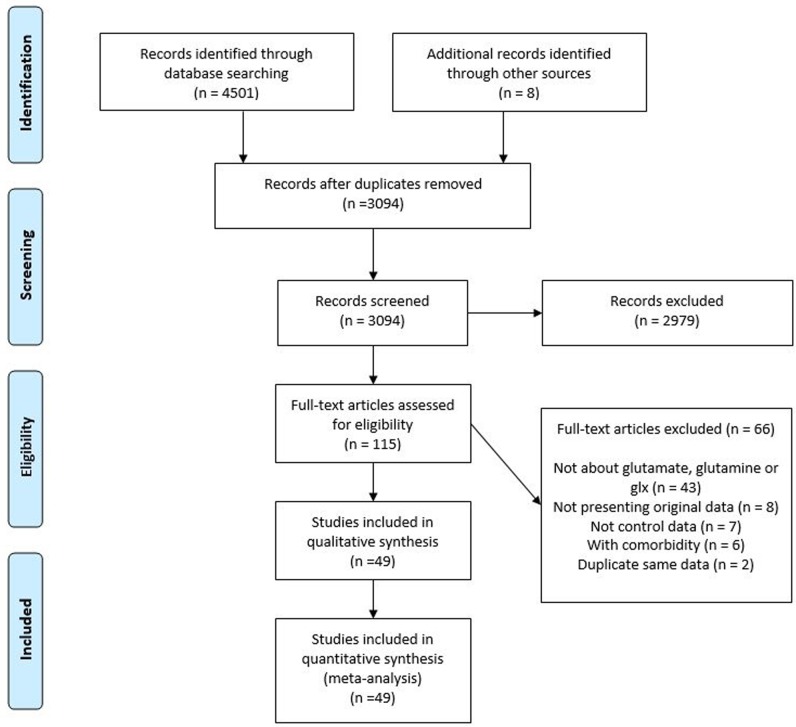
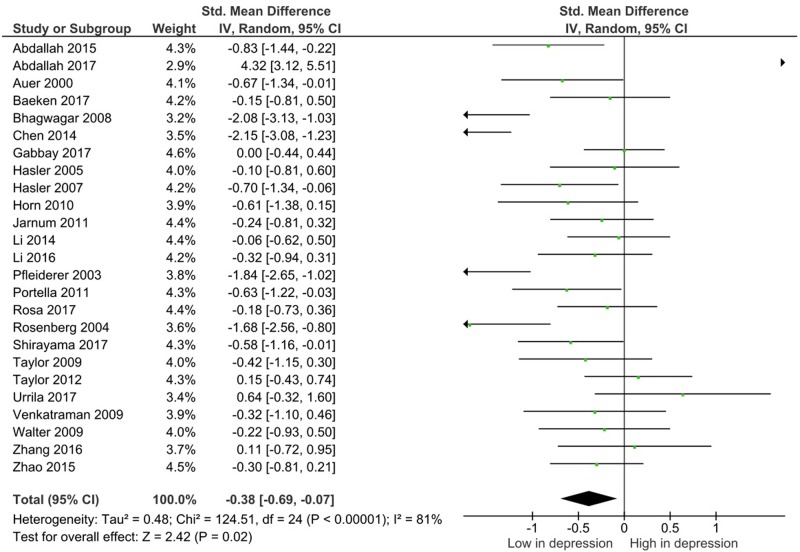
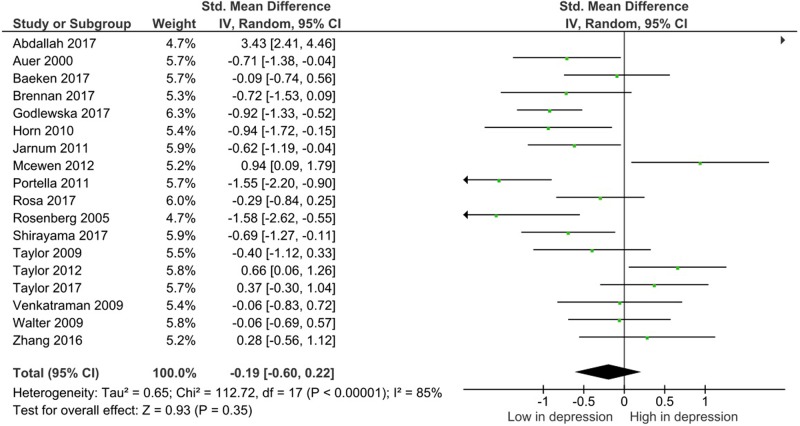
Alterations in glutamatergic neurotransmission are implicated in the pathophysiology of depression, and the glutamatergic system represents a treatment target for depression. To summarize the nature of glutamatergic alterations in patients with depression, we conducted a meta-analysis of proton magnetic resonance (1 H-MRS) spectroscopy studies examining levels of glutamate. We used the search terms: depress* AND (MRS OR “magnetic resonance spectroscopy”). The search was performed with MEDLINE, Embase, and PsycINFO. The inclusion criteria were 1 H-MRS studies comparing levels of glutamate + glutamine (Glx), glutamate, or glutamine between patients with depression and healthy controls. Standardized mean differences (SMD) were calculated to assess group differences in the levels of glutamatergic neurometabolites. Forty-nine studies met the eligibility criteria, which included 1180 patients and 1066 healthy controls. There were significant decreases in Glx within the medial frontal cortex (SMD = −0.38; 95% CI, −0.69 to −0.07) in patients with depression compared with controls. Subanalyses revealed that there was a significant decrease in Glx in the medial frontal cortex in medicated patients with depression (SMD = −0.50; 95% CI, −0.80 to −0.20), but not in unmedicated patients (SMD = −0.27; 95% CI, −0.76 to 0.21) compared with controls. Overall, decreased levels of glutamatergic metabolites in the medial frontal cortex are linked with the pathophysiology of depression. These findings are in line with the hypothesis that depression may be associated with abnormal glutamatergic neurotransmission.
Overview
The claims and statistics of this paper haven’t been checked yet.
Free: it reads the open-access text and checks the first 5 claims that cite a source we can check. Create a free account to check every claim.
Integrity signals
Registry
Cites
Statistics
Figures
Verification
Claims the paper makes
The claims and statistics of this paper haven’t been checked yet.
Free: it reads the open-access text and checks the first 5 claims that cite a source we can check. Create a free account to check every claim.
Claims other papers make about this one
Each is checked against this paper’s own text: does it say what the citing paper says it does?
The cited source doesn’t support the claim as written.
In the citing paper
“In vivo proton magnetic resonance spectroscopy (1H MRS) detected elevated glutamate levels in ventromedial prefrontal cortex/anterior cingulate cortex in untreated MDD161 consistent with a recent meta-analysis of MRS imaging studies that found higher glutamate/glutamine concentrations in medial frontal cortex of unmedicated MDD but not in antidepressant-treated patients162.”
From Dysregulation of adult hippocampal neuroplasticity in major depression: Pathogenesis and therapeutic implications (2022) · cites this paper as [161]
Checked by a reasoning model — may be wrong.
Experimental — accuracy not yet measured
Self-check
Percentages, sums and reported differences re-computed from the paper’s own numbers.
The self-check needs the paper’s full text.
Citations
Cites
Preferred Reporting Items for Systematic Reviews and Meta-Analyses: the PRISMA statement
Moher, D., Liberati, A., Tetzlaff, J., Altman, D. G., & for the PRISMA Group (2009) · BMJ · doi:10.1136/bmj.b2535 · Cited by 83,823
Preferred reporting items for systematic reviews and meta-analyses: the PRISMA Statement.
(2009) · PubMed Central · Cited by 44,859
Stang, A. (2010) · European Journal of Epidemiology · doi:10.1007/s10654-010-9491-z · Cited by 17,396 · cited 1×
“The quality of the original studies was assessed using the Newcastle-Ottawa Quality Assessment Scale after arranging it for a cross-sectional study design [17].”
MethodMolecular Mechanisms of Depression: Perspectives on New Treatment Strategies
Lang, U. E., & Borgwardt, S. (2013) · Cellular Physiology and Biochemistry · doi:10.1159/000350094 · Cited by 8,475
Antidepressant effects of ketamine in depressed patients
Berman, R. M., Cappiello, A., Anand, A., Oren, D. A., Heninger, G. R., Charney, D. S., & Krystal, J. H. (2000) · Biological Psychiatry · doi:10.1016/s0006-3223(99)00230-9 · Cited by 3,856
mTOR-Dependent Synapse Formation Underlies the Rapid Antidepressant Effects of NMDA Antagonists
Li, N., Lee, B., Liu, R.-J., Banasr, M., Dwyer, J. M., Iwata, M., Li, X.-Y., Aghajanian, G., & Duman, R. S. (2010) · Science · doi:10.1126/science.1190287 · Cited by 2,881
NMDA receptor blockade at rest triggers rapid behavioural antidepressant responses
Autry, A. E., Adachi, M., Nosyreva, E., Na, E. S., Los, M. F., Cheng, P.-F., Kavalali, E. T., & Monteggia, L. M. (2011) · Nature · doi:10.1038/nature10130 · Cited by 1,926
Stress, Depression, and Neuroplasticity: A Convergence of Mechanisms
Pittenger, C., & Duman, R. S. (2008) · Neuropsychopharmacology · doi:10.1038/sj.npp.1301574 · Cited by 1,795
Moghaddam, B., Adams, B., Verma, A., & Daly, D. (1997) · The Journal of Neuroscience · doi:10.1523/jneurosci.17-08-02921.1997 · Cited by 1,793
Synaptic Dysfunction in Depression: Potential Therapeutic Targets
Duman, R. S., & Aghajanian, G. K. (2012) · Science · doi:10.1126/science.1222939 · Cited by 1,651
NMDAR inhibition-independent antidepressant actions of ketamine metabolites
Zanos, P., Moaddel, R., Morris, P. J., Georgiou, P., Fischell, J., Elmer, G. I., Alkondon, M., Yuan, P., Pribut, H. J., Singh, N. S., et al. (2016) · Nature · doi:10.1038/nature17998 · Cited by 1,609
Li, N., Liu, R.-J., Dwyer, J. M., Banasr, M., Lee, B., Son, H., Li, X.-Y., Aghajanian, G., & Duman, R. S. (2011) · Biological Psychiatry · doi:10.1016/j.biopsych.2010.12.015 · Cited by 1,082
Hasler, G., van der Veen, J. W., Tumonis, T., Meyers, N., Shen, J., & Drevets, W. C. (2007) · Archives of General Psychiatry · doi:10.1001/archpsyc.64.2.193 · Cited by 846
Subtype-Specific Alterations of γ-Aminobutyric Acid and Glutamatein Patients With Major Depression
Sanacora, G., Gueorguieva, R., Epperson, C. N., Wu, Y.-T., Appel, M., Rothman, D. L., Krystal, J. H., & Mason, G. F. (2004) · Archives of General Psychiatry · doi:10.1001/archpsyc.61.7.705 · Cited by 796
Functional antagonists at the NMDA receptor complex exhibit antidepressant actions
Trullas, R., & Skolnick, P. (1990) · European Journal of Pharmacology · doi:10.1016/0014-2999(90)90204-j · Cited by 785
Increased Levels of Glutamate in Brains from Patients with Mood Disorders
Hashimoto, K., Sawa, A., & Iyo, M. (2007) · Biological Psychiatry · doi:10.1016/j.biopsych.2007.03.017 · Cited by 609
Auer, D. P., Pütz, B., Kraft, E., Lipinski, B., Schill, J., & Holsboer, F. (2000) · Biological Psychiatry · doi:10.1016/s0006-3223(99)00159-6 · Cited by 564
Yuen, E. Y., Wei, J., Liu, W., Zhong, P., Li, X., & Yan, Z. (2012) · Neuron · doi:10.1016/j.neuron.2011.12.033 · Cited by 558
Lener, M. S., Niciu, M. J., Ballard, E. D., Park, M., Park, L. T., Nugent, A. C., & Zarate, C. A. (2017) · Biological Psychiatry · doi:10.1016/j.biopsych.2016.05.005 · Cited by 468
Feyissa, A. M., Chandran, A., Stockmeier, C. A., & Karolewicz, B. (2009) · Progress in Neuro-Psychopharmacology and Biological Psychiatry · doi:10.1016/j.pnpbp.2008.10.005 · Cited by 421
Rapid-acting glutamatergic antidepressants: the path to ketamine and beyond
Krystal, J. H., Sanacora, G., & Duman, R. S. (2013) · Biological Psychiatry · doi:10.1016/j.biopsych.2013.03.026 · Cited by 406
McGirr, A., Berlim, M. T., Bond, D. J., Fleck, M. P., Yatham, L. N., & Lam, R. W. (2015) · Psychological Medicine · doi:10.1017/s0033291714001603 · Cited by 373
Walter, M., Henning, A., Grimm, S., Schulte, R. F., Beck, J., Dydak, U., Schnepf, B., Boeker, H., Boesiger, P., & Northoff, G. (2009) · Archives of General Psychiatry · doi:10.1001/archgenpsychiatry.2009.39 · Cited by 306
Bhagwagar, Z., Wylezinska, M., Jezzard, P., Evans, J., Ashworth, F., Sule, A., Matthews, P. M., & Cowen, P. J. (2007) · Biological Psychiatry · doi:10.1016/j.biopsych.2006.08.048 · Cited by 303
Pfleiderer, B., Michael, N., Erfurth, A., Ohrmann, P., Hohmann, U., Wolgast, M., Fiebich, M., Arolt, V., & Heindel, W. (2003) · Psychiatry Research: Neuroimaging · doi:10.1016/s0925-4927(03)00003-9 · Cited by 301
The heterogeneity of the depressive syndrome: when numbers get serious
Østergaard, S. D., Jensen, S. O. W., & Bech, P. (2011) · Acta Psychiatrica Scandinavica · doi:10.1111/j.1600-0447.2011.01744.x · Cited by 287 · cited 1×
“This is likely attributable to the clinical heterogeneity caused by differences in patient characteristics [49] or the influence of other methodological factors such as neurometabolite reference method (i.”
BackgroundDeschwanden, A., Karolewicz, B., Feyissa, A. M., Treyer, V., Ametamey, S. M., Johayem, A., Burger, C., Auberson, Y. P., Sovago, J., Stockmeier, C. A., et al. (2011) · American Journal of Psychiatry · doi:10.1176/appi.ajp.2011.09111607 · Cited by 278
Horn (2010) · Frontiers in Systems Neuroscience · doi:10.3389/fnsys.2010.00033 · Cited by 276
MICHAEL, N., ERFURTH, A., OHRMANN, P., AROLT, V., HEINDEL, W., & PFLEIDERER, B. (2003) · Psychological Medicine · doi:10.1017/s0033291703007931 · Cited by 260
ROSENBERG, D. R., MIRZA, Y., RUSSELL, A., TANG, J., SMITH, J. M., BANERJEE, S. P., BHANDARI, R., ROSE, M., IVEY, J., BOYD, C., et al. (2004) · Journal of the American Academy of Child & Adolescent Psychiatry · doi:10.1097/01.chi.0000132812.44664.2d · Cited by 246
Plasma and platelet excitatory amino acids in psychiatric disorders
(1993) · American Journal of Psychiatry · doi:10.1176/ajp.150.11.1731 · Cited by 243
Increased cerebrospinal fluid glutamine levels in depressed patients
Levine, J., Panchalingam, K., Rapoport, A., Gershon, S., McClure, R. J., & Pettegrew, J. W. (2000) · Biological Psychiatry · doi:10.1016/s0006-3223(99)00284-x · Cited by 240
Luykx, J. J., Laban, K. G., van den Heuvel, M. P., Boks, M. P. M., Mandl, R. C. W., Kahn, R. S., & Bakker, S. C. (2012) · Neuroscience & Biobehavioral Reviews · doi:10.1016/j.neubiorev.2011.05.014 · Cited by 235 · cited 3×
“Based on previous meta-analyses, we hypothesized that Glx levels in the medial PFC (mPFC) would be decreased in patients with depression compared with controls [14, 15].”
ResultMauri, M. C., Ferrara, A., Boscati, L., Bravin, S., Zamberlan, F., Alecci, M., & Invernizzi, G. (1998) · Neuropsychobiology · doi:10.1159/000026491 · Cited by 231
Glutamate Metabolism in Major Depressive Disorder
Abdallah, C. G., Jiang, L., De Feyter, H. M., Fasula, M., Krystal, J. H., Rothman, D. L., Mason, G. F., & Sanacora, G. (2014) · American Journal of Psychiatry · doi:10.1176/appi.ajp.2014.14010067 · Cited by 200
Altamura, C., Maes, M., Dai, J., & Meltzer, H. Y. (1995) · European Neuropsychopharmacology · doi:10.1016/0924-977x(95)00033-l · Cited by 193
Increased serum glutamate in depressed patients
Kim, J. S., Schmid-Burgk, W., Claus, D., & Kornhuber, H. H. (1982) · Archiv f�r Psychiatrie und Nervenkrankheiten · doi:10.1007/bf00345492 · Cited by 189
BELOZERTSEVA, I., KOS, T., POPIK, P., DANYSZ, W., & BESPALOV, A. (2007) · European Neuropsychopharmacology · doi:10.1016/j.euroneuro.2006.03.002 · Cited by 188
Bhagwagar, Z., Wylezinska, M., Jezzard, P., Evans, J., Boorman, E., M. Matthews, P., & J. Cowen, P. (2008) · The International Journal of Neuropsychopharmacology · doi:10.1017/s1461145707007924 · Cited by 186
Maes, M., Verkerk, R., Vandoolaeghe, E., Lin, A., & Scharpé, S. (1998) · Acta Psychiatrica Scandinavica · doi:10.1111/j.1600-0447.1998.tb10004.x · Cited by 179
Rajkowska, G., Miguel-Hidalgo, J. J., Dubey, P., Stockmeier, C. A., & Krishnan, K. (2005) · Biological Psychiatry · doi:10.1016/j.biopsych.2005.04.013 · Cited by 172
Tordera, R. M., Totterdell, S., Wojcik, S. M., Brose, N., Elizalde, N., Lasheras, B., & Del Rio, J. (2007) · European Journal of Neuroscience · doi:10.1111/j.1460-9568.2006.05259.x · Cited by 169
Low Cerebrospinal Fluid Glutamate and Glycine in Refractory Affective Disorder
Frye, M. A., Tsai, G. E., Huggins, T., Coyle, J. T., & Post, R. M. (2006) · Biological Psychiatry · doi:10.1016/j.biopsych.2006.01.024 · Cited by 168
Block, W., Träber, F., von Widdern, O., Metten, M., Schild, H., Maier, W., Zobel, A., & Jessen, F. (2009) · The International Journal of Neuropsychopharmacology · doi:10.1017/s1461145708009516 · Cited by 156
Rosenberg, D. R., MacMaster, F. P., Mirza, Y., Smith, J. M., Easter, P. C., Banerjee, S. P., Bhandari, R. P., Boyd, C. C., Lynch, M. A., Rose, M., et al. (2005) · Biological Psychiatry · doi:10.1016/j.biopsych.2005.05.007 · Cited by 151
Arnone, D., Mumuni, A. N., Jauhar, S., Condon, B., & Cavanagh, J. (2015) · European Neuropsychopharmacology · doi:10.1016/j.euroneuro.2015.04.016 · Cited by 150 · cited 4×
“Based on previous meta-analyses, we hypothesized that Glx levels in the medial PFC (mPFC) would be decreased in patients with depression compared with controls [14, 15].”
BackgroundResultInfluentialMultiple MPEP administrations evoke anxiolytic- and antidepressant-like effects in rats
Pilc, A., Kłodzińska, A., Brański, P., Nowak, G., Pałucha, A., Szewczyk, B., Tatarczyńska, E., Chojnacka-Wójcik, E., & Wierońska, J. M. (2002) · Neuropharmacology · doi:10.1016/s0028-3908(02)00082-5 · Cited by 150
Esterlis, I., DellaGioia, N., Pietrzak, R. H., Matuskey, D., Nabulsi, N., Abdallah, C. G., Yang, J., Pittenger, C., Sanacora, G., Krystal, J. H., et al. (2018) · Molecular Psychiatry · doi:10.1038/mp.2017.58 · Cited by 148
Järnum, H., Eskildsen, S. F., Steffensen, E. G., Lundbye‐Christensen, S., Simonsen, C. W., Thomsen, I. S., Fründ, E., Théberge, J., & Larsson, E. (2011) · Acta Psychiatrica Scandinavica · doi:10.1111/j.1600-0447.2011.01766.x · Cited by 137
Hasler, G., Neumeister, A., van der Veen, J. W. C., Tumonis, T., Bain, E., Shen, J., Drevets, W. C., & Charney, D. S. (2005) · Biological Psychiatry · doi:10.1016/j.biopsych.2005.05.017 · Cited by 137
Njau, S., Joshi, S. H., Espinoza, R., Leaver, A. M., Vasavada, M., Marquina, A., Woods, R. P., & Narr, K. L. (2017) · Journal of Psychiatry and Neuroscience · doi:10.1503/jpn.150177 · Cited by 134
Portella, M. J., de Diego-Adeliño, J., Gómez-Ansón, B., Morgan-Ferrando, R., Vives, Y., Puigdemont, D., Pérez-Egea, R., Ruscalleda, J., Álvarez, E., & Pérez, V. (2011) · Journal of Psychiatric Research · doi:10.1016/j.jpsychires.2010.08.010 · Cited by 127
Increased Glutamate Levels in the Medial Prefrontal Cortex in Patients with Postpartum Depression
McEwen, A. M., Burgess, D., Hanstock, C. C., Seres, P., Khalili, P., Newman, S. C., Baker, G. B., Mitchell, N., Khudabux, J., Allen, P. S., et al. (2012) · Neuropsychopharmacology · doi:10.1038/npp.2012.101 · Cited by 126
mGluR5 in the nucleus accumbens is critical for promoting resilience to chronic stress
Shin, S., Kwon, O., Kang, J. I., Kwon, S., Oh, S., Choi, J., Kim, C. H., & Kim, D. G. (2015) · Nature Neuroscience · doi:10.1038/nn.4028 · Cited by 125
mGlu2/3 and mGlu5 receptors: Potential targets for novel antidepressants
Chaki, S., Ago, Y., Palucha-Paniewiera, A., Matrisciano, F., & Pilc, A. (2013) · Neuropharmacology · doi:10.1016/j.neuropharm.2012.05.022 · Cited by 116
Neurochemistry of major depression: a study using magnetic resonance spectroscopy
Godlewska, B. R., Near, J., & Cowen, P. J. (2015) · Psychopharmacology · doi:10.1007/s00213-014-3687-y · Cited by 97
Shirayama, Y., Takahashi, M., Osone, F., Hara, A., & Okubo, T. (2016) · Biological Psychiatry Cognitive Neuroscience and Neuroimaging · doi:10.1016/j.bpsc.2016.11.006 · Cited by 95
Glutamine deficiency in the prefrontal cortex increases depressive-like behaviours in male mice
Lee, Y., Son, H., Kim, G., Kim, S., Lee, D. H., Roh, G. S., Kang, S. S., Cho, G. J., Choi, W. S., & Kim, H. J. (2013) · Journal of Psychiatry & Neuroscience · doi:10.1503/jpn.120024 · Cited by 94
Milne, A. M., MacQUEEN, G. M., Yücel, K., Soreni, N., & Hall, G. B. (2009) · NeuroImage · doi:10.1016/j.neuroimage.2009.03.031 · Cited by 93
Anterior cingulate cortex γ-aminobutyric acid deficits in youth with depression
Gabbay, V, Bradley, K. A., Mao, X., Ostrover, R., Kang, G., & Shungu, D. C. (2017) · Translational Psychiatry · doi:10.1038/tp.2017.187 · Cited by 91
de Diego-Adeliño, J., Portella, M. J., Gómez-Ansón, B., López-Moruelo, O., Serra-Blasco, M., Vives, Y., Puigdemont, D., Pérez-Egea, R., Álvarez, E., & Pérez, V. (2013) · Journal of Psychiatry and Neuroscience · doi:10.1503/jpn.110185 · Cited by 86
Abdallah, C. G., Hannestad, J., Mason, G. F., Holmes, S. E., DellaGioia, N., Sanacora, G., Jiang, L., Matuskey, D., Satodiya, R., Gasparini, F., et al. (2017) · Biological Psychiatry: Cognitive Neuroscience and Neuroimaging · doi:10.1016/j.bpsc.2017.03.019 · Cited by 84
Snyder, J., & Wilman, A. H. (2009) · Journal of Magnetic Resonance · doi:10.1016/j.jmr.2009.12.002 · Cited by 81
Proton spectroscopy study of the left dorsolateral prefrontal cortex in pediatric depressed patients
Caetano, S. C., Fonseca, M., Olvera, R. L., Nicoletti, M., Hatch, J. P., Stanley, J. A., Hunter, K., Lafer, B., Pliszka, S. R., & Soares, J. C. (2005) · Neuroscience Letters · doi:10.1016/j.neulet.2005.04.099 · Cited by 79
Nery, F. G., Stanley, J. A., Chen, H.-H., Hatch, J. P., Nicoletti, M., Monkul, E. S., Matsuo, K., Caetano, S. C., Peluso, M. A. M., Najt, P., et al. (2009) · Psychiatry Research Neuroimaging · doi:10.1016/j.pscychresns.2009.05.003 · Cited by 79
Glutamatergic and neural dysfunction in postpartum depression using magnetic resonance spectroscopy
Rosa, C. E., Soares, J. C., Figueiredo, F. P., Cavalli, R. C., Barbieri, M. A., Schaufelberger, M. S., Salmon, C. E. G., Del-Ben, C. M., & Santos, A. C. (2017) · Psychiatry Research: Neuroimaging · doi:10.1016/j.pscychresns.2017.04.008 · Cited by 79
Baeken, C., Lefaucheur, J., & Schuerbeek, P. V. (2017) · Clinical Neurophysiology · doi:10.1016/j.clinph.2017.06.243 · Cited by 76
Neurochemistry of late‐life major depression: A pilot two‐dimensional MR spectroscopic study
Binesh, N., Kumar, A., Hwang, S., Mintz, J., & Thomas, M. A. (2004) · Journal of Magnetic Resonance Imaging · doi:10.1002/jmri.20214 · Cited by 72
Chen, L., Dai, H., Dai, Z., Xu, C., & Wu, R. (2014) · Psychiatry and Clinical Neurosciences · doi:10.1111/pcn.12138 · Cited by 71
Abdallah, C. G., Jackowski, A., Sato, J. R., Mao, X., Kang, G., Cheema, R., Coplan, J. D., Mathew, S. J., & Shungu, D. C. (2015) · European Neuropsychopharmacology · doi:10.1016/j.euroneuro.2015.04.025 · Cited by 67
Li, H., Xu, H., Zhang, Y., Guan, J., Zhang, J., Xu, C., Shen, Z., Xiao, B., Liang, C., Chen, K., et al. (2016) · Bipolar Disorders · doi:10.1111/bdi.12445 · Cited by 64
Spectroscopy markers of suicidal risk and mental pain in depressed patients
Jollant, F., Near, J., Turecki, G., & Richard-Devantoy, S. (2017) · Progress in Neuro-Psychopharmacology and Biological Psychiatry · doi:10.1016/j.pnpbp.2016.10.005 · Cited by 61
Zhang, X., Tang, Y., Maletić‐Savatić, M., Sheng, J., Zhang, X., Zhu, Y., Zhang, T., Wang, J., Tong, S., Wang, J., et al. (2016) · Journal of Affective Disorders · doi:10.1016/j.jad.2016.05.014 · Cited by 60
Effects of Depressive-Like Behavior of Rats on Brain Glutamate Uptake
Almeida, R. F., Thomazi, A. P., Godinho, G. F. R. D. S., Saute, J. A. M., Wofchuk, S. T., Souza, D. O., & Ganzella, M. (2010) · Neurochemical Research · doi:10.1007/s11064-010-0169-4 · Cited by 55
Region-specific glutamate changes in patients with unipolar depression
Grimm, S., Luborzewski, A., Schubert, F., Merkl, A., Kronenberg, G., Colla, M., Heuser, I., & Bajbouj, M. (2012) · Journal of Psychiatric Research · doi:10.1016/j.jpsychires.2012.04.018 · Cited by 52
Brain glutamate in medication-free depressed patients: a proton MRS study at 7 Tesla
Godlewska, B. R., Masaki, C., Sharpley, A. L., Cowen, P. J., & Emir, U. E. (2017) · Psychological Medicine · doi:10.1017/s0033291717003373 · Cited by 52
Brennan, B. P., Admon, R., Perriello, C., LaFlamme, E. M., Athey, A. J., Pizzagalli, D. A., Hudson, J. I., Pope, H. G., & Jensen, J. E. (2017) · Psychiatry Research: Neuroimaging · doi:10.1016/j.pscychresns.2017.08.009 · Cited by 47
Venkatraman, T. N., Krishnan, R. R., Steffens, D. C., Song, A. W., & Taylor, W. D. (2009) · Psychiatry Research: Neuroimaging · doi:10.1016/j.pscychresns.2008.07.001 · Cited by 46
Taylor, M. J., Selvaraj, S., Norbury, R., Jezzard, P., & Cowen, P. J. (2009) · Journal of Affective Disorders · doi:10.1016/j.jad.2009.02.022 · Cited by 45
Urrila, A. S., Hakkarainen, A., Castaneda, A., Paunio, T., Marttunen, M., & Lundbom, N. (2017) · Neuropsychobiology · doi:10.1159/000478861 · Cited by 43
Kovačević, T., Skelin, I., Minuzzi, L., Rosa-Neto, P., & Diksic, M. (2012) · Brain Research Bulletin · doi:10.1016/j.brainresbull.2012.01.010 · Cited by 41
Li, M., Metzger, C. D., Li, W., Safron, A., van Tol, M., Lord, A., Krause, A. L., Borchardt, V., Dou, W., Genz, A., et al. (2014) · Journal of Affective Disorders · doi:10.1016/j.jad.2014.08.001 · Cited by 41
Taylor, M. J., Godlewska, B. R., Norbury, R., Selvaraj, S., Near, J., & Cowen, P. J. (2012) · The International Journal of Neuropsychopharmacology · doi:10.1017/s1461145712000272 · Cited by 35
Hermens, D. F., Chitty, K. M., Lee, R. S., Tickell, A., Haber, P. S., Naismith, S. L., Hickie, I. B., & Lagopoulos, J. (2015) · Journal of Affective Disorders · doi:10.1016/j.jad.2015.07.009 · Cited by 34
Taylor, R., Osuch, E. A., Schaefer, B., Rajakumar, N., Neufeld, R. W. J., Théberge, J., & Williamson, P. (2017) · BJPsych Open · doi:10.1192/bjpo.bp.116.003756 · Cited by 32
Lou, J.-S., Li, C., Yang, X., Fang, J., Yang, Y., & Guo, J. (2010) · Pharmaceutical Biology · doi:10.3109/13880201003789440 · Cited by 32
Proton spectroscopy study of the dorsolateral prefrontal cortex in youth with familial depression
Yang, X., Langevin, L. M., Jaworska, N., Kirton, A., Lebel, R. M., Harris, A. D., Jasaui, Y., Wilkes, T. C., Sembo, M., Swansburg, R., et al. (2016) · Psychiatry and Clinical Neurosciences · doi:10.1111/pcn.12392 · Cited by 27
Mennecke, A., Gossler, A., Hammen, T., Dörfler, A., Stadlbauer, A., Rösch, J., Kornhuber, J., Bleich, S., Doelken, M. T., & Thürauf, N. (2014) · Journal of Neural Transmission · doi:10.1007/s00702-014-1190-6 · Cited by 25
Poletti, S., Locatelli, C., Falini, A., Colombo, C., & Benedetti, F. (2016) · Progress in Neuro-Psychopharmacology and Biological Psychiatry · doi:10.1016/j.pnpbp.2016.07.007 · Cited by 24
Menke, A., Sämann, P. G., Kloiber, S. M., Czamara, D., Lucae, S., Hennings, J. M., Heck, A., Kohli, M. A., Czisch, M., Müller‐Myhsok, B., et al. (2011) · Psychoneuroendocrinology · doi:10.1016/j.psyneuen.2011.09.003 · Cited by 23
Jayaweera, H. K., Lagopoulos, J., Duffy, S. L., Lewis, S. J. G., Hermens, D. F., Norrie, L. M., Hickie, I. B., & Naismith, S. L. (2015) · Journal of Affective Disorders · doi:10.1016/j.jad.2015.04.023 · Cited by 23
1H magnetic resonance spectroscopy study of thalamus in treatment resistant depressive patients
Mu, J., Xie, P., Yang, Z., Yang, D., Lv, F., Luo, T., & Li, Y. (2007) · Neuroscience Letters · doi:10.1016/j.neulet.2007.08.004 · Cited by 19
Ding, X.-Q., Maudsley, A. A., Schweiger, U., Schmitz, B., Lichtinghagen, R., Bleich, S., Lanfermann, H., & Kahl, K. G. (2017) · Journal of Cerebral Blood Flow & Metabolism · doi:10.1177/0271678x17697721 · Cited by 17
Research works printed but not linked: 1
- Zhao LL Xiao H Gao XL Wang RJ Liu RC Zhang P H-1-MRS analysis for prefrontal cortex, hippocampus and thalamus of adolescent patients with depression J Med Imag Health In 2015 5 1229 32
Cited by
Duman, R. S., Sanacora, G., & Krystal, J. H. (2019) · Neuron · doi:10.1016/j.neuron.2019.03.013 · Cited by 1,026
“More recent studies using in vivo proton magnetic resonance spectroscopy (MRS) have more consistently reported decreased levels of glutamate metabolites in regions of the medial frontal cortex (Moriguchi et al., 2018).”
BackgroundThe effects of social isolation stress and discrimination on mental health
Brandt, L., Liu, S., Heim, C., & Heinz, A. (2022) · Translational Psychiatry · doi:10.1038/s41398-022-02178-4 · Cited by 418
Tartt, A. N., Mariani, M. B., Hen, R., Mann, J. J., & Boldrini, M. (2022) · Molecular Psychiatry · doi:10.1038/s41380-022-01520-y · Cited by 408
“In vivo proton magnetic resonance spectroscopy ((1)H MRS) detected elevated glutamate levels in ventromedial prefrontal cortex/ACC in untreated MDD [160] consistent with a recent metaanalysis of MRS imaging studies that found higher glutamate/ glutamine concentrations in medial frontal cortex of unmedicated MDD but no…”
ResultCandidate biomarkers in psychiatric disorders: state of the field
Abi‐Dargham, A., Moeller, S. J., Ali, F., DeLorenzo, C., Domschke, K., Horga, G., Jutla, A., Kotov, R., Paulus, M. P., Rubio, J. M., et al. (2023) · World Psychiatry · doi:10.1002/wps.21078 · Cited by 372
Hare, B. D., & Duman, R. S. (2020) · Molecular Psychiatry · doi:10.1038/s41380-020-0685-9 · Cited by 366
“PFC glutamate metabolites are reduced in depression [27] and postmortem studies demonstrate changes in ionotropic and”
Background
Metadata
- Authors
- Moriguchi, S., Takamiya, A., Noda, Y., Horita, N., Wada, M., Tsugawa, S., Plitman, E., Sano, Y., Tarumi, R., ElSalhy, M., Katayama, N., Ogyu, K., Miyazaki, T., Kishimoto, T., Graff-Guerrero, A., Meyer, J. H., Blumberger, D. M., Daskalakis, Z. J., Mimura, M., & Nakajima, S.
- Affiliations
- Centre for Addiction and Mental Health (CA)
- Keio University (JP)
- Yokohama City University (JP)
- Corresponding author
- Noda, Yoshihiro
- ORCID
- Venue
- Molecular Psychiatry
- Published
- 2018-10-12
- Volume
- 24
- Issue
- 7
- Pages
- 952-964
- ISSN
- 1359-4184 (ISSN-L)
- 1476-5578
- PMC
- PMC6755980
- OpenAlex
- W2898063298
- Cited by
- 357
- References
- 96
- Citations by year
- 2026: 38 · 2025: 46 · 2024: 48 · 2023: 56 · 2022: 48 · 2021: 68 · 2020: 40 · 2019: 12
- FWCI
- 3.55
- Type
- journal article
- Language
- en
- Open access
- hybrid
- doi.org
- Licence
- cc-by
- creativecommons.org/licenses/by/4.0 (tdm)
- creativecommons.org/licenses/by/4.0 (vor)
- Locations
- Molecular Psychiatry (publishedVersion, cc-by)
- PubMed Central (publishedVersion, cc-by)
- PubMed (publishedVersion)
- Funders
- Japan Society for the Promotion of Science (18H02755)
- Topics
- Health Sciences › Medicine › Pharmacology (medical) › Treatment of Major Depression
- Health Sciences › Medicine › Radiology, Nuclear Medicine and Imaging › Advanced MRI Techniques and Applications
- Life Sciences › Neuroscience › Biological Psychiatry › Tryptophan and brain disorders
- Keywords
- major depressive disorder, glutamatergic neurotransmission, glutamate, glutamine, 1H NMR, medial frontal cortex, brain metabolites, antidepressants, depression pathophysiology
- MeSH terms
- Adolescent, Adult, Aged, Aspartic Acid, Depression, Major Depressive Disorder, Female, Glutamine, Humans, Magnetic Resonance Imaging, Male, Middle Aged, Synaptic Transmission, Magnetic Resonance Spectroscopy, Glutamic Acid, Proton Magnetic Resonance Spectroscopy
About these checks
Registry, retraction, Cites and statistics results are computed, not judged, with one exception: a printed reference that no index lists is read once by a model before it counts as a citation error. Claims are extracted by a model and kept only when their quote appears verbatim in the text; each cited source is then checked, with a model’s help, for whether it says what the claim relies on. Those verdicts can be wrong — read the claim’s quote and the cited source before relying on one.
Statistics and arithmetic are recomputed, not judged.
Confidence bands are shown only for fields calibrated on our annotated test set. None is calibrated yet, so no band is shown.
What counts as a claim ›How we measure confidence ›How we check this ›
Are you an author, or do you see a problem with this page? Request a review
Data sources
Bibliographic data: Semantic Scholar, OpenAlex, Crossref.
Contains information from the Semantic Scholar Academic Graph Datasets, made available under the ODC Attribution License (ODC-BY 1.0).
Semantic Scholar’s data is described in: Kinney, R., et al. (2023). The Semantic Scholar Open Data Platform. arXiv:2301.10140.
