

Prognostic value of depression and anxiety on breast cancer recurrence and mortality: a systematic review and meta-analysis of 282,203 patients
Open accessThe DOI matches its Crossref record; 74 of the 74 references it cites were found in a registry or an index.
Abstract
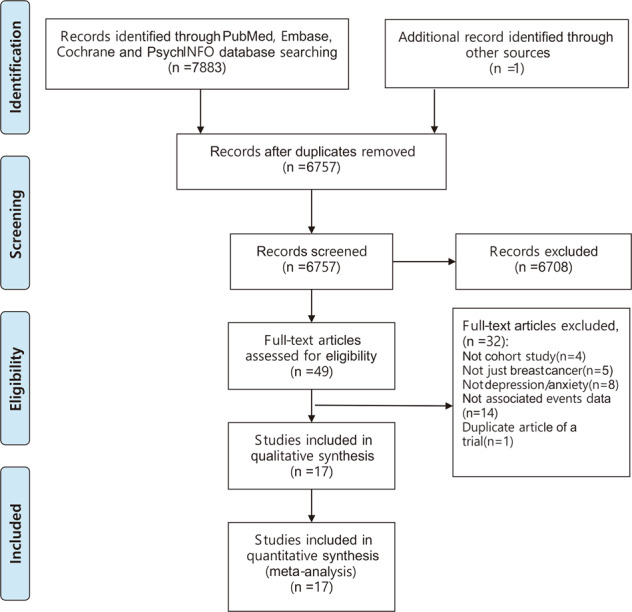
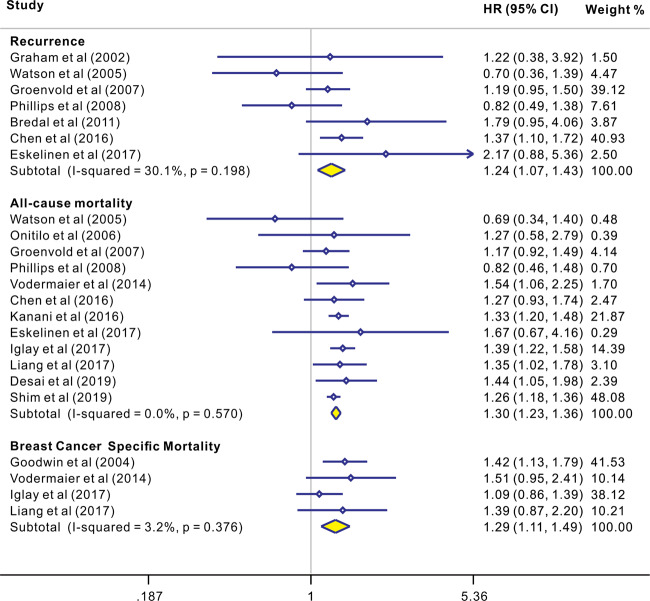
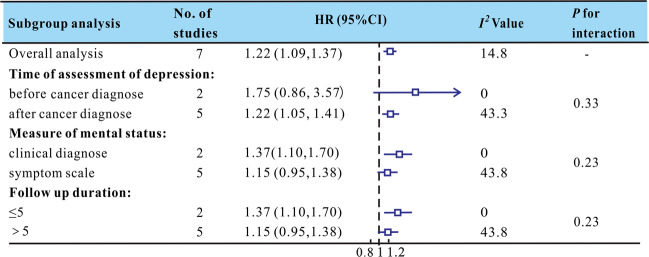
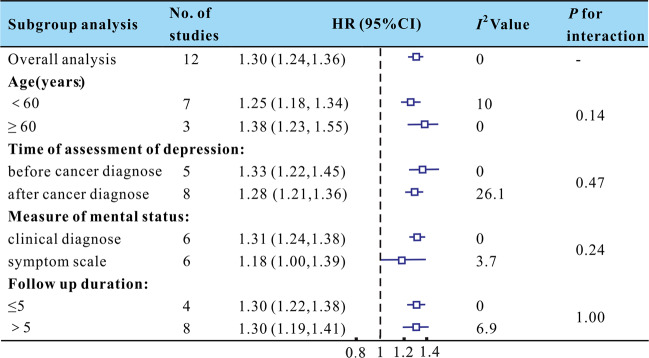
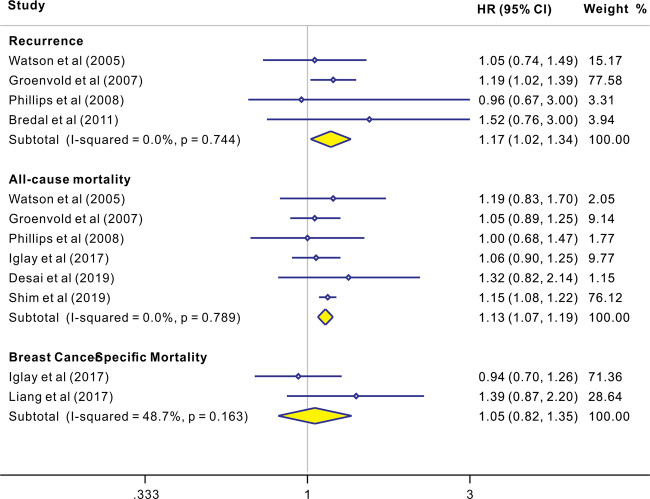
Depression and anxiety are common comorbidities in breast cancer patients. Whether depression and anxiety are associated with breast cancer progression or mortality is unclear. Herein, based on a systematic literature search, 17 eligible studies involving 282,203 breast cancer patients were included. The results showed that depression was associated with cancer recurrence [1.24 (1.07, 1.43)], all-cause mortality [1.30 (1.23, 1.36)], and cancer-specific mortality [1.29 (1.11, 1.49)]. However, anxiety was associated with recurrence [1.17 (1.02, 1.34)] and all-cause mortality [1.13 (1.07, 1.19)] but not with cancer-specific mortality [1.05 (0.82, 1.35)]. Comorbidity of depression and anxiety is associated with all-cause mortality [1.34 (1.24, 1.45)] and cancer-specific mortality [1.45 (1.11, 1.90)]. Subgroup analyses demonstrated that clinically diagnosed depression and anxiety, being female and of younger age (<60 years), and shorter follow-up duration (≤5 years) were related to a poorer prognosis. Our study highlights the critical role of depression/anxiety as an independent factor in predicting breast cancer recurrence and survival. Further research should focus on a favorable strategy that works best to improve outcomes among breast cancer patients with mental disorders.
Overview
The claims and statistics of this paper haven’t been checked yet.
Free: it reads the open-access text and checks the first 5 claims that cite a source we can check. Create a free account to check every claim.
Integrity signals
Registry
Cites
Statistics
Figures
Verification
Claims the paper makes
The claims and statistics of this paper haven’t been checked yet.
Free: it reads the open-access text and checks the first 5 claims that cite a source we can check. Create a free account to check every claim.
Claims other papers make about this one
Each is checked against this paper’s own text: does it say what the citing paper says it does?
The source backs part of the claim, not all of it — or backs it for a different population, condition or comparison.
In the citing paper
“Elevated anxiety predicts nonadherence to recommended therapies, [23][24][25] higher use and costs of medical care, [26][27][28] and possibly cancer recurrence.29”
From Management of Anxiety and Depression in Adult Survivors of Cancer: ASCO Guideline Update (2023) · cites this paper as [29]
Experimental — accuracy not yet measuredThe source backs part of the claim, not all of it — or backs it for a different population, condition or comparison.
In the citing paper
“Meta-analyses report an overall global prevalence of anxiety in BC patients at around 41.9%, with signifcantly higher rates in developing countries like Iran, where it reaches 65.5% [11,12].”
From Internet‐Based Telecare and Bibliotherapy Delivery of Acceptance and Commitment Therapy for Reducing Anxiety and Depression in Breast Cancer Patients: A Randomized Controlled Trial. (2026) · cites this paper as [12]
Experimental — accuracy not yet measured
Self-check
Percentages, sums and reported differences re-computed from the paper’s own numbers.
The self-check needs the paper’s full text.
Citations
Cites
1 retracted
Kamiya, A., Hayama, Y., Kato, S., Shimomura, A., Shimomura, T., Irie, K., Kaneko, R., Yanagawa, Y., Kobayashi, K., & Ochiya, T. (2019) · Nature Neuroscience · doi:10.1038/s41593-019-0430-3 · Cited by 288
RetractedBray, F., Ferlay, J., Soerjomataram, I., Siegel, R. L., Torre, L. A., & Jemal, A. (2018) · CA: A Cancer Journal for Clinicians · doi:10.3322/caac.21492 · Cited by 84,109
Measuring inconsistency in meta-analyses
Higgins, J. P. T., Thompson, S. G., Deeks, J. J., & Altman, D. G. (2003) · BMJ · doi:10.1136/bmj.327.7414.557 · Cited by 63,139
Bias in meta-analysis detected by a simple, graphical test
Egger, M., Smith, G. D., Schneider, M., & Minder, C. (1997) · BMJ · doi:10.1136/bmj.315.7109.629 · Cited by 56,722
Dermyshi, E., Wang, Y., Yan, C., Hong, W., Qiu, G., Gong, X., & Zhang, T. (2017) · Neonatology · doi:10.1159/000454668 · Cited by 24,451
Meta-analysis of Observational Studies in Epidemiology<SUBTITLE>A Proposal for Reporting</SUBTITLE>
Stroup, D. F. (2000) · JAMA · doi:10.1001/jama.283.15.2008 · Cited by 20,623
Stang, A. (2010) · European Journal of Epidemiology · doi:10.1007/s10654-010-9491-z · Cited by 17,396 · cited 1×
“All of the selected articles were examined in terms of quality based on the Newcastle–Ottawa Quality Assessment Scale for cohort studies [41].”
BackgroundRelation of tumor size, lymph node status, and survival in 24,740 breast cancer cases
Carter, C. L., Allen, C., & Henson, D. E. (1989) · Cancer · doi:10.1002/1097-0142(19890101)63:1<181::aid-cncr2820630129>3.0.co;2-h · Cited by 2,288
Nicholson, A., Kuper, H., & Hemingway, H. (2006) · European Heart Journal · doi:10.1093/eurheartj/ehl338 · Cited by 1,353 · cited 1×
“This variation was also found in previous similar meta-analyses of the association between depression in cardiac patients and prognosis [57, 60].”
ResultChronic stress promotes tumor growth and angiogenesis in a mouse model of ovarian carcinoma
Thaker, P. H., Han, L. Y., Kamat, A. A., Arevalo, J. M., Takahashi, R., Lu, C., Jennings, N. B., Armaiz-Pena, G., Bankson, J. A., Ravoori, M., et al. (2006) · Nature Medicine · doi:10.1038/nm1447 · Cited by 1,320
Self-citation
Cited by
Items 301–400 of 510
Breaking Down Silos in Treating Cardiovascular and Cancer-Related PTSD
Kronish, I. M., Edmondson, D. E., & Arch, J. J. (2025) · Policy Insights from the Behavioral and Brain Sciences · doi:10.1177/23727322241307854 · Cited by 2
“However, PTSD symptoms show medium-to-large associations with anxiety and depression symptoms, and depression symptoms are consistently associated with mortality among cancer survivors (Wang, Wang et al., 2020a, Wang, Li et al., 2020b).”
Liu, Y., Wang, Y., Yao, L., Li, Q., Wang, T., Li, H., Yin, J., & Wang, T. (2025) · Asia-Pacific Journal of Oncology Nursing · doi:10.1016/j.apjon.2025.100662 · Cited by 3
Vitsenya, M. V., Баринова, И. В., Вачиковна, П. Н., Terteryan, T. A., Kuchiev, D. T., Khrushcheva, Y. V., Gerasimova, A. A., Filatova, A. Y., Ibragimova, N. M., Frolkova, O. O., et al. (2025) · Almanac of Clinical Medicine · doi:10.18786/2072-0505-2025-53-004 · Cited by 2
Li, Z., Cheng, Y., Hao, J., Shu, Y., Li, J., Zhang, J., Pu, Q., & Liu, L. (2025) · BMC Cancer · doi:10.1186/s12885-025-13945-z · Cited by 2
“Since approximately one in every five individuals with cancer encountered depressive symptoms [36], and energy and nutrient intake was primarily derived from diet, numerous studies have investigated the independent effects of depression or diet on cancer patient outcomes [8, 10, 39].”
Self-citationXiong, Y., Liu, X., & Wang, Y. (2025) · Scientific Reports · doi:10.1038/s41598-025-05873-6 · Cited by 2
Lin, T.-Y., Yang, Y., Sun, S.-S., Li, Q.-Y., Li, X.-T., Sun, N., & Sun, Y.-S. (2025) · Brain Research Bulletin · doi:10.1016/j.brainresbull.2025.111453 · Cited by 2
“Anxiety has been linked to poorer disease prognoses (Wang et al., 2020), and pre-clinical evidence points to a potential role of anxiety in the acceleration of tumor progression (Lu et al., 2024; Xiong et al., 2023; Xu et al., 2021).”
Baxter, S. A., McShane, C. M., McIntosh, S., Bennett, D., Lohfeld, L. H., Middleton, D. R. S., Savage, G., Fitzpatrick, D., Kane, J. P. M., McBrien, A., et al. (2025) · Breast Cancer Research and Treatment · doi:10.1007/s10549-025-07766-8 · Cited by 4
“Most studies focussed on pre-existing depression [7–11], with much less research on pre-existing anxiety [6].”
Schenker, R. A., Marinescu, I. P., Stovicek, P. O., Lukács, E., Păuna-Cristian, L., Nica-Badea, D., & Ciurea, M. E. (2022) · PubMed Central · doi:10.12865/chsj.48.01.04 · Cited by 5
“Depression is an important risk factor for both the onset of an oncological condition and its recurrence and unfavorable evolution [10,11].”
BackgroundSex differences in depression for childhood cancer survivors
Zhang, Y.-F., Li, Z., Wang, C., Zhang, L.-Q., Guo, S., Lin, J., Zhou, C., Zhang, Z., Huo, S., Fan, L.-H., et al. (2022) · Psycho-Oncology · doi:10.1002/pon.6077 · Cited by 1
Lv, D., Lan, B., Zhang, L., Sun, X., Yang, M., & Ma, F. (2022) · Research Square · doi:10.21203/rs.3.rs-1186049/v1 · Cited by 2
Tufael, Kar, A., Upadhye, V. J., Sunny, A. R., Raposo, A., Islam, M. S., Rashid, M. H. O., Hussen, M. A., Han, H., Coutinho, H. D. M., et al. (2024) · Preprints.org · doi:10.20944/preprints202401.0758.v1 · Cited by 2
Liu, L., Lu, J. A., Yang, J., Dong, Y., Yin, P., & Chen, Y. (2023) · Journal of Affective Disorders · doi:10.1016/j.jad.2023.08.123 · Cited by 2
Weitz, M. V., Bloch, J. R., Birati, Y., Rundio, A. A., Fisher, K. M., Byrne, S., & Guerra, L. (2023) · Holistic Nursing Practice · doi:10.1097/hnp.0000000000000610 · Cited by 1
“31 Perceived stress is defined as the degree in which an individual perceives their life conditions as stressful.”
BackgroundBertolucci, I. (2023) · Journal of Psychology and Psychotherapy Research · doi:10.12974/2313-1047.2023.10.07 · Cited by 1
“Additionally, BC patients commonly manifest psychological problems, such as depression and anxiety that seem to be correlated with poorer outcome and mortality (Wang et al ., 2020).”
Jamil, M., Merdawati, L., Krisdianto, B. F., Khambri, D., Harahap, W. A., & Arifin, H. (2023) · Nurse Media Journal of Nursing · doi:10.14710/nmjn.v13i3.54738 · Cited by 6
Navigating the Intersection of Technology and Depression Precision Medicine
Irmak-Yazicioglu, M. B., & Arslan, A. (2024) · Advances in experimental medicine and biology · doi:10.1007/978-981-97-4402-2_20 · Cited by 1
Unveiling the comorbidity burden of male breast cancer
Santos-Mejías, A., Juste, A. M., Laguna-Berna, C., Poblador‐Plou, B., Aparicio-López, D., Franco, M. C. C., Carreras, R. I., & Miguel, A. G. (2024) · Scientific Reports · doi:10.1038/s41598-024-73032-4 · Cited by 1
“Furthermore, it appears that specific comorbidities, such as anxiety and depression, are associated with poorer prognosis in all aspects (recurrence, overall survival and cancer-specific mortality) 43 .”
BackgroundLoibnegger-Traußnig, K., Schwerdtfeger, A. R., & Flaggl, F. (2024) · International Journal of Behavioral Medicine · doi:10.1007/s12529-024-10340-z · Cited by 3
Psychosocial Perspective in Breast Cancer: From Diagnosis to Survivorship
Kaçmaz, E. D. (2024) · Springer eBooks · doi:10.1007/978-3-031-75480-7_22 · Cited by 1
Weinfeld‐Yehoudayan, A., Czamanski‐Cohen, J., Weihs, K. L., & Cohen, M. W. (2025) · Psycho-Oncology · doi:10.1002/pon.70099 · Cited by 2
Álvarez-Salvago, F., Medina-Luque, J., Pujol-Fuentes, C., Atienzar‐Aroca, S., Molina-García, C., Gutiérrez-García, P., Estornut, C., Jiménez‐García, J. D., Martínez‐Amat, A., & de Diego-Moreno, M. (2025) · Disability and Rehabilitation · doi:10.1080/09638288.2025.2489063 · Cited by 1
“Issues like pain, physical decline, and cancer-related fatigue result from medical or surgical treatment [4], with many reporting significant burden from comorbid chronic conditions [5], alongside depression and anxiety affecting short-and long-term survival [6,7].”
Silva, C. T., Silva, C. K., Casonatto, J., Carrasco, A. C., McVeigh, J. G., & Cardoso, J. R. (2025) · Brazilian Journal of Physical Therapy · doi:10.1016/j.bjpt.2025.101230 · Cited by 2
Ma, K., Mao, X., Zhuang, H., Cheng, L., & Chen, B. (2025) · Discover Oncology · doi:10.1007/s12672-025-03261-0 · Cited by 2
“Previous studies have shown that anxiety and depression have significant consequences for BC survivors [51] and there is also evidence that these diseases are connected [52].”
Caudroit, J., St‐Amour, S., Lapointe, J., Romain, A. J., Comtois, A. S., Chevance, G., & Bernard, P. (2025) · Clinical Psychology in Europe · doi:10.32872/cpe.14851 · Cited by 2
“Severe depressive or anxiety symptoms are associated with higher risk of mortality and cancer recurrence (Wang et al., 2020) but also with lower cancer treatments adherence, higher health related costs and impaired quality of life (Mausbach et al., 2015, 2018; Mitchell et al., 2013).”
Brotto, L. A., Zdaniuk, B., Slonecker, P., Sears, C. S., & Walker, L. M. (2025) · The Journal of Sex Research · doi:10.1080/00224499.2025.2550057 · Cited by 1
“Additionally, comorbid depression and anxiety have been shown to play a role in risk of cancer recurrence and morbidity (X. Wang et al., 2020).”
Wang, T., Xue, J., Cai, L., Liu, C., Bao, T.-Y., Hou, X.-Y., & Zhou, T. (2025) · Journal of Pharmaceutical Sciences · doi:10.1016/j.xphs.2025.103994 · Cited by 1
Vitsenya, M. V., Баринова, И. В., Вачиковна, П. Н., Terteryan, T. A., Kuchiev, D. T., Gerasimova, A. A., Filatova, A. Y., Ibragimova, N. M., Frolkova, O. O., & Ageev, F. T. (2025) · Almanac of Clinical Medicine · doi:10.18786/2072-0505-2025-53-012 · Cited by 2
İlhan, N., Baş, S., İlhan, A. H., & Tanoğlu, A. (2025) · Journal of Medicine and Palliative Care · doi:10.47582/jompac.1791081 · Cited by 1
Crispo, A., Pagnano, M. E., Bonfigli, A., Pecchia, L., Luongo, A., Porciello, G., Coluccia, S., Prete, M., Bacco, L., Vitale, S., et al. (2025) · Frontiers in Digital Health · doi:10.3389/fdgth.2025.1645233 · Cited by 1
Mirabolfathi, V., Ayoubi, F., Nouri, A., Moradi, A., Jobson, L., & Derakhshan, N. (2025) · Current Oncology · doi:10.3390/curroncol32120666 · Cited by 2
“Self-reported distress has been linked with a 46% increased risk of mortality due to breast cancer [5], and meta-analyses have shown that anxiety and depression can increase the risk of mortality by up to 30% [6].”
Sánchez‐Ortí, J. V., Forés-Martos, J., Doan, V., Vicente-Martínez, P., Saint-Gerons, D. M., Flores-Rodero, M., Sánchez-Valle, J., Correa‐Ghisays, P., Balanzà, V., Soldevila-Matías, P., et al. (2025) · JMIR Research Protocols · doi:10.2196/78596 · Cited by 1
“The neurochemical targets of these medications have been postulated to modulate both cancer risk and oncological outcomes [18-23].”
Hanum, F. J., Machmud, R., Gondhowiardjo, S. A., Khambri, D., Harahap, W. A., Elliyanti, A., Firdawati, F., & Semiarty, R. (2026) · Journal of Preventive Medicine and Public Health · doi:10.3961/jpmph.25.318 · Cited by 1
“Elevat - ed anxiety can impair a patient’s perception of treatment, hin - der communication with healthcare providers, reduce adher - ence to RT schedules, and negatively affect quality of life and treatment outcomes [12,13].”
Lee, S. K., Park, S., & Park, S. M. (2026) · Scientific Reports · doi:10.1038/s41598-026-36919-y · Cited by 3
Bradley-Garcia, M., Tanguay, A. F. N., & Sekeres, M. J. (2026) · BMC Women s Health · doi:10.1186/s12905-026-04325-1 · Cited by 4
“For instance, depressive symptoms are commonly linked to increased anxiety, fatigue, and reduced quality of life [8, 20, 21].”
Liang, Y., Wu, Y., Chen, J., Shi, H., Li, Z., Zeng, J., Huang, J., Zuo, Q., Ye, L., Song, X., et al. (2026) · Frontiers in Immunology · doi:10.3389/fimmu.2026.1762492 · Cited by 2
Wu, H., Weng, Y., Liu, Y.-C., Wei, Y.-T., Li, P.-Y., Lee, P.-Y., & Hsu, F. (2026) · Molecular Medicine · doi:10.1186/s10020-026-01432-5 · Cited by 1
“Mental health disorders, particularly depression, have been widely reported to adversely affect cancer prognosis, including increased all-cause mortality, cancer-specific mortality, and recurrence rates (Wang et al. 2020; Sørensen et al. 2011).”
Contact with dogs is associated with improved survival in cancer patients
Preißner, R., Yang, Z., Preißner, S., & Thöne-Reineke, C. (2026) · Scientific Reports · doi:10.1038/s41598-026-39952-z · Cited by 2
Courtes, A. C., Myers, B., Daly, N., Jones, G., Soares, J. C., Zarate, C. A., & Machado‐Vieira, R. (2026) · General Hospital Psychiatry · doi:10.1016/j.genhosppsych.2026.02.011 · Cited by 1
Zhang, Y., Pan, H., Zhang, J., Wan, F., Ma, M., & Zheng, W. (2026) · Frontiers in Oncology · doi:10.3389/fonc.2026.1709837 · Cited by 1
Self-citationZhu, H., Wei, Q., Xu, S., Sun, Y., Liu, X., Zhu, J., & Yu, Y. (2026) · Translational Psychiatry · doi:10.1038/s41398-026-03929-3 · Cited by 1
“It is now evident that postoperative depression adversely in fl uences individuals ’ clinical outcomes, such as increasing the risk of breast cancer recurrence, all-cause mortality and breast cancer-speci fi c death [3].”
Aboumrad, M., Joshu, C. E., Jackson, J. W., & Visvanathan, K. (2026) · JNCI Journal of the National Cancer Institute · doi:10.1093/jnci/djag076 · Cited by 1
Petrak, S., Bethge, M., & Fauser, D. (2026) · Die Rehabilitation · doi:10.1055/a-2808-9973 · Cited by 1
“Neben der Assozi - ation mit einem ungünstigeren Krankheitsverlauf [7] sowie einer erhöhten Inanspruchnahme von Versorgungsleistungen [8] zeigen systematische Übersichtsarbeiten, dass psychische Komorbiditä-ten eine berufliche Rückkehr nach einer Krebserkrankung zusätz - lich erschweren [9].”
Giona, L., Collacchi, B., Capoccia, S., Borgi, M., Raggi, C., Bonucci, A., Fabi, A., Falcicchio, C., Perrone, M., Chiarotti, F., et al. (2026) · Translational Psychiatry · doi:10.1038/s41398-026-04029-y · Cited by 1
Interventions for enhancing resilience in breast cancer patients: a realist review
Chen, H., Ding, X., Gu, J., Chen, H., Wang, Q., Zhu, M., Wei, S., Luo, Z., & Li, Z. (2026) · Supportive Care in Cancer · doi:10.1007/s00520-026-10662-6 · Cited by 1
“Some stress-related mental health problems can negatively affect the efficacy of treatment, morbidity, mortality, and quality of life [4, 5].”
Liu, J., Qin, J., Zheng, W., Wang, X., Wei, Z., Xie, Z., Yan, T., Li, X. W., Ding, Z., Liu, H., et al. (2026) · Nature Communications · doi:10.1038/s41467-026-72847-1 · Cited by 5
Self-citationProvidência, L., Tsoumpas, C., & Lammertsma, A. A. (2026) · Recent results in cancer research/Recent Results in Cancer Research · doi:10.1007/978-3-032-15314-2_4 · Cited by 1
Lin, J.-J., Zhou, R., He, Z., Wang, T.-L., Zhang, Z.-X., Zhu, Y.-J., He, Y.-H., Chang, X., Chen, Y., & ZHANG, H.-B. (2026) · Frontiers in Oncology · doi:10.3389/fonc.2026.1836242 · Cited by 2
“In terms of lifestyle, patients experiencing ED are more susceptible to engaging in unhealthy behaviors such as smoking and hazardous alcohol consumption (8).”
Luo, T., Xue, M., Du, Y., Chen, H., Sun, Y., & Sun, H. (2026) · Translational Oncology · doi:10.1016/j.tranon.2026.102829 · Cited by 1
“Notably, depression independently predicts adverse outcomes, demonstrating 1.4 – 1.9-fold increases in all-cause mortality, cancer-specific mortality, and recurrence risks [13].”
InfluentialHan, Y.-Y., Wu, J.-C., Yang, H.-M., Guo, Z.-W., Gu, C.-Q., Deng, Y.-W., Li, H.-D., Huang, M., He, X., Han, Q., et al. (2026) · Brain Behavior and Immunity · doi:10.1016/j.bbi.2026.106841 · Cited by 1
Self-citationPan, Y., Guan, J., Wang, Y., Yang, R., Lai, K., Chen, X., & Xia, J. (2026) · Cellular and Molecular Life Sciences · doi:10.1007/s00018-026-06267-1 · Cited by 1
“Depression, a frequent comorbidity in cancer patients, is consistently associated with elevated incidence and mortality across several malignancies, including lung [8], breast [9], and prostate [10] cancers.”
Fuller-Shavel, N., Watts, L., & Derakshan, N. (2026) · Frontiers in Oncology · doi:10.3389/fonc.2026.1870158 · Cited by 1
Wang, R., He, J., Cheng, L., Huang, Z., Miao, X., Cheng, X., Wang, Y., Lin, X., & Xia, S. (2026) · Nutrients · doi:10.3390/nu18142230 · Cited by 1
“Moreover, depression has been reported to be associated with poor breast cancer outcomes, including increased risks of recurrence and mortality, with pooled hazard ratios ranging from 1.17 to 1.34 [6].”
InfluentialMarano, G., Paris, I., Traversi, G., Mazza, O., Rotondaro, S., D’Angelo, T., Fuso, P., Chieffo, D. P. R., Franceschini, G., & Mazza, M. (2026) · Medicina · doi:10.3390/medicina62081551 · Cited by 1
Current and future therapies for triple-negative breast cancer
Wang, Z.-X., Liu, X., Wu, Y., Xiao, Y.-L., Ge, L., Wu, S., Jiang, Y., & Shao, Z.-M. (2026) · Journal of Hematology & Oncology · doi:10.1186/s13045-026-01839-x · Cited by 3
“Beyond impairing quality of life, accumulating evidence suggests that chronic psychological stress can influence tumor progression, prognosis, and therapeutic efficacy through neuroendocrine and immune regulatory pathways [324–326].”
Self-citationMental Health in the Oncology Setting: General Considerations and Treatment Tips
Goldstone, L. W. (2022) · Journal of the Advanced Practitioner in Oncology · doi:10.6004/jadpro.2022.13.3.12 · Cited by 1
Traditional Chinese medicine mediated tumor suppression via regulating psychological factors
Shi, Y., Gu, L., Zhang, X., & Chen, M. (2022) · Medicine in Novel Technology and Devices · doi:10.1016/j.medntd.2022.100162 · Cited by 1
The Lexical Association Technique: A randomized controlled trial with breast cancer patients
Niveau, N., Beaudoin, M., Cornulier, J. D., & New, B. (2022) · Applied Psychology Health and Well-Being · doi:10.1111/aphw.12412 · Cited by 1
Experiências e perspectivas da mulher com câncer de mama
França, A. F. O., Casacio, G. D. D. M., Sena, B. T. S., Zilly, A., da Silva, R. M. M., & Panobianco, M. S. (2022) · Revista Recien · doi:10.24276/rrecien2022.12.39.60-68 · Cited by 1
Depression and Cancer: The Inflammatory Bridge
Leite, F., & Leite, Â. M. T. (2023) · Interdisciplinary cancer research · doi:10.1007/16833_2022_106 · Cited by 1
Xia, L., Qiu, S., Kong, F., Lai, J., Huang, H., Hu, H., Liu, X., Ye, Z., & Cao, J. (2023) · Journal of Gynecology Obstetrics and Human Reproduction · doi:10.1016/j.jogoh.2023.102601 · Cited by 1
Walker, W. H., Liu, J. A., Meléndez‐Fernández, O. H., May, L. E., Kisamore, C. O., Brundage, K. M., Nelson, R. J., & DeVries, A. C. (2023) · Heliyon · doi:10.1016/j.heliyon.2023.e23366 · Cited by 1
“Breast cancer patients frequently report altered sleep, affective behaviors, and cognition [1 – 4].”
BackgroundInfluentialDong, J., & Guo, J. (2023) · Noise and Health · doi:10.4103/nah.nah_37_23 · Cited by 3
Partnerschaftliche Aspekte bei Patientinnen mit fortgeschrittenem Mammakarzinom
Zimmermann, T. (2024) · Die Onkologie · doi:10.1007/s00761-024-01504-3 · Cited by 1
Eede, F. V. D. (2024) · Tijdschrift voor Geneeskunde · doi:10.47671/tvg.80.24.029 · Cited by 1
Shapira, S., Hirschberger, N., Ofran, Y., Mizrahi, B., Mandel, E., Benjamini, O., Rabinowicz, N., & Zoref‐Lorenz, A. (2024) · Acta Haematologica · doi:10.1159/000538055 · Cited by 1
“Depression, stress, and anxiety potentially correlate with malignant diseases and their prognosis [1 – 8].”
Oh, H. S., Noh, S., & Seo, H. J. (2024) · Nursing Reports · doi:10.3390/nursrep14030136 · Cited by 3
“Distress reduces treatment compliance and quality of life and, in the long term, causes increased cortisol secretion and decreased immunity, which can directly affect survival and recurrence [4,5].”
BackgroundZhang, D., Zhao, W., Yuan, L., Chen, Q., Xu, Q., Jiang, X., & Bi, H. (2024) · BMJ Open · doi:10.1136/bmjopen-2024-084564 · Cited by 2
Cai, G., & Songa, F. (2024) · BIO Web of Conferences · doi:10.1051/bioconf/202412402015 · Cited by 2
Li, K., & Wang, R. (2024) · Discover Oncology · doi:10.1007/s12672-024-01642-5 · Cited by 2
Li, X., Wei, B.-K., Li, F., Yan, H., & Shen, J. (2025) · Psychology Research and Behavior Management · doi:10.2147/prbm.s501127 · Cited by 1
Jung, W., Han, K., Kim, B., Yu, J., An, J. H., Jeon, H. J., Park, Y., & Shin, D. W. (2025) · Journal of Cancer Survivorship · doi:10.1007/s11764-025-01794-5 · Cited by 1
Bouya, S., Hashemi, S.-M., Hormozi, M. K., Moulae, N., Mohammadi, M., & Imami, A. (2021) · Medycyna Paliatywna · doi:10.5114/pm.2021.105526 · Cited by 1
“Anxiety and stress caused by cancer as a life-threatening event, fear of death, and chemotherapy can cause stress and nocturnal awakenings, which to some extent cause sleep problems and poor sleep quality [25].”
BackgroundAndersen, B. L., Conley, C. C., & Blevins, T. R. (2021) · Elsevier eBooks · doi:10.1016/b978-0-12-818697-8.00077-7 · Cited by 1
Lefebvre, C., Heitzmann, P., Pelletier, S., Lecomte, T., & Maakaroun, A. (2022) · Bulletin du Cancer · doi:10.1016/j.bulcan.2022.11.008 · Cited by 1
Zhong, B., Shi, C., & Xu, D. (2023) · Technology and Health Care · doi:10.3233/thc-220488 · Cited by 1
“Anxiety in patients with breast cancer is a common clinical stress response [10–13], which is characterized by worry and accompanied by increased blood pressure and heart rate.”
Disease Free Survival in Breast Cancer Patients Who Receive Naturopathic Oncology Care
Standish, L. J. (2021) · Integrative Cancer Therapies · doi:10.1177/15347354211058406 · Cited by 1
Lee, S. K., Park, S., & Park, S. M. (2024) · Research Square · doi:10.21203/rs.3.rs-3991118/v1
“[5, 11, 12] However, previous research has presented con�icting outcomes regarding the connection between depression and survival in breast cancer.”
Caudroit, J., St‐Amour, S., Lapointe, J., Romain, A. J., Comtois, & Bernard, P. (2024) · doi:10.31234/osf.io/bfmjc · Cited by 1
Early identification and prevention of depressive symptoms in breast cancer patients
Li, D., Qiao, C., Tian, X.-T., & Ge, J.-L. (2025) · World Journal of Clinical Oncology · doi:10.5306/wjco.v16.i7.106792 · Cited by 2
Baghelani, N., Miladinia, M., Jahangiri, M., & Zarea, K. (2026) · European Journal of Cancer Care · doi:10.1155/ecc/7802902
Herrero, L. G., Pollán, M., Jiménez, M. M., López‐Tarruella, S., Montealegre, M. C., & Barrio, S. C. (2021) · Research Square · doi:10.21203/rs.3.rs-1104267/v1
Association Between Depression and Breast Cancer: TNF/TNFRSF1β and LEP/LEPR AxisPreprint
Lin, J.-Y., Cui, G., Jiang, W., Lin, Z., Lan, X., Zhou, D., & Yao, G. (2022) · Research Square · doi:10.21203/rs.3.rs-1185995/v1
Chang, Y., & Chang, Y. (2022) · Research Square · doi:10.21203/rs.3.rs-1397576/v1
Psychological Burden in Mothers with Metastatic Breast Cancer
Zaki, N. M., & Yacob, S. (2022) · The Malaysian journal of psychiatry · doi:10.4103/mjp.mjp_12_22 · Cited by 1
Reengineering Surgical Patient Transfer and Handover Process in Operating Room
Zhang, G., Xu, L., & Han, Y. (2022) · Journal of Clinical and Nursing Research · doi:10.26689/jcnr.v6i6.4439
“Patient handover is the process of transferring patients, patient information, treatment equipment, and professional responsibilities from one person or care team to another ([1]).”
BackgroundKapfhammer, H. (2022) · Springer eBooks · doi:10.1007/978-3-662-65873-4_12
Heng, Z., AiJie, Z., Tingting, W., Hongbo, H., Li, Y., & Fan, L. (2023) · Research Square · doi:10.21203/rs.3.rs-2995216/v1
Effects of depression on the functional well-being of patients with breast cancer
Novaković, D. D., Kovač, A., Popović-Petrović, S., & Zelic-Kozomora, I. (2022) · Medicinski pregled · doi:10.2298/mpns2210290d
Survivorship – the situation room
Dalton, S. O., & Johansen, C. (2023) · Acta Oncologica · doi:10.1080/0284186x.2023.2245563 · Cited by 1
Ultrasound-based radiomics score to predict the risk of breast cancer recurrencePreprint
Fan, W., Cui, H., Wang, P., Zuo, X., Hu, N., Liu, X., Li, Q., Zhang, X., Tian, J., & Zhang, L. (2023) · Research Square · doi:10.21203/rs.3.rs-3421791/v1
Locoregional recurrences of breast cancer after reconstructive plastic and organ-preserving surgery
Ганусевич, О. Н., Николаевна, Н. Т., Федоркевич, И. В., Ачинович, С. Л., Los’, D. M., & Kontsevenko, I. V. (2024) · Health and Ecology Issues · doi:10.51523/2708-6011.2023-20-4-06
Neta, M. A. L. P., da Nóbrega, D. L. S., Silva, E. C. L., Miranda, L. V. L. M., Dalbom, V. C., Silva, M. C. O. D., Santos, R. T. A., Carvalho, V. S., Carvalho, R. F. V., & Santos, G. S. B. (2024) · Editora Pascal LTDA eBooks · doi:10.29327/5365952.1-4
CIRURGIA PARENDODÔNTICA, APICECTOMIA COM RETRO-CAVIDADE E RETRO-OBTURAÇÃO: RELATO DE CASO
Neta, M. A. L. P., de Oliveira, I. F. F., Miranda, L. V. L. M., Melo, B. F., Santos, R. T. A., Csasznik, A., Carvalho, V. S., Mesquita, A. M. V., Bispo, D. D., & Santos, G. S. B. (2024) · Editora Pascal LTDA eBooks · doi:10.29327/5365952.1-2
A RELEVÂNCIA DA ODONTOLOGIA LEGAL E SUA EFICÁCIA PARA IDENTIFICAÇÃO DE CADÁVERES
Neta, M. A. L. P., da Nóbrega, D. L. S., Silva, E. C. L., Miranda, L. V. L. M., Tissot, D., Santana, K. C., Silva, M. C. O. D., Mesquita, A. M. V., Santos, R. T. A., Carvalho, V. S., et al. (2024) · Editora Pascal LTDA eBooks · doi:10.29327/5365952.1-9
FRATURA DE LIMA NA ENDODONTIA: RETIRAR OU PRESERVAR? UMA REVISÃO DE LITERATURA
Neta, M. A. L. P., de Oliveira, I. F. F., Miranda, L. V. L. M., Santos, R. T. A., Carvalho, V. S., Csasznik, A., Mesquita, A. M. V., Pinheiro, P. H. D. G., Vale, C. E. S., & Santos, G. S. B. (2024) · Editora Pascal LTDA eBooks · doi:10.29327/5365952.1-7
CIMENTOS BIOCERÂMICOS REPARADORES NA ENDODONTIA
Neta, M. A. L. P., de Oliveira, I. F. F., Miranda, L. V. L. M., Santos, R. T. A., Carvalho, V. S., Csasznik, A., Mesquita, A. M. V., Pinheiro, P. H. D. G., Passinho, J. P. L., & Santos, G. S. B. (2024) · Editora Pascal LTDA eBooks · doi:10.29327/5365952.1-8
Neta, M. A. L. P., da Nóbrega, D. L. S., Miranda, L. V. L. M., Melo, B. F., Santos, R. T. A., Dalbom, V. C., Carvalho, V. S., Csasznik, A., Nogueira, S. M. T., & Santos, G. S. B. (2024) · Editora Pascal LTDA eBooks · doi:10.29327/5365952.1-5
RECESSÃO GENGIVAL: DIAGNÓSTICO E TRATAMENTO
Neta, M. A. L. P., Costa, L. E. J., Lindoso, L. S., Lima, Y. A. R., Fonseca, I. A., Filho, M. J. S. D. N., & dos Santos, G. S. B. (2024) · Editora Pascal LTDA eBooks · doi:10.29327/5365952.1-11
Saúde e suas novas perspectivas - Volume 5
de Freitas, S. A. A., & Gondim, R. C. D. (2024) · Editora Pascal LTDA eBooks · doi:10.29327/5365952
ASPECTOS DO TRANSTORNO DEPRESSIVO MAIOR EM PACIENTES ONCOLÓGICOS
Salgado, J. E. A., Moura, E. H., Andrade, I. L. X. C., Silva, R. L., Melo, S. M., Cantinho, K. M. C. R., da Silva, E. A., Júnior, J. D. J. C., Neto, J. D. S., & Dantas, A. T. D. A. (2024) · Editora Pascal LTDA eBooks · doi:10.29327/5365952.1-3
Metadata
- Authors
- Wang, X., Wang, N., Zhong, L., Wang, S., Zheng, Y., Yang, B., Zhang, J., Lin, Y., & Wang, Z.
- Affiliations
- Guangzhou University of Chinese Medicine (CN)
- Corresponding author
- Wang, Zhiyu
- Venue
- Molecular Psychiatry
- Published
- 2020-08-20
- Volume
- 25
- Issue
- 12
- Pages
- 3186-3197
- ISSN
- 1359-4184 (ISSN-L)
- 1476-5578
- PMC
- PMC7714689
- OpenAlex
- W3057125992
- Cited by
- 512
- References
- 71
- Citations by year
- 2026: 90 · 2025: 118 · 2024: 116 · 2023: 82 · 2022: 73 · 2021: 31 · 2020: 2
- FWCI
- 7.80
- Type
- journal article
- Language
- en
- Open access
- hybrid
- doi.org
- Licence
- cc-by
- creativecommons.org/licenses/by/4.0 (tdm)
- creativecommons.org/licenses/by/4.0 (vor)
- Locations
- Molecular Psychiatry (publishedVersion, cc-by)
- PubMed Central (publishedVersion, cc-by)
- PubMed (publishedVersion)
- Funders
- Guangdong Provincial Hospital of Traditional Chinese Medicine (81873306, 81703764, 81703749, 20181132, 2018KZDXM022, 2016A030306025, YN2018MJ07, 201904010407, 2018A030310506, YN2018QJ08, 20182044, 2017B030314166, 2017A030310213, 81573651, A1-2606-19-111-009, A1-3002-16-111-003)
- National Natural Science Foundation of China (A1-3002-16-111-003, 2016A030306025, 81703749, 81703764, 81573651, 2018KZDXM022, 81873306, 20181132, YN2018QJ08, YN2018MJ07, 81973526, A1-2606-19-111-009, 201904010407, 2017A030310213, 2017B030314166, 20182044, 2018A030310506)
- Natural Science Foundation of Guangdong Province (A1-3002-16-111-003, 2017B030314166, 81573651, 2017A030310213, 2018KZDXM022, 81703749, 20181132, YN2018MJ07, A1-2606-19-111-009, YN2018QJ08, 81703764, 2016A030306025, 20182044, 2018A030310506, 201904010407, 81873306)
- Department of Education of Guangdong Province (A1-2606-19-111-009, 81703749, 2016A030306025, 2017A030310213, 81573651, A1-3002-16-111-003, 20181132, 2018KZDXM022, 2017B030314166, 20182044, YN2018QJ08, 2018A030310506, 81703764, 201904010407, YN2018MJ07, 81873306)
- Guangzhou University of Chinese Medicine (QNYC20190101)
- Guangzhou University
- Science and Technology Planning Project of Guangdong Province (2017B030314166)
- Topics
- Life Sciences › Biochemistry, Genetics and Molecular Biology › Cancer Research › Cancer, Stress, Anesthesia, and Immune Response
- Health Sciences › Medicine › Oncology › Cancer survivorship and care
- Health Sciences › Medicine › Cardiology and Cardiovascular Medicine › Cardiac Health and Mental Health
- Keywords
- breast cancer, depression, anxiety, tumor recurrence, cancer-specific mortality, all-cause mortality, prognosis, psychiatric comorbidity, psychological distress
- MeSH terms
- Anxiety, Breast Neoplasms, Depression, Female, Humans, Middle Aged, Neoplasm Recurrence, Local, Prognosis
About these checks
Registry, retraction, Cites and statistics results are computed, not judged, with one exception: a printed reference that no index lists is read once by a model before it counts as a citation error. Claims are extracted by a model and kept only when their quote appears verbatim in the text; each cited source is then checked, with a model’s help, for whether it says what the claim relies on. Those verdicts can be wrong — read the claim’s quote and the cited source before relying on one.
Statistics and arithmetic are recomputed, not judged.
Confidence bands are shown only for fields calibrated on our annotated test set. None is calibrated yet, so no band is shown.
What counts as a claim ›How we measure confidence ›How we check this ›
Are you an author, or do you see a problem with this page? Request a review
Data sources
Bibliographic data: Semantic Scholar, OpenAlex, Crossref.
Contains information from the Semantic Scholar Academic Graph Datasets, made available under the ODC Attribution License (ODC-BY 1.0).
Semantic Scholar’s data is described in: Kinney, R., et al. (2023). The Semantic Scholar Open Data Platform. arXiv:2301.10140.
