

Prognostic value of depression and anxiety on breast cancer recurrence and mortality: a systematic review and meta-analysis of 282,203 patients
Open accessThe DOI matches its Crossref record; 74 of the 74 references it cites were found in a registry or an index.
Abstract
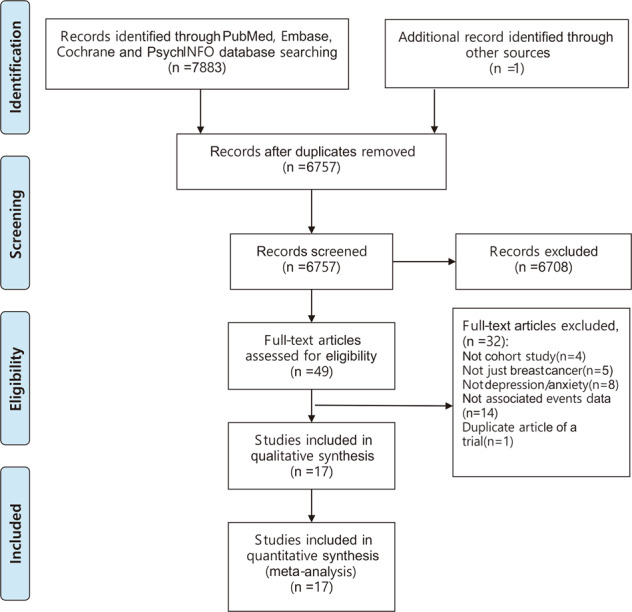
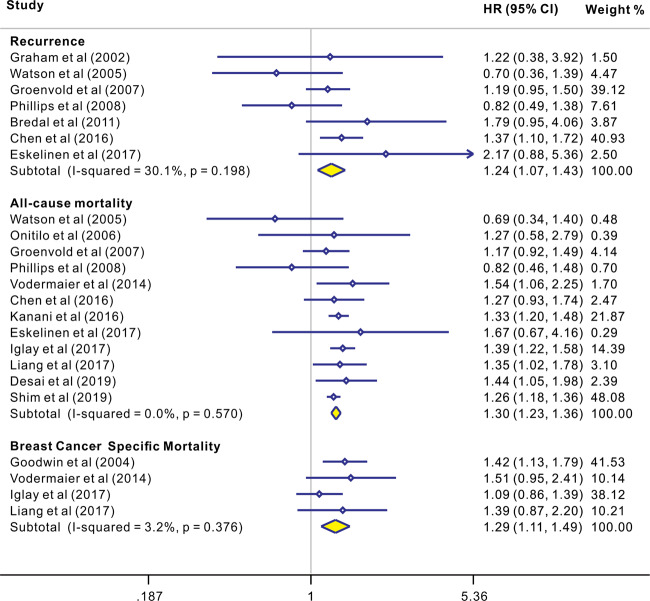
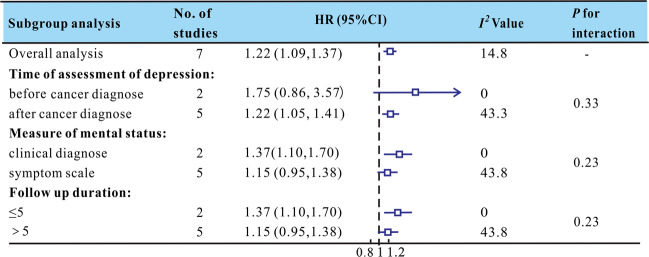
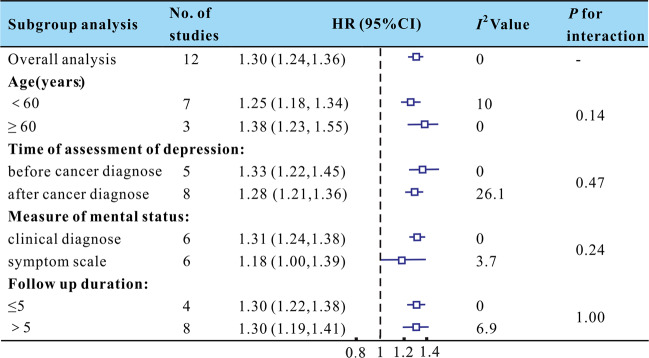
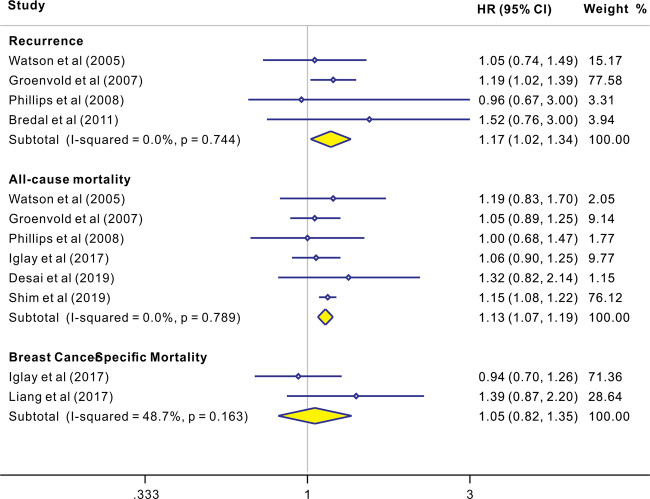
Depression and anxiety are common comorbidities in breast cancer patients. Whether depression and anxiety are associated with breast cancer progression or mortality is unclear. Herein, based on a systematic literature search, 17 eligible studies involving 282,203 breast cancer patients were included. The results showed that depression was associated with cancer recurrence [1.24 (1.07, 1.43)], all-cause mortality [1.30 (1.23, 1.36)], and cancer-specific mortality [1.29 (1.11, 1.49)]. However, anxiety was associated with recurrence [1.17 (1.02, 1.34)] and all-cause mortality [1.13 (1.07, 1.19)] but not with cancer-specific mortality [1.05 (0.82, 1.35)]. Comorbidity of depression and anxiety is associated with all-cause mortality [1.34 (1.24, 1.45)] and cancer-specific mortality [1.45 (1.11, 1.90)]. Subgroup analyses demonstrated that clinically diagnosed depression and anxiety, being female and of younger age (<60 years), and shorter follow-up duration (≤5 years) were related to a poorer prognosis. Our study highlights the critical role of depression/anxiety as an independent factor in predicting breast cancer recurrence and survival. Further research should focus on a favorable strategy that works best to improve outcomes among breast cancer patients with mental disorders.
Overview
The claims and statistics of this paper haven’t been checked yet.
Free: it reads the open-access text and checks the first 5 claims that cite a source we can check. Create a free account to check every claim.
Integrity signals
Registry
Cites
Statistics
Figures
Verification
Claims the paper makes
The claims and statistics of this paper haven’t been checked yet.
Free: it reads the open-access text and checks the first 5 claims that cite a source we can check. Create a free account to check every claim.
Claims other papers make about this one
Each is checked against this paper’s own text: does it say what the citing paper says it does?
The source backs part of the claim, not all of it — or backs it for a different population, condition or comparison.
In the citing paper
“Elevated anxiety predicts nonadherence to recommended therapies, [23][24][25] higher use and costs of medical care, [26][27][28] and possibly cancer recurrence.29”
From Management of Anxiety and Depression in Adult Survivors of Cancer: ASCO Guideline Update (2023) · cites this paper as [29]
Experimental — accuracy not yet measuredThe source backs part of the claim, not all of it — or backs it for a different population, condition or comparison.
In the citing paper
“Meta-analyses report an overall global prevalence of anxiety in BC patients at around 41.9%, with signifcantly higher rates in developing countries like Iran, where it reaches 65.5% [11,12].”
From Internet‐Based Telecare and Bibliotherapy Delivery of Acceptance and Commitment Therapy for Reducing Anxiety and Depression in Breast Cancer Patients: A Randomized Controlled Trial. (2026) · cites this paper as [12]
Experimental — accuracy not yet measured
Self-check
Percentages, sums and reported differences re-computed from the paper’s own numbers.
The self-check needs the paper’s full text.
Citations
Cites
1 retracted
Kamiya, A., Hayama, Y., Kato, S., Shimomura, A., Shimomura, T., Irie, K., Kaneko, R., Yanagawa, Y., Kobayashi, K., & Ochiya, T. (2019) · Nature Neuroscience · doi:10.1038/s41593-019-0430-3 · Cited by 288
RetractedBray, F., Ferlay, J., Soerjomataram, I., Siegel, R. L., Torre, L. A., & Jemal, A. (2018) · CA: A Cancer Journal for Clinicians · doi:10.3322/caac.21492 · Cited by 84,109
Measuring inconsistency in meta-analyses
Higgins, J. P. T., Thompson, S. G., Deeks, J. J., & Altman, D. G. (2003) · BMJ · doi:10.1136/bmj.327.7414.557 · Cited by 63,139
Bias in meta-analysis detected by a simple, graphical test
Egger, M., Smith, G. D., Schneider, M., & Minder, C. (1997) · BMJ · doi:10.1136/bmj.315.7109.629 · Cited by 56,722
Dermyshi, E., Wang, Y., Yan, C., Hong, W., Qiu, G., Gong, X., & Zhang, T. (2017) · Neonatology · doi:10.1159/000454668 · Cited by 24,451
Meta-analysis of Observational Studies in Epidemiology<SUBTITLE>A Proposal for Reporting</SUBTITLE>
Stroup, D. F. (2000) · JAMA · doi:10.1001/jama.283.15.2008 · Cited by 20,623
Stang, A. (2010) · European Journal of Epidemiology · doi:10.1007/s10654-010-9491-z · Cited by 17,396 · cited 1×
“All of the selected articles were examined in terms of quality based on the Newcastle–Ottawa Quality Assessment Scale for cohort studies [41].”
BackgroundRelation of tumor size, lymph node status, and survival in 24,740 breast cancer cases
Carter, C. L., Allen, C., & Henson, D. E. (1989) · Cancer · doi:10.1002/1097-0142(19890101)63:1<181::aid-cncr2820630129>3.0.co;2-h · Cited by 2,288
Nicholson, A., Kuper, H., & Hemingway, H. (2006) · European Heart Journal · doi:10.1093/eurheartj/ehl338 · Cited by 1,353 · cited 1×
“This variation was also found in previous similar meta-analyses of the association between depression in cardiac patients and prognosis [57, 60].”
ResultChronic stress promotes tumor growth and angiogenesis in a mouse model of ovarian carcinoma
Thaker, P. H., Han, L. Y., Kamat, A. A., Arevalo, J. M., Takahashi, R., Lu, C., Jennings, N. B., Armaiz-Pena, G., Bankson, J. A., Ravoori, M., et al. (2006) · Nature Medicine · doi:10.1038/nm1447 · Cited by 1,320
Self-citation
Cited by
Stress and cancer: mechanisms, significance and future directions
Eckerling, A., Ricon-Becker, I., Sorski, L., Sandbank, E., & Ben-Eliyahu, S. (2021) · Nature Reviews Cancer · doi:10.1038/s41568-021-00395-5 · Cited by 348
Anxiety and depression in adult cancer patients: ESMO Clinical Practice Guideline
Grassi, L., Caruso, R., Riba, M. B., Lloyd-Williams, M., Kissane, D., Rodin, G., McFarland, D., Campos-Ródenas, R., Zachariae, R., Santini, D., et al. (2023) · ESMO Open · doi:10.1016/j.esmoop.2023.101155 · Cited by 316
“Volume 8 - Issue 2 - 2023 treatment, more advanced disease and ChT have all been shown to be significant risk factors for depression.(1,2) Furthermore, there is increasing evidence that higher tumour cell burden and treatment-related tissue destruction are associated with increased release of proinflammatory cytokines…”
BackgroundCarlson, L. E., Ismaila, N., Addington, E. L., Asher, G. N., Atreya, C., Balneaves, L. G., Bradt, J., Fuller-Shavel, N., Goodman, J., Hoffman, C. J., et al. (2023) · Journal of Clinical Oncology · doi:10.1200/jco.23.00857 · Cited by 309
“This is important not only for improving overall psychosocial adjustment and quality of life, but because untreated depression and anxiety symptoms are consistently associated with higher overall mortality in people with cancer.(161,162) Interest among those diagnosed and treated for cancer in these complementary form…”
BackgroundManagement of Anxiety and Depression in Adult Survivors of Cancer: ASCO Guideline Update
Andersen, B. L., Lacchetti, C., Ashing, K., Berek, J. S., Berman, B. S., Bolte, S., Dizon, D. S., Given, B., Nekhlyudov, L., Pirl, W., et al. (2023) · Journal of Clinical Oncology · doi:10.1200/jco.23.00293 · Cited by 318
“Elevated anxiety predicts nonadherence to recommended therapies,(23-25) higher use and costs of medical care,(26-28) and possibly cancer recurrence.(29) As is the case for those without cancer, depression and anxiety usually co-occur.”
BackgroundIs cancer biology different in older patients?
Van Herck, Y., Feyaerts, A., Alibhai, S., Papamichael, D., Decoster, L., Lambrechts, Y., Pinchuk, M., Bechter, O., Herrera-Caceres, J., Bibeau, F., et al. (2021) · The Lancet Healthy Longevity · doi:10.1016/s2666-7568(21)00179-3 · Cited by 161
Zeng, Y., Hu, C., Li, Y.-Z., Zhou, J., Wang, S., Liu, M.-D., Qiu, Z., Deng, C., Ma, F., Xia, C.-F., et al. (2024) · Nature Medicine · doi:10.1038/s41591-024-02929-4 · Cited by 187
“Most previous studies looking at the relationship between ED and clinical outcomes commonly with objectives on QoL and prognosis mostly derived results from retrospective clinical data in patients with cancer 14,28,34–38 .”
Self-citationDragioti, E., Radua, J., Solmi, M., Gosling, C. J., Oliver, D., Lascialfari, F., Ahmed, M., Cortese, S., Estradé, A., Arrondo, G., et al. (2023) · World Psychiatry · doi:10.1002/wps.21068 · Cited by 130
Predicting breast cancer 5-year survival using machine learning: A systematic review
Li, J., Zhou, Z., Dong, J., Fu, Y., Li, Y., Luan, Z., & Peng, X. (2021) · PLoS ONE · doi:10.1371/journal.pone.0250370 · Cited by 139
“With the deepening of research on breast cancer, many new variables that are significantly related to breast cancer prognosis have been gradually discovered [14, 76, 77], such as the level of anxiety and depression.”
BackgroundThe cancer-immune dialogue in the context of stress
Ma, Y., & Kroemer, G. (2023) · Nature reviews. Immunology · doi:10.1038/s41577-023-00949-8 · Cited by 133
Clift, A. K., Dodwell, D., Lord, S., Petrou, S., Brady, M., Collins, G. S., & Hippisley-Cox, J. (2023) · BMJ · doi:10.1136/bmj-2022-073800 · Cited by 97
Chronic stress in solid tumor development: from mechanisms to interventions
Yan, J., Chen, Y., Luo, M., Hu, X., Li, H., Liu, Q., & Zou, Z. (2023) · Journal of Biomedical Science · doi:10.1186/s12929-023-00903-9 · Cited by 96
“Depression/anxiety is associated with recurrence in breast cancer patients, with recent animal studies providing supportive evidence [42].”
BackgroundResultRole of stress in the pathogenesis of cancer (Review)
Lempesis, I. G., Georgakopoulou, V., Papalexis, P., Chrousos, G. P., & Spandidos, D. A. (2023) · International Journal of Oncology · doi:10.3892/ijo.2023.5572 · Cited by 87
“Retrospective and/or prospective clinical studies have demon‑ strated higher stress levels in relation to breast cancer, while others have shown no association (12,28,34,109,110).”
BackgroundA brain-tumor neural circuit controls breast cancer progression in mice
Xiong, S., Wen, H., Dai, L., Lou, Y.-X., Wang, Z.-Q., Yi, Y.-L., Yan, X.-J., Wu, Y., Sun, W. M., Chen, P., et al. (2023) · Journal of Clinical Investigation · doi:10.1172/jci167725 · Cited by 85
“A growing body of evidence suggests that cancer-induced anxiety can accelerate tumor progression (6–10).”
BackgroundSelf-citationZheng, Y., Wang, N., Wang, S., Zhang, J., Yang, B., & Wang, Z. (2023) · Journal of Experimental & Clinical Cancer Research · doi:10.1186/s13046-023-02696-z · Cited by 88
“Depression and anxiety, either alone or in combination, was found to be an independent indicator of recurrence and mortality in a systematic analysis involving 282,203 breast cancer patients [7].”
BackgroundSelf-citationBreast tumor-on-chip models: From disease modeling to personalized drug screening
Bano, S., Dahiya, U. R., Mishra, S., Ayache, J., Casquillas, G. V., Caballero, D., Reis, R. L., & Kundu, S. C. (2021) · Journal of Controlled Release · doi:10.1016/j.jconrel.2020.12.057 · Cited by 83
Recent Advances of Organ-on-a-Chip in Cancer Modeling Research
Liu, X., Su, Q., Zhang, X., Yang, W., Ning, J., Jia, K., Xin, J., Li, H., Yu, L., Liao, Y., et al. (2022) · Biosensors · doi:10.3390/bios12111045 · Cited by 75
Pan, J., Zhang, L., Wang, X., Li, L., Yang, C., Wang, Z., Su, K., Hu, X., Zhang, Y., Ren, G., et al. (2023) · Journal of Experimental & Clinical Cancer Research · doi:10.1186/s13046-023-02836-5 · Cited by 69
“A meta-analysis which contained 282,203 patients with breast cancer demonstrates that breast cancer-specific mortality is correlated with the state of depression, and patients suffered both breast cancer and depression have a worse prognosis [13].”
BackgroundSelf-citationHajj, A., Hachem, R. E., Khoury, R., Hallit, S. R., ElJEBBAWI, B., Nasr, F. L., Karak, F. E., Chahine, G. Y., Kattan, J. G., & Khabbaz, L. R. (2021) · BMC Cancer · doi:10.1186/s12885-021-08615-9 · Cited by 79
“Discussion Anxiety and depression coexisting during cancer diagnosis and treatment are a source of major distress in breast cancer patients and have a negative impact on the prognosis, treatment adherence, survival rate and quality of life [48].”
BackgroundThe Impact of Cancer on Mental Health and the Importance of Supportive Services
Fereidouni, Z., Abnavi, S. D., Ghanbari, Z., Gashmard, R., Zarepour, F., Samani, N. K., Sharma, A. R., & Ghasemi, A. (2024) · Galen Medical Journal · doi:10.31661/gmj.v13i.3327 · Cited by 90
“Indeed, cancer is a complex disease, and outcomes could vary widely de - pending on factors such as the stage of can - cer, type of cancer, treatment effectiveness, and individual response [25].”
BackgroundUltrasound-Based Radiomics Analysis for Predicting Disease-Free Survival of Invasive Breast Cancer
Xiong, L., Chen, H., Tang, X., Chen, B., Jiang, X., Liu, L., Feng, Y., Liu, L., & Li, L. (2021) · Frontiers in Oncology · doi:10.3389/fonc.2021.621993 · Cited by 68
Biobehavioral Pathways and Cancer Progression: Insights for Improving Well-Being and Cancer Outcomes
Chang, A., Sloan, E. K., Antoni, M. H., Knight, J. M., Telles, R., & Lutgendorf, S. K. (2022) · Integrative Cancer Therapies · doi:10.1177/15347354221096081 · Cited by 65
Zhu, Q., Han, Y., He, Y., Meng, P., Fu, Y., Yang, H., He, G., Long, M., & Shi, Y. (2024) · Phytomedicine · doi:10.1016/j.phymed.2024.155560 · Cited by 66
Zhang, J., Wang, N., Zheng, Y., Yang, B., Wang, S., Wang, X., Pan, B., & Wang, Z. (2022) · Journal of Advanced Research · doi:10.1016/j.jare.2022.06.006 · Cited by 58
“A large meta-analysis of 282,203 breast cancer patients showed that depression and anxiety were closely associated with recurrence and mortality [15].”
BackgroundSelf-citationBodywide ecological interventions on cancer
Kroemer, G., McQuade, J. L., Mérad, M., André, F., & Zitvogel, L. (2023) · Nature Medicine · doi:10.1038/s41591-022-02193-4 · Cited by 57
Ungvari, Z. I., Fekete, M., Buda, A., Lehoczki, A., Fekete, J. T., Varga, P., Ungvari, A., & Győrffy, B. (2025) · GeroScience · doi:10.1007/s11357-025-01676-9 · Cited by 64
Lopes, C., Lopes-Conceição, L., Fontes, F., Ferreira, A., Pereira, S., Lunet, N., & Araújo, N. (2022) · Current Oncology · doi:10.3390/curroncol29030173 · Cited by 69
“Moreover, anxiety and depression have been associated with breast cancer recurrence and all-cause mortality, and depression with cancer-specific mortality [5].”
BackgroundBai, C., Luo, H., He, B., Liu, X., Lv, D., Zhang, X., Su, K., Zheng, S., Lü, J., Wang, C., et al. (2025) · Signal Transduction and Targeted Therapy · doi:10.1038/s41392-025-02159-1 · Cited by 61
“44 Here we report that gut microbiota is essential for psychological stress to promote the stem-like properties of breast cancer cells.”
Self-citationNijs, J., Lahousse, A., Fernández‐de‐las‐Peñas, C., Madeleine, P., Fontaine, C., Nishigami, T., Desmedt, C., Vanhoeij, M., Mostaqim, K., Vargas, A. I. C., et al. (2023) · British Journal of Anaesthesia · doi:10.1016/j.bja.2022.12.013 · Cited by 53
Zhang, H., Xu, H., Zhang, Z., & Zhang, Q. (2022) · BMJ Open · doi:10.1136/bmjopen-2021-051808 · Cited by 56
Zheng, Y., Zhang, J., Huang, W., Zhong, L. L. D., Wang, N., Wang, S., Yang, B., Wang, X., Pan, B., Situ, H., et al. (2021) · Frontiers in Pharmacology · doi:10.3389/fphar.2021.714163 · Cited by 43
Self-citationCai, Y., Zhaoxiong, Y., Zhu, W., & Wang, H. (2024) · Annals of Medicine · doi:10.1080/07853890.2024.2314235 · Cited by 46
Chang, Y., Tseng, T. A., Lin, G., Hu, W., Wang, C.-K., & Chang, Y. (2023) · BMC Women s Health · doi:10.1186/s12905-023-02486-x · Cited by 48
“A meta-analysis revealed that depression in breast cancer survivors has a significant association with cancer recurrence, cancer-specific mortality, and all-cause mortality; moreover, anxiety in breast cancer survivors is associated with cancer recurrence and all-cause mortality but not with cancer-specific mortality…”
BackgroundZhu, W., Gao, J., Guo, J., Wang, L., & Li, W. (2023) · Supportive Care in Cancer · doi:10.1007/s00520-023-07972-4 · Cited by 51
Bai, Y., Niu, L., Song, L., Dai, G., Zhang, W., He, B., San, W., & Li, S. (2024) · Phytomedicine · doi:10.1016/j.phymed.2024.155427 · Cited by 35
Valente, S. A., & Roesch, E. E. (2024) · Journal of Surgical Oncology · doi:10.1002/jso.27627 · Cited by 52
Koç, Z., Kaplan, E., & Tanrıverdi, D. (2024) · Journal of Telemedicine and Telecare · doi:10.1177/1357633x211069663 · Cited by 33
“29 Considering all these study results and the overall burden of mental disorders, 2 early and regular detection and timely treatment of mental disorders of the breast cancer patients, especially in the early period after cancer diagnosis, is extremely important.”
BackgroundImpact of Gut Microbiota on the Association between Diet and Depressive Symptoms in Breast Cancer
Maitiniyazi, G., Cao, X., Chen, Y., Zhang, R., Liu, Y., Li, Z., Gu, D., Li, T., & Xia, S. (2022) · Nutrients · doi:10.3390/nu14061186 · Cited by 36
“Depression can lead to severe physical symptoms, raised functional impairment and poor treatment adherence and is an independent predictor of breast cancer recurrence and survival [5].”
BackgroundYang, T., Guo, Z., Zhu, X., Liu, X., & Guo, Y. (2023) · Frontiers in Public Health · doi:10.3389/fpubh.2023.1204285 · Cited by 43
Fan, Y.-C., Hsiao, F.-H., & Hsieh, C.-C. (2023) · Palliative and Supportive Care · doi:10.1017/s1478951522001316 · Cited by 31
“Psychological distress influences cancer patients’ quality of life, self-concept, and emotional well-being; it is associated with poor disease progression, cancer recurrence, and lower cancer survival rates (Niedzwiedz et al. 2019; Walker et al. 2020; Wang et al. 2020).”
Yang, J., Wei, W., Zhang, S., & Jiang, W. (2024) · International Immunopharmacology · doi:10.1016/j.intimp.2024.112568 · Cited by 40
der Elst, S. V., Bardash, Y., Wotman, M. T., Kraus, D. H., & Tham, T. (2021) · Head & Neck · doi:10.1002/hed.26868 · Cited by 31
Andersen, B. L., Myers, J. A., Blevins, T. R., Park, K. R., Smith, R. M., Reisinger, S. A., Carbone, D. P., Presley, C. J., Shields, P. G., & Carson, W. E. (2023) · PLoS ONE · doi:10.1371/journal.pone.0282206 · Cited by 34
“In the general case, depression assessed at diagnosis is prognostic for mortality in cancer patients [4], with the strongest effects found in lung cancer [5].”
BackgroundPezzolato, M., Spada, G. E., Fragale, E., Cutica, I., Masiero, M. A., Marzorati, C., & Pravettoni, G. (2023) · Patient Preference and Adherence · doi:10.2147/ppa.s440148 · Cited by 35
“9,10 Furthermore, psychological distress is associated with poorer clinical outcomes, such as a higher risk of cancer recurrence, poorer survival, greater all-cause and cancer-related mortality and morbidity, 11–14 poorer QoL, and lower adherence to medication.”
BackgroundChronic Psychological Stress in Oncogenesis: Multisystem Crosstalk and Multimodal Interventions
Huang, B., An, H., Wu, H., Qiu, Y., Su, Y., Chen, L., Georgakopoulou, V., Lin, J., Chen, W., Li, R., et al. (2025) · Research · doi:10.34133/research.0948 · Cited by 49
“…research resolves this paradox: while psychological resilience demonstrates limited capacity to alter cancer mortality, substantial evidence now confirms that persistent CPS states (stress, anxiety, and depression) actively potentiate tumorigenic processes and influence disease prognosis [ 15 ].”
Related Factors with Depression and Anxiety in Mastectomized Women Breast Cancer Survivors
Álvarez-Pardo, S., Fernández, J. A. D. P., Romero-Pérez, E. M., Tánori-Tapia, J. M., del Cid, P. A. R., Gonzalez-Bernal, J. J., Fernández-Solana, J., Simón‐Vicente, L., Mielgo‐Ayuso, J., & González‐Santos, J. (2023) · International Journal of Environmental Research and Public Health · doi:10.3390/ijerph20042881 · Cited by 34
“These protocols could include the prescription of personalized physical exercise, therapies with psychooncology professionals, self-care activities and talks with women BCSs to advise them and share their experiences [52,53].”
BackgroundCui, B., He, B., Huang, Y., Wang, C., Luo, H., Lü, J., Su, K., Zhang, X., Luo, Y., Zhao, Z., et al. (2023) · Cell Death and Disease · doi:10.1038/s41419-023-06200-5 · Cited by 35
“In the case of breast cancer, a systematic meta-analysis of 282,203 patients reveals that depression and anxiety in breast cancer patients predict a higher risk for both recurrence and mortality [30].”
Xu, C., Ganesan, K., Liu, X., Ye, Q., Cheung, Y. S., Liu, D., Zhong, S., & Chen, J. (2022) · Cancers · doi:10.3390/cancers14030475 · Cited by 34
“It is alleged that psychotherapy and mind–body treatments may release NEs symptoms in BC patients [7].”
BackgroundResultInfluentialDistress Trajectories in Black and White Breast Cancer Survivors: From Diagnosis to Survivorship
Madison, A. A., Peng, J., Shrout, M. R., Renna, M. E., Alfano, C. M., Povoski, S. P., Lipari, A. M., Agnese, D. M., Carson, W. E., Malarkey, W. B., et al. (2021) · Psychoneuroendocrinology · doi:10.1016/j.psyneuen.2021.105288 · Cited by 34
“Distress can impact (and is impacted by) patient-provider communication, treatment delivery and outcomes, quality of life in survivorship, immune function, cancer recurrence, and the development of comorbidities (National Comprehensive Cancer Network, 2021, Renna et al., 2020,; Wang et al., 2020).”
BackgroundLv, D., Lan, B., Zhang, L., Sun, X., Yang, M. H., & Ma, F. (2022) · Cancer Medicine · doi:10.1002/cam4.5283 · Cited by 35
Liu, Q., Sun, H., Liu, Y., Li, X., Xu, B., Li, L., & Jin, W. (2022) · Advanced Science · doi:10.1002/advs.202105672 · Cited by 33
Fraile‐Μartinez, O., Álvarez-Mon, M. Á., Montero, C. G., Pekarek, L., Guijarro, L. G., Lahera, G., Sáez, M. A., Monserrat, J., Motogo, D., Quintero, J., et al. (2022) · Frontiers in Oncology · doi:10.3389/fonc.2022.956923 · Cited by 33
“As mentioned earlier, the links between depression and cancer are multiple, including numerous metabolic, neuroendocrine, psychological, or immune pathways, without forgetting that depression is an adverse prognostic factor in itself (101, 102).”
BackgroundChen, Y., Maitiniyazi, G., Li, Z., Li, T., Liu, Y., Zhang, R., Cao, X., Gu, D., & Xia, S. (2022) · Nutrients · doi:10.3390/nu15010084 · Cited by 26
“epS is a com on mental disorder among breast can er patients which can negatively affect prognosis, treatment adherence, quality of life, and survival [7].”
BackgroundInfluentialChen, X., Liu, X., Li, F., He, H., Li, X., Qin, T., Jiang, B., Chen, Y., Wang, Y., Su, Y., et al. (2025) · Translational Psychiatry · doi:10.1038/s41398-025-03463-8 · Cited by 39
“3).”
Self-citationBidirectional Relations Between Anxiety, Depression, and Cancer: A Review
Montazersaheb, S., Soofiyani, S. R., Nakhlband, A., Farahzadi, R., Saeedi, N., & Barzegar, H. (2022) · Current Drug Targets · doi:10.2174/1389450123666220922094403 · Cited by 32
Awakening of Dormant Breast Cancer Cells in the Bone Marrow
Wieder, R. (2023) · Cancers · doi:10.3390/cancers15113021 · Cited by 30
Yu, S., Gan, C., Li, W., Zhang, Q., Cai, Y., Xu, J., Huang, R., Yao, S., Cheng, L. J., & Cheng, H. (2024) · Biochimica et Biophysica Acta (BBA) - Molecular Basis of Disease · doi:10.1016/j.bbadis.2024.167581 · Cited by 31
Geng, L., Duan, Y., Li, X., Yue, S., Li, R., Liu, H., & Su, C. (2023) · Worldviews on Evidence-Based Nursing · doi:10.1111/wvn.12669 · Cited by 30
Kaempferol Improves Breast Cancer-Related Depression through the COX-2/PGE2 Pathway
Zhu, Q., Han, Y., He, Y., Fu, Y., Yang, H., Chen, Y., & Shi, Y. (2023) · Frontiers in Bioscience-Landmark · doi:10.31083/j.fbl2811311 · Cited by 28
“Meta-analysis showed that depression was associated with relapse and mortality in BC [3].”
BackgroundMalgaroli, M., Szuhany, K. L., Riley, G., Miron, C. D., Park, J. H., Rosenthal, J., Chachoua, A., Meyers, M. I., & Simon, N. M. (2022) · Journal of Cancer Survivorship · doi:10.1007/s11764-022-01195-y · Cited by 32
“A recent meta-analysis highlighted that depression and anxiety are associated with greater cancer recurrence, cancer-specific mortality, and all-cause mortality, with depression predicting a 30% increase in overall mortality risk [7].”
BackgroundLan, B., Lv, D., Yang, M. H., Sun, X., Zhang, L., & Ma, F. (2022) · Journal of the National Cancer Center · doi:10.1016/j.jncc.2022.06.002 · Cited by 34
Park, S. K., Min, Y. H., & Lee, S. B. (2021) · Healthcare · doi:10.3390/healthcare9091223 · Cited by 21
“Evidence shows that depression in patients with breast cancer increases poor adherence to cancer treatment [8,9], cancer recurrence [10,11], and cancer-specific mortality [10].”
BackgroundCancer mortality in Common Mental Disorders: A 10-year retrospective cohort study
Chierzi, F., Stivanello, E., Musti, M. A., Perlangeli, V., Marzaroli, P., Rossi, F. D., Pandolfi, P., Saponaro, A., Grassi, L. G., Murri, M. B., et al. (2022) · Social Psychiatry and Psychiatric Epidemiology · doi:10.1007/s00127-022-02376-x · Cited by 24
Exercise Across the Phases of Cancer Survivorship: A Narrative Review
An, K., Min, J., Lee, D. H., Kang, D., Courneya, K. S., & Jeon, J. Y. (2024) · Yonsei Medical Journal · doi:10.3349/ymj.2023.0638 · Cited by 26
Xia, S., Zhu, Y., Luo, L., Wu, W., Ma, L., Yu, L., & Li, Y. (2024) · International Journal of Colorectal Disease · doi:10.1007/s00384-024-04619-6 · Cited by 23
“This finding is consistent with that reported by Wang et al. [31], who analyzed the relationship between breast cancer and depression.”
ResultScreening for Distress and Health Outcomes in Head and Neck Cancer
Gascon, B., Panjwani, A. A., Mazzurco, O., & Li, M. (2022) · Current Oncology · doi:10.3390/curroncol29060304 · Cited by 24
“have shown that depression, as well as comorbid depression and anxiety, are associated with survival in breast cancer, but anxiety alone is not [49].”
BackgroundLi, H., Lockwood, M. B., Schlaeger, J. M., Liu, T., Danciu, O. C., & Doorenbos, A. Z. (2022) · Pain Management Nursing · doi:10.1016/j.pmn.2022.09.002 · Cited by 24
Biomarker opportunities in the treatment of cancer-related depression
Panjwani, A. A., Aguiar, S., Gascon, B., Brooks, D. G., & Li, M. (2022) · Trends in Molecular Medicine · doi:10.1016/j.molmed.2022.10.003 · Cited by 23
Mahlaq, S., Lahlou, L., Rammouz, I., Abouqal, R., & Belayachi, J. (2023) · BMC Women s Health · doi:10.1186/s12905-023-02769-3 · Cited by 24
“Additionally, a Chinese meta-analysis study in 2020 found that depression was associated with cancer recurrence (β = 1.24, 95%CI: 1.07,1.43) [53].”
BackgroundInfluentialRaj, A. T., Kheur, S. M., Bhonde, R. R., Mani, V. R. K., Baeshen, H. A., & Patil, S. (2021) · Saudi Journal of Biological Sciences · doi:10.1016/j.sjbs.2021.07.029 · Cited by 23
Roziner, I., Perry, S., Dahabre, R., Bentley, G., Kelada, L., Poikonen‐Saksela, P., Mazzocco, K., Sousa, B., Karademas, E. C., Simos, P. G., et al. (2022) · Stress and Health · doi:10.1002/smi.3193 · Cited by 19
“Indeed, in the context of breast cancer, research has shown that improving psychological wellbeing can improve physical wellbeing, and possibly also survival rate (Giese‐Davis et al., 2011; McGregor & Antoni, 2009; Wang et al., 2020).”
BackgroundChen, J., Li, J., Qiao, H., Hu, R. H., & Li, C. (2023) · Cytokine · doi:10.1016/j.cyto.2022.156115 · Cited by 20
Neural Circuitries between the Brain and Peripheral Solid Tumors
Chen, X., Geng, Y., Wei, G., He, D., Lv, J., Wen, W., Xiang, F., Tao, K., & Wu, C. (2024) · Cancer Research · doi:10.1158/0008-5472.can-24-1779 · Cited by 21
“Importantly, these psychologic disorders not only degrade patients’ quality of life but also may hasten tumor progression (122).”
BackgroundDobretsova, A., & Derakshan, N. (2021) · Psycho-Oncology · doi:10.1002/pon.5732 · Cited by 21
Group-based trajectory and predictors of anxiety and depression among Chinese breast cancer patients
Li, W., Zhang, Q., Xu, Y., Sun, H., Wen, Y., Xu, W., Tong, Y., Garg, S., Chen, Y., & Yang, Y. (2022) · Frontiers in Public Health · doi:10.3389/fpubh.2022.1002341 · Cited by 21
“Identifying and managing anxiety and depression amongst the cancer population is of great importance (6).”
BackgroundHaywood, D., Kotov, R., Krueger, R. F., Wright, A. G. C., Forbes, M. K., Dauer, E., Baughman, F. D., Rossell, S. L., & Hart, N. H. (2024) · Cancer Letters · doi:10.1016/j.canlet.2024.216818 · Cited by 20
Yang, T., Zhu, Z., Shi, J., Tong, L., Yang, J., Mei, S., & Ren, H. (2025) · BMC Psychiatry · doi:10.1186/s12888-025-06546-4 · Cited by 23
Choobin, M. H., Mirabolfathi, V., Chapman, B., Moradi, A., Grunfeld, E. A., & Derakshan, N. (2021) · Frontiers in Psychology · doi:10.3389/fpsyg.2021.663310 · Cited by 21
Lahiji, M. R., Sajadian, A. S., Haghighat, S., Zarrati, M., Dareini, H., Lahiji, M. R., & Razmpoosh, E. (2022) · Supportive Care in Cancer · doi:10.1007/s00520-022-07237-6 · Cited by 24
“A recent meta-analysis also reported that anxiety was associated with a 17% and 13% increase in the risk of cancer recurrence and all-cause mortality [6].”
Åsberg, R. E., Giskeødegård, G. F., Raj, S. X., Karlsen, J., Engstrøm, M. J., Salvesen, Ø. O., Nilsen, M., Lundgren, S., & Reidunsdatter, R. J. (2023) · Acta Oncologica · doi:10.1080/0284186x.2023.2238548 · Cited by 17
“Of all the late effects, fatigue [5], pain [6,7], and psychological problems [8,9] have received most attention in research and clinical practice, whereas sexual problems have been handled more discreetly among both clinicians and patients [10].”
BackgroundChapman, B., Louis, C. C., Moser, J. S., Grunfeld, E. A., & Derakshan, N. (2023) · Psycho-Oncology · doi:10.1002/pon.6232 · Cited by 17
Howell, D., Metcalfe, K. A., Kong, S., Stephen, J. E., Olivotto, I. A., Baxter, N. N., Friedenreich, C. M., Warner, E., Akbari, M. R., McBain, K., et al. (2022) · Breast Cancer Research and Treatment · doi:10.1007/s10549-022-06576-6 · Cited by 20
“Depression has been shown to be an independent risk factor for suicide in cancer [57] and predictive of all-cause and cancer specific mortality in breast cancer [11].”
BackgroundFang, J., Yu, C. S., Liu, J., Mao, X., Jia, X., Luo, J., & Liu, R. (2022) · Translational Cancer Research · doi:10.21037/tcr-22-428 · Cited by 16
“Study has shown that depression and anxiety negatively affect the treatment, relapse, and all-cause mortality of breast cancer patients (6).”
BackgroundOmari, M., Amaadour, L., Zarrouq, B., Al‐Sheikh, Y. A., Asri, A. E., Kriya, S., Nadi, S., Benbrahim, Z., Mellas, N., Rhazi, K. E., et al. (2023) · BMC Women s Health · doi:10.1186/s12905-023-02571-1 · Cited by 22
Zhan, D., Wang, X., Zheng, Y., Wang, S., Yang, B., Pan, B., Wang, N., & Wang, Z. (2023) · Frontiers in Oncology · doi:10.3389/fonc.2023.1147189 · Cited by 20
“A meta-analysis showed that depression was associated with breast cancer recurrence, all-cause mortality, and tumor-specific mortality as independent predictors of breast cancer recurrence and survival (4).”
BackgroundSelf-citationLin, S., Zhou, Z., Qi, Y., Chen, J., Xu, G., Shi, Y., Yu, Z., Li, M., & Chai, K. (2024) · Clinical & Translational Oncology · doi:10.1007/s12094-023-03367-3 · Cited by 19
“Epidemiological studies have reported that depression is highly associated with the occurrence and progression of cancer [6].”
Rasmussen, G. H. F., Kristiansen, M. V., Arroyo‐Morales, M., Voigt, M., & Madeleine, P. (2022) · Medicine & Science in Sports & Exercise · doi:10.1249/mss.0000000000003034 · Cited by 18
“Collectively, these issues have a profound negative effect on quality of life and long-term survival in BCS (7,8), and hence, there is a need for novel and”
BackgroundGao, Z., Yin, X., Shi, H., Ni, J., Xu, W., & Zhang, K. (2022) · Frontiers in Oncology · doi:10.3389/fonc.2022.993367 · Cited by 15
“Several studies have reported potential associations of mental disorders with the risk of breast cancer incidence and its recurrence or mortality (52, 53).”
BackgroundNakamura, Z. M., Small, B. J., Zhai, W., Ahles, T. A., Ahn, J., Artese, A., Bethea, T. N., Breen, E. C., Cohen, H. J., Extermann, M., et al. (2023) · Journal of Cancer Survivorship · doi:10.1007/s11764-023-01490-2 · Cited by 18
“Moreover, depression in cancer survivors is associated with increased disease progression and higher risk for all-cause mortality [7, 8].”
Lin, Y., Kuan, C., Lo, C., Tsai, L., Wu, C., Huang, C., Yeong, E., Tai, H., & Huang, C. (2023) · Plastic & Reconstructive Surgery Global Open · doi:10.1097/gox.0000000000005385 · Cited by 16
“57 Those aspects were not taken into consideration in our analysis.”
BackgroundSelf-citationChirico, A., Palombi, T., Alivernini, F., Lucidi, F., & Merluzzi, T. V. (2024) · Annals of Behavioral Medicine · doi:10.1093/abm/kaae025 · Cited by 16
The mechanism of cancer-depression comorbidity
Huang, J.-W., Cao, C.-A., Zheng, W.-H., Jia, C.-R., Liu, X., Gao, S., & Guo, Y. (2024) · Neuroscience · doi:10.1016/j.neuroscience.2024.07.040 · Cited by 20
von Au, A., Dannehl, D., Dijkstra, T. M. H., Gutsfeld, R., Scholz, A. S., Haßdenteufel, K., Hahn, M., Hawighorst‐Knapstein, S., Isaksson, A., Chaudhuri, A., et al. (2024) · Cancers · doi:10.3390/cancers16213688 · Cited by 18
Chen, Y., Zuo, X., Tang, Y., & Zhou, Z. (2024) · Frontiers in Oncology · doi:10.3389/fonc.2024.1434087 · Cited by 20
de Oliveira, M. E. C., Torres, G. D. S. V., Franklin, R. G., Gomes, K. A. L., Nóbrega, W. F. S., Fernandes, T. P., & dos Santos, N. A. (2023) · Brazilian Journal of Medical and Biological Research · doi:10.1590/1414-431x2023e12947 · Cited by 18
“The occurrence of anxiety and depression in breast cancer patients is well established in the literature (70), and this seems to be more expressive in patients who have low dopamine and serotonin levels (71).”
BackgroundTeng, Y., Yin, Y., Shi, Y., Zhao, J., Sun, M., & Zhao, X. (2025) · Frontiers in Oncology · doi:10.3389/fonc.2025.1558652 · Cited by 22
Goel, N., Hernandez, A. E., Ream, M. E., Saez-Flores, E., Blomberg, B. B., Cole, S. W., & Antoni, M. H. (2023) · Breast Cancer Research and Treatment · doi:10.1007/s10549-023-07050-7 · Cited by 16
“Anxiety is a stress-related state that exacerbates one’s response to stressful stimuli [44, 45].”
BackgroundResultPerceived stress, anxiety, and depression in women with breast cancer: CIBC study
Vafaei, Z., Najafian, J., Shekarchizadeh, M., Mohammadifard, N., Mostafavi, S., Roohafza, H., Darakhshandeh, A., Khosravifarsani, M., Ashraf, F., Sharif, M., et al. (2023) · Journal of Cancer Research and Therapeutics · doi:10.4103/jcrt.jcrt_2205_21 · Cited by 13
Xu, F., Zhang, J., Xie, S., & Li, Q. (2024) · Medicine · doi:10.1097/md.0000000000038460 · Cited by 15
“[21] Cancer patients with a total HADS score of 13 or more were considered to be in need of psychosocial intervention support, [22] and HADS-A and HDAS-D scores > 7 were considered to have anxiety and depressive symptoms.”
BackgroundSelf-citationCancer and Stress: Understanding the Connections and Interventions
D’Andre, S. D., Ellsworth, L. L., Kirsch, J. L., Montane, H. N., Kruger, M. B., Donovan, K. A., Bronars, C. A., Markovic, S. N., & Ehlers, S. L. (2024) · American Journal of Lifestyle Medicine · doi:10.1177/15598276241304373 · Cited by 19
“67 There is much more data supporting that distress/anxiety/ depression are associated with a small to moderate increased risk of cancer mortality (Table 2).”
Wang, X., Wang, N., Zhong, L. L. D., Su, K., Wang, S., Zheng, Y., Yang, B., Zhang, J., Pan, B., Yang, W. P., et al. (2022) · Frontiers in Oncology · doi:10.3389/fonc.2022.879563 · Cited by 15
Self-citation
Metadata
- Authors
- Wang, X., Wang, N., Zhong, L., Wang, S., Zheng, Y., Yang, B., Zhang, J., Lin, Y., & Wang, Z.
- Affiliations
- Guangzhou University of Chinese Medicine (CN)
- Corresponding author
- Wang, Zhiyu
- Venue
- Molecular Psychiatry
- Published
- 2020-08-20
- Volume
- 25
- Issue
- 12
- Pages
- 3186-3197
- ISSN
- 1359-4184 (ISSN-L)
- 1476-5578
- PMC
- PMC7714689
- OpenAlex
- W3057125992
- Cited by
- 512
- References
- 71
- Citations by year
- 2026: 90 · 2025: 118 · 2024: 116 · 2023: 82 · 2022: 73 · 2021: 31 · 2020: 2
- FWCI
- 7.80
- Type
- journal article
- Language
- en
- Open access
- hybrid
- doi.org
- Licence
- cc-by
- creativecommons.org/licenses/by/4.0 (tdm)
- creativecommons.org/licenses/by/4.0 (vor)
- Locations
- Molecular Psychiatry (publishedVersion, cc-by)
- PubMed Central (publishedVersion, cc-by)
- PubMed (publishedVersion)
- Funders
- Guangdong Provincial Hospital of Traditional Chinese Medicine (81873306, 81703764, 81703749, 20181132, 2018KZDXM022, 2016A030306025, YN2018MJ07, 201904010407, 2018A030310506, YN2018QJ08, 20182044, 2017B030314166, 2017A030310213, 81573651, A1-2606-19-111-009, A1-3002-16-111-003)
- National Natural Science Foundation of China (A1-3002-16-111-003, 2016A030306025, 81703749, 81703764, 81573651, 2018KZDXM022, 81873306, 20181132, YN2018QJ08, YN2018MJ07, 81973526, A1-2606-19-111-009, 201904010407, 2017A030310213, 2017B030314166, 20182044, 2018A030310506)
- Natural Science Foundation of Guangdong Province (A1-3002-16-111-003, 2017B030314166, 81573651, 2017A030310213, 2018KZDXM022, 81703749, 20181132, YN2018MJ07, A1-2606-19-111-009, YN2018QJ08, 81703764, 2016A030306025, 20182044, 2018A030310506, 201904010407, 81873306)
- Department of Education of Guangdong Province (A1-2606-19-111-009, 81703749, 2016A030306025, 2017A030310213, 81573651, A1-3002-16-111-003, 20181132, 2018KZDXM022, 2017B030314166, 20182044, YN2018QJ08, 2018A030310506, 81703764, 201904010407, YN2018MJ07, 81873306)
- Guangzhou University of Chinese Medicine (QNYC20190101)
- Guangzhou University
- Science and Technology Planning Project of Guangdong Province (2017B030314166)
- Topics
- Life Sciences › Biochemistry, Genetics and Molecular Biology › Cancer Research › Cancer, Stress, Anesthesia, and Immune Response
- Health Sciences › Medicine › Oncology › Cancer survivorship and care
- Health Sciences › Medicine › Cardiology and Cardiovascular Medicine › Cardiac Health and Mental Health
- Keywords
- breast cancer, depression, anxiety, tumor recurrence, cancer-specific mortality, all-cause mortality, prognosis, psychiatric comorbidity, psychological distress
- MeSH terms
- Anxiety, Breast Neoplasms, Depression, Female, Humans, Middle Aged, Neoplasm Recurrence, Local, Prognosis
About these checks
Registry, retraction, Cites and statistics results are computed, not judged, with one exception: a printed reference that no index lists is read once by a model before it counts as a citation error. Claims are extracted by a model and kept only when their quote appears verbatim in the text; each cited source is then checked, with a model’s help, for whether it says what the claim relies on. Those verdicts can be wrong — read the claim’s quote and the cited source before relying on one.
Statistics and arithmetic are recomputed, not judged.
Confidence bands are shown only for fields calibrated on our annotated test set. None is calibrated yet, so no band is shown.
What counts as a claim ›How we measure confidence ›How we check this ›
Are you an author, or do you see a problem with this page? Request a review
Data sources
Bibliographic data: Semantic Scholar, OpenAlex, Crossref.
Contains information from the Semantic Scholar Academic Graph Datasets, made available under the ODC Attribution License (ODC-BY 1.0).
Semantic Scholar’s data is described in: Kinney, R., et al. (2023). The Semantic Scholar Open Data Platform. arXiv:2301.10140.
