

Prognostic value of depression and anxiety on breast cancer recurrence and mortality: a systematic review and meta-analysis of 282,203 patients
Open accessThe DOI matches its Crossref record; 74 of the 74 references it cites were found in a registry or an index.
Abstract
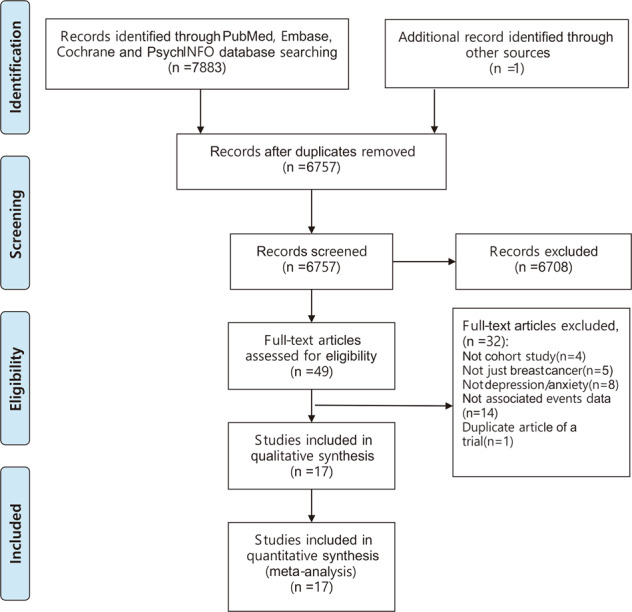
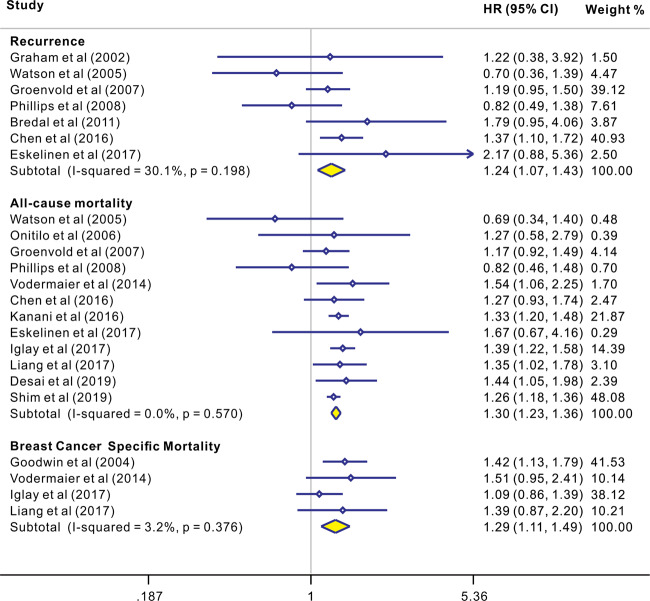
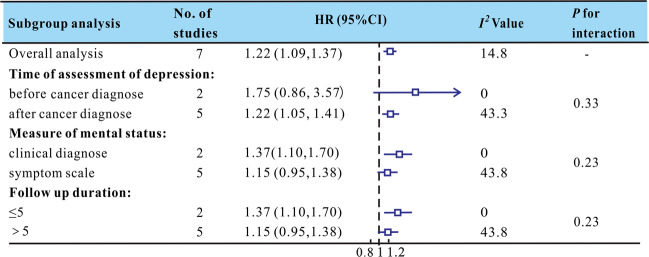
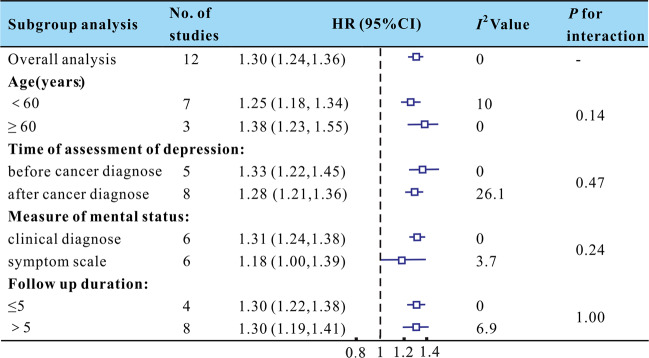
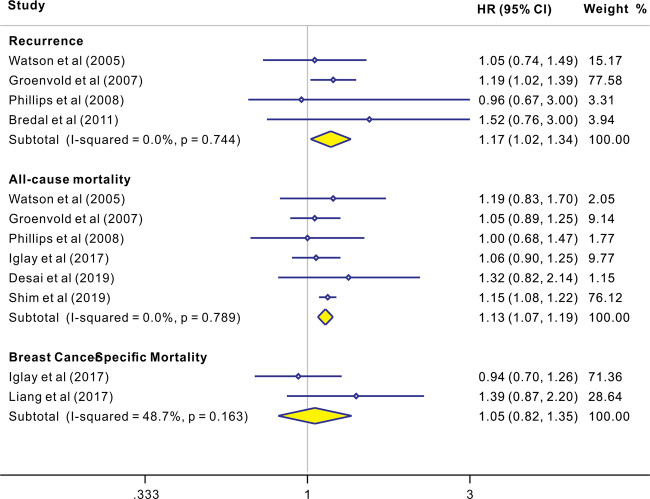
Depression and anxiety are common comorbidities in breast cancer patients. Whether depression and anxiety are associated with breast cancer progression or mortality is unclear. Herein, based on a systematic literature search, 17 eligible studies involving 282,203 breast cancer patients were included. The results showed that depression was associated with cancer recurrence [1.24 (1.07, 1.43)], all-cause mortality [1.30 (1.23, 1.36)], and cancer-specific mortality [1.29 (1.11, 1.49)]. However, anxiety was associated with recurrence [1.17 (1.02, 1.34)] and all-cause mortality [1.13 (1.07, 1.19)] but not with cancer-specific mortality [1.05 (0.82, 1.35)]. Comorbidity of depression and anxiety is associated with all-cause mortality [1.34 (1.24, 1.45)] and cancer-specific mortality [1.45 (1.11, 1.90)]. Subgroup analyses demonstrated that clinically diagnosed depression and anxiety, being female and of younger age (<60 years), and shorter follow-up duration (≤5 years) were related to a poorer prognosis. Our study highlights the critical role of depression/anxiety as an independent factor in predicting breast cancer recurrence and survival. Further research should focus on a favorable strategy that works best to improve outcomes among breast cancer patients with mental disorders.
Overview
The claims and statistics of this paper haven’t been checked yet.
Free: it reads the open-access text and checks the first 5 claims that cite a source we can check. Create a free account to check every claim.
Integrity signals
Registry
Cites
Statistics
Figures
Verification
Claims the paper makes
The claims and statistics of this paper haven’t been checked yet.
Free: it reads the open-access text and checks the first 5 claims that cite a source we can check. Create a free account to check every claim.
Claims other papers make about this one
Each is checked against this paper’s own text: does it say what the citing paper says it does?
The source backs part of the claim, not all of it — or backs it for a different population, condition or comparison.
In the citing paper
“Elevated anxiety predicts nonadherence to recommended therapies, [23][24][25] higher use and costs of medical care, [26][27][28] and possibly cancer recurrence.29”
From Management of Anxiety and Depression in Adult Survivors of Cancer: ASCO Guideline Update (2023) · cites this paper as [29]
Experimental — accuracy not yet measuredThe source backs part of the claim, not all of it — or backs it for a different population, condition or comparison.
In the citing paper
“Meta-analyses report an overall global prevalence of anxiety in BC patients at around 41.9%, with signifcantly higher rates in developing countries like Iran, where it reaches 65.5% [11,12].”
From Internet‐Based Telecare and Bibliotherapy Delivery of Acceptance and Commitment Therapy for Reducing Anxiety and Depression in Breast Cancer Patients: A Randomized Controlled Trial. (2026) · cites this paper as [12]
Experimental — accuracy not yet measured
Self-check
Percentages, sums and reported differences re-computed from the paper’s own numbers.
The self-check needs the paper’s full text.
Citations
Cites
1 retracted
Kamiya, A., Hayama, Y., Kato, S., Shimomura, A., Shimomura, T., Irie, K., Kaneko, R., Yanagawa, Y., Kobayashi, K., & Ochiya, T. (2019) · Nature Neuroscience · doi:10.1038/s41593-019-0430-3 · Cited by 288
RetractedBray, F., Ferlay, J., Soerjomataram, I., Siegel, R. L., Torre, L. A., & Jemal, A. (2018) · CA: A Cancer Journal for Clinicians · doi:10.3322/caac.21492 · Cited by 84,109
Measuring inconsistency in meta-analyses
Higgins, J. P. T., Thompson, S. G., Deeks, J. J., & Altman, D. G. (2003) · BMJ · doi:10.1136/bmj.327.7414.557 · Cited by 63,139
Bias in meta-analysis detected by a simple, graphical test
Egger, M., Smith, G. D., Schneider, M., & Minder, C. (1997) · BMJ · doi:10.1136/bmj.315.7109.629 · Cited by 56,722
Dermyshi, E., Wang, Y., Yan, C., Hong, W., Qiu, G., Gong, X., & Zhang, T. (2017) · Neonatology · doi:10.1159/000454668 · Cited by 24,451
Meta-analysis of Observational Studies in Epidemiology<SUBTITLE>A Proposal for Reporting</SUBTITLE>
Stroup, D. F. (2000) · JAMA · doi:10.1001/jama.283.15.2008 · Cited by 20,623
Stang, A. (2010) · European Journal of Epidemiology · doi:10.1007/s10654-010-9491-z · Cited by 17,396 · cited 1×
“All of the selected articles were examined in terms of quality based on the Newcastle–Ottawa Quality Assessment Scale for cohort studies [41].”
BackgroundRelation of tumor size, lymph node status, and survival in 24,740 breast cancer cases
Carter, C. L., Allen, C., & Henson, D. E. (1989) · Cancer · doi:10.1002/1097-0142(19890101)63:1<181::aid-cncr2820630129>3.0.co;2-h · Cited by 2,288
Nicholson, A., Kuper, H., & Hemingway, H. (2006) · European Heart Journal · doi:10.1093/eurheartj/ehl338 · Cited by 1,353 · cited 1×
“This variation was also found in previous similar meta-analyses of the association between depression in cardiac patients and prognosis [57, 60].”
ResultChronic stress promotes tumor growth and angiogenesis in a mouse model of ovarian carcinoma
Thaker, P. H., Han, L. Y., Kamat, A. A., Arevalo, J. M., Takahashi, R., Lu, C., Jennings, N. B., Armaiz-Pena, G., Bankson, J. A., Ravoori, M., et al. (2006) · Nature Medicine · doi:10.1038/nm1447 · Cited by 1,320
Self-citation
Cited by
Items 401–500 of 510
TOXINA BOTULÍNICA COMO ALTERNATIVA NO TRATAMENTO DA PARALISIA DE BELL
Neta, M. A. L. P., Dalbom, V. C., Pereira, J. R. P., Lindoso, L. S., Alcântara, C. R., Fonseca, I. A., Filho, M. J. S. D. N., & Santos, G. S. B. (2024) · Editora Pascal LTDA eBooks · doi:10.29327/5365952.1-12
O USO DO MICROAGULHAMENTO ASSOCIADO AOS FÁRMACOS PARA O TRATAMENTO DA FLACIDEZ CORPORAL
de Oliveira, A. M. L., Rocha, D. D. M. B., Carvalho, F. F., de Jesus, H. R. B., Fonseca, M. G., & Rocha, A. O. (2024) · Editora Pascal LTDA eBooks · doi:10.29327/5365952.1-1
Farias, R. D. C. (2024) · Editora Pascal LTDA eBooks · doi:10.29327/5365952.1-6
A IMPORTÂNCIA DA EDUCAÇÃO EM SAÚDE NA FISIOTERAPIA: PROMOVENDO A ADESÃO DO PACIENTE AO TRATAMENTO
Silveira, M. T. P., de Oliveira, Á. N., Lage, L. M., & Martins, É. S. (2024) · Editora Pascal LTDA eBooks · doi:10.29327/5365952.1-10
Jyothi, R., Mishra, R. S., Sharma, H., & Patel, G. M. (2024) · Multidisciplinary Reviews · doi:10.31893/multirev.2023ss025
Pardo, S. Á. (2023) · Repositorio Institucional de la Universidad de Burgos (University of Burgos) · doi:10.36443/10259/8915 · Cited by 1
Hu, Y., Wang, X., Jing, H., Zhong, S., Chen, Q., Liu, X., Guo, L., Ren, L., Huang, L., Liu, C., et al. (2024) · Guidelines and Standards of Chinese Medicine · doi:10.1097/gscm.0000000000000022
Self-citationRegulação emocional e desbloqueio de estagnação do qu do t´rorax em pacientes com carcinoma de mama
Carvalho, P., Anastácio, Z. F. C., & Cunha, D. (2024) · International Journal of Developmental and Educational Psychology Revista INFAD de psicología · doi:10.17060/ijodaep.2024.n1.v1.2670
Screening for Depression and Anxiety
Campbell, M. S., Corry, J., & Patton, S. R. (2024) · Springer eBooks · doi:10.1007/978-3-031-32046-0_108-1 · Cited by 1
Zheng, X., Ye, L., Wei, W., Chen, L. Y., Zheng, Y., & You, X. F. (2024) · Research and theory for nursing practice · doi:10.1891/rtnp-2024-0080
Self-citationAlzahrani, A., Al-Mulhem, S. M., Alfurayh, I., Alshehri, S. A. M., Khrad, H., Omdah, R., Gouta, H., Habib, N., Alharthi, R. M., Bajandouh, W. M., et al. (2024) · Journal of Health Psychology · doi:10.1177/13591053241288098
“The prevalence of depression and anxiety among breast cancer patients is notably higher than in the general population, with studies reporting 2–3 times higher rates (Pitman et al., 2018; Wang et al., 2020).”
Cotonieto-Martínez, E. (2025) · Mexican Journal of Medical Research ICSA · doi:10.29057/mjmr.v13i25.12388
Silverwood, S., Peters, D., Bernacchi, V., Kier, Y., & Hirko, K. A. (2025) · Supportive Care in Cancer · doi:10.1007/s00520-025-09208-z · Cited by 1
“The prevalence of CRD also varies according to cancer site, with individuals treated for thoracic cancer being particularly susceptible, possibly due to poor overall prognosis [9, 12, 13, 15, 16].”
Risk factors in depression in oncology patients. Dr. Julio Villacreses Colmont Hospital
Escobar, M. V. Z., & García, J. T. E. (2024) · Seminars in Medical Writing and Education · doi:10.56294/mw2024660
Research Progress on Host-Related Factors Affecting Breast Cancer Recurrence
朱, 志. (2025) · Advances in Clinical Medicine · doi:10.12677/acm.2025.153604
Yang, J., Liang, H., Zhu, H., Xiang, H., Liu, X., Xiao, H., & Yang, T. (2025) · Medicine · doi:10.1097/md.0000000000041782 · Cited by 2
A Web of Science-Based Bibliometric Analysis Study of Breast Cancer and PsychologyPreprint
Lu, G., Yang, S., Chen, J., Jia, H., Cao, T., Hu, X., Xia, T., Qiu, K., Zhang, L., & Chen, X. (2025) · SSRN Electronic Journal · doi:10.2139/ssrn.5225809
Influencing Factors of Breast Cancer Patients’ Return‐to‐Work: A Systematic Review and Meta‐Analysis
Li, W., Wen, J., Pang, D., Lu, Y., Li, H., & Yang, H. (2025) · European Journal of Cancer Care · doi:10.1155/ecc/4510055
“Besides, comorbidities may increase the psychological burden on patients, including emotional problems such as anxiety and depression [71, 72].”
Flaherty, R. L., Falcinelli, M., Hesketh, A. R., Patel, B. A., Bancroft, E. K., Page, E. C., Eeles, R. A., & Flint, M. S. (2025) · British Journal of Cancer · doi:10.1038/s41416-025-03085-3 · Cited by 1
“Furthermore, in a systemic analysis of more than 282,000 breast cancer patients, both depression and anxiety were found to be independent predictors of breast cancer mortality and recurrence [4].”
Liu, M., Furey, A. J., Rahman, P., & Zhai, G. (2025) · PLoS ONE · doi:10.1371/journal.pone.0327757
“Depression is positively associated with cancer recurrence and mortality [39], and can also lead to an increased risk of cardiovascular disease by driving the development or exacerbation of traditional cardiac risk factors [40].”
Ibrahim, A. R., Salihu, A., Garba, H. Z., Taura, A. A., Aghukwa, C. N., Usman, U. M., Ibrahim, G. M., Danjumma, M. M., Owolabi, D. S., Suleiman, A. B., et al. (2025) · Open Journal of Psychiatry · doi:10.4236/ojpsych.2025.154020
Personality dimensions as determinants of breast cancer progression and quality of life
Talaeı, A., Shandiz, F. H., Ghaffari, E., Shamshiri, A. R., Tehrani, S. O., & Afzaljavan, F. (2025) · Middle East Current Psychiatry · doi:10.1186/s43045-025-00557-3
“A recent meta-analysis supports this, linking high anxiety—a hallmark of HA—to increased breast cancer recurrence risk [35].”
Karveli, S., Karademas, E. C., Poulakaki, F., Antonopoulou, Z., Arkadopoulos, N. F., & Markopoulos, C. J. (2025) · Psychology and Health · doi:10.1080/08870446.2025.2546410
“Importantly, these psychological symptoms have been linked to adverse psychosocial and medical outcomes, including increased risk of cancer recurrence and mortality (Wang et al., 2020), non-adherence to treatment (Mausbach et al., 2015), and impaired quality of life (Reich et al., 2008).”
Caudroit, J., Lapointe, J., Comtois, A. S., Romain, A. J., & Bernard, P. (2025) · Single Case in the Social Sciences · doi:10.15763/issn.1936-9298.2025.2.3.1-14
Teja, M., Ocanto, A., & Couñago, F. (2025) · World Journal of Clinical Oncology · doi:10.5306/wjco.v16.i8.106627
Individuals with Insomnia, Depression, and Comorbid Medical Illness
Chirinos, D. A., Finkelstein‐Fox, L., West, M., & Hall, D. L. (2025) · CBT: science into practice · doi:10.1007/978-3-031-92265-7_12
Screening for Depression and Anxiety
Campbell, M. S., Corry, J., & Patton, S. R. (2025) · Springer eBooks · doi:10.1007/978-3-031-73363-5_108
Flavin, B. M., Wolff, D., Bobolts, L. R., Gandhi, G., Haumschild, R. J., Iyengar, N. M., Kobernick, M. S., Lich, R., & Shah, B. (2025) · Journal of Managed Care & Specialty Pharmacy · doi:10.18553/jmcp.2025.31.10-b.s1
Makoui, M. H., Makoui, R. H., Fekri, S. M., Ansari, N. E., Shokri, F., Amiri, M. M., & Geranpayeh, L. (2025) · Journal of Advances in Medical and Biomedical Research · doi:10.30699/jambr.33.158.209
Meme Kanseri İzlem Hastalarının Anksiyete, Depresyon ve Yaşam Kalitelerinin Değerlendirilmesi
Çakır, M., Dönder, N. B., Güç, Z. G., Özkaya, Y., Oflazoğlu, U., Alacacıoğlu, A., & Küçükzeybek, Y. (2025) · Celal Bayar Üniversitesi Sağlık Bilimleri Enstitüsü Dergisi · doi:10.34087/cbusbed.1550245
Lin, T., Sun, S.-S., Yang, Y., Li, Q., Sun, N., & Sun, Y. (2025) · Brain Research Bulletin · doi:10.1016/j.brainresbull.2025.111575
Aubry, A., & Russo, S. J. (2025) · Neuron · doi:10.1016/j.neuron.2025.09.026
Winter, J., Gasslander, N., Rane, G., Sundström, F., Björkhem‐Bergman, L., Hedman, C., & Axelsson, E. (2025) · Journal of Cancer Survivorship · doi:10.1007/s11764-025-01905-2
“Heightened psychiatric symptoms predict both mortality [13] and excess disease burden [14] and are identified as a top priority for intervention by cancer survivors [15].”
Percepção de qualidade de vida, sintomas de ansiedade e depressão entre pessoas com câncer
Philippsen, M., Cavassin, M. G., Mazzetti, J. M., & de Oliveira, G. G. (2025) · Revista da SBPH · doi:10.57167/rev-sbph.2025.v28.805 · Cited by 1
“Além disso, sintomas de ansiedade e depressão têm sido relacionados à menor adesão ao tratamento e até mesmo ao aumento da mortalidade (Wang et al., 2020).”
Pagare, M., Essien-Aleksi, I. E., & Alam, M. A. U. (2025) · doi:10.2196/preprints.88357
Li, X., Shan, Y., Yu, Y., Zhang, D., Zhang, X., Liu, L., Liu, D., Yu, S., Guo, M., Wang, F., et al. (2025) · Cancer Epidemiology Biomarkers & Prevention · doi:10.1158/1055-9965.epi-25-0686
Jiang, J., Xu, J., Cai, L., Man, L., Niu, L., Hu, J., Sun, T., & Zheng, X. (2021) · Figshare · doi:10.6084/m9.figshare.17163026
Jiang, J., Xu, J., Cai, L., Man, L., Niu, L., Hu, J., Sun, T., & Zheng, X. (2021) · Figshare · doi:10.6084/m9.figshare.17163023
Verschoor, C., Theou, O., Ma, J., Montgomery, P., Mossey, S., Nangia, P., Saskin, R., & Savage, D. W. (2024) · Figshare · doi:10.6084/m9.figshare.25341238
Chang, Y.-C., Tseng, T. A., Lin, G.-M., Hu, W.-Y., Wang, C.-K., & Chang, Y.-M. (2023) · Figshare · doi:10.6084/m9.figshare.23564936
Perry, L. M., Peipert, J. D., Kircher, S. M., Cantoral, J., Penedo, F. J., & Garcia, S. F. (2023) · Figshare · doi:10.6084/m9.figshare.23700437
Omari, M., Amaadour, L., Zarrouq, B., Al-Sheikh, Y. A., Asri, A. E., Kriya, S., Nadi, S., Benbrahim, Z., Mellas, N., Rhazi, K. E., et al. (2024) · Figshare · doi:10.6084/m9.figshare.26612441
Pan, J., Zhang, L., Wang, X., Li, L., Yang, C., Wang, Z., Su, K., Hu, X., Zhang, Y., Ren, G., et al. (2023) · Figshare · doi:10.6084/m9.figshare.24223843
Self-citationJiang, J., Xu, J., Cai, L., Man, L., Niu, L., Hu, J., Sun, T., & Zheng, X. (2021) · Figshare · doi:10.6084/m9.figshare.17163020
Pan, J., Zhang, L., Wang, X., Li, L., Yang, C., Wang, Z., Su, K., Hu, X., Zhang, Y., Ren, G., et al. (2024) · Figshare · doi:10.6084/m9.figshare.24223866
Self-citationHu, S. X., Liu, S., & Guo, Y. (2025) · Journal of Affective Disorders · doi:10.1016/j.jad.2025.120883 · Cited by 3
Santos, B. C. M., Campos, B. M. T., Domingos, A. B. D. M., Trajano, E. T. L., & Trajano, L. A. D. S. N. (2025) · Psychological Reports · doi:10.1177/00332941251409173
Intimate partner violence and cancer risk: A systematic review of evidence and gaps
Glavas, D., Makoudjou, M. A., Melis, G., Bernardele, L., Paolucci, F., Scarpa, M., Agrimi, J., & Spolverato, G. (2025) · European Journal of Surgical Oncology · doi:10.1016/j.ejso.2025.110685
Infusion of Sound: Personalized Receptive Music-Based Intervention (rMBI) During Infusion Sessions
Khatri, I. S., Wang, D., Lin, C., Schiffman, F., & Guyer, D. (2025) · Journal of Palliative Medicine · doi:10.1177/10966218251406793
Xu, S., Yang, L., Zhang, J., 谭爱华, Xu, D., & Tong, J. (2025) · World Journal of Surgical Oncology · doi:10.1186/s12957-025-04162-w · Cited by 1
Self-citationAnalysis of influencing factors and prognosis of depression in patients with ovarian cancerPreprint
Yan, R., Wang, H., Wang, L., Ke, X., Cheng, W., & Li, Z. (2025) · Research Square · doi:10.21203/rs.3.rs-8299744/v1
The Impact of Depression on Survival and Treatment Adherence in Cancer Patients: A Systematic ReviewPreprint
Patel, D., & Shah, P. V. (2026) · Research Square · doi:10.21203/rs.3.rs-8484915/v1
Park, E., Park, J. H., Lee, H. K., & Kwon, M. J. (2026) · Asia-Pacific Journal of Clinical Oncology · doi:10.1111/ajco.70082 · Cited by 1
Is Depression Underdiagnosed by Oncologists? Implications from a Registry Study
Licht, T. (2026) · Cancers · doi:10.3390/cancers18030402 · Cited by 1
“It is well-known that cancer patients with depression have a higher risk of mortality, which applies to depression both before and after the cancer diagnosis [30,31].”
Zhao, L., Jian, B., & Chen, D.-H. (2026) · World Journal of Psychiatry · doi:10.5498/wjp.v16.i2.111196
Agyei, F., Opare, M., Yeboah, P. A., Banakoma, A., Oduro, G., Kondi, J., Kando, S. B., & Yabani, P. A. (2026) · Psychological Reports · doi:10.1177/00332941261423098
Dolgilevica, K., Chapman, B., & Derakshan, N. (2026) · Supportive Care in Cancer · doi:10.1007/s00520-026-10357-y
“In a recent large meta-analysis [22] anxiety and depression in women diagnosed with breast cancer were found to significantly increase the risk of mortality from this disease by up to 30%.”
Li, X., Jiao, Y., Guo, Z., Lu, Y., Huang, Y., Shen, X., & Chen, C. (2026) · Acta Psychologica · doi:10.1016/j.actpsy.2026.106392
Li, X., Guo, Z., Jiao, Y., Lu, Y., Ding, S., Li, X., Yang, R., & Chen, C. (2026) · Patient Preference and Adherence · doi:10.2147/ppa.s577150 · Cited by 1
“10 So, besides improving medical treatment, it is very important to care for patients’ psychological health and improve their long-term quality of life.”
Peng, Y., Du, P., & Meng, K. (2026) · Psycho-Oncologie · doi:10.18282/po5634
Integrative approaches to anxiety
Addington, E. L. (2026) · Elsevier eBooks · doi:10.1016/b978-0-443-30194-0.00034-5
Hong, S., Du, Y.-Y., Wang, G.-B., Wang, S., Zheng, Y.-F., Wang, N., Situ, H., & Wang, Z.-Y. (2026) · World Journal of Psychiatry · doi:10.5498/wjp.v16.i4.115981
Self-citationPoetry therapy in patients with advanced cancer – a mixed-methods pilot study
Vehviläinen, A.-R., Nyfors, M., Pöyhiä, R., & Lamminmäki, A. (2026) · Journal of Poetry Therapy · doi:10.1080/08893675.2026.2644238
Saveljić, M., Roganović, M., Muzurović, E. M., Šutalo, N., Mamić, M., & Pleština, S. (2026) · Healthcare · doi:10.3390/healthcare14081112
“This issue becomes even more important considering that previous research had indicated that the presence of depression and anxiety is a negative predictor of overall survival and occurrence of breast cancer recurrence [9].”
Hsiao, F., Lo, C., Kuo, W., Hsieh, C., & Huang, C. (2026) · Internet Interventions · doi:10.1016/j.invent.2026.100947
Биоинформационные методы прогнозирования эмоционального состояния у женщин с раком молочной железы
Виденичкин, Д. М. (2025) · Higher education today · doi:10.18137/rnu.het.25.06.p.113
Zhang, Y., You, M., Lin, T., He, F., Li, H., & Tang, L. (2026) · Journal of Pain and Symptom Management · doi:10.1016/j.jpainsymman.2026.04.620
AI in cancer diagnosis and prognosis
Chakraborty, A., Raina, M. A., Bhutani, K., & Rashid, G. (2026) · Elsevier eBooks · doi:10.1016/b978-0-443-45004-4.00002-5
Bahrami, M., Musarezaie, A., & Alidousti, F. (2026) · Iranian Journal of Nursing and Midwifery Research · doi:10.4103/ijnmr.ijnmr_399_24
Linares-Perdomo, O., Klebe, D. W., & Odei, B. C. L. (2026) · Journal of Cancer Survivorship · doi:10.1007/s11764-026-02037-x
Fang, C. Y., Macfarlane, A. W., Fung, H. C. H., Khan, N., Barta, S. K., Hasler, J., Ballard, H. J., Landsburg, D. J., Nasta, S. D., Schuster, S. J., et al. (2026) · Cancer Medicine · doi:10.1002/cam4.71903
“Indeed, our finding offers a potential biologic mechanism to explain in part the observation from large-scale studies that stress and depression can be associated with disease recurrence [64–66] and worse survival in patients with cancer [67, 68].”
Birling, Y., Bhuyan, D. J., Feng, F., Jia, M., Liu, J., Zhang, H., Rahimi, M. M., Yu, W. Y., Carlson, L. E., Boge, H. B., et al. (2026) · Current Oncology Reports · doi:10.1007/s11912-026-01790-7
Diagnostic Prediction Models for Depression in Patients With Breast Cancer: A Systematic Review
Yu, X., Zhang, L., Wan, Q., Chen, S., & Wang, X. (2026) · Journal of Clinical Nursing · doi:10.1111/jocn.70365
Self-citationLiang, C., Huang, Y.-C., Chen, J.-L., Chen, C.-W., & Chen, M. (2026) · Healthcare · doi:10.3390/healthcare14101406
“These psychosocial consequences contribute to substantial psychological distress across the illness trajectory [9–11].”
Therapeutic Massage for Psychological Well-being in Geriatric Oncology
Liu, X., Wang, S., Lv, Y., Tong, J., Hu, Y., Xia, M.-H., Yin, X., Zhou, M., Wang, D., Wang, B., et al. (2026) · Journal of Visualized Experiments · doi:10.3791/70026
Self-citationFahmy, N. G., Kamel, N. M., Khattab, M. M., & Muhammad, R. N. (2026) · Neuropharmacology · doi:10.1016/j.neuropharm.2026.111055
Dietz, T., Schiewer, V., Labouvie, H., Hagemeier, A., Pjanic, I., Herrmann‐Lingen, C., & Kusch, M. (2026) · Cancer Medicine · doi:10.1002/cam4.71992
“These disorders have a significant impact on patients' quality of life (QoL) [8] and are associated with a poorer prognosis and reduced long-term cancer survival [9].”
Zhong, D., Chen, Z., Liu, X., Yu, M., Gao, J., Xie, R., Chen, M., Tang, M., & Mao, Y. (2026) · Research Square · doi:10.21203/rs.3.rs-9430022/v1
Zhao, F., Li, Y., Zhou, Y., Fu, E., Zhu, S., Yu, L., Xu, H., Li, Q., Li, Q., Zhang, P., et al. (2026) · Patient Preference and Adherence · doi:10.2147/ppa.s608376
“42 Independent risk factors for depression include age, socioeconomic status, and comorbid conditions.”
Gonzalez, M., Grant, S., de Manincor, M., Lacey, J., & Sarris, J. J. (2026) · Complementary Therapies in Clinical Practice · doi:10.1016/j.ctcp.2026.102073
Anna, A., Yanny Trisyani, W., Nuraeni, A., Priambodo, A. P., & Sugiharto, F. (2026) · Journal of Applied Nursing and Health · doi:10.55018/janh.v8i2.615
“The long-term effects of chemotherapy may contribute to reduced quality of life (QoL) and increased psychological distress among patients (Wang et al., 2020).”
Depression Shapes the Pre-Metastatic Niche: Mechanistic Insights and Therapeutic Opportunities
Luo, J., Yang, X., Li, Y., Chen, W., Chen, Y., Zhang, M., & Liu, Y. (2026) · Neuropharmacology and Therapy · doi:10.15212/npt-2026-0010
Yuan, J., Yang, Y., Li, Y., Kayishaer, T., Chu, J., Zhu, B., Tao, Z., Han, J., Zhao, X., Hu, X., et al. (2026) · BMC Medical Informatics and Decision Making · doi:10.1186/s12911-026-03672-1
“Moreover, depression is associated with a 17% and 30% increased risk of recurrence and mortality, respectively, in breast cancer patients [7].”
Xu, F., & Xu, S. (2026) · Psycho-Oncologie · doi:10.18282/po3631
Kong, W., He, Z., Li, D., & Li, J. (2026) · The Breast · doi:10.1016/j.breast.2026.104862
“Subgroup analysis revealed that clinically diagnosed depression and anxiety disorders, female gender and younger age ( 60 years) were associated with poorer prognosis [24].”
Zhou, T., Deng, Y., Li, L., Xue, X., Han, H., & Zhou, N. (2026) · Frontiers in Public Health · doi:10.3389/fpubh.2026.1830453
“A systematic review and meta-analysis encompassing 282,203 patients reported that the prevalence of depression and anxiety among breast cancer patients was as high as 32.2% and 41.9%, respectively (4).”
InfluentialA machine learning approach to profiling anxiety risk among cancer patients on treatment
Yan, K., Shah, M. K., Wang, H.-L., Elliott, A., Halbert, M., & Loerzel, V. W. (2026) · Supportive Care in Cancer · doi:10.1007/s00520-026-11008-y
“In cancer, anxiety is not merely comorbid distress; it may contribute to lower treatment adherence and worse cancer outcomes [6–9].”
Nutrition literacy and dietary self-management in breast and gynecologic cancer survivorship
Teng, S., Teng, F., Zhuang, Y., Zhao, C., Zhao, S., & Yao, Y. (2026) · Frontiers in Public Health · doi:10.3389/fpubh.2026.1902901
“Depression and anxiety may also have prognostic relevance in breast cancer, although causal pathways are difficult to separate from treatment burden, comorbidity, social support, and health behavior patterns (13, 14).”
Lifestyle and Behavioral Factors and Cancer Survivorship in Women
Szewczyk, W., Vasbinder, A. L., Tsai, C.-S., Lee, H., Park, H. C., Cleary, E., Judish, S., Peterson, R., Taheri, A., Frates, B., et al. (2026) · American Journal of Lifestyle Medicine · doi:10.1177/15598276261472804
Ma, M., Li, G., Qin, X., Zhang, G., Shen, C., Guo, Z., Li, X., Zheng, Y., Wang, S., Pan, B., et al. (2026) · Pharmaceuticals · doi:10.3390/ph19081211
“Clinical data indicate that depression is associated with a 24% higher risk of breast cancer recurrence, a 29% higher risk of breast cancer-specific mortality, and comorbid depression and anxiety are associated with a 45% higher risk of breast cancer-specific mortality [4].”
Self-citationYuan, J., Zhao, X., Li, H., Baihong, L., Tian, C., Chu, J., Kayishaer, T., Tao, Z., Jiang, H., Hu, X., et al. (2026) · Supportive Care in Cancer · doi:10.1007/s00520-026-11168-x
“More and more evidence indicates these adverse reactions are not isolated adverse events, but a dynamic multidimensional symptom cluster with progressive interactions [5–7].”
Wang, Y., Zhu, Y., Wang, W., Guo, K., Du, W., Cheng, L., Gao, H. Y., Zhou, Z., & Zhang, J. (2026) · Frontiers in Oncology · doi:10.3389/fonc.2026.1845985
Self-citationZhang, Q., Sun, Q., Xiong, Z., Fan, H., Chen, J., Zhou, Y., Lyu, G., Pei, X., & Fan, Y. (2026) · Frontiers in Oncology · doi:10.3389/fonc.2026.1858680
Guo, Q., Chen, J., Yang, G., Jian, W., Xiao, X., Zhong, Z., Liang, Y., Zuo, Q., Lin, X., Yang, C., et al. (2026) · Frontiers in Immunology · doi:10.3389/fimmu.2026.1873977
Self-citationPsychological impact of hospital admission in cancer patients
Morillas-Martínez, P., Caballero, L. G., Fuente, N. P. D. L., Egea, S. E. R., Mocha-Campillo, F., Cobos, P. T., Cepero, M. L. M., Campos-Ramírez, S. E., Mugarza, P. G., Sanz, S. B., et al. (2026) · Supportive Care in Cancer · doi:10.1007/s00520-026-11252-2
“The latter cause significant distress and are associated with poorer quality of life, lower treatment adherence, and increased physical symptom burden [3–5].”
Jiang-bo, L., Rong, W., Xiao, B.-H., Zhou, F., Lei, L.-H., Liu, Y., Wang, Z.-P., & Zhu, S. (2026) · Frontiers in Immunology · doi:10.3389/fimmu.2026.1927860
Self-citationResearch Progress on the Application of Antidepressants in Breast Cancer Treatment
Niu, Z., Wang, Y., Li, M., & 李玉成 (2026) · Chinese medicine and natural products · doi:10.1055/a-2943-5227
Severtsev, V. V., Kesler, E. P., Tikhonova, Y. G., Kanevskii, N. I., Kamalieva, E. R., Pevunova, A. R., Finko, E. V., Sklyar, E. Y., Galeeva, M. S., Silachev, D. N., et al. (2026) · Neuroglia · doi:10.3390/neuroglia7040035
“Another meta-analysis, which included a sample of 282,203 patients with depression, showed that depression increases the risk of breast cancer recurrence by 23% and cancer-related mortality by 29% [7].”
Rubio‐Casillas, A., Redwan, E. M. M., Genova, S., & Uversky, V. N. (2026) · Applied Microbiology · doi:10.3390/applmicrobiol6100117
Metadata
- Authors
- Wang, X., Wang, N., Zhong, L., Wang, S., Zheng, Y., Yang, B., Zhang, J., Lin, Y., & Wang, Z.
- Affiliations
- Guangzhou University of Chinese Medicine (CN)
- Corresponding author
- Wang, Zhiyu
- Venue
- Molecular Psychiatry
- Published
- 2020-08-20
- Volume
- 25
- Issue
- 12
- Pages
- 3186-3197
- ISSN
- 1359-4184 (ISSN-L)
- 1476-5578
- PMC
- PMC7714689
- OpenAlex
- W3057125992
- Cited by
- 512
- References
- 71
- Citations by year
- 2026: 90 · 2025: 118 · 2024: 116 · 2023: 82 · 2022: 73 · 2021: 31 · 2020: 2
- FWCI
- 7.80
- Type
- journal article
- Language
- en
- Open access
- hybrid
- doi.org
- Licence
- cc-by
- creativecommons.org/licenses/by/4.0 (tdm)
- creativecommons.org/licenses/by/4.0 (vor)
- Locations
- Molecular Psychiatry (publishedVersion, cc-by)
- PubMed Central (publishedVersion, cc-by)
- PubMed (publishedVersion)
- Funders
- Guangdong Provincial Hospital of Traditional Chinese Medicine (81873306, 81703764, 81703749, 20181132, 2018KZDXM022, 2016A030306025, YN2018MJ07, 201904010407, 2018A030310506, YN2018QJ08, 20182044, 2017B030314166, 2017A030310213, 81573651, A1-2606-19-111-009, A1-3002-16-111-003)
- National Natural Science Foundation of China (A1-3002-16-111-003, 2016A030306025, 81703749, 81703764, 81573651, 2018KZDXM022, 81873306, 20181132, YN2018QJ08, YN2018MJ07, 81973526, A1-2606-19-111-009, 201904010407, 2017A030310213, 2017B030314166, 20182044, 2018A030310506)
- Natural Science Foundation of Guangdong Province (A1-3002-16-111-003, 2017B030314166, 81573651, 2017A030310213, 2018KZDXM022, 81703749, 20181132, YN2018MJ07, A1-2606-19-111-009, YN2018QJ08, 81703764, 2016A030306025, 20182044, 2018A030310506, 201904010407, 81873306)
- Department of Education of Guangdong Province (A1-2606-19-111-009, 81703749, 2016A030306025, 2017A030310213, 81573651, A1-3002-16-111-003, 20181132, 2018KZDXM022, 2017B030314166, 20182044, YN2018QJ08, 2018A030310506, 81703764, 201904010407, YN2018MJ07, 81873306)
- Guangzhou University of Chinese Medicine (QNYC20190101)
- Guangzhou University
- Science and Technology Planning Project of Guangdong Province (2017B030314166)
- Topics
- Life Sciences › Biochemistry, Genetics and Molecular Biology › Cancer Research › Cancer, Stress, Anesthesia, and Immune Response
- Health Sciences › Medicine › Oncology › Cancer survivorship and care
- Health Sciences › Medicine › Cardiology and Cardiovascular Medicine › Cardiac Health and Mental Health
- Keywords
- breast cancer, depression, anxiety, tumor recurrence, cancer-specific mortality, all-cause mortality, prognosis, psychiatric comorbidity, psychological distress
- MeSH terms
- Anxiety, Breast Neoplasms, Depression, Female, Humans, Middle Aged, Neoplasm Recurrence, Local, Prognosis
About these checks
Registry, retraction, Cites and statistics results are computed, not judged, with one exception: a printed reference that no index lists is read once by a model before it counts as a citation error. Claims are extracted by a model and kept only when their quote appears verbatim in the text; each cited source is then checked, with a model’s help, for whether it says what the claim relies on. Those verdicts can be wrong — read the claim’s quote and the cited source before relying on one.
Statistics and arithmetic are recomputed, not judged.
Confidence bands are shown only for fields calibrated on our annotated test set. None is calibrated yet, so no band is shown.
What counts as a claim ›How we measure confidence ›How we check this ›
Are you an author, or do you see a problem with this page? Request a review
Data sources
Bibliographic data: Semantic Scholar, OpenAlex, Crossref.
Contains information from the Semantic Scholar Academic Graph Datasets, made available under the ODC Attribution License (ODC-BY 1.0).
Semantic Scholar’s data is described in: Kinney, R., et al. (2023). The Semantic Scholar Open Data Platform. arXiv:2301.10140.
