

Autism spectrum heterogeneity: fact or artifact?
Open accessThe DOI matches its Crossref record; 67 of the 67 references it cites were found in a registry or an index.
Abstract
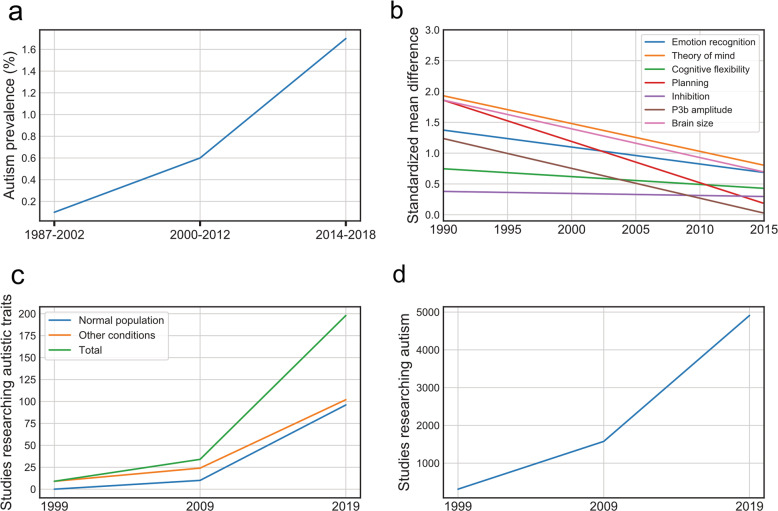
The current diagnostic practices are linked to a 20-fold increase in the reported prevalence of ASD over the last 30 years. Fragmenting the autism phenotype into dimensional “autistic traits” results in the alleged recognition of autism-like symptoms in any psychiatric or neurodevelopemental condition and in individuals decreasingly distant from the typical population, and prematurely dismisses the relevance of a diagnostic threshold. Non-specific socio-communicative and repetitive DSM 5 criteria, combined with four quantitative specifiers as well as all their possible combinations, render limitless variety of presentations consistent with the categorical diagnosis of ASD. We propose several remedies to this problem: maintain a line of research on prototypical autism; limit the heterogeneity compatible with a categorical diagnosis to situations with a phenotypic overlap and a validated etiological link with prototypical autism; reintroduce the qualitative properties of autism presentations and of current dimensional specifiers, language, intelligence, comorbidity, and severity in the criteria used to diagnose autism in replacement of quantitative “social” and “repetitive” criteria; use these qualitative features combined with the clinical intuition of experts and machine-learning algorithms to differentiate coherent subgroups in today’s autism spectrum; study these subgroups separately, and then compare them; and question the autistic nature of “autistic traits”
Overview
The claims and statistics of this paper haven’t been checked yet.
Free: it reads the open-access text and checks the first 5 claims that cite a source we can check. Create a free account to check every claim.
Integrity signals
Registry
Cites
Statistics
Figures
Verification
Claims the paper makes
The claims and statistics of this paper haven’t been checked yet.
Free: it reads the open-access text and checks the first 5 claims that cite a source we can check. Create a free account to check every claim.
Claims other papers make about this one
Each is checked against this paper’s own text: does it say what the citing paper says it does?
The cited source says what the claim attributes to it.
In the citing paper
“Alongside the changes in classification systems, by now heterogeneity has already increased with regard to the expression and severity of the core and associated symptoms of ASD [4–6].”
From Autism spectrum disorder in ICD-11—a critical reflection of its possible impact on clinical practice and research (2024) · cites this paper as [5]
Self-check
Percentages, sums and reported differences re-computed from the paper’s own numbers.
The self-check needs the paper’s full text.
Citations
Cites
Lord, C., Rutter, M., & Le Couteur, A. (1994) · Journal of Autism and Developmental Disorders · doi:10.1007/bf02172145 · Cited by 9,065
Baio, J., Wiggins, L., Christensen, D. L., Maenner, M. J., Daniels, J., Warren, Z., Kurzius-Spencer, M., Zahorodny, W., Robinson, C., Rosenberg, et al. (2018) · MMWR. Surveillance Summaries · doi:10.15585/mmwr.ss6706a1 · Cited by 6,078
Lord, C., Elsabbagh, M., Baird, G., & Veenstra-Vanderweele, J. (2018) · The Lancet · doi:10.1016/s0140-6736(18)31129-2 · Cited by 2,819
Global Prevalence of Autism and Other Pervasive Developmental Disorders
Elsabbagh, M., Divan, G., Koh, Y., Kim, Y. S., Kauchali, S., Marcín, C., Montiel‐Nava, C., Patel, V., Paula, C. S., Wang, C., et al. (2012) · Autism Research · doi:10.1002/aur.239 · Cited by 2,636
Identification of common genetic risk variants for autism spectrum disorder
Autism Spectrum Disorder Working Group of the Psychiatric Genomics Consortium, Grove, J., BUPGEN, Major Depressive Disorder Working Group of the Psychiatric Genomics Consortium, 23andMe Research Team, Ripke, S., Als, T. D., Mattheisen, M., Walters, R. K., Won, H., et al. (2019) · Nature Genetics · doi:10.1038/s41588-019-0344-8 · Cited by 2,421
Lord, C., Rutter, M., Goode, S., Heemsbergen, J., Jordan, H., Mawhood, L., & Schopler, E. (1989) · Journal of Autism and Developmental Disorders · doi:10.1007/bf02211841 · Cited by 2,030
Constantino, J. N., Davis, S. A., Todd, R. D., Schindler, M. K., Gross, M. M., Brophy, S. L., Metzger, L. M., Shoushtari, C. S., Splinter, R., & Reich, W. (2003) · Journal of Autism and Developmental Disorders · doi:10.1023/a:1025014929212 · Cited by 1,611 · cited 2×
“The concept of an autistic trait and the demonstration that “autistic traits are continuously distributed throughout the general population [34]” through instruments such as the Autism Screening Questionnaire [35] and Social Responsiveness Scale [36] has led to the flowering of multiple studies associating autistic tr…”
BackgroundAutism screening questionnaire: diagnostic validity
Berument, S. K., Rutter, M., Lord, C., Pickles, A., & Bailey, A. (1999) · British Journal of Psychiatry · doi:10.1192/bjp.175.5.444 · Cited by 1,464 · cited 2×
“The concept of an autistic trait and the demonstration that “autistic traits are continuously distributed throughout the general population [34]” through instruments such as the Autism Screening Questionnaire [35] and Social Responsiveness Scale [36] has led to the flowering of multiple studies associating autistic tr…”
Building better biomarkers: brain models in translational neuroimaging
Woo, C.-W., Chang, L. J., Lindquist, M. A., & Wager, T. D. (2017) · Nature Neuroscience · doi:10.1038/nn.4478 · Cited by 1,056
Machine Learning for Precision Psychiatry: Opportunities and Challenges
Bzdok, D., & Meyer-Lindenberg, A. (2018) · Biological Psychiatry: Cognitive Neuroscience and Neuroimaging · doi:10.1016/j.bpsc.2017.11.007 · Cited by 796
Self-citation
Cited by
Pearson, A., & Rose, K. (2021) · Autism in Adulthood · doi:10.1089/aut.2020.0043 · Cited by 596
Arioli, M., Cattaneo, Z., Ricciardi, E., & Canessa, N. (2021) · Human Brain Mapping · doi:10.1002/hbm.25570 · Cited by 189
Language Acquisition and Language Disorders
(2013) · Language acquisition & language disorders · doi:10.1075/lald · Cited by 165
A radical change in our autism research strategy is needed: Back to prototypes
Mottron, L. (2021) · Autism Research · doi:10.1002/aur.2494 · Cited by 143
“Autistic traits are not autism, but rather social or cognitive features for which the relationship with recognizable autism can be interpreted as such only in limited situations in which they may indicate genetic predisposition to autism (Mottron & Bzdok, 2020).”
BackgroundSelf-citationvan Rentergem, J. A. A., Deserno, M. K., & Geurts, H. M. (2021) · Clinical Psychology Review · doi:10.1016/j.cpr.2021.102033 · Cited by 143
Camels, Camel Milk, and Camel Milk Product Situation in Kenya in Relation to the World
Oselu, S., Ebere, R. A., & Arimi, J. M. (2022) · International Journal of Food Science · doi:10.1155/2022/1237423 · Cited by 99
Studies of autistic traits in the general population are not studies of autism
Sasson, N. J., & Bottema‐Beutel, K. (2021) · Autism · doi:10.1177/13623613211058515 · Cited by 98
Fractionating autism based on neuroanatomical normative modeling
Zabihi, M., Floris, D. L., Kia, S. M., Wolfers, T., Tillmann, J., Arenas, A. L., Moessnang, C., Banaschewski, T., Holt, R., Baron-Cohen, S., et al. (2020) · Translational Psychiatry · doi:10.1038/s41398-020-01057-0 · Cited by 96
Connectivity alterations in autism reflect functional idiosyncrasy
Benkarim, O. M., Paquola, C., Park, B., Hong, S., Royer, J., de Wael, R. V., Larivière, S., Valk, S. L., Bzdok, D., Mottron, L., et al. (2021) · Communications Biology · doi:10.1038/s42003-021-02572-6 · Cited by 94
Self-citationAutism Spectrum Disorder and IQ – A Complex Interplay
Wolff, N., Stroth, S., Kamp‐Becker, I., Roepke, S., & Roessner, V. (2022) · Frontiers in Psychiatry · doi:10.3389/fpsyt.2022.856084 · Cited by 88
Interpersonal similarity of autistic traits predicts friendship quality
Bolis, D., Lahnakoski, J. M., Seidel, D., Tamm, J., & Schilbach, L. (2021) · Social Cognitive and Affective Neuroscience · doi:10.1093/scan/nsaa147 · Cited by 79
A Virtual Reality Based System for the Screening and Classification of Autism
Robles, M., Namdarian, N., Otto, J., Wassiljew, E., Navab, N., Falter, C. M., & Roth, D. (2022) · IEEE Transactions on Visualization and Computer Graphics · doi:10.1109/tvcg.2022.3150489 · Cited by 73
Restoring the missing person to personalized medicine and precision psychiatry
Gómez-Carrillo, A., Paquin, V., Dumas, G., & Kirmayer, L. J. (2023) · Frontiers in Neuroscience · doi:10.3389/fnins.2023.1041433 · Cited by 72
Prototypical autism: New diagnostic criteria and asymmetrical bifurcation model
Mottron, L., & Gagnon, D. (2023) · Acta Psychologica · doi:10.1016/j.actpsy.2023.103938 · Cited by 67
Self-citationChen, Y.-C., Lin, H.-Y., Chien, Y., Tung, Y.-H., Ni, Y.-H., & Gau, S. S.-F. (2022) · Brain, Behavior, and Immunity · doi:10.1016/j.bbi.2022.08.015 · Cited by 67
Cumin, J., Peláez, S., & Mottron, L. (2021) · Autism · doi:10.1177/13623613211042719 · Cited by 67
Self-citationKamp-Becker, I. (2024) · Molecular Psychiatry · doi:10.1038/s41380-023-02354-y · Cited by 63
Autism spectrum disorder prevalence in Italy: a nationwide study promoted by the Ministry of Health
Scattoni, M. L., Fatta, L. M., Micai, M., Sali, M. E., Bellomo, M., Salvitti, T., Fulceri, F., Castellano, A., Molteni, M., Gambino, G., et al. (2023) · Child and Adolescent Psychiatry and Mental Health · doi:10.1186/s13034-023-00673-0 · Cited by 63
The diagnosis of ASD with MRI: a systematic review and meta-analysis
Schielen, S. J. C., Pilmeyer, J., Aldenkamp, A. P., & Zinger, S. (2024) · Translational Psychiatry · doi:10.1038/s41398-024-03024-5 · Cited by 59
Ni, H., Chen, Y., Chao, Y., Wu, C., Wu, Y., Liang, S. H., Chin, W., Chou, T., Gau, S. S., Huang, Y., et al. (2021) · Autism · doi:10.1177/1362361321990534 · Cited by 59
Childhood diagnoses in individuals identified as autistics in adulthood
Rødgaard, E., Jensen, K. L., Miskowiak, K. W., & Mottron, L. (2021) · Molecular Autism · doi:10.1186/s13229-021-00478-y · Cited by 58
Self-citationInterneuron Dysfunction and Inhibitory Deficits in Autism and Fragile X Syndrome
Nomura, T. (2021) · Cells · doi:10.3390/cells10102610 · Cited by 56
Wang, D., Jiang, Y., Jiang, J. W., Pan, Y., Yang, Y., Fang, X., Liang, L., Li, H., Dong, Z., Fan, S., et al. (2025) · Cell Reports Medicine · doi:10.1016/j.xcrm.2024.101919 · Cited by 54
The meaning of significant mean group differences for biomarker discovery
Loth, E., Ahmad, J., Chatham, C., López, B., Carter, B., Crawley, D., Oakley, B., Hayward, H., Cooke, J., San José Cáceres, A., et al. (2021) · PLOS Computational Biology · doi:10.1371/journal.pcbi.1009477 · Cited by 52
Self-citationRasero, J., Jiménez-Marín, A., Diez, I. P., Toro, R., Hasan, M. T., & Cortés, J. M. (2023) · Biological Psychiatry · doi:10.1016/j.biopsych.2023.04.014 · Cited by 49
Martins, D., Paduraru, M., & Paloyelis, Y. (2021) · British Journal of Pharmacology · doi:10.1111/bph.15451 · Cited by 48
Crespi, B. J. (2021) · Frontiers in Psychiatry · doi:10.3389/fpsyt.2021.621659 · Cited by 45
Autistic traits are associated with faster pace of aging: Evidence from the Dunedin study at age 45
Mason, D., Ronald, A., Ambler, A. P., Caspi, A., Houts, R., Poulton, R., Ramrakha, S., Wertz, J., Moffitt, T. E., & Happe, F. G. E. (2021) · Autism Research · doi:10.1002/aur.2534 · Cited by 45
Impact of Machine Learning Pipeline Choices in Autism Prediction From Functional Connectivity Data
Graña, M., & da Silva, M. F. M. (2021) · International Journal of Neural Systems · doi:10.1142/s012906572150009x · Cited by 45
Schalbroeck, R., van Velden, F. H. P., de Geus‐Oei, L., Yaqub, M. M., van Amelsvoort, T., Booij, J., & Selten, J. (2021) · Translational Psychiatry · doi:10.1038/s41398-020-01174-w · Cited by 44
Albahri, A. S., Hamid, R. A., Zaidan, A. A., & Albahri, O. S. (2022) · Neural Computing and Applications · doi:10.1007/s00521-022-07822-0 · Cited by 44
Adaptive control of synaptic plasticity integrates micro- and macroscopic network function
Scott, D. N., & Frank, M. J. (2022) · Neuropsychopharmacology · doi:10.1038/s41386-022-01374-6 · Cited by 44
Moving forwards not backwards: heterogeneity in autism spectrum disorders
Hobson, H., & Petty, S. (2021) · Molecular Psychiatry · doi:10.1038/s41380-021-01226-7 · Cited by 42
Thiele-Swift, H. N., & Dorstyn, D. (2024) · Review Journal of Autism and Developmental Disorders · doi:10.1007/s40489-023-00427-w · Cited by 42
Diversity and Classification of Genetic Variations in Autism Spectrum Disorder
Kereszturi, É. (2023) · International Journal of Molecular Sciences · doi:10.3390/ijms242316768 · Cited by 40
Golovina, E., Fadason, T., Lints, T., Walker, C. G., Vickers, M. H., & O'Sullivan, J. M. (2021) · Scientific Reports · doi:10.1038/s41598-021-95447-z · Cited by 39
The Emerging Role of Flavonoids in Autism Spectrum Disorder: A Systematic Review
Savino, R., Medoro, A., Alì, S., Scapagnini, G., Maes, M. H. J., & Davinelli, S. (2023) · Journal of Clinical Medicine · doi:10.3390/jcm12103520 · Cited by 41
Cognitive Wearable Robotics for Autism Perception Enhancement
Chen, M., Xiao, W., Hu, L., Ma, Y., Zhang⋆, Y., & Tao, G. (2021) · ACM Transactions on Internet Technology · doi:10.1145/3450630 · Cited by 39
Piras, C., Mussap, M., Noto, A., GIACOMO, A. D., Cristofori, F., Spada, M., Fanos, V., Atzori, L., & Francavilla, R. (2022) · Metabolites · doi:10.3390/metabo12020104 · Cited by 37
Therapeutic potential of cannabidivarin for epilepsy and autism spectrum disorder
Zamberletti, E., Rubino, T., & Parolaro, D. (2021) · Pharmacology & Therapeutics · doi:10.1016/j.pharmthera.2021.107878 · Cited by 38
Are Autistic and Alexithymic Traits Distinct? A Factor-Analytic and Network Approach
Cuve, H. C., Murphy, J., Hobson, H., Ichijo, E., Catmur, C., & Bird, G. (2021) · Journal of Autism and Developmental Disorders · doi:10.1007/s10803-021-05094-6 · Cited by 37
Prototyping as subtyping strategy for studying heterogeneity in autism
Lombardo, M. V. (2021) · Autism Research · doi:10.1002/aur.2535 · Cited by 36
Rossow, T., MacLennan, K., & Tavassoli, T. (2021) · Autism Research · doi:10.1002/aur.2525 · Cited by 35
“In line with recent research proposing studies should explore autism subgroups both separately and combined (Mottron & Bzdok, 2020), our aim was to investigate mental health symptoms and sensory reactivity within our total sample prior to exploring any variations within the verbal and few to no…”
BackgroundPolit, L. D., Eidhof, I., McNeill, R. V., Warre-Cornish, K. M., Ohki, C. M. Y., Walter, N. M., Sala, C., Verpelli, C., Radtke, F., Galderisi, S., et al. (2023) · Neuroscience Applied · doi:10.1016/j.nsa.2023.101125 · Cited by 35
Prefrontal circuits guiding social preference: Implications in autism spectrum disorder
Fortier, A. V., Meisner, O. C., Nair, A. R., & Chang, S. W. C. (2022) · Neuroscience & Biobehavioral Reviews · doi:10.1016/j.neubiorev.2022.104803 · Cited by 35
Patterns of autism symptoms: hidden structure in the ADOS and ADI-R instruments
Lefort-Besnard, J., Vogeley, K., Schilbach, L., Varoquaux, G., Thirion, B., Dumas, G., & Bzdok, D. (2020) · Translational Psychiatry · doi:10.1038/s41398-020-00946-8 · Cited by 35
Self-citationAutism-related shifts in the brain’s information processing hierarchy
Bernhardt, B. C., Valk, S. L., Hong, S., Soulières, I., & Mottron, L. (2025) · Trends in Cognitive Sciences · doi:10.1016/j.tics.2025.04.008 · Cited by 35
Self-citationLarge language models deconstruct the clinical intuition behind diagnosing autism
Stanley, J., Rabot, E., Reddy, S., Belilovsky, E., Mottron, L., & Bzdok, D. (2025) · Cell · doi:10.1016/j.cell.2025.02.025 · Cited by 35
Self-citationCorrelation of biochemical markers and inflammatory cytokines in autism spectrum disorder (ASD)
Noori, A. S., Rajabi, P., Sargolzaei, J., & Alaghmand, A. (2024) · BMC Pediatrics · doi:10.1186/s12887-024-05182-3 · Cited by 34
Efeitos do canabidiol nos sinais e comorbidades do transtorno do espectro autista
Minella, F. C. O., & Linartevichi, V. F. (2021) · Research Society and Development · doi:10.33448/rsd-v10i10.18607 · Cited by 34
Narzisi, A., Sesso, G., Berloffa, S., Fantozzi, P., Muccio, R., Valente, E., Viglione, V., Villafranca, A., Milone, A., & Masi, G. (2021) · Brain Sciences · doi:10.3390/brainsci11060702 · Cited by 33
Ni, H., Chen, Y., Chao, Y., Wu, C., Chen, R., Chou, T., Gau, S. S., & Lin, H. (2023) · Autism Research · doi:10.1002/aur.2954 · Cited by 33
Choi, E. J., Vandewouw, M. M., Taylor, M. J., Arnold, P. D., Brian, J. A., Crosbie, J., Kelley, E. A., Lai, M., Liu, X., Schachar, R. J., et al. (2020) · NeuroImage Clinical · doi:10.1016/j.nicl.2020.102476 · Cited by 32
Genesis, modelling and methodological remedies to autism heterogeneity
Rabot, J., Rødgaard, E.-M., Joober, R., Dumas, G., Bzdok, D., Bernhardt, B., Jacquemont, S., & Mottron, L. (2023) · Neuroscience & Biobehavioral Reviews · doi:10.1016/j.neubiorev.2023.105201 · Cited by 31
Self-citationRethinking Our Concepts and Assumptions About Autism
Lombardo, M. V., & Mandelli, V. (2022) · Frontiers in Psychiatry · doi:10.3389/fpsyt.2022.903489 · Cited by 31
Inferring disease subtypes from clusters in explanation space
Schulz, M.-A., Chapman-Rounds, M., Verma, M., Bzdok, D., & Georgatzis, K. (2020) · Scientific Reports · doi:10.1038/s41598-020-68858-7 · Cited by 31
Self-citationStroth, S., Tauscher, J., Wolff, N., Küpper, C. S., Poustka, L., Roepke, S., Roessner, V., Heider, D., & Kamp‐Becker, I. (2022) · Molecular Autism · doi:10.1186/s13229-022-00491-9 · Cited by 30
Comorbidities Affecting Children with Autism Spectrum Disorder: A Retrospective Chart Review
Burns, J., Phung, R. R., McNeill, S., Hanlon‐Dearman, A., & Ricci, M. F. (2023) · Children · doi:10.3390/children10081414 · Cited by 30
Smith, J. R., York, T., Warn, S., Borodge, D., Pierce, D. L., & Fuchs, D. C. (2023) · Journal of Child and Adolescent Psychopharmacology · doi:10.1089/cap.2022.0067 · Cited by 30
Żabińska, M., Wiśniewska, K., Węgrzyn, G., & Pierzynowska, K. (2024) · Psychoneuroendocrinology · doi:10.1016/j.psyneuen.2024.107070 · Cited by 29
Hwang, G., Wen, J., Sotardi, S. T., Brodkin, E. S., Chand, G. B., Dwyer, D., Erus, G., Doshi, J. J., Singhal, P., Srinivasan, D., et al. (2023) · JAMA Psychiatry · doi:10.1001/jamapsychiatry.2023.0409 · Cited by 28
Carving joints into nature: reengineering scientific concepts in light of concept-laden evidence
Dubova, M., & Goldstone, R. L. (2023) · Trends in Cognitive Sciences · doi:10.1016/j.tics.2023.04.006 · Cited by 27
Schneider, S., Clément, C., Goltzène, M.-A., Meyer, N., Gras-Vincendon, A., Schroder, C. M., & Coutelle, R. (2022) · BMC Psychiatry · doi:10.1186/s12888-022-03924-0 · Cited by 27
Faraji, R., Ganji, Z., Zamanpour, S. A., Nikparast, F., Akbari‐Lalimi, H., & Zare, H. (2023) · Psychiatry Research Neuroimaging · doi:10.1016/j.pscychresns.2023.111711 · Cited by 25
Paul, S., Arora, A., Midha, R., Vu, D., Roy, P. K., & Belmonte, M. K. (2021) · Molecular Autism · doi:10.1186/s13229-020-00377-8 · Cited by 25
The metabolic role of vitamin D in children’s neurodevelopment: a network study
Marzio, M. D., Lasky-Su, J. A., Chu, S. H., Prince, N., Litonjua, A. A., Weiss, S. T., Kelly, R. S., & Glass, K. (2024) · Scientific Reports · doi:10.1038/s41598-024-67835-8 · Cited by 25
Miao, C., Shen, Y., Lang, Y., Li, H., Gong, Y. Q., Liu, Y., Li, H., Jones, B. C., Chen, F., & Feng, S. (2024) · Theranostics · doi:10.7150/thno.95614 · Cited by 25
Telisheva, Z., Amirova, A., Rakhymbayeva, N., Zhanatkyzy, A., & Sandygulova, A. (2022) · Multimodal Technologies and Interaction · doi:10.3390/mti6060046 · Cited by 25
A Meta-Review of Computational Intelligence Techniques for Early Autism Disorder Diagnosis
Ali, H. (2025) · International Journal of Theoretical & Applied Computational Intelligence · doi:10.65278/ijtaci.2025.1 · Cited by 25
Research Mapping of Trauma Experiences in Autism Spectrum Disorders: A Bibliometric Analysis
González, O. H., Fresno, A., Spencer, R., Mínguez, R. T., Fernández, D. G., & Sepúlveda-Opazo, F. (2023) · Healthcare · doi:10.3390/healthcare11091267 · Cited by 24
Autistic traits heighten sensitivity to rejection‐induced social pain
Lin, X., Zhuo, S., Liu, Z., Fan, J., & Peng, W. (2022) · Annals of the New York Academy of Sciences · doi:10.1111/nyas.14880 · Cited by 24
Stott, J., WRIGHT, T. E., Holmes, J., Wilson, J. C., Griffiths‐Jones, S., Foster, D., & Wright, B. (2023) · PLoS ONE · doi:10.1371/journal.pone.0287131 · Cited by 24
Hammed, S. H., & Albahri, A. S. (2023) · Applied Data Science and Analysis · doi:10.58496/adsa/2023/003 · Cited by 24
A Unifying Theory for Autism: The Pathogenetic Triad as a Theoretical Framework
Sarovic, D. (2021) · Frontiers in Psychiatry · doi:10.3389/fpsyt.2021.767075 · Cited by 23
Yeh, C., Tseng, R.-Y., Ni, H., Cocchi, L., Chang, J.-C., Hsu, M.-Y., Tu, E., Wu, Y., Chou, T., Gau, S. S., et al. (2022) · Molecular Autism · doi:10.1186/s13229-022-00499-1 · Cited by 24
Zoltowski, A. R., Lyu, I., Failla, M. D., Mash, L. E., Dunham, K., Feldman, J. I., Woynaroski, T. G., Wallace, M. T., Barquero, L. A., Nguyen, T. Q., et al. (2021) · Cerebral Cortex · doi:10.1093/cercor/bhab151 · Cited by 24
Loffi, R. G., Cruz, T. K. F., Paiva, G. M., Souto, D. O., Barreto, S. R., SANTANA, P. C. M., Nascimento, A. A. A. C., Costa, F. R. M., Cota, E. B., & Haase, V. G. (2024) · Children · doi:10.3390/children11020191 · Cited by 24
Błażewicz, A., Szymańska, I., Dolliver, W. R., Suchocki, P., Turło, J., Makarewicz, A., & Skórzyńska-Dziduszko, K. (2020) · Nutrients · doi:10.3390/nu12113581 · Cited by 22
Mohamed, I., & Almaz, A. H. (2024) · التصميم الدولية · doi:10.21608/idj.2024.340122 · Cited by 22
A convergent structure–function substrate of cognitive imbalances in autism
Hong, S., Mottron, L., Park, B., Benkarim, O. M., Valk, S. L., Paquola, C., Larivière, S., de Wael, R. V., Degré‐Pelletier, J., Soulières, I., et al. (2022) · Cerebral Cortex · doi:10.1093/cercor/bhac156 · Cited by 21
Self-citationResponse to Commentaries on bilingual language development in autism
Prévost, P., & Tuller, L. (2021) · Linguistic Approaches to Bilingualism · doi:10.1075/lab.00034.pre · Cited by 21
Neurodiversité et autisme : entre handicap et différence, science et idéologie
Rebecchi, K. (2023) · Revue de la neurodiversité / Journal of Neurodiversity · doi:10.65130/zm3rp4x · Cited by 21
Halliday, A. R., Vucic, S. N., Georges, B., LaRoche, M., Mendoza Pardo, M. A., Swiggard, L. O., McDonald, K., Olofsson, M., Menon, S. N., Francis, S. M., et al. (2024) · Frontiers in Psychiatry · doi:10.3389/fpsyt.2024.1474003 · Cited by 20
“Our fi ndings corroborate a substantial body of existing literature (236 – 238) suggesting that the neurobiology of ASD is highly heterogeneous.”
ResultA systematic review and meta-analysis of empathy in autism: The influence of measures
Cusson, N., Meilleur, A., Bernhardt, B. C., Soulières, I., & Mottron, L. (2025) · Clinical Psychology Review · doi:10.1016/j.cpr.2025.102623 · Cited by 20
Self-citationVernocchi, P., Marangelo, C., Guerrera, S., CHIERICO, F. D., Guarrasi, V., Gardini, S., Conte, F., Paci, P., Ianiro, G., Gasbarrini, A., et al. (2023) · Frontiers in Microbiology · doi:10.3389/fmicb.2023.1287350 · Cited by 20
Lin, P., Moni, M. A., Eapen, V., & Gau, S. (2021) · Frontiers in Psychiatry · doi:10.3389/fpsyt.2021.637022 · Cited by 21
Ostrolenk, A., Courchesne, V., & Mottron, L. (2023) · Brain and Cognition · doi:10.1016/j.bandc.2023.106099 · Cited by 20
Self-citationMachine Learning for Neurodevelopmental Disorders
Moreau, C. A., Deruelle, C., & Auzias, G. (2023) · Neuromethods · doi:10.1007/978-1-0716-3195-9_31 · Cited by 19
Distinct neurocognitive bases for social trait judgments of faces in autism spectrum disorder
Yu, H., Cao, R., Lin, C., & Wang, S. (2022) · Translational Psychiatry · doi:10.1038/s41398-022-01870-9 · Cited by 19
Meaning and Use in the Expression of Estimative Probability
van Tiel, B., Sauerland, U., & Franke, M. (2022) · Open Mind · doi:10.1162/opmi_a_00066 · Cited by 19
Westerberg, B., Holländare, F., & Bejerot, S. (2023) · Internet Interventions · doi:10.1016/j.invent.2023.100672 · Cited by 18
Blume, J., Dhanasekara, C. S., Kahathuduwa, C. N., & Mastergeorge, A. M. (2023) · Journal of Autism and Developmental Disorders · doi:10.1007/s10803-023-05961-4 · Cited by 18
Revisiting the Relationship between Cybercrime, Autistic Traits, and Autism
Lim, A., Brewer, N., & Young, R. L. (2021) · Journal of Autism and Developmental Disorders · doi:10.1007/s10803-021-05207-1 · Cited by 18
No differences between adults with and without autism in audiovisual synchrony perception
Weiland, R. F., Polderman, T. J. C., Smit, D. J. A., Begeer, S., & der Burg, E. V. (2022) · Autism · doi:10.1177/13623613221121414 · Cited by 18
Uscătescu, L. C., Kronbichler, M., Said‐Yürekli, S., Kronbichler, L., Calhoun, V. D., Corbera, S., Bell, M. D., Pelphrey, K. A., Pearlson, G. D., & Assaf, M. (2023) · Schizophrenia · doi:10.1038/s41537-023-00344-1 · Cited by 18
Systematic Review and Meta-Analysis: Phenotypic Correlates of the Autism Polygenic Score
de Wit, M. M., MORGAN, M., Libedinsky, I., Austerberry, C., Begeer, S., Abdellaoui, A., Ronald, A., & Polderman, T. J. C. (2025) · JAACAP Open · doi:10.1016/j.jaacop.2025.04.001 · Cited by 17
A Review of Socially Assistive Robotics in Supporting Children with Autism Spectrum Disorder
Nadeem, M., Barakat, J. M. H., Daas, D., & Potams, A. (2025) · Multimodal Technologies and Interaction · doi:10.3390/mti9090098 · Cited by 17
Enactive psychiatry and social integration: beyond dyadic interactions
Dengsø, M. J. (2024) · Phenomenology and the Cognitive Sciences · doi:10.1007/s11097-024-09957-y · Cited by 18
Kang, J., Fan, X., Zhong, Y., Casanova, M. F., Sokhadze, E. M., Li, X., Niu, Z., & Geng, X. (2023) · Bioengineering · doi:10.3390/bioengineering10010098 · Cited by 17
“The essence of autism: fact or artefact?”
Chapman, R., & Veit, W. (2020) · Molecular Psychiatry · doi:10.1038/s41380-020-00959-1 · Cited by 17
Metadata
- Authors
- Mottron, L., & Bzdok, D.
- Affiliations
- Santé Québec Centre-Sud-de-l’Île-de-Montréal – Universitaire (CA)
- Montreal Neurological Institute and Hospital (CA)
- Corresponding author
- Mottron, Laurent
- Venue
- Molecular Psychiatry
- Published
- 2020-04-30
- Volume
- 25
- Issue
- 12
- Pages
- 3178-3185
- ISSN
- 1359-4184 (ISSN-L)
- 1476-5578
- PMC
- PMC7714694
- OpenAlex
- W3022866684
- Cited by
- 332
- References
- 66
- Citations by year
- 2026: 44 · 2025: 63 · 2024: 40 · 2023: 78 · 2022: 45 · 2021: 46 · 2020: 15
- FWCI
- 6.22
- Type
- journal article
- Language
- en
- Open access
- hybrid
- doi.org
- Licence
- cc-by
- creativecommons.org/licenses/by/4.0 (tdm)
- creativecommons.org/licenses/by/4.0 (vor)
- Locations
- Molecular Psychiatry (publishedVersion, cc-by)
- PubMed Central (publishedVersion, cc-by)
- PubMed (publishedVersion)
- Topics
- Life Sciences › Neuroscience › Cognitive Neuroscience › Autism Spectrum Disorder Research
- Health Sciences › Medicine › Psychiatry and Mental health › Child Nutrition and Feeding Issues
- Life Sciences › Biochemistry, Genetics and Molecular Biology › Genetics › Genetics and Neurodevelopmental Disorders
- Keywords
- autism spectrum disorder, autism heterogeneity, autistic traits, diagnostic criteria, DSM-5, categorical diagnosis, autism subgroups, phenotypic overlap, language and intelligence, comorbidities, autism severity, machine learning
- MeSH terms
- Autism Spectrum Disorder, Autistic Disorder, Child, Child Development Disorders, Pervasive, Humans, Comorbidity, Artifacts, Diagnostic and Statistical Manual of Mental Disorders
About these checks
Registry, retraction, Cites and statistics results are computed, not judged, with one exception: a printed reference that no index lists is read once by a model before it counts as a citation error. Claims are extracted by a model and kept only when their quote appears verbatim in the text; each cited source is then checked, with a model’s help, for whether it says what the claim relies on. Those verdicts can be wrong — read the claim’s quote and the cited source before relying on one.
Statistics and arithmetic are recomputed, not judged.
Confidence bands are shown only for fields calibrated on our annotated test set. None is calibrated yet, so no band is shown.
What counts as a claim ›How we measure confidence ›How we check this ›
Are you an author, or do you see a problem with this page? Request a review
Data sources
Bibliographic data: Semantic Scholar, OpenAlex, Crossref.
Contains information from the Semantic Scholar Academic Graph Datasets, made available under the ODC Attribution License (ODC-BY 1.0).
Semantic Scholar’s data is described in: Kinney, R., et al. (2023). The Semantic Scholar Open Data Platform. arXiv:2301.10140.
