

Autism spectrum heterogeneity: fact or artifact?
Open accessThe DOI matches its Crossref record; 67 of the 67 references it cites were found in a registry or an index.
Abstract
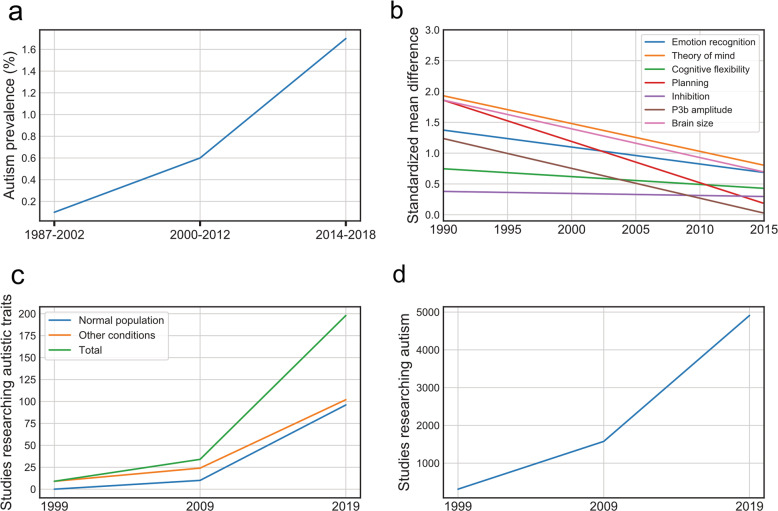
The current diagnostic practices are linked to a 20-fold increase in the reported prevalence of ASD over the last 30 years. Fragmenting the autism phenotype into dimensional “autistic traits” results in the alleged recognition of autism-like symptoms in any psychiatric or neurodevelopemental condition and in individuals decreasingly distant from the typical population, and prematurely dismisses the relevance of a diagnostic threshold. Non-specific socio-communicative and repetitive DSM 5 criteria, combined with four quantitative specifiers as well as all their possible combinations, render limitless variety of presentations consistent with the categorical diagnosis of ASD. We propose several remedies to this problem: maintain a line of research on prototypical autism; limit the heterogeneity compatible with a categorical diagnosis to situations with a phenotypic overlap and a validated etiological link with prototypical autism; reintroduce the qualitative properties of autism presentations and of current dimensional specifiers, language, intelligence, comorbidity, and severity in the criteria used to diagnose autism in replacement of quantitative “social” and “repetitive” criteria; use these qualitative features combined with the clinical intuition of experts and machine-learning algorithms to differentiate coherent subgroups in today’s autism spectrum; study these subgroups separately, and then compare them; and question the autistic nature of “autistic traits”
Overview
The claims and statistics of this paper haven’t been checked yet.
Free: it reads the open-access text and checks the first 5 claims that cite a source we can check. Create a free account to check every claim.
Integrity signals
Registry
Cites
Statistics
Figures
Verification
Claims the paper makes
The claims and statistics of this paper haven’t been checked yet.
Free: it reads the open-access text and checks the first 5 claims that cite a source we can check. Create a free account to check every claim.
Claims other papers make about this one
Each is checked against this paper’s own text: does it say what the citing paper says it does?
The cited source says what the claim attributes to it.
In the citing paper
“Alongside the changes in classification systems, by now heterogeneity has already increased with regard to the expression and severity of the core and associated symptoms of ASD [4–6].”
From Autism spectrum disorder in ICD-11—a critical reflection of its possible impact on clinical practice and research (2024) · cites this paper as [5]
Self-check
Percentages, sums and reported differences re-computed from the paper’s own numbers.
The self-check needs the paper’s full text.
Citations
Cites
Lord, C., Rutter, M., & Le Couteur, A. (1994) · Journal of Autism and Developmental Disorders · doi:10.1007/bf02172145 · Cited by 9,065
Baio, J., Wiggins, L., Christensen, D. L., Maenner, M. J., Daniels, J., Warren, Z., Kurzius-Spencer, M., Zahorodny, W., Robinson, C., Rosenberg, et al. (2018) · MMWR. Surveillance Summaries · doi:10.15585/mmwr.ss6706a1 · Cited by 6,078
Lord, C., Elsabbagh, M., Baird, G., & Veenstra-Vanderweele, J. (2018) · The Lancet · doi:10.1016/s0140-6736(18)31129-2 · Cited by 2,819
Global Prevalence of Autism and Other Pervasive Developmental Disorders
Elsabbagh, M., Divan, G., Koh, Y., Kim, Y. S., Kauchali, S., Marcín, C., Montiel‐Nava, C., Patel, V., Paula, C. S., Wang, C., et al. (2012) · Autism Research · doi:10.1002/aur.239 · Cited by 2,636
Identification of common genetic risk variants for autism spectrum disorder
Autism Spectrum Disorder Working Group of the Psychiatric Genomics Consortium, Grove, J., BUPGEN, Major Depressive Disorder Working Group of the Psychiatric Genomics Consortium, 23andMe Research Team, Ripke, S., Als, T. D., Mattheisen, M., Walters, R. K., Won, H., et al. (2019) · Nature Genetics · doi:10.1038/s41588-019-0344-8 · Cited by 2,421
Lord, C., Rutter, M., Goode, S., Heemsbergen, J., Jordan, H., Mawhood, L., & Schopler, E. (1989) · Journal of Autism and Developmental Disorders · doi:10.1007/bf02211841 · Cited by 2,030
Constantino, J. N., Davis, S. A., Todd, R. D., Schindler, M. K., Gross, M. M., Brophy, S. L., Metzger, L. M., Shoushtari, C. S., Splinter, R., & Reich, W. (2003) · Journal of Autism and Developmental Disorders · doi:10.1023/a:1025014929212 · Cited by 1,611 · cited 2×
“The concept of an autistic trait and the demonstration that “autistic traits are continuously distributed throughout the general population [34]” through instruments such as the Autism Screening Questionnaire [35] and Social Responsiveness Scale [36] has led to the flowering of multiple studies associating autistic tr…”
BackgroundAutism screening questionnaire: diagnostic validity
Berument, S. K., Rutter, M., Lord, C., Pickles, A., & Bailey, A. (1999) · British Journal of Psychiatry · doi:10.1192/bjp.175.5.444 · Cited by 1,464 · cited 2×
“The concept of an autistic trait and the demonstration that “autistic traits are continuously distributed throughout the general population [34]” through instruments such as the Autism Screening Questionnaire [35] and Social Responsiveness Scale [36] has led to the flowering of multiple studies associating autistic tr…”
Building better biomarkers: brain models in translational neuroimaging
Woo, C.-W., Chang, L. J., Lindquist, M. A., & Wager, T. D. (2017) · Nature Neuroscience · doi:10.1038/nn.4478 · Cited by 1,056
Machine Learning for Precision Psychiatry: Opportunities and Challenges
Bzdok, D., & Meyer-Lindenberg, A. (2018) · Biological Psychiatry: Cognitive Neuroscience and Neuroimaging · doi:10.1016/j.bpsc.2017.11.007 · Cited by 796
Self-citationDisentangling the heterogeneity of autism spectrum disorder through genetic findings
Jeste, S. S., & Geschwind, D. H. (2014) · Nature Reviews Neurology · doi:10.1038/nrneurol.2013.278 · Cited by 644 · cited 1×
“The heterogeneity of autism is now universally accepted, at the phenotypic level under the DSM-5 term “spectrum”, as well as at the imaged brain [1] and etiology [2] levels.”
BackgroundiPSYCH-Broad Autism Group, Weiner, D. J., Psychiatric Genomics Consortium Autism Group, Wigdor, E. M., Ripke, S., Walters, R. K., Kosmicki, J. A., Grove, J., Samocha, K. E., Goldstein, J. I., et al. (2017) · Nature Genetics · doi:10.1038/ng.3863 · Cited by 516 · cited 1×
“ilarity between autism with and without penetrant de novo genetic variants [31], nor by the mechanistic differences between the strong effects of reliably identified de novo mutations, on the one hand, and the additive weak effects associated with common variants [13, 32], on the other.”
BackgroundHappé, F., & Frith, U. (2020) · Journal of Child Psychology and Psychiatry · doi:10.1111/jcpp.13176 · Cited by 438
Greenberg, D. M., Warrier, V., Allison, C., & Baron-Cohen, S. (2018) · Proceedings of the National Academy of Sciences · doi:10.1073/pnas.1811032115 · Cited by 416
The prevalence of parent-reported autism spectrum disorder among US children
Kogan, M. D., Vladutiu, C. J., Schieve, L. A., Ghandour, R. M., Blumberg, S. J., Zablotsky, B., Perrin, J. M., Shattuck, P., Kuhlthau, K. A., Harwood, R. L., et al. (2018) · Pediatrics · doi:10.1542/peds.2017-4161 · Cited by 354 · cited 1×
“The evolution of the DSM has been accompanied by a 20-fold increase in the reported prevalence of ASD over the last 30 years, reaching a current prevalence of more than 2% in the United States [6] (Fig.”
BackgroundMottron, L., Burack, J. A., Iarocci, G., Belleville, S., & Enns, J. T. (2003) · Journal of Child Psychology and Psychiatry · doi:10.1111/1469-7610.00174 · Cited by 345
Self-citationGlobal processing takes time: A meta-analysis on local–global visual processing in ASD.
Van der Hallen, R., Evers, K., Brewaeys, K., Van den Noortgate, W., & Wagemans, J. (2015) · Psychological Bulletin · doi:10.1037/bul0000004 · Cited by 329
Szatmari, P., Georgiades, S., Duku, E., Bennett, T. A., Bryson, S., Fombonne, E., Mirenda, P., Roberts, W., Smith, I. M., Vaillancourt, T., et al. (2015) · JAMA Psychiatry · doi:10.1001/jamapsychiatry.2014.2463 · Cited by 322 · cited 1×
“information on the temporal characteristics of these signs [63].”
BackgroundShared Synaptic Pathophysiology in Syndromic and Nonsyndromic Rodent Models of Autism
Baudouin, S. J., Gaudias, J., Gerharz, S., Hatstatt, L., Zhou, K., Punnakkal, P., Tanaka, K. F., Spooren, W., Hen, R., De Zeeuw, C. I., et al. (2012) · Science · doi:10.1126/science.1224159 · Cited by 293
The quantitative nature of autistic social impairment
CONSTANTINO, J. N. (2011) · Pediatric Research · doi:10.1203/pdr.0b013e318212ec6e · Cited by 282 · cited 2×
““autistic traits are continuously distributed throughout the general population [34]” through instruments such as the”
BackgroundState of the field: Differentiating intellectual disability from autism spectrum disorder
Thurm, A., Farmer, C., Salzman, E., Lord, C., & Bishop, S. (2019) · Frontiers in Psychiatry · doi:10.3389/fpsyt.2019.00526 · Cited by 267 · cited 1×
“The cause of this trend is yet to be determined but likely includes a reduction in the deviation from the norm required to reach the threshold for a categorical diagnosis [15], and the poor specificity of current diagnostic criteria for extreme values of age, intelligence, and severity [16].”
BackgroundEnhanced pure-tone pitch discrimination among persons with autism but not Asperger syndrome
Bonnel, A., McAdams, S., Smith, B., Berthiaume, C., Bertone, A., Ciocca, V., Burack, J. A., & Mottron, L. (2010) · Neuropsychologia · doi:10.1016/j.neuropsychologia.2010.04.020 · Cited by 262
Self-citationCurran, E. A., O'Neill, S. M., Cryan, J. F., Kenny, L. C., Dinan, T. G., Khashan, A. S., & Kearney, P. M. (2015) · Journal of Child Psychology and Psychiatry · doi:10.1111/jcpp.12351 · Cited by 250
Epidemiological trends in rates of autism
Fombonne, E. (2002) · Molecular Psychiatry · doi:10.1038/sj.mp.4001162 · Cited by 230
Recent Advances in Autism Research as Reflected in DSM-5 Criteria for Autism Spectrum Disorder
Lord, C., & Bishop, S. L. (2015) · Annual Review of Clinical Psychology · doi:10.1146/annurev-clinpsy-032814-112745 · Cited by 224 · cited 1×
“The current DSM-5 definition of autism spectrum disorder (ASD) merged the PDD subgroups inter alia, due to their poor inter-judge reliability and instability over time [3].”
BackgroundEditorial: The rising prevalence of autism
Fombonne, E. (2018) · Journal of Child Psychology and Psychiatry · doi:10.1111/jcpp.12941 · Cited by 205 · cited 1×
“security they provide when someone “meets diagnostic criteria [10]”, despite clinical inconsistency with proto-”
BackgroundPersonality characteristics of the parents of autistic individuals
Piven, J., Wzorek, M., Landa, R., Lainhart, J., Bolton, P., Chase, G. A., & Folstein, S. (1994) · Psychological Medicine · doi:10.1017/s0033291700027938 · Cited by 204
Rødgaard, E.-M., Jensen, K., Vergnes, J.-N., Soulières, I., & Mottron, L. (2019) · JAMA Psychiatry · doi:10.1001/jamapsychiatry.2019.1956 · Cited by 185 · cited 2×
“The effect sizes obtained from cognitive, EEG, and neuroanatomical studies of autism decreased by up to 80% between 2000 and 2015 [14] (Fig.”
BackgroundMethodSelf-citationHyperlexia: Systematic review, neurocognitive modelling, and outcome
Ostrolenk, A., d’Arc, B. F., Jelenic, P., Samson, F., & Mottron, L. (2017) · Neuroscience & Biobehavioral Reviews · doi:10.1016/j.neubiorev.2017.04.029 · Cited by 182
Self-citationWestwood, H., Eisler, I., Mandy, W., Leppanen, J., Treasure, J., & Tchanturia, K. (2016) · Journal of Autism and Developmental Disorders · doi:10.1007/s10803-015-2641-0 · Cited by 160
Developmental Changes of Autistic Symptoms
Fecteau, S., Mottron, L., Berthiaume, C., & Burack, J. A. (2003) · Autism · doi:10.1177/1362361303007003003 · Cited by 148
Self-citationMultidimensional Influences on Autism Symptom Measures: Implications for Use in Etiological Research
Havdahl, K. A., Hus Bal, V., Huerta, M., Pickles, A., Øyen, A.-S., Stoltenberg, C., Lord, C., & Bishop, S. L. (2016) · Journal of the American Academy of Child & Adolescent Psychiatry · doi:10.1016/j.jaac.2016.09.490 · Cited by 139 · cited 1×
“2) is recognized, it has also been demonstrated that any neurodevelopmental condition accompanied by a certain degree of intellectual disability and behavioral issues increases the probability of satisfying certain autism criteria [30].”
BackgroundSestan, N., & State, M. W. (2018) · Neuron · doi:10.1016/j.neuron.2018.10.015 · Cited by 127 · cited 1×
“Currently, the modest state of genetic [12] knowledge of non-syndromic autism and the”
BackgroundUse of the Autism Diagnostic Observation Schedule (ADOS) in a clinical setting
Molloy, C. A., Murray, D. S., Akers, R., Mitchell, T., & Manning-Courtney, P. (2011) · Autism · doi:10.1177/1362361310379241 · Cited by 119
First, M. B. (2005) · Psychopathology · doi:10.1159/000086093 · Cited by 114
MOTTRON, L., MINEAU, S., MARTEL, G., BERNIER, C. S.-C., BERTHIAUME, C., DAWSON, M., LEMAY, M., PALARDY, S., CHARMAN, T., & FAUBERT, J. (2007) · Development and Psychopathology · doi:10.1017/s0954579407070022 · Cited by 108
Self-citationDevelopmental Changes of Autistic Symptoms
FECTEAU, S., Mottron, L., Berthiaume, C., et al. (2003) · Autism · doi:10.1177/13623613030073003 · Cited by 108
Self-citationToward specifying pervasive developmental disorder-not otherwise specified
Mandy, W., Charman, T., Gilmour, J., & Skuse, D. (2011) · Autism Research · doi:10.1002/aur.178 · Cited by 103 · cited 1×
“Doing away with PDD not otherwise specified as a category, which was responsible for the considerable increase of reported prevalence at the time, but for which the criteria were insufficiently reliable, [4] was expected to increase the specificity of the categorical diagnosis [5].”
BackgroundThe Level and Nature of Autistic Intelligence II: What about Asperger Syndrome?
Soulières, I., Dawson, M., Gernsbacher, M. A., & Mottron, L. (2011) · PLoS ONE · doi:10.1371/journal.pone.0025372 · Cited by 100
Self-citationCriteria, categories, and continua: autism and related disorders in DSM-5
Happé, F. (2011) · Journal of the American Academy of Child & Adolescent Psychiatry · doi:10.1016/j.jaac.2011.03.015 · Cited by 100
Editorial Perspective: Longitudinal research in autism – introducing the concept of ‘chronogeneity’
Georgiades, S., Bishop, S. L., & Frazier, T. (2017) · Journal of Child Psychology and Psychiatry · doi:10.1111/jcpp.12690 · Cited by 100 · cited 1×
“However, the developmental transformation of autistic signs [41], while generally trending towards a smaller difference from typicality with age [42], is not a continuous process.”
BackgroundLinking risk factors and outcomes in autism spectrum disorder: is there evidence for resilience?
Elsabbagh, M. (2020) · BMJ · doi:10.1136/bmj.l6880 · Cited by 98
The level and nature of autistic intelligence III: inspection time
Barbeau, E. B., Soulières, I., Dawson, M., Zeffiro, T. A., & Mottron, L. (2013) · Journal of Abnormal Psychology · doi:10.1037/a0029984 · Cited by 97 · cited 1×
“Having or not a history of SOD has a lifelong impact, not only on language and speech [50] but also on the nature of peaks of abilities [51], intelligence subtest profiles [52], motor difficulties [53], domains of interest [54], lateralization of brain structures [55] and functions [56], gyrification [57], white matte…”
BackgroundSelf-citationMazefsky, C. A., Folstein, S. E., & Lainhart, J. E. (2008) · Autism Research · doi:10.1002/aur.23 · Cited by 97
Wiggins, L. D., Rice, C. E., Barger, B., Soke, G. N., Lee, L.-C., Moody, E., Edmondson-Pretzel, R., & Levy, S. E. (2019) · Social Psychiatry and Psychiatric Epidemiology · doi:10.1007/s00127-019-01674-1 · Cited by 95
Bishop, S. L., Farmer, C., Bal, V., Robinson, E. B., Willsey, A. J., Werling, D. M., Havdahl, K. A., Sanders, S. J., & Thurm, A. (2017) · American Journal of Psychiatry · doi:10.1176/appi.ajp.2017.16101115 · Cited by 92
Secular changes in the symptom level of clinically diagnosed autism
Arvidsson, O., Gillberg, C., Lichtenstein, P., & Lundström, S. (2018) · Journal of Child Psychology and Psychiatry · doi:10.1111/jcpp.12864 · Cited by 91 · cited 2×
“A major additional source of heterogeneity in the ASD spectrum is the lowering of the threshold for clinical significance required for the inclusion of individuals who are less different from typical individuals [15].”
BackgroundDifferential effects on white-matter systems in high-functioning autism and Asperger's syndrome
McAlonan, G. M., Cheung, C., Cheung, V., Wong, N., Suckling, J., & Chua, S. E. (2009) · Psychological Medicine · doi:10.1017/s0033291709005728 · Cited by 89
Language delay aggregates in toddler siblings of children with autism spectrum disorder
for the IBIS Network, Marrus, N. M., Hall, L., Paterson, S., Elison, J. T., Wolff, J. J., Swanson, M. R., Parish‐Morris, J., Eggebrecht, A. T., Pruett, J. R., et al. (2018) · Journal of Neurodevelopmental Disorders · doi:10.1186/s11689-018-9247-8 · Cited by 87
Rinehart, N., Bradshaw, J. L., Brereton, A. V., & Tonge, B. J. (2002) · Journal of Autism and Developmental Disorders · doi:10.1023/a:1016387020095 · Cited by 84
Towards algorithmic analytics for large-scale datasets
Bzdok, D., Nichols, T. E., & Smith, S. M. (2019) · Nature Machine Intelligence · doi:10.1038/s42256-019-0069-5 · Cited by 84
Self-citationCognitive phenotype and psychiatric disorder in 22q11.2 deletion syndrome: A review
Biswas, A. B., & Furniss, F. (2016) · Research in Developmental Disabilities · doi:10.1016/j.ridd.2016.02.010 · Cited by 82
Perception in attention deficit hyperactivity disorder
Fuermaier, A. B. M., Hüpen, P., De Vries, S. M., Müller, M., Kok, F. M., Koerts, J., Heutink, J., Tucha, L., Gerlach, M., & Tucha, O. (2018) · ADHD Attention Deficit and Hyperactivity Disorders · doi:10.1007/s12402-017-0230-0 · Cited by 74
de Marchena, A., & Miller, J. (2017) · Autism Research · doi:10.1002/aur.1706 · Cited by 72
Bora, E., Aydın, A., Saraç, T., Kadak, M. T., & Köse, S. (2016) · Autism Research · doi:10.1002/aur.1661 · Cited by 69
Comparing Motor Skills in Autism Spectrum Individuals With and Without Speech Delay
Barbeau, E. B., Meilleur, A. S., Zeffiro, T. A., & Mottron, L. (2015) · Autism Research · doi:10.1002/aur.1483 · Cited by 60
Self-citationNeuroanatomy of Individual Differences in Language in Adult Males with Autism
Lai, M.-C., Lombardo, M. V., Ecker, C., Chakrabarti, B., Suckling, J., Bullmore, E. T., Happé, F., MRC AIMS Consortium, Murphy, D. G. M., & Baron-Cohen, S. (2015) · Cerebral Cortex · doi:10.1093/cercor/bhu211 · Cited by 52
Martinez‐Murcia, F. J., Lai, M., Górriz, J. M., Ramírez, J., Young, A. M. H., Deoni, S. C. L., Ecker, C., Lombardo, M. V., MRC AIMS Consortium, Baron‐Cohen, S., et al. (2017) · Human Brain Mapping · doi:10.1002/hbm.23449 · Cited by 47
Cognitive flexibility and its electrophysiological correlates in Gilles de la Tourette syndrome
Lange, F., Seer, C., Müller‐Vahl, K., & Kopp, B. (2017) · Developmental Cognitive Neuroscience · doi:10.1016/j.dcn.2017.08.008 · Cited by 40
Gyrification changes are related to cognitive strengths in autism
Duret, P., Samson, F., Pinsard, B., Barbeau, É. B., Boré, A., Soulières, I., & Mottron, L. (2018) · NeuroImage Clinical · doi:10.1016/j.nicl.2018.04.036 · Cited by 38
Self-citationEditorial Perspective: Delivering autism intervention through development
Green, J. (2019) · Journal of Child Psychology and Psychiatry · doi:10.1111/jcpp.13110 · Cited by 38
Samson, F., Zeffiro, T. A., Doyon, J., Benali, H., & Mottron, L. (2015) · Journal of Psychiatric Research · doi:10.1016/j.jpsychires.2015.05.011 · Cited by 31
Self-citationAnalysing brain networks in population neuroscience: a case for the Bayesian philosophy
Bzdok, D., Floris, D. L., & Marquand, A. F. (2020) · Philosophical Transactions of the Royal Society B: Biological Sciences · doi:10.1098/rstb.2019.0661 · Cited by 30
Self-citationSchauder, K. B., Park, W. J., Tsank, Y., Eckstein, M. P., Tadin, D., & Bennetto, L. (2019) · Journal of Neurodevelopmental Disorders · doi:10.1186/s11689-019-9303-z · Cited by 24
Decomposing the autism phenotype into familial dimensions
Szatmari, P., Mérette, C., Emond, C., Zwaigenbaum, L., Jones, M. B., Maziade, M., Roy, M., & Palmour, R. (2008) · American Journal of Medical Genetics Part B: Neuropsychiatric Genetics · doi:10.1002/ajmg.b.30561 · Cited by 21
Typical versus delayed speech onset influences verbal reporting of autistic interests
Chiodo, L., Majerus, S., & Mottron, L. (2017) · Molecular Autism · doi:10.1186/s13229-017-0155-7 · Cited by 17
Self-citation(2018)
Cited by
Pearson, A., & Rose, K. (2021) · Autism in Adulthood · doi:10.1089/aut.2020.0043 · Cited by 596
Arioli, M., Cattaneo, Z., Ricciardi, E., & Canessa, N. (2021) · Human Brain Mapping · doi:10.1002/hbm.25570 · Cited by 189
Language Acquisition and Language Disorders
(2013) · Language acquisition & language disorders · doi:10.1075/lald · Cited by 165
A radical change in our autism research strategy is needed: Back to prototypes
Mottron, L. (2021) · Autism Research · doi:10.1002/aur.2494 · Cited by 143
“Autistic traits are not autism, but rather social or cognitive features for which the relationship with recognizable autism can be interpreted as such only in limited situations in which they may indicate genetic predisposition to autism (Mottron & Bzdok, 2020).”
BackgroundSelf-citationvan Rentergem, J. A. A., Deserno, M. K., & Geurts, H. M. (2021) · Clinical Psychology Review · doi:10.1016/j.cpr.2021.102033 · Cited by 143
Metadata
- Authors
- Mottron, L., & Bzdok, D.
- Affiliations
- Santé Québec Centre-Sud-de-l’Île-de-Montréal – Universitaire (CA)
- Montreal Neurological Institute and Hospital (CA)
- Corresponding author
- Mottron, Laurent
- Venue
- Molecular Psychiatry
- Published
- 2020-04-30
- Volume
- 25
- Issue
- 12
- Pages
- 3178-3185
- ISSN
- 1359-4184 (ISSN-L)
- 1476-5578
- PMC
- PMC7714694
- OpenAlex
- W3022866684
- Cited by
- 332
- References
- 66
- Citations by year
- 2026: 44 · 2025: 63 · 2024: 40 · 2023: 78 · 2022: 45 · 2021: 46 · 2020: 15
- FWCI
- 6.22
- Type
- journal article
- Language
- en
- Open access
- hybrid
- doi.org
- Licence
- cc-by
- creativecommons.org/licenses/by/4.0 (tdm)
- creativecommons.org/licenses/by/4.0 (vor)
- Locations
- Molecular Psychiatry (publishedVersion, cc-by)
- PubMed Central (publishedVersion, cc-by)
- PubMed (publishedVersion)
- Topics
- Life Sciences › Neuroscience › Cognitive Neuroscience › Autism Spectrum Disorder Research
- Health Sciences › Medicine › Psychiatry and Mental health › Child Nutrition and Feeding Issues
- Life Sciences › Biochemistry, Genetics and Molecular Biology › Genetics › Genetics and Neurodevelopmental Disorders
- Keywords
- autism spectrum disorder, autism heterogeneity, autistic traits, diagnostic criteria, DSM-5, categorical diagnosis, autism subgroups, phenotypic overlap, language and intelligence, comorbidities, autism severity, machine learning
- MeSH terms
- Autism Spectrum Disorder, Autistic Disorder, Child, Child Development Disorders, Pervasive, Humans, Comorbidity, Artifacts, Diagnostic and Statistical Manual of Mental Disorders
About these checks
Registry, retraction, Cites and statistics results are computed, not judged, with one exception: a printed reference that no index lists is read once by a model before it counts as a citation error. Claims are extracted by a model and kept only when their quote appears verbatim in the text; each cited source is then checked, with a model’s help, for whether it says what the claim relies on. Those verdicts can be wrong — read the claim’s quote and the cited source before relying on one.
Statistics and arithmetic are recomputed, not judged.
Confidence bands are shown only for fields calibrated on our annotated test set. None is calibrated yet, so no band is shown.
What counts as a claim ›How we measure confidence ›How we check this ›
Are you an author, or do you see a problem with this page? Request a review
Data sources
Bibliographic data: Semantic Scholar, OpenAlex, Crossref.
Contains information from the Semantic Scholar Academic Graph Datasets, made available under the ODC Attribution License (ODC-BY 1.0).
Semantic Scholar’s data is described in: Kinney, R., et al. (2023). The Semantic Scholar Open Data Platform. arXiv:2301.10140.
