

Schizophrenia is defined by cell-specific neuropathology and multiple neurodevelopmental mechanisms in patient-derived cerebral organoids
Open accessPublished version of a preprint
The DOI matches its Crossref record; 150 of the 150 references it cites were found in a registry or an index.
Abstract
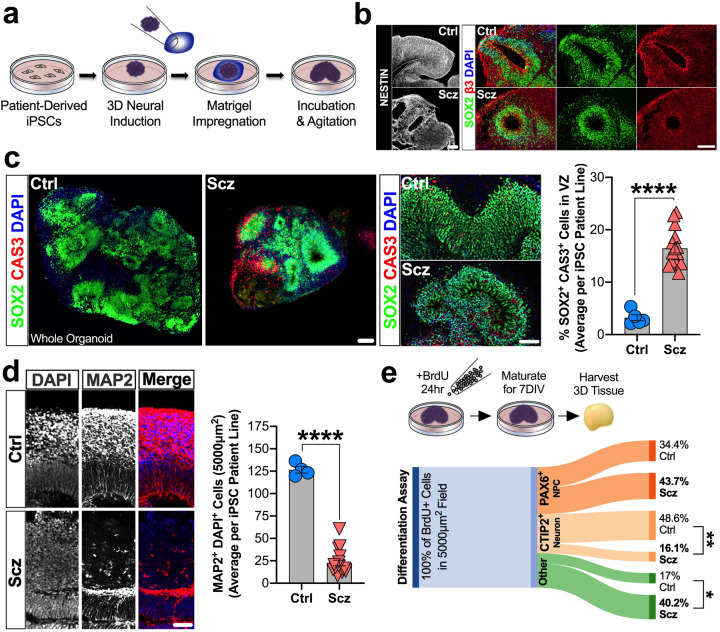
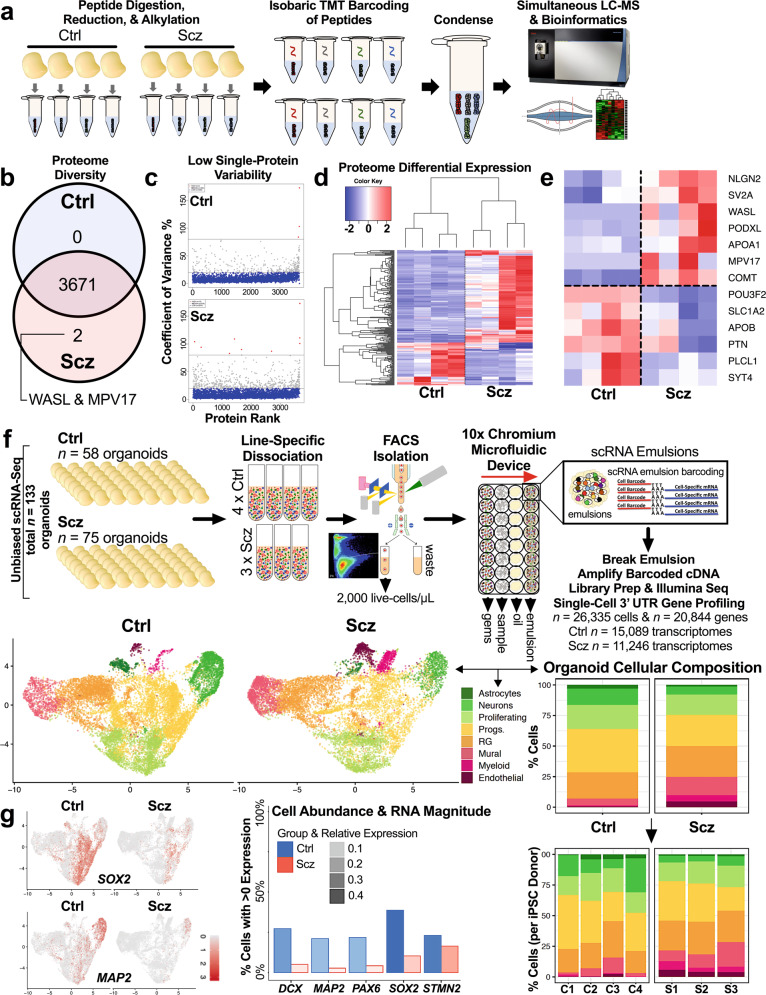
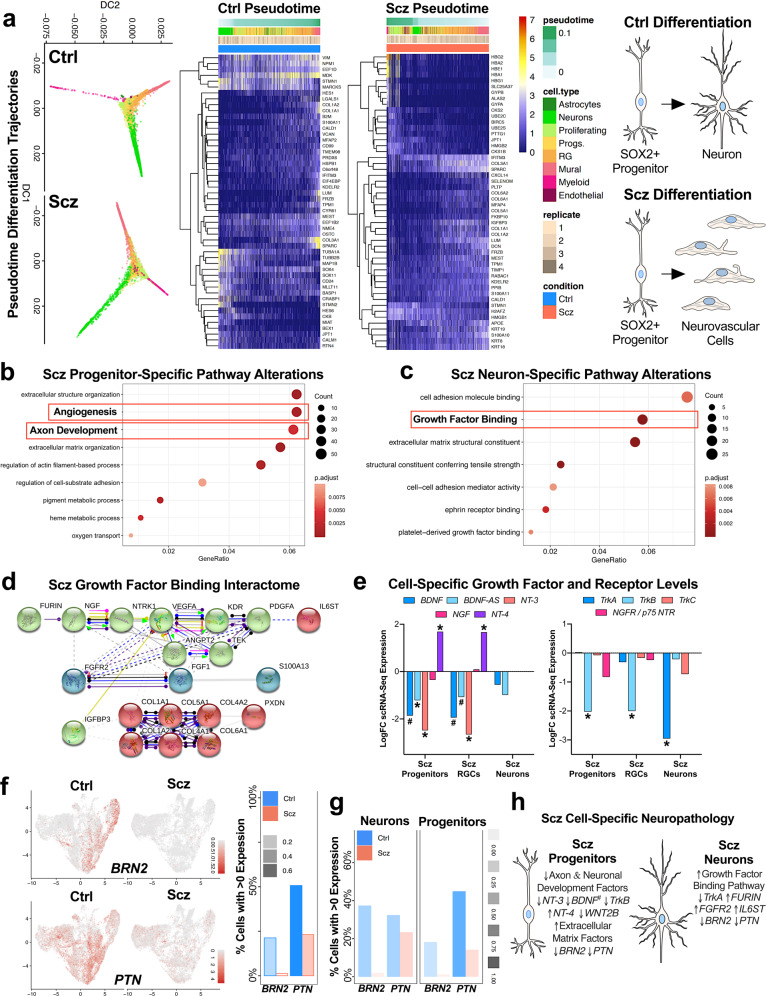
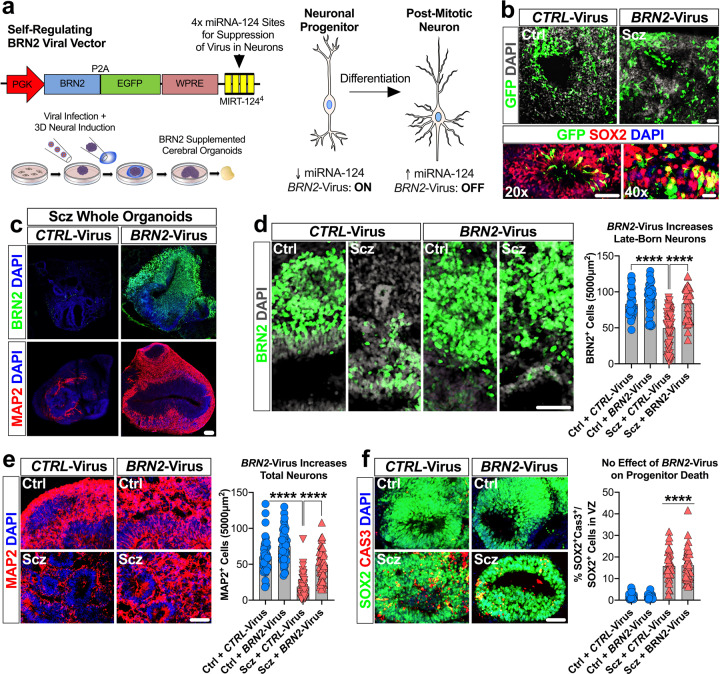
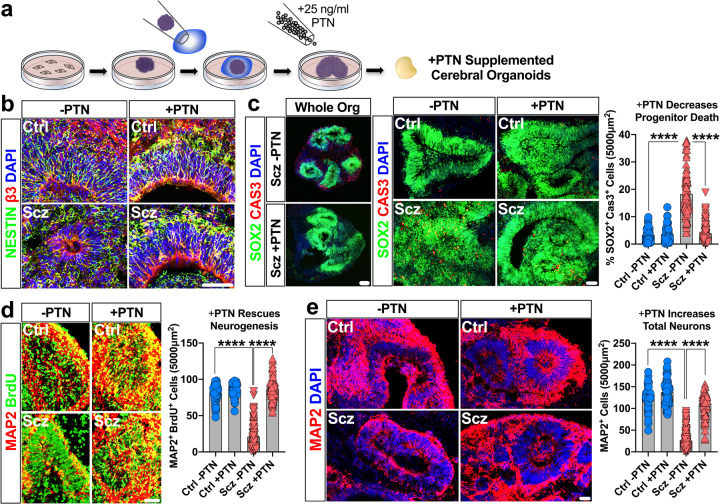
Due to an inability to ethically access developing human brain tissue as well as identify prospective cases, early-arising neurodevelopmental and cell-specific signatures of Schizophrenia (Scz) have remained unknown and thus undefined. To overcome these challenges, we utilized patient-derived induced pluripotent stem cells (iPSCs) to generate 3D cerebral organoids to model neuropathology of Scz during this critical period. We discovered that Scz organoids exhibited ventricular neuropathology resulting in altered progenitor survival and disrupted neurogenesis. This ultimately yielded fewer neurons within developing cortical fields of Scz organoids. Single-cell sequencing revealed that Scz progenitors were specifically depleted of neuronal programming factors leading to a remodeling of cell-lineages, altered differentiation trajectories, and distorted cortical cell-type diversity. While Scz organoids were similar in their macromolecular diversity to organoids generated from healthy controls (Ctrls), four GWAS factors (PTN, COMT, PLCL1, and PODXL) and peptide fragments belonging to the POU-domain transcription factor family (e.g., POU3F2/BRN2) were altered. This revealed that Scz organoids principally differed not in their proteomic diversity, but specifically in their total quantity of disease and neurodevelopmental factors at the molecular level. Single-cell sequencing subsequently identified cell-type specific alterations in neuronal programming factors as well as a developmental switch in neurotrophic growth factor expression, indicating that Scz neuropathology can be encoded on a cell-type-by-cell-type basis. Furthermore, single-cell sequencing also specifically replicated the depletion of BRN2 (POU3F2) and PTN in both Scz progenitors and neurons. Subsequently, in two mechanistic rescue experiments we identified that the transcription factor BRN2 and growth factor PTN operate as mechanistic substrates of neurogenesis and cellular survival, respectively, in Scz organoids. Collectively, our work suggests that multiple mechanisms of Scz exist in patient-derived organoids, and that these disparate mechanisms converge upon primordial brain developmental pathways such as neuronal differentiation, survival, and growth factor support, which may amalgamate to elevate intrinsic risk of Scz.
Overview
The claims and statistics of this paper haven’t been checked yet.
Free: it reads the open-access text and checks the first 5 claims that cite a source we can check. Create a free account to check every claim.
Integrity signals
Registry
Cites
Statistics
Figures
Verification
Claims the paper makes
The claims and statistics of this paper haven’t been checked yet.
Free: it reads the open-access text and checks the first 5 claims that cite a source we can check. Create a free account to check every claim.
Claims other papers make about this one
Each is checked against this paper’s own text: does it say what the citing paper says it does?
The source backs part of the claim, not all of it — or backs it for a different population, condition or comparison.
In the citing paper
“Besides, the depletion of BRN2 and PTN can lead to schizophrenia through different mechanisms [233].”
From Single-cell sequencing to multi-omics: technologies and applications (2024) · cites this paper as [233]
Experimental — accuracy not yet measuredThe cited source says what the claim attributes to it.
In the citing paper
“Notaras et al. performed an integrative analysis of transcriptome and proteome on schizophrenia organoids to identify two disease-associated factors (BRN2 and PTN).”
From Single-cell sequencing to multi-omics: technologies and applications (2024) · cites this paper as [233]
The cited source says what the claim attributes to it.
In the citing paper
“Both BRN2 and PTN promoted neurogenesis, while PTN also inhibited apoptosis.”
From Single-cell sequencing to multi-omics: technologies and applications (2024) · cites this paper as [233]
The cited source says what the claim attributes to it.
In the citing paper
“Both BRN2 and PTN promoted neurogenesis, while PTN also inhibited apoptosis.”
From Single-cell sequencing to multi-omics: technologies and applications (2024) · cites this paper as [233]
Self-check
Percentages, sums and reported differences re-computed from the paper’s own numbers.
The self-check needs the paper’s full text.
Citations
Cites
Controlling the False Discovery Rate: A Practical and Powerful Approach to Multiple Testing
Benjamini, Y., & Hochberg, Y. (1995) · Journal of the Royal Statistical Society Series B: Statistical Methodology · doi:10.1111/j.2517-6161.1995.tb02031.x · Cited by 109,482 · cited 1×
“Resulting p values were adjusted by the Benjamini-Hochberg multi-test adjustment method for a high number of comparisons [121] and statistics performed as previously described [122].”
MethodclusterProfiler: an R Package for Comparing Biological Themes Among Gene Clusters
Yu, G., Wang, L.-G., Han, Y., & He, Q.-Y. (2012) · OMICS: A Journal of Integrative Biology · doi:10.1089/omi.2011.0118 · Cited by 36,259
Systematic and integrative analysis of large gene lists using DAVID bioinformatics resources
Huang, D. W., Sherman, B. T., & Lempicki, R. A. (2009) · Nature Protocols · doi:10.1038/nprot.2008.211 · Cited by 35,890
Wickham, H. (2016) · Use R! · doi:10.1007/978-3-319-24277-4 · Cited by 33,115
Comprehensive Integration of Single-Cell Data
Stuart, T., Butler, A., Hoffman, P., Hafemeister, C., Papalexi, E., Mauck, W. M., Hao, Y., Stoeckius, M., Smibert, P., & Satija, R. (2019) · Cell · doi:10.1016/j.cell.2019.05.031 · Cited by 15,453
Cox, J., & Mann, M. (2008) · Nature Biotechnology · doi:10.1038/nbt.1511 · Cited by 14,855 · cited 2×
“Bioinformatics pipeline for TMT-LC/MS proteomics Mass spectra were pre-processed as described [118] and processed using MaxQuant [119] (1.5.5.1).”
MethodInfluentialggplot2: Elegant Graphics for Data Analysis
Wickham, H. (2009) · doi:10.1007/978-0-387-98141-3 · Cited by 14,447
Biological insights from 108 schizophrenia-associated genetic loci
Schizophrenia Working Group of the Psychiatric Genomics Consortium (2014) · Nature · doi:10.1038/nature13595 · Cited by 7,577 · cited 7×
“In humans, FURIN localizes to one of 108 Scz loci with genome-wide significance [33].”
BackgroundInfluentialCerebral organoids model human brain development and microcephaly
Lancaster, M. A., Renner, M., Martin, C.-A., Wenzel, D., Bicknell, L. S., Hurles, M. E., Homfray, T., Penninger, J. M., Jackson, A. P., & Knoblich, J. A. (2013) · Nature · doi:10.1038/nature12517 · Cited by 5,372 · cited 6×
“RESULTS Patient-derived Scz organoids exhibit ventricular entropy and neuropathology To study neurodevelopmental aspects of Scz we generated selfassembling, self-maturating, and human-derived cerebral organoids [37].”
BackgroundMethodInfluentialDimensionality reduction for visualizing single-cell data using UMAP
Becht, E., McInnes, L., Healy, J., Dutertre, C.-A., Kwok, I. W. H., Ng, L. G., Ginhoux, F., & Newell, E. W. (2019) · Nature Biotechnology · doi:10.1038/nbt.4314 · Cited by 5,358
Cited by
Single-cell sequencing to multi-omics: technologies and applications
Wu, X., Yang, X., Dai, Y., Zhao, Z., Zhu, J., Guo, H., & Yang, R. (2024) · Biomarker Research · doi:10.1186/s40364-024-00643-4 · Cited by 222
“Besides, the depletion of BRN2 and PTN can lead to schizophrenia through different mechanisms [233].”
BackgroundMicroglia-containing human brain organoids for the study of brain development and pathology
Zhang, W., Jiang, J., Xu, Z., Yan, H., Tang, B., Liu, C., Chen, C., & Meng, Q. (2023) · Molecular Psychiatry · doi:10.1038/s41380-022-01892-1 · Cited by 180
“Indeed, scRNA-seq analysis identified mesodermal progenitors [62], myeloid cells [90], and even microglia clusters [68] in HBOs generated from unguided protocols.”
BackgroundAn integrated transcriptomic cell atlas of human neural organoids
He, Z., Dony, L., Fleck, J. S., Szałata, A., Li, K. X., Slišković, I., Lin, H., Santel, M., Atamian, A., Quadrato, G., et al. (2024) · Nature · doi:10.1038/s41586-024-08172-8 · Cited by 211
Modelling human brain development and disease with organoids
Birtele, M., Lancaster, M. A., & Quadrato, G. (2024) · Nature Reviews Molecular Cell Biology · doi:10.1038/s41580-024-00804-1 · Cited by 189
Kim, S.-H., & Chang, M.-Y. (2023) · International Journal of Molecular Sciences · doi:10.3390/ijms241512528 · Cited by 82
Sebastian, R., Jin, K., Pavon, N., Bansal, R., Potter, A., Song, Y., Babu, J., Gabriel, R., Sun, Y., Aronow, B., et al. (2023) · Nature Communications · doi:10.1038/s41467-023-39420-6 · Cited by 73
Brain ventricles as windows into brain development and disease
Duy, P. Q., RAKIC, P. T., Alper, S. L., Butler, W. E., Walsh, C. A., Šestan, N., Geschwind, D. H., Jin, S. C., & Kahle, K. T. (2022) · Neuron · doi:10.1016/j.neuron.2021.12.009 · Cited by 57
Notaras, M. J., Lodhi, A., Fang, H., Greening, D. W., & Colak, D. (2021) · Translational Psychiatry · doi:10.1038/s41398-021-01664-5 · Cited by 58
Self-citationBrain organoid protocols and limitations
Zhao, H., & Haddad, G. G. (2024) · Frontiers in Cellular Neuroscience · doi:10.3389/fncel.2024.1351734 · Cited by 69
Li, H., Xu, L., Jiang, W., Qiu, X., Xu, H., Zhu, F., Hu, Y., Liang, S., Cai, C., Qiu, W., et al. (2023) · Cell Reports · doi:10.1016/j.celrep.2023.113022 · Cited by 54
Advancing preclinical models of psychiatric disorders with human brain organoid cultures
Dixon, T. A., & Muotri, A. R. (2022) · Molecular Psychiatry · doi:10.1038/s41380-022-01708-2 · Cited by 54
Synaptic plasticity in human thalamocortical assembloids
Patton, M. H., Thomas, K. T., Bayazitov, I. T., Newman, K. D., Kurtz, N. B., Robinson, C. G., Ramirez, C. A., Trevisan, A. J., Bikoff, J. B., Peters, S., et al. (2024) · Cell Reports · doi:10.1016/j.celrep.2024.114503 · Cited by 57
Krefft, O., Jabali, A., Iefremova, V., Koch, P., & Ladewig, J. (2018) · Journal of Visualized Experiments · doi:10.3791/56768 · Cited by 63
Ene, H. M., Karry, R., Farfara, D., & Ben‐Shachar, D. (2022) · Molecular Psychiatry · doi:10.1038/s41380-022-01865-4 · Cited by 46
Stankovic, I., Notaras, M. J., Wolujewicz, P., Lu, T. M., Lis, R., Ross, M. E., & Colak, D. (2024) · Translational Psychiatry · doi:10.1038/s41398-024-02740-2 · Cited by 43
Self-citationAdvances and Applications of Brain Organoids
Li, Y., Zeng, P.-M., Wu, J., & Luo, Z. (2023) · Neuroscience Bulletin · doi:10.1007/s12264-023-01065-2 · Cited by 40
Gene expression in organoids: an expanding horizon
Smirnov, A., Melino, G., & Candi, E. (2023) · Biology Direct · doi:10.1186/s13062-023-00360-2 · Cited by 35
An overview of human single-cell RNA sequencing studies in neurobiological disease
Walter, T. J., Suter, R. K., & Ayad, N. G. (2023) · Neurobiology of Disease · doi:10.1016/j.nbd.2023.106201 · Cited by 32
Chen, Y., Smith, M. K., Ying, Y.-L., Makridakis, M., Noonan, J. E., Kanellakis, P., Rai, A., Salim, A., Murphy, A. J., Bobik, A., et al. (2023) · Communications Biology · doi:10.1038/s42003-023-04641-4 · Cited by 27
Self-citationChang, X., Zhao, W. D., Kang, J., Xiang, S., Xie, C., Hernández, H. C., Palaniyappan, L. K., & Feng, J. (2022) · Schizophrenia · doi:10.1038/s41537-022-00308-x · Cited by 40
Fatmous, M., Rai, A., Poh, Q. H., Salamonsen, L. A., & Greening, D. W. (2022) · Frontiers in Cell and Developmental Biology · doi:10.3389/fcell.2022.1078096 · Cited by 30
Self-citationHu, D., Cao, Y., Cai, C., Wang, G., Zhou, M., Peng, L., Fan, Y., Lai, Q., & Gao, Z. (2024) · Neural Regeneration Research · doi:10.4103/nrr.nrr-d-23-00928 · Cited by 32
Gunasekaran, S., Jacob, R. S., & Omkumar, R. V. (2022) · Neuropharmacology · doi:10.1016/j.neuropharm.2022.109024 · Cited by 25
Human-Induced Pluripotent Stem Cell Technology: Toward the Future of Personalized Psychiatry
Alciati, A., Reggiani, A. M., Caldirola, D., & Perna, G. (2022) · Journal of Personalized Medicine · doi:10.3390/jpm12081340 · Cited by 28
Current advancements of modelling schizophrenia using patient-derived induced pluripotent stem cells
Dubonyte, U., Asenjo-Martínez, A., Werge, T. M., Lage, K., & Kirkeby, A. (2022) · Acta Neuropathologica Communications · doi:10.1186/s40478-022-01460-2 · Cited by 24
Rao, S. B., Sun, Z., Brundu, F. G., Chen, Y., Sun, Y., Zhu, H., Shprintzen, R. J., Tomer, R., Rabadán, R., Leong, K. W., et al. (2025) · Nature Communications · doi:10.1038/s41467-025-62187-x · Cited by 29
Walsh, R. M., Crabtree, G. W., Kalpana, K., Jubierre, L., Koo, S. Y., Ciceri, G., Gogos, J. A., Kruglikov, I., & Studer, L. (2025) · Neuron · doi:10.1016/j.neuron.2025.06.017 · Cited by 29
Villanueva, R. (2023) · Frontiers in Psychiatry · doi:10.3389/fpsyt.2023.1178494 · Cited by 22
Neuroimaging and multiomics reveal cross-scale circuit abnormalities in schizophrenia
Wang, M., Yan, H., Tian, X., Yue, W., Liu, Y., Fan, L., Hu, K., Sun, Y., Zhao, Y., Lou, J., et al. (2023) · Nature Mental Health · doi:10.1038/s44220-023-00110-3 · Cited by 20
Sawada, T., Barbosa, A. R., Araújo, B. H. S., McCord, A. E., D’Ignazio, L., Benjamin, K. J., Sheehan, B., Zabolocki, M., Feltrin, A. S., Arora, R., et al. (2023) · American Journal of Psychiatry · doi:10.1176/appi.ajp.20220723 · Cited by 23
Sebastian, R., Song, Y., & Pak, C. (2022) · Schizophrenia Research · doi:10.1016/j.schres.2022.06.028 · Cited by 16
Du, Z., Zang, Z., Luo, J., Liu, T., Yang, L., Cai, Y., Wang, L., Zhang, D., Zhao, J., Gao, J., et al. (2023) · Journal of Hazardous Materials · doi:10.1016/j.jhazmat.2023.131379 · Cited by 20
Zhang, W., Huang, C., Yao, H., Yang, S., Jiapaer, Z., Song, J., & Wang, X. (2025) · Translational Neurodegeneration · doi:10.1186/s40035-025-00471-y · Cited by 17
Present and Future Modeling of Human Psychiatric Connectopathies With Brain Organoids
Urenda, J., Dosso, A. D., Birtele, M., & Quadrato, G. (2022) · Biological Psychiatry · doi:10.1016/j.biopsych.2022.12.017 · Cited by 16
Werner, J. M., & Gillis, J. (2024) · PLoS Biology · doi:10.1371/journal.pbio.3002912 · Cited by 24
Zuccoli, G. S., Nascimento, J. M., Codo, A. C., Moraes-Vieira, P. M., Rehen, S. K., & Martins‐de‐Souza, D. (2023) · European Archives of Psychiatry and Clinical Neuroscience · doi:10.1007/s00406-023-01605-x · Cited by 18
Brandebura, A. N., Paumier, A., Asbell, Q. N., Tao, T., Micael, M. K. B., Sanchez, S., & Allen, N. J. (2025) · Cell Reports · doi:10.1016/j.celrep.2025.116300 · Cited by 18
hPSCs-derived brain organoids for disease modeling, toxicity testing and drug evaluation
Xie, N., Bai, J., Hou, Y., Liu, J., Zhang, Y., Meng, X., & Wang, X. (2024) · Experimental Neurology · doi:10.1016/j.expneurol.2024.115110 · Cited by 15
Stem Cell Models for Context-Specific Modeling in Psychiatric Disorders
Seah, C., Huckins, L. M., & Brennand, K. (2022) · Biological Psychiatry · doi:10.1016/j.biopsych.2022.09.033 · Cited by 12
Animal Model Alternatives in Filovirus and Bornavirus Research
Widerspick, L., Steffen, J. F., Tappe, D., & Muñoz‐Fontela, C. (2023) · Viruses · doi:10.3390/v15010158 · Cited by 12
Akkouh, I. A., Ueland, T., Szabó, A., Hughes, T., Smeland, O. B., Andreassen, O. A., Osete, J. R., & Djurovic, S. (2023) · Biological Psychiatry · doi:10.1016/j.biopsych.2023.08.017 · Cited by 17
Balance between the cell viability and death in 3D
Debruyne, A. C., Okkelman, I. A., & Dmitriev, R. I. (2022) · Seminars in Cell and Developmental Biology · doi:10.1016/j.semcdb.2022.09.005 · Cited by 19
González-Sastre, R., Coronel, R., Bernabeu-Zornoza, A., Mateos-Martínez, P., Rosca, A., López-Alonso, V., & Liste, I. (2024) · Journal of Tissue Engineering · doi:10.1177/20417314231226027 · Cited by 14
Peering into the mind: unraveling schizophrenia’s secrets using models
Nani, J. V. S., Muotri, A. R., & Hayashi, M. A. F. (2024) · Molecular Psychiatry · doi:10.1038/s41380-024-02728-w · Cited by 12
Neuronal alterations in AKT isotype expression in schizophrenia
Devine, E. A., Imami, A. S., Eby, H., Sahay, S., Hamoud, A.-R. A., Golchin, H., Ryan, W. G., Shedroff, E., Arvay, T. O., Joyce, A. W., et al. (2024) · Molecular Psychiatry · doi:10.1038/s41380-024-02770-8 · Cited by 12
Regional and aging-specific cellular architecture of non-human primate brains
Wang, Y.-M., Wang, W., Pan, Y., Zeng, L., Wu, J., Wang, Z., Zhuang, X.-L., Li, M., Cooper, D. N., Wang, S., et al. (2025) · Genome Medicine · doi:10.1186/s13073-025-01469-x · Cited by 12
Advances in construction and modeling of functional neural circuits in vitro
Chow, S. Y. A., Hu, H., Osaki, T., Levi, T., & Ikeuchi, Y. (2022) · Neurochemical Research · doi:10.1007/s11064-022-03682-1 · Cited by 13
Ahmed, M. E., Muffat, J., & Li, Y. (2023) · Frontiers in Cell and Developmental Biology · doi:10.3389/fcell.2023.1158373 · Cited by 13
Transcriptomic and genetic analysis suggests a role for mitochondrial dysregulation in schizophreniaPreprint
Bast, L., Yao, S., Martínez‐López, J. A., Memic, F., French, H., Valiukonyte, M., Karlsson, R., Wen, J., Song, J., Zhang, R., et al. (2025) · medRxiv · doi:10.1101/2025.03.14.25323827 · Cited by 14
Genetic and Epigenetic Regulation of Brain Organoids
Wang, Y., Hu, N., & Li, X.-H. (2022) · Frontiers in Cell and Developmental Biology · doi:10.3389/fcell.2022.948818 · Cited by 13
Yang, X., Jones, I. R., Chen, P. B., Yang, H., Ren, X., Zheng, L., Li, B., Li, Y. E., Sun, Q., Wen, J., et al. (2023) · doi:10.1101/2023.08.30.555359 · Cited by 10
Hörberg, C.-J., Johansson, U. E., Johansson, F., & O’Carroll, D. C. (2022) · eNeuro · doi:10.1523/eneuro.0143-22.2022 · Cited by 13
Advances and Challenges in Cerebral Organoids Research
Luo, D., Xu, J., Liu, F., & Gu, Z. (2024) · Advanced NanoBiomed Research · doi:10.1002/anbr.202300126 · Cited by 11
The Role of microRNA in Schizophrenia: A Scoping Review
Li, K., Zhu, L., Lv, H., Bai, Y., Chuang, G., & He, K. (2024) · International Journal of Molecular Sciences · doi:10.3390/ijms25147673 · Cited by 13
Impact of tidal volume strategy at birth on initiating lung injury in preterm lambs
Pereira‐Fantini, P. M., Kenna, K. R., Fatmous, M., Sett, A., Douglas, E., Dahm, S. I., Sourial, M., Fang, H., Greening, D. W., & Tingay, D. G. (2023) · American Journal of Physiology-Lung Cellular and Molecular Physiology · doi:10.1152/ajplung.00159.2023 · Cited by 12
Self-citationFan, P., Wang, Y., Lu, K., Hong, Y., Xu, M., Han, X. W., & Liu, Y. (2022) · Life Medicine · doi:10.1093/lifemedi/lnac034 · Cited by 11
α7 nicotinic acetylcholine receptors regulate radial glia fate in the developing human cortex
Mukhtar, T., Siebert, C., Wang, Y. J., Pebworth, M.-P., White, M. L., Wu, T., Huang, T., Zuo, G., Ross, J. M., Baltazar, J., et al. (2025) · Nature Communications · doi:10.1038/s41467-025-61167-5 · Cited by 11
Stankovic, I., Smit, P., Cross, J., Rai, A., Wolujewicz, P., Greening, D. W., & Colak, D. (2025) · Translational Psychiatry · doi:10.1038/s41398-025-03607-w · Cited by 13
Self-citationSantarriaga, S., Gerlovin, K., Layadi, Y., & Karmacharya, R. (2023) · Schizophrenia Research · doi:10.1016/j.schres.2023.02.029 · Cited by 7
Biomarkers in psychiatric disorders
de Jesus, J. R., Andrade, T. D. A., & Figueiredo, E. C. (2023) · Advances in clinical chemistry · doi:10.1016/bs.acc.2023.05.005 · Cited by 9
The Role of Cannabinoids in CNS Development: Focus on Proliferation and Cell Death
Bockmann, E. C., Brito, R., Madeira, L. F., Sampaio, L. D. S., Reis, R. A. D. M., França, G. R., & Calaza, K. D. C. (2022) · Cellular and Molecular Neurobiology · doi:10.1007/s10571-022-01263-y · Cited by 9
Preservation of co-expression defines the primary tissue fidelity of human neural organoidsPreprint
Werner, J. M., & Gillis, J. A. (2023) · bioRxiv (Cold Spring Harbor Laboratory) · doi:10.1101/2023.03.31.535112 · Cited by 7
RosetteArray Platform for Quantitative High-Throughput Screening of Human Neurodevelopmental RiskPreprint
Lundin, B. F., Knight, G. T., Fedorchak, N. J., Krucki, K., Siepel, F., Iyer, N. R., Maher, J. E., Izban, N. R., Roberts, A., Cicero, M. R., et al. (2024) · bioRxiv (Cold Spring Harbor Laboratory) · doi:10.1101/2024.04.01.587605 · Cited by 11
Human Brain Organoids Model Abnormal Prenatal Neural Development Induced by Thermal Stimulation
Xu, L., Zhang, Y., Chen, X., Hong, Y., Zhang, X., Hu, H., Han, X., Zou, X., Xu, M., Zhu, W., et al. (2024) · Cell Proliferation · doi:10.1111/cpr.13777 · Cited by 7
Xie, B., Yu, J., Chen, C., & Shen, T. (2025) · Cellular and Molecular Neurobiology · doi:10.1007/s10571-025-01546-0 · Cited by 10
Fang, C., Wang, Q., Xiao, Q., Cai, X.-X., Du, R., Xue, L., Tian, X., & Xiong, L. (2025) · Neural Regeneration Research · doi:10.4103/nrr.nrr-d-24-01490 · Cited by 7
Yokoi, R., Matsuda, N., Ishibashi, Y., & Suzuki, I. (2025) · Frontiers in Neuroscience · doi:10.3389/fnins.2025.1634582 · Cited by 12
Phalnikar, K., Srividya, M., Mythri, S. V., Vasavi, N. S., Ganguly, A., Kumar, A. R., Padmaja, S., Kalia, K., Mishra, S., Dhanya, S. K., et al. (2024) · Oxford Open Neuroscience · doi:10.1093/oons/kvae007 · Cited by 9
Akkouh, I. A., Osete, J. R., Szabó, A., Andreassen, O. A., & Djurovic, S. (2025) · Biological Psychiatry · doi:10.1016/j.biopsych.2025.02.012 · Cited by 9
Dissecting Schizophrenia Biology Using Pleiotropy With Cognitive Genomics
Bhattacharyya, U., John, J., Lencz, T., & Lam, M. (2025) · Biological Psychiatry · doi:10.1016/j.biopsych.2025.02.890 · Cited by 11
A Comprehensive Update of Cerebral Organoids between Applications and Challenges
Li, X., Shopit, A., & Wang, J. (2022) · Oxidative Medicine and Cellular Longevity · doi:10.1155/2022/7264649 · Cited by 6
Far, B. F., Omidvar, K., Heidari, E., Ebrahimi, M., Mohammadi, Y., & Ertaş, Y. N. (2025) · ACS Pharmacology & Translational Science · doi:10.1021/acsptsci.5c00407 · Cited by 6
Olanzapine enhances early brain maturation through activation of the NODAL/FOXH1 axis
Teng, Z., Chen, Z., Zou, T., Su, Y., Zeng, H., Sun, S., Chen, H., Liu, J., Qin, Y., Wu, H., et al. (2024) · iScience · doi:10.1016/j.isci.2024.110917 · Cited by 5
Model systems for emulating human tissue and physiology in psychiatric research
Cheng, K., Kathuria, A., Kshirsagar, A., Nixon, J., Lau, J., Yang, K., & Sawa, A. (2025) · Frontiers in Neuroscience · doi:10.3389/fnins.2025.1527826 · Cited by 7
Schmied, V., Korkut-Demirbaş, M., Venturino, A., Maya-Arteaga, J. P., & Siegert, S. (2025) · Journal of Neuroinflammation · doi:10.1186/s12974-025-03366-x · Cited by 8
Modelling sex differences of neurological disorders in vitro
Castro‐Aldrete, L., Einsiedler, M., Cuní‐López, C., Vanhaelen, Q., Silvestri, A., Ferretti, M. T., de Gennaro, M. E., Putignano, G., Guix, M., Marino, N., et al. (2025) · Nature Reviews Bioengineering · doi:10.1038/s44222-025-00355-w · Cited by 4
Jia, N., Yin, X., Zhu, Z., Hou, W., Yang, Q., Zhu, H., Zhang, H., Yu, X., Yu, Q., & Hui, L. (2025) · Schizophrenia Research · doi:10.1016/j.schres.2025.04.027 · Cited by 6
Nasu, M., Abe, Y., Matsushima, A., Yamanaka, M., Kozuki, N., & Ueda, S. (2022) · Behavioural Brain Research · doi:10.1016/j.bbr.2022.113846 · Cited by 6
Koesterich, J., Liu, J., Williams, S., Yang, N., & Kreimer, A. (2024) · International Journal of Molecular Sciences · doi:10.3390/ijms25189840 · Cited by 5
Dissecting the genetic relationship between severe mental disorders and autoimmune diseases
Wiström, E. D., Fuhrer, J., Shadrin, A. A., Fominykh, V., O’Connell, K. S., Jaholkowski, P. P., Steen, N. E., Stinson, S. E., Parekh, P., Frei, O., et al. (2025) · Brain Behavior and Immunity · doi:10.1016/j.bbi.2025.106249 · Cited by 5
Coronel, R., González-Sastre, R., Mateos-Martínez, P., Maeso, L., Llorente-Beneyto, E., Martín-Benito, S., Gagosian, V. S. C., Foti, L., González, M. D. C., López-Alonso, V., et al. (2025) · Neural Regeneration Research · doi:10.4103/nrr.nrr-d-24-01639 · Cited by 10
Metagenome-based characterization of the gut virome in patients with schizophrenia
Ren, Y., Zhang, P., Yu, H., Li, S., & Jiang, H. (2025) · Journal of Translational Medicine · doi:10.1186/s12967-025-06923-3 · Cited by 6
Modeling forebrain regional development and connectivity by human brain organoids
Choe, M. S., Lo, C., & Park, I. (2025) · Current Opinion in Genetics & Development · doi:10.1016/j.gde.2025.102324 · Cited by 5
Ni, P., Fan, L., Jiang, Y., Zhou, C., & Chung, S. (2023) · Frontiers in Psychiatry · doi:10.3389/fpsyt.2023.1336085 · Cited by 4
Walsh, R. M., Crabtree, G. W., Kalpana, K., Jubierre, L., Koo, S. Y., Ciceri, G., Gogos, J. A., Kruglikov, I., & Studer, L. (2024) · bioRxiv (Cold Spring Harbor Laboratory) · doi:10.1101/2024.11.26.624368 · Cited by 4
Molecular Signatures of Schizophrenia and Insights into Potential Biological Convergence
Saada, M., & Stern, S. (2025) · International Journal of Molecular Sciences · doi:10.3390/ijms26199830 · Cited by 4
Pluripotent stem cells-based neural organoids for modelling human brain development and diseases
Tong, L., Tian, P., Wang, R., Niu, S., Wang, R., Ye, Y., Wu, Y., Zhang, W., Wang, Y., Foggetti, A., et al. (2025) · Cell & Bioscience · doi:10.1186/s13578-025-01515-6 · Cited by 3
Wang, J., Sun, Z., Zhou, Y., Wang, L., & Liu, J. (2026) · Stem Cell Research & Therapy · doi:10.1186/s13287-025-04885-3 · Cited by 3
Kim, H., Vasquez, F. J. A., Bello, A. B., & Lee, S.-H. (2026) · Tissue and Cell · doi:10.1016/j.tice.2026.103401 · Cited by 3
Special characteristics of human astrocytes and their roles in brain homeostasis
Kousa, I., Talvio, K., Peteri, U., & Castrén, M. L. (2026) · Neuroscience Applied · doi:10.1016/j.nsa.2026.107000 · Cited by 3
CircSATB2 modulates fear extinction memory via Robo3-driven synaptic plasticity
Xu, Z., Shi, J., Liu, R., Li, Z., Xu, S., Gong, H., Fu, M., Xu, H., Yu, S., Liu, J., et al. (2024) · Brain Research Bulletin · doi:10.1016/j.brainresbull.2024.111167 · Cited by 4
Arioka, Y., Okumura, H., Sakaguchi, H., & Ozaki, N. (2023) · Psychiatry and Clinical Neurosciences · doi:10.1111/pcn.13545 · Cited by 5
Cell specificity of adeno-associated virus (AAV) serotypes in human cortical organoidsPreprint
Stanton, M. M., Hariani, H. N., Sorokin, J. M., Taylor, P. M., Modan, S., Rash, B. G., Rao, S. B., Enriquez, L., Quang, D., Hsu, P.-K., et al. (2023) · bioRxiv (Cold Spring Harbor Laboratory) · doi:10.1101/2023.04.13.536491 · Cited by 5
Ahn, I., Chang, S., Lee, J., Choi, S. H., Han, J., & Kim, Y. (2025) · Advanced Science · doi:10.1002/advs.202508383 · Cited by 4
Tengfei, C., Shiyu, W., Sheng, L., Lei, C., Ni, F., Yaoyu, W., Jianing, Z., Qing, L., Kang, L., Jie, L., et al. (2025) · Schizophrenia Research · doi:10.1016/j.schres.2025.12.016 · Cited by 2
Barzon, B., Marchiotto, F., Nasini, S., Casile, A., Peluso, S., Cifani, C., Pitsikas, N., Gobbi, G., Cambiaghi, M., & Comai, S. (2026) · Biochemical Pharmacology · doi:10.1016/j.bcp.2026.117725 · Cited by 2
Perets, N., Kerem, L., Waiskopf, N., Horesh, N., Goldman, I., Avichzer, J., Bril, D., Tobelaim, W., Barashi, M., David, L., et al. (2026) · Translational Psychiatry · doi:10.1038/s41398-026-03890-1 · Cited by 6
Identifying an Early Neuropathological Mechanism in Schizophrenia With Brain Organoids
Kim, J., & Park, I. (2024) · Biological Psychiatry · doi:10.1016/j.biopsych.2024.01.015 · Cited by 2
Multimodal joint deconvolution and integrative signature selection in proteomics
Pan, Y., Wang, X., Sun, J., Liu, C., Peng, J., & Li, Q. (2024) · Communications Biology · doi:10.1038/s42003-024-06155-z · Cited by 1
Wang, H., Li, X., Li, T., Li, Z., Sham, P. C., & Zhang, Y. (2025) · Genome biology · doi:10.1186/s13059-025-03485-x · Cited by 2
Metadata
- Authors
- Notaras, M., Lodhi, A., Dündar, F., Collier, P., Sayles, N. M., Tilgner, H., Greening, D., & Colak, D.
- Affiliations
- Cornell University (US)
- The University of Melbourne (AU)
- Corresponding author
- Colak, Dilek
- Venue
- Molecular Psychiatry
- Published
- 2021-11-17
- Volume
- 27
- Issue
- 3
- Pages
- 1416-1434
- ISSN
- 1359-4184 (ISSN-L)
- 1476-5578
- PMC
- PMC9095467
- OpenAlex
- W3213326888
- Cited by
- 150
- References
- 150
- Citations by year
- 2026: 29 · 2025: 41 · 2024: 30 · 2023: 24 · 2022: 24 · 2021: 1
- FWCI
- 6.20
- Type
- journal article
- Language
- en
- Open access
- hybrid
- doi.org
- Licence
- cc-by
- creativecommons.org/licenses/by/4.0 (tdm)
- creativecommons.org/licenses/by/4.0 (vor)
- Locations
- Molecular Psychiatry (publishedVersion, cc-by)
- bioRxiv (Cold Spring Harbor Laboratory) (acceptedVersion)
- PubMed Central (publishedVersion, cc-by)
- PubMed (publishedVersion)
- Figshare (submittedVersion, cc-by)
- Minerva Access (University of Melbourne) (submittedVersion, cc-by)
- La Trobe University (cc-by)
- Funders
- Weill Cornell Medical College
- National Health and Medical Research Council
- Topics
- Life Sciences › Biochemistry, Genetics and Molecular Biology › Molecular Biology › Pluripotent Stem Cells Research
- Health Sciences › Medicine › Psychiatry and Mental health › Schizophrenia research and treatment
- Life Sciences › Neuroscience › Developmental Neuroscience › Neurogenesis and neuroplasticity mechanisms
- Keywords
- schizophrenia, brain organoids, brain development, neurogenesis, Brn2, POU3F2, pleiotrophin, catechol-O-methyltransferase, PODXL, POU transcription factors, neurotrophic factors, single-cell transcriptomics, proteomic diversity
- MeSH terms
- Humans, Organoids, Schizophrenia, Transcription Factors, Proteomics, Induced Pluripotent Stem Cells
About these checks
Registry, retraction, Cites and statistics results are computed, not judged, with one exception: a printed reference that no index lists is read once by a model before it counts as a citation error. Claims are extracted by a model and kept only when their quote appears verbatim in the text; each cited source is then checked, with a model’s help, for whether it says what the claim relies on. Those verdicts can be wrong — read the claim’s quote and the cited source before relying on one.
Statistics and arithmetic are recomputed, not judged.
Confidence bands are shown only for fields calibrated on our annotated test set. None is calibrated yet, so no band is shown.
What counts as a claim ›How we measure confidence ›How we check this ›
Are you an author, or do you see a problem with this page? Request a review
Data sources
Bibliographic data: Semantic Scholar, OpenAlex, Crossref.
Contains information from the Semantic Scholar Academic Graph Datasets, made available under the ODC Attribution License (ODC-BY 1.0).
Semantic Scholar’s data is described in: Kinney, R., et al. (2023). The Semantic Scholar Open Data Platform. arXiv:2301.10140.
