

Schizophrenia is defined by cell-specific neuropathology and multiple neurodevelopmental mechanisms in patient-derived cerebral organoids
Open accessPublished version of a preprint
The DOI matches its Crossref record; 150 of the 150 references it cites were found in a registry or an index.
Abstract
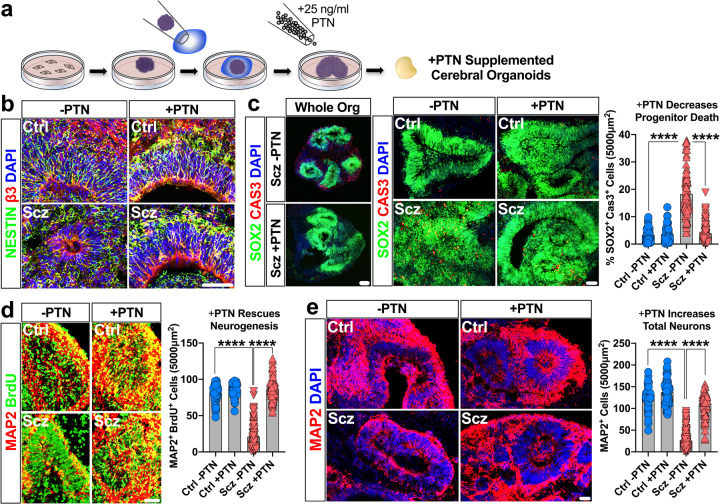
Due to an inability to ethically access developing human brain tissue as well as identify prospective cases, early-arising neurodevelopmental and cell-specific signatures of Schizophrenia (Scz) have remained unknown and thus undefined. To overcome these challenges, we utilized patient-derived induced pluripotent stem cells (iPSCs) to generate 3D cerebral organoids to model neuropathology of Scz during this critical period. We discovered that Scz organoids exhibited ventricular neuropathology resulting in altered progenitor survival and disrupted neurogenesis. This ultimately yielded fewer neurons within developing cortical fields of Scz organoids. Single-cell sequencing revealed that Scz progenitors were specifically depleted of neuronal programming factors leading to a remodeling of cell-lineages, altered differentiation trajectories, and distorted cortical cell-type diversity. While Scz organoids were similar in their macromolecular diversity to organoids generated from healthy controls (Ctrls), four GWAS factors (PTN, COMT, PLCL1, and PODXL) and peptide fragments belonging to the POU-domain transcription factor family (e.g., POU3F2/BRN2) were altered. This revealed that Scz organoids principally differed not in their proteomic diversity, but specifically in their total quantity of disease and neurodevelopmental factors at the molecular level. Single-cell sequencing subsequently identified cell-type specific alterations in neuronal programming factors as well as a developmental switch in neurotrophic growth factor expression, indicating that Scz neuropathology can be encoded on a cell-type-by-cell-type basis. Furthermore, single-cell sequencing also specifically replicated the depletion of BRN2 (POU3F2) and PTN in both Scz progenitors and neurons. Subsequently, in two mechanistic rescue experiments we identified that the transcription factor BRN2 and growth factor PTN operate as mechanistic substrates of neurogenesis and cellular survival, respectively, in Scz organoids. Collectively, our work suggests that multiple mechanisms of Scz exist in patient-derived organoids, and that these disparate mechanisms converge upon primordial brain developmental pathways such as neuronal differentiation, survival, and growth factor support, which may amalgamate to elevate intrinsic risk of Scz.
Overview
The claims and statistics of this paper haven’t been checked yet.
Free: it reads the open-access text and checks the first 5 claims that cite a source we can check. Create a free account to check every claim.
Integrity signals
Registry
Cites
Statistics
Figures
Verification
Claims the paper makes
The claims and statistics of this paper haven’t been checked yet.
Free: it reads the open-access text and checks the first 5 claims that cite a source we can check. Create a free account to check every claim.
Claims other papers make about this one
Each is checked against this paper’s own text: does it say what the citing paper says it does?
The source backs part of the claim, not all of it — or backs it for a different population, condition or comparison.
In the citing paper
“Besides, the depletion of BRN2 and PTN can lead to schizophrenia through different mechanisms [233].”
From Single-cell sequencing to multi-omics: technologies and applications (2024) · cites this paper as [233]
Experimental — accuracy not yet measuredThe cited source says what the claim attributes to it.
In the citing paper
“Notaras et al. performed an integrative analysis of transcriptome and proteome on schizophrenia organoids to identify two disease-associated factors (BRN2 and PTN).”
From Single-cell sequencing to multi-omics: technologies and applications (2024) · cites this paper as [233]
The cited source says what the claim attributes to it.
In the citing paper
“Both BRN2 and PTN promoted neurogenesis, while PTN also inhibited apoptosis.”
From Single-cell sequencing to multi-omics: technologies and applications (2024) · cites this paper as [233]
The cited source says what the claim attributes to it.
In the citing paper
“Both BRN2 and PTN promoted neurogenesis, while PTN also inhibited apoptosis.”
From Single-cell sequencing to multi-omics: technologies and applications (2024) · cites this paper as [233]
Self-check
Percentages, sums and reported differences re-computed from the paper’s own numbers.
The self-check needs the paper’s full text.
Citations
Cites
Controlling the False Discovery Rate: A Practical and Powerful Approach to Multiple Testing
Benjamini, Y., & Hochberg, Y. (1995) · Journal of the Royal Statistical Society Series B: Statistical Methodology · doi:10.1111/j.2517-6161.1995.tb02031.x · Cited by 109,482 · cited 1×
“Resulting p values were adjusted by the Benjamini-Hochberg multi-test adjustment method for a high number of comparisons [121] and statistics performed as previously described [122].”
MethodclusterProfiler: an R Package for Comparing Biological Themes Among Gene Clusters
Yu, G., Wang, L.-G., Han, Y., & He, Q.-Y. (2012) · OMICS: A Journal of Integrative Biology · doi:10.1089/omi.2011.0118 · Cited by 36,259
Systematic and integrative analysis of large gene lists using DAVID bioinformatics resources
Huang, D. W., Sherman, B. T., & Lempicki, R. A. (2009) · Nature Protocols · doi:10.1038/nprot.2008.211 · Cited by 35,890
Wickham, H. (2016) · Use R! · doi:10.1007/978-3-319-24277-4 · Cited by 33,115
Comprehensive Integration of Single-Cell Data
Stuart, T., Butler, A., Hoffman, P., Hafemeister, C., Papalexi, E., Mauck, W. M., Hao, Y., Stoeckius, M., Smibert, P., & Satija, R. (2019) · Cell · doi:10.1016/j.cell.2019.05.031 · Cited by 15,453
Cox, J., & Mann, M. (2008) · Nature Biotechnology · doi:10.1038/nbt.1511 · Cited by 14,855 · cited 2×
“Bioinformatics pipeline for TMT-LC/MS proteomics Mass spectra were pre-processed as described [118] and processed using MaxQuant [119] (1.5.5.1).”
MethodInfluentialggplot2: Elegant Graphics for Data Analysis
Wickham, H. (2009) · doi:10.1007/978-0-387-98141-3 · Cited by 14,447
Biological insights from 108 schizophrenia-associated genetic loci
Schizophrenia Working Group of the Psychiatric Genomics Consortium (2014) · Nature · doi:10.1038/nature13595 · Cited by 7,577 · cited 7×
“In humans, FURIN localizes to one of 108 Scz loci with genome-wide significance [33].”
BackgroundInfluentialCerebral organoids model human brain development and microcephaly
Lancaster, M. A., Renner, M., Martin, C.-A., Wenzel, D., Bicknell, L. S., Hurles, M. E., Homfray, T., Penninger, J. M., Jackson, A. P., & Knoblich, J. A. (2013) · Nature · doi:10.1038/nature12517 · Cited by 5,372 · cited 6×
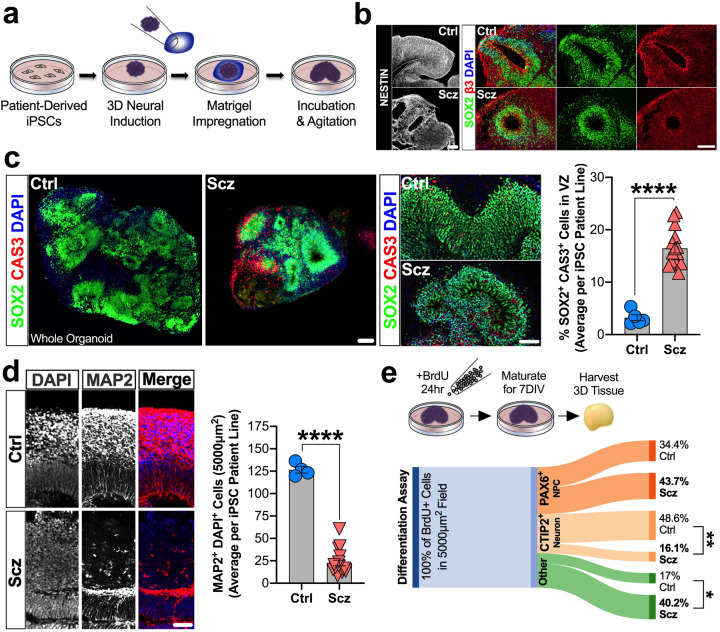
“RESULTS Patient-derived Scz organoids exhibit ventricular entropy and neuropathology To study neurodevelopmental aspects of Scz we generated selfassembling, self-maturating, and human-derived cerebral organoids [37].”
BackgroundMethodInfluentialDimensionality reduction for visualizing single-cell data using UMAP
Becht, E., McInnes, L., Healy, J., Dutertre, C.-A., Kwok, I. W. H., Ng, L. G., Ginhoux, F., & Newell, E. W. (2019) · Nature Biotechnology · doi:10.1038/nbt.4314 · Cited by 5,358
Cited by
Items 101–150 of 150
The Genetic Fingerprint of HIV in the Brain: Insights into Neurocognitive Dysfunction
Jadhav, S., Nair, S., & Nema, V. (2025) · Neuroglia · doi:10.3390/neuroglia6020023 · Cited by 2
Sebastian, R., Jin, K., Pavon, N., Bansal, R., Potter, A., Song, Y., Babu, J., Gabriel, R., Sun, Y., Aronow, B. J., et al. (2022) · bioRxiv (Cold Spring Harbor Laboratory) · doi:10.1101/2022.08.24.505165 · Cited by 2
Li, H., Xiao, Y., Liu, X., Xu, J., Chen, J., Cheng, T., Chung, S., Shu, Y., & Shao, Z. (2024) · bioRxiv (Cold Spring Harbor Laboratory) · doi:10.1101/2024.04.16.589839 · Cited by 2
Sun, Z., Zhu, H., He, X., Lendemeijer, B., Wang, Z., Fan, J., Sun, Y., Zhang, Z., Markx, S., Kushner, S. A., et al. (2025) · bioRxiv (Cold Spring Harbor Laboratory) · doi:10.1101/2025.03.26.645419 · Cited by 3
Perturbed cell fate decision by schizophrenia-associated AS3MT d2d3 isoform during corticogenesis
Kim, S., Woo, Y., Um, D., Chun, I., Noh, S.-J., Ji, H. A., Jung, N., Goo, B. S., Yoo, J. Y., Mun, D. J., et al. (2025) · Science Advances · doi:10.1126/sciadv.adp8271 · Cited by 6
Simão, A. L., Santos, S. S., Moreira, J. A. F., Silva, F. J. D. C., Oliveira, R., Roxo, C., Santos, M., Vaz, A. R., Brites, D. M. T. O., Silva, M. F. B., et al. (2025) · Biochimica et Biophysica Acta (BBA) - Molecular Basis of Disease · doi:10.1016/j.bbadis.2025.167997 · Cited by 1
Basal progenitors as drivers of neocortical expansion
Barão, S., & Müller, U. (2026) · Trends in Neurosciences · doi:10.1016/j.tins.2025.12.007 · Cited by 1
Rajkumar, S., Bearden, C. E., Sebat, J. L., & Iakoucheva, L. M. (2026) · Current Opinion in Genetics & Development · doi:10.1016/j.gde.2026.102441 · Cited by 2
Molecular regulatory mechanisms of schizophrenia-associated functional non-coding variants
Dai, S.-S., Dang, X., Gong, D., Li, D., Mu, C., Teng, Z., & Luo, X. (2026) · Molecular Psychiatry · doi:10.1038/s41380-026-03566-8 · Cited by 1
Brain organoids and brain disease organoids modeling in the age of artificial intelligence
Long, J., & Han, X. (2026) · Cell organoid (Print) · doi:10.26599/co.2026.9410024 · Cited by 1
Exploring the differentiation potential of EomesPOS mouse trophoblast cells in mid-gestation
McGinnis, A. J., Cull, M. E., Peterson, N. T., Tang, M. K., Natale, B. V., & Natale, D. R. C. (2025) · Developmental Biology · doi:10.1016/j.ydbio.2025.02.002 · Cited by 2
A review on the relationship between the distal 1q21.1 microdeletion and schizophrenia
Guo, X., Guo, J., Liu, X., & Hu, T. (2025) · Frontiers in Genetics · doi:10.3389/fgene.2025.1612654 · Cited by 2
Modeling Schizophrenia In Vitro: Challenges and Insights on Studying Brain Cells
Brandão‐Teles, C., Zuccoli, G. S., Smith, B. J., Vieira, G. M., & Crunfli, F. (2022) · Advances in experimental medicine and biology · doi:10.1007/978-3-030-97182-3_3 · Cited by 1
Recent developments and future perspectives of neuropathology
Jellinger, K. A. (2022) · Exploration of neuroscience · doi:10.37349/en.2022.00004 · Cited by 2
Moyer, A. J., Capps, M. E., Conklin, C. L., Bastien, B. L., Martina, V., Gannaway, W. C., Cummings, C. E., Martinez, J. A., Chen, M., Kioschos, G., et al. (2026) · bioRxiv (Cold Spring Harbor Laboratory) · doi:10.64898/2026.02.17.706411 · Cited by 1
Pharmacogenetics in psychiatry: some key clinical considerations
Fabbri, C. (2022) · Minerva Psychiatry · doi:10.23736/s2724-6612.22.02363-6
Sarmah, T., & Bhattacharyya, D. K. (2023) · Lecture notes in computer science · doi:10.1007/978-3-031-45170-6_79
Momoi, M. Y. (2024) · Methods in molecular biology · doi:10.1007/978-1-0716-3810-1_1
Advancements and prospects in human organoid phenomics: a comprehensive review
Zhang, W., XingYu, Y. I. N., HaiXia, G. U., HUANG, S., & Chen, C. (2024) · Scientia Sinica Vitae · doi:10.1360/ssv-2024-0113 · Cited by 1
SCAPE-APA: a package for estimating alternative polyadenylation events from scRNA-seq data
Cheng, G., Le, T., Zhou, R., & Cheng, L. (2024) · Open Research Europe · doi:10.12688/openreseurope.18673.1
Bringing “precision” to psychiatry: Challenges and promises
Gogos, J. A. (2024) · Elsevier eBooks · doi:10.1016/b978-0-323-98808-7.00017-5
Lower density of calretinin‐immunopositive neurons in the putamen of subjects with schizophrenia
Kelmer, P., Hoppa, P., Frank, E., Tyler, T., & Adorján, I. (2024) · Journal of Anatomy · doi:10.1111/joa.14180
SCAPE-APA: a package for estimating alternative polyadenylation events from scRNA-seq data
Cheng, G., Le, T., Zhou, R., & Cheng, L. (2024) · Open Research Europe · doi:10.12688/openreseurope.18673.2
Application of Stem Cells to Understanding Psychiatric Disorders
Birtele, M., Quadrato, G., & Brennand, K. (2025) · Oxford University Press eBooks · doi:10.1093/med/9780197640654.003.0005
SCAPE-APA: a package for estimating alternative polyadenylation events from scRNA-seq data
Cheng, G., Le, T., Zhou, R., & Cheng, L. (2025) · Open Research Europe · doi:10.12688/openreseurope.18673.3
Hippocampal neurogenesis in schizophrenia: Strategies for harnessing neural stem cells
Han, M.-H. (2025) · New cell · doi:10.61958/ncwq2988
Scandura, M., Choe, M. S., Kiral, F. R., Lo, C., Kim, J., Yang, W. S., Qiu, C., Ma, Y., Gruen, J. R., & Park, I. (2025) · Biological Psychiatry · doi:10.1016/j.biopsych.2025.10.014 · Cited by 1
Exploring hippocampal dysfunction in schizophrenia with pluripotent stem cell models
Kaji, D. A. (2025) · Schizophrenia Research · doi:10.1016/j.schres.2025.10.022
Modeling schizophrenia in three dimensions: cerebral organoids and assembloids
Kurishev, A. O., & Голимбет, В. Е. (2025) · Neuroscience and Behavioral Physiology · doi:10.1007/s11055-025-01898-6
Mapping human neurodevelopment—Brain organoids meet lineage tracing
Liaci, C., & Quadrato, G. (2025) · FEBS Letters · doi:10.1002/1873-3468.70250 · Cited by 2
Ye, L., Shen, Z., Yang, Q., Wu, X., Ye, J., Li, Z., Xiong, F., Che, S., Zhao, C., & Wang, Z. (2025) · Neurobiology of Disease · doi:10.1016/j.nbd.2025.107236
Zhang, X., Jiang, Y., Wang, H., & Hu, R. (2026) · Elsevier eBooks · doi:10.1016/b978-0-443-40423-8.00008-7
de Assis, D., Pentz, A. B., Osete, J. R., Ievglevskyi, O., Vandenberghe, M., Akkouh, I. A., Mäki‐Marttunen, T., Jönsson, E. G., Andreassen, O. A., Djurovic, S., et al. (2026) · Translational Psychiatry · doi:10.1038/s41398-026-03863-4 · Cited by 1
Roles of POU3F2 in Brain Development and Neuropsychiatric Disorders
Liu, X., Xu, H., Zhao, Y., Yang, J., Zhang, L., Wang, Z., Lim, K., Zhang, C. M., & Li, L. (2026) · Developmental Neurobiology · doi:10.1002/dneu.70034
Lou, W., Dang, X., & Luo, X. (2026) · Molecular Psychiatry · doi:10.1038/s41380-026-03652-x
Yang, H., Hou, J., Luan, L., Han, Y., Yang, M., Tian, Q., & Zhang, X. (2026) · Annals of General Psychiatry · doi:10.1186/s12991-026-00672-3 · Cited by 1
Organoids as translational models in neuroregeneration after central nervous system injury
Muzyka, A., Rydzek, J., Pszczoła, A., Borkowska, Ł., Diakowska, N., Grodzki, W., Raś, J., Sartys, B., Ochman-Milarska, M., & Zawadzka, M. (2026) · Medical Journal of Cell Biology · doi:10.2478/acb-2026-0001
Xu, X. J., Ni, Z., Wang, Y.-B., Fan, S., Du, Y., Wang, X., & Meng, X. (2026) · Cell Biology and Toxicology · doi:10.1007/s10565-026-10208-w
Criscuolo, L., Jensen, P., Bogetofte, H., Schmidt, S. I., Mohamed, F. A., Jakobsen, L. A., Øhlenschlæger, M. S., Frederiksen, H. R. S., Li, F., Orbe, E. B., et al. (2026) · bioRxiv (Cold Spring Harbor Laboratory) · doi:10.64898/2026.06.01.729183
Transcriptomic signatures and neural cell composition in schizophrenia iPSC-derived neuron cultures
Casas, B. S., Zúñiga-Hernández, J. M., Arizabalos, S., Maluenda, M., Letelier-Naritelli, C., Palma, V., & Montecino, M. A. (2026) · Cells and Development · doi:10.1016/j.cdev.2026.204097
Zehra, B., Mohamed, N., Tambi, R., Faizan, M., Satsangi, D., Giddey, A. D., Bru‐Mercier, G., Farhat, A., Al‐Jezawi, N. K., Kumail, M., et al. (2026) · Molecular Psychiatry · doi:10.1038/s41380-026-03818-7
Liao, F., Zhong, Q., Lu, R., Liang, T., Lan, W., Zhong, Z., Shen, B., Long, J., & Su, L. (2026) · European Archives of Psychiatry and Clinical Neuroscience · doi:10.1007/s00406-026-02339-2
Sun, H., Liu, K., Wang, J., Qi, H., Gan, P., Hu, W., Sun, H., Wang, Y., & Liang, Q. (2026) · Journal of Pharmaceutical Analysis · doi:10.1016/j.jpha.2026.101801
Tutorial: interrogating biology using organoid technologies
Bugter, J. M., Schafer, S. T., & Rad, R. (2026) · Nature Protocols · doi:10.1038/s41596-026-01447-6
Disrupted PQBP1-HNRNPU-LINE-1 axis underlies aberrant neurodevelopment in renpenning syndrome
Zhang, J., Qu, W., Cheng, X., Li, L., Li, Y., Li, S., Ye, L., Yu, L., Li, Y., Jiang, P., et al. (2026) · Molecular Psychiatry · doi:10.1038/s41380-026-03908-6
Concomitant pathologies and their impact on schizophrenia: a narrative overview of current evidence
Jellinger, K. A. (2026) · Journal of Neural Transmission · doi:10.1007/s00702-026-03293-y
Wilson, M. N., Kharitonova, E. K., Yeh, J., Lee, J., Hemaidan, S., Essig, S., Shi, M., Crain, C. W., Ramezani, M., Sun, F., et al. (2026) · bioRxiv (Cold Spring Harbor Laboratory) · doi:10.64898/2026.10.02.756317
Pleiotrophin: a multifunctional regulator in neurodevelopment and neuropsychiatric diseases
Wang, L., Liu, Y.-Q., Guo, C.-B., Xiong, J., Su, Y.-A., Zhang, Z., Li, J., & Si, T. (2026) · Neuroscience · doi:10.1016/j.neuroscience.2026.10.021
Body-on-chip systems and clinical biomarkers discovery
Härtung, T., & Smirnova, L. (2026) · Elsevier eBooks · doi:10.1016/b978-0-443-16110-0.00008-x
Zhaksylyk, K., Sarikahya, M. H., Pérez-Valenzuela, E., Hardy, D. B., Rushlow, W. J., & Laviolette, S. R. (2026) · Journal of Neurochemistry · doi:10.1111/jnc.70548
Metadata
- Authors
- Notaras, M., Lodhi, A., Dündar, F., Collier, P., Sayles, N. M., Tilgner, H., Greening, D., & Colak, D.
- Affiliations
- Cornell University (US)
- The University of Melbourne (AU)
- Corresponding author
- Colak, Dilek
- Venue
- Molecular Psychiatry
- Published
- 2021-11-17
- Volume
- 27
- Issue
- 3
- Pages
- 1416-1434
- ISSN
- 1359-4184 (ISSN-L)
- 1476-5578
- PMC
- PMC9095467
- OpenAlex
- W3213326888
- Cited by
- 150
- References
- 150
- Citations by year
- 2026: 29 · 2025: 41 · 2024: 30 · 2023: 24 · 2022: 24 · 2021: 1
- FWCI
- 6.20
- Type
- journal article
- Language
- en
- Open access
- hybrid
- doi.org
- Licence
- cc-by
- creativecommons.org/licenses/by/4.0 (tdm)
- creativecommons.org/licenses/by/4.0 (vor)
- Locations
- Molecular Psychiatry (publishedVersion, cc-by)
- bioRxiv (Cold Spring Harbor Laboratory) (acceptedVersion)
- PubMed Central (publishedVersion, cc-by)
- PubMed (publishedVersion)
- Figshare (submittedVersion, cc-by)
- Minerva Access (University of Melbourne) (submittedVersion, cc-by)
- La Trobe University (cc-by)
- Funders
- Weill Cornell Medical College
- National Health and Medical Research Council
- Topics
- Life Sciences › Biochemistry, Genetics and Molecular Biology › Molecular Biology › Pluripotent Stem Cells Research
- Health Sciences › Medicine › Psychiatry and Mental health › Schizophrenia research and treatment
- Life Sciences › Neuroscience › Developmental Neuroscience › Neurogenesis and neuroplasticity mechanisms
- Keywords
- schizophrenia, brain organoids, brain development, neurogenesis, Brn2, POU3F2, pleiotrophin, catechol-O-methyltransferase, PODXL, POU transcription factors, neurotrophic factors, single-cell transcriptomics, proteomic diversity
- MeSH terms
- Humans, Organoids, Schizophrenia, Transcription Factors, Proteomics, Induced Pluripotent Stem Cells
About these checks
Registry, retraction, Cites and statistics results are computed, not judged, with one exception: a printed reference that no index lists is read once by a model before it counts as a citation error. Claims are extracted by a model and kept only when their quote appears verbatim in the text; each cited source is then checked, with a model’s help, for whether it says what the claim relies on. Those verdicts can be wrong — read the claim’s quote and the cited source before relying on one.
Statistics and arithmetic are recomputed, not judged.
Confidence bands are shown only for fields calibrated on our annotated test set. None is calibrated yet, so no band is shown.
What counts as a claim ›How we measure confidence ›How we check this ›
Are you an author, or do you see a problem with this page? Request a review
Data sources
Bibliographic data: Semantic Scholar, OpenAlex, Crossref.
Contains information from the Semantic Scholar Academic Graph Datasets, made available under the ODC Attribution License (ODC-BY 1.0).
Semantic Scholar’s data is described in: Kinney, R., et al. (2023). The Semantic Scholar Open Data Platform. arXiv:2301.10140.
